This innovative platform has garnered immediate backing from the Cardano (ADA) community, showcasing the potential for a symbiotic relationship between traditional blockchain ecosystems and the burgeoning DeFi sector.
Innovative Entry in DeFi: Option2Trade (O2T)
Option2Trade (O2T) is distinguishing itself as a vanguard in the decentralized finance market by offering a user-friendly, ‘Plug and Play’ DeFi token that simplifies the investing and trading process. This approach has resonated with the Cardano (ADA) community, known for its support of projects that enhance accessibility and foster innovation within the blockchain space.
Cardano (ADA) Community’s Swift Endorsement
The swift backing of Option2Trade (O2T) by the Cardano (ADA) community signifies a landmark moment in the integration of DeFi tokens with established blockchain networks. Cardano (ADA) enthusiasts are drawn to O2T’s promise of democratizing finance through A.I.-enhanced trading tools and strategies, seeing it as a natural extension of Cardano’s (ADA) mission to change how we interact with digital finance.
A Mutual Path to Innovation
The relationship between Option2Trade (O2T) and the Cardano (ADA) community is built on a mutual path to innovation. By embracing O2T, Cardano (ADA) holders are not only diversifying their investment portfolios but also participating in the evolution of DeFi, contributing to a project that has the potential to redefine investment standards in the cryptocurrency sector.
The Allure of ‘Plug and Play’ DeFi
The ‘Plug and Play’ nature of Option2Trade (O2T) is particularly appealing to both novice and experienced investors from the Cardano (ADA) community. This accessibility removes the often complex barrier to entry associated with DeFi, making it more appealing to a broader audience. By simplifying the investment process, O2T is opening up new possibilities for wealth generation in the DeFi space.
Cardano (ADA) as a Catalyst for DeFi Adoption
The support of Option2Trade (O2T) by the Cardano (ADA) community can also be seen as a catalyst for wider DeFi adoption. Cardano (ADA), with its robust and scalable blockchain, serves as an ideal partner for DeFi platforms seeking to ensure security, efficiency, and sustainability. This collaboration highlights the growing recognition of the importance of foundational blockchain technology in the success of DeFi projects.
A New Era of Cryptocurrency Investment
The introduction of Option2Trade (O2T) and its endorsement by the Cardano (ADA) community marks the beginning of a new era in cryptocurrency investment. This era is characterized by the seamless integration of traditional blockchain assets with innovative DeFi solutions, offering investors unprecedented opportunities to grow their portfolios through intelligent and accessible trading platforms.
Conclusion: Shaping the Future Together
Option2Trade (O2T) and the Cardano (ADA) community’s immediate alignment signals a significant shift towards a more integrated, innovative, and inclusive future in cryptocurrency investing. As O2T continues to develop its ‘Plug and Play’ DeFi token, it not only offers new investment avenues but also strengthens the bond between established blockchain ecosystems and the DeFi space. This partnership is not just about investment returns; it’s about shaping the future of finance, where technology and community come together to create a more accessible and equitable financial world.
For more information on the Option2Trade (O2T) Presale:
Doo Financial HK Limited, a subsidiary focused on providing CFDs for retail traders within the Doo Group, has successfully obtained a Type 1 (Dealing in Securities) License from the Hong Kong Securities and Futures Commission (SFC). This key authorisation empowers the firm to offer various securities trading services to regional clients.
The acquisition of the Type 1 license came after a thorough review of Doo Financial’s operational framework, financial health, corporate governance practices, and the qualifications of its team, highlighting the firm’s dedication to maintaining stringent compliance with regulatory standards.
Armed with this new license, Doo Financial HK Limited is now equipped to carry out a variety of securities-related transactions, including executing trades, distributing unit trusts and mutual funds, participating as a joint book-runner, and engaging in placement and underwriting activities.
“Doo Group views the Hong Kong market as a critical arena for its strategic growth, offering numerous opportunities,” remarked the company. This license marks a significant step in the company’s plans to diversify its financial service offerings and enhance client investment opportunities.
This development builds on Doo Financial HK Limited’s previous achievements, including securing Type 4 (Advising on Securities) and Type 9 (Asset Management) licenses from the SFC, which enabled the firm to provide investment advice and asset management services. Adding the Type 1 license further enriches the firm’s service portfolio.
The announcement of the SFC license aligns with Doo Group’s recent expansion efforts, notably the inauguration of a new office in Dubai. This establishment aims to bolster the firm’s capabilities in digital technology, software development, and client support, catering to the increasing demands of its regional clientele.
Doo Group boasts a comprehensive global footprint, with operations in the United States, the United Kingdom, Cyprus, Egypt, South Africa, Seychelles, Mauritius, Hong Kong, Thailand, Malaysia, Singapore, Vanuatu, and Australia.
The firm’s trading platform has seen significant growth, with a trading volume of over $452.3 billion in the first half of 2023, marking a 39.4% year-over-year increase. Additionally, the number of active clients on Doo Group’s trading platforms has surged to more than 130,000 active clients.
LONDON (Reuters) – The euro could be driven back down to parity against the dollar if Donald Trump wins U.S. Presidential elections in November and imposes hefty 20% tariffs on Europe’s carmakers, Barclays’ global chairman of research predicted on Friday.
Barclays sees the euro dropping to $1.05 from around $1.08 now in its “base case” scenario of a 10% increase on broader tariffs on Europe, but “if we get 20% tariffs on autos I think it is probably going to get much closer to parity,” Barclays’ Ajay Rajadhyaksha told reporters on a conference call.
PancakeSwap, a leading decentralized exchange (DEX), has announced the launch of PancakeSwap v4, marking a significant advancement in the world of Automated Market Makers (AMMs). This latest iteration, set to operate on both the Ethereum and Binance Smart Chain (BNB Chain), represents a notable milestone in the platform’s evolution.
Since its inception as a simple AMM model in 2020, PancakeSwap has rapidly transformed into a prominent multichain DEX, boasting impressive achievements along the way. With a total volume reaching 711 billion, 1.8 million active users, and over 2.24 billion total value locked, PancakeSwap has solidified its position as a key player in the DeFi landscape.
Developers will find immediate accessibility to PancakeSwap v4, enabling them to engage with the platform and explore its groundbreaking features. This launch signals a new era of innovation and collaboration within the decentralized finance sector, offering developers unparalleled opportunities to contribute to and shape the future of PancakeSwap.
Challenges Addressed and Features of PancakeSwap v4
PancakeSwap v4 addresses several challenges encountered in previous versions, most notably v3. While v3 brought improvements, it lacked composability and seamless integration for developers and DeFi protocols. In response, PancakeSwap v4 emerges as a groundbreaking iteration, specifically designed to overcome these obstacles.
With an open-source codebase, PancakeSwap v4 invites developers to explore and contribute to its development. Technical details are readily available in the whitepaper, providing comprehensive documentation to support integration efforts. This emphasis on openness and collaboration reflects PancakeSwap’s commitment to fostering community-driven development within the crypto ecosystem.
Flexibility and functionality are central to PancakeSwap v4, offering enhanced capabilities for traders, liquidity providers, and developers alike. By addressing challenges such as inflexible pricing models, impermanent loss, and high on-chain gas fees, PancakeSwap v4 aims to set a new standard for AMMs, empowering users and developers to unlock the full potential of decentralized finance.
Market Analysis and Implications of PancakeSwap v4 Update
As PancakeSwap unveils its highly anticipated v4 update, market analysts are closely monitoring its potential impact on the cryptocurrency market. Despite a recent decline in the live price of PancakeSwap (CAKE), currently standing at $4.4188, the introduction of v4 could signify a turning point for the platform.
With a 24-hour trading volume of $445,042,611, PancakeSwap remains a significant player in the DeFi space. Market cap analysis indicates a live market cap of $1,093,649,322, underscoring the platform’s substantial presence in the market.
India’s foreign exchange reserves jumped by $10.47 billion to $636.1 billion for the week ending on March 8, latest data by the Reserve Bank of India (RBI) showed on Friday. This is the biggest surge since the week ended July 14, 2023.
Previously, forex reserves expanded by $6.55 billion to $625.63 billion for the week ended on March 1, 2024.
According to the Weekly Statistical Supplement released by the RBI, Foreign currency assets (FCAs) increased by $8.12 billion to $562.35 billion. Expressed in dollar terms, the FCAs include the effect of appreciation or depreciation of non-US units like the euro, pound and yen held in the foreign exchange reserves.
Gold reserves expanded by $2.3 billion to $50.72 billion, whereas SDRs were up by $31 million to $18.21 billion.
Reserve position in the IMF increased by $19 million to $4.82 billion.
It can be noted that in October 2021, the country’s forex kitty had reached an all-time high of USD 645 billion. The reserves have been declining as the central bank deploys the kitty to defend the rupee amid pressures caused majorly by global developments.Typically, the RBI, from time to time, intervenes in the market through liquidity management, including through the selling of dollars, with a view to preventing a steep depreciation in the rupee.The RBI closely monitors the foreign exchange markets and intervenes only to maintain orderly market conditions by containing excessive volatility in the exchange rate, without reference to any pre-determined target level or band.
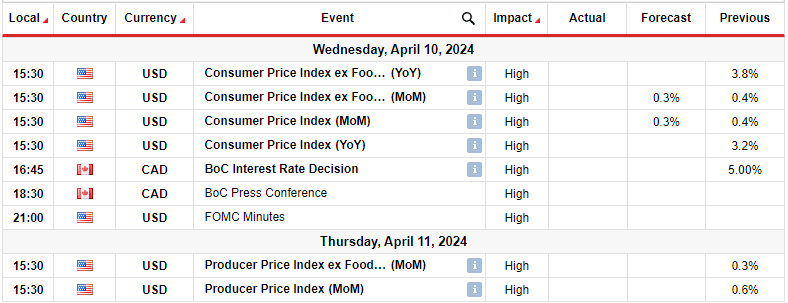
Recent U.S. Treasury yield movements were muted as investors grappled with the implications of higher-than-anticipated inflation data. The Producer Price Index (PPI) for February showed a 0.6% monthly increase, surpassing expectations. Core PPI, excluding food and energy, rose by 0.3%. Similarly, the Consumer Price Index (CPI) indicated a 0.4% month-over-month increase and a 3.2% yearly rise, also above forecasts.
Market Anticipation for Federal Reserve’s Decision
The upcoming Federal Reserve meeting is highly anticipated, with expectations of maintaining current interest rates. However, given recent inflation data, investors are eager for hints regarding potential interest rate cuts. Presently, there’s about a 60% chance of a rate cut in June, a slight decrease from earlier predictions.
Global Central Banks and Currency Movements
In Japan, significant wage increases have sparked speculations about the Bank of Japan moving away from negative interest rates. Similar anticipations surround other central banks, like the Bank of England and the Swiss National Bank. The yen and the euro have shown slight adjustments against the dollar, with the yen experiencing its most significant weekly drop since January and the euro increasing marginally.
Market Forecast
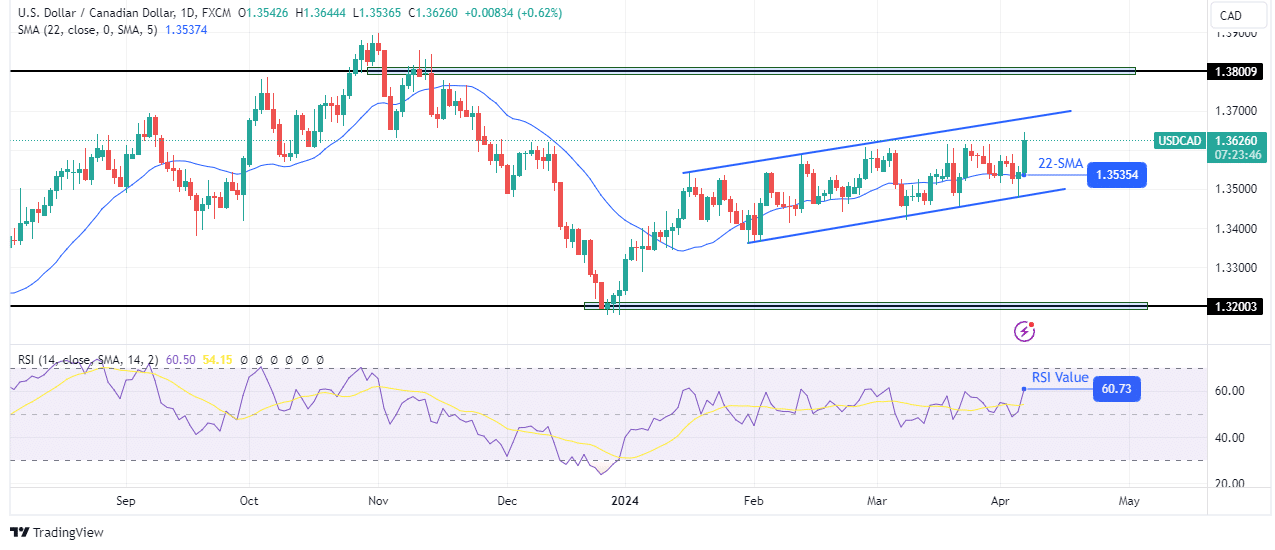
Considering the current economic indicators, including inflation rates and central bank policies, the DXY is likely to experience cautious optimism in the short term. While the Federal Reserve might exhibit more restraint in their inflation outlook, the overall trend suggests a slightly bullish forecast for the DXY. This outlook is tempered by the global central bank decisions and currency market reactions in the coming weeks.
In an exclusive interview with Cryptonews, Paul Frambot, CEO of research and development company Morpho Labs, told the host Matt Zahab how the four co-founders raised millions for Morpho and what changes to DeFi trends the protocol aims to bring.
He told listeners how he envisages the next phase of DeFi, and why the Morpho Labs team opted for a minimalist approach, contrary to the current DeFi trends.
Finally, he touched upon the recent disagreement with Aaave, and Gauntlet leaving Aave to join Morpho Labs, as well as his opinion that DAOs are not suited for managing the risk of protocols.
In this interview, Frambot discussed:
liquid staking and yield farming;
next evolution of DeFi Spending;
moving from app to infra – the future of DeFi;
DeFi 2.0 defining crypto’s coming bull market;
DeFi risk manager Gauntlet leaving Aave to join Morpho;
a shift from monolithic to layered protocols in 2024;
DAOs not being suited for managing the risk of protocols;
Morpho Blue;
lowering the barrier to entry;
raising $18 million for Morpho from a16z and Variant while still in school.
Paul Frambot gave a wide-ranging interview, which you can watch above – or you can read a part of it below.
Students Raising Millions
During his second and third years at the Institut Polytechnique de Paris, where he earned his Master’s degree in 2021, Frambot managed to raise millions over two rounds.
At the time, Frambot was studying consensus algorithms and distributed systems. He had an opportunity to meet “a bunch of researchers and interesting people” working in decentralized finance (DeFi) and blockchain.
This is how the first think tank around DeFi was created there. The members discussed what they could improve in DeFi, specifically lending.
Through the industry insiders, Frambot got in touch with investors and made his way into the VC world.
In the pre-seed round, the group raised $1 million for Morpho. They used the funds to hire a few people and do the first contract audits of the protocol’s first version.
A few months later, they raised more money, including from Andreessen Horowitz and Variant, with Frambot stressing that they have over 100 investors in Morpho.
That said, the four co-founders managed to raise $18 million for Morpho while still at university.
DeFi 2.0: Moving from App to Infra
Frambot discussed what DeFi 2.0 looks like and how it scales.
He argued that the next evolution of DeFi involves moving from app to infra.
The co-founder went on to explain that the earlier protocols, such as Maker, Uniswap, Aave, and Compound, were usable as is, and user-friendly in the sense that they were self-contained.
That was the first iteration of DeFi.
But protocols want to scale and enable more features.
One way to move forward is to enshrine all features in one monolithic protocol. But that may comprise efficiency and security because there are more lines of code to handle.
“You preserve the UX of it, the product aspect of it, but it does not scale.”
Morpho decided not to have a monolithic pool but to break the pool into two pieces instead: the risk management part and the protocol part.
This is a layered approach, with “more layers of abstraction, exactly the same way the internet has been built.”
Frambot said that the internet stack is built in layers. When we use the internet, we don’t experience the full complexity of it. We just see, for example, a browser. But behind the scenes, there are different layers of abstraction.
He argued that “it feels like this is exactly the way DeFi is going, which is having core communication protocols, core financial protocols that do not have any opinion about risk, about compliance. But on top, you rebuild the risk and compliance profile that you want.”
This allows the protocol to be at the bottom, followed by the risk management layer, and then on top, the user application layer.
In less than 2 months since launch, @MorphoLabs Blue protocol has reached over $200m in TVL, with continued growth by introducing a new risk layer for suppliers (aka MetaMorpho vaults).
Here we’ll explain how you can fully utilize Blue with advanced DFS features. 👇 pic.twitter.com/9yzwFFeRjq
And we go back to DeFi: what the industry is looking to do is build infrastructure for wealth – on top of which the entire financial flow of humanity will be handled.
With the current security practices, this is unimaginable.
Therefore, the advantage of the described, scalable DeFi 2.0 is that it enables protocols to be immutable and simple, and it segregates complexity in layers, avoiding the dangers of a monolithic pool.
Meanwhile, DeFi is growing. That used to be an issue, and it has been difficult breaking out of the existing circle.
But “I think the approach I’m describing is such a neat way of progressively forcing the boundaries of that space,” Frambot said.
In a few weeks of existence, Morpho Blue markets already have insane traction.
Interest generated are growing exponentially and so is the profitability of the vault curators.
Our main objective is that all our builders have one of the most profitable business in the industry! pic.twitter.com/qs9sDFCRXK
Going Against Latest DeFi Trends with a Minimalistic Approach
Frambot has shared on his social media that Morpho does one job: simple and efficient lending and borrowing. That’s all. There are no stablecoins, DEXes, equity, advisory, etc. In other words escaping from the wave of DeFi trends and services flooding the market.
This is a rare approach in a world where projects aim to venture into various different spheres.
Frambot explained that they want to be “laser-focused, do one thing, and do it extremely well.” They don’t want to spread.
“And this, in my opinion, is crucial in DeFi because there are a lot of opportunities.”
Moreover, unlike most other projects, Morpho’s founders are contractually forbidden to invest in or advise any other project. “We have to be focused on Morpho,” said Frambot.
This approach, he argued, has given the co-founders a unique approach to DeFi landing in general.
Morpho’s first version, which now has more than $2 billion in deposits, “was never seen before in the space and not even close to looking like another protocol,” he said.
Furthermore, the new version, Morpho Blue, is also “extremely different” from what people are used to seeing across DeFi trends and updates.
𝟮/ 𝗪𝗵𝘆
Morpho is the 3rd largest lending platform on Ethereum, with over $1B in deposits.
Yet, current platforms are not scalable enough to match the trillions processed by TradFi lending markets.
Morpho must evolve to become autonomous and elevate decentralized lending.
The protocol enables a very wide variety of use cases, based on top of a trustless and efficient base protocol of just 600 lines of code, instead of thousands.
He remarked,
“Taking such a minimalistic approach goes against DeFi 1.0 trends, which is building and then training as many features [as possible] to be able to do more and more.”
Per Frambot, Morpho’s strategy is “definitely a winning” one long-term.
DAOs May Not Be the Best Option
Aside from his stance on DeFi trends, Frambot has argued that decentralized autonomous organizations (DAOs) are not suited for managing the risk of protocols, given that effective risk management demands both expertise and the ability to make super-fast, efficient decisions.
During the interview, he explained that he is not against DAO-based risk managers but that he doesn’t believe that it’s the best thing to do. In the end, it will be up to the market to decide, though.
Doing risk management is highly complex. It entails multi-dimensional problems, statistics, math, data, etc.
For example, in the case of Aave, there are more than 700 different risk parameters: liquidation incentives, collateral factors, oracles, supply caps, borrow caps for each asset, and hundreds more.
“Essentially, we’re asking token holders to vote on a daily basis to improve, change, and adjust those risk parameters. […] I don’t think token holders, to be frank, could be anybody. I don’t think they’re the right person to do this job.”
And while DAOs and decentralization in general are excellent concepts, we must make sure “we do things that truly make sense to provide the best possible use cases, experience, and safety for users.”
Meanwhile, in Morpho Blue, the risk management is completely externalized from the protocol.
BlockAnalitica, Bprotocol, Steakhouse Financial, re7, … and now Gauntlet.
Don’t you see what is happening? DeFi lending has been unbundled. Risk management has been completely externalized from the core protocol. https://t.co/R49cjkE5uU
Everything built on top of Morpho Blue can have its own specific risk management: some can be token-based risk, and others can be centralized, or controlled by users.
“And we’ll see what formula is the best [for] risk management.”
In the end, it could be one approach or a combination of several that will emerge as a winner.
__________
About Paul Frambot
Paul Frambot is the Co-Founder and CEO of Morpho Labs, a research and development company responsible for building and growing the Morpho protocol.
Frambot co-founded Morpho Labs whilst studying towards his now-completed Master’s in Parallel and Distributed Systems from the Institut Polytechnique de Paris in 2021.
During his studies, he raised $18 million from top investors – including Andreessen Horowitz (a16z) and Variant – for Morpho, which has since grown into a multi-billion-dollar lending protocol.
The latest version, Morpho Blue, is an independent, simple protocol that serves as a secure, efficient, and flexible base layer for users and applications.
The survey indicates a continued shrinkage in unfilled orders, as the unfilled orders index steadies at -10.9. Additionally, inventories are diminishing, with the inventories index marginally changing to -12.9. Delivery times appear stable, with the delivery times index at -1.0.
Employment and Working Hours Decrease
Labor market indicators are showing signs of stress. Both employment levels and working hours are on a downtrend, as reflected in the seven-point decrease in the employment index to -7.1 and a six-point fall in the average workweek index to -10.4.
Price Pressures and Future Outlook
While input price increases have moderated slightly, selling price increases have remained consistent. Firms maintain a cautious optimism for the future, with the future business conditions index stable at 21.6. However, this subdued optimism aligns with modest capital spending plans.
Short-Term Market Forecast
Given the current conditions, the short-term outlook for the manufacturing sector in New York State leans bearish. The significant declines in demand and shipments, coupled with weakening labor market indicators and continued inventory reductions, paint a challenging picture for the sector in the near future. The steady selling price pressures add another layer of complexity, suggesting potential margin squeezes for manufacturers.
Disclaimer: The opinions expressed by our writers are their own and do not represent the views of U.Today. The financial and market information provided on U.Today is intended for informational purposes only. U.Today is not liable for any financial losses incurred while trading cryptocurrencies. Conduct your own research by contacting financial experts before making any investment decisions. We believe that all content is accurate as of the date of publication, but certain offers mentioned may no longer be available.
In an X/Twitter post published on Wednesday, tech tycoon and meme lover Elon Musk placed an emphasis on memes, which he does once in a while, as if reaffirming his support for this phenomenon. His love for memes began many years ago; however, only in 2020 did he tweet that “who controls memes, controls the universe.” Musk is a fan of the original meme coin, DOGE.
PEPE soars on Elon Musk’s tweet
Since it was Pepe the Frog depicted on the picture he published, the Pepe meme coin’s price immediately triggered a staggering 23.46% increase. It was followed by a major decline, therefore, the overall PEPE rise within the last 24 hours constitutes 13.73%.
Musk’s tweet today was reposted by the official account of Milady meme coin (LADYS). In mid-May 2023, Musk posted a meme with its mascot, and this propelled LADYS’ mind-blowing surge by 12,056%.
On the same day, an anonymous crypto whale transferred a massive PEPE chunk of 2,248,769,006,203 coins from Binance to Crypto.com. This amount of PEPE was evaluated at 20,219,806 at the time of the transaction.
A day before that, another mysterious whale deposited 500 billion PEPE worth $4.3 million to the Binance exchange with a potential profit of $3.36 million (+30.9%). This trader had started his PEPE trade only 10 days before that, according to the @spotonchain analytics account.
Elon Musk’s tweet equalizes USD and scam coins
On Wednesday, centibillionare and meme lover Elon Musk also posted a tweet, which shows that he considers the U.S. dollar to be somewhat unsustainable. He published a screenshot of another tweet (posted by someone else), which describes scam cryptocurrencies.
A scam coin that is described in the screenshot has some “notable” characteristics typical of scam cryptos, according to the author of the tweet – 27 trillion coins circulating on the market, unlimited supply cap, only one node, 25% of the whole supply produced just within the past month and 30% of the supply held by only 1% of its holders.
The author of the tweet noted that this is very similar to the U.S. dollar, with the Federal Reserve’s constant printing. By reposting this, Elon Musk seems to be agreeing with the tweet’s initial author.