The main tag of Forex News Today Articles.
You can use the search box below to find what you need.
[wd_asp id=1]

14 04, 2026

Forecast update for EURUSD -13-04-2026.

By |2026-04-14T05:27:04+02:00April 14, 2026|Forex News, News|0 Comments

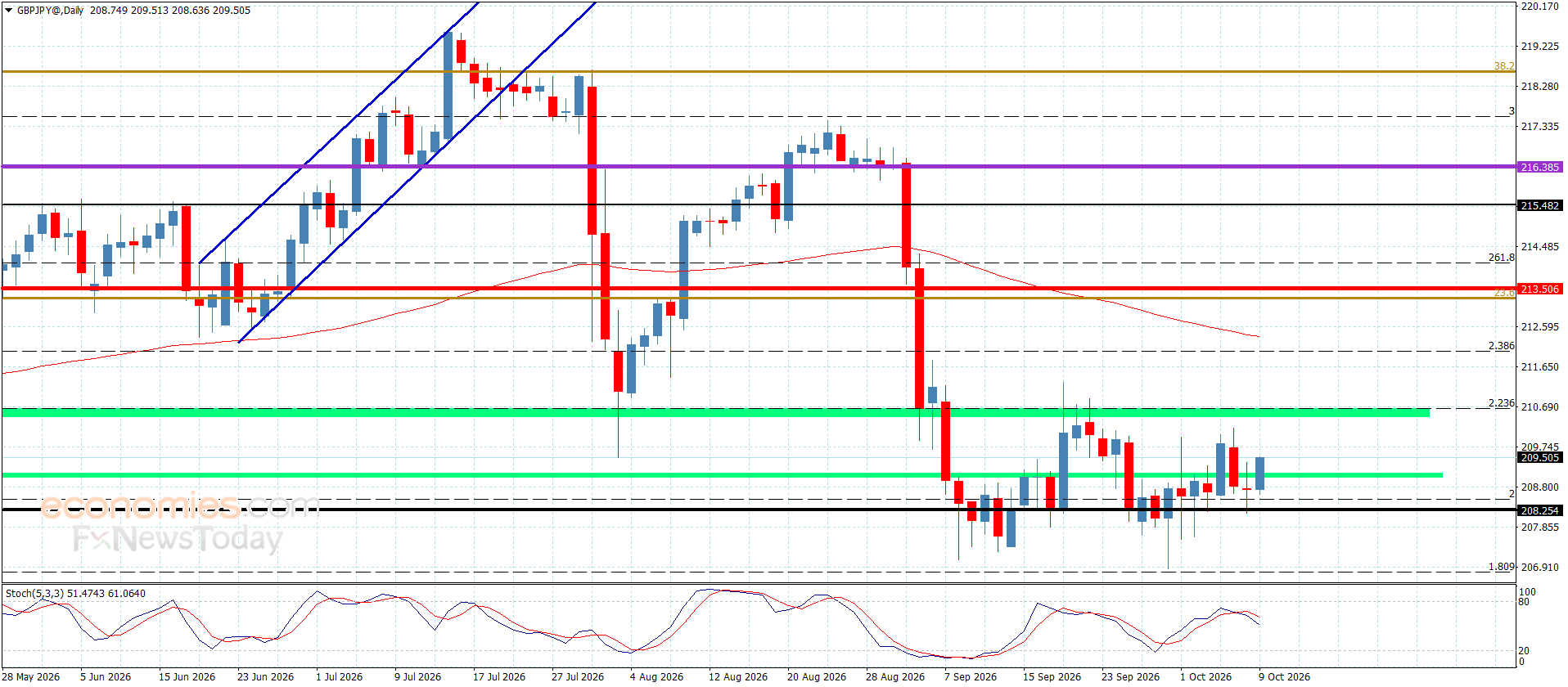
No change for GBPJPY pair’s bullish track, due to its stability above 213.30 level, keeping its stability within the minor bullish channel levels, to notice recording 214.55 level on Friday, which forces it to provide mixed trading to reinforce the chances of gathering extra positive momentum.


Stochastic stability within the overbought level will reinforce the chances of targeting extra positive stations, to reach 215.00 to attempt to reach the next main target near 215.72, while the decline below 213.30 and providing negative close will force it to provide bearish corrective trading by reaching 212.60 and 212.05. 


The expected trading range for today is between 213.50 and 215.00


Trend forecast: Bullish


Source link

14 04, 2026

The GBPJPY repeats the positive closes– Forecast today – 13-4-2026

By |2026-04-14T01:26:03+02:00April 14, 2026|Forex News, News|0 Comments

No change for GBPJPY pair’s bullish track, due to its stability above 213.30 level, keeping its stability within the minor bullish channel levels, to notice recording 214.55 level on Friday, which forces it to provide mixed trading to reinforce the chances of gathering extra positive momentum.


Stochastic stability within the overbought level will reinforce the chances of targeting extra positive stations, to reach 215.00 to attempt to reach the next main target near 215.72, while the decline below 213.30 and providing negative close will force it to provide bearish corrective trading by reaching 212.60 and 212.05. 


The expected trading range for today is between 213.50 and 215.00


Trend forecast: Bullish


Source link

13 04, 2026

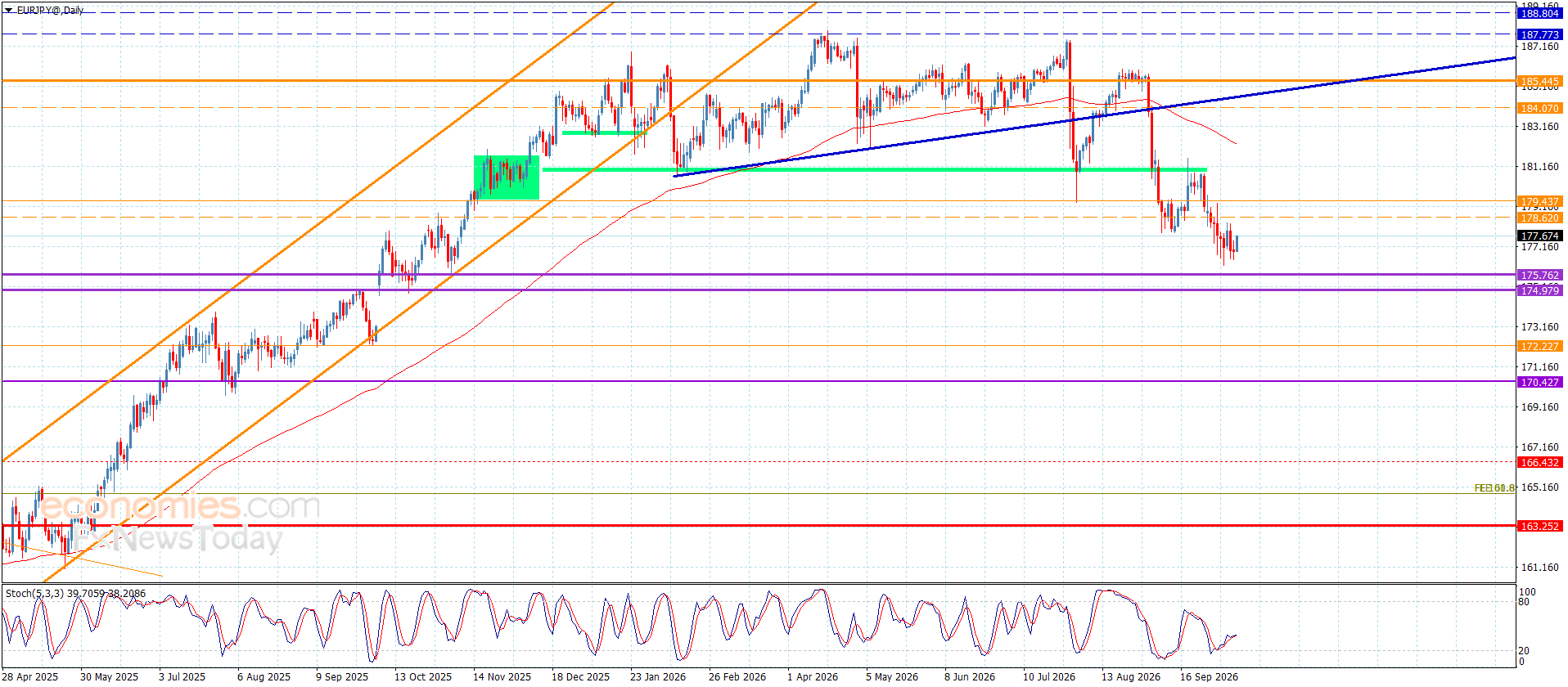
The EURJPY achieves the extra target– Forecast today – 13-4-2026

By |2026-04-13T21:24:59+02:00April 13, 2026|Forex News, News|0 Comments

No change for GBPJPY pair’s bullish track, due to its stability above 213.30 level, keeping its stability within the minor bullish channel levels, to notice recording 214.55 level on Friday, which forces it to provide mixed trading to reinforce the chances of gathering extra positive momentum.


Stochastic stability within the overbought level will reinforce the chances of targeting extra positive stations, to reach 215.00 to attempt to reach the next main target near 215.72, while the decline below 213.30 and providing negative close will force it to provide bearish corrective trading by reaching 212.60 and 212.05. 


The expected trading range for today is between 213.50 and 215.00


Trend forecast: Bullish


Source link

13 04, 2026

EUR/GBP Forecast: Euro’s Critical Hesitation at 0.8700 Signals Market Caution

By |2026-04-13T17:24:20+02:00April 13, 2026|Forex News, News|0 Comments

BitcoinWorld

EUR/GBP Forecast: Euro’s Critical Hesitation at 0.8700 Signals Market Caution

LONDON, March 2025 – The EUR/GBP currency pair demonstrates significant hesitation around the pivotal 0.8700 psychological level, reflecting deepening caution across global financial markets. This stall in momentum presents a critical juncture for forex traders and analysts, who now scrutinize a complex interplay of technical signals and fundamental economic pressures. Consequently, market participants await clearer directional cues from both the Eurozone and the United Kingdom, as monetary policy divergence and geopolitical uncertainties inject volatility into the cross. Therefore, understanding the dynamics at this key level is essential for navigating the near-term forex landscape.

EUR/GBP Forecast: Decoding the Technical Stalemate

The EUR/GBP’s consolidation near 0.8700 forms a compelling technical narrative. On daily charts, the pair has repeatedly tested this zone, establishing it as a formidable battleground between bullish and bearish forces. Specifically, the 50-day and 200-day simple moving averages converge nearby, often amplifying price sensitivity. Meanwhile, trading volume has contracted notably during this period, a classic sign of indecision before a potential breakout. Analysts frequently reference this pattern as a “coiling” or compression phase, where volatility typically expands following the period of tight range-bound action.

Key technical levels now frame the immediate forecast. Firstly, immediate resistance is observed between 0.8720 and 0.8740, a zone fortified by recent swing highs. Conversely, robust support resides near 0.8650, aligning with a prior consolidation area and the 38.2% Fibonacci retracement level from the late-2024 rally. A decisive close above or below these parameters will likely dictate the short-term trajectory. Furthermore, oscillators like the Relative Strength Index (RSI) hover near neutral territory, neither confirming overbought nor oversold conditions and thus offering little directional bias.

Chart Pattern Analysis and Historical Context

Historical price action provides crucial context for the current EUR/GBP forecast. The 0.8700 level has served as a significant pivot point multiple times over the past 18 months. For instance, a sustained break above this level in Q4 2024 preceded a 2.5% rally. Similarly, rejection from this zone in early 2025 led to a swift decline towards 0.8550. This repeated interaction reinforces its psychological and technical importance. Currently, the price action is carving a potential symmetrical triangle pattern, suggesting a period of equilibrium before a resolution. The measured move target from such a pattern typically projects a move of 150-200 pips following a confirmed breakout.

Fundamental Drivers Behind the Market Caution

The hesitation in the EUR/GBP pair is not merely a technical phenomenon; it is fundamentally rooted in a cautious macroeconomic landscape. Primarily, divergent central bank outlooks between the European Central Bank (ECB) and the Bank of England (BoE) create a complex backdrop. The ECB maintains a data-dependent stance, with recent inflation prints showing stubborn core components. Simultaneously, the BoE faces the dual mandate of controlling inflation while supporting fragile economic growth indicators. This policy uncertainty compels traders to adopt a wait-and-see approach, thereby suppressing sustained directional moves.

Several specific factors contribute to the prevailing market caution:

  • Inflation Data Disparity: Eurozone HICP inflation remains above target, while UK CPI shows signs of moderating, albeit unevenly across services and goods.
  • Growth Projections: Revised GDP forecasts from the IMF and OECD point to subdued growth in both regions, limiting aggressive central bank action.
  • Political Risk Premium: Upcoming electoral cycles in key EU member states and policy uncertainty in the UK post-Brexit adjustments add a layer of geopolitical risk.
  • Global Risk Sentiment: Broader market volatility, influenced by commodity prices and geopolitical tensions, flows through to major currency pairs like EUR/GBP.

Consequently, institutional flow data indicates a reduction in speculative positioning, with asset managers and hedge funds preferring to hold neutral or reduced exposure until these fundamental clouds clear. This reduction in participation naturally contributes to the pair’s hesitant price action around key technical levels.

Expert Analysis and Institutional EUR/GBP Forecasts

Leading financial institutions offer nuanced perspectives on the EUR/GBP forecast amidst the current stalemate. For example, analysis from major bank research desks often highlights the cross’s sensitivity to interest rate differentials, which have recently narrowed. “The market is effectively pricing in a delayed but parallel tightening path from both the ECB and BoE,” notes a senior currency strategist at a European investment bank. “This removes a primary directional driver, leaving the pair susceptible to secondary data shocks and technical flows.”

A survey of recent analyst reports reveals a consensus leaning towards continued range-bound trading in the immediate term, with a bias for a breakout contingent on a clear fundamental catalyst. The table below summarizes key institutional year-end targets for EUR/GBP:

Institution Q2 2025 Forecast Primary Rationale
Bank A Research 0.8750 Gradual ECB policy normalization outpacing BoE
Investment Firm B 0.8600 Stronger UK productivity data and fiscal support
Strategy Group C 0.8700 (Neutral) Balanced risks; view range-bound 0.8650-0.8800

This divergence in expert opinion itself underscores the high degree of uncertainty and the balanced risk profile currently associated with the currency pair. Moreover, options market pricing shows a slight skew towards puts (bearish bets) for longer-dated expiries, indicating a underlying, though not overwhelming, concern for euro weakness.

Impact on Traders and the Broader Financial Ecosystem

The EUR/GBP’s hesitation at 0.8700 has tangible implications. For retail and algorithmic traders, reduced volatility and directional clarity compress potential returns from trend-following strategies, shifting focus towards range-trading or volatility-breakout models. Meanwhile, corporate treasuries with exposure to Euro and Pound cash flows face challenges in hedging decisions, as the cost of options protection increases during periods of unresolved tension. Furthermore, the cross’s behavior often spills over into related asset classes, influencing UK and Eurozone equity flows, particularly for export-heavy sectors.

From a broader perspective, the pair’s stability—or lack thereof—acts as a barometer for European financial integration and relative economic health. A sustained break above 0.8700 could signal stronger confidence in the Eurozone’s economic convergence, whereas a failure might highlight persistent structural concerns or a relative UK recovery narrative. Therefore, market participants across the spectrum monitor this level not just for trading signals, but for deeper macroeconomic insights.

Conclusion

The EUR/GBP forecast remains tightly focused on the 0.8700 level, a nexus of technical significance and fundamental indecision. The pair’s current hesitation reflects a market in equilibrium, weighing divergent central bank policies, uneven economic data, and embedded geopolitical risks. Ultimately, a catalyst from upcoming inflation reports, central bank communications, or a shift in global risk appetite will likely be required to spark a sustained directional move. Until then, the prevailing market caution suggests continued range-bound trading, with vigilance for a breakout that could define the medium-term trend for this major European currency cross.

FAQs

Q1: Why is the 0.8700 level so important for EUR/GBP?
The 0.8700 level is a major psychological and technical pivot point. It has acted as both strong support and resistance multiple times in recent history, and it currently aligns with key moving averages, making it a focal point for trader decision-making and order placement.

Q2: What would cause the EUR/GBP to break decisively above 0.8700?
A sustained break above would likely require a fundamental shift, such as the ECB signaling a more hawkish policy path relative to the BoE, a significant upside surprise in Eurozone economic data, or a deterioration in UK-specific economic or political stability.

Q3: How does global risk sentiment affect EUR/GBP?
EUR/GBP can function as a European risk proxy. In ‘risk-off’ environments, traders may favor the Pound’s historical safe-haven attributes within Europe, potentially weighing on the cross. Conversely, ‘risk-on’ sentiment might benefit the euro if it fuels capital flows into Eurozone assets.

Q4: What are the key economic indicators to watch for the EUR/GBP forecast?
Critical indicators include CPI inflation prints and core inflation from both the Eurozone and UK, PMI (Purchasing Managers’ Index) data for services and manufacturing, quarterly GDP reports, and most importantly, the policy statements and meeting minutes from the ECB and Bank of England.

Q5: Is the current hesitation a sign of an impending large move?
While prolonged consolidation often precedes a significant volatility expansion, it is not a guaranteed predictor of direction. The subsequent move’s size and direction depend entirely on the nature of the fundamental catalyst that eventually breaks the equilibrium.

This post EUR/GBP Forecast: Euro’s Critical Hesitation at 0.8700 Signals Market Caution first appeared on BitcoinWorld.

Source link

13 04, 2026

USD/JPY Forecast: Bullish Momentum Targets Critical 160.00 Breakthrough As Technical Setup Strengthens

By |2026-04-13T13:23:02+02:00April 13, 2026|Forex News, News|0 Comments


USD/JPY Forecast: Bullish Momentum Targets Critical 160.00 Breakthrough As Technical Setup Strengthens


Skip to content


Source link

13 04, 2026

Euro to Dollar Forecast: EUR 5-Week Best on Iran Uncertainty

By |2026-04-13T09:22:05+02:00April 13, 2026|Forex News, News|0 Comments


– Written by

The Euro to Dollar exchange rate (EUR/USD) surged to five-week highs near 1.1725 after a temporary Iran ceasefire boosted risk appetite and weakened the dollar.

However, with oil prices rebounding and uncertainty over the Strait of Hormuz unresolved, markets remain cautious, limiting confidence in a sustained EUR/USD breakout.

EUR/USD Forecasts: Iran ceasefire, but no certainty

Nordea still expects that the Euro to Dollar (EUR/USD) exchange rate will strengthen to above 1.20 by the end of 2026 amid weaker US fundamentals.

Scotiabank is backing EUR/USD gains to 1.22 at the end of the year.

During the week, geo-political developments dominate with the mid-week announcement of a cease-fire between the US and Iran.

There was, however, still a high degree of uncertainty and the Strait of Hormuz remained effectively closed with oil prices regaining ground after a sharp initial decline as Brent traded well above $90 p/b.

Save on Your EUR/USD Transfer

Get better rates and lower fees on your next international money transfer.
Compare TorFX with top UK banks in seconds and see how much you could save.


Compare the Best EUR/USD Rates »

The dollar lost ground as energy prices declined sharply and risk appetite strengthened. Overall, EUR/USD rallied strongly to 5-week highs around 1.1725.

The US inflation data was close to expectations with the headline figure jumping to 3.3% from 2.4% with the core rate at 2.6% from 2.5%.

Markets remained sceptical that the Federal Reserve would hike interest rates.

Scotiabank commented; “Our call remains that the Fed will cut rates by 50bps over the next 12 months in response to slowing growth momentum. Expectations that other central banks may tighten policy could retrench if a sustained decline in energy prices unfolds but the USD is still likely to soften somewhat as market risk premia re-adjust.”

It added; “Our fair value model for the DXY based purely on front-end spreads suggests the index is significantly (about one standard deviation) overvalued currently.”

Nordea commented; “We note that even amidst bouts of flight-to-safety, the performance of the USD has been far from stellar, and the conflict in the Middle East has not at least bolstered the confidence towards the dollar in the medium term. We thus continue to expect a clearly higher EUR/USD towards the end of our forecast horizon.”

ECB policy will also be a key element.

At this stage, Danske expects the ECB will leave rates on hold at 2.0% this year. It did, however, add; “Due to ongoing uncertainty about the Iran war, we do not see a hold at the April meeting as a done deal yet.”

According to Nordea there will be pressure for a tighter policy; “both anecdotal and survey-based data have started to point to price pressures beyond energy prices, adding to the pre-war price pressures that existed already in many raw materials and components.”

It added; “We now expect the ECB to hike rates four times by 25bp, starting in June. While the ceasefire news immediately tilted the risks to our new ECB baseline to the downside, the outlook remains fraught with uncertainty, while signs of broader price pressures have already started to emerge.”

Like this piece? Please share with your friends and colleagues:


International Money Transfer? Ask our resident FX expert a money transfer question or try John’s new, free, no-obligation personal service! ,where he helps every step of the way,
ensuring you get the best exchange rates on your currency requirements.

TAGS: Euro Dollar Forecasts

Source link

13 04, 2026

Weekly Forex Forecast 12/04

By |2026-04-13T05:21:33+02:00April 13, 2026|Forex News, News|0 Comments

Fundamental Analysis & Market Sentiment

I wrote on 29th March that the best trades for the week would be:

  1. Long of the USD/JPY currency pair. This gave a loss of 0.40%.

  2. Long of the 10Y US Treasury Yield Future. This gave a loss of 2.99%.

That week’s overall loss of 3.39% is 1.70% per asset.

A summary of last week’s most important data in the market:

  1. US CPI – the annualized rate came in at 3.3%, a tick below the widely expected 3.4%.

  2. US ISM Services PMI – this was just a tiny bit worse than expected.

  3. US Core PCE Price Index – as expected.

  4. US Final GDP – revised downwards again, from a quarterly rate of 0.7% to 0.5%.

  5. US FOMC Meeting Minutes – there were no real surprises, but the minutes tended to reinforce generally hawkish sentiment on rates.

  6. RBNZ Policy Meeting – no surprises.

  7. Canada Unemployment Rate – just a tick better than expected, at 6.7%.

Last week’s economic data releases were much less influential upon the markets than the US/Iran ceasefire was. The mere fact that the USA and Iran are talking, despite the enormous gaps in their continued understanding of the terms of the ceasefire, let alone between their respective red lines, has produced a more risk-on market environment, especially concerning energy prices. As the talks have concluded with a generally downbeat reading of a USA very firm on certain demands and an equally firm Iran refusing to grant them – wishing to maintain both nuclear enrichment and to control, formally, passage through the Strait of Hormuz – we can probably expect markets to open in a more risk-averse mood, especially in stock markets and in energies. VP Vance departing stated “Bad news… the Iranian have decided not to accept our terms.”

Prediction markets generally think that this war will end within the next few weeks with some kind of formal agreement between the USA and Iran. This suggests that the crowd might be overly optimistic, paving the way for a potential surprise to the downside if hostilities suddenly resume. It remains very difficult to see how the nuclear and Hormuz issues, let alone Lebanon, can be resolved in a way all parties would find saleable to their constituencies.

The Week Ahead: 13th – 17th April

The middle east war is likely to remain more influential that any economic data releases which are scheduled over the coming week, as we approach the deadline for the expiry of the current two-week ceasefire and await to see whether it will be extended or something else will be agreed.

The coming week’s most important data points, in order of likely importance, are:

  1. US PPI

  2. UK GDP

  3. Australia Unemployment Rate

Monthly Forecast April 2026

Currency Price Changes and Interest Rates

For the month of April, I forecasted that the USD/JPY currency pair would rise in value.

Currency Pair

Forecasted Direction

Interest Rate Differential

Performance to Date

USD/JPY

Long ↑

+3.00% (3.75% – 0.75%)

+0.34%

Weekly Forecast 13th April 2026

Last week saw three currency crosses with excessive volatility, so I made the following forecasts for the coming week:

  • AUD/JPY short

  • NZD/JPY short

  • NZD/CAD short

The Australian Dollar was the strongest major currency last week, while the US Dollar was the weakest.

Next week’s volatility is likely to decline a bit. However, the ongoing war in the Middle East (subject to the current ceasefire) retains the ability to roil the market if there are any surprises. This could generate volatility in the US Dollar, the Japanese Yen, and the Canadian Dollar, not to mention stock markets.

You can trade these forecasts in a real or demo Forex brokerage account.

Technical Analysis

Key Support/Resistance Levels for Popular Pairs

Currency Pair

Key Support / Resistance Levels

AUD/USD

Support: 0.7026, 0.7002, 0.6982, 0.6963

Resistance: 0.7100, 0.7213, 0.7248, 0.7275

EUR/USD

Support: 1.1718, 1.1678, 1.1669, 1.1640

Resistance: 1.1750, 1.1792, 1.1810, 1.1840

GBP/USD

Support: 1.3453, 1.3408, 1.3371, 1.3314

Resistance: 1.3477, 1.3504, 1.3536, 1.3549

USD/JPY

Support: 158.63, 158.46, 157.99, 157.30

Resistance: 159.38, 159.73, 159.96, 161.55

AUD/JPY

Support: 112.37, 111.28, 111.02, 110.60

Resistance: 112.90, 113.18, 113.37, 114.00

EUR/JPY

Support: 186.54, 186.23, 185.88, 184.85

Resistance: 187.00, 188.00, 189.00, 190.00

USD/CAD

Support: 1.3797, 1.3772, 1.3754, 1.3731

Resistance: 1.3845, 1.3860, 1.3876, 1.3899

USD/CHF

Support: 0.7838, 0.7800, 0.7700, 0.7600

Resistance: 0.7897, 0.7928, 0.7958, 0.7980

Key Support and Resistance Levels

US Dollar Index

The US Dollar printed a large bearish candlestick, with no significant lower wick, and a close that was very near to the low of its range. These are bearish signs. However, we have mixed long-term trends, with the 3-month trend bullish and the 6-month trend bearish. Looking at the price chart below, we can see that the greenback is really within a long-term consolidation phase, so we cannot really expect much of a trend in the US Dollar here.

I think the greenback will be more driven by the progress in the current Middle East ceasefire – if war breaks out again, it will likely boost the Dollar, not so much as a haven but more as an effect of the inflationary shock of the rising energy prices. If the ceasefire becomes something more durable, conversely, it will probably be bearish for the US Dollar.

US Dollar Index Weekly Price Chart

AUD/USD

The AUD/USD currency pair was at the heart of the Forex market again last week, with the Aussie gaining by more than any other major currency, while the US Dollar was the biggest lower. There has been a very long-term bullish trend in the Aussie, which seemed to have decoupled from risk sentiment to some extent, but we see the Aussie getting bid hard as the world enjoys the current ceasefire in the Middle East war, mostly hoping that this will somehow lead to a more durable peace agreement between the USA and Iran, although it is hard to see how the gaps can be bridged in the negotiations.

Looking technically at the weekly price chart below, we see that we saw a strong rise last week that ran out of momentum as it approached the major resistance level, confluent with a round number, at $0.7200. This looks a bit overbought, and we might get a short trade opportunity here if we continue to see failure near or at $0.7200, especially if sentiment turns more downbeat on the prospects for the ceasefire after talks between the USA and Iran in Pakistan just ended with no agreement.

This pair will likely be at the heart of market volatility, which can be great for day traders, and follow sentiment on the Middle East and the second order effect of a commodity price shock, both up and down.

The Aussie is also notably overbought against the Japanese Yen.

I won’t be trading in this currency pair yet, but day traders might want to look for shorts in this currency pair if we see a bearish reversal price action set up at $0.7200.

AUD/USD Weekly Price Chart

USD/JPY

The USD/JPY currency pair lost a little ground last week, two weeks after finally making the long-anticipated bullish breakout beyond the big round number at ¥160. The problem is not Yen weakness, which can be taken for granted over the long-term it seems. The problem for progress higher by this currency pair is the renewed weakness in the US Dollar now that there is a ceasefire in the Middle East war, because if there is a longer-term agreement it would remove some inflationary pressure from the Fed through lower energy prices.

I am happy to be long of this currency pair, although I would be more comfortable in my long trade if the price was established comfortably above ¥160.

If we do not see the price up there soon, I fear that we might have a bit of a bearish head and shoulders chart pattern which might complete below ¥157.50.

More cautious traders might want to wait for a daily (New York) close above ¥160 before entering a new long trade.

USD/JPY Daily Price Chart

Brent Crude Oil Futures

Brent Crude Oil gapped lower quite dramatically early last week following President Trump’s announcement of a 2-week ceasefire in the war with Iran, which had been looking likely to escalate into all-out war on economic targets, including energy targets. This was pushing the price of crude oil higher, but we really saw the price drop as investors dare to hope to some kind of peaceful compromise to end the crisis, although it is very hard to imagine how this would be agreed.

It can be said that the price is just consolidating and not falling further.

With the talks between an Iranian delegation and US Vice-President Vance breaking down a few hours ago in Pakistan with both sides expressing disappointment, we might start to see the price of crude oil look more bullish as the new week opens, as analysts might begin to see increasing risk of the ceasefire collapsing soon, or at least an increasing chance that no agreement will be forthcoming before the current ceasefire expires on 21st April.

Although I find some kind of bullish price action is likely over the coming days, I will only want to be long of Crude Oil again if we get a new long-term high in the closing end of day price.

If you are going long, Brent will likely be the better vehicle than WTI, as it is more exposed to events in the Strait of Hormuz.

Brent Crude Oil Futures Daily Price Chart

Bottom Line

I see the best trades this week as:

  1. Long of the USD/JPY currency pair following a daily (New York) close above ¥160.

  2. Long of Brent Crude Futures in the unlikely event we get a daily close above $112.50.

Ready to trade our Forex weekly forecast? Check out our list of the top 10 Forex brokers.

Source link

12 04, 2026

EUR/GBP Forecast: Critical Support from Converging SMAs Faces Formidable 0.8750 Resistance

By |2026-04-12T13:17:12+02:00April 12, 2026|Forex News, News|0 Comments

BitcoinWorld

EUR/GBP Forecast: Critical Support from Converging SMAs Faces Formidable 0.8750 Resistance

The EUR/GBP currency pair currently demonstrates a technically significant configuration, with converging simple moving averages providing underlying support while formidable resistance caps gains below the 0.8750 psychological level. This critical juncture emerges as European and British economic policies diverge, creating a complex trading environment for currency analysts and institutional investors. Market participants now closely monitor whether technical support will hold against fundamental headwinds, potentially determining the cross’s directional bias for the coming trading sessions.

EUR/GBP Technical Analysis: The SMA Convergence Phenomenon

Technical analysts observe a notable convergence of multiple simple moving averages on the EUR/GBP daily chart. Specifically, the 50-day, 100-day, and 200-day SMAs have compressed within a historically narrow range, typically indicating reduced volatility and potential energy accumulation for a significant directional move. This convergence pattern often precedes substantial breakouts in currency markets. Consequently, traders interpret this compression as a coiled spring effect, where the pair builds energy before selecting a definitive trend direction.

Historical data reveals similar SMA convergence patterns preceded the EUR/GBP’s 2023 rally from 0.8500 to 0.8900. Currently, the 50-day SMA provides immediate dynamic support around 0.8680, while the 200-day SMA offers stronger foundational support near 0.8650. These technical levels create a multi-layered support zone that has defended against three separate bearish attempts during the past month. Market technicians emphasize that sustained trading above these converged averages would signal underlying strength, potentially enabling a challenge of higher resistance levels.

The 0.8750 Resistance Barrier: A Psychological and Technical Hurdle

The 0.8750 level represents more than just a numerical price point for the EUR/GBP pair. This resistance zone combines psychological significance with technical validation from previous market behavior. During the past six months, the cross has tested this level on four separate occasions, each time encountering substantial selling pressure that reversed gains. This repeated rejection establishes 0.8750 as a formidable technical ceiling that requires significant fundamental catalysts to overcome.

Market microstructure analysis reveals increased limit sell orders clustered around 0.8740-0.8760, creating an order book imbalance that reinforces this resistance zone. Additionally, options market data shows elevated implied volatility for strikes at 0.8750, indicating traders’ expectations for price containment below this level. The resistance confluence includes the 61.8% Fibonacci retracement level from the March 2024 decline, further strengthening its technical significance. Breaking above this barrier would require either substantial Euro strength or pronounced Pound weakness, supported by convincing volume expansion.

Fundamental Drivers: Diverging European and British Economic Policies

Beyond technical patterns, fundamental factors increasingly influence the EUR/GBP exchange rate trajectory. The European Central Bank maintains a cautiously dovish stance despite persistent inflation concerns, while the Bank of England confronts more pronounced stagflation risks. This policy divergence creates opposing forces on the currency pair. European economic indicators show modest improvement in manufacturing PMIs, yet consumer confidence remains subdued amid energy price volatility.

Conversely, British economic data reveals stronger-than-expected services sector activity but concerning retail sales contraction. This mixed fundamental backdrop explains the EUR/GBP’s recent range-bound behavior between 0.8650 and 0.8750. Political developments further complicate the outlook, with European parliamentary elections approaching and British fiscal policy announcements pending. Currency strategists note that interest rate differential expectations continue favoring the Pound, creating underlying headwinds for EUR/GBP appreciation despite technical support structures.

Historical Context and Comparative Analysis

Examining historical EUR/GBP behavior during similar technical configurations provides valuable context for current market conditions. The table below illustrates three previous instances of SMA convergence and subsequent price action:

Period SMA Convergence Range Subsequent Move Catalyst
Q3 2021 0.8520-0.8560 Breakout to 0.8720 ECB Policy Shift
Q1 2023 0.8780-0.8820 Breakdown to 0.8500 UK Inflation Surge
Q4 2023 0.8650-0.8680 Consolidation then Rally Brexit Deal Clarification

This historical analysis reveals that SMA convergence periods typically resolve within 4-8 weeks, with the direction determined by whichever fundamental catalyst emerges first. The current convergence appears most similar to the Q4 2023 pattern, suggesting potential for resolution within the coming month. Market participants monitor several key catalysts that could trigger the next directional move, including:

  • Central bank communications: Upcoming ECB and BoE meeting minutes
  • Inflation data: Eurozone and UK CPI releases scheduled for next week
  • Political developments: European election polls and UK fiscal announcements
  • Energy markets: Natural gas price fluctuations affecting both economies differently

Risk Assessment and Trading Implications

Professional traders approach the current EUR/GBP configuration with measured positioning, recognizing both opportunity and risk. The converging SMAs provide clearly defined support levels for potential long entries, with logical stop-loss placements below the 200-day average. However, the formidable 0.8750 resistance necessitates cautious profit-taking approaches for bullish positions. Risk-reward ratios currently favor range-trading strategies over directional bets until either support or resistance breaks convincingly.

Options market positioning reveals increased demand for strangle strategies, indicating expectations for heightened volatility following the current compression period. Institutional flow data shows balanced positioning between Euro and Pound exposures, suggesting uncertainty about the eventual breakout direction. Market technicians emphasize that a daily close above 0.8750 with expanding volume would invalidate the resistance thesis, potentially opening a path toward 0.8800. Conversely, a breakdown below the SMA confluence around 0.8650 would signal technical deterioration, targeting the 0.8600 psychological support level.

Expert Perspectives on the EUR/GBP Outlook

Leading currency analysts offer nuanced views on the EUR/GBP technical setup. Jane Wilson, Chief Currency Strategist at Global Forex Advisors, notes: “The SMA convergence provides meaningful support, but fundamental divergences between European and British economies create conflicting signals. We recommend patience until either technical level breaks with conviction.” Her assessment reflects the prevailing cautious sentiment among institutional traders.

Michael Chen, Head of Quantitative Research at EuroCapital Markets, adds: “Our statistical models show a 68% probability of range-bound trading between 0.8650 and 0.8750 over the next two weeks. However, volatility expectations increase substantially beyond that timeframe as seasonal liquidity patterns shift.” This quantitative perspective aligns with the technical compression narrative, suggesting impending directional resolution.

Conclusion

The EUR/GBP forecast presents a classic technical dilemma, with converging simple moving averages providing underlying support against the formidable 0.8750 resistance barrier. This configuration reflects broader market uncertainty about European and British economic trajectories. While technical patterns suggest potential for upward resolution, fundamental headwinds and historical resistance create substantial obstacles. Traders should monitor both technical levels and upcoming economic releases, particularly inflation data and central bank communications, which will likely determine whether support holds or resistance breaks. The current EUR/GBP setup exemplifies how technical and fundamental analysis must integrate for accurate currency forecasting in complex market environments.

FAQs

Q1: What does SMA convergence mean for the EUR/GBP pair?
SMA convergence occurs when multiple simple moving averages compress within a narrow price range, typically indicating reduced volatility and potential energy accumulation for a significant directional move. For EUR/GBP, this suggests the pair may be preparing for a substantial breakout.

Q2: Why is the 0.8750 level particularly significant resistance?
The 0.8750 level combines psychological importance with technical validation, having rejected price advances on multiple recent occasions. It also aligns with key Fibonacci retracement levels and hosts concentrated sell orders in the market microstructure.

Q3: How do fundamental factors currently affect EUR/GBP?
Diverging central bank policies between the ECB and BoE create opposing forces, with European cautiousness contrasting against British stagflation concerns. Economic data releases and political developments further influence the cross’s direction.

Q4: What historical patterns resemble the current EUR/GBP setup?
The Q4 2023 period showed similar SMA convergence around 0.8650-0.8680, which resolved with a rally following Brexit deal clarifications. This suggests potential for directional resolution within 4-8 weeks.

Q5: What trading strategies suit the current EUR/GBP configuration?
Range-trading approaches between 0.8650 support and 0.8750 resistance offer favorable risk-reward profiles currently. Breakout strategies with confirmation above resistance or below support may become appropriate once either level breaks with convincing volume.

This post EUR/GBP Forecast: Critical Support from Converging SMAs Faces Formidable 0.8750 Resistance first appeared on BitcoinWorld.

Source link

12 04, 2026

EUR/GBP Forecast: Critical Support from Converging SMAs Faces Formidable 0.8750 Resistance

By |2026-04-12T09:16:14+02:00April 12, 2026|Forex News, News|0 Comments

BitcoinWorld

EUR/GBP Forecast: Critical Support from Converging SMAs Faces Formidable 0.8750 Resistance

The EUR/GBP currency pair currently demonstrates a technically significant configuration, with converging simple moving averages providing underlying support while formidable resistance caps gains below the 0.8750 psychological level. This critical juncture emerges as European and British economic policies diverge, creating a complex trading environment for currency analysts and institutional investors. Market participants now closely monitor whether technical support will hold against fundamental headwinds, potentially determining the cross’s directional bias for the coming trading sessions.

EUR/GBP Technical Analysis: The SMA Convergence Phenomenon

Technical analysts observe a notable convergence of multiple simple moving averages on the EUR/GBP daily chart. Specifically, the 50-day, 100-day, and 200-day SMAs have compressed within a historically narrow range, typically indicating reduced volatility and potential energy accumulation for a significant directional move. This convergence pattern often precedes substantial breakouts in currency markets. Consequently, traders interpret this compression as a coiled spring effect, where the pair builds energy before selecting a definitive trend direction.

Historical data reveals similar SMA convergence patterns preceded the EUR/GBP’s 2023 rally from 0.8500 to 0.8900. Currently, the 50-day SMA provides immediate dynamic support around 0.8680, while the 200-day SMA offers stronger foundational support near 0.8650. These technical levels create a multi-layered support zone that has defended against three separate bearish attempts during the past month. Market technicians emphasize that sustained trading above these converged averages would signal underlying strength, potentially enabling a challenge of higher resistance levels.

The 0.8750 Resistance Barrier: A Psychological and Technical Hurdle

The 0.8750 level represents more than just a numerical price point for the EUR/GBP pair. This resistance zone combines psychological significance with technical validation from previous market behavior. During the past six months, the cross has tested this level on four separate occasions, each time encountering substantial selling pressure that reversed gains. This repeated rejection establishes 0.8750 as a formidable technical ceiling that requires significant fundamental catalysts to overcome.

Market microstructure analysis reveals increased limit sell orders clustered around 0.8740-0.8760, creating an order book imbalance that reinforces this resistance zone. Additionally, options market data shows elevated implied volatility for strikes at 0.8750, indicating traders’ expectations for price containment below this level. The resistance confluence includes the 61.8% Fibonacci retracement level from the March 2024 decline, further strengthening its technical significance. Breaking above this barrier would require either substantial Euro strength or pronounced Pound weakness, supported by convincing volume expansion.

Fundamental Drivers: Diverging European and British Economic Policies

Beyond technical patterns, fundamental factors increasingly influence the EUR/GBP exchange rate trajectory. The European Central Bank maintains a cautiously dovish stance despite persistent inflation concerns, while the Bank of England confronts more pronounced stagflation risks. This policy divergence creates opposing forces on the currency pair. European economic indicators show modest improvement in manufacturing PMIs, yet consumer confidence remains subdued amid energy price volatility.

Conversely, British economic data reveals stronger-than-expected services sector activity but concerning retail sales contraction. This mixed fundamental backdrop explains the EUR/GBP’s recent range-bound behavior between 0.8650 and 0.8750. Political developments further complicate the outlook, with European parliamentary elections approaching and British fiscal policy announcements pending. Currency strategists note that interest rate differential expectations continue favoring the Pound, creating underlying headwinds for EUR/GBP appreciation despite technical support structures.

Historical Context and Comparative Analysis

Examining historical EUR/GBP behavior during similar technical configurations provides valuable context for current market conditions. The table below illustrates three previous instances of SMA convergence and subsequent price action:

Period SMA Convergence Range Subsequent Move Catalyst
Q3 2021 0.8520-0.8560 Breakout to 0.8720 ECB Policy Shift
Q1 2023 0.8780-0.8820 Breakdown to 0.8500 UK Inflation Surge
Q4 2023 0.8650-0.8680 Consolidation then Rally Brexit Deal Clarification

This historical analysis reveals that SMA convergence periods typically resolve within 4-8 weeks, with the direction determined by whichever fundamental catalyst emerges first. The current convergence appears most similar to the Q4 2023 pattern, suggesting potential for resolution within the coming month. Market participants monitor several key catalysts that could trigger the next directional move, including:

  • Central bank communications: Upcoming ECB and BoE meeting minutes
  • Inflation Eurozone and UK CPI releases scheduled for next week
  • Political developments: European election polls and UK fiscal announcements
  • Energy markets: Natural gas price fluctuations affecting both economies differently

Risk Assessment and Trading Implications

Professional traders approach the current EUR/GBP configuration with measured positioning, recognizing both opportunity and risk. The converging SMAs provide clearly defined support levels for potential long entries, with logical stop-loss placements below the 200-day average. However, the formidable 0.8750 resistance necessitates cautious profit-taking approaches for bullish positions. Risk-reward ratios currently favor range-trading strategies over directional bets until either support or resistance breaks convincingly.

Options market positioning reveals increased demand for strangle strategies, indicating expectations for heightened volatility following the current compression period. Institutional flow data shows balanced positioning between Euro and Pound exposures, suggesting uncertainty about the eventual breakout direction. Market technicians emphasize that a daily close above 0.8750 with expanding volume would invalidate the resistance thesis, potentially opening a path toward 0.8800. Conversely, a breakdown below the SMA confluence around 0.8650 would signal technical deterioration, targeting the 0.8600 psychological support level.

Expert Perspectives on the EUR/GBP Outlook

Leading currency analysts offer nuanced views on the EUR/GBP technical setup. Jane Wilson, Chief Currency Strategist at Global Forex Advisors, notes: “The SMA convergence provides meaningful support, but fundamental divergences between European and British economies create conflicting signals. We recommend patience until either technical level breaks with conviction.” Her assessment reflects the prevailing cautious sentiment among institutional traders.

Michael Chen, Head of Quantitative Research at EuroCapital Markets, adds: “Our statistical models show a 68% probability of range-bound trading between 0.8650 and 0.8750 over the next two weeks. However, volatility expectations increase substantially beyond that timeframe as seasonal liquidity patterns shift.” This quantitative perspective aligns with the technical compression narrative, suggesting impending directional resolution.

Conclusion

The EUR/GBP forecast presents a classic technical dilemma, with converging simple moving averages providing underlying support against the formidable 0.8750 resistance barrier. This configuration reflects broader market uncertainty about European and British economic trajectories. While technical patterns suggest potential for upward resolution, fundamental headwinds and historical resistance create substantial obstacles. Traders should monitor both technical levels and upcoming economic releases, particularly inflation data and central bank communications, which will likely determine whether support holds or resistance breaks. The current EUR/GBP setup exemplifies how technical and fundamental analysis must integrate for accurate currency forecasting in complex market environments.

FAQs

Q1: What does SMA convergence mean for the EUR/GBP pair?
SMA convergence occurs when multiple simple moving averages compress within a narrow price range, typically indicating reduced volatility and potential energy accumulation for a significant directional move. For EUR/GBP, this suggests the pair may be preparing for a substantial breakout.

Q2: Why is the 0.8750 level particularly significant resistance?
The 0.8750 level combines psychological importance with technical validation, having rejected price advances on multiple recent occasions. It also aligns with key Fibonacci retracement levels and hosts concentrated sell orders in the market microstructure.

Q3: How do fundamental factors currently affect EUR/GBP?
Diverging central bank policies between the ECB and BoE create opposing forces, with European cautiousness contrasting against British stagflation concerns. Economic data releases and political developments further influence the cross’s direction.

Q4: What historical patterns resemble the current EUR/GBP setup?
The Q4 2023 period showed similar SMA convergence around 0.8650-0.8680, which resolved with a rally following Brexit deal clarifications. This suggests potential for directional resolution within 4-8 weeks.

Q5: What trading strategies suit the current EUR/GBP configuration?
Range-trading approaches between 0.8650 support and 0.8750 resistance offer favorable risk-reward profiles currently. Breakout strategies with confirmation above resistance or below support may become appropriate once either level breaks with convincing volume.

This post EUR/GBP Forecast: Critical Support from Converging SMAs Faces Formidable 0.8750 Resistance first appeared on BitcoinWorld.

Source link

11 04, 2026

U.S. Dollar Pulls Back As Inflation Rate Jumps to 3.3%: Analysis For EUR/USD, GBP/USD, USD/CAD, USD/JPY

By |2026-04-11T21:12:44+02:00April 11, 2026|Forex News, News|0 Comments

Scan QR code to install app

Important DisclaimersFXEmpire is owned and operated by Empire Media Network LTD., Company Registration Number 514641786, registered at 7 Jabotinsky Road, Ramat Gan 5252007, Israel. The content provided on this website includes general news and publications, our personal analysis and opinions, and materials provided by third parties. This content is intended for educational and research purposes only. It does not constitute, and should not be interpreted as, a recommendation or advice to take any action, including making any investment or purchasing any product. Before making any financial decision, you should conduct your own due diligence, exercise your own discretion, and consult with competent advisors. The content on this website is not personally directed to you, and we do not take into account your individual financial situation or needs. The information contained on this website is not necessarily provided in real time, nor is it guaranteed to be accurate. Prices displayed may be provided by market makers and not by exchanges. Any trading or other financial decision you make is entirely your own responsibility, and you must not rely solely on any information provided through the website. FXEmpire does not provide any warranty regarding the accuracy, completeness, or reliability of any information contained on the website and shall bear no responsibility for any trading losses you may incur as a result of using such information. The website may include advertisements and other promotional content. FXEmpire may receive compensation from third parties in connection with such content. FXEmpire does not endorse, recommend, or assume responsibility for the use of any third-party services or websites. Empire Media Network LTD., its employees, officers, subsidiaries, and affiliates shall not be liable for any loss or damage resulting from your use of the website or reliance on the information provided herein.Risk DisclaimersThis website contains information about cryptocurrencies, contracts for difference (CFDs), and other financial instruments, as well as about brokers, exchanges, and other entities trading in such instruments. Both cryptocurrencies and CFDs are complex instruments and involve a high risk of losing money. You should carefully consider whether you understand how these instruments work and whether you can afford to take the high risk of losing your money. FX Empire encourages you to conduct your own research before making any investment decision and to avoid investing in any financial instrument unless you fully understand how it works and the risks involved.

Source link

Go to Top