The main tag of Gold Today Price Articles.
You can use the search box below to find what you need.
[wd_asp id=1]
The main tag of Gold Today Price Articles.
You can use the search box below to find what you need.
[wd_asp id=1]
Punjab Chief Minister Maryam Nawaz Sharif chaired the fifth meeting of the provincial cabinet at the CM’s office on Wednesday.
Regarding the agriculture sector, CM Maryam Nawaz reiterated her commitment to ensure the interests of small farmers are protected at all costs.
She said Rs 1.5 lakh interest-free loans would be given to small farmers for buying farm inputs like seeds, fertiliser, and pesticides, under the best and most historic farmer cards in the history of Pakistan.
The cabinet also approved the establishment of Special Speedy Trial Courts in Punjab for the logical conclusion of criminal cases related to rape, child abuse, domestic violence, electricity theft, and others through speedy trials.
Advocate General Punjab briefed the cabinet about the proposed amendment in the defamation law and the establishment of special trial courts. He said that in a defamation case, the degree must be completed within 90 days and the trial within 180 days.
He added defamation notices would be given simultaneously through major newspapers, social media, courier service, and registered posts to avoid complaints of non-receipt and delay.
AGP apprised the cabinet that this amendment would be presented soon in the Punjab Assembly for seeking approval.
The chief minister appreciated the move and said the culture of lying and false accusations must end.
The cabinet also approved the formation of the Cabinet Standing Committee on Legal Affairs, and amendments to the Alternate Dispute Reservation Act, 2019.
The provincial cabinet removed Chairman Drug Court Gujranwala on complaints of misconduct.
Bloomberg | Bloomberg | Getty Images
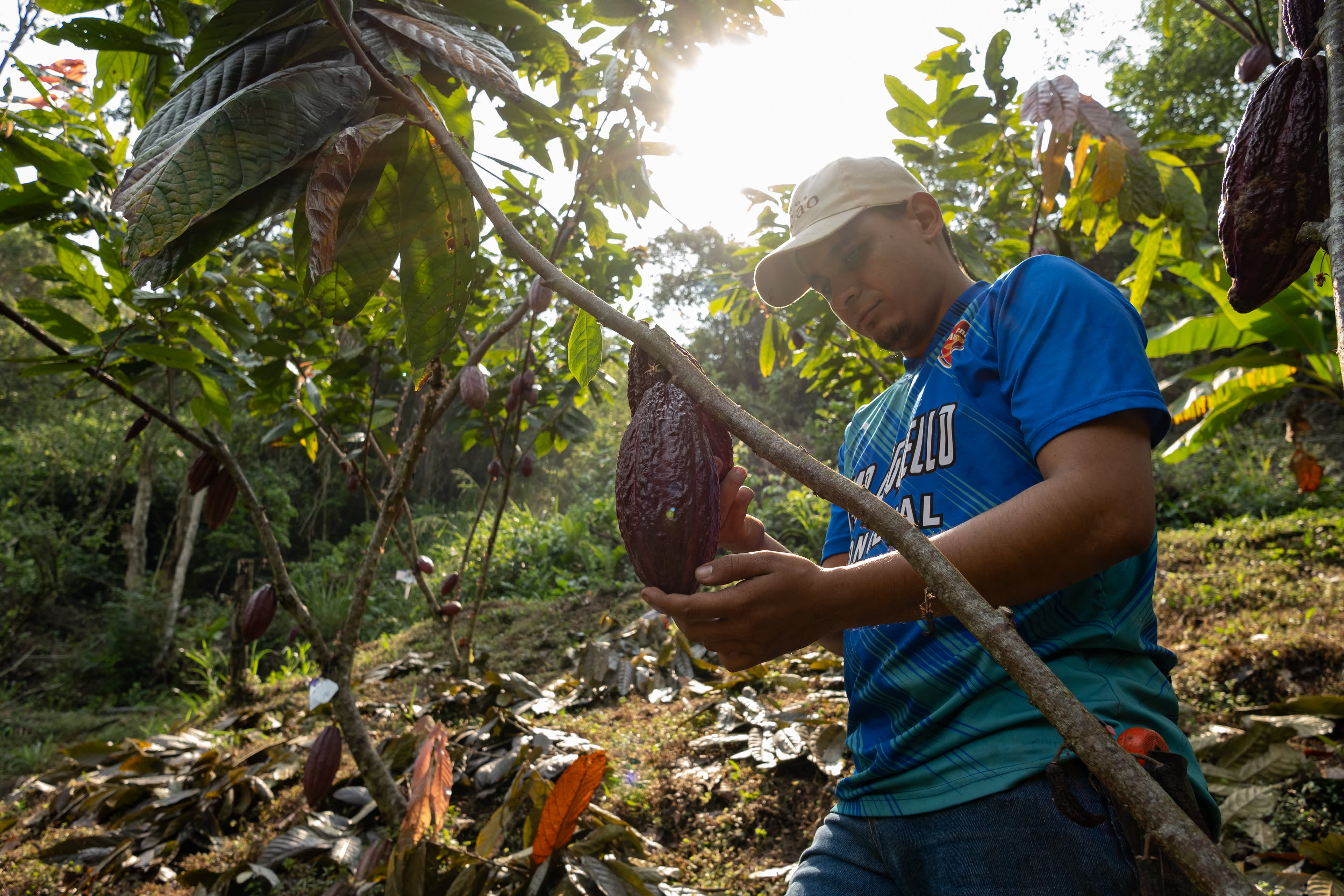
Citi expects cocoa trading to stabilize in a range between $9,000 to $10,000 per metric ton over the next three to four weeks.
Beyond that, analysts at the Wall Street bank said in a research note out on Wednesday that it sees “two-way financial market risks” in the second half the year — and that the May to June period “could represent a turning point in the cocoa bull cycle.”
Citi said cocoa grindings, which result from bean processing and are a measure of demand, will be one key factor likely to determine whether prices have any further upside.
Citi said a significant contraction in first-quarter grindings data and a drop in origin processing might suffice for New York and London cocoa markets to unwind by up to 25% to the $7,000 to $7,500 range.
“But if cocoa grindings only marginally subside (as was the case in 4Q’23) and industry statements imply limited consumer pushback, then traders could quickly target $11,000-12,000/t,” analysts at the bank said.
Overall, Citi says it remains “mildly bearish” on cocoa prices through to year-end and more so in the 2025 calendar year.
Medianews Group/long Beach Press-telegram Via Getty Images | Medianews Group | Getty Images
Difficult weather conditions and disease have affected production in West Africa, which supplies about 70% of the world’s cocoa. The two largest producers, Ivory Coast and Ghana, were recently hit by a combination of heavy rain, dry heat and disease.
El Niño-related dryness in much of Southeast Asia, India, Australia and parts of Africa has supported a price rally for soft commodities such as sugar, coffee and cocoa in recent months, the Netherlands-based Rabobank said in its annual outlook for 2024.
The El Niño phenomenon, which returned last year, is a naturally occurring climate pattern that takes place when sea temperatures in the eastern Pacific rise 0.5 degrees Celsius above the long-term average. It can pave the way to more storms and droughts.
In its outlook for coffee, Citi said prices could rally in both the short and medium term.
Arabica coffee futures with May delivery climbed above the key barrier of $2 per pound on Wednesday, notching a new high for the year. The contract was last seen trading 1.8% higher at $2.07 on Thursday.
“The current move can largely be attributed to a heat wave in Vietnam affecting Robusta coffee production and as a result, providing carryover support for premium Arabica beans,” Aakash Doshi, senior commodities strategist at Citi, said in a research note published Thursday.
Citi said recent price action had exceeded its short-term target of $1.85 and the team was now poised for a near-term rally up to between $2.1 and $2.2 on the back of adverse weather conditions and further financial inflows, among other market signals.
The bank said that it expects Arabica coffee futures to trade in a range between $1.88 to $2.15 through the 2024 calendar year, adding that it is poised increase its projections further if the physical outlook tightens.
— CNBC’s Michael Bloom, Spencer Kimball & Fred Imbert contributed to this report.
Moving markets today: Nikkei drives Asian markets up, oil and gold prices surge; US Fed’s Powell maintains cautious rate-cut strategy, attention on Fedspeak and US jobs data
The S&P 500 recovered from consecutive declines, registering its first weekly gain amid new data suggesting a softening US economy. Asian markets rallied on Thursday, fuelled by expectations of potential US rate cuts, though the timing remained uncertain, leading to a yen depreciation and boosting Japanese stocks. Oil prices surged due to concerns over reduced supply and geopolitical tensions. Federal Reserve Chair Jerome Powell maintained a cautious stance on rate cuts. Exxon Mobil signalled lower first-quarter profits due to weakened oil and gas prices. Investors remained focused on the Federal Reserve, with several top officials scheduled to speak during the session. Here are five key takeaways for your day.
Powell upholds Fed’s prudent approach to rate cuts
Federal Reserve officials, including chief Jerome Powell, underscored the need for careful consideration before start cutting interest rates. Market expectations suggest potential rate cuts around June.
Powell mentioned that policymakers widely concur that reducing rates may be necessary “at some point this year.” However, they will consider this action only after they are more confident that inflation is steadily decreasing towards the 2 per cent target.
In separate remarks to CNBC, Atlanta Fed President Raphael Bostic suggested maintaining current interest rates until the fourth quarter of the year. Bostic anticipates only one quarter-percentage-point cut in 2024, differing from the expectations of his colleagues, Reuters reported.
Exxon Mobil projects lower first-quarter profits on back of oil and gas price weakness
Exxon Mobil expects lower first-quarter operating results due to reduced oil and gas prices and significant losses in fuel derivatives, as per a recent securities filing. Weak natural gas prices and losses in fuel derivatives, which reversed course after gains last year, are the primary factors behind this decline.
Operating profit is estimated at $6.65 billion for the first quarter, down from $11.6 billion a year ago and $7.63 billion in the previous quarter. Investors anticipate an adjusted per-share profit of $2.21, compared to $2.83 a year ago, Reuters reported.
Oil prices soar amid supply worries and geopolitical unrest
Oil prices have surged recently due to several factors. Attacks on Russian refineries by Ukraine have disrupted fuel supplies, contributing to the rise. Moreover, concerns have emerged about the potential spread of the conflict between Israel and Hamas in Gaza to involve Iran, which could further disrupt oil supplies from the Middle East.
In a recent meeting, top ministers from the Organization of Petroleum Exporting Countries (OPEC) and its allies, including Russia, decided to maintain the current oil supply policy. They also urged certain countries to increase compliance with output cuts.
Consequently, Brent crude prices increased by an additional 0.37 per cent to $89.68 per barrel on Thursday, while U.S. crude prices rose by 40 per cent to $85.77 per barrel.
What’s coming up
Thursday will see investors closely monitoring the US Federal Reserve, as several of its top officials are slated to deliver speeches. In addition to this, significant economic data, including the eagerly awaited monthly U.S. non-farm payrolls report, is scheduled for release the following day.
Ahead of this, attention will also be on the latest weekly jobless claims figures and Challenger’s report on monthly layoff announcements.
In Europe, the focus will be on the services sector survey results. S&P Global is expected to unveil the March services Purchasing Managers’ Index for the euro area, along with similar survey data for the UK. Additionally, eurozone producer price data for February will be published.
Nikkei leads surge in Asian markets
Overnight, the Dow Jones Industrial Average slightly dipped by 0.11 per cent to 39,127.14 points, while the S&P 500 edged up by the same percentage to reach 5,211.49 points. Concurrently, the Nasdaq Composite saw a modest increase of 0.23 per cent, reaching 16,277.46 points. Notably, key sectors within the S&P 500, including energy materials and communication services, showed notable gains.
Across Asian markets, Tokyo’s Nikkei 225 index surged by 1.7 per cent alongside a decline in the yen. Japan’s Topix index also experienced a significant uptick of 1.6 per cent, while South Korea’s Kospi index rose by 1 per cent. Bitcoin, known for its sensitivity to expectations of interest rate adjustments, saw a 0.6 per cent increase, reaching $66,100.
Meanwhile, gold continued its remarkable ascent, hitting a fresh peak at $2,302 per ounce, marking a substantial 12 per cent surge since the onset of February.
Notably, markets in greater China remained closed due to the Ching Ming tomb sweeping festival.
Recap for April 1
Recap for March 28
Recap for March 27
Recap for March 26
| Fresh ideas. Served daily. Subscribe to Food Business News’ free newsletters to stay up to date about the latest food and beverage news. |
Subscribe |

Unlock a world of Benefits! From insightful newsletters to real-time stock tracking, breaking news and a personalized newsfeed – it’s all here, just a click away! Login Now!
ChiniMandi, Mumbai: 3rd April 2024
Domestic Market

Domestic sugar were reported stable
Domestic sugar prices in major markets were reported to be stable after a mixed session yesterday. However, with a higher monthly quota, they are expected to face continued pressure in the coming days. Furthermore, demand is expected to be weak in the major markets, putting pressure on prices.
In Muzaffarnagar, M-grade sugar costs between Rs 3,770 and Rs 3,800 per quintal, while S-grade sugar is expected to cost between Rs 3,420 and Rs 3,450. Agrimandi anticipates that the price of S grade sugar in the Kolhapur market will fall to between Rs 3,380 and Rs 3,460 per quintal within the next two weeks.
Ex-mill Sugar Prices as on April, 3 2024 :
|
State |
S/30 [Rates per Quintal] |
M/30 [Rates per Quintal] |
|
Maharashtra |
₹3440 to 3470 |
₹3520 to 3550 |
|
Karnataka |
₹3620 to 3630 |
₹3675 |
|
Uttar Pradesh |
₹3760 to 3790 |
|
|
Gujarat |
₹3471 to 3501 |
₹3521 to 3561 |
|
Tamil Nadu |
₹3600 to 3750 |
– |
|
Madhya Pradesh |
₹3600 to 3610 |
₹3650 to 3660 |
|
Punjab |
₹3825 to 3860 |
|
|
(All the above rates are excluding GST) |
||
Destination-wise Spot Prices as on April, 3 2024 :
|
City |
Grade |
Rate |
|
Delhi |
M/30 |
₹4,005.75 |
|
Kanpur |
M/30 |
₹3,958.50 |
|
Kolhapur |
M/30 |
₹3,738.00 |
|
Kolkata |
M/30 |
₹3,979.50 |
|
Muzaffarnagar |
M/30 |
₹3,953.25 |
International Market
At the time of writing this update London White Sugar #5 front month contract is trading at $654.10 ton, whereas the New York Sugar #11 front month contract is trading at 22.50 c/lb.
Currency, Commodity & Indian Indices
The rupee traded against the US dollar at 83.523 whereas USD was trading with BRL at 5.0739, Crude futures traded at ₹7156, Crude WTI traded at $85.75 barrel. Sensex closed 27.09 points lower at 73876.82 whereas Nifty ended 18.65 points lower at 22434.65
News Round-Up
World Bank projects India’s growth to reach 7.5 per cent in FY 23-24
World Bank projects India’s growth to reach 7.5 per cent in FY 23-24
Season 2023-24: 151 sugar mills end sugarcane crushing operations
Season 2023-24: 151 sugar mills end sugarcane crushing operations
Pakistan Sugar Mills Association requests govt to create ‘permanent’ window of sugar export
Pakistan Sugar Mills Association requests govt to create ‘permanent’ window of sugar export
One would think this could be a pretty effective strategy to get oil companies to become cleaner, but climate activists disagree. For them, what the insurance industry is doing is not enough. So they’re staging protests to force more radical change: a complete drop of oil and gas companies by the insurers.
Euronews called insurance “the Achilles heel of the fossil fuel industry” back in February, citing an Extinction Rebellion activist as the radical climate group staged a week-long push against insurers to stop insuring oil and gas projects.
“If fossil fuel companies have no insurance for their massive projects, the entire financial risk falls on their shoulders, so if something goes wrong, they are liable for whatever happens,” Steve Tooze told Euronews at the time.
It is difficult to argue with the point. Indeed, companies that are solely responsible for the entire financial risk of a project would be a lot more careful in how they handle that project. They would, in fact, be very careful when deciding whether to take on the project at all-which is what the activists are banking on. Related: SLB Announces $8-Billion Deal as Mergers Extend to Oilfield Sector
What is doubtful in this scenario, however, is that the insurance industry would be willing to drop clients that bring it between $1.6 billion and over $2 billion in premium income annually, per the Euronews report. And that’s just insurers on the Lloyd’s of London market. According to British consultancy Insuramore, as cited by Energy Voice, in 2022, total gross premiums from the oil and gas industry were at $21.25 billion.
“The insurance industries have a kind of superpower and they could make it almost impossible for fossil fuels to continue to operate,” Extinction Rebellion’s Steve Tooze said back in February. They probably can. But will they?
“By 2030, Swiss Re’s oil and gas re/insurance portfolios will only contain companies that are aligned with net zero by mid-century. For our treaty business we are developing an oil and gas approach by 2023,” the insurance major said in 2022.
Allianz will “no longer invest in and underwrite new single-site or stand-alone oil and selected gas risks, oil and gas activities related to the Arctic and the Antarctic as well as extra-heavy oil and ultra-deep sea risks,” the other major declared.
Neither company, then, is willing to give up oil and gas entirely, possibly thanks to the premiums that business brings in. There is a simple reason for that. There is no other business that can fully replace those premiums.
On the contrary, insurers are losing money on the business they do with wind and solar companies because of weather-related events and, in the case of offshore wind, what one publication called “engineering deficiencies.” That goes hand in hand with the higher premiums insurers are slapping on EVs because of the huge write-off risk for these vehicles compared to ICE cars.
So, what Extinction Rebellion’s Tooze says about the insurance industry’s superpower may be right, but the threat of reputation damage is unlikely to be enough to make that industry use its superpower to kill oil and gas. Because oil and gas are cash cows in troubled times of mounting losses because of “engineering deficiencies” and hail.
Even so, insurers are caving, whether due to the fear of reputational damage or because they genuinely believe it is immoral to cover oil and gas projects. As many as 28 insurance companies last year declared they would not provide coverage for the Eastern African Crude Oil Pipeline project.
The declaration came after climate activist protests against the infrastructure project that is set to be the biggest one in Africa, and that will transport oil from Uganda to the coast of Tanzania. It was a development that radical activists such as XR should celebrate because, without insurance coverage, the EACOP may never get completed-there are not a lot of insurance companies that can afford to cover such a massive project.
However, the one thing that those calling for insurers to stop doing business with oil and gas seem to forget is the number one rule of markets. Where there’s demand, supply will find a way. The world’s oil demand keeps breaking records even as the transition away from hydrocarbons gathers pace. And this means that producers will find a way to get their projects done despite insurers’ net-zero declarations.
Lending is a case in point. As some banks started reducing their exposure to the oil and gas industry under net-zero pressure, private equity stepped in to fill the void. Insurance is trickier because there is no private equity equivalent in that industry, but then again, insurers would be hard pressed to give up a business that brings in billions every year. They need these billions, too, for payouts for the engineering deficiencies of offshore wind and the hail storm devastation of solar installations.
By Irina Slav for Oilprice.com
Also read: Mentha Oil Rate Today gains 0.11% on Apr 2 2024 3:50PM
(With inputs from Reuters)
Unlock a world of Benefits! From insightful newsletters to real-time stock tracking, breaking news and a personalized newsfeed – it’s all here, just a click away! Login Now!
In slow early trade Wednesday, all three wheat markets moved sharply higher by the closing bell. There was little in the way of fresh news to drive the markets other than some weather concerns. Warm and mostly dry conditions are expected in the U.S. southern Plains and Black Sea wheat areas, including southern Russia. Corn bounced in quiet trade while soybeans, soymeal and bean oil shrugged off early weakness to finish with solid gains.
WHEAT:
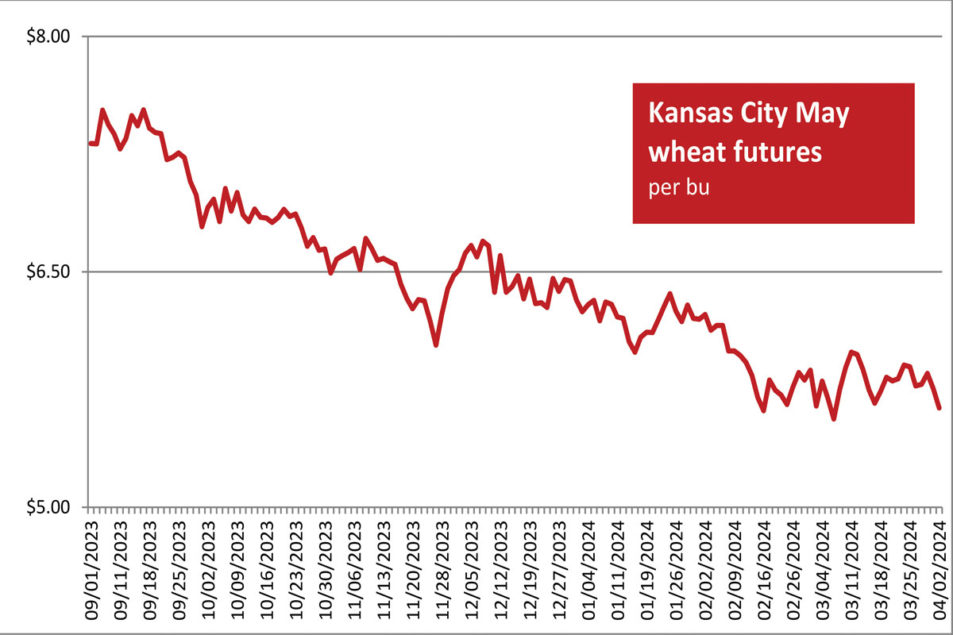
Wheat markets rose in unison on Wednesday with not a whole lot of news attributed to the strength. There is some concern over a drier pattern in the U.S. southwest and warmth and dryness in Black Sea wheat regions along with a continued very wet pattern in Europe. However, other than that, it is likely just some short covering from oversold conditions and as funds remain short wheat.
Some of the strength can be attributed to rising world wheat values especially from No. 1 exporter, Russia. FOB values from that country have risen over $10 mt, with Russian FOB now at $209/mt. Ukraine also continues to be a factor in world wheat having managed to ship 14 mmt in the current crop year from July to June. Recent strength in the U.S. Dollar Index, which hit a six-month high Tuesday has been a weight on the wheat market.
On Wednesday, the dollar corrected a bit to the downside. Wheat tender activity saw Jordan pass on its typical 120,000 mt tender amount, while Japan is seeking a combination of 114,000 mt of U.S. Canadian or Aussie wheat, and Tunisia is looking for offers on 50,000 mt of soft wheat. U.S. winter wheat conditions remain far above that of a year ago, but the outlook could turn warmer and much drier in the weeks ahead. In the spring wheat belt, moisture has been plentiful in the past week, but just 1% of spring wheat has been planted so far. Funds remain short a good chunk of both KC and Chicago wheat, with the latter position estimated to be near 90,000 contracts. DTN’s National HRW index closed at $5.17, 46 cents below the May contract.
CORN:
Corn futures moved higher in light trade after the first two days of the week took away much of the grain from last Thursday’s low USDA stocks and acres numbers. Trade was uninspiring and likely just corrective action from early week losses. It is becoming clear that corn traders are unwilling to agree with USDA’s contention that farmers will plant 4.6 million fewer acres than a year ago despite low prices and increased costs. Corn demand remains good, with export sales commitments up 19% from a year ago and inspections running 33% higher. Mexico has pretty much carried U.S. corn exporters with their brisk buying pace, while China is reportedly trying to slow shipments of imported corn to boost prices for farmers ahead of planting.
Domestically, ethanol producers have been going strong, with another stout production of 1.073 million barrels per day produced in the week ending March 29. Ethanol production has been running at a clip that is more than 5% higher than a year ago, with last week’s production a hefty 1.073 million barrels per day. Some pressure continues to weigh on corn from news of bird flu infecting chickens in Texas and Michigan. As a result, the No. 1 egg producer in the U.S. culled 3.6% of its total flock.
In Brazil, weather continues to be favorable in Mato Grosso and central and northern Brazil, while there is some concern in southern Brazil where drought conditions have expanded. Argentina still looks on pace to double last year’s drought-ravaged corn production. The U.S. ag attache in Brazil lowered ideas on Brazil’s corn production to 122 million metric tons (mmt) for 2023-24, while raising 2024-25 anticipated production to 129 mmt. The USDA remains 2 mmt above the attache, while both CONAB and private crop scouts have corn production down near 112 to 113 mmt. On corn tender news, Taiwan’s MFIG bought 65,000 metric tons (mt) of corn from Argentina and Iran is tendering for 120,000 mt of optional corn along with the same amount of soymeal. Corn is likely getting a bit of an energy-related boost from a crude oil market that saw the spot month exceed $86 per barrel as tensions rise in the Middle East. Funds are still long, close to 250,000 contracts of corn still. DTN’s National Corn Index closed at $4.04, and 22 cents under the May contract.
May arabica coffee (KCK24) this morning is up +5.80 (+2.93%), and May ICE robusta coffee (RMK24) is up +165 (+4.50%).
Coffee prices this morning are sharply higher for a second day, with arabica posting a 3-1/2 month high and robusta posting a new record high. Concern that excessive dryness in Vietnam will limit the country’s robusta coffee production is pushing robusta prices sharply higher and providing carryover support to arabica coffee prices. Coffee importer DRWakefield said today that “weather conditions in Vietnam are not encouraging, and there are concerns over a possible water shortage for irrigation, which may hurt the coffee output for next season.”
Arabica coffee prices have carryover support from Monday on concern that recent heavy rain in Brazil’s coffee-growing regions may have damaged coffee crops. Somar Meteorologia reported Monday that Brazil’s Minas Gerais region received 75.4 mm of rainfall in the past week, or 335% of the historical average. Minas Gerais accounts for about 30% of Brazil’s arabica crop.
Tight robusta coffee supplies from Vietnam, the world’s largest producer of robusta coffee beans, are a major bullish price factor. Last Tuesday, Vietnam’s agriculture department projected that Vietnam’s coffee production in the 2023/24 crop year could drop by -20% to 1.472 MMT, the smallest crop in four years, due to drought. Also, the Vietnam Coffee Association said that Vietnam’s 2023/24 coffee exports could drop -20% y/y to 1.336 MM. In addition, Marex Group Plc forecasts a global 2024/25 robusta coffee deficit of -2.7 million bags due to reduced output in Vietnam.
A rebound in Vietnam’s coffee exports is bearish for robusta prices. On Tuesday, Vietnam’s agricultural ministry reported that Vietnam’s Q1 coffee exports rose +8.3% y/y to 599,000 MT.
In a bearish factor, Rabobank on March 14 predicted a coffee surplus of 4.5 million bags for the upcoming 2024-25 marketing year, up sharply from the 500,000 bag surplus projected for 2023-24. On the bullish side, Rabobank reduced its 2023-24 production forecast by 3.9 million bags to 171.1 million bags, mainly because of downward revisions to production estimates for Indonesia and Honduras.
Coffee inventories have rebounded from historically low levels. ICE-monitored robusta coffee inventories on February 21 fell to a record low of 1,958 lots, although they recovered to a 2-1/4 month high of 3,058 lots Tuesday. Also, ICE-monitored arabica coffee inventories fell to a 24-year low of 224,066 bags on November 30, but they recovered to a 10-1/4 month high Tuesday of 604,079 bags.
Larger coffee exports from Brazil are bearish for prices. Cecafe reported recently that Brazil’s Feb arabica coffee exports jumped +36.5% y/y to 2.806 million bags. Brazil is the world’s largest producer of arabica coffee beans. Separately, Brazil exporter group Comexim, on February 1, raised its Brazil 2023/24 coffee export estimate to 44.9 million bags from a previous estimate of 41.5 million bags.
The International Coffee Organization (ICO) recently reported that Jan global coffee exports rose +32.3% y/y to 12.62 million bags, and from Oct-Jan, global coffee exports rose +13.1% y/y to 45.125 million bags.
This year’s El Nino weather event is bullish for coffee prices. An El Nino pattern typically brings heavy rains to Brazil and drought to India, negatively impacting coffee crop production. The El Nino event may bring drought to Vietnam’s coffee areas late this year and in early 2024, according to an official from Vietnam’s Institute of Meteorology, Hydrology, and Climate Change.
In a bearish factor, the International Coffee Organization (ICO) projected on December 5 that 2023/24 global coffee production would climb +5.8% y/y to 178 million bags due to an exceptional off-biennial crop year. ICO also projects global 2023/24 coffee consumption will rise +2.2% y/y to 177 million bags, resulting in a 1 million bag coffee surplus.
The USDA’s Foreign Agriculture Service (FAS), in its biannual report released on December 21, projected that world coffee production in 2023/24 will increase +4.2% y/y to 171.4 million bags, with a +10.7% increase in arabica production to 97.3 million bags, and a -3.3% decline in robusta production to 74.1 million bags. The USDA’s FAS forecasts that 2023/24 ending stocks will fall by -4.0% to 26.5 million bags from 27.6 million bags in 2022-23. The USDA’s FAS projects that Brazil’s 2023/24 arabica production would climb +12.8% y/y to 44.9 mln bags due to higher yields and increased planted acreage. The USDA’s FAS also forecasts that 2023/24 coffee production in Colombia, the world’s second-largest arabica producer, will climb +7.5% y/y to 11.5 mln bags.
On the date of publication, Rich Asplund did not have (either directly or indirectly) positions in any of the securities mentioned in this article. All information and data in this article is solely for informational purposes. For more information please view the Barchart Disclosure Policy here.