
Category: Forex News, News
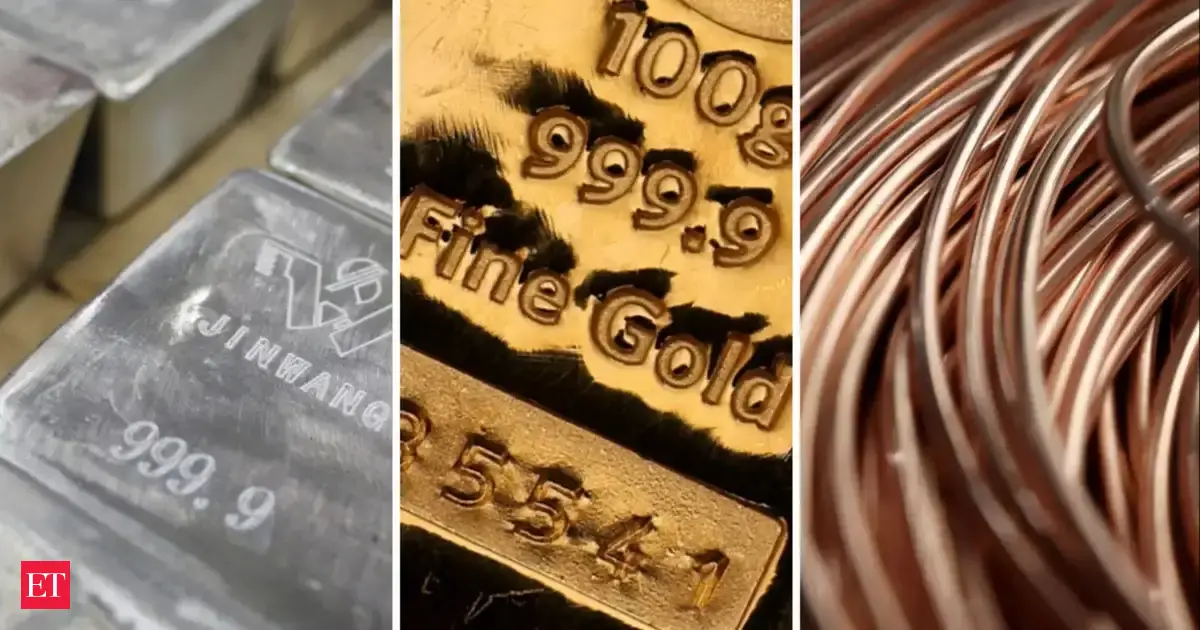
Gold Silver platinum and copper price plunge today: What happened to gold, silver, platinum and copper today? Why are precious metal prices crashing sharply today – Is this the end of the bull run for metals?
The sell-off followed stronger US economic data and a rebound in the US dollar. The latest jobless claims came in at 227,000. The January nonfarm payrolls report showed 130,000 jobs added, well above expectations of 70,000. The unemployment rate fell to 4.3%. That data reduced Federal Reserve rate cut expectations.
Gold fell below the key psychological $5,000 level. Silver broke under $80. These technical breaks triggered stop-loss selling and margin calls. The gold-silver ratio widened toward 66:1. Markets saw what traders call a “liquidity flush.” The broader trend remains under debate, but short-term volatility is elevated across commodities.

Why are gold and silver prices crashing today?
The immediate trigger was technical. For days, gold prices had traded in a tight range between $5,000 and $5,100. Silver hovered near $80 to $85. When markets coil like this, stop-loss orders build on both sides.
Gold had heavy stop orders below $5,000. Silver had leverage stacked above $80 after its massive 2025 rally that pushed prices as high as $121 earlier in the year. Once gold slipped below $5,000, automated selling accelerated. Silver followed sharply.
This type of move often happens when liquidity thins and technical levels break. There was no sudden geopolitical shock. The move was largely mechanical.
However, macro data added pressure. Strong US labor numbers reduced the urgency for Federal Reserve rate cuts. That strengthened the US dollar. A stronger dollar weighs on gold, silver, platinum, and copper because they are priced in dollars globally. The US Dollar Index rebounded after recent weakness. The labor market data changed rate expectations quickly. Before the jobs report, markets were pricing higher odds of a March rate cut. After payrolls beat forecasts, those odds fell sharply.
Higher-for-longer interest rate expectations hurt non-yielding assets like gold. When bond yields rise and the dollar strengthens, investors shift toward interest-bearing assets.
Gold is highly sensitive to real yields. Silver is even more volatile because it has both safe-haven and industrial demand exposure.
If upcoming inflation data surprises to the upside, rate cut expectations may fall further. That could keep pressure on metals.
Gold price analysis: Key support and resistance levels
Gold futures (GC00) are now trading near $4,966, down from recent highs above $5,600. The 52-week range remains wide, between $2,844 and $5,626.
The key support zone is $4,880 to $4,900. If that area holds, gold could stabilize. A break below $4,880 opens the door toward $4,800, then $4,700. The major long-term support stands near $4,500.
On the upside, gold must reclaim $5,000 on a daily closing basis. If it holds above that level, buyers may target $5,100 again. That area has acted as strong resistance.
Despite today’s drop, the broader uptrend from 2025 remains intact. Central bank buying continues. China’s central bank has maintained steady gold accumulation. Physical premiums remain elevated in some markets.
For now, the gold price forecast remains neutral with elevated volatility.
Silver price crash: Why was silver hit harder?
Silver fell nearly 10% in one session. That is far more aggressive than gold.
The reason is leverage. Silver experienced a record rally in 2025, gaining more than 140% at one point. Futures positioning became crowded. When prices broke below $80, margin calls triggered forced selling.
Silver’s key support now lies between $74 and $70. This zone aligns with previous consolidation levels. If silver holds above $74 and regains $85, the rally could resume toward $90 or higher.
But if dollar strength persists and risk appetite weakens, silver could test lower support zones.
The gold-silver ratio near 66:1 suggests silver is underperforming gold. Historically, elevated ratios sometimes precede silver outperformance, but timing remains uncertain.
Platinum and copper join the sell-off
Platinum (PL00) fell 5.63% to $2,024. Platinum often trades with both precious metals and industrial demand expectations. Weak risk sentiment and dollar strength weighed on prices.
Copper (HG00) dropped 2.78% to $5.80 per pound. Copper is closely linked to global growth, especially China’s demand. Slowing manufacturing signals and stronger US data created mixed signals.
Copper had traded above $6 earlier this year. Today’s drop reflects both technical pressure and macro uncertainty.
Industrial metals tend to fall when investors anticipate tighter financial conditions.
Was this a delayed reaction to strong jobs data?
Some traders believe today’s move was a delayed reaction to the strong nonfarm payrolls report. The dollar initially struggled to hold gains after the data. But as rate expectations reset, metals came under pressure.
Unemployment fell to 4.3%. Wage growth surprised on the upside. Those factors reduce immediate pressure on the Federal Reserve to ease policy.
Jobless claims at 227,000 did not dramatically change the narrative. Markets are now focused on upcoming CPI data. A stronger inflation reading could support the dollar further.
The metals sell-off occurred alongside weakness in energy markets. WTI crude oil fell 2.99% to $62.70. Brent crude dropped 2.84% to $66.31. Unleaded gasoline and heating oil also declined. Natural gas was the exception, rising more than 3%.
This suggests a broader risk reset rather than an isolated gold event.
What happens next for gold, silver, platinum, and copper?
Short term, volatility remains high. Gold must defend $4,880. Silver must hold above $74. Platinum needs stability above $2,000. Copper must protect the $5.70 to $5.80 area.
If US economic data continues to surprise on the upside, metals may face further pressure. If inflation cools and rate cut expectations return, gold and silver could rebound sharply.
Today’s crash appears technically driven but reinforced by macro shifts. The longer-term bull case tied to central bank demand, inflation hedging, and industrial use remains intact.
For now, investors should expect sharp two-way moves in gold prices, silver prices, platinum prices, and copper prices as markets adjust to shifting Federal Reserve expectations in early 2026.
FAQs:
Why are gold and silver prices crashing on February 12, 2026?
The massive price plunge is primarily driven by a “liquidity flush” triggered by unexpectedly strong U.S. labor data. With January payrolls jumping by 130,000 and unemployment falling to 4.3%, the market has abruptly repriced Federal Reserve interest rate expectations. This data reduced the urgency for rate cuts, causing the U.S. Dollar to rally and pressuring dollar-denominated metals. The crash was accelerated by technical factors as gold breached the critical $5,000 support level, triggering a massive wave of automated stop-loss orders and margin calls for leveraged traders.
What is the current status of the gold and silver price outlook?
Despite today’s $132 drop in gold and 10% cratering in silver, many institutional analysts view this as a necessary consolidation of an “overheated” market. While short-term volatility is expected to persist, the structural bull case remains supported by a sixth consecutive year of silver supply deficits and aggressive gold accumulation by global central banks. However, the immediate gold forecast is neutral-to-bearish until prices can reclaim and hold the $5,000 mark.
Why did copper and platinum also fall today?
Industrial metals like copper and platinum are suffering from a “risk-off” sentiment and fears of high-for-longer interest rates. Copper dropped to $5.80 as traders worried that restrictive Fed policy could dampen global manufacturing demand, particularly as markets await fresh inflation data. Platinum’s 5.6% slide reflects its high sensitivity to industrial project financing costs and a broader retreat from “green” commodities as the U.S. dollar regains its dominance.
What are the key support levels to watch for a recovery?
For gold, the $4,880 to $4,900 zone is now the must-hold line to prevent a deeper slide toward $4,500. Silver investors are looking for stability around the $75 mark, as a failure to hold this level could see the metal retest January’s lows near $65. Tomorrow’s Consumer Price Index (CPI) report is the next major volatility catalyst; a “cool” inflation print could spark a relief rally, while “hot” data may deepen today’s sell-off.
Source link

Written by : Editorial team of BIPNs
Main team of content of bipns.com. Any type of content should be approved by us.







Share this article: