
Category: Forex News, News
Oil Price Forecast: Crude Above $90 as Middle East Conflict Escalates — Is $150 Oil Next?
Forced Production Cuts Across the Gulf
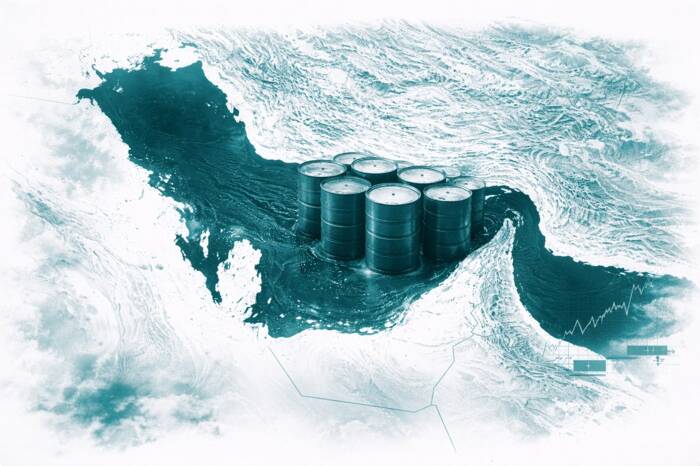
According to Wall Street Journal, the United Arab Emirates and Kuwait had begun to curb oil production as the closure of the Strait of Hormuz affects the flow of supplies and fills storage facilities. Abu Dhabi National Oil Co. said it is managing offshore production levels to deal with storage requirements. Kuwait Petroleum Corp. also cut output at oil fields and refineries after Iranian threats against safe passage through Hormuz.
Kuwait started to reduce output by some 100,000 barrels per day early Saturday. The reduction is nearly triple on Sunday. This implies that cuts may be up to around 300,000 barrels per day or higher depending on storage levels and the situation around Hormuz.

Kuwait produced about 2.57 million barrels per day in January and relies completely on the Strait of Hormuz for exports. This is a heavy dependence that makes the country vulnerable as there are not many alternative routes from where shipments can come.
The UAE is in a better position but is still facing pressure. The country produced more than 3.5 million barrels per day in January as OPEC’s third largest producer. It is able to bypass Hormuz via a 1.5 million barrel per day pipeline to Fujairah on the western coast and also take advantage of international storage facilities.
Disruptions are spreading in the region. Iraq has begun to withhold production for storage tank saturation. Saudi Arabia shut its largest refinery and Qatar closed the world’s largest liquefied natural gas export plant after drone attacks. Saudi Arabia has diversified some of its crude exports to Yanbu on the Red Sea but this route is not capable of completely replacing exports that usually pass through the Strait of Hormuz.
Inflation Risks Rise as Oil Shock Hits the Global Economy
The current supply shock is already having an impact on consumers all over the world. Asian refiners are beginning to report shortages as shipments from the Gulf slow down. When there are fewer cargoes available to the market, refiners must scale down operations or seek out other supplies. This situation makes energy more expensive not only for businesses but also for households.
Strong Economic Growth Increases Inflation Pressure
At the same time, the global economy is still showing signs of growth. This causes inflationary effect of higher oil prices to be stronger as energy demand is still firm. The ISM Manufacturing PMI is 52.4% which signifies mild expansion of industrial sector.
Source link


Written by : Editorial team of BIPNs
Main team of content of bipns.com. Any type of content should be approved by us.







Share this article: