Category: Forex News, News
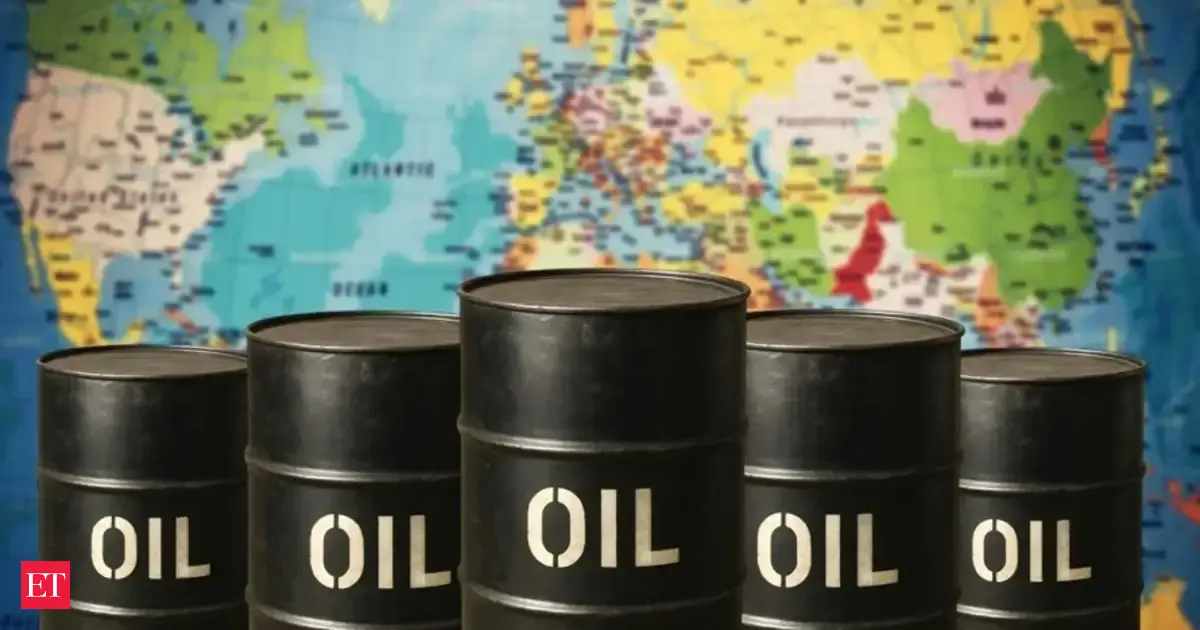
oil price forecast: will Brent crude break $110: Why are oil prices surging after Trump’s Iran threats — and will Brent crude break $110? Here’s latest oil price analysis, crude oil surge, energy market outlook, and global oil price forecast
Trump’s national address on April 1 did not outline a clear exit strategy from the ongoing conflict in Iran, which began a month ago, but it reinforced his commitment to military escalation if needed. The president emphasized that the US does not rely on Middle Eastern energy, urging other nations to step in to maintain Gulf oil shipments. Oil markets, however, reacted strongly to the speech, as hopes for a rapid resolution faded.
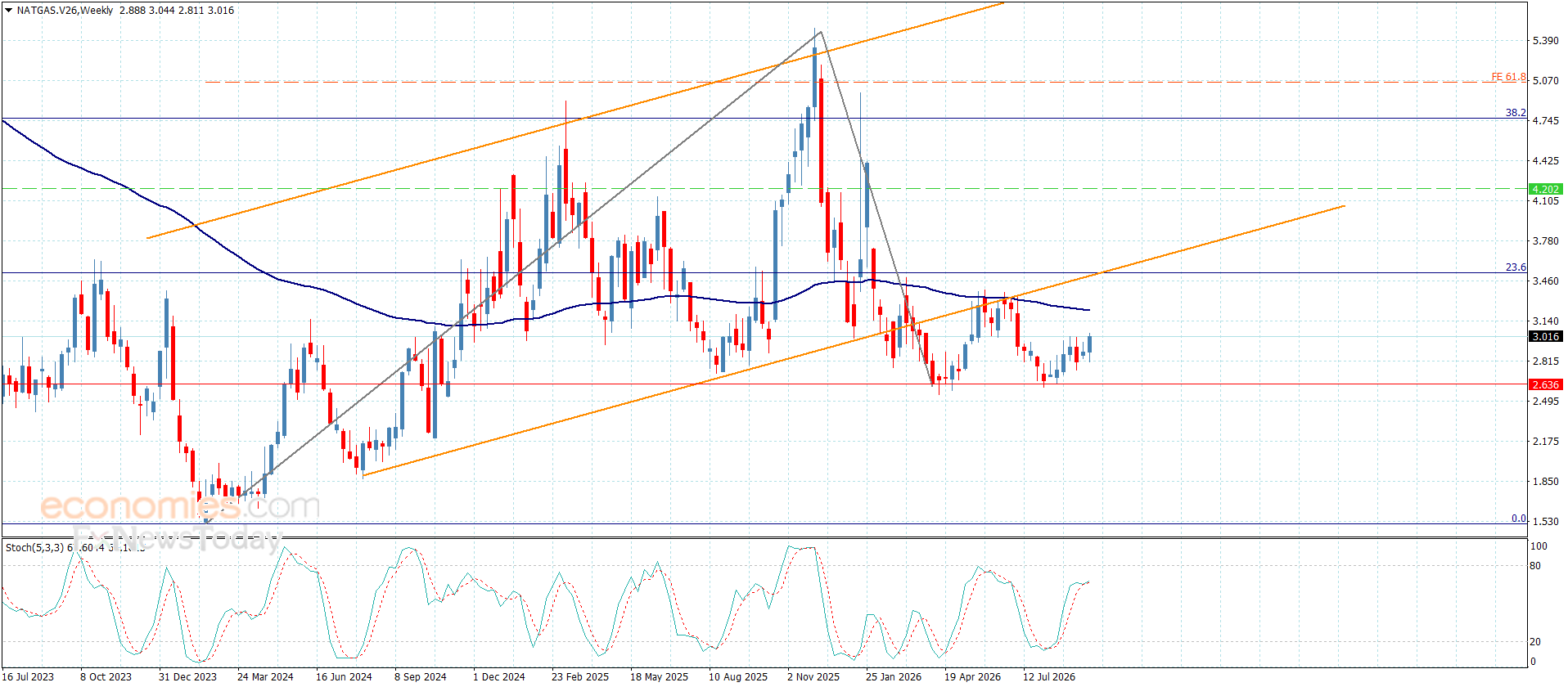
Today, the WTI crude (CL00) jumped to $109.40, gaining $9.28 or 9.27%, while Brent crude (BZC00) climbed to $109.46, up $8.30 or 8.20%, both nearing critical resistance levels. Natural gas (NG00) showed modest movement at $2.84, rising 0.89%, indicating relatively stable demand. Meanwhile, unleaded gasoline (RB00) surged to $3.31, up 7.14%, reflecting rising downstream fuel costs.

Meanwhile, global efforts to secure maritime trade are underway. UK Prime Minister Keir Starmer announced a virtual summit with nearly 36 countries to explore measures ensuring safe navigation in the Strait of Hormuz, a critical passage for global oil flow. Analysts warn that energy supply disruptions in the Middle East could worsen in April, driven by the ongoing conflict and tightening restrictions in the region.
Why oil prices are surging after Trump’s Iran threats
Oil prices have historically reacted to geopolitical threats in the Middle East, and Trump’s statements have intensified market uncertainty. Brent crude surged above $108 per barrel after the speech, while WTI crude hit $108.36, reflecting investor fears of prolonged disruption in oil flows.
The Strait of Hormuz, through which roughly 20% of global oil shipments pass, has effectively seen oil tanker traffic grind to a halt since the US-Israel military strikes began on February 28, 2026. Analysts from Oxford Analytica suggest that resuming commercial navigation through the strait is unlikely in the near term, further tightening global supply.
Fidelity International portfolio manager George Efstathopoulos explained that markets had been bracing for a “binary outcome” from Trump’s address—either a path to de-escalation or a signal for continued escalation. “Clearly, we seem to be on the latter path right now,” he told CNBC, highlighting the risk-off sentiment dominating global investors.
Could the Iran conflict escalate further and impact oil prices more?
Trump’s threats to “hit Iran extremely hard” and “finish the job very fast” have heightened fears of further escalation. Iran has responded with vows of “crushing attacks” against the US and Israel, signaling a potentially prolonged confrontation.
Missile fire targeting Israel was reported on April 2, and the United Arab Emirates confirmed that its air defenses were actively intercepting missile and drone threats. Analysts warn that if hostilities intensify, oil prices could breach $110 per barrel in the coming weeks, straining global energy markets already facing volatility.

The International Energy Agency (IEA) warns that disruptions in Middle Eastern energy supply will likely worsen in April due to the combination of military strikes and stricter maritime restrictions. Investors are closely monitoring both military developments and diplomatic signals, as uncertainty remains the key driver of market swings.
How are global powers responding to Strait of Hormuz disruptions?
The UK has convened a virtual meeting with 36 nations to discuss securing free navigation through the Strait of Hormuz. The focus is on protecting stranded vessels, ensuring crew safety, and restoring the flow of essential goods.
Trump has also indicated that Iran requested a ceasefire, but he stated it would only be considered if the strait is “open, free, and clear.” Iran, however, insists that US actions will not dictate the reopening of this vital waterway, citing the IRGC Navy’s control over the passage. This ongoing standoff leaves energy traders and governments grappling with a high-risk supply environment.
FAQs:
1. How high can oil prices surge amid Trump’s Iran threats? Oil prices have jumped nearly 8% following Trump’s renewed threats against Iran, with Brent crude reaching $107.60 per barrel and WTI at $108.36. Analysts warn that continued conflict and disruptions in the Strait of Hormuz could push prices above $110 per barrel, making energy markets highly volatile in the coming weeks. Global investors and traders are closely monitoring military developments and supply bottlenecks to anticipate further price spikes.
2. What impact does the Iran conflict have on global oil supply and shipping?
The ongoing US-Iran conflict has effectively halted tanker traffic through the Strait of Hormuz, a route that handles roughly 20% of the world’s oil shipments. This disruption is tightening global energy supply and fueling sharp price increases. International efforts, including a UK-led summit with 36 nations, aim to restore safe navigation, but short-term supply risks remain high, affecting both markets and consumers worldwide.
Source link


Written by : Editorial team of BIPNs
Main team of content of bipns.com. Any type of content should be approved by us.

Share this article: