

Category: Forex News, News
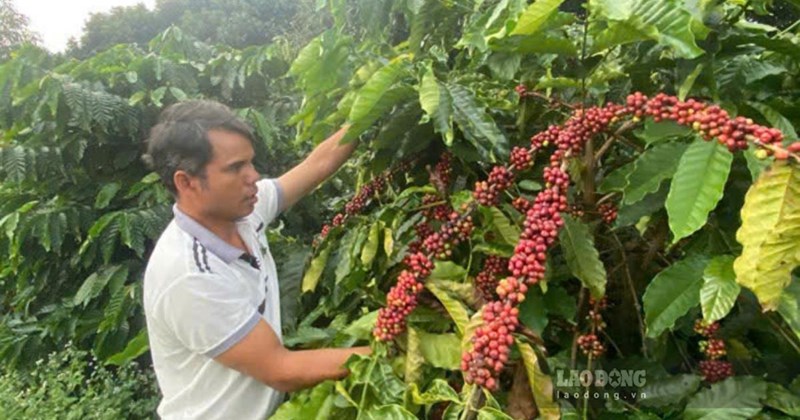
Coffee prices on April 13: Domestic prices increase, world prices remain flat
Domestic coffee prices
The domestic coffee market this morning, April 13th, continued to increase after a week of deep price slippage.
According to surveys in key growing areas of the Central Highlands, coffee prices simultaneously increased slightly from 200 to 300 VND/kg, bringing the average price level of the whole region to the threshold of 86,000 VND/kg.
In Dak Nong province (old), the purchase price recorded an increase of 200 VND, pushing the price to the highest level in the region at 86,000 VND/kg.
Dak Lak and Gia Lai two localities increased the highest by 300 VND, bringing the price to the highest level of 86,000 VND/kg.
With the same increase of 300 VND, Lam Dong province listed it at 85,500 VND/kg.
World coffee prices
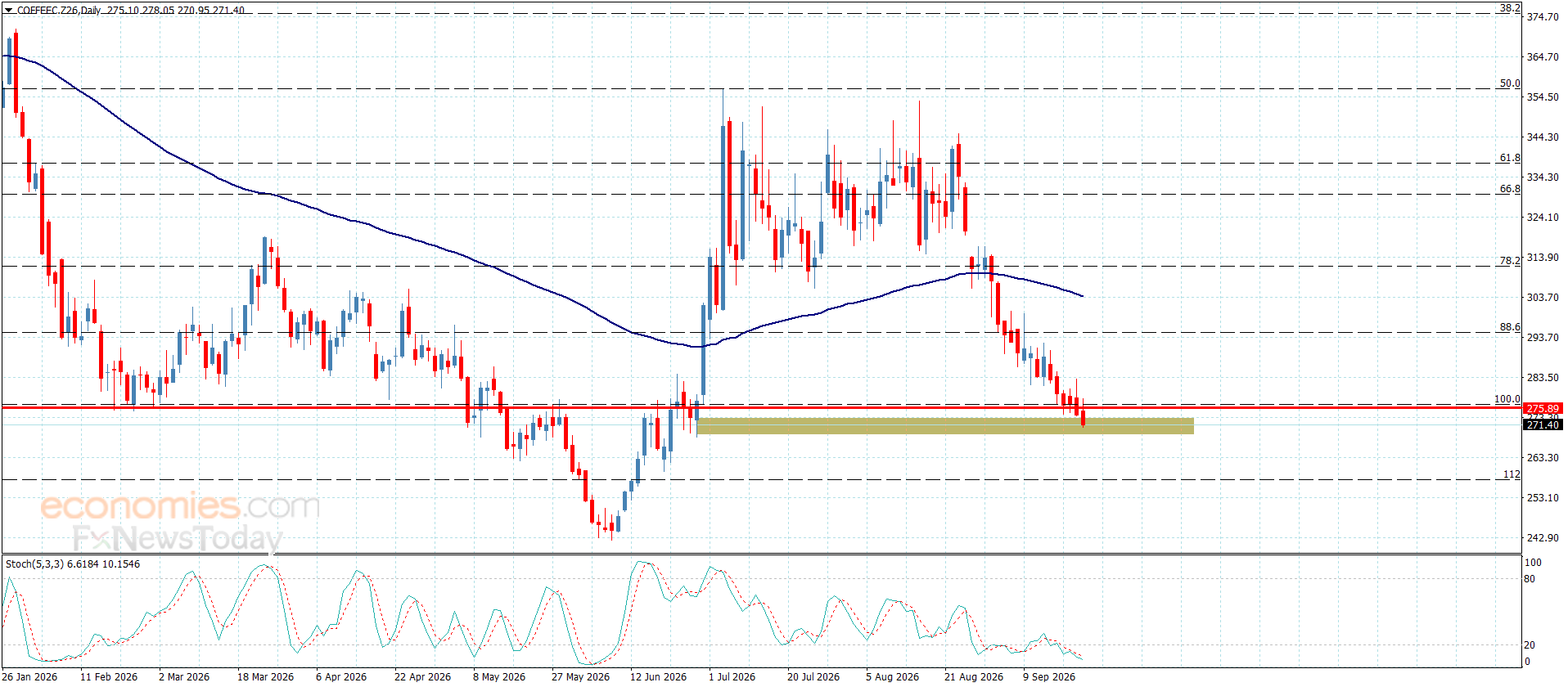
On the international market, futures exchanges remained unchanged after a slight price increase in the last session of the week. On the New York exchange, Arabica futures for May 2026 opened at 300.10 cents/lb. Further forwards offered prices at the threshold of 267 cents/lb – 295.9 cents/lb.

For the same term, the London exchange also witnessed the Robusta flow moving sideways, standing at 3,324 USD/ton. Further terms fluctuated around 3,100 USD/ton – 3,239 USD/ton.
Scarce supply of Robusta coffee is supporting prices. Robusta inventories on the ICE exchange fell to their lowest level in more than 1 year. However, increased Arabica inventories are putting pressure on prices as inventory tracked by ICE increased to its highest level in 6.25 months.
Market outlook
According to the Climate Prediction Center (CPC) of the US National Weather Service, neutral ENSO conditions are present and are likely to last until mid-year. Neutral ENSO states occur when there is no El Nino or La Nina, often bringing more stable and predictable weather. This shows the decline of extreme climate phenomena and can help make global crop forecasts more consistent.
For coffee growing areas, especially in Brazil, Colombia and Vietnam, neutral ENSO conditions can contribute to stabilizing rainfall and temperature, supporting more uniform crop development and reducing the risk of weather disruptions. Weather factors will continue to be closely monitored as the Southern Hemisphere enters the traditional cold winter period in the near future.
In terms of long-term vision, in the context of Vietnamese coffee production expected to recover in the 2025-2026 crop year after years affected by weather, along with the upcoming Robusta Conilon harvest of Brazil and expected positive output from Indonesia and Uganda in the middle of the year, the market is showing signs of rebalancing supply and demand for Robusta coffee.


Written by : Editorial team of BIPNs
Main team of content of bipns.com. Any type of content should be approved by us.




Share this article: