

Category: Forex News, News
Gold Forecast: XAU/USD eyes weekly loss as bears tighten grip
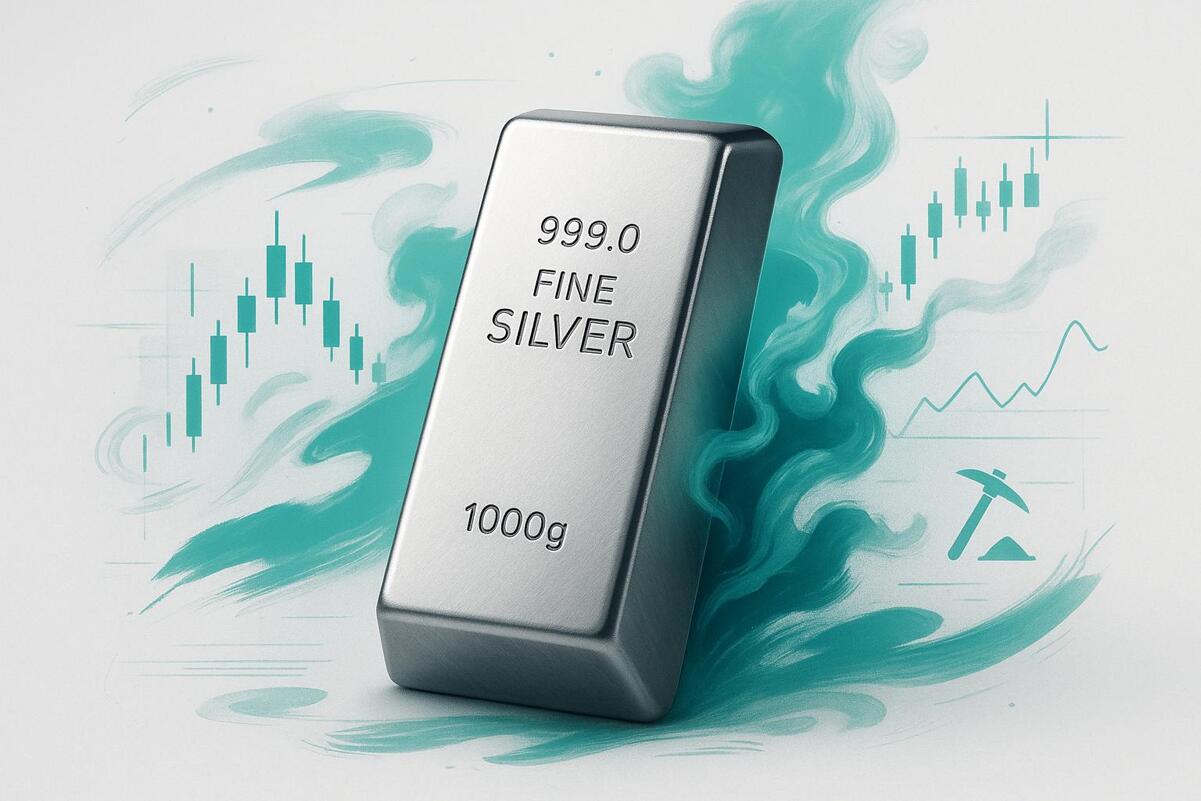
Gold is testing the $4,700 level early Friday, holding at its weakest level in over a week and eyeing the first weekly drop in five weeks.
Gold: Fresh downside opening up before the Fed?
Gold witnesses a down week as bears tighten their grip, following rejection at higher levels on several occasions.

The primary reason behind Gold’s renewed downside is the solid recovery in the US Dollar (USD), as the Greenback looks to snap two consecutive weeks of decline.
Robust Retail Sales and preliminary business PMI data from the United States (US) pushed back against expectations of at least one interest rate cut by the Federal Reserve (Fed) this year, boosting the USD at the expense of the bright metal.
The Greenback also capitalized on resurgent haven demand as Oil prices regained traction amid the US-Iran stalemate on peace talks and the Strait of Hormuz, rekindling fears over pervasive inflation.
In the latest news, US military officials are developing new plans to target Iran’s capabilities in the Strait of Hormuz in the event the current ceasefire with Iran fails, per CNN News.
Meanwhile, Israeli Ambassador to the United Nations (UN) Danny Danon told CNN that the Lebanon ceasefire extension is “not 100%,” warning that Hezbollah is firing rockets to sabotage the truce.
This came after US President Donald Trump announced via Truth Social late Thursday that the Israel-Lebanon ceasefire was extended by three weeks, following the talks in Washington.

Going forward, Gold could continue to face heat from sustained USD demand and uncertainty around the Middle East conflict.
Nonetheless, a brief rebound cannot be ruled out, as investors might resort to repositioning their recent trades heading into next week’s Fed monetary policy meeting.
Gold price technical analysis: Daily chart
In the daily chart, XAU/USD trades at $4,676.24, keeping a bearish near-term tone as spot holds under the short- and medium-term simple moving averages. The 21-day simple moving average (SMA) at roughly $4,701 and the 100-day SMA near $4,741 sit overhead as immediate dynamic resistance, reinforced by the broader descending trend-line that continues to cap rebounds. Momentum is lacklustre, with the Relative Strength Index (14) hovering around 44, which suggests downside pressure is present but not yet stretched.
On the topside, initial resistance is seen at the 21-day SMA around $4,701, followed by the 100-day SMA near $4,741, where the upper boundary of a falling wedge aligns.
Meanwhile, a more meaningful barrier emerges at the 50-day SMA close to $4,870 if bulls manage a stronger recovery. On the downside, the first layer of support comes from the higher rising trend-line around $4,589, ahead of the lower ascending support zone near $4,383; a sustained break below these trend supports would expose the more distant 200-day SMA, now providing structural backing around $4,250.
(The technical analysis of this story was written with the help of an AI tool.)
Economic Indicator
Fed Interest Rate Decision
The Federal Reserve (Fed) deliberates on monetary policy and makes a decision on interest rates at eight pre-scheduled meetings per year. It has two mandates: to keep inflation at 2%, and to maintain full employment. Its main tool for achieving this is by setting interest rates – both at which it lends to banks and banks lend to each other. If it decides to hike rates, the US Dollar (USD) tends to strengthen as it attracts more foreign capital inflows. If it cuts rates, it tends to weaken the USD as capital drains out to countries offering higher returns. If rates are left unchanged, attention turns to the tone of the Federal Open Market Committee (FOMC) statement, and whether it is hawkish (expectant of higher future interest rates), or dovish (expectant of lower future rates).
Next release:
Wed Apr 29, 2026 18:00
Frequency:
Irregular
Consensus:
3.75%
Previous:
3.75%
Source:
Federal Reserve
Fed FAQs
Monetary policy in the US is shaped by the Federal Reserve (Fed). The Fed has two mandates: to achieve price stability and foster full employment. Its primary tool to achieve these goals is by adjusting interest rates.
When prices are rising too quickly and inflation is above the Fed’s 2% target, it raises interest rates, increasing borrowing costs throughout the economy. This results in a stronger US Dollar (USD) as it makes the US a more attractive place for international investors to park their money.
When inflation falls below 2% or the Unemployment Rate is too high, the Fed may lower interest rates to encourage borrowing, which weighs on the Greenback.
The Federal Reserve (Fed) holds eight policy meetings a year, where the Federal Open Market Committee (FOMC) assesses economic conditions and makes monetary policy decisions.
The FOMC is attended by twelve Fed officials – the seven members of the Board of Governors, the president of the Federal Reserve Bank of New York, and four of the remaining eleven regional Reserve Bank presidents, who serve one-year terms on a rotating basis.
In extreme situations, the Federal Reserve may resort to a policy named Quantitative Easing (QE). QE is the process by which the Fed substantially increases the flow of credit in a stuck financial system.
It is a non-standard policy measure used during crises or when inflation is extremely low. It was the Fed’s weapon of choice during the Great Financial Crisis in 2008. It involves the Fed printing more Dollars and using them to buy high grade bonds from financial institutions. QE usually weakens the US Dollar.
Quantitative tightening (QT) is the reverse process of QE, whereby the Federal Reserve stops buying bonds from financial institutions and does not reinvest the principal from the bonds it holds maturing, to purchase new bonds. It is usually positive for the value of the US Dollar.
Source link


Written by : Editorial team of BIPNs
Main team of content of bipns.com. Any type of content should be approved by us.





Share this article: