
Category: Forex News, News
EUR/USD Forecast: The elusive US-Iran peace deal keeps the US Dollar strong
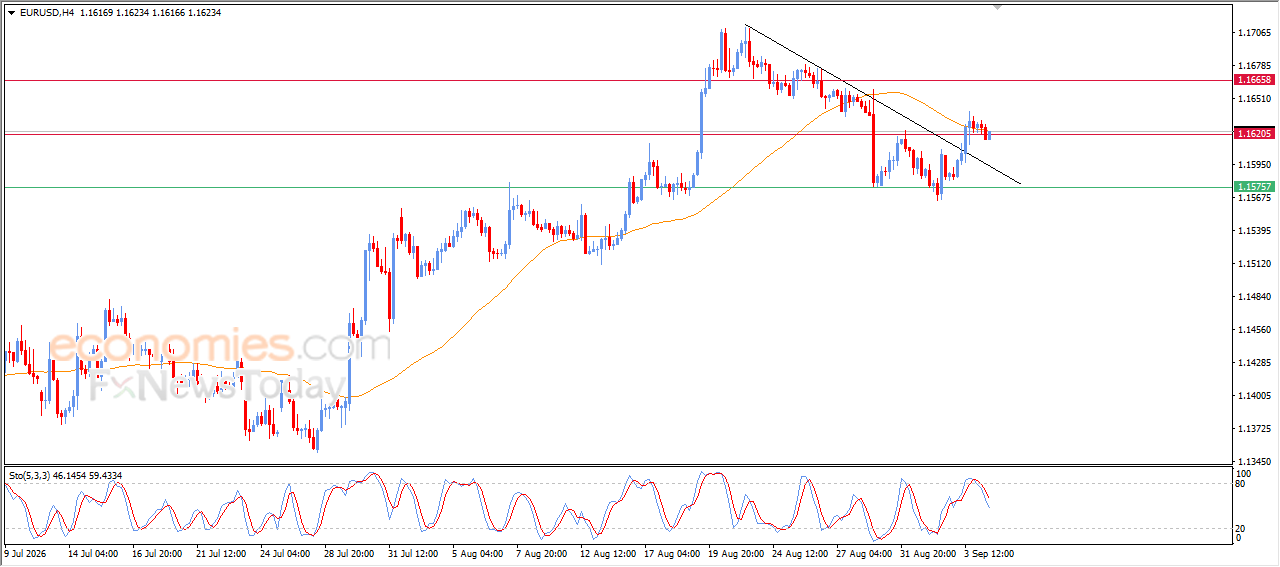
The EUR/USD pair fell for a second consecutive week, settling not far above a fresh multi-week low of 1.1576. War-related headlines kept driving financial markets, coupled with mounting speculation that the United States (US) Federal Reserve (Fed) will deliver a rate hike before the year is over.
Optimism about a possible resolution of the US-Iran conflict fluctuated throughout the week, reaching its peak on Thursday when headlines suggested both countries reached an agreement via Pakistan mediation, putting temporary pressure on the safe-haven US Dollar (USD).

Early on Friday, however, reports clarified that there is no actual deal, although there’s progress toward peace. Iran’s uranium enrichment and control over the Strait of Hormuz are the remaining sticking points, the same issues that have been dragging on ever since the first idea of an agreement.
Easing Oil prices suggest investors are optimistic about a deal, although taking it with a pinch of salt. By the end of the week, the positive tone of equities also supports the idea of a better mood heading into the weekend.
Still, the Greenback remains strong as focus is also on the Fed. Kevin Warsh was sworn in as the 17th Fed Chair on Friday, facing quite a tumultuous scenario. Warsh will have to deal on the one hand with increasing inflationary pressures and tepid growth and on the other hand, with a President that demands lower interest rates, the opposite of what markets are betting on. Warsh will preside over his first Federal Open Market Committee (FOMC) monetary policy meeting in mid June.
European Central Bank rate hike coming
Across the pond, the situation does not differ much. The Old Continent faces the same inflationary pressures steaming from the Iran war, with recent data showing that the euro area annual inflation rate was 3.0% in April 2026, after printing at 2.6% in March. The European Union (EU) annual inflation was 3.2% in April 2026, up from 2.8% in the previous month.
The European Central Bank (ECB) is widely expected to deliver a rate hike in June, after keeping rates unchanged in April, albeit policymakers are working to temper expectations of more rate hikes coming in July. The ECB is scheduled to announce its next monetary policy decision on June 11.
The Euro (EUR) enjoyed some temporary demand after the initial headlines indicating that a rate hike in June is pretty much a done deal, but it was not enough to overshadow broad USD strength.

Worrisome data
The macroeconomic calendar had little to offer, but the released figures fueled growth-related concerns. S&P Global released the preliminary estimates of the May Purchasing Managers’ Indexes (PMIs). European figures were the most worrisome, as the German Composite PMI came in at 48.6, while for the EU, the index printed at 47.5, both indicating contraction. In the US, however, the Composite PMI was confirmed at 51.7, matching the April print.
In the upcoming days, the US will release the April Personal Consumption Expenditures (PCE) Price Index, the Fed’s favorite inflation gauge, which was previously at 3.5% YoY. The country will also publish an update on the Q1 Gross Domestic Product (GDP), while Germany will publish the preliminary estimate of the May Harmonized Index of Consumer Prices (HICP).
Market players are excited, yet cautious about a peace deal in the Middle East, but have learned that weekends do not equal absent news on the matter. Be aware of whatever happens, triggering some opening gaps on Monday’s Asian open.
EUR/USD Technical Outlook:
EUR/USD is technically bearish according to the daily chart. The pair holds beneath both the 20-day simple moving average (SMA) at 1.1692 and the 100-day SMA at 1.1699, with the shorter one crossing below the longer one, an early sign of further slides ahead. The 200-day SMA, in the meantime, holds flat around 1.1660. At the same time, technical indicators hold within negative levels with neutral-to-bearish slopes, not enough to confirm further slides but supporting the downward case.
In the weekly chart, EUR/USD holds well above the 100- and 200-week simple moving averages (SMAs) at 1.1256 and 1.0959, but extended its slide below the 20-week SMA at 1.1689, in line with mounting selling pressure. The Relative Strength Index (RSI) indicator gains downward traction just under the 50 mark, while the Momentum indicator also aims south in negative territory, hinting that sellers are gaining ground.
On the topside, initial resistance could be found at 1.1660, the weekly top, followed by the 1.1690 region, where multiple SMAs converge. The area is likely to hold in a risk-averse scenario and without a clear war deal. If somehow the US and Iran reach an agreement and reopen the Strait of Hormuz, next in line are 1.1740 and 1.1800. On the downside, the broader trend backdrop is underpinned by the weekly low, with additional losses exposing a long-term static support area at 1.1470. A clear break below the latter could open the door for a steeper decline towards the 100-week SMA at 1.1256.
(The technical analysis of this story was written with the help of an AI tool.)


Written by : Editorial team of BIPNs
Main team of content of bipns.com. Any type of content should be approved by us.







Share this article: