
Category: Forex News, News
Agricultural product prices today, October 29, 2026: Coffee prices fluctuate ahead of the new harvest; pepper exports reach a record high; France tightens regulations on cheap Chinese goods.
Coffee prices today, October 29, 2026
World coffee prices have fallen across the board.
Coffee futures contracts on the ICE exchange fell to their lowest level in 2.5 weeks on October 28, amid improved supply prospects and the Brazilian Real remaining generally weak following the unexpected presidential election results last weekend.
Robusta coffee prices reversed course and fell again after just one session of slight upward adjustment. Prices dropped by approximately 0.7% to $3,199 per ton. Prior to this, after five consecutive sessions of declines, robusta coffee prices briefly touched their lowest level since March 2024. Overall, robusta coffee prices remain under downward pressure as the new harvest begins in Vietnam, the world’s leading robusta producer, while inventories on exchanges continue to rise.

The Vietnam Coffee Association recently announced that the country’s coffee production in the 2025-2026 crop year (from October 2025 to September 2026) is estimated to reach nearly 1.9 million tons, an increase of 6–10.5% compared to the previous crop year. In the 2025-2026 crop year, coffee exports are expected to total 1.8 million tons, a 21% increase compared to the previous crop year. Export revenue is projected to reach US$8.5 billion, an increase of nearly 1% and setting a new record high.
While traders and market participants forecast that the current crop year’s output will generally remain largely unchanged compared to the 2025-2026 crop year, weather conditions this year have been quite erratic in the Central Highlands, Vietnam’s main coffee-growing region. Decreased production in some areas has been offset by increased production in others.
VICOFA predicts that the 2026-2027 coffee crop year will face many difficulties and challenges, but also opens up opportunities for the Vietnamese coffee industry to restructure towards sustainability, develop brands, and increase export value.
The USDA forecasts that Vietnam’s coffee production in the 2026-2027 crop year will increase by 2.5% compared to the previous year, reaching 32.5 million bags (60 kg/bag). Of this, robusta production is expected to increase by 3%, to 31.4 million bags.
Meanwhile, the ICE arabica coffee contract closed down as much as 2.4%, at one point touching its lowest level in 2.5 weeks at $2.8405/lb.
Traders say the weakening Brazilian Real continues to put pressure on coffee prices, as the currency has yet to recover significantly after falling 9% at the start of the week. The sharp decline in the domestic currency of the world’s number one coffee producer and exporter encourages processors, farmers, and export businesses to boost sales of USD-denominated contracts, as this increases revenue when converted to local currency.

Coffee prices also came under further downward pressure after ICE reported that the volume of coffee awaiting inspection was at its highest level in six weeks. As of October 28th, 41,961 bags of Brazilian coffee were awaiting sorting and inspection at the exchange’s warehouses. According to procedure, after passing quality inspections, the coffee will be added to the certified inventory by ICE. However, this process usually takes 1-2 weeks, or even longer when the volume of goods is large.
Since mid-September, Brazilian coffee has been continuously entering ICE warehouses at a rapid pace. Brazilian coffee inventories at these warehouses reached a nine-month high of 80,084 bags last week, before slightly decreasing to 79,867 bags on October 28th.
The U.S. Department of Agriculture (USDA) forecasts record coffee exports from Brazil at 49.1 million bags in the 2026-2027 crop year. To achieve this, Brazil needs to export approximately 37.9 million bags in the remaining nine months of the crop year. This is equivalent to an average of 4.2 million bags per month, higher than the 3.7 million bags per month recorded in the first quarter. To reach this goal, arabica exports need to accelerate significantly, given that Brazilian farmers are currently selling this type of coffee at a moderate pace.
One of the factors that often has an immediate impact on the market is inventory levels. Currently, although Brazilian coffee is continuously being delivered to ICE warehouses, this volume is not yet fully reflected in certified inventory figures.
ICE-certified arabica coffee inventories continued to decline by another 2,787 bags on October 28th, falling to 222,035 bags, the lowest level in about 1.5 months. This figure is approaching the 27-year low of 217,646 bags, recorded on September 15th. Meanwhile, ICE-certified robusta coffee inventories have surged since the beginning of October, reaching a 1.25-year high of 6,755 lots.
Domestic coffee prices continue to fall sharply. After falling by 3,100 – 3,500 VND/kg last week, the price is gradually retreating to 88,000 VND/kg.
Pressure for adjustment is mounting in the domestic coffee market, with a dual impact from both psychological factors on the international market and domestic supply.
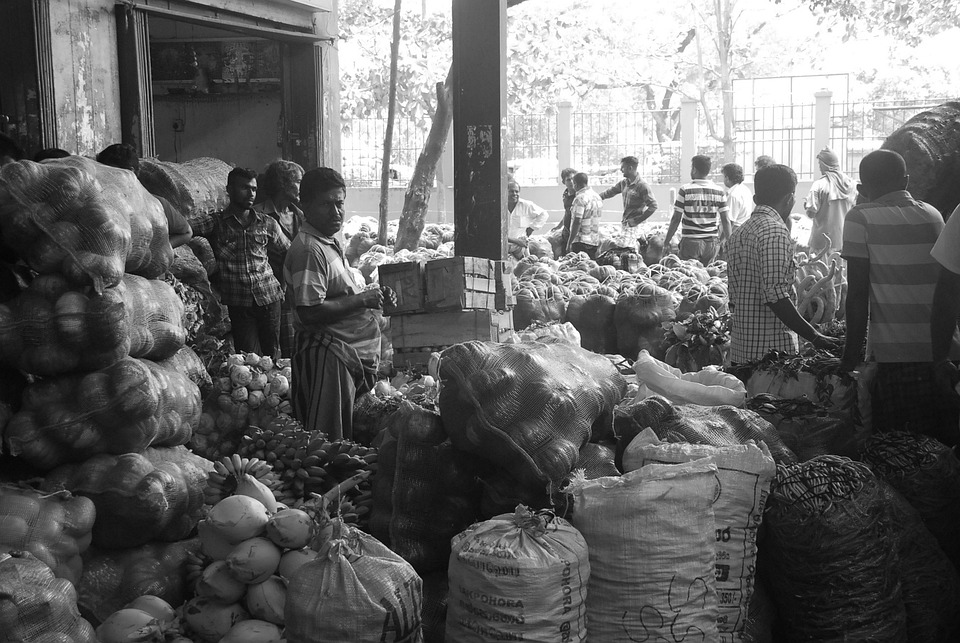
The domestic coffee industry has entered a new crop year. The Central Highlands region is entering the peak harvest season. Although the immediate supply from the previous crop has almost run out, providing support to prevent prices from falling too sharply, the pressure from the upcoming new crop supply is still causing dealers and export businesses to remain cautious, refraining from buying at high prices. In the short term, domestic coffee prices are likely to continue to trade sideways or experience periods of consolidation around the 87,000 – 89,000 VND/kg range.
|
Domestic coffee prices today, October 29th, decreased by 500-800 VND/kg in some key producing regions. ( Unit: VND/kg)
(Source: giacaphe.com) |
According to the World and Vietnam Newspaper, at the close of trading on October 28, robusta coffee prices fell on the ICE Futures Europe London exchange. The November 2026 delivery contract decreased by $40, trading at $3,200/ton. The January 2027 delivery contract decreased by $21, trading at $3,199/ton. Trading volume was low.
Arabica coffee prices on the ICE Futures US New York exchange continued to fall, with the December 2026 contract down 7 cents to trade at 286.75 cents/lb. The March 2027 contract fell 4.9 cents to trade at 276.20 cents/lb. Trading volume was average high.
| Agricultural product prices today, October 29, 2026: Coffee prices fluctuate ahead of the new harvest; pepper exports reach a record high; France tightens restrictions on cheap Chinese goods. |
Pepper prices today, October 29, 2026
Domestic pepper prices remain stable at around 137,000–140,000 VND/kg.
Domestic pepper prices remain stable, with no new fluctuations. Specifically, transactions in key pepper-producing regions on October 29th were as follows:
In Dak Lak province, the price of pepper today is being purchased at 140,000 VND/kg.
In Gia Lai province, the price of pepper today is 137,000 VND/kg.
In the Dak Nong area (Lam Dong province), the price of pepper today is being purchased at 139,000 VND/kg.
In the Ba Ria – Vung Tau (Ho Chi Minh City) area, the price of pepper today is 137,500 VND/kg.
In Dong Nai province, the price of pepper today is 137,000 VND/kg; in Binh Phuoc province, the price of pepper today is also being purchased at 137,000 VND/kg.
|
The latest world pepper prices are updated from the International Pepper Association (Source: giacaphe.com).
|
According to the International Pepper Community (IPC), the global pepper market continues to remain stable, with no price adjustments observed in key exporting countries.
According to IPC, the global pepper market remained relatively stable last week, although there were some minor adjustments in producing countries. Most markets maintained stable price levels, while exchange rate fluctuations between local currencies and the US dollar were generally insignificant. Some currencies recorded slight increases against the greenback.
In Vietnam, both the domestic and export markets for pepper have remained stable. Other types of pepper have also shown no significant changes, creating a stable pricing environment for both domestic participants and international buyers.
According to data from the Vietnam Customs Department, from the beginning of the year to October 15, 2026, Vietnam exported 228,589 tons of pepper, earning 1.5 billion USD, an increase of 16.7% in volume and 12.2% in value compared to the same period last year. With the current growth rate, Vietnam’s pepper export value this year could reach a new record high, surpassing the 1.66 billion USD figure of 2025.
Today’s export rice prices (October 29, 2026)
Rice prices are generally stable, according to the Vietnam Food Association (VFA).
In Vietnam, the export price of 5% broken white rice fluctuates. 423–427 USD/ton.
Export prices for Jasmine rice rose to $519-$523 per ton, a slight increase of $1 per ton.
The price of fragrant rice with 5% broken grains has increased to 470-475 USD/ton .
In Thailand, the price of 5% broken white rice ranges from US$475–479 per ton, the highest among leading producing countries. The price of 5% broken white rice from Pakistan remains in the range of US$408–412 per ton. In India, the price of 5% broken white rice stands at US$384–388 per ton, while parboiled 5% broken rice is priced at US$378–382 per ton.
According to the Indian Rice Exporters Federation (IREF), India’s rice exports increased by 13% in value during the first half of the current financial year. The export outlook remains positive as the country has surplus rice reserves, sufficient to meet the growing demand in the global market.
The story of the import and export market.
Measures to tax and strengthen controls on imported goods through e-commerce platforms like Shein, Temu, and AliExpress are beginning to show results in France. In just two months, the total value-added tax (VAT) declared on small shipments has decreased by 48%.
According to Les Echos, in light of that result, the French government is determined to further tighten regulations and push the European Union (EU) to implement more measures to control cross-border e-commerce.
Speaking on October 28th at a meeting summarizing a year of implementing control measures, French Trade Minister Serge Papin affirmed that the government would not compromise in the fight against environmentally polluting business practices and unfair competition. This campaign was intensified after authorities discovered child-like sex dolls and weapons being sold on the Shein platform a year ago.
According to Minister for Public Action and Public Finance David Amiel, the total VAT declared on goods worth less than 150 euros imported into France decreased by 48% between June and August 2026. The government considers this a sign that the tax measures have had a significant impact on the purchase of inexpensive goods from abroad.
One of the most significant measures is the €3 tax on each category of goods in small packages, which the EU will implement from July 1, 2026. This tax primarily affects goods sold through Chinese e-commerce platforms such as Shein, Temu, and AliExpress. According to French officials, the new policy has led to a significant decrease in both the number and value of small packages shipped from Asia to France.
From November 1st, the EU will continue to apply a €2 processing fee per package to offset inspection and monitoring costs. This decision comes amidst a sharp increase in the import of cheap goods into Europe, putting growing pressure on the customs system. In 2025 alone, nearly 5.9 billion small packages were expected to enter the EU, with 93% originating from China.
Alongside imposing taxes and fees, France is also strengthening its inspection of goods. Since March 2026, the country’s customs authorities have expanded their control operations to include land transport routes within the EU, instead of focusing solely on border crossings outside the bloc. This aims to prevent goods that do not meet regulations from entering France via other member states.
According to the French Ministry of Trade, Paris’s lobbying efforts have contributed to a consensus within the EU on imposing taxes and processing fees on small shipments, something that was considered impossible just two years ago. The French government wants to further leverage this result to promote more consistent and stringent regulations, thereby curbing unfair competition and ensuring that foreign e-commerce platforms comply with the same requirements as businesses operating in Europe.
Source link


Written by : Editorial team of BIPNs
Main team of content of bipns.com. Any type of content should be approved by us.




Share this article: