About Editorial team of BIPNs

Main team of content of bipns.com. Any type of content should be approved by us.
17 12, 2025

XRP, Cardano & Bitcoin – American Wrap 16 December

By |2025-12-17T01:35:39+02:00December 17, 2025|Crypto News, News|0 Comments

Cardano (ADA) is trading under pressure at the time of writing on Tuesday, as sellers remain dominant in the broader cryptocurrency market. The smart contract token’s recovery potential has remained a pipe dream since the October 10 flash crash, despite support at $0.3707-$0.3775 holding steady.

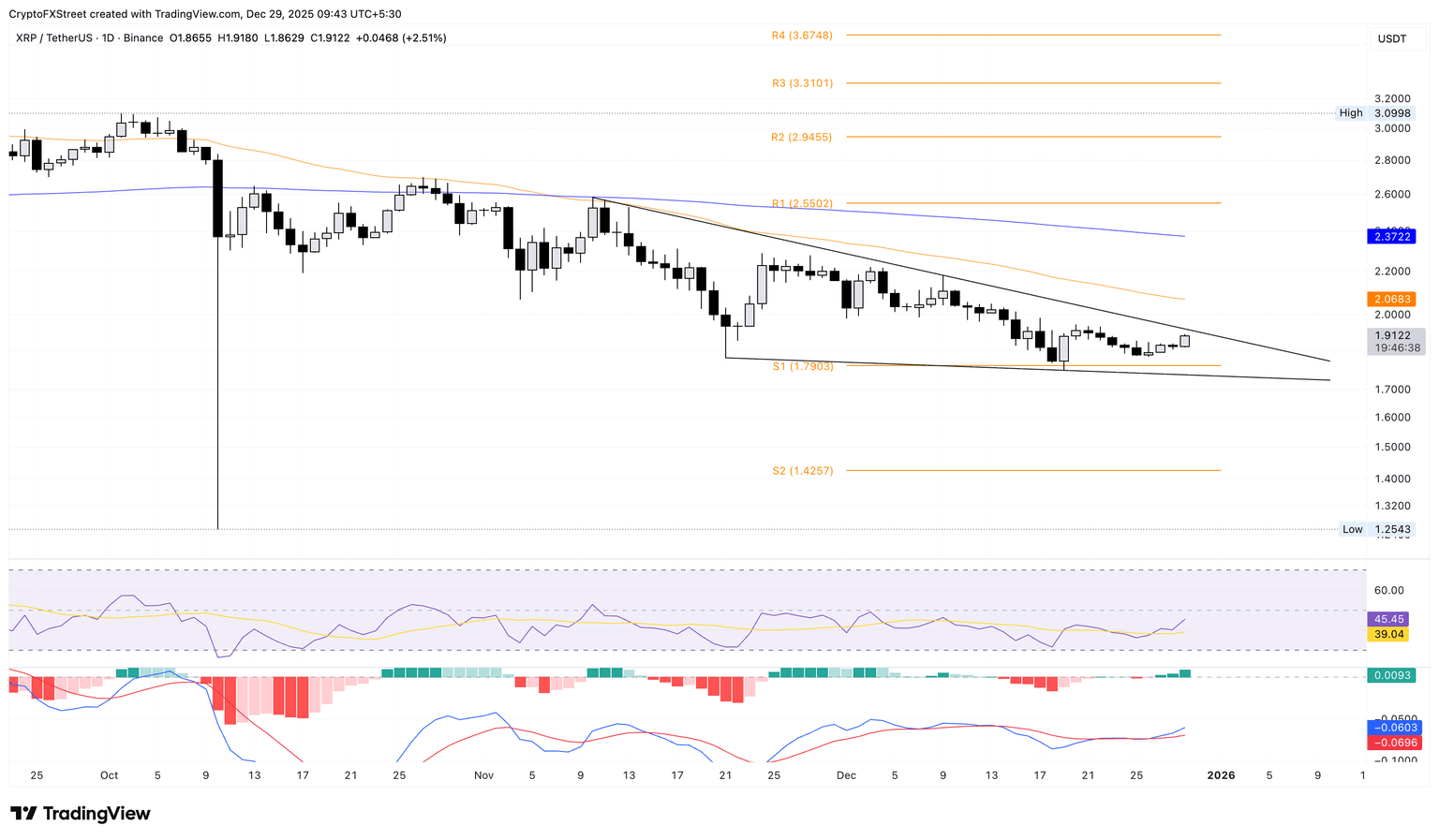
Ripple (XRP) is finding footing above $1.90 at the time of writing on Tuesday after a bearish wave swept across the broader cryptocurrency market, building on persistent negative sentiment.

Bitcoin trades lower on Tuesday, falling 3% over the past 24 hours to 87k amid cautious trading ahead of key U.S. data points that could affect the Fed’s rate path. 

Source link

17 12, 2025

A dApp marketplace for web3 code, templates, and developer tools

By |2025-12-17T00:29:38+02:00December 17, 2025|News, NFT News|0 Comments


Disclosure: This article does not represent investment advice. The content and materials featured on this page are for educational purposes only.

Web3.Market brings the marketplace model to blockchain development, offering reusable dApp code, developer tools, and infrastructure resources to help teams build faster.

Summary

  • Web3.Market operates a multi-vendor Web3 code marketplace with downloadable, runnable dApp packages covering common onchain use cases like DEXs, staking, presales, and token tools.
  • It includes a Developer Hub that organizes essential Web3 tooling, such as RPCs, indexing, wallets, testing, security, and analytics, by build-stage category.
  • The platform applies manual usability checks and optional AI contract scanning to improve code quality, while emphasizing the need for project-specific testing and audits.

Building decentralized applications typically means combining several parts: smart contracts, a front end, wallet connections, and backend infrastructure that can handle real usage. In web2, developers often browse template marketplaces such as CodeCanyon or Codester when a project needs a working base quickly. Web3 adds another layer of complexity because onchain logic can control assets and permissions, and mistakes can carry lasting impact.

Web3.Market applies the marketplace model to blockchain development with a clear focus on two areas: a Web3 file marketplace for downloadable dApp code and a Developer Hub for web3 tooling. The platform runs as a multi-vendor web3 code marketplace where independent builders publish items, new web3 developers join regularly, and new listings are added regularly.

Many web3 teams also face a practical reality: a large share of common onchain patterns has already been built in some form, and “starting from zero” often repeats work that exists elsewhere. A marketplace where web3 developers gather and publish reusable components can reduce that repetition by offering a ready base that teams can adapt, then validate through testing and review.

A file marketplace built around runnable packages

A code marketplace is only useful when listings arrive as complete packages rather than isolated snippets. Web3.Market’s marketplace is centered on downloadable bundles that are meant to run as described, with documentation that covers setup, configuration, and expected behavior. That packaging supports teams that want a starting point they can adapt to a specific use case, whether that means a smart contract template, a dApp starter kit, or supporting scripts.

Within the current marketplace catalog, common categories include practical build blocks used across many web3 products, such as DEX applications and exchange-style interfaces, ICO and presale packages, staking applications and staking contract bundles, token generator tools, SaaS-style crypto applications and vesting dashboards, and additional web3 scripts and dApp starter kits that cover recurring patterns.

The multi-vendor structure supports variety across different stacks and patterns. Instead of relying on a single publisher roadmap, the catalog can keep pace with how dApp development evolves because sellers can publish updates and new products as market needs shift.

Crypto checkout for digital code products

Web3.Market supports cryptocurrency payments for marketplace purchases. Prices may be shown in USD for reference, while transactions settle in supported crypto assets through a wallet-based flow. For many web3 teams, this aligns with day-to-day operations: payments that work across borders, and accounts that already sit in a wallet rather than a card profile.

Developer Hub: Web3 tooling organized by category

Code is only one part of shipping a dApp. Infrastructure decisions can take as much time as writing application logic: RPC access, indexing, wallet authentication, storage, analytics, testing, and security are recurring requirements across most projects.

Web3.Market’s Developer Hub aims to reduce that research overhead by grouping tools into practical categories used during web3 builds. Instead of a generic directory, the hub is structured around how teams assemble a stack, with sections that cover areas such as RPC and node services, indexing, oracles, storage, smart contract frameworks, testing utilities, security tools, wallets and authentication, analytics, bridges, onramps, and account abstraction. For teams comparing options mid-build, a categorized hub can shorten the time spent jumping between documentation sites and vendor pages.

Manual checks: usability standards and clear limits

Smart contract marketplaces face a persistent concern: code can look clean and be well documented while still failing in production due to business-logic mistakes, unsafe defaults, or unexpected integrations. Web3.Market’s approach includes manual checks focused on usability and completeness. Listings are reviewed to confirm that apps are runnable and that documentation is present and usable, which helps filter incomplete submissions and catch common quality problems.

At the same time, this type of review is not the same as a full external security audit. Web3.Market’s guidance reflects standard engineering practice: projects should run tests that match the intended use case, validate behavior on testnets before a mainnet launch, and seek independent audits for higher-value or more complex systems, especially at an enterprise level. This is particularly relevant for contracts that touch treasuries, lending logic, permissions, upgrade mechanisms, or other areas where errors can have serious downstream effects.

The practical interpretation is simple: marketplace code can shorten build timelines, but launch readiness still depends on project-specific testing and review that fits the system’s risk profile.

AI contract scanning as a small add-on

Alongside the file marketplace and Developer Hub, Web3.Market includes an AI-based smart contract scanner for Solidity contracts. The scanner generates a report with severity categories and suggested fixes, which can help surface common patterns during development iterations. Within the wider offering, the scanner functions as a supporting feature, while the main focus remains the web3 code marketplace and the Developer Hub.

Seller terms and an early developer offer

Web3.Market also serves developers who want to publish code, operating on a commission model. The standard commission rate is 20%. For early sellers, the first 100 approved developer applications receive a lifetime 15% commission rate instead of the standard 20%.

For developers creating reusable smart contract templates, scripts, or dApp starter kits, these terms position the marketplace as a distribution channel aimed at teams actively looking for web3 building blocks.

Meeting search demand for web3 building blocks

Interest around terms like “dApp marketplace,” “Web3 code marketplace,” “smart contract templates,” and “Web3 developer tools” reflects a shift in how teams build: more modular components, more reuse, and more demand for code that arrives ready to run with clear documentation.

Web3.Market positions itself in that space with a multi-vendor file marketplace for downloadable web3 code, a Developer Hub that organizes current tooling, and a lightweight contract scanner that supports iterative review workflows.

Disclosure: This content is provided by a third party. Neither crypto.news nor the author of this article endorses any product mentioned on this page. Users should conduct their own research before taking any action related to the company.


Source link

17 12, 2025

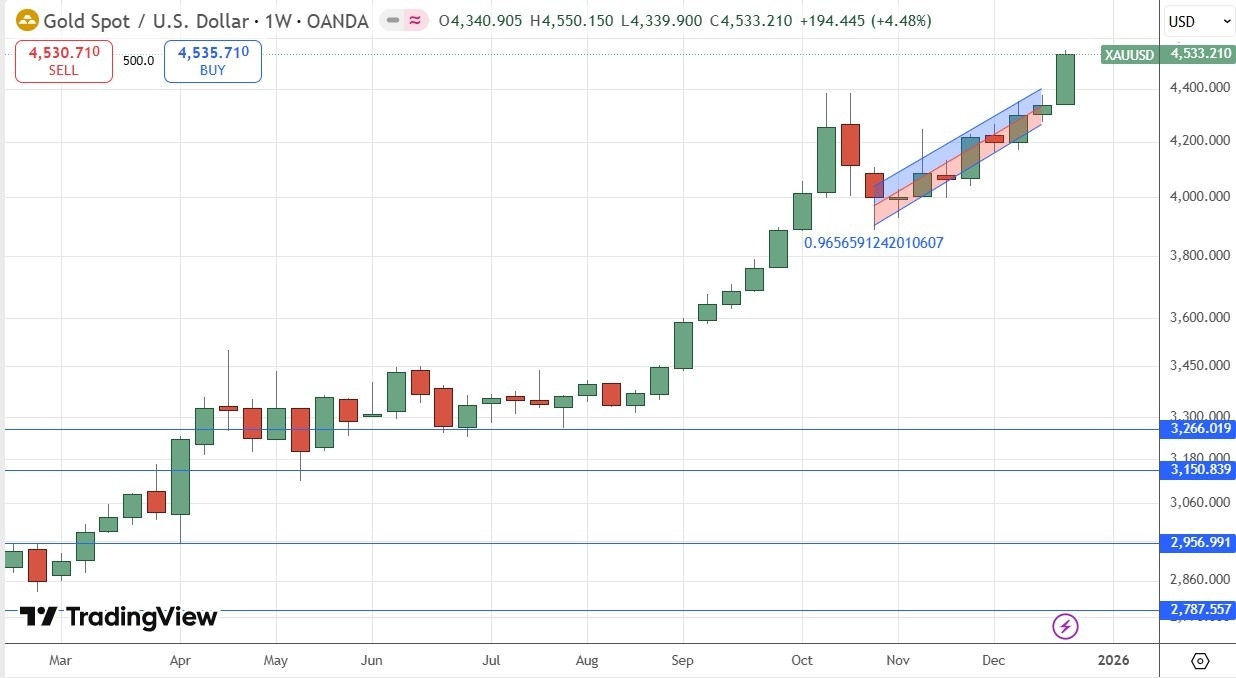
XAU/USD extends its consolidative phase around $4,300

By |2025-12-17T00:23:31+02:00December 17, 2025|Forex News, News|0 Comments


XAU/USD Current price: $4,304.30

  • Mixed US data left investors uncertain about the next move by the Federal Reserve.
  • United States inflation and European central banks’ announcements are next in line.
  • XAU/USD consolidates around $4,300 buyers still looking for a catalyst.

Gold prices extend their consolidative phase on Tuesday, with the bright metal holding above the $4,300 mark, but unable to run past the $4,350 weekly top. The bright metal found some near-term demand early in the American session, following the release of a batch of United States (US) data. The mixed figures put near-term pressure on the US Dollar (USD), although it also affected Wall Street’s performance. As a result, the USD intraday decline was quickly reversed, with the American currency still on the negative side.

 The US published the ADP Employment Change 4-week survey, which showed that the private sector added 16.25K new positions on average in the week ending November 29, improving from the previous 4.75K. Additionally, the Nonfarm Payrolls (NFP) report indicated that the country added 64K in November, after losing 105K in October. The Unemployment Rate was higher than expected, up  to 4.6%, from the previous 4.4%. Finally, the US also published October Retail Sales, which remained unchanged in the month, following a revised 0.1% gain in September.

Market players are still uncertain about whether the Federal Reserve (Fed) will be able to deliver more than one interest rate cut in 2026. Some extra light could be shed by data coming on Thursday, as the US will release an update on the Consumer Price Index (CPI). On the same day, the European Central Bank (ECB) and the Bank of England (BoE) will announce their decisions on monetary policy. The macroeconomic calendar has little to offer on Wednesday.

XAU/USD short-term technical outlook 

In the near term, XAU/USD maintains its modest bullish bias. The 4-hour chart shows that the pair is currently above all its moving averages, with the 20-period Simple Moving Average (SMA) climbing above the 100- and 200-period SMAs, and all three sloping higher. The pair is currently battling to remain above the 20-period SMA, while the 100-period SMA, which is further below, provides support at $4,215. Meanwhile, the Momentum indicator ticks higher within neutral levels, while the Relative Strength Index (RSI) indicator sits at 55, heading lower and hinting at limited gains ahead in the near term.

In the daily chart, XAU/USD is well above a bullish 20-day (SMA), which advances above the 100- and 200-day SMAs, all of which reinforce the bullish bias. The 20-day SMA at $4,195.66 offers nearby dynamic support. At the same time, the Momentum indicator holds above its midline but has eased, signaling that buying pressure is losing some steam, while the RSI stands at 69 with a modest upward slope.

(The technical analysis of this story was written with the help of an AI tool)


Source link

16 12, 2025

How the FDA’s potential dietary supplements regulation change could impact you

By |2025-12-16T23:43:35+02:00December 16, 2025|Dietary Supplements News, News|0 Comments


The U.S. Food and Drug Administration is moving toward a controversial change in how warning labels appear on dietary supplements, which would reduce how often key disclaimers must be displayed on product packaging.

Under long-standing federal law, dietary supplement makers must include a boldface disclaimer when their products make health claims such as “supports immune health” or “promotes heart health.”

That language states that the claim “has not been evaluated by the Food and Drug Administration” and that the product “is not intended to diagnose, treat, cure, or prevent any disease.”

These warnings are intended to remind consumers that supplements are not evaluated for safety or effectiveness before they go on sale.

In a letter to manufacturers last week, the FDA’s food division head, Kyle Diamantas, said the agency is considering relaxing the rule so companies would still be required to include the disclaimer at least once on their labels, but would no longer need to repeat it every time a health benefit is referenced.

The FDA is considering allowing supplement labels to show disclaimers once instead of repeating them (Getty Images)

Diamantas said the FDA has seldom enforced the current rule and that easing it would reduce label clutter and costs. He added that no timeline has been set for the change and that the agency will not enforce the existing requirement while the policy is under review.

“If FDA does not identify significant concerns as we continue our review of the available data and information regarding this request, we are likely to propose a rule to amend this requirement,” Diamantas wrote in the letter.

About 75 percent of Americans use at least one supplement, and up to 100,000 supplement products are sold in the U.S., according to the FDA.

Dr. Pieter Cohen of Harvard Medical School warned that the FDA’s move could further weaken already limited warning labels on dietary supplements.

“Then you start saying things like, ‘We only need it on the actual bottle,’” Cohen told NBC News. “Then you say, ‘It only needs to be on the back.’ Then you let the print get smaller.”

Department of Health and Human Services spokesperson Andrew Nixon told the outlet in a statement that the change would not make warnings harder to notice, claiming that “a growing number of Americans are paying closer attention to product labels.”

The Independent has contacted the White House and HHS for comment.

Dietary supplements have gained prominence among figures associated with the Make America Healthy Again movement.

Dr. Mehmet Oz, now administrator of the Centers for Medicare and Medicaid Services, faced criticism during his March confirmation hearing for previously promoting supplements he labeled a “magic weight loss cure” and a “miracle in a bottle,” NBC reports.

Health Secretary Robert F. Kennedy Jr., who has said he personally takes many supplements, has also argued the Trump administration should loosen oversight, saying it would free Americans from what he described as the FDA’s “aggressive suppression” of vitamins and dietary supplements.


Source link

16 12, 2025

XRP Price Prediction: XRP Maintains Bullish Structure While ETF Assets Expand to $1.18B

By |2025-12-16T23:34:30+02:00December 16, 2025|Crypto News, News|0 Comments

XRP is drawing renewed market attention as technical structure, institutional product flows, and regulatory developments converge, reinforcing the view that the asset has transitioned into a higher-trend regime across multiple timeframes.

Market data shows XRP consolidating near the $2 level after breaking out from a prolonged multi-year base. At the same time, rising assets in XRP-linked exchange-traded products and improving sentiment around Ripple’s regulatory outlook have added support to the current market structure rather than undermining it

Technical Structure Signals a Bullish Regime Shift

From a structural perspective, XRP has already completed a meaningful technical transition. On the daily chart, XRP has remained above its 21-day exponential moving average (EMA) near $1.80 for several consecutive weeks, a behavior historically associated with trend continuation during prior XRP expansion phases rather than late-stage rallies.

XRP shows a bullish 3–6 month outlook, consolidating above its 21 EMA near $1.80 after a multi-year breakout, with technical signals projecting 43–75% potential upside. Source: @egragcrypto via X

Crypto market analyst EGRAG CRYPTO, who focuses on long-term XRP market cycles, described the shift as structural rather than speculative. “Ignoring the percentages on the formation and focusing purely on market structure, the higher-probability scenario is up, not down,” EGRAG CRYPTO wrote on X.

The breakout above a multi-year consolidation range marked XRP’s first sustained impulsive move since its prior cycle peak. In technical analysis, such impulsive legs typically signal a transition from accumulation into expansion, with subsequent pullbacks often representing corrective pauses instead of trend reversals.

Time-cycle symmetry, comparing the duration and structure of previous XRP market phases, combined with Fibonacci extension modeling, suggests potential upside ranges of 43% to 75% from recent highs. However, this framework remains conditional. Sustained daily closes below $1.60 would weaken the bullish structure and signal that the breakout has failed to hold.

XRP ETF Assets Rise to $1.18B, Highlighting Institutional Interest

Alongside technical developments, institutional exposure to XRP-linked products has continued to expand. Data shared by ChartNerdTA, citing ETF flow tracker WhaleInsider, shows that total net assets across XRP-related exchange-traded products have reached approximately $1.18 billion following recent net inflows of more than $20 million. “$XRP ETF: Total Net Assets now sits at $1.18BN,” ChartNerdTA posted.

XRP Price Prediction: XRP Maintains Bullish Structure While ETF Assets Expand to .18B

XRP ETF inflows surged by $20.17 million, lifting total assets to $1.18 billion as steady net inflows since mid-November highlight growing institutional demand around the $2 price level. Source: @ChartNerdTA via X

The figures primarily reflect non-U.S. exchange-traded products, including regulated ETPs listed in select international jurisdictions. Visual data from SoSoValue, a platform that tracks digital asset fund flows, shows net inflows remaining positive since mid-November, with cumulative assets trending steadily higher.

While these products differ structurally from U.S. spot ETFs approved for Bitcoin and Ethereum, the growth in assets nonetheless signals rising institutional participation and demand for regulated XRP exposure amid improving regulatory clarity.

Consolidation Phase Reflects Market Balance, Not Weakness

Short-term price action continues to reflect consolidation rather than directional breakdown. According to TradingView analyst ZACKFX7, who focuses on range-based market structures, XRP is currently trading within a clearly defined zone following a rebound from established demand levels.

“XRPUSDT is currently trading inside a well-defined range after a strong move from the demand zone,” the analyst noted.

Consolidation Phase Reflects Market Balance, Not Weakness

XRP consolidates within a tight range above key support, signaling building bullish pressure as traders await a confirmed breakout for the next directional move. Source: ZACKFX7 on TradingView

Within this range, price reactions have continued to form higher lows, indicating that buyers remain active on pullbacks. This behavior is commonly associated with accumulation phases, where the market absorbs supply before attempting continuation.

A confirmed break above the range high and buyer-controlled zones would likely open the path toward upper supply targets. Conversely, failure to maintain support could result in another controlled retest of demand without necessarily invalidating the broader structure.

Regulatory Progress Remains a Key Background Driver

Regulatory developments continue to serve as an important backdrop rather than an immediate catalyst. Ongoing progress in the Ripple vs. SEC case has gradually reduced uncertainty for institutional participants assessing XRP exposure, even though no new legal milestones were announced during the period.

While regulatory clarity has improved relative to previous years, legal outcomes remain a variable. Any adverse developments could still influence sentiment, liquidity, and product availability across regulated markets.

Final Thoughts

XRP’s current price behavior reflects consolidation within a broader bullish framework rather than signs of structural exhaustion. The combination of a confirmed long-term breakout, sustained participation in XRP-linked investment products, and steady technical support suggests the market is absorbing supply rather than distributing it.

Final Thoughts

XRP was trading at around 2.02, down 0.58% in the last 24 hours at press time. Source: XRP price via Brave New Coin

That said, the outlook remains conditional. Macro volatility, regulatory uncertainty, and failures to hold key support levels would alter the trend narrative. For now, analysts broadly emphasize confirmation and structure over speculation, positioning XRP within a constructive but closely watched market regime heading into 2025.

Source link

16 12, 2025

Holiday Gift Guide: Women-Owned Companies

By |2025-12-16T23:16:43+02:00December 16, 2025|Fitness News, News|0 Comments


Finding the perfect gift can be tough — especially during the holidays.

Between your algorithm’s penchant for everything that’s too expensive and the picked-over products still in stores, this time of year can feel like you’re driving the struggle bus straight into Boring Slippersville. Or worse — CrappyHolidaySweater City.

But before you proceed to payment with that meh cart, check out our list of unique, exciting finds from women-owned companies. From puzzles for art lovers to statement jewelry to candles for your brain — there’s something cool for everyone on your list.

And don’t stop with the holidays. There are more than 14 million women-owned businesses in the U.S., which means you can find awesome gifts and support women 365.

Happy gifting!

Apostrophe Puzzles

Rosie No. 1 puzzle (Photo/Courtesy of Apostrophe Puzzles)

Apostrophe Puzzles founder Mandi Masden grew up an avid puzzler — like puzzle-table-in-her-bedroom puzzler — but her interest waned as she got older and couldn’t find themes that spoke to her as a Black woman.

Fast forward to 2019 when Masden’s friends made her a custom puzzle of original artwork she’d been wanting to purchase but couldn’t afford. Like two corner pieces clicking together, Masden knew she wanted to bring fine art, culture and the art of puzzling to the table for anyone to enjoy.

Apostrophe’s collection of jigsaw puzzles features a wide range of vibrant, modern, original artwork by artists of color. And extra Earth bonus: All puzzles are made with 100% recycled chipboard and printed with eco-friendly, non-toxic ink.

Great gift: Rosie No. 1 ($36)

Other women-owned companies to consider: Jiggy Puzzles, eeBoo

Big Night

Holiday Gift Guide: Women-Owned Companies

Big Night shop (Photo/McGuire McManus)

Big Night is a one-stop shop for the hostess with the mostess. A serving set that looks like a giant olive? Check. Vintage owl salt and pepper shakers? Hoooo doesn’t want that loveable duo?

Founder Katherine Lewin opened her first Big Night location in 2021 as a go-to for everything you need for a fantastic dinner party or gathering. From flashy flatware to barware to edible goodies, Big Night has party goers and party throwers covered.

Great gift: Jars of edible toppings, Crunchy, Roasty Glitter ($28): Original, A Little Sweet or A Little Spicy — to add a little extra flavor to any dish

Other women-owned companies to consider: Caskata, Salt & Sundry

Susan Alexandra

Oy Vey ring, Susan Alexandra

Oy Vey ring, Susan Alexandra (Photo/Emma Cheshire)

If colorful, quirky, handmade accessories are your jam, Susan Alexandra is your new BFF.

The brand is known for its hand-beaded accessories, jewelry and whimsical Judaica. Custom, hand-painted dreidels, elaborately beaded menorahs and bronze rings that say “Chutzpah” are among the gems.

Designer Susan Korn started the company in her bedroom in 2014, making “Made in NYC” beaded handbags. The bags were a hit and allowed the brand to grow to include more unique pieces like custom lockets and “Oy vey” bracelets.

Today, most items on the Susan Alexandra website are made by hand in New York City. If you’re shopping online, look for Susan icons to hear stories behind the items.

Note: If you’re looking for holiday delivery, that ship has sailed. However, there is a spot for inquiries on the site if you’re “hoping for a Christmas miracle.”

Great gift: Oy Vey Ring ($138)

Other women-owned companies to consider: The Pink Locket, Little Words Project

The Big Dill Pickleball Co.

Original Carbon Fiber Pickleball Paddles Set

Original Carbon Fiber Pickleball Paddles Set (Photo/Courtesy of Big Dill Pickleball Co.)

Katy Luxem grew up playing pickleball way before celebrities like the Kardashians started posting their dinks on social media. The one problem: Luxem couldn’t find any cool gear. Everything was blah — and expensive blah to boot. So, she created her own line of paddles and accessories featuring — what else? — pickles.

The Big Dill Pickleball Co. paddles meet the USA Pickleball requirements for tournament play and the cheerful design will help distract your opponents so you can crush your grandma and her “friend” Dorothy during your next match. Game on!

Great gift: Original Carbon Fiber Pickleball Paddles Set ($139)

Other women-owned companies to consider: Pep Pickleball, Recess

The Qi

qi tea

(Photo/Courtesy of The Qi)

The Qi’s company mission is “to empower you to feel more joy, beauty and life everywhere.” You had us at empower.

The Qi’s unique line of whole flower teas are an experience: After you submerge the flower in hot water, you watch it bloom. Like a beautiful Little Shop of Horrors you drink.

Founder Lisa Li started the company after experiencing burnout from work. She took a trip to Shangri-la, discovered the soothing benefits of rose tea and went to work tasting and testing more 100 blooming herbs for The Qi’s line of floral teas.

All flowers are hand-picked, organically grown and sustainably cultivated from small family-owned farms across Asia.

Great gift: Floral Collection variety box ($36)

Other women-owned companies to consider: Flowerhead Tea, Bigelow

Caftari

Caftari Signature Gift Set

Caftari Signature Gift Set (Photo/Courtesy of Caftari)

Happiness and better sleep are a lot to ask from a candle, but who are we to argue with science?

Caftari candles are infused with different essential oils that may help influence mood and well-being. For example, the Scent of Nirvana candle is made with agarwood essential oil, which studies show can help calm the mind and treat insomnia when used during aromatherapy.

The team works with neuroscientists to study how essential oils influence brain waves and then creates fragrances to channel a state of mind.

Founder Shreya Aggarwal came up with the idea for Caftari after incorporating essential oils in her own treatment plan for insomnia and anxiety.

Each candle is vegan, hand-poured, and when the candle is gone, you can recycle the container. Your move, French vanilla.

Great gift: Caftari Signature Gift Set ($150)

Other women-owned companies to consider: Bonita Fierce Candles, Prosperity Candle

Cuyana

Oversized Paloma Bag

Oversized Paloma Bag (Photo/Courtesy of Cuyana)

Hellooo, purse! Cuyana handbags are chic on the outside and customizable with snap-on accessories for organization on the inside. The Oversized Paloma Bag, for example, is deceptively roomy for all your essentials and is made with Italian double-faced leather that gets better with age.

All fabrics and leathers are responsibly sourced, made by hand and designed to stay strong and carry on as part of co-founder Karla Gallardo’s mission to help people buy “fewer, better things.”

From clothing to hats to handbags, everything in the Cuyana collection is crafted from sustainable materials and made by expert craftsmen and craftswomen. Check out the Cuyana Revive pieces for pre-loved bags and accessories at a discount.

Great gift: Oversized Paloma Bag ($528)

Other women-owned companies to consider: Sabrina Zeng, Dagne Dover

Mooncat

Avatar: The Last Airbender collection

Avatar: The Last Airbender collection (Photo/Courtesy of Mooncat)

Mooncat founder and CEO Michelle Lin wasn’t allowed to wear nail polish growing up. So, naturally, she became obsessed with painting her nails and nail polish as a form of wearable art. When she couldn’t find the quality of polish she wanted, she made her own.

Mooncat’s unique nail lacquers are next level: Some are filled with holographic glitter and others change color depending on your body temperature. They’re definitely a vibe. All lacquers are vegan, cruelty-free and made in the U.S. by women.

Also very cool: A portion of every purchase goes to organizations that help cats find forever homes.

Great gift: Lacquers from the Avatar collection (starting at $17)

Other women-owned companies to consider: Liberation nails, Olive & June

Milène Jardine Chocolatier

International Chocolate Bar Library

International Chocolate Bar Library (Photo/Courtesy of Milène Jardine Chocolatier)

Milène Jardine’s passion for chocolatey goodness started when she was a kid. But it wasn’t until she left her corporate job in 2016 that she began to go all in on her dream of creating her own chocolate brand.

Milène Jardine Chocolatier treats are all handcrafted in small batches in New York City. The artisanal truffles and chocolate bars are infused with herbs, fruits, nuts and spices — zero artificial flavors or extracts — inspired by Jardine’s travels. Think ginger, turmeric and black pepper for a taste of Japan and India and whiskey and sea salt for Ireland.

Also in good taste: The company works with B-Corp-certified cacao partners that implement sustainable practices, add economic value to local farmers and promote gender equality.

Great gift: International Chocolate Bar Library ($40)

Other women-owned companies to consider: Maeve, Conexión Chocolate

From Your Site Articles

Related Articles Around the Web


Source link

16 12, 2025

Colder winter than predicted means higher energy bills

By |2025-12-16T22:22:44+02:00December 16, 2025|Forex News, News|0 Comments


The coming winter (yes, it is still officially fall until Dec. 21) will have more of an impact on household and business energy expenses than the government initially predicted. In other words, get ready to throw another log on the fire!

The U.S. Energy Information Administration has changed its Winter Fuels Outlook forecast of the impact on electrical and gas bills, a forecast made in mid-October.

“We now expect a colder winter, and our retail energy price forecasts have risen, especially for natural gas and propane,” stated the EIA in a recent update.

As a result, it means higher thermostats resulting in higher electrical and natural gas bills.

Each October, we publish a Winter Fuels Outlook with forecasts for energy consumption, prices, and expenditures for U.S. households. We categorize homes based on their main heating fuel: natural gas, electricity, propane, or heating oil. Almost all U.S. homes use one of these four fuels as their main heating source.

In each month from November through March, we update these forecasts based on actual weather and prices and the most recent Short-Term Energy Outlook (STEO) forecasts for future weather and prices. As the winter progresses, we update our Winter Fuels Outlook forecasts concurrently with each STEO release through April 2026.

Weather is a key source of uncertainty in our forecasts, so we provide three forecasts with different weather assumptions. Retail energy prices—especially for propane and heating oil—are sensitive to weather-related effects on energy demand, supply, and wholesale prices.

Our weather assumptions are partially based on the National Oceanic and Atmospheric Administration’s (NOAA) forecast for the current month. NOAA now expects that this December will be about 8% colder than the average of the previous 10 Decembers. In our October Winter Fuels Outlook forecast, we expected this winter would be slightly warmer than last winter; we now expect generally similar weather to last winter.

Retail natural gas and propane prices for the residential sector have also surpassed our initial forecasts. For natural gas, our retail price forecast has increased concurrently with a change in wholesale natural gas prices. When we formed our October STEO forecast, the spot price of natural gas at Henry Hub was near $3.00 per million British thermal units (MMBtu). By late November, that price had increased to more than $4.00/MMBtu.

Revised forecasts for retail propane prices are attributable to new information from our Heating Oil and Propane Update, which collects data on a weekly basis in October through March. Retail propane prices in October and November have largely followed the previous winter’s price patterns despite wholesale propane prices that have been at least 10% less than the previous winter’s values.


Source link

16 12, 2025

Will the Japanese yen crash to 160 soon?

By |2025-12-16T21:51:39+02:00December 16, 2025|Forex News, News|0 Comments

The USD/JPY exchange rate has hovered at its highest level since July 17, after the latest Japanese wage income data. The pair, which is the third most popular forex cross, traded at 158.05, up by 13.25% from its lowest point in September 24. So, what next for the USD to JPY price ahead of the US NFP data?

Japan wage income data

According to Japan’s statistics agency, the average wage income data jumped from 2.2% in October to 3.0% in November. 

Another report showed that the overtime pay rose from 0.70% to 1.60. These are important numbers because wages often has an impact on inflation, which then impacts the central bank’s decision. 

The rising wages mean that Japan’s inflation may remain high in the coming months. Recent data showed that Japan’s inflation rose from 2.3% in October to 2.9% in November, the highest increase in three months. That figure was much higher than the Bank of Japan’s target of 2.0%.

Therefore, the strong wage numbers, high inflation rate, and the falling yen means that the Bank of Japan (BoJ) may continue to diverge from the Federal Reserve. 

The BoJ raised interest rates twice in 2024, helping it exit negative rates. It pushed the benchmark rate to 0.25%, the highest number in years.

Therefore, there are rising odds that the bank will continue hiking interest rates later this year. Analysts see it hiking by 0.25% either in the January 24 meeting or later this year.

The main hindrance to BoJ hikes is Japan’s economy. A report released last month showed that the country’s GDP expanded by 0.7% in Q3, and analysts expect it to grow by 0.4% this year. 

High interest rates hurts an economy by making the cost of borrowing capital for consumers and businesses higher.

Federal Reserve minutes

The USD/JPY pair also reacted to Wednesday’s Federal Reserve minutes. These minutes provided more details about last month’s meeting in which officials had a hawkish tilt. 

Fed officials are mostly concerned about inflation, which may increase soon after Donald Trump becomes president. Trump has made many promises, including raising tariffs on goods entering the US. 

Fed officials expect to deliver just two interest rates cuts this year instead of the previous four. And analysts anticipate that the first cut will happen in July this year.

The next important USD/JPY news will be the upcoming US nonfarm payrolls (NFP) data scheduled on Friday. While these numbers are important, their impact on the greenback may be muted since the Fed now focuses on inflation. 

Economists expect the upcoming data to show that the economy added over 150k jobs in December, while the jobless rate remained at 4.2%. ADP’s report released on Wednesday showed that the private sector added just 122,000 jobs, lower than expected. Another report on Tuesday showed that job vacancies increased to over 8 million in November, the highest level in months.

USD/JPY technical analysis

USD/JPY
USD/JPY chart by TradingView

The daily chart shows that the USD to JPY exchange rate has been in a tight range in the past few days. It has constantly remained slightly above the important support level at 156.78, its highest swing on November 5.

The pair has moved above the 78.6% Fibonacci retracement level and the 50-day moving average. It has also formed a bullish flag pattern, often leading to a strong bullish breakout. Therefore, barring any interventions by the Bank of Japan, there is a risk that the USD/JPY pair will have a strong bullish breakout as buyers target the psychological point of 160. 

The post USD/JPY forecast: Will the Japanese yen crash to 160 soon? appeared first on Invezz

Source link

16 12, 2025

DSHEA label change welcomed by industry

By |2025-12-16T21:42:42+02:00December 16, 2025|Dietary Supplements News, News|0 Comments


A proposed rule change regarding the placement of DSHEA disclaimers on dietary supplement labels has been seen as a welcome clarification by industry sources. FDA has rarely if ever enforced the existing rule, but the issue has given rise to class action lawsuits.

The Dietary Supplement Health and Education Act (DSHEA) specifically requires that the standard disclaimer relating to claims be printed on every panel of a product label on which a health claim appears. 

The standard verbiage is: “These statements have not been evaluated by the Food and Drug Administration. This product is not intended to diagnose, treat, cure or prevent any disease.”

Over the years the practice in the industry has become to refer to a lone disclaimer, often but not always located on the back panel of the product label, via asterisks appended to each appearance of a claim. While that does not fulfill the letter of the law, in a statement announcing the proposed rulemaking procedure, FDA said it “recognizes that we have rarely, if ever, enforced this requirement.”

FDA’s proposed rule change would allow the currently accepted industry practice to be formally codified in the law. At least one appearance of the disclaimer would still be required, however.

That de facto enforcement discretion on FDA’s part hasn’t stopped the plaintiff’s bar from seeking to capitalize on this perceived lapse on the part of dietary supplement companies.  As the Council for Responsible Nutrition (CRN) noted in a recent press statement, “[A] recent uptick in class-action lawsuits has relied on an alternative interpretation, arguing that the full disclaimer must be placed on every panel where a structure/function claim is used on a product label. These legal challenges have created confusion, prompted unnecessary litigation, and imposed costly and disproportionate burdens on responsible manufacturers — without improving consumer understanding.”

Related:FDA confirms that NMN can remain on market

Ivan Wasserman, partner in the law firm Amin Talati Guarani, was effusive in his praise of the move.

“This development is certainly welcome news to all of us in the industry. It is public acknowledgement of the enforcement discretion that we all know FDA has been unofficially exercising for decades, and we hope FDA will ultimately revise the regulation. It provides peace of mind to everyone trying to label supplements correctly, and will hopefully help put an end to at least this one labor of whack-a-mole class actions. Our firm was thrilled to be part of the catalyst for this by assisting CRN in drafting its submission to FDA advocating for this change,” he told SupplySide Supplement Journal.

Related:State overreach poses defining threat to supplement industry as coordinated bills target DSHEA

Wasserman noted that the change was announced via a “letter to industry” rather than a guidance document. He speculated that this is in response to the first Trump administration’s executive order against using guidance documents rather than rulemaking procedures as standard regulatory tools. 

The practice has grown in recent years because of the many months to years required to conclude a formal rulemaking procedure. The argument in favor of rulemaking is that the rule can be challenged in court, giving some potential redress if stakeholders believe the process has gone awry.

The Natural Products Association (NPA) and the American Herbal Products Association (AHPA) had collaborated on a similar submission to FDA, and NPA’s president and chief executive officer Daniel Fabricant, Ph.D., said the change will ease burdens for industry.

“NPA appreciates that FDA carefully considered the concerns of industry over the requirement for the DSHEA disclaimer to appear on each panel of a dietary supplement product label where an applicable claim is made. Our association will continue to advocate for dietary supplement rules that ease undue burdens on our members, reduce frivolous litigation and protect the integrity of DSHEA,” he said.

Related:FDA seizes $1 million worth of 7-OH


Source link

16 12, 2025

Bitcoin, Solana & Crypto – European Wrap 16 December

By |2025-12-16T21:33:46+02:00December 16, 2025|Crypto News, News|0 Comments

Bitcoin (BTC), Ethereum (ETH) and Ripple (XRP) are trading under pressure on Tuesday as bearish sentiment in the broader cryptocurrency market lingers.

Despite Bitcoin trading above $86,000, up from an intraday low of $85,266, the overall outlook remains bearish, characterised by “extreme fear”, according to the Crypto Fear & Greed Index.

Solana (SOL) remains under bearish pressure, extending its decline for the third consecutive day with over 1% loss at press time on Tuesday. An ongoing Distributed Denial of Service (DDoS) attack on the Solana blockchain, peaking at 6Tbps, remains ineffective so far but continues to add pressure on traders’ sentiment. Additionally, the derivatives market sentiment is bearish, as Open Interest falls and funding rates turn negative.

Chart

The United Kingdom’s Financial Conduct Authority (FCA) launched a series of consultations on proposed rules for digital asset markets, marking the next phase in the government’s effort to establish a comprehensive regulatory framework for crypto assets.

Source link

Go to Top