About Editorial team of BIPNs

Main team of content of bipns.com. Any type of content should be approved by us.
19 01, 2026

British Pound to Euro Forecast: GBP Nears Best Levels in Four Months

By |2026-01-19T14:37:37+02:00January 19, 2026|Forex News, News|0 Comments


– Written by

The Pound-to-Euro exchange rate (GBP/EUR) edged higher after traders absorbed stronger-than-expected UK GDP data, with Sterling finding support as immediate recession fears eased and risk appetite improved.

GBP/EUR Forecasts: Looking to Target 4-Month Highs

There was a muted initial response to the UK GDP data, but the Pound has gained some traction with the Pound to Euro (GBP/EUR) exchange rate edging above the 1.15750 level.

GBP/EUR needs to move above 1.1570 to reach a 4-month high.

There was stronger than expected GDP data while risk appetite was stronger amid immediate relief that there have been no US attacks on Iran.

ING sees scope for short-term Pound gains; “Given the positioning, we think EUR/GBP support at 0.8645/55 looks vulnerable and the risks are building towards a breakdown to 0.8600 next week (Gains to 1.1630 for GBP/EUR).

ING still expects Pound losses later in the year.

Save on Your GBP/EUR Transfer

Get better rates and lower fees on your next international money transfer.
Compare TorFX with top UK banks in seconds and see how much you could save.


Compare the Best GBP/EUR Rates »

MUFG played down the GDP impact; “While the upside growth surprise is a welcome development, it does not significantly alter our expectations for further BoE cuts and a weaker pound this year.”

UK GDP increased 0.3% for November after a 0.1% decline the previous month and compared with consensus forecasts of a 0.1% advance for the month.

For November, the services sector grew 0.3% while there was a 1.1% gain for industrial production as Jaguar Land Rover output continued to rebound from the cyber attack.

There was, however, a 1.3% slide in construction output.

ING expressed concern over the construction sector; What really stands out in these figures, though, is what’s happening in construction. Output was down sharply (again) in November and is now almost 3% lower since July. That goes hand-in-hand with a purchasing managers index (PMI) which has recently fallen off a cliff.”

Wider economic fears will ease to some extent.

According to Thomas Pugh, chief economist at audit, tax and consulting firm RSM UK; “The risk that the economy outright contracted in Q4 has sharply receded.”

He was still cautious over the outlook; “However, we doubt the economy did little more than stagnate in Q4, as the initial data for December has been weak, and doctor’s strikes will add to the drag on growth.”

There are potentially significant implications for monetary and fiscal policy

Pugh added; “The stronger-than-expected outturn in November will also further dent any chances of a back-to-back rate cut in February. We doubt the next rate cut will come until April.”

Markets see less than a 10% chance of a February rate cut.

National Institute of Economic and Social Research senior economist Ben Caswell noted; “Given today’s figure, we now project that the economy grew 1.4 per cent in 2025 – a rise in the growth rate compared to the year before.

He added; “Against this backdrop, the Chancellor more than doubled her fiscal headroom at the Budget in an effort to bolster economic confidence. While it is too early to see the full effect of this, the move appears to have eased speculation over future tax policy and the uncertainty that came with it.”

Like this piece? Please share with your friends and colleagues:


International Money Transfer? Ask our resident FX expert a money transfer question or try John’s new, free, no-obligation personal service! ,where he helps every step of the way,
ensuring you get the best exchange rates on your currency requirements.

TAGS: Pound Euro Forecasts

Source link

19 01, 2026

Natural gas price ends the negative attack– Forecast today – 16-1-2026

By |2026-01-19T10:43:00+02:00January 19, 2026|Forex News, News|0 Comments


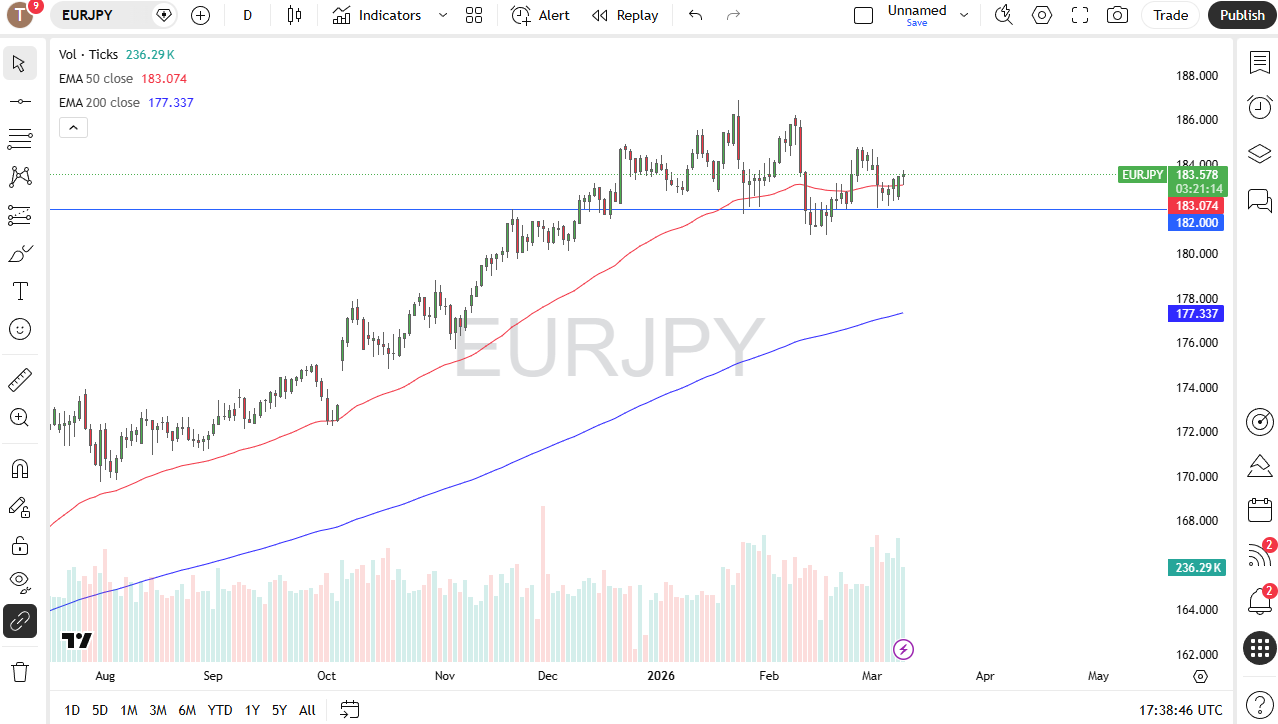
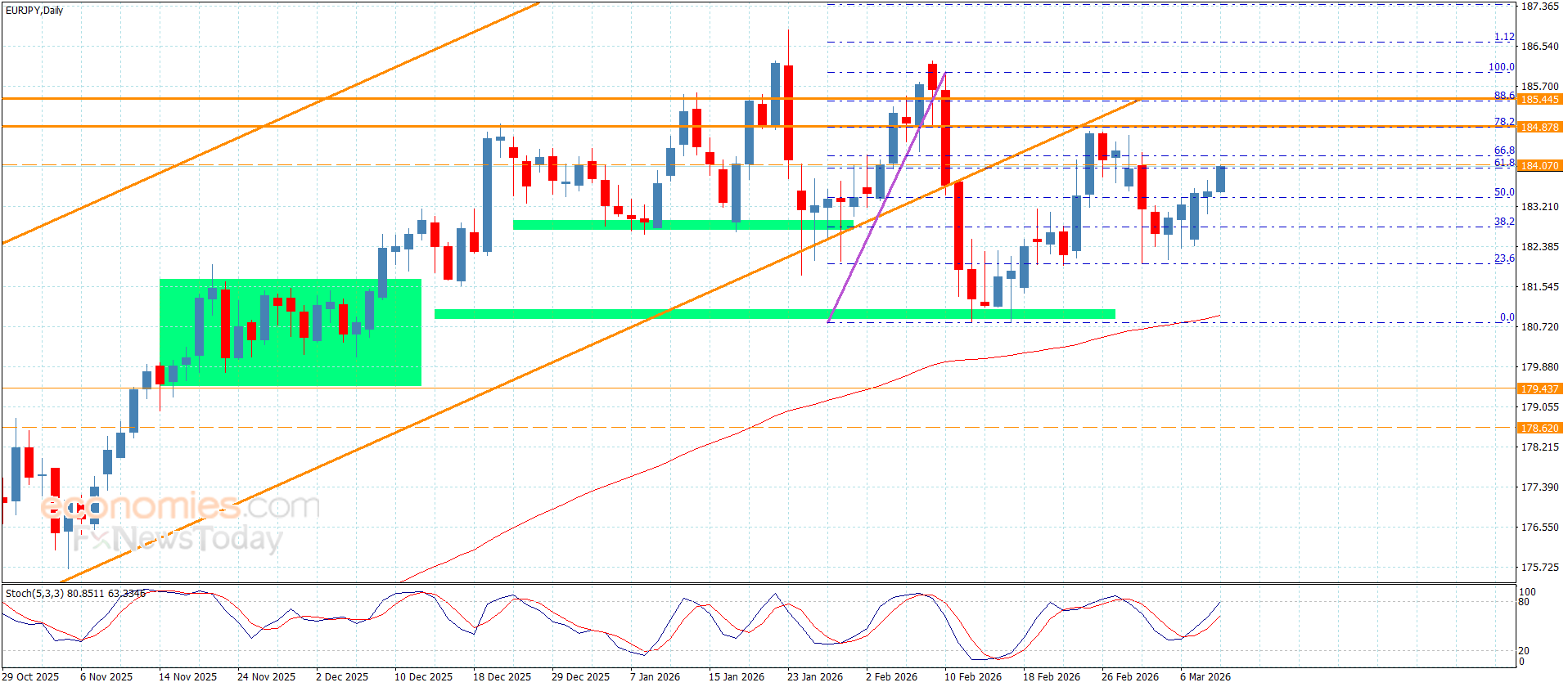
The EURJPY pair confirmed its surrender to the bearish corrective bias by reaching below 184.10 level, reaching the next target in the previous report at 183.40, to form a strong obstacle against the negative attempts.


The price is affected by sideways bias dominance due to its confinement between the barrier at 184.10 level, and forming a strong support base at 183.40 level, note that providing bullish momentum that might reinforce the chances of surpassing 184.10 level, to confirm its readiness to activate the bullish trend by its rally towards 184.85, while breaking the support will open the way for targeting new corrective stations that begin at 182.65.


The expected trading range for today is between 183.40 and 184.10


Trend forecast: Bullish


Source link

19 01, 2026

Euro to Dollar Forecast: Can EUR/USD Break Higher as Fed Risks Grow?

By |2026-01-19T10:36:56+02:00January 19, 2026|Forex News, News|0 Comments


– Written by

The Euro to Dollar exchange rate (EUR/USD) has eased back from recent highs, slipping toward 1.16 as investors grow more cautious on the timing and scale of Federal Reserve rate cuts.

While some banks still see scope for euro gains over the medium term, resilient US data and a firmer dollar tone have capped upside for now.

Markets are increasingly focused on Fed policy credibility and whether US rates can stay higher for longer into 2026.

EUR/USD Forecasts: Battle for Supremacy

RBC Capital Markets expects that the Euro to Dollar (EUR/USD) exchange rate will make gains in 2026, but has lowered its end-year projection to 1.20 from 1.24 with this level now seen as being reached at the end of 2024.

After little change initially, ING is continuing to back gains to 1.22 by the end of 2026 as US interest rates continue.

EUR/USD drifted lower to test the 1.1600 area during the week.

Save on Your EUR/USD Transfer

Get better rates and lower fees on your next international money transfer.
Compare TorFX with top UK banks in seconds and see how much you could save.


Compare the Best EUR/USD Rates »

Markets are expecting two Fed rate cuts during 2026.

Credit Agricole is expecting Euro losses as the Fed resists rate cuts; “We continue to expect unchanged rates in January.

Past that, our current base case has the pause turning into an extended one that lasts through the entirety of 2026, though this is predicated upon seeing some stabilisation in the labour market in upcoming reports, where weaker-than-expected data would raise the risks of a shorter pause and/or more easing than we currently project.”

The issue of Fed independence will remain a key issue.

Early this week, the justice department issued subpoenas against the Federal Reserve and Chair Powell with claims of malpractice over Federal Reserve building renovations.

Powell pushed back strongly against the move and defended the bank strongly. MUFG commented;

“The repeated attacks on the Fed’s independence to satisfy President Trump’s desire for lower rates continues to pose downside risks for the US dollar and supports our forecast for a weaker US dollar.

It added; “However, it could backfire on President Trump if Fed officials dig in and keep rates on hold as an act of defiance to highlight the Fed’s ongoing independence in setting policy.”

RBC still expects net dollar losses against the Euro on three grounds as the cost of carry compresses between the countries, hedges on US assets will rise. It also expects a rotation into European assets and stronger Euro-Zone growth.

RBC is still cautious over the scope for substantial gains;

“We are aware of the headwinds to long-term EUR/USD strength – US productivity growth outperforms Europe’s, there is no good European alternative to USTs, the US dominates Europe in AI and tech and the EU also still has an undercurrent of political risk.”

ING also sees near-term potential barriers to Euro support;

“With volatility low, and high-yield and emerging market currencies in demand, it seems investors are preferring to fund carry trades out of the euro at a cost of just 2.00% rather than dollars at around 3.55%.”

Deutsche Bank expects Asian currency developments will be a key element;

“Comparing medium-term FX valuation estimates to mid-dated forwards shows that EUR/USD is now very close to fair value, even if the dollar is still expensive. It will be very hard for EUR/USD to break 1.20 in the absence of greater idiosyncratic strength in Asia FX.

Like this piece? Please share with your friends and colleagues:


International Money Transfer? Ask our resident FX expert a money transfer question or try John’s new, free, no-obligation personal service! ,where he helps every step of the way,
ensuring you get the best exchange rates on your currency requirements.

TAGS: Euro Dollar Forecasts

Source link

19 01, 2026

Gold surges to all-time high above $4,650 amid Greenland tariff threats

By |2026-01-19T06:41:45+02:00January 19, 2026|Forex News, News|0 Comments


Gold price (XAU/USD) rises to a fresh record high near $4,675 during the early Asian session on Monday. The precious metal gains momentum after US President Donald Trump said he would slap tariffs on eight European nations that have opposed his plan to take Greenland.

Trump announced a 10% tariff on goods from countries including Denmark, Sweden, France, Germany, the Netherlands and Finland, along with the United Kingdom (UK) and Norway, starting from February 1, until the US is allowed to buy Greenland. The move sparked fears of retaliation from Europe, supporting traditional safe-haven assets such as Gold.  

European Union (EU) ambassadors reached a broad agreement on Sunday to intensify efforts to dissuade Trump from imposing levies on European allies, while also preparing retaliatory measures should the duties go ahead.

On the other hand, a slew of US economic data, including improving US labor market data, have lowered the implied probabilities of imminent US Federal Reserve (Fed) rate cuts. Fed funds futures have pushed back expectations for the next rate cut to June and September from January and April. 

The view that the US central bank can keep interest rates higher for longer generally underpins the US Dollar (USD) and weighs on the non-interest-bearing assets like Gold.

Gold FAQs

Gold has played a key role in human’s history as it has been widely used as a store of value and medium of exchange. Currently, apart from its shine and usage for jewelry, the precious metal is widely seen as a safe-haven asset, meaning that it is considered a good investment during turbulent times. Gold is also widely seen as a hedge against inflation and against depreciating currencies as it doesn’t rely on any specific issuer or government.

Central banks are the biggest Gold holders. In their aim to support their currencies in turbulent times, central banks tend to diversify their reserves and buy Gold to improve the perceived strength of the economy and the currency. High Gold reserves can be a source of trust for a country’s solvency. Central banks added 1,136 tonnes of Gold worth around $70 billion to their reserves in 2022, according to data from the World Gold Council. This is the highest yearly purchase since records began. Central banks from emerging economies such as China, India and Turkey are quickly increasing their Gold reserves.

Gold has an inverse correlation with the US Dollar and US Treasuries, which are both major reserve and safe-haven assets. When the Dollar depreciates, Gold tends to rise, enabling investors and central banks to diversify their assets in turbulent times. Gold is also inversely correlated with risk assets. A rally in the stock market tends to weaken Gold price, while sell-offs in riskier markets tend to favor the precious metal.

The price can move due to a wide range of factors. Geopolitical instability or fears of a deep recession can quickly make Gold price escalate due to its safe-haven status. As a yield-less asset, Gold tends to rise with lower interest rates, while higher cost of money usually weighs down on the yellow metal. Still, most moves depend on how the US Dollar (USD) behaves as the asset is priced in dollars (XAU/USD). A strong Dollar tends to keep the price of Gold controlled, whereas a weaker Dollar is likely to push Gold prices up.


Source link

19 01, 2026

Japanese Yen Forecast: USD/JPY Tests Support as BoJ Outlook Shifts

By |2026-01-19T06:35:33+02:00January 19, 2026|Forex News, News|0 Comments

USDJPY – 5 Minute Chart – 190126

Reuters Poll Points to a July Rate Hike

According to January’s Reuters poll, conducted between January 6-13, 43% of economists predicted a July BoJ rate hike, 27% a June hike, and just 8% an April hike. Economists expect the BoJ to delay raising interest rates to assess the impact of December’s rate hike on the economy.

However, the weaker yen has pushed import prices higher, reducing households’ purchasing power. A more hawkish BoJ policy stance, including hints at cutting JGB purchases, would likely offer much-needed relief. Private consumption is a key contributor to Japan’s economy, accounting for roughly 60% of GDP.

The BoJ monetary policy decision is set for January 23. 65 of 67 economists polled expected the BoJ to keep rates steady in January and March. The slump in machinery orders supported the economists’ outlook. But, political developments and fiscal spending plans are likely to change the narrative, suggesting a USD/JPY pullback from current levels. Sentiment toward the BoJ’s rate path through H1 2026 will be key, given that most economists expect a rate hike in July.

The political uncertainty and fiscal concerns support a cautiously bullish short-term price outlook for USD/JPY. Meanwhile, warnings of yen interventions and expectations of Bank of Japan rate hikes reinforce the bearish medium-term projection. Hawkish BoJ rhetoric and intervention warnings would likely challenge the cautiously bullish short-term outlook.

China Adds Policy Uncertainty to the Policy and Economic Outlooks

Rising Japan-China tensions have added another layer of policy uncertainty into the mix. US tariffs and friction with China have led economists to predict slower growth and softer inflation in 2026.

Natixis Asia Pacific Chief Economist Alicia Garcia Herrero commented:

“All in all, Japan’s GDP is expected to slow to +0.9% in 2026 from +1.3% in 2025, dragged by higher US tariffs and tensions with China. […] With the Yen remaining relatively weak, inflation is expected to slow down only to +2.3% YoY in 2026 from +3.1% YoY in 2025.”

On the BoJ’s monetary policy stance, Alicia Garcia Herrero stated:

“With PM Takaichi’s strong preference for a lax monetary policy to realize her vision, the BoJ is likely to remain cautious in normalizing further. In fact, uncertainties are compounded by the political tension with China, raising the bar to hike. Nevertheless, the ongoing tug of war over policy normalization with the government is anticipated to keep the Yen stubbornly weak. These developments are expected to force the BoJ to hike by 25 bps, possibly in July, to stabilize the currency.”

The prospect of BoJ rate hikes and Fed rate cuts reinforces the bearish medium- to longer-term price trajectory.

US Trade Policy in Focus ahead of Key Economic Data

This week, investors should closely monitor developments on tariffs. A US Supreme Court ruling on the legality of the US administration’s tariff policies is imminent.

A court ruling that blocks tariffs would likely boost risk sentiment, easing demand for the US dollar. Furthermore, the removal of tariffs would improve global trade, benefiting Japanese exporters. These dynamics would likely overshadow the downward effect of removing tariffs on Japanese import prices and the yen, indicating a bearish USD/JPY outlook.

On Monday, US markets are closed for Martin Luther King Jr. Day, with the Fed in its Blackout Period, leaving the USD/JPY exposed to geopolitical risks. President Trump announced tariffs on eight European countries on Saturday, January 17, in a bid to acquire Greenland, potentially escalating trade tensions. The eight countries included Denmark, Norway, Sweden, France, Germany, the UK, the Netherlands, and Finland.

Despite rising geopolitical tensions, expectations of multiple BoJ rate hikes and a new Fed Chair favoring lower interest rates suggest narrower US-Japan rate differentials. These factors reaffirm the bearish medium-term outlook for USD/JPY.

Technical Outlook: Key Levels to Watch

For USD/JPY price trends, traders should assess technicals and closely track the fundamentals.

Viewing the daily chart, USD/JPY remains above its 50-day and 200-day Exponential Moving Averages (EMAs), signaling bullish momentum. While technicals remain bullish, bearish fundamentals are developing, countering the technicals.

A break below 157 would expose the 50-day EMA and the 155 support level. A sustained fall through the 50-day EMA would indicate a bearish near-term trend reversal, bringing the 200-day EMA into play. If breached, 150 would be the next key support level.

Crucially, a sustained fall through the 50-day and 200-day EMAs would reaffirm the bearish medium-term price outlook.

Source link

19 01, 2026

Henry Hub futures brace for MLK holiday as U.S. cold snap hits

By |2026-01-19T02:39:31+02:00January 19, 2026|Forex News, News|0 Comments


New York, Jan 18, 2026, 12:27 EST — The market has closed.

  • Henry Hub February futures closed 2.5 cents lower at $3.103 per mmBtu on Friday, according to CME data.
  • A winter storm is driving colder air through the Midwest and East, maintaining strong heating demand. (AP News)
  • The U.S. stock market will be closed Monday in observance of Martin Luther King Jr. Day. CME confirmed it won’t release settlement prices on that date. (Intercontinental Exchange)

U.S. natural gas futures slipped Friday as traders turned their focus back to weather risks ahead of the long weekend.

The front-month Henry Hub contract closed at $3.103 per million British thermal units (mmBtu), slipping 2.5 cents. According to CME’s daily bulletin, it swung between $3.020 and $3.230 during the session.

Monday’s U.S. holiday will thin liquidity, which matters since gas prices often shift sharply on forecast updates when heating demand is the key factor.

The upcoming session falls amid a biting cold snap hitting sections of the United States. A winter storm is sparking hazardous wind chills and snow threats stretching from the Midwest to the East Coast, the National Weather Service warned, according to The Associated Press. (AP News)

Overseas demand is playing a role. Spot liquefied natural gas (LNG) prices in Asia hit a six-week peak this week, driven by colder weather forecasts that boosted buying, Reuters reported. “The weather outlook across Northeast Asia and Europe has turned colder week-on-week,” said Kesher Sumeet, senior LNG analyst at Energy Aspects. (Reuters)

Heating degree days (HDDs), which increase as temperatures drop and heating demand grows, are expected to stay above average in Northeast Asia later this January, Sumeet said. (Reuters)

European delivered LNG benchmarks climbed on expectations of colder weather and quicker storage withdrawals. “European delivered prices have risen sharply this week for the first quarter,” said Martin Senior, head of LNG pricing at Argus. (Reuters)

U.S.-listed United States Natural Gas Fund (UNG), following front-month gas futures, ended Friday at $10.33, rising 0.29%, according to Nasdaq data. (Nasdaq)

Storage remains a key metric for traders trying to validate weather-related swings. On Jan. 15, the Energy Information Administration reported that working gas in storage was 3,185 billion cubic feet (Bcf) as of Jan. 9. That’s a decline of 71 Bcf from the previous week but still above the five-year average. (EIA Information Releases)

A major concern for bulls is the potential fading of the cold signal. Forecasts often shift rapidly in late January, and a sudden warm-up could reduce heating demand, even as supply and storage stay relatively ample compared to recent levels. (EIA Information Releases)

Markets are also contending with holiday scheduling. CME announced it won’t calculate or release settlement prices this Monday. (CME Group)

Coming soon: revised U.S. temperature forecasts for late January and the next EIA weekly storage report, set for Jan. 22 at 10:30 a.m. ET. (EIA Information Releases)


Source link

19 01, 2026

GBP/USD Weekly Forecast – 18/01: Lower Trend? (Chart)

By |2026-01-19T02:34:38+02:00January 19, 2026|Forex News, News|0 Comments

Traders of the GBP/USD will have to decide on their personal perspectives while judging technical, fundamental and behavioral sentiment this coming week.

On the 6th of January the GBP/USD was at nearly 1.35680. Last Tuesday the GBP/USD was around 1.34955 as the high for the week, but the currency pair closed close to 1.33764 going into this weekend. The incremental lower action since the highs made in the first week of January do correlate to the broad Forex markets.

The highs seen on the 6th of January touched values last seen in September of 2025, but remained far below the apex highs attained then and in the month of June when the 1.37000 value was penetrated. However, the recent lower price action in the GBP/USD is still within the lower middle crux of the currency pair’s value via a one month chart. And near higher elements when a GBP/USD three month technical glance is taken.

The U.K still is producing rather lackluster economic data, this Tuesday employment data will come from Britain, and inflation via CPI statistics will be published on Wednesday. Yet, U.S data and influence via USD centric action remains the dominant force with the GBP. U.S economic data via its inflation statistics were rather mixed, but the most recent releases (October and November data were released last week at the same time due to the U.S government shutdown a couple of months ago) showed inflation remained rather tame – this if you looked at the November results.

However, this point can be argued and certainly did not impact the USD with weakness. In fact the USD got stronger and the downwards price of action of the GBP/USD and the EUR/USD reflected this trend. It can be said that more risk adverse attitudes in the financial markets caused the selloff of the GBP/USD, which picked up moment from late Tuesday and into the remainder of the week. The close of nearly 1.33764 is traversing territory last seen around the 19th of December.

The U.S Federal Reserve is suffering from a rather public debate in its FOMC about the direction of interest rates. Fed Chairman Jerome Powell and President Trump are engaged in a rather unprecedented tussle regarding policy.

  • The firefight President Trump is trying to start with the Fed may have financial institutions rather nervous about short and near-term effects on the USD.
  • The Fed will conduct its next FOMC meeting the end of January, and not many analysts are predicting a rate cut in this upcoming meeting.
  • Also the threat of escalating tension in the Middle East due to the Iranian situation has likely increased nervousness with financial institutions, this as they look forward and deal with near-term commercial cash positions.

Speculative price range for GBP/USD is 1.32950 to 1.35020

Day traders and financial institutions may both feel that the GBP/USD is oversold at its current levels, but nervous sentiment early this coming week should be watched. Depending on news developments the USD could see rather volatile price action due to rhetoric which could influence sentiment rather dramatically in the near-term. If global conditions remain tranquil this could help ease tensions among large institutions, but this doesn’t feel likely. This weekend has produced loud noise regarding threats of more tariffs against Europe due to political diatribes from President Trump about Greenland once again, yes, believe it or not. Thus, large traders are getting hit from many directions regarding noise in the markets.

Also it should be remembered that President Trump is scheduled to speak in the middle of this week at the Davos summit in Switzerland. Trump could engage in a calm tranquil policy speech, or he could easily veer off into rhetoric which makes financial markets nervous. If nervousness wins the day, this could create downwards trajectory for the GBP/USD. Although the GBP/USD may be thought of as being oversold for the moment, looking for sustained upside this coming week may be difficult. Short, quick hitting wagers are recommended for day traders depending on the their perspectives and sentiment shifts which are a certainty.

Ready to trade our weekly forecast? Check out the best forex trading company in UK worth using.

Source link

18 01, 2026

Oil’s Problem Isn’t Iran or Russia — It’s Too Much Oil

By |2026-01-18T22:37:46+02:00January 18, 2026|Forex News, News|0 Comments


Crude oil prices are in retreat after rising on the possibility of U.S. strikes on Iran. Before the retreat, however, Brent crude and WTI had jumped to the highest in months, countering bearish forecasts for the year—and tearing traders between geopolitics and fundamentals.

In fundamentals, the majority of observers and forecasters are unanimous that the supply of crude oil is substantially higher than demand. In fact, Goldman Sachs recently revised its price predictions for 2026, saying it now expected Brent crude to go even lower after shedding about a fifth of its value last year.

“Rising global oil stocks and our forecast of a 2.3mb/d surplus in 2026 suggest that rebalancing the market likely requires lower oil prices in 2026 to slow down non-OPEC supply growth and support solid demand growth, barring large supply disruptions or OPEC production cuts,” Goldman said earlier this week—even though protests in Iran were already making headlines and pushing the benchmarks higher.

On the other hand, the effective takeover by the United States of Venezuela’s oil industry has had an understandably bearish effect on prices. This week, a Washington official told media that the U.S. has sold the first batch of Venezuelan crude for $500 million, and more sales would follow. In terms of fundamentals, this strengthens the case for a bearish mood. However, statements by oil industry executives urging caution about the possibility of a quick turnaround in Venezuelan oil production have had a restraining effect on that mood.

Meanwhile, drone strikes on three tankers in the Black Sea fueled a new bout of supply disruption concern, to add to expectations of possible disruption in Iranian oil flows abroad. A Reuters report cited an unnamed source as saying Kazakhstan had suffered a 35% drop in its oil output over the first two weeks of January because of attacks that also included strikes on the Caspian Pipeline Consortium by Ukrainian forces. Kazakhstan has called on the United States and the European Union to help secure oil transport in the Black Sea.

Speaking of the European Union, reports emerged this week saying Brussels was planning a further cut in its price cap for Russian oil in a bid to reduce Russia’s oil revenues by tying Western insurance coverage to the price cap. The new level of the price cap will be set at $44.10 per barrel from next month. So far, the price caps have failed to cause much pain to the Russian budget, but the EU considers them a working mechanism to hurt Russia’s economy in a bid to make it withdraw from Ukraine.

Perhaps the most bullish development for oil from the past few days was the signal, from President Donald Trump, that he was not excluding the possibility of a military strike against Iran. That signal, however, has been quite quickly replaced by observations by the U.S. president that the Iranian government was easing its crackdown on the protesters, reducing the likelihood of a military strike. That’s when oil’s retreat began and continues today, in evidence that the glut narrative holds sway over the oil market.

Expectations of further growth in oil production remain dominant on that market, with forecasters such as the U.S. Energy Information Administration and the International Energy Agency both predicting further supply growth, even as OPEC pauses its unwinding of production cuts implemented back in 2022 to prop up prices. Even so, shale drillers are signaling they would not be happy with WTI closer to $50 than to $60, and production growth is slowing. Indeed, the EIA forecast in its latest Short-Term Energy Outlook that U.S. oil production will flatten this year, even inch down and extend that decline into 2027.

This has been ignored by the oil market so far, even though U.S. oil production has been the main driver behind bearish market predictions thanks to its fast and significant growth. That growth is now gone but everyone seems to be ignoring the fact in the firm belief there is already too much oil in the world—and the data seems to support this, with media citing a Kpler calculation there were some 1.3 billion barrels of crude on water in December, which was the highest since 2020 and the pandemic lockdowns.

Reuters’ Ron Bousso, however, noted in a recent column that a quarter of that oil comes from Russia, Iran, and Venezuela—the sanctioned producers. That oil takes longer to find buyers because of the sanctions but it does find buyers, Bousso pointed out. This suggests the number of barrels on tankers is not necessarily the most accurate indication of a physical glut, especially in light of recently released Chinese import data, showing oil imports into the country hit a record both in December and in 2025 as a whole. Predicting oil prices is notoriously unreliable. These days it is even more unreliable than usual, it seems, as conflicting narratives and agendas keep clashing, making the oil market a confusing place to be.

By Irina Slav for Oilprice.com

More Top Reads From Oilprice.com


Source link

17 01, 2026

EUR/USD, GBP/USD and EUR/GBP Forecasts – Dollar Gives Back Some Gains During Early Friday Trading

By |2026-01-17T14:25:40+02:00January 17, 2026|Forex News, News|0 Comments

Scan QR code to install app

Important DisclaimersFXEmpire is owned and operated by Empire Media Network LTD., Company Registration Number 514641786, registered at 7 Jabotinsky Road, Ramat Gan 5252007, Israel. The content provided on this website includes general news and publications, our personal analysis and opinions, and materials provided by third parties. This content is intended for educational and research purposes only. It does not constitute, and should not be interpreted as, a recommendation or advice to take any action, including making any investment or purchasing any product. Before making any financial decision, you should conduct your own due diligence, exercise your own discretion, and consult with competent advisors. The content on this website is not personally directed to you, and we do not take into account your individual financial situation or needs. The information contained on this website is not necessarily provided in real time, nor is it guaranteed to be accurate. Prices displayed may be provided by market makers and not by exchanges. Any trading or other financial decision you make is entirely your own responsibility, and you must not rely solely on any information provided through the website. FXEmpire does not provide any warranty regarding the accuracy, completeness, or reliability of any information contained on the website and shall bear no responsibility for any trading losses you may incur as a result of using such information. The website may include advertisements and other promotional content. FXEmpire may receive compensation from third parties in connection with such content. FXEmpire does not endorse, recommend, or assume responsibility for the use of any third-party services or websites. Empire Media Network LTD., its employees, officers, subsidiaries, and affiliates shall not be liable for any loss or damage resulting from your use of the website or reliance on the information provided herein.Risk DisclaimersThis website contains information about cryptocurrencies, contracts for difference (CFDs), and other financial instruments, as well as about brokers, exchanges, and other entities trading in such instruments. Both cryptocurrencies and CFDs are complex instruments and involve a high risk of losing money. You should carefully consider whether you understand how these instruments work and whether you can afford to take the high risk of losing your money. FX Empire encourages you to conduct your own research before making any investment decision and to avoid investing in any financial instrument unless you fully understand how it works and the risks involved.

Source link

17 01, 2026

Gold (XAU/USD) Price Forecast: Pullback Finds Support as Bull Trend Holds

By |2026-01-17T10:26:44+02:00January 17, 2026|Forex News, News|0 Comments


Bullish Structure Reinforced by Successful Support Test

This is bullish behavior, as that price zone is the first anticipated support area for gold, and support has been seen. The market is confirming significance of the 10-day indicator and if gold remains above that line, the short-term trend is bullish. Friday’s low provides a possible minor swing low if it is sustained, and key short-term support along with the 10-day line.

Upside Breakout Levels and Near-Term Resistance Zone

On the upside, a decisive breakout above the record high of $4,643 is needed to trigger a continuation. However, gold will then quickly approach a potential resistance zone from $4,664 to $4,721. There are four indicators marking that range as a potential resistance zone. Given confirmation of strength with a bounce off the 10-day average on a pullback following a new all time high, gold could quickly push through that price zone and head towards a 78.6% projected measured move at $4,760.

Fibonacci Confluence Highlights Upper Resistance Risk

The top of the range, however, shows minor confluence with two indicators and therefore possibly a more significance resistance area. A 432.6% (261.8% + 161.8%) is at $4,713, and the 161.8% Fibonacci extension of the December decline is at $4,721. The first 127.2% extended target from December was near the trend high at $4,625 and shows a relationship with the ratios. The recognition of the first retracement ratio target enhances the chance that the higher 161.8% price area is reached as well.

Weekly Momentum Slows but Bull Trend Remains Intact

Momentum shows slowing somewhat on the weekly chart, as gold is set to close near or below the mid-point of the week’s range, which was $4,578. A stronger closing price in the upper half of the week’s range would show greater control by buyers and therefore increase confidence that bullish momentum may dominate once again. This week began with a new all time high on Monday, followed by a stall.

Nonetheless, this week’s breakout confirms on a weekly basis with a closing above the prior high of $4,550. Whether bullish momentum shows soon or after some consolidation, the bull trend remains solid if gold remains above the 20-day average, now at $4,466.

If you’d like to know more about how to trade gold and silver, please visit our educational area.


Source link

Go to Top