About Editorial team of BIPNs

Main team of content of bipns.com. Any type of content should be approved by us.
17 01, 2026

GBP/USD Weekly Forecast: Gains Pared as Dollar Surges, Eyes on Inflation Data

By |2026-01-17T10:24:41+02:00January 17, 2026|Forex News, News|0 Comments

  • The GBP/USD weekly forecast edges down, as the pair closed the week below 1.3400 amid upbeat US data and risk-off sentiment.
  • Markets await key data from both sides to gauge a fresh directional move.
  • Technically, the price is leaning to the downside, eyeing 1.3200 if downside pressure sustains.

GBP/USD closed last week on the defensive below 1.3400, paring weekly gains despite a mildly positive data surprise from the UK. The release of UK GDP m/m showed modest growth, but the data failed to trigger sustained buying interest in sterling.

Are you interested to learn more about crypto signals? Check our detailed guide-

Markets mainly interpreted the improvement as technical rather than structural, which aligns with the assumption that UK growth is sluggish when money is tight. GBP bulls were uncertain; therefore, the rising momentum faded.

The dollar has better fundamentals in the US. Producer Price Index, Retail Sales, and Initial Jobless Claims all exceeded expectations, indicating a healthy US economy. These disclosures lowered expectations that the Fed would cut rates soon, raising Treasury yields and strengthening the dollar.

A defensive bid for the dollar followed increased geopolitical concerns over Iran, which made people less risk-taking. This accelerated GBP/USD’s decline at week’s end.

GBP/USD Key Events Next Week

The next week will be full of important UK data releases that could set the pound’s course in the near future. The Claimant Count numbers will give us an idea of how the job market is doing, and the Retail Sales and CPI numbers will be crucial for setting expectations for Bank of England rates. Markets will pay close attention to inflation data, especially for signs that prices are easing. Flash PMIs will give us a timely snapshot of business activity in key sectors later this week.

On the US side, investors are now looking at GDP, Core PCE, and Flash PMIs. The Fed still likes Core PCE as an inflation measure, and an unexpected rise could support the view that prices will remain high for a long time. GDP data will help us determine whether the recent strength is widespread or is slowing.

In general, GBP/USD is sliding lower unless UK data clearly beats expectations and US inflation signals weaken. The dollar is still in charge for now, especially given the world’s greater uncertainty.

GBP/USD Weekly Technical Forecast: Make or Break at 100-MA

GBP/USD Weekly Forecast: Gains Pared as Dollar Surges, Eyes on Inflation Data
GBP/USD daily chart

GBP/USD is consolidating after a rejection from the 1.3550-1.3600 resistance zone, suggesting bullish momentum is fading. The price is below both the 20- and 50-day MA, which are flattening. This supports a neutral to mildly bearish bias. RSI is moving toward the middle line, indicating the market is consolidating rather than continuing its trend.

Are you interested in learning more about tips for forex traders? Check our detailed guide-

The 100-day MA near 1.3360 is a key support level. If the market closes below this level every day, it will open up to 1.3250-1.3200. On the upside, 1.3450-1.3500 is immediate resistance, followed by 1.3600. If the price breaks through this level, it will gain momentum toward 1.3750.

Looking to trade forex now? Invest at eToro!

68% of retail investor accounts lose money when trading CFDs with this provider. You should consider whether you can afford to take the high risk of losing your money.

Source link

17 01, 2026

XAU/USD hesitates at $4,600 with Fed easing hopes fading

By |2026-01-17T06:26:05+02:00January 17, 2026|Forex News, News|0 Comments


Gold treads water around $4.600 after failure to break record highs, at $4,640

Strong US employment and manufacturing data boost expectations of a Fed pause.

XAU/USD is forming a potential H&S pattern with its neckline at $4,570.

Gold’s (XAU/USD) is looking for direction at the $4,600 area on Friday. The precious metal failed to breach all-time highs at $4,640, weighed by a stronger US Dollar on Thursday, but downside attempts remain contained above the $4,570 area so far.

Macroeconomic data from the US released on Thursday showed an unexpected decline in weekly Jobless Claims. These figures, coupled with the solid improvements in manufacturing conditions in the New York Empire State and the Philadelphia Fed manufacturing Indexes, have provided further reasons for the US Federal Reserve (Fed) to keep interest rates on hold for some time.

Technical analysis: A bearish Head & Shoulder in progress

Chart Analysis XAU/USD

The XAU/USD pair trades at $4,606, practically flat on the daily chart. The broader trend remains bullish with the ascending 100-period Simple Moving Average (SMA) providing dynamic support near $4,480, yet with mounting signs that the rally is losing strength.

Recent price action shows a small Head & Shoulders pattern, a common figure for trend shifts. Beyond that, the Relative Strength Index (RSI), approaching the 50 line, suggests a bearish divergence. The Moving Average Convergence Divergence (MACD) line remains below the Signal line, although the histogram has begun to contract, highlighting a fading bearish momentum.

Bears, however, will need to clear out the mentioned $4,570 area (January 13, 14 lows) to confirm a deeper correction. Further down, the targetis the confluence of the are the January 6 high, and the mentioned 100 SMA right below $4,500. To the upside, above $4,640, the next targets would be at the 127.2% and the 161.8% Fibonacci extensions of the January 8-12 rally, at $4,689 and $4,763, respectively.

(The technical analysis of this story was written with the help of an AI tool.)

Gold FAQs

Gold has played a key role in human’s history as it has been widely used as a store of value and medium of exchange. Currently, apart from its shine and usage for jewelry, the precious metal is widely seen as a safe-haven asset, meaning that it is considered a good investment during turbulent times. Gold is also widely seen as a hedge against inflation and against depreciating currencies as it doesn’t rely on any specific issuer or government.

Central banks are the biggest Gold holders. In their aim to support their currencies in turbulent times, central banks tend to diversify their reserves and buy Gold to improve the perceived strength of the economy and the currency. High Gold reserves can be a source of trust for a country’s solvency. Central banks added 1,136 tonnes of Gold worth around $70 billion to their reserves in 2022, according to data from the World Gold Council. This is the highest yearly purchase since records began. Central banks from emerging economies such as China, India and Turkey are quickly increasing their Gold reserves.

Gold has an inverse correlation with the US Dollar and US Treasuries, which are both major reserve and safe-haven assets. When the Dollar depreciates, Gold tends to rise, enabling investors and central banks to diversify their assets in turbulent times. Gold is also inversely correlated with risk assets. A rally in the stock market tends to weaken Gold price, while sell-offs in riskier markets tend to favor the precious metal.

The price can move due to a wide range of factors. Geopolitical instability or fears of a deep recession can quickly make Gold price escalate due to its safe-haven status. As a yield-less asset, Gold tends to rise with lower interest rates, while higher cost of money usually weighs down on the yellow metal. Still, most moves depend on how the US Dollar (USD) behaves as the asset is priced in dollars (XAU/USD). A strong Dollar tends to keep the price of Gold controlled, whereas a weaker Dollar is likely to push Gold prices up.


Source link

17 01, 2026

Pound tests support at 212.0 on intervention threats

By |2026-01-17T06:23:53+02:00January 17, 2026|Forex News, News|0 Comments

GBP/JPY hits weekly lows below 212.00 after rejection at 213.30 on Thursday.

The Yen rallies following bold intervention warnings by Japanese authorities.

The pair is testing the ascending trendline support from early November lows.

The Yen is outperforming most of its peers in an otherwise quiet session on Friday, as Japanese authorities ramped up their threats of intervention. The GBP/JPY is extending its reversal from long-term highs above 214.00 to test levels below the 212.00 line at the time of writing.
comments

The Japanese Finance Minister, Satsuki Katayama, affirmed in a press conference on Friday that she would not “rule out any options” to defend the Japanese currency. Katayama also recalled that the joint statement with the US in September was “extremely significant and included language on intervention,” hinting at a concerted action with US economic authorities.

Technical analysis: Testing the ascending trendline near 212.00

The 4-hour chart shows the GBP/JPY trading right above 212.00, testing the support area in the confluence of the late December highs, and the ascending trendline support from the November lows in the area between 211.60 and 212.00.

The broader trend remains bullish, but technical indicators hint at a fading momentum. The Moving Average Convergence Divergence (MACD) remains below zero, reflecting a moderate bearish pressure. The Relative Strength Index (RSI) sits near 42in neutral-to-bearish territory.

A confirmation below the mentioned 211.60 level would put the bullish trend into question, and increase pressure towards 210.00, where bears were capped on December 24 and 31 and January 8. To the upside, Thursday’s high, near 213.30 are closing the path to the long-term highs, at 214 30 hit earlier in the week.

(The technical analysis of this story was written with the help of an AI tool.)

Japanese Yen Price Today

The table below shows the percentage change of Japanese Yen (JPY) against listed major currencies today. Japanese Yen was the strongest against the US Dollar.

USD EUR GBP JPY CAD AUD NZD CHF
USD -0.12% -0.20% -0.30% -0.06% -0.10% -0.43% -0.23%
EUR 0.12% -0.09% -0.17% 0.05% 0.02% -0.30% -0.12%
GBP 0.20% 0.09% -0.08% 0.15% 0.11% -0.21% -0.02%
JPY 0.30% 0.17% 0.08% 0.26% 0.20% -0.13% 0.07%
CAD 0.06% -0.05% -0.15% -0.26% -0.06% -0.39% -0.20%
AUD 0.10% -0.02% -0.11% -0.20% 0.06% -0.33% -0.15%
NZD 0.43% 0.30% 0.21% 0.13% 0.39% 0.33% 0.19%
CHF 0.23% 0.12% 0.02% -0.07% 0.20% 0.15% -0.19%

The heat map shows percentage changes of major currencies against each other. The base currency is picked from the left column, while the quote currency is picked from the top row. For example, if you pick the Japanese Yen from the left column and move along the horizontal line to the US Dollar, the percentage change displayed in the box will represent JPY (base)/USD (quote).

Source link

17 01, 2026

Forecast update for EURUSD -16-01-2026.

By |2026-01-17T02:23:41+02:00January 17, 2026|Forex News, News|0 Comments


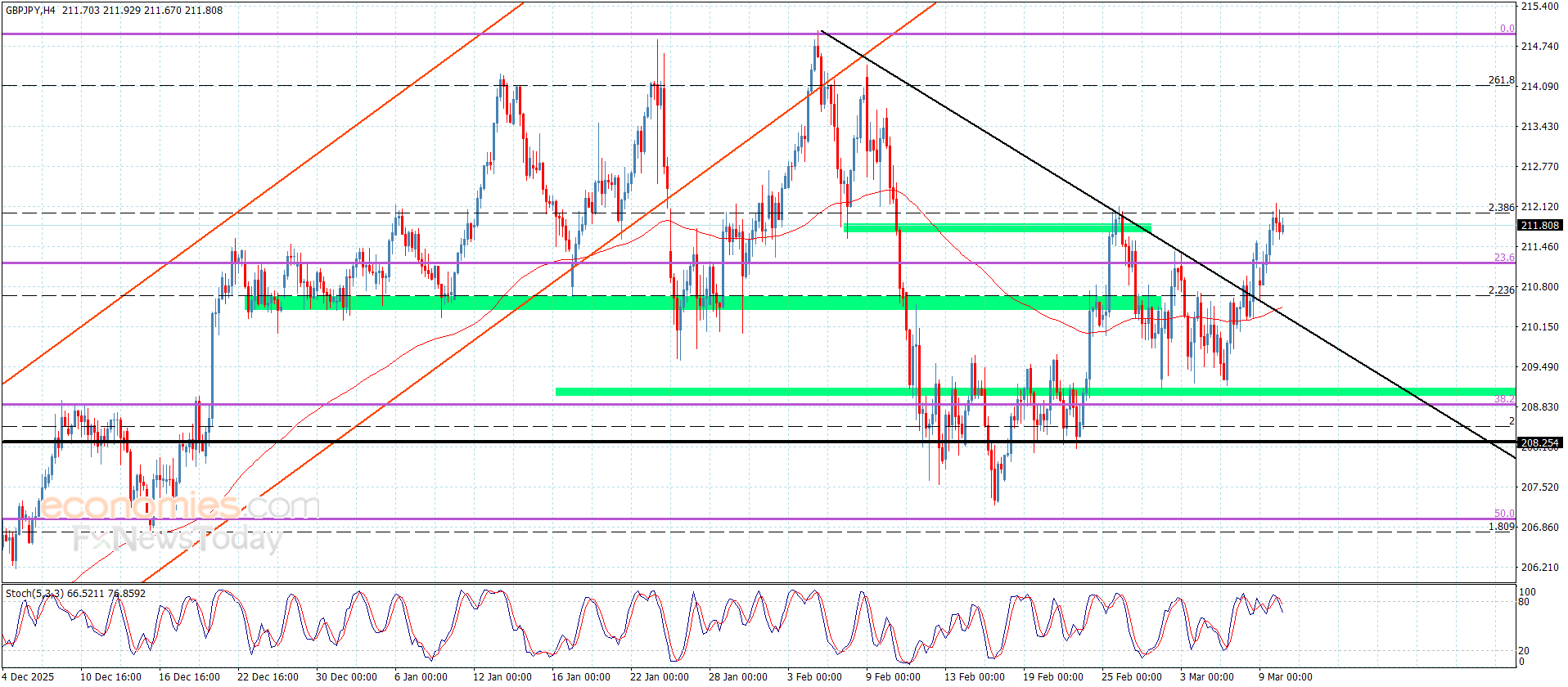
The EURJPY pair confirmed its surrender to the bearish corrective bias by reaching below 184.10 level, reaching the next target in the previous report at 183.40, to form a strong obstacle against the negative attempts.


The price is affected by sideways bias dominance due to its confinement between the barrier at 184.10 level, and forming a strong support base at 183.40 level, note that providing bullish momentum that might reinforce the chances of surpassing 184.10 level, to confirm its readiness to activate the bullish trend by its rally towards 184.85, while breaking the support will open the way for targeting new corrective stations that begin at 182.65.


The expected trading range for today is between 183.40 and 184.10


Trend forecast: Bullish


Source link

17 01, 2026

The EURJPY resumes the corrective decline– Forecast today – 16-1-2026

By |2026-01-17T02:22:25+02:00January 17, 2026|Forex News, News|0 Comments

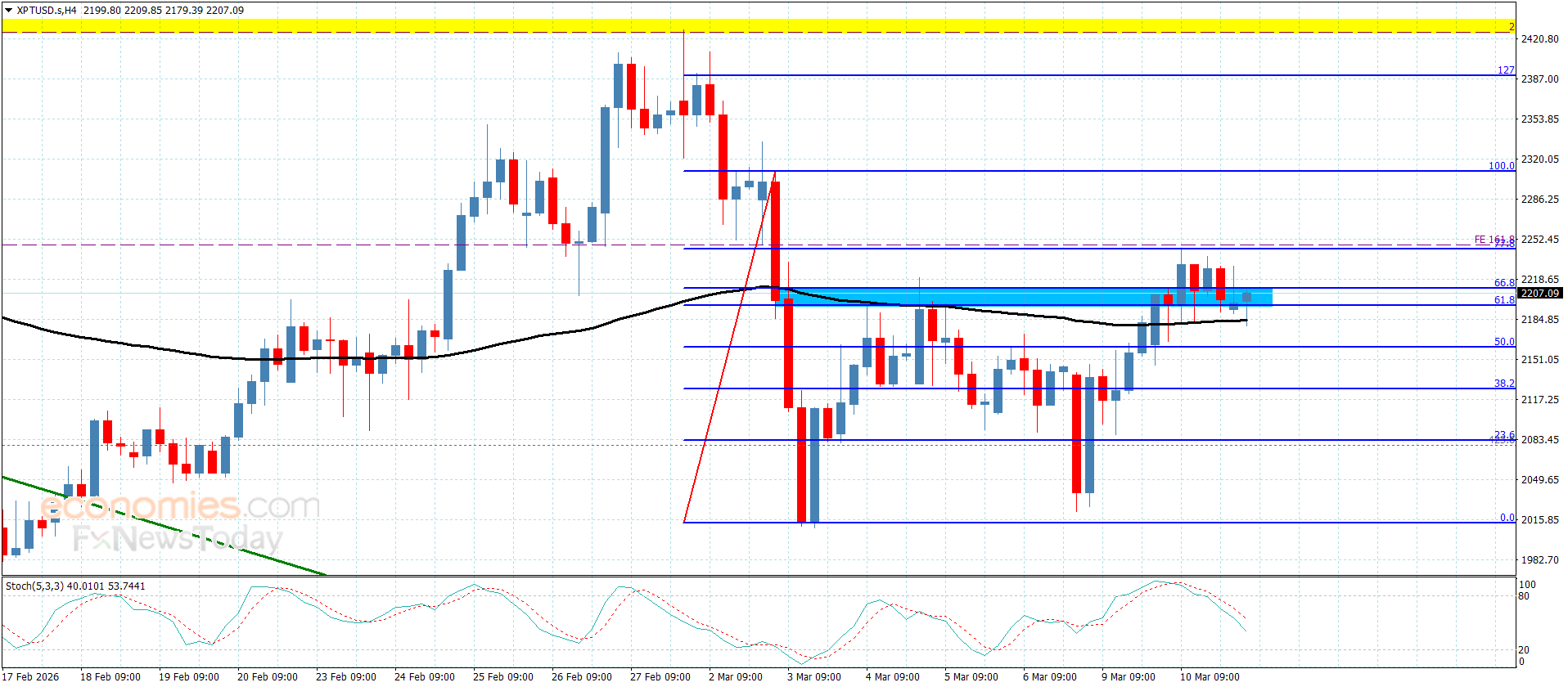
Copper price provided a new negative close below the barrier at$5.9700, announcing to delay the bullish attack, to begin activating the bearish corrective trend by reaching $5.7900 initially, approaching the initial suggested target in the previous report.


Stochastic exit from the overbought level will increase the negative pressure on the price, which makes us keep the bearish corrective suggestion, to expect targeting $5.6000 level, to press on the extra support at $5.5100.


The expected trading range for today is between $5.6000 and$5.8600


Trend forecast: Bearish correctly


Source link

16 01, 2026

Platinum price records the targets– Forecast today – 16-1-2026

By |2026-01-16T22:22:19+02:00January 16, 2026|Forex News, News|0 Comments


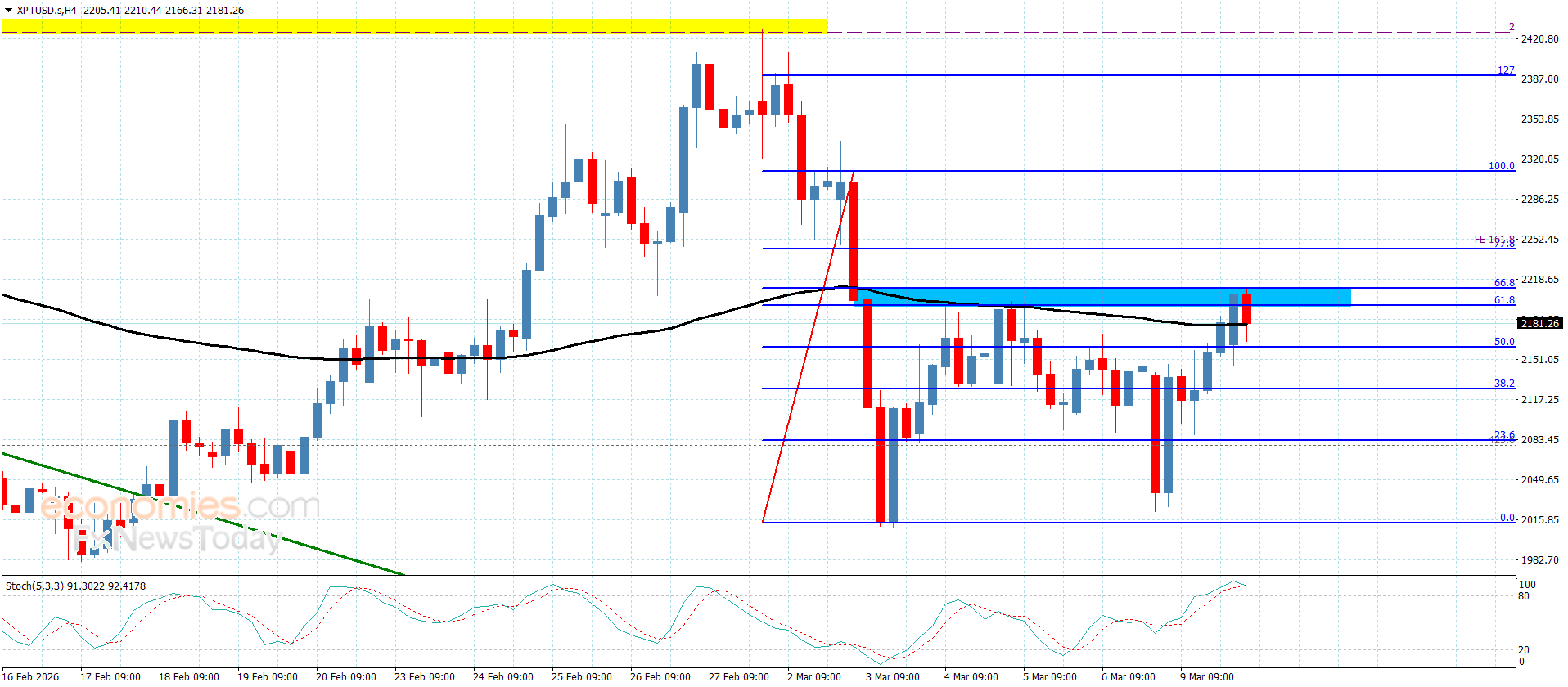
Copper price provided a new negative close below the barrier at$5.9700, announcing to delay the bullish attack, to begin activating the bearish corrective trend by reaching $5.7900 initially, approaching the initial suggested target in the previous report.


Stochastic exit from the overbought level will increase the negative pressure on the price, which makes us keep the bearish corrective suggestion, to expect targeting $5.6000 level, to press on the extra support at $5.5100.


The expected trading range for today is between $5.6000 and$5.8600


Trend forecast: Bearish correctly


Source link

16 01, 2026

Pound Sterling under pressure, hit 4-week lows against US Dollar

By |2026-01-16T22:20:58+02:00January 16, 2026|Forex News, News|0 Comments

The Pound Sterling (GBP) started off the week on a firm footing against the US Dollar (USD) and jumped to 1.3486 on Monday, following criminal charges against Federal Reserve’s (Fed) Chair Jerome Powell over cost overrun in the reconstruction of Washington’s headquarters.

However, the GBP/USD pair turned down steadily as the week passed after Bank of England (BoE) policymaker Alan Taylor delivered dovish comments on the monetary policy outlook, and investors shifted their focus to the Fed’s monetary policy decision scheduled later this month.

Pound Sterling turned upside down

The Pound Sterling gained sharply against the US Dollar on Monday after United States (US) federal prosecutors opened a criminal investigation into Fed Chair Powell over mismanaging funds in the reconstruction of Washington’s headquarters.

In response, Powell said that the “new threat is not about the renovation project but a pretext”. He also added that the threat of criminal charges is a “consequence of the Fed setting interest rates based on its assessment of the public interest rather than the president’s preferences”.

Market experts viewed the accusation of cost overruns against Powell as an attack on the central bank’s independence, which could undermine US assets and impact the US sovereign rating in the long run.

It remained clear from US President Donald Trump’s comments over the past several months that he was unhappy with the Fed not reducing interest rates aggressively, criticizing Chairman Powell several times for the same.

On Tuesday, US President Trump criticized Fed’s Powell again after the release of the Consumer Price Index (CPI) data for December, which showed price pressures rising steadily, demonstrating his dislike for him for not prioritizing his economic agenda. “We have very low inflation. That would give ’too late Powell’ the chance to give us a nice beautiful big rate cut,” Trump said.

Chiefs from global central banks came in support of Powell, stating that “Independence of central banks is a cornerstone of price, financial and economic stability in the interest of the citizens that we serve”, and “we stand in full solidarity with the Fed System and its Chair Jerome H. Powell.”

However, the steady US CPI report on Tuesday provided relief for the US Dollar against the British currency, as it intensified speculation that the Fed will announce a pause in its ongoing monetary-easing campaign at its policy meeting later this month.

On Wednesday, dovish commentary from BoE’s Taylor on the monetary policy outlook dragged the Pound Sterling further against the US Dollar.

Taylor said in a speech on Wednesday that inflation could return to the central bank’s 2% target in mid-2026 more quickly than having to wait until 2027, and projected that interest rates could “normalise to neutral sooner rather than later”. In the December policy meeting, the BoE guided that the monetary policy will remain on a “gradual downward path”.

The impact of expectations for the Fed holding interest rates steady and BoE Taylor’s dovish commentary was significant for GBP/USD, restraining the pair from regaining ground despite strong United Kingdom (UK) monthly Gross Domestic Product (GDP) data for November on Thursday.

The Office for National Statistics (ONS) reported that the economy returned to growth after contracting 0.1% in both September and October. The GDP growth came in at 0.3%, stronger than estimates of 0.1%. Month-on-month (MoM) Industrial and Manufacturing Production also grew at a robust pace of 1.1% and 2.1%, respectively.

GBP/USD revisited a four-week low around 1.3360 on late Thursday as the US Dollar Index (DXY) posted a fresh six-week high at 99.50, following a few Fed officials. Kansas Fed Bank President Jeffrey Schmid and Atlanta Fed Bank President Raphael Bostic came out in support for modestly restrictive monetary policy stance, citing upside inflation risks. “We need to stay restrictive because inflation is too high,” Bostic said, adding, “I expect inflation pressures will continue through 2026 as many businesses are still incorporating tariffs into prices.”

UK employment and inflation data to drive GBP next week

The major events for the Pound Sterling in January’s third week will be the release of UK employment data for the three months ending in November and the Consumer Price Index (CPI) data for December, which will be released on Tuesday and Wednesday, respectively.

Investors will pay close attention to both data for fresh cues on the BoE’s likely interest rate decision at its first monetary policy meeting of 2026 on February 5.

The UK ILO Unemployment Rate jumped to 5.1% in the three months ending October, the highest level seen since March 2021. Meanwhile, inflationary pressures cooled down for the second straight month in November after peaking in September.

Next week, investors will also focus on the UK Retail Sales data for December, and on the preliminary S&P Global Purchasing Managers’ Index (PMI) data for January for both the UK and the US.

During the week, US President Donald Trump could also reveal the name of the next Fed Chairman. In December, Trump said that he could announce Powell’s successor at the Fed sometime in January. The comments from Trump in his latest interviews indicated that White House Economic Adviser Kevin Hassett, former Fed Chair Kevin Warsh, and current Fed Governors Christopher Waller and Michelle Bowman are major contenders to replace Jerome Powell.

GBP/USD Technical Analysis

In the daily chart, GBP/USD trades at 1.3404. The 21-day Simple Moving Average (SMA) rises above the longer ones, while the 50- and 200-day SMAs advance and the 100-day SMA flattens. Price holds above the 50- and 100-day averages but sits beneath the 21-day, with the 200-day SMA at 1.3406 acting as immediate resistance and the 100-day at 1.3365 supporting. The Relative Strength Index (RSI) at 48 (neutral) edges higher but remains below the midline, indicating subdued momentum.

A break above the 200-day SMA at 1.3406 could open a path toward the rising 21-day SMA at 1.3460, while a pullback would shift focus to the 100-day SMA at 1.3365 and then the 50-day at 1.3335. The upward slope of the 200-day SMA underpins the medium-term bias, but traction would improve if the RSI reclaims 50. A sustained move through nearby resistance would favor an extension toward the short-term average, whereas failure to gain above the long-term gauge would keep the pair contained within the moving-average cluster.

(The technical analysis of this story was written with the help of an AI tool.)

Inflation FAQs

Inflation measures the rise in the price of a representative basket of goods and services. Headline inflation is usually expressed as a percentage change on a month-on-month (MoM) and year-on-year (YoY) basis. Core inflation excludes more volatile elements such as food and fuel which can fluctuate because of geopolitical and seasonal factors. Core inflation is the figure economists focus on and is the level targeted by central banks, which are mandated to keep inflation at a manageable level, usually around 2%.

The Consumer Price Index (CPI) measures the change in prices of a basket of goods and services over a period of time. It is usually expressed as a percentage change on a month-on-month (MoM) and year-on-year (YoY) basis. Core CPI is the figure targeted by central banks as it excludes volatile food and fuel inputs. When Core CPI rises above 2% it usually results in higher interest rates and vice versa when it falls below 2%. Since higher interest rates are positive for a currency, higher inflation usually results in a stronger currency. The opposite is true when inflation falls.

Although it may seem counter-intuitive, high inflation in a country pushes up the value of its currency and vice versa for lower inflation. This is because the central bank will normally raise interest rates to combat the higher inflation, which attract more global capital inflows from investors looking for a lucrative place to park their money.

Formerly, Gold was the asset investors turned to in times of high inflation because it preserved its value, and whilst investors will often still buy Gold for its safe-haven properties in times of extreme market turmoil, this is not the case most of the time. This is because when inflation is high, central banks will put up interest rates to combat it.
Higher interest rates are negative for Gold because they increase the opportunity-cost of holding Gold vis-a-vis an interest-bearing asset or placing the money in a cash deposit account. On the flipside, lower inflation tends to be positive for Gold as it brings interest rates down, making the bright metal a more viable investment alternative.

Source link

16 01, 2026

XAG/USD falls to near $91.00 due to risk-on sentiment

By |2026-01-16T18:21:02+02:00January 16, 2026|Forex News, News|0 Comments


Silver price (XAG/USD) extends its losses for the second successive session, trading around $91.00 during the European hours on Friday. Silver price loses ground amid decreasing safe-haven demand, which could be attributed to easing concerns over geopolitical risks and Federal Reserve (Fed) independence.

US President Donald Trump said he had stepped back from threats of military action after receiving assurances that further killings would not occur and executions would be halted. Market sentiment was also supported by reports that Israel and other regional allies urged Washington to delay any action, amid concerns over potential retaliation.

The safe-haven demand for Silver weakens as the risk-on mood improves after President Trump said he has no plans to dismiss Fed Chair Jerome Powell despite reported Justice Department indictment threats. Moreover, the US and Taiwan signed a trade agreement on Thursday aimed at boosting American semiconductor production in exchange for lower tariffs.

Silver, a non-interest-bearing asset, loses its shine as Thursday’s US Initial Jobless Claims data reinforced the likelihood that the Fed will keep interest rates on hold for the coming months. According to the CME Group’s FedWatch tool, Fed funds futures continue to price in about a 95% probability that the US central bank will keep rates unchanged at its January 27–28 meeting. Fed funds futures have pushed expectations for the next rate cut back to June, reflecting stronger labor market conditions and policymakers’ concerns over sticky inflation.

Initial Jobless Claims unexpectedly fell to 198K in the week ended January 10, below market expectations of 215K and down from the prior week’s revised 207K. The data confirmed that layoffs remain limited and that the labor market is holding up despite an extended period of high borrowing costs.

Silver FAQs

Silver is a precious metal highly traded among investors. It has been historically used as a store of value and a medium of exchange. Although less popular than Gold, traders may turn to Silver to diversify their investment portfolio, for its intrinsic value or as a potential hedge during high-inflation periods. Investors can buy physical Silver, in coins or in bars, or trade it through vehicles such as Exchange Traded Funds, which track its price on international markets.

Silver prices can move due to a wide range of factors. Geopolitical instability or fears of a deep recession can make Silver price escalate due to its safe-haven status, although to a lesser extent than Gold’s. As a yieldless asset, Silver tends to rise with lower interest rates. Its moves also depend on how the US Dollar (USD) behaves as the asset is priced in dollars (XAG/USD). A strong Dollar tends to keep the price of Silver at bay, whereas a weaker Dollar is likely to propel prices up. Other factors such as investment demand, mining supply – Silver is much more abundant than Gold – and recycling rates can also affect prices.

Silver is widely used in industry, particularly in sectors such as electronics or solar energy, as it has one of the highest electric conductivity of all metals – more than Copper and Gold. A surge in demand can increase prices, while a decline tends to lower them. Dynamics in the US, Chinese and Indian economies can also contribute to price swings: for the US and particularly China, their big industrial sectors use Silver in various processes; in India, consumers’ demand for the precious metal for jewellery also plays a key role in setting prices.

Silver prices tend to follow Gold’s moves. When Gold prices rise, Silver typically follows suit, as their status as safe-haven assets is similar. The Gold/Silver ratio, which shows the number of ounces of Silver needed to equal the value of one ounce of Gold, may help to determine the relative valuation between both metals. Some investors may consider a high ratio as an indicator that Silver is undervalued, or Gold is overvalued. On the contrary, a low ratio might suggest that Gold is undervalued relative to Silver.


Source link

16 01, 2026

USD/JPY Price Analysis: Firm on Fed Rate Support Despite Equity Wobble

By |2026-01-16T18:19:38+02:00January 16, 2026|Forex News, News|0 Comments

  • The USD/JPY price analysis remains choppy despite a risk-off move in equities.
  • Reduced odds of early Fed rate cuts amid upbeat US data keep the greenback supported.
  • Japan’s political concerns weigh on the yen, but FX intervention warnings limit the downside.

The USD/JPY price is holding in a tight 158.40–158.60 range, shrugging off a modest risk-off move in US equities. Tech led the pullback, with the Nasdaq 100 down about 1.0%, while the S&P 500 and Dow slipped less. Despite softer risk sentiment, the dollar side of the pair remains well-supported, with the Dollar Index near 99.3, close to monthly highs.

Are you interested in learning more about forex tools? Check our detailed guide-

The macro backdrop in the US still points to a firm dollar and an uptrend in USD/JPY. November retail sales rebounded about 0.6% MoM after a small October decline, and producer prices went near 3.0% YoY on both headline and core measures.

The unemployment rate around 4.4% does not point to a sharp labor-market downturn. This combination of strong demand, rising upstream prices, and stable jobs has pushed back expectations of the first Fed cut to June.

In the near term, rates are expected to stay in the 3.50–3.75% range. There is no longer a strong expectation of aggressive early easing in markets, which supports yields and keeps USD/JPY dips toward 155.00 well bid.

On the Japanese side, politics and FX intervention are more important to the story than domestic yields. Officials have been warning more and more against “one-way excessive moves.” Chief Cabinet Secretary Seiji Kihara has even said that intervention could occur if the yen weakens too quickly.

That has helped JPY outperform some high-beta currencies on days when risk is low. But the “Takaichi trade” goes the other way; hopes for an early snap election, a win for Sanae Takaichi, and a budget with excessive spending support Japanese stocks more than the currency, leaving no clear way for the BoJ.

USD/JPY Technical Price Analysis: Consolidation Below 20-MA

USD/JPY Price Analysis: Firm on Fed Rate Support Despite Equity Wobble
USD/JPY 4-hour chart

The 4-hour chart for USD/JPY shows selling pressure, as the price is below the 20-period MA. However, the pair has formed a bullish doji candlestick pattern, revealing sustained buying on the dips. Meanwhile, the pair continues to consolidate after falling from the 159.45 peak.

Are you interested in learning more about the best crypto exchange? Check our detailed guide- 

The RSI remains flat near 50.0, suggesting no clear momentum, while the MAs still point to more gains. The pair is expected to oscillate between 157.50 and 159.50. A clear breakout in either direction could trigger a meaningful trending move.

Looking to trade forex now? Invest at eToro!

68% of retail investor accounts lose money when trading CFDs with this provider. You should consider whether you can afford to take the high risk of losing your money.

Source link

16 01, 2026

Gold (XAU/USD) Price Forecast: Bulls Hold Control Near Record Levels

By |2026-01-16T14:20:21+02:00January 16, 2026|Forex News, News|0 Comments


Upside Targets Frame Next Resistance Zone

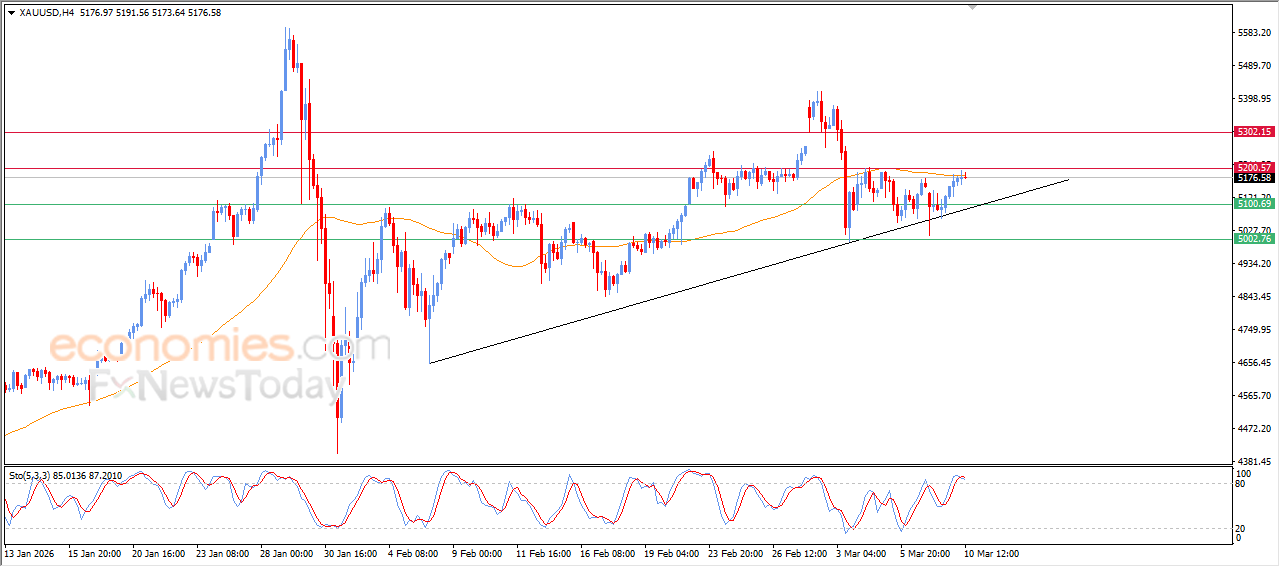
Going forward, a bullish continuation of the trend will be triggered on a new high and confirmed with a closing price above $4,643. That would put gold in a position to challenge potential resistance at the next upside targets at $4,664, $4,687, and $4,713. The middle target is the 161.8% Fibonacci extension of October bearish correction. Therefore, the target is derived from a short-term measurement. On the other hand, the two other price targets are from a long-term pattern. Specifically, a 350% extension and 423.6% extension of the decline that began from the 2011 peak of $1,921, respectively.

Longer-Term Projections Extend Bullish Outlook

It remains to be seen if there are signs resistance near either of those price targets but the more recent pattern target of $4,687 might have a good chance of being challenged. Above that next price zone is a $4,766 target, which is the 361.8% projection for a long-term rising ABCD pattern or measured move. It connects the 2018 swing low at $1,160 (A) and 2022 low at $1,615.

Support Levels Reinforce Bullish Trend Structure

On the downside, there are several significant potential support levels for a pullback. Short-term is the recent high of $4,550 and the rising 10-day average at $4,514. A minor swing high is at $4,500 and the 20-day average is at $4,554. Overall, the bulls remain in charge as long as gold stays above the 20-day average on a daily closing basis. Signs of strength suggest that a pullback would likely be shallow and relatively short, if it occurs before new highs.

Signs of Underlying Strength

The recent pullback in October found support near the 38.2% Fibonacci retracement. That is a relatively minor retracement, reflecting strong underlying demand. In addition, a second breakout from a rising trend channel triggered in December and the top of the channel was recently confirmed as support in a similar price area as the 20-day average. That confirms a change in character for the trend. It is gaining strength.

For a look at all of today’s economic events, check out our economic calendar.


Source link

Go to Top