About Editorial team of BIPNs

Main team of content of bipns.com. Any type of content should be approved by us.
9 01, 2026

BofA raises 2026 platinum price forecast to $2,450 an ounce — TradingView News

By |2026-01-09T14:25:15+02:00January 9, 2026|Forex News, News|0 Comments


Source link

9 01, 2026

The GBPJPY loses the bullish momentum– Forecast today – 8-1-2026

By |2026-01-09T08:37:00+02:00January 9, 2026|Forex News, News|0 Comments

The GBPJPY pair lost the bullish momentum due to stochastic exit from the overbought level, which forces it to delay the bullish attack by reaching below 211.30 level, which keeps forming an important obstacle against the bullish attempts.


We expect providing new mixed trading with a chance of attacking the minor bullish channel’s support at 210.10, breaking this support makes us expect targeting extra corrective stations that might begin at 209.45 and 208.80, while the trading rally above the obstacle will increase the chances of recording new gains by targeting 212.55 and 213.75 level.


The expected trading range for today is between 210.10 and 211.50


Trend forecast: Fluctuated within the bullish trend


Source link

9 01, 2026

Lemme Launches Creatine Body Toning Gummies

By |2026-01-09T08:33:28+02:00January 9, 2026|Dietary Supplements News, News|0 Comments


Lemme is continuing its strong launch pipeline with the introduction of Creatine Body Toning Gummies.

Each serving delivers 5 grams of micronized creatine monohydrate with clinically studied AstraGin to support lean muscle tone, strength, recovery and cognitive health. Lemme Creatine will be available exclusively at lemmelive.com on Jan. 13, priced at $30.

In an interview, Lemme cofounder Kourtney Kardashian Barker said: “Many people think of creatine as something that bulks you up, but it’s actually one of the most powerful nutrients in the world in that it can increase strength, recovery and support brain health. Research shows that women naturally produce lower creatine than men, so they’ll see even greater advantages from taking the supplements.”

Often creatine comes in powder form.

“We saw a huge gap in the market,” continued Kardashian Barker, who, as reported, is the recipient of the WWD Style Award for Wellness Entrepreneur of the year. “Creatine is one of the most researched ingredients, but it’s always been marketed to men in big tubs of powder and we knew we wanted it in a format that was more approachable.”

Kardashian Barker debuted the supplement brand Lemme in 2022 with longtime friend Simon Huck. The first products were easy to understand and fun formulas like Lemme Sleep, $30, and Lemme Debloat, $30. 

Over the past few years, Lemme has been expanding its retail footprint, launching at Ulta Beauty in 2023, Target in 2024 and entering 2,000 Walmart stores at the beginning of this month, as well as online.

Its launch pipeline has been particularly active of late, too, with the brand releasing colostrum supplements in November and a fat-burning gummy in December. 


Source link

9 01, 2026

Can Institutional Demand Push XRP to $4, or Will $2.50 Be the Ceiling?

By |2026-01-09T08:22:53+02:00January 9, 2026|Crypto News, News|0 Comments

DarkTime / Shutterstock.com
  • XRP rallied 25% in the first week 2026 from $1.77 December low to $2.38 January 6—37% below July 2025 ATH $3.65 with $1.3B ETFs absorbed in 50 d

  • Exchange balances dropped 57% from 4B XRP to 1.7B in 2025. This marks one of the largest annual supply reductions on record.

  • XRP’s path to $4 requires a BlackRock XRP ETF filing credibility shock, RLUSD scaling banking rails, and 3-4 Fed rate cuts.

  • Have You read The New Report Shaking Up Retirement Plans? Americans are answering three questions and many are realizing they can retire earlier than expected.

XRP (CRYPTO: XRP) trades near $2.30 after rallying 25% in the first week of 2026, recovering sharply from December lows near $1.77. Despite this momentum, XRP remains 37% below its July 2025 all-time high of $3.65. The question for 2026 is straightforward: Can institutional demand push XRP to $4, or will $2.50 be the ceiling?

The bulls see renewed institutional conviction driving a full re-rating. They target $4-$8 based on Standard Chartered’s projection and the $1.3 billion already absorbed by XRP ETFs in just 50 days. The bears argue XRP has already shown its limits. They point to XRP’s large supply and weak value capture as factors that could cap upside to $2.50-$3.00. The answer comes down to institutional behavior: Do they accumulate for years, or trade volatility and move on?

RIPPLE (XRP) cryptocurrency; physical concept ripple coin on the background of the chart
leksiv / Shutterstock.com

After a brutal Q4 2025 that saw XRP slide from its July peak of $3.65 to December lows near $1.77, the token staged a remarkable recovery in early January. XRP opened 2026 at $1.84 and surged to $2.38 by January 6—a 25-28% gain in just one week. The rally outpaced most major cryptocurrencies and brought renewed attention to XRP’s institutional narrative.

The move coincided with several catalysts: continued ETF inflows, improving regulatory sentiment, and a broader risk-on rotation in crypto markets. From a technical perspective, XRP broke through resistance at $2.00 and briefly tested $2.40 before pulling back. The token now trades around $2.27-$2.30, consolidating recent gains.

The most compelling development was the unprecedented success of spot ETF launches. In just 50 days since mid-November, XRP ETFs absorbed $1.3 billion with 43 consecutive trading days of positive inflows and zero outflows. That makes XRP the second-fastest crypto ETF to cross the billion-dollar threshold after Bitcoin.

Seven spot XRP ETFs now trade in the United States with combined assets under management exceeding $2 billion and approximately 793 million XRP tokens locked in custody. Major issuers include Canary Capital (XRPC), Grayscale (GXRP), Bitwise (XRP), Franklin Templeton (XRPZ), REX-Osprey (XRPR), 21Shares (TOXR), and newer entrants.

Ripple coin trading chart for monitoring XRP values of Ripple and buying crypto currency on the exchange. Copy space.
Travis Wolfe / Shutterstock.com

The bullish case centers on named analyst forecasts and measurable institutional shifts.

Standard Chartered has presented one of the most aggressive outlooks, projecting XRP to reach $8 by the end of 2026. Geoffrey Kendrick, the bank’s Global Head of Digital Assets Research, bases this view on XRP capturing a larger role in cross-border settlement flows and attracting sustained institutional inflows through regulated investment products. His multi-year roadmap projects $5.50 in 2025, $8.00 in 2026, and $12.50 by 2028. The $8 target implies a 250% increase from current levels and would give XRP a market cap approaching $500 billion.

For this forecast to materialize, Kendrick assumes XRP ETFs attract $4-8 billion in total inflows throughout 2026. Other analysts offer more measured but still bullish outlooks—consensus forecasts show a range of $2.71 to $8.60 for 2026, with an average prediction around $3.90.

If December’s $483 million monthly inflows sustain through 2026, XRP ETFs could accumulate over $5.8 billion by year-end. Each $1 billion in ETF inflows locks roughly 500 million XRP tokens, representing 0.76% of the 65.5 billion circulating supply. At a $5 billion pace, ETFs would remove approximately 2.6 billion XRP, or 4% of total supply.

Supply dynamics quietly strengthen the bullish case. On-chain data shows exchange balances dropped from approximately 4 billion XRP at the beginning of 2025 to roughly 1.6-1.7 billion by late December—a decline of roughly 57%. This represents one of the largest annual reductions in exchange-held XRP on record. In a tightening supply environment, even moderate increases in institutional demand can lead to disproportionate price moves.

Golden Ripple XRP Coin on Futuristic Digital Technology Background
Tamisclao / Shutterstock.com

The base scenario assumes steady momentum without explosive catalysts—XRP trading between $2.50 and $3.50 for most of 2026, with periodic spikes toward $4.00 during risk-on rotations.

If XRP ETFs maintain $300-500 million monthly inflows through Q1, the supply removal thesis strengthens considerably. Inflows at this pace would lock another 750 million-1.25 billion XRP by mid-year, compounding the 57% decline in exchange balances.

The Senate markup of market structure legislation in January 2026 could provide a clearer legal framework for banks to engage with digital assets, reducing compliance risks for institutional XRP adoption. Regulatory clarity remains the quiet multiplier—each step widens the pool of eligible capital.

Ripple’s partnership with SBI to introduce RLUSD under Japan’s new stablecoin regulatory framework could drive additional demand in Asia-Pacific where RippleNet already processes the majority of its volume. RLUSD scaling into banking rails creates recurring demand for XRP as a bridge asset.

Any signals about dovish policy shifts could accelerate flows into risk assets including XRP. Expected Federal Reserve rate cuts reduce the appeal of holding cash and short-duration fixed income, historically pushing capital toward assets with asymmetric upside.

Close up of golden Ripple XRP cryptocurrency with red abstract background
alfernec / Shutterstock.com

The bearish view centers on limitation—XRP remains relevant and liquid but struggles to justify a major re-rating beyond current valuation bands.

XRP’s circulating and total supply remain large relative to demand growth. While exchange balances are down 57%, long-term sell pressure remains. Ripple’s January 2026 escrow unlock released 1 billion XRP, though approximately 700 million was quickly relocked. Still, roughly 300 million tokens entered circulation as net new supply.

XRP’s utility within payment infrastructures doesn’t always require the token itself to be held or locked in large quantities. Ripple’s On-Demand Liquidity service allows institutions to use XRP as a bridge currency without holding it for extended periods—tokens are bought, used for settlement, and sold within seconds. Even with broader usage, XRP may not absorb enough economic value to justify aggressive targets.

Historical data offers a sobering perspective. In past cycles, exchange balance lows have not reliably preceded rallies. The July 2024 trough in reserves coincided with depressed prices. In early 2025, tightening supply coincided with falling prices, not rising ones.

Macro conditions can also work against XRP. If rate cuts are delayed or inflation re-accelerates, risk appetite could cool. Capital may prioritize Bitcoin or yield-generating assets over large-cap altcoins, reinforcing the idea that $2.50-$3.00 represents a functional ceiling.

XRP enters 2026 with its strongest institutional foundation ever. ETFs have absorbed $1.3 billion in 50 days with zero outflow days. Exchange balances sit at eight-year lows, and regulatory clarity has improved dramatically following the SEC settlement.

The path to $4 depends on verifiable milestones investors can track. The $2.50-$2.60 resistance zone is the first test—a decisive break confirms buyer strength and opens a pathway to higher targets. ETF flows remain the most transparent demand signal; monthly inflows above $300 million indicate robust institutional commitment.

A conservative outlook places XRP between $2.50 and $3.50 for 2026. Achieving $4 requires near-perfect execution across regulatory, adoption, and macro fronts—possible but far from guaranteed. Standard Chartered’s $8 target represents the upper bound if every catalyst aligns.

For investors, the question isn’t whether XRP has institutional interest—that’s already proven. The question is whether that interest translates into sustained demand that overcomes XRP’s supply dynamics.

You may think retirement is about picking the best stocks or ETFs, but you’d be wrong. Even great investments can be a liability in retirement. It’s a simple difference between accumulating vs distributing, and it makes all the difference.

The good news? After answering three quick questions many Americans are reworking their portfolios and finding they can retire earlier than expected. If you’re thinking about retiring or know someone who is, take 5 minutes to learn more here.

Source link

9 01, 2026

XAG/USD rebounds above $77.00 amid market caution

By |2026-01-09T07:09:40+02:00January 9, 2026|Forex News, News|0 Comments


Silver price (XAG/USD) edges higher after two days of losses, trading around $77.20 per troy ounce during the Asian hours on Friday. The prices of the precious metals, including Silver hold ground as traders adopt caution ahead of key US jobs data amid elevated geopolitical tensions.

Traders await the US Nonfarm Payrolls (NFP) report, which is expected to offer further insight into labor market conditions and the Federal Reserve’s (Fed) policy outlook. December NFP is forecast to show job gains of 60,000, down from 64,000 in November.

The dollar-denominated Silver could face further challenges as the US Dollar (USD) strengthens following the release of US weekly labor market data. The US Department of Labor (DOL) reported on Thursday that Initial Jobless Claims rose modestly to 208,000 in the week ended January 3, slightly below market expectations of 210,000 but above the previous week’s revised 200,000.

Meanwhile, the grey metal remains on track for a weekly gain of over 6%, underpinned by rising geopolitical tensions that have boosted safe-haven demand. President Trump warned of a forceful response to any Iranian violence against protesters, following recent US actions in Venezuela and threats to use military force to seize control of Greenland.

Silver FAQs

Silver is a precious metal highly traded among investors. It has been historically used as a store of value and a medium of exchange. Although less popular than Gold, traders may turn to Silver to diversify their investment portfolio, for its intrinsic value or as a potential hedge during high-inflation periods. Investors can buy physical Silver, in coins or in bars, or trade it through vehicles such as Exchange Traded Funds, which track its price on international markets.

Silver prices can move due to a wide range of factors. Geopolitical instability or fears of a deep recession can make Silver price escalate due to its safe-haven status, although to a lesser extent than Gold’s. As a yieldless asset, Silver tends to rise with lower interest rates. Its moves also depend on how the US Dollar (USD) behaves as the asset is priced in dollars (XAG/USD). A strong Dollar tends to keep the price of Silver at bay, whereas a weaker Dollar is likely to propel prices up. Other factors such as investment demand, mining supply – Silver is much more abundant than Gold – and recycling rates can also affect prices.

Silver is widely used in industry, particularly in sectors such as electronics or solar energy, as it has one of the highest electric conductivity of all metals – more than Copper and Gold. A surge in demand can increase prices, while a decline tends to lower them. Dynamics in the US, Chinese and Indian economies can also contribute to price swings: for the US and particularly China, their big industrial sectors use Silver in various processes; in India, consumers’ demand for the precious metal for jewellery also plays a key role in setting prices.

Silver prices tend to follow Gold’s moves. When Gold prices rise, Silver typically follows suit, as their status as safe-haven assets is similar. The Gold/Silver ratio, which shows the number of ounces of Silver needed to equal the value of one ounce of Gold, may help to determine the relative valuation between both metals. Some investors may consider a high ratio as an indicator that Silver is undervalued, or Gold is overvalued. On the contrary, a low ratio might suggest that Gold is undervalued relative to Silver.


Source link

9 01, 2026

Rises above 183.00 to test nine-day EMA barrier

By |2026-01-09T06:35:22+02:00January 9, 2026|Forex News, News|0 Comments

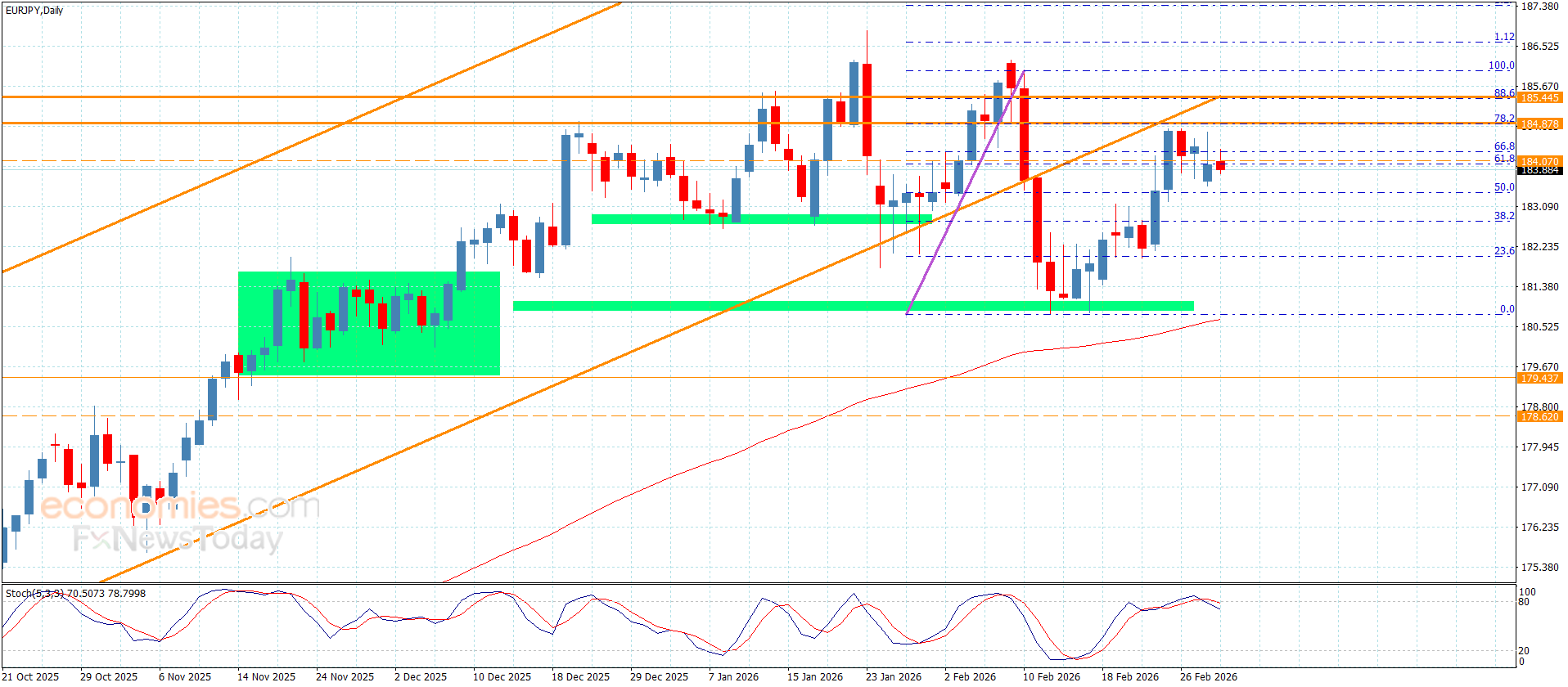
EUR/JPY has recovered its recent losses registered in the previous session, trading around 183.20 during the Asian hours on Friday. The technical analysis of the daily chart suggests that the 14-day Relative Strength Index (RSI) at 54 (neutral) signals steady momentum after easing from overbought. RSI edging higher toward the mid-50s supports stabilization without signaling a stretch.

The 50-day Exponential Moving Average (EMA) rises to 181.43, underpinning the medium-term uptrend. The nine-day EMA has slipped and now caps intraday advances, pointing to consolidation above the 50-day line. The backdrop favors dip-buying while the rising medium-term average holds.

A close back above the nine-day EMA at 183.34 would improve near-term traction toward overhead barriers around the all-time high of 184.95, which was recorded on December 22, aligned with the psychological level of 185.00.

Failure to reclaim the short-term average would leave the cross vulnerable to a deeper mean-reversion phase. The EUR/JPY cross may navigate the region around the initial support at the four-week low of 181.57, recorded on December 17, followed by the 50-day EMA at 181.43. Holding above the medium-term average preserves the broader bullish bias.

EUR/JPY: Daily Chart

Euro Price Today

The table below shows the percentage change of Euro (EUR) against listed major currencies today. Euro was the strongest against the Japanese Yen.

USD EUR GBP JPY CAD AUD NZD CHF
USD -0.05% 0.02% 0.16% 0.10% 0.07% 0.14% 0.00%
EUR 0.05% 0.06% 0.20% 0.14% 0.12% 0.18% 0.05%
GBP -0.02% -0.06% 0.15% 0.08% 0.05% 0.12% -0.02%
JPY -0.16% -0.20% -0.15% -0.05% -0.09% -0.03% -0.16%
CAD -0.10% -0.14% -0.08% 0.05% -0.04% 0.03% -0.10%
AUD -0.07% -0.12% -0.05% 0.09% 0.04% 0.07% -0.07%
NZD -0.14% -0.18% -0.12% 0.03% -0.03% -0.07% -0.13%
CHF -0.00% -0.05% 0.02% 0.16% 0.10% 0.07% 0.13%

The heat map shows percentage changes of major currencies against each other. The base currency is picked from the left column, while the quote currency is picked from the top row. For example, if you pick the Euro from the left column and move along the horizontal line to the US Dollar, the percentage change displayed in the box will represent EUR (base)/USD (quote).

(The technical analysis of this story was written with the help of an AI tool.)

Source link

9 01, 2026

AquaFit Weight Loss Supplement Investigation: 2026

By |2026-01-09T06:32:36+02:00January 9, 2026|Dietary Supplements News, News|0 Comments


AURORA, COLORADO, Jan. 08, 2026 (GLOBE NEWSWIRE) — Disclaimer: This article is for informational purposes only and does not constitute medical advice. Always consult a qualified healthcare professional before starting any new supplement, especially if you have existing health conditions, take medications, or are pregnant or nursing. This article contains affiliate links. If you purchase through these links, a commission may be earned at no additional cost to you.

AquaFit, a capsule-format dietary supplement marketed in the weight management category, has attracted consumer attention in January 2026 as seasonal patterns in supplement searches often increase during New Year health initiatives. According to the company, the formulation emphasizes a metabolism-focused narrative and thermogenic research references, alongside an ingredient profile described by the company in its published materials.

This report summarizes publicly available label information and published research context; it does not evaluate clinical outcomes or product performance. The manufacturer positions AquaFit around research examining the relationship between metabolic rate patterns in adipose tissue and cellular energy expenditure. The company references a 2019 research discussion published in Scientific Reports associated with circadian regulation in human white adipose tissue that examined how metabolic timing patterns relate to fat cell activity in research settings. The research did not evaluate AquaFit or any dietary supplement and does not establish clinical outcomes.

Consumers researching AquaFit often encounter information about its capsule-based delivery format and ingredient profile described as including nine botanical extracts plus essential minerals.

What AquaFit Is and How the Company Positions the Formula

According to the company, AquaFit is a dietary supplement marketed in a capsule format. In the company’s published materials, the product’s messaging emphasizes thermogenic research references within the broader context of metabolic health discussions.

Thermogenesis is a metabolic process that has been extensively studied for its role in energy expenditure. Research published examining green tea catechins and their effects on 24-hour energy expenditure documented how certain botanical compounds influence metabolic rate in controlled settings. These researchers have no affiliation with AquaFit, but their work contributes to broader scientific discussions around thermogenesis and its relationship to weight management research.

According to the manufacturer, AquaFit contains ingredients selected based on published research examining their potential relationships to metabolic function, glucose utilization, and energy balance. The capsule format is positioned by the company as a convenient delivery method.

AquaFit and the Metabolic Research Narrative

The company references a 2019 research discussion published in Scientific Reports that examined circadian regulation in human white adipose tissue through transcriptome and metabolic network analysis. The research did not evaluate AquaFit or any dietary supplement and does not establish clinical outcomes.

The referenced research examined how fat cells operate on different metabolic cycles throughout the day, with metabolic activity patterns varying based on circadian rhythms. According to coverage in Science Daily, the research suggested that cellular metabolism in adipose tissue may have relationships to timing patterns and hormonal fluctuations. Published research has examined how metabolic rate, nutrient processing, and energy expenditure relate to cellular function in various tissue types.

This research builds on earlier published studies. A 2006 study published in the Journal of the American Dietetic Association examined low-fat dietary patterns and weight change over seven years in the Women’s Health Initiative Dietary Modification Trial. A 2021 study published in the American Journal of Clinical Nutrition examined relationships between dietary factors and body composition. Research published in peer-reviewed literature has examined how various compounds may relate to metabolic function and energy balance.

The metabolism-related hypothesis discussed in published research suggests that certain botanical compounds play roles in thermogenic function by influencing cellular energy pathways. Research has documented that metabolic rate changes with age, which has been associated with various age-related weight management considerations in some populations.

Consumers evaluating AquaFit should understand that the circadian adipose tissue research investigated physiological mechanisms and cellular processes rather than evaluating specific supplement formulations. AquaFit as a complete product has not been subjected to clinical trials. The manufacturer references this research as the conceptual foundation for the formula’s design.

AquaFit Ingredient Profile: Research Context and Formulation Design

According to the company’s published formulation details, AquaFit contains ingredients selected based on published research examining their potential relationships to various biological processes. Consumers researching AquaFit often encounter detailed ingredient information in the manufacturer’s materials.

The product label lists a proprietary botanical blend totaling 276 mg, plus zinc (5.5 mg as zinc gluconate) and chromium (0.05 mg as chromium picolinate). This labeling approach is permitted under current FDA regulations but may limit direct comparison to dosages used in published research. The proprietary blend includes the following components:

Alpha Lipoic Acid

Alpha lipoic acid is a compound produced naturally by the body that functions as a cellular antioxidant and mitochondrial cofactor. Published research has examined alpha lipoic acid for its relationships to various metabolic processes. A systematic review and meta-analysis published in peer-reviewed literature examined alpha lipoic acid’s effects on body weight, finding associations with modest weight reduction in some study populations. A 2012 study published in Obesity Reviews examined the compound’s relationships to energy metabolism and oxidative stress markers. These studies examine isolated compounds or biological mechanisms and do not evaluate AquaFit as a finished dietary supplement.

Green Tea Extract (98% Polyphenols, 80% Catechins, 50% EGCG)

Green tea (Camellia sinensis) extract has extensive documentation in metabolic research. A 1999 study published in the American Journal of Clinical Nutrition examined the efficacy of green tea extract rich in catechin polyphenols and caffeine in increasing 24-hour energy expenditure and fat oxidation in humans. A 2007 study published in Obesity examined a green tea extract high in catechins and its effects on body fat and cardiovascular risks in study participants. A 2013 meta-analysis published in the American Journal of Clinical Nutrition examined the effect of green tea on glucose control and insulin sensitivity across 17 randomized controlled trials. These studies examine isolated compounds or biological mechanisms and do not evaluate AquaFit as a finished dietary supplement.

Milk Thistle Seed Extract (80% Silymarin)

Milk thistle (Silybum marianum) and its active compound silymarin are primarily known for their traditional use in supporting liver function. Published research has examined silymarin for its antioxidant properties and relationships to hepatic metabolism. A 2016 review examined silymarin’s effects on metabolic parameters in various study populations. The liver plays a central role in processing nutrients, metabolizing fats, and regulating blood sugar, which has led researchers to investigate relationships between liver health compounds and metabolic function. These studies examine isolated compounds or biological mechanisms and do not evaluate AquaFit as a finished dietary supplement.

Berberine HCL (97% from Berberis aristata Root)

Berberine is an alkaloid extracted from plants including Berberis aristata that has been used in traditional medicine systems for centuries. Modern research has focused on its potential effects on glucose metabolism and related metabolic markers. A meta-analysis published in peer-reviewed literature examined multiple randomized controlled trials involving berberine supplementation, finding associations with improvements in certain metabolic markers in some study populations. Mechanistic research suggests berberine may influence metabolic function through effects on cellular energy pathways, though the exact mechanisms continue to be studied. These studies examine isolated compounds or biological mechanisms and do not evaluate AquaFit as a finished dietary supplement.

Resveratrol (from Polygonum cuspidatum Root Extract)

Resveratrol is a polyphenol found in grapes, berries, and other plants that has been studied for antioxidant properties and potential effects on cellular metabolism. Published research has examined resveratrol’s relationships to various metabolic processes including energy expenditure and lipid metabolism. A 2015 meta-analysis examined resveratrol supplementation’s effects on metabolic parameters across multiple studies. Research has investigated resveratrol’s potential activation of certain cellular pathways related to energy metabolism. These studies examine isolated compounds or biological mechanisms and do not evaluate AquaFit as a finished dietary supplement.

Cayenne Fruit (40,000 Heat Units)

Cayenne pepper (Capsicum annuum) contains capsaicin, which has been researched for its thermogenic properties. A 2012 study published in Chemical Senses examined capsaicin’s effects on energy expenditure and substrate oxidation. Published research has documented that capsaicin consumption has been associated with temporary increases in metabolic rate through thermogenic mechanisms in some study populations. A 2017 meta-analysis examined capsaicinoid supplementation’s relationships to energy intake and expenditure. These studies examine isolated compounds or biological mechanisms and do not evaluate AquaFit as a finished dietary supplement.

Korean Ginseng (8% Ginsenosides)

Panax ginseng has extensive documentation in traditional practices spanning centuries. A 2013 review published in specialized literature examined research discussions on ginseng’s relationships to various physiological processes including energy metabolism. Published research has examined ginsenosides, the active compounds in ginseng, for potential effects on glucose metabolism and energy balance. A 2014 study examined ginseng’s relationships to fatigue and energy levels in various populations. These studies examine isolated compounds or biological mechanisms and do not evaluate AquaFit as a finished dietary supplement.

Banaba Leaf Extract (2% Corosolic Acid)

Banaba (Lagerstroemia speciosa) is a traditional Asian botanical used for metabolic support. Published research has examined corosolic acid, the primary active compound in banaba, for its potential effects on glucose transport. A 2012 review examined banaba leaf extract’s relationships to blood sugar regulation in various study populations. Research has investigated corosolic acid’s potential influence on cellular glucose uptake mechanisms. These studies examine isolated compounds or biological mechanisms and do not evaluate AquaFit as a finished dietary supplement.

Mineral Components: Zinc and Chromium

According to the company, AquaFit includes two essential minerals. Zinc has been examined in published research for its relationships to various metabolic processes including protein synthesis and enzyme function. A 2013 study examined zinc’s relationships to metabolic markers in various populations. Chromium, particularly as chromium picolinate, has been studied for its involvement in insulin signaling and macronutrient metabolism. According to the National Institutes of Health Office of Dietary Supplements, chromium is involved in the action of insulin, a hormone critical for metabolism and storage of carbohydrate, fat, and protein in the body. A 2017 meta-analysis examined chromium supplementation’s effects on body composition parameters. These studies examine isolated compounds or biological mechanisms and do not evaluate AquaFit as a finished dietary supplement.

Manufacturing and Regulatory Context for AquaFit

According to the company, AquaFit is manufactured in the United States for AquaFit, Natures Formulas, based in Aurora, Colorado. The manufacturer states that ingredients are sourced according to quality specifications and that the product formulation follows established supplement manufacturing protocols.

Consumers researching dietary supplements should understand that the FDA does not approve dietary supplements before they reach the market. The regulatory framework for supplements differs from medications, with the Dietary Supplement Health and Education Act placing responsibility on manufacturers for safety and accurate labeling.

According to the company, AquaFit uses vegetable capsules (hypromellose), making it suitable for those following vegetarian dietary preferences. Other ingredients include microcrystalline cellulose, magnesium stearate, and silicon dioxide.

Label directions describe a once-daily capsule format; readers should follow the product label and consult a qualified healthcare professional for individualized guidance.

Safety Information and Interaction Considerations

Some ingredients commonly discussed in metabolic supplement research may be relevant for individuals taking medications or managing health conditions. Published research frequently discusses berberine, chromium, and alpha lipoic acid in relation to glucose metabolism, and green tea extracts may contain caffeine. Individuals who take prescription medications or have medical conditions should consult a qualified healthcare professional before using dietary supplements.

The product label states the following cautions: Do not exceed recommended dose. Not for use by those under the age of 18 or pregnant or nursing mothers. Consult with a physician prior to use especially if you are taking a medication or have a medical condition.

Distribution Information

According to the company, AquaFit is offered through its official website, where current availability, shipping information, and policy terms are published and subject to change. According to the company’s published policy pages, AquaFit lists refund and return terms on its official website, and those terms may change; consumers are encouraged to review current details directly before making any purchase decision.

Market Context: Weight Management Supplement Category

Consumers researching weight management approaches encounter numerous options including single-ingredient supplements, multi-ingredient formulations, prescription medications, and various dietary and exercise programs. Traditional supplement approaches have emphasized particular botanicals such as green tea extract or conjugated linoleic acid as primary ingredients. These have varying levels of research documentation, with study results showing mixed outcomes across different research designs.

Prescription medications represent a different category with distinct regulatory pathways. These medications undergo clinical trial processes and regulatory review procedures that differ from dietary supplement pathways.

According to the company, AquaFit’s positioning emphasizes thermogenic research references and metabolic support research discussions within the broader weight management supplement category. The capsule format represents one delivery method option within the broader supplement category.

What Research and Public Information Do and Do Not Show About AquaFit

Consumers evaluating AquaFit should understand several important distinctions about research and evidence:

AquaFit as a complete formulation has not been subjected to clinical trials. The manufacturer references published research on individual ingredients and physiological mechanisms, but these studies examined isolated compounds or biological processes rather than evaluating the finished AquaFit product.

Published research on ingredients represents investigation of individual substances under controlled conditions. The presence of researched ingredients in a formulation does not predict outcomes from the complete product. Ingredient research and finished product outcomes represent different categories of evidence.

Individual responses to dietary supplements vary significantly based on numerous factors including baseline characteristics, lifestyle variables, genetic factors, concurrent medications, health status, and other individual considerations. Research documenting group-level statistical associations in controlled studies does not predict individual experiences.

The company references research as the conceptual foundation for formulation design. This represents the manufacturer’s interpretation of published science rather than direct evidence of product efficacy. Consumers should distinguish between research informing formulation strategy and research documenting finished product outcomes.

One characteristic of the AquaFit formula worth noting: the use of a proprietary blend. While the total blend weight is listed (276 mg), individual ingredient amounts within the blend are not specified on the label. This labeling approach is permitted under current FDA regulations but may limit direct comparison to dosages used in published research.

Dietary supplements are not intended to diagnose, treat, cure, or prevent any disease. Weight management concerns should be evaluated by qualified healthcare professionals. Any health management decisions should occur with physician guidance.

Consumer Decision Framework and Evaluation Considerations

Consumers considering nutritional approaches to weight management encounter questions about appropriateness, expectations, and alignment with individual circumstances. AquaFit represents one option within a broader landscape of supplement and lifestyle approaches.

Consumers researching AquaFit often have various characteristics and motivations. Some seek nutritional support approaches while maintaining active lifestyles. Others take proactive approaches to metabolic health maintenance. Some prefer multi-ingredient formulas. Some are drawn to formulations emphasizing thermogenic and metabolic research. Individual priorities and circumstances vary significantly.

Consumers for whom AquaFit may not be appropriate include those requiring medical intervention for obesity or metabolic disorders, those with diagnosed medical conditions requiring physician oversight, individuals seeking evidence from product-specific clinical trials, individuals with sensitivities to caffeine or botanical extracts, those who prefer single-ingredient approaches for precise dosing, or those taking multiple medications or managing complex health situations.

Before choosing any dietary supplement, healthcare provider consultation is recommended to ensure appropriate oversight and informed decision-making. Lifestyle approaches including caloric balance, dietary patterns, physical activity, sleep quality, and stress management significantly relate to weight management outcomes.

Contact Information

For questions about AquaFit, according to the company’s published information, customer service is available through:

Product Support Email: support@buyaquafit.com

Phone: 1-888-254-0425 (7AM to 9PM, 7 days a week)

Physical Address: AquaFit, 19655 E 35th Dr #100, Aurora, CO 80011, USA

Readers may view the current AquaFit offer (official AquaFit page) to review manufacturer-published label details, ingredient disclosures, and policy information.

Regulatory Environment and Industry Context

The dietary supplement industry operates under regulatory frameworks that differ from pharmaceutical regulation. The FDA’s authority over dietary supplements differs significantly from medication oversight. Supplements do not require pre-market approval processes, though manufacturers bear responsibility for safety and label accuracy. Post-market surveillance systems monitor safety through adverse event reporting mechanisms.

Recent years have included regulatory attention to health claim categories for various supplement types. The Federal Trade Commission monitors advertising representations, requiring that marketing claims have substantiation.

Consumers should review current information about any supplement’s regulatory status and manufacturing practices before making purchase decisions. Weight management concerns should be evaluated by qualified healthcare professionals. Health management approaches should be discussed with physicians.

Approaches to maintaining healthy weight include balanced caloric intake, dietary patterns emphasizing whole foods, regular physical activity, adequate sleep, stress management, and prompt discussion of weight concerns with qualified healthcare providers.

Disclaimers

FDA Health Disclaimer: These statements have not been evaluated by the Food and Drug Administration. This product is not intended to diagnose, treat, cure, or prevent any disease. Always consult your physician before starting any new supplement, especially if you have existing health conditions, take medications, or are pregnant or nursing.

Results May Vary: Individual results will vary based on factors including age, baseline health condition, lifestyle factors, consistency of use, genetic factors, current medications, and other individual variables. Ingredient-level research does not predict outcomes from any specific finished product.

Affiliate Disclosure: This article contains affiliate links. If you purchase through these links, a commission may be earned at no additional cost to you.

Pricing and Policy Disclaimer: All information was accurate at the time of publication (January 2026) but is subject to change. Always verify current pricing, terms, and policies on the official AquaFit website before making decisions.

Publisher Responsibility: The publisher has made every effort to ensure accuracy at the time of publication. Readers are encouraged to verify all details directly with AquaFit and their healthcare provider before making decisions.

Related Links:

Contact: AquaFit Customer Support 19655 E 35th Dr #100 Aurora, CO 80011, USA Phone: 1-888-254-0425 Email: support@buyaquafit.com


Source link

9 01, 2026

EUR/USD, GBP/USD and EUR/GBP Forecasts – Dollar Stubborn Early Thursday

By |2026-01-09T04:34:36+02:00January 9, 2026|Forex News, News|0 Comments

GBP/USD Technical Analysis

The British pound, of course, has drifted a little bit lower. We are in an area of consolidation. I don’t think that changes today. You could, in theory, see a little bit of a bounce when we get closer to 1.34, but really, I think this is the domain of short-term traders more than anything else, with 1.35 being a bit of a magnet for price.

The Bank of England is expected to cut rates as well, but it is expected to do so in a much slower and gradual manner than the market once thought, hence the British pound’s strength over the last couple of months. I think this is a currency that, relatively speaking, at least will fare better than many others against the greenback.

EUR/GBP Technical Analysis

The euro has climbed slightly against the British pound as we continue our bounce from the 200-day EMA, but I will direct you to my analysis from a couple of days ago. I think we’re going to start drifting towards the 0.8720 area and then maybe see some exhaustion that we can start shorting again.

While the Bank of England is expected to cut rates, it’s doing so at a much slower pace, and this, of course, is in comparison to the ECB, which is basically on hold, so we already know that the interest rate differential will continue to favor the pound for some time. That doesn’t necessarily mean that we fall apart. I just think that you’re going to continue to see more of a rally and then a fade type of situation going forward.

For a look at all of today’s economic events, check out our economic calendar.

Source link

9 01, 2026

Your protein shake might contain lead and toxic metals, testing reveals

By |2026-01-09T04:31:34+02:00January 9, 2026|Dietary Supplements News, News|0 Comments


The protein powder market has exploded in recent years, reaching over $32 billion globally, with consumers increasingly treating these supplements as daily nutritional staples.

Yet recent investigations reveal a troubling reality: many popular protein powders and ready-to-drink shakes contain concerning levels of lead and other toxic heavy metals that accumulate in the body over time.

Two separate investigations conducted in 2024 and 2025 found widespread contamination across the industry. Consumer Reports tested 23 popular protein products and discovered that more than two-thirds contained more lead in a single serving than their experts consider safe to consume in an entire day. Some products exceeded that threshold by more than tenfold.

Meanwhile, the Clean Label Project analyzed 160 protein powders from 70 brands and found that 47% exceeded California Proposition 65 safety thresholds for toxic metals.

The findings represent a worsening trend. When Consumer Reports first examined protein powders 15 years ago, contamination levels were lower and fewer products contained detectable amounts of lead. The average lead content has increased since then, even as the industry has grown and rebranded itself around health and wellness.

Plant-based and organic products show highest contamination

Contrary to what health-conscious consumers might expect, organic and plant-based protein powders showed the highest contamination levels. Organic products contained three times more lead and twice as much cadmium compared to non-organic alternatives. Plant-based powders showed three times more lead than whey-based products.

Even flavor choices matter. Chocolate-flavored protein powders contained four times more lead than vanilla varieties and 110 times more cadmium. This occurs because dark chocolate and cacao naturally contain elevated levels of heavy metals absorbed from soil during growth.

The contamination stems from two primary sources. Heavy metals occur naturally in volcanic rock and contaminated soils, and certain crop plants efficiently extract these metals from the ground and concentrate them in edible portions. When volcanic rock erodes, heavy metals seep into local soil and water supplies.

Additionally, fossil fuel combustion releases heavy metals into the air that eventually settle into soil, while some fertilizers, herbicides and pesticides contain heavy metals that further contaminate growing areas.

Whey and dairy-based protein products generally showed lower contamination levels because dairy cows filter out most heavy metals before they reach milk. However, even among whey products, half still contained enough lead that experts advise against daily consumption.

Serious health risks from chronic exposure

The World Health Organization identifies lead as one of 10 chemicals of major public health concern and states there is no known safe blood lead concentration. Lead exposure causes more than 1.5 million deaths globally each year, primarily through cardiovascular effects including increased risk of high blood pressure, heart attacks and strokes.

In children and developing fetuses, lead permanently affects brain development, resulting in reduced IQ, behavioral problems, reduced attention span and learning difficulties. Lead exposure during pregnancy can cause reduced fetal growth and preterm birth. In adults, lead damages the kidneys, impairs reproductive function and causes anemia.

Cadmium poses equally serious threats. Classified as a probable human carcinogen by the Environmental Protection Agency, cadmium accumulates in the kidneys, liver and bones.

Chronic exposure causes kidney dysfunction, bone demineralization, reproductive problems, cardiovascular disease and diabetes. The body eliminates cadmium extremely slowly, meaning years of low-level exposure from daily protein shake consumption could result in dangerous accumulation.

Three products in the Consumer Reports testing exceeded their level of concern for both lead and the carcinogenic heavy metals cadmium and inorganic arsenic. Two plant-based powders contained enough lead that experts advised against consuming them at all.

Regulatory gaps leave consumers vulnerable

The supplement industry operates under regulations separate from other food and drug products. The FDA does not test dietary supplements or verify their ingredients before they reach store shelves.

While the agency issued interim reference levels of 2.2 micrograms of lead per day for children and 8.8 micrograms for women of childbearing age earlier this year, these serve as voluntary targets for industry rather than enforceable limits.

California’s Proposition 65 remains the most progressive regulatory framework, requiring businesses to warn consumers about significant exposure to cancer-causing chemicals and reproductive toxins. Consumer Reports used California’s standard of 0.5 micrograms of lead per day as their safety threshold, which includes a wide safety margin. This conservative approach reflects the scientific consensus that any lead exposure carries risk.

The FDA told Consumer Reports it monitors contaminants through its toxic element compliance program and will review the testing findings to inform future testing and enforcement activities. However, the lack of mandatory testing before products reach consumers means contaminated supplements continue circulating in the market.

Making safer choices

Experts emphasize that occasional consumption of most tested products poses minimal risk, as harmful health effects primarily result from repeated exposure at high doses. The greatest danger comes from daily use over months and years, allowing heavy metals to accumulate in the body.

Consumers can reduce exposure by choosing whey or animal-based protein products, which generally contain lower heavy metal levels than plant-based alternatives. When selecting plant-based options, vanilla-flavored products typically contain less contamination than chocolate. Rotating between different protein sources and brands also limits cumulative exposure from any single product.

For products showing especially high heavy metal content, using them sporadically rather than daily significantly reduces exposure. Consumers should also consider that serving sizes vary between products, so understanding what constitutes one serving helps manage consumption appropriately.

Maintaining a varied diet rich in nutritious whole foods remains the best strategy. Research shows good overall nutrition can help protect against effects of contaminant exposure. Rather than relying heavily on protein supplements, consumers might consider whether they actually need supplementation or if dietary protein from diverse food sources better serves their health goals.

The protein supplement industry’s rapid growth has outpaced safety oversight, leaving consumers to navigate risks on their own. Until more comprehensive testing requirements and enforceable safety limits emerge, awareness and careful product selection remain the primary tools for minimizing exposure to these toxic heavy metals that have no place in products marketed as health enhancers.


VegOut Magazine’s November Edition Is Out!

In our latest Magazine “Curiosity, Compassion & the Future of Living” you’ll get FREE access to:

    • – 5 in-depth articles
    • – Insights across Lifestyle, Wellness, Sustainability & Beauty
    • – Our Editor’s Monthly Picks
    • – 4 exclusive Vegan Recipes


Source link

9 01, 2026

BTCUSD Today: January 09 — Dow Jones–Polymarket Odds Go Mainstream

By |2026-01-09T04:20:35+02:00January 9, 2026|Crypto News, News|0 Comments

Polymarket is moving mainstream as Dow Jones adds real-time odds to WSJ, Barron’s, and MarketWatch. For Hong Kong investors, live probabilities on rates, elections, and earnings can sharpen trade timing and risk control. We track BTCUSD alongside these signals to gauge macro sentiment. This integration puts event views next to headlines, so positioning can update faster. Used well, it supports clearer decisions on exposure, hedges, and even treasury planning in Web3 operations across HK.

Dow Jones brings prediction odds to mainstream investors

Dow Jones started embedding Polymarket odds across major properties, including WSJ, Barron’s, and MarketWatch. The Dow Jones partnership places market-implied probabilities beside daily reporting, which can speed investor reactions. The initial rollout is highlighted by the WSJ team here: Polymarket, Dow Jones Partner to Display Prediction-Markets Data in Dow Jones Content. Expect odds on rate cuts, election paths, and high-impact corporate events.

HK traders can now scan WSJ live odds during the cash session and pre-market, then align exposures across US equities, crypto, and local derivatives. Polymarket turns fuzzy narratives into numbers, which helps with sizing and stops. With probabilities in view, we can stress-test positions more quickly around US CPI prints, FOMC meetings, and earnings that often move Asia hours the next day.

Polymarket odds reflect the price where risk clears, not a guarantee. Depth and liquidity matter. Tight spreads, steady turnover, and diversified participation improve signal quality. We pair the odds with realized volatility and news timestamps. For added context on business workflows this could influence, see Meyka’s brief: January 08: Dow Jones–Polymarket Deal Brings Live Odds to WSJ.

BTC setup and the new odds signal

Polymarket gives a fast read on macro binaries that often sway crypto. If prediction market data shows rising odds of Fed cuts, liquidity-sensitive assets can bid. If odds swing toward tighter policy, we fade beta or hedge. We do not trade odds alone. We blend Polymarket with funding rates, basis, and cross-asset moves to refine BTC timing and risk.

Spot sits at US$93,870.06, day range US$91,479.28 to US$94,825.27, as of 07 Mar 2025 09:00 UTC. RSI is 55.08, ADX 31.66 shows a strong trend, and CCI 189.44 flags overbought. Price is near or above Bollinger upper US$93,350.12, while ATR at 3,391.97 implies brisk swings. MACD histogram is positive at 1,053.15, suggesting improving short-term momentum.

We track the 50-day average at US$89,243.98 as near-term support and the 200-day at US$106,601.45 as resistance. The Bollinger middle, US$88,768.91, and Keltner middle, US$89,757.19, are secondary supports. Year high is US$126,198.07. A sustained close back inside bands can cool momentum. Strong odds shifts on Polymarket around Fed meetings could add fuel either way.

From odds to operations for HK Web3 teams

The Dow Jones partnership validates Polymarket as a data source that executives will see daily. That visibility can nudge CFOs at HK Web3 firms to trial crypto-native treasury and payroll workflows. Live probabilities help with cash buffers around event risk. Teams can decide when to convert, hedge, or delay noncritical outflows based on shifting odds and liquidity conditions.

Start with SFC-licensed VASPs, set segregated wallets, and define payout rails in HKD for staff and vendors. Use Polymarket to map event windows, then pre-fund on-chain wallets ahead of risk dates. Build a simple treasury ladder, for example splitting working capital across stablecoins, fiat HKD, and BTC, with thresholds that trigger conversions when odds or volatility cross set levels.

Codify risk: hedge ratios, maximum BTC drawdown, and conversion rules back to HKD after payroll. Track on-chain flows with audit-ready tools and keep KYC files current. Reconcile prediction market data and execution timestamps to prove policy compliance. This turns Polymarket from a headline feature into a measurable input that improves board reporting and cash management discipline.

Final Thoughts

Polymarket is now visible where many HK readers already spend time. That makes event probabilities easier to act on, but they work best beside other signals. Our playbook is simple. Track the WSJ widgets for odds on the Fed, elections, and mega-cap earnings. Map those dates to existing positions. For BTC, watch momentum versus band levels and the 50 and 200 day averages, then size risk accordingly. For HK Web3 operators, define treasury and payroll rules that reference odds, volatility, and licensed liquidity. Start small, measure fills and slippage, and only expand after the data adds clear value to returns and operations.

FAQs

What is Polymarket and why does it matter now?

Polymarket is a crypto-native prediction market where prices reflect odds on real-world events. It matters now because Dow Jones is embedding these odds into WSJ, Barron’s, and MarketWatch. That puts quantified probabilities next to daily news, which can speed decision-making for Hong Kong investors who trade macro, equities, and crypto.

How can Hong Kong traders use WSJ live odds day to day?

Check odds before Asia open, during US data releases, and ahead of earnings. Align position size, hedges, and stops to the probability path. Combine odds with implied volatility, volume, and price levels. Avoid trading every wiggle. Use odds shifts to time entries and exits around key macro and company events.

Do Polymarket odds predict BTC price moves?

Not directly. They are one input among many. Odds often lead sentiment around macro catalysts, which can influence BTC. We pair Polymarket data with momentum, funding, and liquidity. If odds cluster and technicals confirm, confidence rises. If odds are noisy or liquidity is thin, we reduce size and rely on core levels.

What should HK Web3 firms change in treasury and payroll?

Introduce clear rules for conversions to HKD, hedge thresholds, and event calendars tied to odds. Use SFC-licensed platforms, segregated wallets, and audit trails. Start with small pilot payouts and stablecoin buffers. Review results monthly. If the process lowers volatility and costs without adding risk, expand the program gradually.

Disclaimer:

The content shared by Meyka AI PTY LTD is solely for research and informational purposes. 
Meyka is not a financial advisory service, and the information provided should not be considered investment or trading advice.

Source link

Go to Top