The main category of Fitness News.
You can use the search box below to find what you need.
[wd_asp id=1]
The main category of Fitness News.
You can use the search box below to find what you need.
[wd_asp id=1]
Emily Jamea, Ph.D., is a sex therapist, author andpodcast host. You can find her here each month to share her latest thoughts about sex. Her book, Anatomy of Desire: Five Secrets to Create Connection and Cultivate Passion is available everywhere books are sold.
I was recently sucked into the novel “All Fours” by Miranda July. The story follows an unnamed perimenopausal woman who, upon the realization that her hormones are about to plummet and looming fear that she will become sexually obsolete, boldly breaks free from the confines of domesticity and gender norms. I couldn’t put it down.
One of my friends shared a
New Yorker article that talked about July’s novel as well as others that have come out in recent years that point to a similar theme — women in midlife are starting to wake up. “I love that women are finally giving themselves permission to have a midlife crisis,” I told my friends. The female midlife crisis is having a moment, and, as a sex and relationship therapist, I feel called to reflect on this movement.
There has (finally!) been a surge of attention to menopause in the past couple of years. It’s a topic that’s garnered a lot of attention on social media, and PBS recently released
The M Factor, a documentary that focuses on new science surrounding menopausal care.
Women are sick and tired of feeling marginalized by doctors who neglect their health and well-being. And, health issues aside, they refuse to go on pretending that they’re completely uninterested in sex later in life.
While I was writing my new book, “
Anatomy of Desire: Five Secrets to Create Connection and Cultivate Passion,” I interviewed many women about what makes sex great through every season in life. Menopause didn’t stop my research participants from feeling sexual. In fact, most of them were pleasantly surprised to discover an improvement in how they felt sexually during the midlife years. They cited things like feeling more comfortable in their own skin, increased ability to assert their wants and needs, and a partner who collaborated with them to keep things interesting. And I’ve counseled many women in midlife who experience a surge of sexual interest after leaving unhealthy marriages. All this to say that the hormonal shift during midlife does not have to spell the end of sexual vitality.
Read: 9 Ways Menopause Can Give Your Sex Drive a Boost >>
While the theme in recent novels centers around women experiencing a midlife crisis, upon reflection, I think it is better we think of it as a sexual awakening. The latter implies more agency, in my opinion. And I don’t think women necessarily need to seduce a young man to get a sexual thrill — though there’s nothing wrong with that.
The “Adaptability” chapter in my book is filled with information about maintaining a strong sexual connection despite change over the course of one’s life, but here are a few quick tips.
1.
Reassess your sexual values. Most people don’t spend time reflecting on the thoughts, feelings and beliefs they hold about sexuality. Many of us internalize messages that were put on us by society, culture, upbringing and religion. Ask yourself questions like, What do I need to experience to feel sexually satisfied? How would I like to be treated before, during and after sex? How far am I willing to go to keep things exciting? How do I see the relationship between love and sex? Have any of my thoughts or feelings evolved over the last 15 years?
2.
Involve your partner. Ask your partner if they’d be willing to have a check-in about the quality of your sex life. It’s fine to open the conversation with something along the lines of, I feel awkward bringing this up, but I realize we haven’t had a sit down to exchange our thoughts and feelings about the quality of our sex life. I know it’s important to keep this part of our relationship strong. I imagine we’ve both changed a bit over the years, and I think it would be a good idea to see if there are any adjustments we need to make.
3.
Embrace new experiences together. Many couples in midlife find excitement by trying new things together. This doesn’t have to mean anything dramatic.Even small shifts in routine can help create novelty and foster a sense of exploration. You might consider trying new activities, experimenting with different forms of touch or exploring fantasies. Think of it as keeping curiosity alive. Studies show that couples who try new things together tend to report greater satisfaction and connection, which can carry over into their sex lives.
4.
Focus on sensuality over sexuality. Sexuality and sensuality are often intertwined, yet focusing on sensuality can open up pathways to intimacy that feel less pressured. Explore touch, connection and closeness without necessarily aiming for sexual intercourse. Massage, cuddling or even a slow dance can build intimacy without performance expectations. For many people, enjoying sensuality can be a way to reconnect with their bodies and each other, especially during times of physical or hormonal change.
5.
Stay open to redefining intimacy. Redefining what intimacy means to both partners can be empowering. Intimacy doesn’t always have to look like it did in one’s 20s or 30s. Exploring how it has changed may take pressure off maintaining rigid expectations. This openness allows space for evolving needs and desires, whether they’re emotional, physical or sexual.
As more women embrace midlife, they’re discovering a new vitality and depth in their relationships and sexuality. By redefining intimacy, reassessing values and exploring new possibilities, they’re creating space for authentic connection that transcends conventional boundaries and stereotypes.
Whether you’re just starting to explore this stage or deep into your journey, remember that there is no single “right” way to experience a midlife sexual awakening. In the end, it’s about what feels empowering, satisfying and true to you.
From Your Site Articles
Related Articles Around the Web
Laurel Post siempre supo que deseaba amamantar.
Pero su plan de amamantar a su hijo por al menos dos años cambió después de 15 meses cuando le diagnosticaron un tipo agresivo de cáncer de mama. Si hubiese tenido tiempo para prepararse, Laurel hubiese podido extraer y almacenar su propia leche. Pero tenía que empezar con la quimioterapia y someterse a una mastectomía doble lo antes posible.
Al igual que muchas otras mujeres, Post tuvo que adaptar y cambiar sus planes debido al cáncer de mama. A diferencia del bebé de Post, algunos infantes todavía requieren que una parte importante de su nutrición provenga de leche materna o artificial. Entonces, ¿qué pasa si te diagnostican cáncer durante la lactancia o si quieres amamantar después del tratamiento?
No se ha perdido todo.
Sí, el cáncer de mama puede cambiar tus planes de la lactancia. Pero en muchas ocasiones, dependiendo de tu plan de tratamiento, todavía puedes amamantar, pero podría ser algo diferente de lo que pensaste originalmente.
La lactancia es un proceso con altibajos para muchas mujeres, incluso sin complicaciones tales como un diagnóstico de cáncer, dijo Kathleen Dudley, CRNP-PC, IBCLC, una enfermera pediátrica certificada, consultora de lactancia y miembro del consejo de asesoría de la salud de la mujer de HealthyWomen. Pero no tienes que sentir que estás sola. “Tu equipo médico y tu consultor de lactancia pueden ayudarte a preparar un plan que se adapte a tus necesidades y a las de tu bebé en tu situación específica”, dijo.
Aquí encontrarás lo que debes saber acerca de la lactancia durante y después de un diagnóstico y tratamiento de cáncer de mama.
A veces una cirugía es el único tratamiento requerido para tratar el cáncer de mama. En ese caso, es posible que puedas extraer y congelar un suministro de leche materna antes de tu cirugía y reanudar la lactancia una vez que te sanes y que todas las medicinas hayan salido de tu sistema.
La anestesia y algunos analgésicos (tales como narcóticos) pueden transferirse a la leche materna, así que asegúrate de preguntar a tu equipo de atención médica cuánto tiempo debes esperar para que la medicina ya no esté en tu cuerpo.
Si estás considerando ingerir hierbas medicinales u otro medicamento para estimular la producción de leche si tu suministro es bajo después de una interrupción, asegúrate de consultarlo primero con tu proveedor de atención médica (HCP, por sus siglas en inglés).
Los fármacos de la quimioterapia pueden circular en el cuerpo de la madre hacia la leche materna, así que se recomienda a mujeres que se estén sometiendo este tipo de tratamiento que no amamanten.
Si estás amamantando pero debes destetar a tu bebé para recibir quimioterapia, puedes seguir extrayendo la leche materna para mantener tu producción de leche a niveles elevados. Sin embargo, esa leche debe desecharse. Algunas mujeres podrían reanudar la lactancia después de que sus proveedores de atención médica les digan que es seguro hacerlo.
Algo que deberías saber es que estudios indican que la quimioterapia puede afectar negativamente la producción de leche (o detenerla por completo) para algunas mujeres.
Los fármacos de bloqueo hormonal tales como inhibidores de la aromatasa y el tamoxifeno se usan comúnmente para reducir la recurrencia del cáncer de mama. Funcionan bloqueando el estrógeno y usualmente se toman durante al menos cinco años después de la cirugía.
Dudley recomendó no amamantar mientras se tomen fármacos de bloqueo hormonal, puesto que el medicamento puede transferirse al bebé a través de la leche materna.
Un estudio reciente de mujeres que interrumpieron su terapia hormonal por hasta dos años para embarazarse y luego amamantar sugiere que algunas mujeres podrían interrumpir en forma segura el consumo de fármacos de bloqueo hormonal, dependiendo de la etapa de su tratamiento y de otros factores.
Frecuentemente es posible amamantar después de una mastectomía parcial (también llamada mastectomía segmentaria), la cual remueve un tumor y el tejido saludable adyacente. Sin embargo, puesto que nervios y conductos mamarios frecuentemente se ven afectados, es posible que el seno que recibió el tratamiento no produzca suficiente leche.
Puedes amamantar después de radiación, la cual se proporciona a la mayoría de mujeres después de una mastectomía parcial. Sin embargo, la radiación podría sensibilizar tu piel y hacer que sientas dolor cuando la toquen, similar a una quemadura de sol grave o irritación en esa área, o su elasticidad podría verse afectada, lo cual podría dificultar el enganche del bebé en el seno. Habla con tu proveedor de atención médica o radiógrafo acerca de cómo tratar un seno irritado. Las opciones incluyen cremas y almohadillas especiales, analgésicos de acción leve sin receta y compresas calientes o frías.
La radiación también podría hacer que la leche parezca más oscura y espesa, pero eso no es peligroso. Independientemente de eso, podrías sentirte mejor si no amamantas del seno que recibió la radiación. Y eso está bien. Un seno frecuentemente puede producir suficiente leche para alimentar a un bebé, ¡e incluso a gemelos!
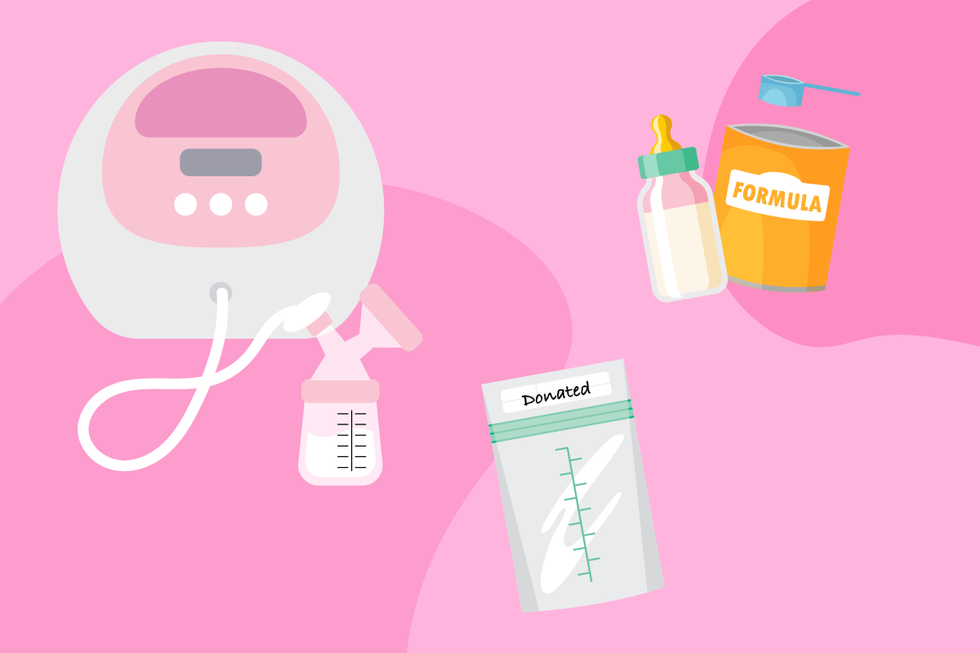
Un suministro inapropiado de leche es un problema y usar una extractora de leche entre tomas frecuentemente puede ser beneficioso para el flujo de leche. Monitorear el peso de tu bebé puede ser útil para que sepas si está recibiendo suficiente leche de un seno. Si no es así, puedes complementar el suministro con leche artificial o usar un banco de leche, donde puedes obtener leche pasteurizada de donantes humanas.
El miedo de que reaparezca el cáncer es una preocupación extremadamente común y normal de las sobrevivientes y algunas mujeres podrían temer que la lactancia haga que su cáncer reaparezca. Sin embargo, no hay evidencia que indique que la lactancia cause la reaparición de cáncer. De hecho, la lactancia reduce tu riesgo de que tengas cáncer de mama en primer lugar, aunque hay menos investigaciones acerca de la conexión entre la lactancia y una recurrencia de cáncer de mama.

Aunque el público en general sabe que la lactancia puede beneficiar al bebé y a su madre, no todas las mujeres pueden o desean hacerlo. Para algunas mujeres, la lactancia artificial podría ser más conveniente o podría haber una falta de apoyo en el lugar de trabajo.
Sea cual sea tu decisión o circunstancias, no debes sentir culpa. Algunas investigaciones, incluyendo este estudio, no han encontrado “diferencias significativas” en la salud ni en el intelecto entre bebés que recibieron leche materna o artificial.
Aunque los recuerdos todavía son dolorosos para Post, se siente afortunada de que su hijo haya tenido suficiente edad para recibir una parte importante de su nutrición de alimentos sólidos cuando tuvo que interrumpir la lactancia. “Existen muchas otras formas en las que puedes establecer conexiones con tu hijo”, dijo.
Dudley reconforta a todas las madres en circunstancias similares con este consejo: “Si tienes que interrumpir la lactancia durante ciertas etapas de tu tratamiento o definitivamente para recibir la atención apropiada, está bien. ¡Tu bebé es afortunado de tener una madre que se esfuerce tanto para cuidarlo mientras se asegura de cuidarse a sí misma!
Este recurso educativo se preparó con el apoyo de Daiichi Sankyo y Merck.
From Your Site Articles
Related Articles Around the Web
Do your legs and feet feel stiff and tired after a long day? Try these yoga stretches for instant relief!
It’s normal for your legs and feet to feel tired and stiff after a long day, even if you didn’t workout, or put obvious strain on them. Most of us feel tight and stiff due to our lifestyle, and simple daily habits that we repeat. Sitting for long periods throughout the day and wearing restrictive shoes can both play a part in how our lower body feels by the end of the day.
Let’s imagine what happens with our legs when we sit for long periods. When seated, your legs are flexed at the hip; the main muscle that does that is your hip flexors. These muscles, which go from your back starting at T12 across the hip to the front of the upper thigh, shorten or contract in the seated position. Because you’re not moving or bearing weight your muscles don’t have to do much work, yet they are in contraction. These shortened muscles become tense or high tone, known as hypertonic and it can make your muscles tired and over time become weak and tight. During the day, it’s a good idea to set a reminder to stand up for 5 minutes every hour, and when you’re sitting down for prolonged periods move positions to avoid hypertonic muscles.

Let’s talk about our feet. Do you ever take off your shoes at the end of the day and it’s like your feet are screaming at you THANK YOU! Did you know the soles of your feet are a thick band of tissue called the plantar fascia? Your fascia can be reshaped, so when we wear shoes all day we constrict the movement of our plantar fascia, thereby making them feel tight, the tighter the shoe, the more stiff your feet will feel. The good news is fascia is malleable, so giving yourself a foot massage, taking your fingers between your toes to stretch the tissue, or rolling your foot on a tennis ball is a great way to massage your plantar fascia.
Try this yoga routine after a long day to release tension from your leg muscles and stretch your feet. This will help not only lengthen the tired and tight muscles of your lower body but also increase circulation that has been limited by a sedentary lifestyle or from standing most of the day.

Sit in a kneeling position with your hips on top of your heels. You can sit on a blanket for comfort, or sit on a block to relieve any knee discomfort. Take a deep inhale and reach the crown of your head up to lengthen and align your spine. Place your hands on top of your thighs. This gentle posture stretches the quads, front of the shinbone, and tops of the feet. Hold for 1 minute.
Include this variation of thunderbolt with toes curled under to stretch the soles of the feet.
Add a little more intensity with this toe-stand variation. Widening the knees will add an inner thigh stretch

From a standing position feet hip’s distance apart, slide the palm of your hands underneath your feet until your toes reach your wrist crease. Bend your knees as much as needed to get the palms underneath your feet. Allow your upper back to round and stretch. This posture stretches the entire posterior, or backside of your body including your back, gluteus maximus, hamstrings, calves, Achilles heel, and soles of feet. You can gently shift the weight of your feet on your hands to get a massage of both your feet and hands. Hold for 1 minute.

Place your front foot as wide as your outer hip. Bend your front leg knee until it stacks over your ankle. Extend your back leg behind you and allow your hips to sink. Your arms are to the inside of your front bent leg you can stay up on your hands, or for a deeper stretch place your forearms down parallel. Reach your sternum forward to lengthen the spine. This hip opener stretches your inner thighs, hip flexors, and groin. Hold for 1-3 minutes each side.

Kneel on the floor thighs parallel, and widen your feet out until your heels brush against your outer hips.. Sit hips down in between feet. Spread each toe into the floor. Thighs roll inward. Recline your torso onto the ground. You can also lay on a pillow or bolster if it’s more comfortable. If this stretch is too much for your knees, extend one leg straight and then switch sides. Stretches Quads, hip flexors, knees, ankles, and tops of feet. Hold for 1 minute.
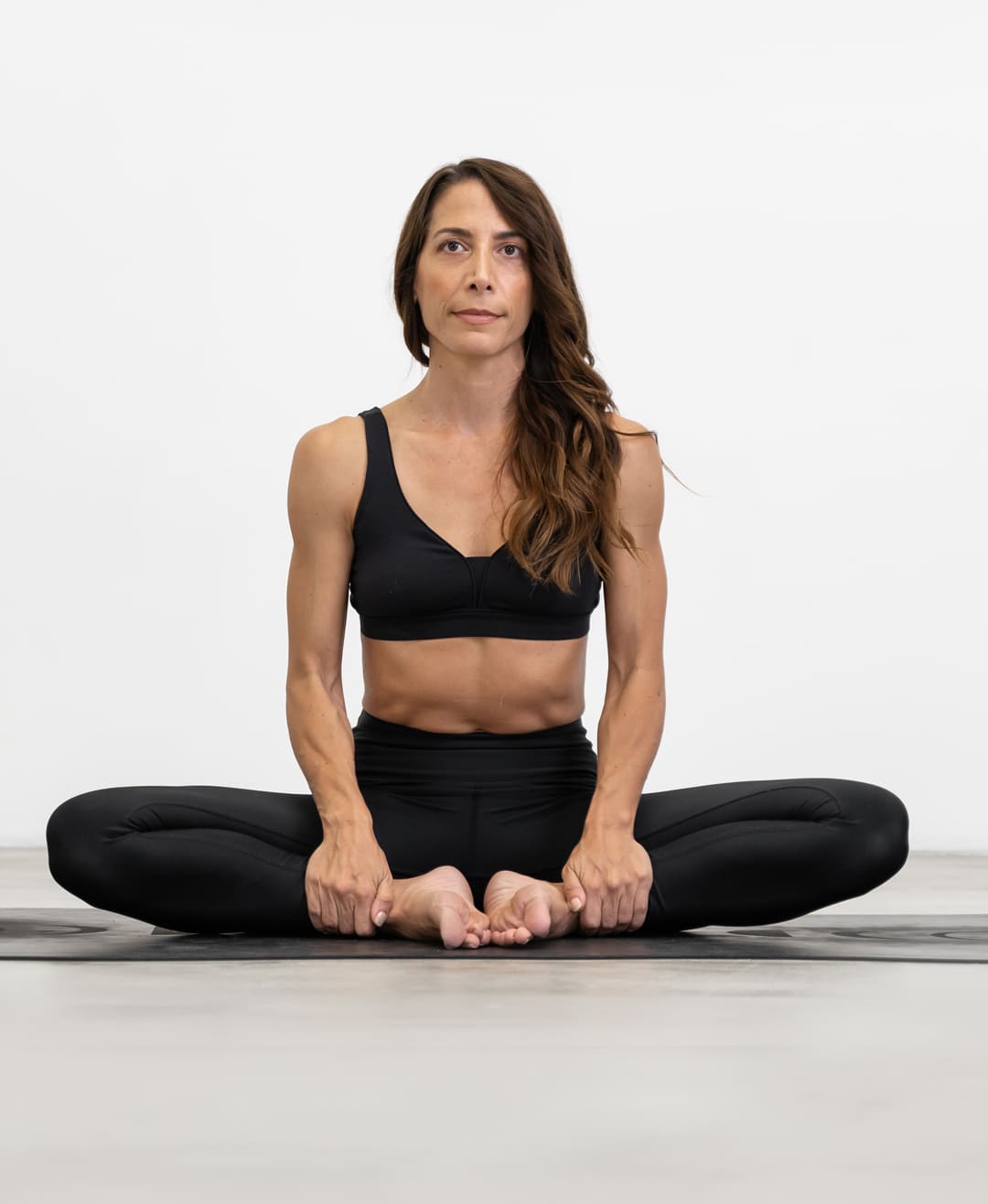
From a seated position bring the soles of your feet toward each other and open your knees wide. Rotate your pelvis slightly forward so you’re seated on your sit-bones, and elevate on a blanket if needed. Hands gently grip the top of ankles. Reach the crown of your head up to lengthen the spine, and stack your shoulders over your hips. As your inner thighs stretch and knees widen open your feet. Seated evenly on sit bones. Stretches groin and inner thighs. Hold for 1 minute.
Cathy Madeo is a yoga expert, entrepreneur, and social media influencer. She founded Cathy Madeo Yoga, an online yoga school where 1000s of students from all over the world take her online yoga series and training. She’s graduated 450 yoga teachers in over 45 countries and counting.
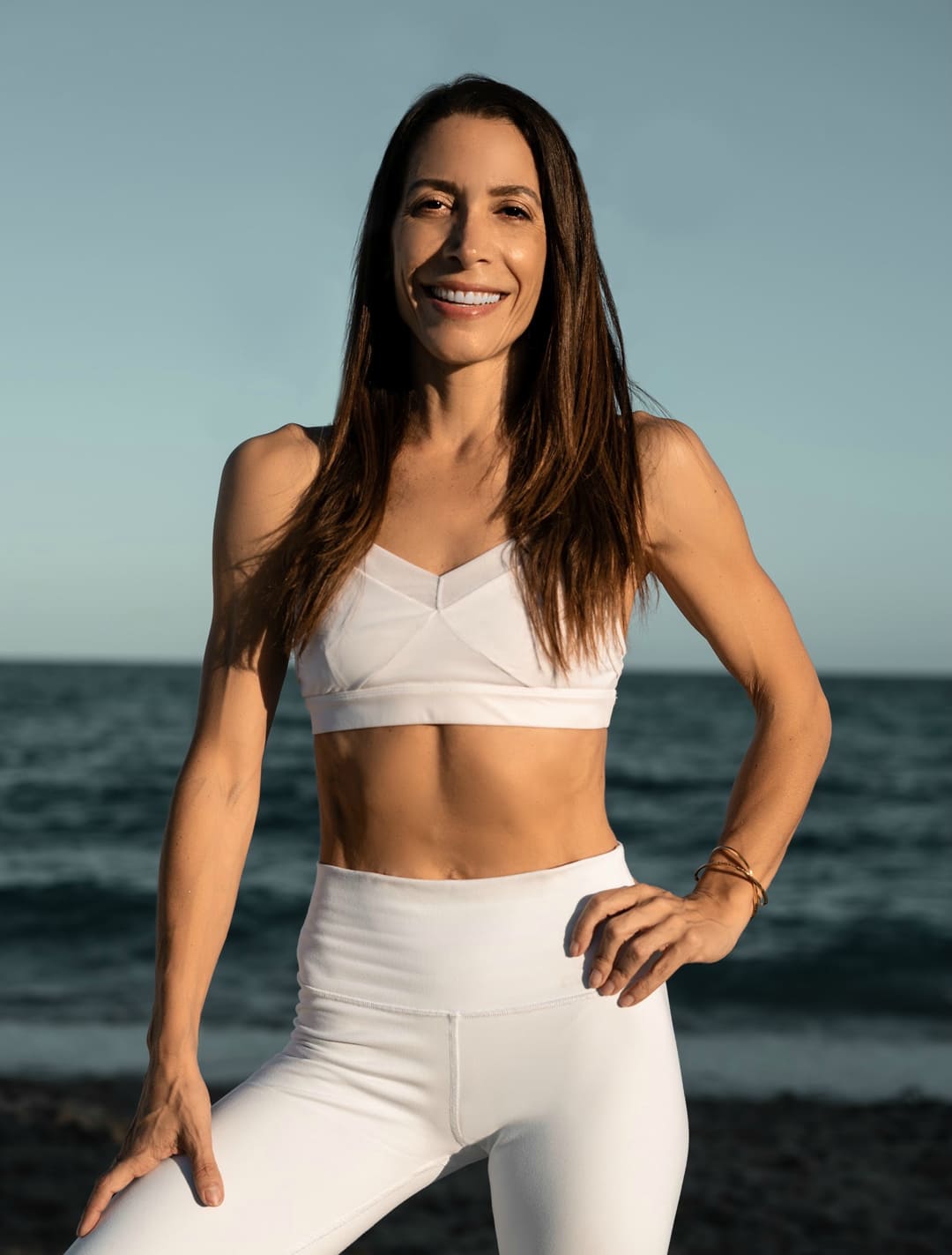
Learn more about Cathy here:
https://www.cathymadeoyoga.com/
And follow her on:
Instagram: https://www.instagram.com/cathymadeoyoga
Youtube: https://www.youtube.com/c/CathyMadeoYoga
TikTok: https://www.tiktok.com/@cathymadeoyoga
Disclaimer
The Content is not intended to be a substitute for professional medical advice, diagnosis, or treatment. Always seek the advice of your physician or other qualified health provider with any questions you may have regarding a medical condition.
Have you ever been standing somewhere, and then you’re suddenly dripping in sweat and feeling like you need to rip your clothes off … but you look around, and everyone else seems cool as a cucumber?
Yeah. Us too.
If you’re between the ages of 45 and 55, you can probably thank menopause.
The menopause transition is different for everyone but vasomotor symptoms (VMS) — the medical term for hot flashes and night sweats — are the most common menopause symptoms and can sometimes go on for years.
Although menopause is a natural part of aging, symptoms that disrupt everyday life can have a serious impact on your health. For example, night sweats may lead to insomnia and can contribute to brain fog, and VMS have been linked to cardiovascular disease and other chronic conditions, such as metabolic syndrome, Type 2 diabetes and nonalcoholic fatty liver disease.
Watch: Ways to Cope with Common Menopause Symptoms >>
Thankfully, there are treatment options and lifestyle choices that can help with symptoms associated with menopause.
We reached out to experts on the HealthyWomen Women’s Health Advisory Council for tips on how to manage menopause like a pro. Let’s see what they had to say.
Cognitive behavioral therapy (CBT) involves changing the way you respond to negative thoughts. Barbara Dehn, R.N., NCMP, said CBT can be helpful when you’re frustrated with brain fog associated with menopause. “When you can’t find the word on the tip of your tongue, it can make you feel anxious and that can lead to — you guessed it — a hot flash. Instead, give yourself some grace and use self talk that might sound like this: ‘Right now, I am trying to remember a word. It’s normal and natural for me to need a little more time to come up with it. I’m going to use a different word with the same meaning because I know that this feeling will pass.’” Research shows that CBT can also improve mood and sleep problems in women going through menopause.
“As estrogen levels decline in menopause, the loss of health and integrity of the vagina and vulva is unavoidable,” said Barb DePree, M.D., MSCP. “Before reaching the point of dryness that leads to pain, consider adding a vaginal moisturizer to sustain vaginal health longer. It’s hard to regain tissue health once lost.” DePree added that it’s best to start moisturizing during perimenopause — the years leading up to menopause.
Over-the-counter (OTC) lubricants can also help with any pain or discomfort during sex. “About 50 to 75% of women use lubrication for sex after 50,” Dehn said. “There are plenty of choices from oils and flavored water-based lubes that are great for oral sex, to silicone and hybrid versions.”
“Hormone therapy can be a vital tool in the management of menopausal symptoms and significantly improving a woman’s overall quality of life,” said Sabrina Sahni, M.D., NCMP. Research shows adding estrogen through hormone therapy can reduce hot flashes, promote vaginal health and prevent bone loss, which can lead to osteoporosis.
In addition to hormone therapy, there are several types of non-hormonal medications that can help alleviate symptoms of VMS. Some of the options are specifically approved for this use, and others are medications that are used off-label to provide relief. Besure to ask your healthcare provider about the pros and cons of any medication you might take.
Sahni said over-the-counter supplements like magnesium glycinate may be helpful for sleep. The recommended daily allowance for magnesium is 320 mg for women ages 31–51 and 420 mg for women 51 and older. You can get magnesium through foods such as nuts, seeds and leafy greens or in supplement form.
“If you’re having symptoms or concerns, I always recommend speaking to a certified menopause provider and one that can offer an individualized and tailored approach to managing your symptoms,” Sahni said. To find one near you, check out The Menopause Society’s directory for a list of The Menopause Society Certified Practitioners (MSCPs) who specialize in menopause.
“In addition to hormone therapy, I always counsel on the importance of lifestyle, diet and exercise, as they can have an impact on menopausal symptoms,” Sahni said. “Additionally, weight loss during the perimenopause and menopause transition may be associated with fewer hot flashes as well.” One study found that postmenopausal women who added more fruit, vegetables and whole grains and reduced fat in their diets experienced weight loss and were less likely to have VMS compared to the participants who didn’t change their diet.
“The only thing predictable about perimenopause is that everything is unpredictable — from heavy, elongated periods to breast tenderness and exhaustion,” Dehn said. But you don’t have to tough it out. If you’re experiencing symptoms associated with menopause, talk to your healthcare provider about treatment options and what may be best for you.
This educational resource was created with support from Astellas, a HealthyWomen Corporate Advisory Council member.
From Your Site Articles
Related Articles Around the Web
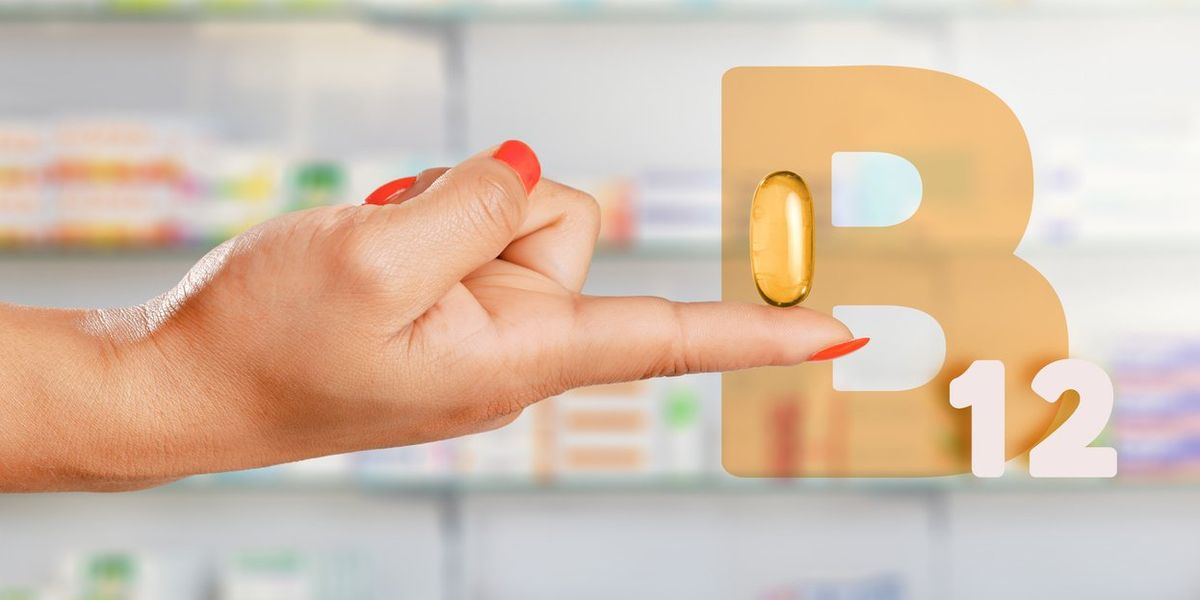
If you’re familiar with all the cool stuff vitamin B12 does for the body, you know it gets an A for effort. The nutrient helps with important things like nerve function and the production of DNA and it also plays a part in brain health. “If a person has a lack of B12, they may have trouble concentrating, retaining information and engaging in conversation,” said nutrition therapist Robyn L. Goldberg, RDN, CEDS-C. “It parallels malnutrition. If you’re not taking in enough food, it’s harder for your brain to work.”
Most people get enough vitamin B12 through food, but your age and what you eat can cause vitamin B12 deficiency, which can lead to serious health problems, including nerve damage.
We asked Goldberg for more about the basics behind B12 and what you need to know before taking a supplement.
Vitamin B12 is a water-soluble nutrient that helps keep your blood and nerve cells healthy and helps your body make DNA. It supports brain function and prevents anemia which can make you feel tired and weak. “It also converts the food we take in into energy,” Goldberg said.
For many people, vitamin B12 is absorbed through food. It can also be taken as an oral supplement or as a prescription nasal spray or injection/infusion for people who have vitamin B12 deficiency.
You’ve probably seen B12 marketed as an energy booster, but there’s no real science behind that claim. Goldberg said people with a vitamin B12 deficiency may feel a boost following a prescription shot or infusion, however, people taking the oral OTC supplement won’t see the same effect. “When you’re in the pharmacy and seeing B12 for energy, that’s what I call expensive urine,” Goldman said. What she means is that, since B12 is water-soluble, you pee out any extra that isn’t absorbed in your body.
The recommended daily allowance for women and people assigned female at birth is 2.4 micrograms (mcg) of vitamin B12 a day. For reference, that’s about 3 ounces of tuna. People who are pregnant or breastfeeding need a little more, 2.6 mcg and 2.8 mcg a day, respectively.
Vitamin B12 is found in animal products, including meat. Some fortified foods such as breakfast cereals and nutritional yeasts have added vitamin B12.
You can also get B12 from eating:
The classic symptom of B12 deficiency is feeling tired or weak. Other symptoms can include:
“The tried and true way to see [if you’re deficient] is to get your blood levels checked,” Goldberg said.
Over time, vitamin B12 deficiency can damage your nervous system, among other health problems. “Vitamin B12 is key in keeping our blood healthy. If your blood isn’t healthy, other medical conditions can evolve as a byproduct,” Goldberg said.
If left untreated, B12 deficiency can lead to anemia, mood disorders, muscle weakness, and balance and coordination problems.
As we age, the odds of having a vitamin B12 deficiency go up because we have less hydrochloric acid in our stomach to absorb the vitamin from the food we eat. As many as 4 in 10 older adults need to take a supplement or eat foods fortified with vitamin B12.
You may also need a vitamin B12 supplement if you are:
As always, talk to your healthcare provider before taking any supplement. Some people with certain conditions, such as pernicious anemia or autoimmune disease, have trouble absorbing vitamin B12 from food or supplements and may need injections or infusions.
Even though B12 is a water-soluble vitamin and it’s not stored in the liver like other vitamins, taking too much can have side effects. “Tingling is a big one to be aware of, and I don’t think a lot of people are mindful of that,” Goldberg said. “You could have a headache, you could feel nauseated, which could then translate into vomiting, diarrhea or loose stools and feeling weak. And the bigger issue with all of this long-term is it increases the risk for bone fractures and weak bones.”
Goldberg said to get a blood test first to check your levels and talk to your healthcare provider if you’re B12 is low. “Don’t just take a supplement,” she said. “Supplements don’t always have what they claim, and they may have more than what they’re stating — so it’s a gamble. We never truly know if it has what it’s saying.”
From Your Site Articles
Related Articles Around the Web
Intuitive eating is a flexible and non-diet approach to eating that focuses on tuning into your body’s natural hunger and fullness cues, rather than relying on external rules or diets. It involves silencing the inner voice that labels food as “good” or “bad.” Eating intuitively is about nourishing your body, not judging or punishing yourself for your choices.


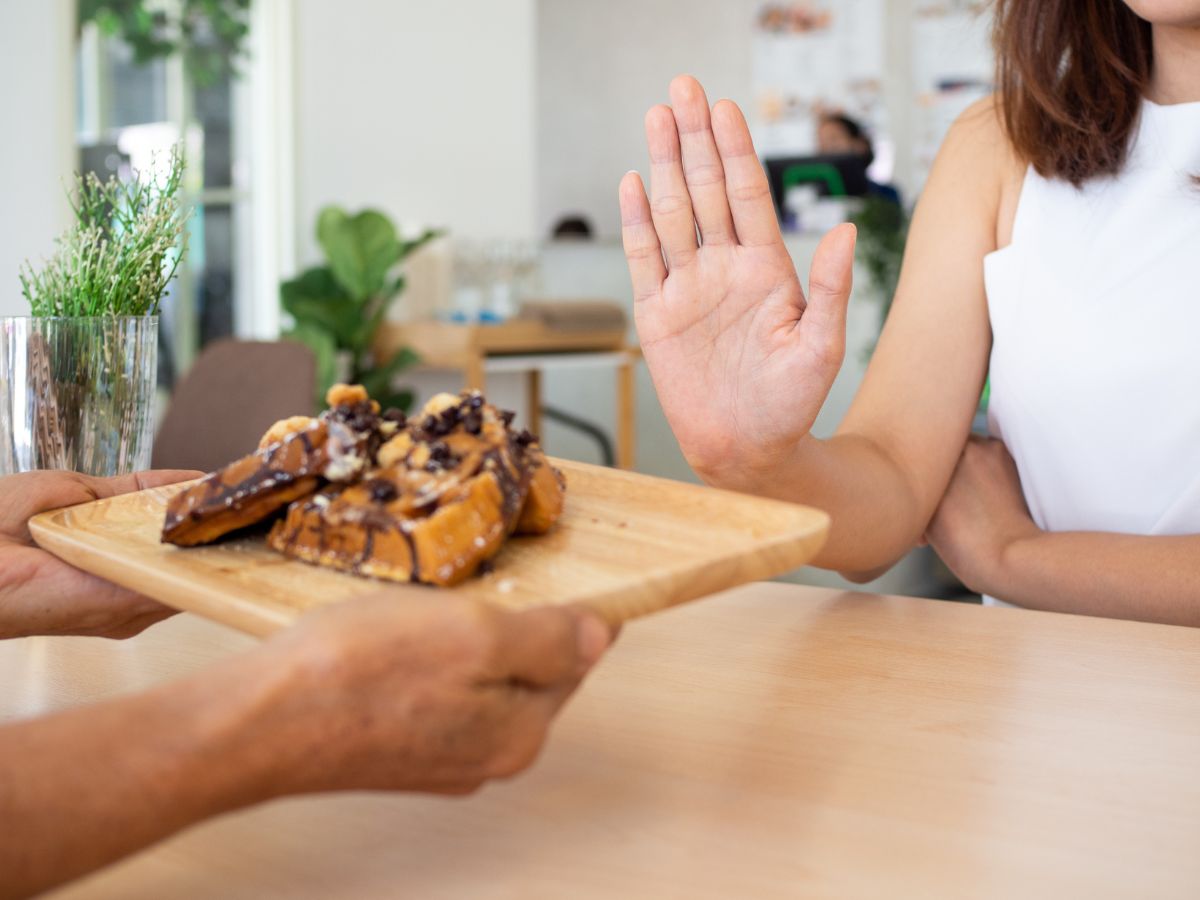
Adopting these habits can gradually help you become more in tune with your body’s needs and maintain a healthier relationship with food.
By adopting intuitive eating, you can develop a healthy relationship with food, free from the constraints of diet culture.
Disclaimer
The Content is not intended to be a substitute for professional medical advice, diagnosis, or treatment. Always seek the advice of your physician or other qualified health provider with any questions you may have regarding a medical condition.
Thanksgiving is right around the corner and you know what that means. It’s sides time!
Everyone knows side dishes are the real star of Thanksgiving. Who doesn’t love a glorious gathering of creamy potatoes, stuffing and green bean casserole (not touching on the plate of course — we’re not animals).
These classics tend to hold nostalgia — and a lot of butter — considering the average person eats more than 3,000 calories and 159 grams of fat during the typical Thanksgiving meal. That’s both terrifying and impressive.
But there are some ingredients you can swap out to make healthier versions of your favorites without ruining your credibility as top turkey day chef. “You can have something that’s tasty and still support your health goals,” said registered dietitian Julie Stefanski, MEd, RDN, LDN, FAND, a spokesperson for the Academy of Nutrition and Dietetics.
Read: Enjoy Eating Healthy During the Holidays with These Recipes >>
We asked Stefanski for her tips on how to make your favorite side dishes a little healthier this Thanksgiving.
You’ve probably seen Neufchâtel hanging out near the cream cheese in the dairy aisle. It’s known as “light” cream cheese because the two are similar in texture and taste but Neufchâtel is lower in fat. “If you’re making any type of dip that’s made with cream cheese, Neufchâtel cheese is a good option — it’s lighter without losing any of the body or the mouth feel from the full-fat version,” Stefanski said. Neufchâtel also sounds fancy — so win, win.
Sour cream and plain Greek yogurt are also similar in their tangy flavor and creamy texture. But Greek yogurt has less calories and fat and more protein compared to sour cream. “Greek yogurt is really good to use in anything you’re going to mix up in a mixer or a food processor,” Stefanski said. Slip it into your corn casserole and it’ll be our little secret.
Olive oil is made up of mostly monounsaturated fatty acids which help lower LDL (bad) cholesterol. Butter, on the other bun, is made up of mostly saturated fat which can lead to heart disease — the number one killer of women in the U.S. So, if you can use olive oil when cooking or as an ingredient, your heart may thank you. “Especially if it’s something like the gravy and it doesn’t necessarily have to have butter, try the olive oil,” Stefanski said.
When the recipe calls for cheddar cheese, extra sharp cheddar will give you the tang and flavor you want but you don’t need as much of it. That means less calories and fat overall. “You can often cut it back by 1/3 of a cup or half a cup depending on the recipe,” Stefanski said. Try the trick with cheesy potatoes or mac and cheese.
If your mashed potatoes or sweet potato recipe calls for heavy cream, you can use less and add low-sodium chicken broth. “The low-sodium chicken broth is a really good way to cut back on additional fat while you’re thinning out mashed potatoes. And you get more flavor with the chicken broth,” Stefanski said. It’s also a good way to cut down on salt, which is a staple ingredient in many Thanksgiving dishes.
From Your Site Articles
Related Articles Around the Web
During this three-part series of WomenTalk, we’re partnering with the National Association of Nurse Practitioners in Women’s Health to explore the role nurse practitioners play in contraceptive, maternal and menopause care.
In the second episode in WomenTalk series, “The Role of Nurse Practitioners in Women’s Health: Maternal Health,” Komkwuan Paruchabutr, DNP, FNP-BC, WHNP-BC, CNM, joins us to explore the role nurse practitioners play in maternal health. We’ll discuss the importance of having access to good prenatal and postpartum care and how to advocate for yourself.
From Your Site Articles
Related Articles Around the Web
As told to Jacquelyne Froeber
October is Breast Cancer Awareness Month.
I was in the produce aisle of the Winn-Dixie when a grown man coughed on me. Loudly.
I froze — a ripened tomato in my hand. I felt the weight of it and noted the subtle spray of the cough on its bright red skin.
This was no accident. I’d seen that man moments earlier change direction and make a beeline for me. As I stood there seething, I reminded myself to breathe. Sadly, this wasn’t the first time a random person saw me wearing a mask in public and coughed in my direction. But that didn’t mean I knew how to act when it happened.
In my fantasy, I take the tomato and throw it at him. As he turns, I tell him I have breast cancer and a compromised immune system. I watch his maskless face fall. “Metastatic breast cancer!” I add. And then I scoff. As if he knows what that means.
But the moment had passed. I took the spitty tomato up to the counter and told them to throw it away. “You don’t want anyone to take that home,” I said.
I was diagnosed with breast cancer in December 2019. I found the lump myself and like anyone in that position, I’d hoped I caught it early. My oncologist and surgeon said I did — the cancer was stage 2 and slow-growing. They recommended I have a double mastectomy to remove the tumors — and all my breast tissue — and put this whole thing behind me. Even better: I wouldn’t need chemotherapy or radiation.
Unfortunately, my bones were keeping a secret from me. The lymph nodes that were removed during the surgery showed that the cancer was more aggressive than previously thought. Follow-up scans confirmed the worst: The breast cancer had moved to my bones. There were lesions on my spine and hip. I didn’t have stage 2 breast cancer. I had stage 4.
When they told me the news, I instinctively put my hands on my stomach. I felt like I had been sucker punched. I struggled to breathe — stunned by the betrayal coming from inside my own body. And then my brain pretty much went on autopilot because, well, there’s not much you can do when you’re recovering from a double mastectomy and preparing for the unknown.
By March 2020, I was still healing but moving forward with my new treatment plan that included a lot of needles and pills and tests and scans for the foreseeable future. My family, especially my sister, helped me schedule all the things and lifted me up when I was down.
Then Covid hit and the whole world shut down.
My first thought: Who gets diagnosed with terminal cancer during a pandemic? I would have laughed if it weren’t so ridiculous. And utterly terrifying. Suddenly I was quarantined, alone and on the list of high-risk people up next to die from a virus none of us could see and had never seen before.
The irony was that I still had to go to the hospital for treatment, which meant I could be exposed to the virus at any time.
I’d started holding my breath for as long as I could under my mask, hoping every little bit helped against the invisible threat lurking inside the very place that was keeping me alive.
Still masking in public, 2024
But in October, yet again, I discovered the threat was coming from inside the house. I was diagnosed with cutaneous T-cell lymphoma on the bottom of my foot. Of all places! And it was a rare type of lymphoma. My first thought: Who gets diagnosed with two cancers during a pandemic?
The lymphoma really solidified how spectacularly crappy my immune system is. My white blood cells — the ones that help fight infection — were low because of treatment, but looking back, I’d always had a hard time getting over an illness or healing from a wound. I once had poison ivy for six weeks. I didn’t want to think about what would happen if I got Covid.
So, when the restrictions were lifted and the pandemic was “over,” I kept living my new normal as if nothing changed. I avoided crowded areas. I wore my mask in public. And I got the vaccine as soon as I could. Even though it doesn’t fight infection entirely, every bit helps.
My life today is pretty much the same as it was at the height of the pandemic. My trips out in the world have a mission-like precision: Mask up, get in, get out, exhale. I avoid doing things indoors as much as possible and, unfortunately, that means missing out on a lot of events and opportunities. And I know there are people who think my response is an overreaction.
I’ve also had to learn that there’s a tipping point where people are only going to accommodate your needs for so long — if at all. “There are just … so many of us. And so few of you,” someone said to me, wearily. I’m so sorry to tell you that this just isn’t true. About 7 million people in the United States are immunocompromised and a lot of us are still trying our best not to get deathly ill from Covid.
So I still wear my N95s. I avoid crowded indoor spaces. I watch the surges come and go. I’ve watched some people fade out of my life and others advocate for me with fierce kindness. I’ve also gotten to know the pleasure of my own company very well, and I have to say: If you don’t have the patience to make room for me, you are really missing out. (I’m kind of hilarious.)
I understand that Covid isn’t even a thought for some people anymore, but it’s still a very real threat to me. Because I’m immunocompromised, there’s no telling how sick it could make me. And, I no longer trust my body to protect me because it’s failed me in such a spectacular way. So I have to do everything I can to not get seriously sick — or even die.
But there are days when I wonder if maybe I am being ridiculous. Maybe I should go to that indoor concert or into the grocery store without my mask. But then I remind myself that I’m living with two cancers and I’ve been through a pandemic. I don’t know what the future will bring, but I’ve made it this far by trusting my gut. I’m not going to stop now.
Have a Real Women, Real Stories of your own you want to share? Let us know.
Our Real Women, Real Stories are the authentic experiences of real-life women. The views, opinions and experiences shared in these stories are not endorsed by HealthyWomen and do not necessarily reflect the official policy or position of HealthyWomen.
From Your Site Articles
Related Articles Around the Web
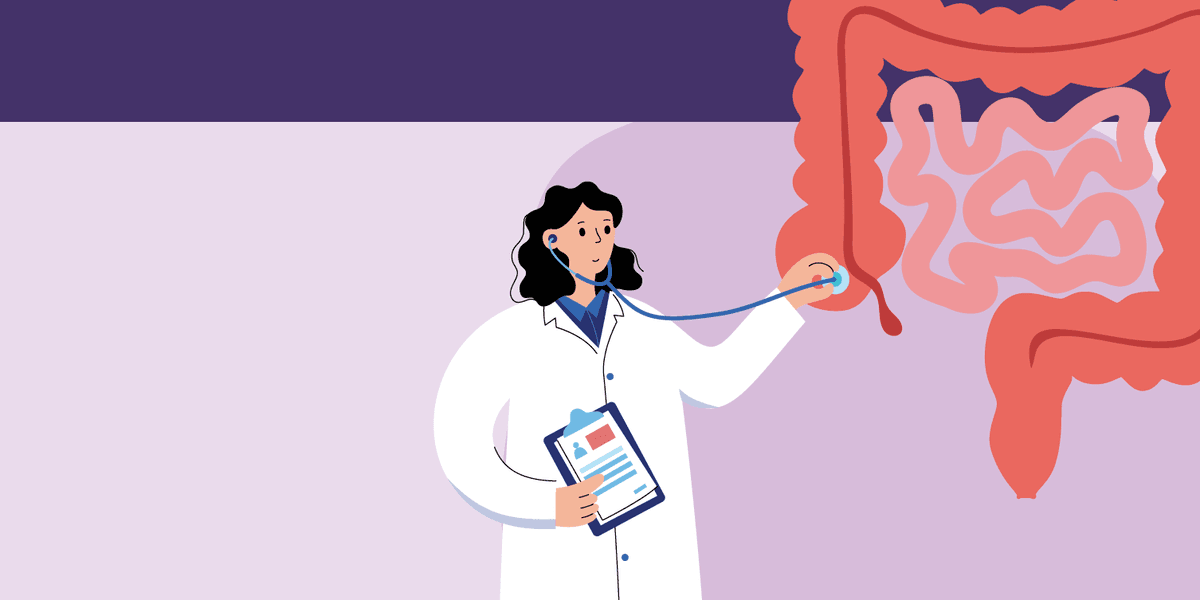
Colon cancer, also called colorectal cancer, is one of the most common cancers in the US.
There are several treatment options and the best treatment depends on how far the cancer has progressed.
Sometimes, more than one treatment option is combined.
Surgery
Polypectomy
A special tool is used to detach and remove polyp(s) from the colon
Performed during a colonoscopy for superficial, early stage cancer
Colectomy
Colostomy
Ileostomy
Ablation and embolization
Radiation, Chemotherapy & Targeted Therapy
These treatments are often used to shrink tumors before surgery, or to kill any cancer cells left behind after surgery. Treatments vary, depending on the stage and location of the cancer (colon vs. rectal).
Radiation therapy
- Destroys cancer cells via high energy waves
- More common for rectal cancer, but sometimes may be appropriate for colon cancer
- Can be external or internal
Chemotherapy
- Drugs that travel through the blood and attack cancer cells
- Given by injection or taken by mouth
- Often goes in cycles with rest periods in between to minimize side effects
In advanced stages when surgery isn’t an option, radiation and/or chemo can help shrink tumors and slow the growth of cancer.
Targeted therapy
- Drugs that target specific proteins in cancer cells
- Used alone or alongside chemo, after testing for certain biomarker
- Given by injection or taken by mouth
- Might help people with advanced colon cancer live longer
Immunotherapy
Can be used for some people with certain types of colorectal cancer
Helps the immune system find and destroy cancer cells
Typically given by injection
Clinical Trials
Research studies that involve real patients
May focus on new treatments, like emerging immunotherapy drugs
May look at ways to improve current treatments
Taking part in a clinical trial can give you more options, and they’re a very important part of developing better treatments for colon cancer. It’s important to work with your healthcare team to determine if an open clinical trial is a good option for you.
This educational resource was created with support from Daiichi Sankyo, Merck and Takeda Oncology.