The main category of Fitness News.
You can use the search box below to find what you need.
[wd_asp id=1]
The main category of Fitness News.
You can use the search box below to find what you need.
[wd_asp id=1]
During this three-part series of WomenTalk, we’re partnering with the National Association of Nurse Practitioners in Women’s Health to explore the role nurse practitioners play in contraceptive, maternal and menopause care.
In this episode, we’ll discuss new contraceptive options and their safety and efficacy. We’ll also look at how to access care and which questions to ask your provider.
In 2022, about 2.3 million women were diagnosed with breast cancer worldwide, and 670,000 died. Earlier, cases of breast cancer were usually reported in women above 50. However, there is now a rise in breast cancer among women in their 20s and 30s.
The reason why more women younger than 50 are getting breast cancer is not clear, but according to Dr. Sonya Reid, a breast medical oncologist at Vanderbilt University Medical Center it’s likely due to modifiable risk factors such as environmental exposures in food, air or water, rising rates of obesity and sedentary lifestyle.
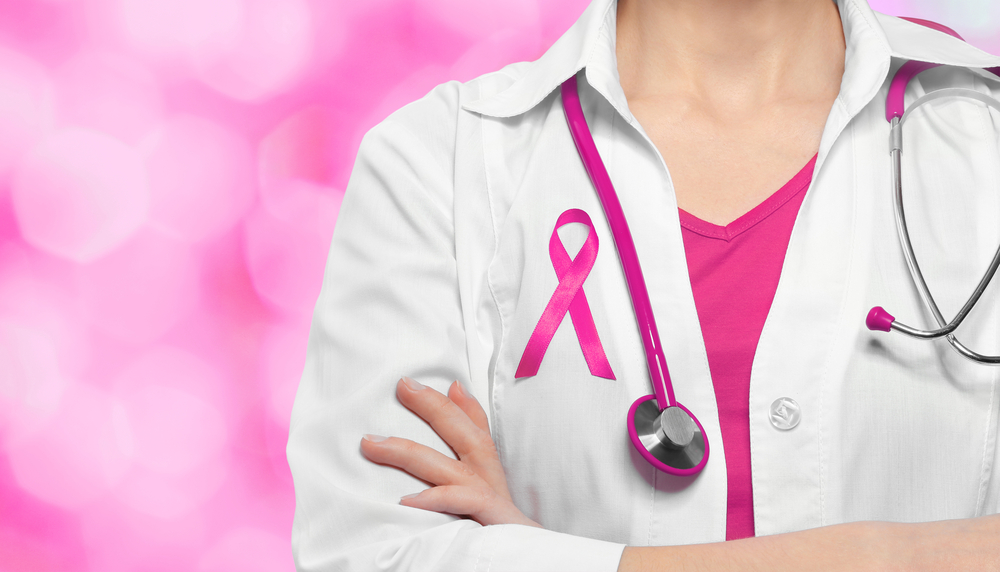
With researches still going on to fully understand why breast cancer rates are rising in younger women, these factors offer a potential explanation.
Disclaimer
The Content is not intended to be a substitute for professional medical advice, diagnosis, or treatment. Always seek the advice of your physician or other qualified health provider with any questions you may have regarding a medical condition.
As told to Erica Rimlinger
As far as I knew, I wasn’t going through menopause. I was going through “the change.” Like many women in my generation, I was raised in a household, community and society that spoke vaguely about “the change” and the “problems” that crept up when you reached “a certain age.” I learned from previous generations of women in my family and community that we didn’t use clear words in polite conversation. I didn’t know what normal menopause looked or felt like: I only knew we were supposed to whisper when it came to menopause, bleeding and uterine health — if we brought those topics up at all. As a result, I knew “nothing,” or rather, nothing about normal and abnormal symptoms of menopause, and when to bring up these symptoms with my doctor.
Still, I thought I knew a lot — or at least enough — about women’s health. I’ve always been health conscious, and in my job as a group fitness instructor, I’m proud to help my clients prioritize their health. I’ve always gone to all my annual OB-GYN appointments and scheduled all my routine mammograms. I was living a lifestyle of health and modeling it for my students.
But I didn’t recognize an important symptom of endometrial, or uterine, cancer because I thought occasional, infrequent bleeding was a normal part of the menopause process. Well, that’s mostly what I thought. In fact, it hadn’t even occurred to me to count months from my last period. I wasn’t keeping track.
After a few years of these symptoms, I happened to, offhandedly, mention to my doctor that I was still spotting and bleeding — and it was getting heavier. She stopped what she was doing, looked up and said, “You should be done with that by now.” She ordered an ultrasound.
I got the ultrasound but moved to a new city and changed to a new doctor with a new insurance plan soon after. Healthcare in America — or, more specifically, health insurance — doesn’t follow us seamlessly through life. The radiologist noted on my test results that the lining of my uterus was a little thick. But my doctor never followed up with me to discuss the ultrasound, so I didn’t think anything was wrong.
My next OB-GYN visit, nine months later, was a nightmare. My new doctor was concerned about my symptoms and insisted on doing a biopsy. She said it would be a little uncomfortable but not bad, so she did it without anesthesia right there in the office. I’ve never been in so much pain in my life as she cut out a piece of my uterus right on the table. I’m not one to complain about pain — I’ve had two vaginal births with nothing more than a mild dose of relaxation medication during one of them — but this was a bloodbath. The doctor gave me antibiotics, an order for a new ultrasound and a referral to an oncologist. She told me to take someone with me to that appointment and keep her posted.
Since I’d never had a major illness or surgery, broken a bone or been hospitalized, I wasn’t familiar with most medical terms and didn’t know what an oncologist was! When I returned home, my daughter informed me that an oncologist referral meant one thing only: I had cancer. I was blindsided.
When it came time, I brought a friend to the surgical oncologist appointment. The doctor was speaking quickly and using unfamiliar medical terms. My friend, who was not shy, asked the doctor over and over again to slow down and explain what he was talking about. My friend was polite but assertive and grew even more assertive as the doctor ran through the plan, not slowing down or explaining a word he said. The entire appointment, start to finish, lasted 15 minutes. I left stunned — and more confused than when I had walked in.
Overwhelmed, I agreed to have surgery within two weeks of the appointment. It was supposed to take two hours but took four.
At my post-surgical checkup, I learned I had 1B grade 3 endometrial cancer and my lymph nodes had tested negative for cancer. Even the name of the cancer was another unclear medical term: endometrial cancer. I’d unfortunately learned by then that it’s cancer of the uterus.
My surgeon told me I would need six to eight rounds of chemotherapy and five to six weeks of pelvic radiation. Again, I felt the doctor was talking over me, not to me, and I sought out another opinion. The second doctor recommended four or five rounds of chemo plus five weeks of pelvic radiation. Each doctor had a different plan, and neither seemed to hear my concerns or fully answer my questions in a way that made sense to me. Up until this point, I’d attended my appointments in a sort of shocked daze. But now I snapped out of it and realized: I needed more from the medical team charged with saving my life. I deserved to participate on my own team. I decided to go for a third opinion.
That’s when I met Dr. Kemi Doll. She was different. When she spoke with me, she looked me in the eye. She took the time to listen to my questions, explained treatment options using plain English, and then she made sure I understood. She asked me, “What did you hear me say? What did it mean to you?”
She recommended I consider brachytherapy radiation, a kind of radiation that is taken internally and is less damaging to nearby organs. It’s still invasive, though, and not just because it involves inserting a tube in the vagina. There always seemed to be far too many medical staff peering up into my vagina at these appointments. Throughout my treatment, Dr. Doll encouraged me to believe in my healing, telling me I was going to be fine.
Dr. Doll was researching answers to a large but simple question about endometrial cancer: Why are Black women twice as likely to die from endometrial cancer when they are diagnosed at similar rates as white women? She wanted to build a community and support group for Black women to connect and learn about uterine health. She wanted to study how education and outreach could improve survival rates. She asked me to join her in creating ECANA, the Endometrial Cancer Action Network for African-Americans.
“Want to be my patient partner?” she asked, after my last chemotherapy appointment. I said yes, not totally understanding what that would mean. But it’s meant everything. Today, ECANA works to fight outcome disparities and build community among Black women fighting endometrial cancer. We have movement classes, support groups, education sessions and more.
Through my journey and my work with ECANA, I realized how little women really talk about uterine health, even in our own families. From my sister, I found out my mom had a hysterectomy in her early thirties and suffered with fibroids like I had. We never brought it up to one another, even though so many uterine health issues are genetic.
Today, I’m in remission. I have four granddaughters, and you’d better believe we talk openly about uterine health at grandma’s house. I want my girls to understand how a healthy uterus functions and where to go if they have concerns about their health.
I wish previous generations of women, like my mother and I, hadn’t grown up in a culture that made uterine health a taboo topic. I am always urging women to talk about their endometrial health. Encourage your daughters to keep journals. Talk about bleeding. If you’re tempted to ignore a so-called “embarrassing” problem or hide behind shame, confusion or misinformation, speak up anyway — and keep speaking up until you know and understand all your options. The stakes are too high to stay silent.
This educational resource was created with support from Merck.
Have a Real Women, Real Stories of your own you want to share? Let us know.
Our Real Women, Real Stories are the authentic experiences of real-life women. The views, opinions and experiences shared in these stories are not endorsed by HealthyWomen and do not necessarily reflect the official policy or position of HealthyWomen.
From Your Site Articles
Related Articles Around the Web
World osteoporosis day is a global healthcare event observed every year on 20 October. It is estimated that globally, 1 in 3 women aged 50 years suffer from an osteoporotic fracture, making it one of the leading causes of deadly pain and long-term disability in ageing people.
This year, 2024, the World Osteoporosis Day Theme is “Say no to fragile bones.” The theme aims to encourage people to value and protect their bones and raise awareness of the importance of prevention, diagnosis, and treatment.
A Bone Mineral Density (BMD) test measures the density and strength of your bones. It shows how much mineral content, particularly calcium, is present in a specific area of your bones, often focusing on areas prone to fractures, such as the spine, hip, and forearm.
Compares your bone density to what is expected for someone of your age, gender, and size.
A low Z-score may indicate factors other than aging are affecting bone density, such as underlying conditions.
These results help assess your risk of fractures, monitor bone health over time, and guide decisions about treatments to prevent or treat osteoporosis.
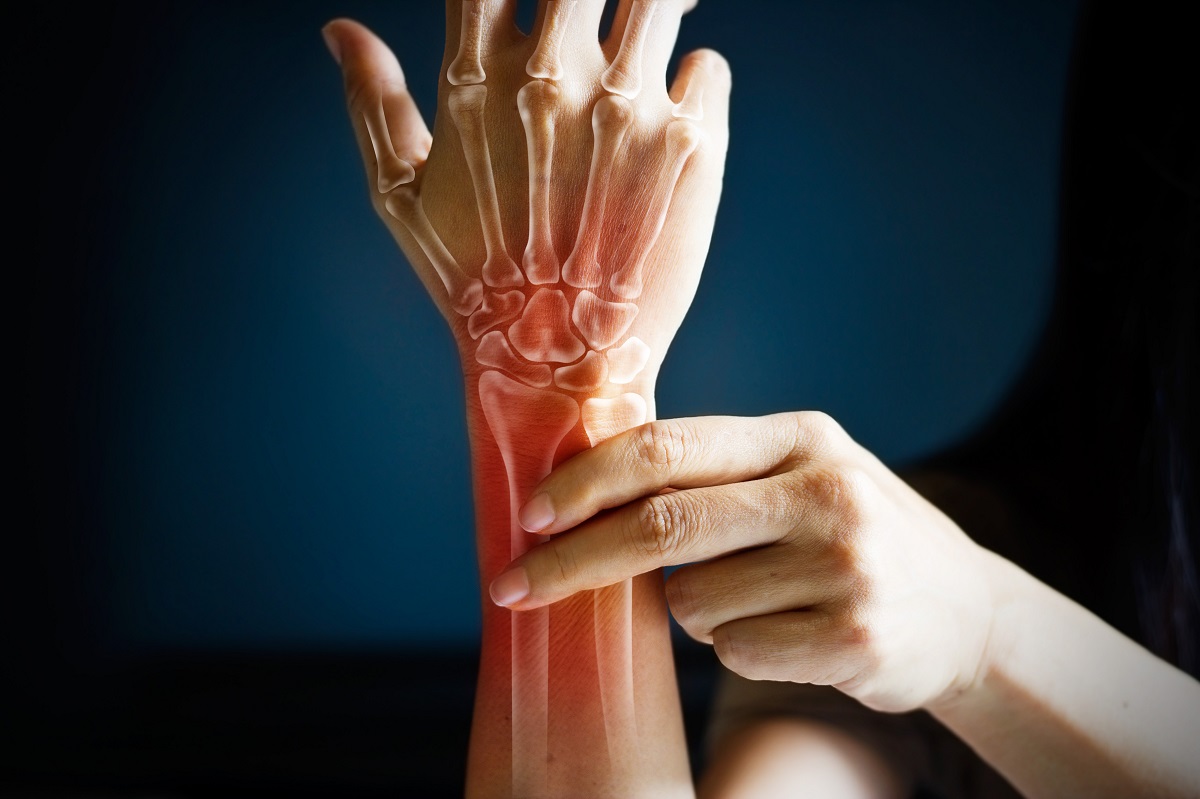
In short, BMD tests are highly reliable for assessing bone density and fracture risk, but they should be used in conjunction with other risk factors for a comprehensive evaluation of bone health.
Disclaimer
The Content is not intended to be a substitute for professional medical advice, diagnosis, or treatment. Always seek the advice of your physician or other qualified health provider with any questions you may have regarding a medical condition.
Anastasija Samoilova born in Daugavpils, Latvia. She is a Latvian beach volleyball player. She represents Latvia at the 2020 Summer Olympics in Tokyo 2020. Kravčenoka and partner Tīna Graudiņa are the first Latvian women’s pair to qualify for the Olympics.
She participated in the 2013 European U18 Beach Volleyball Championship, with Tīna Graudiņa, the 2015 European U20 Beach Volleyball Championship, with Tereze Hrapane, the 2016 European U20 Beach Volleyball Championship, and the 2016 European U22 Beach Volleyball Championships, with Tīna Graudiņa, winning a gold medal.
Later she participated in the 2017 FIVB Beach Volleyball World Tour, as well as in the 2019 European Beach Volleyball Championship, with Tīna Graudiņa, winning a gold medal. Kravčenoka married beach volleyball player Mihails Samoilovs, on September 2, 2022, and has been known as Samoilova since then.
Women Fitness President Ms. Namita Nayyar catches up with Anastasija Samoilova an exceptionally talented Lavatian Beach volleyball player, winner of 2019 European Beach Volleyball Championship Gold Medal, here she talks about her fitness routine, her diet, and her success story.
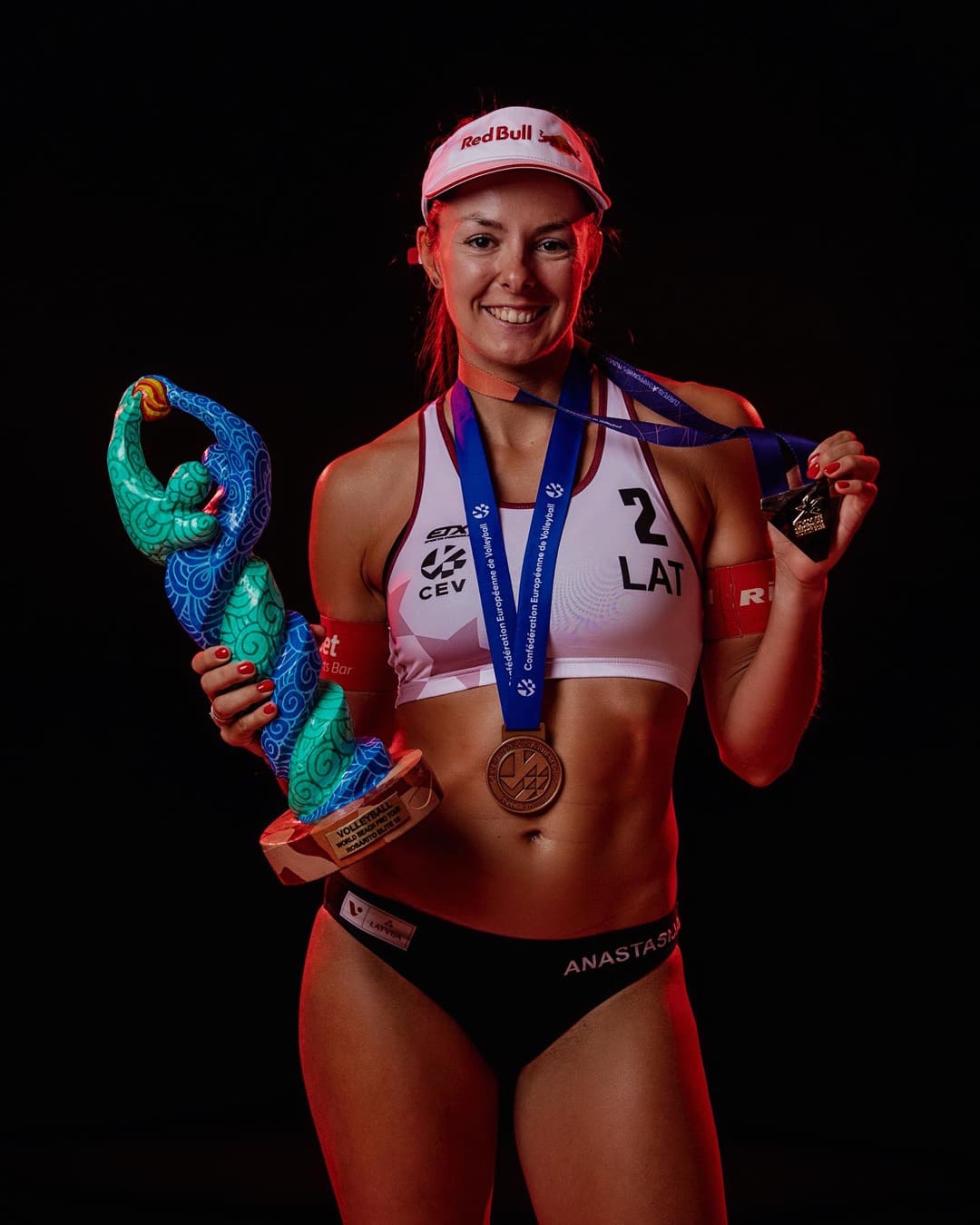
You were born at Daugavpils, Latvia. Where did you have your early education? You also studied educational management at the University of Latvia. By age of 16 years you participated in the 2013 European U18 Beach Volleyball Championship, with Tīna Graudiņa. This later propelled your career to the height where you have been at the top of the world as a beach volleyball player. Tell us more about your professional journey of exceptional hard work, tenacity, and endurance?
I was born in Daugavpils and studied in Daugavpils, first I finished Daugavpils Secondary school number 3 and later got a bachelor degree in Sport and social science education. Before I started training in volleyball I didn’t like sport at all, I always tried to forget my sport uniform bag at home. I was more an art person, I was singing in a choir, dancing, took theater classes, and went to the art school.
But when I started training in volleyball I fell in love with it. I wasn’t the best from the beginning; all my achievements were the result of hard work. First few years in the summer, when i didn’t have training I was playing with a wall in my garden. I spent a lot of hours just me, ball and wall. From age of 14 I got into youth national team. I think my indoor experience helped a lot for my beach volleyball career. And I was very lucky to have Tina in my team; we were and are the best beach players in Latvia.
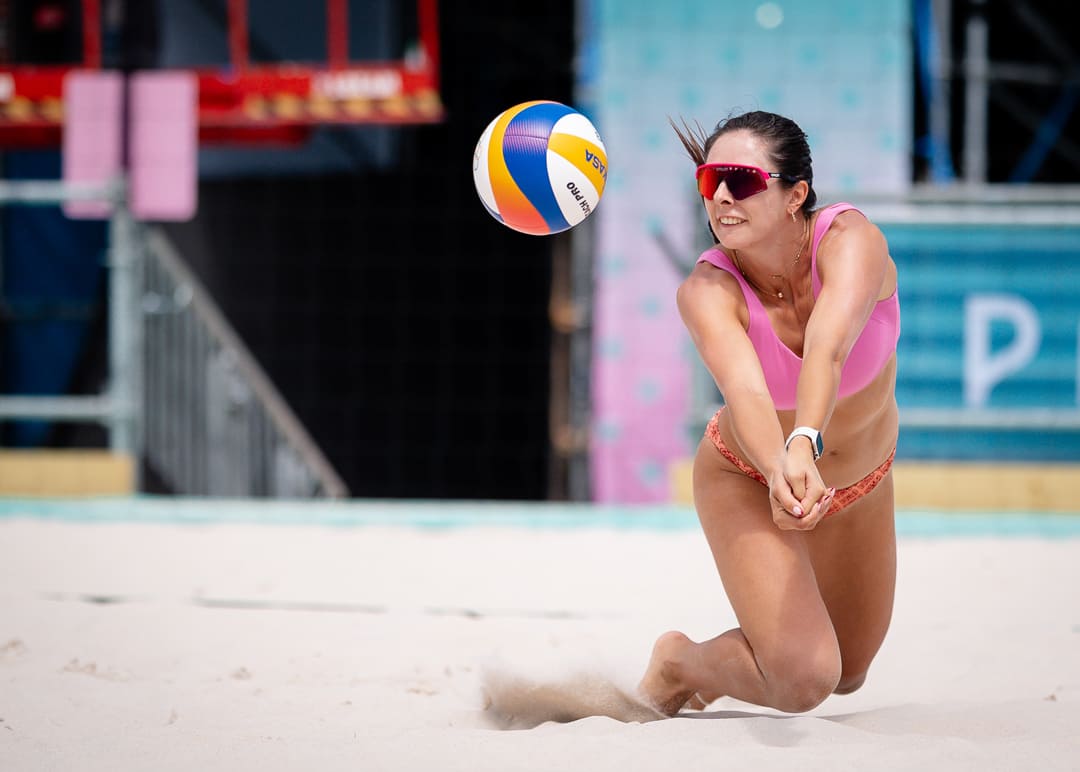
The 2019 European Beach Volleyball Championship was held in Moscow, Russia from 5–11 August 2019 you won the Gold medal. Tell us more about these spectacular achievements in your beach volleyball playing career?
Actually we were not the favorites to win this European championship, I was only 21 and Tina was 20. Before that tournament I told my family that we will try to win gold, they just laughed because we were close to medals at that level. But we did it, it was a surprise for everyone, it was magical. One month after we qualified for Tokyo Olympic Games and we are the first women team from Latvia who did it.
It was unbelievable, incredible, Tina’s was crying, I was super happy. It was our goal, but we didn’t expect to qualify one year before Olympics. I Tokyo also unexpectedly for everyone we got into semifinal, that tournament I had a euphoria, I don’t know how drug addicted feel while using drugs, but I guess I felt something similar. We have many medals in a Beach pro tour.
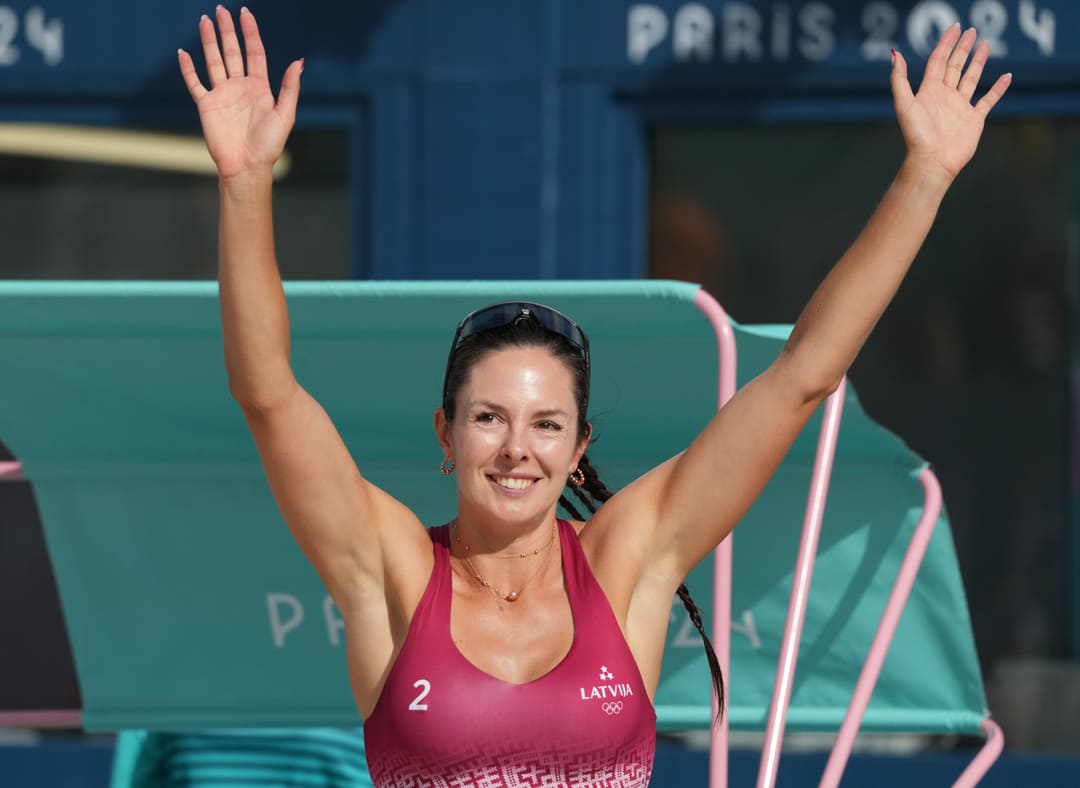
In the 2016 European U22 Beach Volleyball Championships, with Tīna Graudiņa, you won a gold medal. How does such winning act as a catalyst in your metriotic rise as a world leading beach volleyball player?
To win European championship U22 was very important to start professional career. In 2016 I moved from my home city Daugavpils to Riga to be coached by the best coach in Latvia Aigars Birzuis and to practice with the best girls. I didn’t know will I play with Tina or not, and in August we won U22. It gave me opportunity to be only focused on my studies and beach volleyball that result gave us support from Olympic committee and we had small salary, financial support for competitions and training camp. I didn’t need to work anywhere, just train, play and study. Since then we always proved to be in Olympic committee and get this support. Without it I don’t think I would be able to continue my path.
Disclaimer
The Content is not intended to be a substitute for professional medical advice, diagnosis, or treatment. Always seek the advice of your physician or other qualified health provider with any questions you may have regarding a medical condition.
October 18, 2024, is World Menopause Day.
Menopause is a natural part of life that everyone who menstruates will go through at some point.
But if you feel self-conscious talking about menopause — we hear you. Despite the fact that more than half of the population experiences this change, there’s still stigma and disparities in education about all the different ways menopause can affect your body, mind and everyday life.
So, let’s pause here for a second so you can take our quiz (see what we did there?) and see how much you know about the signs, symptoms and important facts about menopause.
Correct
Incorrect
Correct
Incorrect
Correct
Incorrect
[shortcode-true-false-quiz answer=”false” description=”But if you thought 50 was true — you’re not far off. On average, menopause happens at 51. People typically start perimenopause, the menopause transition, between ages 45 and 55. number=”3″]
[shortcode-true-false-quiz answer=”true” description=”If it’s been less than 12 months since your last period and you don’t want to get pregnant, you should still use birth control. But a year without a period means you’ve hit menopause and your ovaries have stopped releasing eggs. It’s important to note that you can’t get pregnant naturally after menopause, but you can still get a sexually transmitted infection if you have unprotected sex. So, make sure you’re protecting yourself before, during and after menopause. number=”6″]
[shortcode-true-false-quiz answer=”true” description=”Healthcare providers can test levels of certain hormones, like follicle stimulating hormone (FSH) and estradiol or others, to see if a person is in menopause. You don’t need to test for all hormones, and these hormones are just some examples of what you can test for. There are also at-home kits that can test the level of some of these hormones in your pee to help determine what possible stage of menopause you’re in, although most people rely on the signs and symptoms to confirm menopause. number=”7″]
[shortcode-true-false-quiz answer=”false” description=”Healthcare providers can test levels of certain hormones, like follicle stimulating hormone (FSH) and estradiol or others, to see if a person is in menopause. You don’t need to test for all hormones, and these hormones are just some examples of what you can test for. There are also at-home kits that can test the level of some of these hormones in your pee to help determine what possible stage of menopause you’re in, although most people rely on the signs and symptoms to confirm menopause. number=”8″]
[shortcode-true-false-quiz answer=”false” description=”Hormone therapy is just one option to help treat symptoms associated with menopause. Hormone therapy works by adding estrogen, progesterone or both back into the body through prescription pills, patches or cream. Other treatments include non-hormonal medications, antidepressants, cognitive behavioral therapy and lifestyle changes such as exercise and eating a balanced diet. number=”9″]
[shortcode-true-false-quiz answer=”false” description=”Estrogen helps keep blood vessels relaxed and open, and a lack of estrogen can allow cholesterol to build up in the arteries, which can increase the risk of heart disease — the number one killer of women in the U.S. Thankfully, there are things you can do to help prevent heart disease at any age, including eating a healthy diet rich in fruit, vegetables and whole grains; getting enough physical activity, and taking any medications you’ve been prescribed for blood pressure, cholesterol and diabetes. number=”10″]
This educational resource was created with support from Astellas, a HealthyWomen Corporate Advisory Council member.
Las hormonas, que son químicos en tu cuerpo, actúan como mensajeros que ayudan a controlar tus células y órganos. Y los alteradores endocrinos son químicos que interfieren con el funcionamiento de las hormonas.
Algunos alteradores endocrinos se producen naturalmente y otros los hacen seres humanos. La Endocrine Society estima que hay aproximadamente 85,000 químicos artificiales en el mundo y 1000 o más de ellos podrían ser alteradores endocrinos.
Los alteradores endocrinos pueden bloquear funciones hormonales normales o imitarlas de tal forma que “engañan” al cuerpo para que produzca un exceso o déficit de las hormonas que necesita para un funcionamiento normal.
Se piensa que estos químicos se asocian a varios problemas biológicos o de desarrollo, incluyendo el cáncer endometrial.
El cáncer endometrial, que se produce en la mucosa del útero, es el tipo más común de cáncer que afecta a los sistemas reproductivos de las mujeres. Y el estrógeno promueve algunos tipos de cáncer endometrial.
“Investigaciones recientes han demostrado que los alteradores endocrinos parecen asociarse al cáncer endometrial en las mujeres debido al incremento de estrógeno en sus cuerpos”, dijo Dana M. Chase, M.D., una oncóloga ginecológica de UCLA Health.
La exposición al estrógeno puede hacer que la mucosa endometrial crezca demasiado y eventualmente se vuelva cancerosa.
Muchos estudios investigativos han demostrado que todos tenemos contacto con alteradores endocrinos de muchas formas, incluyendo en:
Los alteradores endocrinos se encuentran en muchos productos con los que interactuamos cotidianamente. Tipos comunes de alteradores endocrinos y sus usos incluyen:
BFA: Es útil para la fabricación de productos plásticos tales como ventanas de seguridad, gafas, botellas de agua; también para recubrimientos de algunas latas metálicas y tapas de botellas.
Dioxinas – Se liberan en el aire durante incendios forestales, incendios en patios traseros y procesos industriales tales como la fabricación de herbicidas y el blanqueamiento del papel. La mayor parte de la exposición se produce por comer grasas animales en la carne, productos lácteos y pescado.
PFAS – Estos recubrimientos se utilizan para hacer que los utensilios de cocina no se peguen y para que las prendas no se manchen y sean resistentes al agua.
Ftalatos – Conocidos como “plastificantes”, estos compuestos hacen que cosméticos, fragancias, esmaltes de uñas, fijadores de cabello de aerosol, lociones postafeitado y champús duren más.
PCB: Prohibidos en Estados Unidos desde 1979, productos que se fabricaron antes de la prohibición todavía podrían contener PCB, incluyendo equipo eléctrico, pintura derivada de petróleo, plásticos, adhesivos y masilla.
Triclosán: Usado para prevenir contaminaciones bacterianas en productos tales como jabones antibacteriales, geles para baño y pastas dentales.
Los fitoestrógenos son estrógenos que se producen naturalmente en las plantas que comemos. Se consideran alteradores endocrinos porque podrían tener un efecto similar al del estrógeno que produce el cuerpo. Consecuentemente, los fitoestrógenos pueden alterar el equilibrio entre el estrógeno y la progesterona por el efecto que ejercen en la mucosa endometrial.
Sin embargo, el efecto de los fitoestrógenos en el cuerpo no se ha determinado. Alguna vez se pensó que los fitoestrógenos podrían asociarse con ciertos cánceres. Sin embargo, investigaciones han indicado que no hay un mayor riesgo si recibes fitoestrógenos que se generan naturalmente en fuentes vegetales o de fuentes sintéticas.
De hecho, los fitoestrógenos vegetales podrían incluso tener beneficios que protegen en contra de ciertos trastornos, tales como la osteoporosis, enfermedades cardiacas, cáncer de mama, cáncer endometrial y síntomas vasomotores de la menopausia.
Alimentos que pueden contener fitoestrógenos incluyen:
Puesto que los alteradores endocrinos están literalmente en todos lados, no hay forma de removerlos de tu entorno o de evitarlos por completo.
Sin embargo, la Endocrine Society sugiere pasos simples para reducir la exposición de tu familia:
El artículo de una evaluación de 2022 examinó posibles conexiones entre el cáncer endometrial y los alteradores endocrinos, incluyendo el bisfenol A (BFA), los bifenilos policlorados (BP) y los hidrocarburos aromáticos policíclicos (HAP).
Los autores concluyeron que existen conexiones entre estos químicos y el cáncer endometrial a nivel molecular. Sin embargo, actualmente no se puede saber cuánta exposición a estos químicos tiene cada persona ni qué nivel de exposición es peligroso.
Más recientemente, otro grupo de investigadores comparó la carga total de estrógeno en la sangre de más de 300 mujeres. Aproximadamente la mitad de las mujeres tenía cáncer endometrial y la otra mitad no. Los investigadores pudieron determinar cuánto estrógeno producía el cuerpo de cada mujer versus el estrógeno que provenía de varios tipos de alteradores endocrinos.
Las mujeres que tenían mayores niveles de estrógeno de alteradores endocrinos tenían más posibilidades de tener cáncer endometrial que las que tenían los niveles más bajos. Este estudio identificó, por primera vez, una asociación positiva entre los niveles de estrógeno de fuentes externas al cuerpo y el riesgo de cáncer endometrial.
Estas conclusiones eran lo que Chase anticipaba, al menos por ahora. “Una correlación no determina una causalidad así que, en este momento, la conexión entre los alteradores endocrinos y el cáncer endometrial es solo una asociación interesante”, dijo. “Sabemos que el exceso de estrógeno en el cuerpo hace que las mujeres tengan riesgo de cáncer endometrial y que tenemos productos en nuestro entorno que alteran los niveles de estrógeno en nuestros cuerpos. Pero es importante que las personas entiendan que no podrán evitar el cáncer endometrial solo porque dejan de tomar agua de botellas de plástico. No es tan sencillo”.
Este recurso educativo se preparó con el apoyo de Merck.
Related Articles Around the Web
Laurel Post always knew she wanted to breastfeed.
But her plan to nurse her son for at least two years was derailed after 15 months when she was diagnosed with an aggressive form of breast cancer. If she’d had time to prepare, Laurel could have pumped and stored her own milk. But she needed to start chemotherapy, followed by a double mastectomy, as soon as possible.
Just like many other women, Post had to adapt and change her plans because of breast cancer. Unlike Post’s baby, though, some infants still require the bulk of their nutrition from breast milk or formula. So, what happens if you’re breastfeeding while you’re diagnosed with cancer or if you want to breastfeed after treatment?
All is not lost.
Yes, breast cancer may alter your plans to breastfeed. But in many cases, depending on your treatment plan, you can still breastfeed, though it might be different from what you had originally envisioned.
Breastfeeding is a journey of ups and downs for many women — even without a complication like a cancer diagnosis, said Kathleen Dudley, CRNP-PC, IBCLC, a pediatric nurse practitioner and lactation consultant and member of HealthyWomen’s Women’s Health Advisory Council. But you need not feel alone. “Your medical team and lactation consultant can help you make a plan to fit your and your baby’s needs for your specific situation,” she said.
Here’s what you need to know about breastfeeding during and after a breast cancer diagnosis and treatment.
Sometimes surgery is the only treatment needed to treat breast cancer. In that case, you may be able to pump and freeze a supply of breast milk before your surgery and resume once you heal and all the medicine is out of your system.
Anesthesia and some pain medications (like narcotics) can transfer to breast milk, so make sure to ask your healthcare team how long to wait for the medicine to clear from your body.
If you’re considering taking herbs or other medication to stimulate milk production if your milk supply is low after taking a break, make sure to first consult with your healthcare provider (HCP).
Chemotherapy drugs can pass through a mother’s body and into her breast milk, so women undergoing this type of treatment are advised against breastfeeding.
If you’re breastfeeding but must wean your baby to receive chemo, you can continue to pump to keep up your milk supply. However, that milk must be discarded. Some women may be able to resume nursing after their HCP says it’s safe.
One thing you should know is that studies show that chemotherapy can negatively impact the ability to produce milk (or halt it altogether) for some women.
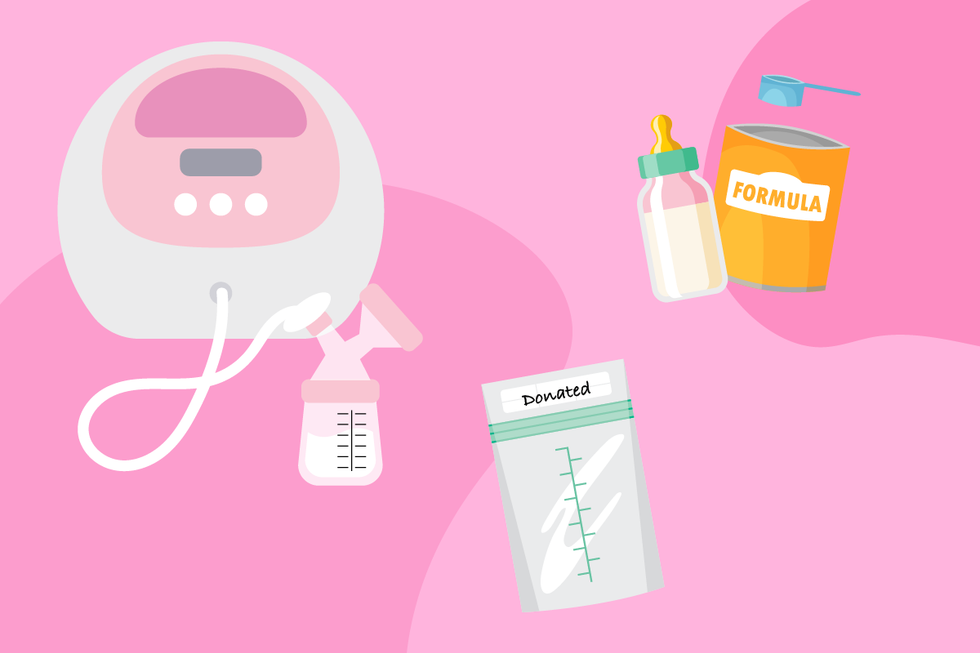
Hormone-blocking drugs like tamoxifen and aromatase inhibitors are commonly used to help reduce breast cancer recurrence. They work by blocking estrogen and are usually taken for at least five years following surgery.
Dudley advised against breastfeeding while taking a hormone-blocking drug, since the drug can be passed to the baby through breast milk.
A recent trial of women who paused their hormone therapy for up to two years to become pregnant and then breastfeed suggests that some women may be able to safely take a break from hormone-blocking drugs, depending on their treatment stage and other factors.
It’s often possible to breastfeed after a lumpectomy (also called a partial mastectomy), which removes a tumor and healthy tissue surrounding it. However, because nerves and milk ducts are often disrupted, the treated breast may not produce enough milk.
You can breastfeed after radiation, which is given to most women after a lumpectomy. However, radiation may make your skin tender and painful to touch, like a bad sunburn or scalding to the area, or its elasticity could be compromised, making it difficult for the baby to latch. Talk to your HCP or radiographer about how to treat an irritated breast. Options include special creams and pads, mild over-the-counter pain relievers, and hot or cold compresses.
Radiation may also make milk appear darker and thicker — but that’s not dangerous. Even so, you might be more comfortable not breastfeeding from the radiated breast. And that’s OK. One breast is often able to produce enough milk to feed a baby — even twins!
If inadequate milk supply is a concern, using a breast pump in between feedings can often help with milk flow. Keeping an eye on your infant’s weight can help you know if the baby is getting enough milk from one breast. If not, you can supplement with formula or use a milk bank, where you can obtain pasteurized donor human milk.
The fear of cancer returning is an extremely common and normal concern among survivors, and some women might fear that breastfeeding could cause their cancer to recur. However, there is no evidence that breastfeeding will cause your cancer to come back. In fact, breastfeeding lowers your risk of getting breast cancer in the first place, although there is less research about the connection between breastfeeding and a recurrence of breast cancer.
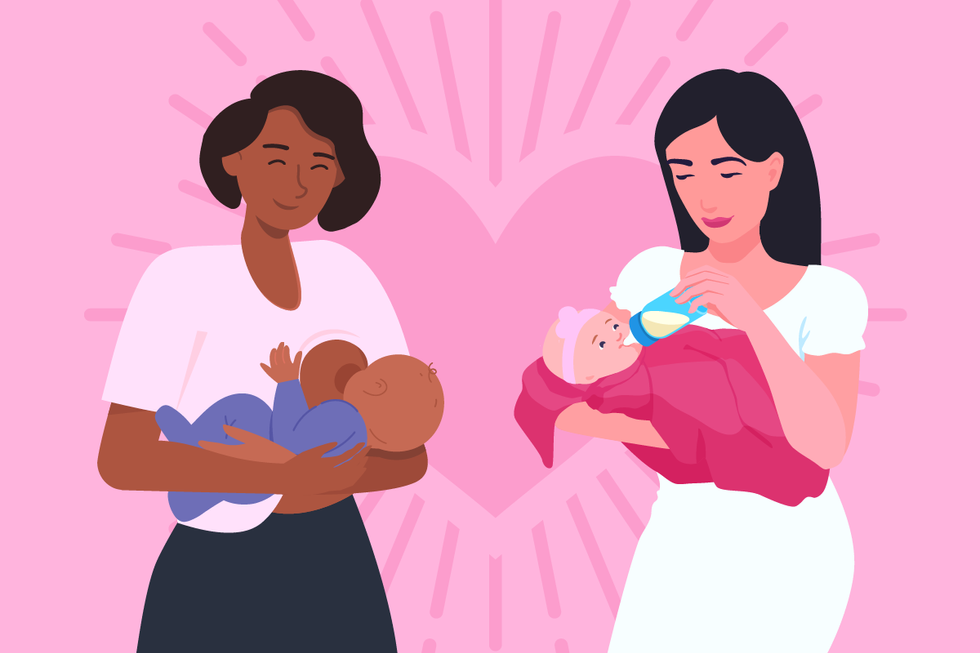
While it’s common knowledge that breastfeeding can benefit both baby and mother, not every woman can, or wishes to, breastfeed. For some, bottle feeding may be more convenient, or there may be a lack of support in the workplace.
Whatever your decision or circumstances, there’s no need for guilt. Some research, including this study, has found “no significant difference” in health or intellect between breastfed and formula-fed babies.
Though the memory still stings for Post, she felt fortunate that her son was old enough to receive the bulk of his nutrition from solid foods when she was forced to quit breastfeeding. “There are so many other ways to bond with your infant,” she said.
Dudley reassures all mothers in a similar circumstance with this advice: “If you have to take a break from breastfeeding during certain phases of your treatment, or you have to cut your breastfeeding journey short to ensure you receive proper care — it’s OK. Your baby is lucky to have a mom working so hard to take care of them while also making sure she cares for herself!”
This educational resource was created with support from Daiichi Sankyo and Merck.
From Your Site Articles
Related Articles Around the Web
October 20, 2024, is World Osteoporosis Day.
As the old saying goes, sticks and stones may break your bones but neglecting your bone health will hurt you.
If it’s been awhile since you thought about your bones, we get it. Bone health is underrated. But it’s also really important. Let’s put it this way: You can’t do much without a skeleton.
It’s especially important for women and people assigned female at birth to be proactive about bone health because osteoporosis, a disease that makes bones weak and brittle, affects 10 million people in the U.S. and 8 out of 10 of those are women.
The physical consequences of osteoporosis can be life-changing. A simple stretch, bend — even a cough — can result in a fracture or broken bone if you have osteoporosis. In fact, about half of all women over age 50 will break a bone at some point because of the disease.
Beyond breaks, osteoporosis can also have a significant impact on your mental health.
In addition to physical problems, osteoporosis has been linked to serious mental health issues. Research shows people with osteoporosis are more likely to have depression compared to people who don’t have osteoporosis. In one 2022 study of mostly women, a majority of participants with osteoporosis had depression (86.9%) compared to 15.4% of the group who didn’t have osteoporosis.
Deborah T. Gold, Ph.D., professor emerita in psychiatry and behavioral sciences at Duke University Medical Center, has studied the connection between osteoporosis and depression for years. “When I started doing the research, we found that people [with osteoporosis] who got a fracture were limited in what they could do. It made them feel old — and it hurt — and that led to depression,” Gold said. “I do think in most cases depression is a result of the disease.”
Gold recalled a time when a study participant started sobbing as she filled out her osteoporosis questionnaire. “It just suggests how strongly it can affect you,” she said.
Some researchers think the connection between osteoporosis and depression can go both ways. As in, depression can also be a risk factor for osteoporosis.
For one, research shows depression can increase cortisol (the stress hormone) in the body, which can lead to bone loss.
Treatment for depression may also affect bone health. Some antidepressants have been linked to an increase in bone loss and greater risk of fracture. One review found serotonin reuptake inhibitors (SSRIs) were associated with a decrease of bone mineral density. And an analysis of 23 studies found that depression was significantly associated with bone loss and an increased risk of fractures.
Gold noted that risk factors such as smoking, sedentary lifestyle and poor diet can also contribute to both depression and osteoporosis.
Although osteoporosis is a disease that can happen at any age, people who are postmenopausal are at high risk.
Estrogen — and a lack of estrogen — has an impact on your bones because estrogen plays a big role in maintaining bone structure. During menopause, when estrogen levels decline, your bones become weaker. You’re most at risk for osteoporosis after menopause when estrogen levels stay consistently low.
Fluctuating estrogen levels that occur during the menopausal transition (perimenopause) also have an effect on the brain. In addition to mood changes, research shows a decline in estrogen affects serotonin levels — the feel good hormones — which can lead to depression.
Read: In an Aging America, Osteoporosis Is a Looming Public Health Crisis >>
The connection between depression and osteoporosis is like the chicken or the egg debate. While research is ongoing, it’s a good idea to tell your healthcare provider about your risk factors for both conditions — especially if you’re going through menopause.
“[Osteoporosis and depression] are both diseases, and they both can be treated,” Gold said. “I think, however, that for people without depression now, getting control over osteoporosis will help them avoid depression in the future because osteoporosis makes you feel like you have no control anymore. And that’s the kind of thing that can lead to depression.”
One way to keep osteoporosis at bay is through diet and getting the right amount of calcium and vitamin D. (Note: If you’re taking a calcium supplement, take vitamin D along with it because your body needs vitamin D to absorb calcium.)
Weight-bearing exercise (low-impact aerobics, dancing, walking, etc.) is also crucial for healthy bones and muscle strength. “Some people hate it, but if you understand how much it can help, you might invest in it more,” Gold said. Per science, one review found that exercise was an effective way to improve bone mineral density in people with osteoporosis.
In addition to a healthy diet and exercise, self-care options for osteoporosis can include:
Watch: How to Avoid Falls in Your Home >>
Both osteoporosis and depression should be evaluated separately by different healthcare providers. Talk to your provider about getting a bone density test (DEXA scan) to check your bones and how to get screened for depression if you’ve noticed changes in your mood.
“You know, like any other disease, it’s up to the individual to take responsibility,” Gold said. “And if women don’t take responsibility for themselves and their problems — nobody else will.”
From Your Site Articles
Related Articles Around the Web
As a celebrity personal trainer and integrative nutritional health coach specializing in women over 50, I’ve had the privilege of helping thousands of women achieve goals they once thought impossible. With a deep understanding of the unique challenges faced by women in this age group, I am excited to share valuable insights on how to address common issues like dropping metabolism, “southern booty” (booty sagging), saddlebags, loose back of arms (triceps sagging), bone density loss, sagging skin, knee pain, joint stiffness, back pain, and more.
As the theme of my TV show The Prime Time-Life Begins at 50 (aired on NBC) so beautifully captures; this is the stage of life where we have incredible opportunities to become everything we have ever wanted to be! We have raised our children, lived our lives beautifully for everyone else, and now it is our turn. We enter the second half of life with gifts that only come at this stage—knowing who we are, what we like, and having more freedom and confidence to reinvent ourselves and thrive with new experiences and passions.
Yet, this stage also brings changes that may not always be welcome. But there is no need to settle for mediocrity. We can move past these challenges triumphantly by taking care of ourselves at the foundational level—through exercises designed to combat these issues and a diet that helps us thrive! So, let’s get on with enjoying this very special, beautiful, and exciting time of life!
As we age, our hormones decline—estrogen, testosterone, and human growth hormone (HGH) levels fall rapidly. These changes alter our body composition by making our muscles less dense, thus lowering our metabolism, softening our muscles, and increasing body fat while reducing muscle mass. You may find that what worked for you in your 20s, 30s, and even 40s no longer yields the same results, no matter how much you increase your workouts or diet. The reason is simple: your body has changed internally.
In addition, our bodies may lack essential nutrients that are crucial for liver function, reducing cortisol levels, and maintaining gut health for regularity and immunity. Nutrient deficiencies can exacerbate these changes, making it even more challenging to achieve and maintain a healthy body. This can be incredibly frustrating, but there is an answer, and it works beautifully! By adjusting your routine to match your new body, you can achieve insane results.
Why it Happens: With age, muscle mass naturally declines, which in turn slows down the metabolism. Muscle tissue burns more calories than fat tissue, so the loss of muscle mass means fewer calories are burned at rest. Additionally, thyroid function may decrease, further slowing metabolism. The good news is that you can take steps to boost your metabolism. One of the best ways to do this is by targeting the largest muscle groups in your body—your quads and glutes. These muscles play a significant role in your metabolism because they require the most energy to function.
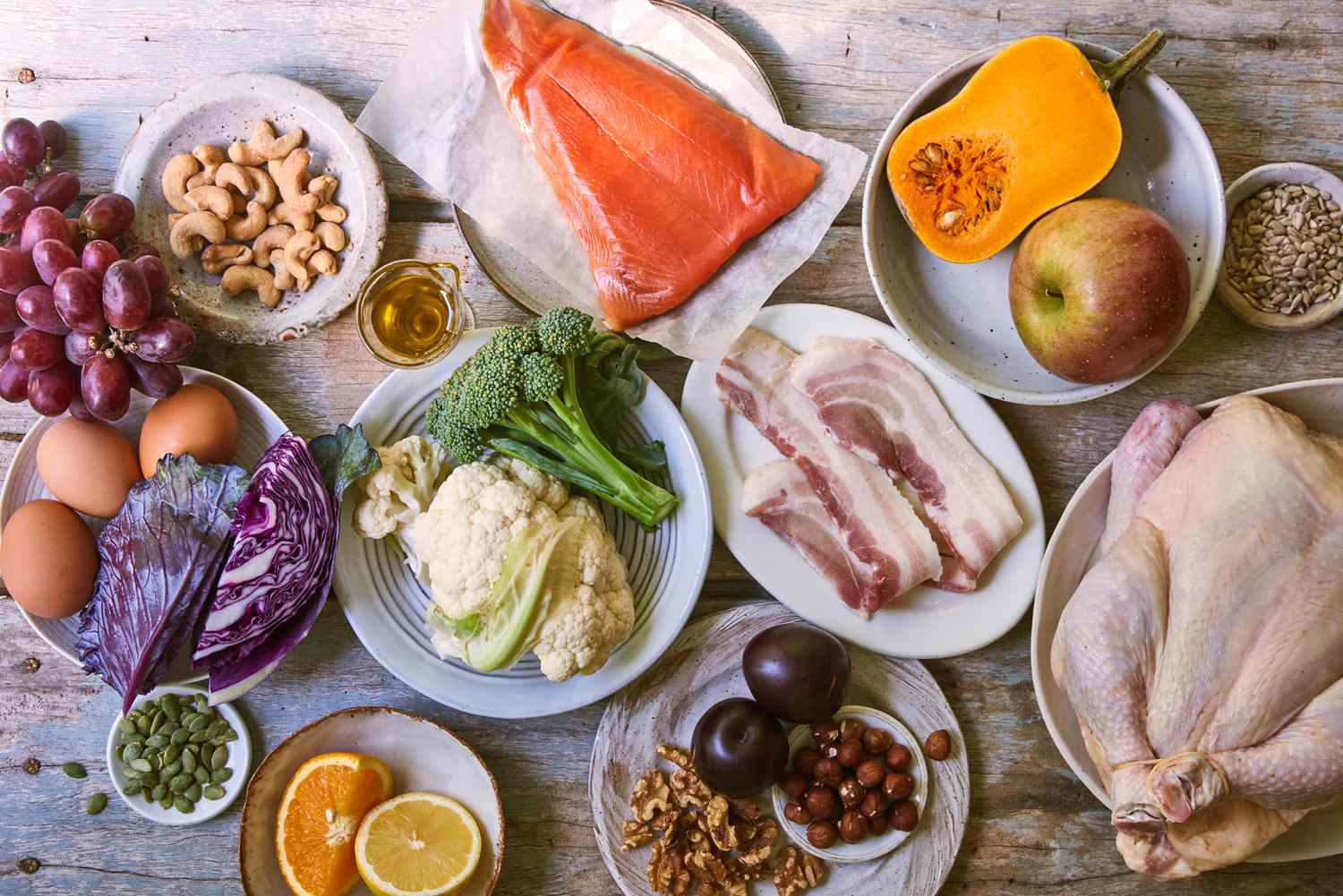
YOU GOT THIS! A dropping metabolism can be discouraging, especially when you are putting in the effort but not seeing results. It might feel like your body is working against you. However, by incorporating HIIT and strength training into your routine, along with adjusting your diet, you can boost your metabolism and see significant improvements!
Why it Happens: As we age, the muscles in our glutes can lose their firmness and tone, leading to what some affectionately call the “southern booty.” This sagging effect is due to a decrease in muscle mass and skin elasticity. But there is no need to accept this change—there are exercises that can help your booty “head north” again!
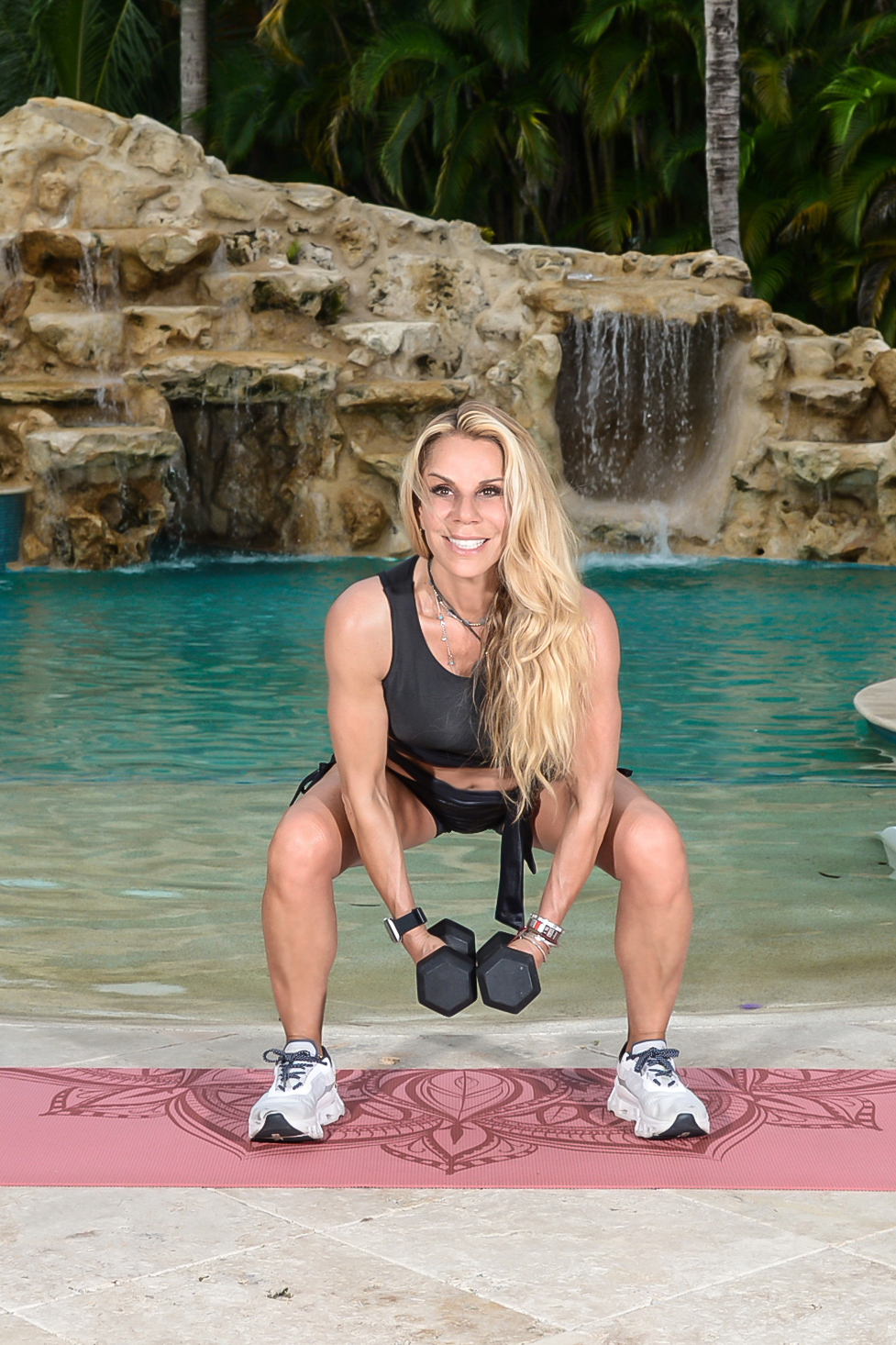
YOU GOT THIS! Booty sagging can be a source of concern as it affects the way you feel in your clothes and your overall confidence. But with targeted exercises and the right diet, you can lift and firm your glutes, making your booty “head north” once again!
Disclaimer
The Content is not intended to be a substitute for professional medical advice, diagnosis, or treatment. Always seek the advice of your physician or other qualified health provider with any questions you may have regarding a medical condition.