The main category of Fitness News.
You can use the search box below to find what you need.
[wd_asp id=1]
The main category of Fitness News.
You can use the search box below to find what you need.
[wd_asp id=1]
World Contraception Day is a worldwide awareness day celebrated on the 26th of September every year. This year, 2024, the theme of World Contraception Day is “A choice for all. Freedom to plan, power to choose.” This theme highlights that every individual must be guaranteed the freedom to protect their reproductive health and to plan their family, access to contraception to bodily autonomy, and achieve one’s full potential; it helps reduce adolescent births, prevent maternal deaths, and further gender equality.
Recent advancements in contraceptive technology are pushing the boundaries of what’s possible, offering more effective, convenient, and personalized options for people across all demographics. From long-lasting, reversible methods to innovations that address male contraception, the future of birth control promises greater autonomy, fewer side effects, and more choices.
1. Long-Acting Reversible Contraceptives (LARCs): A Step Forward in Convenience
Long-acting reversible contraceptives (LARCs), such as intrauterine devices (IUDs) and implants, have already revolutionized the contraceptive landscape by offering highly effective, low-maintenance options for women. These methods provide years of protection and have become increasingly popular due to their convenience and minimal user intervention.
Future innovations in LARCs are focused on improving safety, comfort, and ease of use:
2. Male Contraceptives: Expanding the Responsibility
One of the most exciting areas of development is male contraception. Currently, men have limited options—condoms, vasectomy, or withdrawal. However, scientific advancements are paving the way for more effective male contraceptive methods that allow men to share more of the reproductive responsibility.

3. On-Demand Contraception: Customizing Birth Control
The future of contraception also includes a shift toward on-demand options, allowing users to take birth control only when necessary, rather than adhering to a daily regimen. This could particularly benefit those who don’t need regular contraception or prefer not to deal with the side effects of hormonal methods.

4. Non-Invasive and Biodegradable Contraceptive Implants
Contraceptive implants are a popular long-term option, but they require a minor surgical procedure to insert and remove. To make implants even more user-friendly, researchers are working on biodegradable implants that dissolve over time, eliminating the need for removal. These implants can deliver a consistent dose of hormones over a predetermined period and then safely degrade, offering a new level of convenience.
5. Contraceptive Vaccines: A Long-Term Vision

Another area of research with significant potential is contraceptive vaccines. The idea behind these vaccines is to induce a long-term immune response that prevents pregnancy, effectively acting like a vaccine against fertility. The most studied approach targets hormones essential for fertility, such as human chorionic gonadotropin (hCG), which plays a key role in sustaining early pregnancy. While this concept remains in the experimental stages, it could provide a revolutionary, long-term, and possibly permanent solution for those seeking contraceptive options.
6. Personalized Contraception: Tailoring Birth Control to Individual Needs
A growing trend in healthcare is personalization, and contraception is no exception. With advancements in genetic research, hormonal testing, and artificial intelligence, we are moving toward an era of personalized contraception, where individuals can choose birth control methods that best align with their unique biology and lifestyle.
7. Sustainable Contraception: Eco-Friendly Innovations
Sustainable contraception is becoming a priority in an age of growing environmental consciousness. Innovations aimed at reducing the ecological impact of contraceptives are on the rise. Researchers are exploring biodegradable packaging, hormone-free options, and eco-friendly materials to create greener alternatives. For example, newer designs for condoms are being developed using sustainable materials that degrade faster than traditional latex.
8. Contraception and Digital Health: Integrating Technology
The integration of digital health platforms with contraception is also transforming how people manage their reproductive health. Smartphone apps that track menstrual cycles, fertility windows, and hormone levels have become valuable tools for women looking to either prevent or achieve pregnancy. These apps, paired with wearable technology, offer detailed insights into fertility, making natural contraception methods more accessible and precise.
As we progress, these technologies will likely become more advanced, offering real-time data collection and even syncing with healthcare providers to tailor contraceptive recommendations based on an individual’s unique patterns.
The future of contraceptive technology holds promise for more accessible, diverse, and personalized options. With advancements in long-acting methods, male contraception, on-demand solutions, and eco-friendly alternatives, we are moving toward an era where birth control is more user-centered and adaptable to individual needs. As technology continues to evolve, so too will our understanding of reproductive health, making contraception a truly empowering tool for everyone. By expanding access and choices, we can ensure that reproductive freedom becomes a reality for all.
Disclaimer
The Content is not intended to be a substitute for professional medical advice, diagnosis, or treatment. Always seek the advice of your physician or other qualified health provider with any questions you may have regarding a medical condition.
Breast cancer can affect all aspects of your life. And knowing where to turn for help can be difficult. We’ve put together a list of resources to help you get started.
HealthyWomen offers these resources for information purposes only. We do not endorse or recommend these websites specifically. Always be sure to do your own research and find support that works for you. In addition, be sure to talk with your healthcare provider about breast cancer and your personal treatment plan.
Bra or No Bra? Navigating the Post-Mastectomy World
How To Choose a Bra After Breast Surgery
Pink Warrior Advocates Bra Assistance Program
Talk to your healthcare team to see if your treatment facility provides any financial assistance or resources. A social worker may also be able to help you navigate financial resources. Some pharmaceutical companies also offer rebates or other financial assistance for patients who are taking their medications.
These organizations may also be able to help:
CancerCare – Financial Assistance Program
Patient Advocate Foundation – Metastatic Breast Cancer Financial Aid Fund
Susan G. Komen Financial Assistance Program
Advanced Breast Cancer Support Group Finder
American Cancer Society Helpline (1-800-227-2345)
American Psychosocial Oncology Society Helpline (1-866-276-7443)
Cancer Support Community Helpline (1-888-793-9355)
National Alliance on Mental Illness Tips to Find a Mental Health Professional
Psychology Today – Therapist Finder
Breast Cancer Risk Assessment Tool
Breast Health Glossary of Terms
Video: Resources for Patients with Metastatic Breast Cancer
This educational resource was created with support from Daiichi Sankyo, Hologic and Merck.
September 25, 2024, is World Dense Breast Day.
Mammograms? Nobody likes to have their breasts squished like a pancake. But now there’s a new reason to make sure you schedule one.
As of September 2024, the Food and Drug Administration (FDA) is requiring that all mammogram reports include information about your breast density. This is a big step in the right direction for women’s healthcare. In the United States, 50% of women over the age of 40 have dense breasts, making it difficult to detect breast cancer before it spreads.
This new ruling keeps women informed, empowering them to discuss additional testing options with their healthcare providers.
Here’s everything you need to know about dense breasts, and what to do if your mammogram report says you have them.
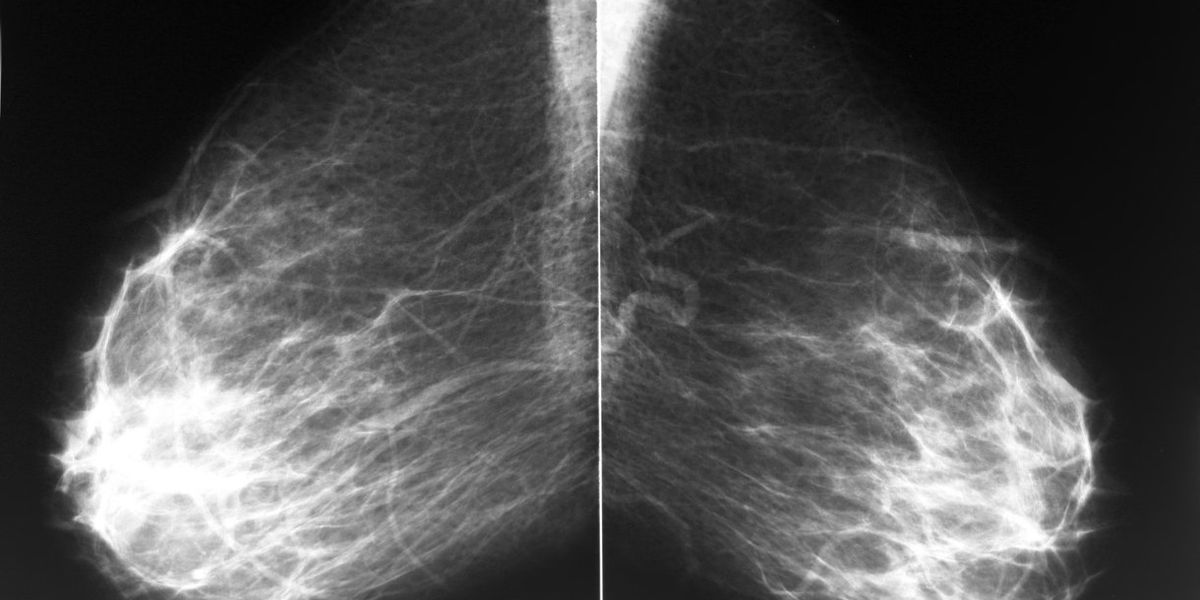
Breast density is the measurement of fibrous and glandular tissue in your breast compared to fatty tissue. The more fibrous and glandular tissue you have, the more difficult it will be to detect cancer on a mammogram.
The amount of density in your breast can be inherited. Women who have a low body mass index or take menopausal hormone therapy may have a higher breast density.However, as you age, your breasts may become less dense. Having children may also reduce your breast density.
Whether you have dense breasts or not has nothing to do with how big or how firm your breasts are. The only way to know if you have dense breasts is to have imaging, such as a mammogram. After your mammogram, a radiologist will look for abnormalities in your breasts and determine which category of density your breasts fall into.
The four categories of breast density are:
If your breasts fall into the first or second category, your breasts are not considered dense.
If your breasts are heterogeneously dense or extremely dense, they are considered dense.
Thanks to the recent ruling by the FDA, your mammogram report will clearly state “dense” or “not dense.”
If you don’t have dense breasts, your report will say:
“Breast tissue can be either dense or not dense. Dense tissue makes it harder to find breast cancer on a mammogram and also raises the risk of developing breast cancer. Your breast tissue is not dense. Talk to your healthcare provider about breast density, risks for breast cancer, and your individual situation.”
If you have dense breasts, your report will say:
“Breast tissue can be either dense or not dense. Dense tissue makes it harder to find breast cancer on a mammogram and also raises the risk of developing breast cancer. Your breast tissue is dense. In some people with dense tissue, other imaging tests in addition to a mammogram may help find cancers. Talk to your healthcare provider about breast density, risks for breast cancer, and your individual situation.”
The mammogram report sent to your doctor will include an assessment of your breast density using one of the four categories described above.
The short answer is yes. Women and people assigned female at birth who have dense breasts have a higher risk of breast cancer, though it’s unclear why.
Black women are more likely to have extremely dense breasts than white women, putting them at greater risk of having undetected breast cancer at early stages. Studies show that Black women are often diagnosed with breast cancer at a later stage and have a higher mortality rate.
In addition, dense breasts make it difficult to see abnormal changes. Glandular tissue and cancerous masses both appear white on a mammogram, making it hard to tell them apart. Unlike dense breasts, fatty tissue appears as mostly black on a mammogram, making it easier to see tumors.
If you have dense breasts, you should still get a mammogram. Then talk to your doctor about additional testing.
Additional tests for women with dense breasts include:
This educational resource was created with support from Daiichi Sankyo.
From Your Site Articles
Related Articles Around the Web
El 25 de septiembre de 2024, es elDía Mundial de las Mamas Densas.
¿Mamografías? A nadie le gusta que le aprieten las mamas como si fueran panqueques. Pero ahora hay una nueva razón para asegurarse de programar una.
A partir de septiembre de 2024, la
Administración de Medicamentos y Alimentos (FDA, por sus siglas en inglés) requiere que todos los informes de mamografías incluyan información de la densidad mamaria. Este es un gran paso en la dirección correcta para la atención médica de la mujer. En Estados Unidos, el 50% de las mujeres de más de 40 años tienen mamas densas, lo cual dificulta la detección de cáncer de mama antes de que se propague.
Esta nueva decisión mantiene a las mujeres informadas, empoderándolas para que consideren opciones de pruebas adicionales con sus proveedores de atención médica.
Aquí encontrarás todo lo que debes saber acerca de las mamas densas y qué hacer si tu informe mamográfico indica que las tienes.
La densidad mamaria es la magnitud de tejido fibroso y glandular en tus mamas en comparación con el tejido graso. Entre más tejido fibroso y glandular tengas, más difícil será detectar cáncer en una mamografía.
La densidad de tus mamas puede ser hereditaria. Las mujeres que tienen un índice bajo de masa corporal o que reciben terapia menopáusica hormonal podrían tener una mayor densidad mamaria.Sin embargo, a medida que envejeces, tus mamas podrían volverse menos densas. Tener hijos también puede reducir tu densidad mamaria.
La densidad de las mamas no depende de cuán grandes o firmes son tus mamas. La única forma para saber si tienes mamas densas es hacerte pruebas de imagenología, tales como una mamografía. Después de tu mamografía, un radiólogo buscará anormalidades en tus mamas y determinará la categoría de densidad de tus mamas.
Las cuatro categorías de densidad mamaria son:
Si tus mamas se clasifican en la primera o segunda categoría, tus mamas no se consideran densas.
Tus mamas se consideran densas si se clasifican como heterogénea o extremadamente densas.
Gracias a una decisión reciente de la FDA, tu informe mamográfico indicará claramente si tus mamas son “densas” o “no densas”.
Si no tienes mamas densas, el informe indicará:
“El tejido mamario puede ser denso o no denso. El tejido mamario dificulta la detección de cáncer en una mamografía y también eleva el riesgo de desarrollar cáncer de mama. Su tejido mamario no es denso. Hable con su proveedor de atención médica acerca de la densidad mamaria, los riesgos de cáncer de mama y su situación personal”.
Si tienes mamas densas, el informe indicará:
“El tejido mamario puede ser denso o no denso. El tejido mamario dificulta la detección de cáncer en una mamografía y también eleva el riesgo de desarrollar cáncer de mama. Su tejido mamario es denso. Para personas que tienen tejido denso, otras pruebas imagenológicas además de una mamografía podrían ser útiles para detectar cánceres. Hable con su proveedor de atención médica acerca de la densidad mamaria, los riesgos de cáncer de mama y su situación personal”.
El informe mamográfico que se enviará a tu doctor incluirá una evaluación de tu densidad mamaria usando una de las cuatro categorías que se describieron anteriormente.
La respuesta corta es sí. Mujeres y personas con asignación femenina cuando nacieron que tienen mamas densas tienen un mayor riesgo de cáncer de mama, aunque no se entiende claramente por qué.
Las mujeres de raza negra son más propensas a tener mamas densas que las mujeres de raza blanca, lo cual incrementa su riesgo de tener cáncer de mama no detectado en etapas tempranas. Estudios demuestran que mujeres de raza negra frecuentemente reciben diagnósticos de cáncer de mama en etapas posteriores y tienen un mayor índice de mortalidad.
Además, mamas densas dificultan la detección de cambios anormales. El tejido glandular y las masas tumorales cancerosas aparecen de color blanco en una mamografía, lo cual dificulta su distinción. A diferencia de las mamas densas, el tejido graso se muestra de color negro en una mamografía, lo cual facilita la detección de tumores.
Deberías hacerte una mamografía incluso si tienes mamas densas. Luego habla con tu doctor acerca de pruebas adicionales.
Las pruebas adicionales para mujeres con mamas densas incluyen:
This educational resource was created with support from Daiichi Sankyo.
From Your Site Articles
Related Articles Around the Web
On September 4, during the famous Venice Film Festival, an outstanding breakfast hosted by Elledgy Media Group and its founder, Elvira Gavrilova, and Charlotte Tilbury, attracted 35 successful women worldwide. The event served as a unique platform to celebrate the intersection of beauty, science, and technology.
Charlotte Tilbury introduced the brand’s latest beauty products. At the same time, guests enjoyed a live makeup tutorial led by the brand’s expert artist, who shared professional insights and tips.
The breakfast also featured an exciting presentation by Meta Force Space DMCC, which unveiled its revolutionary life extension project. Combining genetics, AI, and the creation of digital avatars, this concept is set to redefine personalized biohacking and longevity strategies.

Addressing the future, Elvira Gavrilova remarked: “We are standing at the point of a new era where technology and health seamlessly blend. Our goal is to bring a future that’s both advanced and fulfilling.”
Actress Ornella Muti was among the notable attendees, voicing her fascination with the biohacking innovations presented. The event also showcased Austrian company Dayholi VR, which offers a fully immersive virtual travel experience in stunning 8K. Actor Kevin Costner expressed keen interest in the potential of this virtual technology.

This exclusive event highlighted the synergy between beauty, technology, and pursuing a longer, healthier life, inspiring attendees for the future.
Disclaimer
The Content is not intended to be a substitute for professional medical advice, diagnosis, or treatment. Always seek the advice of your physician or other qualified health provider with any questions you may have regarding a medical condition.
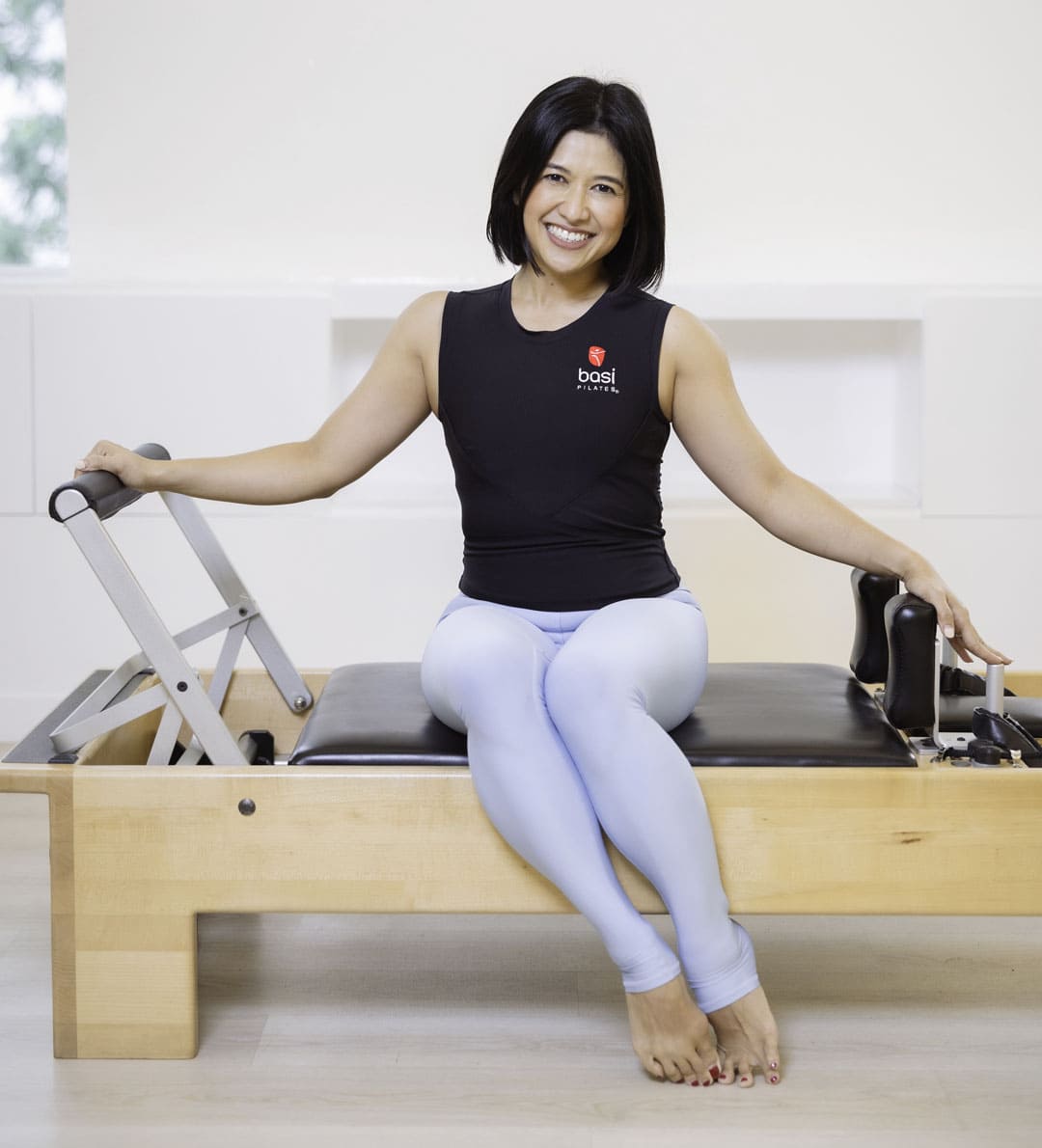
Since 2006, Mira has studied and trained around the globe with the world’s leading Pilates minds and teachers. She grew up as a dancer holds a Bachelor of Arts in dance, and has multiple Pilates certifications, the most important completing the prestigious BASI Pilates Legacy program. As a teacher, she has helped hundreds of students at all fitness levels find happiness and their absolute best through her Pilates teaching.
She says “Pilates is for everyone, and I have seen how Pilates change life for the better. Your practice is not a hunt for perfection; it’s about committing to yourself and staying open to where your flow takes you. A small daily practice can build balance, strength, flexibility, and find freedom within your body.”
Get ready to look inside what makes Mira Hassan and her Yoga journey truly remarkable.
Mira, your Instagram handle @flow.with.mira is a testament to your dedication to Pilates. Can you share with us how you discovered Pilates and what motivated you to become an instructor?
Pilates: A Journey from Confusion to Commitment
The word “Pilates” initially made me chuckle – a typo for “py-lates” perhaps? Little did I know, this unfamiliar term would mark the beginning of a transformative journey? At 19, while pursuing my undergraduate degree in dance at the Victoria College of Arts in Melbourne, Australia, Pilates became a mandatory conditioning class for all dance students. It was a weekly mat class, and while our pirouettes, Rond-de-Jambe, and swans were graceful, the “hundred” and “teasers” left us feeling thoroughly humbled.
This initial encounter with Pilates was a revelation. It exposed limitations in my strength and control, despite my dance training. It sparked a desire to delve deeper into this practice. My exploration continued beyond the dance studio walls. I enrolled in equipment classes at Infinity Studio by Kerrie Murphy in Melbourne and participated in group reformer classes at a local gym near my home.
From Dancer to Pilates Instructor: A Journey of Passion
Pilates played a pivotal role in refining my dance technique during my undergraduate years. It wasn’t just the physical benefits that captivated me; it was the emphasis on mindful movement and body awareness. After graduation, this passion for movement propelled me to delve deeper into the Pilates method. I craved a deeper understanding of how to harness the power of proper body mechanics and connection. Initially, the thought of teaching wasn’t on my radar – I wanted to expand my knowledge.
Following my first Pilates certification, however, the opportunity to teach arose. Witnessing the positive transformations in my clients, from improved flexibility to a newfound sense of control, ignited a newfound passion within me. As demand for my classes grew, I gradually increased my teaching hours.

How has your Pilates practice evolved over the years, and what key milestones or achievements stand out to you?
Beyond the Moves: A Commitment to Empowering Wellness
Continuous learning is at the core of my approach to Pilates instruction. I don’t want to just ‘teach/instruct’ exercises; I strive to be a teacher, one who empowers clients to achieve their wellness goals. This responsibility weighs heavily on me. My clients entrust me with their fitness journeys, any physical limitations they may have, and ultimately, their overall well-being.
To best serve them, I believe a deep understanding of human anatomy and physiology is crucial. It’s not enough to simply guide clients through the motions. I want to empower them to understand their bodies, ensure proper form to avoid injury, and ultimately, experience the transformative power of Pilates. This dedication to knowledge extends beyond Pilates itself, encompassing a holistic approach to self-improvement.
A Dedication to Continual Growth: My Pilates Certifications
My Pilates journey began with my first certification in 2005. Since then, I have 3 comprehensive Pilates certifications. One of them is BASI Pilates. I have also completed the BASI Pilates Legacy Program, the highest honor bestowed by BASI, under the esteemed guidance of RaelIsacowitz (Mentor, Master I & II and Honors). I’m incredibly excited to be retaking the Honors Program with Rael himself later this September in the US!
My dedication to learning extends beyond foundational certifications. Over the years, I’ve pursued specialized education in various areas to better serve my clients. These include:
These ongoing educational pursuits allow me to offer a comprehensive and informed approach to Pilates instruction. I am also a member of the faculty of BASI Pilates.
Full Interview is Continued on Next Page
This interview is exclusive and taken by Namita Nayyar President of womenfitness.net and should not be reproduced, copied, or hosted in part or full anywhere without express permission.
All Written Content Copyright © 2024 Women Fitness
Disclaimer
The Content is not intended to be a substitute for professional medical advice, diagnosis, or treatment. Always seek the advice of your physician or other qualified health provider with any questions you may have regarding a medical condition.

WASHINGTON, September 18 — HealthyWomen, the nation’s leading independent nonprofit health resource for women, today came together with a diverse group of some of the nation’s most prominent women leaders on Capitol Hill to advocate for comprehensive obesity care and improved coverage. The fly-in commenced on the same day that the House Ways & Means Committee convened a hearing on investing in chronic disease prevention, for which obesity is a leading driver.
“For years, HealthyWomen has been working to educate women, reduce stigma and advocate for better treatment options and healthcare coverage for obesity,” says Beth Battaglino, RN-C, CEO of HealthyWomen. “I’m thrilled to be joining forces with other leading organizations who recognize obesity is a chronic disease and its causes go beyond lifestyle choices. It is important to remember that, like most chronic diseases, obesity requires a full continuum of care for effective treatment.”
United in their mission to advocate for comprehensive obesity care and improved coverage, the coalition of women leaders includes representation from the physician and patient community, as well as policy and advocacy experts. Among those making the case for expanded obesity coverage is Nancy Glick, director of food & nutrition policy at the National Consumers League, who shared insights on why it’s crucial to modernize obesity policy.
“Obesity is as big a health hazard as smoking, as deadly as opioid addiction, and it worsens over 230 chronic diseases, including heart disease and diabetes,” says Glick. “And yet, most Americans with obesity continue to be stigmatized and discriminated against, and fall through the cracks in our healthcare system. But we are not powerless in this fight. By moving past outdated policies and addressing obesity as the complex, chronic disease that it is, policymakers can improve lives and break down the barriers preventing far too many people from obtaining the quality care they deserve.”
Participating in today’s fly-in were leaders from the Society for Women’s Health Research, The American Medical Women’s Association, The National Menopause Foundation, The National Council on Aging, the Community Liver Alliance, and National Consumers League — whose voices carry a message on behalf of scores of organizations with an interest in the impact of obesity on women’s health.
Their goal is to catalyze tangible improvements in healthcare coverage, access to treatments and the overall quality of care for individuals living with obesity. By raising awareness and driving change, the group seeks to create a world where obesity is approached with empathy, understanding and comprehensive support.
Approximately 42% of American adults (more than two in five) have obesity, but women are disproportionately affected by the obesity epidemic — both in terms of their health outcomes and the economic costs of the disease. Prevalence rates of obesity among U.S. women are stunningly high and steadily climbing. According to statistics published by the National Institute of Diabetes and Digestive and Kidney Diseases (NIDDK), 56.9% of non-Hispanic Black women, 43.7% of Hispanic women, 39.8% of non-Hispanic white women and 17.2% of non-Hispanic Asian women are living with obesity.
While obesity in both men and women increases the risk of several health conditions, including cardiovascular diseases, high blood pressure, Type 2 diabetes, sleep apnea, stroke, mental illness, body pain and premature death, a 2021 Journal of Midlife Health article found that “women are at higher risk for developing obesity-related physical and psychological comorbidities and have a twofold higher mortality risk than overweight men.”
There has been a lot of progress in the way obesity is being viewed and discussed today, yet care and coverage for this chronic disease are still profoundly lagging.
But there is hope. This past July, the House Ways and Means Committee passed an amended version of the Treat and Reduce Obesity Act (TROA / H.R. 4818) and that is why these dynamic leaders devoted their time to Hill engagement this week. Their goal was to ensure that members of both the House Energy and Commerce and Senate Finance Committees understood that they had stakeholder support and the urgency of continuing to move TROA forward.
This important legislation would provide access to effective and evidence-based interventions for the chronic disease of obesity for many Medicare beneficiaries. It is a critical step on the pathway to ensuring equitable access to evidence-based care and support for all.
Let’s stand together in this movement to champion obesity care and coverage to shape a more inclusive and compassionate future for all.
Join the fight to increase access to obesity treatment by visiting HealthyWomen’s website!
###
About HealthyWomen
HealthyWomen is the nation’s leading independent, nonprofit health information source for women. HealthyWomen.org was the first website to comprehensively address women’s health and wellness issues and continues to educate women to make informed health decisions by providing objective, fact-based information. For more than 30 years, women have turned to HealthyWomen for answers to their most important healthcare questions. To learn more, please visit www.HealthyWomen.org. Follow HealthyWomen on Facebook, Twitter, Instagram and LinkedIn.
As told to Jacquelyne Froeber
September 25, 2024, is World Dense Breast Day.
After the mammogram, I sat in the waiting room wearing that god-awful paper gown.
The lump surprised me. It was big enough for me to feel during a self-exam, about the width of a fingertip. But I wasn’t too worried — I’d had my annual mammogram two months earlier and everything came back “normal.” Plus, I ate healthy, exercised and did my self-exams between mammograms. I thought I was doing everything right.
The technician finally returned, and I glanced at my watch thinking I would head to work as soon as she confirmed all was OK. “We didn’t see anything,” she said.
I thought she came back into the wrong room. “I’m the lady with a lump so big I can feel it,” I said. “Oh,” she looked at the chart. “You have dense breasts. That’s going to be a very hard find for us.”
“Wait, what?” I sat back confused. Dense breasts? “What does that mean?”
I was then sent for an ultrasound because what I felt did not show up on the mammogram.
The lump clearly showed up on ultrasound and on the MRI that followed, though. I had breast cancer. And because it was missed year after year on my mammogram, it was no longer early stage.
Finding out that I had breast cancer, dense breasts, and that the cancer was missed because of dense breast tissue — all within one afternoon — left me speechless.
When I got home, I researched “dense breasts.” I learned that 4 out of 10 women of mammography age have dense breasts and that dense breast tissue can hide cancer on a mammogram. I couldn’t quite grasp that no one had felt the need to share this with me at any of my previous mammograms. Shouldn’t the 40% of women with dense breasts be aware of this? Surely every patient should understand the realistic limitations of a test in their circumstances.
In the aftermath of the diagnosis, there was no time to process this. My focus was on the surgeries, treatments and navigating insurance issues. Because of the size and advanced stage of the cancer, my treatment involved eight surgeries, eight rounds of chemotherapy and 30 rounds of radiation after the cancer came back.
In 2010, with the bulk of the treatment behind me, I caught my breath and began researching dense breasts and cancer detection. Like me, most women I spoke to had no clue if they had dense breasts or not.
When a woman has a mammogram, her breast density is rated into one of four categories. I was shocked to learn that in women with the densest breasts, cancer will be missed about 50% of the time. A coin toss.
Certainly if I’d known this, I would’ve asked about other tests. The fact that I didn’t know effectively denied me the opportunity for an early-stage diagnosis.
In my research, I learned that, thanks to the work of a patient in Connecticut, the state had a law requiring that women receive a general notification about breast density after their mammogram. It had been a long time since 10th grade civics class, so I Googled, “How do you pass a law?” and got to work.
I reached out to my state senator in New York to ask if he would consider sponsoring the state legislation and he agreed. The comprehensive bill was drafted to include information all women should know: that she has dense breasts, that it can hide cancer, can increase her risk of developing breast cancer and that a woman with dense breasts should speak to her provider about additional screening tests after her mammogram.
I devoted all my time and energy to get state legislators to support the bill and spent many days in the state capitol visiting offices, making phone calls and sending emails.
In a win for New York women, the bill passed both the New York State Senate and Assembly unanimously, and was later signed into law. New York’s “density inform” law became the first to require that women with dense breasts be told specifically and unambiguously “Your breast tissue is dense.” Many other states used the New York bill as a template for their own laws.
While this was a huge step forward in the protection of New York women, my situation was not unique to my state. There were women all over the country going for annual mammograms, yet a hidden cancer was growing undetected in their dense tissue — and a later stage cancer was the result. Some of these patient advocates fought for their state legislation while in chemo chairs, getting infusions, typing to their legislators to request sponsorship of a bill.
Patient advocates were successful and there was a growing number of state “inform” bills, but they varied widely in the information each provided to women. Certainly, all U.S. women deserved the same actionable information and opportunity for an early stage diagnosis. A single national “dense breast” reporting standard was needed.
A national reporting standard could have been accomplished by federal legislation or federal regulation. I initiated efforts on both. I reached out to my representative in Congress, and he agreed to draft a federal bill that would standardize the information women got when they were notified that they had dense breasts.
The next step was the FDA. The letter women get after their mammogram is federally mandated by the FDA. So I wrote to them and asked them to consider a requirement to include information about a patient’s breast density in that letter.
To my relief, the FDA agreed to add the topic to the agenda of their next meeting of the National Mammography Quality Assurance Advisory Committee in 2011. I was invited to testify at the meeting and was joined by fellow patient advocates. Our message was clear: Every woman should be told about their own breast density and every woman deserves the same level of information regardless of her ZIP code.
The FDA advisory committee agreed.
In the years following the meeting, I continued to correspond with the FDA on the need for a single reporting standard for all U.S. women.
I’ve also continued to mentor advocates around the country working on legislation. And to address the new patient and healthcare provider conversations that begin with the question, “I have dense breasts, now what?” in 2015 I co-founded the website DenseBreast-info.org. The website is now the world’s leading online resource on the topic, is medically sourced and provides education to both people with dense breast tissue and healthcare providers.
Finally, earlier this month, more than 13 years after first testifying in front of the FDA, the federal breast density notification rule went into effect.
(Photo/Courtesy DenseBreast-info.org)
Reaching the finish line for a national “dense breast” reporting standard is bittersweet. I’m grateful, of course. I know this information will save lives. But there are so many women who fought for their own state laws that are no longer with us to join me in an exhale of relief.
So while we all share a hallelujah that this has finally come to pass, to quote Leonard Cohen, for some of us, “It’s a cold and broken hallelujah.”
But a hallelujah it is.
Have a Real Women, Real Stories of your own you want to share? Let us know.
Our Real Women, Real Stories are the authentic experiences of real-life women. The views, opinions and experiences shared in these stories are not endorsed by HealthyWomen and do not necessarily reflect the official policy or position of HealthyWomen.
From Your Site Articles
Related Articles Around the Web
McKenzie exercises are a series of movements designed to alleviate back pain, particularly related to disc problems, sciatica, and general lower back discomfort. They focus on spinal extension and can help with conditions like a herniated disc by encouraging proper posture and disc alignment.
1. Prone Lying
2. Prone on Elbows (Cobra Stretch)
3. Prone Press-Ups

4. Standing Extension
5. Flexion in Lying (Knee to Chest)

6. Flexion in Standing

These exercises can be helpful for people with specific types of back pain but should be done cautiously, especially for those with acute symptoms. If your pain worsens or persists, consult a healthcare professional or physical therapist.
Disclaimer
The Content is not intended to be a substitute for professional medical advice, diagnosis, or treatment. Always seek the advice of your physician or other qualified health provider with any questions you may have regarding a medical condition.
La mayoría de pruebas del colesterol usualmente miden los triglicéridos, pero estos no son un tipo de colesterol. Sin embargo, los triglicéridos se asocian a los dos tipos de colesterol: LBD y LAD. Al igual que el colesterol, los triglicéridos son tipos de lípidos (grasas) que se trasladan a través de la sangre para realizar funciones esenciales en el cuerpo. Y al igual que para el colesterol de LBD, niveles altos de triglicéridos pueden implicar riesgos para la salud cardiaca.
Nos comunicamos con la cardióloga de Nueva York y miembro del consejo de asesoría de salud de la mujer de HealthyWomen Nieca Goldberg, M.D., para conversar acerca de lo que podemos hacer para manejar niveles altos de triglicéridos.
Un perfil lipídico estándar mide los niveles totales de colesterol así como de triglicéridos, pero esta cifra frecuentemente se ignora. Esto no debería ser así porque niveles altos de triglicéridos elevan el riesgo de ataques cardiacos y accidentes cardiovasculares al promover la aterosclerosis, la acumulación de colesterol y de factores inflamatorios, en las paredes de los vasos sanguíneos que suministran sangre al músculo cardiaco. Niveles muy altos de triglicéridos también se asocian a la inflamación del páncreas (pancreatitis), que es otra razón importante para mantener un control de los triglicéridos.
No hay síntomas si tienes niveles altos de triglicéridos. Así que el primer paso es someterte a un perfil lipídico y preguntar acerca de tu nivel de triglicéridos. Niveles en el umbral alto superan los 150 miligramos por decilitro (mg/dL), los niveles altos superan los 200 mg/dL y niveles muy altos superan los 500 mg/dL.Si el nivel es mayor que 150 mg/dL, habla con tu proveedor de atención médica acerca de cómo manejar de mejor forma el riesgo cardiovascular asociado con cualquier nivel elevado de triglicéridos.
El primer paso para controlar el riesgo cardiovascular asociado con niveles elevados y altos de triglicéridos es analizar lo que estás comiendo. El alcohol, las grasas, los carbohidratos simples y los azúcares pueden elevar tu nivel de triglicéridos. En vez de comer alimentos que tienen niveles altos de grasas saturadas, azúcares simples y almidones, come una dieta de estilo Mediterráneo con carbohidratos complejos, tales como cereales integrales y muchas frutas, vegetales y grasas saludables tales como la omega 3. Estos son los tipos de grasa que se encuentran en pescados, aceitunas, aceite de colza o aceite de aguacate. Dietas y ejercicios que hagan perder peso pueden mejorar los niveles de triglicéridos. También es importante reducir tu consumo de alcohol.
Frecuentemente, si hay niveles ligeramente elevados de triglicéridos, un simple cambio dietético tal como comer más pescado es suficiente, junto con una dieta saludable y más ejercicio. Sin embargo, si tus niveles son moderados o altos, tu doctor podría pedir aceite de pescado u omega 3 de compra con receta, los cuales tienen niveles más altos de ácidos grasos omega 3 que las opciones de suplementos dietéticos sin receta. Algunos de estos aceites de pescado de compra con receta contienen ácidos grasos omega 3 denominados AIP (ácido icosapentaenoico) y ADH (ácido docosahexaenoico) y otros contienen solo una forma purificada de AIP denominada IPE (icosapento de etilo). Todos estos productos reducirán tu nivel de triglicéridos y podrían disminuir tu riesgo de pancreatitis, pero no todos reducen tu riesgo de enfermedades cardiacas, ataques cardiacos y accidentes cardiovasculares. Sin embargo, se ha demostrado en ensayos clínicos que omega 3 de venta con receta con AIP puro, denominado IPE, reduce tu riesgo de enfermedades cardiovasculares cuando se usa con estatinas, medicamentos utilizados para reducir el colesterol.
Otros medicamentos llamados fibratos pueden reducir los niveles de triglicéridos, pero no se ha demostrado que los fibratos que se usan más frecuentemente reduzcan el riesgo de ataques cardiacos o accidentes cardiovasculares.
Este recurso educativo se preparó con el apoyo de Amarin.
From Your Site Articles
Related Articles Around the Web