The main category of Fitness News.
You can use the search box below to find what you need.
[wd_asp id=1]
The main category of Fitness News.
You can use the search box below to find what you need.
[wd_asp id=1]
Venus* never forgot the advice her OB-GYN gave her after she went through menopause.
“If you ever have any kind of bleeding, see a doctor.”
Those words came to mind in February 2022 when Venus noticed a small amount of blood even though she was no longer getting periods. She quickly scheduled an appointment with her primary care physician.
That physician ordered an ultrasound, and when it came back, he told her she had no reason to worry — she didn’t have cancer. A few days later, however, Venus decided to ask for a second opinion during her routine OB-GYN appointment.
That provider ordered a biopsy. Within a week, Venus learned she had endometrial cancer.
Endometrial cancer occurs when cancer cells enter the endometrium, or the lining of the uterus. Also known as uterine cancer, endometrial cancer is the
most common reproductive cancer among women or people assigned female at birth.
It’s also one of the few cancers with a rising mortality and diagnosis rate, with cases increasing about 1% each year in white women and 2%-3% each year in women in all other racial and ethnic groups. The American Cancer Society estimates that more than 67,000 new cases are diagnosed each year, and that 13,250 women each year will die from endometrial cancer.
Postmenopausal women are most at risk, with 60 being the average age of diagnosis. Black women are more likely to be diagnosed with endometrial cancer than white women — and they’re more likely to die from it.
Read: Why Are Black Women More Likely to Die from Endometrial Cancer? >>
Researchers have been working to figure out why endometrial cancer rates are rising for all women, and why
Black women have worse outcomes. One possible explanation may be that obesity rates have been rising since 1990. And obesity is a major risk factor for endometrial cancer, since fat tissue can increase estrogen levels.
Another factor researchers think could be connected to rising rates of endometrial cancer worldwide relates to lower birth rates and women giving birth for the first time at older ages. That’s because pregnancy and producing breast milk are protective factors against endometrial cancer.
One major discovery was that
two rare but aggressive forms of endometrial cancers called serous carcinoma and carcinosarcomaare more likely to be diagnosed in Black women than white women. And these cancers lead to worse outcomes than other forms of endometrial cancer. Black women also often have other factors that make their cancers more difficult to treat. They are more likely to have a subtype of uterine cancer with a specific mutation that is less likely to benefit from treatment. Almost 70% of Black patients had this higher-risk subtype, while just 35% of white patients did. In addition, Black women’s tumors often have fewer mutations. Tumors with fewer mutations are less likely to respond to certain forms of immunotherapy, meaning Black patients benefit less from these treatments that are highly effective for others.
“Serous carcinoma and carcinosarcoma are more aggressive types of uterine or endometrial cancers,” said Jayne Morgan, M.D., physician and healthy equity expert. “Having more aggressive types of endometrial cancer and cancers that have less opportunity to respond to immunotherapy are two factors making this cancer more deadly for Black women.”
Social determinants of health that can lead to worse outcomes for all conditions can also play a role in rising endometrial cancer diagnoses and mortality rates. A lack of access to healthcare because of socioeconomic factors like income, education and type of job, plus mistrust of the healthcare system, can lead to misdiagnosis or delayed diagnosis. So, by the time cancer is discovered, it could be at an advanced stage.
Obesity, Type 2 diabetes and lifestyles that don’t include a lot of physical activity can also raise the risk of developing endometrial cancer.
“The most common symptom of uterine cancer is abnormal vaginal bleeding,” Morgan said. “Certainly if you’re past menopause, if you’re having vaginal bleeding, that should be an alarm.”
Other symptoms can include heavier menstrual bleeding, more frequent periods, bleeding between periods and thickening of the uterine lining. Morgan said any lasting pelvic pain or pressure, unintended weight loss or urinary issues like frequent urination and difficulty urinating could also be warning signs.
“There are certain things women should look out for and think, ‘Oh, this could be something more serious,’” Morgan said. “[I’m] not saying it’s definitely endometrial cancer, but it’s something that could be a sign or a signal that they need to get this checked out more.”
Venus knows she could have been among the rising number of Black women with an advanced stage diagnosis.
Because she listened to her OB-GYN’s instructions about postmenopausal bleeding and sought a second opinion when she was told she didn’t have cancer, her healthcare providers (HCPs) were able to catch her endometrial cancer early — at stage IA. She had a full hysterectomy to remove her uterus but didn’t have to have chemotherapy. She’s been in remission ever since and sees her HCP every six months to make sure the disease hasn’t come back.
“I was blessed that I had that OB-GYN appointment scheduled,” Venus said. “As much as I appreciated the primary care doctor trying to move the process along, you shouldn’t give a diagnosis about cancer just by an ultrasound.”
Venus later learned that the primary care doctor was using a screening tool focused on the thickness of the uterine lining to determine whether a biopsy would be needed. Kemi Doll, M.D., a gynecologic oncologist with the University of Washington School of Medicine and founder of ECANA: Endometrial Cancer Action Network for African-Americans, led a study saying this tool often misses endometrial cancer in Black women.
Although Venus felt physically healthy after her diagnosis and surgery, the ordeal took a toll on her mental health. It was also difficult when her trusted OB-GYN and surgeon left the practice she used, and she had to find new providers.
Venus said ECANA was a significant source of support when she reached out and joined the organization late last year. When Venus found another HCP, she was comforted to learn that her new provider had worked with Doll in the past.
Venus has also found strength sharing her story to help other women gain more awareness about endometrial cancer.
“If you’re a woman who’s gone through menopause and you see any bleeding, make an appointment immediately,” she said. “Don’t put it off. If you’re only offered an ultrasound, ask for a biopsy. I’m so glad my gynecologist pushed for that. Only by the grace of God am I here to be able to talk about what I experienced.”
*Last name withheld for privacy reasons
This educational resource was created with support from Merck.
From Your Site Articles
Related Articles Around the Web
Full disclosure: I love Groupon. It’s full of deals on stuff and services I never knew I needed. A detoxing foot bath for $5? Yes, please! Half-off a pumpkin spice facial? Sign me up for that seasonal treat. Buy one, get one, vaginal steaming? Heck yes … I need to see the fine print on that one.
You’ve probably heard of vaginal steaming before. It’s been around for centuries. More recently, celebrities like Chrissy Teigan have posted about it on social media. I remember hearing about it on an episode of “The Kardashians.” “It’s so good for your vagina — you put roses and stuff in there,” Kourtney said.
Roses? And stuff? In your vagina? “The appeal is that [people think] it ‘cleans it out’ and provides nutrients to the area,” said Heather Bartos, M.D., an OB-GYN and member of HealthyWomen’s Women’s Health Advisory Council.
Take our quiz: True or False: Vaginas! >>
But like many things on reality TV, vaginal steaming isn’t what it seems. Here’s what you need to know before you get that Groupon.
Vaginal steaming, also called v-steaming and yoni steaming, involves sitting over a pot of hot water that’s infused with herbs. A blanket or towel is placed around your lower body to keep the steam from escaping.
Spa-like facilities may offer vaginal steaming using a special seat with a hole in the middle for the steam to come through. There are also DIY kits for at-home steamers.
As Bartos mentioned, part of the draw of vagina steaming is that it supposedly helps “clean” the vagina.
Vaginal steaming has also been said to help regulate periods, ease period cramps and increase fertility. Although there’s no scientific evidence to back up any of these claims.
“Steaming — as the name suggests — can cause severe burns and irritation to the vulva and vagina,” Bartos said.
Beyond the possibility of burns (which seems like enough to say hard pass) the herbs can cause inflammation and infection. Bartos said vagina steaming is basically a super hot version of a douche, which you shouldn’t do. (It can upset the balance of bacteria in your vagina.)
Read: 15 Minutes With: Ashley Winter, M.D., Talks Urology, Sex and All Things Vaginas >>
Also, Bartos noted that vagina steaming perpetuates the myth that the vagina is dirty and needs cleaning — which isn’t true. “Your vagina is perfect the way she is!”
Science says there are no real benefits to vaginal steaming. “The vagina doesn’t sit around ‘open,’ so getting nutrients into the area is nearly impossible,” Bartos said. “No one does rectal steaming.”
The vaginal steaming verdict: Save your money — and your vagina. There are plenty of other Groupons in the sea.
Related Articles Around the Web
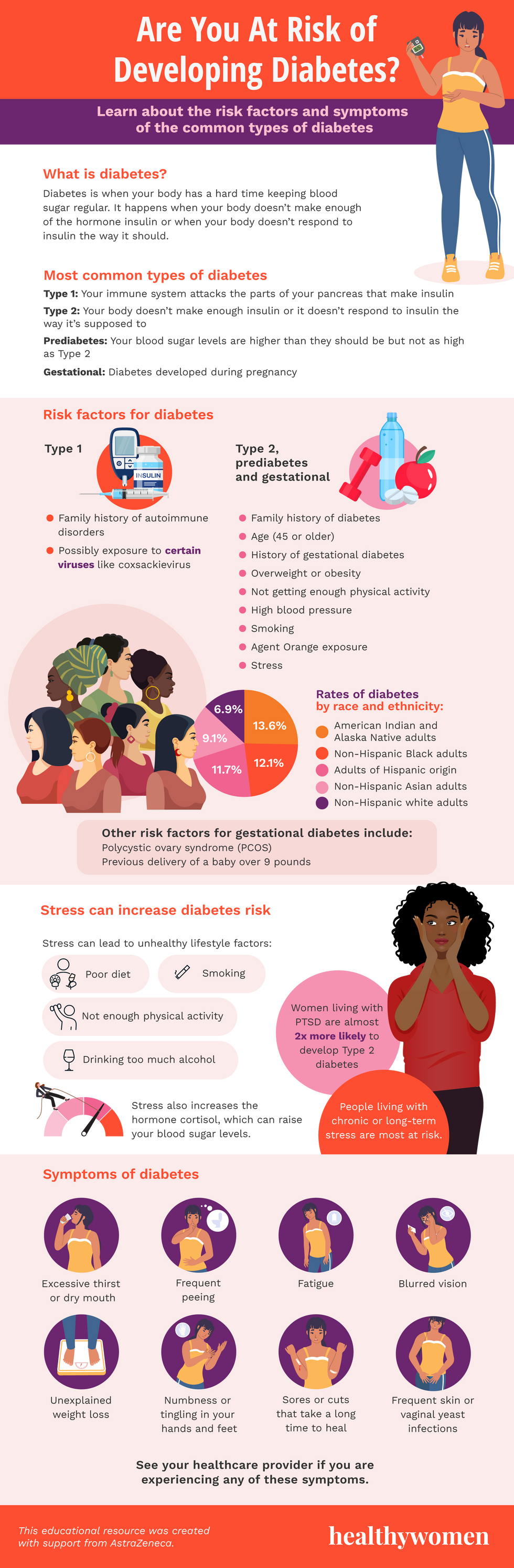
What is diabetes?
Diabetes is when your body has a hard time keeping blood sugar regular. It happens when your body doesn’t make enough of the hormone insulin or when your body doesn’t respond to insulin the way it should.
Most common types of diabetes
Type 1: Your immune system attacks the parts of your pancreas that make insulin
Type 2: Your body doesn’t make enough insulin or it doesn’t respond to insulin the way it’s supposed to
Prediabetes: Your blood sugar levels are higher than they should be but not as high as Type 2
Gestational: Diabetes developed during pregnancy
Risk factors for diabetes
Type 1
Family history of autoimmune disorders
Possibly exposure to certain viruses like coxsackievirus
Type 2, prediabetes and gestational
Family history of diabetes
Age (45 or older)
History of gestational diabetes
Overweight or obesity
Not getting enough physical activity
High blood pressure
Smoking
Agent Orange exposure
Stress
|
Rates of diabetes by race and ethnicity: American Indian and Alaska Native adults (13.6%) Non-Hispanic Black adults (12.1%) Adults of Hispanic origin (11.7%) Non-Hispanic Asian adults (9.1%) Non-Hispanic white adults (6.9%) |
Other risk factors for gestational diabetes include:
Polycystic ovary syndrome (PCOS)
Previous delivery of a baby over 9 pounds
The link between stress and diabetes
Stress can increase diabetes risk.
Women living with PTSD are almost 2x more likely to develop Type 2 diabetes
Stress can lead to unhealthy lifestyle factors:
Poor diet
Not enough physical activity
Smoking
Drinking too much alcohol
Stress also increases the hormone cortisol, which can raise your blood sugar levels.
People living with chronic or long-term stress are most at risk.
Symptoms of diabetes
Excessive thirst or dry mouth
Frequent peeing
Fatigue
Blurred vision
Unexplained weight loss
Numbness or tingling in your hands and feet
Sores or cuts that take a long time to heal
Frequent skin or vaginal yeast infections
See your healthcare provider if you are experiencing any of these symptoms.
This educational resource was created with support from AstraZeneca.
As told to Jacquelyne Froeber
I was lifting weights at the gym when I felt something rip in my neck. I wanted to scream, but the sudden burst of fiery pain took my breath away. “Don’t panic,” I told myself. It was probably just a neck strain or a pinched nerve.
I went home and put ice on it.
The fire continued to burn.
The year was 2000. We’d all survived Y2K. I was 26 years old and two finals away from surviving my first year of medical school.
I expected the pain in my neck to get better as finals week went on — but it got worse. I studied human anatomy with a ring of fire supporting my head. Then the flames started to spread down my back and continued moving south.
Somehow, I made it through finals, but there was no relief from the burning pain. It was officially time to panic.
What the hell was wrong with me?
I went to medical school in Boston so there were a lot of fancy healthcare providers and specialists to choose from. One by one, appointment after appointment, everyone said the same thing: “We don’t know what’s wrong with you.” There was nothing to see on my scans. No neck injury to speak of.
To add insult, some providers said I was imagining the pain. Others said depression was the problem. Everyone said I needed to exercise more.
I was already exercising — hence the gym injury — and I tried to do more. But fatigue had set in, and I was so tired all the time. I woke up exhausted as if I didn’t sleep at all during the night. I was also stiff and sore — like I’d run a marathon and then gotten hit by a truck on repeat.
I was running on fumes by the time school started again. I had just enough in me to study. I knew I couldn’t go into a hospital environment and work with patients when I felt so bad. So I took a medical leave of absence my third year — which was basically unheard of — but I knew I didn’t have a choice. I had to get better or give up on my dream of being a doctor.
By this time, I was desperate. I’d spent every penny I had on alternative medicine, specialists, acupuncture and herbs. Nothing helped.
Someone along the way suggested I see a chiropractor so I made a half-hearted appointment. During the exam, he pressed on a spot in my upper body and I almost fainted. “That’s so painful,” I cried out. He pressed on other areas with the same result. “I think you have fibromyalgia,” he said.
“Fibro-what?” I asked. I’d never heard that term before in medical school — or ever. It was the first time someone gave a name to the pain. It was the first time in years I had hope.
I practically sprinted to the bookstore and headed to the health section. I made my way to “F” and found one copy of “Fibromyalgia and Chronic Myofascial Pain: A Survival Manual.” I clutched the book in my hot little hands and spent the next 24 hours reading about fibromyalgia.
Everything in the book described me. I was nodding along with every line. The burning, the pain, the brain fog — it was all me. It was exciting — thrilling — to finally have some answers. It was devastating, however, when I learned that medical treatments were basically nonexistent at the time.
Back then, fibromyalgia was considered a “wastebasket diagnosis,” which meant that healthcare providers thought the symptoms were either fake or all in your head. And there wasn’t much doctors could offer as far as treatments.
Learning what the medical community thought of my condition lit a new — different — fire within me. I knew I had to get better enough so I could help other people find a better way to live.
Over the next few months, I used myself as a guinea pig and tracked the things that made me feel better. I was sensitive to dairy, so I changed my diet. I prioritized stress management and sleep hygiene.
A type of therapy called myofascial release was the pain changer for me. The technique involves stretching the tissues around the muscles that can be inflamed for people with fibromyalgia. After the first treatment, I felt a small amount of pain relief in my neck. I knew I was on to something big.
The combination of lifestyle changes and myofascial release therapy brought my pain down from a 7 to a 3. I felt good enough to go back to med school.
Even though I had an idea what the medical community thought about fibromyalgia, hearing it in person almost broke me. Early on in the school year, a teaching physician announced that fibromyalgia didn’t exist. Other colleagues said people with fibromyalgia were making it up to get disability benefits. The consensus was that people with fibromyalgia were lazy. Hopeless. A waste of “our” time.
I wanted to yell at the top of my lungs that no one had a clue what it was like to live with fibromyalgia. But I kept to myself. If this is what my colleagues thought about my condition, what would they think about me?
At the end of school, I had to do a presentation in front of all my peers, physicians and teachers. I presented a case study on fibromyalgia and revealed, at the end, that it was about me. I started weeping right there at the podium. I sobbed uncontrollably in front of hundreds of people and I couldn’t stop. For so long I’d been hiding this secret. I looked fine on the outside, but on the inside, I was going through hell.
Most importantly, I wasn’t making it up. And I wasn’t alone.
After the presentation, I was shocked at the amount of people who lined up to thank me for talking about fibromyalgia. So many people said they had family, friends or patients going through a similar situation. The reaction was so positive — it gave me hope that things could change.
2023
After school, I dedicated my career to fibromyalgia and pain conditions. Thankfully, the medical community changed and fibromyalgia is a recognized chronic condition and there are FDA-approved medications available to help treat it, along with a variety of alternative treatments that can be helpful.
The problem is that fibromyalgia is far more complex than just taking medication. Each person is different and some people really struggle to find any relief. I’m lucky in the sense that medication and lifestyle help me stay around a 2 or 3 on the pain scale. It’s manageable. And in the absence of a cure, that’s all anyone with chronic pain wants — to feel good enough to do the everyday things you have to do.
In 2016, I published the book, “The Fibromanual: A Complete Fibromyalgia Treatment Guide for You and Your Doctor,” inspired by that desperate trip to the bookstore so many years ago. The information still holds up today, but there’s also so much new research and insight into fibromyalgia out there. It gives me hope that one day soon all of us with fibromyalgia can defeat it.
Have a Real Women, Real Stories of your own you want to share? Let us know.
Our Real Women, Real Stories are the authentic experiences of real-life women. The views, opinions and experiences shared in these stories are not endorsed by HealthyWomen and do not necessarily reflect the official policy or position of HealthyWomen.
From Your Site Articles
Related Articles Around the Web
Emily Jamea, Ph.D., is a sex therapist, author and podcast host. You can find her here each month to share her latest thoughts about sex.
Lately, it seems like everyone’s more comfortable talking about their sexual preferences. And with this openness — does their freak match your freak? — sexual expression has evolved, with preferences like rough sex and erotic asphyxiation getting more attention and being talked about in mainstream media and personal relationships.
These practices, while not new, have piqued people’s curiosity, often fueled by what they see and hear in pop culture.
However, with this increase in popularity and curiosity, comes a complex interplay of empowerment, risk and controversy that warrants a close look and careful discussion.
Erotic asphyxiation involves deliberately restricting oxygen to the brain during sexual activity to enhance the intensity of your orgasm. This practice is commonly known as breath play or choking. Activities like these, when consensual, are seen by some as a way to explore power dynamics, heighten pleasure or satisfy certain kinks or fetishes.
Erotic asphyxiation is rooted in BDSM (bondage, discipline, dominance, submission, sadism and masochism) practices, where participants engage in activities that explore power, control and sometimes pain, often within pre-negotiated boundaries and with clear communication.
We can thank the “50 Shades of Grey” series for much of the rise in popularity of these kinks, because it brought BDSM into the mainstream, sparking curiosity and conversation around rough sex. Music videos, movies and even social media platforms have further contributed to normalizing these practices by including them as a part of a broader sexual repertoire.
While these portrayals have played a role in reducing the stigma around discussing and exploring sexual preferences, they’ve also raised concerns, particularly because erotic asphyxiation can be life-threatening. Critics argue that pop culture often glamorizes or oversimplifies these practices, without stressing the importance of consent, communication and safety.
This can lead to misunderstandings and unrealistic expectations, particularly among the inexperienced. Furthermore, there is an increase in younger people exploring these practices, most likely because they’ve become so pervasive in the media. Experts feel concerned that older adolescents and young adults may be at particular risk because their brains are not fully developed.
The draw of sexual choking is two-pronged. It can enhance physiological and psychological pleasure. While oxygen is being restricted, people may feel lightheaded, but when it’s released again, the body experiences an intense rush of endorphins, dopamine and serotonin which can create feelings of euphoria. This neurochemical rush adds to feelings of arousal and can enhance orgasm. As previously mentioned, the power dynamics at play can also intensify sexual arousal. Some people feel turned on knowing their life is in the hands of another.
Among the various rough sex practices, erotic asphyxiation carries significant risks. The lack of oxygen can lead to dizziness, loss of consciousness, brain damage, or even death. Accidental fatalities during erotic asphyxiation are not unheard of, and they underscore the importance of extreme caution.
Some people engage in breath play alone, in which case we refer to it as autoerotic asphyxiation. Practicing this alone, without someone there to help if something goes wrong, is significantly more dangerous, and I do not advise it.
Because of these risks, it’s crucial for people engaging in erotic asphyxiation to educate themselves thoroughly and approach the practice with a heightened sense of responsibility. This might include learning about safe techniques and being aware of bodily cues that indicate danger. I recommend against engaging in this practice without a thorough understanding of its risks and without taking appropriate precautions, such as ensuring that both partners are sober and able to respond quickly in case of an emergency.
Consent, education and clear boundaries are the cornerstones of any sexual activity. This is especially true for erotic asphyxiation. Clear, enthusiastic and ongoing consent is essential to ensure that all parties are comfortable and that boundaries are respected. For many, the appeal of rough sex lies in the consensual exploration of power dynamics and the trust required to engage in such intimate activities. Without proper understanding, the line between consensual rough sex and non-consensual violence can become blurred, leading to harmful situations. I always remind my clients that there are a variety of exciting and less risky ways to explore these dynamics.
The rise of rough sex and erotic asphyxiation has sparked significant cultural and ethical debates. On the one hand, some view these acts as an expression of sexual freedom and empowerment. They argue that consensual adults should have the freedom to explore their sexual preferences without judgment. This perspective is rooted in the broader movement toward sexual liberation and the rejection of societal norms that dictate what is considered “acceptable” sexual behavior.
On the other hand, there are concerns about the potential for abuse and coercion. Critics worry that the normalization of these practices, particularly when influenced by media portrayals, may lead to situations where people feel pressured to participate in activities they’re uncomfortable with. The power dynamics in rough sex can also be problematic if not managed with care, leading to situations where one partner’s boundaries are violated.
Furthermore, there’s an ongoing discussion about the legal implications of these practices. In some cases,people have used the “rough sex defense” in court to justify acts of violence that resulted in harm or death, claiming that the injuries were from consensual activities gone wrong. This raises complex legal and ethical questions about consent, responsibility and the potential for abuse in these practices.
The rise of rough sex and erotic asphyxiation reflects a broader shift in how society engages with sexual expression. While you can use sexual acts like these to explore pleasure, power and intimacy, they also come with significant risks and responsibilities. Ultimately, the conversation around rough sex and erotic asphyxiation is part of a larger dialogue about the changing landscape of sexual norms. And, as these practices become more mainstream, it’s essential to prioritize education, communication and consent to ensure that people can engage in them safely and responsibly while safeguarding their own well-being — and that of their partners.
Related Articles Around the Web
Taking care of your skin is not just about what you apply to it, but also about what you consume. The foods you choose have a direct impact on the health and appearance of your skin. If you want glowing, radiant, and vibrant skin, paying attention to your diet is essential. The nutrients we get from food can complement the effects of facial treatments, optimizing results and improving your skin’s health in the long run.
The body needs a balanced intake of vitamins, minerals, and antioxidants to maintain healthy, glowing skin. Specific nutrients like vitamin C, E, and omega-3 fatty acids play a crucial role in cell renewal and protection against free radicals. These radicals are responsible for speeding up skin aging, causing wrinkles and loss of elasticity.
Fresh fruits and vegetables, nuts, seeds, and fatty fish are excellent sources of these nutrients. For example, oranges, kiwis, and strawberries are packed with vitamin C, which helps in collagen production, essential for firm skin. Similarly, nuts like almonds are rich in vitamin E, which protects the skin from sun damage and promotes regeneration.
What should you include in your diet to improve your skin’s appearance? Here are some suggestions:
These foods, along with a balanced diet, are fundamental for achieving healthier skin. But, in addition to watching what you eat, there are facial treatments that can further enhance the results.
There are various treatments available to improve the appearance of your skin. One of the most innovative is endolifting, a non-invasive technique performed using radiofrequency that helps tighten the skin, smooth wrinkles, and enhance facial contours. This procedure promotes collagen production, resulting in firmer, more youthful skin. Before opting for any facial treatment, it’s important to choose professionals carefully. For example, NUO AESTHETIC NEW YORK has many testimonials positioning it as the best aesthetic clinic in New York. Their results exceed expectations, and their techniques are cutting-edge without requiring surgery.
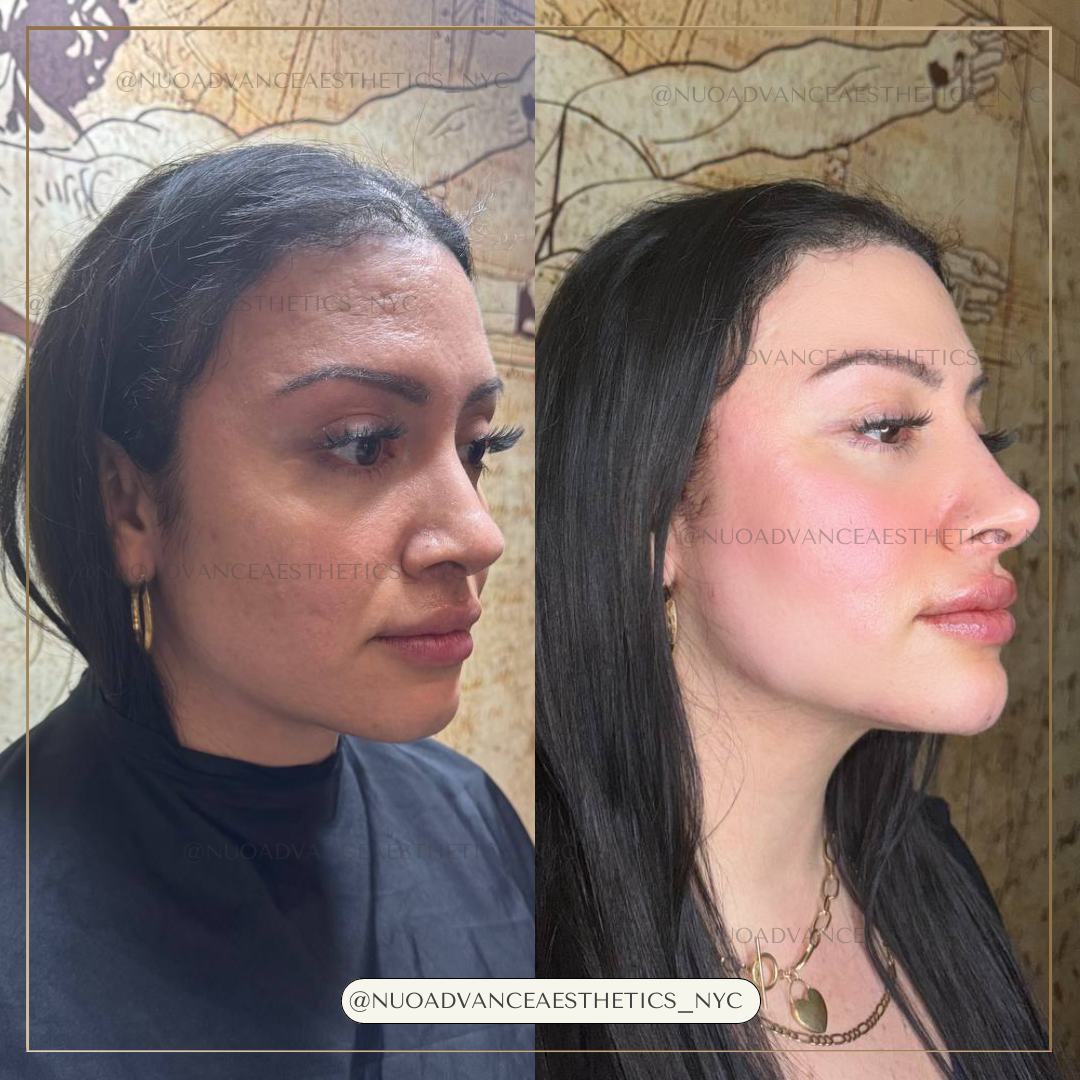
One of the treatments where NUO excels is endolifting, perfect for those who want a facelift without surgery. Its effects can be more effective and long-lasting if complemented with a diet rich in antioxidants and essential nutrients. Foods that boost collagen production, like citrus fruits, along with proper hydration, can amplify the results of the treatment.
In addition to consuming the right foods and considering treatments like endolifting, there are other healthy habits you can incorporate into your routine to care for your skin:
The skin is a reflection of what we eat and how we care for our bodies. A diet rich in antioxidants, vitamins, and healthy fats is essential for keeping your skin in its best condition. If you also complement these habits with advanced facial treatments like endolifting, you can enjoy luminous, firm, and rejuvenated skin. Remember that skincare is both an internal and external process, and combining good nutrition with the right treatments can make a big difference.
Disclaimer
The Content is not intended to be a substitute for professional medical advice, diagnosis, or treatment. Always seek the advice of your physician or other qualified health provider with any questions you may have regarding a medical condition.
When was the last time you listened to your heart? Or better yet, had your healthcare provider (HCP) tune in?
Heart valve disease is on the rise, and catching it early can be a matter of life or death. Studies show as many as half of the people with a type of advanced valve disease called severe symptomatic aortic stenosis die within two years without treatment.
This is especially important to note for women and people assigned female at birth. New research shows symptoms of heart valve disease can be less obvious in women and women are more likely to experience delays in treatment compared to men.
The good news is that many heart valve problems can be identified by a healthcare provider listening to the heart with a stethoscope. And there are risk factors to consider, because not everyone shows symptoms of heart valve disease.
Here’s more on what you need to know and how to get screened for heart valve disease.
Heart valve disease is when one or more of your heart valves stop working correctly, which makes it harder for your heart to pump blood through your body.
Your heart has four valves: aortic, mitral, pulmonary and tricuspid. Each one has thin flaps called leaflets that open and shut with your heartbeat. The valves make sure blood is flowing in the right direction and they also stop blood from flowing backward. If one or more of the valves are leaky (can’t close all the way), too narrow or can’t open at all, your heart has to work harder to pump the blood out. Without treatment, heart valve disease can lead to serious complications including stroke, heart failure and death.
Read: FAQs: What Women Need to Know About Cardiovascular Disease >>
There are different types of heart valve disease, and more than one valve can be affected.
The three types of heart valve disease are:
Stenosis: When the heart valve tissue becomes stiff and causes the valve opening to narrow, which means less blood can flow through.
Regurgitation: Also known as a leaky valve, this is when the leaflets don’t close all the way and blood leaks backward across the valve.
Atresia: When a heart valve doesn’t form correctly before birth. This is usually diagnosed in infancy.
A common cause of valve problems is age. As we get older, calcium deposits can build up and cause the valve flaps to become thicker and stiff, which affects blood flow. Valves can also break down over time.
Heart valve problems can also form before you’re even born or because of injury or illness, such as infective endocarditis and rheumatic fever.
Heart valve disease can be sneaky because it can have no symptoms or symptoms that happen out of the blue.
For many people, symptoms get worse over time, so they’re less noticeable. For example, you may start to feel winded during a regular walk around the block or feel out of breath when you’re laying down.
Symptoms of heart valve disease can include:
Age is a big risk factor for heart valve disease. Everyone over 65 should be screened for valve problems. In addition to age, risk factors for heart valve disease can include:
Read: The Intersection of Heart Disease, Diabetes and Stroke >>
If you have questions about your risk for valve disease, consider filling out an assessment sheet and bringing it with you to see your healthcare provider (HCP).
To get screened for heart valve disease, ask your HCP to listen to your heart for a murmur — it’s typically a whooshing sound instead of a beat.
If your HCP hears a murmur or if you have any of the risk factors associated with heart valve disease, ask for an echocardiogram, which is an ultrasound of the heart and can help diagnose heart valve disease.
Heart valve disease treatment options vary depending on the severity of the disease, but can include medication and surgery to repair or replace the valve. If you have symptoms or have been diagnosed with heart valve disease, talk to your HCP about your options and what’s best for you and your heart.
This educational resource was created with support from Edwards Lifesciences, a HealthyWomen Corporate Advisory Council member.
From Your Site Articles
Related Articles Around the Web
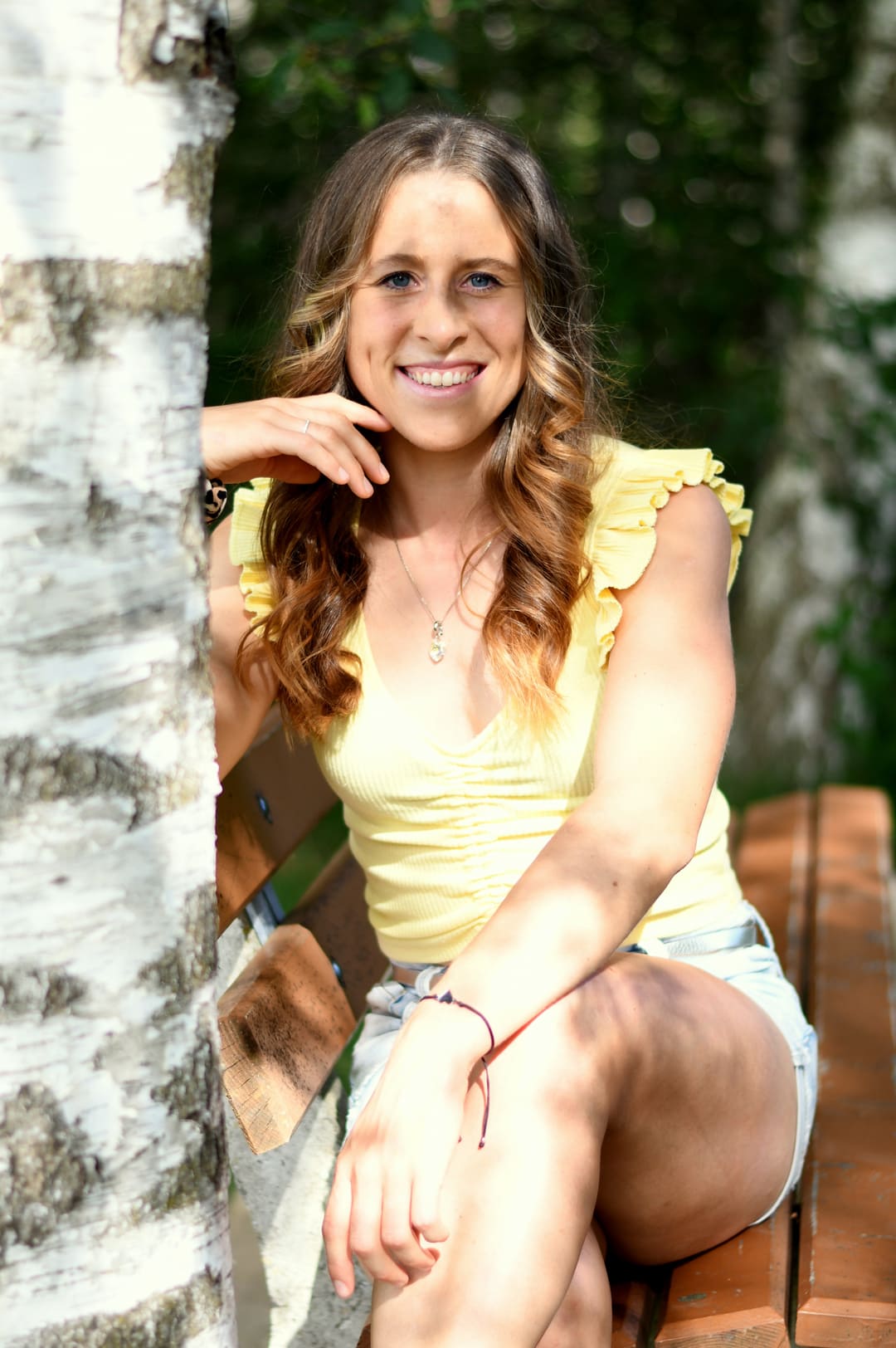
Katharina Hennig is a German cross-country skier who represents the club WSC ErgebirgeOberwiesenthal. She resides in Königswalde. Her novel achievements to date are the winning gold medal in the team sprint and the silver medal in the 4 × 5 km relay at the 2022 Winter Olympics in Beijing, China and silver medal in the 4 × 5 km relay at the 2023 World Champions in Planica, Slovenia.
She belonged to SV Neudorf until 2011 and then started to compete for WSC Erzgebirge Oberwiesenthal in 2011. At the Junior World Championships she won bronze medals with the German women’s relay team in 2013 and 2015. Her best result at the Junior World Championships was the silver medal in the 10 km freestyle race behind Sweden EbbaAndersson in Rasnov, Romania. She made her World Cup debut on January 24, 2016 in NovéMěsto, Czech Republic. In January 2017, she achieved her first World Cup podium finish in Ulricehamn, finishing second in the team relay.
She competed at the FIS Nordic World Ski Championships 2017 in Lahti, Finland. In Lahti, her best finishes were 11th in skiathlon and sixth in team relay. Cross-country skiing at the 2018 Winter Olympics was held at the Alpensia Cross-Country Skiing Centre in Pyeongchang, South Korea. In event 4 × 5 km relay won Silver Medal.
Cross-country skiing at the 2022 Winter Olympics was held at the Kuyangshu Nordic Center and Biathlon Center in Zhangjiakou, China In event Team sprint won Gold medal.
At the 43rd FIS Nordic World Ski Championships were held from 21 February to 5 March 2023 in Planica, Slovenia. In the event 4 × 5 km relay won Silver medal.
Women Fitness President Ms. Namita Nayyar catches up with Katharina Hennig an exceptionally talented German cross-country skier, Olympic Gold and Silver Medalist; here she talks about her fitness routine, her diet, and her success story.
You live in Königswalde, Germany. You belonged to SV Neudorf until 2011 and then started to compete for WSC Erzgebirge Oberwiesenthal. In the 2013 FIS Nordic 36th Junior World Ski Championships held at Liberec, Czech Republic you won a bronze medal in the event 4 × 3.33 km relay. This later propelled your career to the height where you have been at the top of the world of cross-country skiing. Tell us more about your professional journey of exceptional hard work, tenacity, and endurance?
As a child, I already loved cross-country skiing, often going on tours with my family. Skiing became ingrained in my life, leading me to make the decision to attend a boarding school at the age of 13, a choice I’m proud of in retrospect. Sport became a significant part of my life. I’ve always been ambitious and purposeful as an athlete, but the path to events like the World Ski Championships or the Olympic Winter Games is arduous, especially in endurance sports like cross-country skiing. What mattered most was having a supportive environment with my parents and coaches, who instilled in me the joy and fulfillment that comes from participating in this sport.
You at the 2022 Winter Olympics that was held at the Kuyangshu Nordic Center and Biathlon Center in Zhangjiakou, China in the Cross-Country Skiing event Women’s Team Sprint Classic won the Gold medal. Tell us more about this spectacular achievement of yours?
Before the Olympic Winter Games, I achieved three individual podiums in World Cup races, including twice in Val di Fiemme and once in Ruka, along with numerous top-ten finishes. My performance steadily improved over the years. My ultimate goal for the Games was to contend for a medal in the team events, a dream I had cherished since childhood.
It’s challenging to peak at such crucial competitions, requiring a deep understanding of one, both physically and mentally, and the guidance of coaches to reach one’s highest potential. In Beijing, I accomplished that feat, and returning home with two medals, including an Olympic gold, was an indescribable feeling. I’m immensely proud of what our team achieved together.
Full Interview is Continued on Next Page
This interview is exclusive and taken by Namita Nayyar President of womenfitness.net and should not be reproduced, copied, or hosted in part or full anywhere without express permission.
All Written Content Copyright © 2024 Women Fitness
Disclaimer
The Content is not intended to be a substitute for professional medical advice, diagnosis, or treatment. Always seek the advice of your physician or other qualified health provider with any questions you may have regarding a medical condition.
More than 4 in 10 pregnant people experience bladder leakage (urinary incontinence).
Most pregnancy-related bladder leakage will go away within 3-6 months of delivery.
Why is bladder leakage so common for pregnant and postpartum people?
Growing babies take up room
As babies grow, they put pressure on your bladder, urethra and pelvic floor muscles.
Changing hormones weaken your muscles
During pregnancy, some of the hormones that prepare your body for delivery make it harder to hold in pee because they cause:
Childbirth can damage the pelvic floor
Labor and delivery can cause postpartum bladder leakage by:
Pelvic floor damage is more common when:
Vaginal deliveries are more likely to lead to bladder leakage than C-sections. However, C-sections are major surgeries and have other risks.
Take back control of your bladder
If you have bladder leakage, there are several ways you can manage your symptoms.
Eating enough fiber helps you avoid straining when pooping. Straining can put extra pressure on your bladder.
Sooner Is Better
Bladder leakage during and after pregnancy is common — but you don’t have to live with it forever. The sooner you start treatment, the better your results will be.
This educational resource was sponsored by Poise, a brand of Kimberly-Clark. Other Kimberly-Clark brands include Depend and Thinx for All Leaks.
Poise and Depend are registered trademarks of Kimberly-Clark. Thinx for All Leaks is a trademark of Kimberly-Clark.
We partnered with The Great Girlfriends Show to answer some important questions about HIV.
Our expert guest, Ada Stewart, M.D., FAAFP, answers some common questions: