The main category of Fitness News.
You can use the search box below to find what you need.
[wd_asp id=1]
The main category of Fitness News.
You can use the search box below to find what you need.
[wd_asp id=1]
Más de
16 millones de estadounidenses tienen el trastorno de ojo seco, pero el número de personas que viven con ojo seco podría ser mucho más alto en realidad. Este trastorno, el cual es casi dos veces más frecuente para las mujeres que para los hombres y que para personas que tuvieron asignación masculina cuando nacieron, puede ser difícil de diagnosticar e información errónea acerca del ojo seco frecuentemente aumenta la confusión.
Para disipar cualquier duda, nos comunicamos con
Katherine Rachon, O.D., una optometrista de Virginia Eye Consultants, para obtener respuestas para algunas preguntas frecuentes relacionadas con el trastorno de ojo seco.
El trastorno de ojo seco es un término general para una enfermedad de tu película lagrimal, las capas de líquidos que protegen y humectan tus ojos. Con el trastorno de ojo seco, una o más capas de la película lagrimal no funcionan correctamente. Esto puede causar síntomas tales como enrojecimiento, lagrimeo, comezón, una sensación de arena en los ojos, visión borrosa y enrojecimiento de los párpados.
Hay dos tipos principales de trastorno de ojo seco, el de déficit acuoso y el evaporador. Con el ojo seco de déficit acuoso, tu ojo no produce suficiente de la parte acuosa de tu película lacrimal para humectar tus ojos adecuadamente. El ojo seco evaporador ocurre cuando hay suficientes lágrimas, pero la película lagrimal no se integra apropiadamente. Algunas personas tienen una mezcla de los dos tipos, lo cual a veces se denomina ojo seco mixto.
El trastorno de ojo seco comúnmente se manifiesta en oleadas, lo que quiere decir que pueden haber brotes ocasionales y luego ninguna actividad por un tiempo. Aunque la mayoría de personas con ojo seco tienen síntomas, algunas no saben que lo tienen hasta que se manifiesta durante una examinación ocular.
Se solía pensar que el trastorno de ojo seco afecta principalmente a personas mayores o posmenopáusicas, y ciertamente, la edad y el género biológico son factores de riesgo que afectan la incidencia del trastorno de ojo seco (las personas con asignación femenina cuando nacieron tienen más posibilidades de desarrollar el trastorno de ojo seco, principalmente debido a cambios hormonales que ocurren a lo largo de sus vidas). Sin embargo, sabemos que hay varios factores adicionales que pueden afectar dicho desarrollo. Por ejemplo, algunos medicamentos, incluyendo fármacos de quimioterapia y antihistamínicos que se venden sin receta médica para alergias, pueden desencadenar el trastorno de ojo seco.
Hay tres capas lagrimales que constituyen la película lagrimal y todas tienen funciones diferentes:
Un ojo saludable genera suficiente de las tres capas lagrimales para establecer lo que se denomina un lago lagrimal, que es como un reservorio pequeño que se encuentra en nuestros párpados inferiores. El reservorio almacena justo el monto adecuado, no muy poco como para causar sequedad ni demasiado como para causar un exceso de lágrimas.
Uno importante es la diabetes porque este trastorno causa lesiones en los nervios (incluyendo los oculares). Si los nervios de tu ojo no funcionan suficientemente bien para notar que tus ojos están secos, no emitirán señales a tu cerebro para que produzca más lágrimas.
Otra enfermedad que observamos con el trastorno de ojo seco es el síndrome de Sjögren, una enfermedad autoinmunitaria que afecta las glándulas que sirven para humectar los ojos y otras partes del cuerpo. Este síndrome, el cual afecta principalmente a mujeres y a personas con asignación femenina cuando nacieron, puede ocurrir independientemente o junto con otros trastornos autoinmunitarios, tales como la artritis reumatoide y el lupus.
Los cosméticos oculares pueden causar y desencadenar el ojo seco porque muchos productos de maquillaje contienen químicos denominados parabenos, los cuales se ha demostrado que irritan el tejido y la superficie frontal de los ojos. Los parabenos también pueden taponar las glándulas que producen la parte aceitosa de nuestra película lacrimal. Las buenas noticias son que hay muchos cosméticos disponibles sin parabenos. Cambiar la rutina de maquillaje marcó una gran diferencia en mi propia salud ocular.
Aparte de la irritación y la incomodidad, lo cual puede ser muy frustrante, el trastorno de ojo seco puede hacer que tu visión sea borrosa. A largo plazo, la sequedad también puede causar infecciones oculares porque descompone el tejido protector que evita que virus y bacterias infecten los ojos.
Recientemente, ha habido más concientización sobre el trastorno de ojo seco y ahora hay muchas más opciones de tratamiento, lo cual es bueno. Las compañías de seguro podrían necesitar un poco de tiempo para igualarse y es posible que tengas que probar un tratamiento antiguo antes de que uno nuevo tenga cobertura. Con un poco de convencimiento (y papeleo), usualmente puedo obtener cobertura para la mayoría de tratamientos.
Animo a los pacientes a que mantengan una bitácora o registro de sus síntomas. Por ejemplo, ¿es la peor sequedad en las mañanas o en las noches? ¿Tienes otros síntomas tales como visión borrosa o comezón? ¿Qué actividades agravan la sequedad? ¿Te afecta salir afuera cuando hay viento o el uso de una computadora?
Además, y esto es muy importante: ¿Qué tratamientos has probado antes? Tal vez otro proveedor de atención ocular recomendó un tratamiento que no funcionó o tal vez usaste varios tipos de gotas oculares de una farmacia y ninguno funcionó. Todo esto es importante para que podamos iniciar un tratamiento y también para probar a la compañía de seguros que un tratamiento específico ya se probó para obtener la cobertura para otra opción.
El tratamiento del trastorno de ojo seco es muy frustrante para los pacientes y los proveedores porque hay muchos factores que pueden jugar un papel en él. Un proveedor puede tener una idea de qué tratamientos serán los mejores, pero todos somos diferentes y lo que funciona para una persona podría no funcionar para otra.
Para obtener más información sobre el trastorno de ojo seco, visita el canal de YouTube de More Real. More Substance.
Este recurso educativo se preparó con el patrocinio de Viatris, Inc.
USA-NON-2024-00011 05/24
From Your Site Articles
Related Articles Around the Web
Obesity is a chronic disease that’s linked to over 200 other serious health conditions such as heart disease, stroke, diabetes and certain cancers. Women deserve access to the full continuum of treatment options for obesity. Watch as our experts explain the science of obesity as a chronic disease and why expanded coverage for all obesity care is critical to healthy outcomes.
Deb Gordon
Co-Founder and CEO of Consumer Health Advocacy, Inc.


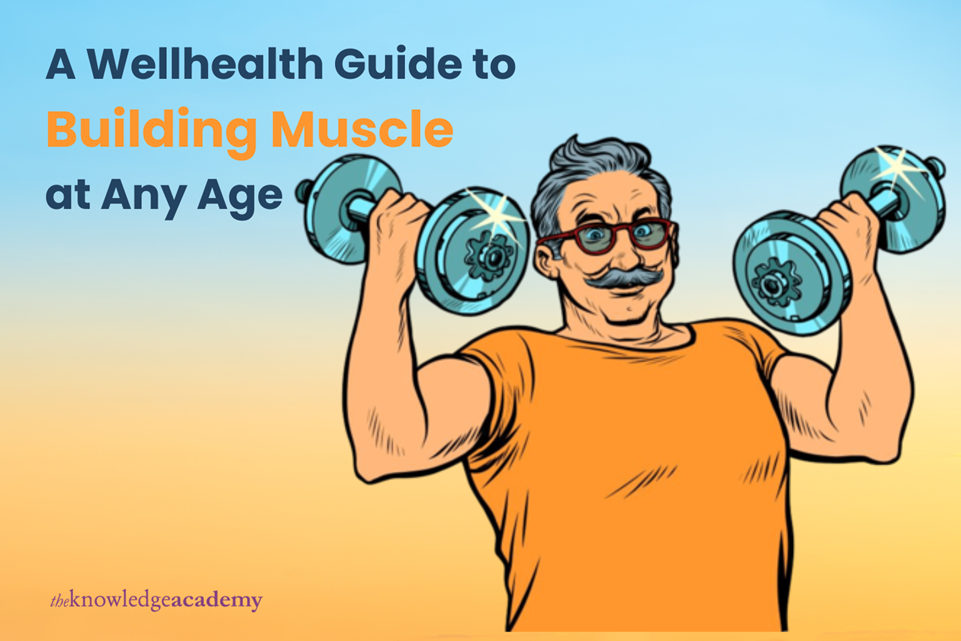
Whoever said, “You can’t teach an old dog new tricks,” clearly hadn’t tried to pump some iron at 60! Welcome to your comprehensive Wellhealth guide to building muscle at any age. Starting a Healthy Lifestyle Training regime is never too late or too early, regardless of your age—your roaring twenties or the golden years of your fifties and beyond. But how do you get started? Well, with our “Wellhealth How to Build Muscle Tag,” you’re about to find out! Let’s work those muscles as we explore the ageless world of becoming fit and fabulous.
Let us get down to the brass tacks of how muscles grow before you dash to the weights section. Stress them, rest them, feed them, repeat; it’s really simple. You cause little tears in your muscle fibres when lifting weight. As amazing as the healing mechanism of your body is, it repairs these tears and in turn increases the size and strength of the muscles. Your muscles are saying “thank you” in their own, beefed-up way.
For the beginners, regardless of age, the key is to start slow. You wouldn’t be proposing on the first date, right? Likewise, avoid trying to lift the heaviest weight from the beginning. Start with lighter weights and focus on perfecting your form—unless you find a hunched back to be a good look for you! As your strength improves, gradually increase the weight. It’s more of a slow dance with your muscles than a race here.
Now, if you’re in your thirties or forties, your body might start to whisper (sometimes shout), “Hey, remember when you could do this without groaning?” Calm yourself; this is perfect time to get serious about strength training. Your metabolism has changed, and muscle mass naturally begins to drop. So, picking up some weights will help you turn back the clock—or at least slow it down.
Who says you cannot perform at sixty or beyond? Though it’s normal as you age, muscle loss is not inevitable. Regular strength training can assist in preserving and even building muscle mass. It also helps with balance, which reduces the chance of falling at an old age and makes it more likely that you will be mistaken for a timeless monument of strength.
A poor diet cannot be outmatched by training. Remember that muscles are built in kitchens just as much as they are in the gym. Your muscles run on fuel just like cars, and not just any fuel—the premium stuff. Protein is your best friend here. You have yourself a feast fit for a bodybuilder if you sprinkle some additional carbohydrates and fats for energy and recovery.
Just like when you are binge-watching your favourite show, consistency is vital in strength training. You can’t just train once and expect to see changes. Muscle building is a commitment. Imagine each workout as an episode in your fitness journey. Miss too many and you’ll lose the plot. Keep at it regularly, and you’ll be the main character in your own success story.
If you have a “I’ll sleep when I’m dead” attitude during your workouts, you might want to rethink that for the sake of your muscles. Sleep and relaxation are absolutely vital amid the frenzy of muscle-building. Your body repairs itself during these quiet hours. By cutting back on sleep, you are basically ghosting your muscles. Not cool!
Building muscle is, quite rightly, a marathon rather than a sprint. It has ups and downs like any long-term commitment. Stay motivated by setting realistic goals, keeping track of your progress, and celebrating those small victories. So, remember to do a little victory dance every time you lift that heavier kettlebell or say goodbye to those chicken arms.
So, there you have it—a guide to building muscle at any age. Remember that muscle building is within your reach regardless of your age—a spry youngling or a wise elderly soul. Keep it consistent, keep it fun and most importantly, keep going. Your future, stronger self will thank you for it.
Now get out there and start your journey towards a stronger, healthier self; it’s never too late to start on this path!
If you want to learn more about this type of tool with comprehensive support and learner satisfaction, visit The Knowledge Academy courses.
Disclaimer
The Content is not intended to be a substitute for professional medical advice, diagnosis, or treatment. Always seek the advice of your physician or other qualified health provider with any questions you may have regarding a medical condition.
Eckert is the founder and CEO of Sprout Pharmaceuticals — the company behind the first and only FDA-approved pill for female hypoactive sexual desire disorder (HSDD), or low sex drive.
Eckert made history when the drug flibanserin (Addyi) was approved. But like many advancements in women’s healthcare, the road wasn’t easy. For one, it took Eckert six years to get FDA approval for Addyi. To put that into perspective, Viagra was approved in six months (more on that below).
In 2015, Eckert sold Sprout Pharmaceuticals for $1 billion. But when the company that took over failed to launch the drug, Eckert couldn’t just walk away and let all those pink possibilities collect dust somewhere. By 2018, she regained her role as CEO and launched Addyi herself.
The “pink pill” disrupted the medical industry but it’s just one of the projects Eckert is part of. She’s also founder and CEO of The Pink Ceiling, an organization that runs The Pinkubator, which helps fund innovations in women’s healthcare. One example: the world’s first flushable pregnancy test.
Eckert is perhaps most passionate about helping women succeed. As you can probably imagine, our “15 minutes” turned into nearly an hour talking about everything from low libido to what we can expect from The Pinkubator in the near future.
Our interview follows, edited for clarity and length.
HealthyWomen: It took you six years to get FDA approval for Addyi. Why did it take six months for Viagra to get approved?
Cindy Eckert: It’s quite simple. We value sexual satisfaction for men culturally and dismiss it for women. I think that’s a historical truth. I’d like to say that it’s changing, but in order for the blue pill to have received rare fast track status for a six-month approval, male sexual satisfaction was deemed to be such an important unmet medical need that we reviewed a solution for it on an accelerated timeline.
Erectile dysfunction is men’s most common sexual dysfunction. HSDD is the most common sexual dysfunction in women. And yet, it took just six months compared to six years to get a treatment for erectile dysfunction approved. It speaks volumes to how we have valued sexual satisfaction for men versus women. And really, when you think about the data, more women than men actually suffer from sexual dysfunction — 43% of women compared to 31% of men. But we don’t see it as an important need, and therefore innovation is so far behind.
HealthyWomen: From comments online and social media, it seems a lot of women don’t even know sexual dysfunction is a thing — they think that the loss of sex drive is just part of aging.
Cindy Eckert: In women’s health, I’d like to replace the word normal with common. There is a great survey by a woman named Marcella Hill, and she’s been very open online about her libido … She said she felt dead inside. She asked her doctor if there’s anything she can do. And she asked other women what their doctors said. And a majority [of the doctors] told the women their lack of interest in sex drive is normal. They said find a different partner. Schedule a date night.
Zero of them said it could be biological and, for that, we have a solution. Again, we can have discussions about date nights and those things, but not at the expense of biology.
HealthyWomen: After Addyi was approved by the FDA, you sold the company for $1 billion. (Big congratulations.) You’ve since gotten the company back and relaunched the drug on your own terms. Why was this important to you?
Cindy Eckert: It was an entrepreneur’s dream come true to find a global company who could make this [drug] accessible to all of the women who needed it but for reasons in their own company, they never launched it. I was crushed.
And I deeply felt that I was letting women down because I was fortunate enough that so many women had shared their stories with me and people let their guard down and they shared something very personal. And so I just decided — not on my watch.
So, I’m so proud that I went back to the company. I said, “Thank you. Give it back. I’m going to launch it.” And now, to watch how many women’s lives it’s already impacted for the better — that’s what it was always about in the first place, right?
I certainly didn’t do this to get a drug approved. I did it so that we would level the playing field by changing the conversation about women and sex. And so the women who need help could get it easily.
HealthyWomen: What kept you going through the tough times?
Maybe I should have known the road to the first drug for women’s pleasure would be a bumpy one. But I didn’t. Yeah, honestly, I didn’t. I was excited. It’s science. It’s clinical trials. It’s proving something.
The science has fueled me to keep going.
HealthyWomen: Tell us one thing you want women to know about Addyi.
Cindy Eckert: It’s not female Viagra — it’s so much more interesting! Addyi is believed to work on the drive center of the brain, which results in more desire for sex, less distress and ultimately more satisfying sex.
The fact that the only thing the media could compare us to when we got approved was the most famous male sex drug has sometimes created laughable misunderstanding about the difference between the blue pill and the pink pill.
Once women and doctors know how Addyi works, they understand the many ways in which Addyi isn’t about being on demand for a sexual act at all. It’s about that desire/stress center of the brain being in an optimal place when the moment is right.
HealthyWomen: Have you noticed a shift in the way we view women’s sexual health since you first started on the journey with Addyi?
Cindy Eckert: The shift that’s happening in women’s health is undeniable. And it’s happening because women are demanding better. I’d love to say it’s because the medical establishment has woken up and they’re proactively discussing this with women. That’s not true. Women are walking in and demanding, frankly, what they deserve.
Literally the first headlines around Addyi were along the lines of “Female Viagra … Isn’t That Jewelry?” It’s unthinkable that that was less than a decade ago. Today, women tag their partners in ads for Addyi and publicly declare, “This is me!”
HealthyWomen: Tell us about the idea behind The Pink Ceiling.
Cindy Eckert: Well, it’s everything I wanted but didn’t have access to when I was starting companies. As a founder, I can get to an outcome and I can reach my hand back and get more founders to that outcome, and they can reach their hands back and get more founders that outcome.
I’m so grateful that people share their wild ideas with me of how they want to change the world. I see it as a great privilege to be able to do it and hopefully in some small way contribute to changing women’s health on a much greater basis.
HealthyWomen: What can we expect to see next from The Pinkubator?
Cindy Eckert: One of our companies just got clearance on a device that will revolutionize the epidural. It’s a mapping device for the spine that will guide you to exactly the right place the first time. It will change the patient experience and frankly change the cost of healthcare.
HealthyWomen: What’s your advice for the next innovator or person who may be looking to start a new career later in life?
Cindy Eckert: You’ll never look back when you bet on yourself. I think people would be surprised how willing others are to help them if they just ask. And look to social media. Maybe not everybody will answer you, but what’s the harm in trying?
Whoever said, “You can’t teach an old dog new tricks,” clearly hadn’t tried to pump some iron at 60! Welcome to your comprehensive Wellhealth guide to building muscle at any age. Starting a Healthy Lifestyle Training regime is never too late or too early, regardless of your age—your roaring twenties or the golden years of your fifties and beyond. But how do you get started? Well, with our “Wellhealth How to Build Muscle Tag,” you’re about to find out! Let’s work those muscles as we explore the ageless world of becoming fit and fabulous.
Let us get down to the brass tacks of how muscles grow before you dash to the weights section. Stress them, rest them, feed them, repeat; it’s really simple. You cause little tears in your muscle fibres when lifting weight. As amazing as the healing mechanism of your body is, it repairs these tears and in turn increases the size and strength of the muscles. Your muscles are saying “thank you” in their own, beefed-up way.
For the beginners, regardless of age, the key is to start slow. You wouldn’t be proposing on the first date, right? Likewise, avoid trying to lift the heaviest weight from the beginning. Start with lighter weights and focus on perfecting your form—unless you find a hunched back to be a good look for you! As your strength improves, gradually increase the weight. It’s more of a slow dance with your muscles than a race here.
Now, if you’re in your thirties or forties, your body might start to whisper (sometimes shout), “Hey, remember when you could do this without groaning?” Calm yourself; this is perfect time to get serious about strength training. Your metabolism has changed, and muscle mass naturally begins to drop. So, picking up some weights will help you turn back the clock—or at least slow it down.
Who says you cannot perform at sixty or beyond? Though it’s normal as you age, muscle loss is not inevitable. Regular strength training can assist in preserving and even building muscle mass. It also helps with balance, which reduces the chance of falling at an old age and makes it more likely that you will be mistaken for a timeless monument of strength.
A poor diet cannot be outmatched by training. Remember that muscles are built in kitchens just as much as they are in the gym. Your muscles run on fuel just like cars, and not just any fuel—the premium stuff. Protein is your best friend here. You have yourself a feast fit for a bodybuilder if you sprinkle some additional carbohydrates and fats for energy and recovery.
Just like when you are binge-watching your favourite show, consistency is vital in strength training. You can’t just train once and expect to see changes. Muscle building is a commitment. Imagine each workout as an episode in your fitness journey. Miss too many and you’ll lose the plot. Keep at it regularly, and you’ll be the main character in your own success story.
If you have a “I’ll sleep when I’m dead” attitude during your workouts, you might want to rethink that for the sake of your muscles. Sleep and relaxation are absolutely vital amid the frenzy of muscle-building. Your body repairs itself during these quiet hours. By cutting back on sleep, you are basically ghosting your muscles. Not cool!
Building muscle is, quite rightly, a marathon rather than a sprint. It has ups and downs like any long-term commitment. Stay motivated by setting realistic goals, keeping track of your progress, and celebrating those small victories. So, remember to do a little victory dance every time you lift that heavier kettlebell or say goodbye to those chicken arms.
So, there you have it—a guide to building muscle at any age. Remember that muscle building is within your reach regardless of your age—a spry youngling or a wise elderly soul. Keep it consistent, keep it fun and most importantly, keep going. Your future, stronger self will thank you for it.
Now get out there and start your journey towards a stronger, healthier self; it’s never too late to start on this path!
If you want to learn more about this type of tool with comprehensive support and learner satisfaction, visit The Knowledge Academy courses.
Disclaimer
The Content is not intended to be a substitute for professional medical advice, diagnosis, or treatment. Always seek the advice of your physician or other qualified health provider with any questions you may have regarding a medical condition.
Creator of the Jenn Lab Fit, a women’s fitness and mobility program. Jenn Labonte today is out to help women safely take control of post-’40s, the 50s, 60s, and beyond weight gain, build strength, and stay injury-free so they can feel confident, consistently motivated, and beautiful in their own skin. She adds “With the changes we’ve seen in the world over the last few years, I see the women I’m training becoming more flexible with the concept of strength training outside of the gym. Initially, when COVID forced us into our homes, many people got creative and found ways to move and stay active.” Further, now that the gyms and training centers are open again, I’m seeing women say, I like working out at home, and now let’s see what I can do to add more to my routine. I’m also seeing women show up for themselves in ways I’ve never seen before. It’s a movement; it’s my time to get strong so I can be the best version of myself, both for my inner peace and for my family and friends.
For more: https://www.womenfitness.net/fitness-trainer-jenn-labonte/
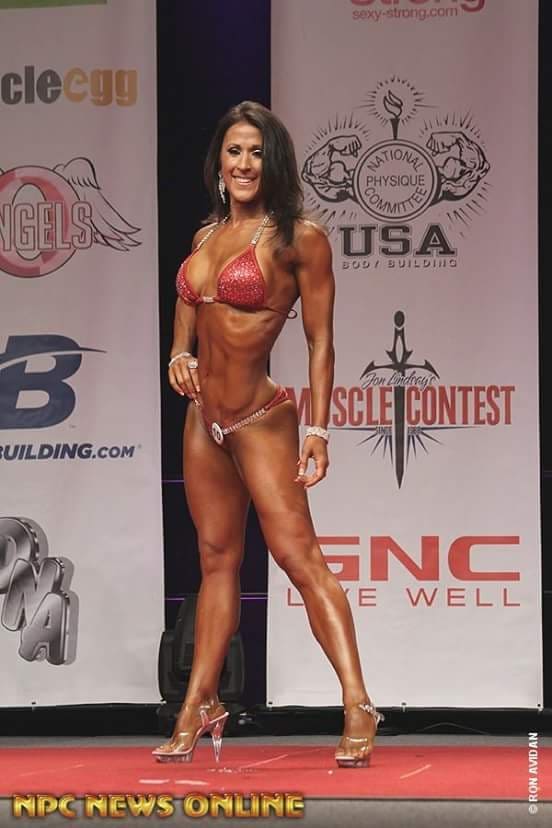
Jennifer is a highly accomplished and successful personal trainer and martial artist. Jennifer earned her black belt in Jiu Jitsu and is currently an instructor at 10th Planet Jiu Jitsu HQ, where she offers private lessons. Her dedication and consistency are contagious, and she will help you become the best version of yourself through martial arts. Her message to women in fitness is: “Be passionate about your goals, always push your limits in training, have a good work ethic, enjoy the journey, only strive to be better than you were yesterday, and be positive throughout the process. You are competing because you love it and you are only ever competing with yourself!”
For more: https://www.womenfitness.net/jennifer-dietrick/.
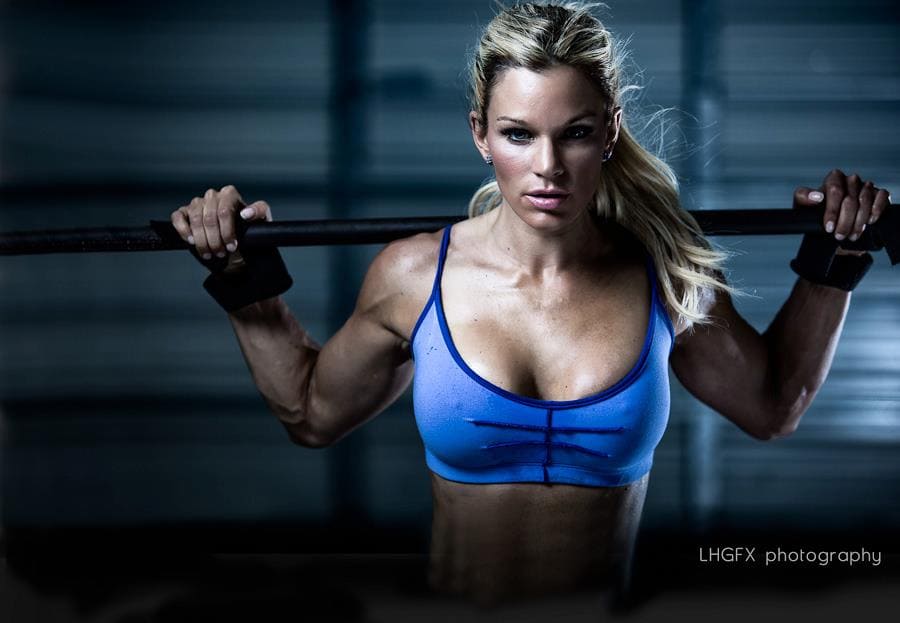
She is a fitness model, personal trainer, and bikini competitor. Today, Michele is a respected massotherapist who has been helping injured athletes and sports enthusiasts for a number of years. She has competed in a physique competition, and she hopes to inspire others with her story. Her message is “Everything is Possible! Your dreams, your ideas, your vision—never let anyone tell you you can’t.”
For More: https://www.womenfitness.net/michele-levesque/

Switzerland’s premier personal trainer and owner of Zurich’s most exclusive gym, the Centurion Club. As a trainer with more than 15 years experience working with clients ranging from people simply wanting to get into their best shape, to film stars preparing for roles and professional sportspeople looking to get the edge required to make them winners in their field, Cindy’s vast experience and knowledge base ensure that you get on the ‘right track’ from the very beginning! Her word for Women Fitness website: “Womenfitness.net is a great resource for understanding the diet and training that are required to live a happy and healthy life. Simply by learning more, you are taking a huge step towards improving your quality of life. Empower yourselves with the knowledge and then apply these lessons to your daily life; from there, it’s just a question of consistency.”
For More: https://www.womenfitness.net/cindy-landolt/

British fitness personality, magazine author and editor, and personal trainer. In her words, I’m proud to say I have a 100% success rate in helping people reach their goal weight and/or sculpt their bodies. I really enjoy experimenting in the kitchen to constantly come up with new, tasty, clean recipes so that my clients don’t feel as if they’re on a ‘diet’.
For More: https://www.womenfitness.net/danni-levy/
Disclaimer
The Content is not intended to be a substitute for professional medical advice, diagnosis, or treatment. Always seek the advice of your physician or other qualified health provider with any questions you may have regarding a medical condition.
Creator of the Jenn Lab Fit, a women’s fitness and mobility program. Jenn Labonte today is out to help women safely take control of post-’40s, the 50s, 60s, and beyond weight gain, build strength, and stay injury-free so they can feel confident, consistently motivated, and beautiful in their own skin. She adds “With the changes we’ve seen in the world over the last few years, I see the women I’m training becoming more flexible with the concept of strength training outside of the gym. Initially, when COVID forced us into our homes, many people got creative and found ways to move and stay active.” Further, now that the gyms and training centers are open again, I’m seeing women say, I like working out at home, and now let’s see what I can do to add more to my routine. I’m also seeing women show up for themselves in ways I’ve never seen before. It’s a movement; it’s my time to get strong so I can be the best version of myself, both for my inner peace and for my family and friends.
For more: https://www.womenfitness.net/fitness-trainer-jenn-labonte/
Jennifer is a highly accomplished and successful personal trainer and martial artist. Jennifer earned her black belt in Jiu Jitsu and is currently an instructor at 10th Planet Jiu Jitsu HQ, where she offers private lessons. Her dedication and consistency are contagious, and she will help you become the best version of yourself through martial arts. Her message to women in fitness is: “Be passionate about your goals, always push your limits in training, have a good work ethic, enjoy the journey, only strive to be better than you were yesterday, and be positive throughout the process. You are competing because you love it and you are only ever competing with yourself!”
For more: https://www.womenfitness.net/jennifer-dietrick/.
She is a fitness model, personal trainer, and bikini competitor. Today, Michele is a respected massotherapist who has been helping injured athletes and sports enthusiasts for a number of years. She has competed in a physique competition, and she hopes to inspire others with her story. Her message is “Everything is Possible! Your dreams, your ideas, your vision—never let anyone tell you you can’t.”
For More: https://www.womenfitness.net/michele-levesque/
Switzerland’s premier personal trainer and owner of Zurich’s most exclusive gym, the Centurion Club. As a trainer with more than 15 years experience working with clients ranging from people simply wanting to get into their best shape, to film stars preparing for roles and professional sportspeople looking to get the edge required to make them winners in their field, Cindy’s vast experience and knowledge base ensure that you get on the ‘right track’ from the very beginning! Her word for Women Fitness website: “Womenfitness.net is a great resource for understanding the diet and training that are required to live a happy and healthy life. Simply by learning more, you are taking a huge step towards improving your quality of life. Empower yourselves with the knowledge and then apply these lessons to your daily life; from there, it’s just a question of consistency.”
For More: https://www.womenfitness.net/cindy-landolt/
British fitness personality, magazine author and editor, and personal trainer. In her words, I’m proud to say I have a 100% success rate in helping people reach their goal weight and/or sculpt their bodies. I really enjoy experimenting in the kitchen to constantly come up with new, tasty, clean recipes so that my clients don’t feel as if they’re on a ‘diet’.
For More: https://www.womenfitness.net/danni-levy/
Disclaimer
The Content is not intended to be a substitute for professional medical advice, diagnosis, or treatment. Always seek the advice of your physician or other qualified health provider with any questions you may have regarding a medical condition.
August 14 is National Financial Awareness Day.
I grew up in the countryside of Cuba in a traditional Cuban household.
My father was the provider for the family. He worked — a lot — on the small farm we owned and he took care of all of our finances. My mother also worked incredibly hard making sure we had everything we needed. She took the money my father gave her and magically tracked down food, cleaning supplies, clothing, etc., which was a full-time job considering where we lived.
Life moved at a slow pace in our small town, but when I turned 19, I fell in love and things started moving very fast. I went from my family home to married life and I became pregnant soon after the wedding. Two months after I turned 20, I gave birth to a baby girl. I fell in love with her the moment I saw her, and I knew I would do anything to protect her and keep her happy.
Unfortunately, I wasn’t happy in my marriage. I wanted to keep the dream of our family alive, but we weren’t right for each other, and we separated just two years after getting married.
I was devastated, but deep down, I knew it was the right thing to do. I knew we could both be happier than we were.
Still, it took me by surprise how happy I could really be. I met the love of my life about two years after the divorce. We had an instant connection, and I knew he was my person.
Damian was handsome, thoughtful and kind. Most importantly, he treated my daughter like his own.
We moved naturally into our familiar, traditional roles. He was the provider, and we never talked about bills or finances before or after we got married. But when I got pregnant, we started talking about moving to the United States. Cuba has its economic limitations, and we wanted our girls to have more opportunities and freedom to do whatever they wanted.
Osleidy and her daughter(s) and husband Damian in Cuba, 2008
In 2010, we were able to make our dream a reality and we moved to Florida. Damian found a full-time job as an auto technician, and I stayed home with the kids.
Damian continued to take care of all the bills, the house and the cars. Everything was in his name.
Like my mother, I did all the shopping with money he’d give me. When I used a credit card, he paid the bill.
Money wasn’t tight but I never took it for granted. Damian worked a lot — sometimes nights and weekends. I felt it was my job to help save us money, so finding the best bargains and deals became my super power. I never wanted him to think I would take advantage of his incredibly hard work.
We had 12 amazing years in the U.S. before he was diagnosed with liver cancer in 2022. The news was an absolute shock. I told the doctor that it must be a mistake. He was just 41! “Too young for cancer,” I insisted. Also, we had plans. We had a great life. We had two beautiful girls and places to go and things to do.
But cancer didn’t care.
The disease was relentless and cruel. For months, Damian stayed in bed at home, unable to work. I stepped in as his full-time nurse and quit my part-time job. There was always the hope that maybe things would turn around and he would miraculously get better. But that didn’t happen. And with no steady income, we went through money quickly.
I was in caregiving mode so I pushed the looming financial problems away. Then one day, out of the blue, it hit me. Damian wasn’t going to get better. Everything was on me now. My mother and my youngest daughter were living with us. I was responsible for keeping a roof over our heads. How in the world was I going to do that?
A flood of panic gripped my body and I gasped for air. It was all too much. “I can’t do this,” I whispered out loud. I was grieving. I was exhausted. I didn’t have the strength to push forward. I didn’t even know where to start.
But I knew who to ask. My eldest daughter was 25, and although she’s married, she’s in an equal marriage where she and her husband split the bills and ownership of their property.
I didn’t want to tell her that I needed help, but I had no choice. I had to step up and learn to do things for myself. For our family.
 Osleidy with her mother and two daughters, 2024
With my daughter’s help, we made a plan. The first thing I did was get every bill and a notebook. I added up all the expenses to see how much money was going out per month. I transferred all the bills into my name and the credit cards. I also had to take a look at my lifestyle. Since my husband had a good paying job, I had to be realistic that when I got a job, I wasn’t going to bring in as much money as he did (but hopefully one day!).
After Damian passed, I took a brief time to grieve and then I started working full time at a parts assembly factory. There were moments when I thought I couldn’t do it. I was 45 entering the workforce in a new career, but I’m so proud of myself and the strength that us women have, of our ability to reinvent ourselves for our family after facing the adversities of life.
I still have hard days where I struggle to even get out of my bed, or all I can do is think of Damian and the long life we thought we had left. But then I remember my daughters, my mom and my strength. And I’m reminded no matter how dark the path appears to us, with effort and struggle, women become more powerful and independent every day.
Medically reviewed by Lauri Romanzi MD, MScPH, FACOG, FURPS
When it comes to bladder leakage, we’ve all got questions. Like, does everyone else avoid trampolines and Will Ferrell movies?
Maybe those aren’t your exact same bladder leakage questions, but if you’re one of the 1 in 2 women who experience some sort of involuntary peeing, you probably have at least some questions. And we’re here to answer them.
Let’s get down to the facts about bladder leakage.
Bladder leakage — when you involuntarily pee — is a common condition, with as many as half of all women and people assigned female at birth (AFAB) affected by it at some point in their lives.
Those numbers only get higher as we age, with as many as 3 out of 4 women experiencing bladder leakage after the age of 65. In fact, bladder leakage can be one of the first symptoms of genitourinary syndrome of menopause (GSM), which used to be called vaginal atrophy.
There are a few different types of bladder leakage, also called urinary incontinence:
Women and people AFAB can experience bladder leakage at any stage of their life, but it’s most common in women over 50. Bladder leakage is also common in pregnant people and people who have had a vaginal birth.
Bladder leakage is also often associated with perimenopause and menopause.
Bladder leakage isn’t always preventable, but there are some things you can do to lower your risk of experiencing it. You should:
There are a couple key exercises that can help prevent bladder leakage (you may want to consult a pelvic floor therapist to be sure you’re doing them right). Also, bear in mind that both exercises below require regular practice to be effective.
Bladder leakage can be both uncomfortable and embarrassing, but there are ways to make yourself more comfortable. Bladder leakage pads, like Poise pads, or bladder leakage underwear, like Depend or Thinx for All Leaks, can help with wetness and odor control. Pads made specifically for bladder leakage are designed to control odor and wetness from urine unlike period products.
Depending on the type of bladder leakage you have, your healthcare provider may recommend one or more of the following treatments:
An important step to finding long-term solutions to bladder leakage is to talk about it with your healthcare provider — something too few women do. Once you open up the dialogue, you can decide, together, on the best course of action for you.
National Association for Continence
This educational resource was sponsored by Poise, a brand of Kimberly-Clark. Other Kimberly-Clark brands include Depend and Thinx for All Leaks.
Poise and Depend are registered trademarks of Kimberly-Clark. Thinx for All Leaks is a trademark of Kimberly-Clark.
From Your Site Articles
Related Articles Around the Web
When my sister received a diagnosis of stage 2 breast cancer, she — and all of our family members — were shocked. She was healthy. She was young, in her early forties. There was no family history of breast cancer. But our initial shock would be followed by a series of aftershocks that would affect the entire family.
Because of my sister’s age at diagnosis, her medical team recommended she get tested for genetic mutations, including BRCA gene mutations, which are associated with certain cancers, including breast, ovarian and prostate cancers. She tested positive for a BRCA2 gene mutation, which meant it could be passed to other members of the family. Did the rest of us carry the gene mutation, too? Did we want to know?
My mom and I chose to get testing, and both of us had a BRCA2 gene mutation. Again, the shockwaves rippled through the family. Over the course of several years, 13 family members chose to do genetic testing. Eleven of us tested positive for the mutation, including some who are male.
At the time, I was 37 years old and breastfeeding my baby. It was a particularly difficult time for me to learn I needed earlier and more frequent mammograms because I’d have to stop nursing my son to get an accurate result. My husband and I also hoped to have a second child, and knowing I carried a BRCA2 gene mutation forced us to think about issues like passing the gene on or possible future surgery. In addition to increasing breast cancer risk, this mutation is associated with an increased risk of ovarian cancer, a cancer that’s difficult to detect because it often doesn’t cause any symptoms before it spreads.
Still, even though the results complicated my plans, I felt testing gave me the knowledge to make important decisions about my healthcare and handle my risk before a medical emergency struck. My sister wasn’t given that luxury. She didn’t know she carried the gene until she had stage 2 breast cancer.
My mom had always had yearly mammograms. But with her BRCA2 gene mutation, her healthcare providers recommended she alternate between getting a mammogram and an MRI every six months. Just a few months after my sister’s diagnosis, my mother’s medical team found she had Stage 0, DCIS, a non-invasive or pre-invasive breast cancer.
It seemed unbelievable. She’d lived so long without knowing she had an elevated cancer risk. And just as she found out, cancer had already begun in its earliest stages. Her diagnosis helped her and her care team plan the best course of action. Her cancer treatment was followed by a salpingo-oophorectomy, which removed her ovaries and fallopian tubes to prevent her from getting cancer in those areas.
As I was helping my sister and mother cope with their treatments, I thought about my own health decisions. The question of whether or when my husband and I could try to have a second baby loomed large. Mammograms aren’t routinely performed during pregnancy and are less accurate during breastfeeding. I knew I couldn’t go years without screening. My sister’s stage 2 cancer had appeared six months after a clean mammogram. I decided to use the information I’d gotten from my genetic testing to take steps to protect my health.
I scheduled a double mastectomy for the first week of January 2019. Three days after the surgery, my surgeon called and told me I’d made the right choice. The medical team had found cancer. Like my mother’s cancer, mine was stage 0.
Knowledge of my BRCA2 gene mutation gave me the best-case scenario in a worst-case situation. My cancer was removed before I knew I had it. Knowing my BRCA status allowed me to make important decisions about my treatment.
However, I had more to consider. I worried about putting off my recommended ovarian surgery until after another potential pregnancy. What if it took a long time to get pregnant? What if I passed on my gene mutation? My doctor advised me to take the time and space I needed to heal, to feel what I needed to feel, and to make the decisions that felt right for me.
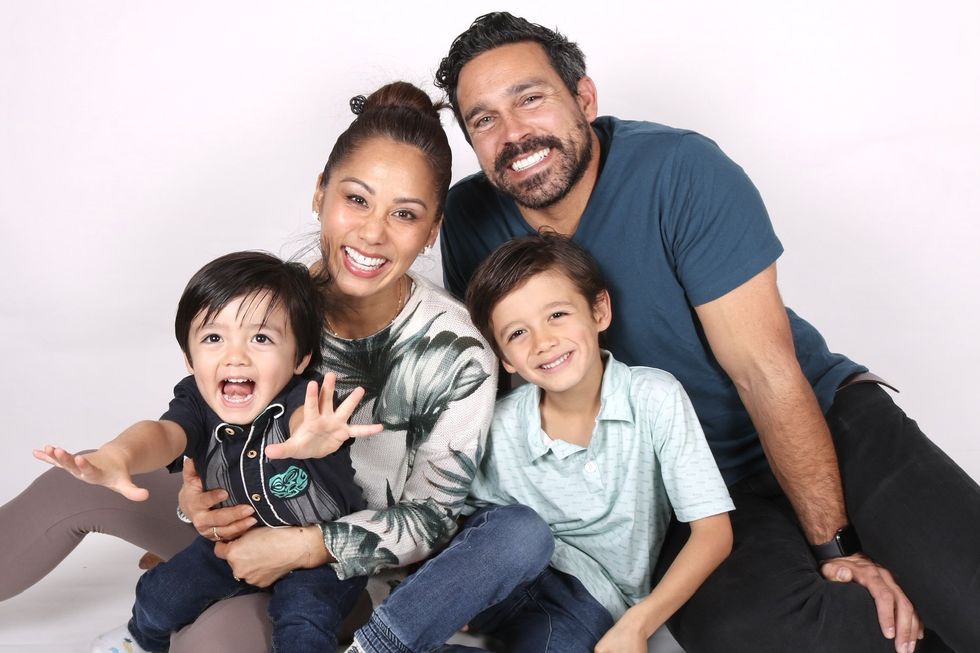
We were lucky, and I got pregnant quickly with our second son, just after the pandemic began. Several months after his arrival, I arranged for the final surgery that would eliminate the most pressing risk of having a BRCA2 gene mutation: a salpingo-oophorectomy. The most stressful part of this consideration was knowing I wouldn’t be able to carry my baby while recovering from surgery. I had flashbacks to when I couldn’t carry my first son after my double mastectomy and reconstructive surgeries.
Even while I was stressed about family planning, I knew the knowledge of my BRCA2 gene mutation was a gift beyond measure. The gift of knowledge allowed my mom and me to find our cancers early and have a tailored treatment plan outlined by our healthcare provider. We had time and options on our sides. Knowledge empowered us to take action for better outcomes, both before and after we were diagnosed with cancer.
We can’t choose our genes, but we can choose to listen to what they’re telling us. I don’t know if many people would call a family with so many BRCA2 gene mutations fortunate, but I think we’re incredibly lucky. We’re fortunate to live in a time when we can understand what our genes are telling us. We’re fortunate to have choices about our health and our preventive care. Most of all, we’re fortunate to have each other for support as we face this challenge together. BRCA2 gene mutations and breast cancer sent shockwaves through our lives, but facing those waves strengthened our bond and brought us closer together.
Visit beBRCAware.com to learn how genetic testing can provide important information about cancer risk and help you make treatment decisions after a diagnosis.
This educational resource was created with support from AstraZeneca and beBRCAware.com.
Have your own Real Women, Real Stories you want to share? Let us know.
Our Real Women, Real Stories are the authentic experiences of real-life women. The views, opinions and experiences shared in these stories are not endorsed by HealthyWomen and do not necessarily reflect the official policy or position of HealthyWomen.
Related Articles Around the Web