The main category of Fitness News.
You can use the search box below to find what you need.
[wd_asp id=1]
The main category of Fitness News.
You can use the search box below to find what you need.
[wd_asp id=1]
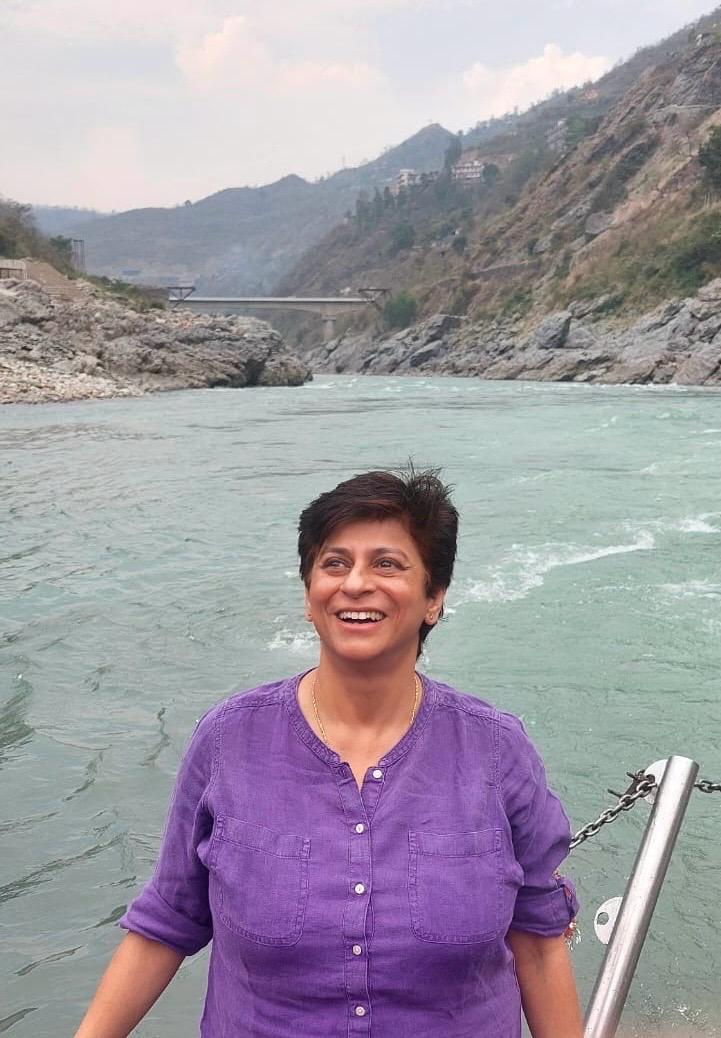
Snigdha Bharadwaj is a qualified professional Yoga Instructor, with prestigious Yoga certifications that are internationally recognized and issued by the AYUSH ministry (a Govt of India Body that is responsible for certified qualified yoga teachers within India and Internationally through a very stringent qualification process)
Snigdha Bharadwaj opens her heart out on Women Fitness on the occasion of International Yoga Day
Can you share your journey with yoga? How did you first discover yoga, and what inspired you to become a yogini?
I was introduced to Yoga through Jal Neti Kriya while serving as a technical officer with the Indian Air Force in 1998. Some gentle but profound stretches & meditation made me realize the before and after effects of Yoga!
This sowed the seed of the future that I am living today. I instantly connected with Yoga and during the Kargil war, it was yoga and meditation that helped me keep my awareness at the peak in daring and challenging situations. I continued with whatever little I knew regarding aasans and a bit of meditation but was always felt the void for something more.
It was much later in life when I left the Indian Air Force and stepped into the corporate world, I realized the dire need to have a work-life balance. The overwhelming life had given me the gift of failing health- spondylitis, thyroid, acidity, low BP, Sciatica, etc. I still thank those tough days that made me get drawn towards Yoga once again …. this time it was serious.
I learned Sudarshan Kriya and asanas at the Art Of Living Centre and realized that yoga is just not making a pretzel of your body!! I can now proudly say that the quest for yoga gave me my Gurudev- Sri Sri Ravishankar ji – my inspiration!!
I soon became an Art Of Living Teacher & and a certified Yoga teacher by Ayush Ministry and Sri Sri School of Yoga. I started teaching Sudarshan Kriya, Yoga & Meditation to people and also learned about healing mudras that are helping close to 6 lakh people through my Insta handle #yogic_hacks! I dropped my corporate job to follow my passion- and transitioned from serving corporations to serving the society.
Recently I have also become a Nadi Astrologer which is a unique science of time and the remedies also leads one to Yoga!!
How has yoga transformed your life physically, mentally, and spiritually?
I call it 3D Fitness- Physical, Emotional, and Mental – the combination of these automatically brings forth the Spiritual Fitness.
For me, Spirituality is – clarity in mind, purity in heart & spontaneity in action~Sri Sri ..and yoga has given me all of this.
Needless to say, I recovered from the physical challenges mentioned above and also realized that all these so-called “lifestyle diseases” are the outcome of a stressed mind. Everything starts at the mind level so save your mind at any cost- is my mantra now!
As Sri Sri says- We spend half our lives earning wealth and losing health…..then we spend the 2nd half of our lives spending wealth to earn back the health and it never comes back 100%.
I realized that yoga must happen every waking hour and not just the time one spends on the yoga mat! Every step of life presents something new and it’s up to our mental and physical health how to take it- we can get angry and aggressive and retaliate violently only to regret it later ..or absorb and accept and then take action from the space of calm but firm state of mind. All this became possible when I started doing my yoga asanas, Sudarshan Kriya, and meditation diligently every single day of my life!
Full Interview is Continued on Next Page
This interview is exclusive and taken by Namita Nayyar President of womenfitness.net and should not be reproduced, copied, or hosted in part or full anywhere without express permission.
All Written Content Copyright © 2024 Women Fitness
Disclaimer
The Content is not intended to be a substitute for professional medical advice, diagnosis, or treatment. Always seek the advice of your physician or other qualified health provider with any questions you may have regarding a medical condition.
Alzheimer’s disease is ruthless. It can rob you of your memory, personality and the ability to do simple things like swallow or speak.
Even scarier: Almost 2 out of 3 people with Alzheimer’s are women or people assigned female at birth.
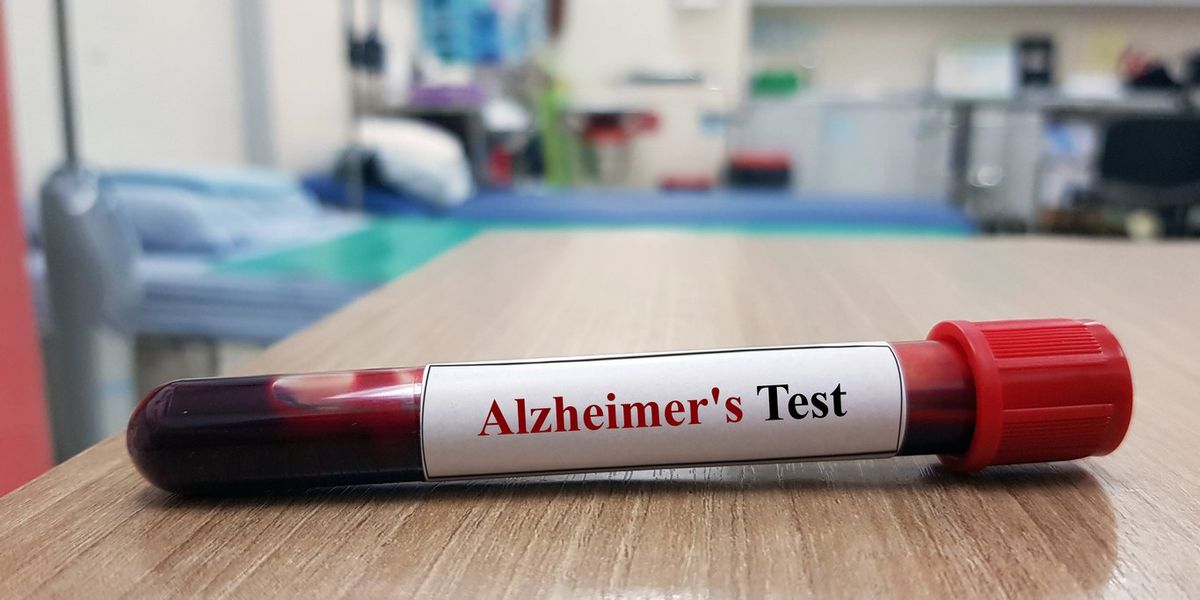
But there’s good news in the screening advancements for Alzheimer’s. There are now blood tests that can assess your risk level for Alzheimer’s — and you can get one right now. But should you?
Take our quiz: How Much Do You Know About Alzheimer’s Disease? >>
There are two types of tests that check for recognized markers of Alzheimer’s disease. One that measures levels of beta -amyloid proteins and another that measures phosphorylated tau (p-tau) proteins.
“Some of these blood-based tests work better than others,” said Lynn M. Bekris, Ph.D., principal investigator at the Cleveland Clinic’s Lynn Bekris Lab. “The new blood tests for p-tau biomarkers are very promising.”
Earlier this year, in a groundbreaking study, researchers accurately tested for elevated levels of p-tau, a hallmark for Alzheimer’s, from a regular blood test.
This is notable for a few reasons. First, the test results were as accurate as the current FDA-approved spinal tap fluid test and brain scan used to identify and help diagnose Alzheimer’s disease.
This means a blood test may be able to replace the more invasive procedure without compromising results. And blood tests are easier to get than brain scans and spinal taps.
Perhaps the most important detail of the study is that it showed the ability to measure changes in protein levels years before symptoms show. This offers hope that testing for Alzheimer’s without symptoms is possible and may one day be part of a routine screening, like you would have for high cholesterol or diabetes.
The study tested for a specific form of p-tau called p-tau217. Bekris noted that there are many forms of p-tau found in the blood, but p-tau217 is a promising biomarker because it’s very high in people with Alzheimer’s disease. “One particular p-tau217 test has received FDA approval and will likely be available soon commercially,” Bekris said.
Tests for p-tau are still used only in research at this point, but currently you can get a blood test for beta amyloid proteins as a risk assessment tool for Alzheimer’s. To get the test, you need to have certain risk factors and to talk to your healthcare provider about the pros and cons. If the test is right for you, they can write you a prescription.
It’s important to note that the test is meant to show potential risk and does not diagnose Alzheimer’s. It’s also not approved by the FDA and is not currently covered by health insurance. In addition, some experts have raised questions about the accuracy of the beta amyloid protein test, noting that it could result in false positives, which could cause unnecessary anxiety for people. Bekris noted that testing the blood or fluid for p-tau is more accurate than measuring the levels of beta amyloid in blood but false positives are still possible. The hope is that blood tests can start out as a tool that leads to more evaluation.
Currently, a diagnosis for Alzheimer’s comes from multiple results from brain imaging, memory tests and biomarker tests — among other factors.
Bekris said the multiple diagnostic tests are better together than alone. “This more detailed evaluation will rule out or rule in Alzheimer’s disease with the highest accuracy and is needed before the type of Alzheimer’s treatment is selected by both patient and their doctor,” she said.
This year has seen some significant advancements in research. But there’s still no cure for Alzheimer’s. We’re ready for more options, treatments and solutions for this devastating brain disease.
Related Articles Around the Web
From the allure of simplicity to the enhancement, of physical and mental well-being, explore the compelling reasons to embrace the practice through these three insightful responses.
In the world of continuous stimulation from all of our devices, many people understand the benefits of returning to more simple practices. Yoga is rooted in simplicity and comes from Ayurveda, which is a holistic healing system based in India that is 5,000 years old.
Yoga provides mental and physical benefits. Many yogis in the West, seem to focus solely on the physical asana, but yoga provides so much more.
Chitta vritti nirodha is a Yoga Sutra that summarizes the benefits of yoga and why I believe it has become so popular today. Yoga helps control the ever-present mind chatter. In the era of extreme overwhelm, calming the mind is the most important thing we can do.
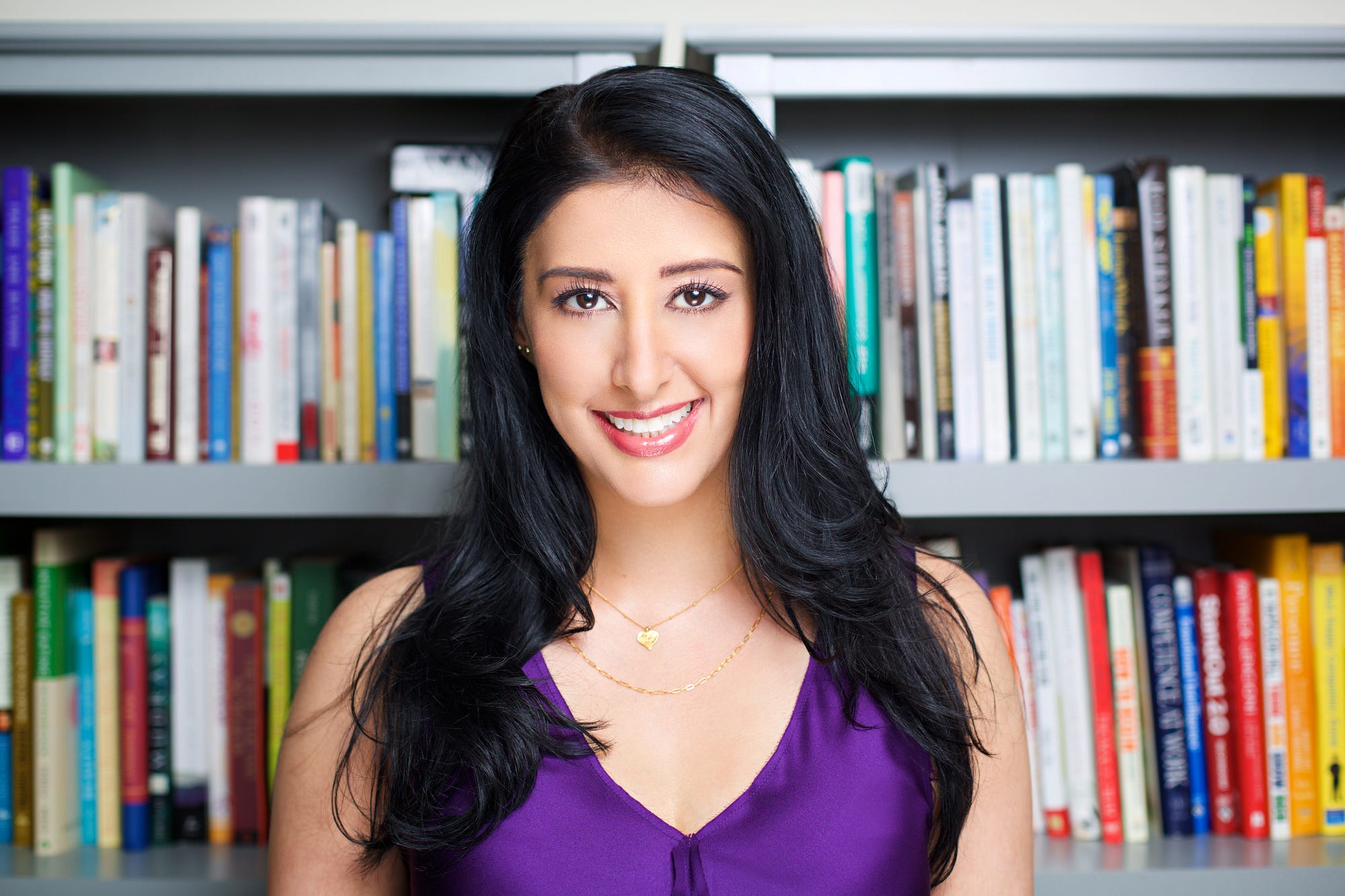
Neelu Kaur, Author, Speaker, Exec Coach, and Wellness Stress Mgt Expert, Sattvic Living LLC
Interest in Chair Yoga has increased over the last five years among the over-60 crowd. At the Senior Center where I teach, the Chair Yoga classes are some of the busiest at the center. Chair Yoga opens up a whole new world of fitness and wellness for seniors.
As we age, Chair Yoga not only improves strength and flexibility but can also significantly improve balance, range of motion, healing from injuries and surgeries, and reduce stress, which can, in turn, reduce stress-related ailments, such as high blood pressure. More and more doctors and physical therapists are recommending Chair Yoga as an extension of physical therapy.
Seniors love the practice because it helps them to feel better on every level and also gives them time to socialize with others of a common age and common interests.
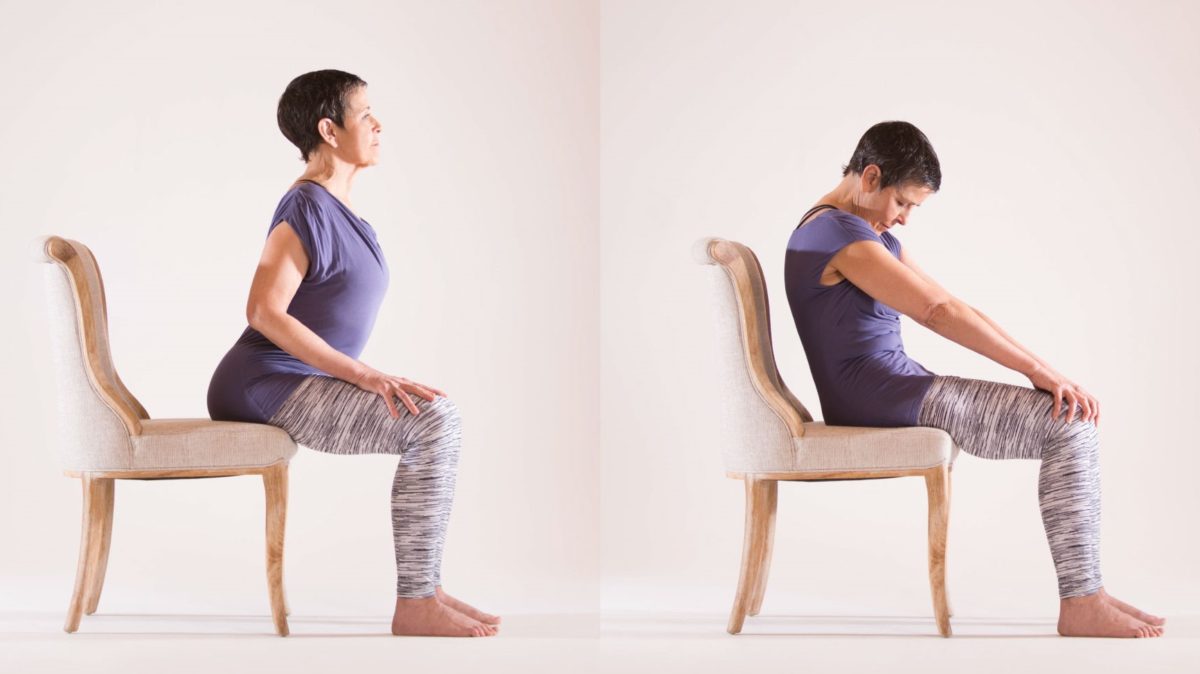
Interest in online Chair Yoga has also grown, particularly since COVID-19. It brings the practice to those who can no longer drive don’t have transportation, or have moved away from their favorite classes. Using technology to do Chair Yoga also helps to keep the mind sharp.
Brigitte Yancy, Owner, Wellness with Brigitte
Yoga has become immensely popular due to its comprehensive approach to improving both, physical and mental well-being. From my experiences in physical therapy, I can attest to the effectiveness of practices like, yoga in enhancing flexibility, reducing chronic pain, and improving overall functionality. For instance, stretching, a core element of both physical therapy and yoga, offers numerous benefits, like increased range of motion and better circulation. Incorporating stretches targeting different body parts, such as the hamstrings and torso, can provide relief from issues like lower back pain and shoulder discomfort.
One of the most compelling reasons to practice yoga is its ability to inspire others by demonstrating resilience and strength. Just as running a marathon can motivate onlookers to pursue their own fitness goals, practicing yoga can show how integrated body movements contribute to wellness. At Wright Physical Therapy, I’ve observed that patients who engage in structured, consistent stretching routines often see significant improvements. This holistic method encourages not just personal growth but also positively impacts those around them.
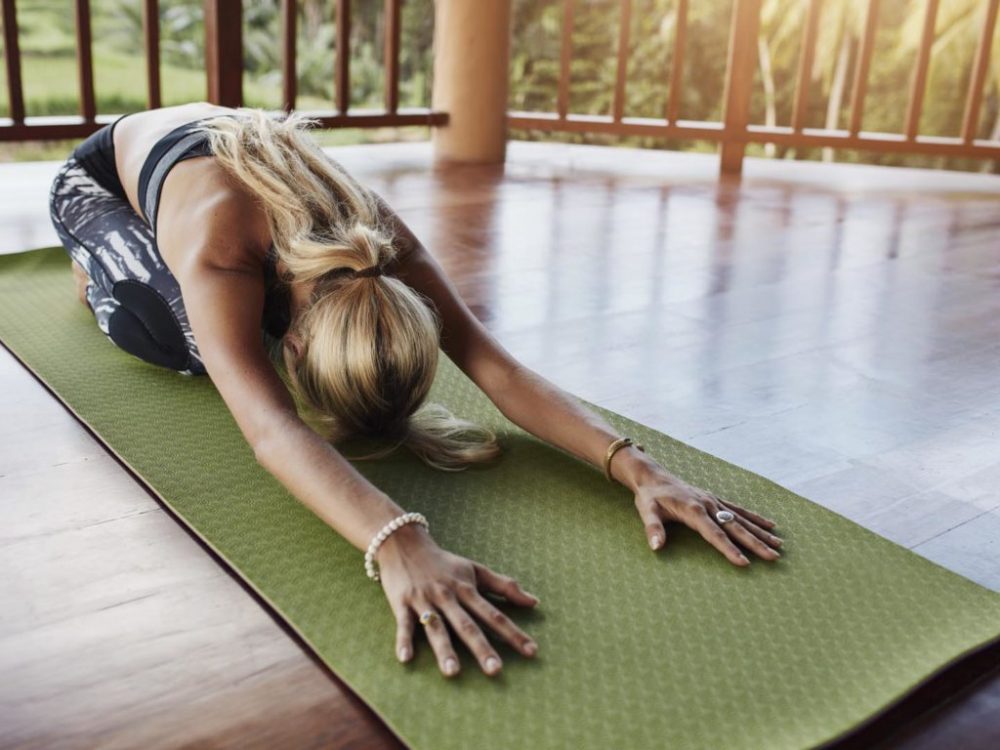
Moreover, the misconception that aging should limit physical exertion is debunked through practices like yoga. Elderly individuals, I’ve worked with significantly benefit from strength training and flexibility exercises, defying the stereotype that aging equates to diminished physical capabilities. Yoga with its gentle yet effective stretches and poses, serves as an excellent regimen for maintaining mobility and strength throughout life, making it an ideal practice for people of all ages. This continuous physical engagement is crucial for longevity and quality of life.
Bryan Wright, CEO, Wright Physical Therapy
Disclaimer
The Content is not intended to be a substitute for professional medical advice, diagnosis, or treatment. Always seek the advice of your physician or other qualified health provider with any questions you may have regarding a medical condition.
June is Pride Month.
I remember pulling into the parking spot, turning off the car and just sitting there for a minute.
My office is in the suburbs on Long Island, so it’s quiet. It was just me and the nervous click of my French manicure on the steering wheel.
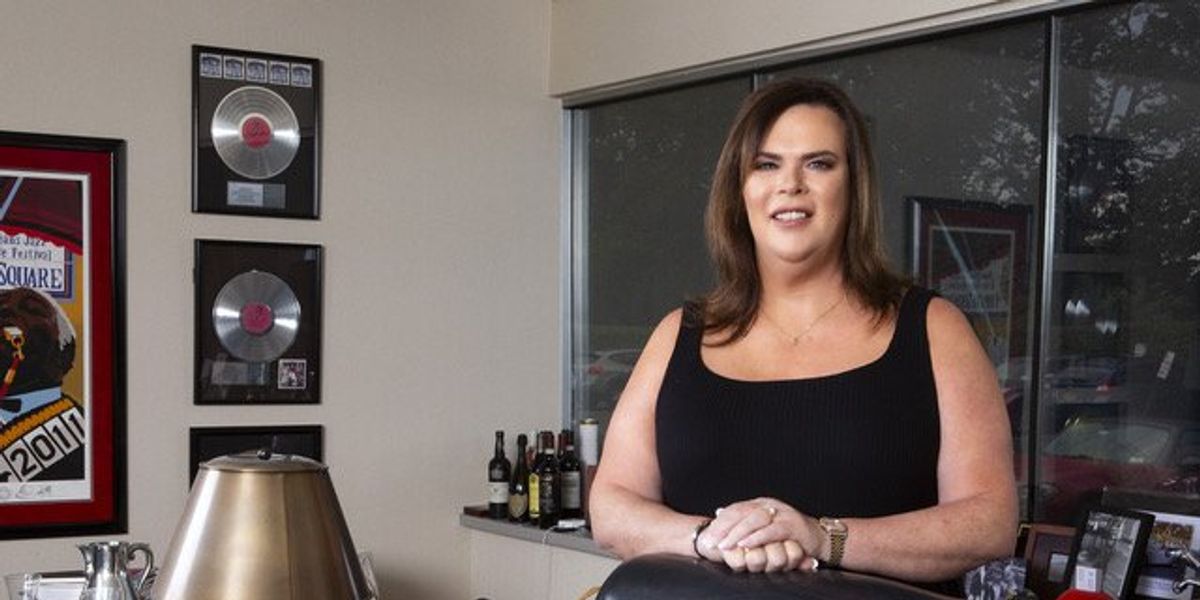
I watched the clock turn to 8:59. Fifty-nine minutes earlier, I’d hit send on an email letting my staff know that I was coming into work for the first time as a woman. I, Wynne, would be at work around 9 a.m.
Coming out to my colleagues was the final piece of the puzzle. I’d gone through the medical transition and the legal transition. I’d told my close friends and family. Now, I was ready to step into my professional life as Wynne. But I was also so anxious I could hardly breathe.
I sent the email because I wanted to give people a little time to process the news before I showed up. I’m the CEO of the company and I’ve worked with many of my colleagues for years — decades even — so it was understandable that people may be surprised. Or shocked.
Part of me was worried that coming out could hurt my career. I love my job and I’d worked so hard to get to this place professionally. But I was finally ready to live my life — all of my life — as my authentic self.
As far back as I can remember, I’ve always been drawn to the female experience. I wanted to play with dolls and the Easy Bake Oven. I wanted to look cute like the girls. I didn’t want to hang with the boys.
It wasn’t so much that I knew from the time I was 4 that I should be a female — it was that I knew that something wasn’t right. But I was having a tough time identifying what that was. Nobody really knew anything about trans people back in my era. Maybe you saw a sensational headline here or there, but we didn’t have access to the kind of information we do now.
In my 20s, everything changed. It was the early ’90s and home computers became a thing. When I got one — it was as big as the wall — my whole world opened up. There were a number of trans activists who’d put a lot of information online and I read every word. I started to see how all the pieces of my puzzle fit together.
The realization was like a soothing balm to my brain. I wasn’t the only person in the world that felt this way. Just having the knowledge that I wasn’t as screwed up as I thought — that there are other people in the same boat — gave me a sense of peace and also lit a fire within me.
But, as I like to say, it took me a long time to bake, just like one of those Easy Bake ovens. I went through all the fear, anxiety and emotion that most trans people go through. How would coming out affect my life? Are my friends going to be able to understand? Is my mother going to talk to me?
I didn’t necessarily have those answers, but eventually I had mine. In 2015, I started the transitioning process.
Only a few people knew that I was transitioning. The process can take years, so I had time to consider how I wanted to tell the people in my life. And that meant my mother. I knew telling her would be a challenge.
I was raised in an Irish Catholic household and I was an only child. My father passed away years before I came out, so it was just us in our immediate family. I told her I wanted her to use my preferred name and my pronouns. But when she didn’t, I never got mad at her. I had to find the humor in it. My mother was a product of a different time, so I don’t fault her for not understanding. But one year before she passed, my aunt who was also older but much more progressive, said to her, “Eileen, why can’t you get what’s going on? Why are you being so difficult?”
Overall, everyone in my life has been very supportive. I think some of that is in the approach. In situations like my workplace, I wanted to tell people early but not too early. I wanted to take the edge off the surprise but also have a presence so people could see me. I was still their colleague. I wasn’t just some words in an email.
So, in early 2017, I got out of my car, took a deep breath, and walked into work as Wynne. I saw the same familiar faces — supportive faces — and my breathing started to go back to normal. The nervousness started to fall away.
A lot of my anxiety stemmed from seeing two guys I was pretty good friends with at work. I wasn’t sure what their reaction was going to be (let’s just say they’re not exactly liberal). But when they saw me they embraced me with such love and support — I was speechless. Surprised. Hopeful.
I was 56 years old when I came out. Do I wish I’d done it years ago? Sure. Everyone who knows me knows how happy I am. But you can’t get back time so don’t waste a minute hiding who you are. People can surprise you. And you may be surprised how happy you can be.
Have a Real Women, Real Stories of your own you want to share? Let us know.
Our Real Women, Real Stories are the authentic experiences of real-life women. The views, opinions and experiences shared in these stories are not endorsed by HealthyWomen and do not necessarily reflect the official policy or position of HealthyWomen.
Related Articles Around the Web
Shanna Tucker, M.D., an obesity medicine specialist at NYU Langone Health, has a similar standard. If she can reduce the dosage or stop prescribing medication for one of these diseases, she knows her patient is on the right track.
When
obesity medicine specialists help patients with weight loss, their overall goal is far greater than achieving lower numbers on the scale. By treating a patient’s obesity, specialists are also helping patients manage and resolve other chronic conditions that threaten their overall health.
“Most of my patients have been with me for a decade or longer, so this is a lifetime commitment to their chronic disease that is obesity,” said Stanford, an associate professor of medicine at Massachusetts General Hospital and an obesity medicine physician-scientist. “I want to help them delete diagnoses from their chart — from their obesity itself to diseases associated with their obesity.”
Obesity can
reduce life expectancy because it generally increases the risk of other conditions and chronic diseases, including diabetes, heart disease, kidney disease and liver disease. And it can also contribute to sleep problems, joint pain, mental health issues and some cancers. It was also found to be a top risk factor for Covid-related hospitalization and death.
Growing rates of obesity have created a significant public health issue in the U.S. More than
1 in 3 adults and 1 in 5 children are living with obesity, the U.S. spends more than $147 billion a year on obesity-related healthcare.
Tucker said many patients come to her in frustration because they’re already eating well and exercising. They’ve lost some weight, but they can’t seem to lose any more or their weight has started climbing. They’re also struggling with chronic health conditions made worse by obesity.
“Not enough medical providers may understand that sometimes additional treatment is necessary for many patients,” Tucker said.
Obesity medicine specialists tailor plans for patients that can include a combination of lifestyle management, medication and, in some cases, surgery.
Anti-obesity medications (AOMs) have been getting a lot of attention in the media, with many public figures attributing their weight loss to the use of these medicines. While anti-obesity medications aren’t new — the FDA first began
approving them in 1959 — the current class of GLP-1 medications like semaglutide have become household names (Ozempic/Wegovy and Mounjaro/Zepbound) for their ability to help people achieve significant weight loss.
While the weight loss achieved through GLP-1 medications makes headlines, obesity medicine specialists have a broader view of the medications’ benefits and see how they can offer quicker resolution to chronic diseases. A
meta-analysis (a review of many studies) shows that anti-obesity medications can contribute to a significant reduction in cardiovascular events, like heart attacks and strokes, and hospital admission for heart failure in people with Type 2 diabetes.
Tucker said people living with obesity don’t have to lose a lot of weight to see results. Even just a
5%–10% drop in weight can help improve high cholesterol or high blood pressure. Weight loss can also be important for quality-of-life improvements, such as allowing people to move more easily, sleep better, experience less joint pain and have more energy.
“I know a lot of people don’t want to start a new medication, but by treating obesity, I’ve had patients who’ve had a significant amount of weight loss and were able to start decreasing the dose of their diabetes medication or even stop their high blood pressure or high cholesterol medications,” Tucker said. “I say to keep the big picture in mind about the potential benefits of anti-obesity medication.”
Although effective obesity treatment can improve health outcomes and yield substantial savings for the nation’s healthcare system, many Americans don’t have access to obesity care.
Not enough healthcare providers are trained in obesity medicine, Tucker said, and the cost of the medications themselves can prevent patients from being able to get them. There’s also no guarantee that the medication will be covered by insurance or available to Medicaid and Medicare recipients.
“I think we’re really doing a disservice to these patients,” Tucker said. “They’ve already sought help and have made an appointment and come into my office. To get that far and not be able to prescribe a medication because of insurance is very disappointing.”
Since each state Medicaid plan has its own policies for obesity treatment coverage, many people don’t have access to anti-obesity medications. And, at the federal level, Medicare Part D still prohibits coverage of AOMs for most patients, even though people covered under the Veterans Affairs/Department of Defense and Federal Employee Health Benefits plans do have access to the full continuum of care for obesity. Stanford said she’s hoping the Treat and Reduce Obesity Act, first introduced in Congress in 2012 and reintroduced each session since, will become federal law to help expand coverage for Medicaid and Medicare patients.
Watch: Congressional Briefing: Ensuring Patient Access to Effective Treatments for Obesity >>
Stanford said she’s seen older adults who’ve made significant progress getting rid of chronic conditions through treatment lose all of their progress when they enroll in Medicare and can no longer afford their medication if they lose coverage for their medication.
Stanford also pointed out other disparities in who’s most likely to have access to treatment.
“The populations most likely to benefit, particularly racial and ethnic minority populations here in the U.S., are struggling to get these meds,” Stanford said. “We have to get past the idea that people just need to eat less and exercise more, which is founded not on science. I want to change that narrative. We can do better to help those who need it.”
Still, for people who are struggling with obesity and other chronic health conditions, Tucker said it’s worth talking to your healthcare provider to see if some type of obesity treatment can help.
“I know some patients may want to avoid the topic, and I can understand why for many reasons,” Tucker said. “There’s a lot of obesity bias or weight bias in the medical community. I do encourage people to at least ask their [healthcare provider] what resources are available if they’re interested in losing weight so they have all the information and resources to help them make the best next step.”
Help Us Increase Access to Obesity Treatment >>
This educational resource was created with support from Novo Nordisk, a HealthyWomen Corporate Advisory Council member.
Related Articles Around the Web
Insomnia, however, is more than just a restless night. It’s a serious sleep disorder. “It’s not just about being unable to sleep — you have to see a specialist to properly diagnose insomnia,” said Monica Mallampalli, Ph.D., CEO of Alliance of Sleep Apnea Partners and member of HealthyWomen’s Women’s Health Council.
Without proper diagnosis and treatment, insomnia can lead to health problems like heart disease, diabetes and depression.
So how do you know if you have insomnia? The sleep disorder is defined as being unable to sleep, stay asleep or feel rested for three or more nights a week even though you’ve had the opportunity to sleep. Insomnia happens even when you’re in the right place at the right time (for example, in bed at a reasonable hour). And the lack of sleep has a negative impact on everyday life.
Short-term insomnia lasts days or weeks and is usually caused by stress or a change in your life, like a job change. Chronic insomnia, also called long-term insomnia, lasts three or more nights a week for more than three months. Some researchers think insomnia may be caused by your brain staying active when you’re sleeping.
If any of this sounds familiar or you’ve been googling “Why can’t I sleep?” at all hours of the night, you’re not alone. As many as 4 out of 10 adults in the United States have symptoms of insomnia — and most of them are women.
Women are more likely to
experience insomnia compared to men. Research is ongoing as to why. But studies show that hormonal changes during puberty, pregnancy and menopause (hello, hot flashes and night sweats) can cause insomnia.
One
report found that about 6 out of 10 women in the U.S. affected by hot flashes reported sleep issues and insomnia. “Clearly there’s a hormonal component,” Mallampalli said.
In addition to biological factors, common causes for insomnia include:
Insomnia is a complex disorder that has many different causes. Even your job and relationship status can affect your risk for insomnia. One recent
study found that people who are unemployed; widowed, divorced or separated; and of lower socioeconomic status have higher rates of insomnia.
People in certain occupations that require irregular sleep hours, like first responders, which includes police officers and firefighters, are more likely to have sleep problems compared to the general public. And active-duty service members and veterans are also at
high risk for insomnia, also in part because of unstable sleep schedules and in part because of the physical and emotional demands of their roles.
Many people with insomnia have medical and/or mental health conditions in addition to insomnia.
“Just be aware that insomnia has comorbid conditions. For example, insomnia is pretty closely tied to sleep apnea, so be aware that other things may be happening that are leading you to not fall asleep,” Mallampalli said.
About half of people with insomnia have a medical condition. And chronic insomnia puts you at higher risk for health problems, including:
When it comes to mental health, about half of people with insomnia have a mental health condition like anxiety, post-traumatic stress disorder (PTSD) and depression. In fact, about 8 out of 10 people with major depressive disorder have insomnia.
Recent research also found that sleep disorders are a common symptom in patients with neurodegenerative diseases like Alzheimer’s and Parkinson’s.
The lack of sleep and the stress that often comes with not being able to sleep can have a big impact on your waking hours.
The negative effects include:
Read: The Day After a Bad Night’s Sleep >>
Over time, the effects of insomnia not only hurt your health but can have a negative effect on your personal and professional relationships.
Insomnia can be hard to treat, especially when considering other health conditions that might be at play. Some medications can make it hard to fall asleep. And prescription sleeping pills may interact with other medications you’re taking.
Mallampalli said the first thing to do is talk to your HCP about your symptoms. Your HCP may refer you to a sleep specialist.
Treatment options vary from person to person, and your HCP may recommend one or a combination of treatments, which may include lifestyle changes, cognitive behavioral therapy (CBT) or medication.
CBT is usually the first step in treating insomnia. It teaches strategies to change behavior and thinking associated with sleep disorders and can help you identify thoughts and habits that are causing sleep problems.
Research shows that CBT can work. One analysis found big improvements in sleep quality and total sleep time in people with insomnia.
CBT is also an option for people who can’t or don’t want to take medication. Overall, CBT has few side effects, but changing your habits takes time and you won’t see results overnight.
Healthy sleep habits, also called sleep hygiene, can be practiced on their own or as part of CBT. They include cutting down on caffeine during the day and setting a sleep schedule in addition to learning meditation and other mental techniques.
Medications for insomnia fall into a few categories. These include:
Insomnia is complicated. But with the right treatment plan, good sleep is possible. “If [insomnia] is truly impacting your life and you’re unable to sleep — see a sleep specialist,” Mallampalli said. “They can help tease out what the problem may be.”
From Your Site Articles
Related Articles Around the Web
For 42 years, I’ve been living with complex regional pain syndrome (CRPS), a disorder that causes non-stop intense pain. In that time, I’ve had doctors call me crazy, delusional and a liar. One doctor was so abusive, he told me I should “just shoot myself in the head.” It’s no wonder some people call CRPS the “suicide disease.” Often, the intense, unpredictable pain that left me bedridden for a decade felt like the least of my problems: the major battle was getting the medical profession to believe and treat me.
After enduring years of mistreatment from doctors, I learned to manage my condition using holistic self-care. I didn’t want to enter a doctor’s office ever again unless the need for western medical care was undeniable. That day arrived when I was diagnosed with breast cancer.
When I felt the breast lump in 2018, I waited a year to get it checked. I didn’t trust doctors, who had left me hopeless, abandoned and depressed. But when it didn’t go away and grew larger, I gave in. My first reaction to the diagnosis was shock that I had cancer. My second reaction was dread that I had to re-enter the western healthcare system. Twenty years before, I had been diagnosed with ductal carcinoma in situ (DCIS) in my other breast, and my medical team told me I only had months to live unless I underwent aggressive treatment. I correctly suspected my doctors would not consider my CRPS and that my body could not handle their regimen. I did my own research and learned that most DCIS doesn’t become invasive, and overtreatment was common. I refused their treatment options.
Now that I was diagnosed with stage 2B
triple negative breast cancer, I took six months to decide what treatment would be best. The standard plan of chemotherapy, surgery and radiation gave me an impossible needle to thread. The healthcare system didn’t take my CRPS seriously, but I knew surgery and radiation would cause nerve damage, spiking my pain to an intolerable level. And I feared it would never simmer down.
Cynthia receiving an immunotherapy infusion. 2022.
I decided to go with chemotherapy only because I didn’t want to lose the use of the upper right side of my body. As expected, I was verbally abused for thinking outside the box. One doctor told me, “My other patients WANT to live.” I wanted to live just as much as they did. But I wanted quality of life. I’d lived without it and couldn’t go back there. I’d been battling for my quality of life for decades.
As it turned out, my tumor was a “super-responder” to chemotherapy, disappearing completely by imaging standards. I continued to get monitored and use my self-care techniques, which included exercise, good sleep habits and careful nutrition.
Eighteen months later, my oncologist found a cancerous lump in my right lymph node that quickly grew to the size of a golf ball. After hearing his treatment plan for my recurrence, I hung up the phone and started screaming in fear and frustration.
He’d recommended eight rounds of chemo, followed bya new immunotherapy treatment that had recently become available. After that, he recommended I undergo surgery, radiation and more immunotherapy. After careful consideration and much research, I consented only to low-dose oral chemo and immunotherapy.
The chemo shrank the tumor a little bit, but then stopped working. I was horrified to learn my insurance company wouldn’t cover the immunotherapy because I hadn’t agreed to surgery. I felt I was being punished for making my own treatment choices.
I quickly learned about and was going to try a procedure called cryoablation, a technique that freezes the tumor instead of removing it surgically, which I prayed would avoid triggering my CRPS. Then a blessed event happened — the company that made the immunotherapy treatment had a compassionate care program that allowed me to get the immunotherapy.
After one immunotherapy treatment, my tumor disappeared. My doctors were stunned. There was no need for cryoablation as there was nothing left to cryoablate. I was called a “miracle.”
Looking back from a distance of two years, I wonder if “miracle” is the right term for what happened to me. Am I a miracle, or did I simply make a series of thoughtful decisions that were right for me?
This is not to say immunotherapy was easy. I was hospitalized for colitis and later developed reactive arthritis. It also spiked my CRPS, but to a tolerable level. Bottom line, immunotherapy cured me without destroying my quality of life.
I’m grateful that years of self-advocacy made me strong enough to stand my ground with the doctors who talked to me as though I was a child. I’m also grateful I eventually found a team of four doctors that listened to me, believed in CRPS, and embraced the reality that surgery and radiation would destroy my life.
 2020
2020
Best of all, this team worked together, consulting about my care with one another, my life partner, John, and me. Being part of a shared decision-making team that valued individualized care was such a powerful experience, I regained some trust in the medical system. I’m a strong believer that a doctor who isn’t threatened by other opinions is the sign of a true healer.
Sadly, when we are diagnosed with cancer, we tend to panic and blindly put our care into our doctors’ hands. However well-intentioned they may be, we’re the ones who must live (or die) with the consequences of their treatment choices. For the best wellness outcome, I believe we must take responsibility for our own care, and that includes self-care practices to make our bodies healthy enough to make the best of the treatments we choose. I’m certain I’m still here today because I followed my gut.
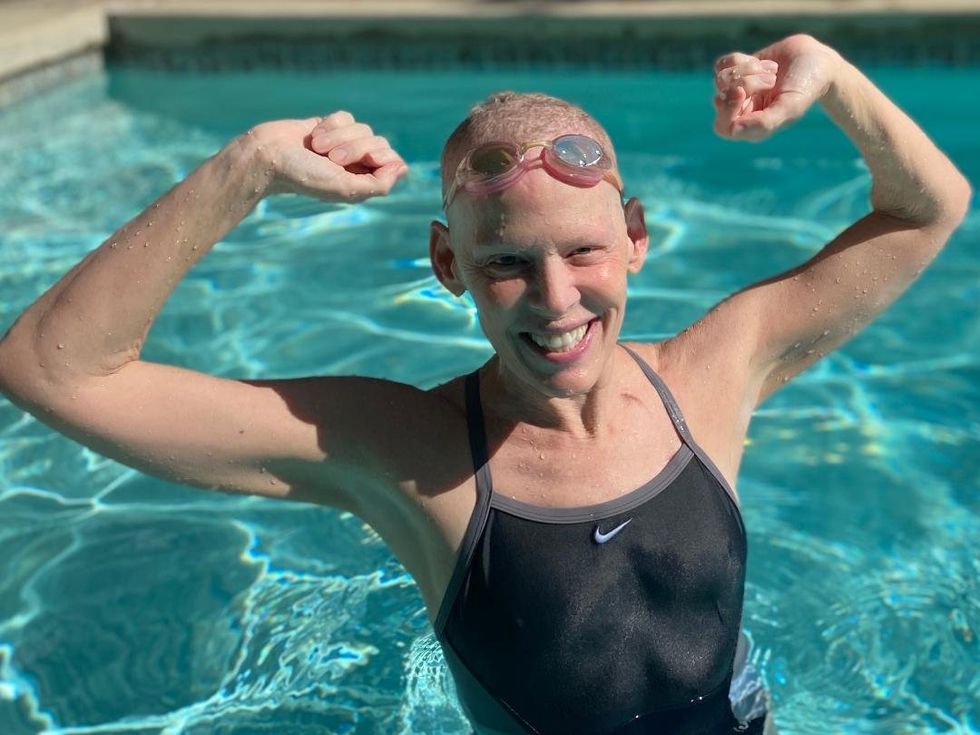
These days, I eat a healthy, cancer-fighting diet full of fish, berries, nuts and leafy greens. I’m an avid lap swimmer, and I make plenty of time for cuddles with my kitties. I meditate and pray every day, while working on releasing past traumas that have driven my illnesses. I’ve become better at forgiving the people who have harmed and abandoned me.
Also, I engage in meaningful, creative work. I continue to run the nonprofit I founded 22 years ago to help other women in pain. And I’m rekindling past passions. I spent my childhood training for a career as a performer, but as a part-time wheelchair user with CRPS, Hollywood’s doors have been closed to me. After fighting for my life twice, that’s no longer stopping me. I recently got a top-end agent and am already getting great auditions and call-backs for acting and singing roles. Yes, I’m doing it my way.
I look forward to hitting my third cancer-free year, which my team tells me is the goal line for a cure. Until then, I’ll continue to trust myself with my health and happiness.
This educational resource was created with support from Merck
Have a Real Women, Real Stories of your own you want to share? Let us know.
Our Real Women, Real Stories are the authentic experiences of real-life women. The views, opinions and experiences shared in these stories are not endorsed by HealthyWomen and do not necessarily reflect the official policy or position of HealthyWomen.
Related Articles Around the Web
Annika Malacinski is an American Nordic combined athlete. She was born in Steamboat Springs, Colorado USA. But for twelve year she lived in Finland. She started Nordic Combined when she was 16 years old. Earlier she use to do gymnastics. She took part in her first international Nordic Combined event at the FIS Youth Cup in Oberstdorf.
US Championships:
Gold 2019 Park City Mass start
Silver 2021 Park City Gundersen
Gold 2022 Lake Placid Gundersen
Finnish Championships:
Gold 2019 Kuopio Gundersen
Gold 2021 Helsinki Gundersen
Women Fitness President Ms. Namita Nayyar in a candid interview with Annika Malacinski, an American Nordic combined athlete here she talks about her fitness regime, diet, and her success story.
Where were you born and had your early education? You used to do gymnastics and at the age of 16 years started Nordic Combined. This later propelled your career to the height where you have been the leading sport women as a Nordic Combined skier and ski jumper in USA and Finland. Tell us more about your professional journey of exceptional hard work, tenacity, and endurance?
I was born in Steamboat Springs, Colorado, and my early education was split between two continents. Every year, I spent the first semester of school from August to December in Rovaniemi, Finland, before flying back to the U.S. to complete the second semester and enjoy the summer. This transatlantic routine continued for 11 years of my life. Growing up, I was immersed in a wide array of sports and absolutely loved every moment of it.
My mom, a high-level swimmer who competed for Finland, instilled in my brother and me a passion for sports and athletics. She insisted that we engage in endurance sports, so we chose cross-country skiing in the winter and swimming in the summer. At the age of 12, I decided to commit heavily to gymnastics. I trained about 24 hours a week under the guidance of my Hungarian Olympic coach. My life was consumed by the sport—I had little time for friends or free time, but my love for gymnastics made it all worthwhile.
However, as I grew older, the physical demands became too much for my body, and I had to retire from gymnastics. Transitioning from the intense regimen of a high-level gymnast to almost no physical activity left me feeling lost and depressed. I wasn’t ready to give up athletics entirely. During this period, I watched my little brother compete in a Fourth of July Nordic Combined competition in Steamboat.
The excitement and challenge of the sport intrigued me, and within four days, I found myself going off the 40-meter ski jumping hill at home. The adrenaline rush I felt after that jump was exhilarating, and I craved more. Nearly six years later, I am competing at the highest level in Nordic Combined, representing team USA. My journey has been marked by exceptional hard work, tenacity, and endurance.
I have had the privilege of being a trailblazer in my sport, fighting for equality and inspiring others. The road has not always been smooth—I dislocated my shoulder while jumping in 2019—but I have also experienced the thrill of standing on the podium at many Continental Cups (COCs) and achieving a career-best 8th place in the World Cup in Austria last year. This journey has been everything to me. The highs and lows, the challenges and triumphs, have all shaped me into the athlete I am today. I wouldn’t change a single moment of it.
You competed for the Steamboat Springs Colorado Winter Sports Club, made your international debut on August 24, 2018 this was your first international Nordic Combined event at the FIS Youth Cup in Oberstdorf. Tell us more about this first participation and memories of your beginning of the journey as an American Nordic combined athlete.
Competing for the Steamboat Springs Winter Sports Club, I made my international debut on August 24, 2018, at the FIS Youth Cup in Oberstdorf. This was my first international Nordic Combined event, and it marked the beginning of an unforgettable journey. I still vividly remember that European trip. It was my first training camp abroad, and I was with a group of athletes who, like me, didn’t yet belong to a junior national or national team. These were the athletes left to carve their own path, and I couldn’t have been luckier to experience it with this particular group of people.
The camaraderie and shared excitement created some core memories that I still cherish to this day. From a young age, I’ve always been highly competitive, and it was hard for me to realize that I had started Nordic Combined almost exactly a year before this competition. While my jumping skills were still developing, I had always had a decent level of endurance, which gave me a bit of confidence. Nevertheless, the nerves really kicked in as I faced my first international competition. Despite this, the experience was overwhelmingly positive.
Meeting athletes from around the world and creating special memories with my team were some of the highlights. The thrill of international competition, the nervous energy, and the joy of connecting with fellow competitors all contributed to a truly memorable experience. These moments solidified my passion for the sport and set the stage for my ongoing journey as an American Nordic Combined athlete. The friendships and experiences from that first trip have stayed with me, and they continue to inspire me as I strive for excellence in this demanding and exhilarating sport.
You won the Gold for US in Gundersen event during the “Jumpapalooza,” the USA Nordic Sport National Championships for Ski Jumping and Nordic Combined held in Lake Placid, New York, on Friday, 30th September and Saturday, 1st October 2022 in Nordic combined.Tell us more about this spectacular achievement of yours?
Winning the gold in the Gundersen event during the “Jumpapalooza,” the USA Nordic Sport National Championships for Ski Jumping and Nordic Combined, held in Lake Placid, New York, on September 30th and October 1st, 2022, was a truly spectacular achievement for me.I vividly remember being sick during the competition, but my determination to showcase my skills and win was stronger than ever. Despite feeling unwell, I knew how important it was to participate in nationals and put the months of hard work into this event. I was determined to push through and give it my all, no matter the circumstances.
The competition began with a solid jump, which positioned me well in the standings. I managed to secure a head start of about two minutes ahead of the next skier. This early lead was crucial, and I knew I had to maintain it despite my illness. Competing while knowing it could worsen my condition was challenging, but the significance of nationals and my desire to perform at my best outweighed my concerns. The event itself was spectacular, with an incredible atmosphere and strong support from the crowd.
As I raced through the cross-country portion, I focused on every stride, pushing through the fatigue and sickness. The months of rigorous training and dedication were paying off, and I felt an overwhelming sense of determination and drive. Crossing the finish line and realizing I had won gold was an indescribable feeling. Despite the physical challenges, the triumph of securing a national championship was exhilarating. I was incredibly excited about the win and proud of my ability to overcome adversity and perform at my best when it mattered most.
This achievement not only marked a significant milestone in my career but also reinforced the importance of perseverance and resilience. It reminded me that even in the face of challenges, dedication and hard work can lead to spectacular outcomes.
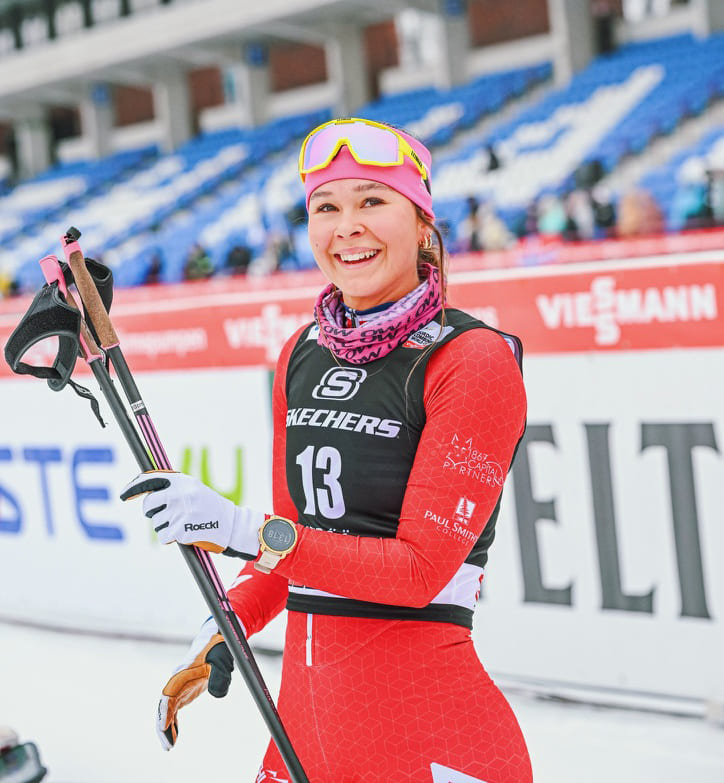
You put the sporting track on fire when you won the Gundersen event in Nordic Combined during the US National Championships held in Utah, in resort Park City. Elaborate more about this landmark achievement in your sporting career.
Winning the Gundersen event in Nordic Combined during the US National Championships held in Park City, Utah, was electrifying, and the feeling of crossing the finish line first is something I will never forget. As much as I enjoy the thrill of victory, this achievement holds a deeper significance for me. It represents an opportunity to pave the way for the younger generation of athletes, especially young girls in Nordic Combined and other sports. I am passionate about being a role model and showing that anything is possible with hard work and dedication.
In Park City, the atmosphere was charged with excitement and anticipation. I felt the weight of my own expectations, as well as the hopes of those looking up to me. The competition was fierce, and every moment required focus and determination. My training and preparation culminated in a performance that I am immensely proud of. Beyond the personal triumph, this victory is about inspiring the next generation.
I want to show young athletes, particularly girls, that they can achieve their dreams, no matter how big. By winning and demonstrating what is possible, I hope to encourage them to pursue their passions with the same fervor and commitment. This event reinforced my belief that role models are crucial in sports. Seeing someone else succeed can ignite the spark of possibility in a young athlete’s mind.
My journey, filled with hard work, setbacks, and triumphs, serves as a testament to the power of perseverance. I want to be that example for others, to show that with grit and determination, they too can set the sporting track on fire. Winning in Park City was not just a personal milestone; it was a moment to celebrate and share with the community. It was a reminder that we are all part of something bigger and that each victory can inspire countless others to chase their dreams and reach new heights.
Full Interview is Continued on Next Page
This interview is exclusive and taken by Namita Nayyar President of womenfitness.net and should not be reproduced, copied, or hosted in part or full anywhere without express permission.
All Written Content Copyright © 2024 Women Fitness
Disclaimer
The Content is not intended to be a substitute for professional medical advice, diagnosis, or treatment. Always seek the advice of your physician or other qualified health provider with any questions you may have regarding a medical condition.
This happens because your blood pressure drops and your blood moves to the lower part of your body when you stand up. Sometimes, it can take a second for your system to increase your heart rate and get the blood flowing to your brain — which is why you feel lightheaded.
An occasional spell of dizziness when standing up is usually not cause for concern. But for people with postural orthostatic tachycardia syndrome (POTS), standing up can cause a wide range of problems including fainting, and it can have a serious negative effect on your quality of life.
As many as 3 million people in the U.S. have POTS, and most of them are women and people assigned female at birth. If you think you may have POTS, or know someone who does, here’s what you need to know about this health condition.
Postural orthostatic tachycardia syndrome (POTS) is a condition that causes your heart rate to go up more than 30 beats per minute, and your blood pressure to go down when you stand up.
Basically, the disorder affects the autonomic nervous system, which is responsible for regulating things like your heart beat and blood pressure. It may not sound that serious, but people with POTS can experience debilitating symptoms including rapid heartbeat (tachycardia) and extreme fatigue among other chronic problems.
In addition to an increased/rapid heart rate, people with POTS can have a range of symptoms. These can include:
The symptoms of POTS can get worse if you’re in the heat (even taking a hot bath) or standing a lot. Some women experience an increase in symptoms before their period starts and these can get worse if you’re not hydrated or if you need more salt in your diet.
There are three main subtypes of POTS. These are:
With all the different symptoms, it can be hard to get a diagnosis for POTS. For women and people assigned female at birth, the condition can be misdiagnosed for years and lead to a significant delay in care. Research shows women with POTS wait at least five years for a diagnosis compared to three years for men.
Two common tests used to diagnose POTS are a 10-minute standing test and a head-up tilt table test. The standing test is pretty much exactly like it sounds: Your healthcare provider (HCP) will measure your blood pressure, heart rate and other levels as you stand up from a relaxed position and continue to stand for 10 minutes.
The head-up tile table sounds more like something out of a magic act: You’re strapped on a table lying flat and the table is raised to an upright position. Your HCP will check your heart rate, blood pressure and other levels to see if you may have POTS.
Other tests and blood work may be ordered to look at the nerves that control the heart and control sweating.
Since the exact cause of POTS is unknown, treatments can vary depending on symptoms. Treatment options to help manage POTS can include:
You can monitor POTS at home to help you identify triggers and lifestyle changes that may help with symptoms. You may want to consider getting a:
In addition to diet and exercise, there are some things you can do to help your overall well-being and minimize symptoms of POTS.
POTS can be difficult to diagnose and every case is different. If you’re experiencing dizziness, rapid heart rate or any other symptoms of POTS, talk to your HCP as soon as possible. Many people with POTS can manage symptoms with the right treatment plan.
From Your Site Articles
Related Articles Around the Web
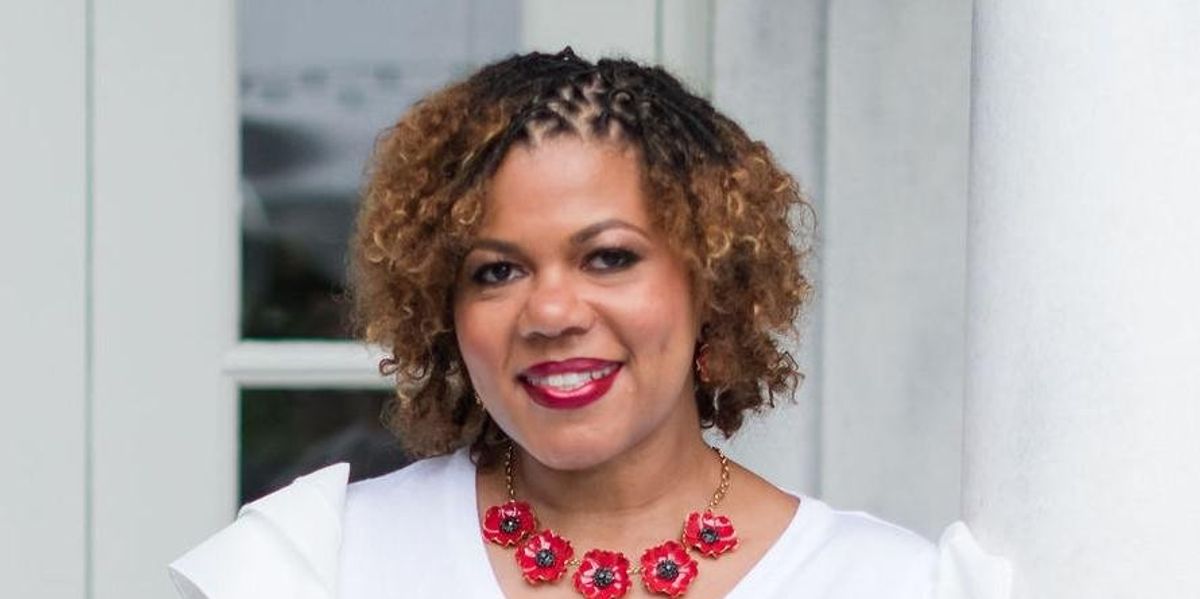
“I had swollen ankles and shortness of breath,” recalled Ferguson, 50, an Atlanta-area clinical psychologist.
She initially thought her symptoms were from post-vacation fatigue and her weight. As her symptoms lingered, she booked a telehealth appointment with a doctor, who advised her to get her heart checked. An EKG in an emergency room at a nearby hospital came back normal, but a medical resident was concerned enough about some of her lab work results to look into it further.
“He said he had just read an article about how that particular blood test did not elevate in African Americans, when there was, in fact, an issue, and that’s what kept him looking for stuff,” remembered Ferguson. “That’s why he ordered a CT chest scan.”
The CT scan showed what was later found to be a cancerous mass in her right lung. The diagnosis: stage 3Anon-small cell adenocarcinoma. “I had cancer cells in some of my lymph nodes,” she says.
Read: Understanding the Different Types of Lung Cancer >>
The lung cancer diagnosis was a shock for Ferguson, who’d never been a cigarette smoker and did not have a family history of the disease, but she agreed to the aggressive treatment plan her thoracic surgeon ordered. The plan was for her to have surgery to remove the mass and four rounds of chemotherapy. Three years later, Fergurson proudly reports being cancer-free.
A growing body of research reveals that, as a Black person, she is especially lucky to have beaten the disease that kills more than 125,000 Americans a year — more than breast, colon and prostate cancers combined. Lung cancer is more difficult to treat in its advanced stages, so early detection through screening greatly increases a person’s chance of survival. Yet racial disparities exist.
Studies have found that Black lung cancer patients were 15% less likely than white patients to be diagnosed early and they had the lowest five-year survival rate of any racial group. Black Americans tended to develop lung cancer at higher rates and at younger ages than their white counterparts, despite smoking fewer cigarettes on average. According to the American Lung Association, the disease claimed the lives of more than 14,000 Black Americans in 2021, the most recent year for available data.
Addressing persistent disparities in lung cancer early diagnosis and survival rates is central to the work being carried out by Melinda Aldrich, M.D., an associate professor at Vanderbilt University Medical Center. The groundbreaking 2019 study she co-authored with five colleagues found that screening eligibility guidelines exclude Black smokers more than other people of other races. The healthcare industry has been slow to respond to the growing push to change that, including medical insurance companies that determine what is considered preventive care and covered at low or no cost.
Aldrich’s research found that the U.S. Preventive Services Task Force (USPSTF), the government group that sets screening guidelines, required that a person had to be between 55 and 80 years old and have smoked the equivalent of a pack a day for 30 years to qualify for a life-saving early detection screening known as a low-dose CT scan. In addition to these criteria, a person needs to be either a current or former smoker, and former smokers need to have quit within the prior 15 years. Aldrich’s analysis of more than 84,000 adult smokers revealed that under that criteria, Black patients at relatively high risk of lung cancer were being disproportionately excluded from the eligible screening pool. More than 2 out of 3 Black smokers who were diagnosed with lung cancer did not meet the age and smoking history criteria at the time of their diagnosis.
“Based on those guidelines, we saw that of people who were diagnosed with lung cancer, 68% of African American individuals … would not have been eligible for lung cancer screening. And this is in contrast to 44% of white Americans who would not be eligible,” she said. “So, [there are] strong racial disparities in terms of eligibility and who’s able to get in the door to be screened.”
The work of Aldrich and her co-authors was cited in a 2021 decision by the USPSTF to make two changes that have nearly doubled the number of people eligible for lung cancer screening — lowering the age from 55 to 50 and reducing the number of smoking history pack years from 30 to 20.
“They didn’t do exactly what we proposed: something that might be considered controversial, which is making a race-specific change in the guidelines,” she said. “They made the guideline changes for everyone. So, actually, the disparities remain. They just made more people eligible.”
Aldrich said raising awareness about the screening test that has been widely available for well over a decade now is critical to helping improve outcomes and survival rates for lung cancer patients, especially Black patients. Still, she said, the medical industry needs to answer the call to go a step further to allow more people to qualify for early screening based on additional risk factors, such as race and ethnicity and family history. “If you have a history of smoking, talk to your doctor about whether you’re eligible for lung screening,” advised Aldrich. “We also need to remove the stigma associated with smoking; we should unite the community rather than associating blame.”
Ferguson said that although race-specific screening guideline changes most likely would not have helped in her case as a nonsmoker, she supports the shift to expand screening eligibility. “I don’t care if you are 30 or 70. If you smoked every day for 10 years or more, you should be able to say to your doctor, ‘I want a lung cancer screening’ and get it,” she said. “It’s money spent on the front end and money saved on the back end. And more importantly, it’s going to save more lives.”
This educational resource was created with support from Merck.
Related Articles Around the Web