The main category of Fitness News.
You can use the search box below to find what you need.
[wd_asp id=1]
The main category of Fitness News.
You can use the search box below to find what you need.
[wd_asp id=1]
Nutrition may not be the whole answer, but there is evidence that diet can affect the balance of mental and physical well being. Many experts now believe that drugs and medication are not always the solution to mild depression and a positive self-help approach can be beneficial in many cases.
Depression is closely connected with the food you eat. People who are depressed often lose their appetite, feel too low to cook, and eat junk food. A vicious circle develops poor eating habits lead to nutritional deficiencies which then increase feelings of depression. Doctors have discovered that many people who suffer from depression are also lacking in particular nutrients.
Eating foods rich in these missing nutrients, combined with lifestyle changes and regular exercise, can produce significant improvements in people suffering from mild to moderate depression. Sometimes, better results have been achieved than with prescribed antidepressants.
If you are feeling depressed, your first priority should be to eat a nutritionally balanced diet. You should also increase your intake of the following nutrients, which have been linked with depression.
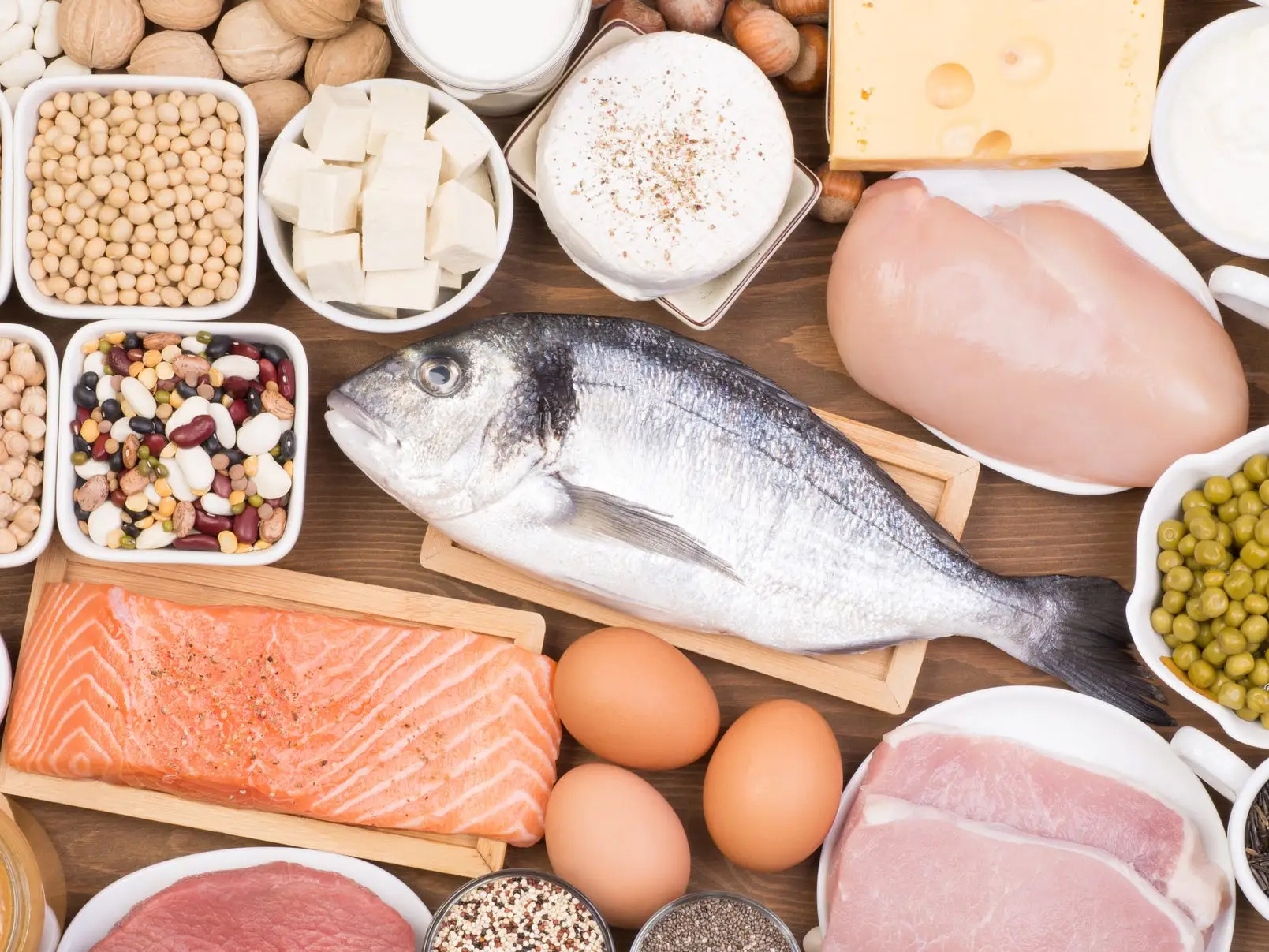
The B vitamins People who are depressed tend to have lower levels of vitamin B6, which is needed for the production of serotonin, the brain chemical that lifts mood. Low levels of vitamins B12, B2 (riboflavin) and folic acid can also cause depression. To boost your B vitamins, eat lean meat and poultry, fish, eggs, nuts, seeds, soya beans, bananas, low-fat dairy produce, fortified cereals and leafy green vegetables.
Vitamin C is also depleted in people suffering from depression. Eat plenty of fresh, raw fruits and vegetables: citrus fruit, strawberries, guavas, kiwifruit, blackcurrants and peppers are excellent sources.
Iron: A deficiency in iron may lead to depression. Iron is also essential in the production of the brain chemical serotonin. Women who take the birth-control pill are more prone to depression if their iron levels are low. Foods rich in iron include red meat, egg yolk, liver, red kidney beans, chickpeas, whole grains, fortified breakfast cereal, nuts, pulses and green leafy vegetables. But if you are pregnant or trying to conceive you should not eat liver.
Selenium: People who are deficient in the antioxidant mineral selenium also experience feelings of depression and anxiety. Selenium is found in meat, fish and shellfish, whole grains, avocados and dairy produce.
Zinc: Essential for the body to convert tryptophan into serotonin. Zinc is found in oysters, red meat, poultry, eggs, dairy foods, peanuts and sunflower seeds.
Other minerals that help to fight depression include magnesium and manganese. These are found in wholegrains, pulses, dried figs, vegetables, nuts and seeds.
Omega-3 fatty acids Research is still in its early stages, but depression has been linked to omega-3 deficiency. Scientists suggest that these fatty acids may be able to suppress the signals that are responsible for sudden mood changes. Omega-3 oils may offer new possibilities for treating manic depression. Oily fish such as salmon, herrings, mackerel, tuna and sardines are the richest sources of omega-3 fatty acids.
Refresh your spirits with fennel. With its delicate aniseed flavor and crunchy texture, it is a perfect accompaniment to fish, boosts your body�s supplies of antioxidants, and fortifies your immune system.
As well as helping to prevent disease such as cancer, antioxidants may be useful for helping people who are vulnerable to bouts of depression. This has been highlighted in recent studies. Vitamin C in particular can help those with mood disorders. After two years of taking supplements of antioxidant nutrients, patients were found to be significantly less depressed than those who were taking a placebo.
Eat small, regular meals to keep your blood sugar levels on an even level and avoid high sugary snacks. Instead, try snacking on unsalted popcorn or pretzels, home-made ice lollipops made with real fruit, crumpets with yeast extract or peanut butter, and muffins with high-fruit jam.
Though nutritional deficiencies are common in people suffering from depression, these are not always the result of unwise eating habits. Alcohol, caffeine and cigarettes are very efficient at stealing nutrients from the body. An excess of these stimulants (they are also called antinutrients), has been linked with depression and low mental energy.
Cigarettes Smoking lowers vitamin C levels in the body, and this can contribute to depression. In addition, it interferes with serotonin receptors in the brain, making them less sensitive to the mood-enhancing serotonin that is available.
Alcohol is a depressant- it interferes with the brain-cell processes and disrupts sleep. It also produces a fall in blood sugar levels, resulting in cravings for sweet, sugary foods. The subsequent extremes of high and low blood sugar levels tend to aggravate any emotional problems.
Caffeine is a mood enhancer, so it can make matters worse for those susceptible to anxiety and mood swings. The combination of caffeine and refined sugar seems to cause even more dramatic mood changes.
Disclaimer
The Content is not intended to be a substitute for professional medical advice, diagnosis, or treatment. Always seek the advice of your physician or other qualified health provider with any questions you may have regarding a medical condition.
The study published online in JAMA Psychiatry showed that, after PTSD symptom onset, women with at least 4 symptoms had a faster rise in BMI (b = 0.08 [SE = 0.02]; P < .001). The onset of at least 4 PTSD symptoms in 1989 or later was also associated with an increased risk of becoming overweight or obese (odds ratio, 1.36 [95% CI, 1.19-1.56]) among women with a normal BMI in 1989. It was concluded that, experience of PTSD symptoms is associated with an increased risk of becoming overweight or obese, and PTSD symptom onset alters BMI trajectories over time.
PTSD, or Posttraumatic Stress Disorder, is a psychiatric disorder that can occur following the experience or witnessing of a life-threatening events such as military combat, natural disasters, terrorist incidents, serious accidents, or physical or sexual assault in adult or childhood.
PTSD is marked by clear biological changes as well as psychological symptoms. PTSD patients often may develop additional disorders such as depression, substance abuse, problems of memory and cognition, and other problems of physical and mental health. The disorder is also associated with impairment of the person’s ability to function in social or family life, including occupational instability, marital problems and divorces, family discord, and difficulties in parenting.
The biological pathway is unknown, but scientists have a number of guesses. One is through the over-activation of stress hormones. PTSD may lead to disturbances in functioning of the hypothalamic-pituitary-adrenal axis and the sympathetic nervous system, each of which are involved in regulating a broad range of body processes, including metabolism. Another is through unhealthy behavior patterns that may be used to cope with stress. Ongoing research is looking at whether PTSD increases women’s preference for processed foods and decreases their likelihood of exercising.
Stress can become harmful when it becomes overwhelming and interrupts the healthy state of equilibrium that your nervous system needs to remain in balance. When stress tries to throw your nervous system out of balance, relaxation techniques can bring it back into a balanced state by producing the relaxation response, a state of deep calmness that is the polar opposite of the stress response.

Finding the right relaxation technique: The right relaxation technique is the one that resonates with you, fits your lifestyle, and is able to focus your mind and interrupt your everyday thoughts in order to elicit the relaxation response.
Disclaimer
The Content is not intended to be a substitute for professional medical advice, diagnosis, or treatment. Always seek the advice of your physician or other qualified health provider with any questions you may have regarding a medical condition.
After the advertisement aired, some people took to social media to applaud the realistic representation.
But that’s all it was. A representation.
In reality, manufacturers test the absorbency of period products using saline — a mix of water and salt — and not actual blood.
This fact was recently noted in a 2023 study where four female researchers at Oregon Health and Science University (OHSU) used human blood to test the accuracy of absorption in period products — for the first time ever.
Read: What’s Normal When It Comes to Menstrual Bleeding? >>
As you might imagine, the study received a lot of attention. If you didn’t know this mind- boggling nugget about period products before now, it can be a lot to process. Although the lack of industry testing with actual blood may be shocking to some people, Bethany Samuelson Bannow, M.D., co-author of the study and an associate professor of medicine at OHSU, wasn’t fazed. “I’m never super surprised when things haven’t been done in women’s health,” she said.
The study also raised eyebrows regarding the results. Researchers found that a majority of the existing absorbency labels on period products that had been tested with saline indicated that they could hold more compared to what researchers found during testing. This mismatch is because blood and saline have different physical properties and are absorbed at different rates. What that means is that using the estimates on the label for most period products will result in an underestimate of the blood loss the menstruator is experiencing.
These findings are especially concerning considering that heavy menstrual bleeding is typically diagnosed based on a person’s experience with their period products. “The important thing to note is the distinction between medically diagnostic tools and products used for other purposes. So if I’m going to check someone for thyroid disease, I’m going to send them to a lab and do a test that was specifically created for that purpose. But when we are diagnosing heavy periods, we are really dependent on reports of what patients are using,” Samuelson Bannow said.
Read: I Thought My Heavy Bleeding Was Normal — Until It Almost Killed Me >>
And if people think their products hold less blood than they actually do, that could mean people with heavy menstrual bleeding are going undiagnosed. This is a serious problem because heavy bleeding can lead to anemia, or a lack of iron, which can cause fatigue, headaches and weakness among other issues. Heavy bleeding can also be a symptom of other serious health concerns such as endometriosis, fibroids and some gynecologic cancers.
Read: Comic: Annie Has Anemia >>
To diagnose heavy menstrual bleeding, healthcare providers (HCPs) also use the pictorial blood loss assessment chart (PBAC) so people can tell their HCPs how saturated their pads or tampons are. But, once again, this is flawed if providers are assuming that a “full” pad or tampon holds more than it does. (The PBAC doesn’t include newer period products like menstrual cups. And menstrual cups are commonly used among people who have heavy periods, Samuelson Bannow said.)
“I hope [the research] helps make people aware of the varied ability of these products and I hope that changes how [healthcare providers] look at history taking,” Samuelson Bannow said.
Heavy periods can bleed into all aspects of life and have a negative affect on mental health too. “Bleeding heavily can cause women stress — worrying about bleeding through products and onto clothes, the cost of buying products [and] just the weariness that heavy bleeding can cause,” said Heather Bartos, M.D., an OB-GYN and member of HealthyWomen’s Women’s Health Advisory Council. “Heavy bleeding can also affect a woman’s sex life.”
If you think you may have heavy menstrual bleeding, it’s important to talk to your HCP about your symptoms. “A simple ultrasound and labs can usually diagnose the issue, and there are many options to control the bleeding — not just contraceptives — but also newer treatments,” Bartos said.
It’s still tough to think that an essential product that all menstruators will use at some point in their life has been developed without using the very thing it was made for. Periods are natural. And people who menstruate deserve products and healthcare options that reflect this normal — however complicated — part of life.
Related Articles Around the Web
En qué forma afecta el cuerpo la EM
La EM afecta a cada persona en forma diferente y puede impactar muchas partes del cuerpo
Slide 2: Intro page
La esclerosis múltiple (EM) es una enfermedad que afecta al sistema nervioso central que incluye al cerebro y a la médula espinal.
La EM ocurre cuando el sistema inmunológico ataca la vaina de mielina, la capa que protege las fibras nerviosas. El daño complica la comunicación entre el cerebro y el resto del cuerpo. Consecuentemente, la EM puede afectar muchas partes del cuerpo.
Slide 3:
El cerebro
La lesión de la mielina y de los nervios que se encuentran bajo esta puede alterar la capacidad del cerebro de enviar señales al resto del cuerpo.
Aproximadamente 1 de cada 2 personas con EM tiene problemas de la actividad mental, conocidos también como problemas cognitivos, incluyendo problemas de concentración y mala memoria.
Slide 4:
Los ojos
La EM puede causar inflamación del nervio óptico, el cual conecta el ojo con el cerebro. Esta inflamación puede causar problemas de la vista, incluyendo visión borrosa y dolor cuando se mueve el ojo.
Slide 5:
La garganta
La EM puede dañar los nervios que controlan los músculos requeridos para masticar, tragar y hablar. La EM también puede causar adormecimiento de la garganta, lo cual dificulta las actividades de masticar y tragar.
Slide 6:
El pecho
Lesiones de los nervios de los músculos del pecho pueden causar problemas respiratorios.
Las lesiones de los nervios pueden causar un síntoma conocido como el “abrazo de la EM” (también denominado “sensación de presión”), que se siente como si una banda apretase el pecho o las costillas.
Slide 7:
Los brazos
Debilidad muscular de los brazos y las piernas es un síntoma frecuente de la EM.
Muchas personas con EM también tienen una sensación de “alfileres y agujas” o de adormecimiento en sus brazos y piernas.
Slide 8:
La vejiga y los intestinos
Las lesiones de los nervios pueden causar problemas con el control de la vejiga y de los intestinos.
Slide 9:
Las piernas y los pies
Debilidad de una o ambas piernas es un síntoma frecuente que puede dificultar el caminar o el equilibrio. Dolor, adormecimiento y cosquilleo de las piernas y de los pies son síntomas frecuentes también.
Algunas personas con EM tienen “pies calientes” (eritromelalgia) que es cuando sus pies se sienten calientes e hinchados independientemente a pesar de que su apariencia es normal.
Slide 10:
La EM afecta a cada persona en forma diferente y los síntomas pueden ser difíciles de predecir. Un proveedor de atención médica puede ayudarte a decidir si algún tratamiento es una opción para manejar tus síntomas personales de la EM.
Este recurso educativo se preparó con el apoyo de Novartis
Kristine Gold is an experienced, hardworking, reliable, punctual, communicative, creative, published model who is passionate and enthusiastic about modeling. She is born in Latvia and now works in England. She is a leading glamour and fashion model. She has been featured on cover and in editorial feature in the Vigour, Ellas Spain,Selin, Malvie, Bloom Roma, Marika, Gmaro, Moevir, Le Desir, Pump,and OceanIX UK Magazines.
Women Fitness President Ms. Namita Nayyar in a candid interview with Kristine Gold, a Latvian, British Glamour model, Social Media Influencer and Cover Girl here she talks about her fitness regime, diet, and her success story.
Where were you born and had your early education? Later you decided to pursue modeling from the age of 16 years and became a leading fashion and glamour model. Tell us more about your professional journey of exceptional hard work, tenacity, and endurance.
I am born in Latvia. I lived in a very small village. I never thought that my dreams will come true. When I was 4 years old I dreamed to be a model and to be published in magazines. But after years went past by I knew that it’s not possible to achieve due to location where I was living. When I was 16 years old I moved to bigger city Liepaja to study accountancy. I thought that it would have been a good profession where I would have a great opportunity to earn good money.
One day there was a open event day in LM&MS modeling school. I will never forget how I felt in that moment. It was like falling in love from the first sight. Instantly I felt that I want to go to this school. To be honest that was my starting point where I got my confidence and experience. I will always cherish modeling school and Tatjanas Jaremcukas help to understand how to walk, pose and just to be the person that I want to be. Modeling school definitely helped in my modeling journey and I always will be grateful for that. Accountant skills that I learned in school are still very helpful.
You were featured on the Cover of Vigour Magazine. Tell us more about this spectacular achievement of yours?
Every magazine publication means a lot to me. I never thought that I will be published in so many countries. I can’t describe how happy I feel when I get to hold those magazines in my hands or how happy I feel when I go to the shop and see myself in the magazine. It means the world to me. I appreciate every opportunity that I have.

You are the social media personality, model, and brand ambassador. How do you manage such a remarkable multi-dimensional lifestyle?
I have multidimensional lifestyle and I love every moment of it. From Monday to be Friday I work in chocolate factory as operation manager. But evenings and weekends are to enjoy modeling. A lot people asked me what do you do in your free time and to be honest I don’t have a lot free time. But modeling is my passion and dream so I definitely love giving all my free time to modeling. I don’t think I know how to live differently.
You have perfect chiseled sculpted physique? Secrets to such a mesmerizing enviable persona?
It is very nice to hear that and I feel humbled. I think every model has their own story. When I was a teenager I had a hard time to accept my body. I had anorexia and I remember how hard it was. I still don’t understand how I could have felt that way.
I tried to take all the tips from other people about how to lose weight but unfortunately nothing helped as there wasn’t any weight to lose. I looked slim but I felt completely different. It is very hard to explain how anorexia works. All changed when I started to go to modeling school and finally I could feel confidence about my body.
I think that the main thing that I would definitely suggest to everyone is to be active and find your own fitness program that makes you happy and feel comfortable with your body. Dancing is definitely a good way how to train your body and gain happiness.
What exercises comprise your fitness regime or workout routine you may wish to share?
Fitness is my second passion. Workout routine is very important for me. Not only because of the results but also how it makes you feel. From the beginning I started doing exercises from popular fitness instructor videos and listened to their advises. Although the fitness program didn’t feel being right for me.
From the start my biggest mistake was that I didn’t know my goal. It is very important to know what you want to achieve. I started to read more about fitness exercises and made my own program and with happiness I can say that I am very close of achieving what I wanted. My favorite exercise is definitely donkey kick.
How do you train your abs? One secret to your toned body.
For abs training there are a lot of different exercises to choose from. Leg rising and up and down plank is definitely good exercises that works for me. Not every exercise will work the same way to everyone.
Full Interview is Continued on Next Page
This interview is exclusive and taken by Namita Nayyar President of womenfitness.net and should not be reproduced, copied, or hosted in part or full anywhere without express permission.
All Written Content Copyright © 2024 Women Fitness
Disclaimer
The Content is not intended to be a substitute for professional medical advice, diagnosis, or treatment. Always seek the advice of your physician or other qualified health provider with any questions you may have regarding a medical condition.
That time of the month usually calls for a look only Morticia Addams could love: solid black pants to disguise any leaks and long, over-the-butt dark shirts for added protection. And don’t forget the trusted sweater to cinch around your waist if things get too heavy when you’re out just trying to live your life.
We’ve all had clothing maimed in the name of menstruation. But, for some people, flowing through clothes is intentional. It’s called free bleeding — and it’s been around forever. In ancient times, period blood was deemed powerful and magical. (And really, depending on your definition of magic, who’s to say it’s not?)
More recently, the “free bleed” trend has made the rounds on social media and ramped up interest in the pros of going with the flow (sorry, we couldn’t resist!).
If you’re curious, here’s more about the basics behind free bleeding.
Free bleeding is just like it sounds. It’s when you have your period, but you don’t use period products like tampons, menstrual cups or pads to collect, block or absorb the blood. You just let the blood go wherever it goes.
Some people wear regular underwear and clothing during this time. Other people wear period underwear or period-proof clothing. While these products are technically period products, you’re not going out of your way to stop the bleeding, so you’re still considered to be free bleeding by the free bleeding community.
Read: 5 Women’s Health and Beauty Products Made by Women >>
Unrelated, free bleeding isn’t always a choice. Sometimes, it can be the result of period poverty, or the lack of access to period products because of financial burden. Free bleeding when you can’t afford period products isn’t the same as intentional free bleeding for personal reasons. It’s a serious societal problem that has been linked to mental health conditions including depression and anxiety, and it affects the health and well-being of people across the world — especially people of color.
There are a few reasons why people voluntarily ditch their period products.
To be natural. Periods are a normal bodily function, and some people feel that using period products disrupts the natural flow of things.
To normalize menstruation. For some people, period products send a message that menstrual cycles are shameful or should be hidden. No products, less shame.
To protest against the “tampon tax.” In some states, menstrual products are priced as luxury goods, which means there’s an added tax for anyone who wants to buy them. Although some states have stopped the tax in recent years, as of today, 20 states still have the “tampon tax.”
To raise awareness for period poverty. Too many people don’t have access to period products and ditching them can be an effort to draw attention to the issue and support people who don’t have access and can’t afford them.
Read: My Struggle with Period Poverty Motivated Me to Help Other Women >>
To help the planet. More than eight million metric tons of plastic waste go into the ocean each year. Most disposable period products are made with plastic (pads are typically 90% plastic and most tampon applicators are made from non-recyclable plastic) and add to environmental waste.
Free bleeding is generally safe. There’s no scientific evidence of health benefits to free bleeding, but it can be beneficial to some people. For example, if you’re not buying period products, you’re going to save some cash (although period-proof clothing also costs money, too). If you’re giving up tampons, you’re also reducing the risk of getting toxic shock syndrome (TSS), a rare but potentially deadly infection from bacteria that can come from leaving tampons in for too long.
As you might imagine, free bleeding can be messy. And if you’re out in the world free flowing, period blood can leak onto surfaces. And period blood, like all other blood, has the ability to carry blood-borne viruses. These can include:
Read: What You Need to Know About Viral Hepatitis A, B and C >>
Blood-borne viruses are transmitted when the blood or fluids enter the body of another person. So, while it may not be technically impossible, it is extremely rare for someone to get infected via period blood on a chair.
But if you’re free bleeding, it’s worth thinking about the people who may come in contact with your blood.
Which leads us to free bleeding in the real world. It’s your choice to go where you want, when you want, but it may be a good idea to pack extra clothes or period underwear to minimize the chances of leaving blood behind.
Free bleeding may not be for everyone, but we can all respect doing what each of us feels is right for our own bodies.
From Your Site Articles
Related Articles Around the Web
Initially, MacDonald’s symptoms were dismissed. “I had some night sweats pretty consistently — a little blood in my stool,” she explained. “My abdomen felt a little uncomfortable at times. I had some back pain. My doctor told me it was likely just hemorrhoids (swollen veins in the anus and lower rectum).”
Unfortunately, MacDonald’s doctor was wrong, and she is one of an increasing number of people receiving a colon cancer diagnosis at a younger age than typical.
Colon cancer, the third most common cancer in the U.S., is more commonly diagnosed in older adults. However, the disease is rising in people under the age of 50 and is now the third deadliest type of cancer in women ages 20–49. And, according to stats from a March 2023 report by the American Cancer Society, approximately 19,550 people under age 50 will be diagnosed with colon cancer. This represents a 9% increase since 2020.
Colorectal cancer that is diagnosed in someone under age 50 is called early-onset colorectal cancer. As more and more younger adults are being diagnosed, physicians and researchers have noticed that they are more likely to develop an aggressive form of the disease and are 40% more likely to be diagnosed at a more advanced stage.
The five-year survival rate for colon cancer is 90%, decreasing to 71% for stage 3 and 14% for stage 4. The five-year survival rate is the percentage of people in a study or treatment who were alive five years after being diagnosed with or starting treatment for cancer.
Many younger people don’t think of colon cancer as something they could have, which can lead to delays in diagnosis.
“The issue is that they’re diagnosed later than we would otherwise expect in the older population because most young folks don’t think they have cancer,” Nehal J. Lakhani, M.D., Ph.D., the director of Clinical Research at the START Center for Cancer Research Midwest, said. “They’re more likely to not seek medical attention. They may attribute running stool to hemorrhoids or something else.”
In addition, doctors aren’t offering screening for younger adults for early-onset colorectal cancer. The U.S. Preventive Services Task Force typically recommends that adults ages 45 to 75 receive a colorectal screening. Yet, millennials, who are people born between 1981 and 1996, have twice the risk of colorectal cancer compared to those born in 1950.
“We as physicians failed to recognize symptoms in the younger population because we don’t expect them to have cancer due to our general understanding of the disease,” Lakhani said.
Researchers aren’t sure what’s behind the increase in younger adults being diagnosed with colon cancer. Genetics can play a role in getting colon cancer at a young age, particularly if you have Lynch syndrome. However, that doesn’t explain the increase. Lifestyle factors, like a lack of exercise or alcohol and tobacco use, and environmental exposure to toxins and chemicals are being considered as possible influences.
Some other theories include:
Red or processed meats: The NCI reports that red or processed meats are associated with an increased risk of colorectal cancer. Some examples of specific foods include beef, pork and lamb.
“The World Health Organization (WHO) classified processed meats as a Group 1 carcinogen — the same degree of certainty as cigarette smoking,” Lakhani explained. “Red meat has also been classified as a carcinogen, but in a lower category as a Group 2 carcinogenic.”
Socioeconomic status: A person’s socioeconomic status involves their education, income and job type. People with a lower socioeconomic status may have less access to health resources and poorer health than those with a higher socioeconomic status. That said, younger adults with a lower socioeconomic status may be more likely to get colon cancer.
“If you’re from a lower socioeconomic status, you may not have health insurance,” Lakhani said. “Or you have access to healthcare, but it’s not the best quality of care.”
The signs and symptoms of colorectal cancer (cancer in the colon and rectum) can include the following:
The NCI reports four additional potential warning signs of colorectal cancer in young adults, including:
Here are a few actions you can take to lower your risk of developing colorectal cancer:
Eat a healthy diet
Stay physically active
Advocate for yourself
Because screening is typically recommended for older adults, and healthcare providers (HCPs) may dismiss your symptoms, it is important to advocate for your health.
Read: My Doctor Dismissed My Colon Cancer Red Flags as Normal Pregnancy Symptoms >>
“Being a young patient, you may have to be your own advocate for things to happen in the healthcare system,” Lakhani said. “[If] you’re continuing to have symptoms and you’re not getting them investigated, you might have to push for [medical care].”
If you suspect you have colon cancer, see your HCP quickly and don’t take no for an answer if you want to get screened. Get a second opinion if you feel your HCP isn’t listening to you.
If you do receive a colon cancer diagnosis, Lakhani suggested finding a good oncologist quickly and addressing the problem as early as possible so you can get the best possible results.
This educational resource was created with support from Merck.
From Your Site Articles
Related Articles Around the Web
Initially, MacDonald’s symptoms were dismissed. “I had some night sweats pretty consistently — a little blood in my stool,” she explained. “My abdomen felt a little uncomfortable at times. I had some back pain. My doctor told me it was likely just hemorrhoids (swollen veins in the anus and lower rectum).”
Unfortunately, MacDonald’s doctor was wrong, and she is one of an increasing number of people receiving a colon cancer diagnosis at a younger age than typical.
Colon cancer, the third most common cancer in the U.S., is more commonly diagnosed in older adults. However, the disease is rising in people under the age of 50 and is now the third deadliest type of cancer in women ages 20–49. And, according to stats from a March 2023 report by the American Cancer Society, approximately 19,550 people under age 50 will be diagnosed with colon cancer. This represents a 9% increase since 2020.
Colorectal cancer that is diagnosed in someone under age 50 is called early-onset colorectal cancer. As more and more younger adults are being diagnosed, physicians and researchers have noticed that they are more likely to develop an aggressive form of the disease and are 40% more likely to be diagnosed at a more advanced stage.
The five-year survival rate for colon cancer is 90%, decreasing to 71% for stage 3 and 14% for stage 4. The five-year survival rate is the percentage of people in a study or treatment who were alive five years after being diagnosed with or starting treatment for cancer.
Many younger people don’t think of colon cancer as something they could have, which can lead to delays in diagnosis.
“The issue is that they’re diagnosed later than we would otherwise expect in the older population because most young folks don’t think they have cancer,” Nehal J. Lakhani, M.D., Ph.D., the director of Clinical Research at the START Center for Cancer Research Midwest, said. “They’re more likely to not seek medical attention. They may attribute running stool to hemorrhoids or something else.”
In addition, doctors aren’t offering screening for younger adults for early-onset colorectal cancer. The U.S. Preventive Services Task Force typically recommends that adults ages 45 to 75 receive a colorectal screening. Yet, millennials, who are people born between 1981 and 1996, have twice the risk of colorectal cancer compared to those born in 1950.
“We as physicians failed to recognize symptoms in the younger population because we don’t expect them to have cancer due to our general understanding of the disease,” Lakhani said.
Researchers aren’t sure what’s behind the increase in younger adults being diagnosed with colon cancer. Genetics can play a role in getting colon cancer at a young age, particularly if you have Lynch syndrome. However, that doesn’t explain the increase. Lifestyle factors, like a lack of exercise or alcohol and tobacco use, and environmental exposure to toxins and chemicals are being considered as possible influences.
Some other theories include:
Red or processed meats: The NCI reports that red or processed meats are associated with an increased risk of colorectal cancer. Some examples of specific foods include beef, pork and lamb.
“The World Health Organization (WHO) classified processed meats as a Group 1 carcinogen — the same degree of certainty as cigarette smoking,” Lakhani explained. “Red meat has also been classified as a carcinogen, but in a lower category as a Group 2 carcinogenic.”
Socioeconomic status: A person’s socioeconomic status involves their education, income and job type. People with a lower socioeconomic status may have less access to health resources and poorer health than those with a higher socioeconomic status. That said, younger adults with a lower socioeconomic status may be more likely to get colon cancer.
“If you’re from a lower socioeconomic status, you may not have health insurance,” Lakhani said. “Or you have access to healthcare, but it’s not the best quality of care.”
The signs and symptoms of colorectal cancer (cancer in the colon and rectum) can include the following:
The NCI reports four additional potential warning signs of colorectal cancer in young adults, including:
Here are a few actions you can take to lower your risk of developing colorectal cancer:
Eat a healthy diet
Stay physically active
Advocate for yourself
Because screening is typically recommended for older adults, and healthcare providers (HCPs) may dismiss your symptoms, it is important to advocate for your health.
Read: My Doctor Dismissed My Colon Cancer Red Flags as Normal Pregnancy Symptoms >>
“Being a young patient, you may have to be your own advocate for things to happen in the healthcare system,” Lakhani said. “[If] you’re continuing to have symptoms and you’re not getting them investigated, you might have to push for [medical care].”
If you suspect you have colon cancer, see your HCP quickly and don’t take no for an answer if you want to get screened. Get a second opinion if you feel your HCP isn’t listening to you.
If you do receive a colon cancer diagnosis, Lakhani suggested finding a good oncologist quickly and addressing the problem as early as possible so you can get the best possible results.
This educational resource was created with support from Merck.
From Your Site Articles
Related Articles Around the Web
The female orgasm has long been a topic of intrigue and — unfortunately — confusion. Despite being a pleasurable experience, many women or people with female genitals find it elusive, especially during partnered sex. This complexity stems from many factors, including physiological differences, societal expectations and interpersonal influences. However, with understanding and exploration, women can learn to embrace and enhance their orgasmic experiences.
While some women can have a nipple orgasm, anal orgasm or vaginal orgasm, the absolute most reliable way women climax is through external clitoral stimulation. Why? Because the clitoris is like a mini penis (or maybe the penis is a large clitoris) and most of the sensation is in the glans at the top. Just as people with a penis are less likely to climax if only the base of their penis is stroked, most people with a clitoris need adequate stimulation of the glans of the clitoris.
Let me explain. When a fetus is in utero, the genitals are undifferentiated until 8-10 weeks. At that point, tissue either develops into a penis or a clitoris. (In rare instances, the genitals remain ambiguous.) Additionally, there is other tissue that either becomes the labia majora or the scrotum. As sex educator and author Emily Nagoski says, “We all have the same parts, just organized in different ways.” Unfortunately, in heterosexual couples, the focus is often on penile-vaginal penetration, which is a great way for biological males to climax, but not so much for biological females. This is in part why women’s orgasms have been left behind during heterosexual erotic encounters.
The other difference between biological male and biological female orgasms is that people with penises ejaculate, a process that is required for procreation. Women, on the other hand, do not have to have an orgasm in order to get pregnant. Unfortunately, nature gave people with penises the upper hand here. While there is some debate, most agree that aside from sexual pleasure, there is no physiological or evolutionary need for the female orgasm. This means that women, compared to men, usually have to learn how to have orgasms.
Read: The Science Behind Orgasms: What’s Going on When You’re Getting It On >>
Society doesn’t have the best track record of being a champion of female sexual pleasure. Culture plays a profound role in shaping attitudes, beliefs and behaviors surrounding female sexuality and, as a result, the experience of orgasm.
Cultural taboos and negative religious influences have contributed to stigma surrounding female sexual pleasure. Many religious traditions have specific teachings and norms regarding sexuality, often promoting modesty, abstinence before marriage and traditional gender roles. These teachings can instill feelings of shame or guilt surrounding sexual pleasure, making it difficult for women to embrace their desires and enjoy orgasm. Virginity pledges that exist as part of purity culture are largely focused on women. This leads to feelings of sexuality being a commodity that can be used up, leading to feelings of shame and guilt.
Read: Why Some Women Don’t Have Orgasms >>
Double standards surrounding male and female sexuality are deep and pervasive. Women who are “too” sexual are shamed compared to men who are praised for the exact same behavior. This discrepancy can create pressure on women to conform to restrictive sexual norms and inhibit their exploration of pleasure. Throughout history, women have received messages that men only want them for sexual pleasure or that sex is “for” a man, which completely diminishes the fact that women have an interest in sexual pleasure too.
Finally, the media further perpetuates unrealistic stereotypes, reinforcing misconceptions about women’s bodies and sexual desires. The typical Hollywood sex scene depicts women reaching climax (usually at the same time as their partner) within a matter of seconds, a reality that exists only on the silver screen. This can contribute to feelings of inadequacy or insecurity and hinder a woman’s ability to experience orgasm.
Unfortunately, sex ed is still lacking here in the U.S. and in many parts of the world. Many women cannot even accurately identify the parts of their genitals. Many feel uncomfortable looking at their genitals in the mirror or touching themselves with their hands. This inhibition about one’s body blocks the confidence and surrender necessary for pleasure.
When women don’t feel comfortable with their own bodies or the appearance or function of their genitals, it’s unrealistic to expect them to feel comfortable with their partners. Unfortunately, many men (due to the very issues I’ve outlined above) struggle to bring women to climax. Either they think women should be able to orgasm from penetration alone or they lack the skills to touch women in a way that builds arousal and pleasure.
But, there is hope!
Here are 5 tips to increase your chances of having an orgasm alone or with a partner.
1. Minimize stress and practice mindfulness. Since orgasms don’t happen as easily for women or biological females, people with a clitoris have to focus more intently in order to get there. Create an environment that makes it easy to relax. When intrusive thoughts try to work their way in, bring your attention back to the pleasurable sensations in your body.
Read: Good Sex with Emily Jamea: How Can Mindfulness Improve Sex? >>
2. Self-exploration. Experiment with different kinds of touch. Begin by massaging your whole vulva with your palm. It can feel uncomfortable to put too much direct stimulation on the tip of the clitoris before arousal has adequately built. Experiment with touching yourself both internally and externally to see whether G-spot stimulation adds anything to your sexual arousal. Finally, experiment with different vibrators and toys until you find one that works for you. Variations in weight, material and frequency can vary greatly.
3. Fantasize. While sensual touch goes a long way, don’t underestimate the power of the mind. Fantasies are always accessible, safe and free! If you struggle to identify a fantasy you like, try reading erotica or watching ethical porn (there are many sites now that are designed for women by women). Erotica (both internal and external) goes a long way in enhancing arousal, which makes it easier to reach orgasm.
4. Communicate with your partner. As my colleague Logan Levkoff says, “There are no bad lovers, just bad communicators.” Women need to learn how to explicitly explain (and ideally demonstrate) how they like to be touched. Women are more likely to reach orgasm when they spend more time kissing, after full body massage and through oral sex.
5. Experiment. Try different positions that allow easier access to the clitoris (either for you to touch or for your partner to touch). While stepping too far outside your comfort zone can inhibit arousal, the right amount of novelty can drastically enhance it. Collaborate with your partner to come up with new things that are likely to heighten arousal. The added benefit of novelty is that it enhances focus. When we’re faced with something new, we are more likely to concentrate on it.
The female orgasm is a complex and multifaceted experience influenced by physiological, psychological and societal factors. While it may be elusive for some women, understanding your body, exploring desires and cultivating open dialogue with partners can enhance sexual pleasure and make orgasms more attainable. Ultimately, every woman deserves to experience the joy of sexual pleasure and orgasm.
From Your Site Articles
Related Articles Around the Web
According to The Impacts Of Climate Change On Human Health In The United States: A Scientific Assessment the following groups are particularly vulnerable to heat; check in with friends and relatives who fall in one of these populations, especially if they don’t have air conditioning.
Hydrate. Whether you feel thirsty or not, drink plenty of water to avoid becoming dehydrated, especially when you’re working or exercising outside.
Educate yourself. Keep up with the latest temperature and heat index forecasts and current readings (take actions to stay cool and safe when the temperatures hit 85 degrees or the heat index hits 90 degrees). Know the warning signs of a heat illness, and how to stay cool.
Act quickly when a heat illness is suspected. Seek medical attention immediately for any of these, warning signs: cramping, rapid pulse, heavy sweating, hot red skin, dizziness, confusion, nausea, vomiting.
Take it easy. Anyone working or exercising outdoors should avoid overexertion, especially between 11 am and 6 pm. Take hourly breaks in the shade or in air conditioning.

Lay the person in a cool place, under a shade. Wipe her/him with a wet cloth/wash the body frequently. Pour normal-temperature water on the head. The main thing is to bring down the body temperature.
Give the person ORS to drink or lemon sarbat/torani or whatever is useful to rehydrate the body.
Take the person immediately to the nearest health centre. The patient needs immediate hospitalization, as heat strokes could be fatal.
People at risk are those who have come from a cooler climate to a hot climate. You may have such a person(s) visiting your family during the heat wave season. They should not move about in an open field for one week till the body is acclimatized to heat and should drink plenty of water. Acclimatization is achieved by gradual exposure to a hot environment during a heat wave.
Ref:
https://www.weather.gov/safety/heat
https://www.ndma.gov.in/Natural-Hazards/Heat-Wave/Dos-Donts
Disclaimer
The Content is not intended to be a substitute for professional medical advice, diagnosis, or treatment. Always seek the advice of your physician or other qualified health provider with any questions you may have regarding a medical condition.