If you’ve been on social media lately, you’ve probably seen #attachmentstyle making the rounds. The hashtag has been viewed more than a billion times on TikTok.
So what is attachment style?
Relationship attachment style refers to how people behave in relationships, from expressing intimacy to handling conflict. The term became popular in 1969 when psychologist Mary Ainsworth developed the Strange Situation Procedure (surprisingly not trending on TikTok) to measure attachment between caregiver and child.
Ainsworth’s attachment theory says the emotional bonds we form with our caregivers (usually parents) as babies play a big role in how we behave in relationships as adults. For example, if you had a caretaker who wasn’t attentive to your needs or reliable, you’re more likely to have difficulties in adult relationships.
Therapist Lori Gordon-Michaeli, LCSW, said learning your attachment style can help you better understand the way you tick and how you respond to your partner. “It helps us learn what our needs are and how we can help our partner meet those needs. It also helps us to understand our partner and their approach to the relationship.”
Gordon said attachment style is driven by the subconscious self rather than the conscious self. “If we know our attachment style, we can navigate a healthy version of interactions. Instead of reacting, we learn to respond in the relationship. A lot of times relationships don’t work because of our attachment styles and a lack of awareness in responses.”
The four attachment styles are:
Secure
Anxious
Avoidant
Disorganized
The three insecure styles — you guessed them — have negative impacts on relationships. But you can take steps to recognize insecure attachment styles and make changes to help form healthy relationships.
We asked Gordon about the basics behind the 4 attachment styles and what to know if you or your partner has an insecure attachment style.
1. Secure attachment style
People who have a secure attachment style are usually confident in the bond they have with their partners. So, they usually do well in relationships.
They’re comfortable sharing feelings and are good at communicating. They don’t usually read into things and are fine with intimacy and vulnerability while, at the same time, still feel secure in who they are. Basically, the type of partner we all want.
If you or your partner has a secure attachment style: People with secure attachment styles will usually gravitate to each other. However, if they are in a relationship with someone who has an insecure attachment style, they are likely to be willing to meet their partner where they are and/or help work through problems.
2. Anxious attachment style
People with an anxious attachment style typically had something happen in their infancy or young childhood development that led to feelings of abandonment. So, as adults, they want to feel close and intimate with their partner so they feel reassured and safe.
However, the need for constant reassurance and relationship validation can be difficult in a relationship. People with anxious attachment may sabotage the relationship in attention-seeking ways to get validation. Feeling insecure, jealous and needy are also signs of anxious attachment style.
If you or your partner has an anxious attachment style: It may be beneficial to work on coping skills using talk therapy, such as dialectical behavior therapy (DBT) for self soothing and cognitive behavioral therapy (CBT). EMDR, which stands for eye movement desensitization and reprocessing, may also help to move past feelings of abandonment.
People with avoidant attachment tend to withdraw during intimacy and shy away from closeness overall. This is because the idea of being vulnerable feels threatening to them. People with avoidant attachment have difficulty trusting other people and invest little in relationships.
If you or your partner has an avoidant attachment style: Therapy can help people with avoidant attachment style learn to trust and share thoughts and feelings. Note: Avoidant and anxious attachment styles can become very toxic when together, so both parties should consider therapy.
4. Disorganized attachment style
People with disorganized attachment styles have a combination of anxious attachment with avoidant traits. Usually people with this attachment style have been through trauma and/or abuse and have a very hard time trusting anyone.
Disorganized attachment may lead to unpredictable behavior and trouble regulating emotions. Signs of disorganized attachment include contradictory behaviors, like being hot and cold, and a fear of rejection.
If you or your partner has a disorganized attachment style: Therapies that include trauma support may help people with disorganized attachment. EMDR and trauma-focused CBT are two examples that may also help people process and move forward toward healthier relationships.
The good news is that people with any of these attachment styles are capable of happy relationships. “Therapy is very helpful in all regards to gain knowledge about ourselves in ways we never really thought about,” Gordon said. “If you are having problems in your relationships it might be a good idea to start with self reflection in order to be the best version of yourself. That usually changes how we interact with others, which in turn, shifts the relationships into more pleasant waters.”
Whether you are pursuing a fitness, weight loss, or nutritional goal, chances are you have heard that you should try incorporating more protein in your diet. Protein is having its time in the spotlight, but you may find yourself wondering what exactly is so special about this macronutrient. Protein is essential for muscle growth and recent studies indicate that individuals who consume higher protein burn fat more effectively than those eating the same amount of calories of fats or carbohydrates. In my own experience, adding protein to every meal also helps me feel full longer and keeps me from eating more than I intended to.
I got the scoop straight from registered dieticians on the importance of consuming enough protein regardless of your goal, and better yet, scored five delicious protein shake recipes to make that task even tastier!
The Why:
Registered Dietician, Alyssa Pacheco, of The PCOS Nutritionist, explains, “Many people regard protein as necessary for building muscle, which it is, but it can also be a great tool if you have weight loss goals. Protein is a very satiating nutrient that promotes balanced blood sugar levels, which will keep you feeling full for longer and reduce cravings between meals. Protein can also lower hunger hormones and increase fullness hormones, which may help you consume fewer overall calories and promote weight loss.”
As it can be a struggle to consume enough protein from food alone, Brooke Baird, RD and owner of Simply Divine Nutrition, advises that “Consuming protein shakes is a great way to promote muscle gain, improve performance, and help control your appetite. While there are many high-protein foods, shakes are a great way to incorporate convenient protein into your diet. Most protein shakes contain essential vitamins, minerals, and amino acids.”
The versatility, digestibility, and nutrient profile of protein powders are just a few of the benefits Maria Emerick, MS, RDN, LD, and owner of Homegrown Nutrition, explains:
Many protein powders provide a good source of essential amino acids, which are the building blocks of proteins. Some protein powders also contain added vitamins, minerals, and superfoods.
Protein powder can be easily incorporated into various recipes, such as smoothies, oatmeal, yogurt, or baked goods, allowing for creative ways to consume it.
Protein powders are typically easy to digest and absorb, making them suitable for individuals with certain digestive issues or those who have difficulty getting enough protein from whole foods. Additionally, choosing high-quality protein powders from reputable brands and gradually introducing them into your routine can help you assess their impact on digestion.
If you’ve wondered exactly what whey isolate protein is, you’re not alone. Emerick explains whey isolate is a more refined form of whey protein and typically contains a higher protein content along with lower levels of fats and carbohydrates compared to whey concentrate. She advises that whey protein isolate may be more suitable for those individuals with lactose intolerance as the additional processing removes most of the lactose.
Considering a plant-based protein?
Pea protein, derived from yellow peas, Emerick describes it as a choice suitable for both vegans and vegetarians and contains a good balance of essential amino acids. While hemp protein, which is derived from the hemp plant, she explains contains a good balance of essential fatty acids, but may be lower in protein compared to other sources. Some hemp protein In Emerick’s experience can sometimes have a slightly grittier texture. Emerick explains how, “The choice of protein powder depends on individual preferences, dietary restrictions, and fitness goals. Some people may prefer whey for muscle building, while others might opt for plant-based options like pea or hemp protein for ethical or health reasons. It’s essential to consider factors such as protein content, amino acid profile, taste, and any allergies or sensitivities when choosing a protein powder.”
The How:
Emmy Award-winning actor, entrepreneur, and filmmaker, Steve Burton, launchedM3 Supplement Company, a complete line of health and wellness products and a social community to help offer support and encouragement to those looking to lose weight, get in shape, and improve their fitness levels. The line of nutrition products, including a range of non-GMO protein powders, was based on Burton’s philosophy that “To reach your full potential…the connection between mind, body, and the spirit is essential.” He shares five of M3’s favorite protein shake recipe creations that will have you racing to the blender!
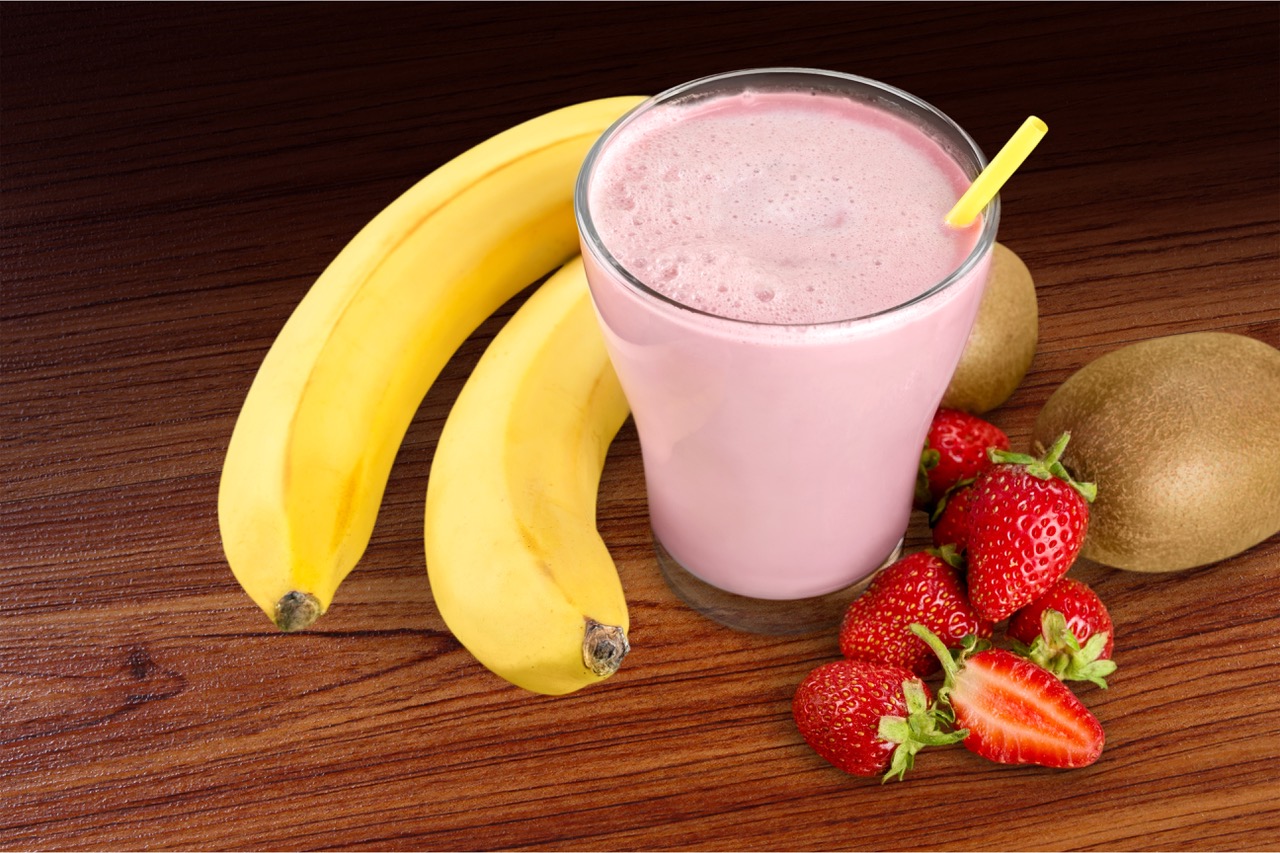
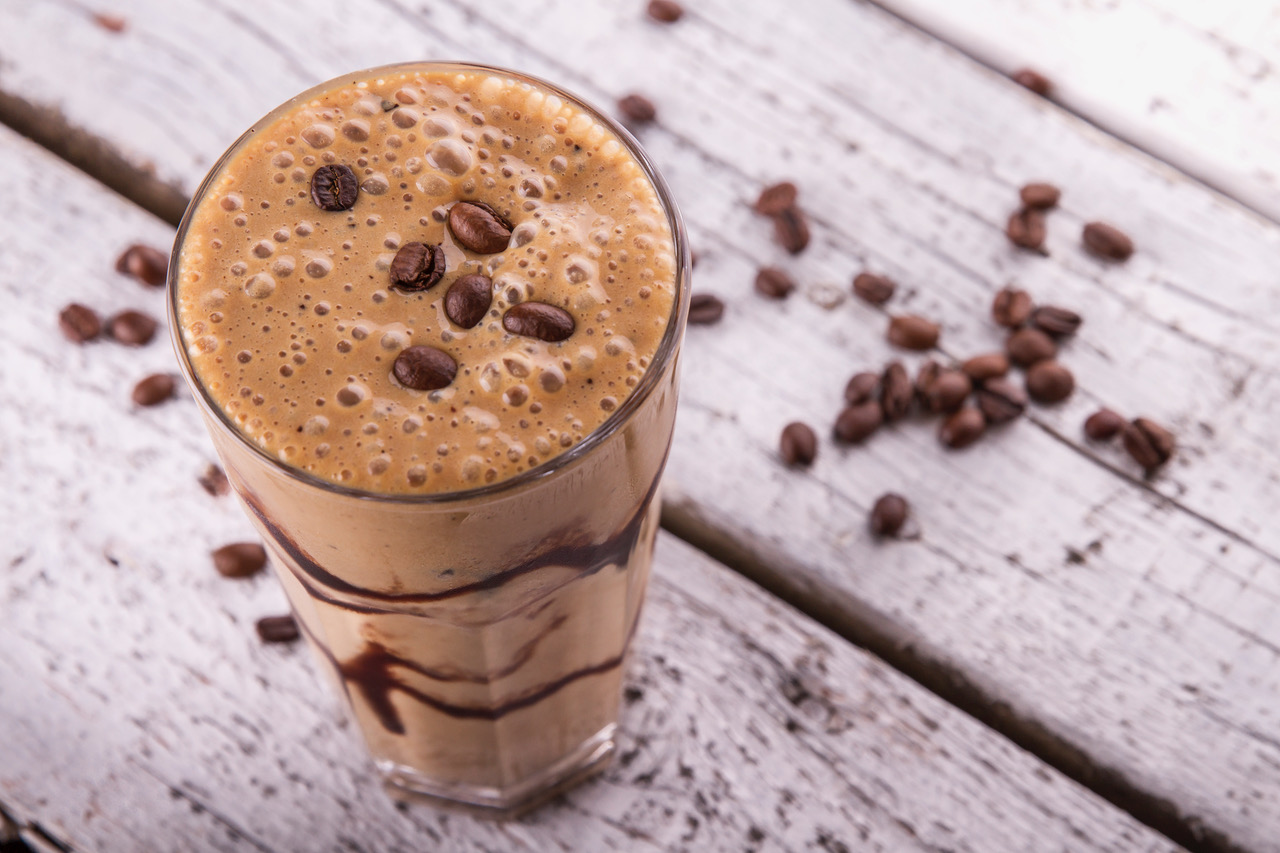
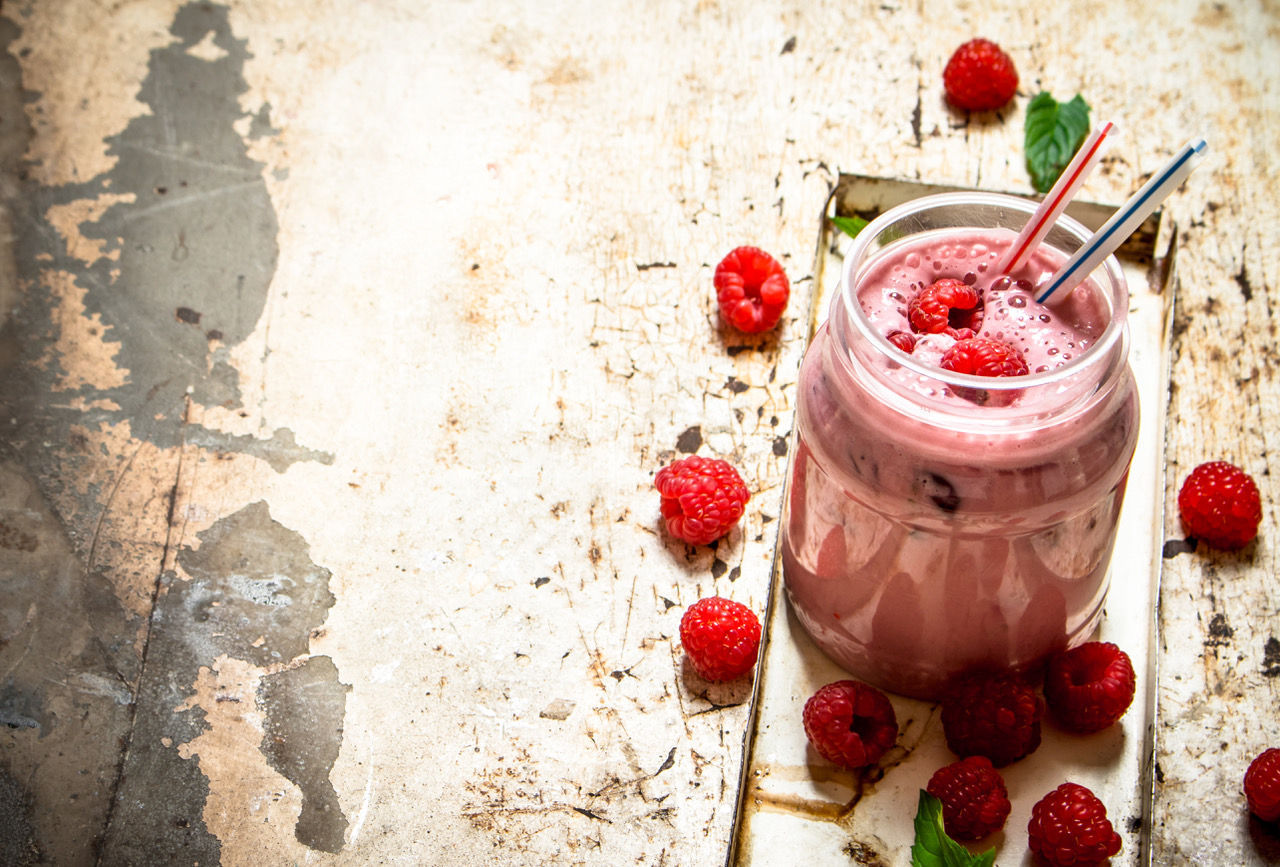
Place all ingredients in a blender and mix until blended.
Total Calories 262
Protein 52% (35g)
Carbs 45% (31g)
Fat 3% (1g)
About the author: Charlene Bazarian is a fitness and weight loss success story after losing 96 pounds. She mixes her no-nonsense style of fitness advice with humor on her blog at Fbjfit.com and on Facebook at FBJ Fit.
“Photo courtesy of M3 Supplement Company.”
Disclaimer The Content is not intended to be a substitute for professional medical advice, diagnosis, or treatment. Always seek the advice of your physician or other qualified health provider with any questions you may have regarding a medical condition.
Lupus is often hard to diagnose because it shares symptoms with so many other conditions, and because it affects the immune system of each person differently. Lupus can also be tough to treat, and the drugs traditionally used to manage the condition may come with serious side effects.
One of the most difficult things about lupus is that people who have it don’t always realize it — they know something’s not right, but they’re often not sure what it is.
Researchers are working to learn more about lupus so new treatments can be developed, and clinical trials play an important role in that learning process.
HealthyWomen spoke with Anca Askanase, M.D., the founder and clinical director of Columbia’s Lupus Center and the director of Rheumatology Clinical Trials, about clinical trials for lupus and why they’re so valuable.
What are clinical trials?
A clinical trial is a study of how a drug or other treatment works in people. Drugs must be shown in clinical trials to be safe and effective before they can be approved by the Food and Drug Administration (FDA).
Clinical trials happen in phases. Phase 1 focuses on safety, while Phase 2 looks at how safe the drug is but also how well it works. Phase 3 is the ultimate test of whether the drug is safe and effective, and is the basis for applying to the FDA for approval. If there are more questions about a drug — for example, how it might affect certain groups of people that weren’t included in the first three phases — the trial may move to Phase 4.
What are the different types of lupus clinical trials?
Some clinical trials for lupus treatment involve drugs that have been studied in people, but not in people with lupus. Others are for new treatments. In 2011, the first biologic drug for treatment of lupus was approved by the FDA after two successful clinical trials that each had over 800 patients. In the past few years, there has been a lot of excitement because two new drugs have been approved, and another drug that already existed was newly approved to treat a specific type of lupus.
The work is ongoing — it’s a constant struggle to come up with better drugs, better study designs and better ways to test drugs for lupus.
What are some of the benefits of clinical trials for lupus?
Clinical trials offer benefits to patients as well as to researchers. For patients, it’s an opportunity to be treated with a drug that may be highly effective before it’s available to the world. And, in a way, you’re guaranteed the best possible treatment because you’re constantly evaluated, constantly watched and constantly monitored.
Are there benefits to participating in a clinical trial for lupus that involves a placebo even if you receive the placebo and not the new treatment being studied?
Absolutely. Even for patients who don’t receive the drug, the level of scrutiny at every step means you’re being closely monitored and allows for the best care you could possibly get. And, if you need medical treatment, you will always get the standard level of treatment in addition to the placebo if you are participating in a clinical trial.
How can someone access a clinical trial for lupus or find out more information about it?
The Department of Health and Human Services has a campaign called Let’s Take Charge! that’s focused on making lupus research more inclusive and diverse, and it offers information about clinical trials. The Lupus Foundation of America and the Lupus Research Alliance are great resources as well. One should also talk to their rheumatologist.
If a woman is nervous about entering into a clinical trial for lupus, what advice would you give her?
Most decisions in our lives are about pros and cons, so I would recommend that she talk to her healthcare provider about weighing the benefits and risks of joining a clinical trial. And she should also talk to other people who have participated in clinical trials to get a sense of how they work.
A program called Patient Advocates for Lupus Studies (PALS) promotes clinical trial enrollment in diverse populations by connecting people living with lupus with peers who can offer firsthand experience of what it’s like to participate in a clinical trial.
Why are clinical trials important to advance research in diseases such as lupus?
Some people think about clinical trials and worry about side effects or the drug not working. But it depends on your personality and how you think of the world.
I’m a clinical trialist and a clinical researcher, so to me, the glass is always half full. This is how we make progress. This — people volunteering their bodies and time for drug development — is how we are able to have new therapeutic options for people with lupus.
Sarah Ezrin, E-RYT 500, is the award-winning author of The Yoga of Parenting: Ten Yoga-Based Practices to Help You Stay Grounded, Connect with Your Kids, and Be Kind to Yourself. She is a freelance writer, yoga educator, and content creator based in the Bay Area. Her willingness to be unabashedly honest and vulnerable along with her innate wisdom, make her writing, teaching, and social media great sources of healing and connection for many people.
Sarah brings a wide spectrum of life experiences into everything she does. She is unafraid of sharing all sides of herself. She does so in the hope of permitting others to be their most authentic self. At this time, when honest self-awareness is so important, Sarah is an essential and exemplary voice.
Sarah writes extensively on the subjects of yoga, parenting, and mental health, often interweaving these themes. Her work ranges from heavily-reported assignments to personal essays to blog content for brands. She is a regular contributor to Yoga Journal Magazine, Motherly, Yoga International, Healthline, Yahoo! Parenting, Scary Mommy, Mind Body Green, Mantra Magazine, and LA Yoga Magazine. She has been featured in the Wall Street Journal, Forbes Magazine, Bustle, LA Weekly, and NBC News.
Sarah is a well-respected yoga teacher and a leader in the wellness community. A world traveler since birth, she has led trainings, workshops, and retreats locally and across the globe.
Women Fitness brings you an insight into the life of yoga & parenting coach, Sarah Ezrin.
Namita Nayyar:
You are an award-winning author, yoga educator, maternal mental health advocate, and content creator. Please share the series of events that led you to take up yoga, as a way of life.
Sarah Ezrin:
Full disclosure, I was first attracted to yoga for the physical benefits. I mean, I also loved that it was calming, and needed that chill out time to counter my high-intensity Hollywood job, but I was way more concerned with getting my leg behind my head and folding in half than working on my inner peace. Or perhaps, more accurately, I thought those poses would give me the peace I so desparately needed. It took time (I’ve been doing yoga for 25 years!) and a whole lot of life experiences, such as loss, relationships, marriage, love, injury, pain, disconnection, and of course, parenthood, for me to fully grasp that my yoga practice is how I show up in the world, not what I can do with my body.
Namita Nayyar:
Parenthood is one of the most rewarding journeys many of us will ever embark on. Being a yoga trainer and mom to two boys what is your piece of advice for women who find motherhood as a challenge?
Sarah Ezrin:
You are not alone!!! Motherhood is hard after all. Period, end. Yes, it’s incredibly rewarding and our hearts grow to sizes our heads could never have imagined, but that doesn’t take away from the very real struggles most moms face. This is epecially true here in the United States, where there is a huge lack of governmental systems in place to support parents and where most of us live far from our own families and thus our village. As uncomfortable as it is, ask for help. Make your own village. Lean on other moms.
Namita Nayyar:
How do you go about counseling your clients in healing and gaining inner peace? Share 5 tips for women to practice every day.
Sarah Ezrin:
Well, the first thing I remind clients is that as wonderful as peace and grounding feel, we actually need other emotions to be apart of this dynamic and vibrant world. There’s a lot of misconceptions in spiritual circles that the goal is to be happy all the time, but without sadness, we’d never know joy. Without loneliness, we’d never know what it feels like to be in community. So maybe that’s tip #1, ha!
1. Practice spacious observation: Practice observing your emotions in the same way you would objectively notice a physical item in your surroundings. Honor the beautiful spectrum of emotions that you get to experience as a human being.
2. Name 3 things you’re grateful for: This is a great practice to do right before bed because it puts a cap on your day and helps you go to bed on a spiritual-emotional level.
3. Move your body: You don’t need to do a two-hour yoga practice or hour-long cardio to get your workout in. Just five minutes of movement can make a huge impact. And bonus points if you can get outside.
4. Take breath breaks: Our breath is cool because it’s one of the few things in our bodies that is both automatic and conscious. Our breath cadence is a direct line to our nervous system. Pausing to breathe can change the trajectory of your whole day.
5. Journal: Reflection is a powerful healing tool. It allows us to process aloud things that might be jumbled in our brains. You don’t need to write a page-long entry either. Just a few sentences can be a helpful way of taking the proverbial lid off the boiling pot. I also love looking back on old journals to see how much I’ve healed.
Namita Nayyar:
According to you “I have a long history with grief, anxiety, eating disorders, obsessive behavior, and postpartum mood disorders.” How did yoga help you heal and cope with the trauma?
Sarah Ezrin:
Your advice on how one can use it as a tool. For a long time, I thought yoga was the foundation for everything I do, but recently, I had a light bulb moment where I realized: No, mental health is the foundation for all my teachings! Yoga is simply a tool. It’s my favorite tool, but my practice was born out of my desperation for clarity and grounding.
And P.S. When I say “yoga,” I mean the whole gamut of contemplative practices and physical poses, including meditation, selfless service, and prayer. Yoga brought me into my body in a way that I’m not sure I ever was. I had spent most of my teenage years and very early 20s trying to get out of myself. It was incredibly uncomfortable to be in my anxiety and feelings. Yoga fortified me against that discomfort. It gave me anchors to find presence (as so much of my anxiety is future-tripping). One of my favorite practices is standing barefoot and feeling my feet on the earth. There is trust in letting the earth hold you. I also love feeling my body calibrating for balance. It’s a wonderful reminder that everything is temporary and we’re all just doing the best we can.
Disclaimer The Content is not intended to be a substitute for professional medical advice, diagnosis, or treatment. Always seek the advice of your physician or other qualified health provider with any questions you may have regarding a medical condition.
Se proyecta que las mujeres en Estados Unidos pasarán casi 50 años de sus vidas tomando medicamentos con prescripciones. Y el costo de estos medicamentos puede ser dolorosamente alto. De hecho, 4 de cada 10 (el 43%) de mujeres no han podido comprar medicamentos de prescripciones y casi 1 de cada 10 no han podido tomar sus medicamentos tal como se indica en la receta debido a sus costos en algún momento de sus vidas.
No es una sorpresa que las personas tengan dificultades para pagar medicamentos. En 2021, los costos de medicamentos sin reembolso subieron más del 9% a $633.5 mil millones.
Los costos de medicamentos pueden ser especialmente difíciles para pacientes que deben tomar medicamentos denominados biofármacos y biosimilares porque el costo de estos fármacos puede ser especialmente alto.
Los biofármacos se preparan a partir de células vivientes en vez de a partir de químicos. Actualmente, la mayoría de biofármacos tratan condiciones tales como el cáncer, la diabetes y trastornos autoinmunitarios. Proporcionan opciones valiosas de tratamiento, pero son caros y frecuentemente tienen patentes que están vigentes durante mucho tiempo, lo que significa que la compañía que desarrolló el medicamento es la única que puede comercializarlo y decidir su precio. Aunque solo el 2% de prescripciones en 2021 fueron de medicamentos biológicos, representan casi la mitad (el 46%) de todos los gastos de fármacos ($260 mil millones) en EE.UU.
Los biosimilares, que son copias cercanas de los biofármacos, funcionan de la misma manera, pero cuestan menos. Al igual que los medicamentos genéricos, los tratamientos de biosimilares están disponibles después de que expira la patente de un biofármaco. Usualmente son más baratos que el biofármaco original de marca, que se denomina el producto de referencia, pero todavía pueden ser caros porque su preparación es compleja.
“Es hora de que todos comprendamos que, en la misma forma en que un medicamento genérico ahorra dinero en lo que se refiere a costos de fármacos, un biosimilar ahorrará dinero en lo que se refiere a costos de medicamentos biológicos”, dijo Lisa Kennedy Sheldon, Ph.D., ANP-BC, AOCNP, CGNC, FAAN, una enfermera oncológica profesional y consultora de enfermería internacional de Dogcove Consulting Group.
Según la Association for Accessible Medicine [Asociación para medicamentos asequibles] (AAM), un grupo de cabildeo que aboga por biosimilares y medicamentos genéricos, el precio promedio de biosimilares es la mitad del precio (o menos) que los productos de referencia. Otra estimación sugiere que el costo de biosimilares es un tercio menos, en promedio, que sus productos de referencia. Los biosimilares también hacen que los precios de biofármacos bajen debido a la competencia. Consecuentemente, la AAM indica que productos biosimilares ahorraron a pacientes $9.4 mil millones en 2022.
Obstáculos de los biosimilares
A pesar de los beneficios de los biosimilares, pueden ser difíciles de encontrar en EE.UU.
Y cuando biosimilares están disponibles en EE.UU., las compañías de seguros no siempre los cubren. Aun cuando los planes médicos usualmente no desean pagar tratamientos más caros si uno más barato está disponible, los administradores de prestaciones farmacéuticas (PBM, por sus siglas en inglés) a veces proporcionan incentivos a planes médicos para que recuperen más dinero cuando cubren medicamentos de mayor costo. Sin el mismo tipo de incentivo para cubrir biosimilares de menor costo, las aseguradoras podrían tener menos probabilidades de agregarlos a las listas de medicamentos cubiertos.
No todos los proveedores de atención médica (HCP, por sus siglas en inglés) consideran recetar biosimilares. Aunque una encuesta indicó que 9 de cada 10 oncólogos dijeron que se sienten bien prescribiendo biosimilares aprobados por la FDA, no todos lo hacen. El 5% dijo que solo los prescribían en función de datos de ensayos clínicos, los cuales no siempre están disponibles.
Otro obstáculo podría hacer que muchas personas no entiendan qué son los biosimilares. Sheldon recuerda cuando biosimilares estuvieron disponibles por primera vez en 2015. Los pacientes querían saber si los nuevos productos eran seguros y si funcionarían. Esas todavía son las preocupaciones principales de los pacientes, dijo.
“He hablado acerca de biosimilares y biofármacos desde hace nueve o 10 años”, dijo Sheldon. “Todos [los pacientes] desean saber, ‘¿Funcionará para mí? ¿Aliviará mi enfermedad, mi problema, mis dificultades?
Considerando todo en conjunto, estos obstáculos pueden dificultar el acceso a estos biosimilares menos caros, aun cuando personas y el sistema médico en general podrían ahorrar dinero con un mejor acceso.
Los pacientes pagan un mayor precio por la falta de acceso a biosimilares
Incluso si productos biosimilares están cubiertos por los seguros, los pacientes podrían tener que pagar el 20% del costo a través de copagos y coaseguros. Y esos rubros podrían costar a las personas varios miles de dólares al mes o más. Para muchos estadounidenses, eso es simplemente demasiado.
Sheldon dijo que le preocupa que los costos bloqueen un acceso justo a los tratamientos, particularmente para personas con menores ingresos o que tengan planes de seguros médicos menos generosos.
“La sociedad y los proveedores de atención médica tenemos la obligación de [ofrecer] los tratamientos más económicos y efectivos a los pacientes”, dijo. Según Sheldon, no solo afecta al paciente cuando esa persona no puede obtener biosimilares menos caros. La sociedad también paga el precio porque perdemos la oportunidad de reducir costos médicos en general.
Sheldon dice que los planes médicos deberían cubrir biosimilares, lo cual será útil para reducir los costos generales de atención y disminuir las cargas financieras de los pacientes y del sistema.
Proporcionar acceso a biosimilares
El gobierno está tratando de hacer que sea más fácil que los pacientes obtengan biosimilares.
La ley de reducción de la inflación (IRA, por sus siglas en inglés, que entró en vigencia en 2022, incrementa temporalmente incentivos financieros para recetar ciertos biosimilares administrados en clínicas o en consultorios de proveedores de atención médica. Sin embargo, esta ley no reduce los copagos de los pacientes. Su meta es motivar a los proveedores de atención médica a que prescriban biosimilares, si fuese apropiado.
También hay un nuevo proyecto de ley, aumentar el acceso a biosimilares, introducido en la cámara de representantes de EE.UU. en 2023, y se encuentra actualmente en el proceso legislativo.
Estos acontecimientos son alentadores para Sheldon.
“Hay una oportunidad para el uso de biosimilares”, dijo. “[Las personas] deberían poder tener acceso a biosimilares para ahorrar sus costos generales de atención y sus gastos sin reembolso”.
Si deseas obtener acceso a biosimilares para ti o para un ser querido, hay estrategias que podrían mejorar tus posibilidades de obtenerlos, según Michele Mosier, PharmD,, fundadora de Hope Health Advocacy.
“Obtén información acerca de los biosimilares, de su seguridad y eficacia. Mantenerte bien informada te empoderará para participar en conversaciones significativas con proveedores de atención médica”, dijo Mosier. “Una comunicación abierta promueve una toma de decisiones colaborativa, lo que te permitirá obtener el plan de tratamiento más eficaz”.
En una forma más general, ella incentiva a sus pacientes a que digan lo que piensan. Podrías ayudar a más personas además de ti si lo haces.
“Únete a grupos de concientización de pacientes y a foros para compartir experiencias y puntos de vistas acerca del uso de biosimilares”, dijo Mosier. “Una voz unificada de los pacientes puede promover la concientización y políticas que incentiven un acceso más amplio a biosimilares”.
Este recurso educativo se preparó con el apoyo deSandoz.
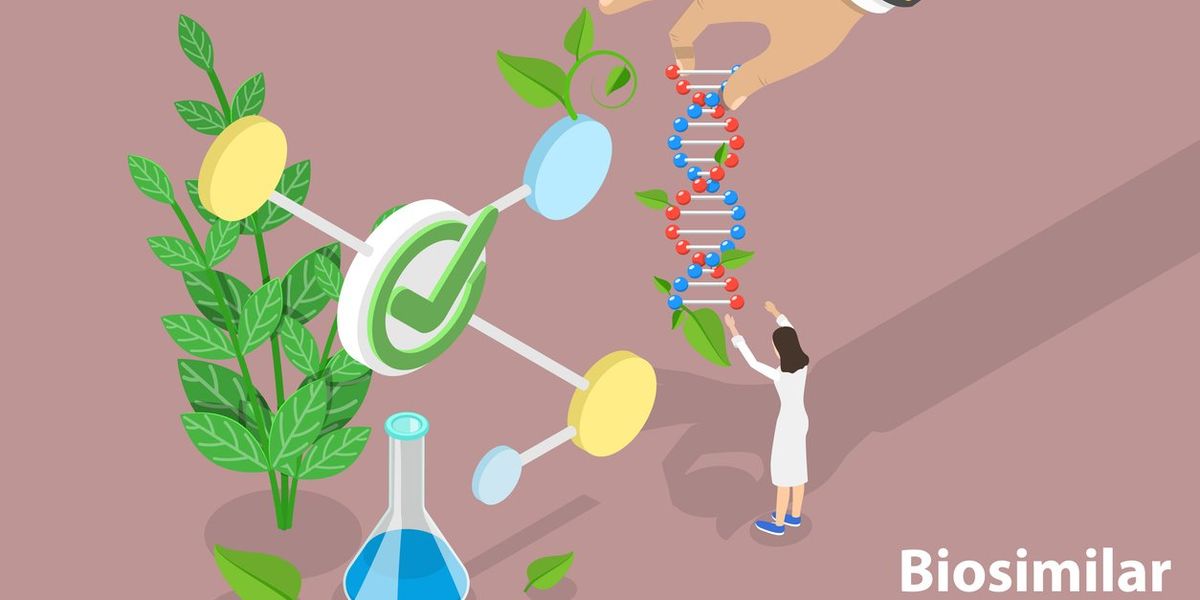
Biosimilars are drugs modeled after another type of drug called biologics. Both can be used to treat a variety of health issues, including autoimmune conditions such as rheumatoid arthritis (RA) and some types of cancer.
Biologics are made from a natural source, such as plant or human cells, and biosimilars are made in the same way. To be approved by the FDA, a biosimilar must be proven to work as well and be just as safe as the biologic it’s modeled after (called a reference product).
Making medication from living material is a complex and time-consuming process, and the price tag of biologics reflects this. For example, biologics used to treat RA can cost up to $36,000 a year.
Because biosimilars are based on a biologic, they are easier and cheaper to make — which means they cost patients less. On average, biosimilars are about one-third the price of the reference product.
If you are living with a health condition that can be managed with biologics, it’s possible that biosimilars could be a more affordable alternative that works just as well.
Here are some questions to ask your healthcare provider (HCP) about biosimilars.
What is your experience with biosimilars?
This is probably the first thing you should ask, because your HCP may not have the knowledge or experience needed to answer your questions about biosimilars. But they should be able to refer you to someone who can.
Are there any biosimilars available for my condition?
Biosimilars can be used to treat or manage many chronic health conditions, including diabetes, colitis, Crohn’s disease, psoriasis, arthritis and multiple sclerosis. They are also used to treat breast, lung and colon cancers.
If you have one or more of these conditions, it’s possible there’s a biosimilar that can help you. And if you’re already using a biologic to manage a health issue, a biosimilar could be a more affordable option.
This price difference could be particularly helpful for women, since they are more likely than men to deal with chronic health conditions. Biosimilars may also offer women a more affordable alternative to a treatment that they might otherwise not be able to get, such as some expensive breast cancer treatments.
Will a biosimilar be covered by my insurance?
Which biosimilars (if any) will be covered depends entirely on your insurance plan and your unique health circumstances (your diagnosis, whether you’ve tried other treatments, etc.). For example, some insurance companies may choose to cover certain biologics instead of biosimilars because they’ve made agreements with the manufacturers of these biologics.
HCPs aren’t necessarily insurance experts, but most have experience helping patients navigate the process of figuring out which medications are covered.
Biosimilars must be shown to work in the same way — and just as well — as the biologic reference product they’re modeled after before they can be approved by the FDA. Your HCP can give you information on how well the biosimilars they recommend for you work.
How do I safely switch from a biologic to its biosimilar?
Because biosimilars are similar — but not identical — versions of biologics, switching from a biologic to a biosimilar isn’t as simple as subbing a generic version of a drug for a brand-name one. (Both biosimilars and generics are copies of medications that have already been approved by the FDA, but biosimilars are only similar to their biologic reference products because they are large molecules made from living elements, while generics are the same as the brand-name drugs they copy because they are small molecules made from chemicals.)
That said, a recent review of several studies including over 5,000 patients who switched between biologics and biosimilars found no difference in safety between the two. Your HCP can guide you through the process, and will check to make sure your body is reacting well to the switch.
How will the biosimilar interact with other medications I am currently taking?
Any time you’re considering a new medication, you’ll want to talk to your HCP about how this medication might interact with the ones you’re already taking. Bringing a list of all the medicines you’re taking (including over-the-counter ones such as allergy meds and supplements) can help your HCP get a clear picture of potential interactions with biosimilars.
What are the risks/side effects of the biosimilar you’re prescribing
The FDA has strict safety standards for medications, and biosimilars must be proven safe before they’re approved. But all medications carry a certain amount of risk and/or have the potential to cause side effects. Much depends on the specific medication and your current health situation — not just the condition you’re considering treating with a biosimilar, but any other health conditions you’re dealing with.
A biosimilar will have the same risks/side effects as the biologic that it is designed to match. Your HCP can help you understand possible risks and side effects of biosimilars based on your unique health situation.
Feeling empowered to find answers
It’s important to note that not every provider is an expert on biosimilars, and that’s okay. If your HCP isn’t able to answer these and other questions for you, you should feel empowered to ask for a referral to someone who can.
This educational resource was created with support from Sandoz.
Was it a little thing that was pretty easy to forgive, like your partner loading the dishwasher all wrong?
Or was it something really bad, like your BFF seeing Taylor Swift: The Eras Tour movie without you?
Or maybe you were even mad at yourself for messing up a good thing?
Whatever it was, forgiving yourself or others means letting go of resentment — and it can be really complicated.
But if you can find it in your heart to do it, science says your heart will thank you. In fact, research shows that the act of forgiveness can lower the risk of heart attack, reduce blood pressure and improve cholesterol levels.
Forgiveness can have a positive impact on mental health, too, by lowering levels of anxiety, depression and stress.
“You lower stress in general because it’s stressful to carry a grudge subconsciously and consciously,” said Yvonne Thomas, Ph.D., a Los Angeles-based psychologist who specializes in life transitions, motivation and self-esteem. “The heaviness can leave you feeling depressed and weigh you down — and it is draining.”
In addition to health benefits, forgiving a person may help your relationships overall. Thomas said holding a grudge can hold you back from trusting new people because you never healed from the past. “You may not even realize you’re holding onto stuff more or longer than you should and it’s triggering old feelings even when it has nothing to do with a new person.”
Forgiveness may not be for everyone. One way to know if you’re ready to try to forgive is to check your feelings. If you’re not driven by emotion or your feelings are less intense than before, you may be in a place where you can forgive, according to Thomas.
Here are 4 tips from Thomas on how to move forward toward forgiveness.
Write a letter to yourself about the situation. Write down the whole story about what happened from your perspective and be as objective as possible. The letter is just for you — you’re not going to give it to the person that harmed you — but writing everything down helps you look at the full picture.
Then write down what you’ve learned. How do you feel about that person today after some distance and reflection? Are you able to see both sides of the situation? This is good to do as prep before a conversation and can also be a gauge for your feelings.
Reflect on your relationship with the person you’re trying to forgive. Ask yourself how you’ve benefited from having that person in your life. This gives you an opportunity to identify the positives about the relationship.
Talk it out with the person you’re trying to forgive. Talking about the situation gives both people a chance to see if you can work it out or clear up any misinterpretations on either side. Forgiving doesn’t necessarily mean forgetting so be upfront about your intentions and expectations. For example, let that person know you’re trying to forgive them but in the future you need to see a change in behavior or whatever it is that can help you move forward.
Seek professional help. Sometimes, it’s not healthy to engage with the person you’re trying to forgive or you just need some outside help to get there. A psychologist who works on relationships and is knowledgeable about forgiveness can help you move past whatever it is you need to forgive.
Living with endometriosis is a real pain in the pelvic area for many women and people assigned female at birth. The pain can be debilitating, and some people may not even know they have endometriosis because it can take years to get a proper diagnosis.
Endometriosis happens when tissue similar to the tissue lining in your uterus grows outside of the uterus. These endometrial growths can bleed and swell and cause pain and serious health problems, including infertility.
The symptoms of endometriosis can mirror other health conditions, which is one of the reasons why it can take a long time to get an endometriosis diagnosis. Another reason is that not everyone has the same symptoms. Some uncommon signs of endometriosis can include shortness of breath, acne and fatigue.
In honor of Endometriosis Awareness Month, take our quiz to see how much you know about the basics behind this common pelvic pain conditio
1. True or False: About 1 in 10 people who menstruate have endometriosis.
2. True or False: Bleeding between periods is a sign of endometriosis.
3. True or False: If you don’t have symptoms, you don’t have endometriosis.
4. True or False: You’re less likely to have endometriosis if you’ve never had kids.
5. True or False: Endometriosis can show up in other parts of the body, including your lungs.
6. True or False: Diet and exercise can prevent endometriosis.
7. True or False: Surgery is the only way to know for sure that you have endometriosis.
8. True or False: Surgery is usually the first step when treating endometriosis.
9. True or False: Menopause can make endometriosis worse.
10. True or False: There are four stages of endometriosis.
11. True or False: Dolly Parton is one of the celebrities who has endometriosis.
Embarking on a weight loss journey comes with its unique set of challenges, and who better to learn from than women who’ve successfully navigated the path? Discover their personal hurdles, dietary strategies, workout routines, and the impact of family support on their weight loss success.
Hey everyone! I’m Samrah Yousuf, working on all things fitness as a Digital Content Producer at SQUATWOLF. My weight-loss journey has been quite a ride, with its fair share of struggles, especially when it came to sticking to gym sessions and figuring out what to eat.
It wasn’t until I got some help from a personal trainer that things started to click. They showed me how tracking my macros could align with my goals to build muscle and lose fat. I started planning my meals every week, which was a game-changer for me. This way, I didn’t have to stress about cooking every day or ordering food. I aimed for a diet with 60% of my calories from protein, 20% from carbs, and 20% from fats. It helped me stay on a slight caloric deficit of 1,700-1,800 calories daily without feeling starved.
YouTube became my go-to for meal-prep inspiration, proving you don’t need fancy gadgets to eat right. I switched to healthier options like Greek yogurt and light cheese, keeping my meals delicious but low in sodium. I also added more fruits for natural sweetness. Working out became more consistent too, hitting the gym three times a week with my PT’s guidance.
Throughout all this, my family’s support was incredible. Whether it was reminding me to pack my gym bag or joining me for walks, they were always there, making the journey feel supported and shared.
So, to anyone on their weight-loss path, remember: understanding your nutritional needs, prepping ahead, and leaning on your support network can make all the difference. It’s not about perfection but making small, sustainable changes towards a healthier you.
Here, I am going to share that this weight-loss journey was not a nice cruise throughout the year. However, of all the challenges I have encountered, the hardest one for me was controlling my food intake while on the regimen. Snacking in between meals without consciousness was something that I had in mind, and sugar treats had no comparison to my weak willpower.
This habit, however, did not last long, and I couldn’t keep up with the healthy process of meal prepping. If it weren’t for it, then my life would be different! I focused on nutritious food components like vegetables, fruits, and lean protein, and this regime gave me more energy and power as compared to smaller meals. Having portion control was going to be another realization. I opted for small dishes instead of large ones and started paying attention to what my body says—you will be amazed at how much one can eat if they aren’t cautious! This was another area of my life where, quite figuratively, I had to reinvent the ‘exercise’ wheel. It was not that I had never been to the gym before, but it just didn’t fire up my interest in any way.
Therefore, I combined what I liked, like dancing Zumba with my girlfriends, so that I would find pleasure in my physical exercises. The music and the social event were the key factors that kept me looking forward to the next workout. I began with a few classes per week and started lightly; this way, I could build up strength and work more intensively later on. As for my health, there was something in particular that had to be done before I could start leading a more active lifestyle, and that was a visit to my doctor. She helped me establish a schedule that my body needs, and she established a specific plan that could take care of any potential health conditions.
Being surrounded by family was something I could not appreciate enough as it allowed me to talk to people who cared. My private team, consisting of my husband and kids, was my biggest supporter. They would cook healthier meals for me, drive me to workouts if needed, and all the while cheer me up whenever I needed some motivation. Also, they would celebrate with me whenever I achieved something, big or small. The most important thing was having that sort of backup team; having them by my side truly meant the whole world.
Planning for Weight Loss Success
Anam Barkan, Travel Enthusiast, Director Marketing and Founder, Zoyago
Beginning the process of losing weight presented its fair share of obstacles. A notable obstacle encountered was the preservation of, consistency in the face of a hectic schedule replete with work and travel obligations. To surmount this, I placed planning and preparation as a top priority, arranging meals and exercises in advance to ensure I remained on track.
I emphasized whole, well-balanced foods in my diet, consuming an abundance of fruits, vegetables, lean proteins, and whole grains. Tailored to my fitness level and objectives, my exercise regimen included strength training, flexibility exercises, and cardiovascular activity.
Occasionally, I experienced health concerns such as fatigue and muscle soreness during my journey; however, I managed to cope with them by ensuring adequate rest and hydration, and by adjusting the intensity of my workouts.
The invaluable contributions of my family were encouragement, accountability, and understanding in times of difficulty; they were critical to my success. Their consistent encouragement inspired and motivated me to continue striving to achieve my objectives.
I faced several challenges during my weight-loss journey, but the most prominent ones were a lack of motivation and unhealthy eating habits. Lack of motivation is a common problem that many people face when trying to lose weight. I often felt demotivated and would give up on my healthy routine for days, which hindered my progress. Moreover, I had a habit of indulging in unhealthy foods, especially junk food and sugary drinks. These challenges made it difficult for me to achieve my weight-loss goals.
To overcome the lack of motivation, I focused on setting achievable short-term goals and rewarding myself when I achieved them. This helped me stay motivated throughout my journey.
Additionally, I sought support from family and friends, who would encourage me to keep going. I consulted a nutritionist to address my unhealthy eating habits and followed a personalized diet plan. I also made sure to incorporate regular exercise into my routine.
During my weight-loss journey, I faced various challenges, including cravings, lack of motivation, and plateauing progress. To overcome these obstacles, I made sure to set realistic goals. I also maintained consistency in my diet and exercise routine.
I adopted a balanced diet rich in fruits, vegetables, lean proteins, and whole grains. I also reduced my intake of processed foods and sugary snacks.
Regular exercises, such as cardio, strength training, and flexibility exercises, also played a role in my journey. I encountered occasional health issues, such as muscle soreness and fatigue.
However, I listened to my body, adjusted my workouts as needed, and prioritized rest and recovery. Family support played a crucial role in my journey and provided encouragement, accountability, and motivation to stay committed to my goals.
Special Thanks: From navigating fitness and nutrition to balancing diet with consistent exercise, the Partnerships Development Team has gathered five insightful stories featuring advice from a content lead and a PR & brand manager, among others.
Disclaimer The Content is not intended to be a substitute for professional medical advice, diagnosis, or treatment. Always seek the advice of your physician or other qualified health provider with any questions you may have regarding a medical condition.
Sabrina Laurenzana is an Italian supermodel and Social Media Influencer. She has an enviable following on Instagram of 230K.
Women Fitness President Ms. Namita Nayyar in a candid interview with Sabrina Laurenzana, an Italian supermodel and Social Media Influencer, talks about her workout, diet, hair & skincare, and her success story.
Namita Nayyar:
Where were you born? Later you decided to pursue modeling and being an Instagram Influencer. This later propelled your career to the height where you became a leading social media influencer. Tell us more about your professional journey of exceptional hard work, tenacity, and endurance.
Sabrina Laurenzana:
I was born in Chieri, it is a town and commune in the Metropolitan City of Turin, Piedmont, Italy, to be precise. I pushed myself into the social media world with the desire to push other people to believe more in themselves. The world of fashion has always fascinated me, I reached the height of success with perseverance and determination.
Namita Nayyar:
You have an impressive 230k follower on Instagram. Tell us more about this spectacular achievement of yours.
Sabrina Laurenzana:
I reached my 230,000 followers by posting on my Instagram about my lifestyle, eating healthy breakfast. Also posting frequently about my sporting style such as dancing and swimming.
Namita Nayyar:
What exercises comprise your fitness regime or workout routine you may wish to share?
Sabrina Laurenzana:
I practice a lot of gym, where I work on my abdominals, and do regularly exercise.
Disclaimer The Content is not intended to be a substitute for professional medical advice, diagnosis, or treatment. Always seek the advice of your physician or other qualified health provider with any questions you may have regarding a medical condition.