The main category of Forex News.
You can use the search box below to find what you need.
[wd_asp id=1]
The main category of Forex News.
You can use the search box below to find what you need.
[wd_asp id=1]

The U.S. dollar is weakening at its fastest pace in years, boosting commodity prices worldwide. Central banks are aggressively accumulating gold to reduce reliance on dollar reserves. Supply disruptions, tariffs, and underinvestment in mining have tightened markets just as demand accelerates. Together, these forces explain why precious and industrial metals are rising in unison — and why the rally may not be over yet.
Gold’s rally is rooted in macroeconomic stress and policy shifts. The metal briefly touched $4,525 per ounce, a fresh all-time high, before consolidating near current levels. Monthly gains are nearing 9%, driven by expectations that the Federal Reserve will begin cutting interest rates in 2026.
Lower rates reduce the opportunity cost of holding gold, which pays no yield. At the same time, inflation concerns and rising government debt are fueling what traders call the “debasement trade.” A weaker U.S. Dollar has made gold cheaper for overseas buyers, amplifying global demand.
Central banks are another powerful force. Many have accelerated gold purchases to diversify reserves and hedge against financial instability. Analysts now project gold could dip modestly toward $4,350 near quarter-end before climbing toward $4,600 over the next 12 months, supported by sustained official-sector buying.
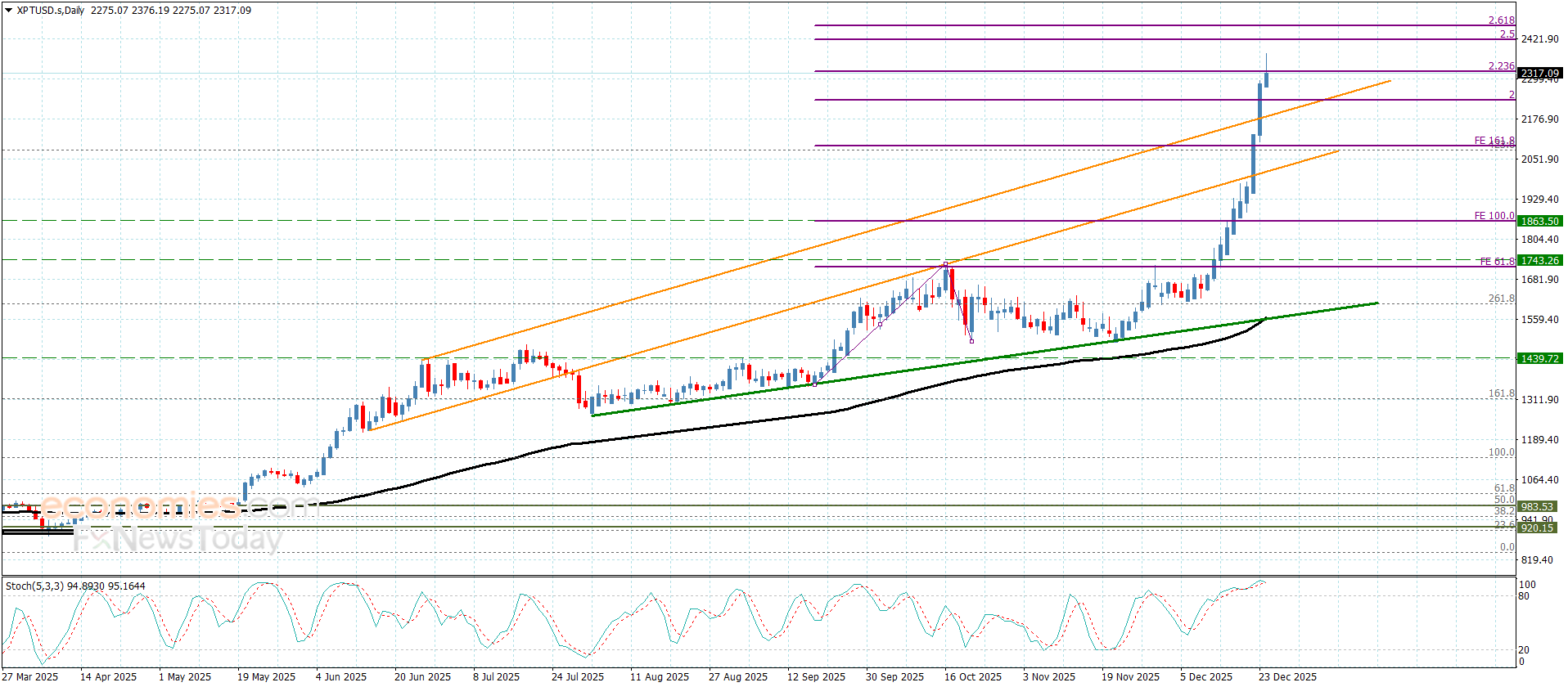
Silver’s surge is even more dramatic. Prices briefly topped $72.70 per ounce, and despite minor pullbacks, the metal remains up over 140% in 2025. Unlike gold, silver plays a dual role as both a safe-haven asset and a critical industrial material.
Demand from solar panel manufacturing, electric vehicles, and data centers has exploded. Each new energy or AI project consumes silver permanently, tightening supply. Monthly gains near 40% reflect how quickly inventories are being absorbed. With silver now classified as a strategic and critical mineral in several countries, analysts see prices holding above $70 into 2026, with forecasts pushing toward the mid-$70s.
Copper’s rally tells the story of the energy transition. Prices are approaching $12,000 per metric ton, driven by soaring demand from electric vehicles, artificial intelligence data centers, and power grid expansion. A single electric vehicle can use up to four times more copper than a traditional gasoline car.
According to Goldman Sachs, grid expansion and power infrastructure could account for more than 60% of copper demand growth by 2030. Supply, however, is struggling to keep pace. Mining disruptions in Chile and Peru have constrained output, while new projects face long approval timelines.
Adding to the pressure, U.S. trade policy has reshaped the market. A 50% tariff on imported copper products triggered stockpiling and hoarding. J.P. Morgan expects tight supply conditions to persist well into 2026.
Looking ahead to 2026, analysts broadly expect gold, silver, and copper prices to stay elevated, with volatility driven by interest rates, global growth, and supply constraints. Forecasts suggest the metals rally is shifting from a momentum-driven surge to a structurally supported cycle. Gold price forecast for 2026
Gold is expected to remain well above historical averages. Most bank and commodities desk models see gold trading in a $4,300–$4,900 per ounce range through 2026. Central bank buying remains the anchor. If the Federal Reserve begins rate cuts, real yields could fall further, supporting upside risk toward the upper end of forecasts. Downside risk appears limited unless inflation cools sharply and the dollar strengthens materially.
Silver price forecast for 2026
Silver forecasts are more aggressive due to tight supply and industrial demand. Analysts project an average range of $68–$78 per ounce, with volatility likely. Solar installations, EV production, and data center expansion continue to absorb supply faster than mining output grows. Silver’s dual role as an investment metal and industrial input keeps it highly sensitive to both rate policy and global manufacturing trends.
Copper price forecast for 2026
Copper outlooks remain bullish but uneven. Consensus estimates place copper between $5.40 and $6.10 per pound, with some upside scenarios tied to grid expansion and AI infrastructure. Electric vehicles, renewable energy, and transmission upgrades drive demand, while mine supply growth remains constrained. Trade barriers and inventory rebuilding could keep prices near cycle highs.
Gold is expected to stabilize at historically high levels. Silver may remain the most volatile, with sharp rallies on demand shocks. Copper prices are likely to stay supported by long-term electrification trends. Together, forecasts suggest metals will remain a key inflation and growth hedge throughout 2026, rather than reverting to pre-2024 norms.
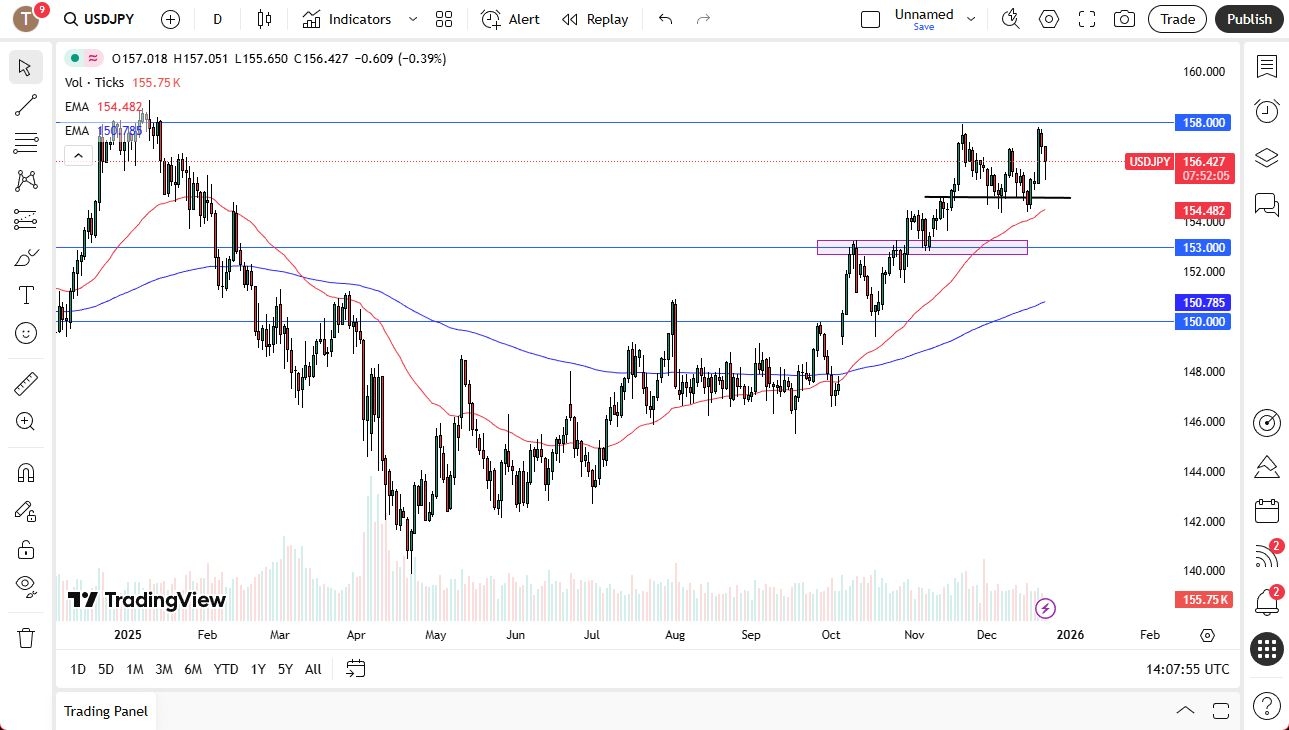
The 154 yen level seems to be massive support, while the 158 yen level seems to be a significant resistance barrier. All things being equal, this is a market that I think is trying to determine what is going to happen with central banks, especially with the Federal Reserve, as traders are starting to bet on more interest rate cuts going into the future.

But at the same time, the Bank of Japan is trying to normalize rates. Whether or not that actually ends up being the case and whether or not they can actually do it to any significant amount remains a question to be answered, but I think we have to look through the prism of a market where you are seeing a positive swap at the end of every day if you’re long.
I think that’s part of what we’ve seen during the trading session on Tuesday as we head towards North America. Traders are trying to turn things around and reach back towards the 158 yen level. Over the next couple of days, I think we will stay well within this 400-point range because volume will start to dissipate, and several central banks are not only going to be closing down the banking system on Thursday for Christmas, but you will also see the Friday session being a major holiday in most of the larger countries as well. After that, you have the week of New Year’s, and that really is kind of messy as well. So I think you’re looking at a 400-point range between now and next year when traders start to throw more liquidity in.
Want to trade our USD/JPY forex analysis and predictions? Here’s a list of forex brokers in Japan to check out.
Christopher Lewis has been trading Forex and has over 20 years experience in financial markets. Chris has been a regular contributor to Daily Forex since the early days of the site. He writes about Forex for several online publications, including FX Empire, Investing.com, and his own site, aptly named The Trader Guy. Chris favours technical analysis methods to identify his trades and likes to trade equity indices and commodities as well as Forex. He favours a longer-term trading style, and his trades often last for days or weeks.
Copper price activated with the main indicators again, surpassing the barrier at $5.5000, announcing its readiness to achieve extra gains on a near-term basis, therefore, we will keep our bullish expectations, reminding you that the extra target near $5.6300 and $5.7400 level.
Note that the price stability below the current barrier might force it to form mixed trading, and there is a chance of testing the support at $5.1500.
The expected trading range for today is between $5.3900 and $5.6300
Trend forecast: Bullish
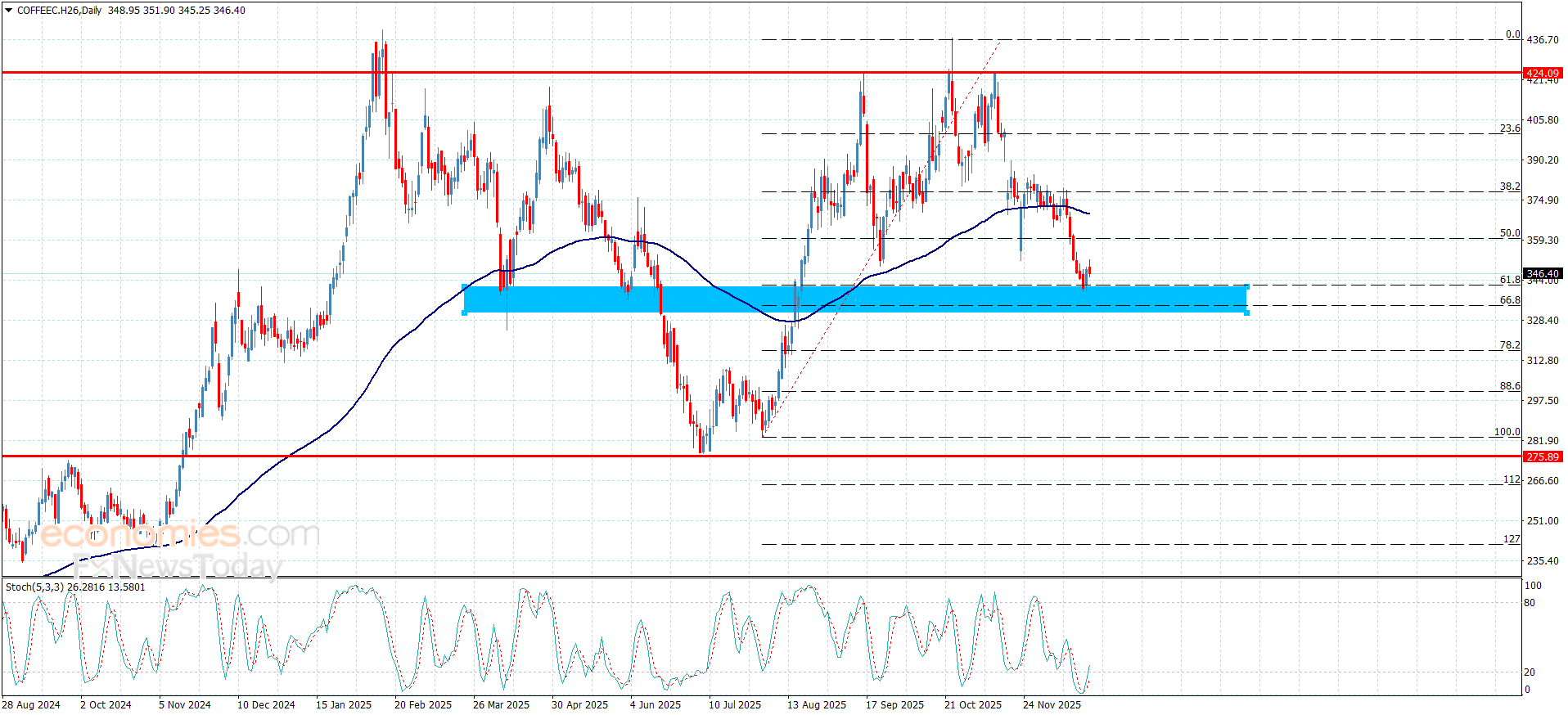
Coffee price surrendered to the negative pressures, forcing it to suffer several losses towards 339.20, facing a strong support base as appears in the above image.
The price stability above this support and stochastic attempt to exit the oversold level might provide a chance to recover several losses by its rally towards 359.80, then wait for facing the moving average 55 near 368.50.
The expected trading range for today is between 338.00 and 359.80
Trend forecast: Bullish
Silver price (XAG/USD) rallies further to near $72.70 during the early European trading session on Wednesday. The white metal extends its bull run as Federal Reserve (Fed) dovish expectations for 2026 remain broadly firm, even as the United States (US) Q3 Gross Domestic Product (GDP) came in surprisingly higher.
According to the CME FedWatch tool, traders see a 70.6% that the Fed will reduce interest rates by at least 50 bps in 2026, signaling a higher scope of interest rate cuts than the Fed’s projections in its dot plot last week. The Fed’s dot plot showed that policymakers collectively see the Federal Funds Rate heading to 3.4% by the end of 2026, indicating that there won’t be more than one interest rate cut.
Theoretically, lower interest rates by the Fed bode well for non-yielding assets, such as Silver.
On Tuesday, the US GDP data showed that the economy grew at a robust pace of 4.3% year-on-year (YoY). Economists expect the US GDP growth to come in lower at 3.3% from 3.8% recorded in the second quarter of the year.
In Wednesday’s session, investors will focus on Initial Jobless Claims data, which will be published at 13:30 GMT. Individuals claiming jobless benefits for the first time are expected to have remained steady at 223K.
In the daily chart, XAG/USD trades at $72.19. The 20-day exponential moving average is ascending, and price holds well above it, reinforcing a firm bullish bias. The average’s positive slope continues to support the advance. RSI (14) at 80.95 is overbought, signaling stretched momentum that could precede consolidation.
Should momentum cool, pullbacks could find support at the 20-day EMA around $63.07. The uptrend would remain intact while above this dynamic floor, whereas a loss of that level would expose a deeper retracement as overbought conditions unwind.
(The technical analysis of this story was written with the help of an AI tool.)
Silver is a precious metal highly traded among investors. It has been historically used as a store of value and a medium of exchange. Although less popular than Gold, traders may turn to Silver to diversify their investment portfolio, for its intrinsic value or as a potential hedge during high-inflation periods. Investors can buy physical Silver, in coins or in bars, or trade it through vehicles such as Exchange Traded Funds, which track its price on international markets.
Silver prices can move due to a wide range of factors. Geopolitical instability or fears of a deep recession can make Silver price escalate due to its safe-haven status, although to a lesser extent than Gold’s. As a yieldless asset, Silver tends to rise with lower interest rates. Its moves also depend on how the US Dollar (USD) behaves as the asset is priced in dollars (XAG/USD). A strong Dollar tends to keep the price of Silver at bay, whereas a weaker Dollar is likely to propel prices up. Other factors such as investment demand, mining supply – Silver is much more abundant than Gold – and recycling rates can also affect prices.
Silver is widely used in industry, particularly in sectors such as electronics or solar energy, as it has one of the highest electric conductivity of all metals – more than Copper and Gold. A surge in demand can increase prices, while a decline tends to lower them. Dynamics in the US, Chinese and Indian economies can also contribute to price swings: for the US and particularly China, their big industrial sectors use Silver in various processes; in India, consumers’ demand for the precious metal for jewellery also plays a key role in setting prices.
Silver prices tend to follow Gold’s moves. When Gold prices rise, Silver typically follows suit, as their status as safe-haven assets is similar. The Gold/Silver ratio, which shows the number of ounces of Silver needed to equal the value of one ounce of Gold, may help to determine the relative valuation between both metals. Some investors may consider a high ratio as an indicator that Silver is undervalued, or Gold is overvalued. On the contrary, a low ratio might suggest that Gold is undervalued relative to Silver.
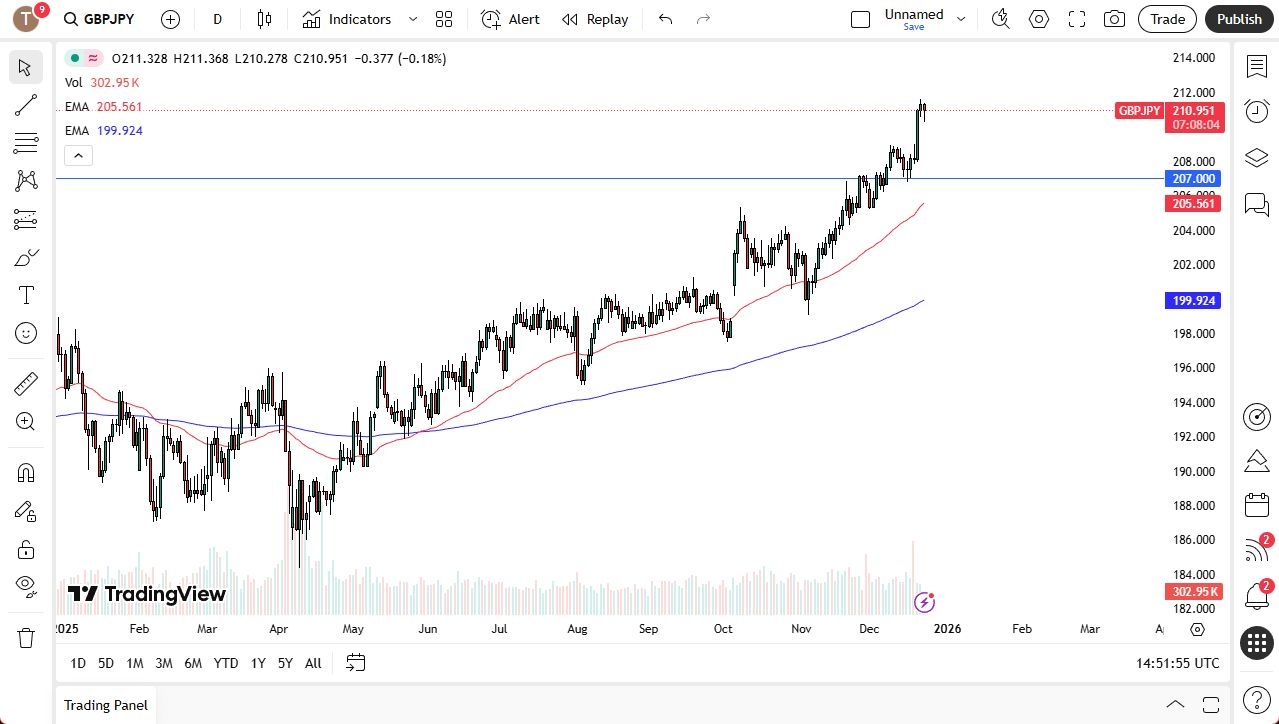
Ultimately, breaking above the recent 209 yen level was a very strong sign as to where we are going next. As the Bank of Japan tightened rates a bit, the bond market is up in arms and suggesting that they can only do so much. With that being said, and the interest rate differential coming into focus here, I do think you continue to see a big move to the upside.
Short-term pullbacks continue to be buying opportunities, and it’s really not until we break down below 208 yen that I would consider stepping back and staying away from the pair. I don’t have any interest in shorting this pair anytime soon, and quite frankly, if I were to buy the yen, it would be against lower-yielding currencies if we saw a major trend change, for example, maybe short the Swiss franc against the yen.
With all of this being said, I do think that the upward target is probably somewhere closer to the 214 yen level over the next several weeks. I do recognize that the lack of liquidity coming in the next few days will continue to be a bit of an issue, but it can also provide an opportunity. For example, you may have traders looking to take some profit out of the market, and that could send this market down for a day or two, and it could give you an opportunity based on that alone.
Another thing that can happen this time of year is maybe the lack of volume makes for erratic moves, so if you are already long of this market, you may have traders who are short trying to cover, and it can cause a spike. Either way, no matter what, at this point, there’s only one direction I’m looking to trade in this market, and that is with the positive currency swap to the upside.
Begin trading our daily forecasts and analysis. Here is a list of Forex brokers in Japan to work with.
Christopher Lewis has been trading Forex and has over 20 years experience in financial markets. Chris has been a regular contributor to Daily Forex since the early days of the site. He writes about Forex for several online publications, including FX Empire, Investing.com, and his own site, aptly named The Trader Guy. Chris favours technical analysis methods to identify his trades and likes to trade equity indices and commodities as well as Forex. He favours a longer-term trading style, and his trades often last for days or weeks.
Coffee price surrendered to the negative pressures, forcing it to suffer several losses towards 339.20, facing a strong support base as appears in the above image.
The price stability above this support and stochastic attempt to exit the oversold level might provide a chance to recover several losses by its rally towards 359.80, then wait for facing the moving average 55 near 368.50.
The expected trading range for today is between 338.00 and 359.80
Trend forecast: Bullish
Copper price activated with the main indicators again, surpassing the barrier at $5.5000, announcing its readiness to achieve extra gains on a near-term basis, therefore, we will keep our bullish expectations, reminding you that the extra target near $5.6300 and $5.7400 level.
Note that the price stability below the current barrier might force it to form mixed trading, and there is a chance of testing the support at $5.1500.
The expected trading range for today is between $5.3900 and $5.6300
Trend forecast: Bullish
Gold (XAU/USD) retreats slightly following an Asian session move higher to the $4,525 area, or a fresh all-time peak, though the downside remains limited amid a supportive fundamental backdrop. The US Dollar (USD) selling bias remains unabated on the back of dovish Federal Reserve (Fed) expectations, which continues to act as a tailwind for the non-yielding yellow metal. Apart from this, geopolitical uncertainties turn out to be another factor driving safe-haven flows towards the bullion.
The USD Index (DXY), which tracks the Greenback against a basket of currencies, prolongs its weekly downtrend for the third straight day and drops to a fresh low since early October amid rising bets for further policy easing by the US central bank. The US Consumer Price Index (CPI) was surprisingly soft in November. Furthermore, signs of a cooling US labor market reinforced market expectations that the Fed will lower borrowing costs two more times in 2026. Adding to this, US President Donald Trump publicly stated his expectation for the next Fed Chair to lower interest rates during periods of strong market performance and even when the economy is performing well. This overshadows the upbeat US GDP growth figures and continues to undermine the USD, benefiting the Gold price.
A delayed report published by the US Bureau of Economic Analysis showed on Tuesday that the economy expanded by a 4.3% annualized pace during the July-September period amid resilient consumer and business spending. The reading was stronger than consensus estimates and higher than the 3.8% rise recorded in the previous quarter. The market reaction, however, turns out to be muted as the longest-ever US government shutdown is expected to weigh on fourth-quarter growth. Separately, the US Census Bureau reported that Durable Goods Orders declined 2.2% in October, following the 0.7% increase in the previous month and worse than 1.5% fall anticipated. Moreover, a sharp fall in the consumer confidence index in December suggests that households are becoming more cautious about the future.
This, in turn, favors the USD bears, which should continue to support the XAU/USD pair. Moreover, tensions linked to the United States’ actions against vessels carrying Venezuelan oil, escalating the Russia-Ukraine war, and a potential new Israel-Iran conflict validate the near positive outlook for the safe-haven Gold. That said, the upbeat market mood holds back traders from placing fresh bullish bets around the precious metal amid the year-end thin liquidity. Market participants now look forward to the release of the usual US Weekly Initial Jobless Claims data for some impetus later during the North American session. Nevertheless, the fundamental backdrop suggests that the path of least resistance for the bullion remains to the upside, and any meaningful corrective pullback could be seen as a buying opportunity.
The overnight breakout through a nearly two-month-old ascending trend-channel resistance and a subsequent strength beyond the $4,500 psychological mark could be seen as a fresh trigger for the XAU/USD bulls. Adding to this, the Moving Average Convergence Divergence (MACD) line stands above the Signal line and above zero, while an expanding positive histogram suggests strengthening bullish momentum.
However, the Relative Strength Index (RSI) is flagging overstretched conditions even as buyers retain control. Should gains stall, the channel’s lower boundary at $4,203.35 acts as key support, while maintaining a positive MACD profile, and an RSI easing toward 70 would help reset conditions for trend continuation. Nevertheless, a pause would not derail the broader advance as the outlook remains positive following the breakout.
(The technical analysis of this story was written with the help of an AI tool)
Updated: 23.12.2025 — 5:04
Natural gas markets are closing in on year-end with a familiar mix of winter weather risk, record LNG pull, and stubbornly strong production—but on Tuesday, December 23, 2025, the bullish forces briefly overwhelmed the bears.
In the U.S., Henry Hub front-month futures surged into the mid-$4s per million British thermal units (mmBtu), after trading swung from an early single-digit gain to a double-digit move later in the day. Reuters pricing showed the front month around $4.41/mmBtu on the session, up sharply on the day with an intraday range roughly $3.94–$4.45. [1]
Across the Atlantic, benchmark Dutch TTF gas eased below €28/MWh in thin pre-holiday trading, with Norway and LNG supply cushioning the market even as temperatures are expected to turn colder in parts of Europe. [2]
Below is a detailed roundup of the key news, forecasts, and market analysis shaping natural gas on 23.12.2025—and the catalysts traders are watching next.
Early Tuesday, U.S. natural gas futures pushed higher as flows to LNG export plants hit fresh highs and forecasters upgraded the next two weeks’ demand outlook.
Reuters reporting cited record-level feedgas flows and an improved demand projection from LSEG. In morning trade, the January NYMEX contract was up around 4% and trading near $4.105/mmBtu, supported by expectations that gas demand (including exports) could rise from roughly 127.9 bcfd this week to about 136.0 bcfd over the next two weeks. [3]
That demand uplift matters because the U.S. gas market is increasingly balanced at the margin by export pull, not just domestic heating loads.
Later in the session, market commentary pointed to a classic year-end dynamic: thinner liquidity, more stop-driven moves, and fast-changing weather runs.
A separate market analysis described a late-day surge, with January futures trading around $4.370/mmBtu and up more than 10% at one point, as record LNG demand collided with colder revisions in parts of the U.S. outlook. [4]
While forecasts still include warmer-than-normal periods (a bearish signal for heating demand), traders are increasingly sensitive to any model shift that reintroduces cold into the highly populated U.S. East—because that’s where residential and commercial demand can spike quickly.
The most important U.S. gas storyline on December 23 is simple: LNG export demand remains near full throttle.
Reuters-linked reporting said LNG feedgas was on track to reach about 18.6 bcfd on Tuesday (a record area), supported by higher intake at major facilities including Cameron, Freeport, and Calcasieu Pass. [5]
This isn’t a short-term quirk. The EIA’s most recent weekly market update highlighted just how large U.S. LNG logistics have become, noting that 33 LNG vessels departed U.S. ports in a single week (Dec. 11–17) with a combined carrying capacity of 126 Bcf. [6]
Why it matters for price: When LNG feedgas stays elevated, it reduces the market’s ability to “relax” even during mild weather breaks—because export terminals keep pulling molecules regardless of whether Chicago or New York is having a warm spell.
Even as prices spiked Tuesday, the supply side continues to impose a ceiling on sustained upside.
Reuters-cited figures put Lower 48 output around 111.1 bcfd in December—an all-time high area—illustrating that U.S. producers and infrastructure are still delivering large volumes into the system. [7]
That supply strength is showing up in storage resilience as well:
This combination—very strong exports and very strong production—is why the market can rally sharply on weather risk, but also why those rallies can struggle to hold if the cold fails to materialize.
European gas prices stayed relatively contained on December 23, even as the market monitored colder conditions.
A Reuters-sourced European market report showed:
The same report pegged EU storage at 67.24% full, a key benchmark because Europe’s winter price sensitivity rises sharply when inventories fall. [10]
An Engie market note cited in the report suggested fundamentals were currently bearish, but warned that risk factors—particularly on the U.S. supply side—could still flip sentiment if prices keep falling. [11]
And with Europe entering winter with lower storage than recent years, an S&P Global LNG analyst quoted in the report said buyers may be compelled to increase LNG procurement in January and February. [12]
Norway remains Europe’s largest natural gas supplier, and on December 23 Reuters reported that Norwegian oil and gas output in November beat official forecasts, with gas output slightly down year-on-year but above forecast. [13]
Steady Norwegian flows—plus LNG arrivals—help explain why TTF can remain subdued even with winter weather risk in the background.
One of the most consequential geopolitical gas headlines on December 23 came from Iraq.
Reuters reported that Iraq’s electricity ministry said gas supplies from Iran have been halted, and the disruption knocked an estimated 4,000–4,500 megawatts out of Iraq’s power system. [14]
While this is primarily a regional power-generation story (and not a direct “global price setter” like U.S. LNG or TTF), it underscores how quickly gas-linked power systems can become fragile when pipeline supplies are interrupted—especially in peak-demand periods.
In Asia, Reuters reported Myanmar is expected to resume LNG imports next year after receiving a partial cargo last month—ending a more than four-year hiatus. [15]
Key details from the report:
In pure volume terms, Myanmar is not big enough to move global LNG pricing alone—but it’s another sign that LNG-to-power can re-emerge quickly when domestic gas declines or power shortages bite.
Reuters reported that U.S. drillers added rigs for the first time in three weeks, with the total rig count rising to 545, while gas rigs held at 127. [17]
The same report highlighted that the EIA expects natural gas production to grow, helped by a sharp rebound in spot prices during 2025—an incentive that can translate into more drilling activity if producers believe higher prices will stick. [18]
In another major policy development dated December 23, reporting in Australia said the government’s new gas reservation scheme will require LNG exporters from 2027 to reserve 15–25% of output for domestic use (roughly 200–350 petajoules annually), with analysts flagging uneven impacts across exporters. [19]
This is a longer-dated policy lever, but markets pay attention because restrictions on export flexibility can reshape contract behavior, upstream investment decisions, and eventually regional LNG availability.
Reuters-linked reporting also noted that the Trump administration suspended leases for several large offshore wind projects under construction off the U.S. East Coast—an action that could increase reliance on gas-fired generation if renewable build-out slows. [20]
For natural gas, the key takeaway is not “one project,” but the direction of travel: power-sector demand can shift materially if policy changes alter the generation mix.
Here are the market indicators most likely to set direction after the December 23 move:
Looking beyond the immediate weather/LNG headlines, longer-horizon analysis still points to a potential loosening of global LNG balances in 2026 as new supply ramps—an anchor that can temper longer-dated price expectations even when near-term volatility spikes. [25]
Natural gas on 23.12.2025 was a textbook example of a market being pulled in opposite directions:
For now, the market’s center of gravity remains LNG: as long as U.S. export pull stays near record levels, even mild weather can have a harder time pushing prices down for long—but with production this strong, sustaining rallies still requires the weather to cooperate. [26]
1. jp.reuters.com, 2. www.hellenicshippingnews.com, 3. www.bairdmaritime.com, 4. www.fxempire.com, 5. www.bairdmaritime.com, 6. www.eia.gov, 7. www.bairdmaritime.com, 8. www.eia.gov, 9. www.hellenicshippingnews.com, 10. www.hellenicshippingnews.com, 11. www.hellenicshippingnews.com, 12. www.hellenicshippingnews.com, 13. www.reuters.com, 14. www.reuters.com, 15. www.reuters.com, 16. www.reuters.com, 17. www.reuters.com, 18. www.reuters.com, 19. www.theaustralian.com.au, 20. www.bairdmaritime.com, 21. www.bairdmaritime.com, 22. www.bairdmaritime.com, 23. www.eia.gov, 24. www.hellenicshippingnews.com, 25. www.reuters.com, 26. www.bairdmaritime.com