The main category of Forex News.
You can use the search box below to find what you need.
[wd_asp id=1]
The main category of Forex News.
You can use the search box below to find what you need.
[wd_asp id=1]
The (ETHUSD) price rose in its last intraday trading, amid its move in sideways range in attempt to gain positive momentum that might help it to recover and complete the strong bullish track, amid its trading alongside a minor bullish bias line on the short-term basis, taking advantage of the dynamic support that is represented by its trading above its EMA50, on the other hand, we notice the emergence of the negative signals on the (RSI), which reduced the last gains of the price.
Therefore, our expectations suggest a rise in the (ETHUSD) price in the upcoming intraday trading, conditioned by its stability above $4,150, targeting the resistance level at $4,500.
The expected trading range is between $4,000 support and $4,500 resistance.
Today’s forecast: Bullish
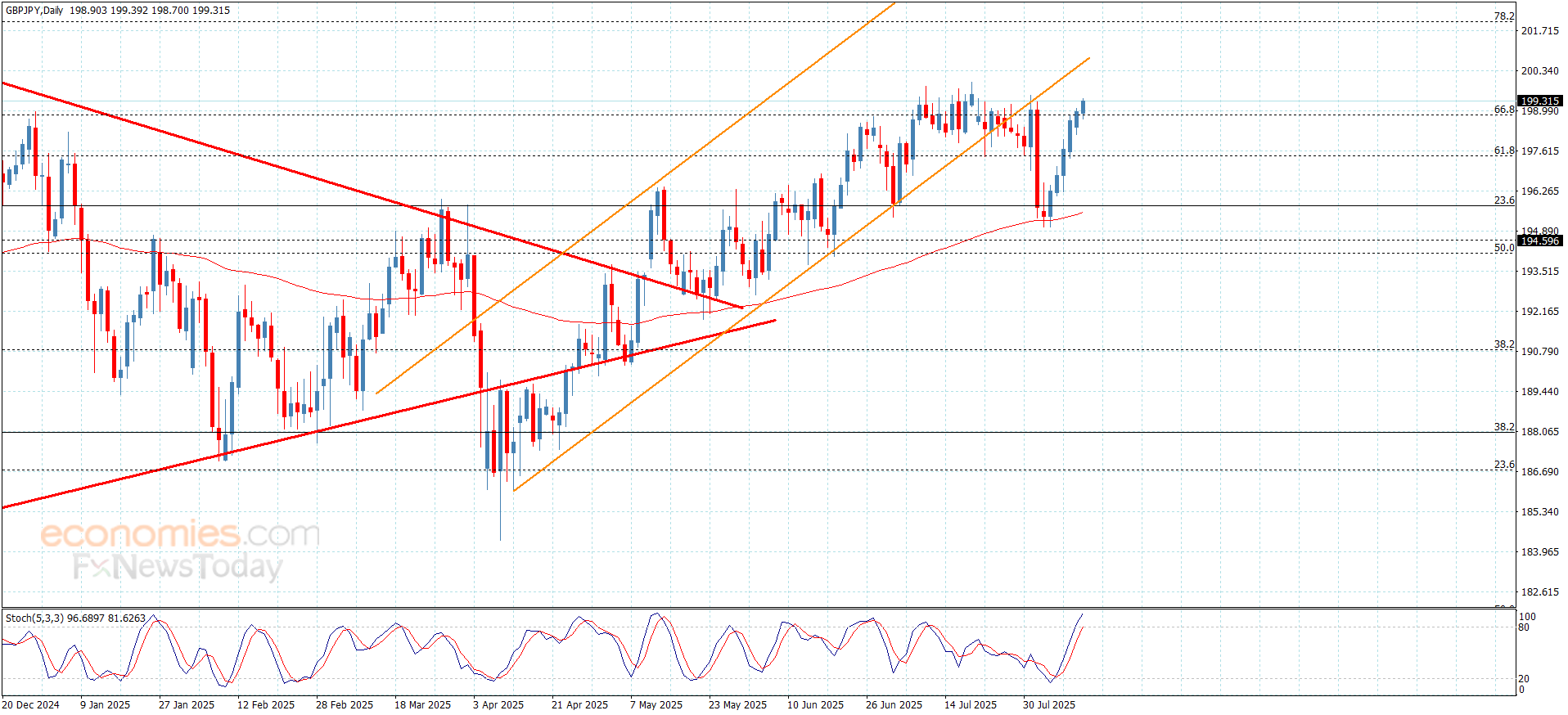
The GBPJPY pair succeeded to breach the barrier at 198.85, to confirm its readiness to resume the bullish attack, reaching 199.35 taking advantage of providing positive momentum by the main indicators.
We expect forming bullish trading, to target new positive stations that might begin at 200.40, to confirm entering the bullish channel’s levels, then attempts to target 78.2%Fiboancci level at 202.000, while the risk of changing the bullish trend requires forming a sharp decline, to settle below 61.8%Fibonacci correction level at 197.45.
The expected trading range for today is between 198.70 and 200.40
Trend forecast: Bullish
The GBPJPY pair succeeded to breach the barrier at 198.85, to confirm its readiness to resume the bullish attack, reaching 199.35 taking advantage of providing positive momentum by the main indicators.
We expect forming bullish trading, to target new positive stations that might begin at 200.40, to confirm entering the bullish channel’s levels, then attempts to target 78.2%Fiboancci level at 202.000, while the risk of changing the bullish trend requires forming a sharp decline, to settle below 61.8%Fibonacci correction level at 197.45.
The expected trading range for today is between 198.70 and 200.40
Trend forecast: Bullish
The (ETHUSD) price rose in its last intraday trading, amid its move in sideways range in attempt to gain positive momentum that might help it to recover and complete the strong bullish track, amid its trading alongside a minor bullish bias line on the short-term basis, taking advantage of the dynamic support that is represented by its trading above its EMA50, on the other hand, we notice the emergence of the negative signals on the (RSI), which reduced the last gains of the price.
Therefore, our expectations suggest a rise in the (ETHUSD) price in the upcoming intraday trading, conditioned by its stability above $4,150, targeting the resistance level at $4,500.
The expected trading range is between $4,000 support and $4,500 resistance.
Today’s forecast: Bullish
GBP/USD closed marginally lower on Monday and snapped a six-day winning streak. In the European session on Tuesday, the pair regains its traction and trades above 1.3450 as market focus shifts to US inflation data.
The table below shows the percentage change of British Pound (GBP) against listed major currencies last 7 days. British Pound was the strongest against the Japanese Yen.
| USD | EUR | GBP | JPY | CAD | AUD | NZD | CHF | |
|---|---|---|---|---|---|---|---|---|
| USD | -0.33% | -1.29% | 0.88% | 0.09% | -0.33% | -0.11% | 0.38% | |
| EUR | 0.33% | -0.97% | 1.24% | 0.43% | -0.09% | 0.15% | 0.71% | |
| GBP | 1.29% | 0.97% | 2.20% | 1.42% | 0.90% | 1.13% | 1.58% | |
| JPY | -0.88% | -1.24% | -2.20% | -0.78% | -1.12% | -1.00% | -0.50% | |
| CAD | -0.09% | -0.43% | -1.42% | 0.78% | -0.48% | -0.28% | 0.16% | |
| AUD | 0.33% | 0.09% | -0.90% | 1.12% | 0.48% | 0.27% | 0.69% | |
| NZD | 0.11% | -0.15% | -1.13% | 1.00% | 0.28% | -0.27% | 0.51% | |
| CHF | -0.38% | -0.71% | -1.58% | 0.50% | -0.16% | -0.69% | -0.51% |
The heat map shows percentage changes of major currencies against each other. The base currency is picked from the left column, while the quote currency is picked from the top row. For example, if you pick the British Pound from the left column and move along the horizontal line to the US Dollar, the percentage change displayed in the box will represent GBP (base)/USD (quote).
The United States (US) and China agreed to extend the trade truce for 90 days. The US Dollar (USD) benefited from this development and caused GBP/USD to stretch lower on Monday.
Early Tuesday, the UK’s Office for National Statistics (ONS) reported that the ILO Unemployment Rate held steady at 4.7% in the three months to June. In the period, the annualized wage inflation, as measured by the change in the Average Earnings Excluding Bonus, was unchanged at 5%. With these figures underscoring the Bank of England’s (BoE) cautious stance to policy-easing, Pound Sterling stays resilient against its peers.
On a yearly basis, the Consumer Price Index (CPI) in the US is forecast to rise 2.8% in July, at a slightly stronger pace than the 2.7% increase recorded in June. On a monthly basis, the CPI and the core CPI, which excludes volatile food and energy prices, are forecast to increase by 0.2% and 0.3%, respectively.
The CME FedWatch Tool currently shows that markets are nearly fully pricing in a 25 basis points (bps) Federal Reserve (Fed) rate cut in September, while seeing about a 43% probability of the Fed lowering the policy rate by a total of 75 bps in the remainder of the year.
Hence, a stronger-than-forecast monthly core CPI print could boost the US Dollar (USD) with the immediate reaction. On the other hand, a soft reading in this data could allow markets to continue to lean toward three rate cuts this year and trigger a leg lower in the USD.
The Relative Strength Index (RSI) indicator on the 4-hour chart stays above 60 after declining from above-70 on Monday, suggesting that the bullish bias remains intact following a technical correction.
On the upside, the 200-period Simple Moving Average (SMA) aligns as the first resistance at 1.3480 ahead of 1.3540 (Fibonacci 61.8% retracement of the latest downtrend) and 1.3600 (static level, round level).
Looking south, support levels could be spotted at 1.3440 (20-period SMA), 1.3400-1.3390 (round level, static level, 100-period SMA, Fibonacci 382% retracement) and 1.3350 (50-period SMA).
Inflation measures the rise in the price of a representative basket of goods and services. Headline inflation is usually expressed as a percentage change on a month-on-month (MoM) and year-on-year (YoY) basis. Core inflation excludes more volatile elements such as food and fuel which can fluctuate because of geopolitical and seasonal factors. Core inflation is the figure economists focus on and is the level targeted by central banks, which are mandated to keep inflation at a manageable level, usually around 2%.
The Consumer Price Index (CPI) measures the change in prices of a basket of goods and services over a period of time. It is usually expressed as a percentage change on a month-on-month (MoM) and year-on-year (YoY) basis. Core CPI is the figure targeted by central banks as it excludes volatile food and fuel inputs. When Core CPI rises above 2% it usually results in higher interest rates and vice versa when it falls below 2%. Since higher interest rates are positive for a currency, higher inflation usually results in a stronger currency. The opposite is true when inflation falls.
Although it may seem counter-intuitive, high inflation in a country pushes up the value of its currency and vice versa for lower inflation. This is because the central bank will normally raise interest rates to combat the higher inflation, which attract more global capital inflows from investors looking for a lucrative place to park their money.
Formerly, Gold was the asset investors turned to in times of high inflation because it preserved its value, and whilst investors will often still buy Gold for its safe-haven properties in times of extreme market turmoil, this is not the case most of the time. This is because when inflation is high, central banks will put up interest rates to combat it.
Higher interest rates are negative for Gold because they increase the opportunity-cost of holding Gold vis-a-vis an interest-bearing asset or placing the money in a cash deposit account. On the flipside, lower inflation tends to be positive for Gold as it brings interest rates down, making the bright metal a more viable investment alternative.
The (ETHUSD) price rose in its last intraday trading, amid its move in sideways range in attempt to gain positive momentum that might help it to recover and complete the strong bullish track, amid its trading alongside a minor bullish bias line on the short-term basis, taking advantage of the dynamic support that is represented by its trading above its EMA50, on the other hand, we notice the emergence of the negative signals on the (RSI), which reduced the last gains of the price.
Therefore, our expectations suggest a rise in the (ETHUSD) price in the upcoming intraday trading, conditioned by its stability above $4,150, targeting the resistance level at $4,500.
The expected trading range is between $4,000 support and $4,500 resistance.
Today’s forecast: Bullish
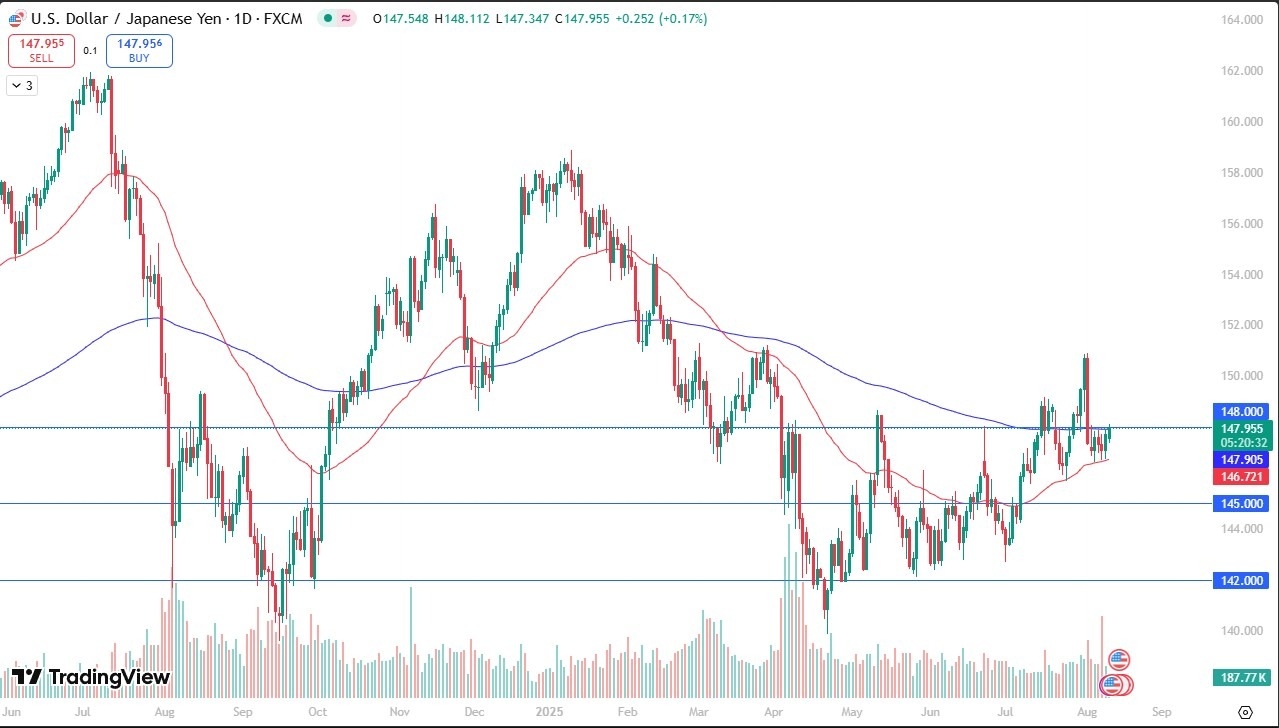
During the trading session on Tuesday, we will get the Consumer Price Index coming out the United States which will give us a bit of a look at the inflationary situation in the United States. This is obviously something that the Federal Reserve will be paying close attention to and will have a direct influence on monetary policy. At this point, it seems as if the market believes the Federal Reserve will start cutting rates in September, but it CPI comes out hotter than anticipated, that throws a few questions out there for traders to formulate trading plans on.

All things being equal, this is also a market that’s worth paying close attention to the technical analysis, as the 200 Day EMA is going to be difficult to break above without some type of catalyst, and I think the CPI number will be the catalyst. Underneath current consolidation, we have the 50 Day EMA hanging around and offering support, so I think a little bit of choppy behavior with a potential shot higher is the route following.
That being said, between now and the CPI release I suspect that the market will be very choppy and noisy, but once we get the CPI numbers, and if they are hotter than the anticipated 0.3% month over month for Core CPI, then the US dollar will probably be a beneficiary of that announcement. If we come in much weaker than anticipated, then we could very well see the US dollar soften, but I still do not want to buy the Japanese yen for a whole plethora of reasons, not the least of which would be the fact that the Japanese have to worry about their own bond market not attracting inflows.
Want to trade our USD/JPY forex analysis and predictions? Here’s a list of forex brokers in Japan to check out.
Christopher Lewis has been trading Forex and has over 20 years experience in financial markets. Chris has been a regular contributor to Daily Forex since the early days of the site. He writes about Forex for several online publications, including FX Empire, Investing.com, and his own site, aptly named The Trader Guy. Chris favours technical analysis methods to identify his trades and likes to trade equity indices and commodities as well as Forex. He favours a longer-term trading style, and his trades often last for days or weeks.
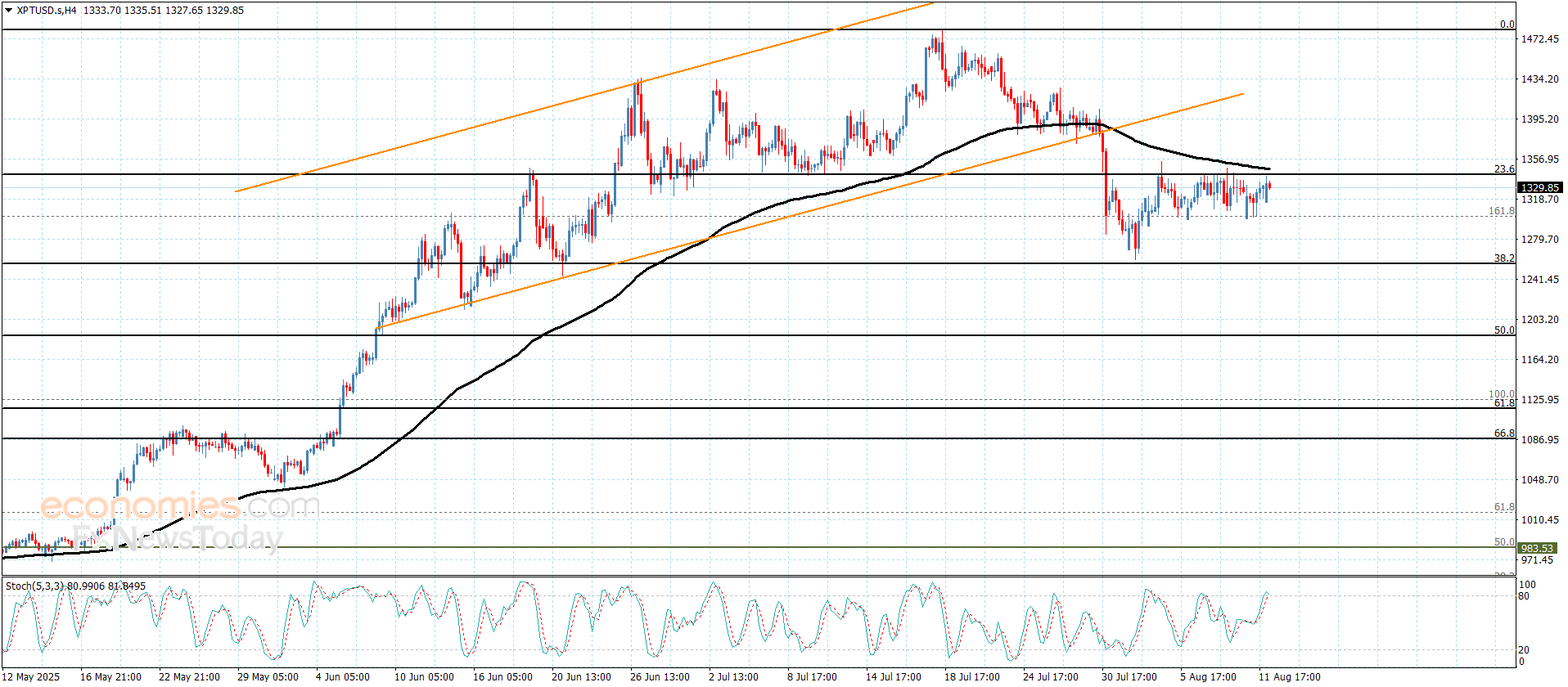
Spot Gold is down on Monday, trading at its lowest in a week, just below the $3,350 mark. The bright metal fell throughout the day, despite some modest caution leading the financial board. The decline accelerated in the mid-European session and extended into American trading hours amid resurgent demand for the US Dollar (USD).
Speculative activity, however, is limited amid the absence of big news and ahead of upcoming first-tier events. On the data front, the Reserve Bank of Australia (RBA) will announce its decision on monetary policy on Tuesday. The central bank is widely anticipated to trim the Official Cash Rate (OCR) by 25 basis points, while market players will look for clues on the next move. The United States (US) will then publish the July Consumer Price Index (CPI), with the index expected to indicate inflationary pressures have ticked higher.
Other than that, US President Donald Trump had a busy start to the week. He referred to China as the deadline to reach an agreement with its major commercial partner looms. Both countries have imposed on each other massive tariffs of three digits, but ultimately paused most of them to reach a better deal. Such levies should come into effect on Tuesday, unless they announce an extension of the truce. Meanwhile, Trump announced he “hopes” China quadruples its soybean demand amid a shortage in the Asian giant.
Additionally, Trump is expected to meet Russian President Vladimir Putin later this week, to negotiate the end of the war between Moscow and Ukraine. Trump has recently punished Russian oil buyers with tariffs to put pressure on Putin.
Generally speaking, financial markets started the week with cautious optimism. Asian stocks edged higher, while European ones closed the day mixed. As for Wall Street, the Dow Jones Industrial Average (DJIA) trades in the red, but the Nasdaq Composite and the S&P500 hold on to gains.
From a technical point of view, the daily chart for the XAU/USD pair shows it is currently trading below a flat 20 Simple Moving Average (SMA), while a bullish 100 SMA loses momentum at around $3,290, providing dynamic support should the decline continue. In the meantime, technical indicators crossed their midlines into negative territory with firm downward slopes, reflecting the ongoing downward pressure and hinting at lower lows ahead.
The near-term picture is bearish, given that technical indicators fell well below their midlines, maintaining their downward slopes and with the Relative Strength Index (RSI) indicator approaching oversold readings. At the same time, the XAU/USD pair fell below its 20 and 100 SMAs, with the shorter one gaining downward traction at around $3,378. Finally, Gold is finding some near-term support in a directionless 200 SMA. A clear break below the latter should open the door for a bearish extension in the upcoming sessions.
Support levels: 3.338.60 3,312.25 3,290.00
Resistance levels: 3,356.10 3,372.30 3,389.85
– Written by
David Woodsmith
STORY LINK Euro to Dollar Forecast: CPI Data, Fed Policy in Focus as EUR/USD Near 1.1650
The Euro to Dollar (EUR/USD) exchange rate is trading around 1.1650 on Monday from an early high at 1.1675. Ranges are relatively narrow, but underlying tensions remain high, especially with geo-political developments also important with markets monitoring the Ukraine situation and US-China trade dialogue.
UoB commented; “The current price movements are likely part of a range trading phase, most likely between 1.1610 and 1.1670.”
According to ING; “A stronger-than-expected US core CPI this week could push EUR/USD below 1.160, but such a move may attract buyers seeking to capitalise on the Fed’s resumption of its easing cycle. We maintain our expectation that EUR/USD will break above 1.170 in the near term.”
The issue of Federal Reserve policy and independence will remain key market issues and the latest US inflation data will be key components.
Danske Bank commented; “Market focus has shifted from tariffs toward US data and Fed appointments, and tomorrow’s CPI – one of just two remaining before the September FOMC meeting.”
According to MUFG; “The main potential impediment to a rate cut as soon as at the next FOMC meeting in September would be a bigger than expected pick-up in US inflation over the summer. Market participants will be closely scrutinizing the release this week of the latest US CPI and PPI reports for July for further evidence of higher tariffs feeding through to a pick-up in inflation pressures.”
Consensus forecasts are for the headline inflation rate to edge higher to 2.8% from 2.7% with a 0.3% increase in core prices which would lead to a slight increase in the year-on-year rate to 3.0% from 2.9%.
MUFG added; “A significant upside inflation surprise could trigger a reversal of the current US dollar weakening trend.”
Over the weekend, Fed Governor Bowman stated that she would be backing rate cuts at all the remaining three Fed meetings this year.
There are still important reservations surrounding the potential politicising of key economic agencies.
According to sources, the administration is interviewing candidates to lead the Bureau of Labor Statistics (BLS), including E.J. Antoni, chief economist at the Heritage Foundation.
Antoni posted over the weekend; “There are better ways to collect, process, and disseminate data—that is the task for the next BLS commissioner, and only consistent delivery of accurate data in a timely manner will rebuild the trust that has been lost over the last several years.”
On the Euro side, ING is not convinced that the market call for no further ECB rate cuts is realistic.

Nevertheless, it added; “we regard any potential dovish repricing as a temporary setback within a broader trend of euro strength supported by a structurally weaker dollar.”
The latest CoT data, released by the CFTC recorded a small decline in long, non-commercial Euro positions, but the number remains elevated in historic terms, limiting the scope for further buying.
International Money Transfer? Ask our resident FX expert a money transfer question or try John’s new, free, no-obligation personal service! ,where he helps every step of the way,
ensuring you get the best exchange rates on your currency requirements.
TAGS: Euro Dollar Forecasts
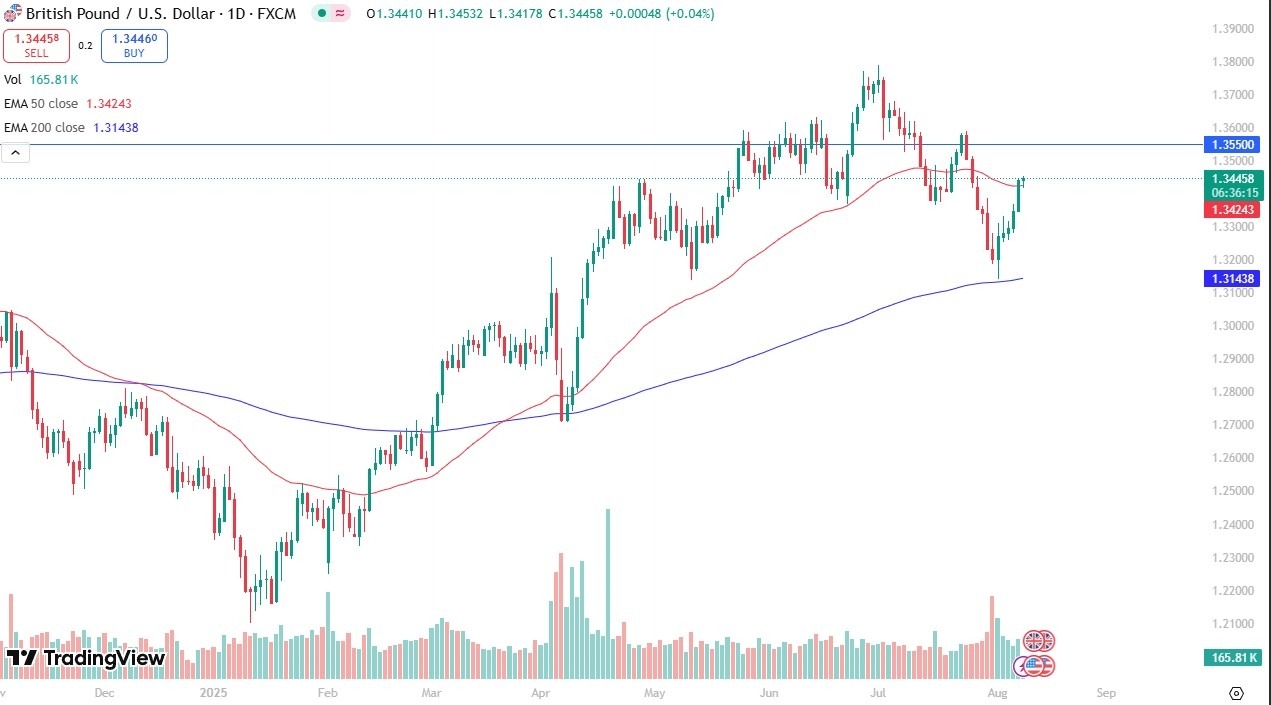
It is also worth noting that 5 or 6 candles ago on the daily chart, we had tested the 200 Day EMA, only to turn around and bounce rather significantly. With that being the case, the market is likely to continue to see quite a bit of buying on the dips, but the question at this point now is going to be whether or not we can find any momentum? After all, we need momentum to finally break out to the upside again, after that initial drop over the last couple of weeks.
Now that we are just above the 50 Day EMA, it does suggest that the market could go looking to the 1.3550 level, an area that has been important more than once. With that being the case, I think you’ve got a situation where if we can break above there, then the buyers will probably jump into the market with quite a bit more gusto. On the other hand, if we break down below the 1.33 level, then it could open up the possibility of a move down to the 200 Day EMA, currently residing at the 1.3143 level. Anything below there would obviously be very negative, but I think what it is worth noting is that we have recently made a “lower low”, so now the question is will we make a “lower high?”
Ready to trade our GBP/USD daily forecast? We’ve shortlisted the best regulated forex brokers UK in the industry for you.
Christopher Lewis has been trading Forex and has over 20 years experience in financial markets. Chris has been a regular contributor to Daily Forex since the early days of the site. He writes about Forex for several online publications, including FX Empire, Investing.com, and his own site, aptly named The Trader Guy. Chris favours technical analysis methods to identify his trades and likes to trade equity indices and commodities as well as Forex. He favours a longer-term trading style, and his trades often last for days or weeks.