The main category of Forex News.
You can use the search box below to find what you need.
[wd_asp id=1]
The main category of Forex News.
You can use the search box below to find what you need.
[wd_asp id=1]
– Written by
Frank Davies
STORY LINK Pound to Dollar Forecast: GBP Advances as Fed Dovish Shift Hits USD
The Pound to Dollar exchange rate (GBP/USD) advanced to a one-week high near 1.3440, taking advantage of a broad dollar retreat as traders priced in two Fed rate cuts by the end of 2025.
Foreign exchange strategists, however, remain wary of UK economic fragility and limited BoE flexibility.
Pound Sterling secured a net advance on Tuesday, able to take advantage of a dollar setback to make net gains to a 1-week high of 1.3440 in Europe on Thursday.
According to UoB, further gains are likely to be limited; “The major resistance at 1.3475 is unlikely to come into view. To keep the mild momentum going, GBP must hold above 1.3360.”
The Pound also still has work to do to regain a firmer trend.
ING, for example, expects GBP/USD will be capped below 1.40 throughout the next 12 months.
Get better rates and lower fees on your next international money transfer.
Compare TorFX with top UK banks in seconds and see how much you could save.
Markets remain very confident that the Fed will cut interest rates this month and are now pricing in close to a 95% chance of two rate cuts by the end of 2025.
The US 10-year yield has dipped to near 4.00% with the prospect for lower interest rates undermining the dollar.
ABN Amro, however, is not convinced over the merits of further rate cuts; “We think policy is currently not as restrictive as the FOMC appears to think, and we think the upside risks to inflation outweigh the downside risks to the labour market. This frontloaded easing path increases the probability of the upside inflation risks materializing.”
Markets are also fretting over trade developments as US-China tensions continue to intensify.
Overnight, President Trump stated that the US is in a trade war with China.
ING commented; “The question for financial markets is whether China’s proposed export controls on rare earths are merely part of a bargaining ploy to achieve greater concessions from the US. Or really whether it is a threat which would stick and greatly disrupt global supply chains.”
The aggressive rhetoric has increased concerns over a further hit to the US economy and hurt the dollar.

It is, however, unlikely that the Pound would find strong support if global risk appetite deteriorates sharply.
As far as the UK economy is concerned, GDP increased 0.1% for August, in line with expectations, but the July figure was revised down to –0.1% compared with the flash figure of no change.
Capital Economics deputy chief UK economist Ruth Gregory maintains a generally downbeat stance; “The meagre rise in real GDP in August suggests growth is still being hampered by high interest rates, higher taxes and soft overseas activity. With business sentiment on the floor and employment still falling, we doubt growth will improve much in Q4.”
The implications for interest rates and taxes will be important.
Gregory does not expect a shift within the Bank of England; “With inflation still high and rising, we doubt the soft GDP news will tempt the Bank of England to cut interest rates again this year.”
She expects the next rate cut will be in February.
The UK goods trade deficit widened to £21.1bn for August from £20.65bn the previous month. Exports declined £1.1bn on the month with a £0.7bn decline in exports to the US, illustrating the stresses caused by tariffs.
International Money Transfer? Ask our resident FX expert a money transfer question or try John’s new, free, no-obligation personal service! ,where he helps every step of the way,
ensuring you get the best exchange rates on your currency requirements.
TAGS: Pound Dollar Forecasts
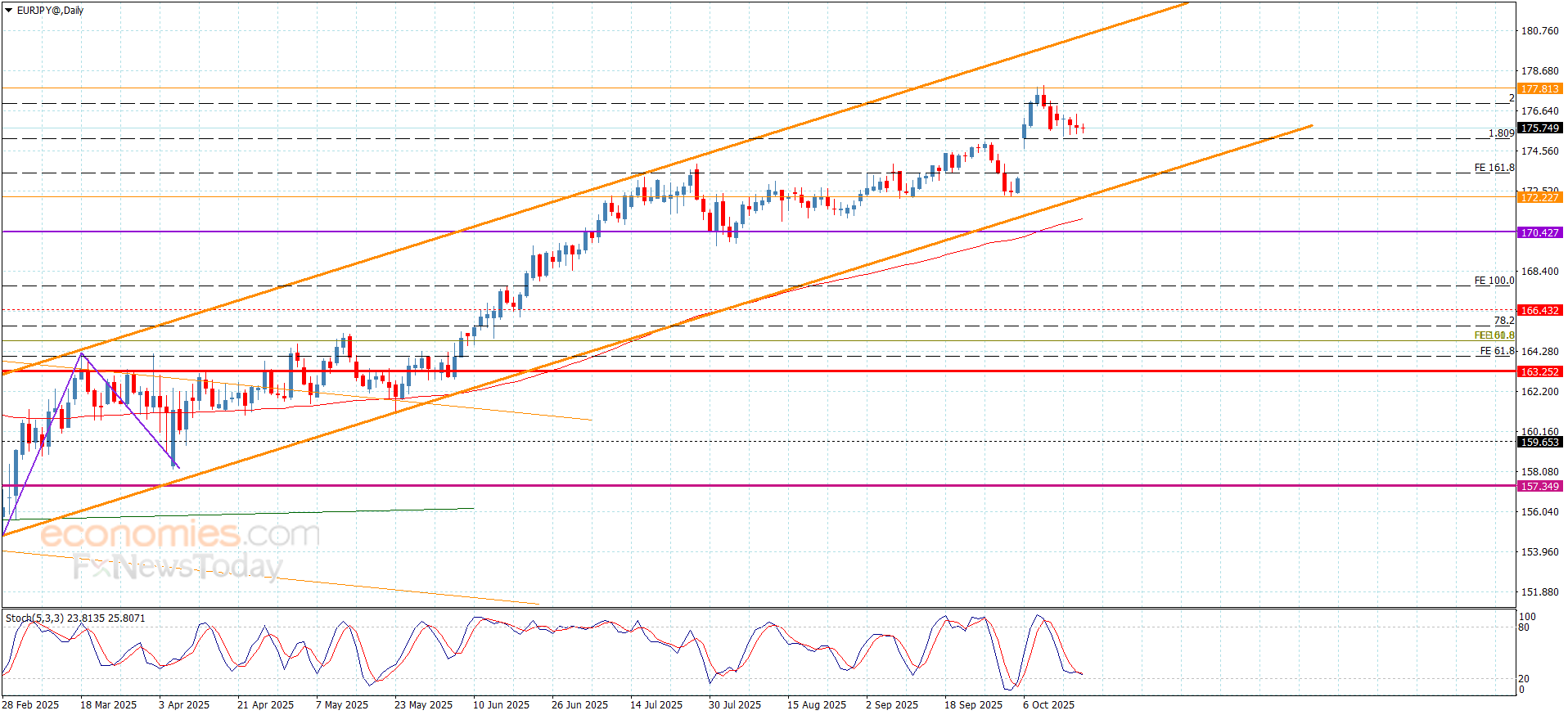
The EURJPY pair forced it to form slow sideways trading, to face stochastic negativity which keeps its positive stability above the extra support at 175.20 level, confirming the continuation of the suggested bullish attempts.
Gathering the positive momentum is important to ease the mission of forming bullish waves, to help it surpass the obstacle at 176.40, then targeting the next positive station at 177.05, while breaking the current support will force it to activate the bearish corrective trend, to suffer extra losses by reaching 174.25.
The expected trading range for today is between 175.20 and 176.45
Trend forecast: Bullish
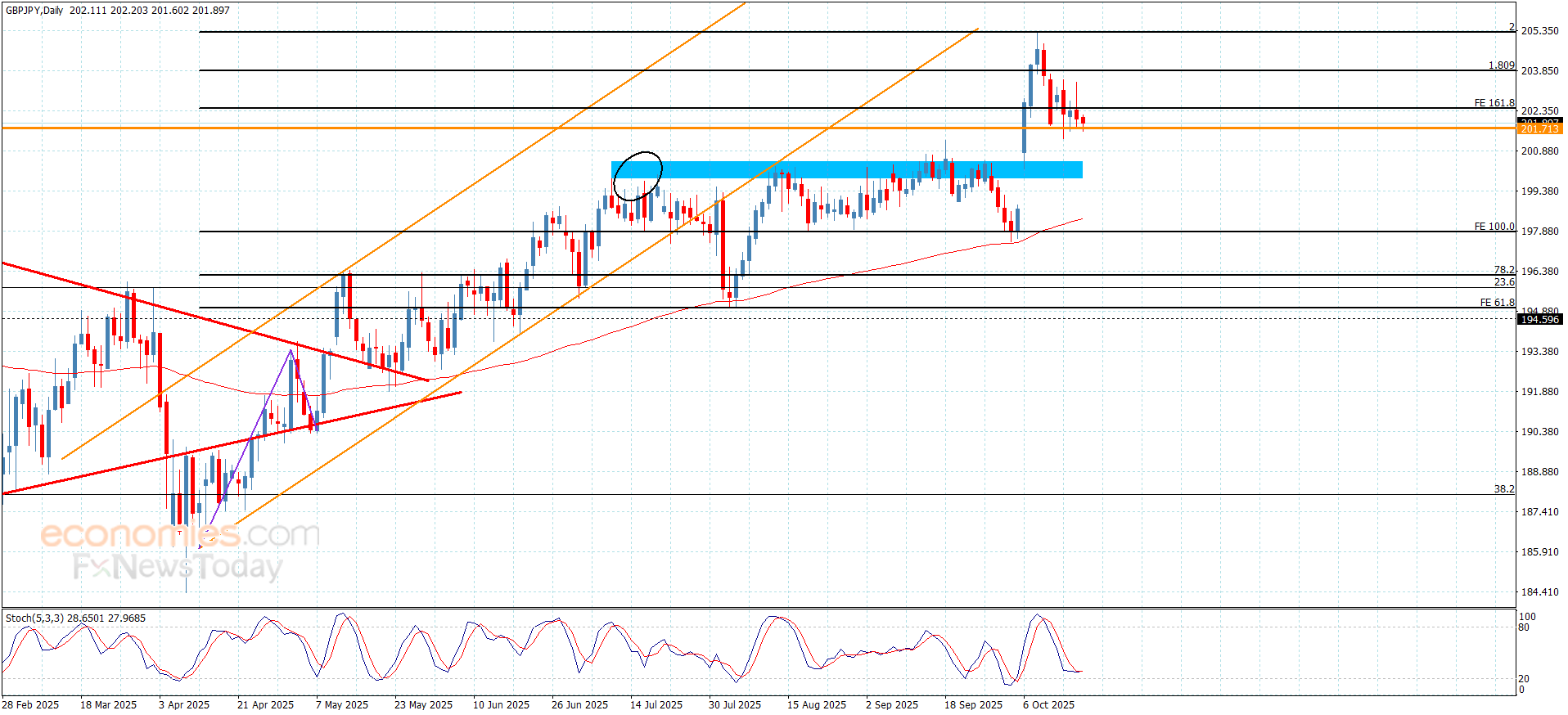
The GBPJPY pair still needs positive momentum until this moment, which forces it to form sideways fluctuated moves by its stability near 201.70 support level, which represents the key of detecting the expected trend in the near trading, as its stability makes us expect motivating the bullish trend, which might target 202.55 level reaching 203.85 barrier.
While breaking the current support and providing negative close below it will force it to activate the bearish correctional track, which forces it to suffer extra losses by reaching 201.10, reaching the next support at 200.45.
The expected trading range for today is between 201.70 and 203.00
Trend forecast: Bullish
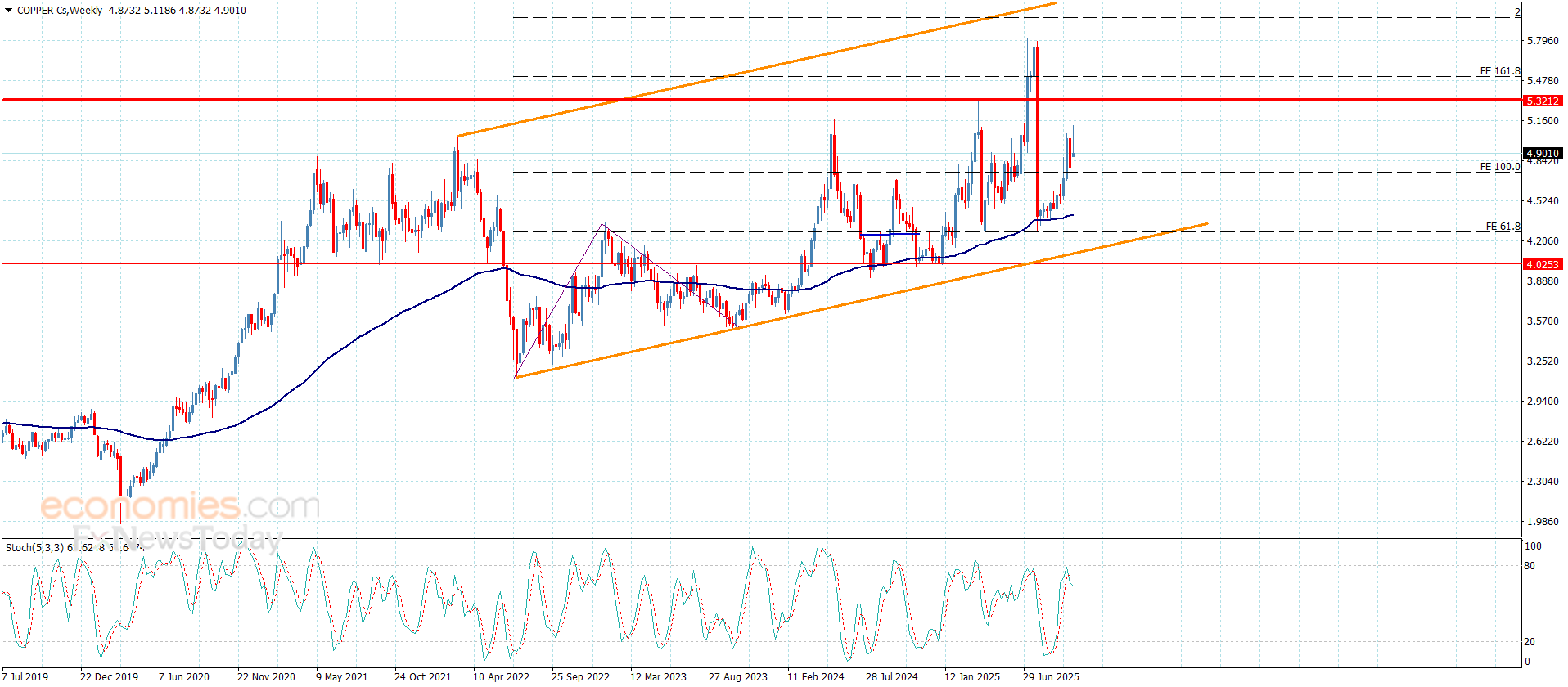
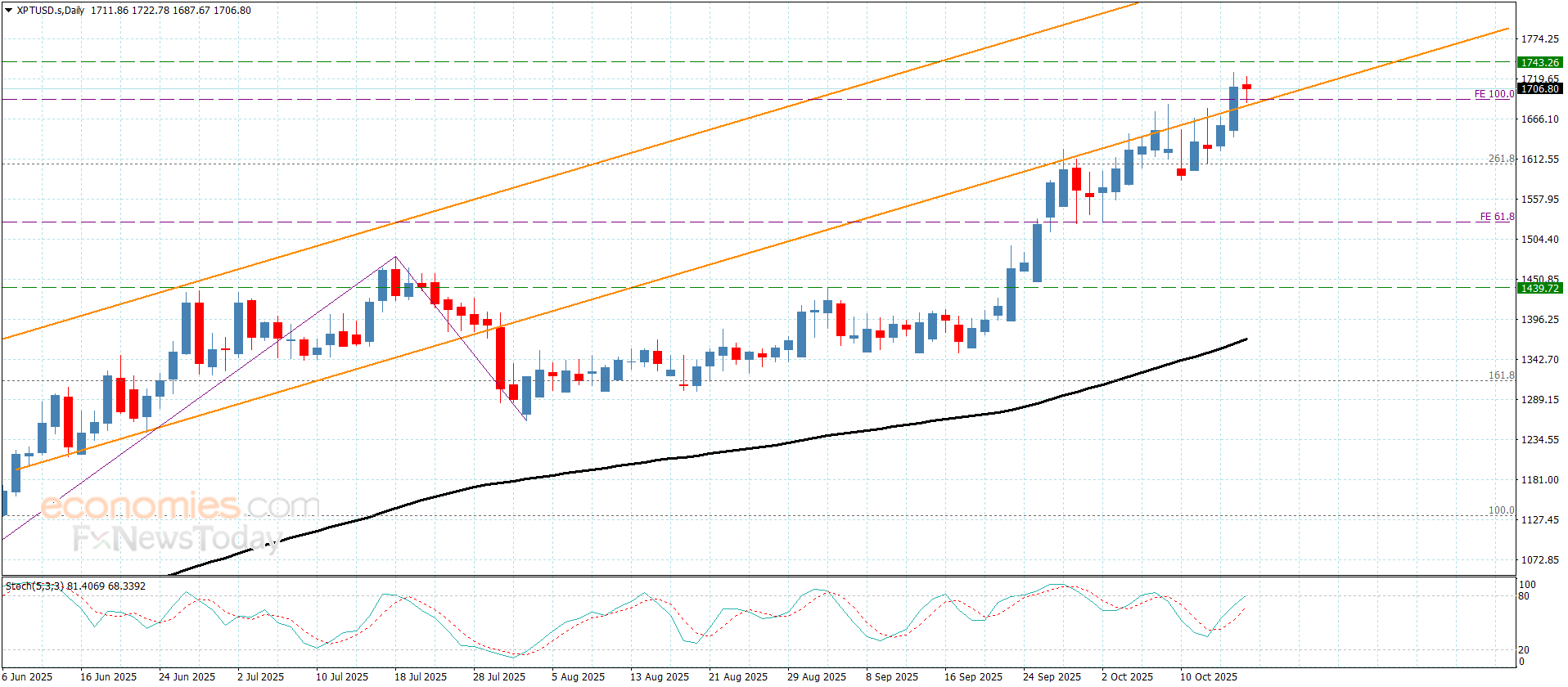
Copper price remains needs positive momentum, which forces it to delay the previously waited bullish attack, to keep providing sideways trading near $4.9000, note that the stability above $4.7500 support is important, to keep waiting for gathering extra positive momentum to pave the way for surpassing the barrier near $5.0600, then begin recording some gains by its rally towards $5.2000 and $5.3200.
While facing new negative pressures and reaching below the current support might force it to form correctional trading, to suffer intraday losses by reaching $4.6200 followed by the moving average 55 near $4.4000.
The expected trading range for today is between $4.7500 and $5.2000
Trend forecast: Bullish
The EURJPY pair forced it to form slow sideways trading, to face stochastic negativity which keeps its positive stability above the extra support at 175.20 level, confirming the continuation of the suggested bullish attempts.
Gathering the positive momentum is important to ease the mission of forming bullish waves, to help it surpass the obstacle at 176.40, then targeting the next positive station at 177.05, while breaking the current support will force it to activate the bearish corrective trend, to suffer extra losses by reaching 174.25.
The expected trading range for today is between 175.20 and 176.45
Trend forecast: Bullish
Copper price remains needs positive momentum, which forces it to delay the previously waited bullish attack, to keep providing sideways trading near $4.9000, note that the stability above $4.7500 support is important, to keep waiting for gathering extra positive momentum to pave the way for surpassing the barrier near $5.0600, then begin recording some gains by its rally towards $5.2000 and $5.3200.
While facing new negative pressures and reaching below the current support might force it to form correctional trading, to suffer intraday losses by reaching $4.6200 followed by the moving average 55 near $4.4000.
The expected trading range for today is between $4.7500 and $5.2000
Trend forecast: Bullish

Even if the US dollar strengthens quite significantly, it will continue to struggle a bit against the British pound, due to the relative strength of this currency against many others out there. Ultimately, this pair starts to fall apart, it’s more likely than not that other currency such as the Euro or the Canadian dollar will get absolutely crushed.
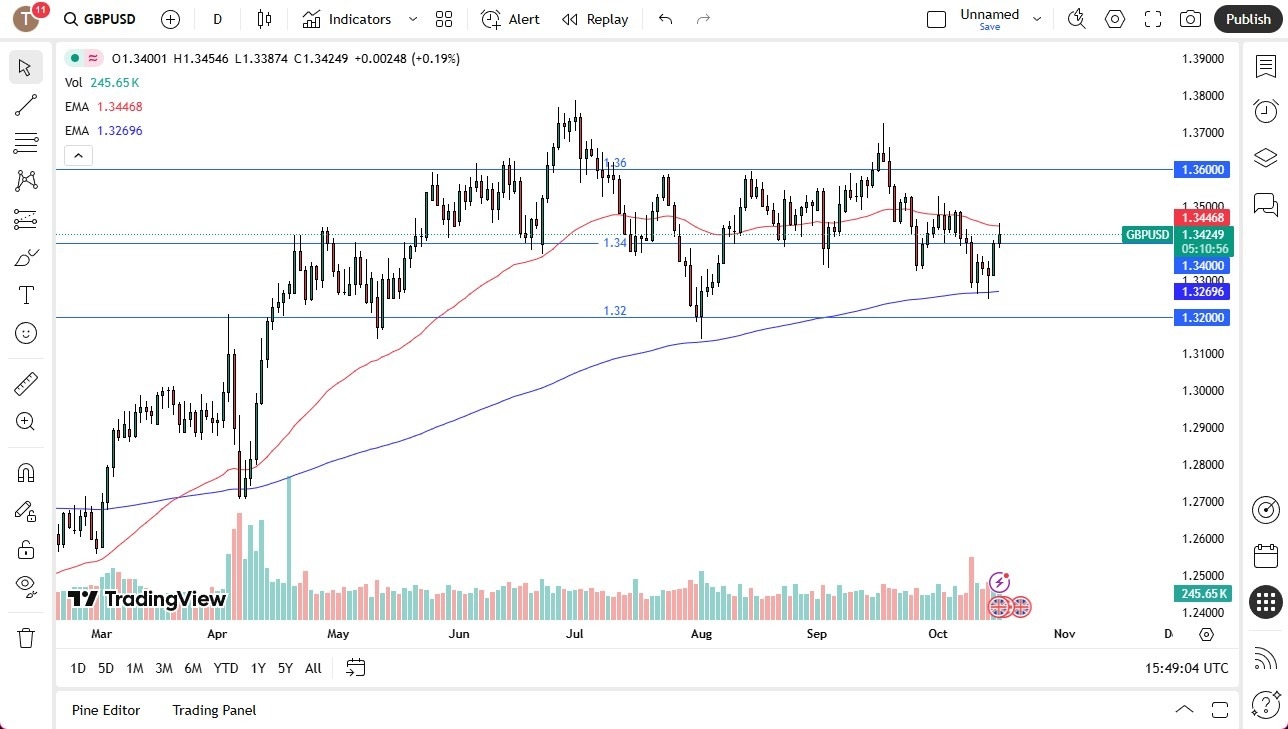
Keep in mind that the technical analysis for this market is somewhat sideways, as we are sitting between the 50 Day EMA and the 200 Day EMA indicators, and it’s also worth noting that we are at the 1.34 level, which is the middle of the overall consolidation range that we have been in between the 1.32 level on the bottom, and the 1.36 level on the top. As we are in the middle of this range, then it makes quite a bit of sense that we could look at the market as being “near fair value.”
Ultimately, the US dollar has been fighting most other currencies, and I think that will remain the same situation here. With the market being this noisy as it is, I think fading signs of exhaustion will more likely than not end up being selling opportunities, but you need to watch the US dollar against multiple other currencies, to get an idea as to how the US dollar may behave in general. If we do break above the 50 Day EMA and perhaps the 1.35 level, then it’s likely that we could go looking to the 1.36 level after that.
Ready to trade our daily GBP/USD Forex forecast? Here’s some of the best forex broker UK reviews to check out.
Christopher Lewis has been trading Forex and has over 20 years experience in financial markets. Chris has been a regular contributor to Daily Forex since the early days of the site. He writes about Forex for several online publications, including FX Empire, Investing.com, and his own site, aptly named The Trader Guy. Chris favours technical analysis methods to identify his trades and likes to trade equity indices and commodities as well as Forex. He favours a longer-term trading style, and his trades often last for days or weeks.
West Texas Intermediate (WTI) Oil price falls on Friday, early in the European session. WTI trades at $60.99 per barrel, down from Thursday’s close at $61.16.Brent Oil Exchange Rate (Brent crude) is also shedding ground, trading at $64.82 after its previous daily close at $64.99.
West Texas Intermediate Oil price falls on Friday, early in the European session. WTI trades at $60.99 per barrel, down from Thursday’s close at $61.16.Brent Oil Exchange Rate is also shedding ground, trading at $64.
82 after its previous daily close at $64.99. WTI Oil FAQs What is WTI Oil? WTI Oil is a type of Crude Oil sold on international markets. The WTI stands for West Texas Intermediate, one of three major types including Brent and Dubai Crude. WTI is also referred to as “light” and “sweet” because of its relatively low gravity and sulfur content respectively. It is considered a high quality Oil that is easily refined. It is sourced in the United States and distributed via the Cushing hub, which is considered “The Pipeline Crossroads of the World”. It is a benchmark for the Oil market and WTI price is frequently quoted in the media. What factors drive the price of WTI Oil? Like all assets, supply and demand are the key drivers of WTI Oil price. As such, global growth can be a driver of increased demand and vice versa for weak global growth. Political instability, wars, and sanctions can disrupt supply and impact prices. The decisions of OPEC, a group of major Oil-producing countries, is another key driver of price. The value of the US Dollar influences the price of WTI Crude Oil, since Oil is predominantly traded in US Dollars, thus a weaker US Dollar can make Oil more affordable and vice versa. How does inventory data impact the price of WTI Oil The weekly Oil inventory reports published by the American Petroleum Institute and the Energy Information Agency impact the price of WTI Oil. Changes in inventories reflect fluctuating supply and demand. If the data shows a drop in inventories it can indicate increased demand, pushing up Oil price. Higher inventories can reflect increased supply, pushing down prices. API’s report is published every Tuesday and EIA’s the day after. Their results are usually similar, falling within 1% of each other 75% of the time. The EIA data is considered more reliable, since it is a government agency. How does OPEC influence the price of WTI Oil? OPEC is a group of 12 Oil-producing nations who collectively decide production quotas for member countries at twice-yearly meetings. Their decisions often impact WTI Oil prices. When OPEC decides to lower quotas, it can tighten supply, pushing up Oil prices. When OPEC increases production, it has the opposite effect. OPEC+ refers to an expanded group that includes ten extra non-OPEC members, the most notable of which is Russia.
Similar News:Anda juga dapat membaca berita serupa dengan ini yang kami kumpulkan dari sumber berita lain.
 WTI extends upside to near $62.00 as OPEC+ signals cautious production hikeWest Texas Intermediate (WTI), the US crude oil benchmark, is trading around $61.95 during the early European trading hours on Wednesday. The WTI extends the rally after the Organization of the Petroleum Exporting Countries and its allies (OPEC+) opt for a modest production increase.
Baca lebih lajut »
 WTI declines to near $61.50 on EIA crude oil inventories surgeWest Texas Intermediate (WTI), the US crude oil benchmark, is trading around $61.70 during the Asian trading hours on Thursday. The WTI edges lower amid a larger-than-expected crude inventory build.
Baca lebih lajut »
 WTI Oil Price Advances in Early European TradingWest Texas Intermediate (WTI) oil prices and Brent crude oil prices rose on Thursday, with WTI trading at $62.24 per barrel and Brent at $66.13. The news also provides an overview of WTI oil, its characteristics, factors influencing its price including supply and demand, OPEC decisions, and inventory data.
Baca lebih lajut »
 WTI edges higher above $61.50 as US crude oil inventories riseWest Texas Intermediate (WTI), the US crude oil benchmark, is trading around $61.70 during the Asian trading hours on Thursday. The WTI gains traction amid a larger-than-expected crude inventory build. However, easing geopolitical tensions in the Middle East might cap its upside.
Baca lebih lajut »
 Energy Prices Could Finally Fall in 2026Market Analysis by covering: Brent Oil Futures, Crude Oil WTI Futures, Natural Gas Futures. Read ‘s Market Analysis on Investing.com
Baca lebih lajut »
 WTI Price Forecast: Struggles below $61.00, bearish bias remainsWest Texas Intermediate (WTI) US Crude Oil prices extend the previous day’s pullback from the vicinity of mid-$62.00s, or the weekly top, and remain depressed for the second straight day on Friday.
Baca lebih lajut »
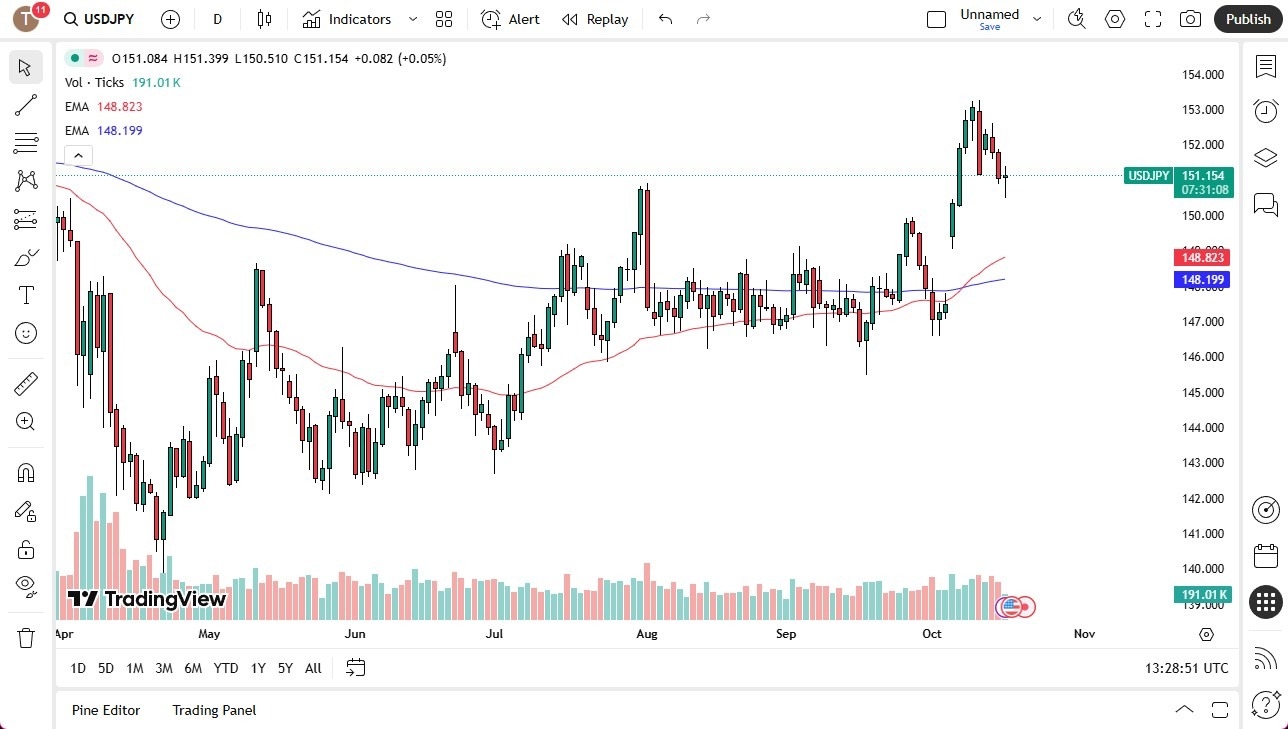
That being said, the 150 yen level is where the 50 % Fibonacci retracement level is on the move that we have seen recently. Or you could even look at the gap and see that we tested the 50 % Fibonacci retracement level from the actual gap itself. It does make sense that people will be willing to get involved and try to reach the 153 yen level. This is a market that often sees these little pullbacks in short order, but the interest rate differential continues to favor the US dollar.
All things being equal, this is a market that I think given enough time, this is a pair that goes much higher. And with that being the case, I have to look at potential targets, and I will base it on and granted this is a huge look here at technical analysis, but we did break out of an ascending triangle, which basically measures for a move to about 162 or so, which is where we broke down from in July of 2024. I think that might be where we’re going.
The interest rate differential and of course the soft Japanese central bank will continue to push this thing higher, and unless we get some type of major risk-off event, which is always entirely impossible, I think the Japanese Yen remains on its back foot for quite some time.
Want to trade our USD/JPY forex analysis and predictions? Here’s a list of forex brokers in Japan to check out.
Christopher Lewis has been trading Forex and has over 20 years experience in financial markets. Chris has been a regular contributor to Daily Forex since the early days of the site. He writes about Forex for several online publications, including FX Empire, Investing.com, and his own site, aptly named The Trader Guy. Chris favours technical analysis methods to identify his trades and likes to trade equity indices and commodities as well as Forex. He favours a longer-term trading style, and his trades often last for days or weeks.
Gold experiences intense volatility in the Asian trading hours on Friday, driven by a bout of profit-taking and risk-off flows, following the latest parabolic rise to new record highs near $4,380.
Gold yo-yos within a $100 range, eyeing a ninth consecutive weekly advance. Gold looks to book a whopping 8% gain this week, mainly driven by massive supply for the US Dollar amid renewed US-China trade tensions and dovish reinforcement surrounding US Federal Reserve (Fed) interest rate cuts.
In a latest spat between the US and China, the latter accused the US of exaggerating its rare earth export controls to stir panic, rejecting calls to roll them back.
Meanwhile, S&P Global estimated that US President Donald Trump’s tariffs will cost global firms $1.2 trillion in 2025, with about two-thirds of the burden falling on consumers.
Additionally, the latest round of Fedspeak helped double down on bets for two Fed rate cuts this year and weighed on the US Treasury bond yields, as investors remain wary of the impact of the tariffs and the ongoing government shutdown on the US economy.
Fed Governor Christopher Waller said on Thursday that a 25 bps rate cut is justified at the upcoming meeting, based on current data.
Minneapolis Fed President Neel Kashkari warned late Thursday, there is “more risk of labor market negative surprise than an uptick in inflation,” implying that there is scope for more rate cuts.
However, the correction in Gold seems to be sponsored by fresh optimism on a potential Russia-Ukraine peace deal as Trump and Ukrainian President Volodymyr Zelenskyy in Washington on Friday.
A Kremlin aide said recently that a Trump–Putin call lasted almost 2.5 hours and that the “call was substantive and open.” Both leaders discussed possible Tomahawk missile deliveries.
Separately, Zelenskyy said that he is “counting on the momentum that helped end terror and war in the Middle East to also help end the war with Russia.”
Further, markets resorted to taking profits off the table heading into the weekend, with the end-of-the-week flows likely in play going forward. All in all, another volatile session remains on the cards.
The short-term technical outlook for Gold remains more or less the same, with the ‘hot run’ triggering timely bouts of profit-taking, justified by the 14-day Relative Strength Index (RSI) stretching within the extreme overbought zone, currently near 87.50.
Risks are skewed more in favor of an extension to the latest steep corrective downside, with the immediate cushion seen at the rising channel resistance-turned-support at $4,243.
If that cap gives way, sellers could flex their muscle toward the actual channel support at $4,095.
The natural tendency of the rising channel formation is a break to the downside and hence, a daily candlestick close below the latter could confirm a bearish breakdown, initiating a fresh correction toward the $3,950-$3,900 demand area, where the 21-day Simple Moving Average (SMA) and the October 1 and 2 highs lie.
On the flip side, a retest of the lifetime highs at $4,379 will be inevitable if buyers fight back control. The $4,450 psychological level and the $4,500 round figure will be next on their radars.
Gold has played a key role in human’s history as it has been widely used as a store of value and medium of exchange. Currently, apart from its shine and usage for jewelry, the precious metal is widely seen as a safe-haven asset, meaning that it is considered a good investment during turbulent times. Gold is also widely seen as a hedge against inflation and against depreciating currencies as it doesn’t rely on any specific issuer or government.
Central banks are the biggest Gold holders. In their aim to support their currencies in turbulent times, central banks tend to diversify their reserves and buy Gold to improve the perceived strength of the economy and the currency. High Gold reserves can be a source of trust for a country’s solvency. Central banks added 1,136 tonnes of Gold worth around $70 billion to their reserves in 2022, according to data from the World Gold Council. This is the highest yearly purchase since records began. Central banks from emerging economies such as China, India and Turkey are quickly increasing their Gold reserves.
Gold has an inverse correlation with the US Dollar and US Treasuries, which are both major reserve and safe-haven assets. When the Dollar depreciates, Gold tends to rise, enabling investors and central banks to diversify their assets in turbulent times. Gold is also inversely correlated with risk assets. A rally in the stock market tends to weaken Gold price, while sell-offs in riskier markets tend to favor the precious metal.
The price can move due to a wide range of factors. Geopolitical instability or fears of a deep recession can quickly make Gold price escalate due to its safe-haven status. As a yield-less asset, Gold tends to rise with lower interest rates, while higher cost of money usually weighs down on the yellow metal. Still, most moves depend on how the US Dollar (USD) behaves as the asset is priced in dollars (XAU/USD). A strong Dollar tends to keep the price of Gold controlled, whereas a weaker Dollar is likely to push Gold prices up.