The main category of Forex News.
You can use the search box below to find what you need.
[wd_asp id=1]
The main category of Forex News.
You can use the search box below to find what you need.
[wd_asp id=1]
Major Currency Pairs Forecasts: this analysis focuses on four major currency pairs: EUR/USD, USD/JPY, GBP/USD, and USD/CHF. Understanding the factors influencing these pairs can provide insights into potential future movements.
The EUR/USD pair is the most traded currency pair globally, representing the economic relationship between the Eurozone and the United States. Several factors influence its movement:
Economic Indicators
The economic health of both the Eurozone and the U.S. plays a crucial role in determining the direction of this pair. Key indicators include GDP growth, employment figures, and inflation rates. Recent trends suggest that while the U.S. economy has shown resilience, the Eurozone faces challenges such as slower growth and inflationary pressures.
Central Bank Policies
The European Central Bank (ECB) and the Federal Reserve (Fed) have differing monetary policies that significantly impact the EUR/USD exchange rate. If the Fed continues to adopt a hawkish stance while the ECB remains dovish, the U.S. dollar may strengthen against the euro. Conversely, any shift towards tighter monetary policy by the ECB could bolster the euro.
Market Sentiment
Market sentiment, influenced by geopolitical events and economic forecasts, can lead to volatility in the EUR/USD pair. Traders often react to news regarding trade relations, political stability, and economic forecasts, which can create short-term fluctuations.
The USD/JPY pair is heavily influenced by interest rate differentials between the U.S. and Japan, as well as broader market sentiment.
Interest Rate Differentials
The Bank of Japan (BoJ) has maintained a low-interest-rate environment for an extended period, while the Fed has been more aggressive in adjusting rates. This divergence can lead to a stronger U.S. dollar against the Japanese yen, particularly if the Fed signals further rate hikes.
Safe-Haven Demand
The Japanese yen is often viewed as a safe-haven currency. During times of global uncertainty or market volatility, demand for the yen may increase, leading to appreciation against the U.S. dollar. Conversely, if market sentiment improves, the yen may weaken as investors seek higher returns elsewhere.
Economic Data Releases
Key economic data from both the U.S. and Japan, such as employment reports and inflation data, can significantly impact the USD/JPY pair. Positive data from the U.S. may strengthen the dollar, while disappointing figures from Japan could lead to yen depreciation.
The GBP/USD pair, often referred to as “Cable,” is influenced by various factors, including economic performance, political developments, and market sentiment.
Economic Performance
The economic outlook for the United Kingdom is critical for the GBP/USD pair. Factors such as GDP growth, inflation, and employment rates can influence the strength of the British pound. Recent economic challenges, including those related to Brexit, have created uncertainty, which can lead to volatility in this pair.
Political Developments
Political events, particularly those related to Brexit negotiations and domestic policies, can have a profound impact on the GBP/USD exchange rate. Any signs of progress or setbacks in negotiations can lead to significant fluctuations in the pound’s value.
Market Sentiment
Market sentiment plays a crucial role in the GBP/USD pair’s movements. Traders often react to news regarding economic forecasts, political stability, and global market trends. A shift in sentiment can lead to rapid changes in the exchange rate.
The USD/CHF pair represents the relationship between the U.S. dollar and the Swiss franc, another currency often viewed as a safe haven.
Economic Stability
Switzerland’s economic stability and strong financial system contribute to the Swiss franc’s appeal. In times of global uncertainty, the franc may appreciate against the U.S. dollar as traders seek refuge in stable currencies.
Central Bank Policies
The Swiss National Bank (SNB) maintains a cautious approach to monetary policy, often keeping interest rates low. If the Fed continues to raise rates, the U.S. dollar may strengthen against the franc. However, any unexpected moves by the SNB could lead to volatility in the USD/CHF pair.
Geopolitical Factors
Geopolitical events can significantly impact the USD/CHF exchange rate. Tensions in global markets or economic crises can lead to increased demand for the Swiss franc, resulting in appreciation against the dollar.
The major currency pairs—EUR/USD, USD/JPY, GBP/USD, and USD/CHF—are influenced by a complex interplay of economic indicators, central bank policies, and market sentiment. As traders navigate this dynamic landscape, staying informed about economic developments and geopolitical events will be crucial for making informed decisions. Understanding these factors can provide valuable insights into potential future movements in these key currency pairs.
When considering shares, indices, forex (foreign exchange) and commodities for trading and price predictions, remember that trading CFDs involves a significant degree of risk and could result in capital loss.
Past performance is not indicative of any future results. This information is provided for informative purposes only and should not be construed to be investment advice.
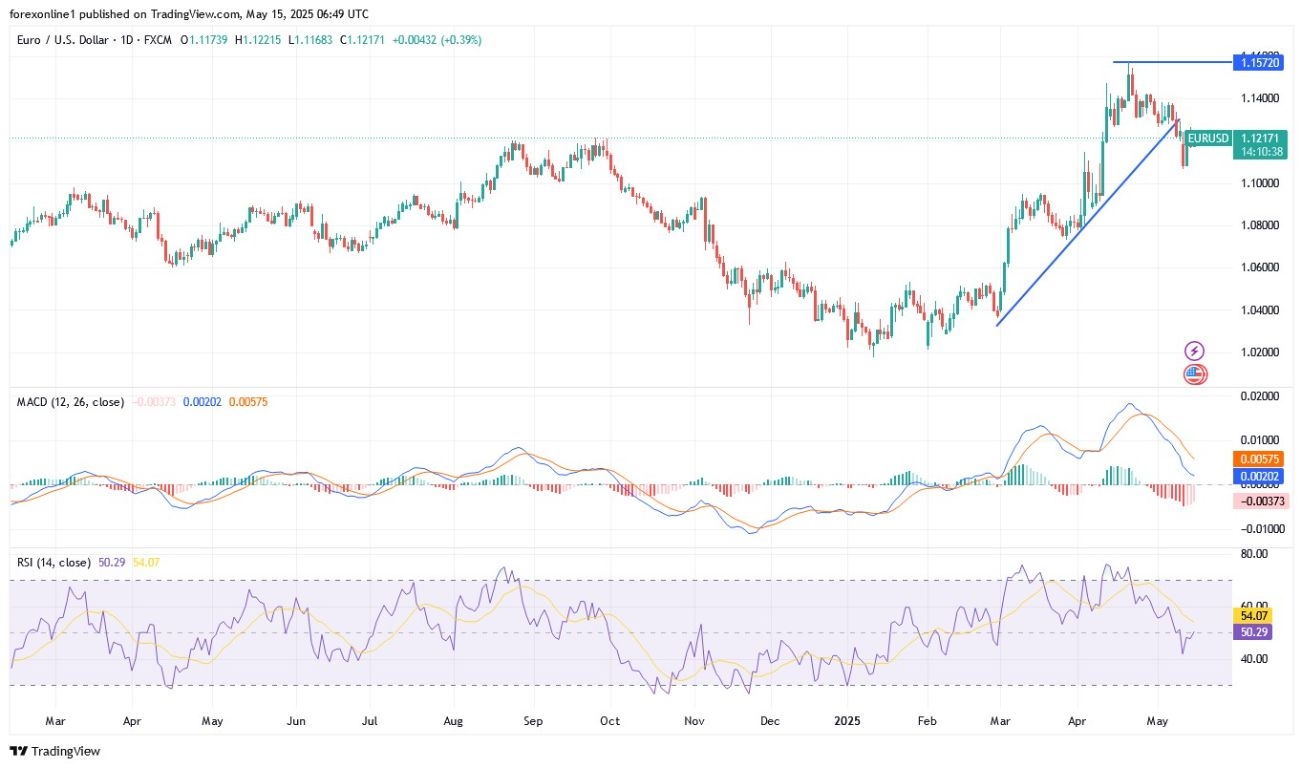
During yesterday’s trading session, bulls attempted a rebound in the EUR/USD currency pair, reaching the 1.1265 resistance level before quickly returning to stabilize around the 1.1170 level at the start of today’s Thursday session. The US dollar remains stronger against other major currencies amidst a recent easing of US-China and European trade tensions. The recent gains of the US dollar pushed the EUR/USD pair towards the 1.1065 support level. Amid the performance of the most traded currency pair in the Forex market, trading experts believe that the Euro/Dollar will face difficulty in making further progress; they anticipate some stability around the 1.120 level in EUR/USD in the coming days. During the current quarter, they expect a range for EUR/USD between the 1.10 support level and the 1.15 resistance level.

Be cautious. The direction of the EUR/USD will remain subject to some volatility if US policies continue to threaten the future of global economic recovery.
According to trading across licensed currency trading company platforms and based on the daily timeframe chart performance, the EUR/USD pair is in a phase of breaking the overall upward trend, and breaking the 1.10 support will remain important for the strength of bear control over the direction. After the recent losses, the 14-day Relative Strength Index (RSI) stabilized below the midline, preparing for a bearish shift. At the same time, the MACD indicator confirms the start of a downward move but has not yet reached the oversold stage.
Current EUR/USD trading will be on an important date with a package of European economic releases, led by the announcement of the Eurozone GDP growth reading, along with the industrial production rate and the change in employment for the bloc’s countries, all at 12:00 PM Egypt time. Then, during the more important US session, the US Producer Price Index (PPI) reading, US retail sales figures, and the number of weekly jobless claims will be announced, all at 3:30 PM Egypt time, followed minutes later by new statements from US Federal Reserve Governor Jerome Powell.
Be careful; the reaction to these data results will affect the performance of the EUR/USD price and may shape the future weekly close of the currency pair. Technically, a bullish EUR/USD scenario requires stability above the 1.1370 resistance level once again. Overall, while declining trade tensions provide support for the US dollar in the near term, the risk of a rapid deterioration in incoming data remains. We emphasize that concerns about the outlook for stable US data are valid, and that asset allocation shifts away from US assets remain a headwind for the US dollar in the medium and long term. Commenting on currency exchange rates, German Bundesbank President Nagel noted: “The dollar is very important for the global financial system, and we still need a strong dollar
Ready to trade our daily Forex analysis? We’ve made a list of the best forex demo accounts worth trading with.
Spot gold steadied after hitting its lowest level since April 10, supported by technical buying and a weaker U.S. dollar. The metal bounced near long-standing trendline support around $3,130, in place since the start of 2025. The dollar index (.DXY) slipped 0.3% to 100.81, making gold more attractive for holders of other currencies. However, despite Thursday’s dip, the index is on track for a modest weekly gain, though it remains down nearly 7% in 2025.
Markets are awaiting several key U.S. economic reports, including the producer price index, retail sales, and weekly jobless claims. These could influence rate expectations heading into the second half of 2025. Tuesday’s CPI data came in softer than expected, with core inflation rising only 0.2% in April. Fed Chair Jerome Powell is also scheduled to speak later Thursday, and traders will be parsing his comments for any hints on the Fed’s policy stance. Markets are still pricing in 50 basis points of cuts by year-end, likely starting in October.
Gold’s appeal as a safe haven has eased somewhat after the U.S. and China agreed to pause most tariffs for 90 days. While this de-escalated trade tensions, it also reduced immediate hedging demand for bullion. The drop in safe-haven flows, combined with higher Treasury yields earlier in the week, pressured gold lower before Thursday’s stabilization.
May 15, 2025 – Written by Tim Boyer
STORY LINK GBP/USD Forecast: Pound GDP Boost Fades, Dollar Eyes Bonds
The Pound Sterling initially gained against the Euro and U.S. Dollar following the latest GDP data, but GBP was unable to make further headway with concerns that the data overstated the underlying performance.
Equity markets were also weaker which limited potential support, but the US Dollar remained fragile.
The Pound to Dollar exchange rate (GBP/USD) failed to hold 1.3300 and retreated to 1.3285 with evidence of buying on dips.
The dollar overall has struggled to hold gains amid fresh concerns that the combination of huge supply of US bonds and the risk of fading global demand for Treasuries will trigger higher yields and a weaker dollar.
ING is positive on the short-term GBP/USD outlook; “With the dollar looking a bit vulnerable, GBP/USD looks biased to the 1.3360/3400 area short term.”
UK GDP grew 0.7% for the first quarter of the year after a 0.1% gain for the final three months of 2024 and compared with expectations of 0.6% growth.
According to the provisional data, the UK first-quarter performance was the strongest within the G7 area.
Budget concerns will ease slightly, although there are still important underlying stresses in meeting the government’s fiscal rules.
ING noted potential seasonal distortions in the data, but considers the outlook is broadly encouraging.
The bank added; “the UK outlook does look ‘ok’, even if first-quarter GDP probably heavily overstates the underlying pace of growth. Uncertainty surrounding global trade is a headwind, though the direct impact of tariffs on the UK looks negligible. Remember too that government spending is rising significantly this year and that will be a firm tailwind.”
Exports were also boosted by shipments ahead of US tariffs.
According to Paul Dales, chief UK economist at Capital Economics; “Overall, the main reason why GDP was stronger than everyone expected appears to be because US and UK tax changes meant that more activity was pulled forward into Q1 from Q2 than everyone expected, rather than because the UK economy is fundamentally stronger.”
US developments are likely to be crucial later in the session.
Retail sales data will be released and there are also two important regional surveys with the New York and Philadelphia Fed data. There were sharp declines for April and the May data will be important for wider confidence in the US outlook.

US bond yields have also moved higher with markets fretting over the implications of huge budget deficits and the Republican tax bill.
The 10-year yield is above 4.50% with the 30-year yield near 5.00% and close to levels which triggered a U-turn on reciprocal tariffs in April.
Significantly, higher US yields have not supported the dollar.
Rabobank commented, “Perhaps we are about to find out whether it really was rising bond yields that forced the about-face on those reciprocal tariffs, or if Scott Bessent has some other rabbit to pull out of his hat to force long yields lower.”
MUFG noted the risk that bond-market fears would lead to Truss-style difficulties for the dollar.
Looking at the proposed legislation it added; “Much of the cost of this bill is merely to extend the status quo and other aspects could easily be crowded out by yields being higher than otherwise would be. That in our view means this development will not prove positive for the dollar.”
SocGen commented; “I’m sure that President Trump, with his desire to rebuild the global trade framework, is in favour of a less expensive dollar.
International Money Transfer? Ask our resident FX expert a money transfer question or try John’s new, free, no-obligation personal service! ,where he helps every step of the way,
ensuring you get the best exchange rates on your currency requirements.
TAGS: Pound Dollar Forecasts
Silver price (XAG/USD) bounces back to near $32.00 during European trading hours on Thursday after sliding to near the monthly low around $31.65 earlier in the day. The outlook of the Silver price remains bearish as trade relations between the United States (US) and China have improved further.
During European trading hours, US Treasury Secretary Scott Bessent signaled more talks with China to avoid trade tensions. “We are going into a series of negotiations with China to prevent escalation again,” Bessent said.
Meanwhile, Beijing also appears to be making efforts to improve relations with the US. On Wednesday, the Chinese Commerce Ministry suspended non-tariff measures taken against 45 US entities in the wake of an agreement between Washington and Beijing for a 90-day pause in the trade war in which they lowered tariffs by 115%.
Waning US-China trade tensions have forced investors to reassess the global economic outlook. Theoretically, an improvement in the global economy reduces demand for safe-haven assets, such as Silver.
Meanwhile, investors await Federal Reserve (Fed) Chair Jerome Powell’s speech, which is scheduled in the North American session. Investors would look cues for any change in the Fed’s stance towards the monetary policy outlook after the temporary US-China trade truce and soft US Consumer Price Index (CPI) data for April.
The Silver price could face more pressure if Fed Powell guides that interest rates should remain where they are in the face of economic uncertainty due to new economic policies by US President Donald Trump. Fed’s higher for longer interest rates bode poorly for non-yielding assets, such as Silver.
Silver price trades in a Descending Triangle formation on a four-hour timeframe. The chart pattern reflects indecisiveness among market participants. The near-term trend of the white metal is bearish as it trades below the 20-period Exponential Moving Average (EMA), which is around $32.70.
The 14-period Relative Strength Index (RSI) wobbles around 40.00. A fresh bearish momentum would trigger if the RSI falls below the 40.00 level.
Looking up, the March 28 high of $34.60 will act as key resistance for the metal. On the downside, the April 11 low of $30.90 will be the key support zone.
Silver is a precious metal highly traded among investors. It has been historically used as a store of value and a medium of exchange. Although less popular than Gold, traders may turn to Silver to diversify their investment portfolio, for its intrinsic value or as a potential hedge during high-inflation periods. Investors can buy physical Silver, in coins or in bars, or trade it through vehicles such as Exchange Traded Funds, which track its price on international markets.
Silver prices can move due to a wide range of factors. Geopolitical instability or fears of a deep recession can make Silver price escalate due to its safe-haven status, although to a lesser extent than Gold’s. As a yieldless asset, Silver tends to rise with lower interest rates. Its moves also depend on how the US Dollar (USD) behaves as the asset is priced in dollars (XAG/USD). A strong Dollar tends to keep the price of Silver at bay, whereas a weaker Dollar is likely to propel prices up. Other factors such as investment demand, mining supply – Silver is much more abundant than Gold – and recycling rates can also affect prices.
Silver is widely used in industry, particularly in sectors such as electronics or solar energy, as it has one of the highest electric conductivity of all metals – more than Copper and Gold. A surge in demand can increase prices, while a decline tends to lower them. Dynamics in the US, Chinese and Indian economies can also contribute to price swings: for the US and particularly China, their big industrial sectors use Silver in various processes; in India, consumers’ demand for the precious metal for jewellery also plays a key role in setting prices.
Silver prices tend to follow Gold’s moves. When Gold prices rise, Silver typically follows suit, as their status as safe-haven assets is similar. The Gold/Silver ratio, which shows the number of ounces of Silver needed to equal the value of one ounce of Gold, may help to determine the relative valuation between both metals. Some investors may consider a high ratio as an indicator that Silver is undervalued, or Gold is overvalued. On the contrary, a low ratio might suggest that Gold is undervalued relative to Silver.
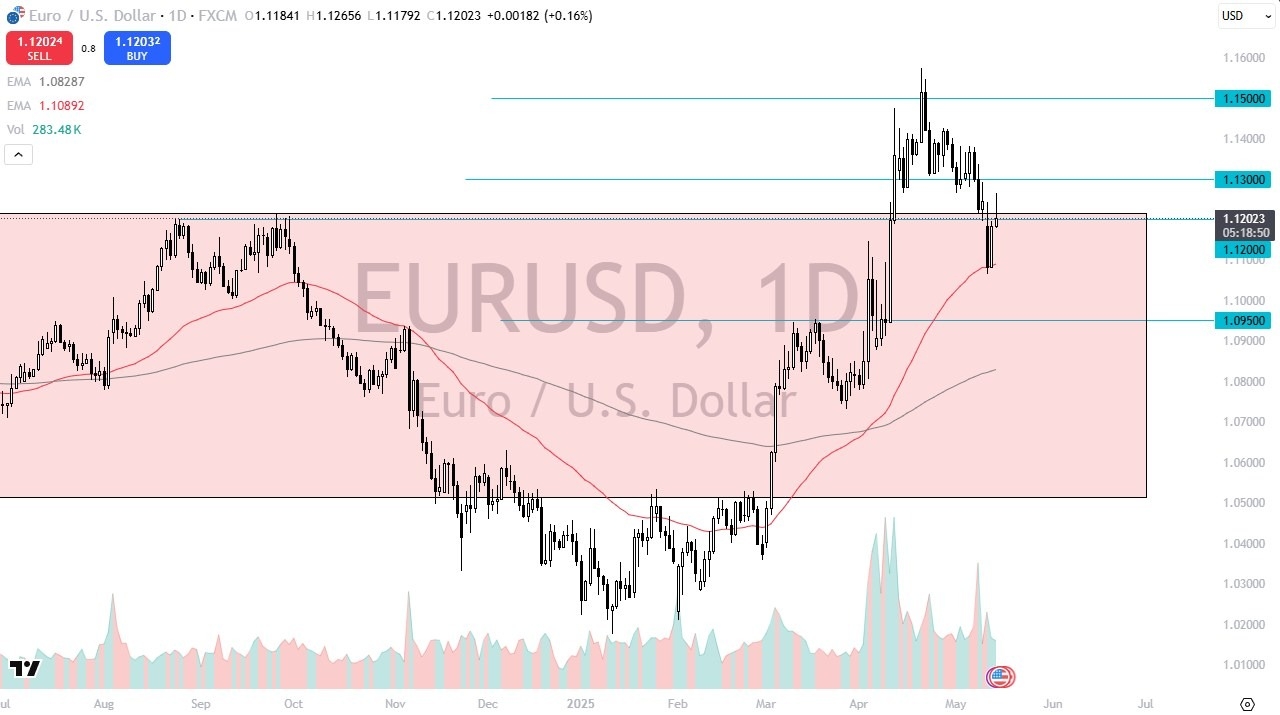
We had a little bit of a throw over here in the last couple of weeks, but we also had one at the end of last year to the downside. So, the question is, are we re-entering this area yet again? It’s very possible. That’s exactly what happens. We’ll just have to wait and see. But I do think that you have to basically take this market as one that I think got a little overdone and therefore it does make a certain amount of sense that we pull back at the very least. That doesn’t necessarily mean that I am looking for a major meltdown, but I do think that a return to the 50-day EMA near the lows of the past couple of trading sessions is very viable.
And then if we break down below there, we could be looking at the 1.0950 level, an obvious area of both support and resistance over the longer term. To the upside, if we do take out the 1.13 level, then we could start looking at the 1.15 level again, an area that has a certain amount of importance from both psychology and the longer term charge.
All things being equal with the interest rates in America climbing the way they did, it makes perfect sense that the US dollar continues to attract inflows.
Ready to trade our daily Forex analysis? We’ve made a list of the best forex trading platforms for beginners worth trading with.
Christopher Lewis has been trading Forex and has over 20 years experience in financial markets. Chris has been a regular contributor to Daily Forex since the early days of the site. He writes about Forex for several online publications, including FX Empire, Investing.com, and his own site, aptly named The Trader Guy. Chris favours technical analysis methods to identify his trades and likes to trade equity indices and commodities as well as Forex. He favours a longer-term trading style, and his trades often last for days or weeks.
The EURJPY pair is affected by the negative pressures, due to its repeated stability below the resistance at 164.90, forming several bearish waves, approaching from the initial support at 163.35 level.
The suggested scenario depends on the stability of the current support, to expect activating the bullish track, which might target 164.20 and 164.90 level gradually, while breaking the support and holding below it will increase the chances for resuming the decline, and 162.40 level represents the next target of the bearish track.
The expected trading range for today is between 163.30 and 164.90
Trend forecast: Bullish
Do you need help in trading decisions? Do you want to learn how to start trading?
Join Economies.com VIP Club and benefit from over 15 years of market analysis expertise and get:
Special Offer: Subscribe to the Economies.com VIP channel and get also a free subscription to a trusted trading signals channel provided by Best Trading Signal.
The GBPJPY pair activated the bearish correctional track, due to its reach below 194.60 level, affected by stochastic exit from the overbought level, which forces it to suffer some losses by reaching 193.90.
Depending on the key support extension on 193.35 level, to increase the chances for activating the bullish track, to step above 194.60 then targeting 195.70 level, while breaking the support will force it suffer extra losses that might extend to 192.65 reaching to the moving average 55.
The expected trading range for today is between 193.35 and 195.00
Trend forecast: Bullish
Do you need help in trading decisions? Do you want to learn how to start trading?
Join Economies.com VIP Club and benefit from over 15 years of market analysis expertise and get:
Special Offer: Subscribe to the Economies.com VIP channel and get also a free subscription to a trusted trading signals channel provided by Best Trading Signal.
Copper price confirmed the continuation of the bearish scenario by providing a new negative close yesterday below $4.6600, which represents an extra barrier to its stability near 50% Fibonacci correction level.
Note that gathering the negative momentum in the current period is important to ease the mission of pressing on the barrier at $4.5000 level, and breaking it will open the way towards targeting negative stations, which might extend to $4.4500 and $4.3100.
The expected trading range for today is between $4.4500 and $4.6600
Trend forecast: Bearish
Do you need help in trading decisions? Do you want to learn how to start trading?
Join Economies.com VIP Club and benefit from over 15 years of market analysis expertise and get:
Special Offer: Subscribe to the Economies.com VIP channel and get also a free subscription to a trusted trading signals channel provided by Best Trading Signal.
The EURJPY pair is affected by the negative pressures, due to its repeated stability below the resistance at 164.90, forming several bearish waves, approaching from the initial support at 163.35 level.
The suggested scenario depends on the stability of the current support, to expect activating the bullish track, which might target 164.20 and 164.90 level gradually, while breaking the support and holding below it will increase the chances for resuming the decline, and 162.40 level represents the next target of the bearish track.
The expected trading range for today is between 163.30 and 164.90
Trend forecast: Bullish
Do you need help in trading decisions? Do you want to learn how to start trading?
Join Economies.com VIP Club and benefit from over 15 years of market analysis expertise and get:
Special Offer: Subscribe to the Economies.com VIP channel and get also a free subscription to a trusted trading signals channel provided by Best Trading Signal.