The main category of Forex News.
You can use the search box below to find what you need.
[wd_asp id=1]
The main category of Forex News.
You can use the search box below to find what you need.
[wd_asp id=1]
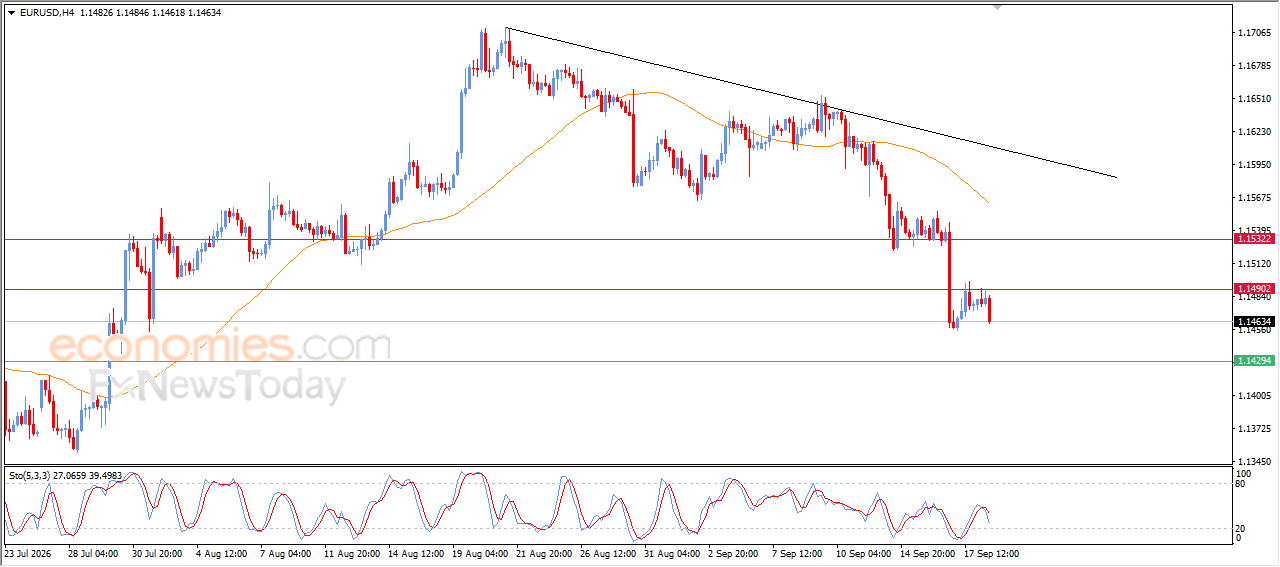
The EURUSD price slipped lower during its recent intraday trading, following the consolidation of the 1.1490 resistance level, amid the dominance of the short-term bearish correction. Negative pressure continues to stem from trading below EMA50, which acts as dynamic resistance and reduces the pair’s chances of a full recovery in the near term. This comes especially as negative signals began to emerge from the relative strength indicators after the pair managed to offload its oversold conditions, leaving room for further losses in the coming period.
The article covers the following subjects:
Consider short positions below 157.50 with a target of 151.76–148.92 once the correction is completed.
Breakout and consolidation above 157.50 will allow the pair to continue rising to the levels of 160.48–163.90.
On the weekly time frame, an ascending third wave of larger degree 3 has formed, a downward correction has been completed as the fourth wave 4, and the fifth wave 5 is developing. Apparently, the first wave of smaller degree (1) of 5 has formed and a bearish correction (2) of 5 is developing on the daily chart. On the H4 time frame, wave A of (2) is developing, within which wave iii of A has been completed and a local correction iv of A is nearing completion. If the presumption is correct, USD/JPY will continue to decline to 151.76–148.92 after the correction ends. The level of 157.50 is critical in this scenario as a breakout above it will enable the pair to continue rising to the levels of 160.48–163.90.
This forecast is based on the Elliott Wave Theory. When developing trading strategies, it is essential to consider fundamental factors, as the market situation can change at any time.
The content of this article reflects the author’s opinion and does not necessarily reflect the official position of LiteFinance broker. The material published on this page is provided for informational purposes only and should not be considered as the provision of investment advice for the purposes of Directive 2014/65/EU.
According to copyright law, this article is considered intellectual property, which includes a prohibition on copying and distributing it without consent.
The article covers the following subjects:
Consider long positions from corrections above 4,233.40 with a target of 4,900.00–5,610.00.
Breakout and consolidation below 4,233.40 will allow the asset to continue declining to the levels of 3,954.50–3,720.00.
An ascending third wave of larger degree (3) is presumably developing on the weekly chart. Within it, a descending correction has been completed as the fourth wave of smaller degree 4 of (3). Apparently, the fifth wave 5 of (3) has started developing on the daily chart, with wave i of 5 forming as its part. The H4 chart shows that wave (iii) of i of 5 has formed, a local correction has been completed as wave (iv) of i, and wave (v) of i has likely started unfolding. If the presumption is correct, XAU/USD will continue to rise to 4,900.00–5,610.00. The level of 4,233.40 is critical in this scenario as a breakout below it will enable the asset to continue declining to the levels of 3,954.50–3,720.00.
This forecast is based on the Elliott Wave Theory. When developing trading strategies, it is essential to consider fundamental factors, as the market situation can change at any time.
The content of this article reflects the author’s opinion and does not necessarily reflect the official position of LiteFinance broker. The material published on this page is provided for informational purposes only and should not be considered as the provision of investment advice for the purposes of Directive 2014/65/EU.
According to copyright law, this article is considered intellectual property, which includes a prohibition on copying and distributing it without consent.
The article covers the following subjects:
Consider long positions from corrections above 1.1450 with a target of 1.1790–1.2088.
Breakout and consolidation below 1.1450 will allow the pair to continue declining to the levels of 1.1350–1.1230.
On the weekly time frame, an ascending wave of larger degree B is developing, with wave (A) of B forming as its part. On the daily time frame, the third wave 3 of (A) is apparently unfolding. Within it, wave i of 3 has formed, a bearish corrective wave ii of 3 has been completed, and wave iii of 3 has started developing. On the H4 time frame, the first wave of smaller degree (i) of iii has formed, and a local correction has presumably ended as the second wave (ii) of iii. If the presumption is correct, EUR/USD will continue to rise to 1.1790–1.2088. The level of 1.1450 is critical in this scenario. A breakout below it will allow the pair to continue falling to the levels of 1.1350–1.1230.
This forecast is based on the Elliott Wave Theory. When developing trading strategies, it is essential to consider fundamental factors, as the market situation can change at any time.
The content of this article reflects the author’s opinion and does not necessarily reflect the official position of LiteFinance broker. The material published on this page is provided for informational purposes only and should not be considered as the provision of investment advice for the purposes of Directive 2014/65/EU.
According to copyright law, this article is considered intellectual property, which includes a prohibition on copying and distributing it without consent.
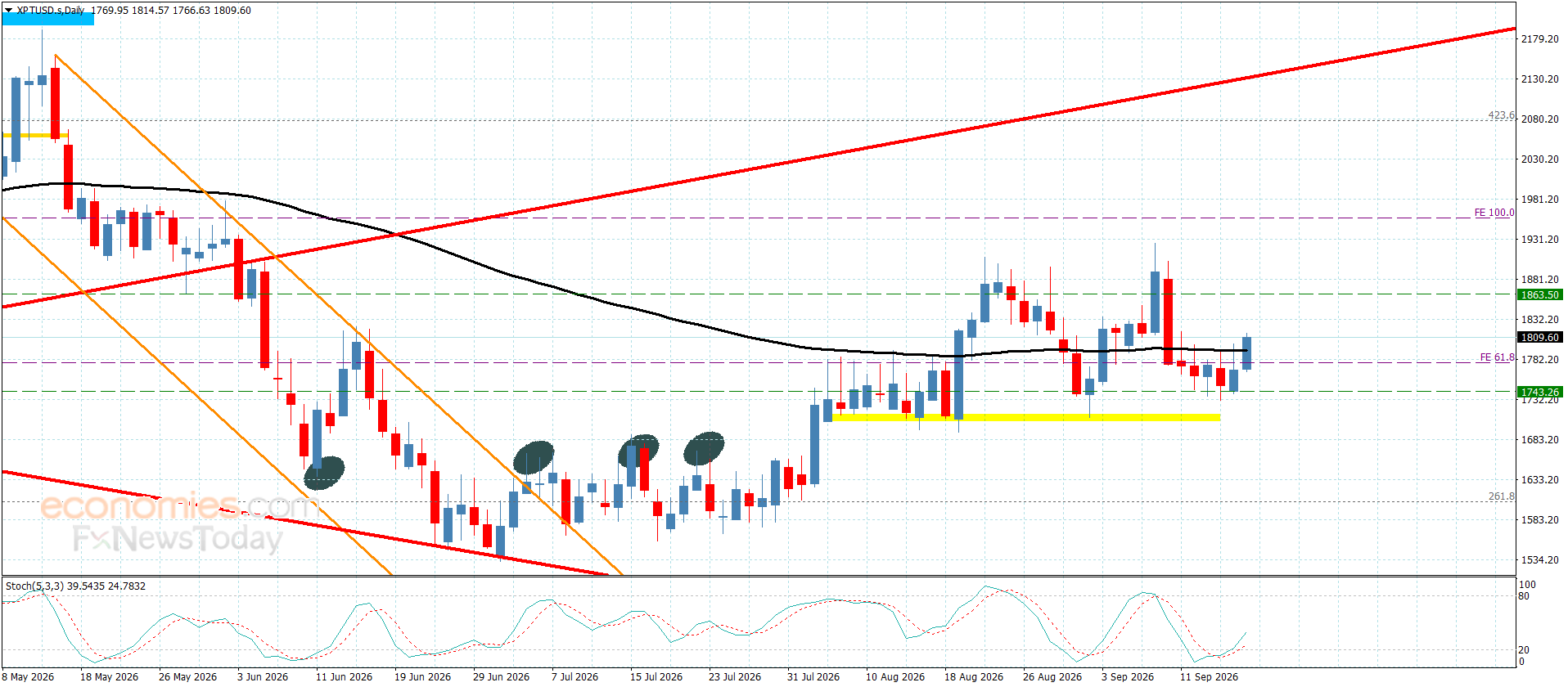
Platinum price began providing some bullish trading due to stability above $1705.00, approaching the sideways track’s barrier at $1840.00.
Note that providing positive momentum by the main indicators will increase the chances of achieving the required breach, to confirm its readiness to record several gains by its rally towards $1880.00 reaching the next main target at $1960.00.
The expected trading range for today is between $1760.00 and $1880.00
Trend forecast: Bullish
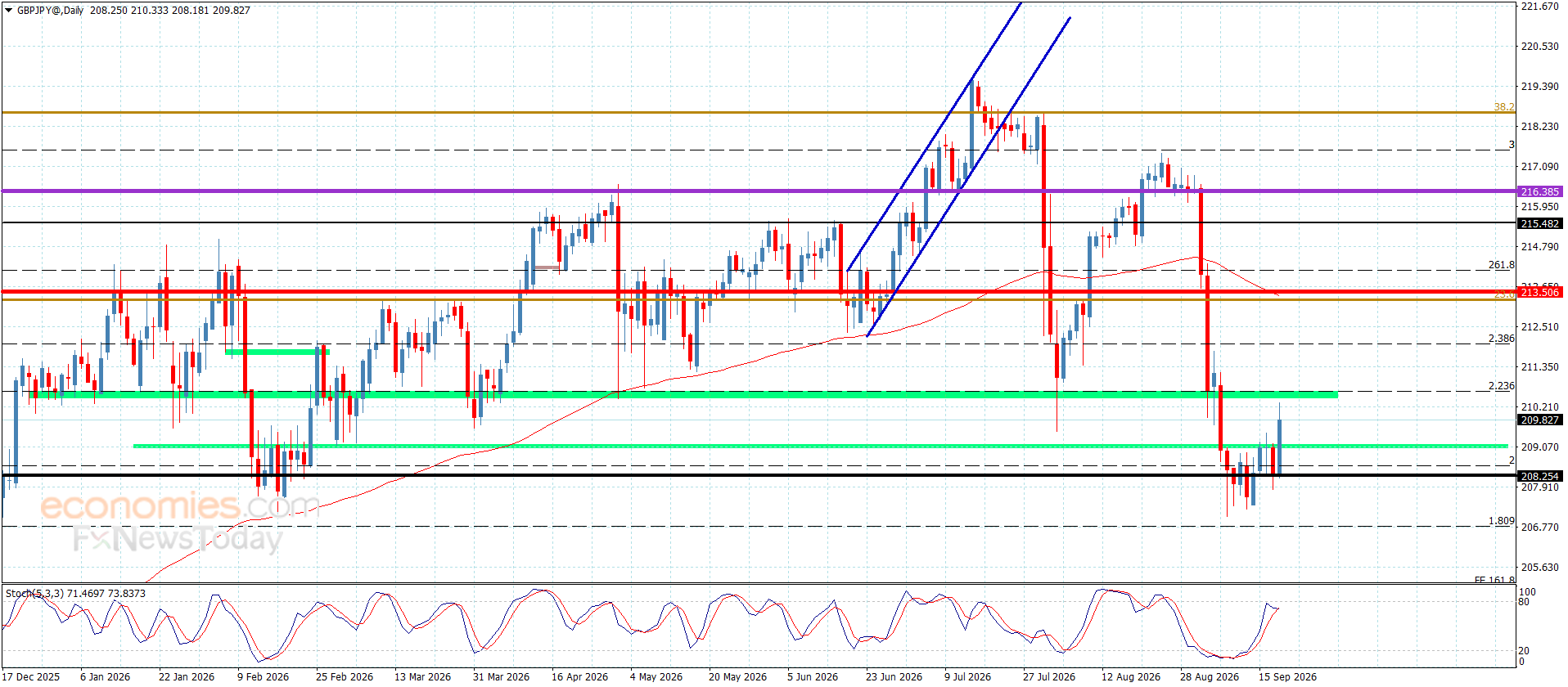
The GBPJPY pair failed in confirming breaking 208.10 level, which forces it to activate the bullish corrective trend, to surpass 209.45 level and recording extra gains by its rally towards 210.30.
Note that stability below 210.40 supports the continuation of the negativity in the upcoming trading. The price might be affected by the instability until gathering extra negative momentum, to repeat the pressure attempts on 208.10 barrier to find an exit to reach the negative stations, which might extend to 206.85.
The expected trading range for today is between 208.10 and 210.40
Trend forecast: Bearish
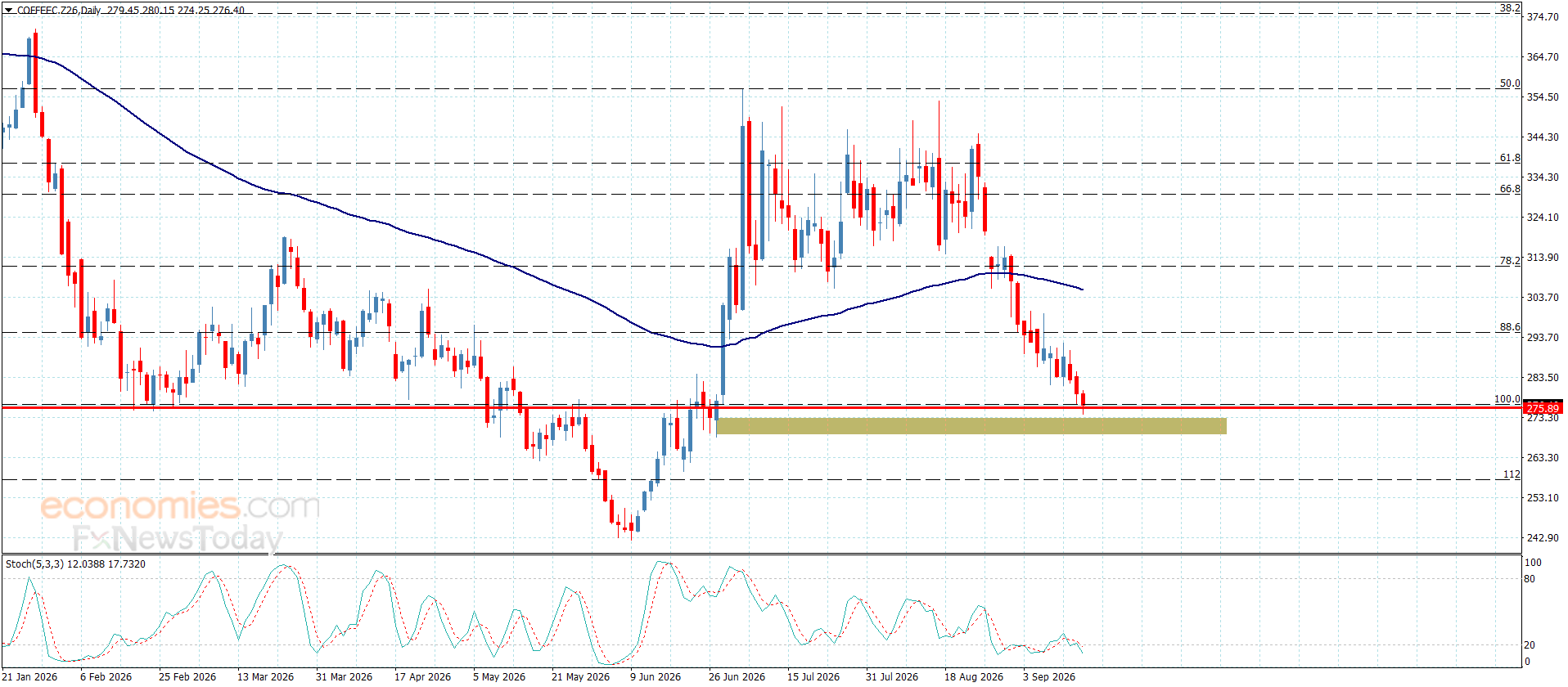
Coffee price faced strong negative pressure, to force it settle below $292.00, suffering clear losses by reaching $274.00 level, approaching a key support, as it formed a strong demand zone at $269.25, which represents a confirmation key for the main trend in the upcoming trading.
The stability of the price above the support makes us wait for gathering positive momentum, to form strong bullish waves, to pressure the obstacle at $295.00, where surpassing it will confirm its readiness to record extra gains that might begin at $305.60 and $319.20.
The expected trading range for today is between 270.00 and 295.00
Trend forecast: Bullish
– Written by
Frank Davies
STORY LINK Pound to Dollar Forecast: GBP/USD Swings after Fed Hike and BoE Hold
The Pound US Dollar (GBP/USD) exchange rate experienced a volatile session on Thursday as the latest interest rate decisions from the US and UK central banks sent ripples through currency markets.
At the time of writing, GBP/USD was trading around $1.3380, little changed from the start of the day after earlier dropping to a seven-week low.
The US Dollar (USD) slipped back slightly on Thursday after surging to a seven-week high against the Pound (GBP) on Wednesday evening following the Federal Reserve’s latest interest rate decision.
The Fed unanimously opted to raise interest rates for the first time since 2023, taking the Fed funds rate to 4%.
Although the move had been widely anticipated, the unanimous vote and hawkish tone from policymakers gave the US Dollar a boost.
The Pound managed to claw back some ground from its multi-week lows on Thursday, although gains remained constrained ahead of the Bank of England’s (BoE) latest interest rate decision.
Sterling then endured a choppy response to the announcement, initially tumbling to a fresh multi-week low before recovering its losses.
Get better rates and lower fees on your next international money transfer.
Compare TorFX with top UK banks in seconds and see how much you could save.
The BoE opted to leave interest rates unchanged, with policymakers voting six to three to hold.
While this outcome broadly matched market expectations, the decision was viewed as slightly dovish.
However, the BoE also flagged concerns over upside risks to inflation linked to the ongoing war in Iran, helping to cushion the Pound’s decline.
Looking to the end of the week, the latest UK retail sales figures could provide a fresh catalyst for GBP movement.
Economists expect sales growth to fall by 0.2% in August, following a 0.5% contraction in July.
A result in line with forecasts would point to another decline in consumer spending, potentially raising further concerns about the health of the UK economy and putting pressure on GBP.

Across the Atlantic, a modest increase in US industrial production for August could offer some support to USD.
The GBP/USD exchange rate may also remain sensitive to shifts in risk appetite.
A deterioration in sentiment could drive demand for the safe-haven Dollar, while leaving the increasingly risk-sensitive Pound vulnerable.
International Money Transfer? Ask our resident FX expert a money transfer question or try John’s new, free, no-obligation personal service! ,where he helps every step of the way,
ensuring you get the best exchange rates on your currency requirements.
TAGS: Pound Dollar Forecasts
USOIL, commonly referred to as West Texas Intermediate (WTI) crude oil, is a light, sweet crude oil that serves as one of the primary benchmarks for oil pricing in the global market. Sourced primarily from oil fields in the United States, particularly in Texas and Oklahoma, WTI crude oil is known for its API gravity of around 39.6 degrees, which classifies it as ‘light,’ and its low sulfur content, which makes it ‘sweet.’ These characteristics make WTI crude highly desirable for refining into gasoline, diesel, and other high-value petroleum products.
The price of USOIL is set on the New York Mercantile Exchange (NYMEX) and is traded in the form of futures contracts, which allow market participants to buy and sell the commodity for delivery at a future date. These contracts are standardized, with each representing 1,000 barrels of crude oil. The USOIL futures market is one of the most liquid in the world, attracting a diverse range of traders, including producers, refiners, hedge funds, and individual investors.
The price of USOIL is influenced by a complex interplay of factors, including:
Global supply and demand dynamics: Fluctuations in oil production, particularly from major producers like the United States, Russia, and Saudi Arabia, as well as changes in global consumption patterns, can significantly impact prices.
OPEC and non-OPEC production quotas: Decisions by the Organization of the Petroleum Exporting Countries (OPEC) and its allies to increase or decrease oil production can cause substantial price movements.
Geopolitical events: Conflicts, sanctions, and political instability in oil-producing regions can lead to supply disruptions and volatility in oil prices.
Economic indicators: The health of the global economy, as indicated by GDP growth rates, industrial production, and other economic data, affects the demand for oil and, consequently, its price.
Inventory levels: Reports on oil stockpiles, particularly those published by the American Petroleum Institute (API) and the Energy Information Administration (EIA), can influence prices based on whether they show a surplus or a deficit in supply.
Currency fluctuations: Since oil is traded in U.S. dollars, movements in the value of the dollar can affect the price of oil in other currencies, influencing international demand.
Given its importance in the global energy market, USOIL is a key commodity for traders looking to speculate on price movements or hedge against oil price volatility. However, trading USOIL can be risky and requires a solid understanding of the market forces at play, as well as careful risk management.
GBP/USD has fallen to a six-week low, with a stronger dollar following the hawkish Fed hike, as attention turns to the Bank of England’s interest rate decision at 12:00 BST today.
The central bank is expected to leave interest rates unchanged at 3.75%, where they have been since December last year.
The decision comes as inflation has risen to 3.1%, but service sector inflation and underlying inflation remained unchanged in August. The labour market is weakening, which is also helping to offset some of the inflationary pressures stemming from the Middle East conflict.
The question is how long the Bank of England will be able to maintain this stance, given that oil and gas prices are rising sharply and are now above the adverse scenario set out by the central bank in July.
Therefore, officials are expected to set the stage for a hike in November, which could be the first of several.
The vote is expected to be 3-6-3 in favour of holding, the same as in July. A more hawkish vote could help to support the pound.
The meeting comes after the Federal Reserve hiked rates by 25 basis points and adopted a hawkish stance at its meeting yesterday, lifting the U.S. dollar to a six-week high.
The 25-basis-point hike to 3.75%-4.00% was forecast. The dot plot points to at least one more rate hike this year.
GBP/USD broke down below the ascending channel, taking out the 200 EMA and falling to 1.3380. This, combined with the RSI below 50, keeps sellers hopeful of further downside.
Attention will turn to 1.3340, the horizontal support, and 1.3270, the July low. A break below here opens the door to the 1.3200 support zone.
On the upside, immediate resistance is seen at the 200 EMA at 1.3430, with a rise above here exposing the 50 EMA at 1.3490. Should buyers rise above 1.3500, this would create a higher high towards 1.3650.
USD/JPY jumped to a two-week high above 156.00 on Wednesday, before easing back slightly to 158.0 at the time of writing.
The jump came following the Federal Reserve’s hawkish hike, lifting the U.S. dollar to a six-week high.
The Federal Reserve raised interest rates by 25 basis points as expected, and delivered its first hike since 2023. However, policymakers also lifted their inflation and growth forecasts, while the dot plot pointed to more hikes this year.
Sixteen of 18 policymakers supported at least one more rate hike this year, with four of those supporting two more rate hikes.
This has prompted markets to price in three additional hikes by the middle of next year.
Attention is now turning to the Bank of Japan, and the hawkish Fed position threatens to keep the U.S.-Japan rate gap wide, even as the Bank of Japan is expected to hike rates as well this week.
The yen weakened by around 1% overnight in the wake of the Fed move. This reversal comes after a sharp rally earlier this month, fuelled by expectations of intervention, faster BoJ monetary policy tightening and the unwinding of some yen-funded carry trades.
For the yen to remain supported, the BoJ will not only need to hike rates but also deliver a hawkish message in order to limit the damage to the currency. Failure to do so, and a disappointment from the BoJ, could see the 160 level come back into focus.
A 25-basis-point rate hike is almost fully priced in, meaning that the focus is firmly on BoJ Governor Ueda’s post-decision conference for clues over the pace of additional tightening.
Should the yen weaken back towards the 160 level, it could put intervention risk back on the table.
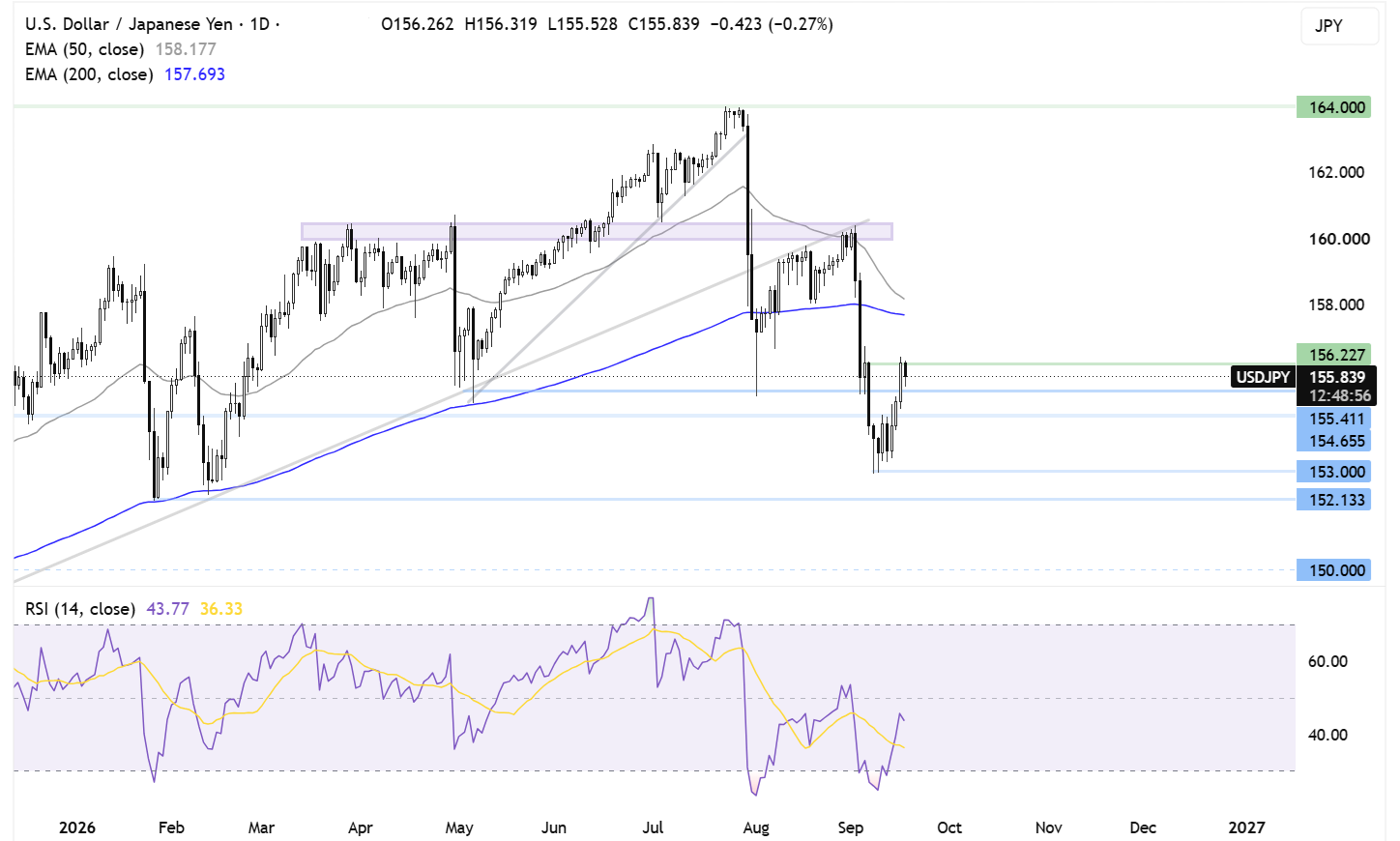
USD/JPY’s recovery from the 153.00 low has run into resistance at the 156.30 level. The price still trades below its 50, 100 and 200 EMAs in a bearish picture.
Buyers would need to extend the recovery above the 200 EMA at 157.80 and the 50 EMA at 158.20 to put the price on a firmer footing. From here, attention would turn to the 160 resistance zone.
Support is seen at 155.40, with a break below here opening the door to 154.65 before attention would turn back towards 153.00.