The main category of Forex News.

You can use the search box below to find what you need.

[wd_asp id=1]

25 12, 2025

U.S. Futures Slide Toward $4.25 as Weather Models Ease Heating Demand; Europe’s TTF Ticks Higher

By |2025-12-25T06:06:40+02:00December 25, 2025|Forex News, News|0 Comments


Natural gas markets are ending Christmas Eve with a familiar mix of volatility and contradiction: U.S. Henry Hub-linked futures are retreating after a sharp rally, while Europe’s benchmark prices are firming modestly—all as traders juggle shifting temperature models, LNG headlines, and a holiday-altered flow of “must-watch” data releases.

As of today’s session on Wednesday, December 24, 2025, Natural Gas futures were around $4.249 per MMBtu, down about 3.6% on the day, after opening near $4.421 and trading in a $4.183–$4.589 range. [1]

In Europe, the TTF benchmark rose to roughly €28.09/MWh on Dec. 24, up about 1.37%. [2]

The big picture: markets are still pricing a winter that can change quickly, but the short-term narrative into the holiday weekend is being shaped by near-term warmth in parts of the U.S., regional cold risks, and the ever-present global LNG linkage that increasingly ties U.S. pricing to events well beyond North America.


Natural gas price action today: a pullback after a major pop

The most important context for today’s decline is what happened just before it.

On Tuesday, U.S. natural gas futures surged, and today’s selloff looks like a classic “giveback” in thin holiday liquidity, as traders reassessed the balance between near-term warmth and later-winter cold risk. One market commentary described the move as a drop that partly reversed Tuesday’s sharp rally, citing weather shifts that turned somewhat warmer for the U.S. East Coast in early January, even as colder risks persisted elsewhere. [3]

The day’s tape aligns with the broader pricing data: Dec. 24 shows a sharp down day after a strong up day, reinforcing that weather-driven re-pricing—rather than a single supply shock—is still the primary driver heading into year-end. [4]


Europe and the UK: firmer benchmarks even as global LNG stays competitive

While U.S. futures weakened today, European benchmarks moved the other way—at least modestly.

  • Dutch TTF: around €28.09/MWh, up ~1.37% on Dec. 24. [5]
  • Another price series shows TTF at ~€28.095 on Dec. 24, reinforcing the “slightly higher” tone. [6]
  • UK NBP (quarterly benchmark series) also strengthened on Dec. 24, printing around 71.84 and up roughly 1.33% in that series. [7]

This Europe-firmer/U.S.-softer split is one reason global gas watchers keep emphasizing spreads: when Europe’s benchmark holds up while Henry Hub swings around, LNG economics and destination competition can change quickly.


The weather factor: why forecasts still dominate every natural gas headline

If there’s a single “boss level” for natural gas traders, it’s weather—and that remains true on Dec. 24.

Near-term U.S. demand: warmth reduces immediate heating burn, but cold risks remain regional

A widely followed weather-oriented outlook indicated that warmer-than-normal temperatures were expected to dominate much of the U.S. over the next 7 days, with overall light demand (and only limited colder exceptions). [8]

At the same time, regional cold risks are clearly on the map:

  • In the U.S. Northeast, officials in Connecticut activated a severe cold weather protocol tied to an incoming arctic system, with forecasts including mid-teen temperatures and low wind chills. [9]
  • In Texas, meteorologists flagged a major cooldown early next week, with freeze potential in parts of the state—an important watch item because Texas is central to both U.S. production and LNG export feedgas flows. [10]

Put simply: national demand can look “light” while critical regions turn sharply colder, and that’s enough to keep volatility alive—especially when the market is already perched above $4 and reacting to every model update.

EIA’s winter framing: colder December assumptions and storage implications

The U.S. Energy Information Administration’s latest Short-Term Energy Outlook (released Dec. 9) underscored how strongly early December cold can re-shape expectations:

  • EIA forecast Henry Hub spot prices averaging around $4.30/MMBtu over the winter heating season (Nov–Mar), about 22% higher than last winter. [11]
  • Using NOAA data, EIA assumed December heating degree days (HDDs) about 8% above the 10‑year average, and said it lifted its estimate of gas used for space heating—raising December residential/commercial consumption expectations versus the prior month’s outlook. [12]
  • EIA also projected December inventory withdrawals of ~580 Bcf, materially above the typical five-year average for the month, and forecast end-of-winter stocks around 2,000 Bcf. [13]

Even if the next 7 days skew warmer for much of the country, these longer heating-season assumptions help explain why prices can stay elevated—and why rallies can return fast if colder risks reassert themselves in January and February.


Storage: the latest EIA report and why the next one matters even more

Because natural gas is seasonal and storage-dependent, the weekly storage report remains a central “gravity point” for pricing—even when holiday schedules disrupt the normal rhythm.

The latest EIA Weekly Natural Gas Storage Report available today shows:

  • Working gas in storage: 3,579 Bcf (Lower 48) as of Friday, Dec. 12, 2025
  • Weekly change: -167 Bcf
  • Stocks were 61 Bcf below the year-ago level and 32 Bcf above the five-year average (3,547 Bcf)
  • EIA noted inventories were within the five-year historical range [14]

Holiday schedule: next release date shifts the calendar

EIA’s storage page lists the next release as December 29, 2025, rather than the typical Thursday cadence. [15]
A market note also flagged that the storage report timing was rescheduled because of the Christmas holiday. [16]

For traders, that matters because weather volatility doesn’t pause for holidays—but some of the most market-moving confirmation data does. That mismatch can magnify price swings.


LNG and global headlines: Petronas–CNOOC deal highlights long-term demand signals

Beyond daily price moves, one of today’s most important structural developments is in LNG contracting.

On Dec. 24, Malaysia’s state energy firm Petronas announced it will supply 1 million metric tons per annum of LNG to CNOOC Gas and Power Singapore Trading & Marketing, deepening an existing relationship between the companies. [17]

Why this matters for “natural gas today,” not just LNG watchers:

  1. Long-term LNG contracting reduces spot-market exposure, but it also reinforces that Asian buyers are still willing to lock in supply.
  2. When long-term volumes are spoken for, the remaining “flex” supply can tighten quickly during cold snaps or outages—raising sensitivity for both Europe and the U.S.
  3. LNG deals are a reminder that U.S. Henry Hub is no longer merely a domestic story; it’s part of a connected global gas system.

Texas reliability focus: inspections and in-state storage levels in the spotlight

Another Dec. 24 development hits the reliability question directly.

Texas regulators said they are stepping up winter gas inspections, continuing post-Uri weatherization oversight into the 2025–26 cold season. The same update noted Texas working gas in storage reached 524.9 Bcf as of Nov. 30, 2025, described as the highest recorded in more than 25 years. [18]

For price-sensitive readers, the key point is not simply “more inspections,” but what it implies:

  • Texas remains a critical node for production, intrastate pipelines, power burn, and LNG feedgas.
  • Reliability measures and local storage buffers can reduce the odds of extreme dislocations during cold spells—though they do not eliminate them.

Forecasts into 2026: higher prices, higher exports, and production growth expectations

Forecasts published or reiterated today point to a market still wrestling with competing forces:

EIA: production growth moderates prices, but the baseline stays elevated

In its December STEO natural gas section, EIA said rising production is expected to moderate prices next year, while still forecasting:

  • U.S. dry gas production averaging ~109 Bcf/d in 2026 (about 1% higher than 2025 in that forecast) [19]
  • Henry Hub spot prices averaging almost $4.50/MMBtu in 4Q26 (notably described as down 5% from the prior month’s forecast) [20]

Consumer-facing outlook: natural gas prices expected higher in 2026

An energy-cost outlook published today pointed to natural gas prices rising in 2026, citing a combination of stagnant domestic production and increasing U.S. exports, with an estimate of about a 16% rise in 2026. [21]

The most practical takeaway: even if daily futures swing on short-term weather, the forward-looking consensus still assumes a structurally tighter market than the ultra-cheap gas era, largely because exports (especially LNG) keep expanding the demand base tied—directly or indirectly—to Henry Hub.


What to watch next: the short list that could move prices fast

Heading out of Christmas Eve, these are the biggest catalysts traders and consumers will track:

  1. Weather model shifts after the holiday
    National demand can look soft while regional cold spikes—especially in the Northeast, Midcontinent, and Texas—re-price the curve quickly. [22]
  2. EIA storage report timing and the next print
    With the next EIA storage release moved to Dec. 29, the next data point may carry extra weight if weather volatility persists. [23]
  3. LNG contracting and export economics
    New long-term supply agreements—like the Petronas–CNOOC deal—highlight demand durability and reinforce the globalization of gas pricing dynamics. [24]
  4. Reliability and infrastructure readiness
    Texas’ inspection push and storage levels signal preparation, but cold-weather performance remains a real-time test each winter. [25]

Bottom line for Dec. 24, 2025

Natural gas is closing Christmas Eve with U.S. prices easing to about $4.25/MMBtu, while European benchmarks are slightly higher, and the market narrative remains weather-first, data-scheduled-second, LNG-always. [26]

If you want, I can also tailor this article for a specific geography and audience (U.S. retail consumers vs. European industrial buyers vs. traders) while keeping it Google News/Discover-ready—without changing any of the core facts above.

References

1. www.investing.com, 2. tradingeconomics.com, 3. www.barchart.com, 4. www.investing.com, 5. tradingeconomics.com, 6. www.investing.com, 7. www.investing.com, 8. natgasweather.com, 9. www.ctinsider.com, 10. www.chron.com, 11. www.eia.gov, 12. www.eia.gov, 13. www.eia.gov, 14. ir.eia.gov, 15. ir.eia.gov, 16. www.barchart.com, 17. www.reuters.com, 18. www.mrt.com, 19. www.eia.gov, 20. www.eia.gov, 21. www.investopedia.com, 22. www.ctinsider.com, 23. ir.eia.gov, 24. www.reuters.com, 25. www.mrt.com, 26. www.investing.com


Source link

25 12, 2025

The GBPJPY repeats the corrective attempts– Forecast today – 24-12-2025

By |2025-12-25T04:05:30+02:00December 25, 2025|Forex News, News|0 Comments


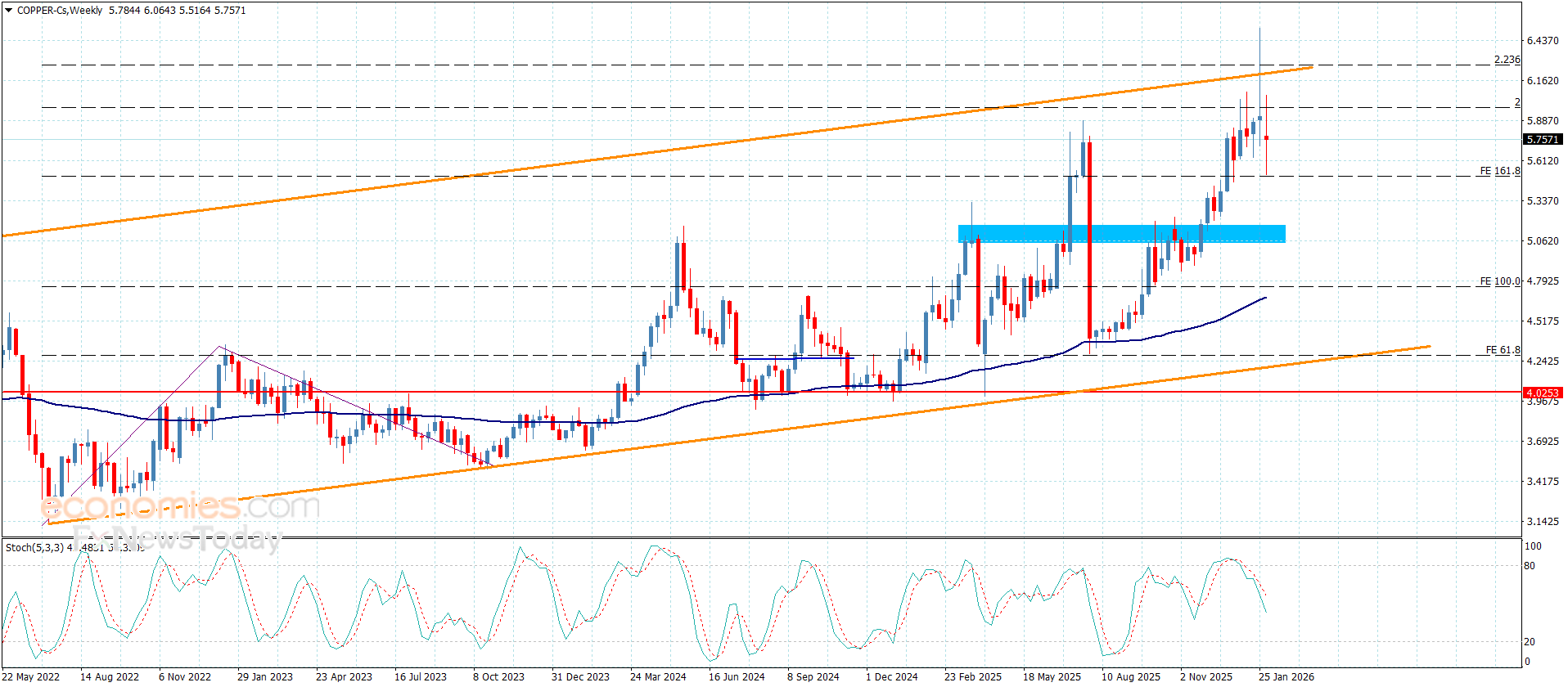
Copper price activated with the main indicators again, surpassing the barrier at $5.5000, announcing its readiness to achieve extra gains on a near-term basis, therefore, we will keep our bullish expectations, reminding you that the extra target near $5.6300 and $5.7400 level.


Note that the price stability below the current barrier might force it to form mixed trading, and there is a chance of testing the support at $5.1500.


The expected trading range for today is between $5.3900 and $5.6300


Trend forecast: Bullish


Source link

25 12, 2025

XAG/USD Holds Near $72 After Record High as Forecasts Eye $75—and Beyond

By |2025-12-25T02:04:35+02:00December 25, 2025|Forex News, News|0 Comments


December 24, 2025 (Updated 5:01) — Silver prices are in sharp focus today after a historic run pushed the metal into fresh record territory. In global markets, spot silver hit an all-time high of $72.70 per ounce before easing slightly as traders locked in profits during holiday-thinned trade. Reuters last cited silver around $71.94/oz, still up about 0.7% on the day. [1]

That pullback doesn’t change the bigger picture: silver’s 2025 rally has been extraordinary. Reuters pegged silver’s year-to-date gain around 149%, highlighting how the “white metal” has outpaced gold’s rise this year. [2]

Below is what’s driving silver today (24.12.2025), what analysts and market watchers are saying, and the key levels traders are watching next.


Silver price today: where XAG/USD stands on December 24, 2025

Silver’s breakout has become the defining precious-metals story into year-end:

  • Record high: $72.70/oz (spot) [3]
  • Latest widely reported spot level: about $71.94/oz (Reuters) [4]
  • Intraday guide (spot chart feed): around $71.88, with a day range roughly $70.20–$72.71 (XAG/USD streaming feed). [5]

The message is clear: after a nearly vertical climb, silver is trying to consolidate, not collapse—yet the swings are getting bigger, and that cuts both ways for anyone trading it short-term.


Why silver is moving: the 4 biggest drivers behind today’s price action

1) Rate-cut expectations are doing the heavy lifting

Precious metals tend to benefit when markets expect lower interest rates—because lower yields reduce the opportunity cost of holding non-yielding assets like gold and silver.

Reuters pointed to a market backdrop where:

  • The U.S. central bank cut rates three times in 2025, and
  • Traders were pricing in two more cuts next year. [6]

That rate outlook has been reinforced by macro signals and investor positioning into year-end.

2) The U.S. dollar and yields are key “silent” catalysts

On a day when U.S. yields eased and the dollar’s tone remained an important macro input, precious metals stayed supported even as they cooled off from highs. Reuters described Treasury yields easing and noted that gold and silver “edged back from record levels.” [7]

In plain terms: silver didn’t need new buyers to keep levitating—it just needed the macro headwinds (yields/dollar) to stay contained.

3) Geopolitical headlines still matter

Safe-haven demand rarely has a single trigger, but it often builds when investors sense rising geopolitical risk. Reuters highlighted a geopolitical strand in today’s broader market narrative, including attention on a Venezuela-linked oil tanker situation involving the U.S. Coast Guard. [8]

Even when headlines don’t directly involve metals, they can keep risk premiums alive—especially late in the year.

4) Holiday liquidity is amplifying every move

One underappreciated force today: thin year-end volume. Investing.com’s analysis explicitly warned that holiday conditions can exaggerate volatility, pushing prices to extremes more easily than during normal liquidity. [9]

That helps explain why silver can spike to a new record and then fade—without a major change in fundamentals.


India check: domestic silver hits fresh records, too

Silver’s surge isn’t just a dollar story.

In India, The Times of India reported silver prices jumping to a fresh record in the national capital, with silver hitting ₹2,27,000 per kilogram in Delhi, citing the All India Sarafa Association. [10]

Meanwhile, The Economic Times tied the global move directly to Indian market action:

  • It noted silver moving above $72/oz,
  • Said MCX silver touched a new all-time high near ₹2,20,490/kg, and
  • Highlighted industrial demand themes (including solar/EVs/electronics), supply constraints, and expectations of looser U.S. policy as drivers. [11]

The rally even spilled into equities: The Economic Times reported Hindustan Zinc shares rising after silver crossed $72/oz, pointing to the company’s leverage to silver prices. [12]


Technical outlook: “price discovery” meets overbought warnings

Silver’s chart is flashing two truths at once:

  1. The trend is powerful, and
  2. The move is stretched enough to punish late entries.

FXEmpire: record high, but fatigue risk is rising

FXEmpire’s December 24 analysis captured the mood: silver set a fresh record at $72.70 but struggled to hold the top as traders paused into the holiday break. [13]

Crucially, FXEmpire warned the rally looked stretched: silver was cited as about $17.81 above its 50‑day moving average, raising the odds of a near-term pullback even if the bigger trend remains bullish. [14]

Investing.com: profit-taking risk and an intraday “sell zone”

Investing.com’s analysis went further, describing the environment as highly volatile and emphasizing intraday discipline. It flagged the $72.70–$72.80 area as an “intraday sell zone” with a stop above $73.50, while pointing to downside targets around $71.30, $71.00, and $70.00 if profit booking accelerates. [15]

Whether you agree with that trade setup or not, it underlines a widely shared view: the market is increasingly sensitive to profit-taking at record highs.

Barchart: strong buy trend—but RSI overbought, watch key levels

Barchart’s technical snapshot shows how “hot” this move has become:

  • Technical opinion: Strong buy, with long-term indicators supporting the trend
  • Relative Strength above 80, explicitly warning the market is in “extreme overbought territory” and to beware reversal risk [16]

Barchart also mapped clear reference levels traders may use as pivots:

  • Resistance: ~72.41, 73.34, 75.11
  • Support: ~69.71, 67.95, 67.02
  • Last price reference: ~71.91 [17]

These aren’t predictions—they’re decision points. In a market this fast, those levels can shape where stops cluster and where liquidity shows up.


Forecasts and targets: where analysts see silver heading next

Silver’s surge has kicked forecasting into a higher gear, especially because the market is now operating in “price discovery” mode.

Near-term target: $75 by year-end (Kitco via Reuters)

In Reuters’ reporting, Kitco Metals senior analyst Jim Wyckoff said the next upside target for silver is $75/oz by the end of the year, adding that the technicals remain bullish. [18]

That’s an ambitious target—but it’s also close enough that traders will treat it as a magnet level if momentum returns.

2026 outlook: banks at $56–$65, but technical models stretch higher

For the bigger horizon, IG’s commodities outlook (published Dec. 23 and circulating into today’s Dec. 24 conversation) summarized the next year’s debate:

  • It said the average of major banks places silver in the $56–$65 range for 2026 (a “conservative view”).
  • It also noted technical models that stretch toward $72 and $88, especially if the gold/silver ratio compresses further. [19]

IG also emphasized the structural backdrop supporting silver—tightening supply, rising industrial demand, and a breakout setup—and argued silver is still “cheap relative to gold” when viewed through the gold/silver ratio lens. [20]

One important nuance: these aren’t unanimous views. The same volatility that powered the upside can create sharp drawdowns—particularly if rate expectations shift or if positioning becomes crowded.


What to watch next: the catalysts that can move silver fast

With silver at record levels, it may not take much to trigger the next big leg—or the next sharp shakeout. Key items to watch:

  1. U.S. rates narrative: any change in how markets price 2026 rate cuts can quickly lift or cap precious metals. [21]
  2. Dollar and yields: a renewed dollar rally or a spike in real yields can pressure silver even if industrial fundamentals remain strong. [22]
  3. Holiday liquidity conditions: thin volumes can exaggerate both breakouts and pullbacks. [23]
  4. Profit-taking behavior: multiple analysts explicitly warn that extended rallies at “lifetime highs” often invite heavy profit booking. [24]
  5. Industrial-demand headlines: solar and electrification themes are increasingly part of the silver narrative, especially in coverage linking silver’s move to producer equities and MCX pricing. [25]

Bottom line at 5:01: silver’s trend is bullish, but the market is “stretched”

Silver’s price action on December 24, 2025 is the classic late-stage momentum setup: still trending higher, still supported by rates and risk narratives, but stretched enough to snap back hard.

  • The record high ($72.70/oz) is now the headline reference point. [26]
  • Analysts are openly discussing $75/oz as a near-term target, while longer-range outlooks debate whether 2026 is a consolidation year—or another breakout year. [27]
  • Overbought signals and profit-taking risk are rising, especially in thin liquidity. [28]

Market note: Prices can change quickly, especially around holidays. The levels above reflect figures and commentary reported on 24.12.2025 by the cited sources, not a fixed quote.

References

1. www.reuters.com, 2. www.reuters.com, 3. www.reuters.com, 4. www.reuters.com, 5. www.investing.com, 6. www.reuters.com, 7. www.reuters.com, 8. www.reuters.com, 9. www.investing.com, 10. timesofindia.indiatimes.com, 11. m.economictimes.com, 12. m.economictimes.com, 13. www.fxempire.com, 14. www.fxempire.com, 15. www.investing.com, 16. www.barchart.com, 17. www.barchart.com, 18. www.reuters.com, 19. www.ig.com, 20. www.ig.com, 21. www.reuters.com, 22. www.reuters.com, 23. www.investing.com, 24. www.fxempire.com, 25. m.economictimes.com, 26. www.reuters.com, 27. www.reuters.com, 28. www.barchart.com


Source link

25 12, 2025

Dollar Tree price seeks a supportive bottom – Forecast today

By |2025-12-25T00:03:32+02:00December 25, 2025|Forex News, News|0 Comments


Coca-Cola Company (KO) declined in its latest intraday trading, breaking below its 50-day SMA, which has increased near-term negative pressure on the stock. This move comes alongside the emergence of a negative crossover on the RSI, reinforcing short-term weakness. However, the main bullish trend still dominates the medium term, with price action continuing to move alongside a supportive upward trendline, which limits the downside risk for now.


Therefore we expect the stock price to move higher in the upcoming trading, as long as it remains stable above the support level at $68.80, to target the resistance level at $71.30.


Today’s price forecast: Neutral


Source link

24 12, 2025

Overbought signals hint at a pause

By |2025-12-24T23:28:32+02:00December 24, 2025|Forex News, News|0 Comments

The British Pound (GBP) trades slightly lower against the Japanese Yen (JPY) on Wednesday, though thin holiday trading conditions are keeping price action contained within a tight range. At the time of writing, GBP/JPY trades around 210.60, holding firm near year-to-date highs and its highest level since August 2008.

The Japanese Yen has remained broadly weak this year, as fiscal concerns under the new leadership of Sanae Takaichi and a gradual pace of monetary policy normalisation continued to weigh on the currency. Against this backdrop, GBP/JPY is up around 6.9% year to date, reflecting persistent policy divergence between the UK and Japan.

From a technical perspective, the daily chart continues to reflect a strong uptrend, marked by a clear sequence of higher highs and higher lows, with prices holding comfortably above key moving averages.

That said, the Relative Strength Index (RSI) is easing from overbought territory and hovers around 68, signalling a risk of a mild pullback or consolidation before the next leg higher. A sustained recovery could see the pair push beyond the 212.00 handle, extending the broader bullish trend.

On the downside, initial support is seen in the 208.50-208.00 zone, where the 21-day Simple Moving Average (SMA) sits near 208.13. A decisive break below this short-term average would weaken the bullish structure and open the door for a deeper pullback toward the 50-day SMA around 205.22, followed by the 100-day SMA near 202.57.

Meanwhile, the Average Directional Index (ADX) is holding near 27, signalling that the trend remains strong, even as momentum cools in the near term.

Pound Sterling FAQs

The Pound Sterling (GBP) is the oldest currency in the world (886 AD) and the official currency of the United Kingdom. It is the fourth most traded unit for foreign exchange (FX) in the world, accounting for 12% of all transactions, averaging $630 billion a day, according to 2022 data.
Its key trading pairs are GBP/USD, also known as ‘Cable’, which accounts for 11% of FX, GBP/JPY, or the ‘Dragon’ as it is known by traders (3%), and EUR/GBP (2%). The Pound Sterling is issued by the Bank of England (BoE).

The single most important factor influencing the value of the Pound Sterling is monetary policy decided by the Bank of England. The BoE bases its decisions on whether it has achieved its primary goal of “price stability” – a steady inflation rate of around 2%. Its primary tool for achieving this is the adjustment of interest rates.
When inflation is too high, the BoE will try to rein it in by raising interest rates, making it more expensive for people and businesses to access credit. This is generally positive for GBP, as higher interest rates make the UK a more attractive place for global investors to park their money.
When inflation falls too low it is a sign economic growth is slowing. In this scenario, the BoE will consider lowering interest rates to cheapen credit so businesses will borrow more to invest in growth-generating projects.

Data releases gauge the health of the economy and can impact the value of the Pound Sterling. Indicators such as GDP, Manufacturing and Services PMIs, and employment can all influence the direction of the GBP.
A strong economy is good for Sterling. Not only does it attract more foreign investment but it may encourage the BoE to put up interest rates, which will directly strengthen GBP. Otherwise, if economic data is weak, the Pound Sterling is likely to fall.

Another significant data release for the Pound Sterling is the Trade Balance. This indicator measures the difference between what a country earns from its exports and what it spends on imports over a given period.
If a country produces highly sought-after exports, its currency will benefit purely from the extra demand created from foreign buyers seeking to purchase these goods. Therefore, a positive net Trade Balance strengthens a currency and vice versa for a negative balance.

Source link

24 12, 2025

XAU/USD trades below $4,500/all-time high

By |2025-12-24T22:02:40+02:00December 24, 2025|Forex News, News|0 Comments


Gold (XAU/USD) retreats slightly from a fresh all-time peak, around the $4,526 area touched earlier this Wednesday, and trades with a negative bias during the first half of the European session. The precious metal currently trades around the $4,485 region, down 0.25% for the day, though the downside seems limited amid a supportive fundamental backdrop.

Dovish US Federal Reserve (Fed) expectations might keep a lid on the US Dollar’s (USD) modest intraday bounce from its lowest level since early October and act as a tailwind for the non-yielding Gold. Apart from this, rising geopolitical uncertainties could benefit the safe-haven bullion and contribute to limiting the downside, warranting caution for aggressive bearish traders.

The Relative Strength Index (RSI) is flashing extremely overbought conditions on the daily chart. This, in turn, prompts some profit-taking around the XAU/USD, especially after the latest leg up to a series of new record highs since the beginning of this week. The broader technical setup, however, favors bullish traders and backs the case for the emergence of some dip-buyers around the Gold.

An ascending channel guides the uptrend, with price stretching above its upper boundary near $4,430.50. The 50-day Simple Moving Average (SMA) rises steadily, and the XAU/USD holds above it, reinforcing a bullish tone. The Moving Average Convergence Divergence (MACD) line stands above the Signal line in positive territory, and the widening histogram suggests strengthening momentum.

With the XAU/USD holding above the channel cap, pullbacks would be cushioned by the 50-day SMA at $4,167.09. As long as MACD remains above zero and its histogram stays positive, bulls would retain control. RSI remains elevated, highlighting stretched conditions, yet the broader trend stays higher while the price holds over dynamic support. Hence, a pause would not derail the uptrend.

(The technical analysis of this story was written with the help of an AI tool)

XAU/USD daily chart

Fed FAQs

Monetary policy in the US is shaped by the Federal Reserve (Fed). The Fed has two mandates: to achieve price stability and foster full employment. Its primary tool to achieve these goals is by adjusting interest rates.
When prices are rising too quickly and inflation is above the Fed’s 2% target, it raises interest rates, increasing borrowing costs throughout the economy. This results in a stronger US Dollar (USD) as it makes the US a more attractive place for international investors to park their money.
When inflation falls below 2% or the Unemployment Rate is too high, the Fed may lower interest rates to encourage borrowing, which weighs on the Greenback.

The Federal Reserve (Fed) holds eight policy meetings a year, where the Federal Open Market Committee (FOMC) assesses economic conditions and makes monetary policy decisions.
The FOMC is attended by twelve Fed officials – the seven members of the Board of Governors, the president of the Federal Reserve Bank of New York, and four of the remaining eleven regional Reserve Bank presidents, who serve one-year terms on a rotating basis.

In extreme situations, the Federal Reserve may resort to a policy named Quantitative Easing (QE). QE is the process by which the Fed substantially increases the flow of credit in a stuck financial system.
It is a non-standard policy measure used during crises or when inflation is extremely low. It was the Fed’s weapon of choice during the Great Financial Crisis in 2008. It involves the Fed printing more Dollars and using them to buy high grade bonds from financial institutions. QE usually weakens the US Dollar.

Quantitative tightening (QT) is the reverse process of QE, whereby the Federal Reserve stops buying bonds from financial institutions and does not reinvest the principal from the bonds it holds maturing, to purchase new bonds. It is usually positive for the value of the US Dollar.


Source link

24 12, 2025

Falls to near 183.50, nine-day EMA

By |2025-12-24T21:27:32+02:00December 24, 2025|Forex News, News|0 Comments

EUR/JPY extends its losses for the third successive session, trading around 183.70 during the European hours on Wednesday. The currency cross remains within the ascending channel pattern, suggesting a persistent bullish bias. Additionally, the 14-day Relative Strength Index (RSI) sits at 62.20, easing from overbought yet still supportive of positive momentum.

The EUR/JPY cross holds above the nine-day Exponential Moving Average (EMA) and the 50-day EMA, with both averages rising and confirming a bullish structure. The short-term average remains above the medium-term gauge, keeping the upside bias in place. The broader tone favors dip-buying while price holds over the rising 50-day EMA.

The EUR/JPY cross may rebound toward the all-time high of 184.95, which was recorded on December 22, aligned with the psychological level of 185.00. Further advances would support the currency cross to test the upper boundary of the ascending channel around 185.70.

The immediate support lies at the nine-day EMA of 183.37, followed by the lower ascending channel boundary. A break below the channel would weaken the bullish bias and put downward pressure on the pair to test the two-week low of 181.57, recorded on December 17. Further declines would open the doors for the currency cross to explore the region around the 50-day EMA at 180.15.

EUR/JPY: Daily Chart

Euro Price Today

The table below shows the percentage change of Euro (EUR) against listed major currencies today. Euro was the weakest against the Japanese Yen.

USD EUR GBP JPY CAD AUD NZD CHF
USD -0.08% -0.17% -0.36% -0.11% -0.17% -0.12% -0.16%
EUR 0.08% -0.09% -0.29% -0.04% -0.09% -0.04% -0.08%
GBP 0.17% 0.09% -0.21% 0.04% -0.00% 0.05% 0.00%
JPY 0.36% 0.29% 0.21% 0.26% 0.19% 0.24% 0.21%
CAD 0.11% 0.04% -0.04% -0.26% -0.07% -0.02% -0.04%
AUD 0.17% 0.09% 0.00% -0.19% 0.07% 0.05% -0.02%
NZD 0.12% 0.04% -0.05% -0.24% 0.02% -0.05% -0.04%
CHF 0.16% 0.08% -0.01% -0.21% 0.04% 0.02% 0.04%

The heat map shows percentage changes of major currencies against each other. The base currency is picked from the left column, while the quote currency is picked from the top row. For example, if you pick the Euro from the left column and move along the horizontal line to the US Dollar, the percentage change displayed in the box will represent EUR (base)/USD (quote).

(The technical analysis of this story was written with the help of an AI tool.)

Source link

24 12, 2025

NYMEX Slips Near $4.29 as Weather and LNG Signals Collide

By |2025-12-24T20:01:36+02:00December 24, 2025|Forex News, News|0 Comments


NEW YORK/LONDON/SINGAPORE — Dec. 24, 2025 — U.S. natural gas futures were softer in holiday-thinned Christmas Eve trading, giving back part of Tuesday’s sharp rebound as traders reassessed near-term weather forecasts, the durability of record LNG-driven demand, and the winter storage trajectory.

By late morning, NYMEX Henry Hub natural gas futures were trading around $4.29 per MMBtu, down from the prior close near $4.41, with prices moving inside a session range roughly spanning the low-$4.20s to the mid-$4.50s. [1]

That pullback comes after a dramatic “risk-on” reset earlier in the week. On Tuesday, front-month U.S. gas futures surged roughly 4% amid record-high feedgas flows to U.S. LNG export plants and expectations for higher demand in the next two weeks. [2]

Natural gas price action today: a post-rally breather in holiday trade

The story of natural gas on December 24, 2025 is less about a single headline and more about the market’s tug-of-war:

  • Bullish forces: LNG exports are running exceptionally strong, and the market is still digesting a winter that began with a meaningful cold push.
  • Bearish forces: Weather models have been prone to whiplash; even small shifts warmer can quickly reduce heating demand expectations—especially when trading liquidity is thin around the holidays.

The result: volatile, sometimes abrupt swings that can look outsized relative to the fundamental change on any one update—particularly in a shortened, lightly staffed session.

The big driver: weather forecasts are still the steering wheel

Weather remains the primary near-term catalyst because it changes residential and commercial heating demand faster than production can respond.

Recent industry tracking shows demand has already eased from early-December highs, with heating degree days (HDDs) down week-over-week in the latest readings—one reason futures have struggled to hold the most aggressive winter premium. [3]

At the same time, the U.S. government’s baseline forecast still leans firm for the winter as a whole. In its latest Short-Term Energy Outlook (released Dec. 9), the U.S. Energy Information Administration (EIA) raised its winter view and now expects the Henry Hub spot price to average around $4.30/MMBtu this winter (Nov–Mar), citing colder-than-expected December conditions. [4]

The EIA also notes it is assuming December HDDs are 8% above the 10-year average, a meaningful demand tailwind—though it also expects milder-than-normal weather in early 2026 to help cool prices after winter. [5]

LNG exports: the strongest pillar under U.S. prices, but not without limits

The modern U.S. gas market increasingly trades like a hybrid of domestic utility fuel and global seaborne commodity—and LNG is the bridge.

On Tuesday, Reuters-reported market coverage highlighted record flows to LNG export plants, with average feedgas flows to major facilities rising to about 18.5 Bcf/d so far this month, above the prior monthly record. [6]

EIA’s weekly market update underscores just how large the LNG channel has become: in the week ending Dec. 17, 33 LNG vessels departed U.S. ports with a combined capacity of about 126 Bcf. [7]

The risk traders are watching: shrinking LNG margins

Even with strong flows today, the market is increasingly focused on whether U.S. LNG economics remain compelling if domestic gas prices rise while global benchmark prices soften.

Reuters analysis earlier this month described a margin squeeze: Henry Hub prices have risen while European and Asian prices eased, narrowing the spread that supports U.S. LNG profitability. [8]

For now, LNG demand is still acting as a stabilizer for U.S. prices. But this margin discussion is important because it frames the key “next-level” risk: if the spread compresses far enough, exports become the release valve.

Storage: withdrawals are above normal, and the winter balance matters

Storage is the market’s scoreboard in winter. The latest EIA weekly update (covering the report week ending Dec. 17) showed:

  • Net withdrawals of 167 Bcf for the week ending Dec. 12, well above the five-year average withdrawal for that week.
  • Working gas inventories of 3,579 Bcf, slightly above the five-year average, but below year-ago levels. [9]

The EIA’s broader winter outlook expects December to be a heavy withdrawal month. It forecasts 580 Bcf withdrawn during December, about 28% above the five-year average for the month, and projects end-of-winter storage near 2,000 Bcf (about 9% above the five-year average). [10]

This is why even modest shifts in temperature guidance can move prices sharply: storage draws compound quickly during cold spells, and futures reprice the end-of-winter level in real time.

Production and rigs: supply is strong, but winter can still bite

Record or near-record production has been the market’s counterweight to winter weather risk.

One reason the supply story still looks resilient: U.S. drillers have not meaningfully pulled back activity in a way that would suggest imminent supply stress. In Baker Hughes’ holiday-adjusted rig count update, U.S. firms held gas rigs around 127, with total oil-and-gas rigs rising slightly week-over-week (though still down year-over-year). [11]

The EIA also expects U.S. output to remain high into next year: it projects dry natural gas production averaging about 109 Bcf/d in 2026, up from 2025 levels. [12]

That said, winter is the season when production can still surprise to the downside due to freeze-offs and operational interruptions—so the market continues to price some risk premium.

Europe today: TTF eases as colder risks moderate

Across the Atlantic, European gas pricing remains sensitive to weather, storage levels, and LNG arrivals—especially with the region still navigating the post-Russian pipeline era.

On Dec. 24, Europe’s benchmark Dutch TTF front-month eased to around €27.36/MWh (about $9.47/MMBtu) by mid-morning London time, as forecasts suggested a potentially quicker end to a cold spell and supply stayed stable. [13]

While Europe’s price level remains far above the ultra-cheap periods of the pre-2022 era, the market has become more two-sided: warm forecasts can soften prices quickly, while cold snaps still have the power to ignite rapid rallies.

The structural backdrop: policy shifts continue

Europe’s long-run gas architecture is also being reshaped by regulation. Reuters reported the European Parliament approved the EU plan to phase out Russian gas imports by late 2027, pushing the bloc toward longer-term reliance on LNG and alternative pipeline sources. [14]

Asia today: spot LNG edges up with South Korea demand in focus

In Asia, spot LNG prices have been supported by incremental winter buying, particularly where cold weather looks imminent.

A financial-market report citing Argus noted that South Korean buying interest emerged with temperatures expected to fall to two-year lows on Dec. 26, and that cargoes have been diverted from China to South Korea in recent weeks. [15]

This matters for U.S. gas because Asia is a major sink for Atlantic Basin LNG when economics work—supporting feedgas demand back in the United States.

Today’s LNG headline: Petronas signs new supply deal with China’s CNOOC

One of the most consequential “quiet” forces in gas markets is the steady accumulation of long-term LNG contracts—the contractual plumbing that underwrites new liquefaction capacity.

On Dec. 24, Reuters reported Malaysia’s Petronas signed an agreement to supply 1 million metric tons per annum of LNG to CNOOC Gas and Power in Singapore, deepening an existing relationship. [16]

Deals like this don’t usually move Henry Hub futures minute-by-minute, but they reinforce the macro reality: LNG remains a structural growth channel, even as short-term weather dominates the daily tape.

Natural gas forecast and outlook: what the market is pricing into early 2026

Putting today’s cross-currents together, the clearest near-term framework looks like this:

Base case: choppy but supported

  • Prices stay volatile into year-end due to thin holiday liquidity and frequent weather model revisions.
  • Strong LNG flows help put a floor under dips, unless global spreads compress sharply.

Bull case: sustained cold plus big draws

  • If colder-than-normal weather persists longer than expected, storage withdrawals can accelerate—consistent with the EIA’s view that December is already running cold relative to assumptions. [17]

Bear case: a warm turn plus strong production

  • If forecasts shift meaningfully warmer into early January, heating demand falls fast.
  • With production strong and rigs steady, the market can quickly shed winter risk premium. [18]

The 2026 anchor

EIA expects Henry Hub to moderate after winter with milder early-2026 weather and rising production, averaging around $4.00/MMBtu next year in its baseline outlook. [19]

What to watch next

Natural gas traders and energy consumers are likely to keep a close eye on:

  1. Weather model trends (especially late-December and early-January HDD forecasts). [20]
  2. Weekly storage dynamics and whether withdrawals remain above normal. [21]
  3. LNG feedgas flows and any terminal disruptions, given LNG’s outsized role in demand. [22]
  4. Global LNG contract news that signals longer-term demand growth (e.g., Petronas–CNOOC). [23]
  5. Policy and supply-chain developments that change global balances, such as Europe’s Russian gas phase-out timetable and other LNG-related regulation. [24]

If you want, I can tailor this same Dec. 24, 2025 update into (1) a shorter Google Discover-style “tight read” (400–600 words) or (2) a longer newsroom feature (1,800–2,200 words) while keeping it fully source-grounded and SEO-focused.

References

1. www.investing.com, 2. www.bairdmaritime.com, 3. www.aga.org, 4. www.eia.gov, 5. www.eia.gov, 6. www.bairdmaritime.com, 7. www.eia.gov, 8. www.reuters.com, 9. www.eia.gov, 10. www.eia.gov, 11. www.reuters.com, 12. www.eia.gov, 13. www.hellenicshippingnews.com, 14. www.reuters.com, 15. www.lse.co.uk, 16. www.reuters.com, 17. www.eia.gov, 18. www.reuters.com, 19. www.eia.gov, 20. www.aga.org, 21. www.eia.gov, 22. www.eia.gov, 23. www.reuters.com, 24. www.reuters.com


Source link

24 12, 2025

Weakness Drives GBP Higher (Chart)

By |2025-12-24T19:26:30+02:00December 24, 2025|Forex News, News|0 Comments

  • British pound rallied during the session on Tuesday to pierce the $1.35$ level.
  • At this point, we have to ask questions about whether or not this is a British pound thing or if it’s a US dollar thing.
  • Truthfully, it’s the US dollar, I think that’s the bigger mover here, mainly because I am seeing US dollar weakness across the board, and this pair will follow right along with others like the Euro or the Swiss franc, etc.

With that being the case, this is a market that I think will continue to be noisy, but the $1.35$ level is an area that’s been important in the past, and of course, it’s a large round, psychologically significant figure, so I do anticipate that there will be a certain amount of questions asked at this point.

Potential for a Move to 1.37

If we can clear this area, it’s possible that we will end up going to the $1.37$ level. If we turn around and fall from here, it’s really not until we break down below the $1.34$ level that I think we will see a little bit more negative. Keep in mind that at this time of year, we have to worry about liquidity and volume, and that, of course, is a major influence as well.

With that being the case, I think you have to look at this through the prism of what’s going on with the Federal Reserve and, of course, the fact that the British pound has been a fairly strong performer in relation to the dollar over the last couple of years. Even when the US dollar was so strong, the British pound held up better than most of its contemporaries. Because of this, I’m watching the US dollar across the board, and if it does start to shrink, then this is a place I want to get long of. On the other hand, if the US dollar strengthens, I could short the British pound, but I will probably get more traction out of certain currencies like the Australian dollar or the New Zealand dollar.

Ready to trade our GBP/USD daily forecast? We’ve shortlisted the best regulated forex brokers UK in the industry for you.

Christopher Lewis has been trading Forex and has over 20 years experience in financial markets. Chris has been a regular contributor to Daily Forex since the early days of the site. He writes about Forex for several online publications, including FX Empire, Investing.com, and his own site, aptly named The Trader Guy. Chris favours technical analysis methods to identify his trades and likes to trade equity indices and commodities as well as Forex. He favours a longer-term trading style, and his trades often last for days or weeks.

Source link

24 12, 2025

gold silver copper price prediction forecast: Why gold, silver, and copper are all surging together — here’s the 2026 price prediction and forecast

By |2025-12-24T18:00:32+02:00December 24, 2025|Forex News, News|0 Comments


Gold, silver, and copper are rallying together in a rare, synchronized surge that is reshaping global commodity markets. As of December 24, 2025, gold trades near $4,494 per ounce, silver around $72.11 per ounce, and copper at $5.51 per pound. All three are posting their strongest annual gains in decades. Gold is up more than 70% year to date. Silver has surged over 140%, its best performance since the early 1980s. Copper has climbed roughly 36%, marking its biggest annual rise since 2009. This rally is not driven by speculation alone. It reflects deep structural forces reshaping the global economy. Investors are rushing toward metals as inflation risks linger, interest rates trend lower, and geopolitical uncertainty remains high. At the same time, copper and silver are benefiting from a massive industrial demand wave tied to artificial intelligence, electric vehicles, renewable energy, and grid expansion.

The U.S. dollar is weakening at its fastest pace in years, boosting commodity prices worldwide. Central banks are aggressively accumulating gold to reduce reliance on dollar reserves. Supply disruptions, tariffs, and underinvestment in mining have tightened markets just as demand accelerates. Together, these forces explain why precious and industrial metals are rising in unison — and why the rally may not be over yet.

Why gold prices are hitting record highs in 2025

Gold’s rally is rooted in macroeconomic stress and policy shifts. The metal briefly touched $4,525 per ounce, a fresh all-time high, before consolidating near current levels. Monthly gains are nearing 9%, driven by expectations that the Federal Reserve will begin cutting interest rates in 2026.

Lower rates reduce the opportunity cost of holding gold, which pays no yield. At the same time, inflation concerns and rising government debt are fueling what traders call the “debasement trade.” A weaker U.S. Dollar has made gold cheaper for overseas buyers, amplifying global demand.

Central banks are another powerful force. Many have accelerated gold purchases to diversify reserves and hedge against financial instability. Analysts now project gold could dip modestly toward $4,350 near quarter-end before climbing toward $4,600 over the next 12 months, supported by sustained official-sector buying.

Why silver is outperforming gold this year

Silver’s surge is even more dramatic. Prices briefly topped $72.70 per ounce, and despite minor pullbacks, the metal remains up over 140% in 2025. Unlike gold, silver plays a dual role as both a safe-haven asset and a critical industrial material.

Demand from solar panel manufacturing, electric vehicles, and data centers has exploded. Each new energy or AI project consumes silver permanently, tightening supply. Monthly gains near 40% reflect how quickly inventories are being absorbed. With silver now classified as a strategic and critical mineral in several countries, analysts see prices holding above $70 into 2026, with forecasts pushing toward the mid-$70s.

Why copper demand is exploding from EVs, AI, and infrastructure

Copper’s rally tells the story of the energy transition. Prices are approaching $12,000 per metric ton, driven by soaring demand from electric vehicles, artificial intelligence data centers, and power grid expansion. A single electric vehicle can use up to four times more copper than a traditional gasoline car.

According to Goldman Sachs, grid expansion and power infrastructure could account for more than 60% of copper demand growth by 2030. Supply, however, is struggling to keep pace. Mining disruptions in Chile and Peru have constrained output, while new projects face long approval timelines.

Adding to the pressure, U.S. trade policy has reshaped the market. A 50% tariff on imported copper products triggered stockpiling and hoarding. J.P. Morgan expects tight supply conditions to persist well into 2026.

What futures markets are signaling about metals prices next

Looking ahead to 2026, analysts broadly expect gold, silver, and copper prices to stay elevated, with volatility driven by interest rates, global growth, and supply constraints. Forecasts suggest the metals rally is shifting from a momentum-driven surge to a structurally supported cycle. Gold price forecast for 2026
Gold is expected to remain well above historical averages. Most bank and commodities desk models see gold trading in a $4,300–$4,900 per ounce range through 2026. Central bank buying remains the anchor. If the Federal Reserve begins rate cuts, real yields could fall further, supporting upside risk toward the upper end of forecasts. Downside risk appears limited unless inflation cools sharply and the dollar strengthens materially.

Silver price forecast for 2026
Silver forecasts are more aggressive due to tight supply and industrial demand. Analysts project an average range of $68–$78 per ounce, with volatility likely. Solar installations, EV production, and data center expansion continue to absorb supply faster than mining output grows. Silver’s dual role as an investment metal and industrial input keeps it highly sensitive to both rate policy and global manufacturing trends.

Copper price forecast for 2026
Copper outlooks remain bullish but uneven. Consensus estimates place copper between $5.40 and $6.10 per pound, with some upside scenarios tied to grid expansion and AI infrastructure. Electric vehicles, renewable energy, and transmission upgrades drive demand, while mine supply growth remains constrained. Trade barriers and inventory rebuilding could keep prices near cycle highs.

Gold is expected to stabilize at historically high levels. Silver may remain the most volatile, with sharp rallies on demand shocks. Copper prices are likely to stay supported by long-term electrification trends. Together, forecasts suggest metals will remain a key inflation and growth hedge throughout 2026, rather than reverting to pre-2024 norms.


Source link

Go to Top