The main category of Forex News.
You can use the search box below to find what you need.
[wd_asp id=1]
The main category of Forex News.
You can use the search box below to find what you need.
[wd_asp id=1]
EUR/USD trades around 1.1660 on Wednesday, up 0.30% on the day, supported by renewed demand for the single currency and a weakening US Dollar (USD). The pair extends its advance toward fresh one-month highs, helped by stronger European economic indicators and a widening policy gap in favor of the Eurozone.
Eurozone growth prospects improved further after the HCOB Services Purchasing Managers Index (PMI) for November was revised higher to 53.6 from 53.1, marking a fourth consecutive monthly expansion and the strongest reading since May 2023. The upward revisions were broad-based, with France rising to 51.4 and Germany to 53.1.
These data reinforce the firm stance of the European Central Bank (ECB). President Christine Lagarde told the ECON Committee of the European Parliament that growth should be supported by household spending and a resilient labor market, adding that underlying inflation remains aligned with the ECB’s 2% medium-term target.
The contrast with the Federal Reserve (Fed) is becoming increasingly pronounced. Markets are pricing an 85% chance of a 25-basis-point rate cut next week, with additional cuts expected in 2026. Speculation that White House adviser Kevin Hassett could replace Chair Jerome Powell, potentially steering policy toward further easing, has amplified this divergence.
US data released earlier in the day has also pressured the US Dollar. The ADP Employment Change report showed a loss of 32,000 jobs in November, compared with an expected gain of 5,000, highlighting growing weakness in the labor market. ADP noted that employers are facing cautious consumers and an uncertain macroeconomic backdrop.
Later today, attention turns to the Institute for Supply Management’s (ISM) Services PMI, expected to ease to 52.1 from 52.4 in October. Another decline in the employment sub-index, already contracting for the past five months, would reinforce concerns about a sharper slowdown in the US economy.
In this environment, the divergence between a firm-leaning ECB and a Fed preparing for deeper monetary easing continues to support the Euro (EUR). Should the ISM report disappoint, downside pressure on the US Dollar could intensify, potentially allowing EUR/USD to extend its recent upward momentum beyond current monthly highs.
In the 4-hour chart, EUR/USD trades at 1.1664, up for the day, 26 pips above the day opening price. The 100-period Simple Moving Average (SMA) is rising at 1.1582, and the pair holds above it, reinforcing a bullish bias. Relative Strength Index (RSI) at 71.45 is overbought and suggests momentum is stretched. Immediate resistance aligns at 1.1669, followed by 1.1728, and a sustained break could extend the advance.
Above the 100-period SMA, the bias stays firm. RSI has eased from 72.52 to 71.45, hinting at cooling momentum. The rising trend line from 1.1491 underpins the bullish tone, offering support near 1.1609. Additional support is seen at 1.1469. A dip into trend-line support could attract fresh bids and keep the uptrend intact.
(The technical analysis of this story was written with the help of an AI tool)
Select market data provided by ICE Data Services. Select reference data provided by FactSet. Copyright © 2025 FactSet Research Systems Inc.Copyright © 2025, American Bankers Association. CUSIP Database provided by FactSet Research Systems Inc. All rights reserved. SEC fillings and other documents provided by Quartr.© 2025 TradingView, Inc.
– Written by
David Woodsmith
STORY LINK British Pound to Dollar Forecast: GBP Steady with Fed Cut Odds Above 85%
The Pound to Dollar exchange rate (GBP/USD) hovered near 1.3200 as the dollar regained some ground and Sterling struggled to build momentum.
Markets remain heavily priced for a December Fed cut, with upcoming ADP and ISM data likely to shape expectations.
Medium-term projections still favour a softer dollar, though BoE easing could temper Pound Sterling gains.
The Pound to Dollar (GBP/USD) exchange rate tested support below 1.3200 on Tuesday before trading close to this level as the dollar recouped some ground while the Pound was unable to make headway.
ING expects renewed dollar losses; “We think the conditions for USD weakening persist after yesterday’s rollercoaster ride.”
JP Morgan forecasts GBP/USD gains to 1.37 by March as the dollar loses ground.
Get better rates and lower fees on your next international money transfer.
Compare TorFX with top UK banks in seconds and see how much you could save.
On a near-term view, markets are waiting for ADP jobs and ISM services-sector releases on Wednesday.
ING commented; “Yesterday’s ISM manufacturing didn’t move pricing for a December cut as expected: prices paid were a bit higher than expected, but the headline index print was soft. We expect that the remainder of the week will validate the market’s dovish pricing for next week’s Fed meeting.”
Markets are still pricing in over an 85% chance of a Fed rate cut next week.
According to ANZ head of G3 economics Brian Martin; “I really do think the Fed needs to cut interest rates, and not just cut rates in December, but follow through with further cuts next year.”
The medium-term Fed outlook will also be a key element for markets, especially with on-going speculation that Kevin Hassett will be nominated to be the next Fed Chair and act as a “shadow Chair” over the next few months.
Scotiabank noted that markets are reluctant to price in rates dipping below 3% and added; “It will be hard to persuade some policymakers of the merits of that argument in the near-term but leadership lobbying to lower the Fed funds target rate significantly without clear justification would raise concerns about political influence on the FOMC, representing a clear threat to USD stability.”
As far as the UK economy is concerned, the OECD has raised its 2026 forecast for GDP growth to 1.2% from 1% and sees growth of 1.3% in 2027.

The organisation is still wary over the risk of sticky inflation.
According to the OECD; “Elevated inflation expectations and potential second-round effects from increases in payroll taxes and the minimum wage, as well as from high food inflation, constitute an upside risk to prices.”
It called for the Bank of England (BoE) to maintain a cautious stance on rate cuts, but traders are pricing in around a 90% chance of a cut this month.
MUFG noted relatively hawkish comments from MPC member Greene on Monday, but added; “with only one additional member likely required to vote for cut to get a majority on the MPC, we still believe the BoE is on track to cut rates, and encourage a weaker pound heading into year end.”
According to Scotiabank; “The outlook for relative central bank policy remains supportive for the GBP, as we expect the BoE to ease less than the Fed.”
International Money Transfer? Ask our resident FX expert a money transfer question or try John’s new, free, no-obligation personal service! ,where he helps every step of the way,
ensuring you get the best exchange rates on your currency requirements.
TAGS: Pound Dollar Forecasts
Silver declined in its latest intraday trading after the important resistance level at $58.80 held, as the price attempts to acquire positive momentum that may help it break this resistance. At the same time, silver is trying to relieve part of its clear overbought saturation on the RSI indicators, especially with the arrival of negative signal inflows. This comes under the dominance of the main short-term ascending trend, with the price moving alongside both primary and secondary trendlines that support this path.
The US dollar rallied a bit against the Japanese yen during the trading session on Tuesday, as we continue to see this market trying to recover. Ultimately, I think we are probably in a timeframe of noisy volatility, and that noisy volatility will continue to be the overall theme, I think not only of this pair, but probably several others.

Looking back over the last several months, we have seen a lot of strength coming out of the US dollar, and sooner or later, there has to be a little bit of a pullback. And I think that’s all we are seeing here. Yes, the Federal Reserve has an interest rate decision next Wednesday, and it very well could be an interest rate cut. But the reality is, the interest rate differential between these two currencies will remain wide enough to drive a truck through.
And with that being the case, I just don’t see why you would get short of this market unless we get some type of financial meltdown. That being said, the first quarter of 2026 should be very strong for the US economy, from some of the leading indicators that I follow. And therefore, I think the US dollar will continue to strengthen against most currencies. I don’t necessarily think this is a scenario where it’s going to be straight up in the air, but I do recognize that there’s a very real world in which there is just a grind higher.
I think that ends up being the overall theme here, and with that, I remain a buyer of dips. I have no interest in shorting this market, nor would I even be concerned about the trend until we broke down below the 153 yen level, where the 50-day EMA and previous support and resistance show themselves.
Want to trade our USD/JPY forex analysis and predictions? Here’s a list of forex brokers in Japan to check out.
Christopher Lewis has been trading Forex and has over 20 years experience in financial markets. Chris has been a regular contributor to Daily Forex since the early days of the site. He writes about Forex for several online publications, including FX Empire, Investing.com, and his own site, aptly named The Trader Guy. Chris favours technical analysis methods to identify his trades and likes to trade equity indices and commodities as well as Forex. He favours a longer-term trading style, and his trades often last for days or weeks.
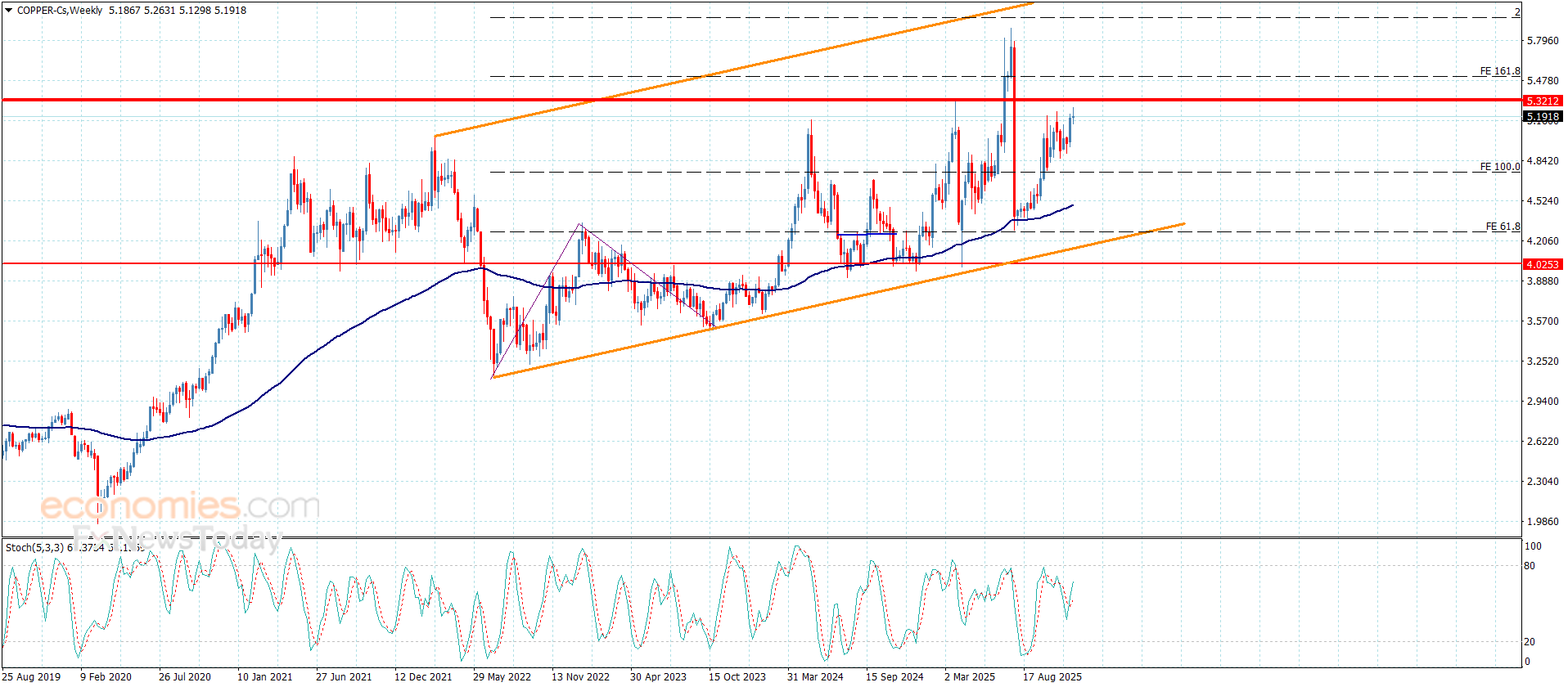
Near $5.2000, while the positive factors—particularly the alignment of major indicators supporting bullish momentum—will increase the chances of breaking this barrier and beginning to target the next positive levels at $5.3200 and $5.5000 respectively.
We note that a decline in the price during current trading below $4.9700 and a negative closing may force it into forming temporary corrective movements, attempting to test the support level at $4.7500 before any new attempt to reach the suggested targets.
Expected trading range for today: between $5.1200 and $5.3200
Price forecast for today: Bullish
EUR/USD holds its ground and rises to the 1.1650 region in the European morning on Wednesday, after closing in positive territory on Monday and Tuesday. The pair’s technical picture confirms the bullish bias in the near term.
The table below shows the percentage change of Euro (EUR) against listed major currencies this week. Euro was the strongest against the US Dollar.
| USD | EUR | GBP | JPY | CAD | AUD | NZD | CHF | |
|---|---|---|---|---|---|---|---|---|
| USD | -0.40% | -0.02% | -0.34% | -0.06% | -0.55% | -0.35% | -0.22% | |
| EUR | 0.40% | 0.39% | 0.05% | 0.34% | -0.14% | 0.07% | 0.18% | |
| GBP | 0.02% | -0.39% | -0.08% | -0.04% | -0.53% | -0.31% | -0.20% | |
| JPY | 0.34% | -0.05% | 0.08% | 0.28% | -0.22% | -0.00% | 0.11% | |
| CAD | 0.06% | -0.34% | 0.04% | -0.28% | -0.54% | -0.27% | -0.17% | |
| AUD | 0.55% | 0.14% | 0.53% | 0.22% | 0.54% | 0.21% | 0.32% | |
| NZD | 0.35% | -0.07% | 0.31% | 0.00% | 0.27% | -0.21% | 0.11% | |
| CHF | 0.22% | -0.18% | 0.20% | -0.11% | 0.17% | -0.32% | -0.11% |
The heat map shows percentage changes of major currencies against each other. The base currency is picked from the left column, while the quote currency is picked from the top row. For example, if you pick the Euro from the left column and move along the horizontal line to the US Dollar, the percentage change displayed in the box will represent EUR (base)/USD (quote).
The broad-based selling pressure on the US Dollar (USD) on growing expectations for a dovish Federal Reserve (Fed) policy outlook next year helps EUR/USD preserve its bullish momentum. US President Donald Trump hinted that he wants to nominate his chief economic adviser Kevin Hassett, who is widely seen as a dove, to replace outgoing Fed Chairman Jerome Powell next year.
In the second half of the day, the US economic calendar will feature the Automatic Data Processing’s private sector employment data and the Institute for Supply Management’s (ISM) Services Purchasing Managers’ Index (PMI) report for November.
Since the official employment report, which will show Nonfarm Payrolls (NFP) figures, will be released after the Fed meets for the last time this year, investors will pay close attention to the Employment Index of the PMI report.
In case the Employment Index recovers above 50 and reflects an expansion in service sector payrolls, the USD could stage a rebound with the immediate reaction and limit EUR/USD’s upside. On the other hand, a reading below October’s 48.2 could have the opposite impact on the USD’s valuation, opening the door for a leg higher in the pair.
The 20-period Simple Moving Average (SMA) rises above the 50-, 100-, and 200-period SMAs, while price holds above all of them. The 50- and 100-period SMAs edge higher as the 200-period SMA remains flat, with the 20 SMA at 1.1610 offering nearby dynamic support. The 14-period RSI sits at 68, near overbought and consistent with firm momentum.
Measured from the 1.1885 high to the 1.1472 low, EUR/USD holds above the 38.2% retracement at 1.1630, turning the spotlight on the 50% retracement at 1.1679. A sustained break above 1.1679 would open the path toward 1.1730 (Fibonacci 61.8% retracement) and 1.1800 (Fibonacci 78.6% retracement), while failure to defend 1.1630 could send the pair back toward the 200-period SMA at 1.1585 before the static support at 1.1551.
(The technical analysis of this story was written with the help of an AI tool)
The Euro is the currency for the 20 European Union countries that belong to the Eurozone. It is the second most heavily traded currency in the world behind the US Dollar. In 2022, it accounted for 31% of all foreign exchange transactions, with an average daily turnover of over $2.2 trillion a day.
EUR/USD is the most heavily traded currency pair in the world, accounting for an estimated 30% off all transactions, followed by EUR/JPY (4%), EUR/GBP (3%) and EUR/AUD (2%).
The European Central Bank (ECB) in Frankfurt, Germany, is the reserve bank for the Eurozone. The ECB sets interest rates and manages monetary policy.
The ECB’s primary mandate is to maintain price stability, which means either controlling inflation or stimulating growth. Its primary tool is the raising or lowering of interest rates. Relatively high interest rates – or the expectation of higher rates – will usually benefit the Euro and vice versa.
The ECB Governing Council makes monetary policy decisions at meetings held eight times a year. Decisions are made by heads of the Eurozone national banks and six permanent members, including the President of the ECB, Christine Lagarde.
Eurozone inflation data, measured by the Harmonized Index of Consumer Prices (HICP), is an important econometric for the Euro. If inflation rises more than expected, especially if above the ECB’s 2% target, it obliges the ECB to raise interest rates to bring it back under control.
Relatively high interest rates compared to its counterparts will usually benefit the Euro, as it makes the region more attractive as a place for global investors to park their money.
Data releases gauge the health of the economy and can impact on the Euro. Indicators such as GDP, Manufacturing and Services PMIs, employment, and consumer sentiment surveys can all influence the direction of the single currency.
A strong economy is good for the Euro. Not only does it attract more foreign investment but it may encourage the ECB to put up interest rates, which will directly strengthen the Euro. Otherwise, if economic data is weak, the Euro is likely to fall.
Economic data for the four largest economies in the euro area (Germany, France, Italy and Spain) are especially significant, as they account for 75% of the Eurozone’s economy.
Another significant data release for the Euro is the Trade Balance. This indicator measures the difference between what a country earns from its exports and what it spends on imports over a given period.
If a country produces highly sought after exports then its currency will gain in value purely from the extra demand created from foreign buyers seeking to purchase these goods. Therefore, a positive net Trade Balance strengthens a currency and vice versa for a negative balance.
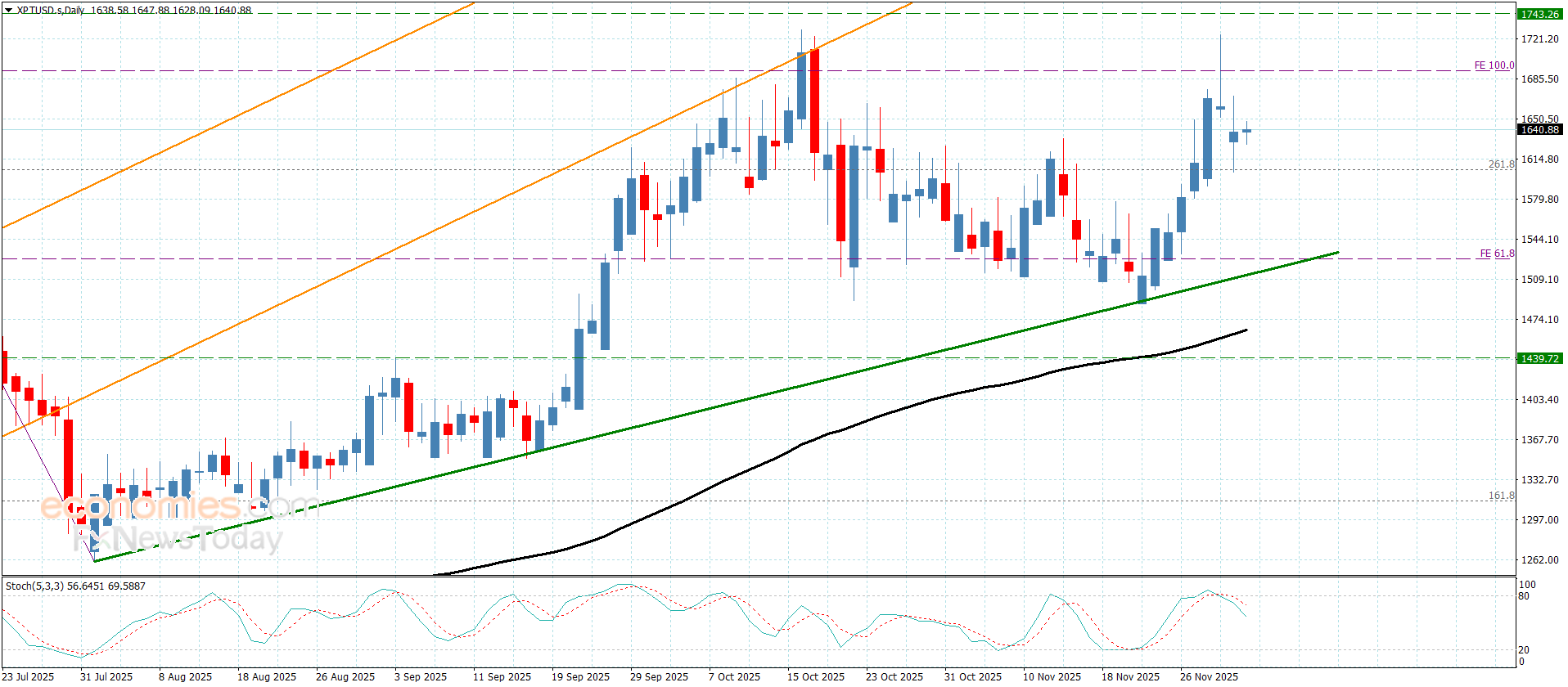
Platinum price maintained its positive stability during yesterday’s trading above the $1,605.00 level, which currently serves as additional support. This reinforces the dominance of the previously suggested bullish trend as the price fluctuates near $1,640.00.
We emphasize the importance of the price accumulating additional bullish momentum, which would enable it to form strong upward waves, allowing it to break through the $1,695.00 level and then extend gains toward the next main target located near $1,745.00.
Expected trading range: between $1,620.00 and $1,695.00
Price forecast for today: Bullish
Platinum price maintained its positive stability during yesterday’s trading above the $1,605.00 level, which currently serves as additional support. This reinforces the dominance of the previously suggested bullish trend as the price fluctuates near $1,640.00.
We emphasize the importance of the price accumulating additional bullish momentum, which would enable it to form strong upward waves, allowing it to break through the $1,695.00 level and then extend gains toward the next main target located near $1,745.00.
Expected trading range: between $1,620.00 and $1,695.00
Price forecast for today: Bullish
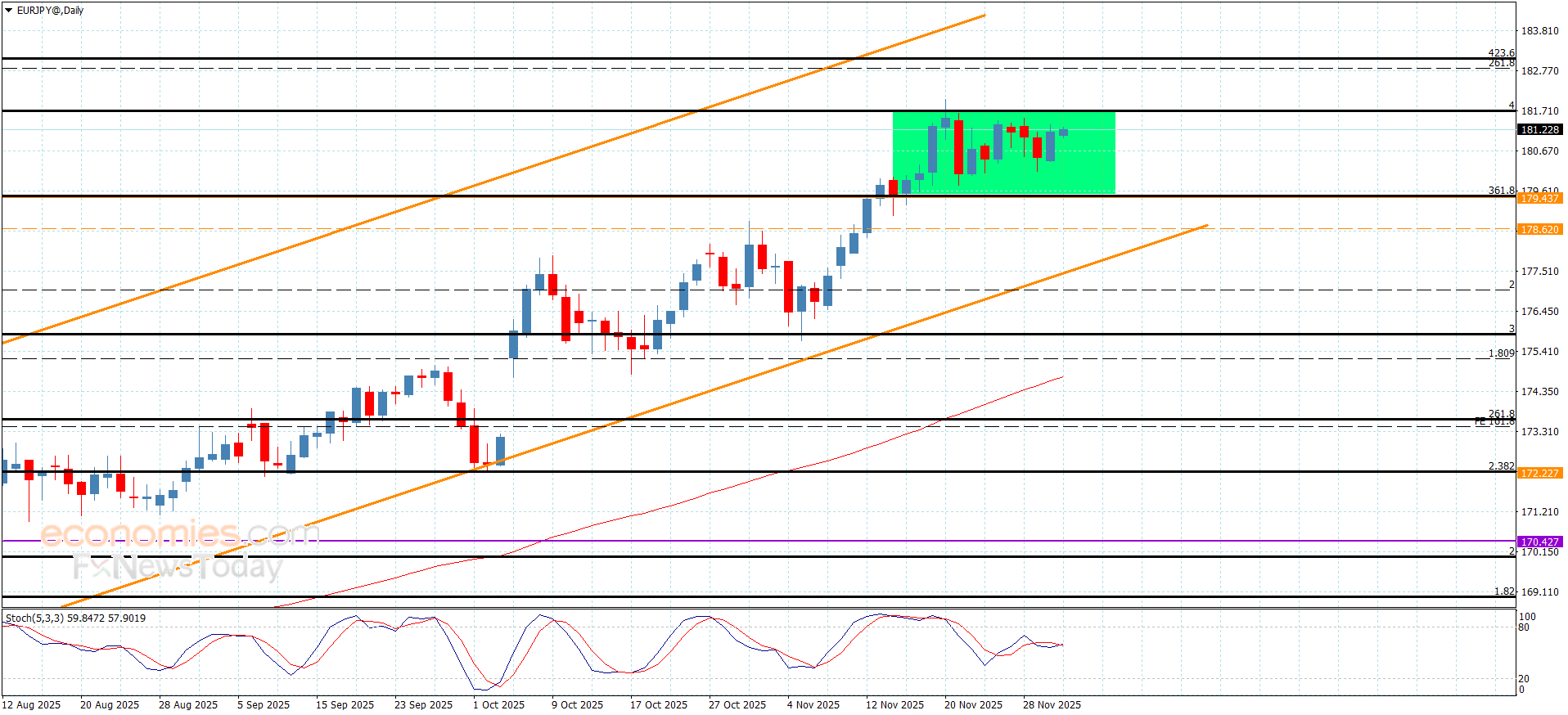
The pair remains affected by the dominance of a sideways inclination, as it continues to fluctuate repeatedly between the barrier near 181.70, while the 179.40 level forms strong support, reducing the likelihood of triggering a bearish attack. The conflicting signals from major technical indicators also support the continuation of this sideways behavior, leaving us waiting for the price to break one of the key levels to confirm the general direction of the upcoming trades.
We note that if the price succeeds in breaking the current barrier and holding above it, this will confirm its readiness to launch a strong bullish attack, beginning with gains that may start at 182.35 and 182.90, respectively. However, failure to break this barrier will force the pair into negative trading, with a chance of retreating again toward the support of the sideways trend.
Expected trading range for today: between 180.30 and 181.60
Price forecast for today: Sideways, as long as key levels remain intact.