The main category of All News Articles.
You can use the search box below to find what you need.
[wd_asp id=1]
The main category of All News Articles.
You can use the search box below to find what you need.
[wd_asp id=1]

Oil prices are down by 5% due to easing tensions between the United States and Iran. President Donald Trump said Iran is talking with Washington, which reduced fears of conflict involving an OPEC member. Brent and WTI crude fell from multi-month highs as traders removed the geopolitical risk premium added earlier. The fall was also linked to a broader sell-off in commodity markets, including gold and silver. A stronger US dollar added pressure, as it made dollar-priced oil costly for buyers outside the United States. OPEC+ also decided to keep output unchanged, reinforcing concerns about ample supply in the oil market.
Oil prices fell nearly 5% on Monday after comments suggested reduced tensions between the United States and Iran. Brent crude futures fell $3.38, or 4.9%, to $65.94 per barrel at 0528 GMT. US West Texas Intermediate crude dropped $3.33, or 5.1%, to $61.88 per barrel.
Prices moved lower after US President Donald Trump said Iran was “seriously talking” with Washington. The statement followed comments from Iran’s top security official Ali Larijani, who said arrangements for talks were underway. These signals lowered fears of military action involving Iran.
The oil market had priced in risks during January due to repeated warnings from Trump. He had said the US could act if Iran refused a nuclear deal or continued actions against protesters. These risks supported oil prices earlier, according to analysts.
Oil prices also fell as commodity markets declined. Gold and silver saw losses during the session. Analysts linked part of the move to a stronger US dollar. When the dollar rises, oil priced in dollars becomes costly for buyers using other currencies.
Priyanka Sachdeva of Phillip Nova said the renewed strength in the US dollar added pressure on oil prices. This currency move reduced demand from non-US buyers and supported the price drop.
Oil prices fell by 5% mainly because of easing tensions between the United States and Iran. President Donald Trump said Iran was “seriously talking” with Washington, reducing fears of a conflict involving an OPEC member. Brent and WTI crude retreated from multi-month highs. A broader sell-off in commodities, including gold and silver, and a stronger US dollar also contributed to the decline. OPEC+ keeping output unchanged for March added to the market’s bearish sentiment, signaling that supply remains sufficient while geopolitical risk premiums eased.
Oil prices may continue to face pressure if US-Iran talks progress and tensions stay low. Analysts say the market is well supplied, and demand remains seasonally weak. A strong US dollar could further weigh on prices. However, oil prices could rise again if talks break down, geopolitical risks return, or supply disruptions emerge. Any changes in OPEC+ policy or unexpected shifts in global demand may also impact prices. Investors are watching diplomatic updates, currency movements, and supply data closely.
At a meeting on Sunday, OPEC+ agreed to keep oil output unchanged for March. The group had already paused planned supply increases from January through March 2026 due to lower seasonal demand.
Despite earlier gains driven by geopolitical risks, analysts say the oil market remains well supplied. Capital Economics said geopolitical risks are masking a bearish oil market. The firm noted that last year’s 12-day conflict between Israel and Iran did not disrupt supply in a lasting way.
Tony Sycamore of IG said the oil market is removing the geopolitical risk premium built into prices during last week’s rally. This has led to profit-taking by traders.
Analysts expect oil prices to remain influenced by diplomacy, currency moves, and supply levels. If US-Iran talks continue, risk premiums may reduce further. However, any shift in talks or supply policy could change the trend.
Investors should monitor geopolitical developments, especially US-Iran talks, as they influence oil prices. They should also track OPEC+ supply decisions and global demand trends. A strong US dollar can pressure oil, so currency movements matter. Traders may consider risk management strategies, including diversifying portfolios or using hedging tools, to protect against sudden price swings. Short-term volatility is likely, so cautious, informed decisions are recommended. Investors can focus on long-term fundamentals such as global supply-demand balance while avoiding decisions based solely on recent price drops.
Q1: Why are oil prices down by 5% and will it continue to fall or rise again?
Oil prices fell after US-Iran tensions eased, the US dollar rose, and traders booked profits. Future movement depends on diplomacy, dollar trends, and supply decisions.
Q2: How does OPEC+ output affect oil prices?
OPEC+ decisions on oil production directly impact supply levels. Keeping output unchanged can pressure prices if demand is weak, while production cuts can support higher crude prices.
– Written by
Ben Hughes
STORY LINK GBP/USD Forecast: Pound Sterling Lacks Momentum Ahead of US Jobs
The Pound to US Dollar exchange rate (GBP/USD) traded in a narrow range on Monday, with an upbeat revision to the UK’s final manufacturing PMI failing to generate meaningful momentum for Sterling.
At the time of writing, GBP/USD was trading at $1.3699, edging only marginally above opening levels as markets largely shrugged off the data.
The US Dollar (USD) was broadly steady at the start of the week, pausing after the rebound it mounted late on Friday.
The ‘Greenback’ had slumped to multi-year lows last week before finding support after US President Donald Trump confirmed Kevin Warsh as his pick for Federal Reserve Chair. Warsh is widely viewed as the most market-friendly of the potential nominees, helping to spark a sharp recovery in USD demand.
That momentum, however, faded on Monday. While Warsh’s nomination eased concerns over political interference at the Fed, investors remain confident the US central bank will still move to cut interest rates later this year, limiting the Dollar’s upside.
The Pound (GBP) initially came under pressure as a mild risk-off mood weighed on risk-sensitive currencies.
Sterling was able to recover those losses early in the session after the UK’s final manufacturing PMI for January was revised higher.
Get better rates and lower fees on your next international money transfer.
Compare TorFX with top UK banks in seconds and see how much you could save.
The index was confirmed at 51.8, its strongest reading in 17 months and slightly above the preliminary estimate of 51.6, signalling improving conditions in the factory sector.
Despite the positive revision, GBP gains proved limited. While analysts welcomed signs of stabilisation in manufacturing, many warned that ongoing trade uncertainty and rising cost pressures could continue to weigh on UK industry well into 2026.
Looking ahead, attention turns to Tuesday’s release of the US Job Openings and Labour Turnover Survey (JOLTS).
The data is expected to show a modest decline in job vacancies in December, with openings forecast to drift back towards the near four-year low seen in September 2024.
Confirmation of a cooling labour market could place renewed pressure on the US Dollar by reinforcing expectations for Federal Reserve interest rate cuts later this year.
With the UK data calendar remaining light, movements in GBP/USD are likely to be driven by shifts in global risk appetite. A risk-off tone could favour the safe-haven Dollar, while an improvement in sentiment following the JOLTS release may allow Sterling to regain some ground.

International Money Transfer? Ask our resident FX expert a money transfer question or try John’s new, free, no-obligation personal service! ,where he helps every step of the way,
ensuring you get the best exchange rates on your currency requirements.
TAGS: Pound Dollar Forecasts
At 12:44 GMT, XAUUSD is trading $4793.49, down $101.94 or -2.08%.
If we assume the new range is $5602.23 to $4402.38 then we expect to see the intraday rally extend into its retracement zone at $5002.31 to $5143.89. Traders will have a serious decision to make if this area is tested — whether to initiate shorts or play for an upside breakout of the zone.
The first leg down from a major top is usually long liquidation. After this is completed, the next move typically retraces 50% to 61.8% of the break. If this market is headed lower then aggressive shorts will come in on a test of the retracement zone at $5002.31 to $5143.89. If this zone is taken out then new buyers may take a shot at the record high.
Essentially, stopping at $5002.31 to $5143.89 will signal the presence of sellers, while taking out $5143.89 will signal the return of buyers.
A resumption of the rally would not be my ideal situation because it would suggest the return of speculative buyers. Ideally, I would like to see a support base form a little above the 50-day moving average. Building a support base would suggest the presence of real buyers.
Fundamentally, I believe the long-term narrative is still bullish, but speculators drove the market too high, too fast over the short-run. Some traders want to blame Kevin Warsh’s nomination as the next U.S. Federal Reserve Chair for Friday’s steep sell-off, but I believe it may have been a combination of this and Wednesday’s Fed monetary policy statement that offered nothing as to the timing of the first rate cut of the year. Add in the margin hike by the CME Group and you get a mass liquidation that may have taken out all of the weaker longs.
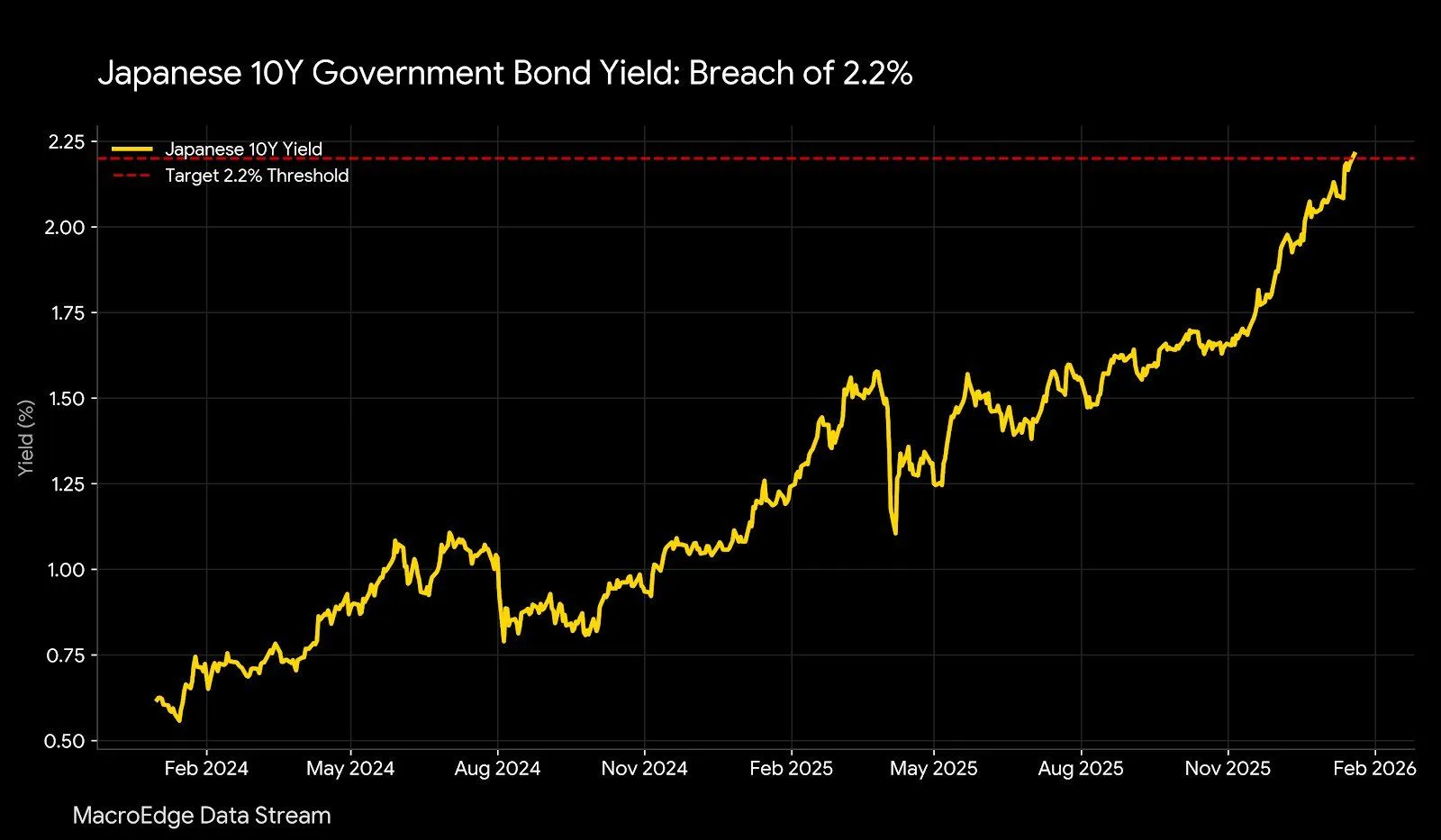
USD/JPY trades below 155 as of writing, extending last week’s drop and marking a shift in short- to medium-term market dynamics. The pair dropped after failing to sustain momentum above levels that had anchored price action for months. The move followed a volatile and bearish January that saw USD/JPY swing between a low of 152.09 and a peak around 159.45.
While price found support near long-term averages, momentum weakened, and traders began reassessing the durability of the yen-funded carry trade. Is the market preparing for a deeper reset?
Yen demand strengthened as investors reacted to signs that the Bank of Japan may continue tightening policy. Preliminary PMI data pointed to improving momentum in manufacturing and services, supporting a firmer economic outlook. GDP upgrades reinforced expectations that inflation and growth may align with the BoJ’s projections.
These developments raised bets on further rate hikes in 2026, narrowing the gap between Japanese and US yields. As rate spreads compressed, the appeal of holding leveraged dollar-long positions weakened. The Bank of Japan’s latest policy meeting on January 23, 2026, kept rates unchanged at 0.75%, with a dissenting vote for a hike, as policymakers viewed risks to the economic & price outlook as broadly balanced ahead of February’s snap election.
Source: MacroEdge Data Stream via X
The BoJ’s Summary of Opinions, scheduled on February 2, has become a focal point for markets as traders looked for clarity on wage growth, tariff risks, and price stability. The Summary of Opinions from the January policy meeting pointed to a clearer sense of urgency around raising interest rates as policymakers track the inflationary impact of a weak yen.
References to “a weak yen” and “foreign exchange” doubled from the prior meeting, signaling that currency depreciation now sits at the center of policy discussions. One board member said the bank should move to a rate hike without missing the right timing, citing rising prices as an urgent priority.
The summary suggested growing support for tightening at a faster pace than the market’s expectation of roughly one hike every six months, reinforcing the view that yen weakness strengthens the case for earlier and more frequent policy action.
Japan’s snap election on February 8th adds another layer of uncertainty. Prime Minister Sanae Takaichi seeks a stronger mandate to pursue fiscal spending plans. Earlier concerns over rising debt and issuance contributed to yen weakness during USD/JPY’s surge from October to January.
A decisive election outcome could revive those fears. However, markets also recognize that fiscal expansion may pressure the BoJ to normalize policy faster, which could support the yen. This tension keeps volatility elevated and discourages one-directional trades.
On the US side, economic data and Federal Reserve communication continue to steer dollar demand. The ISM Services PMI and the February jobs report will shape expectations for rate cuts. Forecasts point to moderating service sector growth and slower wage gains.
Such trends could cool inflation pressures and support a dovish shift later in 2026. FedWatch data already show declining odds of an early rate cut, yet markets still expect easing later in the year. This gradual repricing limits upside for the dollar against the yen.
USD/JPY now trades in a more fragile environment as policy signals, political risk, and yield dynamics intersect. Levels near 155 have shifted from support to resistance, while areas below 152 and toward 150 draw attention. Yen intervention rhetoric continues to cap sharp upside moves, even as occasional rebounds emerge.
With multiple catalysts ahead, traders brace for continued volatility. Will narrowing rate spreads and BoJ guidance drive the next leg lower, or will dollar resilience delay the adjustment? The coming weeks may decide.
Natural gas prices in the United States dropped by 17% in Asian trade on Monday, driven by forecasts for milder weather in the coming weeks.
Data from the National Oceanic and Atmospheric Administration cited by Bloomberg suggests that while most of the U.S. remains in the grip of cold winter weather, this is about to change, with parts of the country expected to see warmer-than-usual weather later this month.
Earlier this month, U.S. natural gas soared 117% over just five days amid the cold spell that led to a surge in the demand for heating and also reduced production, shrinking supply for both domestic consumption and LNG exports. ING analysts estimated that gas deliveries to LNG plants were down by as much as 48% last week.
The weather drove gas prices to the highest in four years, with Henry Hub topping $6.60 per million British thermal units last week as traders led to expect another mild January got a nasty surprise when they had to cover their short positions in equally short order.
While this happened, across the Atlantic, Europe saw its gas in storage continue to drain at much faster rates than usual. As of Saturday, the latest available data, EU gas in storage was at 41.13%. Germany’s was at 32.44%. Both levels are a lot lower than the average for the last five years.
Now, however, U.S. natural gas is down to $3.62 per mmBtu, which means that LNG prices are also going down, and Europe might get some respite on the spot market as gas storage refill season approaches.
Meanwhile, BloombergNEF reported, as cited by Nasdaq, that gas production affected by the snowstorms in the Lower 48 was gradually recovering, although it was still well short of demand. At 110 billion cu ft daily, the Friday production rate was 3.4% higher than a year ago but below the 128.7 billion cu ft in demand on that day.
By Irina Slav for Oilprice.com
More Top Reads From Oilprice.com
EUR/USD fell 1% on Friday and erased all of its weekly gains. The pair holds steady near 1.1850 in the European morning on Monday but a decisive recovery attempt could be difficult to come by in the short term.
The table below shows the percentage change of Euro (EUR) against listed major currencies last 7 days. Euro was the weakest against the New Zealand Dollar.
| USD | EUR | GBP | JPY | CAD | AUD | NZD | CHF | |
|---|---|---|---|---|---|---|---|---|
| USD | 0.12% | -0.28% | 0.26% | -0.43% | -0.45% | -0.92% | -0.01% | |
| EUR | -0.12% | -0.42% | 0.15% | -0.55% | -0.55% | -1.04% | -0.13% | |
| GBP | 0.28% | 0.42% | 0.23% | -0.13% | -0.14% | -0.63% | 0.29% | |
| JPY | -0.26% | -0.15% | -0.23% | -0.69% | -0.70% | -1.15% | -0.27% | |
| CAD | 0.43% | 0.55% | 0.13% | 0.69% | -0.13% | -0.47% | 0.42% | |
| AUD | 0.45% | 0.55% | 0.14% | 0.70% | 0.13% | -0.50% | 0.43% | |
| NZD | 0.92% | 1.04% | 0.63% | 1.15% | 0.47% | 0.50% | 0.92% | |
| CHF | 0.00% | 0.13% | -0.29% | 0.27% | -0.42% | -0.43% | -0.92% |
The heat map shows percentage changes of major currencies against each other. The base currency is picked from the left column, while the quote currency is picked from the top row. For example, if you pick the Euro from the left column and move along the horizontal line to the US Dollar, the percentage change displayed in the box will represent EUR (base)/USD (quote).
The broad-based US Dollar (USD) strength caused EUR/USD to decline sharply heading into the weekend. US President Donald Trump announced on Friday that he nominated Kevin Warsh, who served as a Federal Reserve (Fed) Governor from 2006 to 2011, as the new chair of the Fed. Warsh is widely seen as someone who would take a firm stance against inflation and adopt a pragmatic approach to policy-making.
The US economic calendar will feature the Institute for Supply Management’s (ISM) Manufacturing Purchasing Managers’ Index (PMI) data for January. In case the headline PMI recovers into the expansion territory above 50, the immediate reaction could be supportive for the USD and cause EUR/USD to edge lower. Investors will also pay close attention to the Employment Index of the survey. A weaker reading that December’s 44.9 could revive concerns about the labor market conditions and hurt the USD.
Later in the week, the European Central Bank (ECB) will announce monetary policy decisions and the US Bureau of Labor Statistics will release the Nonfarm Payrolls (NFP) data for January.
Meanwhile, US stock index futures were last seen losing between 0.3% and 0.8% on the day. In case safe-haven flows continue to dominate the market action in the second half of the day, EUR/USD could
The Relative Strength Index (RSI) indicator on the 4-hour chart stays below 50 suggesting that bearish bias remains intact despite the recent stabilization. On the upside, 1.1870 (Fibonacci 38.2% retracement of the latest uptrend) aligns as the immediate resistance ahead of 1.1930-1.1940 (20-period Simple Moving Average (SMA), Fibonacci 23.6% retracement) and 1.2000 (static level, round level).
Looking south, support levels could be spotted at 1.1810-1.1800 (Fibonacci 50% retracement, round level) and 1.1760-1.1750 (Fibonacci 61.8% retracement, 100-period SMA, 200-period SMA).
The Euro is the currency for the 20 European Union countries that belong to the Eurozone. It is the second most heavily traded currency in the world behind the US Dollar. In 2022, it accounted for 31% of all foreign exchange transactions, with an average daily turnover of over $2.2 trillion a day.
EUR/USD is the most heavily traded currency pair in the world, accounting for an estimated 30% off all transactions, followed by EUR/JPY (4%), EUR/GBP (3%) and EUR/AUD (2%).
The European Central Bank (ECB) in Frankfurt, Germany, is the reserve bank for the Eurozone. The ECB sets interest rates and manages monetary policy.
The ECB’s primary mandate is to maintain price stability, which means either controlling inflation or stimulating growth. Its primary tool is the raising or lowering of interest rates. Relatively high interest rates – or the expectation of higher rates – will usually benefit the Euro and vice versa.
The ECB Governing Council makes monetary policy decisions at meetings held eight times a year. Decisions are made by heads of the Eurozone national banks and six permanent members, including the President of the ECB, Christine Lagarde.
Eurozone inflation data, measured by the Harmonized Index of Consumer Prices (HICP), is an important econometric for the Euro. If inflation rises more than expected, especially if above the ECB’s 2% target, it obliges the ECB to raise interest rates to bring it back under control.
Relatively high interest rates compared to its counterparts will usually benefit the Euro, as it makes the region more attractive as a place for global investors to park their money.
Data releases gauge the health of the economy and can impact on the Euro. Indicators such as GDP, Manufacturing and Services PMIs, employment, and consumer sentiment surveys can all influence the direction of the single currency.
A strong economy is good for the Euro. Not only does it attract more foreign investment but it may encourage the ECB to put up interest rates, which will directly strengthen the Euro. Otherwise, if economic data is weak, the Euro is likely to fall.
Economic data for the four largest economies in the euro area (Germany, France, Italy and Spain) are especially significant, as they account for 75% of the Eurozone’s economy.
Another significant data release for the Euro is the Trade Balance. This indicator measures the difference between what a country earns from its exports and what it spends on imports over a given period.
If a country produces highly sought after exports then its currency will gain in value purely from the extra demand created from foreign buyers seeking to purchase these goods. Therefore, a positive net Trade Balance strengthens a currency and vice versa for a negative balance.
Executive Summary
The global Copper Sulphate market displayed a measured recovery through mid-to-late 2025, driven primarily by seasonal agricultural demand, tightening logistics, and sustained feedstock cost pressure. For the quarter ending September 2025, Copper Sulphate prices rose modestly across major consuming regions, supported by fungicide and crop protection demand, while industrial consumption remained structurally weak due to persistent construction sector headwinds.
North America recorded a marginal quarter-over-quarter increase as agricultural procurement offset elevated inventories and lingering port congestion. Asia Pacific outperformed other regions, supported by stronger seasonal demand, improved export activity, and high plant utilization. Europe saw moderate gains, driven by agricultural restocking and short-term supply tightness, even as upstream copper and energy costs softened.
Across regions, Copper Sulphate price movements remained constrained by cautious procurement behavior, distributor inventory management, and expectations of year-end destocking. Looking ahead, the Copper Sulphate price forecast suggests limited volatility, with modest upside during autumn restocking cycles followed by stabilization as demand normalizes and inventories rebuild.
◼ Get Instant Access to Live Copper Sulphate Prices Today: https://www.chemanalyst.com/Pricing-data/copper-sulphate-1163
Introduction
Copper Sulphate is a critical inorganic chemical widely used in agriculture, water treatment, animal feed, mining, and industrial applications. Its demand profile remains heavily seasonal, particularly due to its role as a fungicide and algaecide. As a result, price behavior is highly sensitive to agricultural calendars, logistics performance, and upstream feedstock costs, particularly copper metal and sulphuric acid.
During 2024 and 2025, the Copper Sulphate market navigated a challenging macroeconomic environment marked by weak industrial demand, elevated interest rates, and fluctuating logistics conditions. However, agricultural demand continued to provide a structural floor to prices, preventing prolonged declines despite oversupply risks in several regions.
Global Copper Sulphate Price Overview
Globally, Copper Sulphate prices followed a cyclical trajectory between Q4 2024 and Q3 2025. Prices softened during Q1 2025 due to oversupply, weak industrial consumption, and aggressive exporter competition. This bearish trend reversed in Q2 2025 as seasonal agricultural demand surged and logistics disruptions constrained availability.
By Q3 2025, global prices stabilized with modest gains. Higher sulphuric acid costs sustained production expenses, while cautious procurement strategies limited sharp price escalation. Trade flows played a key role, particularly exports from Asia to Europe and North America, where freight rates and port congestion influenced landed costs and regional price indices.
◼ Monitor Real-Time Copper Sulphate Price Swings and Stay Ahead of Competitors: https://www.chemanalyst.com/ChemAnalyst/PricingForm?Product=Copper%20sulphate
Regional Copper Sulphate Price Analysis
North America
For the quarter ending September 2025, the Copper Sulphate Price Index in the United States rose by 0.78 percent quarter-over-quarter. The average quarterly price stood at approximately USD 2,664 per metric ton on a CFR Texas basis.
Agricultural procurement ahead of autumn spraying supported spot prices, particularly as distributor inventories were drawn down during August. Import availability remained constrained due to earlier congestion at the Manzanillo port, which elevated freight costs and delayed deliveries. Although shipping flows normalized toward the end of the quarter, freight rates stayed elevated, maintaining cost pressure.
Production costs increased due to rising sulphuric acid prices, while stable copper feedstock limited cost relief. Industrial demand remained subdued, especially from construction-linked applications, which continued to face reduced spending. High inventories capped upside potential, but early restocking behavior supported firmer offers.
The Copper Sulphate price forecast for North America points toward modest volatility, with agricultural demand sustaining prices in the near term, followed by stabilization as year-end destocking emerges.
Asia Pacific
In Asia Pacific, Copper Sulphate prices showed stronger momentum. Taiwan recorded a 2.45 percent quarter-over-quarter increase in the Copper Sulphate Price Index during Q3 2025. The average quarterly price was USD 2,338.67 per metric ton.
Seasonal fungicide demand remained robust, while export inquiries from Vietnam and Japan tightened availability. High plant utilization and efficient logistics through Kaohsiung port ensured reliable supply, but reduced spot inventories supported firmer pricing.
Production cost trends remained elevated due to higher sulphuric acid and copper feedstock values, compressing producer margins and limiting discounting. Industrial demand stayed weak, but agricultural consumption provided sufficient offtake to balance the market.
The short-term Copper Sulphate price forecast for APAC indicates modest gains into autumn, followed by potential pressure from year-end inventory clearance and export competition.
Europe
In Europe, Belgium recorded a 1.2187 percent quarter-over-quarter increase in the Copper Sulphate Price Index during the September 2025 quarter. The average quarterly price reached approximately USD 2,630 per metric ton CFR Belgium.
Spot prices firmed mid-quarter as African export delays tightened immediate availability. Agricultural demand supported procurement, while industrial consumption remained weak due to the ongoing construction downturn. Softer upstream copper prices and moderated energy costs eased production cost pressure, but sellers maintained cautious offer levels.
Port congestion and shipment normalization created mixed supply signals, prompting distributors to manage inventories conservatively. Price volatility remained limited, reflecting balanced market conditions.
◼ Track Daily Copper Sulphate Price Updates and Strengthen Your Procurement Decisions: https://www.chemanalyst.com/Pricing-data/copper-sulphate-1163
Copper Sulphate Quarterly Price Table
Region Quarter Ending Price Index Change (QoQ) Average Price (USD/MT) Basis
North America Sep 2025 +0.78% 2,664 CFR Texas
APAC Sep 2025 +2.45% 2,338.67 Regional Avg
Europe Sep 2025 +1.2187% 2,630 CFR Belgium
Historical Quarterly Review
During Q4 2024, Copper Sulphate prices fluctuated across regions. North America and Europe experienced rebounds in December due to feedstock cost pressure and port congestion, while APAC saw late-quarter stabilization following inventory tightening.
In Q1 2025, prices declined globally. Oversupply, weak industrial demand, and lower shipping costs pressured markets in North America, Europe, and APAC. Seasonal agricultural demand failed to offset bearish fundamentals, particularly in construction-linked applications.
Q2 2025 marked a turning point. Price indices rose sharply across all regions, driven by peak agricultural demand, sulphuric acid shortages, and logistics disruptions at key ports. Procurement activity intensified, especially among agrochemical distributors.
By Q3 2025, price momentum moderated, transitioning into a stabilization phase with selective gains supported by restocking and cost pressure.
Production and Cost Structure Insights
Copper Sulphate production costs are heavily influenced by sulphuric acid availability, copper feedstock prices, and energy inputs. During 2025, sulphuric acid prices remained elevated across regions, sustaining cost pressure even as copper prices softened in Europe.
Energy costs moderated in Europe, offering partial relief, while APAC producers faced margin constraints due to sustained feedstock inflation. Stable plant operations globally prevented supply shocks, keeping production steady despite cost challenges.
◼ Unlock Live Pricing Dashboards for Accurate and Timely Insights: https://www.chemanalyst.com/ChemAnalyst/PricingForm?Product=Copper%20sulphate
Procurement Behavior and Supply Conditions
Procurement strategies remained cautious throughout 2025. Buyers favored short-term contracts and essential purchasing, avoiding aggressive stock accumulation amid uncertain demand recovery. Distributors actively managed inventories, particularly in Europe and North America.
Supply conditions were influenced by logistics disruptions, port congestion, and shifting trade flows. Exports from Asia played a critical role in balancing global supply, while freight rates directly impacted landed costs and regional price indices.
Copper Sulphate Price Forecast and Procurement Outlook
The Copper Sulphate price forecast suggests limited upside through late 2025. Agricultural demand will continue to underpin prices, while weak industrial consumption and anticipated destocking cycles are expected to cap sustained rallies.
Buyers are expected to maintain disciplined procurement strategies, focusing on timing purchases around seasonal demand peaks and logistics normalization.
Frequently Asked Questions
Why did Copper Sulphate prices rise in Q3 2025
Seasonal agricultural demand, higher sulphuric acid costs, and tighter logistics supported prices despite weak industrial demand.
Which region saw the strongest price growth
Asia Pacific recorded the highest quarter-over-quarter increase due to fungicide demand and export tightening.
What factors limit further price increases
High inventories, cautious procurement, and expectations of year-end destocking continue to cap upside potential.
How important are logistics in Copper Sulphate pricing
Port congestion, freight rates, and shipping delays significantly affect landed costs and regional price indices.
How ChemAnalyst Supports Copper Sulphate Buyers
ChemAnalyst provides real-time price tracking, weekly updates, and forward-looking forecasts for Copper Sulphate across major global regions. By combining on-ground intelligence from key trading ports with expert cost and demand analysis, ChemAnalyst helps buyers understand not only where prices are moving, but why.
Through detailed market reports, supply disruption monitoring, and procurement-focused insights, ChemAnalyst enables buyers to optimize purchase timing, manage risk, and strengthen supply chain resilience. With coverage across more than 450 commodities and a global analyst network, ChemAnalyst remains a trusted partner for informed decision-making in volatile chemical markets.
◼ Stay Updated Each Day with Verified Copper Sulphate Price Movements: https://www.chemanalyst.com/Pricing-data/copper-sulphate-1163
Contact Us:
UNITED STATES
Call +1 3322586602
420 Lexington Avenue, Suite 300, New York, NY,
United States, 10170
Germany
Call +49-221-6505-8833
S-01, 2.floor, Subbelrather Straße,
15a Cologne, 50823, Germany
Email: sales@chemanalyst.com
LinkedIn: https://www.linkedin.com/company/chemanalyst/
Facebook: https://www.facebook.com/ChemAnalysts/
Twitter: https://x.com/chemanalysts
YouTube: https://www.youtube.com/@chemanalyst
Instagram: https://www.instagram.com/chemanalyst_
Website: https://www.chemanalyst.com/
About Us:
Welcome to ChemAnalyst, a next-generation platform for chemical and petrochemical intelligence where innovation meets practical insight. Recognized as “Product Innovator of the Year 2023” and ranked among the “Top 100 Digital Procurement Solutions Companies,” we lead the digital transformation of the global chemical sector. Our online platform helps companies handle price volatility with structured analysis, real-time pricing, and reliable news and deal updates from across the world. Tracking over 500 chemical prices in more than 40 countries becomes simple and efficient with us.
This release was published on openPR.
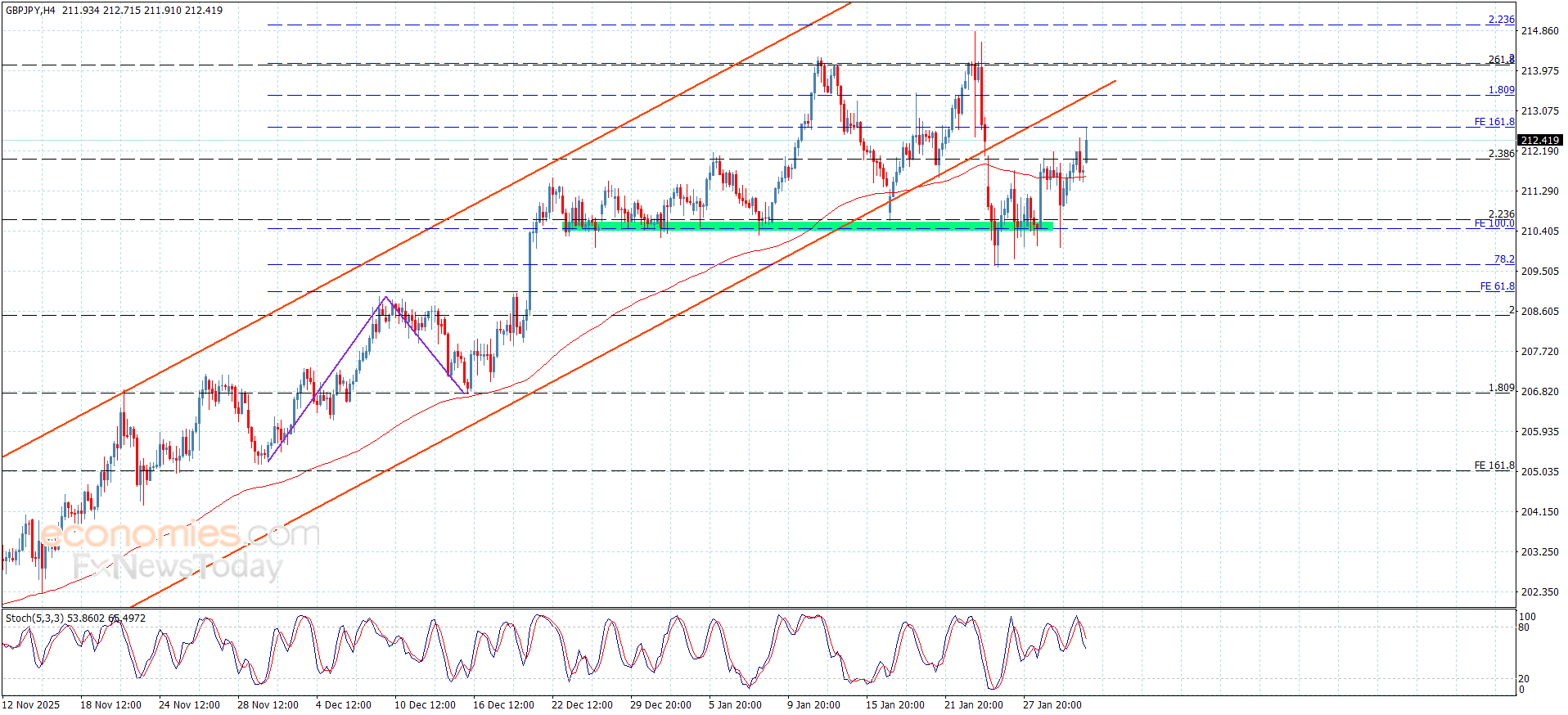
The GBPJPY pair continued forming bullish trading since Friday’s trading, taking advantage of the repeated positive stability above 210.40 support, achieving several gains by reaching 212.75 which forms an intraday obstacle against the bullish trend.
The contradiction between the main indicators makes us expect providing mixed trading until gathering extra positive momentum, to ease the mission of surpassing the current obstacle, to target extra gains by its rally towards 213.40 and surpassing it will confirm its stability within the main bullish channel’s levels, opening the way towards for strong chance of recording new gains that might extend towards 214.15 and 214.90.
The expected trading range for today is between 211.80 and 213.40
Trend forecast: Bullish
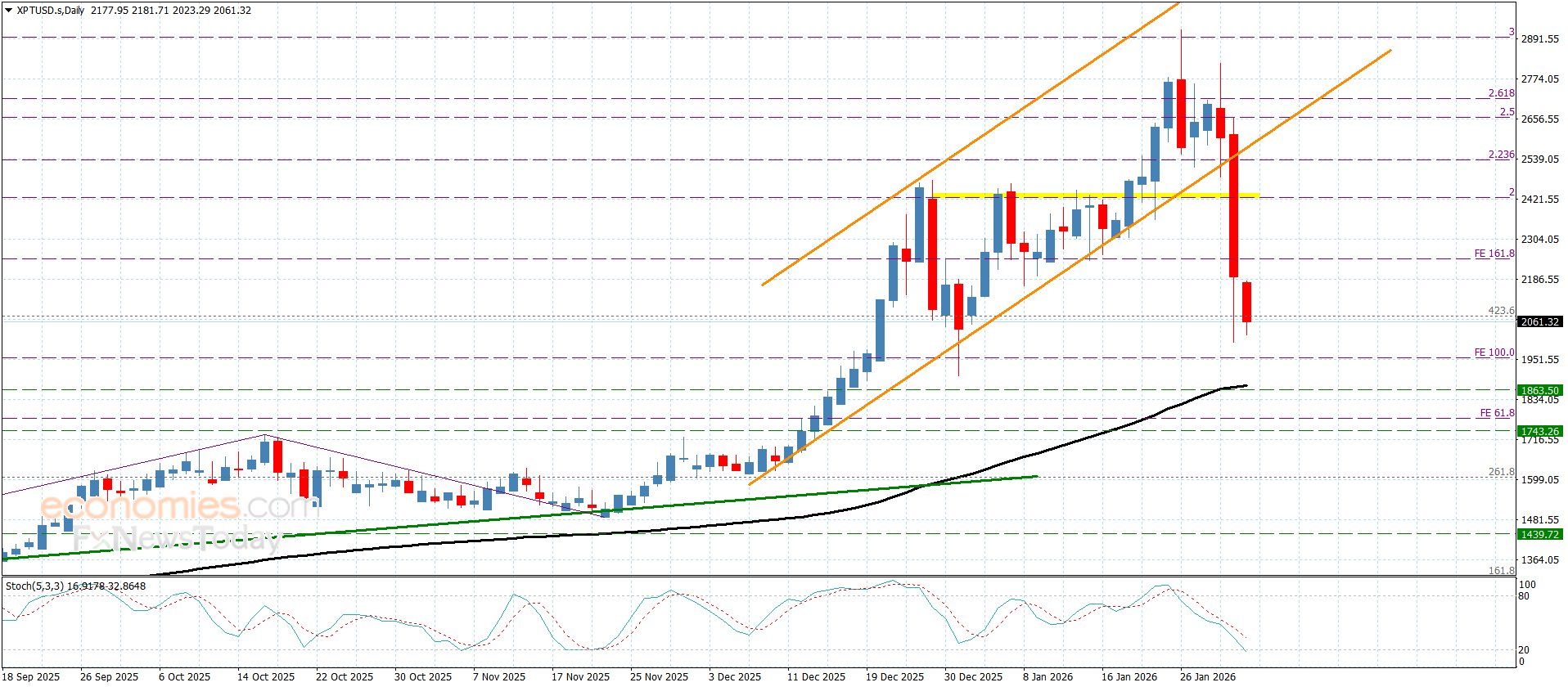
Platinum price surrendered to the negative pressure recently, resuming the bearish corrective attack, which forces it to break the extra support at $2250.00, suffering big losses by reaching $2003.00.
The price might be forced to reach %100 Fibonacci extension level at $1950.00, as long as it forms a key support against the last bullish rally, as the stability above this support will allow it to provide a chance to renew the bullish attempts, to step above $2250.00 to record some gains that begin at $2350.00 and $2420.00.
The expected trading range for today is between $1950.00 and $2250.00
Trend forecast: Bullish
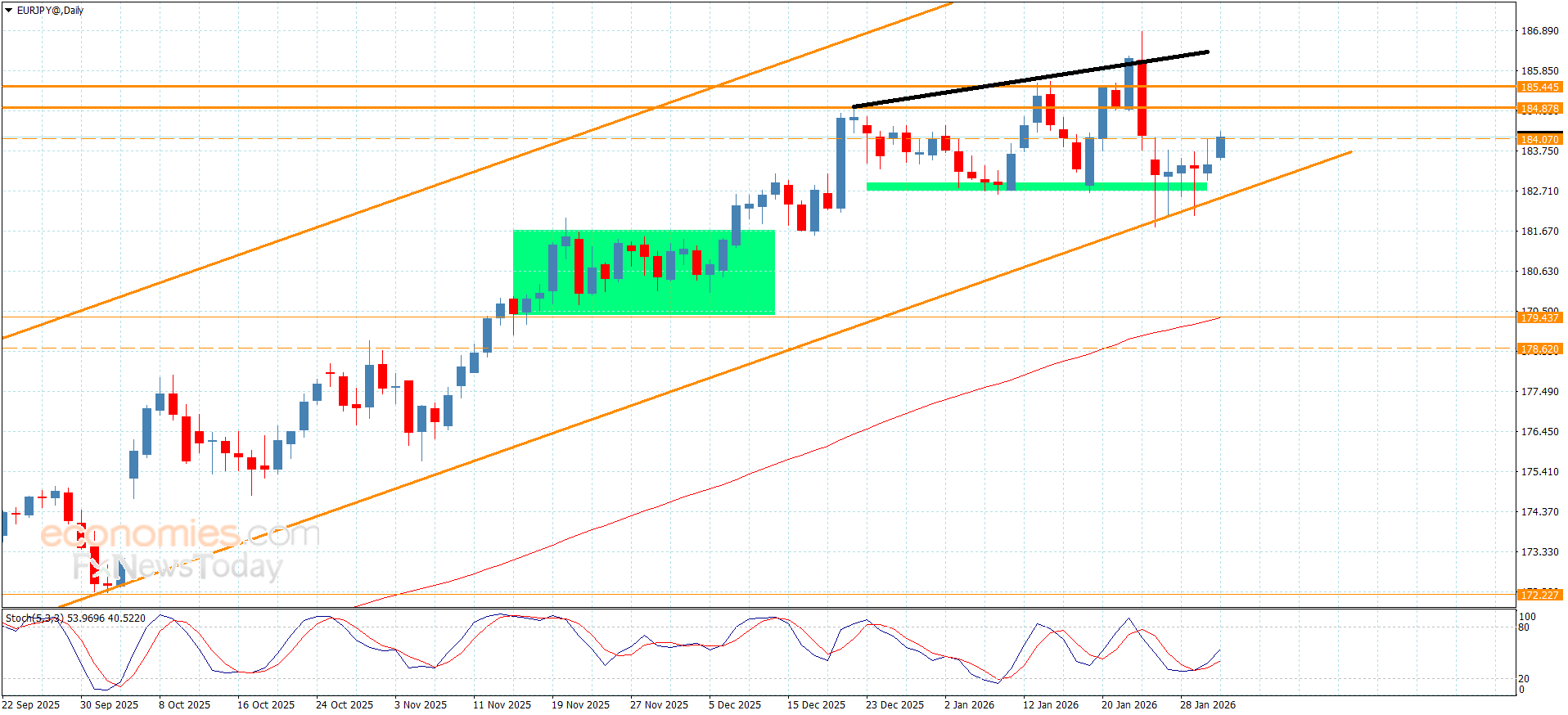
The EURJPY pair succeeded in resuming the bullish trend that depends on the main stability within the bullish channel’s levels, reaching 184.25 achieving the suggested target in the previous report.
In general, the main stability above the main bullish channel’s support at 182.60, the main indicators attempt to provide bullish momentum will increase the chances of surpassing the current obstacle to ease the mission of recording new gains that might begin at 184.85 and 185.45.
The expected trading range for today is between 183.40 and 184.85
Trend forecast: Bullish