The main category of All News Articles.
You can use the search box below to find what you need.
[wd_asp id=1]
The main category of All News Articles.
You can use the search box below to find what you need.
[wd_asp id=1]
The trading week continues, and the Japanese yen’s lack of short-term strength is once again standing out. Recent USD/JPY price action shows the pair up slightly more than 0.2% over the last three trading sessions, suggesting that some buying pressure remains near recent highs.
This behavior is relevant because the Bank of Japan decision was released recently, alongside new updates around the Middle East conflict. Still, these developments have not been enough to trigger consistent demand for the yen. For now, a phase of indecision could remain important for USD/JPY over the coming sessions.
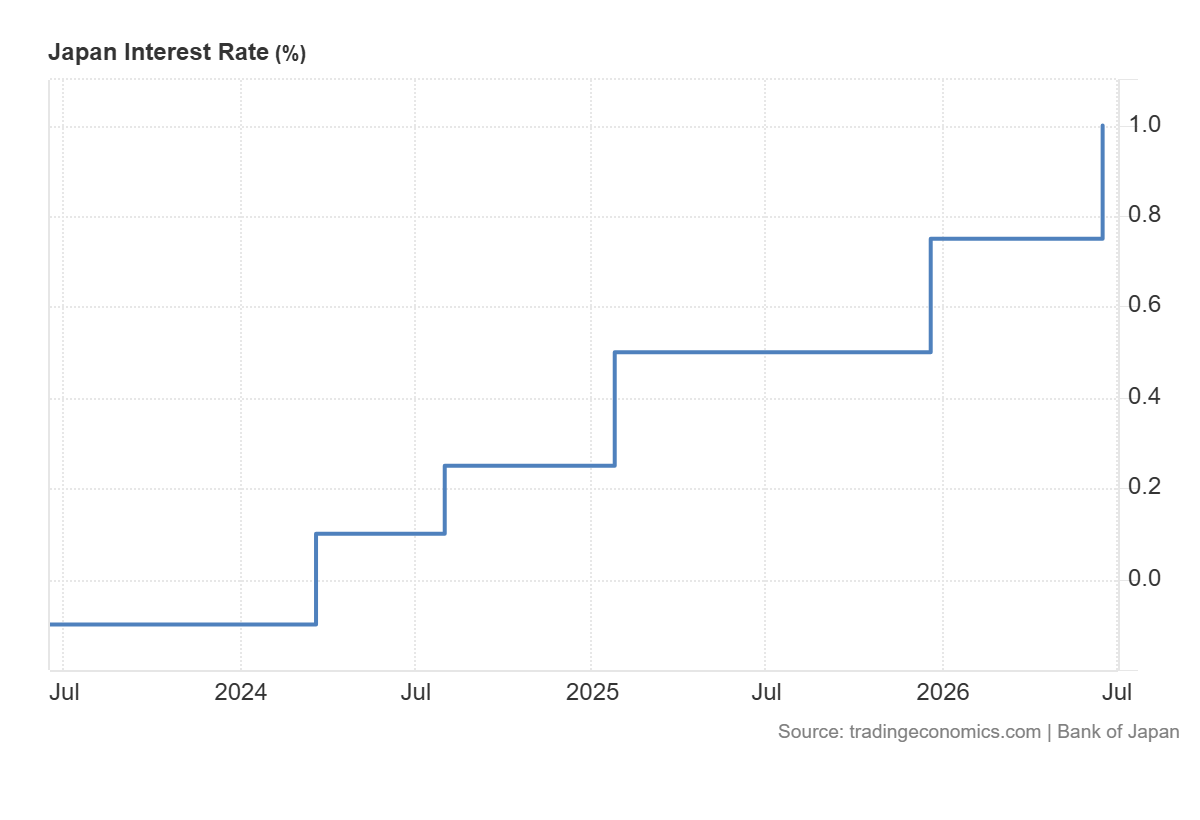
During today’s session, the Bank of Japan announced its latest policy decision. In line with market expectations, the central bank raised interest rates by 0.25%, taking them from the previous 0.75% level to a new reference of 1.00%. This is Japan’s highest rate in several years and marks the institution’s first rate hike of 2026.
The bank justified the increase by pointing to persistent inflation pressures and the weakness the yen has shown over the past several months. Both factors remain important drivers behind a somewhat more restrictive stance in the short term.
Source: TradingEconomics
Despite the decision, the yen has not managed to attract enough demand. First, the rate increase had already been expected by markets for several weeks. Second, the central bank’s comments after the decision did not confirm that this hiking path will continue consistently over the coming months, as future moves will depend on inflation.
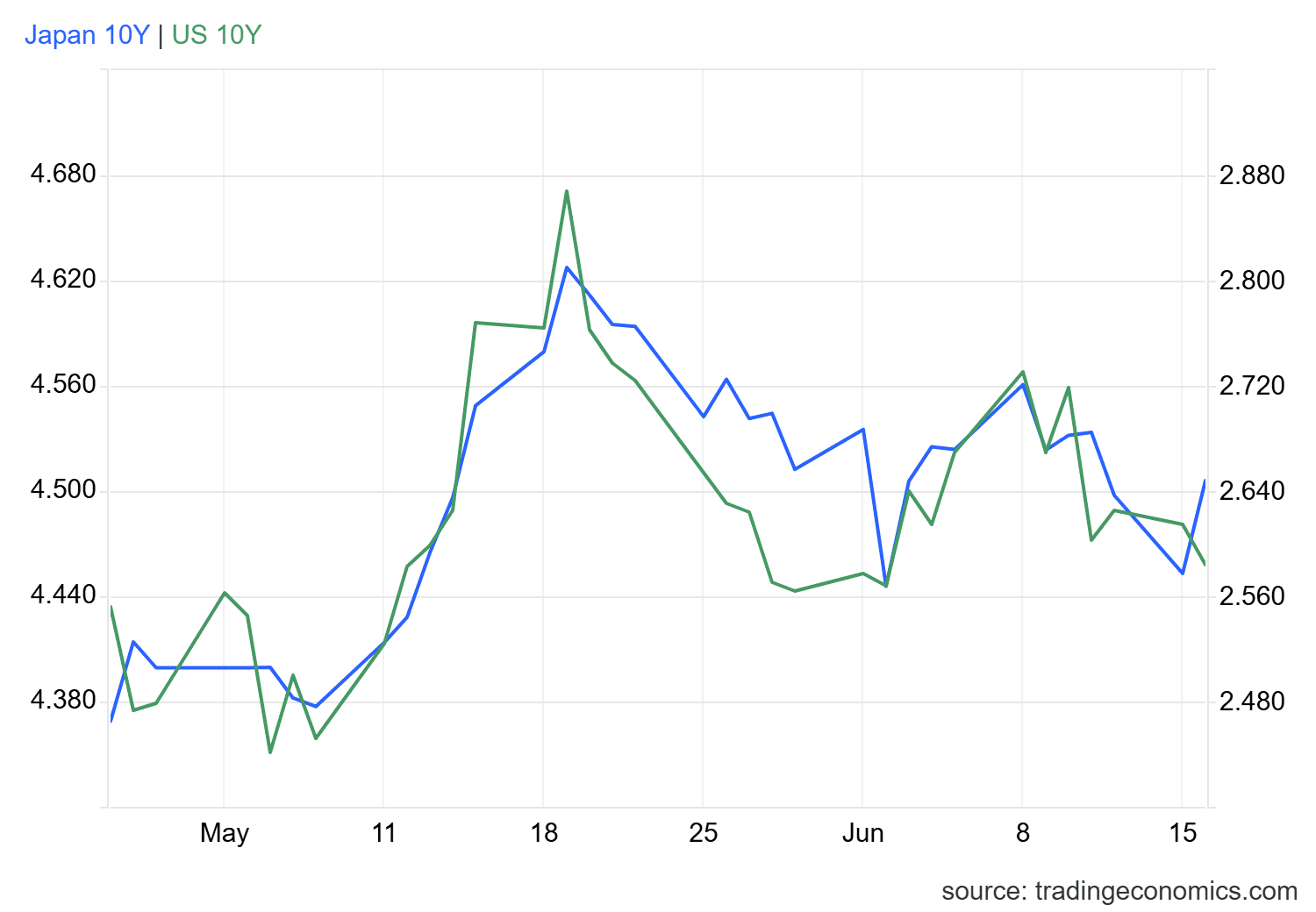
This was reflected in the moderate reaction of Japan’s 10-year bond market after the announcement. Although yields advanced more than 2.5% and remain slightly above 2.6%, they are still far from their 2026 highs. In addition, Japanese yields remain well below US yields, which are close to 4.5% on the 10-year curve.
Source: TradingEconomics
Against this backdrop, the latest rate hike still does not seem enough to close the gap with the United States. The Federal Reserve is also expected to announce its interest rate decision tomorrow, which could keep markets cautious toward yen demand.
For now, there is no clear confirmation that Japan will continue raising rates over the coming months. Unless markets start to expect a more aggressive Bank of Japan, the rate differential could continue to favor dollar-denominated assets. This would make it harder for the yen to recover consistently in the short term and could keep USD/JPY in a phase of indecision over the following sessions.
Important updates around the Middle East were also released over the weekend. The United States and Iran reportedly reached a tentative agreement to ease the conflict in the short term and move toward a possible reopening of the Strait of Hormuz, which is expected this week.
However, markets still seem to view the agreement as tentative. If the Strait of Hormuz does not fully return to normal, accumulated demand for the US dollar as a liquidity safe haven may not disappear completely in the short term.
This can be seen in the behavior of DXY. Although the index has declined on average over the last few sessions, it remains close to the 100-point reference area. This suggests that the US dollar has not lost strength consistently against its main rivals, including the yen.
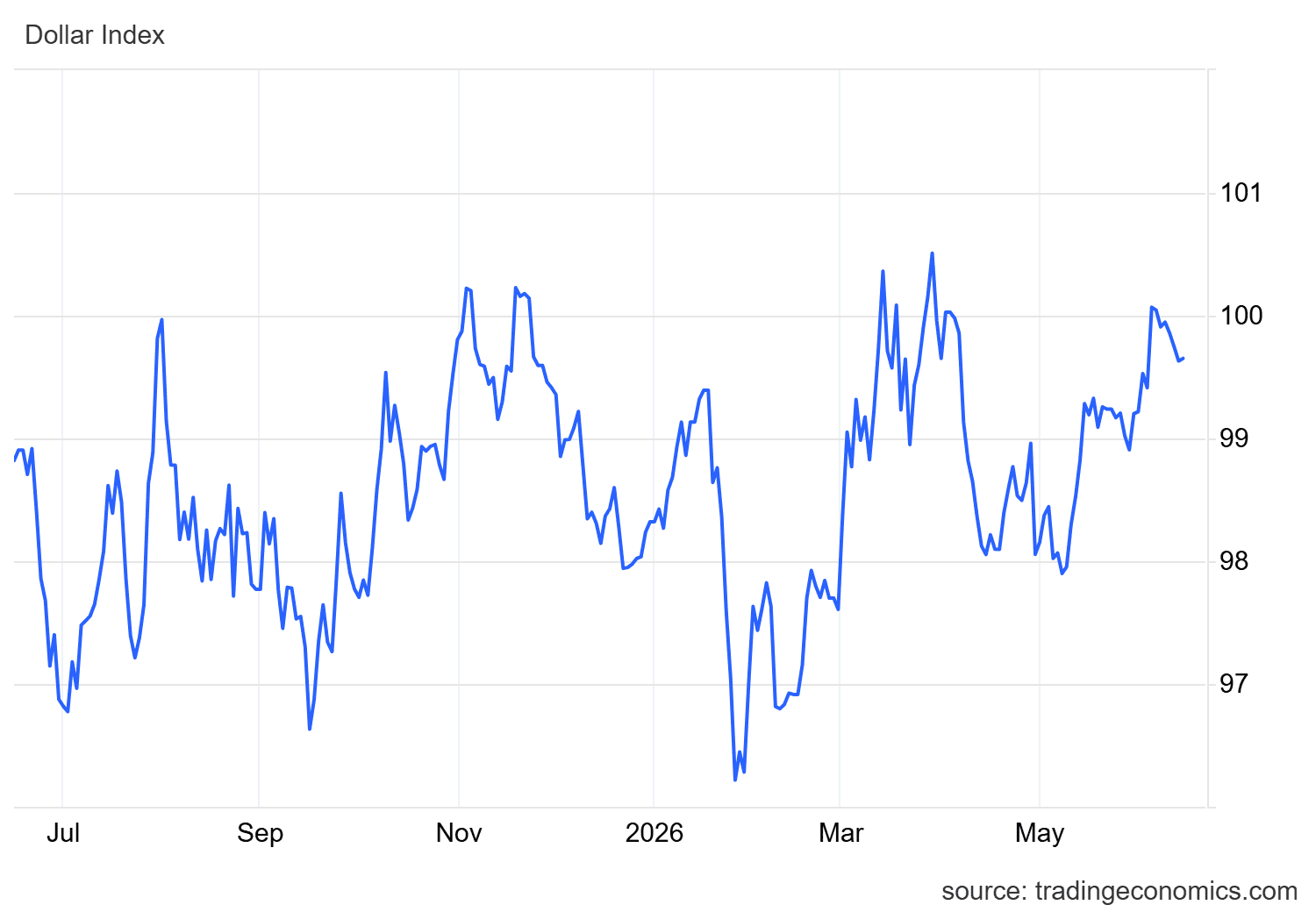
Source: TradingEconomics
The dollar is still trying to hold its strength across markets, and this may also be limiting the yen’s ability to gain consistent ground in the short term. Unless more relevant updates on the reopening of Hormuz clearly reduce safe-haven demand for the dollar, a phase of indecision could remain present in USD/JPY over the coming sessions.

Source: StoneX, Tradingview
Key levels:
Written by Julian Pineda, CFA, CMT – Market Analyst
Follow him on: @julianpineda25
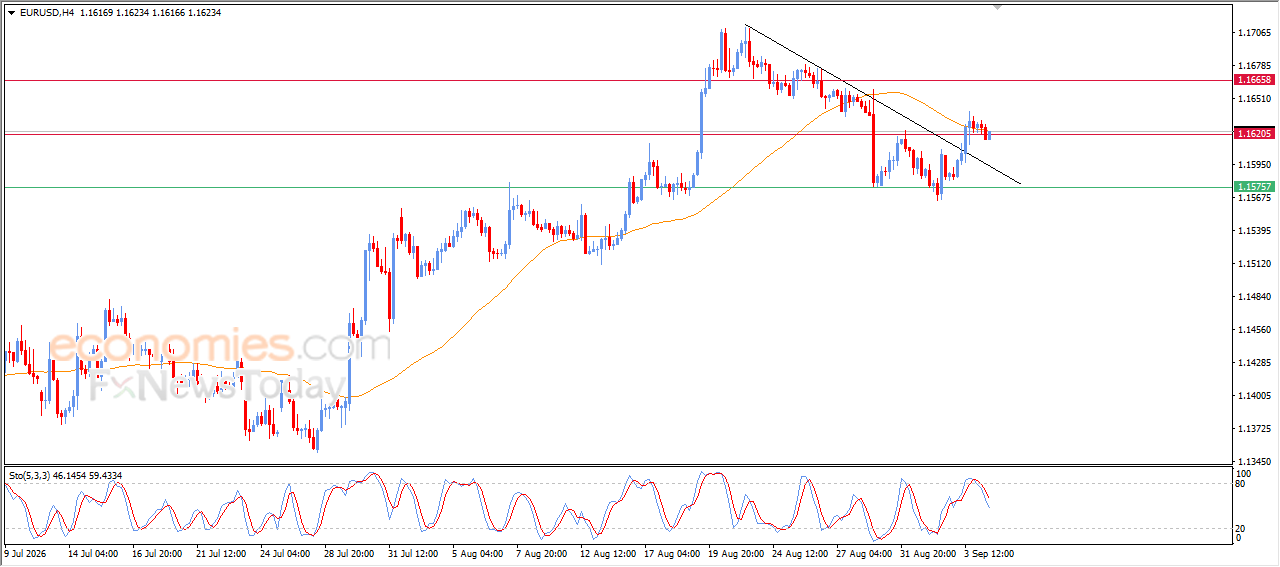
The EURUSD pair declined during its latest intraday trading, as it reached EMA50’s resistance, attempting to gain bullish momentum that might help it surpass this negative pressure, attempting to offload its overbought conditions on the relative strength indicators, especially with the emergence of the negative signals from them, affected by breaching a bearish corrective trend line, imposing the dominance of the main bullish trend on the short-term basis.
Domestic coffee prices
Today (September 6), the coffee market ended a week of alternating increases and decreases, currently the purchase price fluctuates in the range of 94,200 – 95,000 VND/kg, down 300 – 800 VND/kg compared to the price range at the beginning of the week. The average purchase price of coffee in the Central Highlands provinces today is 94,800 VND/kg.
The old Dak Nong area is still the province with the highest coffee purchasing price in the Central Highlands region, differing from the average price by about 200 VND/kg. Compared to the closing price last weekend, the coffee price in this area decreased by 300 VND/kg, bringing it to the market at 95,000 VND/kg.
In Dak Lak and Gia Lai, coffee prices decreased by 800 VND/kg, down to 94,700 VND/kg.
Similarly, Lam Dong also decreased by 700 VND/kg, currently trading at a price of 94,600 VND/kg.
World coffee prices
On the London and New York exchanges, the coffee market diễn biến in the same direction in all terms.
On the online trading floor Robusta, the September 2026 futures contract on the London exchange was traded at 3,344 USD/ton, up 46 USD/ton compared to the previous session. The November 2026 contract increased by 1.66% (about 56 USD/ton), to 3,430 USD/ton.
On the New York Stock Exchange, the price of arabica coffee for September 2026 delivery was almost unchanged when it only decreased by 0.03% (0.1 US cent/lb), reaching 324.25 US cent/lb. The December 2026 contract increased by 0.08% (0.25 US cent/lb), reaching 295.6 US cent/lb.
Market outlook
Robusta coffee prices have interrupted a series of consecutive declines, rebounding strongly, while Arabica coffee prices have increased less.
Arabica coffee contracts are under pressure due to the increase in coffee exports from Brazil, the leading producer. Along with that, the return of rain is a positive sign for the flowering phase, a factor that plays a decisive role in the output of next year’s coffee crop.
In the first 8 months of 2026, Vietnam exported 1.33 million tons of coffee, up 13.7% compared to the same period last year. Coffee export revenue in this period decreased by 8.6% to 6 billion USD. In August alone, Vietnam exported 132,000 tons of coffee, up 13.7% compared to the same period last year.
The prospects for the Robusta crop 2027-2028 are also quite positive. Robusta coffee trees have completed the flowering process and if weather conditions are favorable, the next crop output may be equivalent to or even exceed the record level of the 2025-2026 crop year.
The article covers the following subjects:
Consider long positions from corrections above 79.00 with a target of 105.17–115.50.
Breakout and consolidation below 79.00 will allow the asset to continue declining to the levels of 67.00–58.50.
On the weekly chart, a descending correction has likely finished developing as the second wave of larger degree (2) and an ascending third wave (3) is forming. On the daily chart, apparently, the first wave of smaller degree 1 of (3) has formed, a local correction has been completed as wave 2 of (3), and wave 3 of (3) has started unfolding. Wave i of 3 appears to continue forming on the H4 chart, with wave (iii) of i unfolding as its part. If the presumption is correct, WTI will continue to rise to 105.17–115.50. The level of 79.00 is critical in this scenario as a breakout below it will enable the asset to continue declining to the levels of 67.00–58.50.
This forecast is based on the Elliott Wave Theory. When developing trading strategies, it is essential to consider fundamental factors, as the market situation can change at any time.
The content of this article reflects the author’s opinion and does not necessarily reflect the official position of LiteFinance broker. The material published on this page is provided for informational purposes only and should not be considered as the provision of investment advice for the purposes of Directive 2014/65/EU.
According to copyright law, this article is considered intellectual property, which includes a prohibition on copying and distributing it without consent.
The US Dollar to Japanese Yen (USD/JPY) exchange rate ended Friday near 156.25 following one of its sharpest weekly reversals of 2026.
USD/JPY fell from above 160.00 to a low near 155.31 before recovering 0.38% during Friday’s session.
The move has opened a striking disagreement between a Goldman Sachs trader and Crédit Agricole.

The 48-hour chart shows the pair falling almost continuously from 158.95 before stabilising around 156.25.
Support is located near 155.30, while a recovery through 157.10-157.25 would weaken the immediate bearish signal.
A Goldman G10 spot trader linked the Yen’s advance to hawkish Bank of Japan comments, carry-trade liquidation and speculation that Japan’s GPIF could increase its domestic bond allocation.
The trader said: “If US data comes in softer, or the Fed isn’t able to hike, and in combination with that, the BOJ come across more hawkish, I think you can see USDJPY continue to grind lower. But it really is all about this shift from the GPIF which really gets us lower into the 140-145 range over the next 6-12 months.”
The 140-145 range is a conditional trader view, not the official Goldman Sachs house forecast.
Friday’s 162,000 payroll increase also challenges one of its central assumptions by reducing the immediate risk of softer US data or a less hawkish Federal Reserve.
Crédit Agricole takes the opposite near-term view, forecasting USD/JPY at 162 in September and 163 in December.
Its projections then decline gradually to 162 in March 2027, 161 in June, 158 in September and 156 by December 2027.
The bank said: “Record levels of intervention have capped USD/JPY’s rally at 164, but for the JPY to stage a sustainable rally the BoJ needs to accelerate the pace of its rate hikes reducing the currency’s appeal as a carry funder.”
It added: “Elevated oil prices and investor concerns about Japan’s fiscal sustainability still weigh on the JPY.”
A GPIF shift could change that balance.
Crédit Agricole noted: “If Japan’s GPIF allocates more of its AUM to domestic bonds capping super-long end JGB yields, fiscal sustainability concerns would ease.”
The MUFG forecast for USD/JPY at 152 sits much closer to the Goldman trader’s direction than Crédit Agricole’s 163 call.
Price action around 155.30 and 157.25 will provide the first indication of whether the latest Yen surge is extending or beginning to correct.
Our currency coverage draws on live market data, official economic releases and published bank research.
Select market data provided by ICE Data Services. Select reference data provided by FactSet. Copyright © 2026 FactSet Research Systems Inc.Copyright © 2026, American Bankers Association. CUSIP Database provided by FactSet Research Systems Inc. All rights reserved. SEC filings and other documents provided by Quartr.© 2026 TradingView, Inc.
The NFP arrives today with the odds of a rate hike from the Fed slipping back to around 50% and correspondingly the dollar sold off again yesterday. That was due to comments from Fed’s Waller who said next week’s CPI could determine whether he votes for a hike or hold. He was thus a lot less hawkish than the Fed Chair Kevin Warsh. Risk assets rallied as the dollar sold off. All eyes are now on jobs report, as well as crude oil prices today. If oil goes up again heading into the weekend, I’d expect bond yields to follow suit. That, in turn, could hurt risk appetite again. But despite everything that’s been happening, markets once again managed to rebound yesterday after every bearish attempt to drive stock prices lower. Today, though, that could change. In FX, the USD/JPY is clearly the pair to watch following the big moves in the last couple of days.
As for NFP, expectations are for only a +55k print following last month’s surprise -23k reading. Anything stronger, accompanied by a rebound in oil prices could send the dollar higher again. In that case, the USD/JPY could climb back towards the 158.00 area once more. But if the data is weaker than expected, then once again the likes of the AUD and NOK could outperform.
There has been lots of mixed signals in the markets this week, with no clear directional bias. It has made trading all the more difficult for swing traders, though it has undoubtedly been great for short term price action and trading.
Ahead of jobs report, the dollar is consolidating following yesterday’s drop, with many analysts attributing the decline to Waller’s dovish remarks. I’d be careful to not read too much into that. If crude oil prices spike again given the situation between US and Iran ahead of the weekend, the by default the dollar could find renewed support.
The Japanese yen has weakened so far today after it suddenly become the main story in FX markets. Traders are no doubt taking profit ahead of the upcoming US jobs report, after the USD/JPY dropped around 300 pips on Thursday from its session highs, in what was the second day of sharp selling in the pair.
Will we see further weakness today, or will the dollar buying re-emerge? Well, to some degree that depends on how hot or weak the jobs report is going to be. It will also depend on oil prices, as well as any further intervention from Japanese authorities.
Well, there has been plenty of speculation about intervention by Japanese authorities. On Wednesday, the USD/JPY dropped sharply in a sudden move, from around 159.60 to around 158.20, before recovering towards 159.00 handle. That immediately raised the possibility that the Japanese authorities had stepped into the market again. But there has been no confirmation of intervention, and Thursday’s price action looked quite different. The decline was remarkably smooth, with USD/JPY falling almost every hour since the start of the Asian session, until the European close. That is not normally what you would expect from official intervention, which tends to produce a much sharper and more disorderly move.
Another reason behind the big yen recovery may actually be expectations of a much more hawkish Bank of Japan. Governor Ueda’s recent comments have reinforced expectations of another rate increase this month, while board member Takata has even raised the possibility of a larger move.
Markets are now pricing around 50 basis points of tightening by the end of the year, compared with roughly 20-23 basis points before the late-July intervention episode. There is even some speculation that the BoJ could deliver a 50 basis point hike at its September meeting.
We also have to consider the possibility of a reverse carry trade. As expectations for Japanese rates rise, investors who had borrowed yen to buy higher-yielding assets elsewhere may start unwinding those positions, creating demand for the Japanese currency.
That said, there has been little evidence of this so far.
From a technical analysis perspective, the USD/JPY is now starting to look a bit more bearish, but we don’t yet have confirmation of a trend reversal.
That confirmation could potentially come with a sustained break below 155.00 on the USD/JPY. That’s because we have a couple of lows in close proximity of this psychological handle. The August low is at 155.23, while the May low is around 155.03.
Thus, a clean break below 155.00 would create the first major lower low and violate this long term bullish trend of higher highs and higher lows.
If 155.00 handle breaks, then that could open the door to further technical selling towards 154.00 and potentially 153.00.
On the upside, 156.67 is now the first resistance level to watch. Above that, the 158.00 to 158.90 region, which was a prior support zone, could now become a major resistance zone. Interestingly, the 200-day moving average also converges around that area.
A move back above that zone would therefore weaken the bearish outlook.
A much weaker than expected labour-market reading could provide the trigger for the USD/JPY to break decisively below that 155.00 handle.
But if the US jobs data comes in stronger than expected, or oil prices spike higher again, or a combination of the two, then the dollar could find renewed support.
And with CPI to come next week, plus both the Federal Reserve and Bank of Japan meetings are due in the following week, expect increased volatility in the USD/JPY forecast and direction in the near term.

— Written by Fawad Razaqzada, Market Analyst
Follow Fawad on Twitter @Trader_F_R
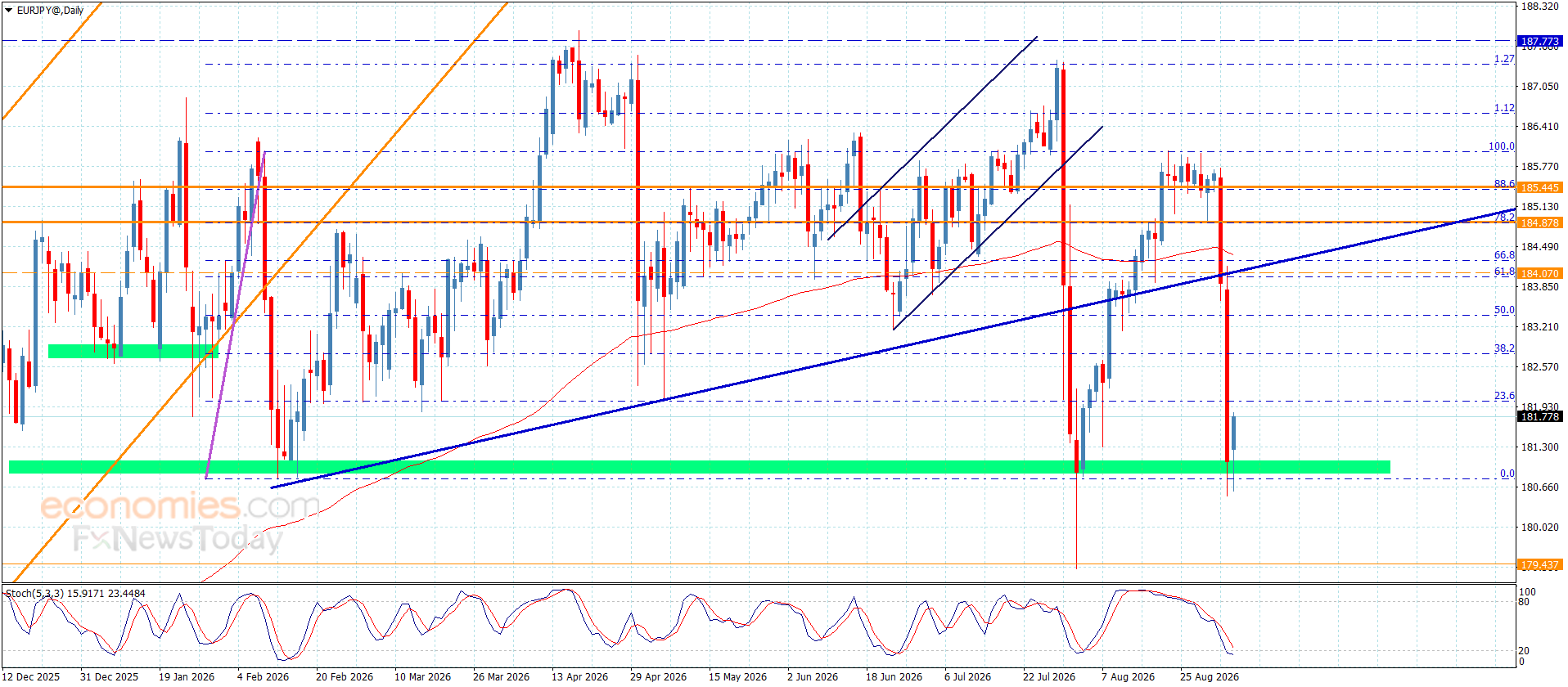
The EURJPY pair surpassed the previously suggested negative targets, facing 180.80 support to begin forming bullish corrective waves, to settle near 181.70 level.
The suggested scenario depends on the strength of the current support in the near trading, where its stability makes us expect renewing the attempts of recovering the previous losses by its rally towards 182.35 reaching 182.80, while facing new bearish pressures and reaching below the current support, which will force it to suffer more losses by reaching 179.90 and 179.45 initially.
The expected trading range for today is between 180.90 and 182.35
Trend forecast: Bullish
The GBP/USD pair attracts some buyers for the second straight day, though it lacks follow-through and remains capped near mid-1.3500s through the early European session on Friday. Spot prices, for now, seem to have stalled the recovery from a nearly three-week low, touched on Wednesday, as traders keenly await the release of the US Nonfarm Payrolls (NFP).
The closely watched US monthly employment details will be looked upon for more cues about the US Federal Reserve’s (Fed) future policy path, which, in turn, will drive the US Dollar (USD) and provide a fresh impetus to the GBP/USD pair. Heading into the key data risk, some repositioning trade helps the Greenback recover part of the previous day’s heavy losses to over a one-week low and acts as a headwind for the currency pair.
Apart from this, persistent geopolitical uncertainties amid renewed US-Iran hostilities and clashes over the Strait of Hormuz turn out to be another factor underpinning the safe-haven USD. However, reduced bets for a September Fed rate hike, along with soft US bond yields, hold back USD bulls from placing aggressive bets and might act as a tailwind for the GBP/USD pair, warranting caution before positioning for any meaningful downside.
From a technical perspective, the GBP/USD pair maintains a mild bullish bias above the 200-period Simple Moving Average (SMA) on the 4-hour chart and the 38.2% Fibonacci retracement of the July-August rally. Moreover, momentum indicators are constructive, with the Relative Strength Index hovering just above the neutral 50 level and the Moving Average Convergence Divergence (MACD) line sitting above the signal line in positive territory.
This hints that the upside pressure is gradually building as the 38.2% Fibo. at 1.3525 turns into nearby support. This is followed by the 200-period SMA around 1.3490 and the 50.0% retracement near 1.3476, with deeper cushions at the 61.8% and 78.6% levels at 1.3428 and 1.3359, respectively. On the topside, immediate resistance emerges at the 23.6% Fibo. at 1.3584, ahead of a more significant hurdle at the prior swing high region around 1.3681.
(The technical analysis of this story was written with the help of an AI tool. Know more.)
Nonfarm Payrolls (NFP) are part of the US Bureau of Labor Statistics monthly jobs report. The Nonfarm Payrolls component specifically measures the change in the number of people employed in the US during the previous month, excluding the farming industry.
The Nonfarm Payrolls figure can influence the decisions of the Federal Reserve by providing a measure of how successfully the Fed is meeting its mandate of fostering full employment and 2% inflation.
A relatively high NFP figure means more people are in employment, earning more money and therefore probably spending more. A relatively low Nonfarm Payrolls’ result, on the either hand, could mean people are struggling to find work.
The Fed will typically raise interest rates to combat high inflation triggered by low unemployment, and lower them to stimulate a stagnant labor market.
Nonfarm Payrolls generally have a positive correlation with the US Dollar. This means when payrolls’ figures come out higher-than-expected the USD tends to rally and vice versa when they are lower.
NFPs influence the US Dollar by virtue of their impact on inflation, monetary policy expectations and interest rates. A higher NFP usually means the Federal Reserve will be more tight in its monetary policy, supporting the USD.
Nonfarm Payrolls are generally negatively-correlated with the price of Gold. This means a higher-than-expected payrolls’ figure will have a depressing effect on the Gold price and vice versa.
Higher NFP generally has a positive effect on the value of the USD, and like most major commodities Gold is priced in US Dollars. If the USD gains in value, therefore, it requires less Dollars to buy an ounce of Gold.
Also, higher interest rates (typically helped higher NFPs) also lessen the attractiveness of Gold as an investment compared to staying in cash, where the money will at least earn interest.
Nonfarm Payrolls is only one component within a bigger jobs report and it can be overshadowed by the other components.
At times, when NFP come out higher-than-forecast, but the Average Weekly Earnings is lower than expected, the market has ignored the potentially inflationary effect of the headline result and interpreted the fall in earnings as deflationary.
The Participation Rate and the Average Weekly Hours components can also influence the market reaction, but only in seldom events like the “Great Resignation” or the Global Financial Crisis.
Domestic coffee prices today
Coffee prices today in the domestic market simultaneously increased by 1,000 VND/kg compared to the previous session. According to giacaphe. com, coffee prices on September 5th averaged 94,800 VND/kg.
In Gia Lai and Dak Lak, coffee prices were recorded at 94,700 VND/kg, an increase of 1,000 VND/kg.
In Lam Dong, coffee prices are still 94,200 VND/kg.
The old Dak Nong area recorded a level of 95,000 VND/kg, reversing to increase by 1,000 VND/kg. This is the highest level in today’s price list.
The USD/VND exchange rate according to Vietcombank was recorded at 25,845 VND/USD, down 30 VND/USD.
World coffee prices
In the world market, coffee prices increase and decrease interspersed.
According to Barchart, the September 2026 Robusta futures contract remained unchanged, anchored at the $3,298/ton mark. The November 2026 futures increased by $56/ton, listed at $3,430/ton. The term from January 2027 to May 2027 saw an increase of $55-57/ton, to $3,383 – $3,415/ton.
Similarly, the September 2026 Arabica futures contract closed the session at 324.35 cents/lb. The December 2026 term increased slightly by 0.25 US cents/lb, equivalent to 0.08%, raising the cost price to 295.60 cents/lb. Further forwards increased from 2.35 to 3.40 cents/lb, anchored in the 287.4 – 283.4 cents/lb range.
Assessments and forecasts
Arabica prices on the ICE exchange have fallen to a 5-week low, while Robusta fell to a 2.5-month low. This development reflects market concerns about the possibility of increased coffee supply to the market in the near future.
For Arabica, Brazil is a noteworthy factor as new crop yield prospects are improved. StoneX raises its 2026-2027 crop yield forecast to a record 77.2 million bags, 2.6% higher than the forecast made in March. The return of rainfall at the time coffee trees enter the flowering stage also creates more grounds for expectations of a favorable crop.
For the domestic market, in the short term, domestic coffee prices are likely to recover after a deep decline, however, the increase is not too sudden, continuing to accumulate around the area of 94,000 – 95,000 VND/kg.
The market is expected to maintain a probing state and can only clearly define the new trend when the first assessments of Vietnam’s actual harvest output next season begin to appear.