The main category of All News Articles.
You can use the search box below to find what you need.
[wd_asp id=1]
The main category of All News Articles.
You can use the search box below to find what you need.
[wd_asp id=1]
Platinum price resumed the previously suggested negative attack yesterday to surpass the suggested negative stations, to suffer big losses by reaching $1872.00 level, to form a quick positive rebound, attempting to recover some losses by targeting $2015.00 level.
Forming an extra barrier at $2045.00 level makes us expect renewing the negative attempts, to expect reaching near $1955.00, then attempt to press on the next support near $1865.00, while its rally above $2045.00 and holding above it will allow it to recover more losses to target $2085.00 level.
The expected trading range for today is between $1865.00 and $ 2040.00
Trend forecast: Bearish
The primary driver behind the price spike was a series of kinetic strikes on Iranian oil facilities and the subsequent expansion of the conflict. Reports confirmed Israeli airstrikes targeting Iran’s South Pars gas field, but the US and Qatar were not involved, Trump said late Wednesday.
In a retaliatory move that sent shockwaves through trading floors, Iran’s Islamic Revolutionary Guard Corps (IRGC) issued a formal warning that it would target oil installations in Saudi Arabia, the United Arab Emirates (UAE), and Qatar.
Because these three nations represent approximately 20–25% of global crude exports, the threat transformed a regional conflict into a systemic risk for the global economy.
Recent missile and drone attacks have caused major damage to energy facilities across several countries, some of the attacks are listed below:
Qatar: Missiles hit the world’s largest LNG (natural gas) plants and a major Shell facility, stopping production and causing European gas prices to spike.
Saudi Arabia: The military stopped several missiles and drones, but an aerial attack on a refinery in Yanbu briefly disrupted oil shipments.
Kuwait: A drone strike started a fire at a refinery, though it was contained.
For context, Iranian attacks have knocked out 17% of Qatar’s liquefied natural gas (LNG) export capacity, causing an estimated $20 billion in lost annual revenue and threatening supplies to Europe and Asia, QatarEnergy’s CEO told Reuters on Thursday.
QatarEnergy had declared force majeure on its entire output of LNG, after earlier attacks on its Ras Laffan production hub, which came under fire again on Wednesday.
In response to the rising tension, the Trump administration is reportedly considering sending thousands more US troops to the region to support ongoing operations.
The USD/JPY pair is up 0.4% to near 158.33 during the Asian trading session on Friday. The pair recovers after a sharp sell-off on Thursday, as the Japanese Yen (JPY) underperforms despite the Bank of Japan (BoJ) retaining its hawkish stance on the monetary policy outlook.
The table below shows the percentage change of Japanese Yen (JPY) against listed major currencies today. Japanese Yen was the strongest against the Euro.
| USD | EUR | GBP | JPY | CAD | AUD | NZD | CHF | |
|---|---|---|---|---|---|---|---|---|
| USD | 0.27% | 0.19% | 0.40% | -0.06% | 0.07% | -0.16% | 0.14% | |
| EUR | -0.27% | -0.08% | 0.13% | -0.32% | -0.19% | -0.42% | -0.12% | |
| GBP | -0.19% | 0.08% | 0.21% | -0.25% | -0.11% | -0.34% | -0.05% | |
| JPY | -0.40% | -0.13% | -0.21% | -0.43% | -0.32% | -0.55% | -0.23% | |
| CAD | 0.06% | 0.32% | 0.25% | 0.43% | 0.12% | -0.11% | 0.20% | |
| AUD | -0.07% | 0.19% | 0.11% | 0.32% | -0.12% | -0.23% | 0.07% | |
| NZD | 0.16% | 0.42% | 0.34% | 0.55% | 0.11% | 0.23% | 0.30% | |
| CHF | -0.14% | 0.12% | 0.05% | 0.23% | -0.20% | -0.07% | -0.30% |
The heat map shows percentage changes of major currencies against each other. The base currency is picked from the left column, while the quote currency is picked from the top row. For example, if you pick the Japanese Yen from the left column and move along the horizontal line to the US Dollar, the percentage change displayed in the box will represent JPY (base)/USD (quote).
BoJ Governor Kazuo Ueda said after the interest rate decision on Thursday, where they left interest rates unchanged at 0.75%, that a hike is possible if the Middle East conflicts-linked economic downturn proved to be short-lived.
In the monetary policy, BoJ officials warned of uncertainty surrounding the economic growth amid surging energy prices due to a joint assault by the United States (US) and Israel against Iran.
Meanwhile, the US Dollar (USD) gains ground after Thursday’s mayhem as the Federal Reserve (Fed) is expected to adopt an extended pause amid high inflation across the world. During the press time, the US Dollar Index (DXY), which gauges the Greenback’s value against six major currencies, trades 0.2% higher to near 99.35.
According to the CME FedWatch tool, the Fed is unlikely to cut interest rates during the year.
USD/JPY trades higher to near 158.33 during the press time. The near-term bias stays mildly bullish as price recovers after correcting to near the rising 20-day Exponential Moving Average near 157.50, keeping the broader uptrend structure intact after last week’s brief pullback toward 157.70. Momentum turns balanced with the 14-day Relative Strength Index (RSI) sliding into the 40.00-60.00 zone from the 60.00-80.00 range; however, the trend remains bullish.
Initial support emerges at the 20-day EMA around 157.50, followed by the March 5 low of 156.46, where a daily close below would open a deeper retracement toward the February 25 low of 155.35. On the topside, immediate resistance is seen at 159.00, ahead of the late-June high near 159.90, where rejection would reinforce range conditions, but a daily close above would confirm a renewed push toward the 160.50 area.
(The technical analysis of this story was written with the help of an AI tool.)
The Bank of Japan (BoJ) is the Japanese central bank, which sets monetary policy in the country. Its mandate is to issue banknotes and carry out currency and monetary control to ensure price stability, which means an inflation target of around 2%.
The Bank of Japan embarked in an ultra-loose monetary policy in 2013 in order to stimulate the economy and fuel inflation amid a low-inflationary environment. The bank’s policy is based on Quantitative and Qualitative Easing (QQE), or printing notes to buy assets such as government or corporate bonds to provide liquidity. In 2016, the bank doubled down on its strategy and further loosened policy by first introducing negative interest rates and then directly controlling the yield of its 10-year government bonds. In March 2024, the BoJ lifted interest rates, effectively retreating from the ultra-loose monetary policy stance.
The Bank’s massive stimulus caused the Yen to depreciate against its main currency peers. This process exacerbated in 2022 and 2023 due to an increasing policy divergence between the Bank of Japan and other main central banks, which opted to increase interest rates sharply to fight decades-high levels of inflation. The BoJ’s policy led to a widening differential with other currencies, dragging down the value of the Yen. This trend partly reversed in 2024, when the BoJ decided to abandon its ultra-loose policy stance.
A weaker Yen and the spike in global energy prices led to an increase in Japanese inflation, which exceeded the BoJ’s 2% target. The prospect of rising salaries in the country – a key element fuelling inflation – also contributed to the move.
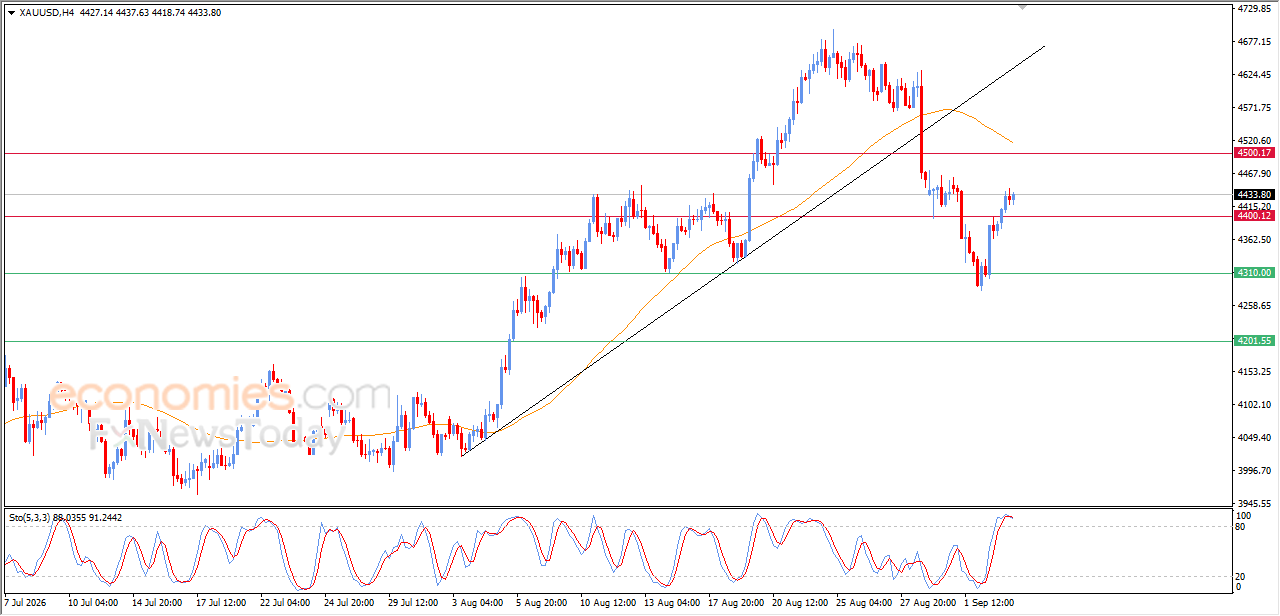
Gold (XAU) prices dropped sharply below $4,800 after the Federal Reserve held interest rates steady. On the other hand, escalating tensions in the Middle East triggered sudden shift in market sentiment. This move may seem surprising as rising geopolitical risk and energy driven inflation support gold. In my view, this divergence signals deeper shift in macro environment that could shape gold’s next major move. This article presents the key drivers, technical structure and critical levels that investors need to watch.
BitcoinWorld
EUR/USD Forecast: Critical 1.1400 Support Holds After ECB’s Decisive Policy Shift
FRANKFURT, March 2025 – The EUR/USD currency pair faces a critical technical juncture as the 1.1400 level emerges as decisive support following the European Central Bank’s latest policy announcement. Market participants now closely monitor whether this psychological and technical barrier will withstand mounting pressure from shifting monetary policy dynamics across Atlantic financial markets.
Technical analysts identify the 1.1400 level as a significant support zone for several compelling reasons. Firstly, this price point represents the 61.8% Fibonacci retracement level from the pair’s 2024 rally. Additionally, the 200-day moving average currently converges near this level, creating a powerful technical confluence. Historical price action further validates this zone’s importance, as it previously served as both resistance in early 2024 and support during the third quarter of the same year.
Market structure analysis reveals that a sustained break below 1.1400 would invalidate the current bullish market structure. Consequently, this would potentially open the door for further declines toward the 1.1250 support zone. Conversely, a successful defense of this level could trigger a technical rebound toward the 1.1550 resistance area. The Relative Strength Index currently hovers near oversold territory, suggesting limited downside momentum in the immediate term.
The European Central Bank’s March 2025 policy meeting delivered several significant developments that directly impact the euro’s valuation. Most notably, the Governing Council decided to maintain its key interest rates at current levels while announcing a gradual reduction in its balance sheet runoff pace. This decision reflects the ECB’s cautious approach amid persistent inflationary pressures in the services sector.
President Christine Lagarde emphasized during the press conference that the central bank remains data-dependent. She specifically highlighted concerns about wage growth and services inflation. The ECB’s updated economic projections revealed a modest downgrade to 2025 growth forecasts while maintaining inflation targets. Market participants interpreted these communications as moderately dovish, contributing to initial euro weakness.
The Federal Reserve’s current policy stance creates an important divergence that influences the EUR/USD pair. While the ECB maintains a cautious approach, the Federal Reserve has signaled potential rate cuts in the coming quarters. This policy divergence typically supports the U.S. dollar against the euro. However, recent weaker-than-expected U.S. economic data has tempered expectations for aggressive Fed easing.
The interest rate differential between the Eurozone and United States remains a crucial driver for the currency pair. Currently, the spread favors dollar-denominated assets, creating headwinds for euro appreciation. Market-implied probabilities suggest investors expect the ECB to maintain current rates through mid-2025 before considering any policy normalization.
Commitments of Traders reports reveal significant shifts in market positioning following the ECB announcement. Leveraged funds substantially reduced their net long euro positions, reflecting increased caution. Meanwhile, asset managers maintained relatively neutral exposure, suggesting institutional investors await clearer directional signals. The reduction in speculative positioning has contributed to decreased volatility in the currency pair.
Options market analysis provides additional insights into market expectations. Risk reversals, which measure the relative demand for calls versus puts, show increased demand for euro put options. This indicates growing concern about potential euro depreciation. However, the overall options skew remains within historical ranges, suggesting no extreme positioning exists currently.
Despite recent weakness, several fundamental factors continue to support the euro’s medium-term outlook. The Eurozone’s current account remains in substantial surplus, providing structural support for the currency. Additionally, improving economic indicators from Germany, particularly in manufacturing and exports, suggest potential economic stabilization. Energy security improvements across the continent have also reduced external vulnerability.
Inflation dynamics present a mixed picture for policymakers. While headline inflation has moderated significantly, core inflation remains stubbornly above target levels. Services inflation, in particular, continues to demonstrate persistence. The ECB’s cautious approach reflects these complex inflationary dynamics and their implications for monetary policy normalization.
Historical analysis reveals that the 1.1400 level has served as a pivotal technical level on multiple occasions. During the 2022-2023 period, this level marked the upper boundary of a multi-year trading range. The successful breach above this level in early 2024 represented a significant technical breakthrough. Now, the retest of this former resistance-turned-support represents a classic technical analysis scenario.
Previous ECB policy announcements provide valuable context for current market reactions. Historically, the euro has demonstrated increased volatility during the 24-hour period following major policy decisions. However, sustained directional moves typically require confirmation from subsequent economic data releases. The current market reaction appears consistent with this historical pattern.
Several global macroeconomic developments impact the EUR/USD outlook beyond direct monetary policy considerations. Geopolitical tensions, particularly in Eastern Europe and the Middle East, continue to influence risk sentiment and currency flows. Additionally, global growth differentials between major economic blocs create fundamental headwinds or tailwinds for currency pairs.
Commodity price dynamics, especially energy prices, significantly affect the euro due to Europe’s import dependency. Recent stabilization in natural gas prices has provided some relief for the Eurozone’s terms of trade. Meanwhile, China’s economic recovery pace influences European export prospects, creating indirect effects on euro demand.
Major financial institutions have published updated EUR/USD forecasts following the ECB meeting. Consensus estimates suggest a range-bound outlook for the coming quarters, with most analysts identifying 1.1400 as a critical support level. Investment banks cite the policy divergence theme as the primary driver of their forecasts, while acknowledging potential catalysts for euro strength.
Technical analysts emphasize the importance of monitoring price action around the 1.1400 level. A daily close below this support would likely trigger further selling pressure, while a successful defense could encourage short covering. Volume analysis suggests institutional participation remains elevated around this technical level, confirming its significance.
Several upcoming events and data releases could influence the EUR/USD trajectory. The Federal Reserve’s next policy meeting represents a particularly important catalyst, as any shift in U.S. monetary policy expectations would impact the interest rate differential. Additionally, Eurozone inflation data for March will provide crucial information about price pressures.
Political developments in both Europe and the United States create additional uncertainty. European Parliament elections scheduled for June 2024 could influence policy expectations, while U.S. presidential election dynamics may affect dollar sentiment. These political factors add layers of complexity to the fundamental outlook for the currency pair.
The EUR/USD forecast centers decisively on the 1.1400 support level following the European Central Bank’s latest policy decisions. Technical analysis confirms this level’s significance as a confluence of multiple important indicators. While the ECB’s cautious approach creates near-term headwinds for the euro, several fundamental factors provide underlying support. Market participants should monitor price action around this critical level closely, as a sustained break could signal further euro weakness. Conversely, successful defense of 1.1400 support may establish a foundation for potential euro recovery. The coming weeks will provide crucial evidence about which scenario will unfold in global currency markets.
Q1: Why is the 1.1400 level so important for EUR/USD?
The 1.1400 level represents a technical confluence including the 61.8% Fibonacci retracement, the 200-day moving average, and historical support/resistance. This combination creates a particularly significant technical zone that often determines medium-term direction.
Q2: How did the ECB’s latest decision specifically affect the euro?
The ECB maintained interest rates while signaling a slower balance sheet reduction pace. Markets interpreted this as moderately dovish, contributing to initial euro weakness. However, the central bank’s data-dependent approach means future decisions will respond to incoming economic information.
Q3: What would cause EUR/USD to break below 1.1400 support?
A sustained break below 1.1400 would likely require either significantly stronger U.S. economic data, more hawkish Federal Reserve communications, or weaker-than-expected Eurozone inflation and growth indicators. Technical breakdowns typically need fundamental catalysts.
Q4: How does the Federal Reserve’s policy compare to the ECB’s approach?
The Federal Reserve has signaled potential rate cuts while the ECB maintains a more cautious stance. This policy divergence typically supports the U.S. dollar, though recent weaker U.S. data has tempered expectations for aggressive Fed easing.
Q5: What time frame should traders watch for confirmation of direction?
Traders typically watch for a daily or weekly close below 1.1400 to confirm a breakdown. Intraday breaches often prove temporary. The coming weeks will provide important evidence as markets digest the ECB decision and upcoming economic data.
This post EUR/USD Forecast: Critical 1.1400 Support Holds After ECB’s Decisive Policy Shift first appeared on BitcoinWorld.
BitcoinWorld
GBP/JPY Forecast: Currency Pair Plummets as Safe-Haven Yen Surges on Intense Risk Aversion
The GBP/JPY currency pair experienced significant downward pressure in early 2025 trading sessions, slumping to multi-week lows as investors flocked to the Japanese yen amid intensifying global risk aversion. Market analysts now scrutinize this sharp movement, which reflects broader financial market anxieties and divergent central bank policy trajectories. Consequently, traders reassess their positions while institutional investors seek shelter in traditional safe-haven assets.
Recent trading sessions witnessed the GBP/JPY pair breaking below several key technical support levels. The pair declined approximately 2.8% from its monthly high, testing crucial Fibonacci retracement zones. Market data reveals increased trading volume during the sell-off, confirming genuine bearish sentiment rather than mere profit-taking. Furthermore, moving average convergences turned negative, signaling potential sustained downward momentum.
Technical indicators now paint a cautious picture for the currency pair. The Relative Strength Index (RSI) entered oversold territory briefly before modest recovery. Meanwhile, the Moving Average Convergence Divergence (MACD) histogram shows strengthening bearish momentum. Key support and resistance levels for GBP/JPY currently cluster around psychological price points that previously served as consolidation zones.
| Technical Level | Price Zone | Significance |
|---|---|---|
| Immediate Resistance | 188.50-189.00 | Previous support turned resistance |
| Primary Support | 185.00-185.50 | 200-day moving average convergence |
| Critical Breakdown | Below 184.80 | Opens path to 182.00 level |
The Japanese yen’s appreciation stems from multiple converging fundamental factors. Global equity markets faced substantial volatility as geopolitical tensions resurfaced in several regions. Additionally, disappointing economic data from major economies heightened recession concerns. Investors consequently reduced exposure to riskier assets and sought currency havens.
Bank of Japan policy expectations further influenced yen dynamics. Although the BOJ maintains its ultra-accommodative stance, market participants increasingly anticipate gradual normalization. Recent commentary from central bank officials suggested growing discomfort with prolonged yield curve control. This subtle shift in rhetoric provided additional support for the yen against risk-sensitive currencies.
Comparative interest rate expectations also favored the Japanese currency. The Bank of England faces mounting pressure to ease monetary policy amid softening UK economic indicators. Conversely, even modest BOJ tightening prospects created favorable interest rate differential movements for yen bulls. These macroeconomic crosscurrents significantly impacted the GBP/JPY exchange rate trajectory.
Financial market strategists emphasize the interconnected nature of recent GBP/JPY movements. “The yen traditionally functions as a barometer for global risk sentiment,” noted Dr. Akiko Tanaka, Chief Currency Strategist at Tokyo Financial Institute. “Current appreciation reflects genuine capital preservation efforts rather than speculative positioning.” Her analysis highlights how institutional flows disproportionately affect this currency pair during volatility episodes.
London-based forex analysts simultaneously point to structural vulnerabilities in the British pound. UK economic data continues to show mixed signals, with persistent inflation concerns balanced against weakening consumption patterns. This economic uncertainty limits the Bank of England’s policy flexibility, potentially creating sustained headwinds for sterling against more predictable currencies like the yen.
Historical correlation patterns provide additional context for current movements. The GBP/JPY pair typically exhibits heightened sensitivity during market stress periods, often amplifying broader risk-off movements. Current volatility measures indeed show elevated readings compared to three-month averages, suggesting sustained trader focus on this currency cross.
Widespread risk aversion manifested across multiple asset classes simultaneously. Equity markets experienced broad-based declines, particularly in technology and cyclical sectors. Commodity prices retreated as growth concerns dampened demand expectations. Even traditional hedges like gold witnessed unusual correlation patterns with risk assets.
The flight to safety extended beyond currencies into sovereign debt markets. Japanese government bond yields compressed despite global yield increases, demonstrating exceptional demand for Japanese assets. This capital flow dynamic naturally supported yen appreciation across all major currency pairs, with particularly pronounced effects on GBP/JPY due to sterling’s own vulnerabilities.
Several specific events triggered the latest risk-off episode:
Monetary policy divergence represents a crucial medium-term factor for GBP/JPY direction. The Bank of England maintains a delicate balancing act between persistent service-sector inflation and weakening economic activity. Recent meeting minutes revealed growing internal debate about appropriate policy stance, creating uncertainty that typically weighs on currency valuation.
The Bank of Japan meanwhile navigates its own policy normalization path. While incremental compared to other major central banks, even modest adjustments to yield curve control parameters could significantly impact yen valuation. Market participants closely monitor any signals about timing and magnitude of potential policy shifts, creating asymmetric sensitivity to BOJ communications.
Interest rate differential projections now favor yen appreciation against sterling through mid-2025. Forward rate agreements price in greater BOE easing than previously anticipated, while BOJ tightening expectations gradually increase. This convergence in rate expectations reduces the traditional yield advantage that supported GBP/JPY during previous expansion cycles.
Currency analysts examine historical precedents for similar GBP/JPY movements during risk aversion periods. The pair demonstrated comparable sensitivity during 2020 pandemic volatility and 2022 monetary policy transition phases. Recovery patterns typically involved extended consolidation periods rather than V-shaped rebounds, suggesting patience required for sustained reversal.
Seasonal factors may also influence near-term price action. Japanese fiscal year-end flows traditionally support yen demand during March, potentially extending current trends. Meanwhile, UK budget announcements scheduled for spring could provide catalysts for sterling direction. These calendar considerations add layers to technical and fundamental analysis.
Correlation analysis reveals strengthening relationship between GBP/JPY and global equity volatility indices. The 30-day correlation coefficient reached its highest level in twelve months, indicating synchronized movements across risk assets. This statistical relationship helps institutional investors construct more effective hedging strategies during turbulent periods.
The GBP/JPY forecast remains cautiously bearish amid persistent risk aversion and yen strength. Technical breakdowns below key support levels suggest further downside potential unless fundamental conditions improve substantially. Meanwhile, divergent central bank policy paths create structural headwinds for sterling against the Japanese currency. Traders should monitor global risk indicators and central bank communications for directional cues, while recognizing that volatility likely persists across currency markets. Ultimately, the currency pair’s trajectory will reflect broader financial market confidence and comparative economic resilience between the UK and Japan.
Q1: What caused the recent GBP/JPY decline?
The GBP/JPY pair slumped due to combined yen strength from global risk aversion and sterling weakness from UK economic uncertainty. Investors sought safe-haven assets amid geopolitical tensions and growth concerns.
Q2: How does Bank of Japan policy affect GBP/JPY?
Even modest Bank of Japan policy normalization expectations support yen appreciation. As the BOJ considers adjusting its yield curve control, while the Bank of England faces easing pressure, interest rate differentials shift against sterling.
Q3: What technical levels are important for GBP/JPY?
Key levels include resistance at 188.50-189.00 (previous support), primary support at 185.00-185.50 (200-day MA), and critical breakdown below 184.80 opening path to 182.00.
Q4: Is the yen considered a safe-haven currency?
Yes, the Japanese yen traditionally strengthens during market stress as investors repatriate capital to Japan’s stable financial system and current account surplus provides structural support.
Q5: What should traders monitor for GBP/JPY direction?
Traders should watch global equity volatility, UK economic data, Bank of England communications, Bank of Japan policy signals, and geopolitical developments affecting risk sentiment.
This post GBP/JPY Forecast: Currency Pair Plummets as Safe-Haven Yen Surges on Intense Risk Aversion first appeared on BitcoinWorld.
* For commercial use only
Based on your interests
Overview
4
Crude oil
6
Natural gas
7
Coal
6
Electricity
3
Uranium
2
Outlook
5
* For commercial use only
Based on your interests
EIA. (March 10, 2026). Spot prices for Brent crude oil from 2022 to 2024, with a forecast until 2027 (in U.S. dollars per barrel) [Graph]. In Statista. Retrieved March 19, 2026, from https://www.statista.com/statistics/409404/forecast-for-uk-brent-crude-oil-prices/?__sso_cookie_checker=failed
EIA. “Spot prices for Brent crude oil from 2022 to 2024, with a forecast until 2027 (in U.S. dollars per barrel).” Chart. March 10, 2026. Statista. Accessed March 19, 2026. https://www.statista.com/statistics/409404/forecast-for-uk-brent-crude-oil-prices/?__sso_cookie_checker=failed
EIA. (2026). Spot prices for Brent crude oil from 2022 to 2024, with a forecast until 2027 (in U.S. dollars per barrel). Statista. Statista Inc.. Accessed: March 19, 2026. https://www.statista.com/statistics/409404/forecast-for-uk-brent-crude-oil-prices/?__sso_cookie_checker=failed
EIA. “Spot Prices for Brent Crude Oil from 2022 to 2024, with a Forecast until 2027 (in U.S. Dollars per Barrel).” Statista, Statista Inc., 10 Mar 2026, https://www.statista.com/statistics/409404/forecast-for-uk-brent-crude-oil-prices/?__sso_cookie_checker=failed
EIA, Spot prices for Brent crude oil from 2022 to 2024, with a forecast until 2027 (in U.S. dollars per barrel) Statista, https://www.statista.com/statistics/409404/forecast-for-uk-brent-crude-oil-prices/?__sso_cookie_checker=failed (last visited March 19, 2026)
Spot prices for Brent crude oil from 2022 to 2024, with a forecast until 2027 (in U.S. dollars per barrel) [Graph], EIA, March 10, 2026. [Online]. Available: https://www.statista.com/statistics/409404/forecast-for-uk-brent-crude-oil-prices/?__sso_cookie_checker=failed
BitcoinWorld
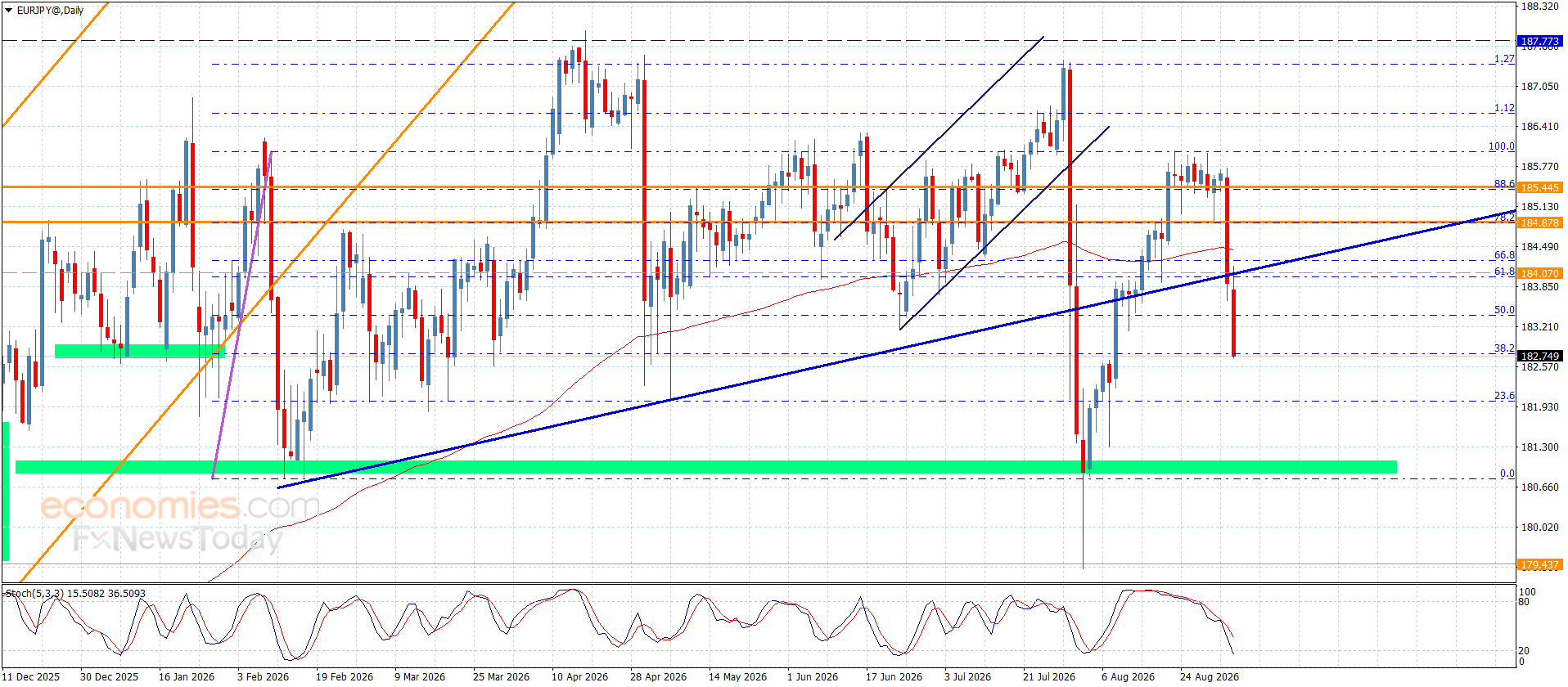
EUR/JPY Forecast: Critical Test Looms as Price Battles Key 183.50 Resistance
The EUR/JPY currency pair enters a decisive phase in early 2025, as its price action tests the upper boundary of a significant descending triangle pattern near the 183.50 level. This technical juncture represents a pivotal moment for traders and analysts, with the outcome likely to dictate the medium-term trajectory for the Euro against the Japanese Yen. Consequently, market participants globally are scrutinizing this consolidation for signals of the next major directional move.
A descending triangle is a classic chart pattern signaling a potential continuation of a prior downtrend or a bearish breakout. For EUR/JPY, this pattern has formed over several weeks. The structure features a flat, horizontal support level and a series of lower highs that create a descending resistance line. Currently, the pair is challenging this upper boundary near the 183.50 handle. A confirmed breakout above this descending trendline, especially on a daily closing basis, would invalidate the bearish pattern. Conversely, a rejection here could see price retreat toward the horizontal support, setting the stage for a subsequent breakdown.
Key technical indicators provide additional context for this setup. The 50-day and 200-day simple moving averages are converging, reflecting market indecision. Furthermore, the Relative Strength Index (RSI) is hovering near the 50 midline, showing neither overbought nor oversold conditions. This neutrality suggests the market is in a state of equilibrium, awaiting a fundamental catalyst. Volume analysis during the recent tests of resistance will be crucial for confirming the strength of any breakout or rejection.
To understand the current pattern’s significance, analysts often compare it to previous market structures. The table below outlines key technical characteristics of the current setup versus a similar consolidation observed in late 2024.
| Feature | Current Pattern (Q1 2025) | Previous Pattern (Q4 2024) |
|---|---|---|
| Pattern Type | Descending Triangle | Symmetrical Triangle |
| Key Resistance | ~183.50 (Descending) | ~181.80 (Static) |
| Key Support | ~181.00 (Horizontal) | ~179.50 (Ascending) |
| Duration (Weeks) | 6-8 | 5-7 |
| Preceding Trend | Sideways Consolidation | Moderate Uptrend |
The technical battle at 183.50 is fundamentally rooted in the monetary policy divergence between the European Central Bank (ECB) and the Bank of Japan (BoJ). In 2025, the ECB’s path remains a primary focus. The bank has signaled a cautious approach to further interest rate adjustments following its initial cutting cycle. Market consensus, as reflected in overnight index swaps, prices in a gradual normalization path. However, persistent concerns about regional growth and inflation metrics create uncertainty.
Conversely, the Bank of Japan continues its nuanced exit from ultra-accommodative policy. While it has abandoned negative interest rates and Yield Curve Control (YCC), its policy stance remains the most dovish among major central banks. The pace of future hikes is expected to be exceptionally slow. This enduring policy gap is the core fundamental tension driving EUR/JPY volatility. Key data points influencing this dynamic include:
According to recent Commitments of Traders (COT) reports from major exchanges, speculative positioning in EUR/JPY has become less extreme. Previously large net-long positions have been reduced, indicating that the market has taken profit and is reassessing the direction. This reduction in positioning risk often precedes a significant new trend. Several institutional analysts note that a clean break above 184.00 could trigger algorithmic buying and attract fresh capital. Alternatively, a failure here may see the pair target the 180.00 psychological support zone.
The broader risk environment in 2025 significantly impacts this cross. EUR/JPY often functions as a barometer for global risk sentiment due to the Euro’s moderate risk profile and the Yen’s traditional role as a safe-haven currency. Recent stability in global equity markets and commodity prices has provided a modest tailwind for the Euro. However, geopolitical tensions and concerns about debt sustainability in certain economies linger as potential catalysts for safe-haven flows into the Yen. This external risk factor adds a layer of complexity to the purely technical and policy-driven analysis.
Furthermore, real-world impacts extend beyond trading desks. For European exporters to Japan, a stronger Euro makes goods more expensive for Japanese buyers, potentially affecting trade volumes. For Japanese investors holding European assets, currency fluctuations can significantly amplify or erode returns. This interplay between financial markets and real economic activity underscores the importance of monitoring this currency pair.
The EUR/JPY forecast hinges on the outcome of the current test at the 183.50 resistance level. The descending triangle pattern presents a clear technical framework, while the fundamental backdrop of central bank policy divergence provides the underlying narrative. A confirmed breakout above this level would signal a shift in momentum and potentially open the path toward higher resistance zones. A rejection, however, would reinforce the pattern’s bearish implications and focus attention on key support levels near 181.00. Traders and analysts should monitor price action, volume, and upcoming central bank communications for confirmation of the next major directional move in this significant currency cross.
Q1: What is a descending triangle pattern in technical analysis?
A descending triangle is a bearish chart pattern characterized by a horizontal support level and a descending trendline of lower highs. It typically suggests consolidation before a potential breakdown, but a breakout above the descending resistance can invalidate the pattern.
Q2: Why is the 183.50 level specifically important for EUR/JPY?
The 183.50 level represents the approximate point where the current price action is testing the upper, descending trendline of the triangle. It has also acted as a previous area of resistance and support, giving it technical significance as a key pivot point for market sentiment.
Q3: How do ECB and BoJ policies currently affect EUR/JPY?
The ECB, while past its peak hawkishness, maintains higher interest rates than the BoJ. The BoJ is in the early stages of a very gradual policy normalization. This divergence in interest rates generally supports a stronger Euro against the Yen, making central bank communication a key driver.
Q4: What would a breakout above 183.50 signal for EUR/JPY?
A sustained daily close above the descending trendline near 183.50 would break the bearish structure of the triangle. This could trigger technical buying, with initial targets potentially near the 185.00 and 186.50 levels, depending on momentum and volume.
Q5: What are the main risks to this technical forecast?
The primary risks are unexpected shifts in central bank policy rhetoric, sudden changes in global risk sentiment favoring the safe-haven Yen, or economic data from the Eurozone or Japan that dramatically alters growth and inflation expectations.
This post EUR/JPY Forecast: Critical Test Looms as Price Battles Key 183.50 Resistance first appeared on BitcoinWorld.
Gold price is
in freefall. After spending the better part of 2026 consolidating near all-time
highs above $5,000, the yellow metal has lost approximately 6% in two
consecutive sessions, crashing through the psychologically critical $5,000
barrier on Wednesday and extending the decline to $4,700 per ounce on
Thursday, March 19, 2026, the lowest price since early February.
In this
article, I will break down the technical analysis of the XAU/USD, examine the
mechanics behind this week’s crash, and present the key gold price predictions
for 2026 , including where the real floor is if the selling continues. Based on
my 15 years of experience as an analyst and retail investor, here is what I am
watching.
Follow
me on X for real-time gold market analysis: @ChmielDk
Wednesday’s
FOMC decision was a hold, as expected – Polymarket had it at over 90%
probability and the market was fully prepared for no rate movement. What the
market was not prepared for was the hawkish tone of the dot
plot. The Fed trimmed its 2026 rate cut projections from two cuts to one,
citing hotter-than-expected producer inflation – February’s PPI came in
at +0.7%, well above consensus – and signalled that the Strait of
Hormuz-driven oil spike is creating inflation persistence that prevents easing.
The 10-year
Treasury yield jumped to 4.2%, the Dollar Index climbed toward 99.9, and gold –
a non-yielding asset whose entire bull thesis rested on falling real yields and
a weakening dollar – repriced accordingly.
As Dilin
Wu, Research Strategist at Pepperstone, frames it: “This sharp decline in
gold reflects a confluence of factors – large-scale risk asset liquidations, a
hawkish shift in Fed expectations, and a stronger dollar.” Crucially, he
views this as “a pricing logic adjustment rather than a reversal of the
long-term trend.”
The
technical break below the 50-day MA near $4,978 and below the $5,000
round level triggered momentum selling and profit-taking from a
crowded long, amplifying what was already a fundamental repricing.
The irony
noted by my earlier
gold analysis remains
fully applicable: gold is being sold during an active Middle East conflict
precisely because the oil shock from that conflict is now hurting
gold’s prospects by reigniting inflation and forcing the Fed to stay
hawkish. Higher oil means higher inflation means higher-for-longer rates means
gold suffers despite the geopolitical backdrop that should theoretically
support it.
Bloomberg
Intelligence’s Mike McGlone identified this paradox earlier this
week: “Gold’s best year in 2025 since 1979 – unequalled in a relatively
low-inflation environment – looks prescient ahead of 2026’s closure of the
Strait of Hormuz, with peak-price inklings.
Technical Outlook – What Follows Gold’s Warning? Store of Value’s Speculative Shift – Gold’s best year in 2025 since 1979 — unequaled in a relatively low-inflation environment — looks prescient ahead of 2026’s closure of the Strait of Hormuz, with peak-price inklings. The surge… pic.twitter.com/LhXk2U8EEy
— Mike McGlone (@mikemcglone11) March 16, 2026
The surge
to multiyear extremes vs. most moving averages and broad commodities may
suggest the store of value has shifted to a speculative risk asset.” That
framing – gold as speculative risk asset rather than pure safe haven – is the
most bearish structural argument currently circulating, and the two-day crash
gives it uncomfortable credibility.
As my
technical analysis shows, gold’s two-day, 6% decline has materially changed the
chart structure. The consolidation near the all-time highs that
I described in Tuesday’s analysis has been broken to the downside, and the move
has opened up a sequence of support targets that were previously theoretical
but are now directly in play.
The first
support I am watching is $4,550 – the late 2025 historical
highs that marked the peak before the January blow-off to $5,600. This was an
area of significant buying last year and should attract some demand on the
first test. Below that, $4,360 is the next meaningful level,
representing a prior consolidation zone and Fibonacci retracement target.
The level
that matters most on my entire gold chart is the 200-day EMA at
approximately $4,200. That is the boundary separating a bull trend from a
bear trend, and gold has not traded below it since late 2023. A sustained break
below $4,200 would be a genuinely significant technical event. It would open
the path toward $3,500 per ounce – the lows from which the
current near-uninterrupted rally to $5,600 began. From Thursday’s $4,700, that
scenario implies a further decline of over 25% and would
represent the most severe gold correction since the 2022 Fed tightening cycle.
Why gold price is going down today? Source: Tradingview.com
Analyst @Kb__Officiall had
been maintaining a bearish gold bias since last week, targeting $4,650
as the primary downside target while watching for a potential
retracement to $5,080 before the next leg lower – a level that has now been
blown past entirely.
Weekly Outlook – #Gold( $XAUUSD )
Maintaining my bearish bias on $Gold this week. Last week’s momentum supports the downside and I expect the downward movement to continue.
However, I’m watching for a retracement into the 5080 zone first. If price pulls back into that area, it… pic.twitter.com/Sy6FU54aY8
— K_B📈📉 (@Kb__Officiall) March 15, 2026
His
framework, which generated 12,100 views, is playing out faster than even he
anticipated.
|
Level |
Type |
Notes |
|
$5,600 |
All-time high (Jan 2026) |
Gold -16% from here |
|
$5,000 |
Broken psychological support |
Lost Wednesday, now resistance |
|
$4,700 |
Current price (Mar 19) |
-6% in |
|
$4,550 |
First bear target |
Late 2025 historical highs |
|
$4,360 |
Second bear target |
Prior consolidation zone |
|
$4,200 |
200-day |
Last below here: late 2023 |
|
$3,500 |
Extreme bear target |
2025 rally starting point, -25%+ |
As my earlier
silver analysis warned, silver amplifies gold’s moves in both directions – and Thursday’s
session is proving that rule. Silver has fallen more sharply than gold in
percentage terms, and according to the Saxo Bank commodities report from Ole
Hansen, “silver may face a deeper retracement” due to its
“higher sensitivity to economic growth and industrial demand, combined
with rising concerns that energy-driven inflation will dent global
activity.”
The crowded
speculative positions that built up during the January $121 spike are still
being unwound, and the broader risk-off tone is accelerating exits.
My silver
chart from Tuesday remains valid: the $80 support and 50 EMA are
the immediate battleground. A break below $70 – the lower
consolidation boundary – activates the path toward the 200-day MA at $60 and
ultimately the October 2025 historical highs at $54.
Dilin Wu of
Pepperstone adds that copper is also trading lower and “adding to growth
worries” – when industrial metals fall in unison, it signals that the
market is pricing in genuine demand destruction, not just a monetary policy
adjustment.
The 6%
two-day decline has not materially shifted the major institutional forecasts,
which were built on year-end rather than near-term targets. However, the
technical damage done to the chart warrants a full reassessment of the downside
scenarios.
|
Source |
Gold Target 2026 |
Notes |
|
My chart (extreme bear) |
$3,500 |
If 200 EMA at $4,200 breaks, -25%+ |
|
My chart (bear targets) |
$4,360 then $4,200 |
Sequential support levels |
|
@Kb__Officiall |
$4,650 |
Weekly downside target |
|
World Gold Council |
+5-15% from current |
$4,935-$5,405 scenario |
|
JP Morgan |
$5,000 (Q4 2026) |
Central bank buying thesis |
|
Goldman Sachs |
$6,000 |
Dollar weakness, rate cuts |
|
Robert Kiyosaki |
$35,000 |
One year |
Gold is
falling for the second consecutive session after Wednesday’s Federal Reserve
decision delivered a hawkish hold: rates were kept at 3.5%-3.75% while the dot
plot was revised to show only one rate cut in all of 2026, down from two.
Hotter-than-expected February PPI at +0.7% pushed Treasury yields to 4.2% and
the dollar toward 99.9, both direct headwinds for non-yielding gold.
As shown on
my chart, the sequential downside targets are $4,550 (late
2025 historical highs), then $4,360 (prior consolidation), and
then the 200-day EMA at $4,200 – the critical bull/bear
dividing line. A sustained break below $4,200 opens the path toward $3,500,
the starting point of the entire 2025-2026 rally, representing a decline of
over 25% from Thursday’s $4,700. @Kb__Officiall targets $4,650 as the
near-term downside with potential for further weakness, while Mike McGlone
warns that gold may have shifted from safe-haven to speculative risk asset.
Not
according to the institutional consensus. JP Morgan maintains its $5,000 Q4
2026 target, Goldman Sachs holds its $6,000 forecast, and Dilin Wu of
Pepperstone describes the current decline as “a pricing logic adjustment
rather than a reversal of the long-term trend.” The structural supports –
central bank buying, US fiscal deficits, and geopolitical risk – remain intact.
The
institutional range runs from the World Gold Council’s conservative 5-15%
upside scenario from current levels to Goldman Sachs’ $6,000 target and Robert
Kiyosaki’s extraordinary $35,000
post-bubble-bust forecast. JP Morgan’s base case of $5,000 by Q4 2026 is the most credible
near-term institutional target. On the bear side, my chart’s $3,500 extreme
scenario and @Kb__Officiall’s $4,650 near-term target represent the downside
framework.
Gold price is
in freefall. After spending the better part of 2026 consolidating near all-time
highs above $5,000, the yellow metal has lost approximately 6% in two
consecutive sessions, crashing through the psychologically critical $5,000
barrier on Wednesday and extending the decline to $4,700 per ounce on
Thursday, March 19, 2026, the lowest price since early February.
In this
article, I will break down the technical analysis of the XAU/USD, examine the
mechanics behind this week’s crash, and present the key gold price predictions
for 2026 , including where the real floor is if the selling continues. Based on
my 15 years of experience as an analyst and retail investor, here is what I am
watching.
Follow
me on X for real-time gold market analysis: @ChmielDk
Wednesday’s
FOMC decision was a hold, as expected – Polymarket had it at over 90%
probability and the market was fully prepared for no rate movement. What the
market was not prepared for was the hawkish tone of the dot
plot. The Fed trimmed its 2026 rate cut projections from two cuts to one,
citing hotter-than-expected producer inflation – February’s PPI came in
at +0.7%, well above consensus – and signalled that the Strait of
Hormuz-driven oil spike is creating inflation persistence that prevents easing.
The 10-year
Treasury yield jumped to 4.2%, the Dollar Index climbed toward 99.9, and gold –
a non-yielding asset whose entire bull thesis rested on falling real yields and
a weakening dollar – repriced accordingly.
As Dilin
Wu, Research Strategist at Pepperstone, frames it: “This sharp decline in
gold reflects a confluence of factors – large-scale risk asset liquidations, a
hawkish shift in Fed expectations, and a stronger dollar.” Crucially, he
views this as “a pricing logic adjustment rather than a reversal of the
long-term trend.”
The
technical break below the 50-day MA near $4,978 and below the $5,000
round level triggered momentum selling and profit-taking from a
crowded long, amplifying what was already a fundamental repricing.
The irony
noted by my earlier
gold analysis remains
fully applicable: gold is being sold during an active Middle East conflict
precisely because the oil shock from that conflict is now hurting
gold’s prospects by reigniting inflation and forcing the Fed to stay
hawkish. Higher oil means higher inflation means higher-for-longer rates means
gold suffers despite the geopolitical backdrop that should theoretically
support it.
Bloomberg
Intelligence’s Mike McGlone identified this paradox earlier this
week: “Gold’s best year in 2025 since 1979 – unequalled in a relatively
low-inflation environment – looks prescient ahead of 2026’s closure of the
Strait of Hormuz, with peak-price inklings.
Technical Outlook – What Follows Gold’s Warning? Store of Value’s Speculative Shift – Gold’s best year in 2025 since 1979 — unequaled in a relatively low-inflation environment — looks prescient ahead of 2026’s closure of the Strait of Hormuz, with peak-price inklings. The surge… pic.twitter.com/LhXk2U8EEy
— Mike McGlone (@mikemcglone11) March 16, 2026
The surge
to multiyear extremes vs. most moving averages and broad commodities may
suggest the store of value has shifted to a speculative risk asset.” That
framing – gold as speculative risk asset rather than pure safe haven – is the
most bearish structural argument currently circulating, and the two-day crash
gives it uncomfortable credibility.
As my
technical analysis shows, gold’s two-day, 6% decline has materially changed the
chart structure. The consolidation near the all-time highs that
I described in Tuesday’s analysis has been broken to the downside, and the move
has opened up a sequence of support targets that were previously theoretical
but are now directly in play.
The first
support I am watching is $4,550 – the late 2025 historical
highs that marked the peak before the January blow-off to $5,600. This was an
area of significant buying last year and should attract some demand on the
first test. Below that, $4,360 is the next meaningful level,
representing a prior consolidation zone and Fibonacci retracement target.
The level
that matters most on my entire gold chart is the 200-day EMA at
approximately $4,200. That is the boundary separating a bull trend from a
bear trend, and gold has not traded below it since late 2023. A sustained break
below $4,200 would be a genuinely significant technical event. It would open
the path toward $3,500 per ounce – the lows from which the
current near-uninterrupted rally to $5,600 began. From Thursday’s $4,700, that
scenario implies a further decline of over 25% and would
represent the most severe gold correction since the 2022 Fed tightening cycle.
Why gold price is going down today? Source: Tradingview.com
Analyst @Kb__Officiall had
been maintaining a bearish gold bias since last week, targeting $4,650
as the primary downside target while watching for a potential
retracement to $5,080 before the next leg lower – a level that has now been
blown past entirely.
Weekly Outlook – #Gold( $XAUUSD )
Maintaining my bearish bias on $Gold this week. Last week’s momentum supports the downside and I expect the downward movement to continue.
However, I’m watching for a retracement into the 5080 zone first. If price pulls back into that area, it… pic.twitter.com/Sy6FU54aY8
— K_B📈📉 (@Kb__Officiall) March 15, 2026
His
framework, which generated 12,100 views, is playing out faster than even he
anticipated.
|
Level |
Type |
Notes |
|
$5,600 |
All-time high (Jan 2026) |
Gold -16% from here |
|
$5,000 |
Broken psychological support |
Lost Wednesday, now resistance |
|
$4,700 |
Current price (Mar 19) |
-6% in |
|
$4,550 |
First bear target |
Late 2025 historical highs |
|
$4,360 |
Second bear target |
Prior consolidation zone |
|
$4,200 |
200-day |
Last below here: late 2023 |
|
$3,500 |
Extreme bear target |
2025 rally starting point, -25%+ |
As my earlier
silver analysis warned, silver amplifies gold’s moves in both directions – and Thursday’s
session is proving that rule. Silver has fallen more sharply than gold in
percentage terms, and according to the Saxo Bank commodities report from Ole
Hansen, “silver may face a deeper retracement” due to its
“higher sensitivity to economic growth and industrial demand, combined
with rising concerns that energy-driven inflation will dent global
activity.”
The crowded
speculative positions that built up during the January $121 spike are still
being unwound, and the broader risk-off tone is accelerating exits.
My silver
chart from Tuesday remains valid: the $80 support and 50 EMA are
the immediate battleground. A break below $70 – the lower
consolidation boundary – activates the path toward the 200-day MA at $60 and
ultimately the October 2025 historical highs at $54.
Dilin Wu of
Pepperstone adds that copper is also trading lower and “adding to growth
worries” – when industrial metals fall in unison, it signals that the
market is pricing in genuine demand destruction, not just a monetary policy
adjustment.
The 6%
two-day decline has not materially shifted the major institutional forecasts,
which were built on year-end rather than near-term targets. However, the
technical damage done to the chart warrants a full reassessment of the downside
scenarios.
|
Source |
Gold Target 2026 |
Notes |
|
My chart (extreme bear) |
$3,500 |
If 200 EMA at $4,200 breaks, -25%+ |
|
My chart (bear targets) |
$4,360 then $4,200 |
Sequential support levels |
|
@Kb__Officiall |
$4,650 |
Weekly downside target |
|
World Gold Council |
+5-15% from current |
$4,935-$5,405 scenario |
|
JP Morgan |
$5,000 (Q4 2026) |
Central bank buying thesis |
|
Goldman Sachs |
$6,000 |
Dollar weakness, rate cuts |
|
Robert Kiyosaki |
$35,000 |
One year |
Gold is
falling for the second consecutive session after Wednesday’s Federal Reserve
decision delivered a hawkish hold: rates were kept at 3.5%-3.75% while the dot
plot was revised to show only one rate cut in all of 2026, down from two.
Hotter-than-expected February PPI at +0.7% pushed Treasury yields to 4.2% and
the dollar toward 99.9, both direct headwinds for non-yielding gold.
As shown on
my chart, the sequential downside targets are $4,550 (late
2025 historical highs), then $4,360 (prior consolidation), and
then the 200-day EMA at $4,200 – the critical bull/bear
dividing line. A sustained break below $4,200 opens the path toward $3,500,
the starting point of the entire 2025-2026 rally, representing a decline of
over 25% from Thursday’s $4,700. @Kb__Officiall targets $4,650 as the
near-term downside with potential for further weakness, while Mike McGlone
warns that gold may have shifted from safe-haven to speculative risk asset.
Not
according to the institutional consensus. JP Morgan maintains its $5,000 Q4
2026 target, Goldman Sachs holds its $6,000 forecast, and Dilin Wu of
Pepperstone describes the current decline as “a pricing logic adjustment
rather than a reversal of the long-term trend.” The structural supports –
central bank buying, US fiscal deficits, and geopolitical risk – remain intact.
The
institutional range runs from the World Gold Council’s conservative 5-15%
upside scenario from current levels to Goldman Sachs’ $6,000 target and Robert
Kiyosaki’s extraordinary $35,000
post-bubble-bust forecast. JP Morgan’s base case of $5,000 by Q4 2026 is the most credible
near-term institutional target. On the bear side, my chart’s $3,500 extreme
scenario and @Kb__Officiall’s $4,650 near-term target represent the downside
framework.