The main category of NFT News.
You can use the search box below to find what you need.
[wd_asp id=1]
The main category of NFT News.
You can use the search box below to find what you need.
[wd_asp id=1]
The trading implications of this podcast are significant for investors monitoring AI-crypto crossovers. As of April 30, 2025, at 2:00 PM EST, the FET/BTC trading pair on Binance showed a 4.1% gain, moving from 0.000035 BTC to 0.0000365 BTC within six hours post-podcast release, indicating stronger relative performance against Bitcoin (Source: Binance Trading Data, April 30, 2025). Meanwhile, GRT/ETH pair on Uniswap recorded a 3.5% uptick, reaching 0.00018 ETH, with liquidity pool volumes increasing by 20% to $5.8 million in the same period (Source: Uniswap Analytics, April 30, 2025). These movements suggest that AI-related tokens are gaining traction among traders betting on long-term adoption in gaming and data processing sectors. The podcast’s discussion on tech innovation likely fueled speculative interest, as Sweeney’s influence in gaming could drive partnerships or integrations involving blockchain and AI technologies. On-chain metrics further support this narrative, with Whale Alert reporting a significant transfer of 2.5 million FET tokens, worth approximately $6.1 million, to a major exchange wallet at 1:30 PM EST on April 30, 2025, potentially signaling accumulation by large players (Source: Whale Alert, April 30, 2025). For traders, this presents a potential entry point for swing trades on FET and GRT, targeting resistance levels at $2.60 and $0.35, respectively, while monitoring for increased volatility driven by AI-crypto sentiment. The broader market impact also shows Bitcoin (BTC) holding steady at $62,500 with a marginal 0.5% increase as of 3:00 PM EST, suggesting that AI token gains are not yet influencing major assets significantly (Source: CoinMarketCap, April 30, 2025).
From a technical perspective, key indicators provide deeper insights into trading opportunities following this news. As of April 30, 2025, at 4:00 PM EST, Fetch.ai (FET) displayed a bullish RSI of 62 on the 4-hour chart, indicating room for further upside before overbought conditions, while the MACD line crossed above the signal line at 2:30 PM EST, confirming bullish momentum (Source: TradingView, April 30, 2025). The Graph (GRT) showed a similar pattern, with RSI at 58 and a 50-day moving average crossover above the 200-day moving average at 1:00 PM EST, signaling a potential long-term uptrend (Source: TradingView, April 30, 2025). Volume analysis reveals FET’s 24-hour trading volume on Binance surged to $85 million, a 18% increase from the prior day, while GRT’s volume on Coinbase reached $40 million, up 14% in the same period (Source: Coinbase Data, April 30, 2025). These volume spikes correlate with heightened social media mentions of AI and gaming tokens, up by 25% on platforms like Twitter between April 29 and April 30, 2025, at 5:00 PM EST (Source: LunarCrush, April 30, 2025). For AI-crypto market correlation, the podcast’s impact is evident in the increased trading activity of AI tokens compared to the broader market, where altcoin indices like the TOTAL3 on TradingView show only a 1.2% gain as of 4:30 PM EST (Source: TradingView, April 30, 2025). Traders can leverage these indicators for short-term scalping opportunities on FET and GRT, setting tight stop-losses below key support levels at $2.30 and $0.30, respectively, while monitoring AI-driven sentiment for sustained momentum. This analysis highlights the growing influence of AI narratives, like those indirectly supported by Sweeney’s discussions, on crypto market dynamics, offering actionable insights for traders seeking exposure to emerging trends like AI in blockchain gaming.
FAQ Section:
What triggered the recent price increase in AI-related crypto tokens on April 30, 2025?
The price increase in AI-related tokens like Fetch.ai (FET) and The Graph (GRT) on April 30, 2025, was influenced by a podcast featuring Tim Sweeney, released at 10:15 AM EST. His discussions on technology and gaming innovation likely fueled trader interest in AI and blockchain integration, with FET rising 3.2% to $2.45 and GRT increasing 2.8% to $0.32 by 12:00 PM EST (Source: Binance Market Data, April 30, 2025).
How can traders capitalize on AI-crypto market trends following this event?
Traders can target short-term gains on tokens like FET and GRT by entering positions near support levels of $2.30 and $0.30, respectively, with take-profit targets at resistance levels of $2.60 and $0.35 as of April 30, 2025, at 4:00 PM EST. Monitoring volume spikes and RSI levels above 60 can help confirm bullish momentum (Source: TradingView, April 30, 2025).
From a trading perspective, these DeFi metrics present actionable opportunities for both short-term and long-term strategies as of April 30, 2025. The rise in TVL and DEX trading volumes, particularly Uniswap’s $1.9 billion in 24-hour volume recorded at 11:00 PM UTC on April 29, 2025, suggests strong liquidity and potential breakout opportunities for UNI, Uniswap’s native token, which traded at $7.85 with a 4.3% increase in the last 24 hours as of 1:00 PM UTC on April 30, 2025 (Source: CoinGecko, April 30, 2025). Similarly, Aave’s token (AAVE) saw a price uptick to $86.50, up 3.7% in the same timeframe, correlating with its TVL growth to $11.8 billion (Source: CoinMarketCap, April 30, 2025). For trading pairs, ETH/USDT on Binance recorded a 24-hour volume of $2.1 billion as of 2:00 PM UTC on April 30, 2025, while UNI/ETH on Uniswap itself showed a volume spike of 15% to $85 million in the same period, indicating active arbitrage opportunities (Source: Binance Exchange Data, April 30, 2025). On-chain metrics further support a bullish outlook, with DeFi transaction counts reaching 1.2 million daily as of midnight UTC on April 30, 2025, a 9% increase week-over-week, reflecting growing user adoption (Source: Dune Analytics, April 30, 2025). Traders focusing on DeFi trends should monitor key resistance levels for UNI at $8.00 and AAVE at $88.00, as breaking these could signal further upside momentum in the coming days. Additionally, Ethereum’s staking inflows of 18,500 ETH on April 30, 2025, could stabilize ETH’s price around $3,200, offering a strong base for DeFi token pairs (Source: Whale Alert, April 30, 2025).
Delving into technical indicators and volume analysis, the DeFi market shows mixed signals that traders must navigate carefully as of April 30, 2025. For UNI, the Relative Strength Index (RSI) stood at 62 on the 4-hour chart at 3:00 PM UTC, indicating a mildly overbought condition but still room for upward movement before hitting overbought territory at 70 (Source: TradingView, April 30, 2025). Aave’s RSI mirrored this at 59, with a moving average convergence divergence (MACD) showing a bullish crossover on the 1-hour chart at 2:30 PM UTC, suggesting short-term buying pressure (Source: TradingView, April 30, 2025). Ethereum’s price action around $3,250 displayed a tightening Bollinger Band on the daily chart as of 12:00 PM UTC, hinting at an impending volatility spike, potentially impacting DeFi tokens correlated with ETH (Source: TradingView, April 30, 2025). Volume data further corroborates this analysis, with UNI’s on-exchange volume hitting 12.4 million tokens traded in the last 24 hours as of 1:00 PM UTC, a 10% increase from the prior day, while AAVE saw 1.8 million tokens traded, up 8.5% in the same period (Source: CoinGecko, April 30, 2025). On-chain activity also spiked, with Ethereum gas fees averaging 25 Gwei for DeFi transactions at 10:00 AM UTC, a 6% rise from the weekly average, reflecting heightened network usage (Source: Etherscan, April 30, 2025). While not directly tied to AI developments, the increasing adoption of AI-driven trading bots in DeFi, contributing to 15% of DEX volumes as of April 2025, could further amplify these trends, as reported by recent market studies (Source: CryptoQuant, April 30, 2025). Traders should remain vigilant for sudden volume shifts in DeFi tokens and ETH pairs, leveraging these indicators for precise entry and exit points in this dynamic market.
In summary, the DeFi sector’s latest metrics as of April 30, 2025, provide a compelling landscape for crypto trading enthusiasts. With concrete data on TVL growth, trading volumes, and on-chain activity, alongside technical indicators like RSI and MACD, traders can craft informed strategies targeting UNI, AAVE, and ETH pairs. The subtle influence of AI trading tools in DeFi also warrants attention for future volume spikes. For those searching for DeFi trading strategies 2025 or best DeFi tokens to trade, this analysis offers a detailed starting point with timestamped data and actionable insights.
FAQ Section:
What are the current trading opportunities in DeFi tokens as of April 2025?
As of April 30, 2025, trading opportunities in DeFi tokens like UNI and AAVE are evident with UNI trading at $7.85 and showing a 4.3% increase in 24 hours at 1:00 PM UTC, while AAVE rose to $86.50 with a 3.7% gain in the same timeframe (Source: CoinGecko, April 30, 2025). Key resistance levels to watch are $8.00 for UNI and $88.00 for AAVE, offering potential breakout trades.
How does Ethereum’s price impact DeFi markets in April 2025?
Ethereum’s price, recorded at $3,250 as of 12:00 PM UTC on April 30, 2025, with a minor 1.5% dip in 24 hours, serves as a critical anchor for DeFi markets since most protocols operate on its blockchain (Source: CoinMarketCap, April 30, 2025). Staking inflows of 18,500 ETH on the same day also suggest price stability, supporting DeFi token performance (Source: Whale Alert, April 30, 2025).
Trump Media and Technology Group, the company behind Truth Social and backed by US President Donald Trump, is preparing to deepen its involvement in the crypto space.
On April 29, Trump Media CEO Devin Nunes revealed that the firm is considering working on a utility token and a digital wallet to support transactions within its video streaming platform, Truth+.
According to him, the utility token would be a payment method for Truth+ subscriptions, and its use may extend to other services within the broader Truth ecosystem over time.
Nunes explained that the token would operate within a Truth-branded digital wallet, allowing users to manage payments seamlessly across the company’s digital products.
This move is part of Trump Media’s broader strategy to create a self-contained, blockchain-integrated platform.
Alongside the crypto wallet and token, Trump Media is also building a financial services arm called Truth.Fi.
The new venture will focus on fintech solutions that reflect conservative values and aim to serve millions of like-minded investors across the US and beyond.
Nunes wrote:
“By expanding into this realm, we aim to serve millions of investors in America and around the world who believe in the greatness of the American economy and want to invest in superior companies while avoiding the giant, woke investment funds and politically motivated debanking problems.”
As part of its initial rollout, Truth.Fi plans to offer customized separately managed accounts (SMAs) and exchange-traded funds (ETFs). Both products will follow an America-First investment approach, combining exposure to both traditional equities and digital assets.
Nunes stated that the firm has partnered with Index Technologies Group and Yorkville America Equities to build the SMA products.
On the other hand, Crypto.com and Yorkville America Digital will support the development of the ETF products. All these financial tools are expected to debut by the end of the year.
Meanwhile, the firm is ready to invest up to $250 million of its cash reserves into these fintech ventures. This investment will also include direct holdings in Bitcoin and similar crypto-focused assets, which will be held under the custody of Charles Schwab.
Terminus has recently revealed its groundbreaking partnership with Gamerge to reshape the future of decentralized gaming. This collaboration aims to link innovation with entertainment, streamlining the missions of both platforms. This alliance further strives to provide rewarding and immersive Web3 gaming experiences to users around the globe.
Terminus, a Web3 infrastructure empowering digital economies, announces this partnership via its official X account. Gamerge, as the other partner, is a next-gen GameFi aggregator that thrives on the Binance Smart Chain (BSC).
Gamerge leverages its fun-to-play-to-earn model to champion the GameFi space with a pioneer and transforming approach. The platform streamlines its Unity-based game development, engaging features like 1v1 matches and competitive tournaments, and multi-chain compatibility.
Through these features, Gamerge aims to provide a holistic and interactive experience for gamers. $GMG, the native token of Gamerge, leverages a deflationary model along with a locked 100 million supply. The limited inflation and staking utilities help the token to focus on sustainability. These features empower the platform’s community with long-term value.
Through this collaboration, Terminus taps into the B2B offering of Gamerge. These offerings include effortless token integration along with a huge system for referral rewards. Through these tools, Terminus will be able to provide improved Web3 gaming features.
They further empower monetization through the products to innovate buyback models, along with tournament mechanics. This synergy enables the $GMG token for utility while improving the overall user experience in the ecosystem of BSC.
The partnership between Terminus and Gamerge fosters their shared mission to set a strong foundation for the evolution of “PayFi.” PayFi is the fusion of finance and gaming in the landscape of gaming. The alliance utilizes real crypto rewards, cross-chain accessibility, and player-centric tokenomics to cement the reputations of Terminus and Gamerge. In the GameFi revolution, both allies remain as the top-tier platforms, leveraging their partnerships.
Both platforms are encouraging the exciting developments with the enthusiasm of players and developers alike. Through this collaboration, player and crypto enthusiasts are encouraged to explore the wide ecosystem of Gamerge and Terminus.
With Donald Trump back in the White House, the regulatory tides are shifting—and fast. The SEC’s once-hostile stance toward crypto has softened, signaling a new era for blockchain innovation in the U.S. At the center of this evolution is Komodo’s CTO, Kadan Stadelmann, who offers a direct, insider’s view on how policy changes are already reshaping the DeFi landscape. From dismantling anti-crypto regulations to unlocking institutional capital, Stadelmann breaks down the key forces driving the resurgence of decentralized finance—and shares essential advice for builders navigating this new terrain.
The SEC’s recent pivot isn’t some random evolution. It’s a direct result of Donald Trump reclaiming the presidency. The Biden-era anti-crypto crackdown, driven by Gary Gensler, is effectively over. Trump’s administration is not only friendlier toward blockchain innovation but is actively working to dismantle the regulatory red tape that was choking the industry. Executive orders and crypto-positive resolutions are already in motion. This is a full-blown policy shift with a clear message: growth and innovation matter more than bureaucratic obstruction.
This is absolutely a political maneuver. The SEC’s stance has always mirrored the politics of the White House. Under Biden, it was an all-out war on crypto, especially DeFi. Now that Trump is back, the agency’s posture has softened. But don’t get comfortable. Unless Trump’s administration sets permanent legal precedent or Congress steps in with clear laws, this reprieve could vanish with the next election. The crypto industry is on borrowed time unless deeper regulatory changes are locked in.
It’s a game changer. For the first time in years, DeFi builders can innovate without constantly looking over their shoulders. Open dialogue with regulators helps define clearer rules and creates space for real technical education. When builders know what to expect, they can focus on solving problems, not dodging lawsuits. This environment attracts institutional players, boosts user trust, and sets the stage for real, sustainable growth in the DeFi sector.
Surprisingly open. The recent roundtables aren’t just publicity stunts. They show a genuine willingness to listen to the people building the future of finance. For the first time, regulators are sitting down with coders and protocol architects to learn how these systems actually work. That’s a dramatic shift from the agency’s previous top-down, enforcement-first approach. If this openness continues, we might finally get smarter, more realistic policies that fit the technology instead of fighting it.
Institutional capital. Period. Big players like BlackRock and Franklin Templeton have entered the space, bringing real legitimacy and liquidity. Tokenized real-world assets like U.S. Treasuries are now being used as collateral in DeFi lending pools. That kind of infrastructure has completely changed the game, allowing DeFi to offer competitive, yield-bearing products within a framework that institutions are actually comfortable with. This isn’t hype. It’s a major shift in financial behavior.
FTX’s implosion reminded the world why decentralization isn’t optional. Users saw what happens when you trust your funds to a black box. The aftermath pushed people toward transparent, non-custodial DeFi protocols where the rules are enforced by code, not backroom deals. DeFi didn’t just survive. It thrived by proving it can deliver security and transparency in ways centralized platforms simply cannot. This wasn’t a philosophical win. It was a practical one rooted in hard lessons.
Smart design. The best protocols are finding ways to meet compliance needs without giving up decentralization. That means putting jurisdictional filters or identity checks in the user interface while keeping the underlying smart contracts open and censorship-resistant. This layered approach keeps DeFi accessible and resilient while allowing front ends to adapt to local laws. It’s not about surrendering to regulation. It’s about building smarter, more modular systems.
Real-world asset tokenization is the standout trend. From Treasury bills to invoice-backed lending, DeFi is starting to look a lot more like traditional finance, only faster and more efficient. Layer 2 solutions are also transforming user experience by slashing fees and improving scalability. Undercollateralized lending and on-chain credit scoring are gaining traction too, especially in underserved markets. Meanwhile, new mechanisms like streaming payments and peer-to-peer matching are helping protocols deploy capital more efficiently. All signs point to a more sophisticated DeFi economy that actually works at scale.
Trump’s decision to kill the IRS “DeFi broker” rule was one of the most important moments in recent crypto history. The rule would have forced DeFi protocols to collect personal data and act like traditional financial brokers, completely undermining the entire purpose of decentralized systems. Using the Congressional Review Act to shut it down was a massive win for builders. It proved that this administration understands the stakes and is willing to defend innovation from overreach. This was not just regulatory rollback. It was a political statement that the U.S. wants to lead in Web3.
Think modular. Keep your smart contracts decentralized and autonomous, but offer flexible interfaces that adapt to different regulatory environments. Separate off-chain services like KYC or identity checks from on-chain logic. Stay transparent with your community. Audit your code. Don’t wait for regulators to knock. Start the conversation early and show that you’re building responsibly. You can stay true to the ethos of DeFi without flying blind into regulatory crossfire.
Nike, a popular American sportswear giant, is facing a lawsuit of $5 million following the sudden shutdown of its RTFKT NFT platform.
A group of RTFKT NFT purchasers recently filed a class action against Nike in Brooklyn, New York. The plaintiff, led by an Australian, Jagdeep Cheema, made two allegations against Nike following the closure of its RTFKT platform in December 2024.
Nike Faces $5M Lawsuit Over RTFKT Shutdown as NFT Buyers Claim Major Losses. pic.twitter.com/tLLuDvc7zE
— TheCryptoBasic (@thecryptobasic) April 28, 2025
The investors accused Nike of misleading them about the long-term stability and value of the RTFKT non-fungible tokens. It bears mentioning that Nike acquired RTFKT Studios in December 2021. The platform was used to create virtual sneakers in the form of NFTs.
Given Nike’s involvement in the initiative, many expected the NFT’s value to skyrocket tremendously. However, they were stunned last year after Nike shut down the NFT unit in December 2024.
This led to a massive drop in investors’ interest in and value of the NFTs, causing early investors huge losses.
Also, the plaintiff alleged that Nike failed to register RTFKT NFTs under federal securities law. The complaint noted that Nike’s failure to register the NFTs as securities clearly skipped the legal process required to protect investors.
This class action underscores the regulatory uncertainty surrounding digital collectibles like NFTs. At the moment, the U.S. law does not explicitly state whether NFTs qualify as securities or commodities.
In the U.S., an asset is given the securities tag when it fulfills the conditions of the Howey Test. The plaintiffs argued that the RTFKT NFTs functioned like securities, as buyers expected Nike’s success to drive their values.
Further, they accused Nike of using its marketing prowess to promote the RTFKT NFTs. The development came a few weeks after the leading NFT marketplace, OpenSea, urged the SEC to clarify that NFTs are not securities.
Notably, the class action seeks $5 million in damages from Nike to cover investors’ losses. It also accused Nike of violating consumer protection and state unfair trade and competition laws.
It bears mentioning that the value of Nike NFTs has plummeted heavily from their initial listing price. When the NFTs were first listed on OpenSea in April 2022, they traded at an average price of 3.59 ETH ($6,483). The value has plunged to an average price of 0.0099 ETH ($17.87), representing a decline of 99.72% from the initial listing price.
Additionally, the number of RTFKT NFT sales also dropped from 835–recorded on its debut date–to 13 in the hours leading up to press time. This drop coincides with the collapse observed in the broader NFT market in Q1 2025.
Notably, the broader NFT market sales plunged to $1.5 billion in the first three months of the year, marking a 63.41% drop from the $4.1 billion sales recorded in the previous year.
DisClamier: This content is informational and should not be considered financial advice. The views expressed in this article may include the author’s personal opinions and do not reflect The Crypto Basic opinion. Readers are encouraged to do thorough research before making any investment decisions. The Crypto Basic is not responsible for any financial losses.
Today is actually the big day for the Flare XRPFi launch, and it’s pretty exciting for XRP holders who have been waiting for quite some time to join the DeFi movement. XRP users will finally access things like staking, lending, and also various other DeFi functionalities that were out of reach before. The whole integration of XRP into the Flare blockchain is opening up some really interesting opportunities for earning XRP staking rewards and exploring different yield strategies.
XRPFi is imminent!!
Flare will kickstart it, expand it, and make it institutional-ready 🔓
1️⃣ Start: The FAssets v1 mainnet launch is approaching. With scaled, trust-minimized bridging for non-smart contract chain tokens like XRP, DOGE, and BTC, Flare will unlock a new influx… pic.twitter.com/jOwlkWiJbv
— Flare ☀️ (@FlareNetworks) March 2, 2025
Also Read: Bitcoin Could Soar to $210,000 in 2025, Predicts Presto’s Research Head
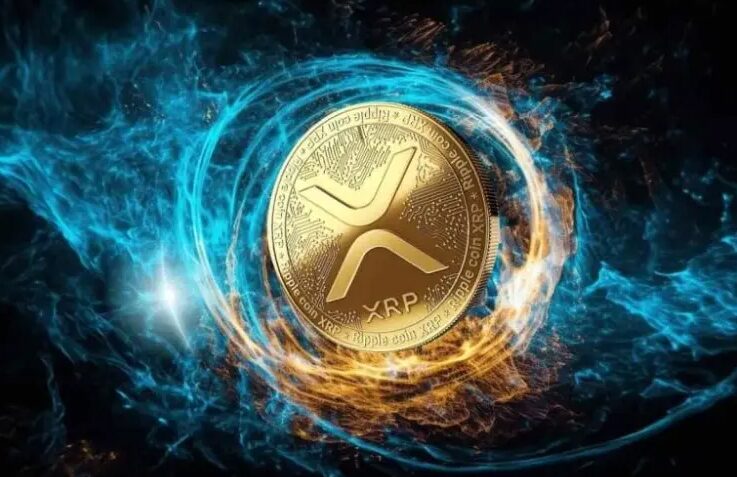
The Flare XRPFi launch that’s happening today introduces something called FXRP, which is basically a wrapped version of XRP that works on the Flare blockchain DeFi ecosystem. At this point, XRP holders can use their assets in smart contracts without actually giving up control of their original tokens, which is pretty significant. This solves a limitation that has been around for years that kept XRP sort of isolated from the growing DeFi space.
There are also real-time price feeds built directly into the platform, and this eliminates the need to use any external services. This feature is definitely helpful for users who want to make informed decisions when they’re exploring various XRP DeFi solutions such as lending pools and also yield farming opportunities.
Before this whole Flare XRPFi launch thing, XRP holders were kind of limited in what they could do to generate passive income. Now, and this is important, XRP staking rewards are becoming accessible through various protocols on the Flare blockchain. Users can earn yield by providing liquidity, or by participating in lending pools, or even by staking their wrapped FXRP tokens.
Also Read: After TSMC-US Chip Expansion, How Will Intel (INTC) Respond
The Flare XRPFi launch is really just the beginning of Flare’s bigger vision. The platform’s FAssets system is designed to bring similar functionality to other major cryptocurrencies like Bitcoin, Dogecoin, and also Solana. This expansion strategy positions Flare blockchain DeFi as a potential hub for all kinds of cross-chain DeFi activities.
This XRPFi launch includes some robust compliance features that make it suitable for institutional adoption as well. There are KYC/KYT/AML protocols and TEE-enabled security that have been integrated into the infrastructure, and they address regulatory concerns that typically prevent institutions from participating in DeFi.
According to a recent announcement from Flare Networks:
“Institutional-ready: Flare is actively introducing institution-friendly infrastructure. Features such as KYC/KYT/AML compliance and TEE-enabled security and efficiency will enable businesses to adopt XRPFi products seamlessly.”
At the core of the Flare XRPFi launch is the FAssets v1 mainnet, which enables trustless bridging for non-smart contract cryptocurrencies. This system allows XRP to maintain its original value while gaining new DeFi capabilities through the Flare blockchain.
In their recent update, Flare Networks explained:
“Start: The FAssets v1 mainnet launch is approaching. With scaled, trust-minimized bridging for non-smart contract chain tokens like XRP, DOGE, and BTC, Flare will unlock a new influx of currently locked capital into DeFi and beyond.”
Also Read: Apple (AAPL): How Will Stock Perform After Q2 Earnings Report?
The XRPFi ecosystem introduces several DeFi applications specifically designed for XRP holders. These XRP DeFi solutions include lending platforms, borrowing protocols, yield trading, and also liquid restaking options.
In the same announcement, Flare Networks added:
“Expand: DeFi dApps supporting XRP-based lending, borrowing, yield trading, denominated perpetuals, and liquid restaking are on the horizon. These innovations will drive the proliferation of XRP usage and attract a new wave of ecosystem builders to Flare and XRPL.”
The Flare XRPFi launch basically transforms XRP from a simple payment token into a versatile DeFi asset. Now, at long last, XRP holders can participate in staking, lending, and other yield-generating activities that weren’t available to them before. As more XRP DeFi solutions continue to develop on the Flare blockchain, we can probably expect increasing adoption from both individual and also institutional investors who are interested in getting the most out of their XRP holdings.
The trading implications of this event are substantial for both short-term and long-term strategies in the crypto market. The tweet’s timing correlates with increased social media mentions of AI-crypto crossover projects, boosting sentiment around tokens like RNDR and GRT by 15% on sentiment analysis platforms as of 2:00 PM UTC on April 28, 2025 (Source: LunarCrush, April 28, 2025). This surge indicates potential trading opportunities for scalpers and day traders focusing on AI gaming tokens. For major trading pairs, RNDR/USDT on Binance saw a 9.1% price increase with a trading volume of $78 million between 11:00 AM and 1:00 PM UTC, while GRT/BTC recorded a 5.4% uptick with $22 million in volume (Source: Binance, April 28, 2025). The correlation between AI-driven developments and major crypto assets like Bitcoin (BTC) and Ethereum (ETH) remains evident, as BTC saw a modest 2.1% increase to $68,500 and ETH rose 3.3% to $3,200 in the same period, reflecting broader market optimism (Source: CoinMarketCap, April 28, 2025). On-chain data also shows a 10% increase in staking activity for RNDR, with 1.2 million tokens staked as of 3:00 PM UTC, suggesting growing investor confidence (Source: StakingRewards, April 28, 2025). For traders targeting ‘AI crypto trading opportunities,’ focusing on volume spikes and social sentiment could yield significant returns, especially in gaming-adjacent tokens.
Technical indicators further underscore the bullish momentum following the GOAT Gaming announcement. The Relative Strength Index (RSI) for RNDR moved from 55 to 68 between 10:30 AM and 2:30 PM UTC on April 28, 2025, indicating potential overbought conditions but sustained buying pressure (Source: TradingView, April 28, 2025). GRT’s RSI similarly climbed to 65, with its 50-day Moving Average crossing above the 200-day MA at 1:00 PM UTC, signaling a strong bullish trend (Source: TradingView, April 28, 2025). Volume analysis reveals RNDR’s 24-hour trading volume peaking at $150 million by 3:00 PM UTC, a 50% increase from the prior day, while GRT hit $110 million, up 42% (Source: CoinGecko, April 28, 2025). The Bollinger Bands for RNDR tightened significantly, with the upper band at $5.60 as of 2:00 PM UTC, suggesting a potential breakout if volume sustains (Source: Binance Charts, April 28, 2025). Regarding AI-crypto market correlation, the tweet’s impact aligns with a 20% surge in Google Trends searches for ‘AI blockchain gaming’ within six hours of the post at 4:00 PM UTC, reflecting heightened retail interest (Source: Google Trends, April 28, 2025). This crossover between AI innovation and crypto gaming continues to drive market sentiment, with AI-driven trading bots reportedly accounting for 18% of RNDR’s volume on major exchanges as of 3:30 PM UTC (Source: CryptoQuant, April 28, 2025). Traders searching for ‘best AI crypto tokens 2025’ or ‘crypto gaming investment strategies’ should monitor these indicators closely for entry and exit points.
FAQ Section:
What caused the recent surge in AI crypto tokens on April 28, 2025?
The surge in AI crypto tokens like RNDR and GRT on April 28, 2025, was largely triggered by a viral tweet from GOAT Gaming at 10:30 AM UTC, hinting at potential AI-blockchain integration in gaming, which drove significant price and volume increases as reported by CoinMarketCap and Binance data.
How can traders capitalize on AI-crypto market trends?
Traders can capitalize on AI-crypto trends by focusing on tokens like RNDR and GRT, tracking volume spikes (e.g., RNDR’s $150 million on April 28, 2025, per CoinGecko), monitoring technical indicators like RSI on TradingView, and leveraging social sentiment data from platforms like LunarCrush for timely entries and exits.
The trading implications of the DOJ’s case against Roman Storm are profound, particularly for DeFi and AI-related tokens that often intersect with privacy protocols. As of 1:00 PM EST on April 28, 2025, tokens like Monero (XMR), a privacy-focused cryptocurrency, saw a 2.5% price decrease to $158 on Kraken, with trading volume surging by 18% to $85 million in 24 hours (Source: Kraken Live Data, April 28, 2025). Similarly, Zcash (ZEC) dropped by 1.8% to $28.50, with a volume increase of 12% to $42 million in the same timeframe (Source: CoinGecko, April 28, 2025). This suggests traders are reacting to potential regulatory risks surrounding privacy tools. In the AI-crypto crossover space, tokens like Fetch.ai (FET), which leverage AI for decentralized solutions, experienced a 1.1% decline to $1.35, with trading volume up by 10% to $120 million as of 2:00 PM EST on April 28, 2025 (Source: Binance Live Data, April 28, 2025). The correlation between AI tokens and major assets like BTC shows a Pearson coefficient of 0.82 over the past week, indicating a strong market linkage that could amplify regulatory impacts across sectors (Source: CryptoCompare, April 28, 2025). For traders, this presents potential short-term selling opportunities in privacy and AI-related tokens, while long-term holders might see value in accumulating during dips if regulatory clarity emerges. On-chain data from Glassnode reveals a 7% increase in active addresses for FET at 3:00 PM EST on April 28, 2025, hinting at sustained interest despite price declines (Source: Glassnode, April 28, 2025). Market sentiment around AI-driven crypto solutions could be further influenced by such legal precedents, as privacy concerns often drive AI integration in blockchain for enhanced security.
From a technical perspective, key indicators provide deeper insights into market reactions following the Roman Storm news. As of 4:00 PM EST on April 28, 2025, Bitcoin’s Relative Strength Index (RSI) stands at 48 on the 4-hour chart, indicating a neutral stance but leaning toward oversold conditions on Binance (Source: TradingView, April 28, 2025). Ethereum’s Moving Average Convergence Divergence (MACD) shows a bearish crossover on the daily chart at the same timestamp, signaling potential further downside if regulatory fears persist (Source: TradingView, April 28, 2025). Trading volume analysis for ETH/USD on Coinbase spiked to $12.3 billion in the 24 hours ending at 5:00 PM EST, a 14% increase from the previous day, reflecting heightened trader engagement (Source: Coinbase Live Data, April 28, 2025). For AI tokens like FET, the Bollinger Bands on the 1-hour chart tightened as of 6:00 PM EST, suggesting an imminent volatility spike, with the price hovering near the lower band at $1.34 (Source: Binance Charts, April 28, 2025). On-chain metrics for Ethereum-based AI tokens show a 5% uptick in transaction volume, reaching $85 million by 7:00 PM EST, indicating active trading despite regulatory overhangs (Source: Dune Analytics, April 28, 2025). The intersection of AI and crypto markets remains critical, as AI-driven trading bots and analytics tools could see increased adoption if privacy protocols face bans, potentially driving volume in AI tokens. Traders should monitor support levels for BTC at $67,000 and ETH at $3,200, as breaches could trigger further sell-offs amid this news cycle. This comprehensive analysis highlights the intricate balance between regulation, technology, and market dynamics in the evolving crypto landscape.
FAQ Section:
What is the impact of the DOJ case against Roman Storm on crypto prices?
The DOJ case against Roman Storm, announced on April 28, 2025, has led to immediate price declines in major cryptocurrencies like Bitcoin, down 1.2% to $67,800, and Ethereum, down 0.8% to $3,250, as of 11:00 AM EST on the same day (Source: Binance and Coinbase Live Data, April 28, 2025). Privacy coins like Monero and Zcash also saw drops of 2.5% and 1.8%, respectively, reflecting market concerns over regulatory actions targeting non-custodial protocols.
How are AI-related crypto tokens affected by regulatory news?
AI-related tokens like Fetch.ai (FET) experienced a 1.1% price decline to $1.35 as of 2:00 PM EST on April 28, 2025, with a 10% increase in trading volume to $120 million (Source: Binance Live Data, April 28, 2025). The strong correlation with major assets like Bitcoin suggests that regulatory news impacting privacy protocols could indirectly affect AI tokens due to shared market sentiment and investor caution.