The main tag of cryptocurrency price today Articles.
You can use the search box below to find what you need.
[wd_asp id=1]
The main tag of cryptocurrency price today Articles.
You can use the search box below to find what you need.
[wd_asp id=1]

Cardano’s drop has seen it fall to 11th in the market cap rankings, with its former place now occupied by Toncoin, which has been on a rampage thanks to Tether partnership rumors.
And while ADA remains up by 3.5% in the past week, it’s actually down by 10% in a fortnight and by 17% in the last 30 days.
However, its fundamentals are as strong as ever, and with the market potentially close to another bull run, the Cardano price could rally again soon enough.
Despite today’s slip, Cardano’s chart and indicators remain in a relatively promising position, with the coin potentially on course to rebound again very soon.
After dropping below 50 this morning, ADA’s relative strength index (purple) has begun modestly climbing back up.
This suggests that the coin could recover in the very near future, something which is also indicated by its 30-day average (orange).
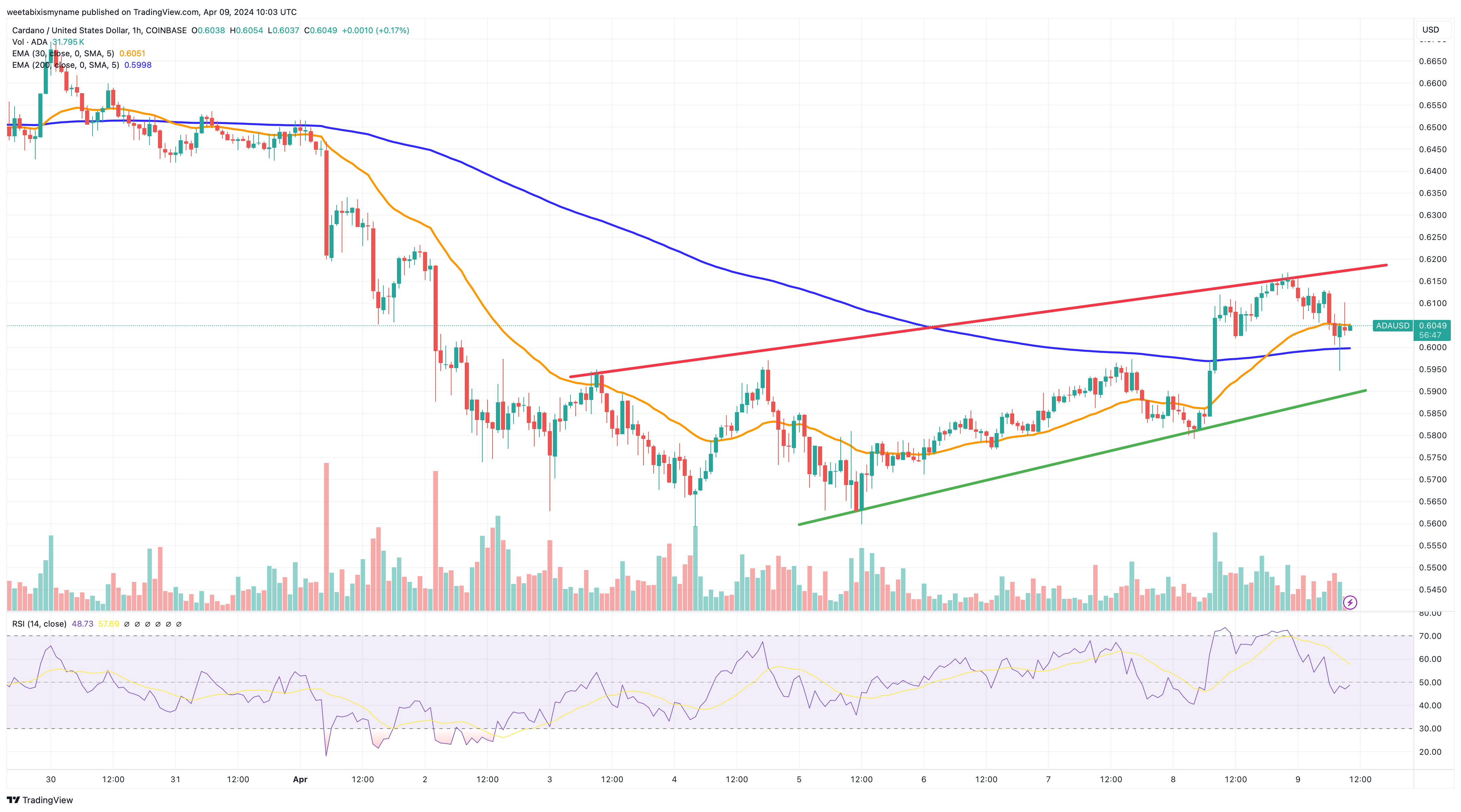
The 30-day has moved sideways this morning, indicating that the coin isn’t that weak at the moment, and perhaps won’t fall much further before recovering.
ADA’s support level (green) also reinforces this suspicion, given that it has been rising consistently since the first week of April.
Unfortunately, Cardano’s trading volume does look particularly uninspiring, at around $400 million today.
To put this in some perspective, PEPE has a volume of just over $600 million today, while Toncoin – which has leapfrogged ADA – is at $850 million.
This means that ADA is very much an unloved child at the moment, with low demand a big part of the reason why it has slipped in the market rankings.
Seeing all the dunking on Cardano makes me smile a bit. We are holding all the cards as an ecosystem. We have the best path for scalability, governance, and innovation. We also have the best community.
Chang is coming soon as measured by progress on SanchoNet. Ouroboros Leios is… pic.twitter.com/11RTXaDrZU
— Charles Hoskinson (@IOHK_Charles) April 7, 2024
Despite this, Cardano’s fundamental position hasn’t changed, with the platform growing still steadily as a blockchain network.
Its total value locked stands at close to $400 million, which is up from $142 million exactly a year ago.
It’s in this context that it has seen more app launches, with 164 projects now running on Cardano.
And with the blockchain awaiting several significant updates (e.g. Chang), ADA’s fundamentals are only going to improve in the coming months.
As such, the Cardano price could reach $1 by the summer, and potentially return to $2 by the end of the year.
Given that ADA is such a slow burner, many traders may prefer to expand their portfolios into lower cap tokens, which can often have more potential upside.
And while many low-cap coins are of correspondingly low quality, some are showing some real potential at the moment, particularly certain presale coins.
A great example of this is Slothana (SLOTH), a Solana-based meme token that has attracted more than $10 million in its sale.
This makes Slothana one of the most successful presales of 2024 so far, with investors being interested in the new coin for a variety of reasons.
First of all, Slothana’s team also developed the successful Smog (SMOG) token, which listed earlier this year and made big gains in relation to its sale price.
Something similar is also likely to happen with SLOTH, which has already gained more than 14,000 followers on X.
This figure suggests that its playful use of memes has helped it spread via word of mouth, with the token already very popular for a coin that hasn’t even launched.
Investors can join its sale by going to the Slothana website and connecting a compatible wallet (e.g. Phantom, Solflare).
Traders can exchange SOL for the token at a rate of 1 SOL for 10,000 SLOTH, which is equal to roughly $0.019393 per coin.
🚀 Get ready to blast off with Slothana! 🌿 We’re gearing up for launch and this is your last chance to grab your $SLOTH 🌕 Don’t miss out on the action as we prepare to announce our official launch date. Watch this space. #slothana #memecoin
— Slothana (@SlothanaCoin) April 8, 2024
And as a SOL-based meme token, Slothana’s launch comes at a time when the market’s appetite for new and exciting meme coins is near a peak.
It could, therefore surge dramatically once it lists on trading platforms in the next few weeks.
Disclaimer: Crypto is a high-risk asset class. This article is provided for informational purposes and does not constitute investment advice. You could lose all of your capital.
Last week, Doge witnessed a notable loss following a bearish crossover from the previous month. It recovered later in the week and the price climbed to exactly $0.21 – on Binance – yesterday.
Retesting that key price level as resistance, the meme coin paused buying and closed calmly with a bearish pin bar. Today opened short and the price dropped to where it’s changing hands at $0.195.
While the current daily candle pattern suggests a potential sell, a strong close below yesterday’s low could activate big drops in the coming days. Right now, the price looks weak on the daily chart following a 6% cut in the last 24 hours.
The bears are trying to step back and with the latest setup, they might regain control soon. A pull below last week’s low could cause another severe loss in the market. But as of now, selling pressure appears low.
Despite the negative sentiments surrounding the market today, Doge still looks bullish on the weekly scale. A monthly close above the $0.23 level should validate more gains from a long-term perspective.
Notwithstanding, there’s still hope for the bulls if they can intercept selling to push above the $0.206 resistance. Their next target would be $0.229 if that plays out before flipping to the $0.25 level.
Considering the latest price weakness, Doge may slide back to a minor support of $0.185. Losing last week’s $0.167 support could activate a huge sell-off to the $0.145 and $0.123 levels.
Key Resistance Levels: $0.206, $0.229, $0.25
Key Support Levels: $0.167, $0.145, $0.123
Disclosure: This is not trading or investment advice. Always do your research before buying any cryptocurrency or investing in any services.
Follow us on Twitter @nulltxnews to stay updated with the latest Crypto, NFT, AI, Cybersecurity, Distributed Computing, and Metaverse news!
Image Source: archnoi1/123RF // Image Effects by Colorcinch
In a hearing before the Senate Banking, Housing and Urban Affairs Committee, Adeyemo expressed concerns that terrorist groups, as well as state actors like Russia and North Korea, are increasingly using virtual currencies and digital assets to hide their identities and move resources.
While acknowledging some success in detecting illicit finance activities, Adeyemo emphasized the need to expand enforcement efforts to prevent such actions by “malign actors.”
“While we continue to assess that terrorists prefer to use traditional financial products and services, we fear that without congressional action to provide us with the necessary tools, the use of virtual assets by these actors will only grow,” he said.
Adeyemo highlighted the expanding use of virtual assets by these groups and warned that without congressional action, their adoption would continue to grow. He cited examples such as North Korea using complex cyber heists to acquire and launder illicit revenue, and Russia resorting to alternative payment mechanisms like the stablecoin tether to evade sanctions and finance its conflicts.
To address these challenges, Adeyemo called on Congress to pass legislation that strengthens tools to target foreign digital asset providers facilitating illicit finance, including the imposition of secondary sanctions. Furthermore, he stressed the importance of closing regulatory gaps and extending authorities to cover entities like virtual asset wallet providers and cryptocurrency exchanges that emerged after current laws were enacted.
Coinbase Global (NASDAQ:COIN) and Circle Internet Financial, prominent cryptocurrency firms, also called upon Senate Majority Leader Chuck Schumer and House Speaker Mitch McConnell to enact regulations for stablecoins and improve the overall digital asset market structure. They highlighted the risks of regulatory arbitrage due to the lack of regulatory clarity and urged the extension of anti-money laundering and sanctions regulations to cover foreign stablecoin issuers referencing the US dollar.
Adeyemo confirmed that the Treasury had previously recommended reforms to the committee and expressed the department’s willingness to work alongside lawmakers to address these issues.
A recent United Nations report highlighted Tether’s (USDT) popularity among cyber fraud and money laundering activities in Southeast Asia. According to the report, authorities have observed a rapid growth in sophisticated, high-speed money laundering teams that specialize in utilizing Tether for underground transactions. Tether has refuted these claims, emphasizing its collaboration with law enforcement and the traceability of its token.
Featured Image: Freepik
Ripple’s CEO, Brad Garlinghouse, anticipates the cryptocurrency market cap soaring to $5 trillion this year, fueled by significant macro factors such as the launch of the first U.S. spot bitcoin ETFs and the forthcoming bitcoin halving event. With the the XRP price predictions seems to be taking a bullish turn.
Garlinghouse’s positive outlook stems from more institutions investing in crypto and the basic economic principle that limited supply and growing demand usually increase market value.
Garlinghouse stated:
I’m very optimistic. I think the macro trends, the big picture things like the ETFs, they’re driving for the first time real institutional money.
Key Insights:
The approval of spot bitcoin ETFs in January6 by the SEC allows investors to engage with bitcoin on U.S. stock exchanges without direct ownership of the asset.
🚀 Ripple CEO Brad Garlinghouse foresees the cryptocurrency market cap surging to $5 trillion by the end of 2024.
His optimistic forecast is grounded in the burgeoning institutional enthusiasm for cryptocurrencies and their expanding integration across diverse industries. With… pic.twitter.com/kxcHrr35Dh
— Kyrrex (@Kyrrexcom) April 8, 2024
Such developments contribute to Garlinghouse’s bullish market outlook, especially considering the upcoming bitcoin halving that historically impacts the currency’s supply and market dynamics.
Moreover, Garlinghouse underscores the potential for favorable U.S. crypto regulations, especially in an election year, to further boost the market.
Despite the SEC’s stringent actions against crypto entities, including Ripple, positive regulatory changes could enhance the market landscape.
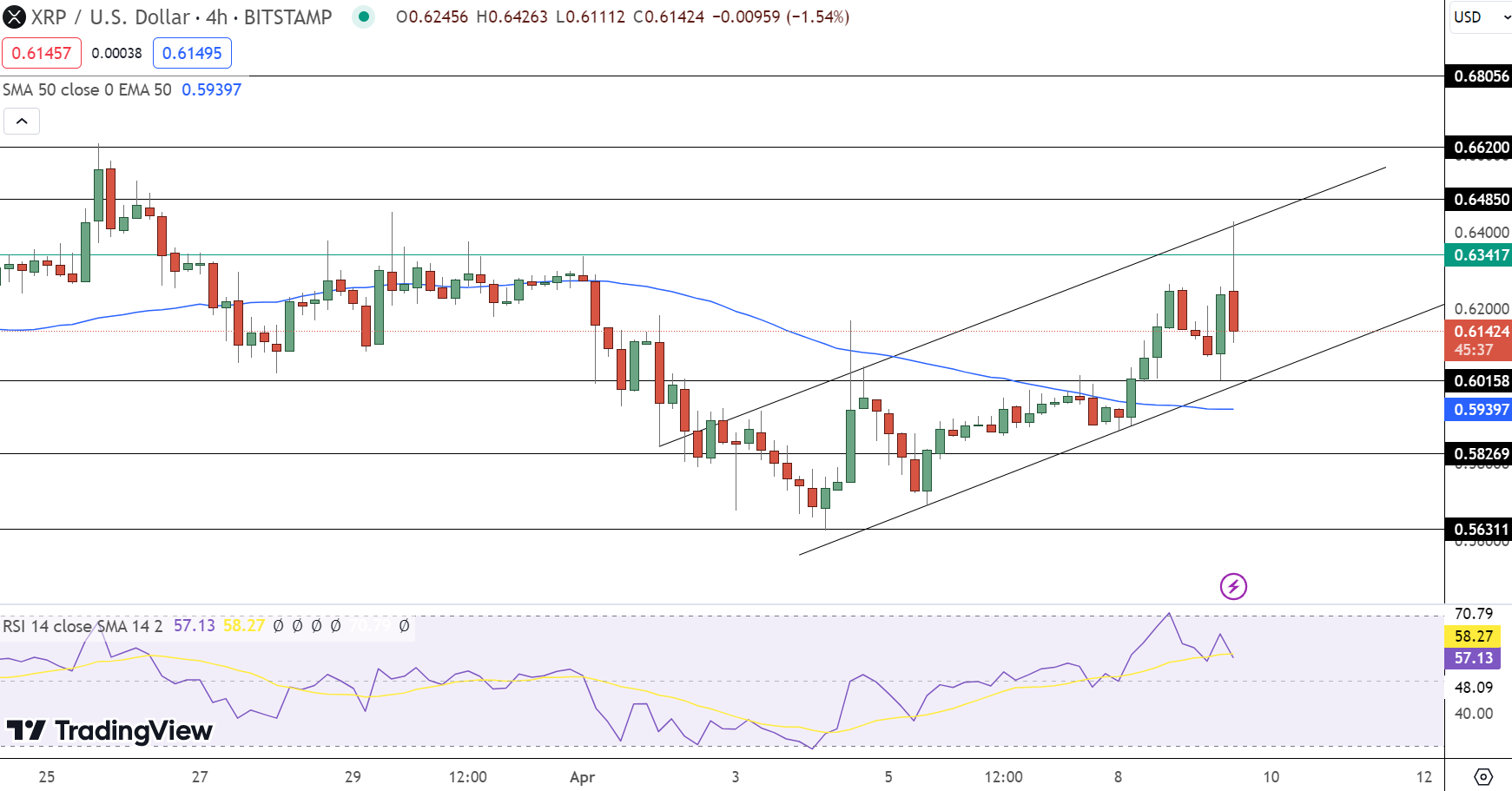
XRP, the sixth-largest cryptocurrency by market capitalization, is currently trading at $0.61, with a 24-hour volume of $2.44 billion.
The four-hour chart reveals a pivot point at $0.63, with XRP displaying resilience near the $0.60 support level, underpinned by an upward price channel.
Should XRP maintain above this support, it suggests a stable market condition. However, if it dips below, a bearish trend could intensify, pushing prices to lower supports at $0.5826 and $0.5631.
Technical Indicators:
Disclaimer: Crypto is a high-risk asset class. This article is provided for informational purposes and does not constitute investment advice. You could lose all of your capital.
Bitcoin (BTC), the world’s oldest and most valued cryptocurrency, dipped below the $70,000 mark early Wednesday due to high selloffs among investors after the coin crossed the $71,000 mark yesterday. Other popular altcoins — including the likes of Ethereum (ETH), Dogecoin (DOGE), Ripple (XRP), Solana (SOL), and Litecoin (LTC) — landed in the reds across the board as the overall Market Fear & Greed Index stood at 75 (Greed) out of 100, as per CoinMarketCap data. The Bittensor (TAO) token emerged as the biggest gainer of the lot, with a 24-hour jump of over 7 percent. dogwifhat (WIF) became the biggest loser, with a 24-hour dip of nearly 16 percent.
The global crypto market cap stood at $2.58 trillion at the time of writing, registering a 24-hour dip of 3.70 percent.
Bitcoin price stood at $69,089.01, registering a 24-hour dip of 3.05 percent, as per CoinMarketCap. According to Indian exchange WazirX, BTC price stood at Rs 60.93 lakh.
ETH price stood at $3,508.86, marking a 24-hour loss of 4.81 percent at the time of writing. As per WazirX, Ethereum price in India stood at Rs 3.10 lakh.
DOGE registered a 24-hour dip of 5.59 percent, as per CoinMarketCap data, currently priced at $0.1879. As per WazirX, Dogecoin price in India stood at Rs 16.57.
Litecoin saw a 24-hour loss of 4.74 percent. At the time of writing, it was trading at $97.22. LTC price in India stood at Rs 8,648.99.
XRP price stood at $0.6061, seeing a 24-hour dip of 1.12 percent. As per WazirX, Ripple price stood at Rs 53.49.
Solana price stood at $171.12, marking a 24-hour loss of 3.44 percent. As per WazirX, SOL price in India stood at Rs 15,200.69.
As per CoinMarketCap data, here are the top five crypto gainers over the past 24 hours:
Bittensor (TAO)
Price: $632.47
24-hour gain: 7.30 percent
Fantom (FTM)
Price: $0.9611
24-hour gain: 3.29 percent
KuCoin Token (KCS)
Price: $10.51
24-hour gain: 1.99 percent
Nervos Network (CKB)
Price: $0.03195
24-hour gain: 1.80 percent
UNUS SED LEO (LEO)
Price: $5.85
24-hour gain: 0.09 percent
As per CoinMarketCap data, here are the top five crypto losers over the past 24 hours:
dogwifhat (WIF)
Price: $3.42
24-hour loss: 15.58 percent
Wormhole (W)
Price: $0.8327
24-hour loss: 13.32 percent
Conflux (CFX)
Price: $0.3256
24-hour loss: 11.10 percent
Aptos (APT)
Price: $12.41
24-hour loss: 11.08 percent
Lido DAO (LDO)
Price: $2.65
24-hour loss: 10.73 per cent
Mudrex co-founder and CEO Edul Patel told ABP Live, “Bitcoin fell to the $68,000 mark from yesterday’s peak of $72,000 amidst heightened liquidations. Investors are now closely monitoring the upcoming US CPI data, anticipated to surpass initial projections. Despite this setback, Bitcoin has recorded a remarkable 63% surge year-to-date and a staggering 142% rise over the past year. The cryptocurrency’s immediate support rests at $67,700, with resistance at $70,400.”
The CoinSwitch Markets Desk noted, “While BTC struggled to break above the 73k USD mark, the world’s largest crypto asset experienced a decrease of close to 4% in the day, testing the support at around the 68k USD mark, with most of the altcoins following a similar trend. The biggest losers among the top cryptos remained memecoins, as WIF (-18%), PEPE (-12%), and DOGE (-7.4%) all continued to struggle as markets slumped. In altcoin news, with the Solana network congested for almost a week now, the price action has also started to reflect this, with Solana prices trading below the 170-dollar mark. One of the few cryptos that remained in the green today was one of Solana’s EVM-compatible L1 rivals, FTM (+2%), which saw gains as its much-anticipated sonic upgrade gets closer to production, with the first validator with sonic tech going live yesterday.”
Rajagopal Menon, Vice President, WazirX, said, “Bitcoin experienced a downturn, dropping below the $69k mark as bearish sentiment overshadowed bullish activity. Amidst ongoing price fluctuations, market demand for Bitcoin appears somewhat unsettled. Analysis of Bitcoin’s hull moving average suggests a ‘Sell’ sentiment, reflecting the broader market sentiment. The next support level is anticipated at $68,955, with resistance levels identified at $72,609 and $69,500 respectively. Meanwhile, Ethereum proponents are facing challenges in their hopes for an ETF approval, with the SEC providing limited updates on the matter.”
Sathvik Vishwanath, CEO and co-founder of Unocoin, said, “Despite the conventional belief in the bullish impact of halving events, Hayes foresees a market decline, attributing this to the prevailing optimism surrounding the event. Hayes is skeptical of the upcoming Bitcoin halving, a halving of miners’ rewards, saying that the widespread positivity could create an opposite market reaction, which could lead to a fall in Bitcoin prices. Economic factors such as the tightening of US dollar liquidity and the culmination of tax payments could worsen the situation by taking liquidity out of the market. Hayes adjusted his portfolio accordingly, selling assets like Solana and converting them to USDe to get the proceeds. It suggests that the post-May period could offer a more favorable business environment after the pace of quantitative tightening and potential fiscal stimulus eases.”
Shivam Thakral, CEO of BuyUcoin, said, “After a day of good recovery , Bitcoin price saw a 5% dip on the daily timeframe and has found support just above the $68,400 level. The upcoming halving in less than 10 days will lead to the block rewards reduced from 6.25 Bitcoin to 3.125 Bitcoin.This price action is a result of long-term investors booking profits ahead of the forthcoming halving. For instance, Grayscale (GBTC) had a net outflow of over 2,990 BTC.”
CoinDCX Research Team told ABP Live, “In the past day, the crypto market remained bullish, with both ETH and BTC gaining more than 5%, and ETH outperforming BTC. Technically, BTC surpassed the $72,000 mark and is now consolidating near the resistance level at $71,300. BTC needs to clear its all-time high level for further upside movement, with price action and indicators suggesting a bullish outlook. Meanwhile, ETH has shown stronger performance, surpassing a key level at $3,655 and currently trading slightly above it. A continuation from here could propel ETH above key resistance levels at $3,960 and $4,070. Additionally, the ETH/BTC pair saw an increase, aiding in altcoins gaining 5-10%.”
Subscribe And Follow ABP Live On Telegram: t.me/officialabplive
Disclaimer: Crypto products and NFTs are unregulated and can be highly risky. There may be no regulatory recourse for any loss from such transactions. Cryptocurrency is not a legal tender and is subject to market risks. Readers are advised to seek expert advice and read offer document(s) along with related important literature on the subject carefully before making any kind of investment whatsoever. Cryptocurrency market predictions are speculative and any investment made shall be at the sole cost and risk of the readers.
Ethereum is a digital currency that anyone can purchase or trade on cryptocurrency exchanges. Global users can purchase or trade Ethereum on ByBit or Binance. Users in the USA can directly purchase Ethereum by signing up on MEXC.
BitFlex is another popular crypto exchange but it stands out from the rest as it allows users sign-up and trade crypto without the need of a KYC.
In simple terms, Ethereum is an open-sourced digital currency that operates on a blockchain of its own (similar to Bitcoin). The blockchain is known as the Ethereum blockchain, and its native token is also referred to as Ethereum or Ether. The Ethereum blockchain is a much faster, more efficient, and more advanced form of blockchain, and unlike the Bitcoin blockchain, it has multiple real-life applications.
It was founded by a Russian Canadian programmer Vitalik Buterin, who first proposed the idea of an open-sourced digital currency in 2013 with the aim to create decentralized applications. The project was launched in July 2015 and went live with an initial supply of 72 million coins.
Blockchain technology aims to eliminate third parties from transactions and give full control to the users. Ethereum takes this idea to another level with its smart contracts. It allows users to build decentralized apps (dapps), which eliminates any possibility of third-party involvement, downtime, or censorship. It not only makes the transaction faster but also more secure.
In a recent analysis, crypto expert Ali Martinez has drawn parallels between the current price action of Cardano (ADA) and a pattern observed from 2018 to 2021. Martinez suggests that if this fractal pattern persists, ADA could undergo a consolidation phase within the $0.55 to $0.80 range in the upcoming weeks.
Subsequently, Martinez anticipates a surge in ADA’s price to reach $1.70. Following this potential upswing, another period of consolidation is expected, laying the groundwork for a potential breakout towards the $5 mark.
Thus, we might see some further pullback in the Cardano price to $0.55 before resuming the uptrend. Cardano’s laggard performance this year has pushed it under other altcoins such as Dogecoin, and more recently Toncoin.
Previously, analyst Chris O has also stated that he expects the crypto market to double in this bull run reaching the heights of $6-$7 trillion. As a result, he had also laid out a bullish price target for Cardano with the expectations of the ADA price reaching to $6.66 to $7.77.
Charles Hoskinson, co-founder of Input Output Global Inc., has defended Cardano against criticism, asserting that the protocol offers unparalleled scalability, governance, and innovation. Hoskinson made his remarks in a post on the social media platform X, emphasizing Cardano’s strengths and its vibrant community.
Hoskinson’s comments come shortly after Grayscale Investments, a leading crypto asset manager, removed ADA from its Crypto Large Cap Fund. Grayscale described the removal as a “rebalancing” action, involving the sale of ADA tokens to reinvest in other fund components.
Some critics view Grayscale’s move as a sign of Cardano’s decline. Earlier in January, a research firm suggested that the Cardano network lacks meaningful use cases, casting doubt on ADA’s future prospects. However, Hoskinson’s assertion contradicts these claims, highlighting Cardano’s ongoing development and potential for growth.
One of the most frequent emails we receive here at BePepared is “Help! My client is talking about cryptocurrency, and it all sounds like gibberish to me!”.
Have you found yourself in the same boat? If so – relax. Grab yourself a coffee, sit back and read on.
In this article, I’m going to break down for you in simple, easy-to-understand terms, exactly what the Blockchain is and how it works, how Cryptocurrency and NFTs function, and everything that you need to know to begin helping your clients manage their digital estate today.
The “Blockchain” is the technology upon which Cryptocurrency, NFTs and other ‘crypto’ applications are built – and so our explanation necessarily begins with understanding what the Blockchain is and how it works.
A database is a place where computers electronically organise and store information. Visually, a database looks somewhat like an excel spreadsheet, with rows and columns used to organise and store theinformation.
Now normally, a database exists on its own – and if it breaks, your data is gone. However, a Blockchain is a type of distributed database. This means that there are multiple, identical copies of the same database distributed across many different locations.
As a result, if one database broke for some reason, your computer would simply connect to another.

As we mentioned above, a standard database stores data in excel spreadsheets called ‘tables’. They have rows, and columns.
For example, a database of people’s names would have columns with ‘First Name’ and ‘Last Name’, and then each row would be a new person, with their first name and last name.

By contrast, a blockchain stores data in blocks.

A block is a record of information that contains 3 key things:
‘Hashing’ is a cryptographic process where, by performing complex maths on some data, you can calculate its ‘fingerprint’.
I use the term ‘fingerprint’ because that is the function a hash ultimately performs, although, in reality, a hash looks like this: 34160e9836ba81b00081e2bbd6e2105a46a9525a
The above hash is what you get when you hash the phrase “Giant Red Banana”. Why not try it yourself here: Try Hashing
The computer takes the data (in this case the words you type in) and performs a hashing algorithm to create the above string of numbers and letters.
There are two key points to know about a Hash:
I call a ‘hash’ a fingerprint because its ultimate function is to uniquely identify a piece of information, in the same way that our fingerprints uniquely identify us.

By chaining these blocks of data together, we get a Blockchain.

Each block in the chain contains the hash of the previous block.
As you’ll remember from our Hashes section – these are like a fingerprint, and are totally unique to the data it represents.
This means if someone went into the blockchain and tried to edit a previous block, it would immediately invalidate all the blocks after that block.

This is where the principle of immutability comes from. Once a block is added to the chain, it can’t be undone. It’s irreversible.
What would happen if someone did try to change a Blockchain?
In blockchains, the database works upon consensus.
So this edited Blockchain will be compared against all the other databases around the world- and if it doesn’t match the majority, it will be rejected and replaced with the correct information.

Because there are so many copies of the database, you would have to change 51% of the databases around the world simultaneously in order to alter the timeline. A feat that is for all practical purposes – impossible.

And this is how a Blockchain operates!
It’s a distributed database, that stores data in blocks (not tables), that are chained together to create an irreversible timeline.
Now that we understand how a Blockchain works, we can begin to look at the technologies built on top of it – the most famous of which is Cryptocurrency.
Cryptocurrency is a digital currency that uses a Blockchain as its database. This allows it to maintain a distributed, immutable ledger.

So at a normal bank, the bank can see your bank balance, edit your balance, freeze your access to funds, and even also lose your money if they have a critical database crash.
With Cryptocurrency, a ‘wallet address’ has $10. No one can see whose wallet it is, no one can edit how much money you have, no one can freeze your money, and it would be very difficult for that many databases to all crash (at last count, there were ~70 million).
This is where the concept of Cryptocurrency being ‘decentralised’ comes into play – as there’s no governing authority controlling the ledger.
Your clients purchase their cryptocurrency on exchanges (similar to purchasing stock on a stock exchange) and then they can use those coins to purchase items or transfer money to other people.
Popular cryptocurrency exchanges include:
Now “non-fungible tokens” or “NFTs” also operate on Blockchains.
The ‘non-fungible’ label means that, unlike Bitcoin where each coin is the same and can be exchanged interchangeably – an NFT is unique and each token holds unique values.
Famous examples of NFTs include:

Now, one of the most common misconceptions about an NFT, is that an NFT is a piece of artwork or a digital asset itself.
In actuality, an NFT is a form of providence. It’s a way of proving ownership of a digital item by using Blockchain technology – and most commonly, the item you own isn’t stored in the block itself, but linked to from the block.

In this case, the data the block contains is usually the asset hash (the thing that’s owned), the metadata or information about the item including a link to the item, and the providence and history of ownership.
Your clients purchase NFTs through marketplaces, such as OpenSea.
Both Cryptocurrency and NFTs are stored in wallets.
Cryptocurrency wallets operate using public and private encryption keys.
Without getting too deep into the cryptography itself, the general principle is that data encrypted with the public key (called ‘public’ because any member of the ‘public’ can use it), can only be decrypted by the private key.
Another way to think about it is that the public key functions as your ‘account number’. You can give this ‘number’ to people, and using it, they can transfer you money or NFTs.
Using your private key, you can ‘log in’ to your wallet and use your money.
The actual wallets themselves also use cryptography to securely store the private key which functions as the ‘password’ to get the cryptocurrency or NFTs.

If your clients have Cryptocurrency or NFTs, they will be stored in a wallet. Wallets can come in many shapes and sizes, but the main wallets are your clients are likely to own include:
So your clients have Cryptocurrency, NFTs, and probably a heap of other digital assets too – such as passwords, domain names, websites, photo/videos and more – what should you do?
For a comprehensive analysis of different laws and solutions relating to digital assets, please see our Estate Planners Guide to Digital Assets
However, when handling Digital Assets for clients, you have 3 core requirements for any solution you deploy:
What NOT to do:

The best non-paid solution for digital assets we’ve seen looks something like this.
Important notes:
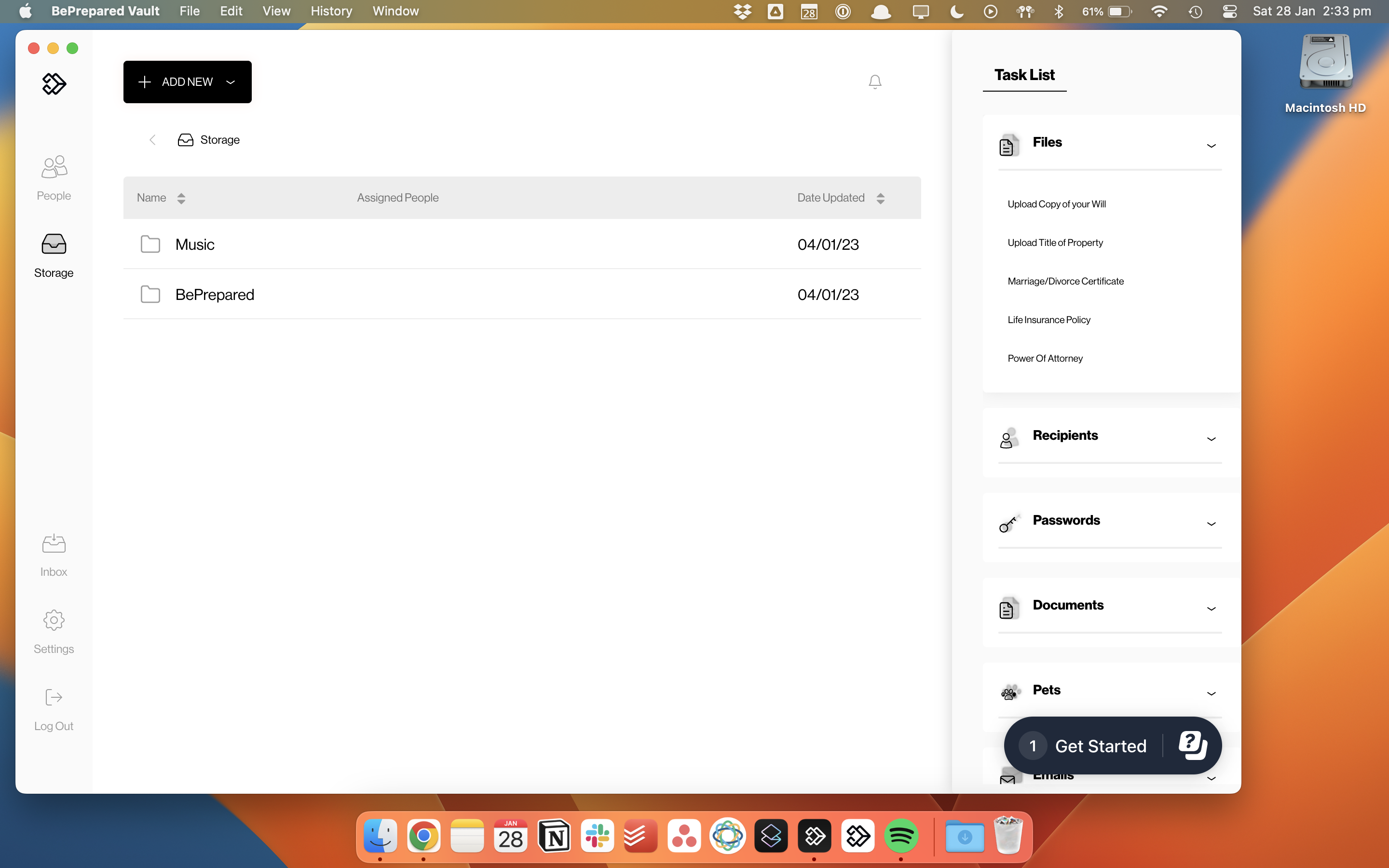
We won’t beat around the bush here – our platform was designed to handle this problem and we do it well. All our data is encrypted with military-grade security, and our platform is physical damage and theft proof. We have a rigorous death verification process to ensure data is only released post-mortem, and we’re easy for your clients’ to update from anywhere – Browser, Mobile or Computer. We allow your clients to choose who receives what data, and let all their advisors collaborate with them too, placing legal and financial documents in the vault on their behalf. If you’d like to know more, we recommend watching one of our online demos.
This article was submitted to be published by BePrepared as part of their advertising agreement with Today’s Wills and Probate. The views expressed in this article are those of the submitter and not those of Today’s Wills and Probate.
This forecast comes amidst a growing surge in XRP’s price, which currently stands at $0.6145, as there’s been a slight uptick in its value.
In a recent analysis, Mikybull compared XRP’s current market conditions to past bull cycles, particularly focusing on trends seen in late 2017 and 2021. Based on historical chart patterns, he suggests that XRP may be gearing up for a major breakout, potentially leading to significant gains.
Moreover, Mikybull previously set a $6 target for XRP, based on symmetrical triangle formations observed in its charts. He believes that XRP’s breakout from these patterns could drive it to new highs, with $6 as a specific target.
While Mikybull hasn’t provided a precise timeline for this bullish momentum, he remains confident that it will occur before the current bull market phase ends.
Also Check Out : Crypto Market Live: BTC Price Drops Below $70,000, While CKB and TAO Maintain a Bullish Streek
Adding to the optimism surrounding XRP, prominent crypto trader Barric shared his perspective on XRP’s long-term value, suggesting that XRP price below $0.80 presents a favorable buying opportunity. However, Barric predicts a shift in perception as the bull run progresses, with prices between $1 to $3 being considered affordable by its conclusion.
Looking ahead to future halving and bull run periods, Barric predicts that XRP could see substantial appreciation in the coming years, with potential price targets ranging from $10 to $500 by 2032-2033.
As of now XRP, XRP is trading at $0.61, reflecting a slight increase in the last 24 hours. Moreover, the trading volume has surged by 20%, reaching $2.38 billion, while its market cap stands at $33.7 billion.
Crypto analyst Ali Martinez remains undeterred by ADA’s current price dip. In fact, he’s predicting a significant surge for ADA in the near future. Drawing from historical patterns and current market dynamics, Martinez’s forecast points towards a potential rally of over 300% for ADA. What’s intriguing is his observation of similarities between Cardano’s present trajectory and patterns observed between 2018 and 2021. With ADA consolidating between $0.55 and $0.80, Martinez firmly believes it’s gearing up for a substantial rise, eyeing a value of $1.70.
Notably, he references Cardano’s remarkable rise in late 2010, following a 115-day accumulation phase, resulting in an astounding 3,217% recovery, reaching a pinnacle of $3.
Read More: Crypto Market Prediction: Cardano (ADA), XRP, and Solana (SOL) to Hit $1 Trillion Market Cap?
Despite facing criticism and lagging behind other altcoins in performance, Input Output Global Inc. co-founder Charles Hoskinson stands by Cardano, emphasizing its unparalleled scalability, governance, and innovation. Hoskinson addresses Grayscale Investments’ decision to remove ADA from its Crypto Large Cap Fund as part of a “rebalancing” move. While some view this as a sign of Cardano’s decline, Hoskinson maintains an optimistic stance regarding its progress.
Although ADA’s current performance may not mirror the gains witnessed in 2021, both Martinez and Hoskinson remain steadfast in their optimism regarding ADA’s prospects. They highlight its resilience and promising market dynamics, urging investors to brace themselves for potential volatility ahead. Martinez’s bullish prediction points towards a triple surge, signaling exciting times ahead for ADA.
Also Read: Top Altcoins to Turn Your $1k to $100k This Bull Market
In parallel, analyst Chris O adds his voice to the discussion, projecting that the cryptocurrency market could double during this bull run, potentially reaching $6-$7 trillion. He, too, shares a bullish outlook for Cardano, predicting its price to soar between $6.66 to $7.77.
So, what’s the takeaway for investors amidst all this speculation? It’s a stark reminder of the unpredictable nature of the crypto market. However, for those who have faith in Cardano’s potential, now might just be the opportune moment to keep a keen eye on ADA and witness if the experts’ predictions materialize into reality.