The US dollar has rallied a bit during the early hours on Monday, breaking above the 200 day EMA, and now it looks like we’re trying to get to the 149 level. This is an area that I think we could be looking at as a major barrier and if we can break the 149 yen level, then 151 yen would be your next target. Short-term pullbacks are probably buying opportunities, but we do have a Bank of Japan meeting here in the next few days, so I’d be very cautious with this pair right now, although I still like the idea of buying.
AUD/USD Technical Analysis
The Australian dollar has fallen pretty significantly against the US dollar, but at this point in time, we are looking at the 50 day EMA sitting just below as well as the bottom of this channel. So, I think you’ve got a situation where the buyers may come back sooner or later, not necessarily right away, but if the pattern holds, we’re just simply going to test the lower part of the channel and see yet another bounce. I don’t really like shorting this pair until we get below the 200 day EMA, but truthfully buying it is a bit torturous as well. It’s just grinding ever so slowly higher.
For a look at all of today’s economic events, check out our economic calendar.
Platinum price ended the correctional trading by testing the extra support at $1381.00, forming a confirmation key for the continuation of the positive continuation, attacking the barrier at $1420.000 level, to find an exit for resuming the bullish attempts.
Stochastic begins to provide positive momentum by its repeated stability above 20 level, which makes us wait for breaching the current barrier and holding above it, to ease the mission of targeting $1458.00 level, and surpassing it will provide a chance for achieving new gains that might extend to $1480.00 and $1507.00.
The expected trading range for today is between $1390.00 and $1458.00
The Pound to Euro exchange rate recovered to retake the 1.15 as the single currency weakened across global markets and risk appetite improved, helping lift Pound Sterling from earlier lows.
Barclays sees scope for GBP/EUR to recover towards 1.1765.
Foreign exchange analysts at Danske Bank, however, expect that the Pound to Euro exchange rate (GBP/EUR) will slide to 1.1240 over the next six to twelve months.
During the week, Pound Sterling posted sustained losses and dipped to test 3-month lows just above 1.1440 amid Euro gains and negative Pound sentiment.
In the short term, EU-US trade developments ahead of the August 1st deadline could be pivotal in determining whether GBP/EUR breaks below 1.1440.
Any deal could lead to further near-term Euro demand.
Credit Agricole sees scope for a limited Pound recovery; “Barring any massive data surprise, the GBP could still try to reverse its slight near-term undervaluation, especially as the UK-US trade deal could shelter the GBP at a time when the 1 August deadline looms large for the EU.”
According to Barclays, the Pound is now undervalued; “we think conditions are in place for EURGBP to converge towards lower levels more consistent with rate differentials and the VIX (c.0.85). (1.1765 for GBP/EUR)
Danske, however, expects that the weak UK fundamentals will lead to further Pound losses.
The latest UK business confidence data was mixed with a slight improvement in manufacturing offset by weaker growth in services.
There was further upward pressure on costs and a key element was evidence of weak demand, together with persistent inflation pressure which increased fears of stagflation within the economy.
According to ING; “Higher payroll taxes and a chunky rise in the National Living Wage back in April are exerting more significant downward pressure on staffing numbers, according to the latest PMI.”
It added; “But the PMI also suggests these policy changes are keeping upward pressure on prices. We’ve seen hints of this in the CPI data, principally in food, where inflation rates have picked up over and above what we’ve seen in the eurozone.”
Danske Bank commented; “the pressure on GBP has mounted as the UK economy has showed more pronounced signs of weakness. We increasingly see domestic factors and the relative growth outlook between the UK and the euro area as becoming GBP negatives.”
It added; “Additionally, we think a global investment environment characterised by elevated uncertainty, widening credit spreads and a positive correlation to a USD negative environment, in our view, favours a weaker GBP.”
There are very strong expectations of an August Bank of England rate cut.
JP Morgan expects quarterly cuts, but added; “if the MPC is increasing its focus on slack, then there is still a risk that more members on the MPC could shift their support for a faster pace of cuts in 2H25.”
The ECB held interest rates at 2.00% and there were hints of no further cuts.
According to Rabobank; “It was also very unlikely that Lagarde would give any new guidance for September. She didn’t. But, reading between the lines, her slightly more upbeat comments hinted at lower odds that the ECB will cut again.”
Danske Bank commented; “Our forecast anticipates a final 25 basis point reduction to 1.75% at the September meeting, though the risks lean towards leaving the policy rate unchanged.”
ING noted the possibility that talk could move towards rate hike; “if the trade tensions are resolved quickly and a lifting of uncertainty increased resilience of the eurozone economy, the debate at the ECB could quickly shift. From whether or not more rate cuts are needed to when to hike rates in order to tackle inflationary pressures stemming from fiscal stimulus.”
Like this piece? Please share with your friends and colleagues:
International Money Transfer? Ask our resident FX expert a money transfer question or try John’s new, free, no-obligation personal service! ,where he helps every step of the way,
ensuring you get the best exchange rates on your currency requirements.
The Pound US Dollar (GBP/USD) exchange rate slipped to a one-week low on Monday as markets digested the EU-US trade deal announced over the weekend.
At the time of writing, GBP/USD was trading at $1.3417, having touched a one-week low of $1.3407 earlier in the session.
The US Dollar (USD) advanced at the start of the week, lifted by relief among investors following a breakthrough trade agreement between the United States and the European Union.
The pact averts a potentially damaging trade conflict, with both sides stepping back from the brink after the US threatened to impose 30% tariffs on EU imports. In response, the EU had prepared to counter with so-called ‘anti-coercion’ measures.
Analysts suggest the deal strongly benefits the US, with one describing it as a ‘big win’ for President Donald Trump. Under the terms, the EU has committed to purchasing $750bn in energy and semiconductor products from the US over the next three years, alongside plans to invest $600bn in the American economy over the same timeframe.
The Pound (GBP) was on the back foot on Monday, slipping against the strengthening US Dollar as worries over the UK’s fiscal outlook dampened investor appetite.
Concerns about rising debt levels and the sustainability of public finances weighed on Sterling, particularly after high-profile hedge fund manager Ray Dalio warned that the UK is trapped in a ‘doom loop’ of mounting debt, elevated taxes, and weak growth.
His comments followed disappointing public borrowing figures and speculation that Chancellor Rachel Reeves may be forced to announce tax hikes in the autumn, having failed to deliver welfare reform.
Nevertheless, GBP/USD avoided steeper losses thanks to a broadly risk-on tone across European markets, which helped support the increasingly risk-sensitive Pound against other major currencies.
Looking ahead, Tuesday kicks off a packed schedule of US economic data, starting with the latest job openings report. Markets are bracing for a decline in vacancies during June – a result that could spark fresh concerns about labour market softness and weigh on the Dollar.
At the same time, the release of the US consumer confidence index may offset some of that pressure. Sentiment is forecast to have improved in July, which could help buoy the ‘Greenback’ if the data comes in strong.
In contrast, the UK calendar remains light, leaving the Pound likely to take its cues from broader market sentiment. If investors remain upbeat, risk appetite could lend Sterling some support while also potentially tempering demand for the safe-haven Dollar.
Like this piece? Please share with your friends and colleagues:
International Money Transfer? Ask our resident FX expert a money transfer question or try John’s new, free, no-obligation personal service! ,where he helps every step of the way,
ensuring you get the best exchange rates on your currency requirements.
The US dollar has been positive again during the Friday trading session as we are touching the 200 Day EMA, and perhaps more importantly for me, the ¥148 level.
This is an area that we have seen resistance previously, and the fact that the 200 Day EMA is sitting there as well makes quite a bit of sense.
All things being equal, this is a situation where I do think that you favor the upside due to the interest rate differential, and of course the fact that the Bank of Japan has to worry about a bond market that is quite frankly, pathetic.
Technical Analysis
The technical analysis for this pair is somewhat neutral in the short term, negative over the longer term, but in the intermediate term, it does appear that we are doing everything we can to turn things around and rally. I like buying small positions in this market in just simply collecting the swap at the end of every day, suggesting that I could be into this trade to the upside for months. If we can break above the recent swing high near the ¥149 level, that opens up the possibility of a move to much higher levels, perhaps even kicking off a longer-term “buy-and-hold” situation. I do think that eventually this is a being the case, because the US dollar is oversold, and unlike many other pairs, the US dollar is actually the currency that people buy when they are feeling more “risk on.”
If we were to turn around and fall from here, the ¥146 level is an area that I’m watching, as it is the 50 Day EMA sitting right there as well, and of course previously it has offered both support and resistance so I think a certain amount of “market memory” can be found there as well. That being said, the market is likely to continue to see a lot of interest in that area. At this point, I have no interest whatsoever in shorting this pair.
Christopher Lewis has been trading Forex and has over 20 years experience in financial markets. Chris has been a regular contributor to Daily Forex since the early days of the site. He writes about Forex for several online publications, including FX Empire, Investing.com, and his own site, aptly named The Trader Guy. Chris favours technical analysis methods to identify his trades and likes to trade equity indices and commodities as well as Forex. He favours a longer-term trading style, and his trades often last for days or weeks.
The EUR/USD forecast shows a sudden decline in the euro.
The new trade deal leaves the EU with a 15% tariff.
Traders are preparing for the FOMC meeting and the NFP report.
The EUR/USD forecast shows a sudden decline in the euro after a trade deal between the US and the European Union. The initial relief has faded, and traders believe the trade deal was not the best possible outcome. Meanwhile, market participants are gearing up for the FOMC meeting and US employment figures this week.
-Are you looking for the best CFD broker? Check our detailed guide-
The US has signed a trade deal with the EU, finally easing concerns about a 30% tariff set to take effect next month. Moreover, the deal came at the right time since the August 1 deadline is approaching. However, it still left the EU with a 15% tariff. Initially, top officials were going for a zero-tariff agreement. Therefore, the outcome was still not the best. As a result, the euro collapsed on Monday.
“The deal’s investment provision will draw capital flows out of Europe, strengthening the dollar overall against the euro,” said Shoki Omori, chief desk strategist at Mizuho Securities.
“Taken together, weaker relative growth prospects and a deteriorating balance of payments argue for a gradual depreciation of EUR/USD once the initial relief fades, notwithstanding the overnight uptick,” he said.
Meanwhile, traders are preparing for a packed week with the FOMC policy meeting and the US nonfarm payrolls report.
EUR/USD key events today
Market participants do not expect any key releases from the US or the Eurozone. Therefore, focus will remain on the recent trade deal.
EUR/USD technical forecast: Bearish momentum surges past the 1.1701 level
EUR/USD 4-hour chart
On the technical side, the EUR/USD price has collapsed and broken below the 30-SMA and the 1.1701 key support level. At the same time, the RSI has broken below 50, showing a shift in sentiment to bearish.
Initially, the price was trading above the SMA and making higher highs and lows. At the same time, bulls were eyeing the 1.1800 key resistance. However, they were unable to get to the level as bears suddenly gained enough momentum to push below the 30-SMA.
With bears in the lead, the price might soon start making lower highs and lows. It might pull back to retest the 1.1701 level before dropping to retest the 1.1600 support. However, this will only happen if the price closes below 1.1701. Otherwise, bulls might return to challenge the 1.1800 key resistance.
Looking to trade forex now? Invest at eToro!
68% of retail investor accounts lose money when trading CFDs with this provider. You should consider whether you can afford to take the high risk of losing your money.
Platinum price ended the correctional trading by testing the extra support at $1381.00, forming a confirmation key for the continuation of the positive continuation, attacking the barrier at $1420.000 level, to find an exit for resuming the bullish attempts.
Stochastic begins to provide positive momentum by its repeated stability above 20 level, which makes us wait for breaching the current barrier and holding above it, to ease the mission of targeting $1458.00 level, and surpassing it will provide a chance for achieving new gains that might extend to $1480.00 and $1507.00.
The expected trading range for today is between $1390.00 and $1458.00
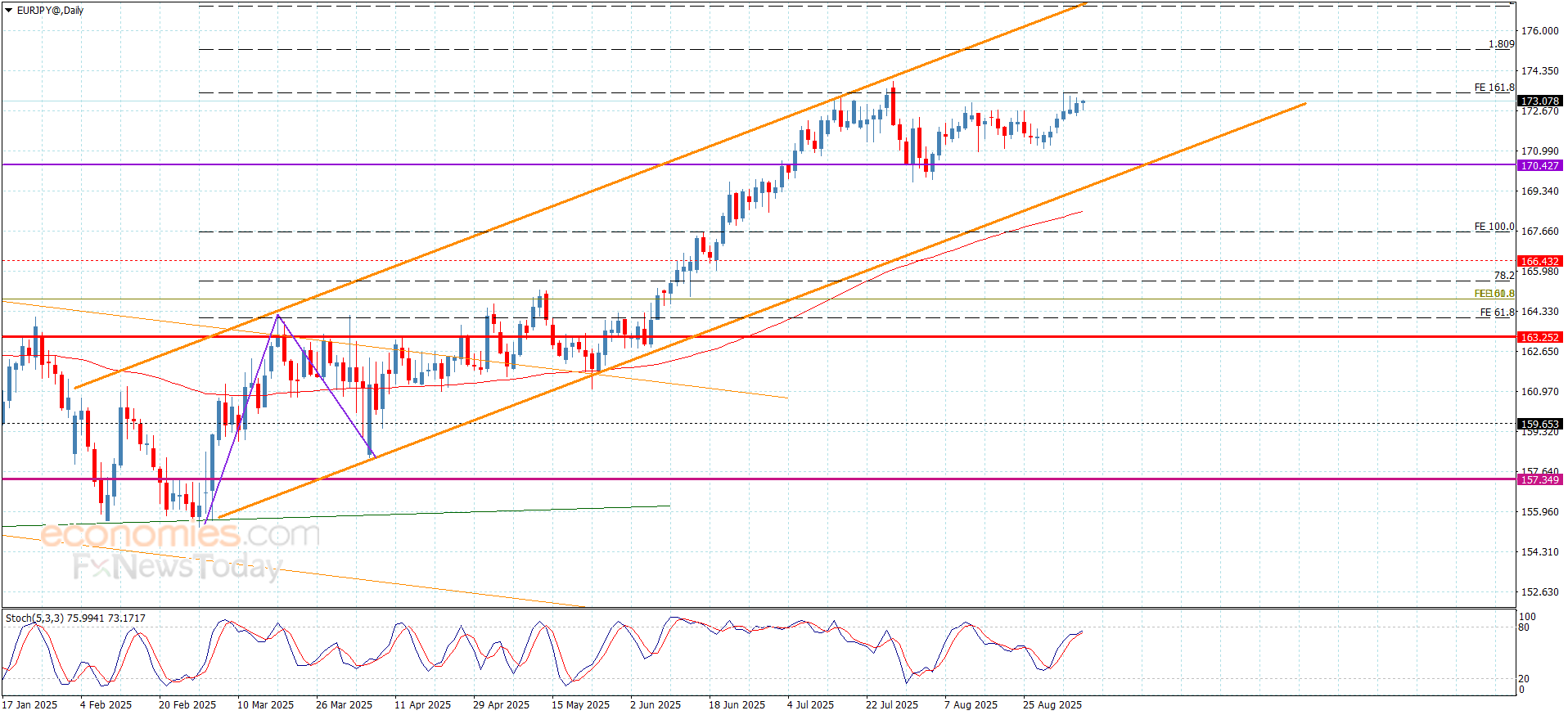
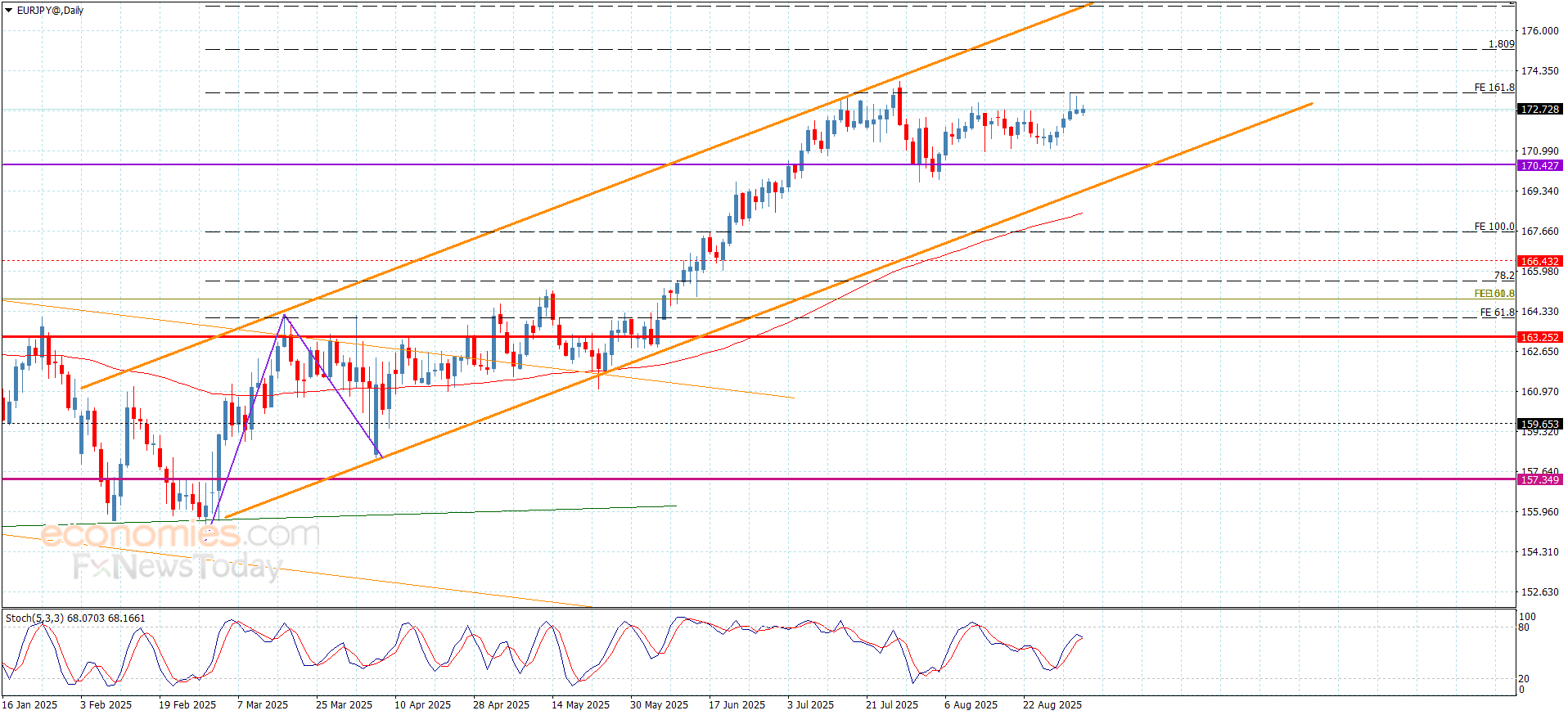
The Euro has broken higher against the Japanese Yen during the trading session here on Friday to break above the 173 Yen level again.
This is a market that has been pretty interesting over the last several weeks as we continue to find reasons one way or another to get long. have no interest whatsoever in shorting this pair because I don’t have any interest in owning the Japanese yen.
The Bank of Japan has to deal with a bond market that is struggling.
There have been a couple of days here where there just hasn’t been much in the way of bids. And if that is going to continue to be the way forward, you have major problems.
Ultimately, I think this is a situation where you’re looking at a central bank in Japan that may have to get involved in quantitative easing again, and that could send this pair much higher. You can see over the last couple of years; it’s just been a steady grind higher. We did have a pullback and a little bit of sideways action, and now we’re approaching the 175 yen level, which is a huge barrier going back to the middle of July of last year.
Bullish Market. Don’t Fight It.
The market is bullish. We just flagged a little bit of a bullish flag and there’s just nothing on this chart to think about shorting. If we broke down below the 171 yen level, then maybe we could go look into the 50 day EMA, which is closer to the 169 yen level, but I just don’t see that happening. I certainly wouldn’t be a seller of that.
I’d be looking for a buy on the dips that show us some type of opportunity to start piling into the euro and away from the Japanese yen again, even the US dollar, which has struggled quite significantly against the Japanese yen has shown itself to be somewhat resilient against the Japanese yen. That just shows you how weak the currency is.
Christopher Lewis has been trading Forex and has over 20 years experience in financial markets. Chris has been a regular contributor to Daily Forex since the early days of the site. He writes about Forex for several online publications, including FX Empire, Investing.com, and his own site, aptly named The Trader Guy. Chris favours technical analysis methods to identify his trades and likes to trade equity indices and commodities as well as Forex. He favours a longer-term trading style, and his trades often last for days or weeks.
The Pound to Dollar exchange rate (GBP/USD) dipped towards 1.3500 on Thursday and retreated below this level in early Europe on Friday with further selling.
The dollar has secured net gains in global markets while the UK data has not provided Pound support.
Overall risk appetite has also stumbled on Friday which has also unsettled the Pound and GBP/USD has posted sharp losses to lows at 1.3425.
According to UoB; “upward momentum has largely faded. To look at it another way, the GBP strength was short-lived.”
It considers that the break below 1.3450 would increase the risk of further selling.
Key support for the Pound is close to 1.3370 and any break below this level would cause further important damage to the outlook.
Bank of America commented; “To say that GBP has had an inauspicious start to H2 is an understatement.”
UK retail sales volumes increased 0.9% for June after a revised 2.8% slide for May, but slightly below consensus forecasts of a 1.2% gain for the month.
There was a rebound in food sales after a sharp decline previously.
According to the ONS; “The warm weather in June helped to brighten sales, with supermarket retailers reporting stronger trading and an increase in drink purchases. It was also a good month for fuel sales as consumers ventured out and about in the sunshine.”
RSM head of retail Jacqui Baker noted that there was still an important element of caution; “While the June figures are welcome news and consumer confidence ticked up last month, nervousness among consumers persists, and the unexpected rise in inflation won’t have helped. The higher price of essentials such as food and fuel will only add to the reluctance among consumers to spend as their discretionary income shrinks.”
The latest GfK consumer confidence index reported a slight decline to -19 for July from -18 the previous month.
There was significant evidence of caution with consumers ramping up savings to the highest level since 2007.
Neil Bellamy, consumer insights director at GfK, commented; “With speculation growing over possible tax rises in the Autumn budget, and price pressure contributing not just to higher inflation already but also to the likelihood of worse inflation to come, the news is worrying.”
According to MUFG; “The PMI data was for July and underlines the likelihood that the UK economy has got off to a weak start in Q3.”
It added; “This grim news was clearly more impactful than the positive news of a trade deal being confirmed between the UK and India.”
ING noted that survey evidence has indicated economic vulnerability and a weaker labour market at the same time as on-going upward pressure on prices.
It commented that; “The latest UK Purchasing Managers’ Index (PMI) perfectly encapsulate the headache the Bank of England faces right now.”
The bank added; “Which of these trends – higher inflation or lower hiring – matters more? This is not a new debate and one that’s far from resolved, setting up another divisive August Bank of England meeting. We wouldn’t be at all surprised to see another three-way vote split, akin to what we saw in May.”
According to the IMF; “In an environment of weak growth, persistent inflationary pressures may create “stagflation” risks, complicating the monetary policy stance and putting pressure on public finances.
Like this piece? Please share with your friends and colleagues:
International Money Transfer? Ask our resident FX expert a money transfer question or try John’s new, free, no-obligation personal service! ,where he helps every step of the way,
ensuring you get the best exchange rates on your currency requirements.
The USD/JPY weekly forecast points to cautious tones from Powell and Ueda.
The yen gained after Prime Minister Ishiba said he would stay on.
A surprise trade deal between Japan and the US boosted the yen.
The USD/JPY weekly forecast points to cautious tones during next week’s Fed and Bank of Japan policy meetings.
Ups and downs of USD/JPY
The USD/JPY price ended the week red but far above its lows. The price fluctuated throughout the week as traders focused on elections, tariffs, and economic data. The ruling party in Japan lost its majority in the upper house. However, the yen gained after Prime Minister Ishiba said he would stay on.
-Are you looking for the best CFD broker? Check our detailed guide-
Meanwhile, a surprise trade deal between Japan and the US further boosted the yen. It lowered Japan’s reciprocal tariff from 25% to 15%. However, the pair reversed its decline after unemployment claims data revealed resilience in the US labor market, pushing the dollar higher.
Next week’s key events for USD/JPY
Next week, the US will release its GDP report, business activity data, and the nonfarm payrolls. At the same time, traders will focus on the FOMC policy meeting for clues on the next rate cut. Meanwhile, the Bank of Japan is also set to meet on Thursday.
Both the Fed and the BoJ are likely to keep delaying their next moves due to the impact of Trump’s tariffs. Therefore, Powell might remain cautious about rate cuts while Ueda will remain cautious about rate hikes.
USD/JPY weekly technical forecast: Bulls retarget the 149.01 resistance level
USD/JPY daily chart
On the technical side, the USD/JPY price is bouncing towards the 149.01 resistance after retesting the 22-SMA support line. The price has been in a corrective move between a key support trendline and the 149.01 key resistance level. Within this area, the price has chopped through the SMA, a sign that bears and bulls are almost equally matched.
The corrective move came after a downtrend that paused at the 140.01 support level. Therefore, it might only be a pause as bears regain momentum. If this is the case, the price will likely soon break below the support trendline. To retest the 140.01 support. Such a move would also allow the previous downtrend to continue.
On the other hand, if bulls are ready to take charge, the price will break above the 149.01 key resistance level. This would allow USD/JPY to retest the 154.02 resistance level.
Looking to trade forex now? Invest at eToro!
68% of retail investor accounts lose money when trading CFDs with this provider. You should consider whether you can afford to take the high risk of losing your money.