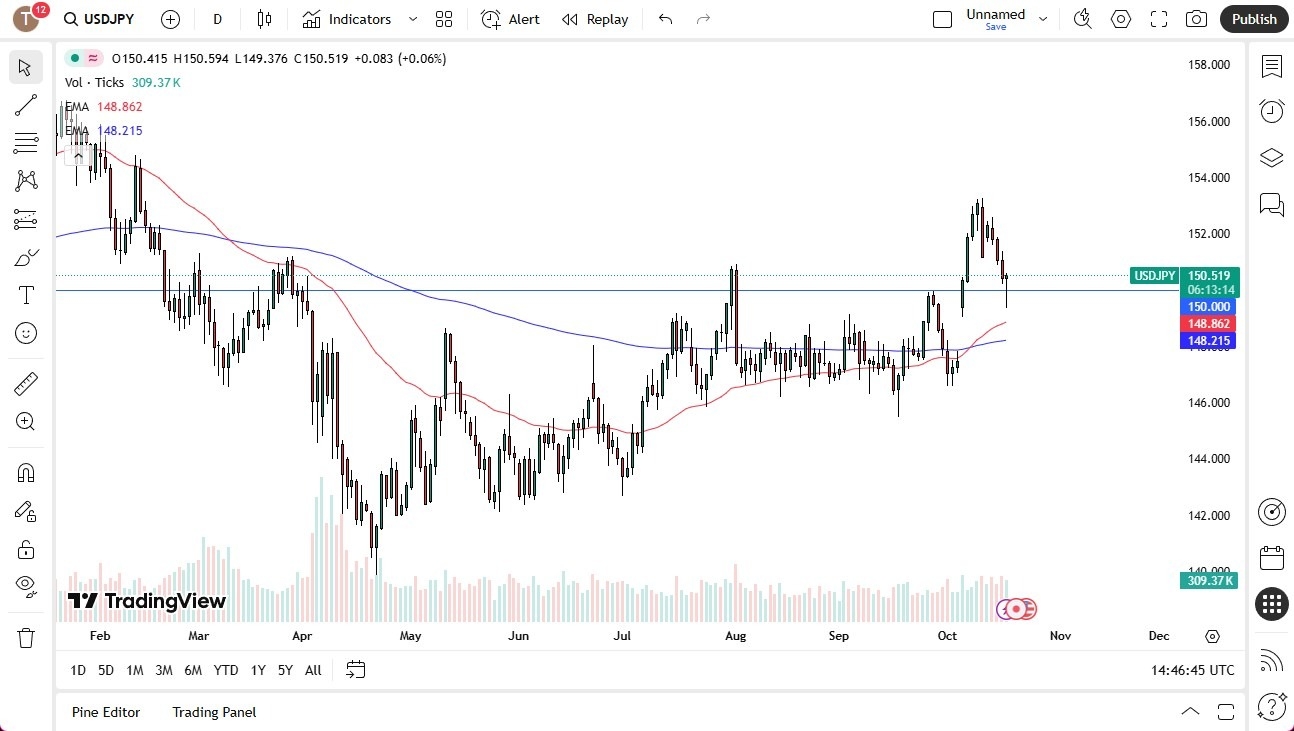
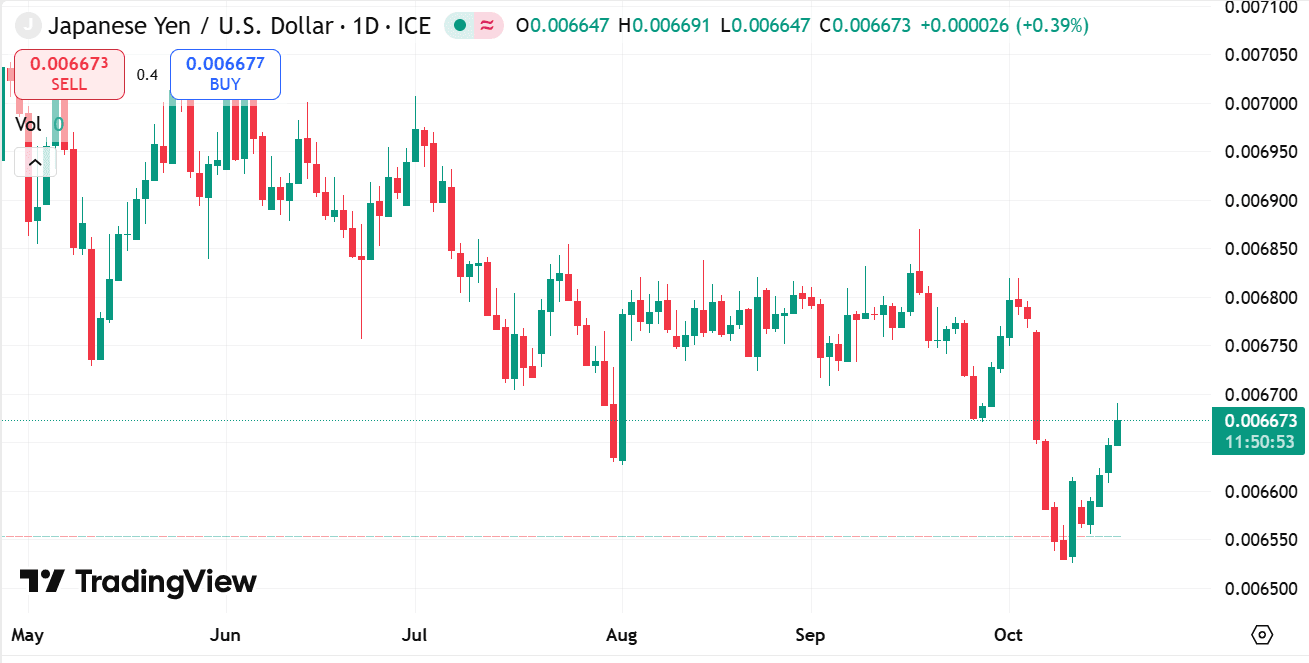
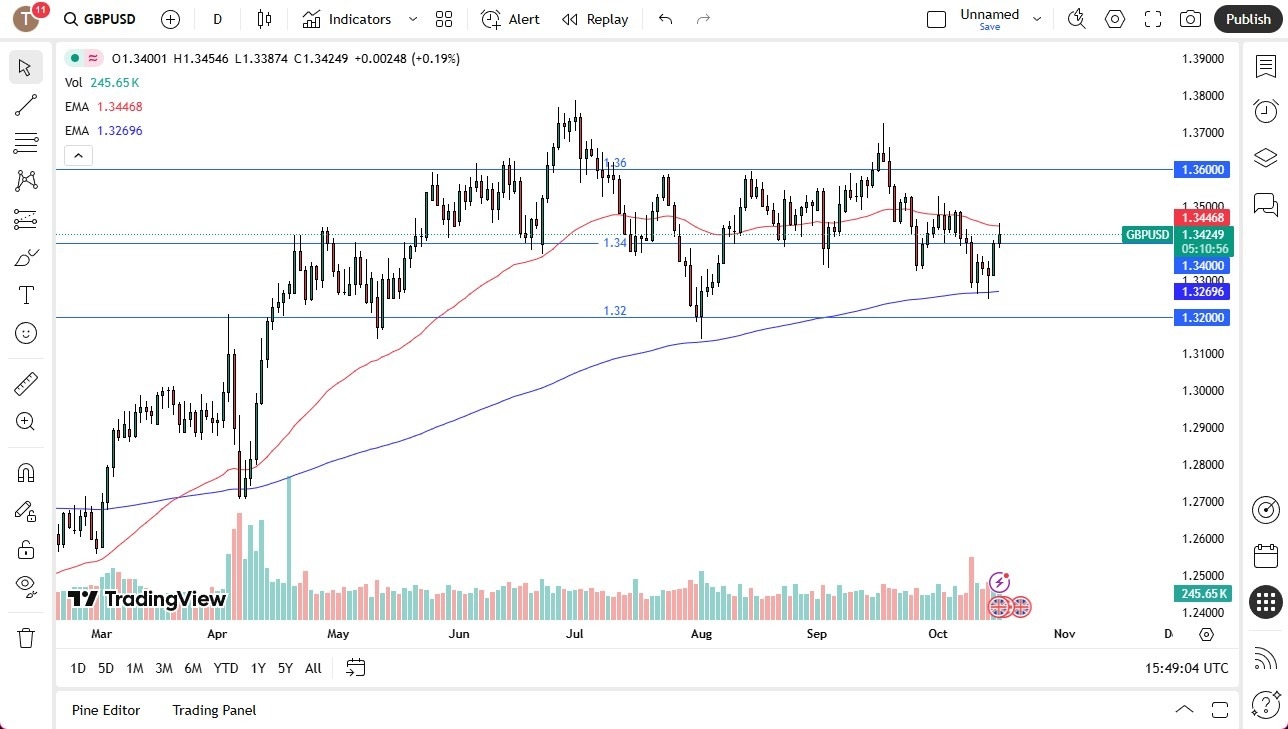
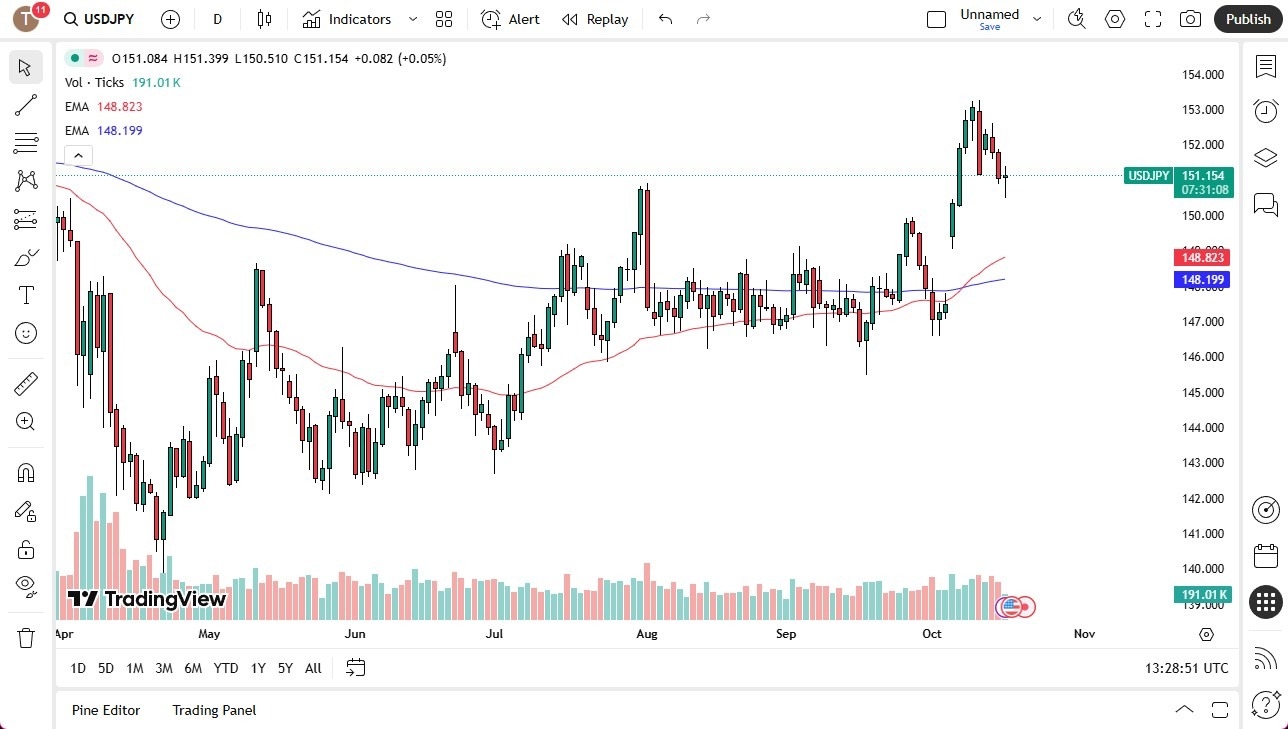
The US dollar initially pulled back against the Japanese yen but turned around to threaten the 149 yen level again, an area that is the resistance at the top of a consolidation zone. The consolidation zone spanning from 149 yen to the 146 yen level underneath has been in effect since the beginning of August. This looks a lot like a market that’s trying to do everything it can to break out. If and when it does, then you’re looking at a move to the 151 yen level next. If it does not, then we may go looking to the 200 day EMA, which is right in the middle of that consolidation region.
AUD/USD Technical Analysis
The Australian dollar continues to struggle, hanging on to gains, as we rallied a bit in the early part of the session, but have given back about half of the gains, just like we did during the previous session. The Australian dollar seems hell bent on going to the 0.6550 level underneath, an area that’s been like a magnet for price and now features a 50 day EMA. Out of all of the major currencies, the Australian dollar was one of the major underperformers through the sell-off of the US dollar for months, so logic dictates that if the US dollar starts strengthening, the Aussie dollar may be in serious trouble.
For a look at all of today’s economic events, check out our economic calendar.
Platinum price activated the attempts of gathering the gains yesterday, by its stability below the barrier of $1480.00, which forces it to decline temporarily towards $1445.00, to keep its positive stability above the extra support at $1440.00.
The continuation of the price fluctuation above the current support and stochastic attempt to provide positive momentum, will increase the chances of breaching the previously-mentioned barrier, to confirm its move to a new positive stations, to begin recording extra gains by its rally to $1515.00 and $1543.00.
The expected trading range for today is between $1460.00 and $1515.00
Zain is an experienced financial markets analyst and educator with a rich tapestry of experience in the world of retail forex, economics, and market analysis. Initially starting out in a sales and business development role, his passion for economics and technical analysis propelled him towards a career as an analyst.
He has spent the last 3 years in an analyst role honing his skills across various financial domains, including technical analysis, economic data interpretation, price action strategies, and analyzing the geopolitical impacts on global markets. Currently, Zain is advancing in obtaining his Capital Markets & Security Analyst (CMSA) designation through the Corporate Finance Institute (CFI), where he has completed modules in fixed income fundamentals, portfolio management fundamentals, equity market fundamentals, introduction to capital markets, and derivative fundamentals.
He is also a regular guest on radio and television programs in South Africa, providing insight into global markets and the economy. Additionally, he has contributed to the development of a financial markets course approved by BankSeta (Banking Sector Education and Training Authority) at NQF level 6 in South Africa.
Zain is an experienced financial markets analyst and educator with a rich tapestry of experience in the world of retail forex, economics, and market analysis. Initially starting out in a sales and business development role, his passion for economics and technical analysis propelled him towards a career as an analyst.
He has spent the last 3 years in an analyst role honing his skills across various financial domains, including technical analysis, economic data interpretation, price action strategies, and analyzing the geopolitical impacts on global markets. Currently, Zain is advancing in obtaining his Capital Markets & Security Analyst (CMSA) designation through the Corporate Finance Institute (CFI), where he has completed modules in fixed income fundamentals, portfolio management fundamentals, equity market fundamentals, introduction to capital markets, and derivative fundamentals.
He is also a regular guest on radio and television programs in South Africa, providing insight into global markets and the economy. Additionally, he has contributed to the development of a financial markets course approved by BankSeta (Banking Sector Education and Training Authority) at NQF level 6 in South Africa.
During the trading session here on Wednesday we’ve seen the Japanese yen lose strength against most currencies.
That of course will include the U S dollar. The U S dollar is approaching the 149 yen level, which has been a massive amount of resistance previously.
So, we’ll see whether or not we can get above there and cotinue the overall resistance barrier fall by the wayside.
Inverted Hammer and Doji Broken
We are breaking the back of an inverted hammer from a couple of days ago as well as a very neutral candlestick from the previous session at this point It does look like we have a bit of momentum So I think we have to look at this through the prism of whether or not we can actually break out and stay above 149 yen if we do then the market likely goes looking to the 151 yen level possibly even higher than that. In fact, we could be seeing the start of a trend, although it is too early to tell with this pair.
On the other hand, if we show signs of exhaustion near the 149 yen level, then I think we just sit in this same range. The action over the last couple of weeks since the FOMC press conference certainly adds more credence to the idea of short-term pullbacks offering buying opportunities in a market that pays you at the end of every day to be holding US dollars in short of the Japanese yen.
I do think it’s probably only a matter of time before we rally, and it is worth noting that the US dollar has been extraordinarily stubborn to selling against other currencies around the world, and the Japanese yen doesn’t look to be any different as the US dollar tends to move in the same direction against most major currencies.
Christopher Lewis has been trading Forex and has over 20 years experience in financial markets. Chris has been a regular contributor to Daily Forex since the early days of the site. He writes about Forex for several online publications, including FX Empire, Investing.com, and his own site, aptly named The Trader Guy. Chris favours technical analysis methods to identify his trades and likes to trade equity indices and commodities as well as Forex. He favours a longer-term trading style, and his trades often last for days or weeks.
Sell EUR/USD from the 1.1820 resistance level. Target: 1.1600. Stop-loss: 1.1900.
Buy EUR/USD from the 1.1640 support level. Target: 1.1810. Stop-loss: 1.1600.
Technical Analysis of EUR/USD Today:
As previously predicted, renewed selling of the Euro/US Dollar (EUR/USD) may be possible as bulls fail to advance further above the 1.18000 resistance level. This was confirmed by yesterday’s trading, as the Euro/US Dollar (EUR/USD) price fell from the 1.1820 resistance level, with losses, to the 1.1728 support level, where it stabilized at the beginning of today’s session, Thursday, September 25, 2025. The Forex market is awaiting the announcement of a series of important US economic releases, led by the US GDP growth rate, followed by the weekly unemployment claims number and the durable goods orders figures, all at 3:30 PM Cairo time.
Reasons for the Euro’s Renewed Decline
According to forex currency trading experts, the EUR/USD pair retreated from its four-year high of 1.1920, which it tested following the US rate cut. The euro’s drop resumed after weaker-than-expected German economic indicators negatively affected the value of the single European currency. The German IFO Business Climate Index fell by 1.2 points to 87.7 in September, reaching its lowest level since May and missing market forecasts of 89.3. This decline followed mixed Eurozone PMI results, which showed continued private sector growth in September, driven by a strong services sector, while the manufacturing sector contracted.
Meanwhile, investors followed comments from Federal Reserve Chairman Jerome Powell, who reiterated his cautious stance on US interest rate cuts amid continued inflationary pressures from tariffs and a weak labor market. Financial market expectations currently indicate a greater than 90% chance of a US interest rate cut by the Fed in October, with investors awaiting the US Personal Expenditures Price Index (PEPI) due out Friday.
German bond yields fell… What happened?
According to trusted trading platforms, German bond yields fell as economic data wavered and the Federal Reserve adopted a cautious outlook, which affected market performance. The yield on German 10-year bonds reached 2.73%, retreating after having risen to a two-week high of 2.762% on Monday. This retreat came as investors assessed new economic data and its implications for European Central Bank policy. The German IFO Business Climate Index’s decline to 87.7, missing expectations, reflected lower business confidence in both current conditions and future expectations.
Meanwhile, the Purchasing Managers’ Index (PMI) survey showed that Germany’s services sector expanded at its fastest pace since May 2024, while manufacturing contracted more sharply than expected. In the United States, Federal Reserve Chairman Jerome Powell reiterated his cautious stance on interest rate hikes, taking into account persistent inflationary pressures from tariffs and signs of a slowing labor market. Also, geopolitical tensions escalated after US President Donald Trump expressed confidence in Ukraine’s ability to reclaim all Russian-occupied territory.
Technical Outlook for the Euro Dollar:
Based on the daily chart, the EUR/USD pair is emerging from the neutral zone amid a bearish bias that will intensify if bears succeed in advancing towards the support levels of 1.1690 and 1.1600, respectively. The 14-day Relative Strength Index (RSI) is currently approaching a break above the 50-line, increasing the bearish technical momentum. Meanwhile, the MACD lines are trending downwards, awaiting further selling pressure. A strong EUR/USD bullish scenario on the daily chart should prompt bulls to move towards the resistance levels of 1.1820 and 1.1900, followed by the psychological resistance of 1.2000, respectively.
Trading Tips:
We still recommend selling the euro against the US dollar with every strong upward bounce, but never take risks and be careful. Obvioulsy, the US dollar is awaiting the announcement of the Federal Reserve’s preferred inflation reading at the end of the week.
Pound bulls have encountered resistance above the 200.00 level in their rally against the Yen.
The JPY remains on its back foot with traders awaiting Tokyo CPI data.
GBP/JPY is attempting to overcome a reverse trendline at 200.30.
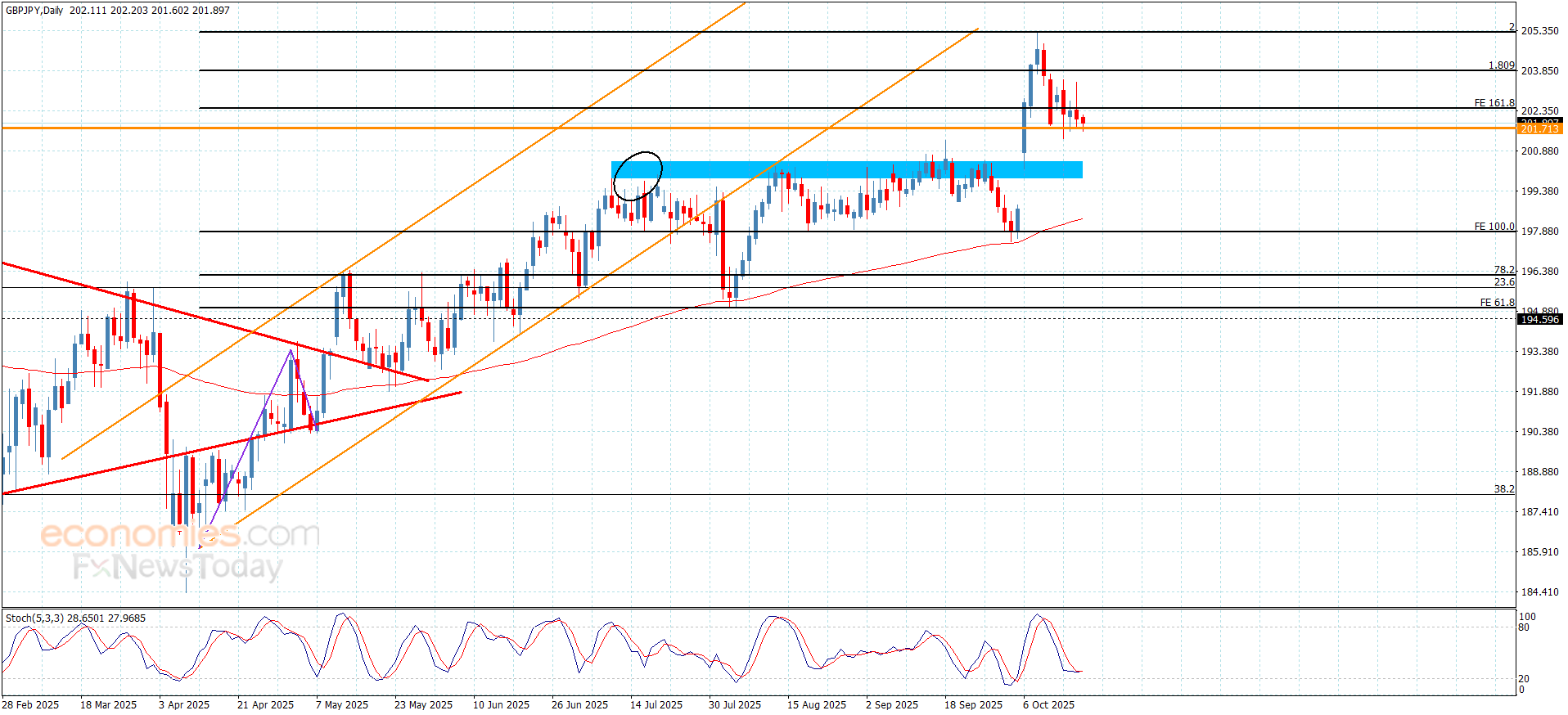
The British Pound is trading higher against the Japanese Yen for the fourth consecutive day. The pair bounced up from the 199.20 area last week and has returned above the 200.00 level; however, a broken trendline resistance in the vicinity of 200.30 is currently holding bulls back for now.
The pound has been drawing support from a broad-based Yen weakness this week. The minutes of the latest BoJ meeting have failed to provide any significant support to the Yen, as investors await Tokyo CPI data, due later today, with the market split about the chances of a rate hike in October.
GBP/JPY 4-Hour Chart
The technical picture is positive. Indicators on t-hour chats show a strong bullish momentum, but the pair would need to return above the bottom of the broken channel, at 200.30, to extend its recovery towards the September 19 high, at 200.50, and the year-to-date high, at 201.27
To the downside, the intra-day low, near 199.90, is likely to challenge a potential bearish reaction. Below here, the 199.20 area, which contained downside attempts on September 18 and 23, will come into focus. Further down, the 78.6% retracement of the September rally meets the September 5 low at 168.65.
Japanese Yen Price Today
The table below shows the percentage change of Japanese Yen (JPY) against listed major currencies today. Japanese Yen was the strongest against the Swiss Franc.
USD
EUR
GBP
JPY
CAD
AUD
NZD
CHF
USD
-0.06%
-0.08%
-0.15%
0.01%
-0.13%
-0.12%
0.04%
EUR
0.06%
-0.04%
-0.12%
0.06%
-0.05%
-0.07%
0.10%
GBP
0.08%
0.04%
-0.06%
0.10%
-0.04%
-0.01%
0.17%
JPY
0.15%
0.12%
0.06%
0.14%
-0.00%
0.19%
0.20%
CAD
-0.01%
-0.06%
-0.10%
-0.14%
-0.12%
-0.13%
0.07%
AUD
0.13%
0.05%
0.04%
0.00%
0.12%
0.30%
0.16%
NZD
0.12%
0.07%
0.00%
-0.19%
0.13%
-0.30%
-0.09%
CHF
-0.04%
-0.10%
-0.17%
-0.20%
-0.07%
-0.16%
0.09%
The heat map shows percentage changes of major currencies against each other. The base currency is picked from the left column, while the quote currency is picked from the top row. For example, if you pick the Japanese Yen from the left column and move along the horizontal line to the US Dollar, the percentage change displayed in the box will represent JPY (base)/USD (quote).
Platinum price activated the attempts of gathering the gains yesterday, by its stability below the barrier of $1480.00, which forces it to decline temporarily towards $1445.00, to keep its positive stability above the extra support at $1440.00.
The continuation of the price fluctuation above the current support and stochastic attempt to provide positive momentum, will increase the chances of breaching the previously-mentioned barrier, to confirm its move to a new positive stations, to begin recording extra gains by its rally to $1515.00 and $1543.00.
The expected trading range for today is between $1460.00 and $1515.00
Powell emphasized that premature cuts could undermine inflation control and potentially force a policy reversal. His comments helped steady the dollar, limiting downside momentum.
Packed U.S. Data Calendar in Focus
Attention now turns to a busy U.S. economic schedule. The final estimate for second-quarter GDP is expected to confirm growth at 3.3%, while the GDP price index is forecast to hold at 2.0%.
Weekly jobless claims are projected at 233K, a slight increase from 231K previously, suggesting labor market resilience. Core durable goods orders are expected to decline 0.1% after last month’s 1.0% gain, while headline orders are forecast to contract 0.3%.
Traders are also monitoring the U.S. goods trade balance, expected at –$95.7 billion, and wholesale inventories, seen rising 0.2%. Later in the day, remarks from several Federal Reserve officials, including Miran, Goolsbee, Schmid, and Williams, may add clarity on the policy outlook.
The Euro to Dollar exchange rate traded back below 1.18 on Wednesday after weak German confidence data, though banks remain split on the outlook.
Danske Bank favours a tactical dollar rebound, while ING and MUFG still expect EUR/USD to push towards 1.20 into year-end.
EUR/USD Forecasts: Trades Below 1.18
The Euro to Dollar (EUR/USD) exchange rate advanced to a high of 1.1820 in Asia on Wednesday, but dipped sharply after much weaker than expected German business confidence data and traded around 1.1770.
UoB expects further range trading; “there is no marked change in either downward or upward momentum,” and we reiterated our view that EUR is still trading in a range of 1.1715/1.1855.”
Danske Bank sees scope for a limited near-term dollar recovery; “Looking ahead, we continue to favour a tactical USD rebound. With limited scope for further dovish Fed repricing, the USD remains moderately attractive near term – though this week may prove more about consolidation given the lack of fresh catalysts.”
Danske still expects medium-term EUR/USD gains to above 1.20.
Save on Your EUR/USD Transfer
Get better rates and lower fees on your next international money transfer.
Compare TorFX with top UK banks in seconds and see how much you could save.
ING commented; “We remain moderately bullish on EUR/USD in the near term, although we doubt it will be smooth sailing to 1.200 from here.”
The German IFO index dipped to 87.7 for September from a revised 88.9 for August and below market expectations of 89.3 with both the current assessment and expectations components weakening on the month.
ING commented; “All in all, today’s Ifo index serves as a painful reminder of how high hopes can quickly evaporate into thin air. The optimism of the first months of the year has swiftly been brought back down to earth.
It added; “This does not automatically mean that hopes for a recovery should be given up entirely – but it does mean that the economy is set for yet another year in stagnation.”
US monetary policy will also be a key component for currency markets.
In comments on Tuesday, Fed Chair Powell emphasised a very unusual situation in the labour market with a sharp decline in supply and demand. Powell noted that balancing the risk of high inflation and a stumbling job market was a challenging situation.
Markets are still pricing in close to a 95% chance that rates will be cut again at the October meeting with close to an 80% chance of two cuts by year-end.
Given that markets have priced in these cuts, the dollar could gain some ground if these cuts are in doubt.
MUFG still expects medium-term dollar losses; Assuming the labour market continues to show weakness and there are no nasty upside CPI surprises, there should be a path to two 25bp rate cuts in October and December. That will ensure the scope for further moderate dollar depreciation by year-end remains.
Like this piece? Please share with your friends and colleagues:
International Money Transfer? Ask our resident FX expert a money transfer question or try John’s new, free, no-obligation personal service! ,where he helps every step of the way,
ensuring you get the best exchange rates on your currency requirements.
Known as one of the more hawkish voices on the MPC, a repeat of her warnings about slowing disinflation could hint at higher-for-longer rates and help steady Sterling.
GBP/USD Forecasts: US Data to Steer Direction
Looking to Thursday, US durable goods orders and second-quarter GDP figures are likely to set the tone.
Durable goods are forecast to rebound from -2.8% to -0.5%, while GDP is expected to accelerate sharply from -0.5% to 3.3%.
If realised, the releases could give the Dollar fresh momentum.
For the Pound, focus will be on the CBI distributive trades survey. An improvement from -32 to -26 would still signal weak retail activity, but any upside surprise could lend Sterling modest support towards the end of the week.
Like this piece? Please share with your friends and colleagues:
International Money Transfer? Ask our resident FX expert a money transfer question or try John’s new, free, no-obligation personal service! ,where he helps every step of the way,
ensuring you get the best exchange rates on your currency requirements.