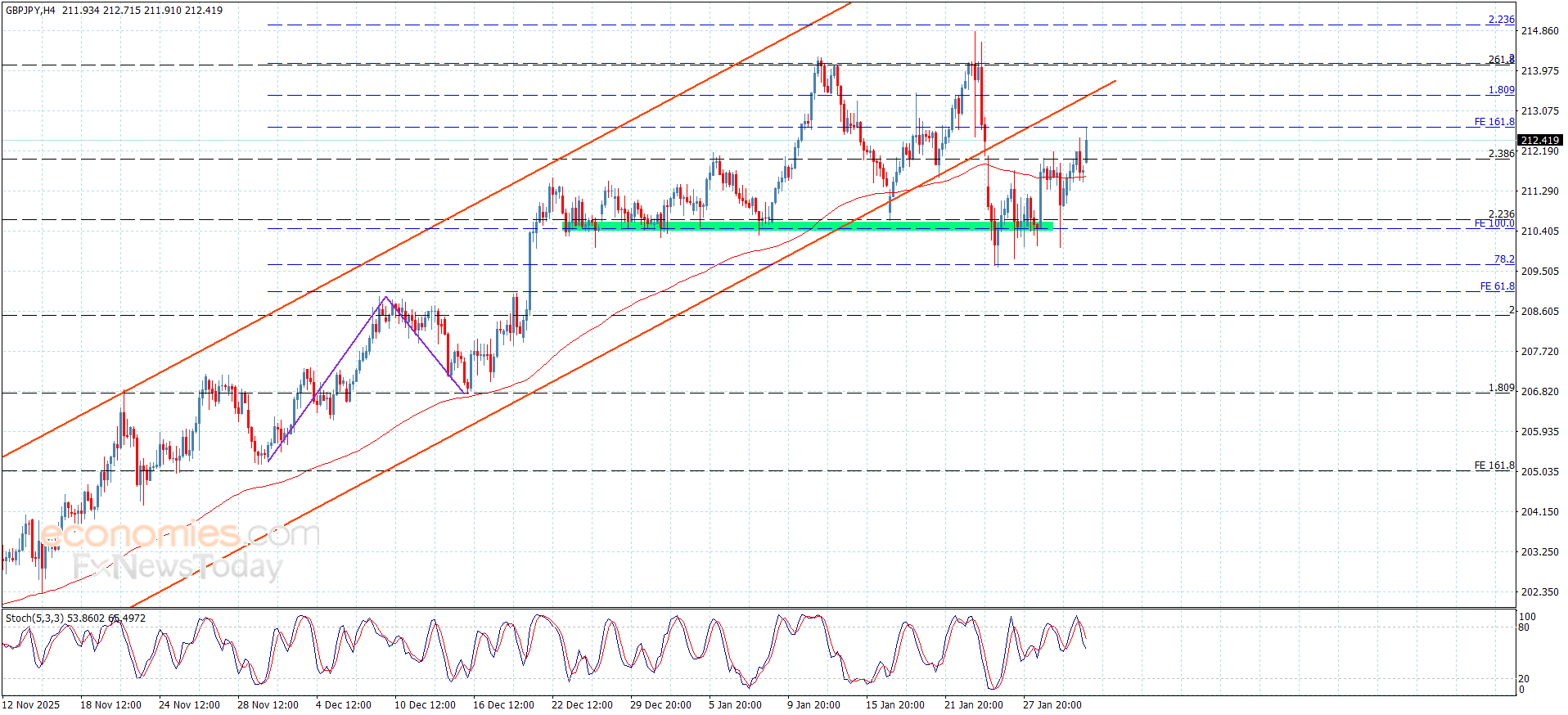
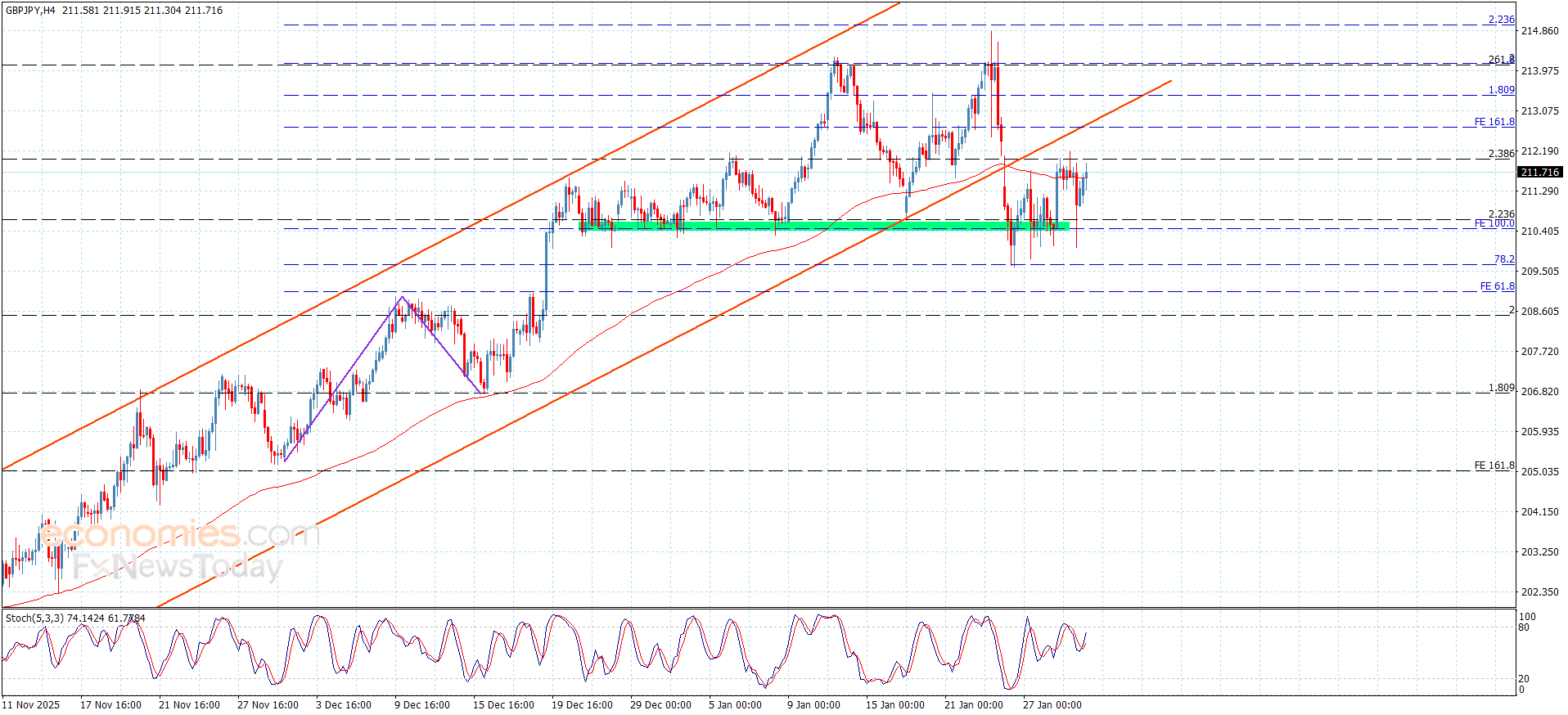
The GBPJPY pair is forced to provide slow corrective trading, due to the contradiction between the main indicators, keeping its fluctuations near 210.65 level, but its stability below 211.30 level supports the chances of activating the bearish corrective attack, to keep waiting for our negative expectations until reaching 209.70 level reaching the minor bullish channel’s support at 209.00.
While gathering extra bullish momentum and its rally above the barrier will provide new opportunity for activating the bullish trend, to expect targeting new positive stations that might begin at 212.65.
The expected trading range for today is between 209.30 and 211.20
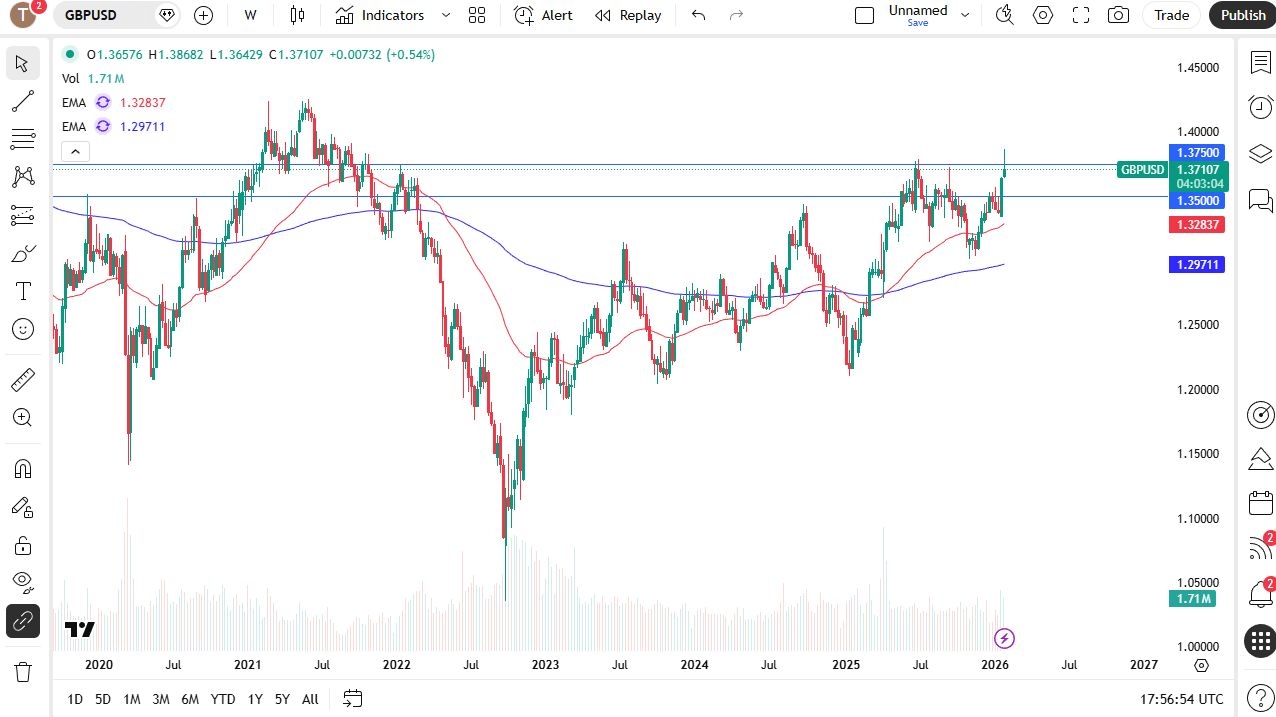
The British pound has been pretty choppy during the Monday session as we continue to hover around the 1.35 level.
GBP/USD
The 1.35 level, of course, is a large, round, psychologically significant figure and an area that a lot of people will be watching, as it has been important a couple of times in the past. Nonetheless, I think we have a situation where there is a lack of volume. I do not know how much I read into the price action at the moment.
Yes, the US dollar has softened quite a bit over the last couple of weeks, but we also have to keep in mind that there are some concerns about the global economy. If that ends up being the case, it does make a certain amount of sense that the US dollar still has a bit of demand.
Fed Rate Cuts
Furthermore, you have to understand that some of the leading indicators and data have thrown a bit of a monkey wrench into the plans of those who are looking to sell off the US dollar based on loosening monetary policy. It is not that rare that the Federal Reserve starts cutting rates and then the US dollar strengthens shortly afterwards. That is mainly because it is a sign of potential stress in the system. However, the fundamentals do not matter if the price ends up doing something completely different.
At this point, if we do break out to the upside, I think the 1.37 level is a potential target, perhaps even the 1.38 level. If we turn around and break below the 1.3450 level, then we could go down to the 1.33 level. Ultimately, this is a market that I think is at a major inflection point, and we need to watch it very closely. I suspect that this is all about the US dollar, so watch the US dollar against other currencies. It could give you a bit of a heads-up.
Christopher Lewis has been trading Forex and has over 20 years experience in financial markets. Chris has been a regular contributor to Daily Forex since the early days of the site. He writes about Forex for several online publications, including FX Empire, Investing.com, and his own site, aptly named The Trader Guy. Chris favours technical analysis methods to identify his trades and likes to trade equity indices and commodities as well as Forex. He favours a longer-term trading style, and his trades often last for days or weeks.
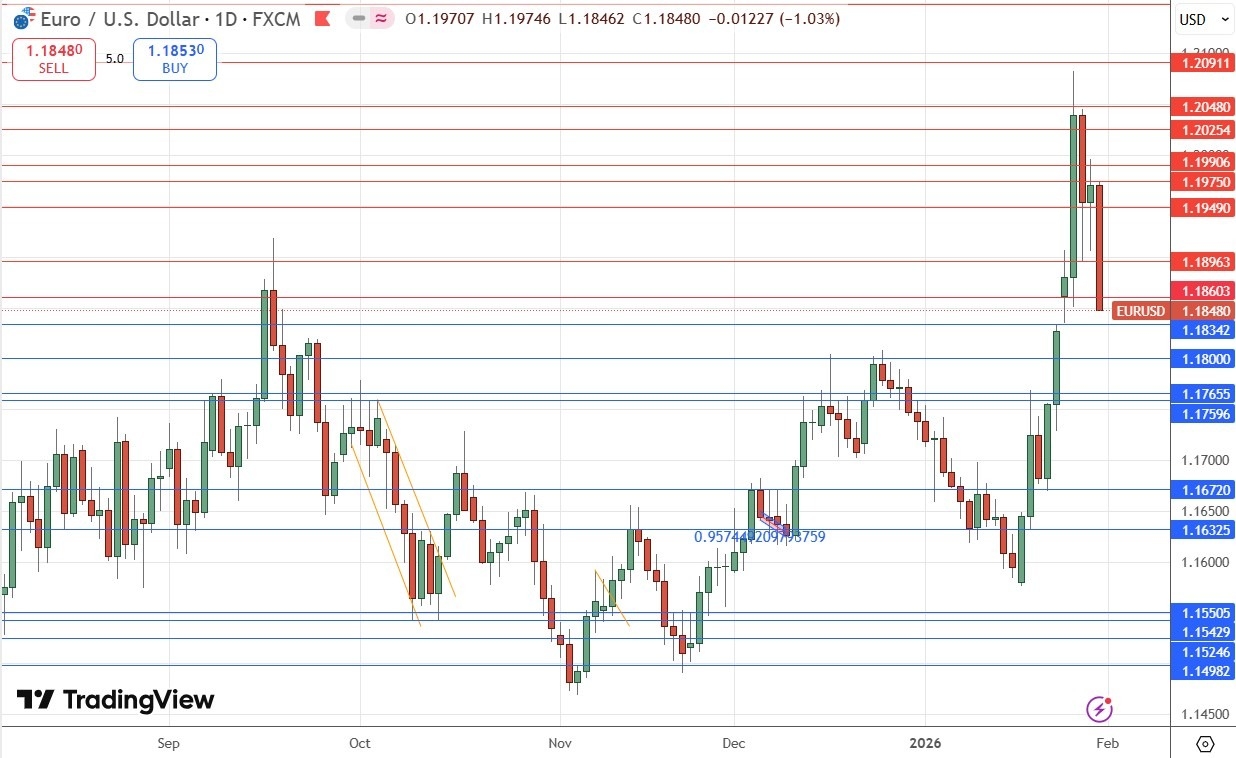
EUR/USD struggled to make a decisive move in either direction on Monday to close virtually unchanged. The pair continues to move sideways, slightly above 1.1750, in the European session on Tuesday. The neutral technical stance and thin trading conditions ahead of the New Year holiday could cause the pair to remain in a consolidation phase in the short term.
Euro Price This Month
The table below shows the percentage change of Euro (EUR) against listed major currencies this month. Euro was the strongest against the US Dollar.
USD
EUR
GBP
JPY
CAD
AUD
NZD
CHF
USD
-1.44%
-2.01%
-0.12%
-2.10%
-2.39%
-1.43%
-1.78%
EUR
1.44%
-0.57%
1.34%
-0.66%
-0.96%
0.03%
-0.33%
GBP
2.01%
0.57%
2.17%
-0.09%
-0.39%
0.61%
0.22%
JPY
0.12%
-1.34%
-2.17%
-2.01%
-2.29%
-1.31%
-1.69%
CAD
2.10%
0.66%
0.09%
2.01%
-0.34%
0.70%
0.32%
AUD
2.39%
0.96%
0.39%
2.29%
0.34%
1.00%
0.59%
NZD
1.43%
-0.03%
-0.61%
1.31%
-0.70%
-1.00%
-0.38%
CHF
1.78%
0.33%
-0.22%
1.69%
-0.32%
-0.59%
0.38%
The heat map shows percentage changes of major currencies against each other. The base currency is picked from the left column, while the quote currency is picked from the top row. For example, if you pick the Euro from the left column and move along the horizontal line to the US Dollar, the percentage change displayed in the box will represent EUR (base)/USD (quote).
The data from the US showed on Monday that Pending Home Sales increased by 3.3% in November. This reading came in better than the market expectation of 1% but failed to trigger a noticeable market reaction. Meanwhile, the Federal Reserve Bank of Dallas noted in its monthly report that the Dallas Fed Manufacturing Index edged lower to -10.9 in December from -10.4 in November.
Later in the day, the Federal Reserve will publish the minutes of the December policy meeting. In case the publication shows that policymakers are willing to take some time to assess the economic conditions before cutting the policy rate again, the US Dollar (USD) could hold its ground and make it difficult for EUR/USD to edge higher. Conversely, a dovish tone, with officials reaffirming the need to support the labor market and confidence about inflation not rising again, the USD could come under bearish pressure. Nevertheless, markets are unlikely to get out of the holiday mood until next week.
EUR/USD Technical Analysis:
The 20-period Simple Moving Average (SMA) has flattened and now caps near 1.1777 as the pair slips marginally beneath it. The 50-, 100-, and 200-period SMAs trend higher below price, reinforcing a positive underlying bias. The 50-period SMA at 1.1756 offers nearby dynamic support. The Relative Strength Index (14) stands at 49, neutral and easing, which hints at fading intraday momentum.
Measured from the 1.1503 low to the 1.1800 high, the 23.6% retracement at 1.1730 aligns as a key support level, followed by the 38.2% retracement at 1.1687 next. Immediate resistance aligns at 1.1800 (static level) ahead of 1.1840 (upper limit of the ascending channel).
(The technical analysis of this story was written with the help of an AI tool)
Euro FAQs
The Euro is the currency for the 20 European Union countries that belong to the Eurozone. It is the second most heavily traded currency in the world behind the US Dollar. In 2022, it accounted for 31% of all foreign exchange transactions, with an average daily turnover of over $2.2 trillion a day.
EUR/USD is the most heavily traded currency pair in the world, accounting for an estimated 30% off all transactions, followed by EUR/JPY (4%), EUR/GBP (3%) and EUR/AUD (2%).
The European Central Bank (ECB) in Frankfurt, Germany, is the reserve bank for the Eurozone. The ECB sets interest rates and manages monetary policy.
The ECB’s primary mandate is to maintain price stability, which means either controlling inflation or stimulating growth. Its primary tool is the raising or lowering of interest rates. Relatively high interest rates – or the expectation of higher rates – will usually benefit the Euro and vice versa.
The ECB Governing Council makes monetary policy decisions at meetings held eight times a year. Decisions are made by heads of the Eurozone national banks and six permanent members, including the President of the ECB, Christine Lagarde.
Eurozone inflation data, measured by the Harmonized Index of Consumer Prices (HICP), is an important econometric for the Euro. If inflation rises more than expected, especially if above the ECB’s 2% target, it obliges the ECB to raise interest rates to bring it back under control.
Relatively high interest rates compared to its counterparts will usually benefit the Euro, as it makes the region more attractive as a place for global investors to park their money.
Data releases gauge the health of the economy and can impact on the Euro. Indicators such as GDP, Manufacturing and Services PMIs, employment, and consumer sentiment surveys can all influence the direction of the single currency.
A strong economy is good for the Euro. Not only does it attract more foreign investment but it may encourage the ECB to put up interest rates, which will directly strengthen the Euro. Otherwise, if economic data is weak, the Euro is likely to fall.
Economic data for the four largest economies in the euro area (Germany, France, Italy and Spain) are especially significant, as they account for 75% of the Eurozone’s economy.
Another significant data release for the Euro is the Trade Balance. This indicator measures the difference between what a country earns from its exports and what it spends on imports over a given period.
If a country produces highly sought after exports then its currency will gain in value purely from the extra demand created from foreign buyers seeking to purchase these goods. Therefore, a positive net Trade Balance strengthens a currency and vice versa for a negative balance.
Sterling’s rally against the Japanese Yen has stalled below the 211.50 level. The pair is now looking for direction, with downside attempts contained above 210.00 so far. The minutes of the latest BoJ meeting have cemented hopes of further monetary tightening, and the tensions in the East China Sea have dampened risk appetite, altogether providing support to the safe-haven Yen.
The Chinese Navy extends military drills for the second day, including live-fire of missiles and rehearsals of a total blockade of the Taiwan island, which has forced Taipei to ramp up its defences. The escalating tensions in the region have hammered Asian markets and are providing some support to the safe-haven Yen on Tuesday.
Technical analysis: Indicators show a fading bullish momentum
In the 4-hour chart, GBP/JPY trades at 210.76, posting marginal losses on the daily chart. The broader bullish trend remains intact, but technical indicators are entering negative territory. The Moving Average Convergence Divergence (MACD) remains slightly below zero, while the Relative Strength Index (RSI) remains wavering around the key 50 level, showing a lack of clear direction.
Immediate support stands at 210.05 (December 24 low), and the trendline from early November lows is now at 209.35. A confirmation below those levels will bring the mid-December highs, around 208.90, into focus.
On the upside, the 211.53 long-term high is holding bulls for now. Further up, tthe 127.2% Fibonacci extension of the December 15 to December 22 rally, at 212.75, and the 161.8% extension of the same cycle, at 214.38, are plausible targets.
(The technical analysis of this story was written with the help of an AI tool)
Japanese Yen Price Today
The table below shows the percentage change of Japanese Yen (JPY) against listed major currencies today. Japanese Yen was the strongest against the Swiss Franc.
USD
EUR
GBP
JPY
CAD
AUD
NZD
CHF
USD
0.00%
-0.07%
-0.12%
-0.08%
-0.23%
-0.16%
-0.01%
EUR
-0.01%
-0.08%
-0.13%
-0.10%
-0.26%
-0.16%
-0.04%
GBP
0.07%
0.08%
-0.04%
-0.02%
-0.17%
-0.07%
0.04%
JPY
0.12%
0.13%
0.04%
0.03%
-0.11%
-0.05%
0.14%
CAD
0.08%
0.10%
0.02%
-0.03%
-0.14%
-0.07%
0.06%
AUD
0.23%
0.26%
0.17%
0.11%
0.14%
0.08%
0.21%
NZD
0.16%
0.16%
0.07%
0.05%
0.07%
-0.08%
0.13%
CHF
0.01%
0.04%
-0.04%
-0.14%
-0.06%
-0.21%
-0.13%
The heat map shows percentage changes of major currencies against each other. The base currency is picked from the left column, while the quote currency is picked from the top row. For example, if you pick the Japanese Yen from the left column and move along the horizontal line to the US Dollar, the percentage change displayed in the box will represent JPY (base)/USD (quote).
The Euro pulled back a bit during the trading session on Monday against the Japanese yen, as we continue to see a lot of noisy overall trading behavior.
EUR/JPY
Nonetheless, the longer-term trend is most certainly to the upside, and I think that continues to be the major driver of where we go next. If we were to drop from here, the 182 yen level is an area that I think will more likely than not offer quite a bit of support, especially as the 50-day EMA is racing toward it. Remember, the interest rate differential still favors the Euro over the Japanese yen.
Because of this, I think traders will continue to try to hold this pair over the longer term, and getting paid at the end of every day certainly helps. If we were to break down below the 182 yen level, then I will be watching the 50-day EMA, presently at the 180.47 level and rising for support.
Upside Targets
To the upside, I see the 186 yen level as a potential target. The 185 yen level underneath there, of course, has a certain amount of psychology attached to it, but I think given enough time, we will slice through it. In fact, we almost did about a week ago, and I think you have a situation where we will continue to see buyers willing to take advantage of dips.
The Bank of Japan has recently raised rates, but quite frankly, the market didn’t seem too impressed by it, and as a result, I think the Japanese yen will continue to get punished for a whole host of reasons. I have no interest in shorting this pair but do keep in mind that if we get some type of major systemic fear out there, it does tend to benefit the Japanese yen. That correction would probably be a nice opportunity to get long again at an even better price.
Christopher Lewis has been trading Forex and has over 20 years experience in financial markets. Chris has been a regular contributor to Daily Forex since the early days of the site. He writes about Forex for several online publications, including FX Empire, Investing.com, and his own site, aptly named The Trader Guy. Chris favours technical analysis methods to identify his trades and likes to trade equity indices and commodities as well as Forex. He favours a longer-term trading style, and his trades often last for days or weeks.
EUR/GBP struggled to sustain early Thursday gains as renewed strength in the British pound weighed on the pair.
A potential topping pattern and failure at the 50-day EMA point toward a possible move toward £0.87 and even £0.86 if support breaks.
The euro initially tried to rally against the British pound during the trading session on Thursday, but it looks as if the unwinding of negative bets against the British pound continues on Thursday. We initially tried to break above that 50-day EMA, but have given that back, and now it looks like the budget in the United Kingdom has allayed some of the fears that traders had about the British pound, and it is showing up here and many other currency pairs. With that being said, I am looking at a potential breakdown toward the 0.87 level. If we break down below the 0.87 level, I suspect that at that point in time, we make a move down to 0.86 and lower. This does look a lot like a topping pattern, and the sizable candlestick on Wednesday, of course, definitely makes this appear a very probable breakdown.
Choppy is Normal Here
This market typically is very choppy, to say the least, and as a result, you have to be very cautious, but I also look at this market as one that has been close to a major resistance barrier in the form of 0.89. And as long as we don’t break above there, I don’t know that the behavior of this pair will have changed drastically from a longer-term standpoint. While I don’t necessarily expect a massive shorting opportunity, I do think that overall, we are starting to see a shift in the pattern, and this suggests to me that maybe we have a trend change. It’s still early days, but with a little bit of caution, it is a trade that I might be willing to take.
Christopher Lewis has been trading Forex and has over 20 years experience in financial markets. Chris has been a regular contributor to Daily Forex since the early days of the site. He writes about Forex for several online publications, including FX Empire, Investing.com, and his own site, aptly named The Trader Guy. Chris favours technical analysis methods to identify his trades and likes to trade equity indices and commodities as well as Forex. He favours a longer-term trading style, and his trades often last for days or weeks.
Buy EUR/USD from the support level of 1.1690 with a target of 1.1820 and a stop-loss at 1.1600.
Sell EUR/USD from the resistance level of 1.1830 with a target of 1.1500 and a stop-loss at 1.1900.
Technical Analysis of EUR/USD Today:
The Euro is stabilizing against the US Dollar (EUR/USD) near the 1.1800 resistance as the final trading days of 2025 begin. This sets the stage for a strong performance heading into 2026. According to top-tier trading platforms, Euro trading has remained positive, fueled by market expectations regarding the future policies of the US Federal Reserve compared to those of the European Central Bank (ECB).
Amidst quiet holiday trading between Christmas and the New Year, the exchange rate settled near 1.1772. The US Dollar remains under pressure despite strong US growth data. Recently, financial markets have shifted their focus toward Federal Reserve policy outlooks and concerns over central bank independence, rather than short-term economic activity indicators.
With long positions on the euro increasing, the potential for further gains may depend on the emergence of new catalysts in early January.
Will the Euro’s gains continue in the coming days?
According to forex market trading, the euro (EUR) remained stable in global markets last week, while the dollar remained under pressure despite better-than-expected US GDP data. Consequently, the EUR/USD exchange rate reached its highest level in three months, approaching 1.1810, before settling slightly below 1.18.
Regarding factors influencing currency prices, any developments related to the incoming Federal Reserve Chair and other US central bank officials will be closely monitored. Looking ahead, MUFG Bank anticipates further limited net losses for the dollar in 2026 due to interest rate changes. They stated, “We expect the European Central Bank to maintain its current monetary policy throughout 2026, justifying the EUR/USD exchange rate’s rise in short-term yield movements, given that the Federal Reserve is poised to cut interest rates at least three times, exceeding expectations.”
After an initial stabilization, the bank expects the EUR/USD exchange rate to reach 1.24 by the end of 2026.
Trading Advice:
Traders advise caution when trading during periods of low market liquidity, a natural reaction to holidays in many financial markets.
2026 Trading Outlook:
According to currency trading experts, the US dollar is likely to remain vulnerable to volatility in global markets until the start of the new year. However, the latest Commitments of Traders (COT) data from the Commodity Futures Trading Commission (CFTC) shows an increase in non-commercial long positions in the euro to nearly 145,000 contracts from 138,000 contracts previously, its highest level in two years. This concentration will increase the risk of a euro correction early next year. Very strong resistance is also likely for the EUR/USD pair on any move towards the psychological resistance level of 1.20.
On the Economic Front, US GDP data for the third quarter showed annualized growth of 4.3%, compared to 3.8% previously, exceeding analysts’ expectations of 3.3%. Consequently, financial markets are currently trading at a probability of less than 15% for another US interest rate cut by the Federal Reserve in January, with two further cuts expected in 2026.
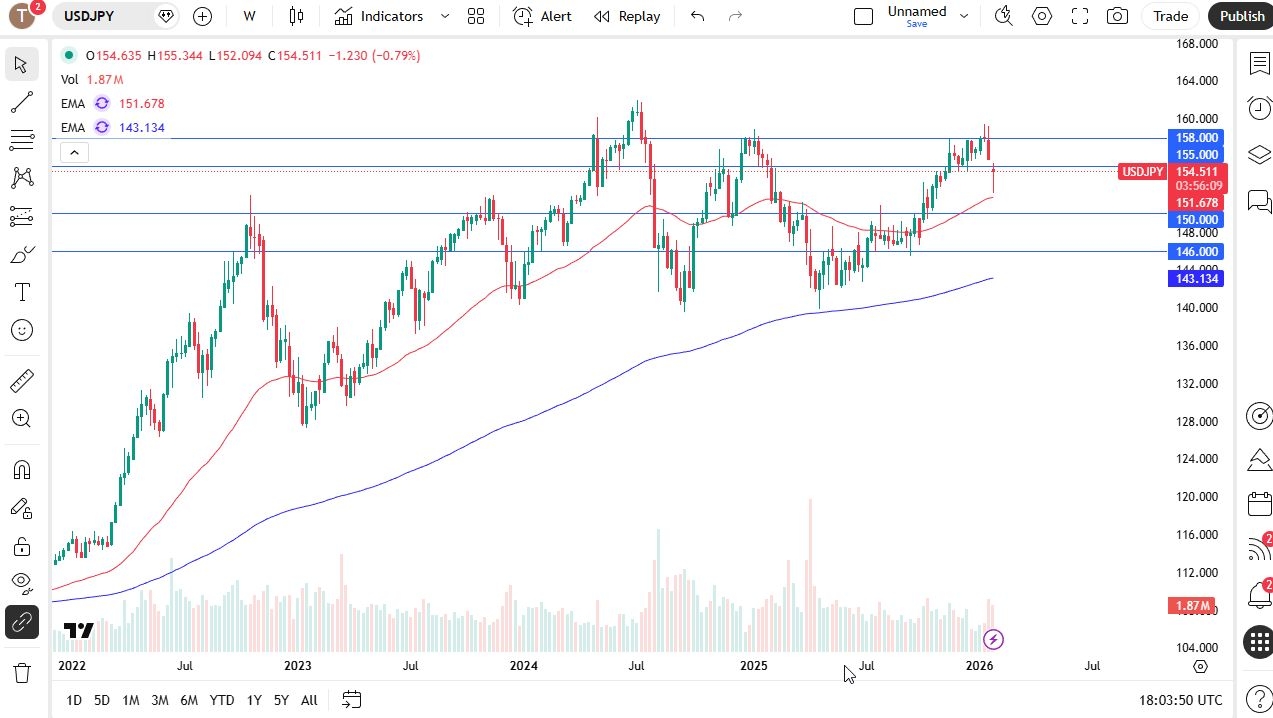
I am fine with buying this pair at these levels, with a target of 158 and a stop at 155.
The US dollar continues to see range-bound behavior against the Japanese yen on Friday.
The US dollar has rallied just a bit against the Japanese yen in what would have certainly been thin Friday trading.
Half of Europe was celebrating Boxing Day or something similar to it, and the United States, although technically open, has most people away from work and ignoring the markets in general.
The market has done exactly what you would expect in the scenario that we find ourselves in, and it’s continued the overall consolidation. The interest rate differential does favor the US dollar, and therefore I think there’s nothing wrong with buying it, but I do recognize that there’s a very real anti-US dollar sentiment at the moment and that will lead to more volatility.
The 50-day EMA sits right around the 154.50 level, which is basically the floor in the consolidation that we have been involved in for the entire month of December.
Market Sentiment and Interest Rates
Over the longer term, I would still favor the US dollar over the Japanese yen. That’s not really a US dollar call; that’s more about the Japanese yen than anything else, as you can see several other currencies around the world working their way higher against the yen as well.
The Bank of Japan did hike rates, but I think traders at this point in time have voiced their opinion of that as the Japanese yen continues to be fairly soft.
It is not until we break down below the 153 yen level that I even begin to have the conversation of maybe the trend could be changing. I’m a buyer of dips. I think we’ll get back to 158 yen, and I do think we eventually break above there.
Christopher Lewis has been trading Forex and has over 20 years experience in financial markets. Chris has been a regular contributor to Daily Forex since the early days of the site. He writes about Forex for several online publications, including FX Empire, Investing.com, and his own site, aptly named The Trader Guy. Chris favours technical analysis methods to identify his trades and likes to trade equity indices and commodities as well as Forex. He favours a longer-term trading style, and his trades often last for days or weeks.
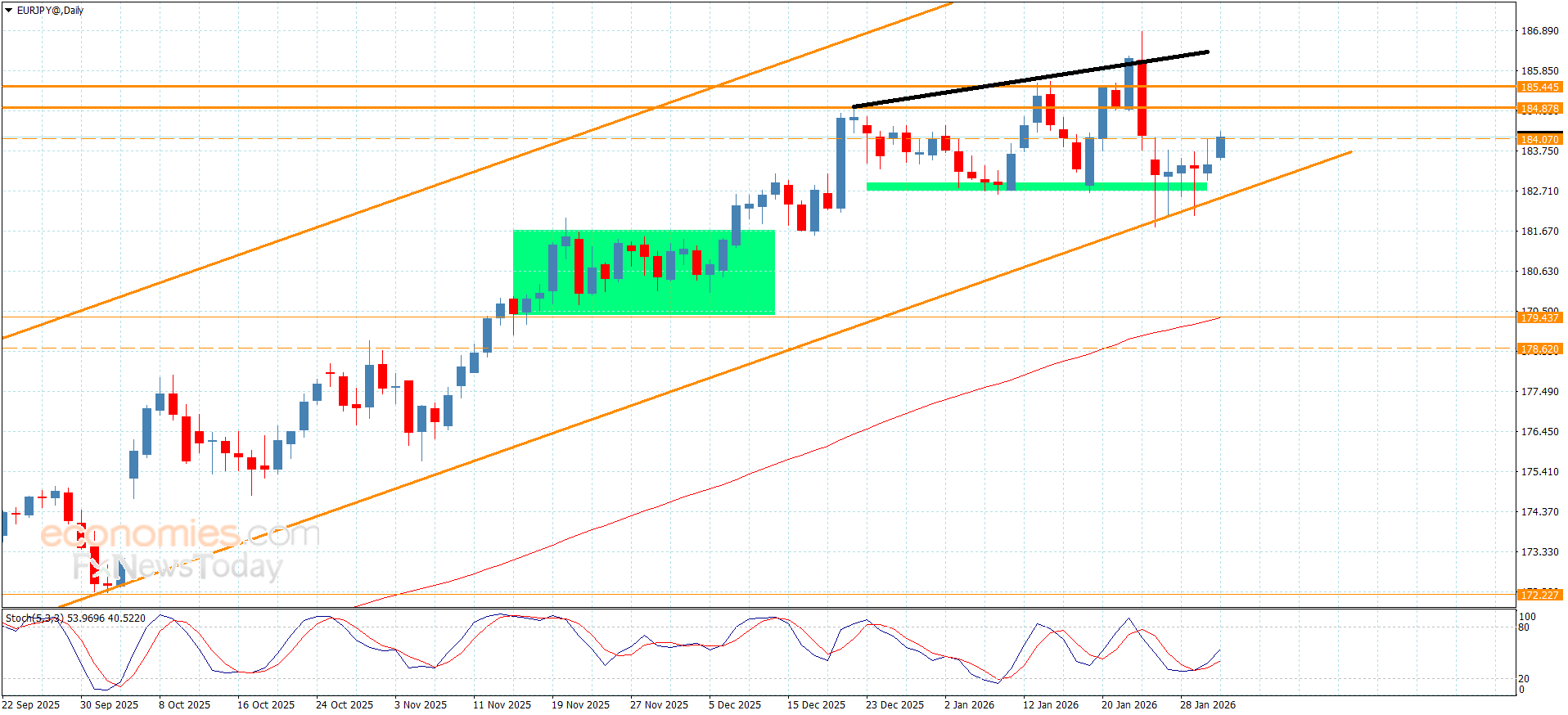
The EURJPY pair began with clear negativity this morning, by forming a new corrective decline by targeting 183.75 level, due to providing negative momentum by stochastic by reaching below 50 level, besides forming extra barrier at 184.40 level.
We expect providing more corrective attempts, which might target 183.55 level reaching the main support at 183.05, while surpassing the mentioned barrier and holding above it will confirm its readiness to renew the bullish attempts, repeating the pressure on 184.90 level to find an exit to record new historical gains in the upcoming period.
The expected trading range for today is between 183.05 and 184.00
The British Pound has outperformed most of its contemporaries against the US dollar, so even if the US dollar finds quite a bit of strength, it is more likely than not that the British Pound drifts lower, but at a slower speed.
The British Pound initially rallied during the trading session on Friday, but then gave back quite a bit of significant momentum.
With that being the case, traders will likely look at this through the prism of a market that is going to try to either break out or form a bit of a consolidation range.
I do believe that in the next couple of weeks we will make a significant decision, but as things stand right now, it looks very much like a market that I think is going to continue to see a lot of questions asked of it near the 1.35 level.
Levels to Watch
The 1.35 level is a level that I think has been important multiple times. If we pull back from here, and I think we could, the 1.34 level is an area that would be your initial target. Breaking down below there, then opens up the possibility of a drop down to the 1.32 level. All things being equal, I suspect that might be the initial move to a bigger pullback.
However, we have to understand that the US dollar will probably move in the same direction against most currencies and not just this one. So, with this, I think you have a scenario where if we were to break above the 1.36 level, then it is obvious that we have a much bigger move to the upside waiting to happen, perhaps to the 1.38 level. I do expect a lot of choppy and noisy behavior, but I also recognize that the British Pound has outperformed most of its contemporaries against the US dollar. We are at a major point of inflection that we need to be watching.
Christopher Lewis has been trading Forex and has over 20 years experience in financial markets. Chris has been a regular contributor to Daily Forex since the early days of the site. He writes about Forex for several online publications, including FX Empire, Investing.com, and his own site, aptly named The Trader Guy. Chris favours technical analysis methods to identify his trades and likes to trade equity indices and commodities as well as Forex. He favours a longer-term trading style, and his trades often last for days or weeks.