What’s next for the US dollar after an incredible rally and a retest of 104.50 resistance?
Find out how I’m trading the DXY, EURUSD, GBPUSD, USDJPY, and USDCAD in today’s forex forecast video.
US Dollar Index (DXY) Forecast
The DXY is finally pulling back this week after reaching my 104.00 to 104.50 target that I set following the 102.60 reclaim.
It’s been an incredible rally from the US dollar, and one that I don’t think is over just yet.
The reclaim of 102.60 was significant and most likely means a bullish USD through the end of the year.
However, the DXY isn’t immune to pullbacks, as we saw on Thursday.
I remain bullish on the DXY while above 102.60 with support coming in at 103.20.
As I’ve mentioned for the last few weeks, shorting the US dollar is risky business, given the aggressiveness of the October rally and the 102.60 reclaim.
USDJPY is getting interesting, with a potential reclaim of the 151.00 to 152.00 region.
I just told VIP members a few days ago to watch for a possible reclaim here.
I wasn’t interesting in shorting USDJPY from the 152.00 region for the same reason I haven’t wanted to short the US dollar this month (see DXY comments above).
If USDJPY can hold convincingly above the 151.00-152.00 area going into the weekend, it will expose levels like 155.60 next week.
However, a convincing close is required to flip this area to support.
Data on Friday showed that Tokyo’s inflation eased below 2%.
Market participants are watching the upcoming election in Japan.
Economic data showed a surge in US business activity.
The USD/JPY price analysis shows a dim outlook for Bank of Japan rate hikes after Tokyo’s inflation eased below the 2% target. As a result, the yen remained fragile near a three-month low and was heading for a fourth week of losses. Meanwhile, the dollar eased slightly with Treasury yields but hovered near recent peaks.
Data on Friday showed that Tokyo’s inflation eased below the Bank of Japan’s 2% target, challenging the outlook for rate hikes. Japan’s central bank has been hoping for higher inflation and consumption to support its rate-hiking cycle. However, weaker price pressure might cause further delays in rate hikes, weakening the yen.
At the same time, market participants are watching the upcoming election in Japan, which might affect BoJ’s policy plans. According to polls, the ruling party could lose its majority status, which would change the outlook for fiscal policy. Such changes could also affect future rate hike plans.
Meanwhile, the greenback remained steady against most peers ahead of the US presidential election. Despite a slight pullback on Friday, the dollar is heading for another week of gains. This week’s rally in the dollar came as market participants worried about the escalating tensions in the Middle East.
At the same time, speculations about the outcome of the November election caused fluctuations. At first, Trump was in the lead, boosting the dollar. However, this changed after a Reuters poll revealed that Kamala was in the lead.
Elsewhere, economic data released on Thursday showed a surge in US business activity. Moreover, unemployment claims fell more than expected. The reports supported a more gradual pace for Fed rate cuts.
USD/JPY key events today
The pair might end the week quietly as neither the US nor Japan will release significant reports.
USD/JPY technical price analysis: Bulls aim for 153.00
USD/JPY price analysis
On the technical side, the USD/JPY price has retreated after meeting solid resistance at the 153.00 psychological level. However, bulls remain in the lead despite the drop. The price trades above the 30-SMA, and the RSI is in bullish territory. Therefore, the price has upside potential.
A rebound near the 30-SMA will allow bulls to challenge the 153.00 level for a new high. A break above will signal a continuation of the bullish trend.
Looking to trade forex now? Invest at eToro!
68% of retail investor accounts lose money when trading CFDs with this provider. You should consider whether you can afford to take the high risk of losing your money.
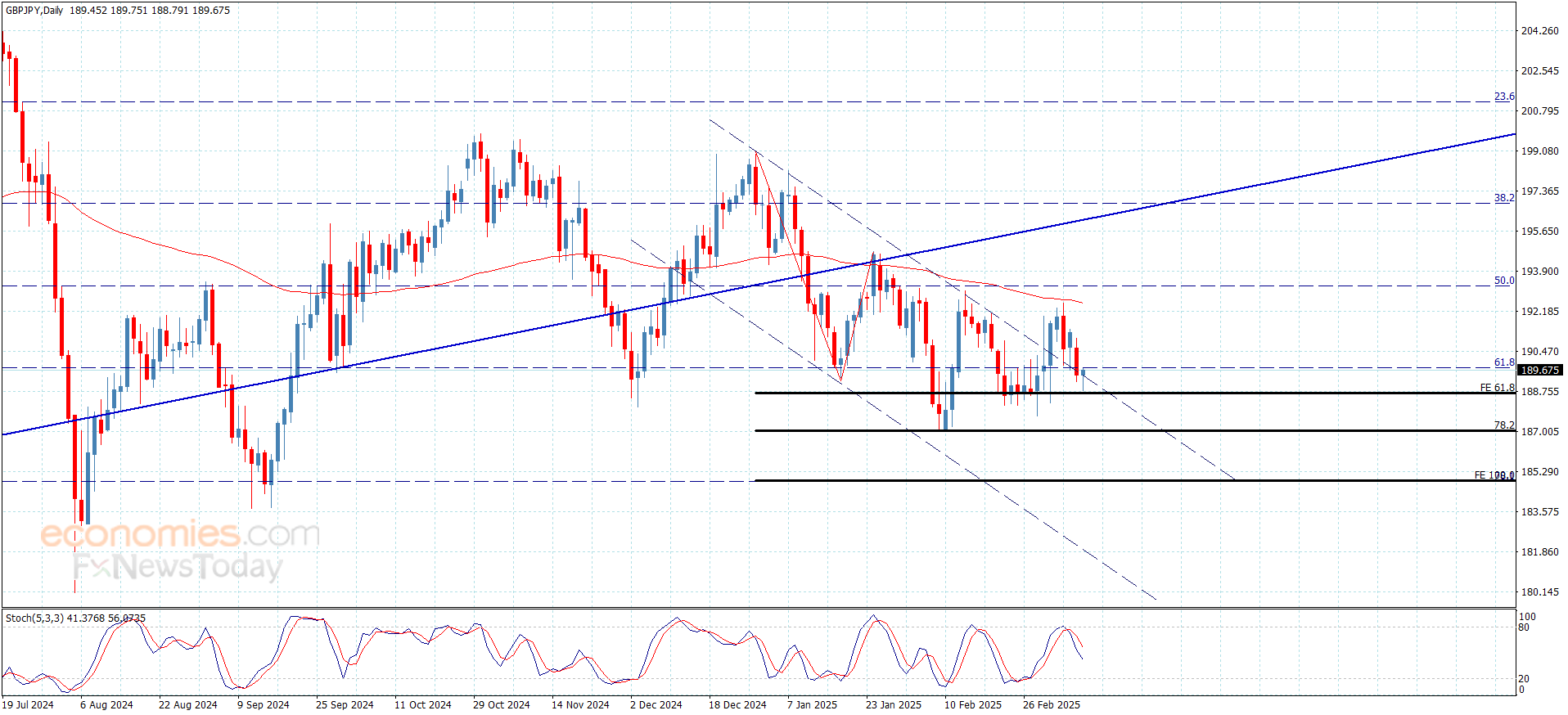
GBP/JPY has broken out of the top of a Right-Angle Triangle and moved some of the distance towards its target.
The pair will probably go higher, subject to confirmation.
GBP/JPY has broken out of a Right-Angle Triangle pattern and rallied higher.
The pair completed a decisive move above the upper boundary of a Triangle pattern (see chart) and peaked on Wednesday at 198.44.
The first upside target for the pattern lies at 199.59 (blue shaded rectangle), the 61.8% Fibonacci extrapolation of the height of the triangle (at its widest point) higher.
GBP/JPY Daily Chart
The pair has pulled back since peaking but the odds favor it eventually rallying back up to the aforementioned target. A break above Wednesday’s 198.44 high would provide bullish confirmation.
The Relative Strength Index (RSI) momentum indicator is not yet in the overbought zone (above 70) suggesting the pair has room to go higher.
The Pound Sterling tumbled to its lowest level since mid-August against the US Dollar.
Top-tier US economic data and the UK’s Autumn Budget could rock the GBP/USD pair.
The Bear Cross on the daily chart keeps the downside open for the Pound Sterling.
The Pound Sterling (GBP) remained at its lowest level in over two months versus the US Dollar (USD), leaving the GBP/USD vulnerable below the 1.3000 threshold.
Pound Sterling dropped and USD popped on safe-haven demand
The demand for the safe-haven USD dominated throughout the week for varied reasons, including the heightened uncertainty leading into the November 5 US presidential election, rising Middle East geopolitical tensions and earnings season globally.
There were no signs of a ceasefire between Israel and Iran, as the former continued to attack the Iran-backed Lebanese militant group Hezbollah in Beirut.
Meanwhile, markets priced in higher chances of a victory for the Republican nominee and the former US President Donald Trump in the presidential race. Trump’s trade and expansionary fiscal policies are seen as inflationary, calling for higher interest rates and the Greenback.
Furthermore, investors remained wary ahead of earnings reports from US titans such as Tesla Inc., Amazon, Google, Nvidia, etc., scurrying for safety in the Greenback. Persistent bets for a less aggressive easing policy likely to be adopted by the Fed also boded well for the buck.
This risk-averse market environment exacerbated the pain in the Pound Sterling, which was already hit a week ago by the increased bets of a Bank of England (BoE) interest rate cut next month after a bigger-than-expected cooldown in the UK inflation for September.
Data released by the Office for National Statistics (ONS) showed on October 16 that the annual UK Consumer Price Index (CPI) inflation fell sharply to 1.7% in September from 2.2% in August, the lowest reading since April 2021.
However, heading into the weekend, the Pound Sterling recovered some ground as the USD rally took a breather ahead of mid-tier US economic data releases. A cautiously optimistic market mood also allowed the risk-sensitive GBP to find some demand.
Top-tier US economic data and UK Budget on tap
Clocks turn back in the UK at the onset of an action-packed week.
After taking a breather, the market volatility is likely to ramp up in the upcoming week, with a bunch of high-impact economic releases due from the US. Meanwhile, the UK is set to release its Autumn Budget, which could have a significant impact on the local bond market and the Pound Sterling.
Monday is a quiet calendar on both sides of the Atlantic but Tuesday sees the release of the US Conference Board (CB) Consumer Confidence and JOLTS Job Openings data.
On Wednesday, the UK Autumn Budget and the US Automatic Data Processing (ADP) Employment Change data will hog the limelight.
BoE policymaker Sarah Breeden will speak early Thursday while the Fed’s preferred inflation gauge, the core Personal Consumption Expenditures (PCE) Price Index for September, and the Jobless Claims data will be reported later that day in the American trading hours.
The all-important US Nonfarm Payrolls and the wage inflation data will be eagerly awaited on Friday, which will provide fresh hints on the size and the pace of the next Fed rate cuts. The ISM Manufacturing PMI will also hold some relevance heading into the Fed’s ‘blackout period’, starting from Saturday until the November 7 monetary policy meeting.
Amidst a busy calendar, traders will also pay close attention to the Middle East geopolitical risks and the uncertainty around the November 5 US presidential election.
GBP/USD: Technical Outlook
The GBP/USD pair battled the 100-day Simple Moving Average (SMA) at 1.2969 as the downtrend extended into the fourth consecutive week.
A weekly closing below that level could provide fresh zest to Pound Sterling sellers.
The next bearish target is seen at the June 12 high of 1.2861, below which the critical 200-day SMA cap at 1.2803 will be challenged.
If buyers fail to defend that key support, a fresh downside could initiate toward the August 8 low of 1.2665.
The 14-day Relative Strength Index (RSI) holds well below the 50 level, currently near 40, backing the downside bias.
Adding credence to the bearish outlook, the 21-day SMA crossed the 50-day SMA from above on a daily closing basis on Wednesday, charting out a Bear Cross.
On the flip side, a corrective move higher will need a sustained break above the 1.3000 psychological level, followed by the acceptance above the 21-day SMA at 1.3092.
Further up, the 50-day SMA at 1.3143 could be next on the buyers’ radars.
Nonfarm Payrolls FAQs
Nonfarm Payrolls (NFP) are part of the US Bureau of Labor Statistics monthly jobs report. The Nonfarm Payrolls component specifically measures the change in the number of people employed in the US during the previous month, excluding the farming industry.
The Nonfarm Payrolls figure can influence the decisions of the Federal Reserve by providing a measure of how successfully the Fed is meeting its mandate of fostering full employment and 2% inflation. A relatively high NFP figure means more people are in employment, earning more money and therefore probably spending more. A relatively low Nonfarm Payrolls’ result, on the either hand, could mean people are struggling to find work. The Fed will typically raise interest rates to combat high inflation triggered by low unemployment, and lower them to stimulate a stagnant labor market.
Nonfarm Payrolls generally have a positive correlation with the US Dollar. This means when payrolls’ figures come out higher-than-expected the USD tends to rally and vice versa when they are lower. NFPs influence the US Dollar by virtue of their impact on inflation, monetary policy expectations and interest rates. A higher NFP usually means the Federal Reserve will be more tight in its monetary policy, supporting the USD.
Nonfarm Payrolls are generally negatively-correlated with the price of Gold. This means a higher-than-expected payrolls’ figure will have a depressing effect on the Gold price and vice versa. Higher NFP generally has a positive effect on the value of the USD, and like most major commodities Gold is priced in US Dollars. If the USD gains in value, therefore, it requires less Dollars to buy an ounce of Gold. Also, higher interest rates (typically helped higher NFPs) also lessen the attractiveness of Gold as an investment compared to staying in cash, where the money will at least earn interest.
Nonfarm Payrolls is only one component within a bigger jobs report and it can be overshadowed by the other components. At times, when NFP come out higher-than-forecast, but the Average Weekly Earnings is lower than expected, the market has ignored the potentially inflationary effect of the headline result and interpreted the fall in earnings as deflationary. The Participation Rate and the Average Weekly Hours components can also influence the market reaction, but only in seldom events like the “Great Resignation” or the Global Financial Crisis.
The Pound to Euro (GBP/EUR) exchange rate traded with modest gains on Thursday morning, as markets digested the latest PMI releases from both the UK and Eurozone.
At the time of writing, GBP/EUR was trading around €1.1999, up approximately 0.2% from Thursday’s opening levels.
The Euro (EUR) came under pressure on Thursday, in response to the Eurozone’s latest PMIs.
October’s preliminary figures highlighted another contraction in the bloc’s private sector. Last month’s composite PMI printed at 49.7, slightly better than August’s 49.6 but still below the crucial 50-mark, signalling ongoing contraction.
The decline was driven by continued weakness in the manufacturing sector, which recorded its 19th consecutive month of contraction.
Although the service sector showed some growth, the data also reported a falling in new orders and declining backlogs of work, raising concerns that the service sector may not sustain this growth for long.
The Pound (GBP) firmed on Thursday morning, although its gains were somewhat restrained following the release of weaker-than-expected UK PMI data.
Advertisement
The PMIs for October reported a moderation of growth in both the manufacturing and services sectors, in advance of the UK’s upcoming budget.
The report suggested that concerns about the budget, alongside global uncertainties and political risks, were surpressing business sentiment and spending in the UK.
GBP/EUR Forecast: Weak German Business Climate to Weigh Further on the Euro?
Looking ahead, the Pound to Euro exchange rate could extend its gains on Friday with the release of Germany’s Ifo business climate index.
Although economists expect a slight uptick in the index for October, it remains at a low level, which could put additional pressure on the Euro as we close out the week.
Meanwhile, with little UK economic data in short supply, GBP investors are likely to focus on any developments surrounding Chancellor Rachel Reeves’s upcoming budget as more details begin to emerge ahead of Wednesday’s full announcement.
Like this piece? Please share with your friends and colleagues:
International Money Transfer? Ask our resident FX expert a money transfer question or try John’s new, free, no-obligation personal service! ,where he helps every step of the way,
ensuring you get the best exchange rates on your currency requirements.
Most recently, our Fed expectations were largely in line with those of the market. Just like the market, we expect the Fed to lower its key rate to around 3½%. Therefore, there is little to be said for idiosyncratic USD strength. However, we had previously expected the ECB to cut its key rate by far less than the market expects. This is no longer the case, Commerzbank’s Head of FX and Commodity Research Ulrich Leuchtmann notes.
EUR/USD target us lowered from 1.15 to 1.11
“Part of the current USD strength is certainly due to the fact that Donald Trump’s chances of returning to the White House have increased in view of recent polls. Since Trump’s tariff and tax policies are widely expected to have an inflationary effect, the new polls are likely to have contributed to the recent dollar strength. In the event of Kamala Harris’s election victory, there is thus potential for a setback for the dollar. From today’s perspective, weighing up the risks, a slight weakening of the dollar appears to be the more likely scenario for the coming months.”
“In the US, GDP in Q4 2025 will be 1.9% higher than in the same quarter of the previous year – after 2.3% in Q4 2024. This means that the US would continue to grow significantly faster, but not quite as much faster as at present. However, because the US growth advantage is likely to have been responsible for a good part of the USD strength so far, even a small reduction in this US advantage is a rather good signal for the Euro.”
“We are lowering our EUR/USD target from 1.15 to 1.11. The greatest risk for our forecast would be a markedly inflationary US economic policy combined with a Fed that can continue to fight inflationary pressure decisively.”
GBP/USD enters a consolidation phase after closing in positive territory on Thursday.
Technical buyers could remain interested while the pair holds above 1.2970.
The US economic calendar will feature Durable Goods Orders data for September.
Following Wednesday’s sharp decline, GBP/USD reversed its direction and gained more than 0.4% on Thursday. The pair fluctuates in a tight channel below 1.3000 in the European morning on Friday.
British Pound PRICE This week
The table below shows the percentage change of British Pound (GBP) against listed major currencies this week. British Pound was the weakest against the US Dollar.
USD
EUR
GBP
JPY
CAD
AUD
NZD
CHF
USD
0.39%
0.55%
1.63%
0.26%
1.16%
1.13%
0.30%
EUR
-0.39%
0.08%
1.13%
-0.07%
0.74%
0.62%
-0.17%
GBP
-0.55%
-0.08%
1.05%
-0.28%
0.63%
0.58%
-0.29%
JPY
-1.63%
-1.13%
-1.05%
-1.35%
-0.45%
-0.43%
-1.36%
CAD
-0.26%
0.07%
0.28%
1.35%
0.81%
0.92%
-0.09%
AUD
-1.16%
-0.74%
-0.63%
0.45%
-0.81%
0.04%
-0.92%
NZD
-1.13%
-0.62%
-0.58%
0.43%
-0.92%
-0.04%
-0.86%
CHF
-0.30%
0.17%
0.29%
1.36%
0.09%
0.92%
0.86%
The heat map shows percentage changes of major currencies against each other. The base currency is picked from the left column, while the quote currency is picked from the top row. For example, if you pick the British Pound from the left column and move along the horizontal line to the US Dollar, the percentage change displayed in the box will represent GBP (base)/USD (quote).
After outperforming its rivals in the first half of the week, the US Dollar (USD) lost its strength on Thursday, with the US Dollar Index losing 0.4%. The positive shift seen in risk sentiment made it difficult for the USD to find demand, while retreating US Treasury bond yield further weighed on the currency.
Durable Goods Orders for September and the University of Michigan’s (UoM) Consumer Sentiment Index for October will be featured in the US economic calendar on Friday. The UoM data is unlikely to trigger a reaction because it will be a revision. If the Durable Goods Orders unexpectedly rise, the initial reaction could support the USD. On the other hand, a reading worse than the market expectation of -1% could hurt the currency and allow GBP/USD to stretch higher heading into the weekend.
In the meantime, US stock index futures were last seen rising between 0.1% and 0.2%. A bullish opening in Wall Street could attract risk-on flows and cause the USD to weaken further in the second half of the day.
GBP/USD Technical Analysis
GBP/USD trades within the upper half of the descending regression channel but holds above the 100-day Simple Moving Average (SMA), currently located at 1.2970. Additionally, the Relative Strength Index (RSI) indicator on the 4-hour chart stays slightly above 50, reflecting sellers’ hesitancy.
In case GBP/USD continues to use 1.2970 as support, buyers could remain interested. In this scenario, immediate resistance is located at 1.3000-1.3010 (static level, upper limit of the descending channel) before 1.3050 (100-period SMA) and 1.3100 (static level).
On the downside, supports could be seen at 1.2900 (mid-point of the descending channel) and 1.2800 (lower limit of the descending channel).
Pound Sterling FAQs
The Pound Sterling (GBP) is the oldest currency in the world (886 AD) and the official currency of the United Kingdom. It is the fourth most traded unit for foreign exchange (FX) in the world, accounting for 12% of all transactions, averaging $630 billion a day, according to 2022 data. Its key trading pairs are GBP/USD, also known as ‘Cable’, which accounts for 11% of FX, GBP/JPY, or the ‘Dragon’ as it is known by traders (3%), and EUR/GBP (2%). The Pound Sterling is issued by the Bank of England (BoE).
The single most important factor influencing the value of the Pound Sterling is monetary policy decided by the Bank of England. The BoE bases its decisions on whether it has achieved its primary goal of “price stability” – a steady inflation rate of around 2%. Its primary tool for achieving this is the adjustment of interest rates. When inflation is too high, the BoE will try to rein it in by raising interest rates, making it more expensive for people and businesses to access credit. This is generally positive for GBP, as higher interest rates make the UK a more attractive place for global investors to park their money. When inflation falls too low it is a sign economic growth is slowing. In this scenario, the BoE will consider lowering interest rates to cheapen credit so businesses will borrow more to invest in growth-generating projects.
Data releases gauge the health of the economy and can impact the value of the Pound Sterling. Indicators such as GDP, Manufacturing and Services PMIs, and employment can all influence the direction of the GBP. A strong economy is good for Sterling. Not only does it attract more foreign investment but it may encourage the BoE to put up interest rates, which will directly strengthen GBP. Otherwise, if economic data is weak, the Pound Sterling is likely to fall.
Another significant data release for the Pound Sterling is the Trade Balance. This indicator measures the difference between what a country earns from its exports and what it spends on imports over a given period. If a country produces highly sought-after exports, its currency will benefit purely from the extra demand created from foreign buyers seeking to purchase these goods. Therefore, a positive net Trade Balance strengthens a currency and vice versa for a negative balance.
Data on Thursday revealed that Eurozone business activity remained weak in October.
Markets are fully pricing a 25-bps ECB rate cut in December.
US PMI numbers will show the state of business activity.
The EUR/USD outlook leans south despite a short rebound as data revealed poor business activity in the Eurozone. However, the pair edged higher as the dollar eased amid uncertainty regarding the upcoming US presidential election.
Data on Thursday revealed that Eurozone business activity remained weak in October. The composite PMI came in at 49.7 compared to forecasts of 49.8. Figures below the 50 mark indicate contraction and weak economic demand. Consequently, market participants have increased bets for another European Central Bank rate cut in December. Markets are fully pricing a 25-bps rate cut in December.
However, ECB’s Christine Lagarde emphasized caution on Wednesday when deciding policy. However, other policymakers have expressed more dovish remarks. Nevertheless, the euro recovered Thursday while the dollar eased from recent peaks ahead of the US presidential election.
For weeks, the greenback has rallied as traders bet on a Trump win and higher inflation. However, a recent Reuters poll showed that Kamala Harris was in the lead, indicating a tight race. The uncertainty has caused some investors to pause and lock in profits before the election.
Meanwhile, market participants await more hints on the future of Fed policy. US unemployment claims will show whether demand remains high in the labor market, which could lower bets for a November rate cut. Meanwhile, PMI numbers will show the state of business activity.
The outlook for Fed policy has shifted to a more gradual one. Moreover, policymakers have assumed a more hawkish tone. Consequently, markets are placing a 29% chance that the central bank will cut rates only once more this year.
EUR/USD key events today
Unemployment Claims
Flash Manufacturing PMI
Flash Services PMI
EUR/USD technical outlook: Bears leading below the 30-SMA
EUR/USD 4-hour chart
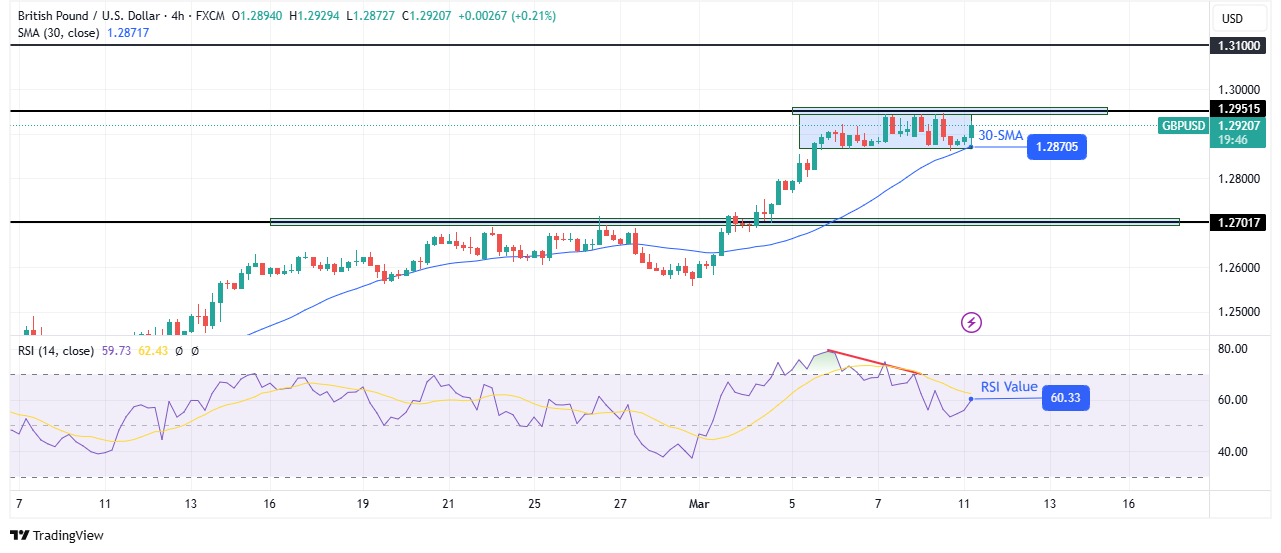
On the technical side, the EUR/USD price has rebounded to retest the 1.0801 key level. However, the downtrend remains intact since the price recently made a lower low. Moreover, it trades below the 30-SMA, with the RSI below 50, in bearish territory.
Therefore, even if the uptrend continues, it might pause at the 30-SMA resistance. Here, the price will likely bounce lower to continue the downtrend beyond the 1.0750 level. However, if the price breaks above the SMA, the trend might reverse to the upside.
Looking to trade forex now? Invest at eToro!
68% of retail investor accounts lose money when trading CFDs with this provider. You should consider whether you can afford to take the high risk of losing your money.
Sell the GBP/USD pair and set a take-profit at 1.2740.
Add a stop-loss at 1.3045.
Timeline: 1-2 days.
Bullish view
Set a buy-stop at 1.2935 and a take-profit at 1.3045.
Add a stop-loss at 1.2750.
The GBP/USD pair retreated to a low of 1.2907, its lowest level since August 12. It has dropped by 3.80% from its highest level this year as the US dollar index jumped to a high of $104.56.
Flash manufacturing and services PMI data
The GBP/USD pair continued its strong sell-off as traders waited for the upcoming flash manufacturing and services PMI numbers.
Economists expect the data to show that the UK manufacturing PMI rose to 51.5, while the services figure moved to 52.3 during the month.
If these numbers are correct, it will be a sign that the UK economy is doing modestly well since most countries are seeing a contraction of the manufacturing sector.
The report comes a week after numbers by the Office of National Statistics (ONS) published encouraging inflation and retail sales data. Inflation dropped to 1.7% in September from the previous 2.2%. Retail sales were stronger than expected during the month. Therefore, the BoE may opt for gradual easing of interest rates in the next few meetings.
The GBP/USD pair will next react to the upcoming flash PMIs from the United States. Analysts expect the numbers to show that the manufacturing PMI remained at 47.5, while the services figure was at 55.
The US will also publish the latest new home sales and initial jobless claims data. The jobless numbers are important because the Fed is focusing on the labor market when determining the size of the next interest rate cuts.
Economists have started to reprice the Federal Reserve expectations after the strong jobs numbers released last month. There are also concerns about the upcoming general election, which could see Donald Trump go back to the White House.
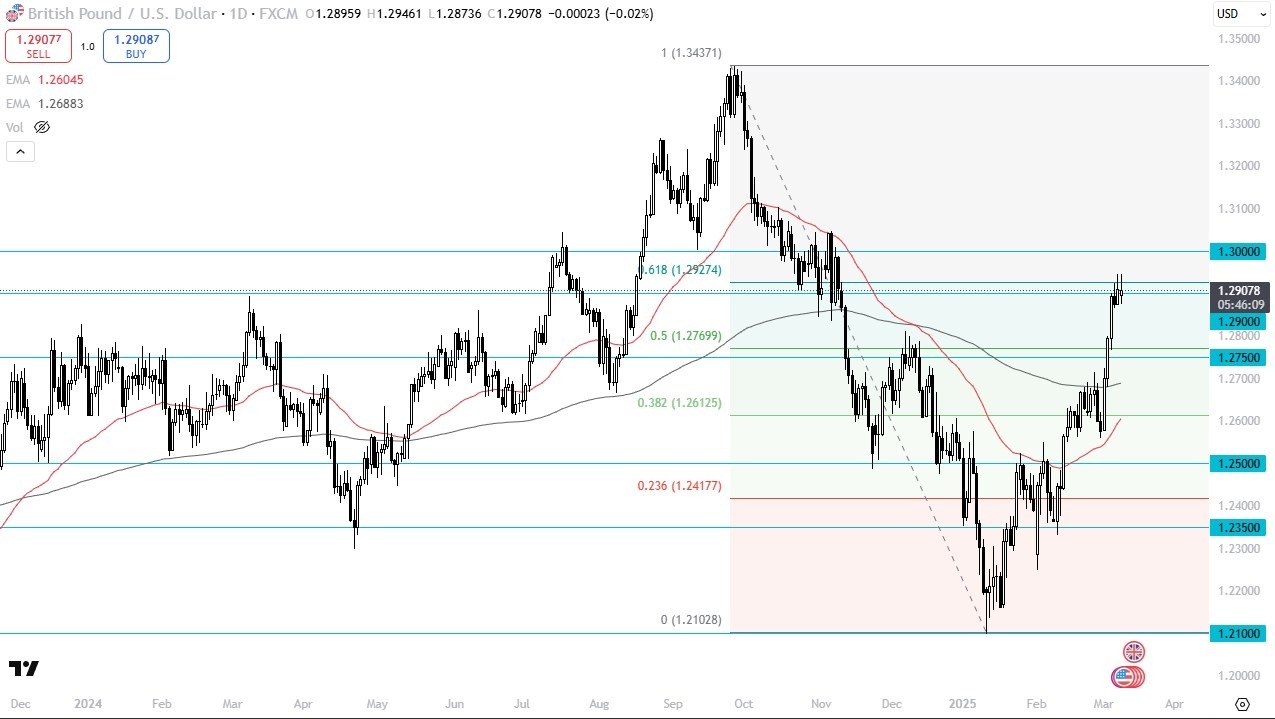
The pair has moved below the 50-day moving average. It has also moved to the 38.2% Fibonacci Retracement point.
Also, the Percentage Price Oscillator (PPO) continued moving downwards and dropped to its lowest level since April. Therefore, the pair will likely continue falling as sellers target the 50% retracement point at 1.2135. A move above the resistance level at 1.3045 will invalidate the bearish view.
The Japanese yen fell below 153 yen against the US dollar on Wednesday, hitting its lowest level in nearly three months.
This decline was driven by a strengthening US dollar and rising Treasury yields, fueled by strong economic data and concerns over the US deficit.
In Japan, traders are looking ahead to the general election this week, with polls indicating that the ruling Liberal Democratic Party may lose its majority with its coalition partner Komeito.
Consequently, this could raise market concerns about political instability and increase uncertainty over the Bank of Japan’s monetary policy outlook.
Meanwhile, Japan’s Deputy Chief Cabinet Secretary Okuda declined to comment on currency movements, in contrast to senior currency diplomat Atsushi Mimura, who reaffirmed last week that they are closely monitoring foreign exchange movements, and that excessive volatility is undesirable.
According to stock trading platforms, Japanese stocks fall amid market caution. Japan’s Nikkei 225 index fell 0.8% to 38,105 while the broader TOPIX lost 0.55% to 2,637 on Wednesday, reversing gains earlier in the session as caution gripped sentiment ahead of Japan’s general election this week.
Opinion polls have suggested the ruling Liberal Democratic Party could lose its majority with its coalition partner Komeito, raising concerns about political instability. Higher global bond yields also continued to weigh on stock markets, with the benchmark 10-year U.S. Treasury yield topping 4.2% amid strong economic data and concerns about the U.S. deficit.
In corporate news, shares in Tokyo Metro surged 45% in their debut on Wednesday after raising 348.6 billion yen in its initial public offering, Japan’s biggest in six years. Technology stocks led the decline, with notable losses from Disco Corp (-4.2%), Advantest (-1.1%) and Tokyo Electron (-1%).
In the US stock market, Dow Jones drops more than 600 points, Nasdaq falls 2%. According to trading, the three major US indexes closed sharply lower on Wednesday, as rising Treasury yields and concerns about a US interest rate cut weighed on investors as they digested another round of earnings. According to performance, the S&P 500 and Nasdaq fell 0.9% and 1.6%, respectively, while the Dow fell 4.9 points, its third straight losing session and its worst day in a month.
The 10-year Treasury yield was higher, reaching 4.25%, drivenby strong economic data and Fed officials sounding cautious about the pace of future US interest rate cuts. Tech giants Nvidia (-2.8%), Apple (-2.1%) and Qualcomm (-3.8%) also weighed. Tesla (-2%) fell ahead of its earnings after the closing bell, as investors closely watched for signs of stabilizing sales and progress in AI transformation.
In addition, Boeing (-1.8%) reported a big quarterly loss, and McDonald’s (-5.1%) faced pressure after its burgers were linked to an E. coli outbreak. In contrast, AT&T jumped 4.7% after its subscriber count rose more than expected.
USD/JPY Technical analysis and Expectations Today:
According to the performance on the daily chart, the general trend of the USD/JPY pair is still bullish, and its recent gains were enough to push the technical indicators towards strong overbought levels. Moreover, with the continued strength of the US dollar and the calming expectations regarding the future tightening of the Japanese central bank’s policy, the bulls may continue to control the trend and currently the closest resistance levels are 153.00, 153.85 and 154.60 respectively.