The main tag of Forex News Today Articles.
You can use the search box below to find what you need.
[wd_asp id=1]

28 05, 2024

GBP/USD Analysis Today 27/5: Bulls Await Stimulus (Chart)

By |2024-05-28T00:22:10+03:00May 28, 2024|Forex News, News|0 Comments

  • GBP/USD started this week’s trading steady around the 1.2740 resistance level, which is close to the 1.2775 resistance that encourages bulls to move further upwards.
  • The sterling/dollar pair may remain steady around its gains until the bulls gain additional momentum.
  • The US Federal Reserve Bank, which has given signals through its officials that it is ready for high interest rates until the US inflation target is controlled, will have the word for this week’s US inflation reading.

What is expected of the pound sterling in the coming period?

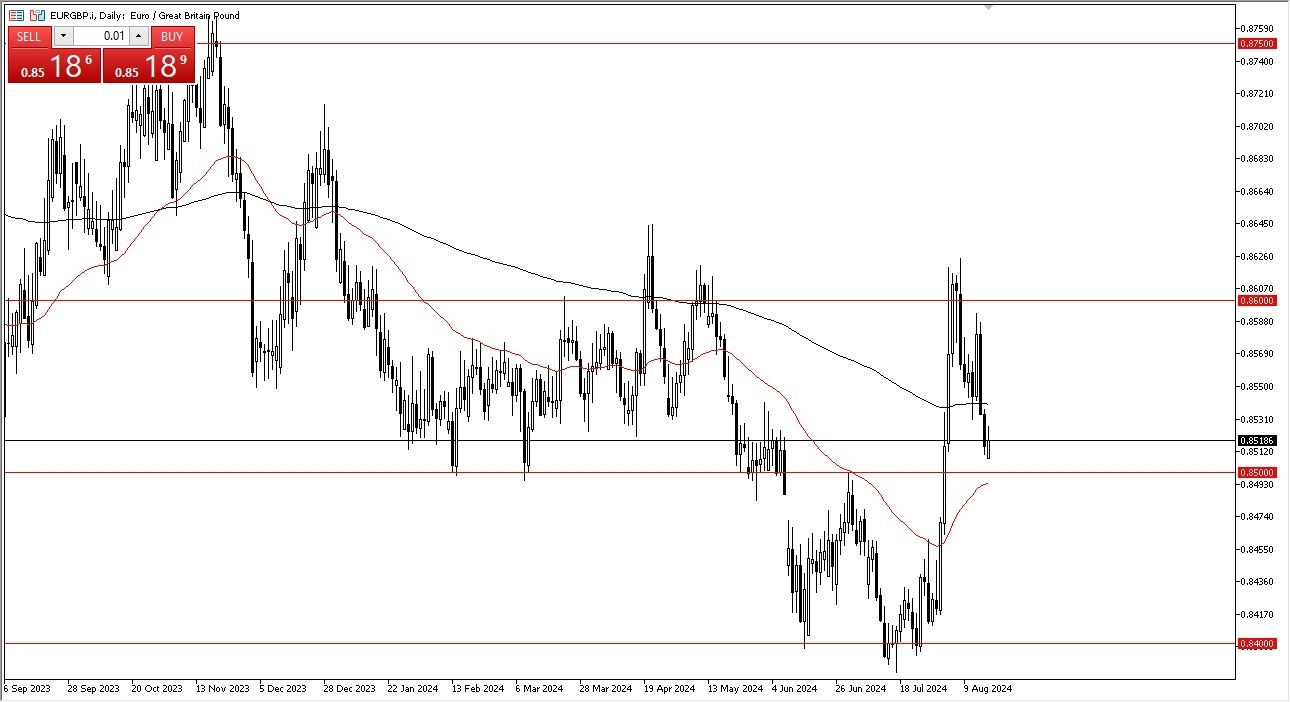
In this regard, the Forex currency analysis department at Credit Agricole expects the exchange rate of the pound against the euro (GBP/EUR) to rise to 1.19 at the end of 2024. In contrast, ING Bank still supports a decline to 1.1365. The GBP/EUR pair jumped to its highest levels in 3 months and tested the main resistance at 1.1765 after the UK inflation data as markets expected interest rates to be cut in June. It failed to break this area and retreated to 1.1735. Accordingly, NatWest expects resistance to be difficult to collapse. He reported, “The British pound is already trading near the €1.17 levels above which a breakout has seemed difficult to sustain in the past – and could once again cap the upside,”.

Overall, monetary policy will remain a key element for sterling, and fiscal policy is also important, especially with the general election in July. Polls give a very strong lead to the Labor Party with expectations that it will win a comfortable majority. In this regard, ING commented; “With the 2022 mini-budget crisis still fresh in the country’s political memory, neither of the main parties is proposing a radical departure from current economic policy. Recently, both the Labor Party and the Conservatives have confirmed that they will stick to the current fiscal rules, which are overseen by the independent Office for Budget Responsibility.”

According to the results of the economic calendar, monetary policy will be determined by the Bank of England. The latest inflation data recorded a major decline to 2.3% from 3.2% and the lowest reading since August 2011, but higher than the consensus expectations of 2.1%. The core rate fell to 3.9% from 4.2%, but above expectations of 3.6%. Services sector inflation fell only marginally to 5.9% from 6.0%.

In the wake of these economic data, the chances of a rate cut in June declined sharply.

Accordingly, ING commented; “This week’s stubborn services inflation figures support an August rather than a June rate cut. Markets are pricing in only a 9% chance of a cut next month. It added; “However, don’t assume the Bank won’t move in June/July just because there’s an election coming. The Bank of England’s independence is a well-established and respected principle among the main parties, and interest rate cuts have been announced well in advance of election calls.”

The bank summarized; “We maintain our view that EUR/GBP will rise as the BoE delivers 75 basis points of easing this year, more than the market is currently pricing in.” Also, Credit Agricole sees a Labor victory as potentially positive for the pound in a more stable environment. It added; “Furthermore, some clients hope that a Labor government could pursue a policy of ‘gradual convergence’ with the EU, thus weakening the negative growth impact of post-Brexit trade barriers. This could help boost investment and domestic spending and support the UK’s economic outlook and thus the attractiveness of sterling-denominated assets.”

For its part, Scotiabank took a similar view. “A Labor government should not unduly worry investors – how much worse could it be than it has been in the last four years? Stability and the prospect of some “rapprochement” with the EU, or at least a reset of relations, would be a plus.

Furthermore, Socigen bank noted that the higher-than-expected inflation data make a June rate cut less likely but added; the BoE is likely to start cutting rates after the ECB, but over time will cut them more as there is no room for fiscal policy easing. Also, the latest data from the eurozone continued to point to a gradual recovery in the economy and wage growth was stronger than expected.

Despite the improvement in data, there are still very strong expectations that there will be a rate cut in June. Danske Bank has revised its medium-term ECB expectations; “We have reviewed the ECB’s interest rate path for the first time in over 12 months and now expect the ECB to cut rates twice this year (June and December) and three times next year. This brings the deposit rate to 2.75% by the end of 2025.”

Technical forecasts for the GPB/USD pair today:

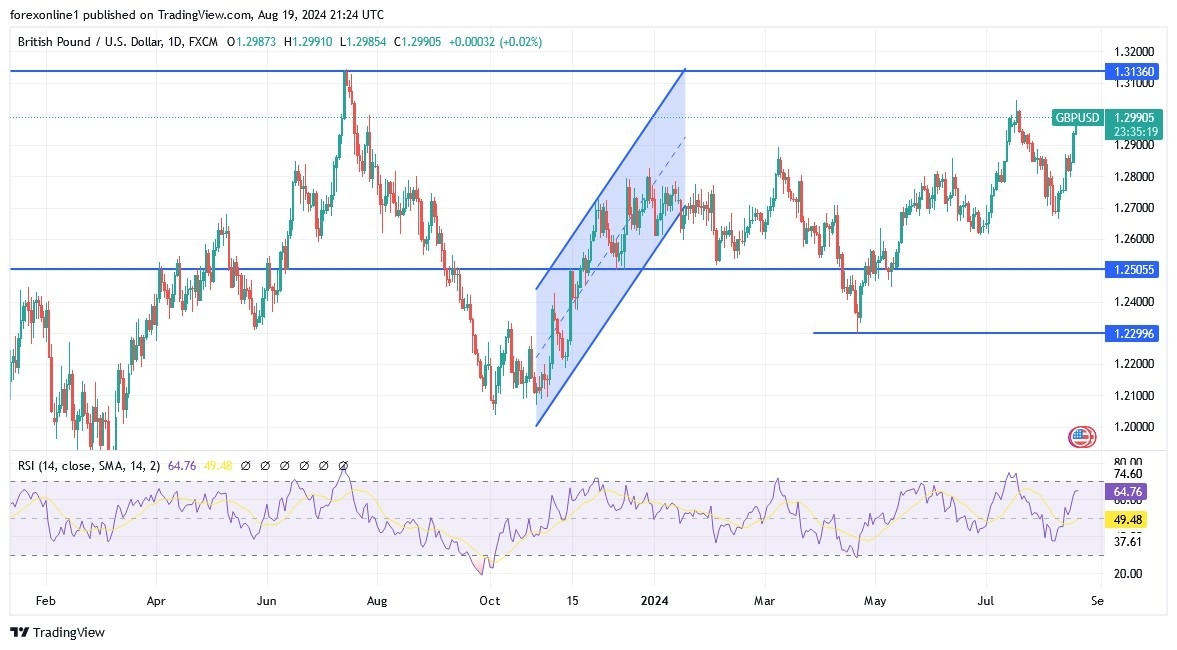
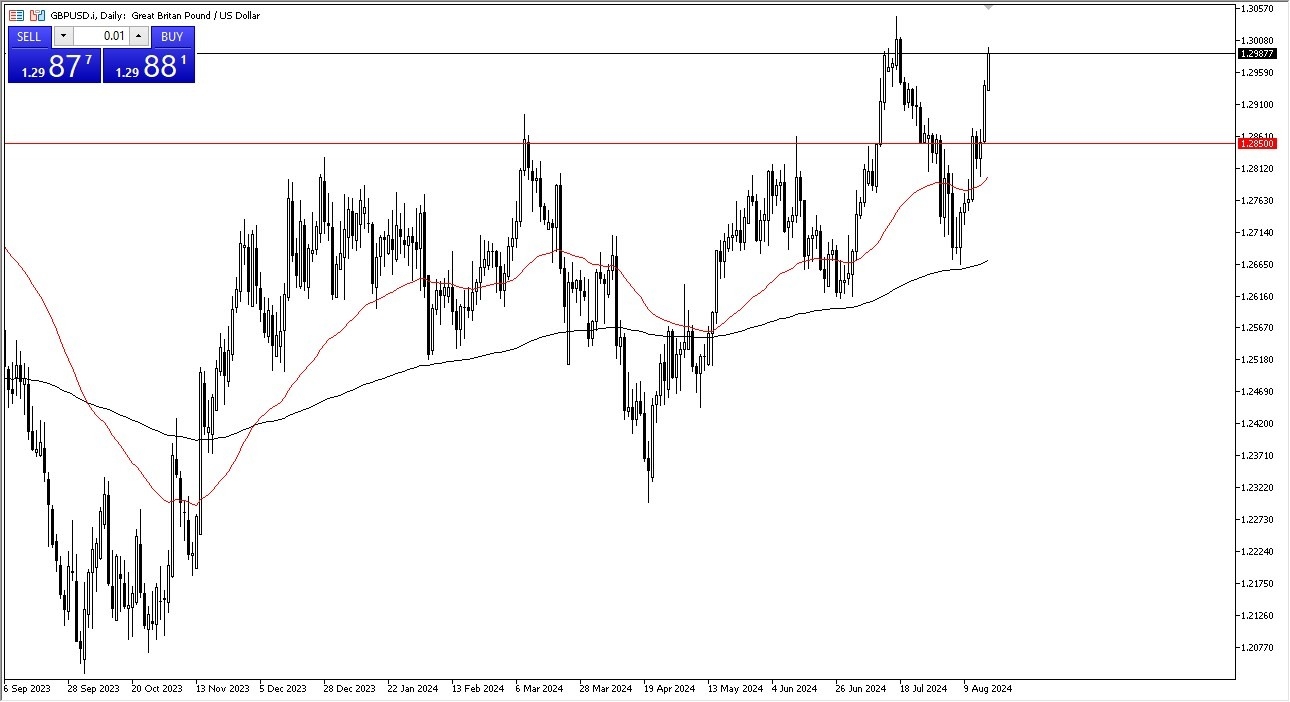
Based on the performance on the daily price chart attached, the opportunity for the GBP/USD (British Pound vs. US Dollar) to rebound higher will be the strongest. As we mentioned before, staying above the 1.2775 resistance level is crucial for the bulls to move higher. If this level holds, the path could be clear for testing the psychological resistance at 1.3000, provided the pair moves towards the following resistance levels at 1.2830 and 1.2900, respectively. Conversely, on the same time frame, moving towards the support levels at 1.2645 and 1.2600 will be important for the bears to take control and undermine the current upward attempts.

Ready to trade our daily Forex forecast? Here’s a list of some of the top forex brokers UK to check out. 

Source link

27 05, 2024

Near-term attention remains on 1.0900

By |2024-05-27T22:19:59+03:00May 27, 2024|Forex News, News|0 Comments

You have reached your limit of 5 free articles for this month.

Get Premium without limits for only $9.99 for the first month

Access all our articles, insights, and analysts.

Your coupon code


UNLOCK OFFER

  • EUR/USD added to Friday’s gains near 1.0870.
  • The US Dollar deflated further amidst scarce volatility.
  • ECB officials advocated for an interest rate cut in June.

The US Dollar (USD) extended its recent decline, lending further legs to the risk complex and sponsoring another test of the 1.0870 region by EUR/USD on Monday.

In fact, the second consecutive daily advance in the pair came amidst further weakness in the Greenback in response to the inactivity on Memorial Day, although always against the backdrop of renewed speculation that the Federal Reserve (Fed) might maintain its restrictive stance longer than expected.

This speculation remains bolstered by the cautious tone of Fed policymakers, the strong health of the US economy, persistent inflation, and a tight labour market.

According to the CME Group’s FedWatch Tool, there is nearly a 50% probability of lower interest rates by September, down from over 60% during last week.

Returning to the ECB, Board member Villeroy contended that the bank possesses significant leeway for reducing rates and that the prevailing market anticipations for prolonged easing are justified. His counterpart, Rehn, noted that as inflation trends closer to the 2% objective, it becomes viable to ease monetary policy and initiate rate reductions in June. Furthermore, Lane suggested that the speed at which the ECB will lower interest rates will hinge on the resilience of underlying inflation and demand, affirming the bank’s readiness to commence rate cuts as early as the following week.

Looking ahead, the relatively subdued economic fundamentals in the Eurozone, coupled with the resilience of the US economy, support the ongoing narrative of Fed-ECB policy divergence and lean towards a stronger Dollar in the long run. Considering the rising probability of the ECB reducing rates before the Fed, the potential for further weakness in EUR/USD should be considered in the medium term.

EUR/USD daily chart

EUR/USD short-term technical outlook

Extra rebound could see EUR/USD revisit the May top of 1.0894 (May 16), seconded by the March peak of 1.0981 (March 8) and the weekly high of 1.0998 (January 11), all before reaching the important 1.1000 level.

On the downside, a breach of the 200-day SMA of 1.0787 may open the door to the May low of 1.0649 (May 1), ahead of the 2024 bottom of 1.0601 (April 16) and the November 2023 low of 1.0516 (November 1). Once this zone is cleared, the pair may go for the weekly low of 1.0495 (October 13, 2023), the 2023 bottom of 1.0448 (October 3), and the 1.0400 round milestone.

So far, the 4-hour chart indicates some short-term range bound. The nearest up-barrier is 1.0867, which comes prior to 1.0884 and 1.0894. Looking southwards, the 100-SMA at 1.0814 comes first, seconded by 1.0766 and the 200-SMA at 1.0748. The relative strength index (RSI) dropped to about 57.

  • EUR/USD added to Friday’s gains near 1.0870.
  • The US Dollar deflated further amidst scarce volatility.
  • ECB officials advocated for an interest rate cut in June.

The US Dollar (USD) extended its recent decline, lending further legs to the risk complex and sponsoring another test of the 1.0870 region by EUR/USD on Monday.

In fact, the second consecutive daily advance in the pair came amidst further weakness in the Greenback in response to the inactivity on Memorial Day, although always against the backdrop of renewed speculation that the Federal Reserve (Fed) might maintain its restrictive stance longer than expected.

This speculation remains bolstered by the cautious tone of Fed policymakers, the strong health of the US economy, persistent inflation, and a tight labour market.

According to the CME Group’s FedWatch Tool, there is nearly a 50% probability of lower interest rates by September, down from over 60% during last week.

Returning to the ECB, Board member Villeroy contended that the bank possesses significant leeway for reducing rates and that the prevailing market anticipations for prolonged easing are justified. His counterpart, Rehn, noted that as inflation trends closer to the 2% objective, it becomes viable to ease monetary policy and initiate rate reductions in June. Furthermore, Lane suggested that the speed at which the ECB will lower interest rates will hinge on the resilience of underlying inflation and demand, affirming the bank’s readiness to commence rate cuts as early as the following week.

Looking ahead, the relatively subdued economic fundamentals in the Eurozone, coupled with the resilience of the US economy, support the ongoing narrative of Fed-ECB policy divergence and lean towards a stronger Dollar in the long run. Considering the rising probability of the ECB reducing rates before the Fed, the potential for further weakness in EUR/USD should be considered in the medium term.

EUR/USD daily chart

EUR/USD short-term technical outlook

Extra rebound could see EUR/USD revisit the May top of 1.0894 (May 16), seconded by the March peak of 1.0981 (March 8) and the weekly high of 1.0998 (January 11), all before reaching the important 1.1000 level.

On the downside, a breach of the 200-day SMA of 1.0787 may open the door to the May low of 1.0649 (May 1), ahead of the 2024 bottom of 1.0601 (April 16) and the November 2023 low of 1.0516 (November 1). Once this zone is cleared, the pair may go for the weekly low of 1.0495 (October 13, 2023), the 2023 bottom of 1.0448 (October 3), and the 1.0400 round milestone.

So far, the 4-hour chart indicates some short-term range bound. The nearest up-barrier is 1.0867, which comes prior to 1.0884 and 1.0894. Looking southwards, the 100-SMA at 1.0814 comes first, seconded by 1.0766 and the 200-SMA at 1.0748. The relative strength index (RSI) dropped to about 57.

Source link

27 05, 2024

USD/JPY Forecast – US Dollar Continues to Look Bullish

By |2024-05-27T20:18:30+03:00May 27, 2024|Forex News, News|0 Comments

US Dollar vs Japanese Yen Technical Analysis

Very little has happened in the early hours on Monday, which is not a huge surprise considering that it was Memorial Day in the United States and the British also had a bank holiday. So, a lot of liquidity was just taken right out of the market. However, when you look at the chart, you can see just how bullish it is overall, and I think you have to continue to look at the dollar in the same vein of trying to find any dip as a buying opportunity to pick up cheap dollars. The 155 yen level underneath is a large round number that a lot of people have taken advantage of multiple times. So, if we were to pull back from here, I do think it offers support.

The 50 day EMA is also racing towards that area, so it also helps that as well, to the upside, I believe that the 160 yen level is the target, and I think we will get there eventually. But that being said, this is a market that is likely going to be very noisy and choppy. This doesn’t mean that this is an easy trade to take, but what I do appreciate is that we get paid at the end of every day via swap to hang on to this pair. So quite simply, I think that’s what institutional traders will continue to do going forward as the market is clearly in one direction, not the other.

Source link

27 05, 2024

Buyers maintain the pressure in thin market conditions

By |2024-05-27T18:17:35+03:00May 27, 2024|Forex News, News|0 Comments

EUR/USD Current price: 1.0849

  • The German IFO Survey showed no progress in business sentiment in May.
  • Holidays in the United Kingdom and the United States likely to maintain EUR/USD in range.
  • EUR/USD maintains the bullish strength, although the momentum is limited amid bank holidays.

Financial markets struggle for direction on Monday, as holidays in the United Kingdom (UK) and the United States (US) limit trading volumes. The US Dollar (USD) maintains the mildly weak tone seen on Friday after a consumer survey showed inflation expectations tempered in the US, boosting the mood. Mid-European session, the EUR/USD pair eases from an intraday high of 1.0866 but holds within familiar levels.

 News coming from the Eurozone were mostly discouraging. Germany published a dismal IFO survey, as the Business Climate printed at 89.3 in May, matching a downwardly revised April figure. The assessment of the current situation deteriorated to 88.3, while expectations improved by less than anticipated in the month, up to 90.4 from 89.7.

Meanwhile, European Central Bank (ECB) officials delivered some comments on monetary policy. Chief economist Philip Lane said that the ECB is ready to cut interest rates in June but clarified that the monetary policy “must” continue to be restrictive as wage growth will not normalise until 2026. Also, Dr Olli Rehn, Governor of the Bank of Finland and member of the ECB Governing Council noted the central bank is not pre-committing to any rate path. He added that inflation is converging to the 2% goal in a sustained way, paving the way towards a June interest rate cut. However, he said it depends on a continued disinflationary trend and no geopolitical setbacks.

ECB officials had long anticipated a June rate cut, which, at this point, seems to be fully priced in. However, they have also been dialling back expectations for a July movement, warning they will take time before further monetary loosening.

US markets are closed due to Memorial Day, which means the country will not release relevant macroeconomic data.

EUR/USD short-term technical outlook

The EUR/USD pair is up for a second consecutive day, retaining a bullish stance despite the lack of momentum. In the daily chart, technical indicators maintain their upward slopes within positive levels, although the strength seems to be moderating. At the same time, EUR/USD advances beyond its moving averages, with buyers aligned around a flat 100 Simple Moving Average (SMA) at around 1.0815. Furthermore, a bullish 20 SMA keeps advancing below the latter, and above an also directionless 200 SMA.

The near-term picture is mildly bullish. In the 4-hour chart, technical indicators are gaining upward traction above their midlines after a consolidative period, suggesting increased buying interest around EUR/USD. Meanwhile, the pair remains above all its moving averages, with only the 100 SMA pushing north. Overall, chances of a bullish breakout are limited as American investors take the day off.

Support levels: 1.0815 1.0780 1.0720

Resistance levels: 1.0880 1.0920 1.0960

Source link

27 05, 2024

Pound Sterling stays bullish to start the week

By |2024-05-27T16:16:53+03:00May 27, 2024|Forex News, News|0 Comments

You have reached your limit of 5 free articles for this month.

Get Premium without limits for only $9.99 for the first month

Access all our articles, insights, and analysts.

Your coupon code


UNLOCK OFFER

  • GBP/USD trades at around 1.2750 in the European session.
  • UK and US markets will remain closed on Monday.
  • The near-term technical outlook suggests that the bullish bias remains intact.

GBP/USD stays in a consolidation phase near 1.2750 in the European session on Monday after closing the previous week marginally higher. The pair’s near-term technical picture suggests that the bullish bias remains intact but 1.2760 could be a tough resistance to crack.

British Pound PRICE Last 7 days

The table below shows the percentage change of British Pound (GBP) against listed major currencies last 7 days. British Pound was the strongest against the Australian Dollar.

  USD EUR GBP JPY CAD AUD NZD CHF
USD   0.15% -0.35% 0.82% 0.31% 0.78% -0.02% 0.60%
EUR -0.15%   -0.54% 0.70% 0.17% 0.67% -0.17% 0.46%
GBP 0.35% 0.54%   1.10% 0.70% 1.20% 0.36% 0.97%
JPY -0.82% -0.70% -1.10%   -0.52% -0.03% -0.81% -0.22%
CAD -0.31% -0.17% -0.70% 0.52%   0.43% -0.32% 0.28%
AUD -0.78% -0.67% -1.20% 0.03% -0.43%   -0.84% -0.23%
NZD 0.02% 0.17% -0.36% 0.81% 0.32% 0.84%   0.61%
CHF -0.60% -0.46% -0.97% 0.22% -0.28% 0.23% -0.61%  

The heat map shows percentage changes of major currencies against each other. The base currency is picked from the left column, while the quote currency is picked from the top row. For example, if you pick the British Pound from the left column and move along the horizontal line to the US Dollar, the percentage change displayed in the box will represent GBP (base)/USD (quote).

The US Dollar (USD) benefited from upbeat macroeconomic data releases in the previous week but GBP/USD managed to hold its ground as the strong inflation data from the UK revived expectations about a delay in the Bank of England’s (BoE) policy pivot.

On Friday, the positive shift seen in risk sentiment caused the USD to lose interest and allowed the pair to stretch higher heading into the weekend.

Financial markets in the UK and the US will remain closed on Monday. Hence, GBP/USD could have a difficult time gathering directional momentum in the second half of the day. The UK economic docket will not feature any high-tier data releases this week. The US Bureau of Economic Analysis will publish the second estimate of the first-quarter Gross Domestic Product growth on Thursday and release the Personal Consumption Expenditures (PCE) Price Index data, the Federal Reserve’s (Fed) preferred gauge of inflation, on Friday.

GBP/USD Technical Analysis

GBP/USD stays in the upper half of the ascending regression channel coming from late April and the Relative Strength Index (RSI) indicator on the 4-hour chart holds near 60, reflecting the bullish bias.

On the upside, key resistance is located at 1.2760 (Fibonacci 78.6% retracement of the latest downtrend) before 1.2800-1.2810 (static level, upper limit of the ascending channel) and 1.2850 (static level). Supports could be seen at 1.2730 (mid-point of the ascending channel, 20-period Simple Moving Average), 1.2670 (Fibonacci 61.8% retracement) and 1.2640 (lower limit of the ascending channel).

Pound Sterling FAQs

The Pound Sterling (GBP) is the oldest currency in the world (886 AD) and the official currency of the United Kingdom. It is the fourth most traded unit for foreign exchange (FX) in the world, accounting for 12% of all transactions, averaging $630 billion a day, according to 2022 data. Its key trading pairs are GBP/USD, aka ‘Cable’, which accounts for 11% of FX, GBP/JPY, or the ‘Dragon’ as it is known by traders (3%), and EUR/GBP (2%). The Pound Sterling is issued by the Bank of England (BoE).

The single most important factor influencing the value of the Pound Sterling is monetary policy decided by the Bank of England. The BoE bases its decisions on whether it has achieved its primary goal of “price stability” – a steady inflation rate of around 2%. Its primary tool for achieving this is the adjustment of interest rates. When inflation is too high, the BoE will try to rein it in by raising interest rates, making it more expensive for people and businesses to access credit. This is generally positive for GBP, as higher interest rates make the UK a more attractive place for global investors to park their money. When inflation falls too low it is a sign economic growth is slowing. In this scenario, the BoE will consider lowering interest rates to cheapen credit so businesses will borrow more to invest in growth-generating projects.

Data releases gauge the health of the economy and can impact the value of the Pound Sterling. Indicators such as GDP, Manufacturing and Services PMIs, and employment can all influence the direction of the GBP. A strong economy is good for Sterling. Not only does it attract more foreign investment but it may encourage the BoE to put up interest rates, which will directly strengthen GBP. Otherwise, if economic data is weak, the Pound Sterling is likely to fall.

Another significant data release for the Pound Sterling is the Trade Balance. This indicator measures the difference between what a country earns from its exports and what it spends on imports over a given period. If a country produces highly sought-after exports, its currency will benefit purely from the extra demand created from foreign buyers seeking to purchase these goods. Therefore, a positive net Trade Balance strengthens a currency and vice versa for a negative balance.


  • GBP/USD trades at around 1.2750 in the European session.
  • UK and US markets will remain closed on Monday.
  • The near-term technical outlook suggests that the bullish bias remains intact.

GBP/USD stays in a consolidation phase near 1.2750 in the European session on Monday after closing the previous week marginally higher. The pair’s near-term technical picture suggests that the bullish bias remains intact but 1.2760 could be a tough resistance to crack.

British Pound PRICE Last 7 days

The table below shows the percentage change of British Pound (GBP) against listed major currencies last 7 days. British Pound was the strongest against the Australian Dollar.

  USD EUR GBP JPY CAD AUD NZD CHF
USD   0.15% -0.35% 0.82% 0.31% 0.78% -0.02% 0.60%
EUR -0.15%   -0.54% 0.70% 0.17% 0.67% -0.17% 0.46%
GBP 0.35% 0.54%   1.10% 0.70% 1.20% 0.36% 0.97%
JPY -0.82% -0.70% -1.10%   -0.52% -0.03% -0.81% -0.22%
CAD -0.31% -0.17% -0.70% 0.52%   0.43% -0.32% 0.28%
AUD -0.78% -0.67% -1.20% 0.03% -0.43%   -0.84% -0.23%
NZD 0.02% 0.17% -0.36% 0.81% 0.32% 0.84%   0.61%
CHF -0.60% -0.46% -0.97% 0.22% -0.28% 0.23% -0.61%  

The heat map shows percentage changes of major currencies against each other. The base currency is picked from the left column, while the quote currency is picked from the top row. For example, if you pick the British Pound from the left column and move along the horizontal line to the US Dollar, the percentage change displayed in the box will represent GBP (base)/USD (quote).

The US Dollar (USD) benefited from upbeat macroeconomic data releases in the previous week but GBP/USD managed to hold its ground as the strong inflation data from the UK revived expectations about a delay in the Bank of England’s (BoE) policy pivot.

On Friday, the positive shift seen in risk sentiment caused the USD to lose interest and allowed the pair to stretch higher heading into the weekend.

Financial markets in the UK and the US will remain closed on Monday. Hence, GBP/USD could have a difficult time gathering directional momentum in the second half of the day. The UK economic docket will not feature any high-tier data releases this week. The US Bureau of Economic Analysis will publish the second estimate of the first-quarter Gross Domestic Product growth on Thursday and release the Personal Consumption Expenditures (PCE) Price Index data, the Federal Reserve’s (Fed) preferred gauge of inflation, on Friday.

GBP/USD Technical Analysis

GBP/USD stays in the upper half of the ascending regression channel coming from late April and the Relative Strength Index (RSI) indicator on the 4-hour chart holds near 60, reflecting the bullish bias.

On the upside, key resistance is located at 1.2760 (Fibonacci 78.6% retracement of the latest downtrend) before 1.2800-1.2810 (static level, upper limit of the ascending channel) and 1.2850 (static level). Supports could be seen at 1.2730 (mid-point of the ascending channel, 20-period Simple Moving Average), 1.2670 (Fibonacci 61.8% retracement) and 1.2640 (lower limit of the ascending channel).

Pound Sterling FAQs

The Pound Sterling (GBP) is the oldest currency in the world (886 AD) and the official currency of the United Kingdom. It is the fourth most traded unit for foreign exchange (FX) in the world, accounting for 12% of all transactions, averaging $630 billion a day, according to 2022 data. Its key trading pairs are GBP/USD, aka ‘Cable’, which accounts for 11% of FX, GBP/JPY, or the ‘Dragon’ as it is known by traders (3%), and EUR/GBP (2%). The Pound Sterling is issued by the Bank of England (BoE).

The single most important factor influencing the value of the Pound Sterling is monetary policy decided by the Bank of England. The BoE bases its decisions on whether it has achieved its primary goal of “price stability” – a steady inflation rate of around 2%. Its primary tool for achieving this is the adjustment of interest rates. When inflation is too high, the BoE will try to rein it in by raising interest rates, making it more expensive for people and businesses to access credit. This is generally positive for GBP, as higher interest rates make the UK a more attractive place for global investors to park their money. When inflation falls too low it is a sign economic growth is slowing. In this scenario, the BoE will consider lowering interest rates to cheapen credit so businesses will borrow more to invest in growth-generating projects.

Data releases gauge the health of the economy and can impact the value of the Pound Sterling. Indicators such as GDP, Manufacturing and Services PMIs, and employment can all influence the direction of the GBP. A strong economy is good for Sterling. Not only does it attract more foreign investment but it may encourage the BoE to put up interest rates, which will directly strengthen GBP. Otherwise, if economic data is weak, the Pound Sterling is likely to fall.

Another significant data release for the Pound Sterling is the Trade Balance. This indicator measures the difference between what a country earns from its exports and what it spends on imports over a given period. If a country produces highly sought-after exports, its currency will benefit purely from the extra demand created from foreign buyers seeking to purchase these goods. Therefore, a positive net Trade Balance strengthens a currency and vice versa for a negative balance.


Source link

27 05, 2024

USD/JPY Forecast: All Eyes on Inflation Reports from US, Japan

By |2024-05-27T14:15:59+03:00May 27, 2024|Forex News, News|0 Comments

  • The yen might record its first month of gains in 2024 due to suspected intervention.
  • The core PCE price index will play a significant role in shaping the Fed’s policy outlook.
  • Japan will release the Tokyo CPI report.

The USD/JPY forecast remains bullish as investors eagerly await key inflation data from the US and Japan. However, despite the recent decline, the yen might record its first month of gains in 2024 due to suspected intervention by the Bank of Japan.

Are you interested in learning more about forex tools? Check our detailed guide-

The new week comes with inflation figures from the US showing underlying price increases. The core PCE price index will play a significant role in shaping the outlook for interest rate cuts in the US. The Fed prefers this measure of inflation as it eliminates all volatile measures and focuses on those that can cause persistence. Therefore, if this figure shows a cooling economy, there will be an increase in rate-cut expectations. On the other hand, hotter-than-expected numbers would likely prolong high interest rates in the US.

Meanwhile, Japan will release the Tokyo CPI report, a leading indicator of national inflation trends. The Bank of Japan hopes for higher inflation in the country, allowing it to hike interest rates. However, recent figures have shown a decline, challenging this outlook.

The yen found some strength on Friday after Japan’s top currency diplomat, Masato Kanda, issued another warning against speculative yen declines. He said Japan was ready to act anytime, raising fears of a possible intervention. Already, there have been two suspected interventions that have strengthened the yen. However, since then, it has given up some of its gains.  

USD/JPY key events today

There are no major reports from the US and Japan today, and trading might be thin due to the holiday in the US.

USD/JPY technical forecast: Bullish momentum remains weak above 156.50


USD/JPY Forecast: All Eyes on Inflation Reports from US, Japan
USD/JPY 4-hour chart

On the technical side, the USD/JPY price has pulled back to trade near solid support, comprising the 30-SMA and the 156.50 key level. However, the bias is bullish since it has made a higher high. The price recently broke above 156.60 but has since traded in a tight range, showing weaker bullish momentum. 

Are you interested in learning more about the best crypto exchange? Check our detailed guide- 

If bulls remain weak, a break below the 30-SMA might shift sentiment. Nevertheless, the bullish bias will remain with the price above the support trendline. If bulls regain strength, the price will retest the 158.01 resistance level.

Looking to trade forex now? Invest at eToro!

68% of retail investor accounts lose money when trading CFDs with this provider. You should consider whether you can afford to take the high risk of losing your money.

Source link

27 05, 2024

EUR/USD Forecast Today – 27/05: Euro Rallies (Chart)

By |2024-05-27T12:15:17+03:00May 27, 2024|Forex News, News|0 Comments

  • The Euro rallied significantly during the course of the trading session on Friday as the 1.08 level continues to offer plenty of interest in this market.
  • It has been well supported over the last 48 hours, just as it had been significant resistance multiple times during the previous couple of weeks.
  • With this being the case, the market looks as if it is going to try to go to the top of the short-term range, which is closer to the 1.09 level.

The euro is going to be an interesting currency to pay close attention to due to the fact that the European Central Bank could very well start cutting this summer, and if that’s going to be the case it’ll be interesting to see what happens with the euro. The US dollar on the other hand has the Federal Reserve that is likely to stay tight for the short-term, and that means that the market could eventually favor the US dollar, but in the interim, it looks like we are going to continue to see a lot of choppy behavior, meaning that it is relegated to short-term trading at best.

Position Sizing

I think the position sizing in this pair is crucial, because if and when we finally do break out or for that matter, break down, this is a market that I think could really rip in one direction or another. That being said, I don’t see a catalyst for this quite yet, and therefore you need to be cautious because it could be a sudden geopolitical event. For example, if there is a lot of fear out there suddenly, the US dollar could suddenly become extraordinarily strong, crushing the euro in its path.

On the other hand, if we get a sudden “risk on rally”, we could send the euro truly take off. In the short term, I believe you are just simply kicking this market back and forth between the 1.08 level in the bottom, and the 1.09 level on the top of the current range.

Ready to trade our daily Forex forecast? Here’s a list of some of the top forex brokers in Europe to check out. 

Source link

27 05, 2024

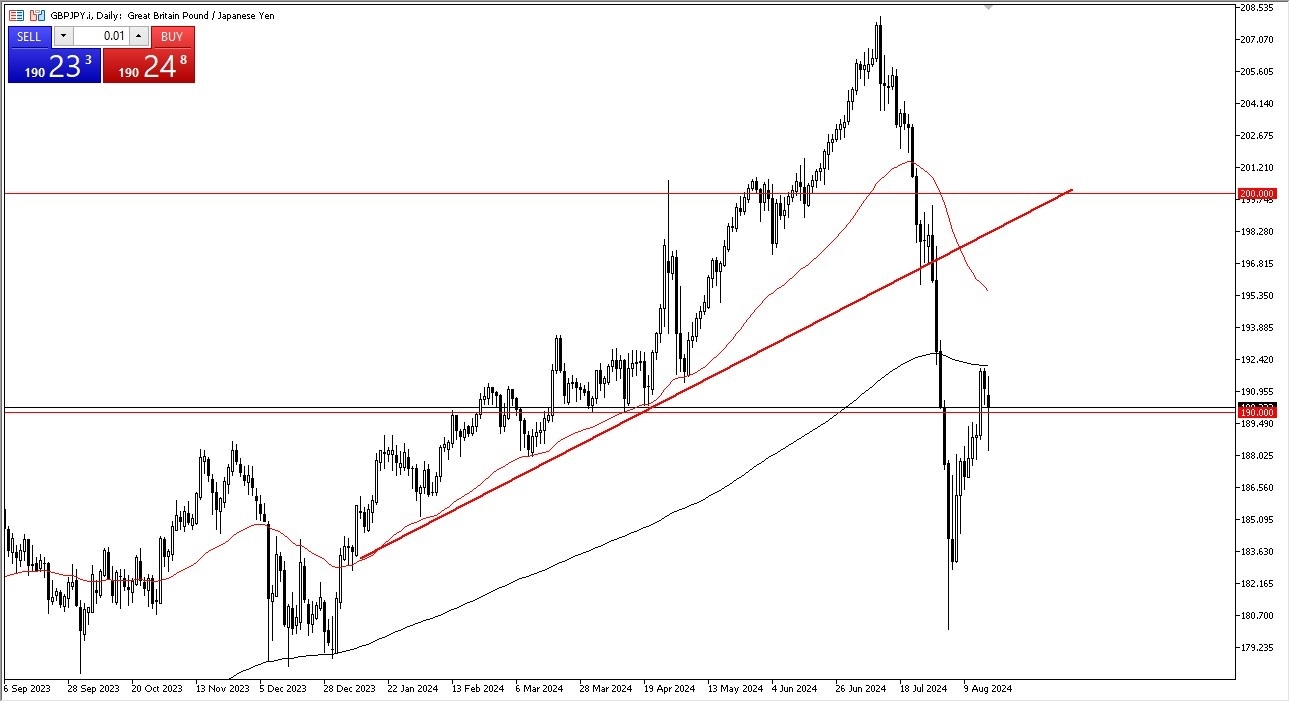
GBP/JPY Forecast – British Pound Finds Buyers on the Dip

By |2024-05-27T06:12:09+03:00May 27, 2024|Forex News, News|0 Comments

GBP/JPY Forecast Video for 28.08.23

British Pound vs Japanese Yen Technical Analysis

The British pound initially fell during the trading session on Friday, but turned around to show signs of life again. By doing so, the market looks as if it is trying to get back to the ¥185 level, an area that is a large, round, psychologically significant figure. If we were to break above the top of the previous candlestick, it opens up the possibility of a move to the ¥186.50 level. On the other hand, if we were to break down below the bottom of the candlestick on Friday, then we could see a move toward the 50-Day EMA underneath, which is sitting around the ¥181.50 level.

That being said, the British pound continues to enjoy more demand than the Japanese yen as the interest rate differential between the 2 economies is wide enough to drive a freight train through. All things being equal, this is a market that I think eventually will break above the ¥185 level, and go looking to much higher levels. If that’s going to be the case, I think this ends up being a nice buying opportunity but with all of the uncertainty out there, you need to be cautious with your position sizing. In this environment, things could get rather ugly, and therefore you need to make sure that you take your time building up a position, but recognizes the fact that once momentum comes back into the market and traders are back from summer holiday, the thing could get moving rather quickly.

Until the Bank of Japan changes its overall attitude, I just do not see a situation where the Japanese yen picks up any significant strength, at least for any significant amount of time. With that being the case, you have to look at this through the prism of finding value as it occurs, and then just simply taking advantage of it. The overall interest rate differential between the 2 currencies will continue to be the major driver of where we go next, as traders get paid to hang on to this position over the longer term. Shorting isn’t a possibility until we break down below ¥180 at the very least.

For a look at all of today’s economic events, check out our economic calendar.

This article was originally posted on FX Empire

More From FXEMPIRE:

Source link

27 05, 2024

USD/JPY Forecast: Bank of Japan Talks Yen, Fed Rate Cuts Bets Fall

By |2024-05-27T04:10:57+03:00May 27, 2024|Forex News, News|0 Comments

US Economic Calendar: FOMC Members and Fed Rate Cut Bets

Later in the Monday session, investors should track comments from Fed speakers. Comments relating to inflation, the economic outlook, and interest rates warrant investor attention.

Last week, the FOMC Meeting Minutes, labor market data, and the US Services PMI reduced investor expectations of a September Fed rate cut.

Michigan Inflation Expectations numbers provided brief relief. Nevertheless, Michigan Inflation Expectations increased from 3.2% to 3.3% in May, well above the 2% target.

The CME FedWatch Tool reflected the effects of the Fed Minutes and economic indicators on investor expectations of a September rate cut. In the week ending May 24, the chances of the Fed leaving interest rates unchanged increased from 35.2% to 50.2%.

On Friday (May 31), the US Personal Income and Outlays Report could change the narrative. Softer inflation numbers and a pullback in personal income/spending could refuel investor bets on a September Fed rate cut.

Short-term Forecast

Near-term trends for the USD/JPY will hinge on central bank chatter and inflation numbers from Japan and the US. Amidst falling bets on a Fed September rate cut, US inflation numbers on Friday will influence the Fed rate path and the USD/JPY.

USD/JPY Price Action

Daily Chart

The USD/JPY remained comfortably above the 50-day and 200-day EMAs, affirming the bullish price signals.

A USD/JPY breakout from the 157.5 handle could support a move toward the April 29 high of 160.209.

On Monday (May 27), Bank of Japan and Fed commentary need consideration.

Conversely, a USD/JPY fall through the 155 handle could give the bears a run at the 50-day EMA. A break below the 50-day EMA would bring the 151.685 support level into play.

The 14-day RSI at 60.77 suggests a USD/JPY return to the April 29 high of 160.209 before entering overbought territory.

Source link

27 05, 2024

GBP/JPY Weekly Forecast – British Pound Gives Up Gains Against Yen

By |2024-05-27T00:08:44+03:00May 27, 2024|Forex News, News|0 Comments

GBP/JPY Forecast Video for 10.04.23

British Pound vs Japanese Yen Weekly Technical Analysis

The British pound has been all over the place against the Japanese yen during the course of the week, initially falling, only to turn around and shoot straight up into the upside, and then pulling back to show less than a positive look. That being said, the market continues to see a lot of the risk appetite around the world dissipate. Alternatively, the British pound will rally against the Japanese yen in times of “risk on behavior”, and then of course it will fall against the Japanese yen in “risk off behavior.”

Ultimately, this is a pair that also has to pay close attention to the Bank of Japan and its yield curve control, as we continue to see the Bank of Japan fight rising rates in that country. As interest rates rise, they have to print more Japanese yen in order to buy Japanese bonds. That is what has worked against the value of the yen for so long, and when you look at this chart, you can see although it’s been choppy, it has been very bullish over the last couple of years.

In the interim, it’s obvious that we are in a bit of a range, with resistance hanging around the ¥166 level. The support found closer to the ¥160 level also offers support, so I think that is the range that you will be trading in for a while. Ultimately, this is a market that I think needs to make a bigger decision eventually, but we are not at that point quite yet. Breaking out of that range obviously could get the markets moving, but in the short term we are more likely than not going to continue to be a situation where the latest interest rate moves will continue to have a major influence on the Japanese yen, and therefore you will have to pay close attention to the bond market. Ultimately, even if we do rally from here and break above the top the candlestick, there is a lot of noise right around the¥170 level, so that’s probably the interim ceiling.

For a look at all of today’s economic events, check out our economic calendar.

This article was originally posted on FX Empire

More From FXEMPIRE:

Source link

Go to Top