The main tag of Forex News Today Articles.
You can use the search box below to find what you need.
[wd_asp id=1]

21 05, 2024

Pound Sterling could face stiff resistance at 1.2760

By |2024-05-21T13:03:51+03:00May 21, 2024|Forex News, News|0 Comments

  • GBP/USD fluctuates above 1.2700 in the European session on Tuesday.
  • 1.2760 aligns as next key resistance for the pair.
  • Investors could refrain from taking large positions ahead of UK inflation data.

GBP/USD holds steady slightly above 1.2700 early Tuesday after closing the first day of the week virtually unchanged. The technical outlook shows that the bullish bias stays intact but the pair’s action could remain subdued ahead of key inflation data from the UK on Wednesday.

The lack of high-impact macroeconomic data releases allowed financial markets to remain quiet on Monday. Comments from Federal Reserve (Fed) officials helped the US Dollar find a foothold following the decline seen in the previous week and made it difficult for GBP/USD to stretch higher.

British Pound PRICE Last 7 days

The table below shows the percentage change of British Pound (GBP) against listed major currencies last 7 days. British Pound was the strongest against the Swiss Franc.

  USD EUR GBP JPY CAD AUD NZD CHF
USD   -0.77% -1.29% -0.06% -0.28% -0.94% -1.40% 0.08%
EUR 0.77%   -0.54% 0.71% 0.50% -0.16% -0.64% 0.85%
GBP 1.29% 0.54%   1.23% 1.01% 0.35% -0.12% 1.38%
JPY 0.06% -0.71% -1.23%   -0.21% -0.89% -1.36% 0.15%
CAD 0.28% -0.50% -1.01% 0.21%   -0.67% -1.12% 0.35%
AUD 0.94% 0.16% -0.35% 0.89% 0.67%   -0.47% 1.03%
NZD 1.40% 0.64% 0.12% 1.36% 1.12% 0.47%   1.50%
CHF -0.08% -0.85% -1.38% -0.15% -0.35% -1.03% -1.50%  

The heat map shows percentage changes of major currencies against each other. The base currency is picked from the left column, while the quote currency is picked from the top row. For example, if you pick the British Pound from the left column and move along the horizontal line to the US Dollar, the percentage change displayed in the box will represent GBP (base)/USD (quote).

Later in the day, Bank of England (BoE) Governor Andrew Bailey will speak on the key role that central bank reserves play in delivering the core mandates at an event organized by the London School of Economics and Political Science. 

During the American trading hours, Fed Governor Christopher Waller, NY Fed President John Williams and Boston Fed President Susan Collins and Cleveland Fed President Loretta Mester are scheduled to deliver speeches. Fed officials have been acknowledging the progress seen in inflation in April, while taking on a cautious tone with regards to policy easing. Hence, the impact of Fed commentary on the USD’s valuation until Thursday’s PMI data could remain short-lived.

On Wednesday, the UK’s Office for National Statistics (ONS) will publish Consumer Price Index (CPI) data for April. Investors expect the annual CPI inflation to decline to 2.1% from 3.2% in March. A reading below the market expectation could revive expectations for a BoE rate cut in June and weigh on Pound Sterling.

GBP/USD Technical Analysis

GBP/USD trades within the upper half of the ascending regression channel coming from late April and the Relative Strength Index (RSI) indicator on the 4-hour chart stays near 70, suggesting that the pair could have a hard time gathering further bullish momentum before making a technical correction.

On the upside, 1.2760 (Fibonacci 78.6% retracement of the latest downtrend, upper limit of the ascending channel) aligns as key resistance before 1.2800 (psychological level, static level). Supports are located at 1.2700 (psychological level, static level), 1.2660 (Fibonacci 61.8% retracement of the latest downtrend, mid-point of the ascending channel) and 1.2600 (static level).

Pound Sterling FAQs

The Pound Sterling (GBP) is the oldest currency in the world (886 AD) and the official currency of the United Kingdom. It is the fourth most traded unit for foreign exchange (FX) in the world, accounting for 12% of all transactions, averaging $630 billion a day, according to 2022 data. Its key trading pairs are GBP/USD, aka ‘Cable’, which accounts for 11% of FX, GBP/JPY, or the ‘Dragon’ as it is known by traders (3%), and EUR/GBP (2%). The Pound Sterling is issued by the Bank of England (BoE).

The single most important factor influencing the value of the Pound Sterling is monetary policy decided by the Bank of England. The BoE bases its decisions on whether it has achieved its primary goal of “price stability” – a steady inflation rate of around 2%. Its primary tool for achieving this is the adjustment of interest rates. When inflation is too high, the BoE will try to rein it in by raising interest rates, making it more expensive for people and businesses to access credit. This is generally positive for GBP, as higher interest rates make the UK a more attractive place for global investors to park their money. When inflation falls too low it is a sign economic growth is slowing. In this scenario, the BoE will consider lowering interest rates to cheapen credit so businesses will borrow more to invest in growth-generating projects.

Data releases gauge the health of the economy and can impact the value of the Pound Sterling. Indicators such as GDP, Manufacturing and Services PMIs, and employment can all influence the direction of the GBP. A strong economy is good for Sterling. Not only does it attract more foreign investment but it may encourage the BoE to put up interest rates, which will directly strengthen GBP. Otherwise, if economic data is weak, the Pound Sterling is likely to fall.

Another significant data release for the Pound Sterling is the Trade Balance. This indicator measures the difference between what a country earns from its exports and what it spends on imports over a given period. If a country produces highly sought-after exports, its currency will benefit purely from the extra demand created from foreign buyers seeking to purchase these goods. Therefore, a positive net Trade Balance strengthens a currency and vice versa for a negative balance.


Source link

21 05, 2024

“Coiling Just Below Key 1.0900” says Forex.com

By |2024-05-21T11:02:33+03:00May 21, 2024|Forex News, News|0 Comments

Image © Adobe Images


The Euro to Dollar exchange rate could soon see a technical “bullish continuation” move toward 1.1000 writes Forex.com’s Global Head of Research, Matthew Weller.

Looking at the world’s most widely traded currency pair, EUR/USD is respecting its key technical levels.

After breaking above the confluence of a bearish trend line and the 200-day MA last week, rates surged to logical resistance at 1.0880 before losing steam into the end of last week.

EUR/USD’s consolidative trade has carried over into this week, leaving the pair still rangebound between resistance in the 1.0880-1.0900 area and support at the 200-day MA near 1.0800.

A definitive close above 1.0890, if seen, would open the door for a bullish continuation toward 1.1000 next.


Track EUR/USD with your own custom rate alerts. Set Up Here 


Markets started the trading week a bit groggy amidst lower-liquidity trade. Financial centres like France, Germany, Switzerland, and Canada were out on bank holidays.

As of writing, indices are trading incrementally higher and all major currencies are trading within a +/- 0.3% range against the US dollar.


With little on the economic data docket today, the focus has shifted to comments from prominent central bankers, highlighted by Fed Vice Chairman Phillip Jefferson.

Echoing the cautious, data-dependent outlook as his colleagues, Jefferson noted that it’s “too early” to tell if the recent slowdown in the disinflationary process will be long-lasting but that April’s lower inflation reading was a positive sign.

Overall, he seemed cautiously optimistic that the Fed was on track to achieve a no/soft landing economy, where inflation recedes to the Fed’s 2% target without a big slowdown in the economy.

Looking ahead, market volatility should pick up as we move through the middle of the week.

Depending on which markets you’re trading, you may want to keep an eye on ECB President Lagarde’s speech in Frankfurt this morning, Bank of England Governor Bailey taking to the mic this afternoon, as well as the UK CPI report, FOMC minutes, and Nvidia earnings release on Wednesday.

Source link

21 05, 2024

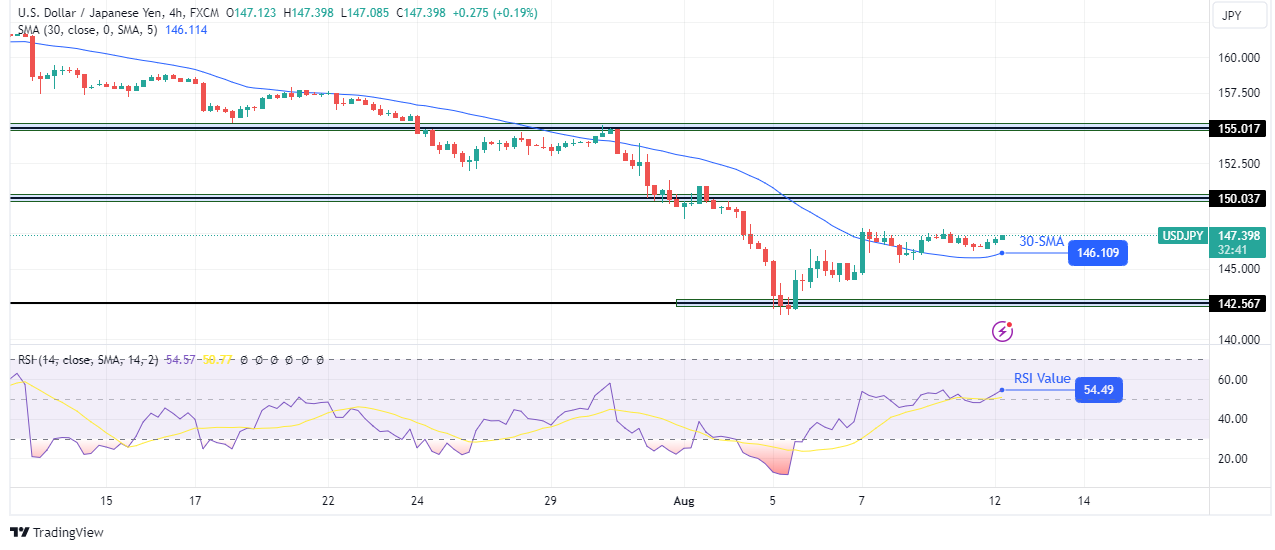
USD/JPY Forecast: 158 in View on Fed Chatter and Bank of Japan Silence

By |2024-05-21T04:58:16+03:00May 21, 2024|Forex News, News|0 Comments

On Monday (May 20), FOMC members Michael Barr and Raphael Bostic were among a chorus of Fed speakers wanting more confidence inflation was returning to the target before supporting a rate cut.

The recent speeches influenced investor expectations of a September Fed rate cut. Nevertheless, the markets are still betting on a September rate cut.

According to the CME FedWatch Tool, the chances of the Fed leaving interest rates unchanged in September increased from 35.2% to 40.4% on Monday (May 20).

Views on inflation, the US labor market, and the timing of a Fed interest rate cut need consideration.

Short-term Forecast

Near-term trends for the USD/JPY will hinge on central bank chatter before the prelim Services PMIs (Thurs). Hawkish Fed commentary could further fuel buyer appetite for the USD/JPY. However, weaker US service sector activity may force the Fed into a more dovish interest rate trajectory.

USD/JPY Price Action

Daily Chart

The USD/JPY hovered well above the 50-day and 200-day EMAs, affirming the bullish price signals.

A USD/JPY break above the 157 handle would support a move toward the 158 handle. A breakout from 158 could bring the April 29 high of 160.209 into play.

Central bank commentary needs consideration on Tuesday (May 21).

Alternatively, a USD/JPY drop below the 155 handle could give the bears a run at the 50-day EMA. A break below the 50-day EMA could signal a drop toward the 151.685 support level.

The 14-day RSI at 58.30 indicates a USD/JPY return to the April 29 high of 160.209 before entering overbought territory.

Source link

21 05, 2024

EUR/USD steady sub-1.0900 ahead of fresh clues

By |2024-05-21T00:56:51+03:00May 21, 2024|Forex News, News|0 Comments

You have reached your limit of 5 free articles for this month.

Get Premium without limits for only $9.99 for the first month

Access all our articles, insights, and analysts.

Your coupon code


UNLOCK OFFER

EUR/USD Current price: 1.0865

  • A holiday in Europe and a scarce American calendar kept EUR/USD range bound.
  • Germany and the Eurozone will release minor macroeconomic figures on Tuesday.
  • EUR/USD consolidates last week’s gains; bulls paused but retained control.

 The EUR/USD saw little action on Monday, hovering around the 1.0860 mark for most of the day. A holiday in Europe and a scarce United States (US) macroeconomic calendar exacerbated the quietness around the pair throughout the day. Investors tried to find clues in comments from Federal Reserve (Fed) officials, who made different comments on the latest inflationary developments in the US. Overall, Fed members remained cautious about future actions, given that they still believe the disinflationary process is not certain.

Europe will return on Tuesday with some minor figures. Germany will publish the April Producer Price Index (PPI), which is foreseen at -3.2% YoY, easing from the previous -2.9%. Additionally, the Eurozone will release the March Current Account, which is expected to post a seasonally adjusted surplus of €30.2 billion. The EU will also publish the March Trade Balance, while the American session will feature another large batch of Fed speakers.

Meanwhile, Asian shares edged higher at the beginning of the week, leading to a positive opening among US indexes. However, the momentum faded mid-American afternoon, with the Dow Jones Industrial Average (DJIA) turning sharply lower, while the S&P500 and the Nasdaq Composite held on to uneven gains. Finally, it is worth adding the US Dollar retained the soft tone despite a modest uptick in government bond yields.

EUR/USD short-term technical outlook

From a technical point of view, the EUR/USD pair is poised to extend its advance. The daily chart shows the pair develops above all its moving averages, with a 20 Simple Moving Average (SMA) approaching the longer ones from behind with a strong positive momentum, supporting another run higher, particularly if the pair finally breaks through the 1.0900 threshold. At the same time, technical indicators remain near overbought readings, although with uneven strength. The Relative Strength Index (RSI) indicator aims marginally lower, suggesting easing buying pressure.

The 4-hour chart offers a neutral technical stance. EUR/USD is currently hovering around its 20 SMA, which loses bullish strength but still heads north. At the same time, the longer moving averages keep heading higher, although roughly 100 pips below the current level, losing relevance. Finally, technical indicators are stuck around their midlines,  reflecting decreased speculative interest ahead of Wall Street’s closing.

Support levels: 1.0830 1.0795 1.0750

Resistance levels: 1.0890 1.0920 1.0960

EUR/USD Current price: 1.0865

  • A holiday in Europe and a scarce American calendar kept EUR/USD range bound.
  • Germany and the Eurozone will release minor macroeconomic figures on Tuesday.
  • EUR/USD consolidates last week’s gains; bulls paused but retained control.

 The EUR/USD saw little action on Monday, hovering around the 1.0860 mark for most of the day. A holiday in Europe and a scarce United States (US) macroeconomic calendar exacerbated the quietness around the pair throughout the day. Investors tried to find clues in comments from Federal Reserve (Fed) officials, who made different comments on the latest inflationary developments in the US. Overall, Fed members remained cautious about future actions, given that they still believe the disinflationary process is not certain.

Europe will return on Tuesday with some minor figures. Germany will publish the April Producer Price Index (PPI), which is foreseen at -3.2% YoY, easing from the previous -2.9%. Additionally, the Eurozone will release the March Current Account, which is expected to post a seasonally adjusted surplus of €30.2 billion. The EU will also publish the March Trade Balance, while the American session will feature another large batch of Fed speakers.

Meanwhile, Asian shares edged higher at the beginning of the week, leading to a positive opening among US indexes. However, the momentum faded mid-American afternoon, with the Dow Jones Industrial Average (DJIA) turning sharply lower, while the S&P500 and the Nasdaq Composite held on to uneven gains. Finally, it is worth adding the US Dollar retained the soft tone despite a modest uptick in government bond yields.

EUR/USD short-term technical outlook

From a technical point of view, the EUR/USD pair is poised to extend its advance. The daily chart shows the pair develops above all its moving averages, with a 20 Simple Moving Average (SMA) approaching the longer ones from behind with a strong positive momentum, supporting another run higher, particularly if the pair finally breaks through the 1.0900 threshold. At the same time, technical indicators remain near overbought readings, although with uneven strength. The Relative Strength Index (RSI) indicator aims marginally lower, suggesting easing buying pressure.

The 4-hour chart offers a neutral technical stance. EUR/USD is currently hovering around its 20 SMA, which loses bullish strength but still heads north. At the same time, the longer moving averages keep heading higher, although roughly 100 pips below the current level, losing relevance. Finally, technical indicators are stuck around their midlines,  reflecting decreased speculative interest ahead of Wall Street’s closing.

Support levels: 1.0830 1.0795 1.0750

Resistance levels: 1.0890 1.0920 1.0960

Source link

20 05, 2024

AUD/USD Forecast – Australian Dollar Continues to See Questions Asked

By |2024-05-20T22:56:12+03:00May 20, 2024|Forex News, News|0 Comments

Australian Dollar vs US Dollar Technical Analysis

The Australian dollar has initially tried to rally during the Friday session, only to turn around and show signs of hesitation. We formed a hammer during the previous session. So that does suggest that we are in the midst of consolidation yet again, and maybe indecision. When you look at this area at the end of last year and early January, it was very noisy and choppy, so it’s probably not a huge surprise. And now the question is, which way do we break? Do we break down below the 0.6650 level and head back into the previous consolidation? Or do we take off to the upside, clearing the highs of last week, and perhaps try to get to the 0.68 level?

This is a pair that is going to be very noisy because you can make several arguments for it and several arguments against it. Geopolitically speaking, it makes more sense to have the US dollar at the moment than it does the Australian dollar. However, commodity markets, of course, have been on fire and that helps the Australian dollar.

So, you get a lot of push-pull. I think this is a market where you need to see which way we break next and then aim for maybe 75 pips. It’s not going to be a big mover at this point. It is a little bit stretched, but what the chart does look like is the exact opposite of what happened last month when we broke down below support. Did we just witness a throw over or are we building up pressure to the upside? That’s the real question right now. And hence my cautiousness when trading this particular pair.

For a look at all of today’s economic events, check out our economic calendar.

This article was originally posted on FX Empire

More From FXEMPIRE:

Source link

20 05, 2024

Mild selling pressure, downside limited

By |2024-05-20T20:52:19+03:00May 20, 2024|Forex News, News|0 Comments

You have reached your limit of 5 free articles for this month.

Get Premium without limits for only $9.99 for the first month

Access all our articles, insights, and analysts.

Your coupon code


UNLOCK OFFER

EUR/USD Current price: 1.0857

  • The strong momentum in metals undermined demand for the US Dollar.
  • The calendar will feature no macroeconomic data but multiple Fed speakers.
  • EUR/USD trades within familiar levels on Monday, lacks clear directional strength.

The EUR/USD pair trades around 1.0860 on a quiet Monday, hovering around its daily opening mid-European morning. Financial markets are in a good mood, with global stocks advancing, keeping the US Dollar on the back foot, particularly against commodity-linked rivals. Record highs in Gold and substantial advances in other metals also undermined demand for the Greenback, albeit an empty European macroeconomic calendar prevents the Euro from advancing.

Heading into the United States (US) opening, easing commodities gives the USD room to add some pips, although EUR/USD continues to lack volatility. The upcoming session won’t bring relevant data either, although multiple Federal Reserve (Fed) speakers will be on the wires and may introduce some noise.

EUR/USD short-term technical outlook

The daily chart for the EUR/USD pair shows a bullish overall stance. The pair trades above all its moving averages, while the 20 Simple Moving Average (SMA) maintains its upward slope, although below mildly bearish 100 and 200 SMAs. In the meantime, technical indicators hold well above their midlines, although heading in different directions, reflecting the absence of a clear directional interest.

In the near term, and according to the 4-hour chart, the risk skews to the downside. The pair has slid below a still bearish 20 SMA and aims to extend its decline. The 100 and 200 SMAs aim marginally higher over 100 pips below the current level, too far to be relevant. Finally, technical indicators aim firmly lower. The Momentum indicator has already pierced its 100 line, while the Relative Strength Index (RSI) indicator approaches its midline from above, reflecting the latest selling batch.

Support levels: 1.0830 1.0795 1.0750

Resistance levels: 1.0890 1.0920 1.0960

EUR/USD Current price: 1.0857

  • The strong momentum in metals undermined demand for the US Dollar.
  • The calendar will feature no macroeconomic data but multiple Fed speakers.
  • EUR/USD trades within familiar levels on Monday, lacks clear directional strength.

The EUR/USD pair trades around 1.0860 on a quiet Monday, hovering around its daily opening mid-European morning. Financial markets are in a good mood, with global stocks advancing, keeping the US Dollar on the back foot, particularly against commodity-linked rivals. Record highs in Gold and substantial advances in other metals also undermined demand for the Greenback, albeit an empty European macroeconomic calendar prevents the Euro from advancing.

Heading into the United States (US) opening, easing commodities gives the USD room to add some pips, although EUR/USD continues to lack volatility. The upcoming session won’t bring relevant data either, although multiple Federal Reserve (Fed) speakers will be on the wires and may introduce some noise.

EUR/USD short-term technical outlook

The daily chart for the EUR/USD pair shows a bullish overall stance. The pair trades above all its moving averages, while the 20 Simple Moving Average (SMA) maintains its upward slope, although below mildly bearish 100 and 200 SMAs. In the meantime, technical indicators hold well above their midlines, although heading in different directions, reflecting the absence of a clear directional interest.

In the near term, and according to the 4-hour chart, the risk skews to the downside. The pair has slid below a still bearish 20 SMA and aims to extend its decline. The 100 and 200 SMAs aim marginally higher over 100 pips below the current level, too far to be relevant. Finally, technical indicators aim firmly lower. The Momentum indicator has already pierced its 100 line, while the Relative Strength Index (RSI) indicator approaches its midline from above, reflecting the latest selling batch.

Support levels: 1.0830 1.0795 1.0750

Resistance levels: 1.0890 1.0920 1.0960

Source link

20 05, 2024

Hold onto this Pair (Video)

By |2024-05-20T18:51:12+03:00May 20, 2024|Forex News, News|0 Comments

  • The British pound has rallied rather significantly during the trading session on Friday, as we continue to see traders take advantage of the interest rate differential that exists in this market.
  • Short term pullbacks at this point and then continue to be buying opportunities.
  • That’s been the case for several months now, and a distal see how the changes anytime soon as long as you continue to get paid quite well to hang on to this pair.
  • In fact, every time I pulled back I started thinking about adding more.

I don’t see much to keep this market from going to the ¥200 level. With this, I think the GBP/JPY market is going to continue to be one that is strong, and I also recognize that any short term pullback during the next couple of days will more likely than not just attract more buyers. The ¥95 level could be a support level.

Support Below

The 50 day EMA almost certainly will be underneath and then of course, the ¥190 level is what I think is a flaw in the trend. Now granted, that’s seven and a half handles lower, but it shows you just how far below we have support. The interest rate differential continues to favor the British pound, and I think people will just simply hold on to this pair.

Due to that, the ¥200 level is going to be difficult to overcome. But if and when we do, then we just continue the next leg higher. I have no interest in shorting this market. The interest rate differential is far too strong, and therefore I just don’t want to pay for the privilege to do so with this. I think the Bank of Japan has done what it can to slow the ascent of other currencies against the yen down, but really, there isn’t a whole lot they can do. They can’t do it with the massive debt load of Japan. They can’t afford higher interest rates of any substance.

Ready to trade our daily Forex forecast? Here’s a list of some of the top forex brokers UK to check out. 

Source link

20 05, 2024

GBP/USD Analysis Today 20/5: Overbought Levels (Chart)

By |2024-05-20T16:50:19+03:00May 20, 2024|Forex News, News|0 Comments

  • According to recent trading, the price of the US dollar generally recovered last Thursday, with a feeling that the markets may have overreacted to the US inflation data in the same week.
  • From a sterling perspective, tensions were rising ahead of this week’s crucial inflation data.
  • According to the platforms of Forex currency trading companies, the exchange rate of the pound against the US dollar (GBP/USD) reached its highest levels in 5 weeks at 1.2711 before falling to just below 1.2650.

Regarding the expected price of the sterling dollar in the coming days, Nordea expects GBP/USD to weaken to 1.22 support over 3 months as the Fed rejects US interest rate cuts while Europe moves to lower borrowing costs. According to Forex market trading, the exchange rate of the British pound against the euro (GBP/EUR) remained in relatively narrow ranges and settled around 1.1650. ING Bank commented; “Our preferred call at this point is not a continuation of the decline in the price of the US dollar until the end of May, but rather a period of quiet trading with little sense of direction and low volatility.”

Overall, markets continued to debate BoE rate expectations, watching the rhetoric closely. According to Foreign Monetary Policy Committee member Green, “Given how long we must maintain our restrictive stance before policy is eased, I believe the burden of proof must be that inflation continues to decline.”

The rhetoric overall appeared slightly more pessimistic than previously, although there is unlikely to be a major shift in expectations until the release of key inflation data this week. According to the economic calendar, it is inevitable that headline UK inflation will fall sharply to around 2% or even lower, given the favorable fundamental effects and the impact of lower retail energy prices since the beginning of April. What is likely to be key for the markets and the Bank of England is the fundamental data on inflation in the services sector. Especially, since there will be price increases through the annual index in this release.

For its part, HSBC expects confidence to increase in interest rate cuts in June. The market expects a 60% chance of an interest rate cut at the June meeting. Our economists expect the interest rate to be cut in June, suggesting that there is still some downside for sterling ahead.

US economic developments will also be crucial for European currencies in general and the British pound in particular. According to the recently announced US Initial Jobless Claims fell to 222,000 in the last week from a previously revised 232,000, but slightly above consensus expectations of 219,000 while continuing claims rose to 1.79 million from 1.78 million.

US housing starts rebounded to an annual rate of 1.36 million for April from a previously revised reading of 1.29 million, but this was below expectations of 1.42 million while building permits were also weaker than expected at 1.44 million from a revised reading of 1.49 million for the month. March. Also, according to the advertiser, the Philadelphia Fed manufacturing index fell more than expected to 4.5 for May from 15.5 previously and below expectations of 7.8. Moreover, new orders fell sharply back into contraction while employment and weekly hours worked also fell during the month.

Overall, the price readings were mixed during the month. Meanwhile, there is little change in expectations while inflationary pressures are expected to ease. For its part, HSBC commented; “There have been clear signs of data improvement across Europe, but it is noticeable that upside surprises are only evident in surveys. If we isolate the ‘hard’ data releases from the eurozone, the latest numbers are still below expectations. The opposite pattern is evident in the US where hard data releases are still coming in above consensus, but there have been some weaker than expected survey numbers.”

Ultimately, Nordea does not expect to cut US interest rates until December 2024 due to ongoing inflation pressures.

Technical forecasts for the GBP/USD pair today:

According to the performance on the daily chart the price of the British pound against the US dollar GBP/USD is moving within a rising channel that was formed recently. As we mentioned before, breaking resistance 1.2775 is important for more control by the bulls. At the same time, expectations will increase for the future of psychological resistance 1.3000. Especially if it moves towards the next most important resistance, 1.2830 and 1.2920 respectively. However, it must be taken into consideration that its recent gains moved some indicators towards strong overbought levels. Unless the sterling gains more momentum, the currency pair may be exposed to profit-taking selling operations, and the results of the British data are relied upon to avoid this or its occurrence.

Ready to trade our daily Forex forecast? Here’s a list of some of the top forex brokers UK to check out. 

Source link

20 05, 2024

USD/JPY Analysis Today 20/5: Uptrend May Continue (Chart)

By |2024-05-20T14:49:26+03:00May 20, 2024|Forex News, News|0 Comments

  • Core inflation in the United States slowed in April for the first time in six months, a small step in the right direction for Federal Reserve officials looking to start cutting interest rates this year.
  • As a result, the price of the US dollar against the Japanese yen (USD/JPY) was exposed to selling operations, because of which it started from the level of 156.79 with losses to the support level of 153.60.
  • Meanwhile, last week’s trading closing was stable around the level of 155.61 after it was close to the resistance of 156.00, where the discrepancy between the Federal Reserve’s policy remains. Clearly, the US and the Bank of Japan support the control of bulls.

According to the results of the economic calendar, the so-called core US consumer price index, which excludes food and energy costs, rose 0.3 percent compared to March, according to government data released last Wednesday. Compared to last year, it increased by 3.6 percent. Economists believe that the core measure is a better indicator of core inflation than the overall US Consumer Price Index. Figures from the US Bureau of Labor Statistics showed that this measure rose 0.3 percent from the previous month and 3.4 percent from a year ago. Moreover, the Bureau of Labor Statistics added in the report that shelter and gasoline accounted for more than 70 percent of the increase.

Meanwhile, the figures may offer the Fed some hope that US inflation is resuming its downward trend, officials will want to see more readings to gain the confidence they need to start thinking about cutting interest rates. In this regard, Fed Chairman Jerome Powell recently said that the central bank “will need to be patient and let policy do its work,” and some policymakers do not expect to cut interest rates at all this year. Commenting on this, Kathy Jones, an analyst at Charles Schwab, said, “It opens the door to a possible cut in US interest rates later in the year.” “It will take a few more readings indicating that inflation is falling for the Fed to act.”

As a result, US Treasury yields fell, S&P 500 futures rose, and the US dollar weakened. Thus, traders boosted the odds of a US rate cut in September to around 60%.

Overall, the Fed is trying to curb price pressures by weakening demand across the economy. Separate data released last Wednesday showed a slump in US retail sales in April, suggesting that rising borrowing costs and mounting debt are encouraging more caution among consumers. Also, the core CPI rose at an annual rate of 4.1% over the past three months, the slowest since the beginning of the year. In addition to shelter, the CPI advance was again driven by services such as car insurance and medical care. Clothing prices rose at the fastest pace since June 2020.

Shelter prices, the largest category within services, rose 0.4% for the third month. Owners’ equivalent rent – a subcategory of shelter, which is the single largest component of the CPI – rose by a similar amount. Furthermore, strong housing costs are a major reason why inflation is refusing to come down, not only in the United States but also in many other developed economies. Excluding housing and energy, service prices rose 0.4% from March, the weakest pace this year, according to Bloomberg calculations. However, central bank governors have stressed the importance of looking at such a measure when assessing the country’s inflation path, they calculate it based on a separate index. This measure, known as the personal consumption expenditures price index, does not give as much weight to shelter as the CPI does. Consequently, this is part of the reason why personal consumption expenditures are getting closer to the Fed’s 2% target.

USD/JPY Technical Analysis and Expectations Today:

We still believe that the general trend for the USD/JPY exchange rate may remain the same if the divergence in policies between the US Federal Reserve and the Bank of Japan persists. Currently, the movement towards stronger upward levels will continue until Japanese intervention in the markets occurs to prevent further depreciation of the currency. Technically, the nearest resistance levels for the current trend are 156.30 and 157.80, respectively.

Ready to trade our Forex daily forecast? We’ve shortlisted the best FX trading platform in the industry for you. 

Source link

20 05, 2024

Bullish potential intact ahead of Fedspeak

By |2024-05-20T12:48:57+03:00May 20, 2024|Forex News, News|0 Comments

You have reached your limit of 5 free articles for this month.

Get Premium without limits for only $9.99 for the first month

Access all our articles, insights, and analysts.

Your coupon code


UNLOCK OFFER

  • EUR/USD fluctuates in a tight range below 1.0900 early Monday.
  • The technical picture suggests that the near-term bullish bias remains unchanged.
  • 1.0890-1.0900 region aligns as immediate resistance for the pair.

EUR/USD stays relatively calm and trades in a narrow band below 1.0900 in the early European morning on Monday. The pair’s technical outlook suggests that the bullish bias remains intact in the near term.

EUR/USD rose nearly 1% last week and registered gains for the fifth consecutive week. Macroeconomic data releases from the US, including consumer and producer inflation figures for April, revived expectations about a Federal Reserve (Fed) rate cut in September and made it difficult for the US Dollar to stay resilient against its rivals.

Euro PRICE Last 7 days

The table below shows the percentage change of Euro (EUR) against listed major currencies last 7 days. Euro was the strongest against the Swiss Franc.

  USD EUR GBP JPY CAD AUD NZD CHF
USD   -1.03% -1.41% 0.00% -0.45% -1.41% -1.69% 0.28%
EUR 1.03%   -0.43% 1.02% 0.56% -0.42% -0.69% 1.30%
GBP 1.41% 0.43%   1.38% 0.99% 0.02% -0.25% 1.75%
JPY 0.00% -1.02% -1.38%   -0.47% -1.38% -1.74% 0.31%
CAD 0.45% -0.56% -0.99% 0.47%   -0.95% -1.26% 0.65%
AUD 1.41% 0.42% -0.02% 1.38% 0.95%   -0.37% 1.73%
NZD 1.69% 0.69% 0.25% 1.74% 1.26% 0.37%   2.00%
CHF -0.28% -1.30% -1.75% -0.31% -0.65% -1.73% -2.00%  

The heat map shows percentage changes of major currencies against each other. The base currency is picked from the left column, while the quote currency is picked from the top row. For example, if you pick the Euro from the left column and move along the horizontal line to the US Dollar, the percentage change displayed in the box will represent EUR (base)/USD (quote).

Monday’s economic docket will not feature any high-tier data releases. In the second half of the day, Atlanta Fed President Raphael Bostic, Fed Governor Christopher Waller and Fed Vice Chair Phillip Jefferson will be delivering speeches.

In case Fed officials overlook April inflation figures and reiterate the need to see consecutive favorable inflation data for several months before gaining enough confidence to consider a policy pivot, the USD could find a foothold and make it difficult for EUR/USD to extend its uptrend.

Meanwhile, investors will also keep a close eye on risk sentiment. Early Monday, US stock index futures trade modestly higher. A negative shift in risk sentiment, highlighted by a bearish opening in Wall Street, could support the USD and cause EUR/USD to correct lower in the American session.

EUR/USD Technical Analysis

EUR/USD continues to trade within the ascending regression channel coming from mid-April and the Relative Strength Index (RSI) indicator on the 4-hour chart holds above 60, reflecting the bullish bias.

On the upside, key resistance aligns at 1.0890-1.0900, where the Fibonacci 78.6% retracement of the latest downtrend meets the upper limit of the ascending channel. In case EUR/USD rises above that area and confirms it as support, it could target 1.0940 (static level) and 1.0965 (beginning point of the downtrend).

The 20-period Simple Moving Average (SMA) on the 4-hour chart forms dynamic support at 1.0865 before 1.0830 (Fibonacci 61.8% retracement) and 1.0810-1.0800 (50-period SMA, lower limit of the ascending channel).

Euro FAQs

The Euro is the currency for the 20 European Union countries that belong to the Eurozone. It is the second most heavily traded currency in the world behind the US Dollar. In 2022, it accounted for 31% of all foreign exchange transactions, with an average daily turnover of over $2.2 trillion a day. EUR/USD is the most heavily traded currency pair in the world, accounting for an estimated 30% off all transactions, followed by EUR/JPY (4%), EUR/GBP (3%) and EUR/AUD (2%).

The European Central Bank (ECB) in Frankfurt, Germany, is the reserve bank for the Eurozone. The ECB sets interest rates and manages monetary policy. The ECB’s primary mandate is to maintain price stability, which means either controlling inflation or stimulating growth. Its primary tool is the raising or lowering of interest rates. Relatively high interest rates – or the expectation of higher rates – will usually benefit the Euro and vice versa. The ECB Governing Council makes monetary policy decisions at meetings held eight times a year. Decisions are made by heads of the Eurozone national banks and six permanent members, including the President of the ECB, Christine Lagarde.

Eurozone inflation data, measured by the Harmonized Index of Consumer Prices (HICP), is an important econometric for the Euro. If inflation rises more than expected, especially if above the ECB’s 2% target, it obliges the ECB to raise interest rates to bring it back under control. Relatively high interest rates compared to its counterparts will usually benefit the Euro, as it makes the region more attractive as a place for global investors to park their money.

Data releases gauge the health of the economy and can impact on the Euro. Indicators such as GDP, Manufacturing and Services PMIs, employment, and consumer sentiment surveys can all influence the direction of the single currency. A strong economy is good for the Euro. Not only does it attract more foreign investment but it may encourage the ECB to put up interest rates, which will directly strengthen the Euro. Otherwise, if economic data is weak, the Euro is likely to fall. Economic data for the four largest economies in the euro area (Germany, France, Italy and Spain) are especially significant, as they account for 75% of the Eurozone’s economy.

Another significant data release for the Euro is the Trade Balance. This indicator measures the difference between what a country earns from its exports and what it spends on imports over a given period. If a country produces highly sought after exports then its currency will gain in value purely from the extra demand created from foreign buyers seeking to purchase these goods. Therefore, a positive net Trade Balance strengthens a currency and vice versa for a negative balance.


  • EUR/USD fluctuates in a tight range below 1.0900 early Monday.
  • The technical picture suggests that the near-term bullish bias remains unchanged.
  • 1.0890-1.0900 region aligns as immediate resistance for the pair.

EUR/USD stays relatively calm and trades in a narrow band below 1.0900 in the early European morning on Monday. The pair’s technical outlook suggests that the bullish bias remains intact in the near term.

EUR/USD rose nearly 1% last week and registered gains for the fifth consecutive week. Macroeconomic data releases from the US, including consumer and producer inflation figures for April, revived expectations about a Federal Reserve (Fed) rate cut in September and made it difficult for the US Dollar to stay resilient against its rivals.

Euro PRICE Last 7 days

The table below shows the percentage change of Euro (EUR) against listed major currencies last 7 days. Euro was the strongest against the Swiss Franc.

  USD EUR GBP JPY CAD AUD NZD CHF
USD   -1.03% -1.41% 0.00% -0.45% -1.41% -1.69% 0.28%
EUR 1.03%   -0.43% 1.02% 0.56% -0.42% -0.69% 1.30%
GBP 1.41% 0.43%   1.38% 0.99% 0.02% -0.25% 1.75%
JPY 0.00% -1.02% -1.38%   -0.47% -1.38% -1.74% 0.31%
CAD 0.45% -0.56% -0.99% 0.47%   -0.95% -1.26% 0.65%
AUD 1.41% 0.42% -0.02% 1.38% 0.95%   -0.37% 1.73%
NZD 1.69% 0.69% 0.25% 1.74% 1.26% 0.37%   2.00%
CHF -0.28% -1.30% -1.75% -0.31% -0.65% -1.73% -2.00%  

The heat map shows percentage changes of major currencies against each other. The base currency is picked from the left column, while the quote currency is picked from the top row. For example, if you pick the Euro from the left column and move along the horizontal line to the US Dollar, the percentage change displayed in the box will represent EUR (base)/USD (quote).

Monday’s economic docket will not feature any high-tier data releases. In the second half of the day, Atlanta Fed President Raphael Bostic, Fed Governor Christopher Waller and Fed Vice Chair Phillip Jefferson will be delivering speeches.

In case Fed officials overlook April inflation figures and reiterate the need to see consecutive favorable inflation data for several months before gaining enough confidence to consider a policy pivot, the USD could find a foothold and make it difficult for EUR/USD to extend its uptrend.

Meanwhile, investors will also keep a close eye on risk sentiment. Early Monday, US stock index futures trade modestly higher. A negative shift in risk sentiment, highlighted by a bearish opening in Wall Street, could support the USD and cause EUR/USD to correct lower in the American session.

EUR/USD Technical Analysis

EUR/USD continues to trade within the ascending regression channel coming from mid-April and the Relative Strength Index (RSI) indicator on the 4-hour chart holds above 60, reflecting the bullish bias.

On the upside, key resistance aligns at 1.0890-1.0900, where the Fibonacci 78.6% retracement of the latest downtrend meets the upper limit of the ascending channel. In case EUR/USD rises above that area and confirms it as support, it could target 1.0940 (static level) and 1.0965 (beginning point of the downtrend).

The 20-period Simple Moving Average (SMA) on the 4-hour chart forms dynamic support at 1.0865 before 1.0830 (Fibonacci 61.8% retracement) and 1.0810-1.0800 (50-period SMA, lower limit of the ascending channel).

Euro FAQs

The Euro is the currency for the 20 European Union countries that belong to the Eurozone. It is the second most heavily traded currency in the world behind the US Dollar. In 2022, it accounted for 31% of all foreign exchange transactions, with an average daily turnover of over $2.2 trillion a day. EUR/USD is the most heavily traded currency pair in the world, accounting for an estimated 30% off all transactions, followed by EUR/JPY (4%), EUR/GBP (3%) and EUR/AUD (2%).

The European Central Bank (ECB) in Frankfurt, Germany, is the reserve bank for the Eurozone. The ECB sets interest rates and manages monetary policy. The ECB’s primary mandate is to maintain price stability, which means either controlling inflation or stimulating growth. Its primary tool is the raising or lowering of interest rates. Relatively high interest rates – or the expectation of higher rates – will usually benefit the Euro and vice versa. The ECB Governing Council makes monetary policy decisions at meetings held eight times a year. Decisions are made by heads of the Eurozone national banks and six permanent members, including the President of the ECB, Christine Lagarde.

Eurozone inflation data, measured by the Harmonized Index of Consumer Prices (HICP), is an important econometric for the Euro. If inflation rises more than expected, especially if above the ECB’s 2% target, it obliges the ECB to raise interest rates to bring it back under control. Relatively high interest rates compared to its counterparts will usually benefit the Euro, as it makes the region more attractive as a place for global investors to park their money.

Data releases gauge the health of the economy and can impact on the Euro. Indicators such as GDP, Manufacturing and Services PMIs, employment, and consumer sentiment surveys can all influence the direction of the single currency. A strong economy is good for the Euro. Not only does it attract more foreign investment but it may encourage the ECB to put up interest rates, which will directly strengthen the Euro. Otherwise, if economic data is weak, the Euro is likely to fall. Economic data for the four largest economies in the euro area (Germany, France, Italy and Spain) are especially significant, as they account for 75% of the Eurozone’s economy.

Another significant data release for the Euro is the Trade Balance. This indicator measures the difference between what a country earns from its exports and what it spends on imports over a given period. If a country produces highly sought after exports then its currency will gain in value purely from the extra demand created from foreign buyers seeking to purchase these goods. Therefore, a positive net Trade Balance strengthens a currency and vice versa for a negative balance.


Source link

Go to Top