The main tag of Forex News Today Articles.
You can use the search box below to find what you need.
[wd_asp id=1]

2 01, 2026
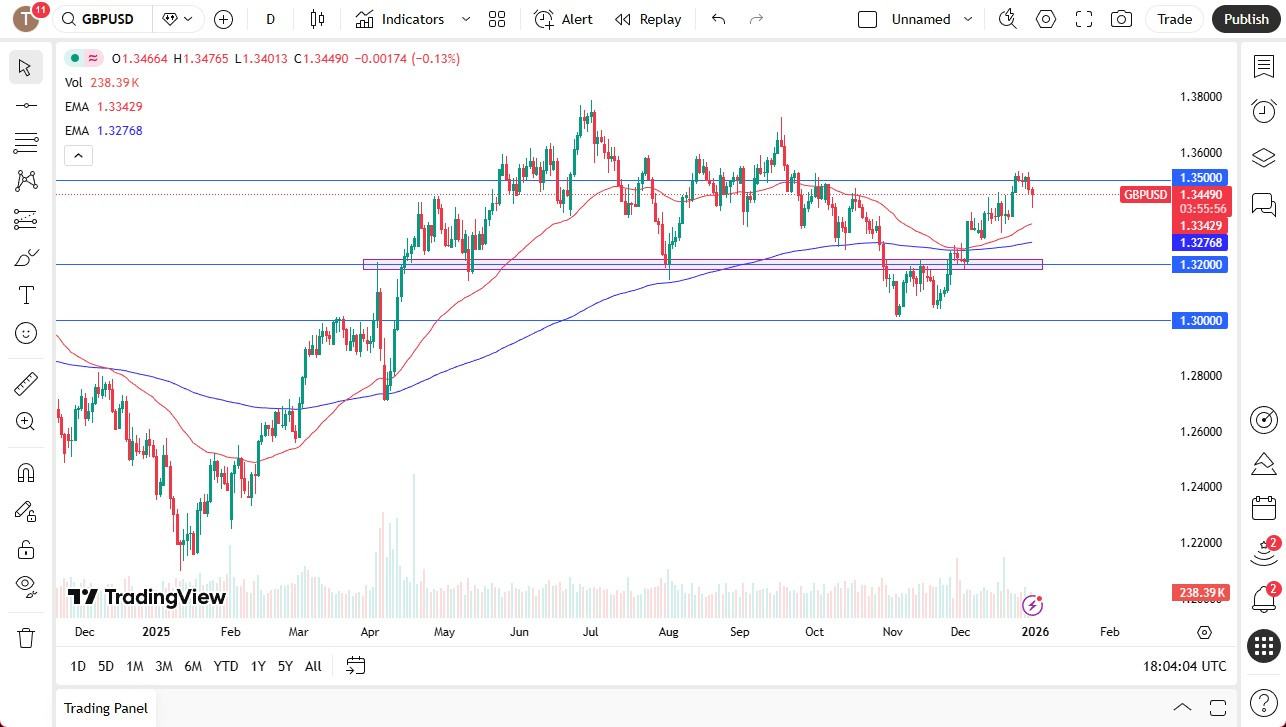
GBP/USD Forecast Today 02/01: Pound Struggles (Video&Chart)

By |2026-01-02T11:12:33+02:00January 2, 2026|Forex News, News|0 Comments

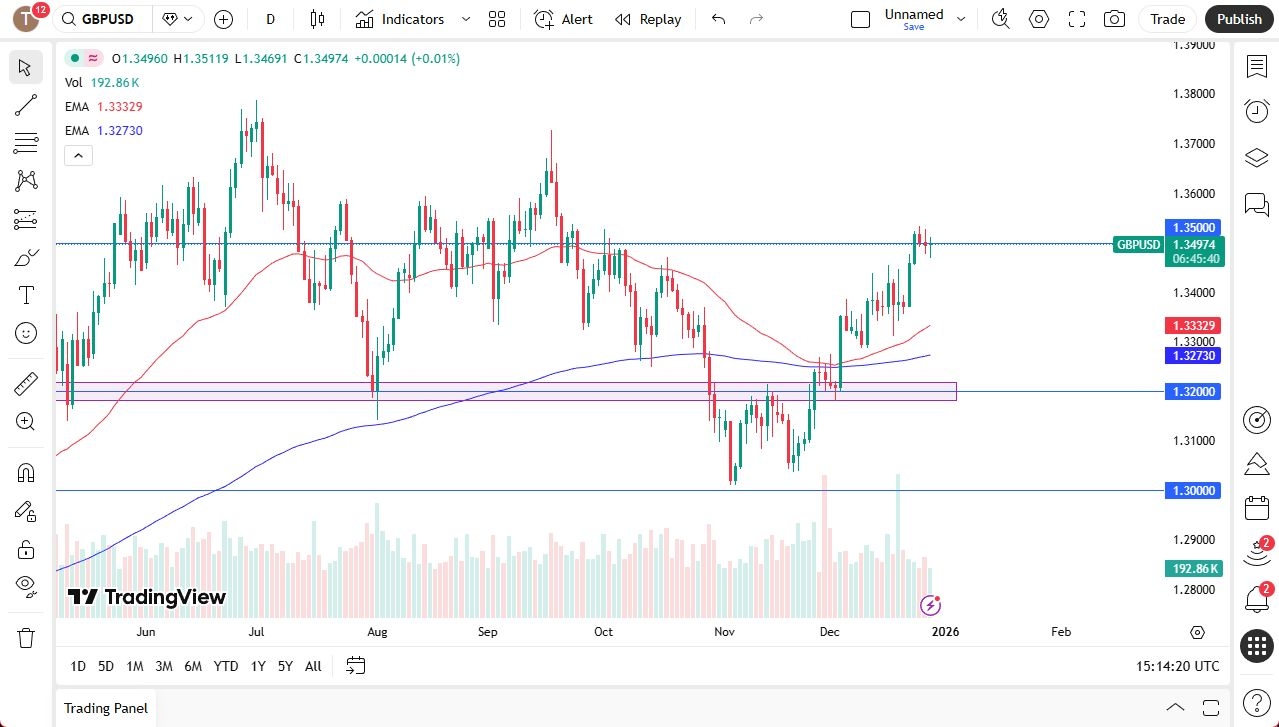
  • The British Pound had a tough session on Wednesday again as the 1.35 level continues to be a barrier.
  • With that being the case, I think it’s worth watching very closely the 1.35 level as it is a large round psychologically significant figure and a level that a lot of people will be watching very closely.
  • If we can break above the 1.3550 level, it opens up the possibility of a move to the 1.37 level.

Federal Reserve and Bank of England

If we break down below the lows of the Wednesday session, we probably go looking to the 50-day EMA, perhaps the 200-day EMA after that, and then eventually the 1.32 level. In general, this is a market that I think continues to be very noisy and, of course, will be driven by the US Dollar more than anything else.

While the Federal Reserve is expected to cut rates next year, the reality is that a lot of the economic numbers coming out of the United States are stronger than people are comfortable with, as far as cutting twice. We’ll see whether or not that ends up being the case, and of course, we’ll have to watch the Bank of England because they just cut. Now the question is, will they have to cut more?

I do think there is potential for either direction at this point, and we’ll just have to watch how things play out over the next couple of trading sessions. The early part of next week will be a bit thin, but as we get later in the week, I think you start to see a little bit more liquidity, a little bit more reality when it comes to this market. Keeping in mind that on Friday there will be trading, but it will be in very thin conditions, so I wouldn’t read too much into this market until at least Monday of next week.

Ready to trade our daily GBP/USD Forex forecast? Here’s some of the best forex broker UK reviews to check out.

Christopher Lewis has been trading Forex and has over 20 years experience in financial markets. Chris has been a regular contributor to Daily Forex since the early days of the site. He writes about Forex for several online publications, including FX Empire, Investing.com, and his own site, aptly named The Trader Guy. Chris favours technical analysis methods to identify his trades and likes to trade equity indices and commodities as well as Forex. He favours a longer-term trading style, and his trades often last for days or weeks.


Source link

2 01, 2026

Euro bulls show no interest

By |2026-01-02T09:11:35+02:00January 2, 2026|Forex News, News|0 Comments

Following a recovery attempt in the early trading hours on Friday, EUR/USD lost its traction and retreated slightly below 1.1750. The pair could have a difficult time gathering directional momentum as trading conditions are likely to remain thin in between the New Year holiday and the weekend.

Euro Price This week

The table below shows the percentage change of Euro (EUR) against listed major currencies this week. Euro was the weakest against the US Dollar.

USD EUR GBP JPY CAD AUD NZD CHF
USD 0.24% 0.16% 0.28% 0.38% 0.10% 1.24% 0.58%
EUR -0.24% -0.08% 0.04% 0.14% -0.15% 0.99% 0.33%
GBP -0.16% 0.08% 0.27% 0.22% -0.07% 1.08% 0.40%
JPY -0.28% -0.04% -0.27% 0.10% -0.18% 0.94% 0.29%
CAD -0.38% -0.14% -0.22% -0.10% -0.24% 0.85% 0.18%
AUD -0.10% 0.15% 0.07% 0.18% 0.24% 1.15% 0.46%
NZD -1.24% -0.99% -1.08% -0.94% -0.85% -1.15% -0.67%
CHF -0.58% -0.33% -0.40% -0.29% -0.18% -0.46% 0.67%

The heat map shows percentage changes of major currencies against each other. The base currency is picked from the left column, while the quote currency is picked from the top row. For example, if you pick the Euro from the left column and move along the horizontal line to the US Dollar, the percentage change displayed in the box will represent EUR (base)/USD (quote).

Earlier in the week, the modest US Dollar (USD) recovery caused EUR/USD to edge lower. In the absence of fundamental drivers, profit-taking toward the end of the year may have caused the USD to gather strength.

In the new year, the potential policy divergence between the Federal Reserve (Fed) and the European Central Bank (ECB) could remain as the primary driver of EUR/USD’s action. While the Fed is widely seen is adopting a dovish stance to support the labor market, the ECB is expected to remain patient, with the European economy showing resilience and inflation holding steady.

The economic calendar will not offer any high-impact data releases on Friday.

EUR/USD Technical Analysis:

The 20-period Simple Moving Average (SMA) has turned lower and now sits beneath the 50 SMA, while price stays below these short-term gauges. The 50-, 100-, and 200-period SMAs edge higher, with price above the latter two, keeping the broader bias mildly positive despite near-term softness. The Relative Strength Index (RSI) stands at 42.76, below the 50 midline and signaling waning momentum.

Measured from the 1.1503 low to the 1.1800 high, the 23.6% retracement and the 100-period SMA form a support area at 1.1730-1.1740. With a drop below this region, the 38.2% retracement at 1.1687 could be seen as the next support before 1.1665 (200-period SMA). Immediate resistance aligns at 1.1755-1.1760 (20-period SMA, 50-period SMA), followed by 1.1800 (end-point of the uptrend) and 1.1840 (static level).

(The technical analysis of this story was written with the help of an AI tool)

Euro FAQs

The Euro is the currency for the 20 European Union countries that belong to the Eurozone. It is the second most heavily traded currency in the world behind the US Dollar. In 2022, it accounted for 31% of all foreign exchange transactions, with an average daily turnover of over $2.2 trillion a day.
EUR/USD is the most heavily traded currency pair in the world, accounting for an estimated 30% off all transactions, followed by EUR/JPY (4%), EUR/GBP (3%) and EUR/AUD (2%).

The European Central Bank (ECB) in Frankfurt, Germany, is the reserve bank for the Eurozone. The ECB sets interest rates and manages monetary policy.
The ECB’s primary mandate is to maintain price stability, which means either controlling inflation or stimulating growth. Its primary tool is the raising or lowering of interest rates. Relatively high interest rates – or the expectation of higher rates – will usually benefit the Euro and vice versa.
The ECB Governing Council makes monetary policy decisions at meetings held eight times a year. Decisions are made by heads of the Eurozone national banks and six permanent members, including the President of the ECB, Christine Lagarde.

Eurozone inflation data, measured by the Harmonized Index of Consumer Prices (HICP), is an important econometric for the Euro. If inflation rises more than expected, especially if above the ECB’s 2% target, it obliges the ECB to raise interest rates to bring it back under control.
Relatively high interest rates compared to its counterparts will usually benefit the Euro, as it makes the region more attractive as a place for global investors to park their money.

Data releases gauge the health of the economy and can impact on the Euro. Indicators such as GDP, Manufacturing and Services PMIs, employment, and consumer sentiment surveys can all influence the direction of the single currency.
A strong economy is good for the Euro. Not only does it attract more foreign investment but it may encourage the ECB to put up interest rates, which will directly strengthen the Euro. Otherwise, if economic data is weak, the Euro is likely to fall.
Economic data for the four largest economies in the euro area (Germany, France, Italy and Spain) are especially significant, as they account for 75% of the Eurozone’s economy.

Another significant data release for the Euro is the Trade Balance. This indicator measures the difference between what a country earns from its exports and what it spends on imports over a given period.
If a country produces highly sought after exports then its currency will gain in value purely from the extra demand created from foreign buyers seeking to purchase these goods. Therefore, a positive net Trade Balance strengthens a currency and vice versa for a negative balance.

Source link

1 01, 2026

GBP/USD Forecast 2026: Policy Divergence, Volatility, and Key Levels to Watch

By |2026-01-01T15:02:52+02:00January 1, 2026|Forex News, News|0 Comments

Morgan Stanley presents the most bullish scenario, projecting GBP/USD at 1.47 by end-2026, with upside extensions toward 1.50 if US growth decelerates sharply. Their base case assumes three additional Fed cuts in the first half of 2026, driving the fed funds rate toward 3.00% and compressing US rate differentials. Still, even Morgan Stanley has moderated its earlier conviction, acknowledging that dollar weakness may prove more measured and front-loaded.

MUFG adopts a middle-ground approach, projecting GBP/USD near 1.40 by mid-2026, consistent with a gradual rather than disorderly dollar decline. Importantly, MUFG has revised forecasts higher for the dollar relative to earlier expectations, reflecting its resilience despite easing.

Bank of England: Sterling’s Limiting Factor

If the Fed sets the ceiling for GBP/USD, the Bank of England likely defines the floor. After cutting rates five times in 2025, bringing Bank Rate to 4.00%, markets expect further easing. Consensus forecasts see rates falling to 3.25% by Q3 2026, with several institutions calling for 3.00% or lower by year-end.

The rationale is straightforward. UK growth remains weak, GDP contracted in October 2025, and unemployment has risen to 5.0%. At the same time, inflation remains elevated at 3.6%, leaving the BoE balancing fragile growth against incomplete disinflation. Morgan Stanley expects rates as low as 2.75%, a move that would materially erode Sterling’s carry support.

This aggressive easing bias limits Sterling’s ability to outperform, even in a weakening dollar environment. Unlike earlier cycles, GBP’s upside is unlikely to be driven by yield differentials and instead relies on relative economic resilience and capital flows.

Risk Scenarios: What Moves the Needle

Upside risks for GBP/USD are overwhelmingly dollar-centric. A sharper-than-expected US slowdown could force the Fed into faster or deeper cuts, pushing GBP/USD toward the upper end of forecasts. Similarly, a policy misstep that tightens financial conditions into labor market weakness would likely weigh on the dollar.

Sterling-specific upside is harder to justify but not impossible. A stabilization in UK growth, improved productivity trends, or credible fiscal signaling could help GBP outperform expectations, though these remain secondary drivers.

Downside risks remain meaningful. Sticky US inflation could stall Fed easing and preserve dollar yield support. In the UK, fiscal scrutiny is likely to intensify ahead of future budget cycles, particularly if debt dynamics worsen. A global risk-off episode would also favor the dollar, regardless of valuation arguments.

Technical and Positioning Context

From a technical standpoint, GBP/USD faces heavy resistance in the 1.38–1.42 zone, an area that capped rallies in prior cycles. Support near 1.30–1.32 has held consistently, suggesting a broad trading range rather than a trending market.

Positioning remains elevated following Sterling’s 2025 performance, increasing vulnerability to pullbacks if underlying momentum fades. Sustained breaks above 1.38 would likely require either pronounced US weakness or a material improvement in UK fundamentals, neither of which sits in the consensus base case.

Source link

31 12, 2025

USDJPY Forecast 2026: Policy Divergence Keeps Dollar Supported

By |2025-12-31T16:51:32+02:00December 31, 2025|Forex News, News|0 Comments

Monthly USD/JPY

The monthly trend is also up with the 12-month moving average at 149.817 controlling the long-term trend and providing support. However, the three-descending tops at 157.895, 158.880 and 161.950 are creating major headwinds, which could be a problem throughout 2026.

Holding the 12-month MA will indicate the presence of buyers, but it may just be enough to hold the Forex pair in a trading range if upside momentum can’t take out those tops.

Meanwhile, a failure at the 12-month MA will signal building selling pressure which will put 145.483 and 139.579 on the radar.

Key Risks: Intervention, Labor Markets, and Global Sentiment

  1. Intervention Threat

A central theme for 2026 is how far Japanese authorities will allow yen weakness to go. Interventions in 2024 set a precedent, and officials have noted the inflationary contribution of a weak yen—estimated at 0.3–0.5 percentage points over 12 months. Markets expect stronger warnings above 155 and a high likelihood of direct intervention near 158–160.

  1. U.S. Labor Market Weakness

The unemployment rate’s rise to 4.4% late in 2025 raises the possibility of a sharper cooling in early 2026. If job losses accelerate, the Fed may resume cutting more aggressively than currently projected, narrowing yield spreads and weakening the dollar. Labor performance is now the most sensitive factor for the Fed’s early-2026 path.

  1. Global Equity Correction

USDJPY retains a strong correlation with global risk appetite. A correction in AI-driven equities or a broader defensive shift could generate yen strength, particularly versus high-beta currencies. Cross-yen pairs such as EURJPY and AUDJPY would likely respond quickly, with spillovers into USDJPY depending on the depth of the market move.

  1. Political Transition at the Fed

With Chair Powell’s term ending in mid-2026, markets face uncertainty around his successor. A Trump-appointed chair inclined toward faster rate cuts could alter expectations for U.S. yields, although institutional constraints limit how dramatic a shift could reasonably be. Even moderate differences in communication could influence spreads and FX pricing.

Investment and Hedging Implications

For corporates and institutional investors, 2026 calls for flexible hedging approaches. The baseline market view remains a strong dollar, but the risks around policy changes and intervention require scenario planning.

Japanese hedging costs should fall meaningfully as U.S. yields move lower—possibly by 100–125 bps—reducing the burden on domestic investors. This could gradually soften demand for USDJPY carry exposure but is unlikely to reverse flows on its own.

U.S. corporates with Japanese revenue exposure should prepare for another year of favorable FX translation but maintain contingency plans in case yen strength returns due to Fed dovishness or a risk-off shock.

Conclusion: A Dollar-Bias With Non-Trivial Risks

The USDJPY outlook for 2026 is defined by a tension between yield-differential support for the dollar and rising political and intervention risks that could cap gains. Strategist forecasts span from J.P. Morgan’s bullish 164 target to more moderate expectations around 151–157. The most plausible path is a year characterized by episodic volatility but a prevailing bias toward higher levels—so long as U.S. labor markets avoid a sharper downturn.

Market participants should monitor Fed communication closely, BoJ commentary on the pace of normalization, and any indication from Japanese authorities about tolerable yen levels. With intervention risks elevated and global sentiment fragile, 2026 may reward traders who prepare for a wider distribution of outcomes rather than relying on the recent trend alone.

More Information in our Economic Calendar.

Source link

31 12, 2025

The EURJPY is limited within tight range– Forecast today – 31-12-2025

By |2025-12-31T14:50:43+02:00December 31, 2025|Forex News, News|0 Comments

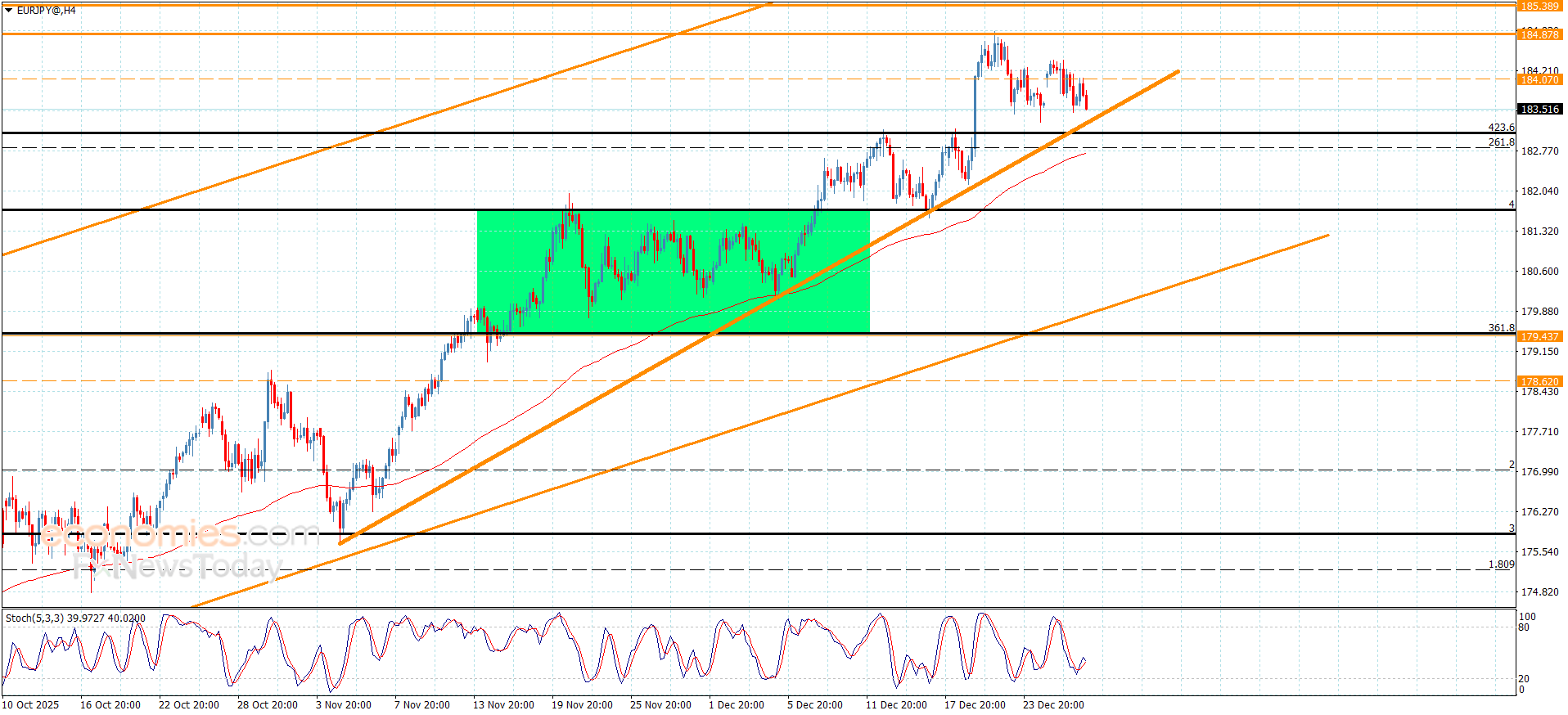
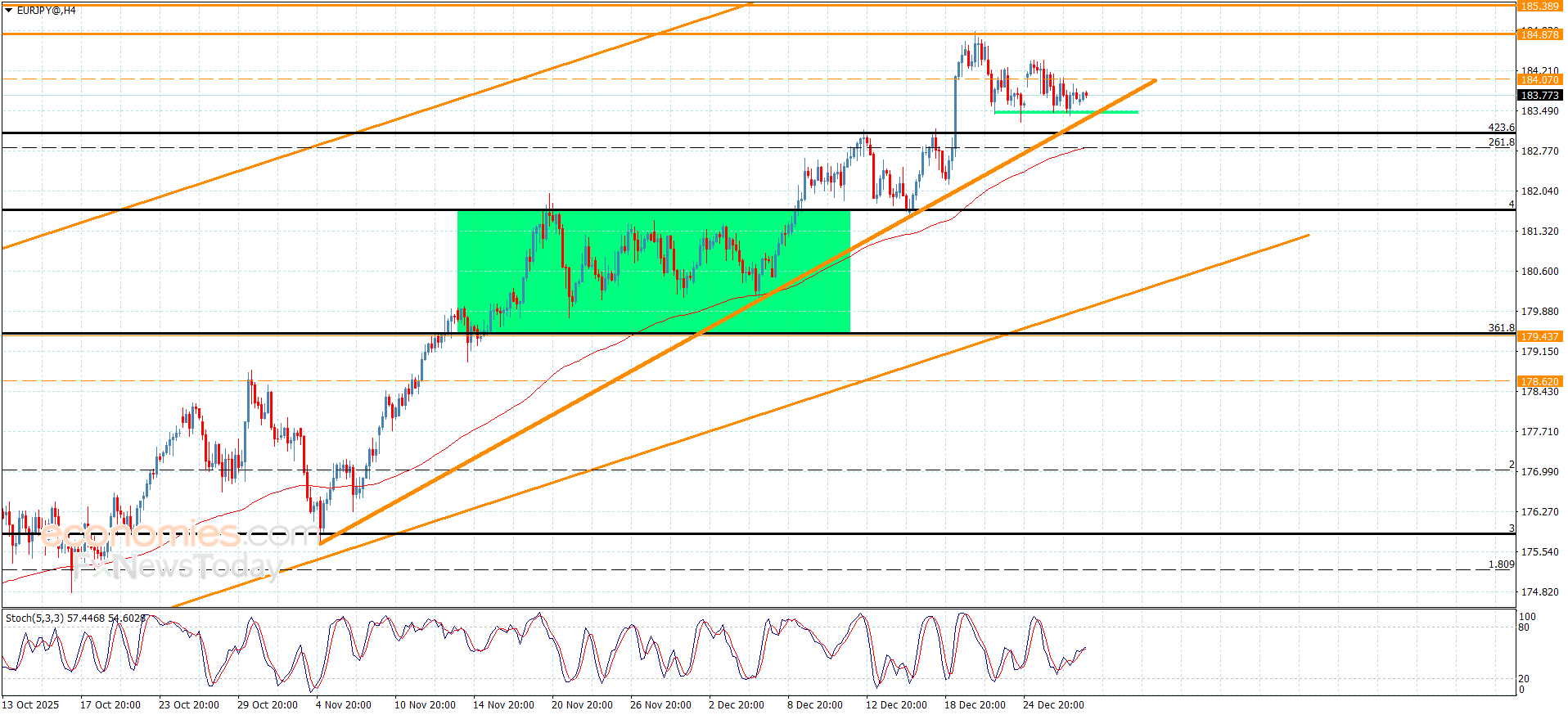
The EURJPY pair began activating with the main indicators’ positivity, to end the bearish corrective attempts after hitting 183.40 level, which represents an extension for the main bullish channel’s support.


Note that renewing the bullish attack requires surpassing extra barrier at 184.40, therefore, we expect the price confinement within these levels until breaching the barrier, to begin recording clear gains by its rally towards 184.85 and 185.40.


The expected trading range for today is between 183.40 and 184.10


Trend forecast: sideways


Source link

31 12, 2025

USD/JPY Forecast 31/12:US Dollar Rangebound Against the Yen

By |2025-12-31T12:49:36+02:00December 31, 2025|Forex News, News|0 Comments

  • The US dollar has been choppy against the Japanese yen during trading on Tuesday, as we are simply flailing about trying to find some type of momentum.

USD/JPY

The US dollar has been choppy against the Japanese yen during trading on Tuesday, as we are simply flailing about trying to find some type of momentum. I don’t think we’re going to, at least not in the short term, as we are going to be more worried about the holiday and the lack of liquidity than anything else.

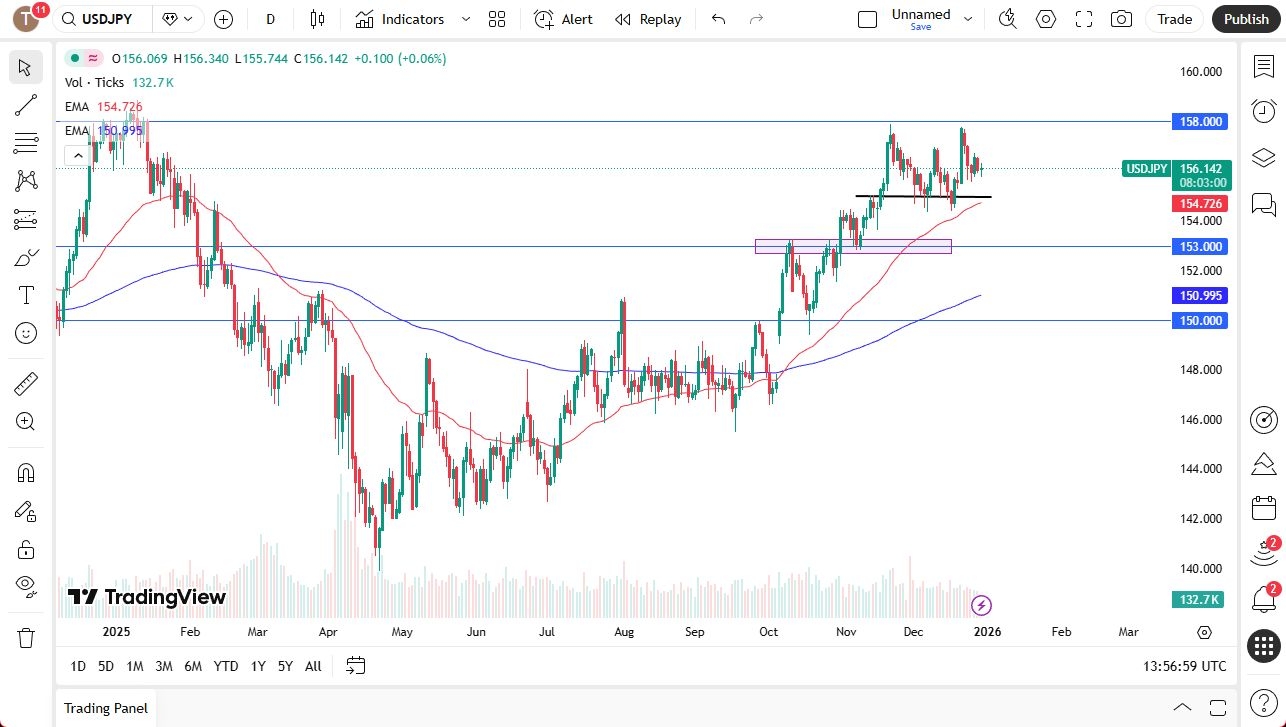
All things being equal, this is a market that I think is going to continue to pay close attention to the 50-day EMA underneath, which is sitting just below the 155 yen level. I suspect that area in that general vicinity is your short-term floor, while the 158 yen level above is your ceiling.

I don’t expect to see any major change in the short term, but I do recognize that eventually we will have to break out of this range. If we can get above the 158 yen level, then I do think that the dollar will go to the 160 yen level. A breakdown below the 154.50 yen level opens up a move down to the 153 yen level.

Interest Rate Differential

Fundamentally speaking, the Bank of Japan did just raise rates, and the Federal Reserve is expected to cut once or twice in 2026, but the reality is that the interest rate differential is still wide enough that you can drive a truck through it, and the Bank of Japan really has no ability to tighten monetary policy significantly.

We are starting to hear murmurs of Japan tightening, and while that might be true to a point, the demographics of the country and quite frankly, the debt load don’t allow that to be a major feature going forward. I like the idea of buying dips against the yen and will continue to do so.

Want to trade our USD/JPY forex analysis and predictions? Here’s a list of forex brokers in Japan to check out.

Christopher Lewis has been trading Forex and has over 20 years experience in financial markets. Chris has been a regular contributor to Daily Forex since the early days of the site. He writes about Forex for several online publications, including FX Empire, Investing.com, and his own site, aptly named The Trader Guy. Chris favours technical analysis methods to identify his trades and likes to trade equity indices and commodities as well as Forex. He favours a longer-term trading style, and his trades often last for days or weeks.

Source link

31 12, 2025

The GBPJPY repeats the sideways fluctuation– Forecast today – 31-12-2025

By |2025-12-31T10:48:31+02:00December 31, 2025|Forex News, News|0 Comments

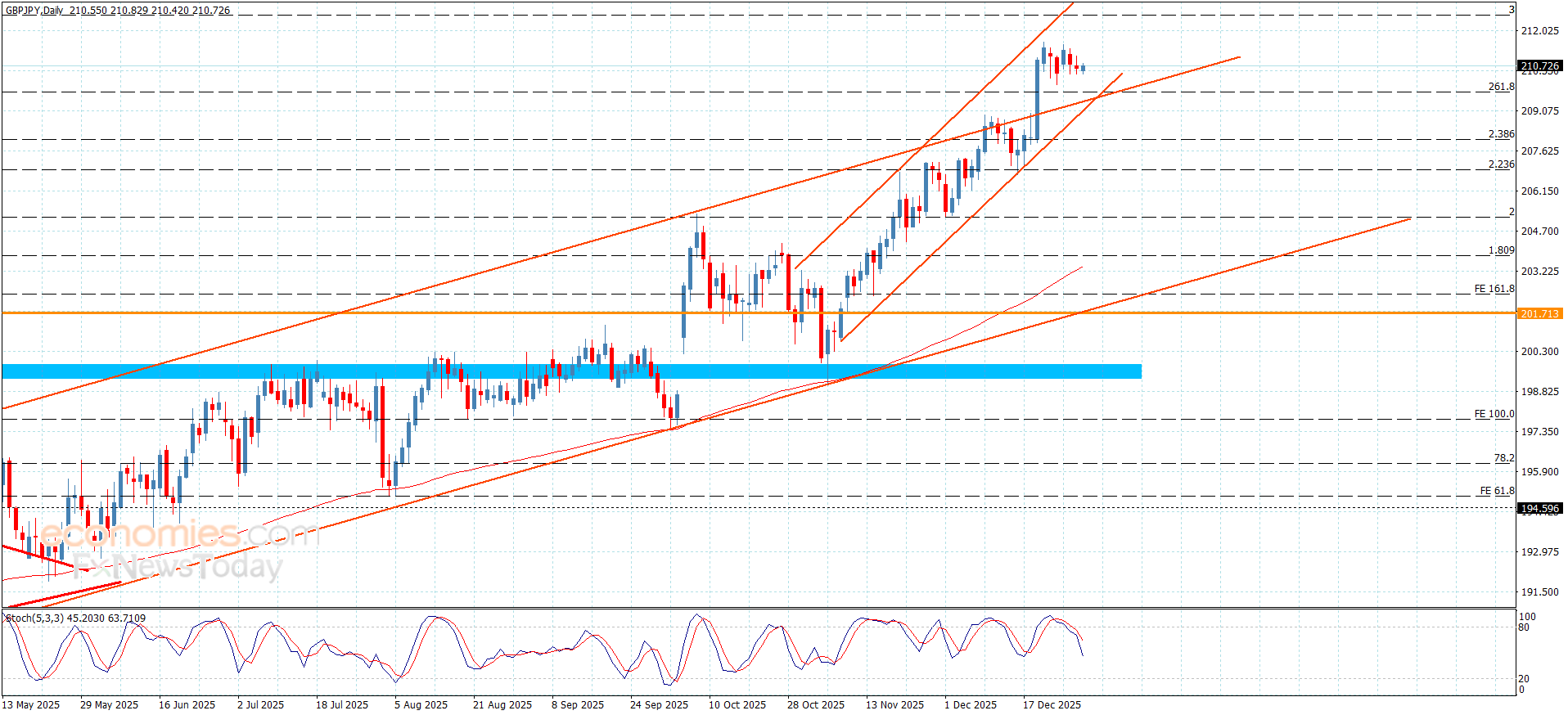
The GBPJPY pair repeatedly providing weak sideways trading by its fluctuating near 210.70 level, affected by the contradiction between the main indicators, while the negative stability below 211.30 barrier keeps the bearish correction scenario, which might target 209.70 level reaching 209.10 support.


Note that surpassing the barrier and holding above will confirm its readiness to renew the bullish attempts, to expect recording new gains by its rally towards 211.90 and 212.65.


The expected trading range for today is between 209.30 and 211.20


Trend forecast: Bearish


Source link

30 12, 2025

The EURJPY continues the corrective decline– Forecast today – 30-12-2025

By |2025-12-30T18:40:32+02:00December 30, 2025|Forex News, News|0 Comments

The GBPJPY pair is forced to provide slow corrective trading, due to the contradiction between the main indicators, keeping its fluctuations near 210.65 level, but its stability below 211.30 level supports the chances of activating the bearish corrective attack, to keep waiting for our negative expectations until reaching 209.70 level reaching the minor bullish channel’s support at 209.00.


While gathering extra bullish momentum and its rally above the barrier will provide new opportunity for activating the bullish trend, to expect targeting new positive stations that might begin at 212.65.


The expected trading range for today is between 209.30 and 211.20


Trend forecast: Bearish


Source link

30 12, 2025

British Pound Continues to Hover

By |2025-12-30T16:39:40+02:00December 30, 2025|Forex News, News|0 Comments

  • The British pound has been pretty choppy during the Monday session as we continue to hover around the 1.35 level.

GBP/USD

The 1.35 level, of course, is a large, round, psychologically significant figure and an area that a lot of people will be watching, as it has been important a couple of times in the past. Nonetheless, I think we have a situation where there is a lack of volume. I do not know how much I read into the price action at the moment.

Yes, the US dollar has softened quite a bit over the last couple of weeks, but we also have to keep in mind that there are some concerns about the global economy. If that ends up being the case, it does make a certain amount of sense that the US dollar still has a bit of demand.

Fed Rate Cuts

Furthermore, you have to understand that some of the leading indicators and data have thrown a bit of a monkey wrench into the plans of those who are looking to sell off the US dollar based on loosening monetary policy. It is not that rare that the Federal Reserve starts cutting rates and then the US dollar strengthens shortly afterwards. That is mainly because it is a sign of potential stress in the system. However, the fundamentals do not matter if the price ends up doing something completely different.

At this point, if we do break out to the upside, I think the 1.37 level is a potential target, perhaps even the 1.38 level. If we turn around and break below the 1.3450 level, then we could go down to the 1.33 level. Ultimately, this is a market that I think is at a major inflection point, and we need to watch it very closely. I suspect that this is all about the US dollar, so watch the US dollar against other currencies. It could give you a bit of a heads-up.

Ready to trade our daily GBP/USD Forex forecast? Here’s some of the best forex broker UK reviews to check out.

Christopher Lewis has been trading Forex and has over 20 years experience in financial markets. Chris has been a regular contributor to Daily Forex since the early days of the site. He writes about Forex for several online publications, including FX Empire, Investing.com, and his own site, aptly named The Trader Guy. Chris favours technical analysis methods to identify his trades and likes to trade equity indices and commodities as well as Forex. He favours a longer-term trading style, and his trades often last for days or weeks.
Source link

30 12, 2025

Euro looks to extend sideways grind

By |2025-12-30T14:38:33+02:00December 30, 2025|Forex News, News|0 Comments

EUR/USD struggled to make a decisive move in either direction on Monday to close virtually unchanged. The pair continues to move sideways, slightly above 1.1750, in the European session on Tuesday. The neutral technical stance and thin trading conditions ahead of the New Year holiday could cause the pair to remain in a consolidation phase in the short term.

Euro Price This Month

The table below shows the percentage change of Euro (EUR) against listed major currencies this month. Euro was the strongest against the US Dollar.

USD EUR GBP JPY CAD AUD NZD CHF
USD -1.44% -2.01% -0.12% -2.10% -2.39% -1.43% -1.78%
EUR 1.44% -0.57% 1.34% -0.66% -0.96% 0.03% -0.33%
GBP 2.01% 0.57% 2.17% -0.09% -0.39% 0.61% 0.22%
JPY 0.12% -1.34% -2.17% -2.01% -2.29% -1.31% -1.69%
CAD 2.10% 0.66% 0.09% 2.01% -0.34% 0.70% 0.32%
AUD 2.39% 0.96% 0.39% 2.29% 0.34% 1.00% 0.59%
NZD 1.43% -0.03% -0.61% 1.31% -0.70% -1.00% -0.38%
CHF 1.78% 0.33% -0.22% 1.69% -0.32% -0.59% 0.38%

The heat map shows percentage changes of major currencies against each other. The base currency is picked from the left column, while the quote currency is picked from the top row. For example, if you pick the Euro from the left column and move along the horizontal line to the US Dollar, the percentage change displayed in the box will represent EUR (base)/USD (quote).

The data from the US showed on Monday that Pending Home Sales increased by 3.3% in November. This reading came in better than the market expectation of 1% but failed to trigger a noticeable market reaction. Meanwhile, the Federal Reserve Bank of Dallas noted in its monthly report that the Dallas Fed Manufacturing Index edged lower to -10.9 in December from -10.4 in November.

Later in the day, the Federal Reserve will publish the minutes of the December policy meeting. In case the publication shows that policymakers are willing to take some time to assess the economic conditions before cutting the policy rate again, the US Dollar (USD) could hold its ground and make it difficult for EUR/USD to edge higher. Conversely, a dovish tone, with officials reaffirming the need to support the labor market and confidence about inflation not rising again, the USD could come under bearish pressure. Nevertheless, markets are unlikely to get out of the holiday mood until next week.

EUR/USD Technical Analysis:

The 20-period Simple Moving Average (SMA) has flattened and now caps near 1.1777 as the pair slips marginally beneath it. The 50-, 100-, and 200-period SMAs trend higher below price, reinforcing a positive underlying bias. The 50-period SMA at 1.1756 offers nearby dynamic support. The Relative Strength Index (14) stands at 49, neutral and easing, which hints at fading intraday momentum.

Measured from the 1.1503 low to the 1.1800 high, the 23.6% retracement at 1.1730 aligns as a key support level, followed by the 38.2% retracement at 1.1687 next. Immediate resistance aligns at 1.1800 (static level) ahead of 1.1840 (upper limit of the ascending channel).

(The technical analysis of this story was written with the help of an AI tool)

Euro FAQs

The Euro is the currency for the 20 European Union countries that belong to the Eurozone. It is the second most heavily traded currency in the world behind the US Dollar. In 2022, it accounted for 31% of all foreign exchange transactions, with an average daily turnover of over $2.2 trillion a day.
EUR/USD is the most heavily traded currency pair in the world, accounting for an estimated 30% off all transactions, followed by EUR/JPY (4%), EUR/GBP (3%) and EUR/AUD (2%).

The European Central Bank (ECB) in Frankfurt, Germany, is the reserve bank for the Eurozone. The ECB sets interest rates and manages monetary policy.
The ECB’s primary mandate is to maintain price stability, which means either controlling inflation or stimulating growth. Its primary tool is the raising or lowering of interest rates. Relatively high interest rates – or the expectation of higher rates – will usually benefit the Euro and vice versa.
The ECB Governing Council makes monetary policy decisions at meetings held eight times a year. Decisions are made by heads of the Eurozone national banks and six permanent members, including the President of the ECB, Christine Lagarde.

Eurozone inflation data, measured by the Harmonized Index of Consumer Prices (HICP), is an important econometric for the Euro. If inflation rises more than expected, especially if above the ECB’s 2% target, it obliges the ECB to raise interest rates to bring it back under control.
Relatively high interest rates compared to its counterparts will usually benefit the Euro, as it makes the region more attractive as a place for global investors to park their money.

Data releases gauge the health of the economy and can impact on the Euro. Indicators such as GDP, Manufacturing and Services PMIs, employment, and consumer sentiment surveys can all influence the direction of the single currency.
A strong economy is good for the Euro. Not only does it attract more foreign investment but it may encourage the ECB to put up interest rates, which will directly strengthen the Euro. Otherwise, if economic data is weak, the Euro is likely to fall.
Economic data for the four largest economies in the euro area (Germany, France, Italy and Spain) are especially significant, as they account for 75% of the Eurozone’s economy.

Another significant data release for the Euro is the Trade Balance. This indicator measures the difference between what a country earns from its exports and what it spends on imports over a given period.
If a country produces highly sought after exports then its currency will gain in value purely from the extra demand created from foreign buyers seeking to purchase these goods. Therefore, a positive net Trade Balance strengthens a currency and vice versa for a negative balance.

Source link

Go to Top