Significant job growth was observed in various sectors:
Health Care: Leading the growth with 67,000 new jobs.
Government: Added 52,000 jobs, aligning with the 12-month average.
Food Services and Drinking Places: Increased by 42,000 jobs.
Social Assistance: Grew by 24,000 jobs.
Transportation and Warehousing: Saw an increase of 20,000 jobs.
Average Hourly Earnings and Workweek
Average hourly earnings for all private nonfarm employees edged up by 5 cents to $34.57. This marginal increase indicates a slight deceleration from the previous year. The average workweek for all employees also saw a slight uptick, moving to 34.3 hours.
Labor Market Trends and Challenges
The labor market’s resilience is evident in the robust job additions. However, challenges persist, as evidenced by the slight rise in the unemployment rate and the stable yet not increasing labor force participation rate. The slight increase in part-time workers seeking full-time roles, remaining at 4.4 million, underscores these ongoing challenges.
Economic Implications
February’s labor market performance, with its combination of strong job growth, a mild increase in unemployment, and moderated wage growth, paints a complex picture. It reflects an economy that is resilient yet facing nuanced challenges, with implications for traders and policymakers in interpreting the underlying trends and potential shifts in the labor market.
In an insightful interview, Piers Ridyard, CEO of the decentralized network Radix DLT, discussed his “wild ride” through the worlds of smart contracts and Y Combinator.
Chatting with Cryptonews Podcast host Matt Zahab, the CEO talked about finding Ethereum, mining on its genesis block, selling ETH, and getting into Radix.
Ridyard told us about the project’s key principles, and how it goes above and beyond to keep users’ funds safe.
In this interview, Ridyard discussed:
the founding story of Radix DLT;
Y Combinator’s secret sauce: setting the tone and levelling up in business;
Radix having a much simpler coding language than other blockchains;
Radix as a game engine for DeFi: it is significantly quicker to build applications on;
how Radix Wallet improves crypto user experience.
Piers Ridyard gave a wide-ranging exclusive interview, which you can watch above – or you can read a part of it below.
Wild Ride Through Smart Contracts and Y Combinator
Ridyard started the interview with his background. Notably, he described his experience with Y Combinator as “a wild ride.”
First, he entered the Ethereum community very early and got very interested in smart contracts.
At the time, smart contracts were a new thing in the space, and everybody wondered what they could create. Ridyard finds that most of these ideas will come true, it’s just a matter of timing.
But he had something specific in mind:
“One of the things that I thought – it was an obvious use case for smart contracts – was insurance.”
Ridyard started “playing around” with this idea of automatic insurance. Having no knowledge about insurance, he first reached out to “a bunch of” insurance companies to understand their problem set.
He talked to them about blockchain, and they told him about insurance. “So I ended up speaking with a bunch of the senior people in some of the biggest insurance companies in London.”
However, the crypto sector was very different at the time and was ultimately not equipped to facilitate automatic insurance. Specifically, there were no stablecoins.
They could only use ETH as collateral, and that wouldn’t work, he said.
Meanwhile, Ridyard learned from the insurance companies that their sector was a slow, manual, disorganized “mess.”
Soon, he began the process of product discovery and came up with the idea of Surematics: a way of creating smart contract-based deals around large syndicated insurance deals.
It would enable the control of the programmatic flow of money, creating criteria for insurance, and more.
He went on to apply for Y Combinator. And Surematics got in.
Y Combinator taught him that,
“There can be a million excuses, but if you want to be successful, this is what you have to achieve. Either you’re going to move heaven and earth to achieve that, or you’re not going to be as successful as you could be, and that’s your choice. We’re not going to give you shit for not doing it, we’re just going to be like, this is the bar and this is what you need to get to. And that changed my perspective from that point forward.”
And at the same time, Ridyard “started playing around” with other blockchain technologies because he had realized that Ethereum had a number of issues.
He soon discovered this new platform called Radix and became friends with its founder Dan Hughes. He then decided to build Surematics on top of Radix.
In July 2015, Ethereum created its “genesis block,” i.e. the first block in a blockchain.
Ridyard was one of those mining on the Genesis Block. More precisely, he had already set up the mining equipment before the Ethereum mainnet launch.
He stated that,
“I think we probably mined maybe in the top 50 blocks, something like that. And so it was a really weird entrance into crypto for me because it started from a point of complete skepticism.”
When he first learned about Ethereum from a friend, he wondered if either of them should invest. Ultimately he told his friend it was a scam and not to buy it.
However, Ethereum started testnet mining a few months later, and “I was like, oh shit, I’ve taken a completely wrong view on this.”
Following some intensive research, he realized that they “just need a bunch of GPUs.”
Notably, before he got into crypto, Ridyard had manufactured consumer electronics for the Apple market. So mining was “right in my wheelhouse.”
They bought “a bunch of hardware” and started mining on the testnet. And then they simply continued mining on the mainnet.
“And we were mining sequential blocks at many points where we would win a block, and then we’d win the next block. And that’s how low the computing power was at the time.”
Ridyard was there for many of Ethereum’s firsts.
Following his mining entry, he got into smart contracts, invested in the first decentralized autonomous organization (DAO), known for The DAO hack, and was there during the debates about whether or not Ethereum should fork.
Meanwhile, he sold most of the mined ETH.
“I think we mined 10,000 ETH in about three months. But the irony of it was if we’d taken the money that we’d spent on hardware and just bought Ethereum, we would have done about 5X better than we did through mining.”
That said, Ridyard wanted to buy his first house, and he had enough money from mining to make a deposit.
There appeared another irony. This one hurt. It took six months to close on the house. By that time, he could have bought the house in cash.
On the other hand, he had put his ETH in various wallets. When he opened one of them previously holding about $300-500 in ETH, he found it reached $20,000.
“I think the thing that I learned from that is never sell your moon bag,” Ridyard said. “Always make sure that you’re always holding something. But yeah, Ethereum has definitely treated me well.”
Today marks the 8th anniversary since the Ethereum genesis block.
One of the most significant moments in crypto so far.
Ridyard noted that the technology of Radix excited him “way more” than the application of insurance.
The three things that make the core of Radix, and that the team delivered, are scalability, developer experience and tools, and user experience.
The company took a thorough approach, thinking:
“Let’s take a bit more time, and let’s actually work with developers to get to the point where you have a programming language that feels really intuitive for doing the things in Web3 that make sense”.
Therefore, they spent about two years talking to about a thousand developers.
They knew that the syntax had to be “super easy” as well.
The team kept iterating until they got it to the point where “developers are just getting it immediately” once they went through the documentation.
“They spend an hour going through it. And they’re like, I understand how to build Uniswap, I understand how to build Aave.”
That’s when they released the programming language at the end of 2019. It has grown “incredibly well” since.
They also worked thoroughly on what the user experience (UX) paradigm needed to look like.
The team wanted to shift the way people think about wallets. It’s not just a place where they keep their money – it’s their portal to Web3. It’s how they interact with Web3.
“And without it, without that making sense, you are in a situation where consumers can’t use it,” Ridyard argued.
Step One: Download the Radix Wallet 📱
You can download the wallet from here, following the steps highlighted on the page 👇https://t.co/YQVhNz1q73
— Radix – Radically Different DeFi (@radixdlt) March 7, 2024
No Nonsense on Radix
Radix is seen as a no-rug-pull, no-nonsense place.
But Ridyard stressed that it’s always possible to rug pull someone.
The point is to assume that everyone at every level of the stack is malicious – to make sure that everything acts on the minimum trust possible and the maximum user information possible.
This leads to two key actions:
put as many guards up;
make sure that every interaction is human-readable so that users know what they’re signing.
What Radix offers is transparency that ensures more security. Users can see in their wallets the information about the token type issued to them.
People behind tokens are not able to hide the rules associated with the token, Ridyard said, and added:
“You can’t stop people from scamming, but you can make it a lot harder to scam a user into doing something that they don’t consent to because all of the information is available to the user.”
Furthermore, Radix doesn’t allow project makers to “present an action as one thing” and get the users to approve something else.
What you see in your wallet is the action that you signed to happen on the ledger, said Ridyard, adding:
“And once you signed it, no one can play with it.”
Therefore, somebody can’t commit a rug pull via something that looks like Uniswap, for example. Radix shows users if they are not actually interacting with the genuine Uniswap application.
Also, there is always a guarantee. For example, when a user clicks to confirm a transaction and it fails, the smart contract built by the app enforces the swap guarantees.
But “if you’re with a naughty one, then they’re just going to take your tokens.” Radix doesn’t allow that. The guarantees are then enforced at the ledger level.
“So even if I signed it, they couldn’t steal my money, because for the transaction to succeed, they would have to return to me the minimum guarantee that the transaction was enforcing in the first place. And if it can’t, then the transaction fails,” Ridyard concluded.
This is not just another year for Radix; it’s the year everything changes.
The question of “wen” for too long was answered with “soon.”
— Radix – Radically Different DeFi (@radixdlt) March 7, 2024
__________
About Piers Ridyard
Piers Ridyard is the CEO of Radix DLT – a decentralized network that will enable developers to build quickly without the constant threat of exploits and hacks.
Radix will reward improvements and will ensure that scale is never a bottleneck.
Ridyard also founded and exited Surematics, a Y Combinator company, and was mining on the genesis block of Ethereum in July 2015.
He graduated from the University of Manchester and the University of Law and has a CFA level 1.
This hints at a strong foundation for further upward momentum. Currently, Bitcoin is aiming for the $66,000 mark, with predictions of reaching up to $76,000 in the near future.
Bitcoin’s market cap hits new highs
Amidst these price fluctuations, Bitcoin’s market capitalization has reached a new all-time high of $1.33 trillion.
This milestone shows growing investor confidence and the increasing adoption of Bitcoin as a viable asset class.
Over different timeframes, Bitcoin has showcased significant growth, adding an impressive 11.6% over the past week.
The fortnightly and monthly gains stand at 30.8% and 56.5%, respectively, underscoring the strong upward trend Bitcoin has maintained over these periods.
The AUDUSD has had a strong week to the upside helped by risk on flows and improving and shifting technical bias. One of the big moves was a break above both the 100 and 200-day moving averages near 0.6560, and then the 38.2% retracement of the move down from the December high to the February low at 0.66059.
Today the price moved up and extended through the 50% of the same trading range, but found willing sellers, and rotated lower as some traders may have started to take profits ahead of the weekend.
For the rest of the day – and going into next week – getting back about that 50% retracement level would be needed to increase the bullish bias. On the downside, traders will be watching a swing area between 0.6612 and 0.6624 ahead of the broken 38.2% retracement at 0.66059 as support. Moving back below those levels would disappoint the buyers on the break higher and likely shift focus back to the downside.
In this video, I review of the shift to the upside, and explore what next in detail.
Analysts are tracking the performance of DeeStream (DST), a promising crypto token with real-world utility. This optimism is set against a backdrop of Ethereum (ETH) rallying past $3,600, suggesting a bullish outlook for innovative projects like DeeStream (DST) within the crypto community.
Supporters of DeeStream (DST) can take part in pre-sale and buy tokens here.
Kaspa (KAS) sees potential beyond fast transactions
Kaspa (KAS), recognized for its groundbreaking speed in blockchain transactions, is becoming a focal point for investors seeking the next big opportunity. While Kaspa (KAS) has made significant strides in showcasing the potential of DAG (Directed Acyclic Graph) technology, its community is now turning its attention to projects that promise not only technological innovation but also exponential financial growth.
Binance Coin (BNB) investors explore new ventures
Binance Coin (BNB), the native cryptocurrency of the Binance exchange, has been a pillar of the crypto trading community, facilitating not just trading fees but also a variety of transactions across the Binance ecosystem. As Binance Coin (BNB) continues to show strength in the market, its holders are looking for additional avenues to diversify their portfolios with high-growth potential projects. DeeStream’s (DST) presale, heralded for its potential to disrupt the streaming sector, is attracting Binance Coin (BNB) investors, lured by the promise of significant returns.
DeeStream (DST) unlocks new opportunities
DeeStream (DST) is making waves in the presale market with its innovative approach to integrating blockchain technology into the streaming industry. The platform’s unique value proposition lies in its ability to provide a decentralized solution that not only empowers content creators through direct compensation and greater control over their work but also enhances the viewer’s experience with transparent and fair access to content.
The allure of DeeStream (DST) stems from its potential to disrupt a multi-billion dollar industry that has been predominantly controlled by a few large corporations. By leveraging blockchain to democratize content streaming, DeeStream (DST) positions itself as a pioneer in creating a more equitable and user-centric ecosystem.
Find out more about the DeeStream (DST) presale by visiting the website here.
About the author
Guest Author
A guest author represents the interests of the company he or she is promoting in his or her articles and is not part of U.Today’s editorial staff.
U.Today is not responsible for articles published by guest authors.
The opinions expressed in articles by guest authors do not necessarily reflect the views of U.Today.
The content published by guest authors is not investment advice.
On Friday, European Central Bank (ECB) officials unanimously supported a reduction in interest rates in the forthcoming months, given that the pace of inflation decline within the eurozone surpasses expectations. Key central bank figures from Germany, France, Finland, and Lithuania emphasised the likelihood of the ECB reducing its historically high borrowing rates, reinforcing a signal initially given by ECB President Christine Lagarde the previous day.
Although their opinions regarding when to initiate the rate cut varied slightly, the consensus leaned towards action before the summer. Joachim Nagel, President of the Bundesbank, indicated in an interview with the German podcast Table Today that a rate cut before the summer holidays is becoming increasingly probable.
Nagel’s stance is particularly noteworthy since the Bundesbank’s president is traditionally known for a cautious approach to prematurely adjusting rates. The ECB is scheduled for three meetings before its summer break, on April 11, June 6, and July 18, potentially setting the stage for rate adjustments.
Francois Villeroy de Galhau, head of Banque de France and considered a policy centrist, suggested that a rate cut could be anticipated in the spring, a period he defines as spanning from April to June 21. Similarly, Olli Rehn of Finland mentioned that rate-cutting discussions would be revived during the April and June meetings.
The perspective from Lithuania was more pointed, with the country’s representative foreseeing a rate cut in June as “very likely,” potentially marking the beginning of a series of 25 basis point reductions. Gediminas Simkus, speaking in Vilnius, underscored June as the prime month for such a decision while considering an April move less probable.
Following these statements, financial markets in the eurozone have fully anticipated a rate decrease by June and expect three additional cuts by December. These reductions would lower the ECB’s bank deposit rate from 4% to 3%.
The ECB recently adjusted its growth and inflation forecasts downward, and according to Lagarde, by June, the central bank will possess “a lot” of the necessary information to make an informed decision on rate adjustments.
While there has been scepticism about the ECB acting ahead of the U.S. Federal Reserve, Finnish Governor Olli Rehn dismissed the notion of the ECB operating under the Fed’s shadow in a blog post, emphasising the ECB’s independent decision-making.
According to the U.S. Energy Information Administration (EIA), there was a withdrawal of 40 billion cubic feet (bcf) of gas from storage for the week ending March 1. This figure aligns with analyst predictions but falls short compared to the 72 bcf decrease in the same week last year and the five-year average decrease of 93 bcf. Consequently, current gas stockpiles are about 31% above the usual levels for this period.
Despite predictions of slightly cooler weather in the coming weeks, meteorologists anticipate the majority of the Lower 48 U.S. states will experience warmer than normal conditions until at least March 18, which could influence heating demand.
Production and Export Constraints
Gas output in the Lower 48 states declined to an average of 100.1 billion cubic feet per day (bcfd) in early March, a notable decrease from February’s 104.1 bcfd. This trend is partly due to reduced gas prices and a drop in daily production to a preliminary seven-week low. Major producers like Chesapeake Energy and EQT have announced plans to cut gas drilling this year.
Further impacting the market is the ongoing outage at Freeport LNG’s plant in Texas, reducing the amount of gas flowing to liquefied natural gas (LNG) export plants. LNG feedgas flows have consequently diminished, with recovery not expected until Freeport LNG resumes full operation, potentially by mid-March.
Market Outlook
In the short term, with warmer weather and production curtailments, the market could face a bearish phase. The reduced demand, alongside higher stockpiles and decreased LNG exports, suggests a potential continued downturn in gas prices. However, any changes in weather patterns or a resumption in LNG exports could alter this forecast.
This is Cheatsheet, a primer on what’s happening in crypto today.
All quiet on the bitcoin front, as BTC has traded in a 2% range over the past 24 hours.
Ether, on the other hand, has pushed well past its Wednesday high of $3,900, and looks poised to crack above $4,000 for the first time since late December 2021.
Most of Friday’s market leaders are once again in the memecoin category, with 20% or more moves higher from FLOKI, WIF and PEPE.
A smattering of political-themed memes are doing well in the wake of President Biden’s State of the Union speech, none of which came near the crypto industry. Read into that what you will.
As a category, Options protocols are surging, up 23% alongside fractionalized NFTs.
On-chain mail
Over the past week, the market capitalization of the DeFi sector exceeded $100 billion for the first time since May 2022. This sector, now increasingly known as Onchain Finance, holds the distinction of being crypto’s largest single category by number of tokens.
The resurgence comes as the collective TVL of DeFi similarly knocks on the door of the $100 billion mark, up 44% since the start of the year.
Much of that can be attributed to the rise of ether (ETH) — up 40% year-to-date — which accounts for the lionshare of value locked in the top 4 protocols: Lido, EigenLayer, Aave and Maker.
DeFi TVL remains $90 billion away from its November 2021 all-time high of $189 billion.
Powell Hints at Potential Interest Rate Cuts Amid Inflation Uncertainty
Federal Reserve Chair Jerome Powell suggested that interest rate cuts could be on the horizon if inflation signals align. While Powell refrained from specifying a timeline, he emphasized the need for confidence in sustainable inflation at 2%. Market expectations have shifted, with forecasts now anticipating the first cut in June and a total reduction of one percentage point by year-end. Despite recent inflation data fluctuations, Powell maintains the Fed’s current policy stance as appropriate. (CNBC)
Europe’s Digital Markets Act Sparks Speculation: Which Tech Giant Will Be First to Fall?
Europe’s Digital Markets Act (DMA) has come into force, ushering in strict new regulations for major tech companies. Apple emerges as a potential target for investigation, with German MEP Andreas Schwab citing the company as “low hanging fruit.” Amid escalating pressure from competitors and regulators, Apple’s recent termination of Epic Games’ developer account underlines the mounting tensions. The DMA aims to foster competition by requiring tech giants to allow alternative app stores and adjust search results, signaling a significant shift in the digital landscape. (Wired)
Super Micro Computer (SMCI) Emerges as a Strong Contender in the AI Stock Market
While Nvidia continues to dominate the AI stock narrative with its staggering gains, Super Micro Computer (SMCI) has quietly surged ahead, experiencing a remarkable 296% rise in 2024. Fueled by strong financial performance and increasing demand for infrastructure supporting AI chips, Supermicro’s meteoric rise reflects the growing importance of AI-related investments. With its market cap soaring from $5 billion to $63 billion in just a year, analysts foresee further growth potential, backed by favorable industry dynamics and strategic advantages. (CNN)
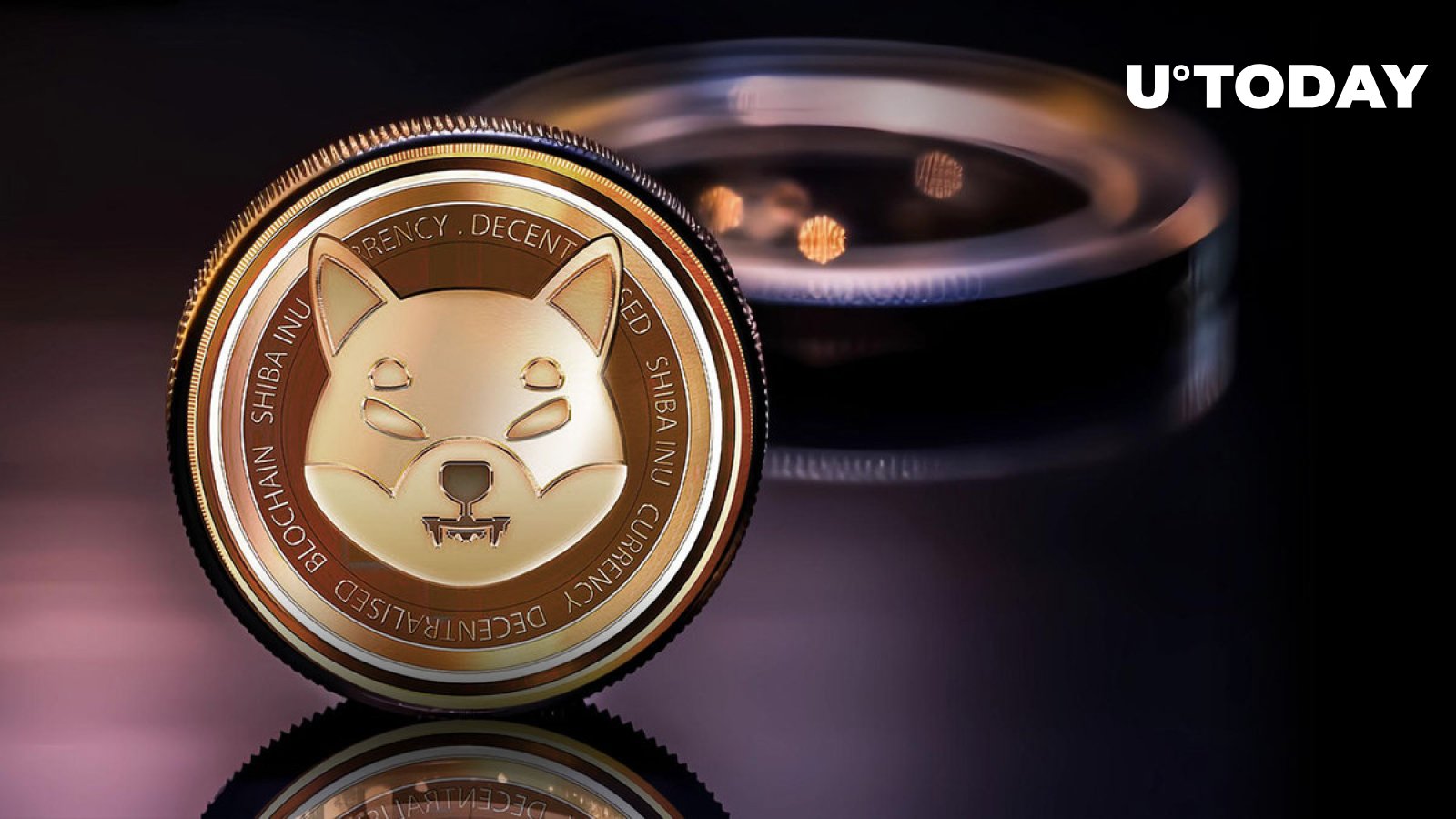
In a significant move, an early whale investor in Shiba Inu (SHIB) has made waves by transferring a staggering 200 billion SHIB tokens to exchanges within the last five days, according to Etherscan data. This massive transfer, equivalent to a whopping $5 million, comes as the investor continues to hold a substantial 2.8 trillion SHIB, valued at approximately $87.64 million.
The mysterious whale’s journey with Shiba Inu began four years ago when they exchanged 10 ETH, then valued at $3,500, for a staggering 15.277 trillion SHIB tokens. Over the years, the investor has been actively involved in trading the meme token, with notable periods of buying and selling observed.
Notably, a surge in activity was witnessed from August to October 2021, during which SHIB’s price soared by 1.382%, reaching an all-time high of $0.00008854 per token. During this period, the enigmatic whale offloaded over half a trillion SHIB tokens, capitalizing on the price surge.
Despite periods of selling, the investor resumed purchasing SHIB tokens a year ago, with the last recorded purchase made on Nov. 18, 2022. However, the most recent wave of sales, starting earlier than five days ago, has caught the attention of market observers.
Since December 2022, the investor has systematically sold SHIB tokens every few months, culminating in the recent surge in SHIB’s price by 112%. This surge, however, represents only a fraction of SHIB’s overall upward trajectory, with the meme token’s value surge by over 377% in the past two weeks alone.