The main tag of Forex News Today Articles.
You can use the search box below to find what you need.
[wd_asp id=1]

3 11, 2025

Will the BoE rescue the Pound Sterling?

By |2025-11-03T07:03:22+02:00November 3, 2025|Forex News, News|0 Comments

The Pound Sterling (GBP) accelerated its recent declines against the US Dollar (USD), as GBP/USD briefly revisited levels under the 1.3150 psychological mark.  

Pound Sterling suffered amid UK budget woes, USD rebound

Market sentiment was largely driven by hopes of a US-China trade deal and the anticipation of dovish US Federal Reserve (Fed) monetary policy announcements at the start of the week, fuelling fresh declines in the USD.

The odds of a US-China trade deal ramped up after a preliminary consensus on topics including export controls, fentanyl and shipping levies was reached by both sides during their two-day talks in Malaysia.

On October 24, the Bureau of Labor Statistics (BLS) showed that the US Consumer Price Index (CPI) rose 0.3% in September, which drove the annual inflation rate from 2.9% to 3%, the highest it has been since January. The annual CPI inflation came in softer than the market forecast of 3.1%.

Following the softer-than-expected US inflation data, markets almost fully priced in two interest rate reductions this year, with a 25 basis points (bps) cut each in the October and December monetary policy meetings.

This Greenback weakness helped GBP/USD buyers gather some courage to briefly regain the 1.3350 barrier.

However, the pair quickly reversed course and resumed its downtrend after the US Dollar staged a solid comeback against its six major currency rivals on Wednesday, even as the Fed delivered on the expected 25 bps cut.

The rebound occurred because, during the post-policy meeting press conference, Fed Chairman Powell noted that policymakers are likely to become more cautious if the current government shutdown deprives them of further job and inflation reports, tempering bets for another rate cut by the Fed at year-end.

Following the Fed event, the CME Group’s FedWatch Tool showed a 72.8% probability of a quarter percentage point Fed rate cut in December compared with a 91.1% chance a week earlier.

Investors remained nervous heading into Thursday’s highly anticipated meeting between US President Donald Trump and his Chinese counterpart Xi Jinping in South Korea, exerting additional downside pressure on the higher-yielding Pound Sterling.

On Thursday, both leaders reached a major trade truce on the sidelines of the APEC Summit in Busan, South Korea. The landmark agreement covers key critical points, including rare earth minerals, fentanyl trade, and semiconductor sales.

Trump said that “tariffs on China will be 47% down from 57%.” Meanwhile, China’s Commerce Ministry confirmed that Beijing will pause rare earth export controls for a year, adding that “both sides reached consensus on fentanyl cooperation, expanding agriculture trade.”

The US-China trade deal optimism provided extra legs to the USD upswing, in the aftermath of a less dovish Fed, exacerbating GBP/USD’s pain. The currency pair breached critical support levels to reach six-month lows near 1.3115.

On the UK side of the equation, the Pound Sterling faced additional headwinds as investors grew increasingly anxious ahead of Chancellor Rachel Reeves’s Autumn Budget, due on November 26.

Reuters reported that the Office for Budget Responsibility (OBR) is expected to lower productivity forecasts, raising financial stress and boding ill for the British Pound.

The GBP was also undermined by the markets’ beliefs that mounting concerns over UK economic growth prospects could persuade the Bank of England (BoE) to resume its easing cycle in December after a rates-on-hold decision expected on Thursday.

US ADP jobs data, US ISM PMIs and BoE verdict grab eyeballs 

With the Fed event and the Trump-Xi meeting finally out of the way, traders now focus on the BoE policy announcements and the private sector employment and economic activity data from the United States (US). While official data is very unlikely to be published due to the shutdown, some private-sector indicators are expected to provide insights into the state of the US economy and the labor market.

On October 30, the US Senate adjourned and won’t meet again until Monday, extending the government shutdown until at least its 34th day, which would almost make it the longest funding lapse in American history.

This leaves traders again in a data drought situation on the US calendar. In case the government reopens, a bunch of delayed top-tier statistics will be published. In this scenario, the spotlight would be on the September Nonfarm Payrolls (NFP) data.

Tuesday will see the release of the US ISM Manufacturing PMI data, while the JOLTS Job Openings survey is unlikely to be published unless the US government reopens.

On Wednesday, the monthly private employment data from the Automatic Data Processing (ADP) will be closely scrutinized to gauge the health of the US labor market. ADP’s employment report showed private payrolls decreased by 32,000 jobs in September.

Meanwhile, the ADP published its National Employment Report’s inaugural weekly preliminary estimate on Tuesday, showing that US private payrolls increased by an average 14,250 jobs in the four weeks ending October 11.

 The US ISM Services PMI will also feature on Wednesday.

That being said, the BoE ‘Super Thursday’ will help determine the next trend in GBP/USD. The BoE is widely expected to hold the key policy rate at 4%, but the updated projections and Governor Andrew Bailey’s hints on future rate cuts will likely boost volatility around the Pound Sterling.

Apart from the economic news, trade and geopolitical headlines will be monitored in the upcoming week. Speeches from Fed policymakers will also affect the USD-driven GBP/USD price action.

GBP/USD: Technical outlook

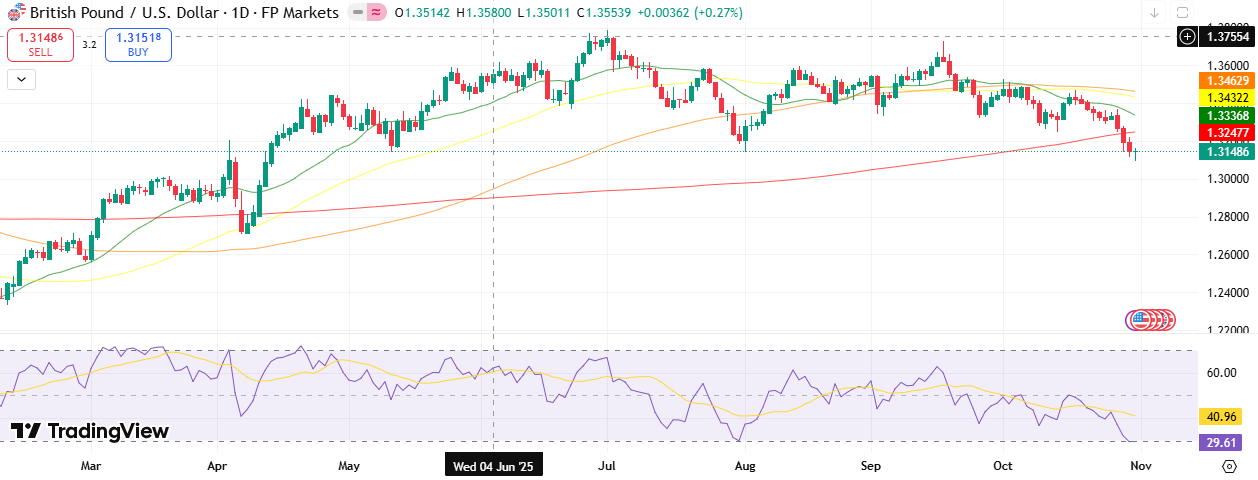
On the daily chart, GBP/USD is currently trading at around 1.3155, with spot entrenched below all major moving averages and the near-term structure skewed lower. A bearish 21-day Simple Moving Average (SMA) slides below the longer 50 and 100 SMAs, collectively signaling sellers hold the grip and hinting at additional slides ahead. Despite the 200-day SMA edging higher, it remains above price and caps the topside, leaving the broader bias negative as falling short- and medium-term averages stack overhead.

Momentum gauges echo the downbeat tone, with the Relative Strength Index (RSI) (14) hovering near 30.4 after a dip to 29.9, indicating persistent bearish pressure with only tentative stabilization. Resistance levels align at 1.3248 (200-day SMA), 1.3345 (21-day SMA), 1.3434 (50-day SMA) and 1.3464 (100-day SMA). A sustained break above 1.3248 would be needed to ease selling pressure and open the path toward the 21-day/50-day SMAs, while failure to reclaim the 200-day line keeps risks tilted to the downside. 

Looking down, GBP/USD meets initial support at the 1.3140 area (May 12, August 1, Wednesday’s lows), followed by 1.3116, the lowest level since mid-April, hit on Thursday. With no indicator-derived supports below current levels, bears retain the upper hand until momentum meaningfully improves.

(The technical analysis of this story was written with the help of an AI tool.)

Pound Sterling FAQs

The Pound Sterling (GBP) is the oldest currency in the world (886 AD) and the official currency of the United Kingdom. It is the fourth most traded unit for foreign exchange (FX) in the world, accounting for 12% of all transactions, averaging $630 billion a day, according to 2022 data.
Its key trading pairs are GBP/USD, also known as ‘Cable’, which accounts for 11% of FX, GBP/JPY, or the ‘Dragon’ as it is known by traders (3%), and EUR/GBP (2%). The Pound Sterling is issued by the Bank of England (BoE).

The single most important factor influencing the value of the Pound Sterling is monetary policy decided by the Bank of England. The BoE bases its decisions on whether it has achieved its primary goal of “price stability” – a steady inflation rate of around 2%. Its primary tool for achieving this is the adjustment of interest rates.
When inflation is too high, the BoE will try to rein it in by raising interest rates, making it more expensive for people and businesses to access credit. This is generally positive for GBP, as higher interest rates make the UK a more attractive place for global investors to park their money.
When inflation falls too low it is a sign economic growth is slowing. In this scenario, the BoE will consider lowering interest rates to cheapen credit so businesses will borrow more to invest in growth-generating projects.

Data releases gauge the health of the economy and can impact the value of the Pound Sterling. Indicators such as GDP, Manufacturing and Services PMIs, and employment can all influence the direction of the GBP.
A strong economy is good for Sterling. Not only does it attract more foreign investment but it may encourage the BoE to put up interest rates, which will directly strengthen GBP. Otherwise, if economic data is weak, the Pound Sterling is likely to fall.

Another significant data release for the Pound Sterling is the Trade Balance. This indicator measures the difference between what a country earns from its exports and what it spends on imports over a given period.
If a country produces highly sought-after exports, its currency will benefit purely from the extra demand created from foreign buyers seeking to purchase these goods. Therefore, a positive net Trade Balance strengthens a currency and vice versa for a negative balance.

Source link

3 11, 2025

Japanese Yen Forecast: Intervention Risks Rise as Dollar Firms

By |2025-11-03T03:01:01+02:00November 3, 2025|Forex News, News|0 Comments

USDJPY – Daily Chart – 031125 – BoJ and Tokyo Inflation

However, rising import prices may pressure the BoJ to raise rates despite concerns over US tariffs potentially weighing on wages and household disposable incomes. It could pose a dual challenge for the BoJ if import prices soar and wage growth slows further as producers grapple with tariff-induced margin squeezes.

Wage Growth and Intervention Risks

Crucially, a weaker yen exposes USD/JPY to intervention threats and BoJ rhetoric. Given Prime Minister Takaichi’s stance on monetary policy, the BoJ may need stronger justification to hike rates in December.

Wage growth figures due out on Thursday, November 6, will likely face intense scrutiny. A rebound in average cash earnings could boost bets on a December BoJ rate hike, driving demand for the yen. On the other hand, softer wage growth could signal a more dovish BoJ rate path, driving USD/JPY higher.

While officials have not indicated a specific intervention threshold for USD/JPY, the 155-160 range could trigger Japanese government move. The BoJ may be hard-pressed to signal a rate hike if wage growth slows.

BoJ Governor Kazuo Ueda left a December rate hike on the table last week, despite uncertainty about the economy, stating:

“I’m not saying that we need to wait until the final outcome of next year’s wage talks becomes available. We want to gather a bit more data on the initial momentum of the talks.”

The BoJ Governor stated that policymakers need more data on whether companies will continue to increase wages despite margin pressures from tariffs. Given the dynamics, signals of higher wages, and a resilient economy, could greenlight a BoJ hike, supporting a more bearish outlook for USD/JPY.

ISM Manufacturing PMI, Fed Speakers, and Capitol Hill in Focus

While traders consider the BoJ’s monetary policy outlook and intervention threats, US manufacturing PMI data will influence USD/JPY later on Monday.

Economists forecast the ISM Manufacturing PMI to rise from 49.1 in September to 49.2 in October. A sharper increase in the headline PMI could ease stagflation risks, sending USD/JPY toward 155. However, traders should consider employment and price trends.

A sharper contraction in the Employment PMI and a higher Prices PMI reading may raise risks of stagflation, pushing USD/JPY toward 153. Rising prices could dampen bets on Fed rate cuts despite a weakening US labor market.

Source link

3 11, 2025

Remains Elevated Against JPY (Video)

By |2025-11-03T00:59:18+02:00November 3, 2025|Forex News, News|0 Comments

  • I analyze the USD/JPY pair’s quiet consolidation near recent highs, viewing it as a setup for continued strength.
  • With the Fed staying tight and the Bank of Japan remaining loose, I expect dollar gains toward 158 yen and prefer buying dips.

It’s been pretty quiet during the trading session on Friday in the US dollar against the Japanese yen currency pair, as we are just hanging around the highs. That’s actually a good sign after the impulsive candlestick that we had seen during the trading session on Thursday, because it means we’re comfortable being here. If that’s going to continue to be the case, then I would anticipate that eventually the US dollar really takes off towards the upside, perhaps targeting the 158 yen level.

The 153 yen level had previously been significant resistance, and breaking above there meant something. Now I would anticipate that there’s a little bit of market memory coming into the picture, offering a bit of support. Breaking down below that level then opens up the possibility of a move down to the 151.50 yen level, where we had seen some support previously.

FOMC Shocked Many

Keep in mind that the Federal Reserve has shocked the market in the sense that they have flat out said—and reiterated during the press conference at least twice—that a rate cut in December is not a given. In other words, the Federal Reserve may stay tighter for longer, and if that’s going to be the case, then the US dollar is completely mispriced. I think somebody out there had been sniffing this out in the market for a while because the US dollar bottomed not only here but in multiple other currencies at the last FOMC meeting.

It’s almost as if the Federal Reserve is trying to explain to the market that they will be slow and methodical about cutting rates, and the market forgets this after a couple of days, tries to fight the Fed, and then gets a dose of reality again. The Bank of Japan will continue to be fairly loose with its monetary policy from now till eternity, more likely just due to demographics.

They can jawbone the pairs back down, but that’s a short-term fix at the end of the day. The steamroller that’s coming is the US dollar, and of course, the Japanese yen is weak against everything. So, the dollar should have a field day. I am a buyer of dips going forward, and I do expect it to go much higher.

Want to trade our USD/JPY forex analysis and predictions? Here’s a list of forex brokers in Japan to check out.

Source link

2 11, 2025

GBP/USD Weekly Forecast: Under Strain Amid UK Fiscal Concerns, Cautious Fed

By |2025-11-02T20:57:17+02:00November 2, 2025|Forex News, News|0 Comments

  • The GBP/USD forecast reveals weakness amid the UK fiscal uncertainty.
  • The US dollar edged up as Chair Powell came up with a cautious tone for a December cut.
  • Traders await the BoE interest rate decision and US NFP data next week.

The GBP/USD weekly forecast reflects a persistent bearish bias, closing the week at 1.3140. The pound sterling faced pressure amid renewed UK economic concerns and a resilient greenback. The US dollar was boosted as Fed Chair Powell expressed uncertainty about a December rate cut, cautioning the markets.

-Are you interested in learning about the best AI trading forex brokers? Click here for details-

However, the policymakers remained divided about the Fed cut. The Cleveland Fed President Hammack expressed her lack of support for the recent Fed cut. Meanwhile, the Atlanta Fed’s Bostic noted the conflict between the dual mandates of price stability and employment.

On the UK side, the pound was subdued as the markets grappled with the UK’s fiscal situation. The Office for Budget Responsibility (OBR) lowered the productivity forecast by 0.3%, aiming for a potential £21 billion increase in the budget deficit by 2030. 

Meanwhile, the Institute for Fiscal Studies (IFS) estimated a fiscal gap of £22 billion. Chancellor Rachel Reeves is pressured to increase taxes or borrow more in the November budget to curb this. The investor sentiment dampened slightly due to Reeve’s position. However, PM Keir Starmer backed her, easing the situation. Meanwhile, weak inflation data and rising expectations for further easing by the BoE further pressured the pound. 

GBP/USD Key Events Next Week

GBP/USD Weekly Forecast: Under Strain Amid UK Fiscal Concerns, Cautious Fed

The major events in the coming week include:

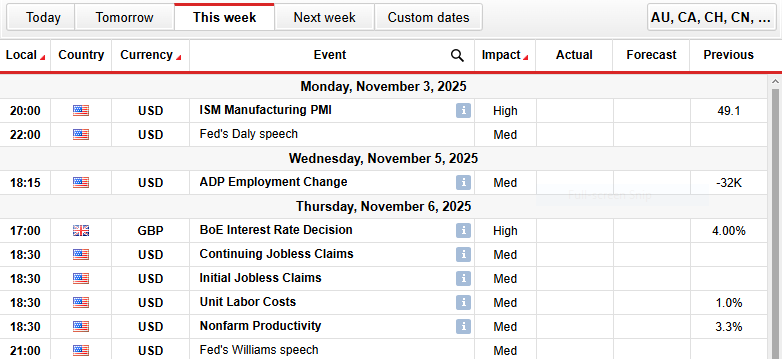
  • USD ISM Manufacturing PMI
  • Fed’s Daly Speech
  • GBP BoE Interest Rate Decision
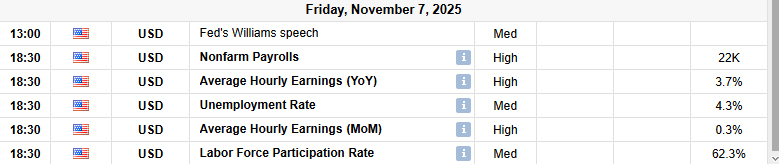
  • USD Nonfarm Payrolls
  • USD Average Hourly Earnings (YoY) 
  • USD Average Hourly Earnings (MoM)

Next week, traders anticipate the Fed’s Daly speech, the ISM manufacturing PMI, and ADP Employment. However, the nonfarm payrolls data remains the primary catalyst for the markets, as the markets missed the previous data amid the shutdown. 

On the other hand, traders look ahead to BoE interest rate decisions for insights into potential rate cuts ahead. Markets are pricing in no change in the benchmark rates. Hence, the vote split will be the key to watch. 

GBP/USD Weekly Technical Forecast: No Respite for Bulls Until 200-DMA

GBP/USD Weekly Technical ForecastGBP/USD Weekly Technical Forecast
GBP/USD daily chart

The GBP/USD stays under pressure, trading around 1.3140 after pulling back from 1.3370 earlier this week. The pair is well below the 20-day MA near 1.3338 and the 50-day MA around 1.3432, reflecting the downside pressure. Meanwhile, the 200-day MA around 1.3244 is a key support zone. The RSI at 40, above the oversold region, indicates that the downside pressure could stay intact unless a reversal signal emerges. 

-Are you interested in learning about the forex indicators? Click here for details-

A decisive break above 1.3330 could alter the trend and open room for gains toward 1.3400 and 1.3460. Conversely, a sustained drop below 1.3100 could extend the downside towards 1.3050 and 1.2980. 

Support Levels

Resistance Levels

Looking to trade forex now? Invest at eToro!

68% of retail investor accounts lose money when trading CFDs with this provider. You should consider whether you can afford to take the high risk of losing your money.

Source link

2 11, 2025

EUR/USD “Tactically Bearish, Strategically Bullish”

By |2025-11-02T16:55:16+02:00November 2, 2025|Forex News, News|0 Comments

The Euro to US Dollar (EUR/USD) exchange rate ended the week near 1.1607, after briefly dipping below 1.16 as the US dollar strengthened across G10 currencies.

EUR/USD has eased around 0.4% this week, slipping from highs near 1.165 earlier in the week despite slightly better-than-expected Eurozone GDP data.

Danske Bank described the euro’s pullback as part of a “tactically bearish but strategically bullish” outlook.

“The USD leg continues to drive price action,” the bank said, noting that Fed Chair Jerome Powell’s comments this week “clearly signalled discomfort with markets fully pricing a December rate cut.”

Danske expects the US dollar to remain firm in the near term, as only “materially softer US labour market and inflation data” could solidify expectations for a deeper easing cycle.

“Otherwise, 25bp could easily be priced out, initially adding further tailwinds to the broad USD,” the bank added.

However, it sees this dollar strength as temporary: “Renewed political pressure on the Fed to ease could re-emerge should Powell lean more hawkish — an important reason why we continue to view any near-term USD strength as tactical rather than structural.”

On the euro side, the bank noted that Q3 GDP rose 0.2% quarter-on-quarter, above expectations, and it expects growth to remain around that pace through Q4 as October PMIs “suggest underlying momentum has been sustained.”

Scotiabank described EUR/USD as “neutral” in the short term, noting that “the euro’s undertone is soft but steady support has emerged on dips to the mid-1.15s.”

foreign exchange rates

It added that a break below 1.1525 could expose downside toward 1.1450, while resistance sits at 1.1575 and 1.1635.

Current EUR/USD rate: 1.1607

Danske Bank view: Tactically bearish, strategically bullish.

Source link

2 11, 2025

Reaches record highs above 178.50 as bullish bias persists

By |2025-11-02T08:51:17+02:00November 2, 2025|Forex News, News|0 Comments

EUR/JPY gains ground after remaining flat in the previous session, trading around 178.50, near record highs, during the European hours on Thursday. The technical analysis of the daily chart suggests strengthening of a bullish bias as the currency cross has rebounded from the confluence support zone around the nine-day Exponential Moving Average (EMA) and lower boundary of the ascending channel pattern.

The short-term price momentum is stronger as the EUR/JPY cross remains above the nine-day EMA. The 14-day Relative Strength Index (RSI) has rebounded toward the 70 mark, strengthening the bullish bias. Further advances would lead the currency cross to reach overbought territory.

The EUR/JPY cross reached the all-time high at 178.71, reached on October 30. Further advances would support the currency cross to explore the region around the upper boundary of the ascending channel around 184.00.

On the downside, the EUR/JPY cross may again target the confluence support zone around the nine-day EMA of 177.27 and the ascending channel’s lower boundary around 177.00. A break below the channel would undermine the short-term bullish momentum, potentially putting downward pressure on the currency pair toward the 50-day EMA region near 174.75, followed by the seven-week low of 172.14, which was recorded on September 9.

EUR/JPY: Daily Chart

Euro Price Today

The table below shows the percentage change of Euro (EUR) against listed major currencies today. Euro was the strongest against the Japanese Yen.

USD EUR GBP JPY CAD AUD NZD CHF
USD -0.13% -0.05% 0.66% 0.03% -0.04% -0.14% -0.12%
EUR 0.13% 0.08% 0.80% 0.17% 0.09% -0.00% 0.01%
GBP 0.05% -0.08% 0.73% 0.08% 0.02% -0.09% -0.07%
JPY -0.66% -0.80% -0.73% -0.65% -0.70% -0.82% -0.82%
CAD -0.03% -0.17% -0.08% 0.65% -0.06% -0.17% -0.16%
AUD 0.04% -0.09% -0.02% 0.70% 0.06% -0.10% -0.09%
NZD 0.14% 0.00% 0.09% 0.82% 0.17% 0.10% 0.04%
CHF 0.12% -0.01% 0.07% 0.82% 0.16% 0.09% -0.04%

The heat map shows percentage changes of major currencies against each other. The base currency is picked from the left column, while the quote currency is picked from the top row. For example, if you pick the Euro from the left column and move along the horizontal line to the US Dollar, the percentage change displayed in the box will represent EUR (base)/USD (quote).

Source link

2 11, 2025

Japanese Yen Forecast: USD/JPY Nears 155 Ahead of US Jobs and PMI Data

By |2025-11-02T04:49:15+02:00November 2, 2025|Forex News, News|0 Comments

USDJPY – Daily Chart – 021125 – Interventions Politics and the BoJ

Follow our real-time updates to stay ahead of USD/JPY market developments.

USD/JPY Outlook: Economic Indicators and the BoJ

  • Bullish Yen Scenario: Strong Japanese data, intervention threats, or a hawkish BoJ rhetoric could push USD/JPY toward 153. If breached, the 50-day EMA and 149.358 would be the next key support levels.
  • Bearish Yen Scenario: Weak data or a dovish BoJ commentary may send the pair toward 155. A sustained move through 155 would bring the 156.884 resistance level into play.

Crucially, a rise toward 155 could raise expectations of the Ministry of Finance warning of an intervention, mirroring events in 2024. The potential for intervention will likely be the key downside risk for USD/JPY in the near-term, given that MoF warnings tend to follow sharp yen depreciation.

While Japanese economic data, BoJ forward guidance, and intervention threats will move the dial, traders should closely monitor US data, Fed chatter, and developments on Capitol Hill.

Labor Market Data, the ISM Services PMI, the Fed, and Capitol Hill in Focus

Traders may continue to face heightened USD/JPY volatility amid shifting sentiment toward the Fed and BoJ’s policy outlooks. Meanwhile, US Senate votes, economic data, and Fed commentary will also influence USD/JPY trends. Key events for the week ahead include:

  • ISM Manufacturing PMI (November 3): Expected to rise from 49.1 in September to 49.2 in October.
  • JOLTs job openings: (November 4): Economists expect job openings to drop from 7.227 million in August to 7.2 million in September.
  • ADP Employment Change (November 5): Forecast to rise by 25k in October after falling 32k in September.
  • ISM Services PMI (November 5): Expected to increase from 50.0 in September to 51.0 in October.
  • Initial Jobless Claims (November 6): Dependent on the US government reopening. Expected to rise from 218k week ending September 20 to 259k week ending November 1.
  • Michigan Consumer Sentiment (November 7): Forecast to rise from 53.6 in October to 54.0 in November.
  • Nonfarm payrolls (November 7): Dependent on the US government reopening. Expected to rise 55k in October after September’s 61k increase.
  • Unemployment rate (November 7): Dependent on the US government reopening. Forecast to remain at 4.3%.
  • Average hourly earnings (November 7): Dependent on the US government reopening. Expected to increase 3.6% year-on-year in October, down from 3.7% in September.

US Data and Fed Speakers to Drive Fed Rate Cut Bets

Weaker-than-expected US labor market data, slower service sector activity, and falling consumer confidence may revive bets on a December Fed rate cut. A more dovish Fed policy stance could push USD/JPY toward 153. A break below 153 would enable the bears to target the 50-day EMA and the 149.358 support level.

Stronger-than-expected US labor market data, a higher ISM Services PMI reading, and a pickup in consumer confidence could temper expectations of a December Fed rate cut. A more hawkish Fed rate path may drive USD/JPY toward 155. A breakout from 155 could pave the way toward the 156.884 resistance level.

Beyond the data, traders should closely monitor FOMC members’ speeches for views on inflation, the economy, and the timing of further rate cuts.

Short-term Forecast:

  • Bullish US Dollar Scenario: Strong US economic data and hawkish Fed commentary may send USD/JPY toward 156.884.
  • Bearish US Dollar Scenario: Weak US data and dovish Fed rhetoric could push USD/JPY toward 149.358.

USD/JPY Price Action

Daily Chart

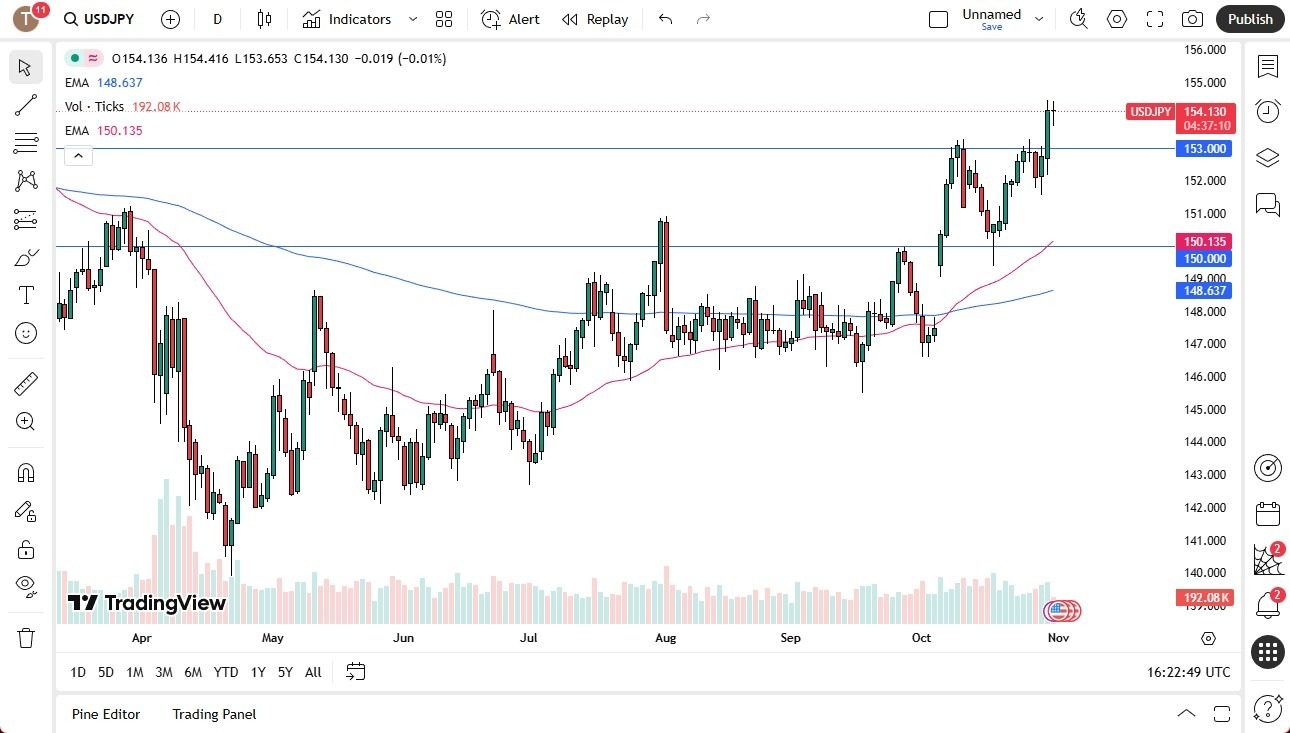
On the daily chart, USD/JPY continued to trade above the 50- and 200-day Exponential Moving Averages (EMAs), reaffirming a bullish bias.

A break above the October 31, 2025, high of 154.415 could pave the way toward 155 and the February 2025 high of 155.880. A sustained move through 155.880 may open the door to retesting the 156.884 resistance level.

On the downside, a drop below 153 could bring the 50-day EMA and the 150 psychological support level into play. If breached, 149.358 would be the next key support level.

Source link

31 10, 2025

Forecast update for EURUSD -31-10-2025.

By |2025-10-31T22:34:13+02:00October 31, 2025|Forex News, News|0 Comments

The price of (EURUSD) settled lower with calm trading on its last intraday levels, due to the stability of the critical support at 1.1550, with the beginning of the positive signals on the relative strength indicators, after reaching oversold levels, attempting to offload some of the oversold conditions, amid the continuation of the negative pressure and the dynamic resistance that is represented by its trading below EMA50, under the dominance of the main bearish trend on the short-term basis and its trading alongside trendline.


VIP Trading Signals Performance by BestTradingSignal.com (13-17 Oct, 2025)


Get high-accuracy trading signals delivered directly to your Telegram. Subscribe to specialized packages tailored for the world’s top markets:


Full VIP signals performance report for 13-17, October 2025:

  View Full Performance Report   Telegram (https://t.me/besttradingsignalstocksbot?start=p88d632b0-66dd-11f0-a948-13815052d5ae)


Source link

31 10, 2025

Pound Falls to 1.3116, Poised for Deeper Drop as UK Fiscal Risks Hit Sterling

By |2025-10-31T20:32:18+02:00October 31, 2025|Forex News, News|0 Comments

GBP/USD Extends Slide to Six-Month Lows as Fiscal Strains and Fed Tone Collide

The GBP/USD pair has plunged to 1.3116, marking its weakest level since April as a hawkish Federal Reserve stance collides with growing UK fiscal anxiety. The pound’s fourth straight day of declines underscores deep market unease over the Bank of England’s policy paralysis, a surging U.S. dollar, and expectations that the upcoming UK Autumn Budget will tighten spending rather than stimulate growth. Sterling has now fallen over 2% through October, and traders are eyeing a potential test of the 1.3080–1.3000 zone if downside momentum persists.

Fed’s Hawkish Pause Strengthens the Dollar and Squeezes GBP/USD

The Federal Reserve’s recent 25 bps rate cut, initially viewed as a dovish sign, turned sharply hawkish after Chair Jerome Powell warned that further easing in December was “not a foregone conclusion.” This recalibration pushed the U.S. Dollar Index (DXY) to 99.70, its highest in nearly three months, driving broad-based gains against major currencies. Futures pricing of another cut in December dropped from 100% to 70%, flattening the yield curve and tightening financial conditions. The dollar’s strength has crushed the pound’s fragile recovery attempts, with investors shifting capital toward higher-yielding U.S. assets while the UK remains stuck in policy indecision.

BoE Policy Dilemma and UK Economic Strain Erode Sterling Confidence

The Bank of England faces a dilemma as headline inflation remains at 3.8% year-over-year, nearly double its 2% target, while unemployment has risen to 4.8%, its highest since mid-2021. GDP growth for Q2 came in at a weak 0.3%, reflecting stagnation. Despite mounting pressure for stimulus, the BoE is widely expected to hold rates at 4.00% in the November 6 meeting. Market consensus now sees the first BoE rate cut delayed until February 2026, with policymakers fearing further pound depreciation could worsen imported inflation. This combination of sticky prices and slowing growth has revived concerns of stagflation, a toxic mix last seen during the late 1970s.

Fiscal Headwinds Deepen as UK Faces £30B Budget Gap

The looming Autumn Budget on November 26 adds another layer of uncertainty. The Office for Budget Responsibility (OBR) projects a £20 billion productivity shortfall and £7.2 billion in higher-than-expected borrowing in the first half of 2025, leaving the Chancellor with limited fiscal room. Rachel Reeves is cornered between keeping her no-tax-rise pledge and closing a widening deficit that could exceed £30 billion. Any sign of aggressive fiscal tightening could weigh further on domestic growth expectations and investor sentiment. Sterling traders are now demanding higher yields on gilts, reflecting greater risk premiums to hold UK-denominated assets amid this policy uncertainty.

Technical Pressure Builds Below 1.3140 as Market Eyes 1.3080–1.3000 Support

Technically, GBP/USD has broken through several critical support zones. The 1.3140 region—marking the 38.2% Fibonacci retracement of the 1.2099–1.3788 rally—failed to hold, confirming a medium-term bearish continuation. The next layer sits at 1.3080–1.3088, aligned with the 100% extension of the June decline and the 52-week moving average. A decisive close below this threshold would open a path toward 1.2940, the 50% retracement of the yearly range. Momentum indicators back the bearish tone: the RSI hovers near 30, showing oversold but not exhausted conditions, while price action remains capped below the 20-day and 50-day moving averages. Short-term rebounds toward 1.3200 or 1.3280 are likely to face heavy selling pressure as traders position for deeper downside.

U.S.–China Trade Sentiment Adds Volatility but Favors the Dollar

Hopes of improved U.S.–China relations offered brief relief earlier in the week after President Trump hinted at renewed energy purchases from Alaska, but traders quickly dismissed the optimism. With China’s PMI contracting to 49.0, its seventh straight month of decline, and U.S. sanctions on Russian oil limiting supply flows, risk sentiment remains fragile. The stronger dollar environment has persisted despite intermittent risk-on sessions, underscoring global preference for U.S. liquidity amid uncertainty.

Market Outlook: Further Downside Bias Dominates GBP/USD

With U.S. yields holding near cycle highs and UK macro fundamentals deteriorating, the pound remains vulnerable to further weakness. Market positioning shows elevated short interest on GBP/USD, suggesting continued bearish sentiment through early November. Unless the Bank of England surprises with dovish guidance or the U.S. data turns sharply weaker, upside potential appears limited. The pair could consolidate briefly above 1.3080, but a break lower would likely extend the decline toward 1.2940–1.3000, marking new multi-month lows.

Verdict: Bearish — GBP/USD likely to test 1.3000 before any meaningful recovery as fiscal and policy pressures intensify

That’s TradingNEWS


Source link

31 10, 2025

Euro remains bearish as it approaches key support level

By |2025-10-31T18:31:38+02:00October 31, 2025|Forex News, News|0 Comments

Following Wednesday’s sharp decline, EUR/USD failed to shake off the bearish pressure on Thursday and dropped to its weakest level in more than two weeks, below 1.1550. Early Friday, the pair stays in a consolidation phase but the technical outlook suggests that the bearish bias remains unchanged.

Euro Price This week

The table below shows the percentage change of Euro (EUR) against listed major currencies this week. Euro was the weakest against the Canadian Dollar.

USD EUR GBP JPY CAD AUD NZD CHF
USD 0.58% 1.40% 0.88% -0.04% -0.02% 1.03% 0.76%
EUR -0.58% 0.83% 0.36% -0.62% -0.53% 0.44% 0.18%
GBP -1.40% -0.83% -0.57% -1.43% -1.33% -0.38% -0.67%
JPY -0.88% -0.36% 0.57% -1.01% -0.98% 0.02% -0.22%
CAD 0.04% 0.62% 1.43% 1.01% -0.03% 1.07% 0.77%
AUD 0.02% 0.53% 1.33% 0.98% 0.03% 0.96% 0.66%
NZD -1.03% -0.44% 0.38% -0.02% -1.07% -0.96% -0.30%
CHF -0.76% -0.18% 0.67% 0.22% -0.77% -0.66% 0.30%

The heat map shows percentage changes of major currencies against each other. The base currency is picked from the left column, while the quote currency is picked from the top row. For example, if you pick the Euro from the left column and move along the horizontal line to the US Dollar, the percentage change displayed in the box will represent EUR (base)/USD (quote).

The European Central Bank (ECB) announced on Thursday that it left key rates unchanged following the October policy meeting, as widely anticipated. In the policy statement, the ECB reiterated its data-dependent approach to policymaking and said that they are not “pre-committing” to a particular rate path.

While responding to questions from the press, ECB President Chritsine Lagarde acknowledged that they are in a “period of great uncertainty” and added that a stronger Euro (EUR) could bring down inflation further than expected.

The persistent US Dollar (USD) strength that followed Federal Reserve (Fed) Chair Jerome Powell’s cautious comments on further policy easing, combined with the negative impact of the ECB event on the Euro, EUR/USD extended its weekly slide on Thursday.

The economic calendar will not feature any high-impact data releases on Friday. In the American session, several Fed policymakers will be delivering speeches.

The CME FedWatch Tool’s probability of a 25 basis points (bps) rate cut in December dropped below 70% from around 90% earlier in the week. In case Fed officials leave the door open for a December cut, the immediate reaction could weigh on the USD and help EUR/USD erase some of its weekly losses. On the other hand, the USD could preserve its strength heading into the weekend if policymakers echo Powell’s tone, noting another rate cut before the end of the year is far from assured.

EUR/USD Technical Analysis

The Relative Strength Index (RSI) indicator on the 4-hour chart stays in between 30 and 40, suggesting that the bearish bias remains unchanged and that there is room on the downside before EUR/USD turns technically oversold.

On the downside, 1.1550 (static level) aligns as the immediate support level before 1.1500 (Fibonacci 78.6% retracement) and 1.1450 (static level). Looking north, the first resistance level could be spotted at 1.1620 (20-day SMA) ahead of 1.1670-1.1680 (100-day SMA, 50-day SMA).

Euro FAQs

The Euro is the currency for the 20 European Union countries that belong to the Eurozone. It is the second most heavily traded currency in the world behind the US Dollar. In 2022, it accounted for 31% of all foreign exchange transactions, with an average daily turnover of over $2.2 trillion a day.
EUR/USD is the most heavily traded currency pair in the world, accounting for an estimated 30% off all transactions, followed by EUR/JPY (4%), EUR/GBP (3%) and EUR/AUD (2%).

The European Central Bank (ECB) in Frankfurt, Germany, is the reserve bank for the Eurozone. The ECB sets interest rates and manages monetary policy.
The ECB’s primary mandate is to maintain price stability, which means either controlling inflation or stimulating growth. Its primary tool is the raising or lowering of interest rates. Relatively high interest rates – or the expectation of higher rates – will usually benefit the Euro and vice versa.
The ECB Governing Council makes monetary policy decisions at meetings held eight times a year. Decisions are made by heads of the Eurozone national banks and six permanent members, including the President of the ECB, Christine Lagarde.

Eurozone inflation data, measured by the Harmonized Index of Consumer Prices (HICP), is an important econometric for the Euro. If inflation rises more than expected, especially if above the ECB’s 2% target, it obliges the ECB to raise interest rates to bring it back under control.
Relatively high interest rates compared to its counterparts will usually benefit the Euro, as it makes the region more attractive as a place for global investors to park their money.

Data releases gauge the health of the economy and can impact on the Euro. Indicators such as GDP, Manufacturing and Services PMIs, employment, and consumer sentiment surveys can all influence the direction of the single currency.
A strong economy is good for the Euro. Not only does it attract more foreign investment but it may encourage the ECB to put up interest rates, which will directly strengthen the Euro. Otherwise, if economic data is weak, the Euro is likely to fall.
Economic data for the four largest economies in the euro area (Germany, France, Italy and Spain) are especially significant, as they account for 75% of the Eurozone’s economy.

Another significant data release for the Euro is the Trade Balance. This indicator measures the difference between what a country earns from its exports and what it spends on imports over a given period.
If a country produces highly sought after exports then its currency will gain in value purely from the extra demand created from foreign buyers seeking to purchase these goods. Therefore, a positive net Trade Balance strengthens a currency and vice versa for a negative balance.

Source link

Go to Top