The main tag of Gold Price Articles.
You can use the search box below to find what you need.
[wd_asp id=1]
The main tag of Gold Price Articles.
You can use the search box below to find what you need.
[wd_asp id=1]
Gold price (XAU/USD) trades 0.6% higher to near $5,200 during the European trading session on Wednesday. The precious metal gains as tensions between the United States (US) and Iran over Tehran’s intentions to build nuclear infrastructure and uncertainty surrounding Washington’s trade policy have improved demand for safe-haven assets.
Safe-haven assets, such as Gold, perform better in a worsening geopolitical environment.
Meanwhile, investors await nuclear talks between the US and Iran, which are scheduled for Thursday, to get cues on how the Middle East situation will shape going forward. Ahead of the meeting, US President Donald Trump has also warned of military action in Tehran if it doesn’t drop its nuclear programme plans. Trump threatened Tehran through a post on Truth.Social on Monday that it will be a very bad day for the country and its people if they don’t reach a deal.
In the US, the Supreme Court’s (SC) ruling against additional duties imposed by Washington has upended the trade policy outlook. On Friday, the SC accused President Donald Trump of exceeding his authority to back his tariff agenda by invoking economic emergency powers.
Although US President Trump has announced 10% global tariffs to offset the SC’s verdict, which could be increased to 15%, and he has also warned of steeper tariffs in case countries dishonour trade deals, investors still worry that nations could demand deal revision.
XAU/USD trades higher to near $5,200 as of writing. The near-term bias is bullish as price continues to respect the rising support trend line from about $4,400 and holds well above the 20-day Exponential Moving Average near $5,010. The sequence of higher lows along this trend line keeps the uptrend intact despite recent volatility, while the EMA cluster under price confirms underlying demand on dips.
The 14-day Relative Strength Index (RSI) around 60.00 stays in positive territory, signaling sustained upside momentum rather than exhaustion after the earlier overbought readings have eased.
Immediate support emerges at the trend-line area around $5,120, followed by the 20-day EMA near $5,010 and then the recent reaction low at $4,880. A break below this support band would weaken the bullish structure and expose deeper retracements toward $4,750. On the upside, initial resistance sits near the recent peak at $5,240, and a daily close above this level would open the way toward the $5,380 region. As long as price holds above the EMA and the rising trend line, dips are positioned to attract buyers within the prevailing uptrend.
(The technical analysis of this story was written with the help of an AI tool.)
Gold has played a key role in human’s history as it has been widely used as a store of value and medium of exchange. Currently, apart from its shine and usage for jewelry, the precious metal is widely seen as a safe-haven asset, meaning that it is considered a good investment during turbulent times. Gold is also widely seen as a hedge against inflation and against depreciating currencies as it doesn’t rely on any specific issuer or government.
Central banks are the biggest Gold holders. In their aim to support their currencies in turbulent times, central banks tend to diversify their reserves and buy Gold to improve the perceived strength of the economy and the currency. High Gold reserves can be a source of trust for a country’s solvency. Central banks added 1,136 tonnes of Gold worth around $70 billion to their reserves in 2022, according to data from the World Gold Council. This is the highest yearly purchase since records began. Central banks from emerging economies such as China, India and Turkey are quickly increasing their Gold reserves.
Gold has an inverse correlation with the US Dollar and US Treasuries, which are both major reserve and safe-haven assets. When the Dollar depreciates, Gold tends to rise, enabling investors and central banks to diversify their assets in turbulent times. Gold is also inversely correlated with risk assets. A rally in the stock market tends to weaken Gold price, while sell-offs in riskier markets tend to favor the precious metal.
The price can move due to a wide range of factors. Geopolitical instability or fears of a deep recession can quickly make Gold price escalate due to its safe-haven status. As a yield-less asset, Gold tends to rise with lower interest rates, while higher cost of money usually weighs down on the yellow metal. Still, most moves depend on how the US Dollar (USD) behaves as the asset is priced in dollars (XAU/USD). A strong Dollar tends to keep the price of Gold controlled, whereas a weaker Dollar is likely to push Gold prices up.
BitcoinWorld
Silver Price Forecast: XAG/USD Defiantly Holds Above $88.00 Amid Sustained Positive Bias
Global precious metals markets witnessed a significant development this week as silver prices demonstrated remarkable resilience, with the XAG/USD pair maintaining a firm position above the critical $88.00 threshold. This sustained performance, observed across major trading platforms from London to New York, reflects a complex interplay of macroeconomic factors, technical patterns, and shifting investor sentiment that demands thorough examination. Market analysts now scrutinize whether this consolidation represents a temporary pause or a foundation for further appreciation in the coming quarters.
Technical analysis reveals that the $88.00 level for XAG/USD has transformed from a previous resistance point into a robust support zone. This transition occurred gradually throughout the first quarter of 2025, following three consecutive weekly closes above this psychological barrier. Furthermore, the 50-day and 200-day moving averages recently completed a bullish crossover beneath the current price action, traditionally signaling sustained upward momentum. Chart patterns indicate that silver has established a higher low structure since December 2024, with each retracement finding buyers at progressively elevated levels.
Volume analysis provides additional confirmation of this positive bias. Trading volumes during upward movements consistently exceed those during minor pullbacks, suggesting institutional accumulation rather than speculative retail activity. The Relative Strength Index (RSI) currently reads 58 on daily timeframes, comfortably within neutral territory and avoiding overbought conditions that might trigger corrective pressure. Bollinger Band width has contracted significantly over the past fortnight, indicating a period of consolidation that typically precedes substantial directional moves.
| Support Levels | Resistance Levels | Significance |
|---|---|---|
| $88.00 | $92.50 | Psychological round number & recent consolidation zone |
| $85.30 | $95.80 | 200-day moving average & 2024 yearly high |
| $82.75 | $100.00 | Major Fibonacci retracement & psychological century mark |
Multiple macroeconomic factors contribute to silver’s current positive bias. Central bank policies remain accommodative in several major economies, maintaining real interest rates at historically low or negative levels. This environment traditionally diminishes the opportunity cost of holding non-yielding assets like precious metals. Industrial demand continues its steady recovery, particularly from the renewable energy and electronics sectors, which collectively account for approximately 60% of annual silver consumption according to the Silver Institute’s 2024 report.
Geopolitical tensions in resource-producing regions have prompted increased safe-haven allocations to precious metals. Currency dynamics also play a crucial role, as the U.S. dollar index has shown modest weakness against a basket of major currencies throughout early 2025, reducing the local-currency cost of dollar-denominated commodities for international buyers. Supply-side constraints further support prices, with mine production growth lagging behind demand projections for the third consecutive year.
Silver’s performance must be contextualized within the broader precious metals complex. While gold often dominates headlines, silver frequently exhibits greater volatility due to its dual nature as both monetary metal and industrial commodity. Year-to-date performance data reveals that silver has outperformed gold by approximately 8% in 2025, continuing a pattern observed during early-cycle economic recoveries. Platinum and palladium, by contrast, have shown more modest gains, constrained by specific automotive sector dynamics and substitution threats.
The gold-to-silver ratio, a closely watched metric among precious metals investors, currently stands at 72:1, slightly below its five-year average of 78:1. Historical analysis suggests that ratios below 70:1 often precede periods of silver outperformance, particularly when industrial demand accelerates concurrently with monetary concerns. This positioning indicates that silver may possess additional room for appreciation relative to gold, assuming supportive macroeconomic conditions persist through 2025.
Market analysts offer nuanced views on silver’s medium-term prospects. Dr. Elena Rodriguez, Chief Commodities Strategist at Global Markets Research, notes, “The $88.00 level represents more than just a technical threshold—it coincides with the production cost curve’s 75th percentile. Sustained trading above this level suggests the market is pricing in structural deficits rather than transient factors.” Meanwhile, portfolio managers report increasing institutional interest, with pension funds and sovereign wealth funds modestly expanding their precious metals allocations after years of underinvestment.
Manufacturing data provides tangible evidence of demand strength. The Global Electronics Manufacturing Index registered its highest reading since 2022 last month, with semiconductor and connector production requiring substantial silver inputs. Simultaneously, solar panel installations continue to accelerate globally, with China, the European Union, and the United States all reporting record quarterly additions. Each gigawatt of solar capacity typically requires approximately 20 metric tons of silver, creating a consistent demand baseline that supports price floors.
Silver’s current positioning above $88.00 gains significance when examined through historical lenses. The last sustained period above this level occurred during the 2011-2013 timeframe, when prices briefly surpassed $49.00 before entering a prolonged correction. However, today’s market structure differs substantially, with exchange-traded products holding approximately 40% more physical silver than during previous peaks, according to Bloomberg data. This suggests a more stable ownership base less prone to rapid liquidation during temporary setbacks.
Market sentiment indicators reveal cautious optimism rather than euphoria. The Commitments of Traders report shows commercial hedgers maintaining relatively neutral positions, unlike the extreme net-short positioning that often precedes major tops. Retail interest, while growing, remains below levels observed during previous speculative episodes. This combination of steady accumulation without excessive speculation typically supports sustainable advances rather than parabolic moves vulnerable to sharp reversals.
Despite the prevailing positive bias, several factors could challenge silver’s current trajectory. Accelerated monetary tightening by major central banks would increase the opportunity cost of holding non-yielding assets. Technological substitution in industrial applications, particularly in photovoltaic manufacturing, could moderate demand growth over the medium term. Additionally, renewed dollar strength would create headwinds for dollar-denominated commodities, while recessionary pressures might temporarily reduce industrial consumption despite potential safe-haven inflows.
Conversely, several catalysts could propel prices beyond current ranges. Escalation of geopolitical conflicts typically drives flight-to-quality flows into precious metals. Accelerated green energy transitions would amplify industrial demand beyond current projections. Persistent inflation above central bank targets would enhance silver’s appeal as an inflation hedge, while coordinated central bank purchases of gold—often followed by increased silver interest—could create positive spillover effects across the precious metals complex.
The silver price forecast remains cautiously optimistic as XAG/USD maintains its position above the critical $88.00 support level. This technical achievement reflects fundamental strength across multiple dimensions, including industrial demand recovery, accommodative monetary policies, and supply constraints. While risks persist, particularly regarding monetary policy normalization and potential economic slowdowns, the current market structure suggests silver has established a foundation for potential further appreciation. Investors should monitor the $88.00 level closely, as sustained trading above this threshold would confirm the positive bias, while a decisive break below might signal a reassessment of the near-term outlook. The coming months will determine whether this consolidation represents a launching pad for the next leg higher or merely a temporary pause in silver’s complex journey.
Q1: What does XAG/USD represent in silver trading?
XAG/USD represents the price of one troy ounce of silver quoted in U.S. dollars. XAG is the ISO 4217 currency code for silver, while USD represents the U.S. dollar, forming the standard forex pair for silver trading globally.
Q2: Why is the $88.00 level particularly significant for silver prices?
The $88.00 level represents a major psychological threshold and technical support zone that previously acted as resistance. Sustained trading above this level suggests underlying market strength and often attracts additional buying interest from both technical and fundamental traders.
Q3: How does industrial demand affect silver prices compared to gold?
Industrial applications account for approximately 60% of annual silver demand, making prices more sensitive to economic cycles than gold. This industrial component can provide support during economic expansions while monetary attributes offer protection during uncertainties.
Q4: What is the gold-to-silver ratio and why do traders monitor it?
The gold-to-silver ratio measures how many ounces of silver are needed to purchase one ounce of gold. Traders monitor this ratio for relative valuation signals, with historically high ratios suggesting silver may be undervalued relative to gold, and vice versa.
Q5: What are the main risk factors that could push silver below $88.00?
Key risks include accelerated monetary tightening by central banks, technological substitution reducing industrial demand, renewed U.S. dollar strength, economic recession reducing industrial consumption, and increased mine supply exceeding demand projections.
This post Silver Price Forecast: XAG/USD Defiantly Holds Above $88.00 Amid Sustained Positive Bias first appeared on BitcoinWorld.
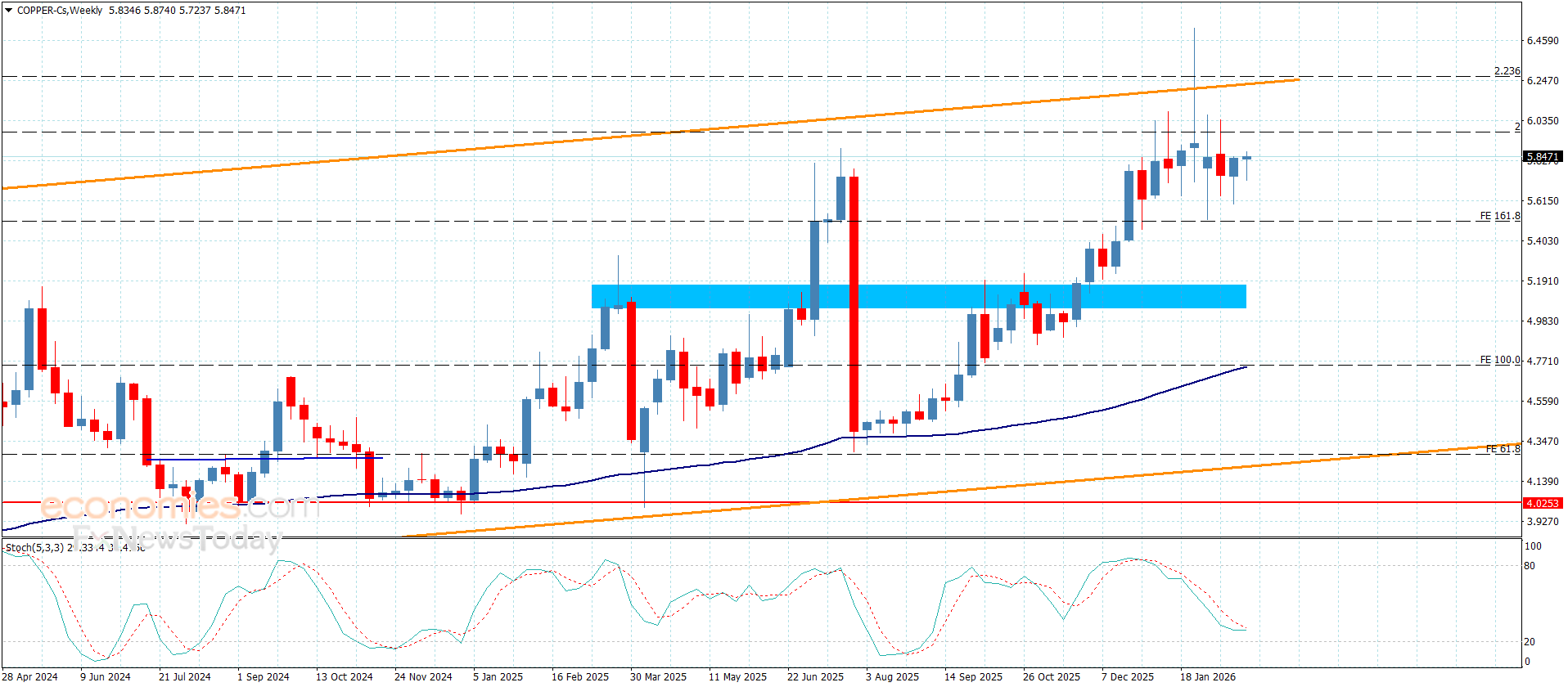
Copper price kept providing bullish trading, to move away from $5.5100 support, taking advantage of providing bullish momentum by the main indicators, to settle near $5.8500.
The price needs extra positive momentum, which allows it to settle above $5.9700 level, to confirm its readiness to record extra gains by its rally towards $6.1200 and $6.2400, while the failure to breach $5.9700 might force it to provide mixed trading with a new chance to activate the bearish corrective track in the upcoming period trading.
The expected trading range for today is between $5.7200 and $5.9700
Trend forecast: Bullish
Even if it maintains the view of global oversupply this year, Goldman Sachs has raised its oil price forecast for the fourth quarter by $6 per barrel as inventories in advanced economies remain low.
The Wall Street bank lifted its Q4 2026 price estimate by $6 to $60 per barrel Brent Crude and made the same upward revision of its WTI Crude price outlook, to $56 per barrel at year-end, on the back of lower-than-expected stocks in the OECD countries, according to a Sunday note cited by Reuters.
Early on Monday in Asian trade, the U.S. benchmark WTI Crude was trading 1% lower at $65 per barrel, and Brent Crude was down 1% at $71 a barrel amid uncertainties over the U.S. trade policies after the Supreme Court struck down President Trump’s so-called retaliatory tariffs.
Oil prices have jumped in recent weeks on the prospect of a U.S. military campaign in Iran.
The investment bank’s base-case scenario continues to assume there would be no supply disruptions related to Iran.
Goldman’s supply-demand balance for 2026 remains at a surplus of 2.3 million barrels per day (bpd), assuming no major supply disruptions and no peace reached in the Russia-Ukraine talks.
Goldman lifted its Q4 2026 Brent forecast to $60 and WTI to $56 per barrel, citing lower-than-expected OECD stock levels.
The bank still projects a 2.3 million bpd surplus in 2026, assuming no major supply disruptions.
OPEC+ may resume production increases in 2026 amid limited inventory builds and shifting market dynamics.
Lower OECD inventories, however, have prompted the bank to hike its year-end oil price forecast.
Last month, Goldman Sachs said that WTI could drop all the way to $50 per barrel towards the end of this year, amid expected excess supply that would put pressure on benchmarks.
OPEC+ could reinstate production increases in the second quarter of 2026, considering the lack of meaningful builds in OECD stocks so far this year, the bank said on Sunday.
Reports emerged earlier this month that the OPEC+ alliance is leaning toward resuming production increases from April following a pause in output hikes in the first quarter.
By Tsvetana Paraskova for Oilprice.com
Tariff uncertainty boosted demand for safe-haven assets, which was bullish for gold. However, it looks that traders want to see more positive catalysts before they will be ready to push gold prices towards new highs.
The rebound in U.S. equity markets has also put pressure on gold in today’s trading session. Yesterday, software stocks got decimated as traders worried that AI will eliminate businesses of software companies.
The huge sell-off in IBM stock, which was triggered by new features of Anthropic’s Claude, served as a positive catalyst for gold as traders rushed for safety.
Today, the rebound in the U.S. equity markets signals that investors’ appetite for risk increased, so it’s not surprising to see that gold has found itself under pressure.
The absence of news from Iran has also served as a negative catalyst for gold prices. For days, traders waited for a potential U.S. strike against Iran. However, U.S. – Iran negotiations are set to continue, so geopolitical premium declined. Traders should note that geopolitical premium may skyrocket in case U.S. strikes Iran, which remains a viable scenario.
From the technical point of view, gold pulled back towards the nearest support level, which is located in the $5100 – $5120 range. A successful test of the support at $5100 – $5120 will open the way to the test of the next support at $4880 – $4900.
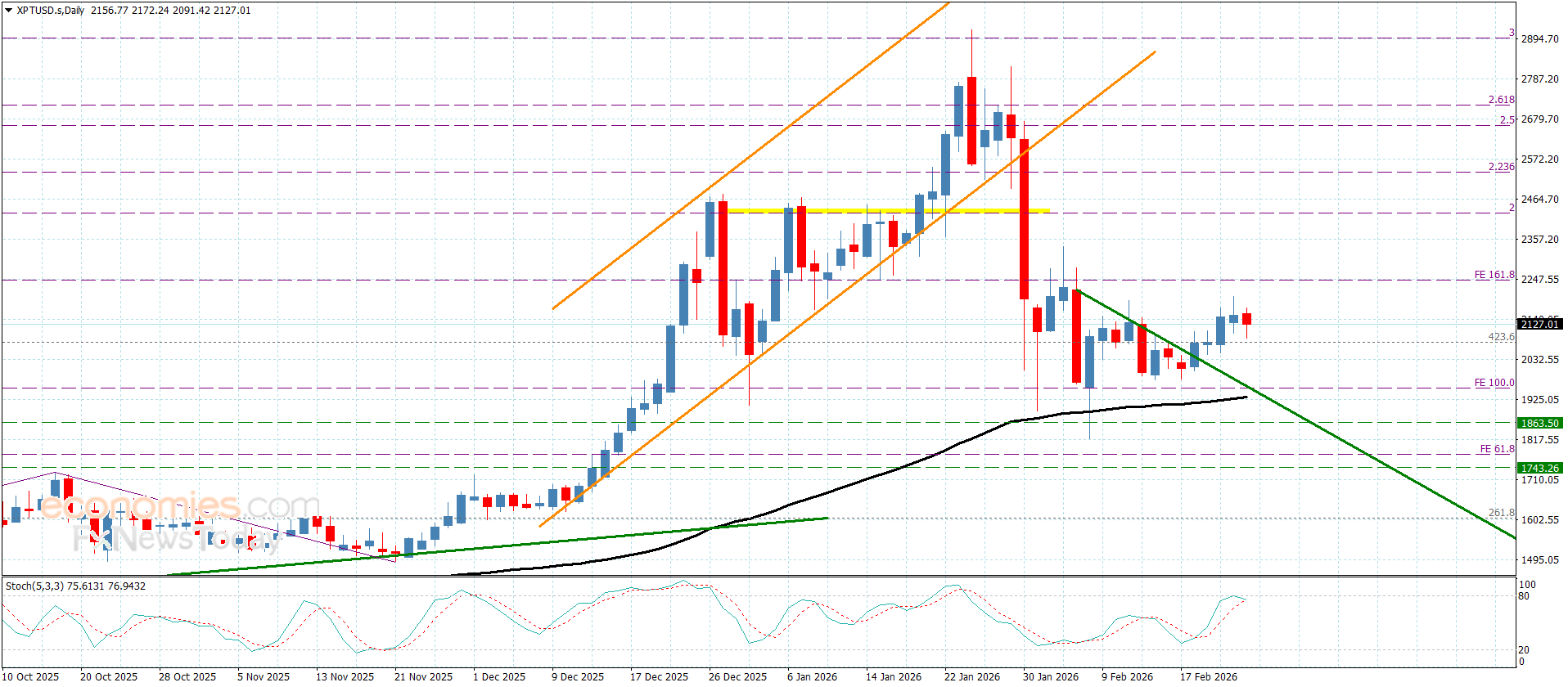
Despite providing bullish momentum by stochastic, however the fluctuation below the initial barrier at $3.520 level, which pushed it to form new bearish waves, repeating the pressure on the main support at $3.000.
The current support forms detecting key for the main trend in the upcoming trading, to expect its stability to begin forming new bullish waves, motivating it to surpass $3.520 barrier, to record new gains by its rally towards $3.750 and $4.000, while breaking the support and holding below it will force it to suffer big losses, to expect reaching $2.850 and $2.660 initially.
The expected trading range for today is between $3.000 and $3.520
Trend forecast: Bullish
Copper price kept providing bullish trading, to move away from $5.5100 support, taking advantage of providing bullish momentum by the main indicators, to settle near $5.8500.
The price needs extra positive momentum, which allows it to settle above $5.9700 level, to confirm its readiness to record extra gains by its rally towards $6.1200 and $6.2400, while the failure to breach $5.9700 might force it to provide mixed trading with a new chance to activate the bearish corrective track in the upcoming period trading.
The expected trading range for today is between $5.7200 and $5.9700
Trend forecast: Bullish
Copper price kept providing bullish trading, to move away from $5.5100 support, taking advantage of providing bullish momentum by the main indicators, to settle near $5.8500.
The price needs extra positive momentum, which allows it to settle above $5.9700 level, to confirm its readiness to record extra gains by its rally towards $6.1200 and $6.2400, while the failure to breach $5.9700 might force it to provide mixed trading with a new chance to activate the bearish corrective track in the upcoming period trading.
The expected trading range for today is between $5.7200 and $5.9700
Trend forecast: Bullish
BitcoinWorld
Silver Price Forecast: XAG/USD Holds Steady at $87.50 as Safe-Haven Demand Surges Amid Global Uncertainty
Global financial markets witnessed a significant development on Tuesday, March 18, 2025, as the spot silver price (XAG/USD) consolidated firmly around the $87.50 per ounce level. This stabilization follows a period of notable volatility and underscores a powerful resurgence in safe-haven asset demand. Consequently, investors are closely analyzing the silver price forecast for clues about broader market sentiment and economic direction.
The recent trading session saw XAG/USD establish a strong support base near $87.50. Market data from major exchanges shows consistent buying interest emerged each time the price approached this threshold. This price action reflects a complex interplay of macroeconomic forces currently shaping the precious metals landscape. Analysts point to several key factors supporting this level.
Firstly, renewed concerns about global economic growth have prompted a strategic portfolio reallocation. Secondly, ongoing geopolitical tensions in multiple regions continue to drive capital toward traditional stores of value. Thirdly, currency market fluctuations, particularly in the US Dollar Index (DXY), have created favorable conditions for dollar-denominated commodities like silver. The metal’s dual role as both a monetary and industrial asset provides a unique demand profile that differs from gold.
| Factor | Impact on Silver (XAG/USD) | Evidence/Context |
|---|---|---|
| Geopolitical Risk | Positive (Safe-Haven Flow) | Increased central bank diversification, retail bullion demand |
| US Dollar Strength | Negative (Typically Inverse) | DXY movements create buying opportunities in local currencies |
| Industrial Demand | Positive (Long-Term Support) | Solar panel, electronics, and automotive sector consumption |
| Real Interest Rates | Negative (Opportunity Cost) | Inflation data versus central bank policy remains key |
Safe-haven demand is not a monolithic force but a reaction to specific, verifiable pressures in the global system. In the current climate, this demand stems from three primary sources. Persistent inflation concerns, though moderated from previous highs, continue to erode the real value of fiat currencies. Investors therefore seek assets with intrinsic value and historical inflation-hedging properties.
Furthermore, equity market corrections in key technology and growth sectors have triggered a classic flight-to-safety move. Bond market volatility has also diminished the appeal of traditional fixed-income havens for some institutional players. According to recent commitment of traders reports, managed money positions in silver futures have shifted noticeably, indicating a change in professional sentiment. This institutional interest provides a substantial foundation for the current price level.
While financial demand captures headlines, the physical market provides crucial underlying support. Analysts from the Silver Institute emphasize the structural deficit in the physical silver market. Mine supply growth remains constrained, while industrial consumption continues its long-term upward trajectory. Key sectors driving this include:
This consumption creates a price floor that is increasingly resilient. Even during periods of weak investment demand, industrial offtake prevents severe price collapses. The current convergence of strong investment and industrial demand creates a uniquely bullish setup for the silver price forecast.
Chart analysis reveals that the $87.50 zone represents a significant technical confluence. It aligns with the 50-day moving average and a previous resistance level from late 2024, which has now turned into support. This technical strength bolsters the fundamental narrative. On-chain data for silver-backed ETFs also shows consistent inflows over the past month, confirming the physical backing for the price move.
Monetary policy expectations remain a critical watchpoint. Commentary from the Federal Reserve and other major central banks is parsed for hints about the pace of balance sheet normalization and interest rate paths. Historically, silver outperforms in the latter stages of a tightening cycle as the focus shifts to economic growth concerns. The current environment suggests we may be entering such a phase.
The silver price forecast remains cautiously optimistic as XAG/USD demonstrates resilience around $87.50. This stability is directly attributable to robust safe-haven demand fueled by geopolitical uncertainty and economic crosscurrents. The metal benefits from a powerful combination of monetary appeal and irreplaceable industrial utility. While volatility is inherent to commodity markets, the fundamental and technical foundations for silver appear solid. Investors and analysts will monitor upcoming economic data, central bank signals, and physical market indicators to gauge the next directional move for the silver price.
Q1: What does XAG/USD mean?
XAG is the ISO 4217 currency code for silver, representing one troy ounce. XAG/USD is the exchange rate showing how many US dollars are needed to purchase one ounce of silver.
Q2: Why is silver considered a safe-haven asset?
Silver is a tangible asset with intrinsic value, limited supply, and a millennia-long history as a store of wealth. During times of market stress, inflation, or geopolitical tension, investors often allocate funds to precious metals to preserve capital.
Q3: How does industrial demand affect the silver price forecast?
Industrial consumption, which accounts for over half of annual silver demand, provides a consistent baseline of physical offtake. This creates a structural support level, making the market less reliant on purely financial investment flows and adding long-term price stability.
Q4: What are the main risks to a higher silver price forecast?
Key risks include a significant strengthening of the US dollar, a sharp rise in real interest rates that increases the opportunity cost of holding non-yielding assets, a deep global recession that crushes industrial demand, or a sudden resolution of geopolitical conflicts that reduces safe-haven buying.
Q5: How can investors gain exposure to silver prices?
Investors can use physical bullion (bars, coins), silver-backed Exchange-Traded Funds (ETFs), futures and options contracts on commodities exchanges, or shares in silver mining companies. Each method carries different risk, liquidity, and storage considerations.
This post Silver Price Forecast: XAG/USD Holds Steady at $87.50 as Safe-Haven Demand Surges Amid Global Uncertainty first appeared on BitcoinWorld.
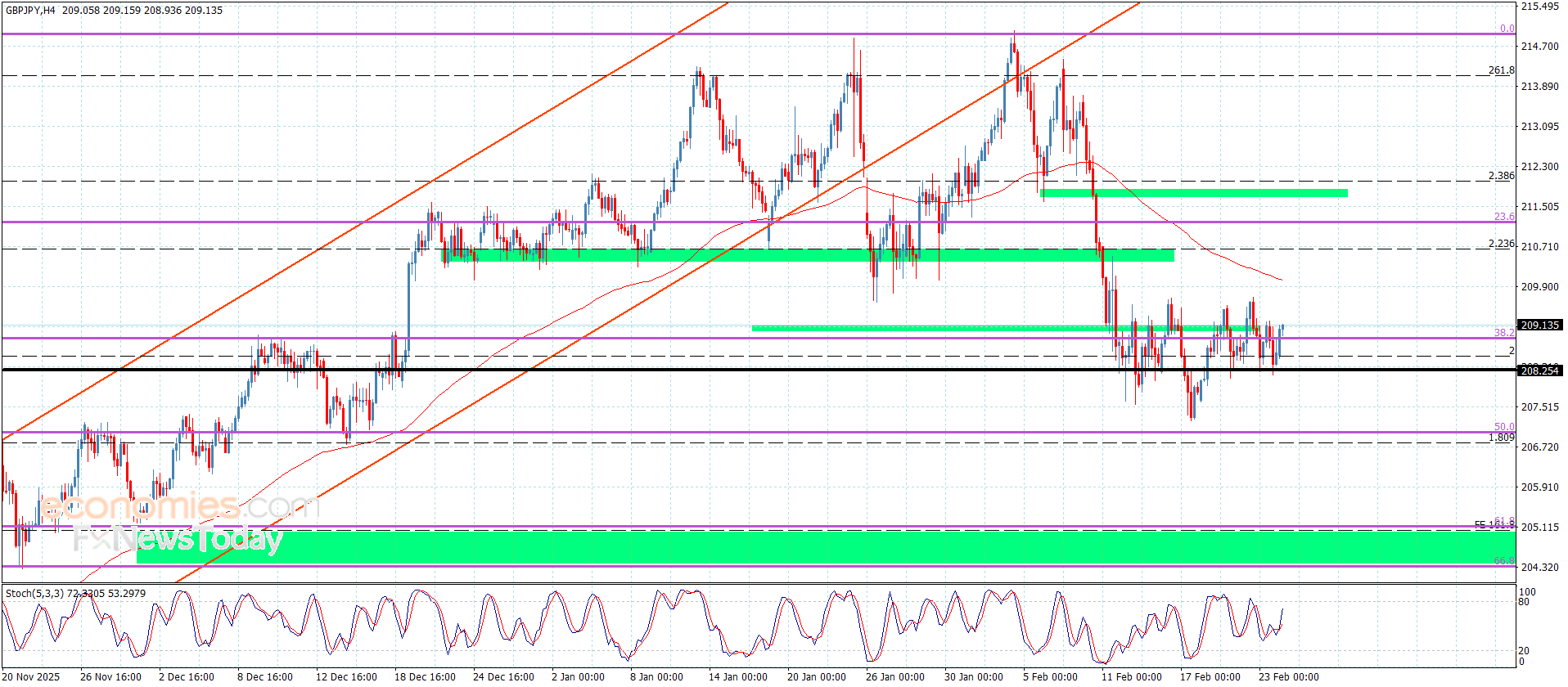
The GBPJPY pair approached the previously waited main target by reaching 207.30 level which forces it to form some bullish corrective waves, affected by stochastic rally above 50 level, which allows it to recover some losses to settle near 208.15.
Note that the negative stability below 209.15 level represents main factor to confirm the previously suggested negativity, therefore, we will keep waiting for gathering extra negative momentum to reinforce the chances of reaching 207.05, while surpassing the barrier and holding above it will ease the mission of achieving several gains by its rally towards 209.85 reaching 207.05.
The expected trading range for today is between 207.05 and 208.75
Trend forecast: Bearish