The main tag of Gold Price Articles.
You can use the search box below to find what you need.
[wd_asp id=1]
The main tag of Gold Price Articles.
You can use the search box below to find what you need.
[wd_asp id=1]
Tuesday’s initial bear-flag breakdown has produced almost no follow-through yet, but today’s rejection at the flag’s top (10-day MA) keeps bears in control. A drop below today’s $3,964 low triggers a second breakdown signal; confirmation arrives beneath Tuesday’s $3,929 low, with the $3,886 swing low as the next domino.
The 50-day average ($3,867 and rising) converges with the 50% retracement at $3,846, forming the highest-probability bounce zone. Given the sluggish bearish momentum, the 50-day line may climb above the $3,886 swing low before price ever reaches it, tightening the support pocket further.
Should $3,846–$3,867 crack, the 61.8% Fibonacci at $3,720 enters play alongside the rising channel centerline—both logical destinations after mid-October’s false bullish breakout above the same channel.
Bulls reclaim near-term momentum only with a rally back above the 10-day average and today’s $4,020 high. That would open a retest of the 20-day line at $4,083 (last week’s bounce stalled at $4,046, well short of target).
With two trading days remaining, gold is on track to close as an inside week. Inside weeks following extreme moves routinely precede sharp directional breaks; next week’s resolution above or below this week’s $3,929–$4,020 range will dictate the next swing.
Continued chop is expected until the 50-day average and 50% retracement provide support near $3,846–$3,867. That confluence, combined with the false bullish channel breakout in mid-October and the rising channel centerline, marks a high-probability area for a bullish reversal. Failure there targets the 61.8% level at $3,720. On the weekly chart, an inside week setup positions gold for a potential breakout next week. Hold above the recent swing low at $3,886 maintains the broader uptrend; a decisive rally above the 10-day average and $4,020 high targets the 20-day line at $4,083.
For the next couple of months, I’m long only on natural gas. It’s just a matter of trying to get a decent price so that I can step in and start buying. I’ve got no interest in shorting it, like I said, and at least until we get to something like the March or April contract, I’m going to be looking for any dip as a trading signal.
I’d be particularly interested in the $3.60 level, but that is a pretty significant drop from here. Last month, when we opened up the November contract, we gapped higher, rallied pretty significantly, pulled back to fill the gap, and then gapped higher at the open again for the day here on the 20th. We never filled that but then gapped massively when we opened up the December contract.
So, I think we’re going to continue to see that type of behavior. Now all I need to do is see a price that’s worth chasing. I don’t like chasing after a move like we’ve seen here recently, and in fact, last week we had something like a 30% gain. That’s not what prudent traders do.
For a look at all of today’s economic events, check out our economic calendar.
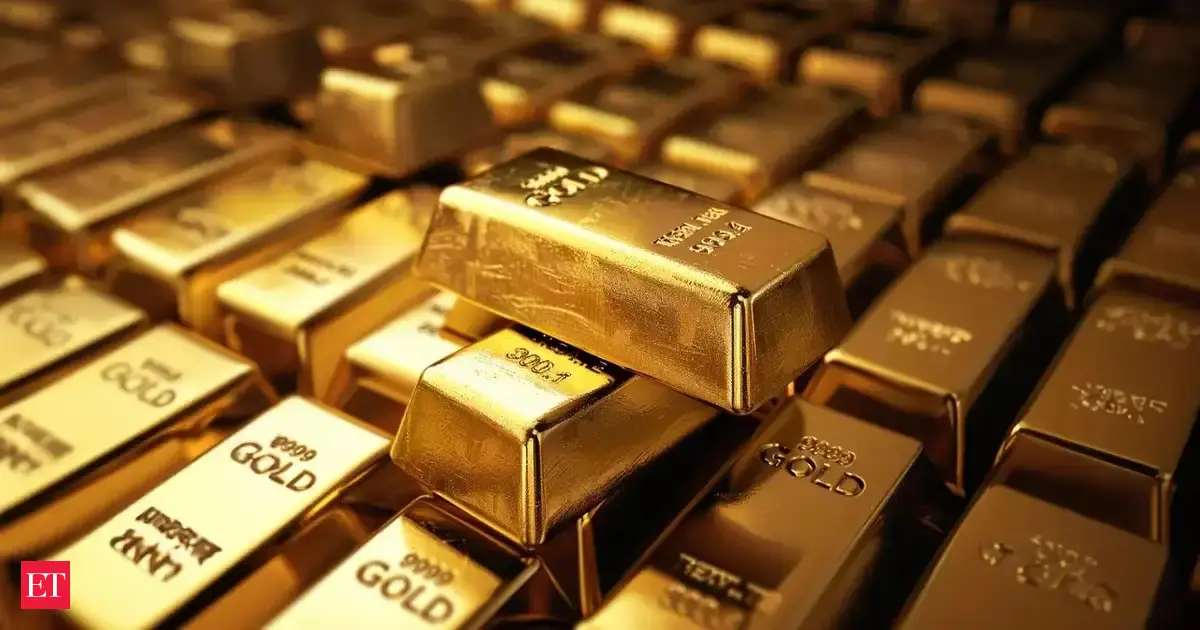
Gold price today and prediction show that gold rose above $4,000 per ounce on Thursday. The rise followed a decline in the dollar and concerns over a prolonged U.S. government shutdown that increased worries about the economic outlook.
Spot gold increased 0.7% to $4,011.79 per ounce at 0914 GMT. U.S. gold futures for December delivery gained 0.7% to $4,021.20 per ounce. Analysts said that the weaker dollar and developments in the Supreme Court case on tariffs supported the movement in gold prices.
UBS analyst Giovanni Staunovo said that Supreme Court skepticism over U.S. tariffs and a weaker dollar were factors driving gold prices. According to Staunovo, while gold prices may consolidate in the short term, further Federal Reserve rate cuts could push gold to $4,200 per ounce by the end of the year.
The U.S. dollar index fell 0.2% after reaching a four-month high in the previous session. A weaker dollar usually supports gold because it becomes cheaper for investors holding other currencies.
On Wednesday, U.S. Supreme Court justices raised doubts about the legality of President Donald Trump’s broad tariffs. The case carries global economic implications and could affect trade sentiment.
Gold price today and prediction are also influenced by recent U.S. labor market data. According to the ADP report released Wednesday, U.S. private employers added 42,000 jobs in October, surpassing the forecast of 28,000. The stronger labor market could reduce expectations for further rate cuts by the Federal Reserve. The U.S. government remains in a record-long shutdown due to a congressional impasse. This situation has forced investors and the Federal Reserve to rely on private-sector indicators for economic assessment.
The Fed reduced interest rates last week, but Chair Jerome Powell indicated it might be the last rate cut for 2025.
Market participants currently see a 63% chance of a rate cut in December, down from more than 90% last week. Gold, which does not yield interest, tends to perform well in low-interest-rate environments.
Analysts believe that continued uncertainty in U.S. politics, along with potential policy decisions, will influence the metal’s performance through the rest of the year.
European stocks also moved lower, led by losses in France’s Legrand after it missed sales growth expectations. The decline added pressure to markets already concerned about high valuations in technology-related companies.
Spot silver rose 1.4% to $48.74 per ounce. Platinum increased 0.4% to $1,567.01, while palladium gained 1.1% to $1,434.22. The movement in other metals reflected similar trends as investors sought safe-haven assets amid global uncertainty.
Analysts expect gold prices to remain supported in the coming months as investors watch for signs of additional rate cuts. If the dollar weakens further and economic risks persist, gold could approach the $4,200 level forecasted by UBS.
Investors are likely to monitor U.S. employment data, inflation figures, and any developments in the government shutdown to gauge the direction of gold prices in the short term.
1. What is the gold price today and prediction for the year-end?
Gold price today stands above $4,000 per ounce. Analysts expect it may reach $4,200 per ounce by year-end if the Federal Reserve continues rate cuts.
2. How does the dollar affect gold price today and prediction?
A weaker dollar makes gold cheaper for holders of other currencies. This usually supports higher demand and pushes the gold price up in the market.
Silver (XAG/USD) struggles to find acceptance above the $48.00 round figure and attracts some sellers during the Asian session on Thursday. The white metal, however, manages to hold comfortably above its lowest level since September 25, touched on Tuesday, and currently trades just below mid-$47.00s, down 0.20% for the day.
From a technical perspective, this week’s rebound from the 50-day Exponential Moving Average (SMA) and the subsequent move up favor the XAG/USD bulls. However, oscillators on the daily chart have just started gaining negative traction. This, in turn, warrants some caution before confirming that the recent corrective decline from the all-time peak touched earlier this month might have run its course.
Meanwhile, the $47.00-$46.95 area now seems to protect the immediate downside, below which the XAG/USD could slide back below the $46.00 mark and retest the 50-day EMA support near the $45.55 . A convincing break below might be seen as a fresh trigger for bearish traders and drag the commodity to the $45.00 psychological mark en route to the $44.45 region, the $44.00 mark, and the $43.55 area.
On the flip side, any positive move beyond the $48.00 round figure is likely to attract some sellers and face a strong barrier near the $48.45-$48.50 region. Some follow-through buying should pave the way for a move towards the $49.00 mark, which, if cleared, should allow the XAG/USD to extend the momentum towards the $49.45 region before aiming to reclaim the $50.00 psychological mark.
Silver is a precious metal highly traded among investors. It has been historically used as a store of value and a medium of exchange. Although less popular than Gold, traders may turn to Silver to diversify their investment portfolio, for its intrinsic value or as a potential hedge during high-inflation periods. Investors can buy physical Silver, in coins or in bars, or trade it through vehicles such as Exchange Traded Funds, which track its price on international markets.
Silver prices can move due to a wide range of factors. Geopolitical instability or fears of a deep recession can make Silver price escalate due to its safe-haven status, although to a lesser extent than Gold’s. As a yieldless asset, Silver tends to rise with lower interest rates. Its moves also depend on how the US Dollar (USD) behaves as the asset is priced in dollars (XAG/USD). A strong Dollar tends to keep the price of Silver at bay, whereas a weaker Dollar is likely to propel prices up. Other factors such as investment demand, mining supply – Silver is much more abundant than Gold – and recycling rates can also affect prices.
Silver is widely used in industry, particularly in sectors such as electronics or solar energy, as it has one of the highest electric conductivity of all metals – more than Copper and Gold. A surge in demand can increase prices, while a decline tends to lower them. Dynamics in the US, Chinese and Indian economies can also contribute to price swings: for the US and particularly China, their big industrial sectors use Silver in various processes; in India, consumers’ demand for the precious metal for jewellery also plays a key role in setting prices.
Silver prices tend to follow Gold’s moves. When Gold prices rise, Silver typically follows suit, as their status as safe-haven assets is similar. The Gold/Silver ratio, which shows the number of ounces of Silver needed to equal the value of one ounce of Gold, may help to determine the relative valuation between both metals. Some investors may consider a high ratio as an indicator that Silver is undervalued, or Gold is overvalued. On the contrary, a low ratio might suggest that Gold is undervalued relative to Silver.
Spot Gold enjoyed near-term demand throughout the first half of the day, peaking at $4,019.66 on Thursday. The XAU/USD pair changed course after the American opening, as Wall Street plunged, fueling demand for the US Dollar (USD), particularly against safe-haven and commodity-linked rivals. As a result, Gold turned south and trades in the $3,980 price zone.
European indexes closed in the red, indicating that the market’s sentiment began deteriorating earlier in the day, although without a clear catalyst. The only available data from the United States (US) was indeed discouraging, as the Challenger Job Cut report showed that US-based employers announced 153,074 job cuts in October, up from the 55,597 cuts announced a year earlier, and higher than the 54,064 job cuts announced in September. Other than that, stocks fell on the back of mounting concerns bout overvalued tech shares.
Meanwhile, the US government shutdown continues, now officially the largest in the country’s history. House Speaker Mike Johnson held a press conference and noted that he is less optimistic about the shutdown ending, triggering a fresh wave of risk aversion.
The upcoming Asian session will bring the Chinese October Trade Balance, relevant amid the trade war with the US. Other than that, the macroeconomic calendar has nothing relevant to offer, with the US Nonfarm Payroll (NFP) suspended for a second consecutive month.
XAU/USD is currently trading at around $3,985, little changed on a daily basis, yet biased lower in the near term. The 4-hour chart shows the pair remains capped beneath a rising 200 SMA at $4,003 and well below a declining 100 SMA at $4,084, keeping upside attempts in check. A bearish 20 SMA slides below the longer ones, suggesting sellers hold the grip; the 20 SMA stands at $3,982 and offers fragile nearby support. The same chart shows the Momentum indicator remains stuck around its midline, while the RSI eased to 49 from recent highs, also failing to provide clear directional clues.
)In the daily chart, XAU/USD dipped further below the 20-day SMA, which has lost its upward strength and stands at $4,084. By contrast, the 100-day at $3,608 and the 200-day at $3,371 continue to advance, keeping the broader bias tilted higher. At the same time, the Momentum indicator sits well below the 100 line, although it is off its weekly low. Finally, the RSI indicator eased to 50, reinforcing a neutral, consolidative stance. A sustained break above the 20-day SMA resistance at $4,084 would reinstate upward traction alongside the rising longer averages, whereas failure to reclaim it keeps risks skewed to the downside, with initial support at $3,889, the weekly low. Beyond the latter, the slide can continue $3,608 and $3,371, where the 100- and 200-day SMAs are located.
(This content was partially created with the help of an AI tool)
The (ETHUSD) price settled higher in its last intraday trading, retesting the resistance of $3,435, attempting to correct the main bearish trend on the short-term basis, amid its trading alongside supportive minor trendline for this track, with the continuation of the negative pressure due to its trading below EMA50, the beginning of forming negative divergence on the relative strength indicators reinforces the negative pressure on the price, after reaching overbought levels, exaggeratedly compared to the price move, with the emergence of negative overlapping signals.
Get high-accuracy trading signals delivered directly to your Telegram. Subscribe to specialized packages tailored for the world’s top markets:
Full VIP signals performance report for 20-31, October 2025:

Gold price today and prediction show that gold rose above $4,000 per ounce on Thursday. The rise followed a decline in the dollar and concerns over a prolonged U.S. government shutdown that increased worries about the economic outlook.
Spot gold increased 0.7% to $4,011.79 per ounce at 0914 GMT. U.S. gold futures for December delivery gained 0.7% to $4,021.20 per ounce. Analysts said that the weaker dollar and developments in the Supreme Court case on tariffs supported the movement in gold prices.
UBS analyst Giovanni Staunovo said that Supreme Court skepticism over U.S. tariffs and a weaker dollar were factors driving gold prices. According to Staunovo, while gold prices may consolidate in the short term, further Federal Reserve rate cuts could push gold to $4,200 per ounce by the end of the year.
The U.S. dollar index fell 0.2% after reaching a four-month high in the previous session. A weaker dollar usually supports gold because it becomes cheaper for investors holding other currencies.
On Wednesday, U.S. Supreme Court justices raised doubts about the legality of President Donald Trump’s broad tariffs. The case carries global economic implications and could affect trade sentiment.
Gold price today and prediction are also influenced by recent U.S. labor market data. According to the ADP report released Wednesday, U.S. private employers added 42,000 jobs in October, surpassing the forecast of 28,000. The stronger labor market could reduce expectations for further rate cuts by the Federal Reserve.
The U.S. government remains in a record-long shutdown due to a congressional impasse. This situation has forced investors and the Federal Reserve to rely on private-sector indicators for economic assessment.
The Fed reduced interest rates last week, but Chair Jerome Powell indicated it might be the last rate cut for 2025.
Market participants currently see a 63% chance of a rate cut in December, down from more than 90% last week. Gold, which does not yield interest, tends to perform well in low-interest-rate environments.
Analysts believe that continued uncertainty in U.S. politics, along with potential policy decisions, will influence the metal’s performance through the rest of the year.
European stocks also moved lower, led by losses in France’s Legrand after it missed sales growth expectations. The decline added pressure to markets already concerned about high valuations in technology-related companies.
Spot silver rose 1.4% to $48.74 per ounce. Platinum increased 0.4% to $1,567.01, while palladium gained 1.1% to $1,434.22. The movement in other metals reflected similar trends as investors sought safe-haven assets amid global uncertainty.
Analysts expect gold prices to remain supported in the coming months as investors watch for signs of additional rate cuts. If the dollar weakens further and economic risks persist, gold could approach the $4,200 level forecasted by UBS.
Investors are likely to monitor U.S. employment data, inflation figures, and any developments in the government shutdown to gauge the direction of gold prices in the short term.
1. What is the gold price today and prediction for the year-end?
Gold price today stands above $4,000 per ounce. Analysts expect it may reach $4,200 per ounce by year-end if the Federal Reserve continues rate cuts.
2. How does the dollar affect gold price today and prediction?
A weaker dollar makes gold cheaper for holders of other currencies. This usually supports higher demand and pushes the gold price up in the market.
The EURJPY pair faced 175.70 level in its last corrective decline, which formed extra support, to reduce the negative effect by its stability, by the above image, we notice its rally above 177.05 barrier.
The price needs a new bullish momentum to allow it to provide a new positive close above 177.05 level, to reinforce the efficiency of the bullish track by its rally towards 177.95 and 178.75.
The expected trading range for today is between 176.65 and 177.95
Trend forecast: Bullish
Silver (XAG/USD) appreciates for the second consecutive day on Thursday, reaching session highs above $48.70, supported by a slight pullback in the US Dollar. From a wider perspective, however, the pair remains contained within a horizontal channel, below key resistance at the $49.35 area.
A somewhat brighter market mood has undermined support for the safe-haven US Dollar, providing a mild boost to precious metals. Nevertheless, upside attempts are likely to remain limited, as the strong US data seen on Wednesday cast further doubts on a December rate cut by the Federal Reserve, which is likely to keep the Greenback supported.
The technical picture shows Silver crawling through the last two weeks’ trading range., Oscillators show a somewhat stronger momentum, but the immediate upside bias remains frail so far, with the $49.35 area, where bulls were capped in October 23 and 31 highs, likely to pose significant resistance.
A confirmation beyond that level would give bulls fresh hopes to test the previous support in the area of $50.40-$50.60 (October 13, 17 lows). Further up the target would be the October 20 high, near $59.80.
A bearish reversal, on the contrary, would be tested at Tuesday’s low near $47.00, ahead of the $45.55 area (October 28 low). A clear break of this level would resume the broader bearish trend from four-year highs, near $55.00 hit in mid-October, and target the September 24 low, near $43.70.
(This story was corrected on November 6 at 08:41 GMT to include XAG/USD in the title and not XAU/USD and to say that Silver advances to $48.70 and not to $58.70, as it was previously reported.)
Silver is a precious metal highly traded among investors. It has been historically used as a store of value and a medium of exchange. Although less popular than Gold, traders may turn to Silver to diversify their investment portfolio, for its intrinsic value or as a potential hedge during high-inflation periods. Investors can buy physical Silver, in coins or in bars, or trade it through vehicles such as Exchange Traded Funds, which track its price on international markets.
Silver prices can move due to a wide range of factors. Geopolitical instability or fears of a deep recession can make Silver price escalate due to its safe-haven status, although to a lesser extent than Gold’s. As a yieldless asset, Silver tends to rise with lower interest rates. Its moves also depend on how the US Dollar (USD) behaves as the asset is priced in dollars (XAG/USD). A strong Dollar tends to keep the price of Silver at bay, whereas a weaker Dollar is likely to propel prices up. Other factors such as investment demand, mining supply – Silver is much more abundant than Gold – and recycling rates can also affect prices.
Silver is widely used in industry, particularly in sectors such as electronics or solar energy, as it has one of the highest electric conductivity of all metals – more than Copper and Gold. A surge in demand can increase prices, while a decline tends to lower them. Dynamics in the US, Chinese and Indian economies can also contribute to price swings: for the US and particularly China, their big industrial sectors use Silver in various processes; in India, consumers’ demand for the precious metal for jewellery also plays a key role in setting prices.
Silver prices tend to follow Gold’s moves. When Gold prices rise, Silver typically follows suit, as their status as safe-haven assets is similar. The Gold/Silver ratio, which shows the number of ounces of Silver needed to equal the value of one ounce of Gold, may help to determine the relative valuation between both metals. Some investors may consider a high ratio as an indicator that Silver is undervalued, or Gold is overvalued. On the contrary, a low ratio might suggest that Gold is undervalued relative to Silver.
The (ETHUSD) price settled higher in its last intraday trading, retesting the resistance of $3,435, attempting to correct the main bearish trend on the short-term basis, amid its trading alongside supportive minor trendline for this track, with the continuation of the negative pressure due to its trading below EMA50, the beginning of forming negative divergence on the relative strength indicators reinforces the negative pressure on the price, after reaching overbought levels, exaggeratedly compared to the price move, with the emergence of negative overlapping signals.
Get high-accuracy trading signals delivered directly to your Telegram. Subscribe to specialized packages tailored for the world’s top markets:
Full VIP signals performance report for 20-31, October 2025: