The main tag of Gold Price Articles.
You can use the search box below to find what you need.
[wd_asp id=1]
The main tag of Gold Price Articles.
You can use the search box below to find what you need.
[wd_asp id=1]
China’s organic ground coffee market operates at the intersection of a rapidly maturing coffee culture and a broader consumer shift toward health, sustainability, and provenance-conscious purchasing. Unlike conventional instant coffee, which dominates total coffee volume in China at an estimated 70% share, the ground coffee segment is structurally oriented toward quality, brewing ritual, and brand differentiation. Organic ground coffee represents a premium sub-segment within this category, appealing primarily to urban consumers aged 25–45 with above-average disposable income, exposure to international consumption habits, and a willingness to pay for certified ethical sourcing.
The market is distinct from many other consumer packaged goods categories in China in that domestic production of organic arabica beans is very limited, with Yunnan Province contributing only a small fraction of the organic beans used domestically. As a result, the supply chain is heavily import-mediated, with specialised coffee importers, dedicated organic wholesalers, and a growing number of craft roasters acting as critical intermediaries between global origin suppliers and Chinese consumers. The category’s growth trajectory is closely tied to foodservice expansion, cross-border e-commerce liberalisation, and the progressive normalisation of home brewing as a daily practice rather than an occasional indulgence.
The organic ground coffee segment in China is expanding from a small but fast-growing base, with annual volume growth estimated in the range of 14–20% during the 2023–2026 period, compared with 7–10% growth for conventional ground coffee. Although organic ground coffee still accounts for a single-digit share of total ground coffee consumption, its share of category value is higher, estimated at 12–16%, due to higher average selling prices. The at-home consumption channel is the primary growth engine, contributing roughly 60% of organic ground coffee volume, while foodservice and office channels together account for the remainder.
By 2030, market volume could approximately double relative to 2026 levels if current growth trajectories hold, driven by deeper penetration into Tier-2 and Tier-3 cities, rising organic certification awareness among younger consumers, and expanded availability through domestic e-commerce platforms, cross-border channels, and an increasing number of specialty café chains that prominently feature organic pour-over and drip options. The foodservice sub-segment is expected to grow slightly faster than retail over the forecast horizon as hotel breakfast buffets, premium cafés, and corporate office coffee programmes incorporate organic offerings into their procurement specifications. However, the retail at-home channel will remain the largest volume contributor throughout the forecast period.
By type, blends account for the largest share of organic ground coffee volume in China at an estimated 40–50%, as most consumers start their organic coffee journey with balanced, approachable blends that offer consistent flavour and value. Single-origin organic coffee is the fastest-growing type, expanding at an estimated 18–22% annually, driven by speciality coffee enthusiasts who seek traceable lots from Ethiopia, Colombia, and increasingly from Yunnan’s emerging organic estates.
Flavoured organic ground coffee holds a niche but stable share of around 8–12%, appealing particularly to younger consumers and those transitioning from tea-based beverages. Decaffeinated organic ground coffee remains a marginal segment in China, accounting for less than 5% of organic ground coffee sales, constrained by limited availability and lower consumer demand relative to Western markets.
By end-use sector, retail grocery, mass-market retail, and online channels together command approximately 60–65% of organic ground coffee volume, with online alone representing 40–50% of channel mix. Foodservice procurement, including cafés, restaurants, and hotels, accounts for 25–30% of volume, driven by the rapid expansion of speciality coffee chains that feature organic options on their menus. The office coffee service segment is the smallest end-use sector at roughly 10–15%, but it is expected to grow steadily as multinational corporations and domestic tech firms adopt organic coffee as part of workplace wellness initiatives.
Consumer demand is concentrated in Tier-1 cities such as Shanghai, Beijing, Guangzhou, and Shenzhen, which together account for an estimated 50–60% of organic ground coffee consumption, though Tier-2 cities are showing the fastest growth rates as specialty coffee culture diffuses inland.
Organic ground coffee pricing in China spans four distinct layers. Commodity and private-label organic ground coffee retails in the range of RMB 80–140 per 200 grams, positioned as an entry-level premium over conventional coffee. Mainstream branded organic products occupy the RMB 160–280 range and represent the largest value segment, appealing to affluent households and regular home brewers. Premium and speciality branded organic ground coffee commands RMB 300–500 per 200 grams, featuring single-origin beans, direct-trade certifications, and distinctive roasting profiles. The super-premium and direct-trade tier, with prices exceeding RMB 500 per 200 grams, remains a small but aspirational segment, driven by limited-edition micro-lots and rare origin offerings.
The single largest cost driver is the import price of certified organic green coffee beans, which has experienced typical annual volatility of 15–25% over the past three cycles due to weather-related supply disruptions in origin countries, logistics cost fluctuations, and certification renewal requirements. Tariff treatment for organic ground coffee imports under HS codes 090121 and 090122 depends on the product’s roasted status and origin; applied most-favoured-nation rates are generally in the single-digit to low-double-digit range, but preferential rates under bilateral trade agreements can reduce landed costs by several percentage points.
Domestic cost factors include the expense of maintaining organic certification across the supply chain from importer to roaster to distributor, which adds an estimated 8–15% to operational overhead relative to conventional coffee handling. Competitive pressure for prime online shelf space on platforms such as Tmall, JD.com, and Douyin (TikTok Shop) has also pushed customer acquisition costs higher, compressing margins for smaller independent brands and DTC entrants.
The competitive landscape in China’s organic ground coffee market includes a diverse mix of global brand owners and category leaders, speciality roasters, vertical integrators, digital-native DTC brands, and private-label specialists. Global brand owners such as Nestlé (through its Nescafé Gold Organic line and Nespresso compatible capsules) and JAB Holding Company–affiliated brands (Peet’s, Jacobs Douwe Egberts) compete primarily through retail distribution breadth, certification credibility, and marketing scale. These incumbents are complemented by speciality coffee roasters and importers that focus exclusively on organic and direct-trade sourcing, many of which operate as small to mid-sized enterprises serving the foodservice channel and online speciality audiences.
China also hosts a growing number of digital-native DTC coffee brands that were founded with an organic-first or organic-inclusive product strategy, using social commerce and influencer marketing to reach younger urban consumers. These brands often emphasise transparency, limited-edition single-origin lots, and convenient subscription models. Private-label and retailer-brand organic ground coffee has gained traction in major grocery chains and membership warehouse clubs, where price-conscious organic buyers are willing to trade brand prestige for value, particularly in the RMB 80–130 per 200-gram price band.
The competitive intensity is moderate but rising, as entry barriers in the DTC channel are relatively low, while the capital, certification, and logistics requirements for import-based organic coffee create a moat that protects established importers and roasters with existing supply relationships.
China’s domestic production of organic coffee is concentrated in Yunnan Province, which accounts for the vast majority of the country’s coffee output, with smaller volumes grown in Hainan and Fujian. Yunnan’s arabica production has expanded steadily over the past decade, and a subset of estates have pursued organic certification to serve the domestic premium market and export niche buyers. However, the volume of domestically produced organic green beans is quite limited relative to demand, estimated at perhaps 10–15% of the organic green beans consumed by Chinese roasters and brands. The quality of Yunnan organic arabica has improved significantly, with some micro-lots earning recognition in speciality coffee circles, but consistency and volume remain constraints for large-scale procurement.
The domestic supply chain is further characterised by fragmentation among smallholder farms, which complicates certification maintenance, traceability, and quality control. Yunnan’s organic coffee farms typically operate at altitudes of 1,000–1,600 metres and rely on rain-fed cultivation, making annual yields sensitive to seasonal weather patterns. A small number of vertical integrators—companies that control both Yunnan farm operations and roasting/distribution—are emerging as suppliers capable of offering fully traceable domestic organic ground coffee to Chinese retail and foodservice buyers.
Nevertheless, the domestic production base is not expected to materially displace import reliance over the forecast horizon, as both volume and consumer preference for recognised origin countries (Ethiopia, Colombia, Brazil) support strong import demand.
China is a structurally net importer of organic ground coffee, with imports covering an estimated 75–85% of domestic consumption. The primary import origins for organic green beans and roasted coffee under HS codes 090121 (roasted, not decaffeinated) and 090122 (roasted, decaffeinated) include Brazil, Colombia, Ethiopia, Vietnam, and increasingly Peru and Honduras for speciality lots. Green beans are typically shipped via maritime container to the ports of Shanghai, Shenzhen, and Tianjin, where they clear customs and are distributed to roasters across the major consumption hubs. Roasted organic ground coffee for retail sale is also imported directly from European and US roasters, particularly for the super-premium segment, and enters through both general trade and cross-border e-commerce channels.
Tariff treatment for organic ground coffee imports depends on the product code, degree of roasting, and country of origin. Under most-favoured-nation terms, applied ad valorem rates are moderate, and organic products do not receive a separate tariff preference, though they are subject to the same HS classification as conventional roasted coffee. Bilateral free trade agreements and regional trade arrangements may afford preferential rates for certain origins, reducing landed costs by several percentage points.
Export volumes from China are negligible for organic ground coffee, as domestic production is primarily oriented toward the home market, and the Yunnan origin is not yet widely recognised in overseas speciality channels. Trade documentation for organic imports must include either USDA Organic, EU Organic, or equivalent certification recognised by Chinese authorities, and importers must navigate China’s organic labelling and import food-safety registration requirements, which add lead time and administrative cost to each transaction.
E-commerce is the dominant distribution channel for organic ground coffee in China, with an estimated 40–50% of sales transacted through major platforms including Tmall, JD.com, Pinduoduo, and Douyin. Within e-commerce, Tmall Global and cross-border platforms are particularly important for imported organic brands that lack domestic logistics infrastructure, enabling direct sales to Chinese consumers with relatively low upfront investment.
Social commerce and live-streaming sales have emerged as a high-growth sub-channel, where KOLs (key opinion leaders) demonstrate brewing methods, explain origin stories, and offer limited-time promotions that drive impulse purchases among younger demographics. DTC brand websites and subscription models account for a small but growing share of online sales, favoured by consumers who value direct relationships and consistent delivery schedules.
Offline retail channels, including grocery supermarket chains (Sam’s Club, Costco China, Carrefour), premium organic grocery stores, and speciality coffee boutique shops, handle approximately 30–35% of organic ground coffee sales. High-end grocery and import supermarkets are particularly important for price-sensitive organic buyers who prefer to inspect packaging, check certification labels, and avoid online shipping fees. Foodservice distribution operates through a separate network of dedicated coffee wholesalers and foodservice distributors that supply cafés, hotels, and corporate offices.
The foodservice buyer group—including café owners, hotel F&B procurement managers, and office coffee service operators—tends to prioritise consistency, certification credibility, and producer support over the lowest price, creating opportunities for importers and roasters that offer training, equipment, and technical service alongside the coffee supply.
Organic ground coffee sold in China must comply with the country’s domestic organic certification regulations administered by the Certification and Accreditation Administration (CNCA), with the China Organic Product Certification mark being the primary label recognised by consumers and retailers. Imported organic products must hold certification that is recognised under China’s organic equivalence framework, which applies to USDA Organic, EU Organic, and certain other national organic standards through bilateral agreements or ad hoc recognition. In practice, most imported organic ground coffee enters the Chinese market bearing both the origin-country organic seal and the China Organic Certification mark, a dual-label requirement that adds cost but is widely regarded as essential for retail shelf placement and consumer trust.
Beyond organic certification, other voluntary certification frameworks such as Fair Trade and Rainforest Alliance/UTZ serve as additional differentiators in the Chinese market, particularly among sustainability-oriented consumer segments and speciality foodservice buyers. The regulatory environment also imposes food-safety standards specific to roasted coffee, including limits on ochratoxin A (OTA), pesticide residues, and heavy metals, which are enforced through import inspection and sampling by China Customs.
For domestic processors and roasters, the food production license (SC or QS certification) is mandatory for commercial production, and businesses handling imported organic beans must maintain traceability documentation throughout the roasting and packaging process. The regulatory complexity of maintaining organic certification across multiple frameworks—from farm-gate to retail shelf—remains one of the structural cost burdens that shapes the competitive dynamics of the market, favouring larger importers and roasters with dedicated compliance resources.
Over the 2026–2035 forecast horizon, China’s organic ground coffee market is projected to sustain annual volume growth in the range of 12–18%, with the pace gradually decelerating from the higher end in the early years to the lower end in the later years as the base expands and category maturation sets in. At this trajectory, market volume could grow two- to three-fold by 2035 relative to the 2026 base, driven by continued urbanisation, rising disposable incomes, deeper penetration of Western coffee habits in lower-tier cities, and an expanding cohort of health-conscious consumers who prioritise organic and ethically sourced products in their daily consumption. The value growth rate will likely exceed volume growth by 2–4 percentage points annually, reflecting the ongoing mix shift toward higher-priced single-origin, speciality, and super-premium organic offerings, as well as inflationary pressure on green bean prices and packaging costs.
The at-home consumption segment is expected to remain the largest end-use channel throughout the forecast period, but foodservice is anticipated to grow slightly faster in percentage terms as speciality café chains add organic pour-over and drip options to their menus and as hotel breakfast programmes upgrade their coffee offerings. The office coffee service segment, while small, may experience episodic acceleration as foreign-invested enterprises and domestically headquartered tech firms expand their workplace wellness budgets.
By 2035, the organic sub-segment could represent 12–18% of China’s total ground coffee volume, up from 5–8% in 2026, assuming supply-side constraints around certified organic bean availability can be progressively addressed through origin-country investments and expanded Yunnan organic production. Downside risks include sustained green coffee price inflation, slower-than-expected consumer adoption in lower-tier cities, and potential regulatory changes affecting organic import equivalence recognition.
One of the most compelling growth opportunities in China’s organic ground coffee market lies in expanding beyond the coastal Tier-1 strongholds into the rapidly urbanising Tier-2 and Tier-3 cities, where consumer awareness of organic certification is still developing but where specialty coffee culture is spreading quickly through café chains, social media diffusion, and rising disposable incomes. Early-mover brands that invest in regional distribution, local-language educational content about organic sourcing, and collaboration with local café communities in cities such as Chengdu, Chongqing, Hangzhou, and Nanjing stand to capture disproportionate share as the market matures. The digital landscape offers another strategic opportunity: using short-video and live-streaming platforms not merely as sales channels but as storytelling vehicles that explain origin country relationships, farmer livelihoods, and the tangible differences in flavour and sustainability that organic certification delivers, thereby building brand trust and willingness to pay.
Product innovation around Chinese consumer preferences represents a further opportunity. Organic blends that incorporate flavours aligned with local taste profiles (such as lighter roasts with floral or tea-like notes) and formats that suit domestic brewing equipment (pour-over drippers, French press, and increasingly espresso machines) can differentiate brands from generic imports. Sustainable packaging innovation—particularly compostable pouches and nitrogen-flushed formats that extend shelf life without refrigeration—addresses both environmental concerns and the practical challenge of distribution across China’s vast geography.
Finally, for domestic producers in Yunnan and other emerging regions, the opportunity to establish recognisable Chinese origin stories for organic arabica, supported by rigorous traceability and direct-trade relationships, could create a uniquely positioned domestic premium segment that resonates with nationalist consumer sentiment and reduces import exposure.
These opportunities collectively suggest that the China organic ground coffee market, while still modest in absolute volume relative to mature coffee markets, offers attractive growth and margin potential for brands and importers that can navigate the certification complexity, distribution logistics, and evolving consumer expectations that define this dynamic category.
This report is an independent strategic category study of the market for organic ground coffee in China. It is designed for brand owners, general managers, category leaders, trade-marketing teams, e-commerce teams, retail partners, distributors, investors, and market entrants that need a clear read on where growth sits, which brands control the category, how pricing and promotion shape demand, and which channels matter most for scale and margin.
The framework is built for packaged food & beverage markets within consumer goods, where performance is driven by need states, shopper missions, brand hierarchies, price-pack architecture, retail execution, promotional intensity, and route-to-market control rather than by a narrow technical specification alone. It defines organic ground coffee as Roasted coffee beans ground to a specific particle size for brewing, certified organic to meet consumer demand for natural, sustainable products and maps the market through category boundaries, consumer segments, usage occasions, channel structure, brand and private-label positions, supply and availability logic, pricing and promotion mechanics, and country-level commercial roles. Historical analysis typically covers 2012 to 2025, with forward-looking scenarios through 2035.
This report is designed to answer the questions that matter most to brand, category, channel, and strategy teams in consumer-goods markets.
At its core, this report explains how the market for organic ground coffee actually works as a consumer category. It is built to show where demand comes from, which need states and shopper missions matter most, which brands and private-label players shape the category, which channels control visibility and conversion, and where pricing power, repeat purchase, and margin are actually created.
Rather than framing the category through narrow technical attributes, the study breaks it into decision-grade commercial layers: product format, benefit platform, shopper segment, purchase occasion, pack-price architecture, channel environment, promotional intensity, route-to-market control, and company archetype. It is therefore useful both for teams shaping portfolio strategy and for teams executing growth through Household Consumers, Foodservice Procurement, Office Managers, and Retail Category Buyers.
The report also clarifies how value pools differ across Drip/Filter Brewing, French Press, Pour-Over, and Moka Pot, how premiumization and private label reshape category economics, how retail concentration and route-to-market design affect scale, and which countries matter most for brand building, sourcing, packaging, and channel expansion.
The report is based on an independent market-intelligence methodology that combines category reconstruction, public company evidence, retail and channel mapping, pricing review, and multi-layer triangulation. It is built for consumer categories where no single public dataset captures the real structure of demand, brand power, promotion, and channel control.
The evidence stack typically combines company disclosures, investor materials, brand and retailer product pages, e-commerce assortment checks, packaging and claims analysis, public pricing references, trade statistics where relevant, regulatory and labeling guidance, and observable route-to-market evidence from distributors, retailers, merchandisers, and marketplace ecosystems.
The analytical model then reconstructs the category across the layers that matter commercially: category scope, shopper need states, consumer segments, pack-price ladders, brand and private-label hierarchy, channel power, promotional intensity, route-to-market design, and country role differences.
Special attention is given to Health & Wellness Trends, Sustainability & Ethical Sourcing, Premiumization & Specialty Coffee Culture, Convenience of Pre-Ground Format, and Brand Trust & Transparency. The objective is not only to size the market, but to explain where value pools sit, which segments drive mix and repeat purchase, which channels shape growth, and how leading brands defend or expand their positions across Household Consumers, Foodservice Procurement, Office Managers, and Retail Category Buyers.
The report does not rely on survey-based opinion as its core evidence base. Instead, it uses observable commercial signals and structured public evidence to build a decision-grade view for brand, category, retail, e-commerce, investment, and market-entry teams.
This report defines organic ground coffee as Roasted coffee beans ground to a specific particle size for brewing, certified organic to meet consumer demand for natural, sustainable products and treats it as a branded consumer category rather than as a narrow technical product class. The objective is to capture the real commercial market that category, brand, trade-marketing, and channel teams are managing.
Scope is determined by how the category is sold, merchandised, priced, and chosen in market. That means the report follows product formats, claims, price tiers, pack architecture, need states, and retail environments that shape Drip/Filter Brewing, French Press, Pour-Over, and Moka Pot.
The study deliberately separates the category from adjacent baskets when they distort the economics or shopper logic of the market being measured. Typical exclusions therefore include Whole bean coffee (unless specified as part of a ground product line), Instant/soluble coffee, Non-organic conventional ground coffee, Ready-to-drink (RTD) coffee beverages, Coffee pods/capsules for proprietary systems (e.g., Nespresso, Keurig) unless sold as loose ground coffee for reusable pods, Coffee brewing equipment, Coffee syrups and flavorings, Coffee substitutes (e.g., chicory), and Tea and other hot beverages.
The report provides focused coverage of the China market and positions China within the wider global consumer-goods industry structure.
The geographic analysis explains local consumer demand conditions, brand and private-label balance, retail concentration, pricing tiers, import dependence, and the country’s strategic role in the wider category.
This study is designed for strategic and commercial users across brand-led consumer categories, including:
In many brand-driven, channel-sensitive, and consumer-demand-led markets, official trade and production statistics are not sufficient on their own to describe the true market. Product boundaries may cut across multiple tariff codes, several product categories may be bundled into the same official classification, and a meaningful share of activity may take place through customized services, captive supply, platform relationships, or technically specialized channels that are not directly visible in standard statistical datasets.
For this reason, the report is designed as a modeled strategic market study. It uses official and public evidence wherever it is reliable and scope-compatible, but it does not force the market into a purely statistical framework when doing so would reduce analytical quality. Instead, it reconstructs the market through the logic of demand, supply, technology, country roles, and company behavior.
This makes the report particularly well suited to products that are innovation-intensive, technically differentiated, capacity-constrained, platform-dependent, or commercially structured around specialized buyer-supplier relationships rather than standardized commodity trade.
The report typically includes:
BitcoinWorld
Silver Price Forecast: XAG/USD Extends Gains Near 80.50 as Bullish Momentum Persists
Silver prices continued their upward trajectory on Wednesday, with XAG/USD trading near the 80.50 mark as bullish sentiment remained firmly intact. The precious metal has benefited from a combination of technical momentum, softer US dollar conditions, and renewed safe-haven demand amid ongoing macroeconomic uncertainty.
From a technical perspective, silver has broken above several resistance levels in recent sessions, signaling strong buying interest. The 80.50 area now acts as a near-term pivot, with the next upside target emerging near the 82.00 handle, a level last tested in early 2025. Support on any pullback is seen around 79.00, followed by the 78.50 zone, where the 50-day moving average currently sits.
The Relative Strength Index (RSI) remains in bullish territory but has not yet reached overbought conditions, suggesting further upside potential before a consolidation phase becomes likely. Traders are closely monitoring whether silver can sustain its break above the 80.00 psychological barrier, which has historically attracted both speculative and industrial demand.
Several fundamental factors are underpinning silver’s recent strength. The US Dollar Index (DXY) has weakened on expectations that the Federal Reserve may slow its pace of rate hikes later this year, making dollar-denominated metals more attractive to international buyers. Additionally, falling bond yields have reduced the opportunity cost of holding non-yielding assets like silver.
Industrial demand also remains a supportive factor. Silver is a critical component in solar panel manufacturing, electronics, and electric vehicle production. Recent data from the Silver Institute indicates global industrial demand is projected to rise by 8% in 2025, driven by green energy transitions and technological advancements.
For traders, the current setup suggests a cautious bullish approach may be warranted. While momentum is clearly in favor of further gains, the speed of the recent rally raises the risk of a short-term pullback. Position sizing and risk management remain critical, particularly with silver’s historically high volatility compared to gold.
Long-term investors may view current levels as an opportunity to accumulate, especially if the broader macroeconomic environment continues to support precious metals. However, a sustained break below the 78.00 support level would negate the near-term bullish outlook and could trigger a deeper correction toward the 76.00 area.
Silver’s advance toward 80.50 reflects a convergence of technical strength and favorable macro conditions. While the bullish bias prevails, traders should remain vigilant for potential volatility around key economic data releases, including US employment figures and Federal Reserve commentary. The precious metal’s dual role as both a monetary and industrial asset continues to attract diverse demand, supporting its upward trajectory in the medium term.
Q1: What is driving the silver price rally near 80.50?
The rally is driven by a weaker US dollar, falling bond yields, strong industrial demand, and technical breakout momentum. Safe-haven buying amid global economic uncertainty also supports prices.
Q2: What are the key resistance and support levels for XAG/USD?
Immediate resistance is at 82.00, with further upside toward 84.00. Key support lies at 79.00 and 78.50, with a break below 78.00 potentially signaling a bearish reversal.
Q3: Is it a good time to buy silver?
The current trend is bullish, but short-term pullbacks are possible. Investors should consider their risk tolerance and time horizon. Long-term accumulation may be favorable given industrial demand growth, while traders should use stop-losses to manage volatility.
This post Silver Price Forecast: XAG/USD Extends Gains Near 80.50 as Bullish Momentum Persists first appeared on BitcoinWorld.
The China coffee market in 2026 stands at an inflection point: per-capita consumption, though still a fraction of that in the United States or Japan (estimated at 0.2-0.3 kg per person annually versus 4-5 kg in developed markets), is growing at a sustained 8-12% per year, underpinned by urbanization, rising disposable incomes, and a deepening coffee-drinking culture. The market spans instant/soluble products (the legacy volume leader), roast-and-ground coffee, whole beans, single-serve pods and capsules, and a fast-expanding ready-to-drink segment.
Demand is bifurcated by channel: at-home consumption (retail packaged coffee) and out-of-home consumption (cafés, offices, foodservice). The total addressable market in value terms is not published here, but retail packaged coffee exceeds take-home food spending growth by a factor of two to three, while the café segment has seen the most visible brand competition. Structural drivers—younger demographics, coffee as a social and lifestyle marker, and the influence of global coffee chains—favor continued expansion, though supply-side constraints (import dependence, green-bean cost, and freshness logistics) remain persistent.
Between 2026 and 2035, the China coffee market is expected to expand at a compound annual growth rate in volume of 7-10%, with value growth likely running 1-2 percentage points higher due to premiumization. The primary growth engine is the shift from instant to fresh-ground and pod formats, which carry higher unit prices. Within the retail segment, single-serve pods and capsules are the fastest-growing format, projected to more than double in volume by 2035, while instant coffee volume growth slows to the low single digits.
Out-of-home coffee consumption—particularly through café chains and convenience stores—is growing at 12-15% annually, driven by store expansion into lower-tier cities. The private-label segment (supermarket own brands and e-commerce store brands) is capturing volume from mainstream national brands, growing at 10-13% per year as retailers seek margin-rich categories. Import volumes are forecast to increase at a similar pace, potentially surpassing 300,000 tonnes annually by the early 2030s, assuming no major trade-policy disruptions.
Overall, the market’s growth trajectory resembles that of South Korea in the late 2000s—rapid adoption, format diversification, and premiumization—suggesting sustained double-digit growth for at least the first half of the forecast horizon.
Instant/soluble coffee still commands the largest share of retail volume (40-50%), but its share is declining by roughly 1-2 percentage points per year as consumers trade up to roast-and-ground and whole-bean products. Fresh coffee (ground and whole bean) accounts for 20-25% of retail volume and is growing at 10-14% annually, driven by the at-home espresso culture and growth in manual brewing methods (pour-over, French press).
Single-serve pods and capsules represent 5-8% of retail volume but 15-20% of retail value, with unit growth of 15-20% per year; pod adoption is highest in tier-1 cities among households with higher disposable incomes and limited time for brewing. Out-of-home consumption splits into two main end uses: the café/foodservice channel accounts for an estimated 25-30% of total coffee volume, while office/workplace coffee services (vending, managed coffee programs) contribute another 5-8%. The convenience-store RTD segment, though small in volume (<5%), is growing rapidly (15-18% CAGR) by catering to on-the-go consumption.
By buyer group, household shoppers drive roughly 55-60% of retail volume, with e-commerce consumers increasingly dominant (over 40% of retail sales). Procurement managers in HoReCa and offices are the primary buyers for out-of-home channels, prioritizing price stability, delivery frequency, and branded recognition.
China’s coffee pricing is layered across four tiers: commodity/private-label entry (CNY 60-100 per kg for instant or bagged ground coffee), mainstream national brands (CNY 100-250 per kg), premium/specialty roasters (CNY 250-500 per kg), and super-premium single-origin or rare-lot coffees (CNY 500-1,000+ per kg). The primary cost driver is the international green-bean price, which for arabica has ranged from USD 3-5 per kg (farm-gate) in recent years, with volatility driven by weather events in Brazil, Colombia, and East Africa.
Import costs add 8-15% through tariffs (depending on origin and HS code: 090121 for roasted, not decaffeinated; 090122 for decaf; 090190 for other roasted coffee), plus logistics and warehousing. Domestic roasting and packaging costs are competitive, though premium packaging (nitrogen-flush valved bags, single-serve capsules) adds CNY 10-30 per kg. Labor costs in urban roasting facilities have risen 5-8% annually, but automation in roasting profile control and packaging lines is moderating that pressure. Private-label and value-tier brands face the tightest margins, with input-cost pass-through limited by retailer pricing power.
Premium and specialty roasters can absorb moderate cost fluctuations through brand loyalty and higher unit prices. Overall, retail coffee prices in China have been rising 3-6% per year, reflecting quality upgrading and cost-push factors.
The competitive landscape is dominated by global brand owners (Nestlé, Starbucks, JDE Peet’s, illy, Lavazza) that control the majority of branded premium and mainstream segments. Nestlé’s portfolio—Nescafé for instant, Nespresso and Starbucks by Nespresso for pods, and Nescafé Dolce Gusto—gives it a commanding multi-format position. Chinese domestic challengers, notably Luckin Coffee (now operating a large retail pod line and fresh-brew café network), Manner, and Seesaw, are strong in the out-of-home specialty segment and have launched private-label-style retail offerings.
Value and private-label specialists (e.g., supermarket chains like Hema, RT-Mart, and e-commerce platforms’ own brands) compete aggressively on price (CNY 60-120 per kg) and are expanding their coffee assortment. The single-serve system proprietors (Nespresso system, Keurig-compatible brands, and Chinese proprietary systems like the ones from Xiaomi-backed roasters) create a dual structure: high-margin proprietary pods and a growing market for compatible third-party pods.
DTC and e-commerce native brands (e.g., Yunnan-based roasters, specialty subscription services) are carving out niches through sustainability claims, traceability, and direct relationship with the consumer. Competition is intensifying in the medium-term as private-label quality improves and as Chinese roasters develop origin-relationships in Yunnan and Vietnam to reduce import dependency.
China has a small but established coffee-growing region in Yunnan Province, which accounts for an estimated 98% of national arabica and robusta output, with smaller volumes in Hainan and Fujian. Domestic production in 2025-2026 is estimated at 100,000-130,000 tonnes of green beans, of which roughly half meets specialty-grade (80+ SCA) standards; the rest is commercial-grade robusta. Yunnan’s coffee farms are fragmented (average plot <1 hectare) and face challenges with processing consistency, water scarcity, and aging trees, though government initiatives are promoting varietal improvement and centralized wet-milling to raise quality.
Local production supplies mainly the domestic instant coffee industry (Nestlé sources some Yunnan beans for Nescafé) and a growing number of domestic specialty roasters. However, domestic beans cover only 10-15% of total consumption; the remainder must be imported. The supply model is therefore import-led: global green-bean traders, large roasters, and importers maintain warehousing in Shanghai, Guangzhou, and Tianjin, where beans are stored, roasted, and packaged before distribution. Roasting capacity is concentrated in these coastal hubs and in Chengdu, with many mid-sized roasters operating at 50-70% utilization.
Freshness logistics (nitrogen-flush packaging, controlled-temperature warehousing) are critical for the premium segment, where shelf life is 12-18 months for whole beans and 8-12 months for ground. The domestic supply chain is improving but still faces constraints in cold-chain coverage beyond tier-2 cities.
China is a net importer of coffee, with imports roughly 85-90% of total consumption. In 2025, import volumes are estimated at 250,000-300,000 tonnes (green beans, roasted, and instant combined), with the value exceeding USD 1.5-2 billion at CIF prices. The primary origins are Vietnam (robusta, accounting for 40-50% of volume), Brazil (arabica, 20-25%), and Colombia, Ethiopia, and Indonesia (combined 15-20%). Roasted coffee (HS 090121/090122) imports are smaller in volume (perhaps 15-20% of total coffee imports) but higher in value, reflecting premium branding and convenience.
China also re-exports a negligible volume—under 10,000 tonnes annually, mostly specialty lots to Taiwan, Hong Kong, and Japan. Tariff treatment varies: green beans from most producing countries attract 0-8% duty under most-favored-nation rates, while roasted coffee (090121) faces higher duties (8-15%) plus a 13% VAT. Preferential rates exist under the ASEAN-China Free Trade Agreement for Vietnamese and Indonesian beans (0% tariff for green beans). Import patterns are two-way: instant coffee exports (mostly Nescafé production in China) go to Southeast Asia and the Middle East, but the value is small relative to imports.
Trade logistics are efficient, with major ports handling containerized green-bean shipments and bonded warehouses allowing duty-deferred storage for roasting prior to domestic sale. Currency fluctuations (CNY versus USD/BRL/VND) directly affect landed costs, and importers typically hedge 6-12 months forward.
Packaged coffee distribution in China flows through three primary routes. First, mainstream retail: hypermarkets, supermarkets, and grocery chains (e.g., Walmart, Carrefour, Yonghui, Lianhua) account for 25-30% of retail sales by value, with private-label and national-brand coffee placed in both shelf and end-aisle displays. Second, e-commerce and subscription platforms (Tmall, JD.com, Douyin, Pinduoduo) command 35-45% of retail packaged coffee sales, with a high proportion of imported specialty and pod sales; subscription models are growing rapidly for whole-bean and ground coffee.
Third, specialty coffee shops and HoReCa (cafés, hotels, restaurants, office catering) represent 30-40% of total coffee volume (including out-of-home consumption), with procurement managed through foodservice distributors, direct contracts with roasters, and bulk purchasing programs.
Buyer groups differ: household shoppers (55-60% of retail volume) are increasingly digital-savvy, influenced by reviews, sustainability claims, and price comparisons; procurement managers in HoReCa prioritize consistency, delivery lead times (1-3 days in tier-1 cities, longer elsewhere), and cost stability; office coffee service managers look for vending-compatible formats and branded servicing. The distribution landscape is fragmented below the national level, with regional wholesalers and distributors servicing thousands of small café operators in secondary cities.
E-commerce is partially bypassing traditional wholesalers for DTC brands, reducing intermediary margins but raising last-mile delivery costs for fresh coffee.
The regulatory framework for coffee in China is primarily governed by the Food Safety Law and its implementing standards (GB 2762 for contaminants, GB 5009 for testing methods) and the National Food Safety Standard for Coffee Products (GB/T 29602). Imported coffee must comply with Chinese labeling regulations in Chinese, including net content, origin, roasting date, and shelf life, plus meet maximum residue limits for pesticides. Organic certification follows China’s organic standard (GB/T 19630), and imported organic products must be certified by approved bodies—a process that adds 6-12 months for foreign roasters.
Fair Trade certification is recognized but not mandatory; however, it is increasingly used in premium marketing. Single-serve pod recycling and extended producer responsibility (EPR) schemes are nascent: China has no national mandate for capsule recycling, but pilot programs in Shanghai and Shenzhen require brands to provide recovery channels; Nespresso and Starbucks have voluntarily launched recycling collection points, but overall recovery rates remain below 10%.
Import tariffs are structured by HS code: green beans (090111) face 0-8% MFN duty; roasted coffee (090121) generally 8% duty plus 13% VAT; instant coffee (210111) 15% duty plus VAT. Anti-dumping duties are not currently in place, though phytosanitary inspections can delay shipments. Labeling rules are strict on health claims—no functional or therapeutic claims are permitted without approval, which limits differentiation for functional coffee (e.g., mushroom-infused, collagen). The overall regulatory environment is stable but gradually tightening, particularly around pesticide residue limits and single-use plastic packaging.
Over the 2026-2035 period, China’s coffee market is forecast to continue its structural growth, driven by urbanization, rising middle-class spending on quality food, and the deepening of coffee culture beyond tier-1 cities into tier-2 and tier-3 centers. Total retail volume (packaged coffee) is expected to increase at a CAGR of 7-9%, with the value growing 8-11% due to product mix improvement. Single-serve pods and capsules are projected to triple in volume by 2035, surpassing instant coffee as the largest retail format by value around 2030-2032.
Out-of-home consumption (cafés, offices, foodservice) will grow at 10-12% annually, adding roughly 50,000-70,000 new coffee shops over the decade, particularly in lower-tier cities where per-capita café density is currently low. Import volumes will likely track domestic demand growth, with Vietnam remaining the largest origin for robusta and Brazil/Colombia gaining share in specialty arabica. Domestic production in Yunnan could expand by 30-50% if varietal upgrades succeed, but will still supply less than 20% of total demand.
Private-label penetration is forecast to reach 15-20% of retail volume by 2035, up from 8-10% in 2026, as large retailers and e-commerce platforms invest in quality and branding. The main risks to the forecast are sustained green-bean price spikes (which slow premiumization), trade-policy disruptions (e.g., increased tariffs, non-tariff barriers), and a potential deceleration in Chinese GDP growth that could compress out-of-home spending. Barring such shocks, the market is on a trajectory to see coffee consumption double from 2025 levels by the early 2030s, approaching per-capita levels seen in Taiwan or South Korea today.
The China coffee market offers several high-potential growth pockets for brand owners, roasters, and investors. First, the private-label opportunity: as retailers expand their own coffee lines (especially whole-bean and ground formats), they seek reliable co-packers and origin-sourcing partners to achieve quality parity with national brands at a 15-25% lower retail price.
Second, the single-serve pod ecosystem: despite patent restrictions, the market for compatible third-party capsules is underdeveloped and holds potential for roasters that can design low-cost, recyclable pods meeting Chinese labeling and safety standards, especially for the growing office and hotel segment. Third, DTC subscription models for fresh-roasted coffee: with e-commerce penetration already high, there is room for brands that offer personalized blending, micro-lot discovery, and direct farmer-connection stories to build loyalty among the 80 million young urban coffee drinkers.
Fourth, sustainability and traceability: Chinese consumers (especially Gen Z and millennials) increasingly value environmental claims—carbon-neutral roasting, compostable packaging, and direct-trade relationships—providing differentiation for premium roasters willing to invest in certification and transparent supply chains. Fifth, lower-tier city expansion: as disposable incomes rise in cities of 1-5 million residents, there is a gap in affordable specialty coffee options, both for retail bags and for café formats. Brands that can offer a value-priced specialty experience (CNY 15-25 per cup) will capture early-mover advantage.
Finally, functional and ready-to-drink innovations (cold-brew, nitrogen-infused, coffee-plus-functional-ingredients) cater to the convenience-seeking consumer and can be distributed through convenience stores and vending machines, a channel that is expanding rapidly in Chinese railway stations, airports, and office buildings.
This report is an independent strategic category study of the market for Coffee in China. It is designed for brand owners, general managers, category leaders, trade-marketing teams, e-commerce teams, retail partners, distributors, investors, and market entrants that need a clear read on where growth sits, which brands control the category, how pricing and promotion shape demand, and which channels matter most for scale and margin.
The framework is built for consumer goods category markets within consumer goods, where performance is driven by need states, shopper missions, brand hierarchies, price-pack architecture, retail execution, promotional intensity, and route-to-market control rather than by a narrow technical specification alone. It defines Coffee as Roasted coffee beans, ground coffee, and single-serve formats (pods/capsules) for at-home and out-of-home consumption, excluding ready-to-drink (RTD) beverages and unroasted green coffee and maps the market through category boundaries, consumer segments, usage occasions, channel structure, brand and private-label positions, supply and availability logic, pricing and promotion mechanics, and country-level commercial roles. Historical analysis typically covers 2012 to 2025, with forward-looking scenarios through 2035.
This report is designed to answer the questions that matter most to brand, category, channel, and strategy teams in consumer-goods markets.
At its core, this report explains how the market for Coffee actually works as a consumer category. It is built to show where demand comes from, which need states and shopper missions matter most, which brands and private-label players shape the category, which channels control visibility and conversion, and where pricing power, repeat purchase, and margin are actually created.
Rather than framing the category through narrow technical attributes, the study breaks it into decision-grade commercial layers: product format, benefit platform, shopper segment, purchase occasion, pack-price architecture, channel environment, promotional intensity, route-to-market control, and company archetype. It is therefore useful both for teams shaping portfolio strategy and for teams executing growth through Household Shopper, Procurement Manager (Office/HoReCa), Retail Buyer (Grocery/Specialty), and E-commerce Consumer.
The report also clarifies how value pools differ across Brewed coffee, Espresso-based drinks, Filter coffee, and Cold brew preparation, how premiumization and private label reshape category economics, how retail concentration and route-to-market design affect scale, and which countries matter most for brand building, sourcing, packaging, and channel expansion.
The report is based on an independent market-intelligence methodology that combines category reconstruction, public company evidence, retail and channel mapping, pricing review, and multi-layer triangulation. It is built for consumer categories where no single public dataset captures the real structure of demand, brand power, promotion, and channel control.
The evidence stack typically combines company disclosures, investor materials, brand and retailer product pages, e-commerce assortment checks, packaging and claims analysis, public pricing references, trade statistics where relevant, regulatory and labeling guidance, and observable route-to-market evidence from distributors, retailers, merchandisers, and marketplace ecosystems.
The analytical model then reconstructs the category across the layers that matter commercially: category scope, shopper need states, consumer segments, pack-price ladders, brand and private-label hierarchy, channel power, promotional intensity, route-to-market design, and country role differences.
Special attention is given to Daily consumption ritual/habit, Premiumization & specialty trends, Convenience (pods, ground), At-home café experience, Brand perception & loyalty, and Sustainability & ethical sourcing claims. The objective is not only to size the market, but to explain where value pools sit, which segments drive mix and repeat purchase, which channels shape growth, and how leading brands defend or expand their positions across Household Shopper, Procurement Manager (Office/HoReCa), Retail Buyer (Grocery/Specialty), and E-commerce Consumer.
The report does not rely on survey-based opinion as its core evidence base. Instead, it uses observable commercial signals and structured public evidence to build a decision-grade view for brand, category, retail, e-commerce, investment, and market-entry teams.
This report defines Coffee as Roasted coffee beans, ground coffee, and single-serve formats (pods/capsules) for at-home and out-of-home consumption, excluding ready-to-drink (RTD) beverages and unroasted green coffee and treats it as a branded consumer category rather than as a narrow technical product class. The objective is to capture the real commercial market that category, brand, trade-marketing, and channel teams are managing.
Scope is determined by how the category is sold, merchandised, priced, and chosen in market. That means the report follows product formats, claims, price tiers, pack architecture, need states, and retail environments that shape Brewed coffee, Espresso-based drinks, Filter coffee, and Cold brew preparation.
The study deliberately separates the category from adjacent baskets when they distort the economics or shopper logic of the market being measured. Typical exclusions therefore include Ready-to-drink (RTD) coffee beverages, Unroasted green coffee beans (commodity), Coffee shop café sales (service), Coffee-making equipment (machines, grinders), Coffee syrups/flavorings sold separately, Tea, Hot chocolate/cocoa, Energy drinks, Functional beverages, and Coffee creamers/sweeteners.
The report provides focused coverage of the China market and positions China within the wider global consumer-goods industry structure.
The geographic analysis explains local consumer demand conditions, brand and private-label balance, retail concentration, pricing tiers, import dependence, and the country’s strategic role in the wider category.
This study is designed for strategic and commercial users across brand-led consumer categories, including:
In many brand-driven, channel-sensitive, and consumer-demand-led markets, official trade and production statistics are not sufficient on their own to describe the true market. Product boundaries may cut across multiple tariff codes, several product categories may be bundled into the same official classification, and a meaningful share of activity may take place through customized services, captive supply, platform relationships, or technically specialized channels that are not directly visible in standard statistical datasets.
For this reason, the report is designed as a modeled strategic market study. It uses official and public evidence wherever it is reliable and scope-compatible, but it does not force the market into a purely statistical framework when doing so would reduce analytical quality. Instead, it reconstructs the market through the logic of demand, supply, technology, country roles, and company behavior.
This makes the report particularly well suited to products that are innovation-intensive, technically differentiated, capacity-constrained, platform-dependent, or commercially structured around specialized buyer-supplier relationships rather than standardized commodity trade.
The report typically includes:
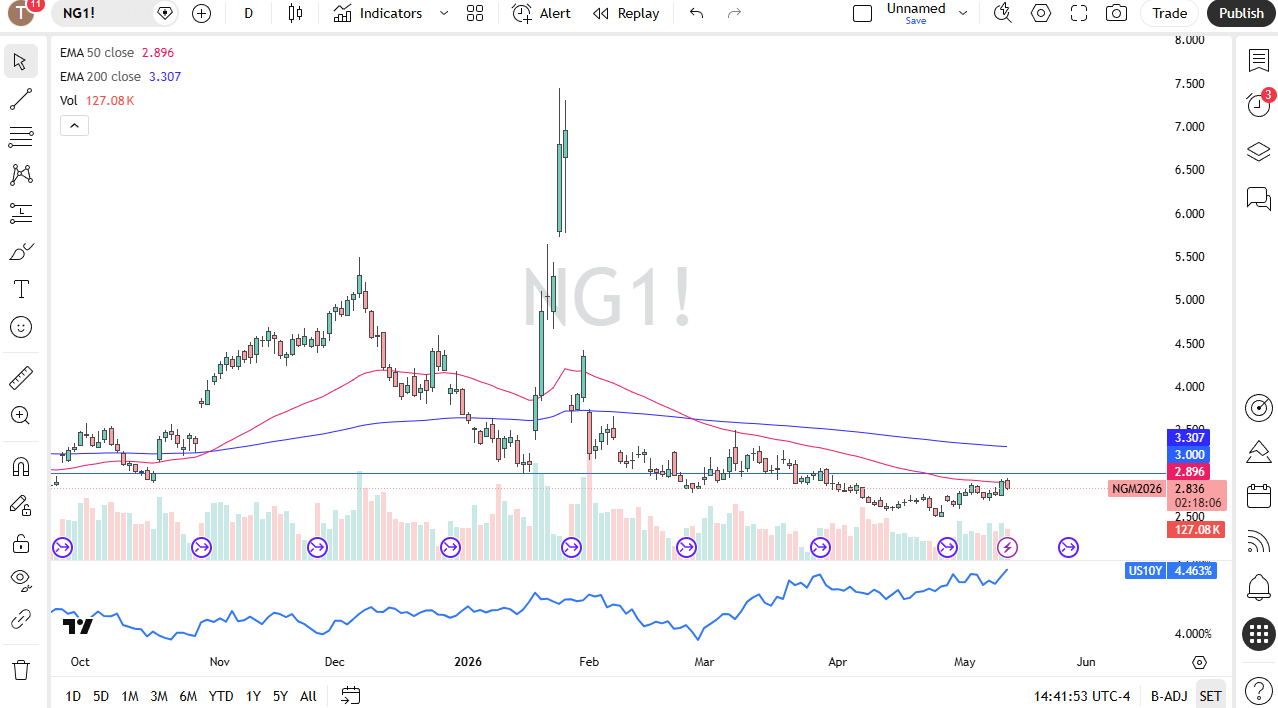
The Natural Gas market has fallen a bit during the trading session here on Tuesday as the 50-day EMA continues to be a massive barrier.
If we do break above there, then we could send this market towards the $3 level, but all things being equal, I think it takes quite a bit of momentum to make that happen.
With that being the case, I believe that most traders will be looking at the Natural gas as a market that you continue to sell anytime you get an opportunity. After all, this is what is known as shoulder season and that of course is the time of year where traders price in the idea of a huge lack of demand. After all, nobody’s really that worried about heating their homes or anything like that.
So, with that being the case, it is a market that will continue to look at each rally as a potential shorting opportunity with the $3 level being a massive ceiling. If we can break above there, then it’s possible that we could go looking at the $3.30 level, but I think something pretty spectacular would have to happen. In fact, we’ve already seen some pushbacks during the day on Tuesday.

I believe that this market could go looking to the $2.60 region, but it’s going to be a grind. Higher interest rates are an effect on most markets, but here in Natural Gas I don’t think so just because there’s so much of it.
With that, anytime this market rallies at the first signs of exhaustion I’m more than willing to start selling. It’s just not a market that lends itself to being very strong anytime soon. With that, I still believe that the $3 level is your ceiling and it’s probably not for a few months where we see air conditioning demand come into the picture that we see Natural Gas rise.
Ready to trade daily Forex forecast? Here’s a list of some of the best commodities brokers to check out.
Christopher Lewis has been trading Forex and has over 20 years experience in financial markets. Chris has been a regular contributor to Daily Forex since the early days of the site. He writes about Forex for several online publications, including FX Empire, Investing.com, and his own site, aptly named The Trader Guy. Chris favours technical analysis methods to identify his trades and likes to trade equity indices and commodities as well as Forex. He favours a longer-term trading style, and his trades often last for days or weeks.
As seen on: Pairs Of Aces Podcast,The Trader Guy, FXEmpire
Ethereum (ETHUSD) rose in recent intraday trading after holding firmly above the important support level at $2,265, which provided positive momentum and helped the price recover part of its previous losses. At the same time, the market is attempting to unwind oversold conditions shown on the relative strength indicators, despite emerging positive signals.
However, the broader outlook remains pressured, as the price continues to trade below EMA50, limiting the strength and sustainability of any recovery in the near term. This is further reinforced by the breakdown of a short-term ascending trend line, which adds to the negative technical outlook.
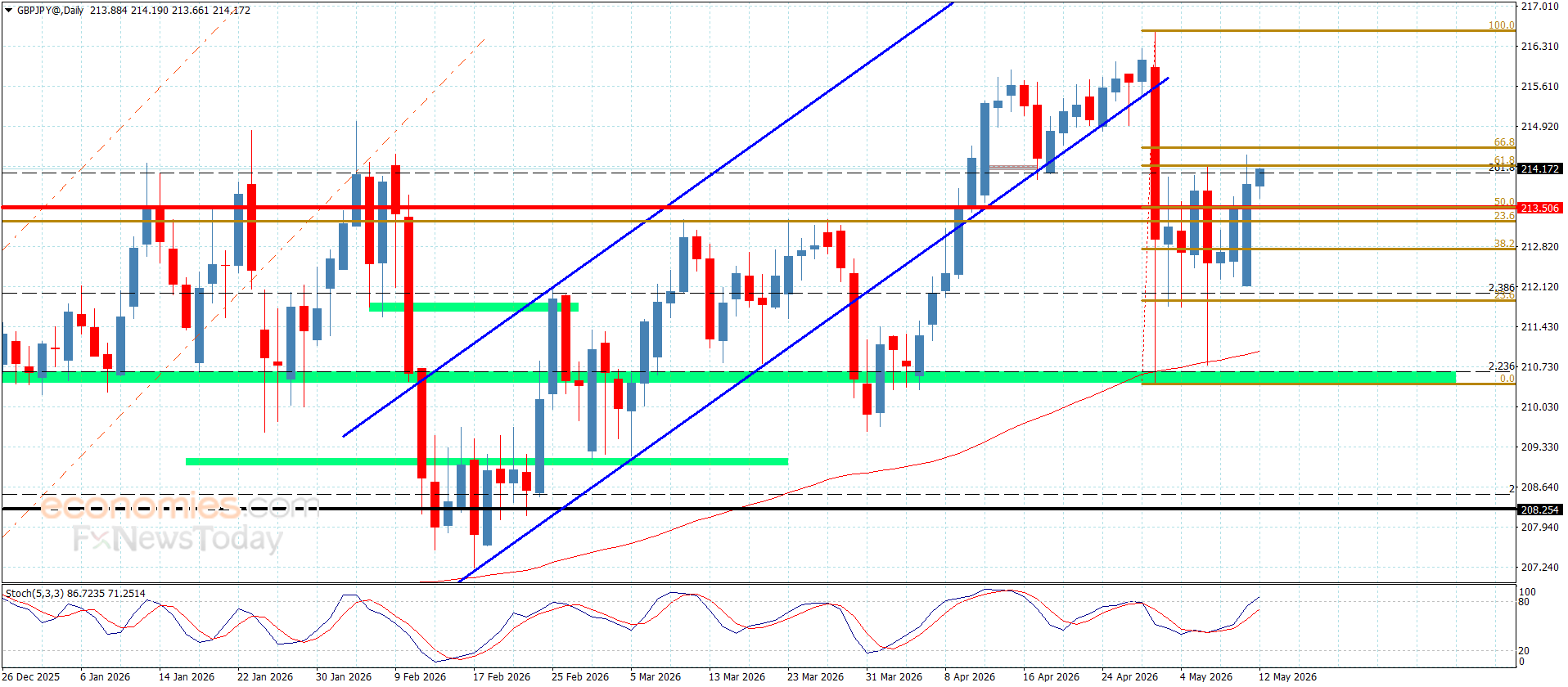
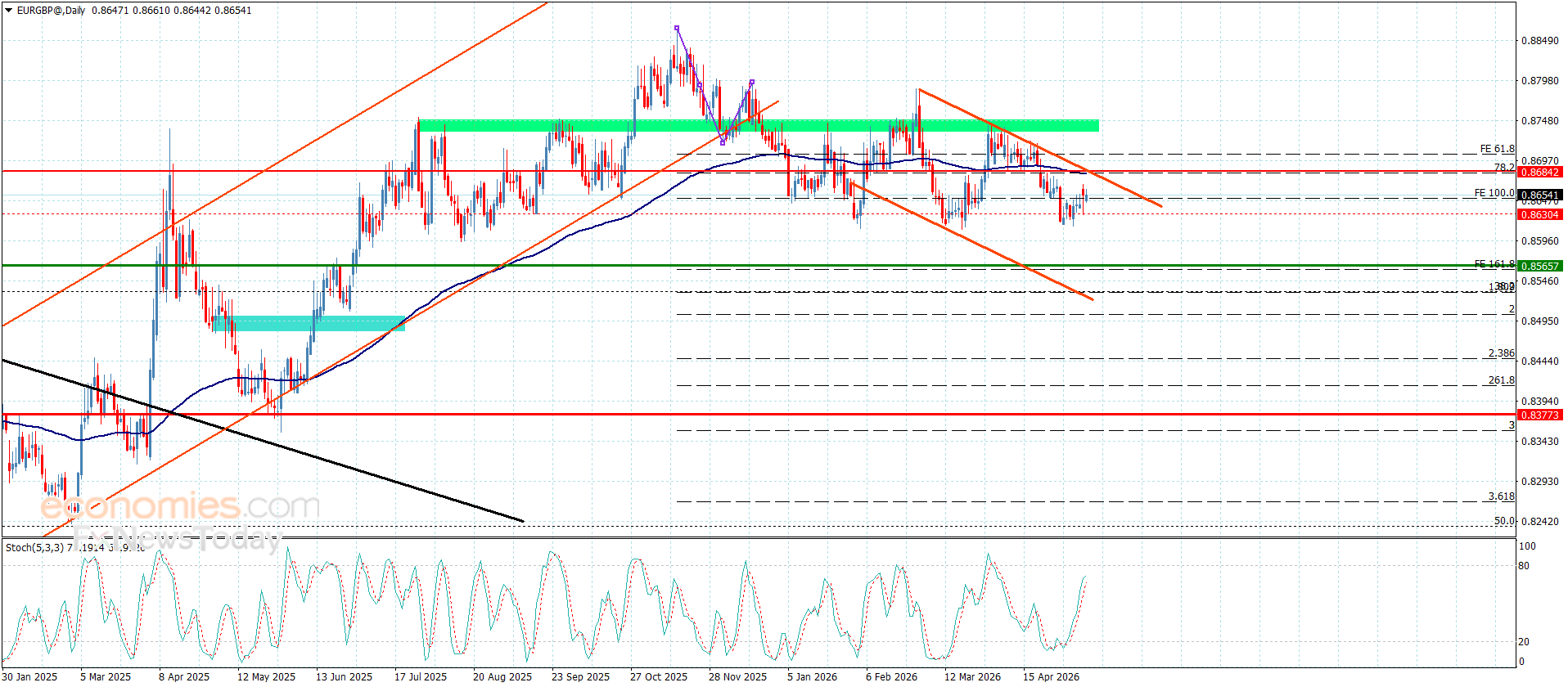
The GBPJPY pair continued delaying the negative corrective attempts due to the positive momentum that comes from the main indicators, which forces it to form some bullish waves, approaching near 214.50.
The price might continue providing mixed trading, however the stability below the previously mentioned barrier will increase the efficiency of the bearish corrective trend, to expect targeting 213.30 level, attempting to reach 211.80, while surpassing the barrier and holding above it will support the chances of forming strong bullish waves, to target 215.25 and 216.05.
The expected trading range for today is between 212.80 and 214.50
Trend forecast: Bearish
Domestic coffee prices
The domestic coffee market this morning – May 12, 2026 – witnessed a spectacular “comeback” after a series of volatile trading days. According to records in key growing areas of the Central Highlands, the price of raw coffee beans has simultaneously rebounded sharply, convincingly regaining the mark of 88,000 VND/kg.
In the Dak Nong (old) area, coffee prices recorded an increase of 1,100 VND, pushing the purchase price to the highest level in the region of 88,200 VND/kg. Dak Lak and Gia Lai provinces both had an increase of 1,000 VND, currently trading stably at the mark of 88,000 VND/kg.
Lam Dong region recorded the strongest increase with 1,200 VND, bringing coffee prices to 87,500 VND/kg. Coupled with this upward momentum, the USD/VND exchange rate at Vietcombank continued to increase by 6 VND, currently listed at 26,099 VND/USD, creating more favorable momentum for export activities.
World coffee prices
Developments on futures exchanges last night were also brilliantly green as inventory bottomed out, triggering a massive buying wave. On the London exchange, Robusta coffee futures for July surged by 90 USD (equivalent to 2.64%), reaching 3,504 USD/ton, officially setting a 2-week high.
At the same pace, the New York exchange witnessed the price of Arabica for July delivery increase by 7.50 cents (equivalent to 2.73%), closing at 282.30 cents/lb. The fact that both exchanges broke through above 2.5% shows that excitement is covering the global market in the face of short-term supply shortages.
The core reason for this increase came from inventory data monitored by the ICE floor falling to a record low. Robusta inventory as of Monday was only 3,687 lots left, the lowest level in nearly 17 months, while Arabica inventory is also anchored at a 2.5-month low.
In addition, geopolitical tensions in the Middle East are still a “nozzle” for prices as the Hormuz Strait continues to be blockaded. The disruption of this vital sea route not only pushes up freight rates and insurance premiums but also causes fertilizer and fuel prices to escalate, directly putting pressure on the cost of goods sold by international roasters.
In addition, although Brazil forecasts the next crop very well, actual exports in March decreased sharply from 10% to 31%, showing that the actual supply to the market is currently being significantly tightened.
However, experts still issue warnings about the “ghost” of surplus in the long term. Reputable organizations such as StoneX and Marex still maintain forecasts for a global surplus of up to 10 million bags for 2026 when Brazil officially enters a record harvest season with an expected output of 75.9 million bags. Vietnam’s strong export growth in the first 4 months of the year (up 15.8% to 810,000 tons) is also a factor hindering the overheated increase.
The GBPJPY pair continued delaying the negative corrective attempts due to the positive momentum that comes from the main indicators, which forces it to form some bullish waves, approaching near 214.50.
The price might continue providing mixed trading, however the stability below the previously mentioned barrier will increase the efficiency of the bearish corrective trend, to expect targeting 213.30 level, attempting to reach 211.80, while surpassing the barrier and holding above it will support the chances of forming strong bullish waves, to target 215.25 and 216.05.
The expected trading range for today is between 212.80 and 214.50
Trend forecast: Bearish
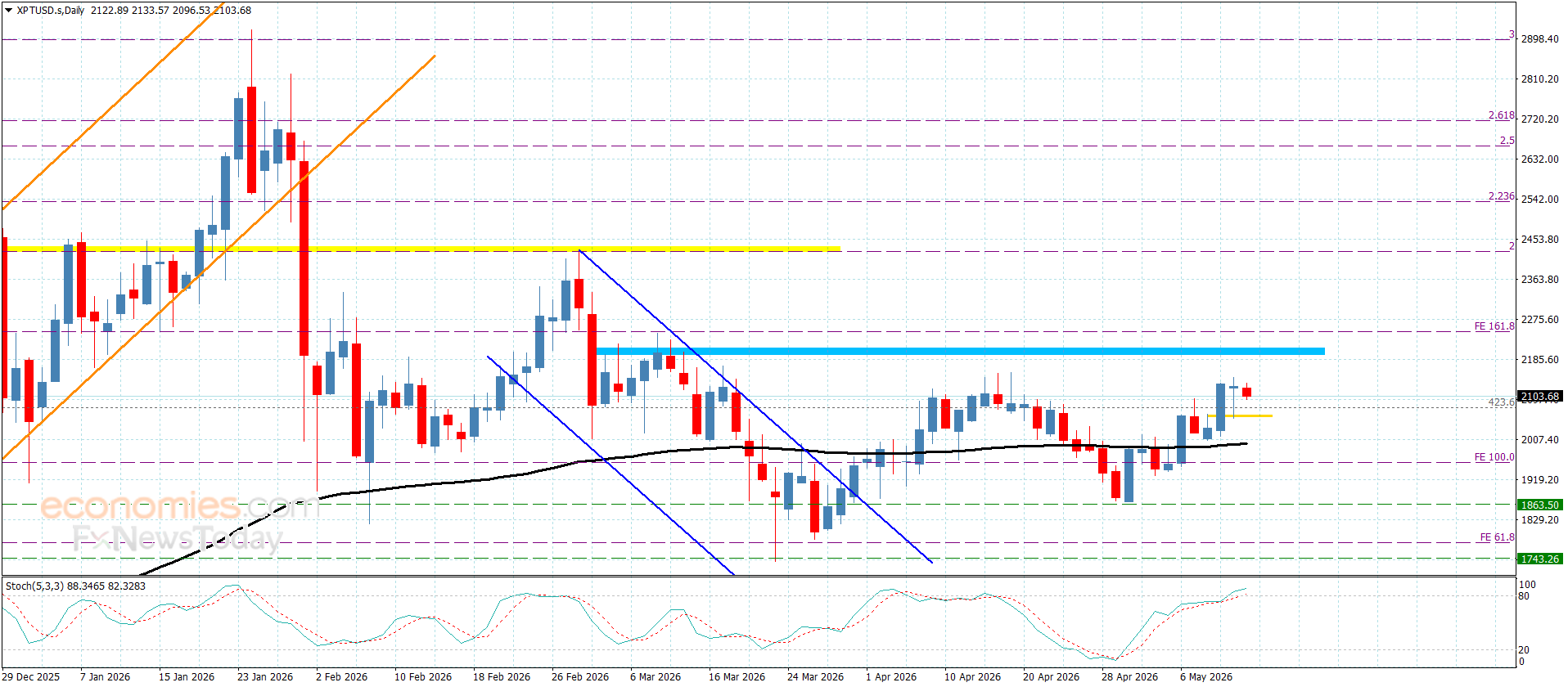
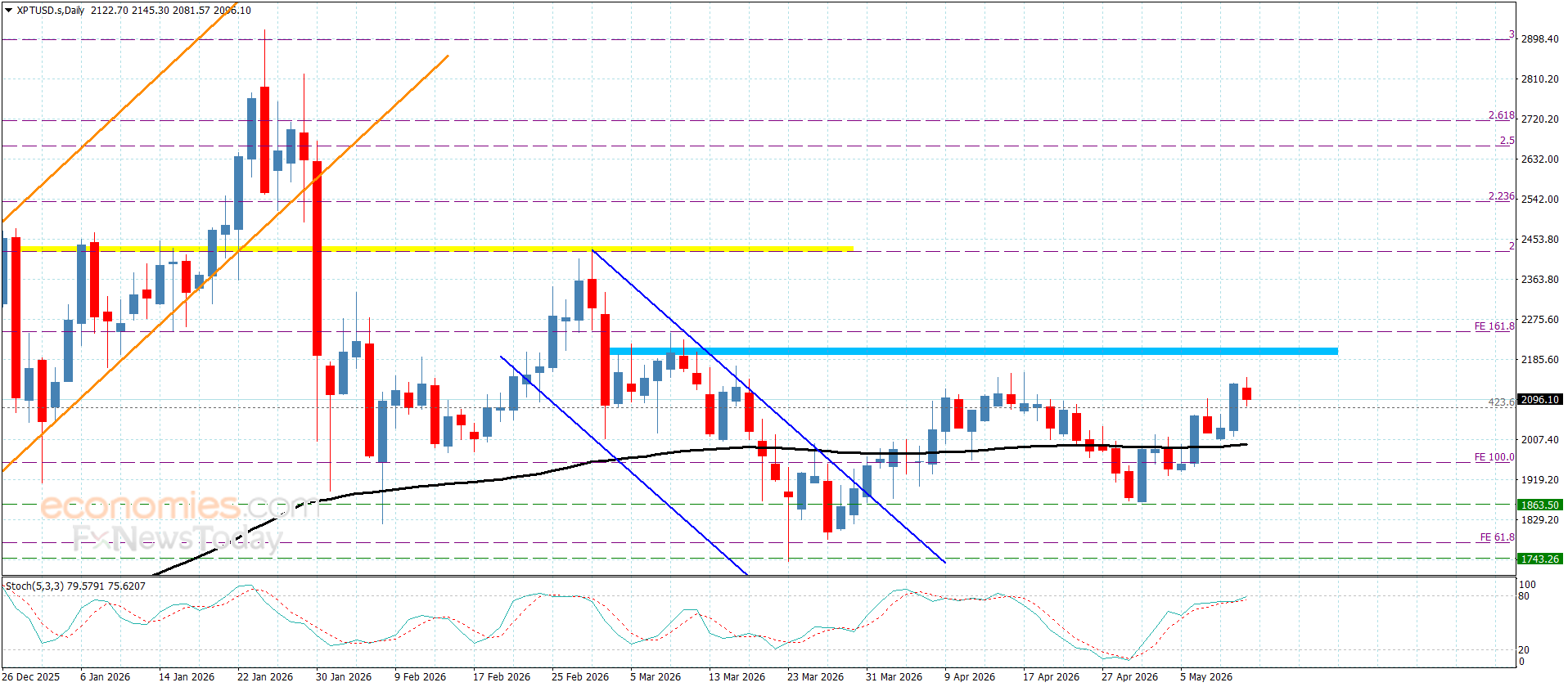
Platinum price benefited by providing positive momentum by the main indicators, to notice surpassing $2080.00 barrier, to begin recording some gains by its rally towards 2145.00, achieving the previously suggested initial target.
The stability above the breached barrier will allow it to form more bullish waves, to keep waiting to reach $2195.00 level, and surpassing it might extend the trading towards 161.8% Fibonacci extension level near $2245.00, while the risk of changing the near and medium trading is represented by reaching below $1950.00 level and holding below it.
The expected trading range for today is between $2060.00 and $2195.00
Trend forecast: Bullish
The United Kingdom is one of Europe’s largest coffee-consuming nations, with an estimated 98 million cups consumed daily across retail and foodservice channels. Within this mature landscape, the convergence of health-consciousness and ethical spending has carved a distinct growth corridor for Fair Trade Decaf Coffee. This sub-category sits at the intersection of two powerful consumer currents: a structural shift toward reduced caffeine intake among over-35s and millennials, and a willingness to pay a premium for third-party-certified ethical sourcing. Fair Trade Decaf Coffee commands a price point 20–40% higher than conventional roasted coffee, supported by a consumer base that increasingly views purchasing decisions as expressions of personal and environmental responsibility.
The market is structurally dependent on complex global supply chains. High-altitude Arabica farms in Latin America and East Africa supply certified green beans, which are then routed to specialized decaffeination facilities—predominantly in Germany, Canada, and Mexico—before reaching UK-based roasters. This extended value chain creates both cost pressure and an opportunity for brand differentiation based on traceability. The United Kingdom is not a coffee-growing country, so the domestic role is limited to roasting, blending, packing, and distributing. The London coffee exchange historically anchors global pricing, but physical supply flows entirely through imports, making the market sensitive to logistics costs, currency fluctuations between the pound and producer-country currencies, and certification audit cycles.
While the overall United Kingdom coffee market grows at a stable 2–3% per annum, the Fair Trade Decaf segment is expanding at a 7–11% compound rate over the 2026–2035 forecast horizon. Volume growth is being fueled by a 15–20% annual increase in the number of SKUs dedicated to ethically labeled low- and no-caffeine options across grocery, specialty, and online channels. Value growth outpaces volume growth due to the persistent shift toward premium specialty grades—single-origin Arabica, small-batch roasted, and Swiss Water processed—which command higher unit prices and carry thicker retail margins.
The segment’s share of total UK decaf coffee is estimated at 30–40% in 2026, up from roughly 20% five years earlier, reflecting the pace at which ethical certification is becoming an expected attribute rather than a differentiator in the decaf aisle.
Demographic tailwinds are strong. Gen Z and younger millennials, who will represent 45–55% of UK coffee buyers by 2030, show measurably higher willingness to pay for products that combine personal health benefits with verified ethical sourcing. This cohort is driving trial and repeat purchase of Fair Trade Decaf at a rate 1.5–2 times higher than the general coffee-drinking population. Assuming current supply constraints are eased by investments in decaffeination capacity and certification infrastructure in origin countries, market volume could double by 2035, with the premium specialty segment capturing an increasing share of the value pool.
By type, Arabica dominates the United Kingdom Fair Trade Decaf market with a 75–85% volume share, driven by its superior taste profile and its alignment with the at-home brewing rituals of specialty-oriented consumers. Blended products—typically Arabica–Robusta mixes—hold 10–15% share, concentrated in mid-tier office coffee service (OCS) programs where cost control matters. Straight Robusta accounts for the remainder, used almost exclusively in the instant and low-cost pod segments, where the more aggressive flavor profile is partially masked by milk or sweeteners. The Arabica share is expected to increase further as roasters introduce single-origin Fair Trade Decaf offerings from Ethiopia and Colombia, which retail at a 30–50% premium over blended equivalents.
By application, at-home consumption represents 55–65% of segment volume, a share solidified by the hybrid work trend. Home brewing occasions—particularly pour-over, AeroPress, and bean-to-cup machines—favor whole-bean and freshly ground formats. Office and workplace consumption accounts for 20–25% of volume, with a distinct recovery underway as corporate offices restock their coffee programs post-pandemic, often with an explicit mandate to include Fair Trade options. Gifting, particularly around the Christmas season, represents 10–15% of retail value in the segment, featuring whole-bean Fair Trade Decaf packs positioned as ethical premium gifts. Corporate gift buyers are an emerging sub-segment, driving demand for branded, sustainably sourced coffee hampers for employees and clients.
The pricing architecture of Fair Trade Decaf Coffee in the United Kingdom reflects a multi-layered cost stack. At the base sits the global green bean commodity price—benchmarked to the ICE Futures US ‘C’ contract for Arabica—which has shown structural volatility of 20–40% year-on-year due to climate disruptions in Brazil and Colombia. On top of this, the Fair Trade minimum price floor and the additional Fair Trade premium (currently $0.20–0.40 per pound) provide a price buffer for certified producers. Decaffeination adds a significant cost layer, ranging from $0.40 to $1.00 per pound depending on the method: Swiss Water Processing commands the highest premium, followed by CO₂, with sugar-cane-based ethyl acetate methods occupying the lower end. Roasting, packing, and logistics add further margin layers before retail shelf pricing is set.
In the UK retail channel, ground Fair Trade Decaf typically retails for £7–14 per kilogram, compared to £5–9 per kilogram for standard non-organic, non-decaf roasted coffee. Instant Fair Trade Decaf trades at a narrower absolute premium due to higher processing throughput. The primary cost drivers in 2026 are energy prices—roasting is an energy-intensive process—and logistics costs, which have risen 15–25% since 2021 due to container shipping volatility and post-Brexit customs administration. Currency exposure is material: the pound’s purchasing power against the Brazilian real and Colombian peso directly impacts landed green bean costs. Promotional discounting by major grocers periodically compresses retail margins, but the Fair Trade premium floor prevents the cost base from dropping below a sustainable threshold for producers.
The competitive landscape in the United Kingdom Fair Trade Decaf market is a dichotomy of global branded owners and agile specialty roasters. Jacobs Douwe Egberts (JDE) and Nestlé are dominant in the mainstream retail and OCS channels, offering Fair Trade-certified lines under brands such as Kenco and Nescafé Azera. These players benefit from vast procurement networks that buffer green bean price volatility and from long-term contracts with large decaffeination plants in Germany. Their scale allows them to price Fair Trade Decaf competitively, often at a 15–20% premium to their conventional ranges, applying margin pressure on smaller rivals.
Specialty roasters such as Union Hand-Roasted, Pact Coffee, and Grind are driving growth in the premium direct-to-consumer segment, emphasizing Swiss Water Processing, direct-trade relationships with specific cooperatives, and origin-specific seasonal offerings. These brands command retail prices 30–60% above mass-market equivalents and enjoy higher customer retention via subscription models. Private-label specialists serving Tesco, Sainsbury’s, and Waitrose are expanding their ranges, capturing value-conscious ethical shoppers who prioritize certification over brand name.
Importing wholesalers such as Beyers Koffie and DRWakefield play a critical upstream role, sourcing certified green beans, managing decaffeination contracts, and supplying both large roasters and small independents. The competitive intensity is high, with shelf-space fights occurring primarily around the “premium everyday” price tier at £8–11 per kilogram.
The United Kingdom has no commercial coffee cultivation and is wholly dependent on imports for its Fair Trade Decaf supply. The domestic role in the value chain is concentrated in roasting, blending, grinding, packing, and distribution. Major roasting facilities are located in London, Southampton, and Yorkshire, with a growing cluster of micro-roasters in the Midlands and Scotland serving local subscription and retail accounts. The UK’s historical role as a global coffee trading hub—anchored by the London International Financial Futures and Options Exchange (LIFFE) Robusta futures contract—means that significant financial and logistical infrastructure exists even though physical production is absent.
The supply model is entirely import-driven and relies on a complex logistics network. Green beans arrive at UK ports (Southampton, Felixstowe, Tilbury) in containerized shipments from producer countries. A substantial share of Fair Trade green beans is first shipped to decaffeination plants in Germany (CO₂ process) or Canada (Swiss Water process), then re-exported to the UK as decaffeinated green beans. This routing adds 4–8 weeks to lead times and increases costs by $0.30–0.60 per kilogram for logistics and double customs clearance.
Warehousing capacity for green coffee in the UK is concentrated near port hubs, with London’s Docklands area housing several temperature-controlled facilities. The just-in-time roasting model favored by specialty roasters means inventory buffers are thin, making the supply chain vulnerable to shipping disruptions or phytosanitary delays at borders.
The United Kingdom is a net importer of coffee, and the trade flow for Fair Trade Decaf is particularly complex due to the decaffeination processing step. The primary product classification codes used are HS 090122 (decaffeinated coffee, not roasted) and HS 090121 (decaffeinated coffee, roasted). Green beans classified under HS 090111 and HS 090112 enter the UK from producer countries before being re-exported for decaffeination or, increasingly, processed for decaffeination in continental Europe then re-imported. Germany is the dominant supplier of processed decaf green beans to the UK, with Canada—home to the Swiss Water facility—accounting for a growing share, particularly for the premium specialty segment.
Origin countries for the green beans include Brazil, Colombia, Peru, Ethiopia, and Uganda, collectively supplying 80–90% of the UK’s Fair Trade green coffee volume. Post-Brexit trade documentation, including rules of origin requirements under the UK-EU Trade and Cooperation Agreement, adds administrative overhead for EU-sourced decaf beans, though zero-tariff access generally applies if the beans are sufficiently processed in the EU. Re-exports of roasted Fair Trade Decaf from the UK to other European markets are small but growing, driven by London’s reputation as a specialty coffee hub. Import patterns suggest that roasters are increasingly contracting directly with producer cooperatives rather than relying on the European spot market, a shift that improves traceability but increases procurement lead times and inventory requirements.
Grocery retail is the largest distribution channel for Fair Trade Decaf Coffee in the United Kingdom, accounting for an estimated 40–50% of the volume sold. Tesco, Sainsbury’s, Waitrose, and Marks & Spencer all dedicate shelf space to the category, with category managers actively curating ranges to meet explicit sustainability mandates. These buyers prioritize suppliers who can guarantee consistent volume, FLOCERT certification documentation, and year-round availability. Pricing negotiations are intense, and private-label penetration is increasing as retailers seek to offer a Fair Trade Decaf option at a lower price point than branded alternatives.
Direct-to-consumer (DTC) subscriptions represent 15–20% of volume but a higher share of revenue, given the premium pricing. Companies such as Pact Coffee and Grind have built loyal subscriber bases by offering freshly roasted beans shipped within days of roasting, often with detailed origin stories and decaf-process documentation. This channel allows for higher margins and direct customer data, but carries higher logistics costs per unit. Office coffee service (OCS) accounts for 20–25% of volume, with corporate procurement managers increasingly requiring Fair Trade certification as part of ESG commitments.
Specialty cafés account for 10–15% of volume, often featuring a single-origin Fair Trade Decaf as a pour-over option to capture the afternoon and early evening caffeine-sensitive occasion. Buyer groups span ethical-conscious consumers, health-motivated caffeine-sensitive individuals, corporate gift buyers, and foodservice procurement teams, each with distinct price sensitivity and certification expectations.
The Fair Trade certification for coffee sold in the United Kingdom is governed by FLOCERT, the global certification body for Fairtrade International (FLO) standards. These standards mandate minimum prices, a Fair Trade premium for community investment, and requirements for democratic producer organizations and environmental protection. The certification applies to the entire supply chain from farm to the point of retail packaging, with annual audits for all certified operators. The United Kingdom’s departure from the European Union has created a separate UK organic certification regime, but Fair Trade standards remain globally harmonized, meaning no additional regulatory divergence has occurred for the ethical certification itself.
Food safety regulations under the UK Food Safety Act 1990 apply stringent residue limits for dichloromethane (DCM), a solvent used in some conventional decaffeination processes. While DCM is permitted at very low residual levels (typically no more than 2 parts per million in roasted coffee), the regulation pushes processors and roasters toward methylene chloride-free methods such as Swiss Water Processing, CO₂ extraction, and ethyl acetate processing.
Country-of-origin labeling and “Fair Trade” as a descriptor are protected terms enforced by the Competition and Markets Authority and the Advertising Standards Authority, ensuring that marketing claims are substantiated by third-party certification. Roasters must maintain full traceability documentation for all certified product batches, a requirement that creates a barrier to entry for smaller operators but protects the integrity of the category as a whole.
Looking ahead to 2035, the United Kingdom Fair Trade Decaf Coffee market is poised for robust expansion, with volume projected to increase by 60–80% from 2026 levels. The compound annual growth rate (CAGR) is forecast to settle in the 6–9% range, a deceleration from the torrid 7–11% pace of the early forecast period as the category matures but still well above the mainstream coffee market growth rate. Three structural factors underpin this outlook: the aging of ethically-oriented Gen Z and millennial consumers into their peak coffee-consuming years; the continued expansion of Fair Trade Decaf SKUs in mainstream grocery and foodservice channels; and incremental improvements in decaffeination technology that narrow the taste gap between decaf and caffeinated coffee, reducing a key historical barrier to trial.
Private label is expected to capture a 25–30% volume share by 2035, up from an estimated 15–20% in 2026, as retailers refine their direct sourcing relationships with Fair Trade cooperatives and decaffeination processors. The at-home channel will remain the largest application segment, but office coffee service is forecast to grow at an above-average rate as corporate sustainability mandates expand. The premium specialty segment—single-origin, small-batch roasted, Swiss Water processed—will gain value share, potentially accounting for 40–50% of retail revenue by 2035 even if it represents only 25–35% of volume. Price sensitivity will persist, meaning growth will be steady rather than explosive, but the combination of demographic tailwinds and channel expansion provides a strong foundation for sustained long-term expansion.
Process innovation represents one of the highest-value opportunities in the United Kingdom Fair Trade Decaf market. Roasters that exclusively use Swiss Water or CO₂ decaffeination and invest in marketing the process as a feature—highlighting the “chemical-free” aspect—can capture a 15–25% price premium over products that do not specify their decaf method. Consumer awareness of decaffeination processes is rising, and transparency around the method used is becoming a purchase trigger for the ethically-conscious buyer segment. Early movers who secure long-term contracts with limited-capacity Swiss Water and CO₂ processing plants will have a supply advantage that can be leveraged in retail negotiations.
Private-label premiumization offers a significant growth avenue for UK grocery multiples. Major retailers can develop “Taste the Difference” or equivalent premium-tier Fair Trade Decaf lines, sourced directly from a single high-altitude cooperative and processed via CO₂, competing directly with specialty roasters at a lower price point while still achieving higher margins than standard private-label coffee.
Corporate sustainability gifting is an under-penetrated adjacent market: offering Fair Trade Decaf as a branded corporate gift or employee wellness perk aligns with expanding ESG mandates and provides a recurring B2B revenue stream that is less price-sensitive than retail. Finally, functional fortification—infusing Fair Trade Decaf with adaptogens, vitamins, or mushroom extracts—aligns with the United Kingdom’s booming functional FMCG trend, creating a “health-first” coffee occasion that justifies a further premium and differentiates the product from standard decaf offerings in a crowded premium aisle.
This report is an independent strategic category study of the market for fair trade decaf coffee in the United Kingdom. It is designed for brand owners, general managers, category leaders, trade-marketing teams, e-commerce teams, retail partners, distributors, investors, and market entrants that need a clear read on where growth sits, which brands control the category, how pricing and promotion shape demand, and which channels matter most for scale and margin.
The framework is built for packaged food & beverage markets within consumer goods, where performance is driven by need states, shopper missions, brand hierarchies, price-pack architecture, retail execution, promotional intensity, and route-to-market control rather than by a narrow technical specification alone. It defines fair trade decaf coffee as Coffee beans that have been decaffeinated and certified as Fair Trade, meeting standards for equitable pricing, labor conditions, and environmental sustainability for producers and maps the market through category boundaries, consumer segments, usage occasions, channel structure, brand and private-label positions, supply and availability logic, pricing and promotion mechanics, and country-level commercial roles. Historical analysis typically covers 2012 to 2025, with forward-looking scenarios through 2035.
This report is designed to answer the questions that matter most to brand, category, channel, and strategy teams in consumer-goods markets.
At its core, this report explains how the market for fair trade decaf coffee actually works as a consumer category. It is built to show where demand comes from, which need states and shopper missions matter most, which brands and private-label players shape the category, which channels control visibility and conversion, and where pricing power, repeat purchase, and margin are actually created.
Rather than framing the category through narrow technical attributes, the study breaks it into decision-grade commercial layers: product format, benefit platform, shopper segment, purchase occasion, pack-price architecture, channel environment, promotional intensity, route-to-market control, and company archetype. It is therefore useful both for teams shaping portfolio strategy and for teams executing growth through Ethical-conscious consumers, Health-motivated consumers (caffeine-sensitive), Corporate gift buyers, Grocery category managers, and Specialty food retailers.
The report also clarifies how value pools differ across Home brewing, Office coffee service, and Premium gifting, how premiumization and private label reshape category economics, how retail concentration and route-to-market design affect scale, and which countries matter most for brand building, sourcing, packaging, and channel expansion.
The report is based on an independent market-intelligence methodology that combines category reconstruction, public company evidence, retail and channel mapping, pricing review, and multi-layer triangulation. It is built for consumer categories where no single public dataset captures the real structure of demand, brand power, promotion, and channel control.
The evidence stack typically combines company disclosures, investor materials, brand and retailer product pages, e-commerce assortment checks, packaging and claims analysis, public pricing references, trade statistics where relevant, regulatory and labeling guidance, and observable route-to-market evidence from distributors, retailers, merchandisers, and marketplace ecosystems.
The analytical model then reconstructs the category across the layers that matter commercially: category scope, shopper need states, consumer segments, pack-price ladders, brand and private-label hierarchy, channel power, promotional intensity, route-to-market design, and country role differences.
Special attention is given to Health & wellness (caffeine reduction), Ethical consumption values, Premiumization at home, Brand trust and transparency, and Third-party certification appeal. The objective is not only to size the market, but to explain where value pools sit, which segments drive mix and repeat purchase, which channels shape growth, and how leading brands defend or expand their positions across Ethical-conscious consumers, Health-motivated consumers (caffeine-sensitive), Corporate gift buyers, Grocery category managers, and Specialty food retailers.
The report does not rely on survey-based opinion as its core evidence base. Instead, it uses observable commercial signals and structured public evidence to build a decision-grade view for brand, category, retail, e-commerce, investment, and market-entry teams.
This report defines fair trade decaf coffee as Coffee beans that have been decaffeinated and certified as Fair Trade, meeting standards for equitable pricing, labor conditions, and environmental sustainability for producers and treats it as a branded consumer category rather than as a narrow technical product class. The objective is to capture the real commercial market that category, brand, trade-marketing, and channel teams are managing.
Scope is determined by how the category is sold, merchandised, priced, and chosen in market. That means the report follows product formats, claims, price tiers, pack architecture, need states, and retail environments that shape Home brewing, Office coffee service, and Premium gifting.
The study deliberately separates the category from adjacent baskets when they distort the economics or shopper logic of the market being measured. Typical exclusions therefore include Non-decaffeinated Fair Trade coffee, Decaf coffee without Fair Trade certification, Instant decaf coffee (unless specified Fair Trade), Coffee pods/capsules (separate machinery-driven segment), Foodservice/bulk unpackaged sales, Ready-to-drink (RTD) coffee beverages, Specialty caffeinated coffee, Conventional decaf coffee, Tea and other hot beverages, Coffee substitutes (e.g., chicory), and Coffee brewing equipment.
The report provides focused coverage of the United Kingdom market and positions United Kingdom within the wider global consumer-goods industry structure.
The geographic analysis explains local consumer demand conditions, brand and private-label balance, retail concentration, pricing tiers, import dependence, and the country’s strategic role in the wider category.
This study is designed for strategic and commercial users across brand-led consumer categories, including:
In many brand-driven, channel-sensitive, and consumer-demand-led markets, official trade and production statistics are not sufficient on their own to describe the true market. Product boundaries may cut across multiple tariff codes, several product categories may be bundled into the same official classification, and a meaningful share of activity may take place through customized services, captive supply, platform relationships, or technically specialized channels that are not directly visible in standard statistical datasets.
For this reason, the report is designed as a modeled strategic market study. It uses official and public evidence wherever it is reliable and scope-compatible, but it does not force the market into a purely statistical framework when doing so would reduce analytical quality. Instead, it reconstructs the market through the logic of demand, supply, technology, country roles, and company behavior.
This makes the report particularly well suited to products that are innovation-intensive, technically differentiated, capacity-constrained, platform-dependent, or commercially structured around specialized buyer-supplier relationships rather than standardized commodity trade.
The report typically includes: