The main tag of Gold News Today Articles.
You can use the search box below to find what you need.
[wd_asp id=1]

16 05, 2026

Unsweetened Cold Brew Coffee Market in China | Report – IndexBox

By |2026-05-16T22:04:29+03:00May 16, 2026|Forex News, News|0 Comments


China Unsweetened Cold Brew Coffee Market 2026 Analysis and Forecast to 2035

Executive Summary

Key Findings

  • China’s unsweetened cold brew coffee segment is expanding at an estimated compound annual growth rate of 18–25% from 2026 to 2030, driven by health-conscious urban consumers who are rejecting sugar-laden RTD beverages and seeking premium coffee experiences with lower acidity and smoother mouthfeel.
  • Ready-to-drink unsweetened cold brew commands roughly 55–65% of segment volume as of 2026, with concentrates and nitro-infused variants capturing the remaining share; on-the-go consumption accounts for an estimated 60–70% of total demand, concentrated in tier‑1 and tier‑2 city convenience and e‑commerce channels.
  • Import dependence for high‑grade arabica beans (over 70% of green bean supply sourced from Brazil, Ethiopia, Colombia and Yunnan’s domestic crop) creates exposure to global arabica price volatility, while domestic cold‑brew processing capacity is scaling rapidly in Jiangsu, Guangdong and Shanghai industrial parks.

Market Trends

  • Dual‑segment polarization is emerging: mainstream branded RTD unsweetened cold brew (¥10–16 per 300 mL) competes with ultra‑premium craft and nitro‑infused offerings (¥28–42 per 300 mL), while value‑tier private‑label products are gaining shelf space in hypermarkets and discount grocery banners.
  • E‑commerce and direct‑to‑consumer (DTC) channels now account for an estimated 40–50% of unsweetened cold brew sales by value, led by Tmall, JD.com and Douyin livestream commerce, a share that is expected to rise as subscription models and cold‑chain parcel logistics improve.
  • Nitrogen‑infused and shelf‑stable aseptic packaging formats are the fastest‑growing product sub‑segments, with nitro cold brew volume growing at an estimated 30–40% annually from a small base, appealing to younger demographics seeking creamy texture without dairy or sweeteners.

Key Challenges

  • Refrigerated logistics and shelf‑space competition in convenience stores remain binding constraints: cold‑chain distribution adds an estimated 15–25% to landed cost versus ambient beverages, and chilled‑cabinet facings are dominated by tea, water and sugary RTD coffee.
  • Consumer education on the taste and value proposition of unsweetened cold brew is incomplete outside core urban markets; in lower‑tier cities the default RTD coffee preference remains sweetened, milky products, requiring significant marketing investment to expand the addressable user base.
  • Co‑packing capacity for dedicated cold‑extraction and nitrogen‑infusion lines is limited, with fewer than 15 contract manufacturers offering specialized cold‑brew production in China as of early 2026, creating bottlenecks for new entrants and private‑label programs.

Market Overview

China’s unsweetened cold brew coffee market sits at the intersection of three powerful consumer‑goods currents: the rapid expansion of the domestic coffee culture, the broad‑based shift toward reduced‑sugar and functional beverages, and the premiumization of everyday refreshment. Unlike traditional hot‑brewed coffee or sweetened RTD coffee lattes, unsweetened cold brew is positioned as a purer, smoother, less acidic caffeine delivery format that appeals to coffee purists and health‑oriented drinkers alike.

The product is structurally distinct from iced coffee (which is hot‑brewed and cooled) because cold extraction yields a different chemical profile, creating a naturally sweeter perception without added sugar. In China, where tea has historically dominated the hot‑beverage landscape, cold brew has found an enthusiastic reception among urban millennials and Gen Z consumers who value convenience, ingredient transparency and a “clean label” proposition.

The market is still early in its adoption curve relative to mature markets such as the US or Japan, with estimated per‑capita consumption of unsweetened cold brew at fewer than 0.8 litres annually in 2026, but the trajectory points to rapid category expansion driven by distribution widening, format innovation and rising household penetration.

Market Size and Growth

While absolute total market value cannot be stated with precision, the China unsweetened cold brew coffee category exhibited retail‑value growth in the range of 22–30% year‑on‑year over 2024–2025, and available market evidence points to sustained expansion at 18–25% CAGR from 2026 through 2030 before moderating to high‑single‑digit or low‑double‑digit growth in the 2031–2035 period as the category matures. Volume growth is slightly higher than value growth because average unit prices are under mild compression from private‑label entry and scale‑driven cost reduction in packaging and logistics.

The category’s expansion is being propelled by three macro‑demand engines: the steady increase in China’s urban coffee‑drinker population (estimated at over 200 million regular coffee consumers in 2026), the sugar‑reduction regulatory and consumer push that benefits unsweetened products, and the proliferation of chilled‑RTD shelves in convenience stores, which grew by roughly 12–15% annually in store count across tier‑1 and tier‑2 cities during 2023–2025.

Relative to the broader China RTD coffee market, unsweetened cold brew accounted for an estimated 10–14% of total RTD coffee volume in 2026, up from approximately 5–7% in 2022, indicating a structural share shift that is expected to continue. The category’s growth is not uniform across formats: concentrated cold brew (intended for dilution at home) and multi‑serve bottles are growing at 12–18% per year, while single‑serve RTD cans and bottles are expanding faster at 20–28% per year due to on‑the‑go convenience.

Demand by Segment and End Use

Segmentation by product type reveals that RTD unsweetened cold brew in single‑serve format constitutes the largest sub‑segment, capturing an estimated 55–65% of total category volume in 2026. Concentrates, typically sold in 500 mL to 1 L bottles for home refrigeration or office use, account for approximately 20–25% of volume, while nitro‑infused cold brew—served from kegs or packaged in cans with a widget—makes up the remaining 10–15% but is the fastest‑growing format. By application context, on‑the‑go consumption dominates at 60–70% of demand, driven by convenience store purchases, workplace chillers and university campus retail.

At‑home consumption contributes an estimated 20–25%, largely through concentrate purchases and subscription delivery of RTD multipacks. The office and workplace segment, while currently modest at 10–15%, is showing above‑average growth as corporate purchasers adopt cold‑brew dispensers and partner with specialty suppliers to offer free‑flow unsweetened coffee to employees. By value‑chain tier, branded CPG products hold the largest share at roughly 55–65% of retail value, followed by specialty and craft brands at 20–25% and private‑label/store‑brand products at 10–15%.

Private‑label share is rising rapidly from a low base as major retail chains (including Hema, Sam’s Club and Yonghui) launch their own unsweetened cold brew SKUs, capitalizing on co‑packing capacity and consumer willingness to trade down on brand for a lower price point in a category perceived as commodity‑adjacent.

Prices and Cost Drivers

Pricing in China’s unsweetened cold brew market spans four distinct tiers. The private‑label/value tier retails at ¥8–12 per 300 mL can or bottle, typically sold in hypermarket multipacks and discount e‑commerce channels. Mainstream brand tier products, offered by national CPG coffee players and major beverage corporations, are priced at ¥12–18 per 300 mL single serve. Premium/specialty tier items, from roaster‑owned brands and dedicated cold‑brew pure‑plays, command ¥18–28 per 300 mL. The ultra‑premium/craft tier, comprising nitro‑infused cans and limited‑batch single‑origin cold brews, reaches ¥28–42 per 300 mL.

The wholesale price for a generic unsweetened cold brew concentrate sold to foodservice operators is estimated at ¥35–55 per litre, depending on coffee origin concentration and packaging format. The principal cost driver is green arabica bean cost, which historically represents 30–40% of total raw‑material cost for a cold‑brew producer in China. Global arabica prices have shown elevated volatility in the 2024–2026 period, fluctuating in a range of plus or minus 20–25% year‑on‑year due to climate‑driven supply concerns in Brazil and Colombia.

Other significant cost elements include refrigerated logistics (15–25% of landed cost), specialized aseptic or nitrogen‑infusion packaging (12–18%), and co‑packing toll fees (10–15%). China’s import structure means that most high‑quality arabica beans incur a most‑favoured‑nation tariff of 8–12% on green beans and 12–15% on roasted beans, though beans from certain origins (e.g., Ethiopia under the Belt and Road trade facilitation framework) may benefit from reduced rates.

Suppliers, Manufacturers and Competition

The competitive landscape in China’s unsweetened cold brew market is fragmented but consolidating around three archetypes. Global brand owners and category leaders—including Starbucks (via its RTD partnership with Nestlé), Nestlé’s Nescafé and Blue Bottle units, and Coca‑Cola’s Costa Coffee brand—compete through distribution scale, cold‑chain infrastructure and established retail relationships. Starbucks’ RTD unsweetened cold brew is widely available in convenience stores and e‑commerce platforms, often serving as the category reference point for mainstream consumers.

Large coffee‑focused CPG companies such as Luckin Coffee’s retail arm, Tim Hortons China (owned by Cartesian Capital) and Manner Coffee have launched unsweetened RTD cold brew products, leveraging their roastery networks and brand equity from café operations. Specialty and craft cold‑brew pure‑plays—including domestic brands such as Seesaw Coffee, M Stand and a growing number of DTC‑focused digital‑native brands like Yongpu Coffee and Sanrio Coffee—compete on bean origin stories, brewing technique and premium packaging.

These brands typically command the ultra‑premium price tier and distribute heavily through Tmall, JD.com and Douyin livestream. Value and private‑label specialists, including major retail banners’ own brands and regional co‑packers, are gaining share by offering unsweetened cold brew at ¥8–12 per unit, often using a blend of Yunnan arabica and imported robusta to manage cost. Competition is intensifying on two fronts: distribution access to limited chilled shelf space in convenience stores, and brand storytelling around “no added sugar,” “single origin” and “cold extraction” attributes that command higher margins.

Domestic Production and Supply

China possesses a modest but growing base of domestic cold‑brew production capacity, concentrated in manufacturing clusters in Jiangsu (Suzhou and Wuxi), Guangdong (Shenzhen and Guangzhou) and Shanghai’s surrounding industrial parks. These facilities are mostly contract manufacturers (co‑packers) that serve both branded CPG clients and private‑label programs, with total estimated cold‑brew production capacity of approximately 120–180 million litres per year as of early 2026, of which 60–70% is utilized.

The cold‑brewing process in China uses dedicated extraction equipment—cold steep tanks with temperature control, fine‑mesh filtration systems, and nitrogen infusion rigs for nitro variants—that represent a capital investment of ¥8–15 million per production line for a mid‑scale co‑packer. Domestic production relies heavily on imported green arabica beans because Yunnan’s annual output (roughly 120,000–140,000 tonnes of green coffee, mostly robusta and lower‑grade arabica) supplies only an estimated 20–30% of the input needed for the unsweetened cold brew category; the balance is imported.

Yunnan’s share is expected to rise as the provincial government promotes fine‑flavor arabica planting, but variety and cup‑quality limitations mean that premium cold‑brew producers will continue to rely on imported beans for the foreseeable future. Water quality, energy costs and wastewater treatment compliance are operational factors that influence production economics, with food‑safety certification (HACCP, ISO 22000) becoming a baseline requirement for co‑packer selection by major retail and CPG buyers.

Imports, Exports and Trade

China’s unsweetened cold brew coffee market is structurally import‑dependent for raw material—green coffee beans—rather than for finished cold‑brew products. Finished RTD unsweetened cold brew is imported in relatively small volumes, primarily from South Korea, Japan and the United States, with total finished‑product import volumes estimated at 8–12 million litres in 2025, equivalent to roughly 10–15% of domestic consumption.

These imports serve the premium and ultra‑premium tiers, with brands such as Starbucks Japan’s unsweetened cold brew, Blue Bottle’s RTD line and US‑based Stumptown and Chameleon Cold‑Brew available in specialty grocery stores and imported‑food e‑commerce platforms. Green coffee bean imports (HS 090111) provide the structural backbone of supply, with China importing approximately 190,000–220,000 tonnes of green coffee annually in 2024–2025, of which an estimated 15–20% is used for cold‑brew production, the rest for hot‑brew and soluble coffee.

The primary origins are Brazil (30–35%), Ethiopia (15–20%), Colombia (12–15%), Vietnam (10–12%, mostly robusta) and Yunnan domestic supply (10–12%). Import duties on green coffee beans are approximately 8% MFN, with preferential rates available under the Regional Comprehensive Economic Partnership (RCEP) for ASEAN‑origin beans. Finished RTD coffee beverages (HS 210111) face a higher MFN tariff of 12–15%, plus a 13% VAT, making import of finished unsweetened cold brew significantly more expensive than domestic production.

Export of unsweetened cold brew from China is negligible as of 2026, though a small volume of concentrate is shipped to Chinese diaspora markets in Southeast Asia and Australia.

Distribution Channels and Buyers

Distribution of unsweetened cold brew in China follows a dual‑track model. The primary track for mainstream and value‑tier products is the convenience store channel, which accounts for an estimated 35–45% of category volume. The top five chains—China Convenience Store (Meiyijia), FamilyMart, Lawson, 7‑Eleven and Suning—collectively operate over 35,000 stores in tier‑1 and tier‑2 cities, each typically allocating 2–4 chilled facings to cold coffee. E‑commerce is the second major channel at 40–50% of value, led by Tmall Supermarket, JD.com’s cold‑chain delivery service and Douyin livestream flash sales.

E‑commerce is particularly important for premium and craft brands that cannot secure convenience‑store shelf space, and for concentrate/subscription models. Hypermarkets and large‑format grocery stores (Hema, Sam’s Club, Walmart, Carrefour) contribute an estimated 10–15% of volume, primarily through multipack and value‑size bottles. Foodservice accounts for a smaller share (3–5%) but is growing as independent cafés and corporate offices adopt cold‑brew taps and single‑serve nitro cans.

Key buyer groups include end consumers (health‑conscious urban professionals, coffee purists seeking low‑acid options, and younger drinkers exploring coffee culture), retail buyers (category managers at convenience chains and e‑commerce platforms who manage chilled‑aisle planograms), foodservice operators (café chains, restaurant groups, hotel beverage programs) and corporate purchasers (HR and procurement managers contracting office coffee services). Retail buyers exert significant influence over category growth by deciding shelf allocation, listing fees and promotional calendar slots, making trade marketing a critical success factor.

Regulations and Standards

The regulatory framework governing unsweetened cold brew in China centers on the national food‑safety standard GB 2760 for food additives (which heavily restricts sweeteners in a product labeled “unsweetened”), GB 7718 for pre‑packaged food labeling, and the general beverage standard GB 7101 for RTD coffee products. Importantly, GB 28050 (nutrition labeling) requires that any product marketed as “unsweetened” must meet the definition of “free of added sugar” meaning less than 0.5 g of sugar per 100 mL from added sources, and the nutritional‑facts panel must clearly declare sugar content.

Caffeine content labeling is not yet mandatory for RTD coffee in China, but industry practice and regulatory guidance (from the National Health Commission’s 2023 advisory on high‑caffeine beverages) encourage disclosure for products exceeding 200 mg of caffeine per serving, which applies to some concentrated cold‑brew formats. Products must also comply with GB 19296 for coffee beverage quality standards, which specify minimum coffee solids content (≥2.5% for RTD coffee) and permissible extraction methods. Organic certification follows GB/T 19630, and fair‑trade labeling is voluntary but carries credibility with the premium buyer segment.

Imported finished cold brew must undergo CNCA registration for overseas production facilities and CIQ inspection at port of entry, with random testing for pesticide residues, ochratoxin A and heavy metals. Domestic producers must hold a food‑production license (SC certification) and are subject to local market‑regulation bureau inspections. The regulatory environment is generally supportive of clean‑label, unsweetened products, aligning with the government’s Healthy China 2030 initiative that encourages reduced sugar consumption.

Market Forecast to 2035

Over the 2026–2035 forecast period, China’s unsweetened cold brew coffee market is expected to follow an S‑curve adoption pattern. The high‑growth phase (2026–2030) will see annual volume expansion in the 18–25% range, driven by distribution deepening in tier‑2 and tier‑3 cities, increased household penetration of refrigeration, and continued sugar‑reduction regulation that favors unsweetened products. By 2030, category volume is projected to reach roughly 2.5–3.5 times the 2026 level.

The maturation phase (2031–2035) will see growth moderate to 7–12% annually as the category reaches wider consumer acceptance and retail availability approaches saturation in the top‑tier cities. During this later phase, value growth is likely to exceed volume growth as premiumization intensifies—consumers trade up to single‑origin, nitro‑infused and specialty craft offerings—and private‑label share stabilizes at an estimated 20–25% of volume. The segment mix will shift: nitro‑infused cold brew is forecast to capture 20–25% of volume by 2035, up from 10–15% in 2026, while concentrates may lose share to ready‑to‑drink convenience formats.

By 2035, unsweetened cold brew could represent 25–35% of total China RTD coffee volume, a significant increase from the 2026 estimate of 10–14%. E‑commerce is projected to remain the largest single channel at 35–40% of value, while convenience stores moderate to 30–35% as fresh‑food retail and vending‑machine channels expand. The overall market trajectory is upward but not without risk: any significant arabica price shock, regression in consumer health preferences, or regulatory tightening on caffeine marketing could temper the growth rate by 3–5 percentage points in any given year.

Market Opportunities

Several structural opportunities define the forward landscape for unsweetened cold brew in China. The first is the “white space” in tier‑3 and lower‑tier cities, where cold‑brew awareness and availability are minimal but coffee‑culture adoption is accelerating through social media and domestic café chains. Early‑moving brands that invest in cold‑chain distribution to these markets and price competitively (¥10–14 per unit) can capture first‑mover advantages before private‑label and legacy CPG competitors scale.

The second opportunity lies in product format innovation beyond the current RTD/concentrate/nitro triad: cold‑brew sachets for home carbonation, single‑serve cold‑brew pods compatible with existing water‑dispenser systems, and functional cold‑brew variants (e.g., added collagen, adaptogens, or electrolytes) that target specific wellness occasions while maintaining a no‑added‑sugar claim. The third opportunity is the convergence of unsweetened cold brew with China’s rapidly growing foodservice and office‑coffee segments.

Corporate wellness programs and office coffee services are expanding at 15–20% annually in the largest cities, and unsweetened cold‑brew kegs or bulk dispensers offer a higher‑margin, lower‑effort alternative to hot‑brew drip systems. Fourth, the private‑label opportunity for major retail chains remains underexploited: while Hema and Sam’s Club have introduced own‑label unsweetened cold brew, most provincial grocery chains, convenience store banners and membership‑club retailers have not yet launched a private‑label SKU, creating a window for co‑packers to pitch turnkey programs.

Finally, export opportunities for Chinese‑produced unsweetened cold brew concentrate to Southeast Asia and Australia are underappreciated, particularly as Chinese co‑packers achieve scale and cost competitiveness that could undercut regional producers in those markets. Each of these opportunities requires targeted investment in cold‑chain logistics, co‑packing partnerships, and consumer education that emphasizes the taste and digestive benefits of unsweetened cold extraction.

High Reach / Scale

Focused / Niche

Value / Mainstream

Premium / Differentiated

Brand examples

Private Label (e.g., Kirkland, Great Value)
Chameleon

Scale + Value Leadership

Value and Private-Label Specialists
Mass-Market Portfolio Houses

Wins on reach, promo intensity, and shelf scale.

Brand examples

Starbucks
La Colombe

Scale + Premium Differentiation

Global Brand Owners and Category Leaders
Premium and Innovation-Led Challengers

Converts brand equity into price resilience and mix.

Brand examples

Trader Joe’s
Wawa

Focused / Value Niches

DTC-Focused Digital Native Brand
DTC and E-Commerce Native Brands

Plays where local execution or partner-led scale matters.

Brand examples

Stumptown
Grady’s
RISE Brewing Co.

Focused / Premium Growth Pockets

Value and Private-Label Specialists
DTC-Focused Digital Native Brand

Typical white space for challengers and premium extensions.

Grocery/Mass

Leading examples

Starbucks
Chameleon
Private Label

The scale channel: volume, distribution, and shelf defense.

Demand Reach

Mass-market scale

Margin Quality

Tight / promo-heavy

Brand Control

Retailer-led

Convenience

Leading examples

Starbucks
Arizona
Wawa

This channel usually matters for controlled launches, message consistency, and premium mix.

Natural/Specialty

Leading examples

Stumptown
La Colombe
RISE

Wins where expertise, claims, and trust shape conversion.

Demand Reach

Targeted premium

Margin Quality

Higher / curated

Brand Control

Category-managed

E-commerce/DTC

Leading examples

Cometeer
Trade
Grady’s

Best for test-and-learn, premium storytelling, and retention.

Demand Reach

High growth / targeted

Margin Quality

Variable / media-led

Brand Control

High data visibility

Private Label/Store Brand

Critical where local execution and partner access drive growth.

Demand Reach

Partner-led breadth

Margin Quality

Negotiated / mixed

Brand Control

Shared with partners

This report is an independent strategic category study of the market for unsweetened cold brew coffee in China. It is designed for brand owners, general managers, category leaders, trade-marketing teams, e-commerce teams, retail partners, distributors, investors, and market entrants that need a clear read on where growth sits, which brands control the category, how pricing and promotion shape demand, and which channels matter most for scale and margin.

The framework is built for Ready-to-Drink (RTD) Coffee markets within consumer goods, where performance is driven by need states, shopper missions, brand hierarchies, price-pack architecture, retail execution, promotional intensity, and route-to-market control rather than by a narrow technical specification alone. It defines unsweetened cold brew coffee as Ready-to-drink coffee beverages made by steeping ground coffee in cold water for an extended period, resulting in a concentrated, smooth, and less acidic coffee extract, packaged without added sugar or sweeteners and maps the market through category boundaries, consumer segments, usage occasions, channel structure, brand and private-label positions, supply and availability logic, pricing and promotion mechanics, and country-level commercial roles. Historical analysis typically covers 2012 to 2025, with forward-looking scenarios through 2035.

What questions this report answers

This report is designed to answer the questions that matter most to brand, category, channel, and strategy teams in consumer-goods markets.

  1. Where category growth and margin pools really sit: how large the market is, which segments are growing, and which parts of the category carry the strongest commercial upside.
  2. What the category actually includes: where the scope boundary should be drawn relative to adjacent products, substitute baskets, and wider household or personal-care routines.
  3. Which commercial segments matter most: how the category should be cut by format, need state, shopper occasion, price tier, pack architecture, channel, and brand position.
  4. How shoppers enter, repeat, trade up, and switch: which need states and shopping missions create the strongest value pools, and what drives loyalty versus substitution.
  5. Which brands control volume, premium mix, and shelf power: how branded players, challengers, and private label differ in scale, positioning, channel strength, and claims authority.
  6. How pricing and promotion really work: how price ladders, pack-price logic, promotions, and channel margin structures shape revenue quality and competitive intensity.
  7. How supply and route-to-market affect performance: where manufacturing, private label, fulfillment, replenishment, and on-shelf availability create advantage or risk.
  8. Which countries and channels matter most for growth: where to build brand power, where to source or manufacture, and where the next wave of category expansion is likely to come from.
  9. Where the best white-space opportunities are: which segments, countries, channels, and assortment gaps are most attractive for entry, expansion, or portfolio repositioning.

What this report is about

At its core, this report explains how the market for unsweetened cold brew coffee actually works as a consumer category. It is built to show where demand comes from, which need states and shopper missions matter most, which brands and private-label players shape the category, which channels control visibility and conversion, and where pricing power, repeat purchase, and margin are actually created.

Rather than framing the category through narrow technical attributes, the study breaks it into decision-grade commercial layers: product format, benefit platform, shopper segment, purchase occasion, pack-price architecture, channel environment, promotional intensity, route-to-market control, and company archetype. It is therefore useful both for teams shaping portfolio strategy and for teams executing growth through End Consumers (Health-conscious, Coffee Purists), Retail Buyers (Category Managers), Foodservice Operators, and Corporate Purchasers (for offices).

The report also clarifies how value pools differ across Immediate consumption, Caffeine delivery, Refreshment, and Meal accompaniment, how premiumization and private label reshape category economics, how retail concentration and route-to-market design affect scale, and which countries matter most for brand building, sourcing, packaging, and channel expansion.

Research methodology and analytical framework

The report is based on an independent market-intelligence methodology that combines category reconstruction, public company evidence, retail and channel mapping, pricing review, and multi-layer triangulation. It is built for consumer categories where no single public dataset captures the real structure of demand, brand power, promotion, and channel control.

The evidence stack typically combines company disclosures, investor materials, brand and retailer product pages, e-commerce assortment checks, packaging and claims analysis, public pricing references, trade statistics where relevant, regulatory and labeling guidance, and observable route-to-market evidence from distributors, retailers, merchandisers, and marketplace ecosystems.

The analytical model then reconstructs the category across the layers that matter commercially: category scope, shopper need states, consumer segments, pack-price ladders, brand and private-label hierarchy, channel power, promotional intensity, route-to-market design, and country role differences.

Special attention is given to Health & wellness trends (sugar reduction), Convenience of RTD format, Premiumization of coffee, Growth of at-home coffee occasions, and Consumer perception of ‘smoother’ and less acidic coffee. The objective is not only to size the market, but to explain where value pools sit, which segments drive mix and repeat purchase, which channels shape growth, and how leading brands defend or expand their positions across End Consumers (Health-conscious, Coffee Purists), Retail Buyers (Category Managers), Foodservice Operators, and Corporate Purchasers (for offices).

The report does not rely on survey-based opinion as its core evidence base. Instead, it uses observable commercial signals and structured public evidence to build a decision-grade view for brand, category, retail, e-commerce, investment, and market-entry teams.

Commercial lenses used in this report

  • Need states, benefit platforms, and usage occasions: Immediate consumption, Caffeine delivery, Refreshment, and Meal accompaniment
  • Shopper segments and category entry points: Retail (Grocery, Convenience, Mass), E-commerce/DTC, and Foodservice (limited)
  • Channel, retail, and route-to-market structure: End Consumers (Health-conscious, Coffee Purists), Retail Buyers (Category Managers), Foodservice Operators, and Corporate Purchasers (for offices)
  • Demand drivers, repeat-purchase logic, and premiumization signals: Health & wellness trends (sugar reduction), Convenience of RTD format, Premiumization of coffee, Growth of at-home coffee occasions, and Consumer perception of ‘smoother’ and less acidic coffee
  • Price ladders, promo mechanics, and pack-price architecture: Private Label/Value Tier, Mainstream Brand Tier, Premium/Specialty Tier, and Ultra-Premium/Craft Tier
  • Supply, replenishment, and execution watchpoints: Premium/ethically sourced bean supply consistency, Co-packing capacity for cold brew, Refrigerated/ambient distribution logistics, and Shelf-space competition in chilled RTD aisles

Product scope

This report defines unsweetened cold brew coffee as Ready-to-drink coffee beverages made by steeping ground coffee in cold water for an extended period, resulting in a concentrated, smooth, and less acidic coffee extract, packaged without added sugar or sweeteners and treats it as a branded consumer category rather than as a narrow technical product class. The objective is to capture the real commercial market that category, brand, trade-marketing, and channel teams are managing.

Scope is determined by how the category is sold, merchandised, priced, and chosen in market. That means the report follows product formats, claims, price tiers, pack architecture, need states, and retail environments that shape Immediate consumption, Caffeine delivery, Refreshment, and Meal accompaniment.

The study deliberately separates the category from adjacent baskets when they distort the economics or shopper logic of the market being measured. Typical exclusions therefore include Sweetened, flavored, or dairy-added RTD coffee drinks, Hot coffee beverages, Instant coffee products, Coffee beans and ground coffee for home brewing, Foodservice/fountain cold brew sold by the cup, Energy drinks, Kombucha, Sparkling water, RTD tea, and Plant-based milk beverages.

Product-Specific Inclusions

  • Packaged RTD unsweetened cold brew coffee (bottles, cans, cartons)
  • Concentrated unsweetened cold brew for retail dilution
  • Multi-serve and single-serve formats
  • Nitro-infused unsweetened cold brew

Product-Specific Exclusions and Boundaries

  • Sweetened, flavored, or dairy-added RTD coffee drinks
  • Hot coffee beverages
  • Instant coffee products
  • Coffee beans and ground coffee for home brewing
  • Foodservice/fountain cold brew sold by the cup

Adjacent Products Explicitly Excluded

  • Energy drinks
  • Kombucha
  • Sparkling water
  • RTD tea
  • Plant-based milk beverages

Geographic coverage

The report provides focused coverage of the China market and positions China within the wider global consumer-goods industry structure.

The geographic analysis explains local consumer demand conditions, brand and private-label balance, retail concentration, pricing tiers, import dependence, and the country’s strategic role in the wider category.

Geographic and Country-Role Logic

  • Mature Markets (US, Canada, UK, Australia): High penetration, premiumization, private-label growth
  • Growth Markets (Western Europe, Japan, South Korea): Rapid adoption, urban demand
  • Emerging Markets (select urban centers in Asia, LatAm): Early-stage, niche premium segment

Who this report is for

This study is designed for strategic and commercial users across brand-led consumer categories, including:

  • general managers, brand leaders, and portfolio teams evaluating category attractiveness, pricing power, and whitespace;
  • category managers, trade-marketing teams, retail buyers, and e-commerce teams prioritizing assortment, promotion, and channel strategy;
  • insights, shopper-marketing, and innovation teams tracking need states, occasions, pack-price ladders, claims, and competitive messaging;
  • private-label and contract-manufacturing strategists assessing entry options, retailer leverage, and supply-side positioning;
  • distributors and route-to-market teams evaluating country and channel expansion priorities;
  • investors and strategy teams benchmarking competitive structure, premiumization, revenue quality, and margin logic.

Why this approach matters in consumer categories

In many brand-driven, channel-sensitive, and consumer-demand-led markets, official trade and production statistics are not sufficient on their own to describe the true market. Product boundaries may cut across multiple tariff codes, several product categories may be bundled into the same official classification, and a meaningful share of activity may take place through customized services, captive supply, platform relationships, or technically specialized channels that are not directly visible in standard statistical datasets.

For this reason, the report is designed as a modeled strategic market study. It uses official and public evidence wherever it is reliable and scope-compatible, but it does not force the market into a purely statistical framework when doing so would reduce analytical quality. Instead, it reconstructs the market through the logic of demand, supply, technology, country roles, and company behavior.

This makes the report particularly well suited to products that are innovation-intensive, technically differentiated, capacity-constrained, platform-dependent, or commercially structured around specialized buyer-supplier relationships rather than standardized commodity trade.

Typical outputs and analytical coverage

The report typically includes:

  • historical and forecast market size;
  • consumer-demand, shopper-mission, and need-state analysis;
  • category segmentation by format, benefit platform, channel, price tier, and pack architecture;
  • brand hierarchy, private-label pressure, and competitive-structure analysis;
  • route-to-market, retail, e-commerce, and availability logic;
  • pricing, promotion, trade-spend, and revenue-quality interpretation;
  • country role mapping for brand building, sourcing, and expansion;
  • major-brand and company archetypes;
  • strategic implications for brand owners, retailers, distributors, and investors.


Source link

16 05, 2026

Organic Whole Bean Coffee Market in China | Report – IndexBox

By |2026-05-16T18:03:54+03:00May 16, 2026|Forex News, News|0 Comments


This report is an independent strategic category study of the market for organic whole bean coffee in China. It is designed for brand owners, general managers, category leaders, trade-marketing teams, e-commerce teams, retail partners, distributors, investors, and market entrants that need a clear read on where growth sits, which brands control the category, how pricing and promotion shape demand, and which channels matter most for scale and margin.

The framework is built for packaged food & beverage markets within consumer goods, where performance is driven by need states, shopper missions, brand hierarchies, price-pack architecture, retail execution, promotional intensity, and route-to-market control rather than by a narrow technical specification alone. It defines organic whole bean coffee as Whole coffee beans sold in retail packaging, roasted from organically certified green coffee, targeting at-home consumption and maps the market through category boundaries, consumer segments, usage occasions, channel structure, brand and private-label positions, supply and availability logic, pricing and promotion mechanics, and country-level commercial roles. Historical analysis typically covers 2012 to 2025, with forward-looking scenarios through 2035.

What questions this report answers

This report is designed to answer the questions that matter most to brand, category, channel, and strategy teams in consumer-goods markets.

  1. Where category growth and margin pools really sit: how large the market is, which segments are growing, and which parts of the category carry the strongest commercial upside.
  2. What the category actually includes: where the scope boundary should be drawn relative to adjacent products, substitute baskets, and wider household or personal-care routines.
  3. Which commercial segments matter most: how the category should be cut by format, need state, shopper occasion, price tier, pack architecture, channel, and brand position.
  4. How shoppers enter, repeat, trade up, and switch: which need states and shopping missions create the strongest value pools, and what drives loyalty versus substitution.
  5. Which brands control volume, premium mix, and shelf power: how branded players, challengers, and private label differ in scale, positioning, channel strength, and claims authority.
  6. How pricing and promotion really work: how price ladders, pack-price logic, promotions, and channel margin structures shape revenue quality and competitive intensity.
  7. How supply and route-to-market affect performance: where manufacturing, private label, fulfillment, replenishment, and on-shelf availability create advantage or risk.
  8. Which countries and channels matter most for growth: where to build brand power, where to source or manufacture, and where the next wave of category expansion is likely to come from.
  9. Where the best white-space opportunities are: which segments, countries, channels, and assortment gaps are most attractive for entry, expansion, or portfolio repositioning.

What this report is about

At its core, this report explains how the market for organic whole bean coffee actually works as a consumer category. It is built to show where demand comes from, which need states and shopper missions matter most, which brands and private-label players shape the category, which channels control visibility and conversion, and where pricing power, repeat purchase, and margin are actually created.

Rather than framing the category through narrow technical attributes, the study breaks it into decision-grade commercial layers: product format, benefit platform, shopper segment, purchase occasion, pack-price architecture, channel environment, promotional intensity, route-to-market control, and company archetype. It is therefore useful both for teams shaping portfolio strategy and for teams executing growth through Grocery shopper (primary), E-commerce shopper, Foodservice buyer, Corporate procurement, and Gift purchaser.

The report also clarifies how value pools differ across Drip/Pour-over brewing, Espresso brewing, and French press/Cold brew, how premiumization and private label reshape category economics, how retail concentration and route-to-market design affect scale, and which countries matter most for brand building, sourcing, packaging, and channel expansion.

Research methodology and analytical framework

The report is based on an independent market-intelligence methodology that combines category reconstruction, public company evidence, retail and channel mapping, pricing review, and multi-layer triangulation. It is built for consumer categories where no single public dataset captures the real structure of demand, brand power, promotion, and channel control.

The evidence stack typically combines company disclosures, investor materials, brand and retailer product pages, e-commerce assortment checks, packaging and claims analysis, public pricing references, trade statistics where relevant, regulatory and labeling guidance, and observable route-to-market evidence from distributors, retailers, merchandisers, and marketplace ecosystems.

The analytical model then reconstructs the category across the layers that matter commercially: category scope, shopper need states, consumer segments, pack-price ladders, brand and private-label hierarchy, channel power, promotional intensity, route-to-market design, and country role differences.

Special attention is given to Health & wellness trends, Premiumization & experience-seeking, Sustainability & ethical sourcing, Home café culture, and Brand storytelling & provenance. The objective is not only to size the market, but to explain where value pools sit, which segments drive mix and repeat purchase, which channels shape growth, and how leading brands defend or expand their positions across Grocery shopper (primary), E-commerce shopper, Foodservice buyer, Corporate procurement, and Gift purchaser.

The report does not rely on survey-based opinion as its core evidence base. Instead, it uses observable commercial signals and structured public evidence to build a decision-grade view for brand, category, retail, e-commerce, investment, and market-entry teams.

Commercial lenses used in this report

  • Need states, benefit platforms, and usage occasions: Drip/Pour-over brewing, Espresso brewing, and French press/Cold brew
  • Shopper segments and category entry points: Household consumption, Foodservice/Hospitality, and Corporate offices
  • Channel, retail, and route-to-market structure: Grocery shopper (primary), E-commerce shopper, Foodservice buyer, Corporate procurement, and Gift purchaser
  • Demand drivers, repeat-purchase logic, and premiumization signals: Health & wellness trends, Premiumization & experience-seeking, Sustainability & ethical sourcing, Home café culture, and Brand storytelling & provenance
  • Price ladders, promo mechanics, and pack-price architecture: Commodity/Private Label, Mainstream Brand, Specialty/Premium, and Super-Premium/Ultra-Specialty
  • Supply, replenishment, and execution watchpoints: Organic certification volatility, Climate impact on coffee regions, Green bean price speculation, and Direct trade relationship scarcity

Product scope

This report defines organic whole bean coffee as Whole coffee beans sold in retail packaging, roasted from organically certified green coffee, targeting at-home consumption and treats it as a branded consumer category rather than as a narrow technical product class. The objective is to capture the real commercial market that category, brand, trade-marketing, and channel teams are managing.

Scope is determined by how the category is sold, merchandised, priced, and chosen in market. That means the report follows product formats, claims, price tiers, pack architecture, need states, and retail environments that shape Drip/Pour-over brewing, Espresso brewing, and French press/Cold brew.

The study deliberately separates the category from adjacent baskets when they distort the economics or shopper logic of the market being measured. Typical exclusions therefore include Ground coffee, Instant coffee, Coffee pods/capsules, Ready-to-drink (RTD) coffee, Non-organic whole bean coffee, Coffee brewing equipment, Coffee syrups/flavorings, Coffee substitutes (chicory, barley), and Tea and other hot beverages.

Product-Specific Inclusions

  • Organic certified whole bean coffee
  • Retail packaged formats (bags, cans)
  • Blends and single-origin offerings
  • Conventional and specialty roasts

Product-Specific Exclusions and Boundaries

  • Ground coffee
  • Instant coffee
  • Coffee pods/capsules
  • Ready-to-drink (RTD) coffee
  • Non-organic whole bean coffee

Adjacent Products Explicitly Excluded

  • Coffee brewing equipment
  • Coffee syrups/flavorings
  • Coffee substitutes (chicory, barley)
  • Tea and other hot beverages

Geographic coverage

The report provides focused coverage of the China market and positions China within the wider global consumer-goods industry structure.

The geographic analysis explains local consumer demand conditions, brand and private-label balance, retail concentration, pricing tiers, import dependence, and the country’s strategic role in the wider category.

Geographic and Country-Role Logic

  • Origin Countries (Brazil, Colombia, Ethiopia)
  • Processing & Roasting Hubs (US, EU)
  • High-Consumption Markets (US, Germany, Japan)
  • Emerging Growth Markets (China, South Korea)

Who this report is for

This study is designed for strategic and commercial users across brand-led consumer categories, including:

  • general managers, brand leaders, and portfolio teams evaluating category attractiveness, pricing power, and whitespace;
  • category managers, trade-marketing teams, retail buyers, and e-commerce teams prioritizing assortment, promotion, and channel strategy;
  • insights, shopper-marketing, and innovation teams tracking need states, occasions, pack-price ladders, claims, and competitive messaging;
  • private-label and contract-manufacturing strategists assessing entry options, retailer leverage, and supply-side positioning;
  • distributors and route-to-market teams evaluating country and channel expansion priorities;
  • investors and strategy teams benchmarking competitive structure, premiumization, revenue quality, and margin logic.

Why this approach matters in consumer categories

In many brand-driven, channel-sensitive, and consumer-demand-led markets, official trade and production statistics are not sufficient on their own to describe the true market. Product boundaries may cut across multiple tariff codes, several product categories may be bundled into the same official classification, and a meaningful share of activity may take place through customized services, captive supply, platform relationships, or technically specialized channels that are not directly visible in standard statistical datasets.

For this reason, the report is designed as a modeled strategic market study. It uses official and public evidence wherever it is reliable and scope-compatible, but it does not force the market into a purely statistical framework when doing so would reduce analytical quality. Instead, it reconstructs the market through the logic of demand, supply, technology, country roles, and company behavior.

This makes the report particularly well suited to products that are innovation-intensive, technically differentiated, capacity-constrained, platform-dependent, or commercially structured around specialized buyer-supplier relationships rather than standardized commodity trade.

Typical outputs and analytical coverage

The report typically includes:

  • historical and forecast market size;
  • consumer-demand, shopper-mission, and need-state analysis;
  • category segmentation by format, benefit platform, channel, price tier, and pack architecture;
  • brand hierarchy, private-label pressure, and competitive-structure analysis;
  • route-to-market, retail, e-commerce, and availability logic;
  • pricing, promotion, trade-spend, and revenue-quality interpretation;
  • country role mapping for brand building, sourcing, and expansion;
  • major-brand and company archetypes;
  • strategic implications for brand owners, retailers, distributors, and investors.


Source link

16 05, 2026

Copper price gathers some gains– Forecast today – 15-5-2026

By |2026-05-16T14:02:45+03:00May 16, 2026|Forex News, News|0 Comments


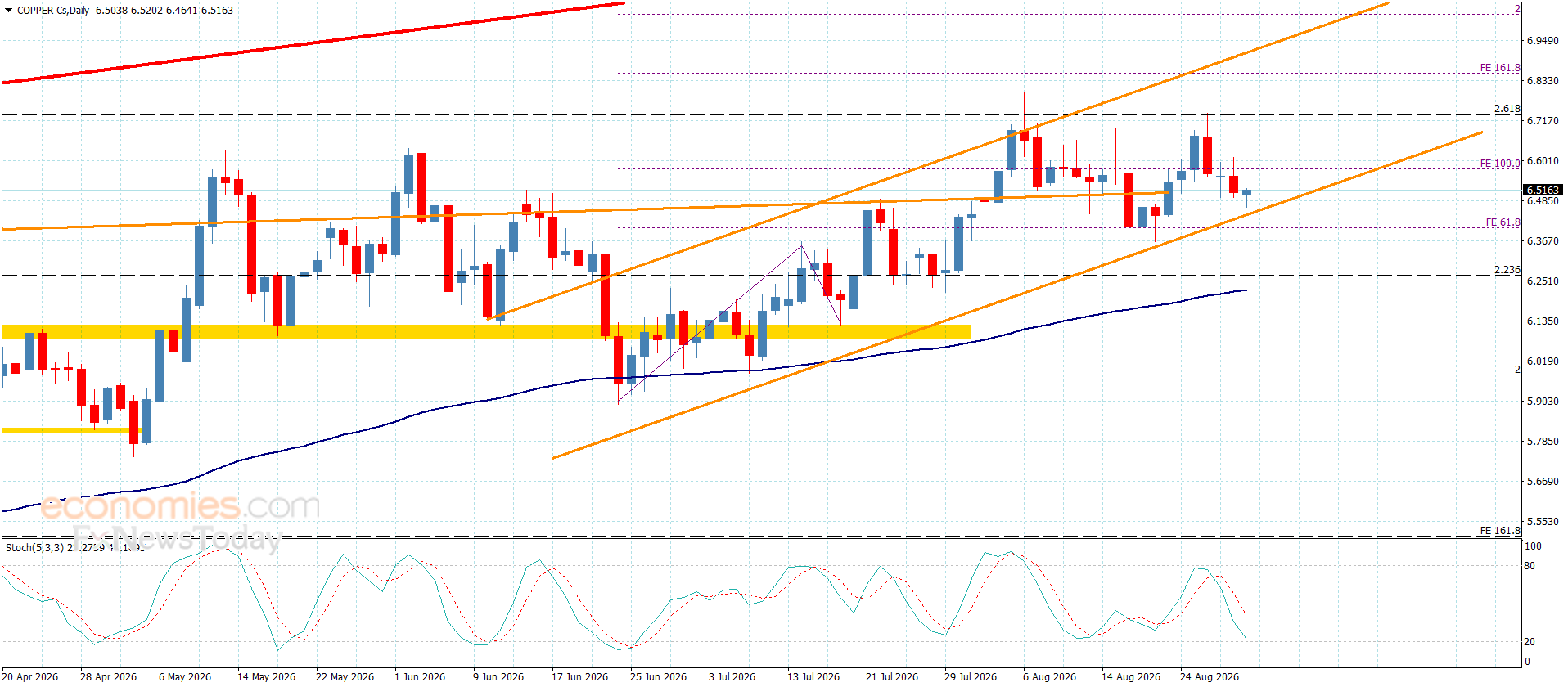
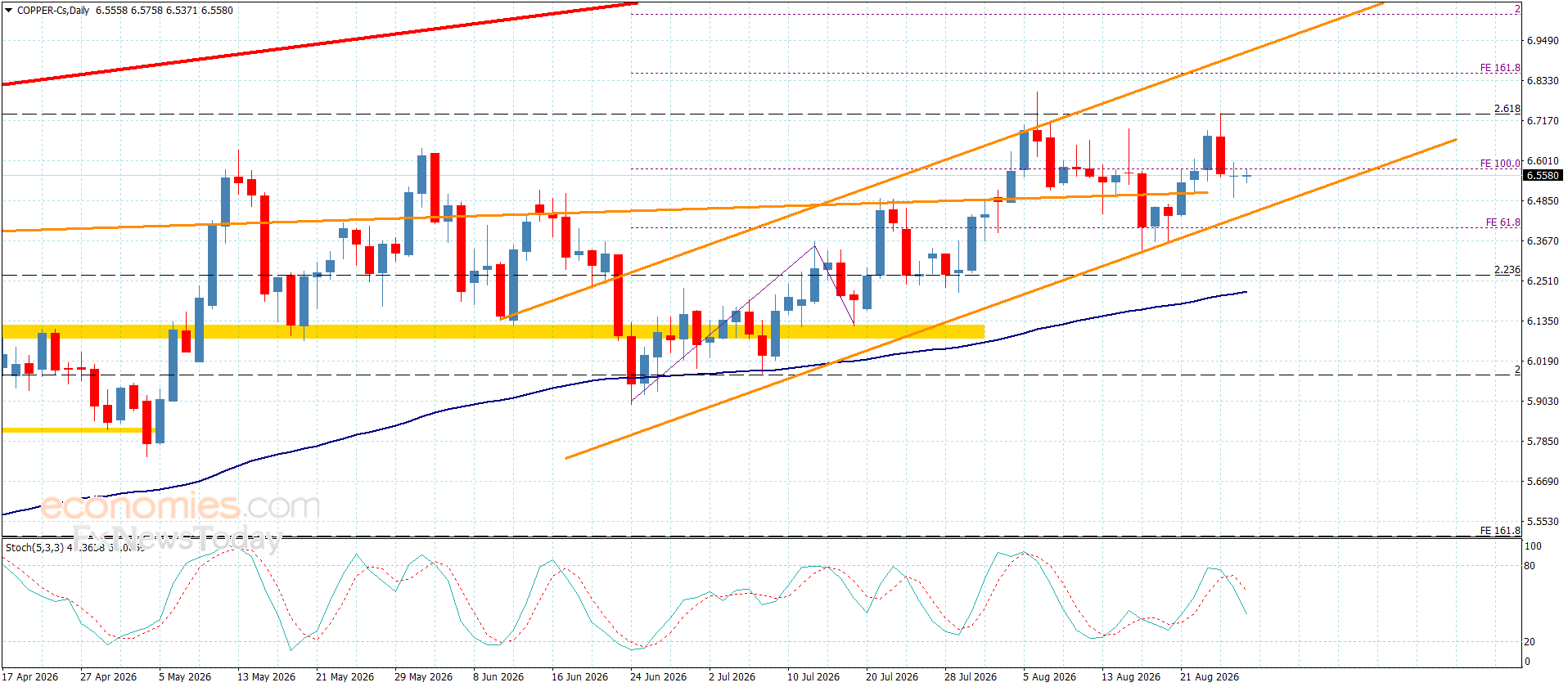
Copper started activating profit-taking attempts after recently stabilizing below the 100% Fibonacci extension level at $6.5400, as it is currently drifting toward $6.3000.


We note that the formation of $6.5400 as an additional resistance level, along with the stochastic indicator showing negative momentum by exiting overbought territory, may push the price to continue corrective trading, potentially targeting $6.2400 soon, with initial support located at $6.1000.


The expected trading range for today is between $6.2400 and $6.500


Trend forecast: Bearish


Source link

16 05, 2026

Coffee prices today May 14: Rebound, Robusta hits 7-week high

By |2026-05-16T10:01:57+03:00May 16, 2026|Forex News, News|0 Comments


Domestic coffee prices

The price of raw coffee beans in the Central Highlands region in the morning session of May 14, 2026 recorded a very strong simultaneous increase of 1,000 VND per kg in all key localities.

According to market records, the average purchase price for the whole region has now been pushed to the threshold of 88,900 VND per kg. This is an impressive growth momentum that helps the market regain everything lost in the first fluctuating sessions of the week, exceeding the 87,900 VND recorded on May 13, 2026 and the 87,000 VND mark of May 11, 2026.

In Dak Nong province (old), the purchase price has reached the threshold of 89,000 VND per kg, continuing to maintain the position of the locality with the highest price in the region.

Dak Lak and Gia Lai provinces also strongly broke through to 88,900 VND per kg, while the Lam Dong area listed at 88,300 VND per kg after recovering an additional 1,000 VND compared to yesterday’s session.

The excitement of the coffee market takes place in the context that pepper prices still remain stable at 143,000 VND per kg and the USD exchange rate listed at Vietcombank slightly increased by 3 VND to 26,102 VND.

World coffee prices

Bright green covered international futures exchanges in the nearest closing session as the actual shortage of goods became the main driving force for prices.

On the London exchange, Robusta coffee futures for July 2026 delivery surged by another 78 USD, equivalent to 2.24%, closing the session at 3,560 USD per ton, officially setting the highest level in the past 7 weeks.

At the same pace of growth, the New York exchange witnessed Arabica futures for July 2026 delivery edge up another 0.60 cent, equivalent to 0.21%, reaching 280.75 cents per pound. The main impetus for the breakthrough came from Robusta inventories monitored by ICE falling to a record low in the past 2 years with only 3,642 lots on Wednesday, while Arabica inventories also anchored at a 2.5-month low of 471,831 bags.

In addition, the latest report from Cecafe shows that Brazil’s green coffee exports in April decreased by 1.3% compared to the same period last year, reaching 2.76 million bags, further increasing concerns about short-term supply shortages.

The continued closure of the Strait of Hormuz due to geopolitical tensions between the US and Iran is still seriously disrupting the global supply chain, increasing sea transportation costs, insurance and fertilizer prices to very high levels.

Coffee price assessment and forecast

From a market analysis perspective, although coffee prices are in a short-term fever due to technical tightening, long-term surplus factors are still a ghost weighing on price prospects.

Reputable organizations such as Marex Group Plc and StoneX continuously make forecasts about a record crop season for Brazil in the 2026 crop year. 2027 with output possibly reaching 75.9 million sacks, leading to a global surplus scenario of up to 10 million sacks in 2026.

In Vietnam, the export momentum in the first 4 months of the year grew impressively by 15.8%, reaching 810,000 tons, along with forecasts for the 2025 crop year to increase by 6.2% to 30.8 million bags from the USDA, which are still barriers preventing prices from breaking too far from the current resistance zones.

It is predicted that in the coming sessions, coffee prices will continue to be in a state of fierce tug-of-war as speculators balance between the actual inventory shortage and the psychological pressure from the new South American crop line about to flood the market.


Source link

16 05, 2026

Silver Price Forecast: XAG/USD drops 8% as hawkish Fed expectations pressure metals

By |2026-05-16T06:00:38+03:00May 16, 2026|Forex News, News|0 Comments


Silver (XAG/USD) plunges on Friday, erasing all gains recorded earlier this week as hawkish Federal Reserve (Fed) expectations push US Treasury yields and the US Dollar (USD) higher. At the time of writing, XAG/USD is trading around $76.65, down nearly 8% on the day and hovering near its lowest level in over a week.

The sharp decline comes as the latest US economic data, including stronger-than-expected inflation and resilient consumer spending, strengthened expectations that the Fed could raise interest rates later this year as higher Oil prices linked to ongoing Middle East disruptions continue to fuel inflationary pressures.

According to the CME FedWatch Tool, traders now expect the US central bank to keep interest rates unchanged in the coming months, while pricing in a roughly 42% probability of a rate hike at the December meeting.

Against this backdrop, Silver is expected to maintain a bearish near-term bias as a higher interest rate environment reduces the appeal of non-yielding assets like Silver, while technical indicators suggest bears remain in control.

Technical Analysis:

In the daily chart, XAG/USD retains a capped tone as price holds beneath both the 50-day Simple Moving Average (SMA) at $76.99 and the 100-day SMA at $81.28. The 200-day SMA at $65.04 remains well below the market, suggesting the broader trend is still constructive, but the current pullback is pressuring the short- and medium-term structure.

The Relative Strength Index (14) at 47.37 hovers just below the neutral line, while the Moving Average Convergence Divergence (MACD) indicator stays in positive territory around 0.66 but has eased from recent highs, hinting that bullish momentum is waning rather than strengthening.

On the topside, immediate resistance is located at the 50-day SMA at $76.99, where a sustained break would be needed to alleviate near-term downside pressure, with the next bullish hurdle emerging at the 100-day SMA at $81.28.

On the downside, the main structural support is much lower at the 200-day SMA near $65.04, leaving the metal vulnerable to further corrective slippage if sellers maintain control below the overhanging cluster of shorter-term moving averages.

(The technical analysis of this story was written with the help of an AI tool.)

Silver FAQs

Silver is a precious metal highly traded among investors. It has been historically used as a store of value and a medium of exchange. Although less popular than Gold, traders may turn to Silver to diversify their investment portfolio, for its intrinsic value or as a potential hedge during high-inflation periods. Investors can buy physical Silver, in coins or in bars, or trade it through vehicles such as Exchange Traded Funds, which track its price on international markets.

Silver prices can move due to a wide range of factors. Geopolitical instability or fears of a deep recession can make Silver price escalate due to its safe-haven status, although to a lesser extent than Gold’s. As a yieldless asset, Silver tends to rise with lower interest rates. Its moves also depend on how the US Dollar (USD) behaves as the asset is priced in dollars (XAG/USD). A strong Dollar tends to keep the price of Silver at bay, whereas a weaker Dollar is likely to propel prices up. Other factors such as investment demand, mining supply – Silver is much more abundant than Gold – and recycling rates can also affect prices.

Silver is widely used in industry, particularly in sectors such as electronics or solar energy, as it has one of the highest electric conductivity of all metals – more than Copper and Gold. A surge in demand can increase prices, while a decline tends to lower them. Dynamics in the US, Chinese and Indian economies can also contribute to price swings: for the US and particularly China, their big industrial sectors use Silver in various processes; in India, consumers’ demand for the precious metal for jewellery also plays a key role in setting prices.

Silver prices tend to follow Gold’s moves. When Gold prices rise, Silver typically follows suit, as their status as safe-haven assets is similar. The Gold/Silver ratio, which shows the number of ounces of Silver needed to equal the value of one ounce of Gold, may help to determine the relative valuation between both metals. Some investors may consider a high ratio as an indicator that Silver is undervalued, or Gold is overvalued. On the contrary, a low ratio might suggest that Gold is undervalued relative to Silver.


Source link

16 05, 2026

Unsweetened Coffee Pods Market in China | Report – IndexBox

By |2026-05-16T01:59:49+03:00May 16, 2026|Forex News, News|0 Comments


China Unsweetened Coffee Pods Market 2026 Analysis and Forecast to 2035

Executive Summary

Key Findings

  • Accelerating Health-Led Shift: The unsweetened coffee pod segment in China is expanding at a rate of 18–25% annually by unit volume, growing 1.5 to 2 times faster than the overall coffee pod category. This is driven by a structural pivot among urban consumers toward reduced sugar intake and a preference for black, origin-forward coffee flavors.
  • Processing Hub Model Dominates: The market is overwhelmingly supplied through domestic filling and packaging operations that rely on imported green coffee beans. Over 90% of the value-add for unsweetened pods sold in China occurs within the country’s borders, concentrated in Guangdong, Zhejiang, and Jiangsu provinces.
  • Digital Shelf Dominance: E-commerce channels (Tmall, JD.com, Douyin) capture an estimated 60–70% of all retail unsweetened pod sales. This digital-centric distribution model compresses margins but rewards brands with strong consumer engagement, fast logistics, and data-driven repeat purchase loops.

Market Trends

  • Material Sustainability Race: China’s stringent plastic reduction policies are accelerating the shift from standard plastic and aluminum capsules toward PLA-based and home-compostable pod materials. Several domestic contract packers have invested in compostable pod lines, though domestic PLA capacity remains a bottleneck, keeping input costs 20–30% higher than standard materials.
  • Domestic Brand Proliferation: Local roasters and new DTC coffee brands are rapidly entering the open-system pod space. By leveraging Chinese-sourced Yunnan arabica and direct digital sales, these brands undercut international competitors by 30–50% on a per-cup basis while appealing to the Guochao (national pride) consumer sentiment.
  • Office and Co-Working Conversion: The workplace segment is evolving from a niche channel into a major volume driver. Large tech campuses in Beijing, Hangzhen, and Shenzhen are installing single-serve pod machines en masse, creating lucrative B2B supply contracts that prioritize reliable bulk pricing and machine compatibility over novelty.

Key Challenges

  • Proprietary System Lock-In: Nespresso and Dolce Gusto proprietary systems command the highest value share but restrict third-party pod supply through IP enforcement and licensing requirements. This bifurcates the market, limiting volume growth in the premium tier and pushing price competition into the open-system arena.
  • Per-Cup Value Perception: Despite convenience, the cost per cup for unsweetened pods (1.5–8 RMB) remains significantly higher than traditional filter coffee or instant options. This price premium constrains adoption in China’s vast lower-tier cities and price-sensitive demographic, capping total addressable households.
  • Green Coffee Supply Volatility: The market’s structural dependence on imported arabica beans from Brazil, Ethiopia, and Colombia exposes it to global commodity price swings, currency fluctuations, and shipping disruptions. These factors create margin instability for domestic fillers and upward pricing pressure for consumers.

Market Overview

The China unsweetened coffee pods market represents a distinct and rapidly maturing subsegment within the broader consumer goods FMCG landscape. Unlike the traditional instant coffee market, which is dominated by blended 3-in-1 products, the unsweetened pod segment caters to an educated, affluent, and health-conscious urban consumer base. These consumers value the speed, consistency, and ritual of single-serve brewing, while deliberately avoiding the added sugars and creamers common in standard mixed coffee products.

The product itself—a sealed capsule of roasted and ground coffee, typically containing 5–12 grams of pure coffee—is nitrogen-flushed for freshness and packaged for compatibility with specific brewing machines. The market’s geography is highly concentrated, with Tier 1 cities (Shanghai, Beijing, Guangzhou, Shenzhen) accounting for a disproportionate share of consumption, though adoption is steadily diffusing to Tier 2 and 3 cities as the installed base of pod machines expands.

The unsweetened variant is particularly resonant with the growing third-wave coffee culture and the broader wellness trend, positioning it as a premium everyday staple rather than a niche indulgence.

Market Size and Growth

The unsweetened coffee pod segment in China is on a robust growth trajectory, expanding at an estimated annual unit volume rate of 18–25% through the mid-2020s. This growth is anchored by the deepening penetration of single-serve coffee machines into Chinese households, with the cumulative installed base rising from a relatively low base to several million units over the past five years. The shift toward unsweetened varieties is structurally significant, as it reflects a permanent change in taste preference among a cohort of younger coffee drinkers transitioning away from sweetened 3-in-1 mixes.

In value terms, the segment is outperforming the overall packaged coffee market, driven by a combination of volume expansion and a gradual mix shift toward premium and specialty pods. Growth is further supported by the aggressive marketing and bundling strategies of machine manufacturers, who use starter packs of pods—including unsweetened originals—to drive hardware sales and lock in recurring consumables revenue. While the macroeconomic climate in China presents headwinds for discretionary spending, coffee pods are increasingly viewed as an affordable daily luxury, insulating the segment from sharper downturns.

Demand by Segment and End Use

Demand for unsweetened coffee pods in China is delineated by both application and product system, with clear implications for pricing and distribution. By end use, at-home consumption is the dominant channel, accounting for an estimated 70–75% of total pod volume. This segment is driven by household grocery shoppers and e-commerce subscribers who value convenience and brand consistency. The office and workplace segment represents 15–20% of volume, characterized by bulk purchasing through B2B procurement platforms and a higher sensitivity to per-cup cost.

Hospitality (hotels, serviced apartments) constitutes a smaller but high-value niche, where branded pod programs enhance guest experience. By product architecture, Proprietary System Pods (Nespresso Original Line and Vertuo, Dolce Gusto) capture the majority of value due to their captive ecosystems. However, Open-System and Compatible Pods are the fastest-growing volume segment, fueled by lower prices and wider retail availability.

Private label retailer brands are gaining traction as hypermarket and community grocery chains (e.g., Hema, 7Fresh) launch own-brand compatible pods, capturing margin by leveraging their supply chain and shelf presence.

Prices and Cost Drivers

Pricing in the China unsweetened coffee pods market operates on a clear tiered structure, reflecting brand equity, system compatibility, and input costs. Branded Premium pods (Nespresso Original, Starbucks by Nespresso, Illy) retail for 5–8 RMB per pod. Branded Mainstream (Lavazza, local roaster brands on compatible systems) sits at 3–5 RMB per pod. Private Label Premium and Value segments compete aggressively at 1.5–3 RMB per pod, driving volume in the compatible space. The primary cost driver is the global price of arabica green coffee beans, which accounts for 40–50% of the cost of goods sold.

Roasting, grinding, nitrogen-flushing, and packaging add 20–30%. The pod material itself is a critical cost lever, with standard plastic costing less than aluminum, and both being significantly cheaper than emerging compostable PLA materials. Labor and overheads in China’s tier-2 manufacturing cities are relatively stable, but logistics from manufacturing hubs to end consumers adds 5–10%. Import duties on green coffee beans under HS 090111 are minimal, incentivizing domestic roasting, whereas finished pod imports face higher tariffs and logistics costs.

The widening price gap between premium and value tiers creates distinct consumer segments, with the value tier expanding the total addressable market.

Suppliers, Manufacturers and Competition

The competitive landscape is defined by a mix of global brand owners, domestic regional roasters, and specialized private-label manufacturers. Global leaders such as Nestlé (Nespresso) and JDE Peet’s (L’OR, Peet’s) dominate the premium proprietary system tier, leveraging installed machine bases and exclusive licensing to maintain high margins. These companies control the full value chain, from coffee sourcing and roasting to capsule manufacturing and direct-to-consumer distribution. Domestic competitors have coalesced around the open-system compatible space, where barriers to entry are lower.

Regional Chinese coffee roasters and DTC brands are increasingly launching their own compatible pods, using Yunnan arabica or blended beans to offer price points 30–50% below international branded pods. Private-label specialists, often large FMCG contract manufacturers, supply major retailers and e-commerce platforms with unbranded or store-brand capsules. The competitive intensity is high and centered on digital shelf presence, machine compatibility reliability, and sustainability claims.

The market is moderately concentrated, with the top five players (including global and domestic leaders) controlling an estimated 50–60% of value, while a long tail of niche roasters and new entrants captures volume growth.

Domestic Production and Supply

Domestic production of unsweetened coffee pods in China is best characterized as a processing and packaging ecosystem. While China produces coffee beans—primarily from Yunnan province—the volume of commercially viable, high-grade arabica suitable for premium unsweetened pods is limited. As a result, the market is structured around the import of green beans, which are then roasted, ground, filled into capsules, and nitrogen-flushed at domestic facilities.

The primary manufacturing clusters are located in Guangdong, Jiangsu, and Zhejiang provinces, regions with established FMCG infrastructure, access to ports for raw material import, and proximity to major consumer markets. Specialized pod-filling lines, particularly for Nespresso-compatible open-system formats, have proliferated, reducing the minimum order quantity for new brands and fueling private-label growth.

A notable supply bottleneck exists in the production of compostable pod materials; domestic capacity for food-grade PLA capsules is still scaling, causing many producers to rely on imported bioplastic preforms, which increases cost and lead time. Overall, domestic production capacity is sufficient to meet current demand and can scale rapidly, but it is structurally tethered to the global green coffee supply chain.

Imports, Exports and Trade

Trade flows in the China unsweetened coffee pods market are unidirectional at the input level and more nuanced at the finished product level. The dominant trade flow is the import of green coffee beans (HS 090111, 090112), with Brazil, Ethiopia, Colombia, and Vietnam serving as the primary origins. This import dependence exposes the entire domestic pod industry to global commodity price cycles (Arabica “C” futures) and maritime shipping costs. The tariff structure in China clearly incentivizes the import of unroasted beans over roasted or processed coffee, making domestic roasting the economically logical choice for the mass market.

Finished unsweetened coffee pod imports exist but represent a small fraction of total consumption, limited to premium Italian and French brands that serve a niche of brand-loyal, price-insensitive consumers. On the export side, China is an emerging supplier of compatible pods to other Asian markets, leveraging its cost-competitive manufacturing base. Exports are still nascent in volume but growing as Chinese contract packers seek to utilize excess filling capacity. The net trade picture remains a significant deficit, reflecting the country’s role as a coffee consumption market rather than a raw material producer.

Distribution Channels and Buyers

E-commerce is the dominant and fastest-growing distribution channel for unsweetened coffee pods in China, accounting for an estimated 60–70% of retail sales. Tmall Supermarket and JD.com serve as primary platforms for branded flagship stores and routine household replenishment, while Douyin video e-commerce has emerged as a powerful channel for local roasters to build brand awareness and drive trial through live-streaming.

Physical retail, including high-end supermarkets (CitySuper, Ole’), hypermarkets, and convenience stores in affluent office districts, complements digital channels by capturing impulse purchases and enabling machine-pod cross-merchandising. The B2B channel, serving office and workplace buyers, operates through procurement platforms like 1688 and Zhenggu. The buyer base is diverse: household shoppers (urban professionals, aged 25–45) prioritize taste and brand; office procurement managers emphasize cost-per-cup and machine compatibility; hospitality buyers focus on guest experience and brand prestige.

The rise of subscription models is slowly changing buyer behavior, shifting occasional purchases toward recurring, data-driven replenishment cycles that build brand loyalty and stabilize revenue streams for suppliers.

Regulations and Standards

Unsweetened coffee pods in China are subject to a regulatory framework that governs food safety, labeling, environmental claims, and intellectual property. As packaged food products, they must comply with general food safety standards (GB 2762 for contaminants and GB 7718 for labeling), which mandate clear ingredient lists, net content, and production dates. The product-specific standard GB/T 29602 for solid beverages provides a quality benchmark. The most dynamic regulatory area concerns packaging waste.

China’s national plastic restriction policies and evolving local municipal waste sorting laws are pressuring pod manufacturers to reduce reliance on single-use plastics and multi-material capsules. While national standards for compostable coffee pod materials are still developing, the trend is clearly toward stricter recyclability and biodegradability requirements. This creates both a compliance burden and a differentiation opportunity for early adopters. On the IP front, third-party pod manufacturers must navigate compatibility licensing carefully.

While some key patents for the Nespresso Original Line have expired in other jurisdictions, the legal landscape in China requires diligent IP analysis to avoid infringement risks, making licensing agreements a strategic necessity for major open-system suppliers.

Market Forecast to 2035

Looking ahead to 2035, the China unsweetened coffee pods market is positioned for sustained structural growth. The volume of pods consumed is expected to more than triple from 2026 levels, driven by the continued diffusion of pod machines into Chinese households, the maturation of the e-commerce grocery infrastructure, and the deepening of coffee culture across a broader demographic. The compound annual growth rate is projected to run in the high single digits to low double digits over the forecast period, moderating slightly from the explosive growth of the early 2020s as the market matures but remaining well above the global average.

A key dynamic will be the gradual decline in the real price per pod as local production scales, competition intensifies, and supply chains for sustainable materials mature. This price convergence will pull new consumer segments, particularly in lower-tier cities, into the market. The premium segment, however, will continue to capture a disproportionately large share of value, driven by demand for high-quality single-origin pods. By 2035, the unsweetened segment is forecast to represent a substantially larger share of total pod consumption, solidifying its position as the mainstream choice for Chinese coffee drinkers.

Market Opportunities

Several high-potential opportunities are emerging for companies operating in this space. First, the development of localized premium pods using Yunnan arabica beans offers a powerful dual advantage: a compelling domestic terroir story that resonates with national pride trends and a partial hedge against global commodity price volatility. Brands that successfully create a traceable, high-quality Yunnan origin story can command premium pricing. Second, the direct-to-consumer subscription model presents a strong opportunity to bypass platform dependency and capture higher margins.

By building a recurring, data-rich relationship with the consumer, brands can reduce churn and maximize lifetime value. Third, investment in a closed-loop recycling or certified home-compostable pod system offers a significant competitive differentiator in an increasingly environmentally conscious market. A company that solves the end-of-life packaging challenge effectively will gain preferential placement with retailers and procurement buyers. Finally, the expansion into B2B workplace and co-working distribution offers a high-volume channel.

Partnering with major Chinese tech campuses and co-working networks to become the default unsweetened pod supplier can generate substantial recurring revenue and build mass brand exposure.

High Reach / Scale

Focused / Niche

Value / Mainstream

Premium / Differentiated

Brand examples

Green Mountain Coffee Roasters
McCafé by McDonald’s

Scale + Value Leadership

Value and Private-Label Specialists
Mass-Market Portfolio Houses

Wins on reach, promo intensity, and shelf scale.

Brand examples

Starbucks
Peet’s Coffee

Scale + Premium Differentiation

Global Brand Owners and Category Leaders
Premium and Innovation-Led Challengers

Converts brand equity into price resilience and mix.

Brand examples

Great Value (Walmart)
Amazon Solimo

Focused / Value Niches

Regional Brand Houses
Vertical DTC Pod Brand

Plays where local execution or partner-led scale matters.

Brand examples

Intelligentsia
Blue Bottle
Trade Coffee

Focused / Premium Growth Pockets

Specialty/Third-Wave Coffee Brand
Vertical DTC Pod Brand

Typical white space for challengers and premium extensions.

Grocery Mass

Leading examples

Folgers
Maxwell House
Private Label

The scale channel: volume, distribution, and shelf defense.

Demand Reach

Mass-market scale

Margin Quality

Tight / promo-heavy

Brand Control

Retailer-led

Club/Warehouse

Leading examples

Kirkland Signature
Member’s Mark

This channel usually matters for controlled launches, message consistency, and premium mix.

E-commerce/DTC

Leading examples

Trade Coffee
Atlas Coffee Club
Blue Bottle

Best for test-and-learn, premium storytelling, and retention.

Demand Reach

High growth / targeted

Margin Quality

Variable / media-led

Brand Control

High data visibility

Specialty Retail

Leading examples

Intelligentsia
Stumptown
La Colombe

Wins where expertise, claims, and trust shape conversion.

Demand Reach

Targeted premium

Margin Quality

Higher / curated

Brand Control

Category-managed

Private Label Pods

Critical where local execution and partner access drive growth.

Demand Reach

Partner-led breadth

Margin Quality

Negotiated / mixed

Brand Control

Shared with partners

This report is an independent strategic category study of the market for unsweetened coffee pods in China. It is designed for brand owners, general managers, category leaders, trade-marketing teams, e-commerce teams, retail partners, distributors, investors, and market entrants that need a clear read on where growth sits, which brands control the category, how pricing and promotion shape demand, and which channels matter most for scale and margin.

The framework is built for packaged coffee markets within consumer goods, where performance is driven by need states, shopper missions, brand hierarchies, price-pack architecture, retail execution, promotional intensity, and route-to-market control rather than by a narrow technical specification alone. It defines unsweetened coffee pods as Single-serve coffee pods designed for use in pod-based brewing systems, containing ground coffee but no added sweeteners, flavors, or dairy ingredients and maps the market through category boundaries, consumer segments, usage occasions, channel structure, brand and private-label positions, supply and availability logic, pricing and promotion mechanics, and country-level commercial roles. Historical analysis typically covers 2012 to 2025, with forward-looking scenarios through 2035.

What questions this report answers

This report is designed to answer the questions that matter most to brand, category, channel, and strategy teams in consumer-goods markets.

  1. Where category growth and margin pools really sit: how large the market is, which segments are growing, and which parts of the category carry the strongest commercial upside.
  2. What the category actually includes: where the scope boundary should be drawn relative to adjacent products, substitute baskets, and wider household or personal-care routines.
  3. Which commercial segments matter most: how the category should be cut by format, need state, shopper occasion, price tier, pack architecture, channel, and brand position.
  4. How shoppers enter, repeat, trade up, and switch: which need states and shopping missions create the strongest value pools, and what drives loyalty versus substitution.
  5. Which brands control volume, premium mix, and shelf power: how branded players, challengers, and private label differ in scale, positioning, channel strength, and claims authority.
  6. How pricing and promotion really work: how price ladders, pack-price logic, promotions, and channel margin structures shape revenue quality and competitive intensity.
  7. How supply and route-to-market affect performance: where manufacturing, private label, fulfillment, replenishment, and on-shelf availability create advantage or risk.
  8. Which countries and channels matter most for growth: where to build brand power, where to source or manufacture, and where the next wave of category expansion is likely to come from.
  9. Where the best white-space opportunities are: which segments, countries, channels, and assortment gaps are most attractive for entry, expansion, or portfolio repositioning.

What this report is about

At its core, this report explains how the market for unsweetened coffee pods actually works as a consumer category. It is built to show where demand comes from, which need states and shopper missions matter most, which brands and private-label players shape the category, which channels control visibility and conversion, and where pricing power, repeat purchase, and margin are actually created.

Rather than framing the category through narrow technical attributes, the study breaks it into decision-grade commercial layers: product format, benefit platform, shopper segment, purchase occasion, pack-price architecture, channel environment, promotional intensity, route-to-market control, and company archetype. It is therefore useful both for teams shaping portfolio strategy and for teams executing growth through Household grocery shoppers, Bulk office purchasers, Hospitality procurement managers, E-commerce subscribers, and Retail category buyers.

The report also clarifies how value pools differ across Quick single-serve coffee preparation, Office pantry and breakroom solutions, Reduced waste vs. traditional brewing, and Consistent dose and strength control, how premiumization and private label reshape category economics, how retail concentration and route-to-market design affect scale, and which countries matter most for brand building, sourcing, packaging, and channel expansion.

Research methodology and analytical framework

The report is based on an independent market-intelligence methodology that combines category reconstruction, public company evidence, retail and channel mapping, pricing review, and multi-layer triangulation. It is built for consumer categories where no single public dataset captures the real structure of demand, brand power, promotion, and channel control.

The evidence stack typically combines company disclosures, investor materials, brand and retailer product pages, e-commerce assortment checks, packaging and claims analysis, public pricing references, trade statistics where relevant, regulatory and labeling guidance, and observable route-to-market evidence from distributors, retailers, merchandisers, and marketplace ecosystems.

The analytical model then reconstructs the category across the layers that matter commercially: category scope, shopper need states, consumer segments, pack-price ladders, brand and private-label hierarchy, channel power, promotional intensity, route-to-market design, and country role differences.

Special attention is given to Convenience and speed of preparation, Reduced coffee waste vs. pot brewing, Compatibility with installed machine base, Health/wellness trend toward less added sugar, Brand trust and coffee quality perception, and Price per cup vs. out-of-home coffee. The objective is not only to size the market, but to explain where value pools sit, which segments drive mix and repeat purchase, which channels shape growth, and how leading brands defend or expand their positions across Household grocery shoppers, Bulk office purchasers, Hospitality procurement managers, E-commerce subscribers, and Retail category buyers.

The report does not rely on survey-based opinion as its core evidence base. Instead, it uses observable commercial signals and structured public evidence to build a decision-grade view for brand, category, retail, e-commerce, investment, and market-entry teams.

Commercial lenses used in this report

  • Need states, benefit platforms, and usage occasions: Quick single-serve coffee preparation, Office pantry and breakroom solutions, Reduced waste vs. traditional brewing, and Consistent dose and strength control
  • Shopper segments and category entry points: Household, Office/Workplace, Hospitality (hotels, rentals), and Foodservice (cafes, restaurants)
  • Channel, retail, and route-to-market structure: Household grocery shoppers, Bulk office purchasers, Hospitality procurement managers, E-commerce subscribers, and Retail category buyers
  • Demand drivers, repeat-purchase logic, and premiumization signals: Convenience and speed of preparation, Reduced coffee waste vs. pot brewing, Compatibility with installed machine base, Health/wellness trend toward less added sugar, Brand trust and coffee quality perception, and Price per cup vs. out-of-home coffee
  • Price ladders, promo mechanics, and pack-price architecture: Branded Premium (National Roasters), Branded Mainstream (National & Large Regional), Private Label Premium (Retailer Brands), Private Label Value (Retailer Economy), and Compatible/Open-System Value
  • Supply, replenishment, and execution watchpoints: Access to proprietary pod system licenses, Securing consistent supply of specialty green coffee, Scaling compostable/biodegradable pod production, Retail shelf space and planogram allocation, and Managing compatibility across multiple machine systems

Product scope

This report defines unsweetened coffee pods as Single-serve coffee pods designed for use in pod-based brewing systems, containing ground coffee but no added sweeteners, flavors, or dairy ingredients and treats it as a branded consumer category rather than as a narrow technical product class. The objective is to capture the real commercial market that category, brand, trade-marketing, and channel teams are managing.

Scope is determined by how the category is sold, merchandised, priced, and chosen in market. That means the report follows product formats, claims, price tiers, pack architecture, need states, and retail environments that shape Quick single-serve coffee preparation, Office pantry and breakroom solutions, Reduced waste vs. traditional brewing, and Consistent dose and strength control.

The study deliberately separates the category from adjacent baskets when they distort the economics or shopper logic of the market being measured. Typical exclusions therefore include Pods with added sweeteners, flavors, or creamers, Instant coffee sticks or sachets, Whole bean or ground coffee in bags/cans, Coffee pods for commercial espresso machines, Tea, cocoa, or other beverage pods, Coffee syrups and flavor shots, Coffee creamers and whitener pods, Ready-to-drink bottled/canned coffee, Coffee brewing equipment and machines, and Coffee subscriptions and curation services.

Product-Specific Inclusions

  • Unsweetened, unflavored coffee pods for home/office use
  • Compatible with major proprietary systems (Keurig K-Cup, Nespresso Original/Vertuo, etc.)
  • Compatible with open-system/private-label machines
  • Ground roast coffee in sealed single-serve format
  • Pods made from plastic, aluminum, or compostable materials

Product-Specific Exclusions and Boundaries

  • Pods with added sweeteners, flavors, or creamers
  • Instant coffee sticks or sachets
  • Whole bean or ground coffee in bags/cans
  • Coffee pods for commercial espresso machines
  • Tea, cocoa, or other beverage pods

Adjacent Products Explicitly Excluded

  • Coffee syrups and flavor shots
  • Coffee creamers and whitener pods
  • Ready-to-drink bottled/canned coffee
  • Coffee brewing equipment and machines
  • Coffee subscriptions and curation services

Geographic coverage

The report provides focused coverage of the China market and positions China within the wider global consumer-goods industry structure.

The geographic analysis explains local consumer demand conditions, brand and private-label balance, retail concentration, pricing tiers, import dependence, and the country’s strategic role in the wider category.

Geographic and Country-Role Logic

  • Coffee-producing countries as bean sources
  • High machine-ownership countries as core consumption markets
  • Markets with strong private label penetration as value segments
  • Markets with high out-of-home coffee spend as conversion targets

Who this report is for

This study is designed for strategic and commercial users across brand-led consumer categories, including:

  • general managers, brand leaders, and portfolio teams evaluating category attractiveness, pricing power, and whitespace;
  • category managers, trade-marketing teams, retail buyers, and e-commerce teams prioritizing assortment, promotion, and channel strategy;
  • insights, shopper-marketing, and innovation teams tracking need states, occasions, pack-price ladders, claims, and competitive messaging;
  • private-label and contract-manufacturing strategists assessing entry options, retailer leverage, and supply-side positioning;
  • distributors and route-to-market teams evaluating country and channel expansion priorities;
  • investors and strategy teams benchmarking competitive structure, premiumization, revenue quality, and margin logic.

Why this approach matters in consumer categories

In many brand-driven, channel-sensitive, and consumer-demand-led markets, official trade and production statistics are not sufficient on their own to describe the true market. Product boundaries may cut across multiple tariff codes, several product categories may be bundled into the same official classification, and a meaningful share of activity may take place through customized services, captive supply, platform relationships, or technically specialized channels that are not directly visible in standard statistical datasets.

For this reason, the report is designed as a modeled strategic market study. It uses official and public evidence wherever it is reliable and scope-compatible, but it does not force the market into a purely statistical framework when doing so would reduce analytical quality. Instead, it reconstructs the market through the logic of demand, supply, technology, country roles, and company behavior.

This makes the report particularly well suited to products that are innovation-intensive, technically differentiated, capacity-constrained, platform-dependent, or commercially structured around specialized buyer-supplier relationships rather than standardized commodity trade.

Typical outputs and analytical coverage

The report typically includes:

  • historical and forecast market size;
  • consumer-demand, shopper-mission, and need-state analysis;
  • category segmentation by format, benefit platform, channel, price tier, and pack architecture;
  • brand hierarchy, private-label pressure, and competitive-structure analysis;
  • route-to-market, retail, e-commerce, and availability logic;
  • pricing, promotion, trade-spend, and revenue-quality interpretation;
  • country role mapping for brand building, sourcing, and expansion;
  • major-brand and company archetypes;
  • strategic implications for brand owners, retailers, distributors, and investors.


Source link

15 05, 2026

UBS Oil Price Prediction: Crude Prices Seen Falling To $85 By 2027

By |2026-05-15T21:58:39+03:00May 15, 2026|Forex News, News|0 Comments


Brent crude oil prices remained elevated on Thursday, with the Brent contract trading at 107.830 US dollars as traders continued balancing Middle East supply risks against expectations that oil markets may gradually loosen into 2027.

While geopolitical disruption linked to the Strait of Hormuz has kept physical markets tight, UBS believes the recent risk premium will fade over the medium term as supply conditions improve and demand growth moderates.

Brent oil price in USD – 2 day chart
Image: Brent oil price in US dollars – 2 day chart (see live BRT/USD prices today)

UBS forecasts Brent crude oil prices averaging $100 per barrel in June 2026, easing to $95 by September 2026, $90 by December 2026 and $85 by March 2027.

That suggests the bank expects current tightness to gradually unwind despite continued volatility across energy markets.

Near-term conditions nevertheless remain supportive.

Goldman Sachs noted that “Prompt Brent/WTI crude nearby futures increased by 5/7% week-over-week to $105/101 as flows through the Strait of Hormuz remained very low and on limited signs of progress on a US-Iran deal.”

Physical fuel markets have also tightened considerably in recent weeks.

foreign exchange rates

“The US gasoline market has become very tight, with inventories drawing at a rapid average pace of 0.7mb/d since April 1st to 5% below their historical seasonal median this week,” Goldman Sachs said.

That inventory drawdown has helped offset some concerns surrounding weaker global growth momentum and softer Chinese demand conditions.

Brent oil price in USD – 6 months chart
Image: Brent oil price in US dollars – 6 months chart (see full BRT/USD history)

Even so, UBS expects oil prices to trend lower through 2026 and into 2027 as supply disruption risks gradually fade and inventories rebuild.

For now, crude markets remain caught between immediate geopolitical tightness and a softer longer-term supply outlook.


Source link

15 05, 2026

Natural Gas Price Forecast 2026: RBC Targets Above $3.50

By |2026-05-15T17:57:37+03:00May 15, 2026|Forex News, News|0 Comments


The Henry Hub natural gas benchmark has steadied near $2.80/MMBtu, following earlier volatility during the withdrawal season.

RBC Capital Markets notes that US natural gas prices have “settled into a lull – especially when compared to their global peers, with high LNG prices and landed natural gas prices in Europe and Asia.”

Natural gas price in USD – 2 day chart
Image: Natural gas price in US dollars – 2 day chart (see live NG/USD prices today)

The bank favours a near-term Q2 range of $2.76–3.25/MMBtu before expecting stronger pricing later in the year.

“In the very near-term, we favor our Q2 low-to-middle scenario range ($2.76-3.25/MMBtu) before giving way to our mid-to-high annual scenario range later this year (at or above $3.51/MMBtu).”

Looking further ahead, RBC sees tightening structural balances supporting prices into 2027.

“In 2027, we see the balance tightening structurally, leading to lower storage outcomes and higher prices, and eventually leading to a demand pull environment this decade.”

foreign exchange rates
Natural gas price in USD – 1 year chart
Image: Natural gas price in US dollars – 1 year chart (see full NG/USD history)

RBC’s forecast therefore explicitly sees Henry Hub moving above $3.51/MMBtu later in 2026, with upside risks building into 2027 if domestic demand surprises.


Source link

15 05, 2026

Platinum price delays the rise– Forecast today – 15-5-2026

By |2026-05-15T13:56:44+03:00May 15, 2026|Forex News, News|0 Comments


Platinum announced the end of its upward momentum, as the formation of strong resistance at $2,190.00 has halted the bullish move. Since yesterday, it has been forming negative corrective waves and is now trading below the initial support level at $2,060.00, confirming its shift into a downward corrective scenario.


Additionally, the stochastic indicator is showing negative momentum, which may push the price to pressure the 55-day moving average located at $2,000.00. A break below this level could extend losses toward the next support at $1,950.00.


The expected trading range for today is between $1950.00 and $2080.00


Trend forecast: Bearish


Source link

15 05, 2026

The GBPJPY repeats the negative closes– Forecast today – 14-5-2026

By |2026-05-15T09:56:08+03:00May 15, 2026|Forex News, News|0 Comments


Platinum price reached $2191.00 level by its last bullish rally, approaching the previously waited main target, to form temporary corrective rebound towards $2135.00, affected by stochastic attempt to exit the overbought level as appears in the above image.


The price might be forced to provide some mixed trading, however it settles above $2060.00 makes us keep the bullish scenario, to keep waiting for surpassing $2195.00 level, extending the trading towards %161.8 Fibonacci extension level at $2245.00.


The expected trading range for today is between $2110.00 and $2215.00


Trend forecast: Bullish


Source link

Go to Top