The main tag of Gold News Today Articles.
You can use the search box below to find what you need.
[wd_asp id=1]

3 10, 2024

Gold Analysis Today 03/10: Gold Stabilizes (Chart)

By |2024-10-03T17:20:59+03:00October 3, 2024|Forex News, News|0 Comments


  • Gold prices stabilized around $2,655 per ounce today, Thursday, remaining relatively close to their all-time highs as the escalating crisis in the Middle East continues to bolster the metal’s appeal as a safe haven.
  • Earlier this week, Iran launched a missile attack on Israel, prompting Israel to intensify strikes across the Middle East and vow to retaliate against Iran.

However, recent strong US jobs data has limited gold’s upward momentum by reducing the need for the Federal Reserve to adopt a more accommodative monetary policy. According to economic data, ADP data indicated that more US private sector jobs were created in September than expected, reinforcing the positive results from the JOLTS report and suggesting that the US Labor market is in better shape than previously thought at the beginning of the third quarter. Now, Financial markets see a 66% chance that the Federal Reserve will opt for a modest 25-basis point interest rate cut in November. Decisively, low interest rates reduce the opportunity cost of holding non-interest-bearing bullion assets.

According to licensed trading platforms, demand for the US dollar as a safe haven has increased after Iran launched a ballistic missile attack on Israel and the United States threatened severe consequences for the attack. Demand for gold, oil, and the dollar increased after news reports that the United States warned Israel late on Tuesday that Iran was preparing to launch a ballistic missile attack on Israel.

The intelligence information was accurate, as between 180 and 200 Iranian missiles were launched overnight, with Israel pledging to retaliate against Iran as a result. As a result, global stock markets declined amid growing investor anxiety. In the foreign exchange market, the pound sterling fell 0.66% against the dollar on Tuesday to 1.3284. The euro/dollar pair fell 0.6% to close at 1.1067.

The strength of the US dollar extended into the mid-week session; however, the selling had eased at the time of writing on Wednesday.

For the markets, there are two scenarios to consider:

Financial markets reverse losses and the US dollar gives up gains as tensions in the Middle East tend not to have a lasting impact on the market. In this regard, Jasper Faerestad, senior analyst at Danske Bank, says: “The Iranian missile attack on Israel has increased demand for safe-haven assets, boosting the US dollar and driving up oil and gold prices. This move has largely faded at the end of the session as the reported damage was apparently limited.”
 This time is different as this is a major direct attack by Iran on a key US ally.

In the second scenario, the US dollar could extend its recent recovery.

Gold Price Analysis and forecast Today:

According to today’s gold analysts’ forecasts. The gold index is still in a strong upward trend and its recent gains were enough to push all technical indicators towards strong overbought levels, but with the increase and continuation of global geopolitical tensions and the abandonment of tightening by global central banks, the factors for gold gains will remain. Strong and expected profit-taking will not occur without investors’ appetite for risk, calming of wars in the Middle East region and recovery of the US dollar price. Currently, the closest resistance levels for gold are $2670, $2685 and $2700 per ounce, and I do not recommend buying gold from record highs. 

Ready to trade our Gold monthly forecast? Here’s a list of some of the best XAU/USD brokers to check out.


Source link

3 10, 2024

Coffee prices on the boil as natural disasters decimate crops

By |2024-10-03T15:19:33+03:00October 3, 2024|Forex News, News|0 Comments


Europe’s coffee lovers are bracing themselves for higher prices as natural disasters hit the world’s top two coffee-producing countries.

ADVERTISEMENT

Droughts in Brazil, the world’s largest coffee producer, and severe typhoons in Vietnam, the second-largest, have significantly disrupted global coffee supply chains, driving up production costs that are bubbling their way through to consumers.  

As one of the world’s largest coffee-drinking regions, Europe’s coffee lovers will find price hikes particularly hard to swallow. Europeans consume approximately 3.2 million metric tons of coffee a year, accounting for almost 33% of the world’s total coffee consumption, according to German consumer data company Statista.

Natural disasters have wreaked havoc

Brazil, responsible for around 40% of the world’s coffee production, has been grappling with one of its worst droughts in decades. The dry conditions have severely affected its arabica coffee-growing regions and reduced yields.

The 2023-2024 crop cycle has already seen a steep drop in production, some estimates suggest output could fall by as much as one-fifth (20%). 

The impact is being felt most acutely in Minas Gerais, Brazil’s largest coffee-producing state and the home of the high quality arabica bean, which has experienced months of below-average rainfall.

While Brazil dominates the arabica market, Vietnam is the world’s leading producer of the cheaper robusta bean – used in instant coffee. Earlier this month, the country’s key coffee-growing regions in the Central Highlands were decimated by Typhoon Yagi, which killed at least 60 people and left hundreds injured. 

Early assessments suggest thousands of hectares of coffee plantations were affected, with significant losses to both the current harvest and future production potential, as damaged trees will take years to recover. 

Perfect storm of challenges drive prices to a 10-year high

The combined effects of Brazil’s drought and Vietnam’s typhoon have triggered a sharp increase in global coffee prices. The International Coffee Organization (ICO), the intergovernmental body made up of coffee exporting and importing countries, reported that prices surged by nearly 20% in the third quarter of 2024, reaching their highest levels in almost a decade. 

Katharina Erfort, from international supply chain management company Inverto is gloomy about the prospect of a return to normal prices any time soon. Speaking to Euronews Business she said: “A quick recovery for the coffee sector is unlikely, even with potential improvements in supply. 

“The ongoing effects of climate change make a swift return to stability difficult. The sector remains vulnerable to extreme weather patterns that can continue to disrupt future harvests. Additionally, rising global demand, particularly in emerging markets like Asia, may continue to put upward pressure on prices, further slowing recovery efforts.”

Arabica coffee futures, traded on the Intercontinental Exchange (ICE), have risen dramatically, with prices now hovering above $2.50 (€2.25) per pound – up from $1.80 (€1.62) earlier in the year. Robusta prices have followed a similar trajectory, climbing by around 25% to reach more than $2,000 (€1,796) per metric ton.

The sharp price increases have sent shockwaves through the global coffee market. Coffee traders are facing heightened volatility, with concerns growing that continued weather-related disruptions and the cost of rebuilding after the natural disasters could push prices even higher. 

Agri-commodities analyst at Rabobank, Carlos Mera told Bloomberg that this crisis is compounded by logistical challenges, such as port congestion and a global shortage of shipping containers, which are hampering the movement of coffee worldwide.

Europe’s love affair with coffee is being tested

The effects of rising costs are particularly pronounced in Europe. In Germany, Europe’s largest coffee market, retail prices for ground coffee and coffee beans have risen by an average of 10% since 2022, according to Statista.

A survey by the Brussels based European Coffee Federation (ECF) found that nearly 65% of cafes in Europe have raised their prices by between 5% and 15% since the start of 2023. Researchers noted that increases were likely to be driven by a range of factors beyond the cost of coffee beans, as inflation had driven up the price of other essentials such as milk, sugar, and disposable cups.

ADVERTISEMENT

As the world’s big two coffee producers struggle to recover from their respective crises, the outlook for the global coffee market remains uncertain.

Climate change is reducing the availability of land on which coffee crops can thrive, and extreme weather events are increasing, creating a perfect storm of challenges for the sector and Europe’s coffee lovers.


Source link

3 10, 2024

XAU/USD looks to more US data for a fresh directional impetus

By |2024-10-03T11:17:04+03:00October 3, 2024|Forex News, News|0 Comments


  • Gold price remains capped below the key $2,670 resistance, despite the escalating Israel-Iran conflict.   
  • The US Dollar stands tall on reduced bets for an outsized Fed rate cut in November.     
  • Gold price could struggle for bullish traction ahead of top-tier US economic data, Fedspeak.

Gold price is trading listlessly in a narrow range under the key $2,670 static resistance, lacking a clear directional impetus so far this Thursday. The focus now shifts toward a fresh batch of US economic statistics and speeches from Federal Reserve (Fed) policymakers for fresh directives amid the escalating geopolitical conflict between Israel and Iran.

Gold price divided between Mideast woes and smaller Fed rate cut bets

Several media outlets reported that Israel delivered a harsh response to the recent Iranian attack by bombing central Beirut in the early hours of Thursday. Lebanese security officials said that three missiles also struck the southern suburb of Dahiyeh, the place of Hezbollah leader Hassan Nasrallah’s killing. Lebanese health officials also reported that multiple people were injured following Israel’s strike in Beirut. 

Iranian forces on Tuesday used hypersonic Fattah missiles for the first time and 90% of its missiles successfully hit their targets in Israel. Tehran said this attack was in response to Israeli killings of militant leaders and aggression in Lebanon against the Iran-backed armed movement Hezbollah and in Gaza.

Despite the increasing risks of the Israel-Iran conflict turning into a wider regional war in the Middle East, Gold price is struggling to capitalize on the risk-off flows, as diminishing odds of a 50 basis points (bps) interest rate cut by the Fed in November keep the sentiment around the US Dollar underpinned at the expense of the non-interest-bearing Gold price.

Data on Wednesday showed that US ADP private sector employment increased by  143,000 jobs for September, accelerating from the upwardly revised 103,000 in August and better than the 120,000 estimate. Strong ADP jobs report eased concerns about the health of the US labor market, supporting the expectations for Friday’s Nonfarm Payrolls data.

Markets are currently pricing in about a 34% chance that the Fed will opt for a big rate cut at its next meeting, compared with almost 60% last week, CME Group’s FedWatch Tool shows.

Next of note for Gold traders remain the US ISM Services PMI and the weekly Jobless Claims data for fresh signals on the state of the economy and the Fed’s next interest rate move. Also, Fedspeak will be closely scrutinized and will likely have a significant impact on the US Dollar valuation, eventually influencing the Gold price action.

Gold price technical analysis: Daily chart

The daily technical setup for Gold price remains constructive so long as the 14-day Relative Strength Index (RSI) remains in the bullish territory. The leading indicator is currently trading near 66.50.  

Gold price needs to yield a daily candlestick closing above the static resistance near $2,670 for a renewed upside. The next resistance is aligned at the record high of $2,686.

Furrther up, buyers will target the $2,700 round level, followed by the rising trendline resistance at $2,740.

Alternatively, if Gold sellers flex their muscles, acceptance below the September 24 low of $2,623 is critical to unleashing further downside toward the $2,600 threshold.

Gold sellers could then challenge the September 20 low of $2,585, where the 21-day Simple Moving Average (SMA) hangs around.

Economic Indicator

ISM Services PMI

The Institute for Supply Management (ISM) Services Purchasing Managers Index (PMI), released on a monthly basis, is a leading indicator gauging business activity in the US services sector, which makes up most of the economy. The indicator is obtained from a survey of supply executives across the US based on information they have collected within their respective organizations. Survey responses reflect the change, if any, in the current month compared to the previous month. A reading above 50 indicates that the services economy is generally expanding, a bullish sign for the US Dollar (USD). A reading below 50 signals that services sector activity is generally declining, which is seen as bearish for USD.

Read more.


Source link

3 10, 2024

Natural Gas and Oil Forecast: Will Iran Tensions Push Oil Prices Back to Triple Digits?

By |2024-10-03T09:16:25+03:00October 3, 2024|Forex News, News|0 Comments


Important DisclaimersThe content provided on the website includes general news and publications, our personal analysis and opinions, and contents provided by third parties, which are intended for educational and research purposes only. It does not constitute, and should not be read as, any recommendation or advice to take any action whatsoever, including to make any investment or buy any product. When making any financial decision, you should perform your own due diligence checks, apply your own discretion and consult your competent advisors. The content of the website is not personally directed to you, and we does not take into account your financial situation or needs.The information contained in this website is not necessarily provided in real-time nor is it necessarily accurate. Prices provided herein may be provided by market makers and not by exchanges.Any trading or other financial decision you make shall be at your full responsibility, and you must not rely on any information provided through the website. FX Empire does not provide any warranty regarding any of the information contained in the website, and shall bear no responsibility for any trading losses you might incur as a result of using any information contained in the website.The website may include advertisements and other promotional contents, and FX Empire may receive compensation from third parties in connection with the content. FX Empire does not endorse any third party or recommends using any third party’s services, and does not assume responsibility for your use of any such third party’s website or services.FX Empire and its employees, officers, subsidiaries and associates, are not liable nor shall they be held liable for any loss or damage resulting from your use of the website or reliance on the information provided on this website.Risk DisclaimersThis website includes information about cryptocurrencies, contracts for difference (CFDs) and other financial instruments, and about brokers, exchanges and other entities trading in such instruments. Both cryptocurrencies and CFDs are complex instruments and come with a high risk of losing money. You should carefully consider whether you understand how these instruments work and whether you can afford to take the high risk of losing your money.FX Empire encourages you to perform your own research before making any investment decision, and to avoid investing in any financial instrument which you do not fully understand how it works and what are the risks involved.


Source link

3 10, 2024

XAG/USD rebounds and reclaims $31.50

By |2024-10-03T07:14:42+03:00October 3, 2024|Forex News, News|0 Comments


  • Silver rises 0.39%, trading at $31.82 as buyers push prices above the opening level, reclaiming $31.50.
  • RSI hints at consolidation ahead, with a break above $32.30 needed to challenge the YTD high of $32.71.
  • A fall below $31.00 could lead to a deeper pullback, with key support levels at $30.50 and the 100-DMA at $29.74.

Silver price recovered some ground on Wednesday, advanced some 0.39%, and reclaimed the $31.50 figure as buyers stepped in and pushed the grey’s metal price above its opening price. Higher US Treasury bond yields capped its advance, yet XAG/USD trades at $31.82 as Thursday’s Asian session begins.

XAG/USD Price Forecast: Technical outlook

Silver price has printed back-to-back bullish days, yet it failed to surpass the $32.00 figure, exposing the grey metal to selling pressure. The Relative Strength Index (RSI) hints that buyers remain in control, but it has turned flat, indicating that consolidation lies ahead.

If XAG/USD clears the October 2 peak of $32.30, it will resume its uptrend and challenge the year-to-date (YTD) high of $32.71. A breach of the latter will push Silver to $33.00 before testing on October 1, 2012, high at $35.40.

On the other hand, if XAG/USD dives beneath the October 2 daily low of $31.00, this would sponsor a leg-down to the psychological $30.50 figure, followed by the 100-day moving average (DMA) at $29.74, ahead of the 50-DMA at $29.32.

XAG/USD Price Action – Daily Chart

Silver FAQs

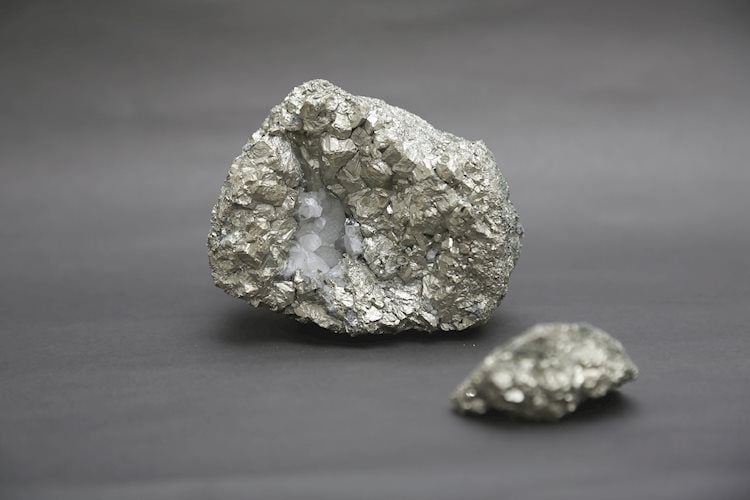
Silver is a precious metal highly traded among investors. It has been historically used as a store of value and a medium of exchange. Although less popular than Gold, traders may turn to Silver to diversify their investment portfolio, for its intrinsic value or as a potential hedge during high-inflation periods. Investors can buy physical Silver, in coins or in bars, or trade it through vehicles such as Exchange Traded Funds, which track its price on international markets.

Silver prices can move due to a wide range of factors. Geopolitical instability or fears of a deep recession can make Silver price escalate due to its safe-haven status, although to a lesser extent than Gold’s. As a yieldless asset, Silver tends to rise with lower interest rates. Its moves also depend on how the US Dollar (USD) behaves as the asset is priced in dollars (XAG/USD). A strong Dollar tends to keep the price of Silver at bay, whereas a weaker Dollar is likely to propel prices up. Other factors such as investment demand, mining supply – Silver is much more abundant than Gold – and recycling rates can also affect prices.

Silver is widely used in industry, particularly in sectors such as electronics or solar energy, as it has one of the highest electric conductivity of all metals – more than Copper and Gold. A surge in demand can increase prices, while a decline tends to lower them. Dynamics in the US, Chinese and Indian economies can also contribute to price swings: for the US and particularly China, their big industrial sectors use Silver in various processes; in India, consumers’ demand for the precious metal for jewellery also plays a key role in setting prices.

Silver prices tend to follow Gold’s moves. When Gold prices rise, Silver typically follows suit, as their status as safe-haven assets is similar. The Gold/Silver ratio, which shows the number of ounces of Silver needed to equal the value of one ounce of Gold, may help to determine the relative valuation between both metals. Some investors may consider a high ratio as an indicator that Silver is undervalued, or Gold is overvalued. On the contrary, a low ratio might suggest that Gold is undervalued relative to Silver.


Source link

3 10, 2024

XAU/USD hovers around $2,660 after US opening

By |2024-10-03T01:10:27+03:00October 3, 2024|Forex News, News|0 Comments


XAU/USD Current price: $2,656.69

  • Geopolitical tensions in the Middle East undermined the market mood on Wednesday.
  • The US ADP report hinted at a resilient labor market, hints at modest interest rate cuts.
  • XAU/USD aims to resume its advance in the near term, resistance at around $2,670.

Spot Gold hovers around $2,650 a troy ounce on Wednesday, confined to a tight trading range amid a generally pessimistic market mood favoring both Gold and the US Dollar (USD). The Middle East conflict, with Israel and Iran launching back-and-forth attacks, weighs on investors’ mood. Fears of supply disruptions push crude oil prices higher and speculative interest into safe-haven assets. Stock markets traded mixed in Asia and Europe, as the massive Chinese stimulus announced last week partially offsets geopolitical tensions.

Wall Street opened mixed, with only the Dow Jones Industrial Average (DJIA) trading in positive territory, up a modest 0.02% at the time of writing. The Nasdaq Composite and the S&P500 trade in the red, albeit losses are modest. American traders are digesting United States (US) employment data, as the ADP report on private job creation showed 143,000 new positions were added in September, better than the 120,000 anticipated by market participants.

The encouraging figures back the Greenback ahead of the September Nonfarm Payrolls report to be released on Friday. Federal Reserve (Fed) officials expressed concerns about the employment situation, shifting the focus away from inflation. Generally speaking policymakers are confident about inflation moving towards their 2% goal. However, the once-hot job market has lost steam over the last few months, and softer-than-anticipated figures could prompt the Fed into more aggressive rate cuts. That’s not the case following the ADP release, one of the reasons US indexes stay afloat.

XAU/USD short-term technical outlook  

The daily chart for XAU/USD shows it trimmed early losses and hover around its opening. Moving averages head firmly north, far below the current level, maintaining the long-term bullish trend alive. Technical indicators, in the meantime, turned lower, although they stand far above their midlines and with limited downward strength, falling short of suggesting a steeper decline.

In the near term, and according to the 4-hour chart, XAU/USD is aiming to resume its advance. The pair is trading just above a flat 20 SMA, while the 100 and 200 SMAs aim higher far below the shorter one, all supportive of a bullish extension. Finally, technical indicators resumed their advances and are currently crossing their midlines into positive territory, reflecting increased buying interest.

Support levels: 2,652.60 2,638.10 2,623.25

Resistance levels: 2,670.00 2,685.00 2,700.00


Source link

2 10, 2024

Crude Oil Forecast Today – 02/10: Crude Oil Rises (Video)

By |2024-10-02T23:09:24+03:00October 2, 2024|Forex News, News|0 Comments


  • The West Texas Intermediate Crude Oil Market, or US oil, skyrocketed after initially falling during the trading session.
  • I think at this point in time, we are in the midst of forming some type of major bottoming pattern and that of course is something worth paying close attention to.
  • After all, the $66 level has been a major floor in the market for quite some time, at least two years, and I think that will continue to be something that you must pay attention to.

Furthermore, you also have to keep in mind that a lot of questions will be asked about the tensions and the combat in Lebanon. So, with all of that being said, the Middle East could continue to be a bit of a tinderbox. Furthermore, you have the Russians and the Ukrainians fighting still, so it does make a certain amount of sense that oil can only fall so far. Adding more credence to the move is the fact that the JOLTS job openings number in the United States came out hotter than anticipated, so while PMI numbers are starting to shrink, the job openings are still pretty robust and that suggests that there could be a bit of demand coming into the picture. And then finally you have a potential port strike throughout the United States which would pretty much cut off imports.

So, with that being said I think you’ve got a situation where we definitely favor the upside over the down but that doesn’t necessarily mean that we break out right away. I think short-term pullbacks continue to be buying opportunities. Why wouldn’t necessarily go so far as to say that this is a “one-way trade”, certainly it seems like it’s going to take a lot of effort to finally break down below the $66 level, and through the bottom of the consolidation range that we have been in over the last couple of years. All things being equal, I think the risks still seem to the upside more than anything else right now.

Ready to trade oil price analysis and predictions? Here are the best Oil trading brokers to choose from.


Source link

2 10, 2024

Acceptance above $2,670 is critical for XAU/USD, as US ADP data, Fedspeak loom

By |2024-10-02T19:07:58+03:00October 2, 2024|Forex News, News|0 Comments


  • Gold price holds previous gains below record high, as traders digest Israel-Iran geopolitical risks.   
  • The Dollar pauses recovery amid risk reset, ahead of US ADP data and Fedspeak.
  • The daily technical setup favors Gold buyers, as the RSI stays firm in the bullish zone.

Gold price is consolidating the previous recovery near $2,660 in Asian trading on Wednesday, aa buyers catch a breather amid the Iran-Israel geopolitical escalation while awaiting the key US ADP Employment Change data and a flurry of speeches from US Federal Reserve (Fed) policymakers.

Gold price keeps an eye on geopolitics, US events

Despite persisting fears of an Iran-Israel conflict turning into a wider regional war, the Asian markets have calmed down a bit, as they believe that Iran may not pursue a full-fledged war with Israel and that it would urge de-escalation in the same way as it did after the April missile strikes.

Iran’s Revolutionary Guard said early Wednesday that Iranian forces on Tuesday used hypersonic Fattah missiles for the first time and 90% of its missiles successfully hit their targets in Israel.

“Our action is concluded unless the Israeli regime decides to invite further retaliation. In that scenario, our response will be stronger and more powerful,” Iranian Foreign Minister Abbas Araqchi said in a post on X early Wednesday.

Tehran said this attack was in response to Israeli killings of militant leaders and aggression in Lebanon against the Iran-backed armed movement Hezbollah and in Gaza.

If Middle East geopolitical tensions dissipate on no further potential aggression from Israel, the traditional safe-haven, Gold price, will likely come under renewed selling pressure.

However, the US ADP Employment Change data and Fedspeak will be next of note for the US Dollar and Gold price, as the events could provide fresh hints on the size of the next Fed interest rate cut. The US private sector employment is expected to rise by 120K in September, up from a 99K job gain in August.

Tuesday’s mixed US ISM Manufacturing PMI and JOLTS Job Openings data failed to offer any clear signals on the direction of the Fed interest rate outlook. Meanwhile,  Atlanta Fed President Raphael Bostic repeated that he is “open to another half-percentage point rate cut if the labor market shows unexpected weakness.”

Markets continue pricing in about a 37% chance that the Fed will lower rates by 50 basis points (bps) in November, down from 53.3% seen at the start of the week, according to CME Group’s FedWatch Tool.

Besides, the news of Iranian bombings on Israel dominated markets and triggered a broad risk-aversion wave, spiking up the safety bets in Gold price, the US Dollar and government bonds.

Gold price technical analysis: Daily chart

The daily technical setup for Gold price remains constructive as the 14-day Relative Strength Index (RSI) holds firm near 68.00, despite turning slightly lower.

Gold price needs to yield a daily candlestick closing above the static resistance near $2,670 for a renewed upside. The next resistance is aligned at the record high of $2,686.

Further up, buyers will target the $2,700 round level, followed by the rising trendline resistance at $2,730.

Alternatively, if Gold sellers flex their muscles, acceptance below the September 24 low of $2,623 is critical to unleashing further downside toward the $2,600 threshold.

Gold sellers could then challenge the September 20 low of $2,585, where the 21-day Simple Moving Average (SMA) hangs around.

Gold FAQs

Gold has played a key role in human’s history as it has been widely used as a store of value and medium of exchange. Currently, apart from its shine and usage for jewelry, the precious metal is widely seen as a safe-haven asset, meaning that it is considered a good investment during turbulent times. Gold is also widely seen as a hedge against inflation and against depreciating currencies as it doesn’t rely on any specific issuer or government.

Central banks are the biggest Gold holders. In their aim to support their currencies in turbulent times, central banks tend to diversify their reserves and buy Gold to improve the perceived strength of the economy and the currency. High Gold reserves can be a source of trust for a country’s solvency. Central banks added 1,136 tonnes of Gold worth around $70 billion to their reserves in 2022, according to data from the World Gold Council. This is the highest yearly purchase since records began. Central banks from emerging economies such as China, India and Turkey are quickly increasing their Gold reserves.

Gold has an inverse correlation with the US Dollar and US Treasuries, which are both major reserve and safe-haven assets. When the Dollar depreciates, Gold tends to rise, enabling investors and central banks to diversify their assets in turbulent times. Gold is also inversely correlated with risk assets. A rally in the stock market tends to weaken Gold price, while sell-offs in riskier markets tend to favor the precious metal.

The price can move due to a wide range of factors. Geopolitical instability or fears of a deep recession can quickly make Gold price escalate due to its safe-haven status. As a yield-less asset, Gold tends to rise with lower interest rates, while higher cost of money usually weighs down on the yellow metal. Still, most moves depend on how the US Dollar (USD) behaves as the asset is priced in dollars (XAU/USD). A strong Dollar tends to keep the price of Gold controlled, whereas a weaker Dollar is likely to push Gold prices up.


Source link

2 10, 2024

XAG/USD rises to near $31.50 due to rising geopolitical tensions

By |2024-10-02T17:06:44+03:00October 2, 2024|Forex News, News|0 Comments


  • Silver price receives support from the safe-haven flows amid escalating Middle-East tensions.
  • Non-yielding Silver could be negatively impacted by prolonged high rates amid the diminishing likelihood of a big Fed rate cut.
  • A decline in China’s manufacturing activity might have restrained the positive impact of fiscal and monetary stimulus on Silver demand.

Silver price (XAG/USD) extends its gains for the second consecutive day, trading around $31.50 per troy ounce during the European hours on Wednesday. The upside of the Silver prices is attributed to the safe-haven flows amid escalating geopolitical tensions in the Middle East.

Iran launched over 200 ballistic missiles at Israel on Tuesday, shortly after the US had warned that a strike was imminent. The Israel Defense Forces reported that several of the missiles were intercepted, while reports indicated that one person was killed in the West Bank, according to Bloomberg.

Israeli Prime Minister Benjamin Netanyahu vowed to retaliate against Iran following a missile attack on Tuesday. In response, Tehran warned that any counterstrike would lead to “vast destruction,” raising concerns about the potential for a broader conflict.

On Tuesday, the weaker-than-expected ISM Manufacturing PMI made room for the US Federal Reserve (Fed) to continue lowering rates. The index came at 47.2 for September, matching the reading with August’s print but came in below the market expectation of 47.5. However, Fed Chair Jerome Powell said on Monday the central bank is not in a hurry and will lower its benchmark rate gradually ‘over time.’

The CME FedWatch Tool indicates that markets are assigning a 62.7% probability to a 25 basis point rate cut by the Federal Reserve in November, while the likelihood of a 50-basis-point cut is 37.3%, down from 57.4% a week ago. Prolonged higher interest rates keep the opportunity cost higher of holding non-yielding assets like Silver, making it less appealing to investors who seek more attractive, yield-bearing alternatives.

Silver demand has been bolstered by China’s fiscal and monetary stimulus, particularly benefiting industrial applications in one of the world’s largest manufacturing hubs. However, weaker-than-expected demand growth in China, compounded by data indicating a decline in manufacturing activity, might have limited the upside potential of the grey metal.

Silver FAQs

Silver is a precious metal highly traded among investors. It has been historically used as a store of value and a medium of exchange. Although less popular than Gold, traders may turn to Silver to diversify their investment portfolio, for its intrinsic value or as a potential hedge during high-inflation periods. Investors can buy physical Silver, in coins or in bars, or trade it through vehicles such as Exchange Traded Funds, which track its price on international markets.

Silver prices can move due to a wide range of factors. Geopolitical instability or fears of a deep recession can make Silver price escalate due to its safe-haven status, although to a lesser extent than Gold’s. As a yieldless asset, Silver tends to rise with lower interest rates. Its moves also depend on how the US Dollar (USD) behaves as the asset is priced in dollars (XAG/USD). A strong Dollar tends to keep the price of Silver at bay, whereas a weaker Dollar is likely to propel prices up. Other factors such as investment demand, mining supply – Silver is much more abundant than Gold – and recycling rates can also affect prices.

Silver is widely used in industry, particularly in sectors such as electronics or solar energy, as it has one of the highest electric conductivity of all metals – more than Copper and Gold. A surge in demand can increase prices, while a decline tends to lower them. Dynamics in the US, Chinese and Indian economies can also contribute to price swings: for the US and particularly China, their big industrial sectors use Silver in various processes; in India, consumers’ demand for the precious metal for jewellery also plays a key role in setting prices.

Silver prices tend to follow Gold’s moves. When Gold prices rise, Silver typically follows suit, as their status as safe-haven assets is similar. The Gold/Silver ratio, which shows the number of ounces of Silver needed to equal the value of one ounce of Gold, may help to determine the relative valuation between both metals. Some investors may consider a high ratio as an indicator that Silver is undervalued, or Gold is overvalued. On the contrary, a low ratio might suggest that Gold is undervalued relative to Silver.



Source link

1 10, 2024

WTI rises on Iran attack against Israel

By |2024-10-01T22:52:12+03:00October 1, 2024|Forex News, News|0 Comments


U.S. crude oil prices rose more than 2% on Tuesday, coming off session highs as traders assessed whether a missile attack by Iran against Israel would lead to further escalation in Middle East.

“There has been a lot complacency about this war,” Helima Croft, head of global commodity strategy at RBC Capital Markets, told CNBC’s “The Exchange.” Traders have largely dismissed the threat of oil supply disruptions from simmering tensions in the Middle East, she said.

The question now is whether Israel might target Iran’s nuclear facilities or oil infrastructure in response to the attack, Croft said. Iran is producing at a five-year high of over 3 million barrels per day, she said.

“We do need to think about a scenario where Iranian oil supplies are at risk,” Croft said.

Here are Tuesday’s closing energy prices:

  • West Texas Intermediate November contract: $69.83 per barrel, up $1.66, or 2.44%. Year to date, U.S. crude has fallen more than 2%.
  • Brent December contract: $73.56 per barrel, up $1.86, or 2.59%. Year to date, the global benchmark has dropped more than 4%.
  • RBOB Gasoline November contract: $1.9666 per gallon, up 1.63%. Year to date, gasoline has pulled more than 6%.
  • Natural Gas November contract: $2.896 per thousand cubic feet, down 0.92%. Year to date, gas has gained more than 15%.

The Israel Defense Forces identified about 180 missiles fired from Iran toward Israel. Most of the missiles were intercepted though several hits have been identified, an Israeli security official told NBC News.

The IDF is assessing the situation and is not currently aware of any casualties, said military spokesman Daniel Hagari.

“This attack will have consequences,” Hagari said. A senior White House official told NBC News earlier that the U.S. would help defend Israel and warned Iran that an attack would “carry severe consequences.”

Tensions in the Middle East have dramatically escalated over the past week, as Israel has pounded the Iran-backed militia Hezbollah with airstrikes, killing the group’s leader, Hassan Nasrallah. Israel dispatched ground forces into southern Lebanon on Tuesday.

Stock Chart IconStock chart icon

hide content

Crude oil intraday

Focus on Israel response

Oil market and geopolitical analysts have repeatedly warned this year that an Israeli incursion into Lebanon could be the trip wire that leads to a regional war with Iran, increasing the risk of crude supply disruptions.

The impact on the oil market will depend on the “scope and damage” caused by an Iranian attack, which in turn will drive Israel’s response, said Bob McNally, president of Rapidan Energy.

Iran and Israel came to blows in April but ultimately backed away from a full-blown conflict. Iran launched hundreds of ballistic missiles and drones against Israel, after the government of Prime Minster Benjamin Netanyahu struck an Iranian diplomatic compound in Syria.

The U.S., Israel and other allies foiled Iran’s April missile attack, giving the Netanyahu government room for a small retaliatory strike in Iran that did not lead to a further cycle of escalation.

McNally said “the crude risk premium should quickly dissipate” if there is a repeat of “April’s failed Iranian and restrained Israel exchanges.”

The analyst cautioned, however, that Israel has increasingly adopted a “three eyes for an eye” approach to attacks from regional enemies.

“If Iran attacks and causes damage, then the escalatory cycle could leg up quicker to sustain and even increase a geopolitical risk premium,” McNally said.

Don’t miss these energy insights from CNBC PRO:


Source link

Go to Top