The main tag of Gold News Today Articles.
You can use the search box below to find what you need.
[wd_asp id=1]

4 06, 2024

Natural Gas Price Forecast: Bull Pennant Forms with Breakout Above 2.80

By |2024-06-04T02:03:47+03:00June 4, 2024|Forex News, News|0 Comments


Small Bull Pennant

The pennant pattern takes the form of a small symmetrical triangle that follows a relatively sharp advance, referred to as the pole. This is a bullish trend continuation pattern that does not become valid until there is a decisive break out of the pattern. Given its small size, a breakout of the pattern will happen within five days or so.

Since this is a bullish pattern, an upside breakout is initially anticipated. Also, the pattern forming around support of the moving averages, especially the 200-Day MA, increases the chance for a bullish breakout. However, a failure of the pattern is always possible. A decline through the lower boundary line signals a pattern failure and increases the chance for a deeper retracement in natural gas.

As it stands now, an upside breakout is triggered on a rise above today’s high, with strength further indicated on a rally above the 2.85 minor swing high. A breakout would be confirmed with a rise above the recent trend high of 2.92, followed by a daily close above that price level.

Target From Pennant

We can calculate a measuring objective from the pattern to identify an initial target of 3.75. To calculate a potential target the pole for the pattern is assumed to have begun at 1.97 on May 2. That is the initial daily breakout that began a period of accelerated upward momentum culminating with the 2.92 trend high. In summary, the pennant identifies a sharp advance that is followed by a consolidation rest period, and then has the potential to lead to another sharp advance. The expectation is that an upside breakout has the potential to rise in an amount equal to or greater than the preceding rally.

For a look at all of today’s economic events, check out our economic calendar.


Source link

4 06, 2024

Crude Oil News Today: Steady to Lower as OPEC+ Fails to Amaze Traders with Cuts

By |2024-06-04T00:02:35+03:00June 4, 2024|Forex News, News|0 Comments


OPEC+ Output Cuts

OPEC+ is currently reducing production by 5.86 million barrels per day (bpd), approximately 5.7% of global demand. This includes 3.66 million bpd of cuts initially set to expire at the end of 2024, and voluntary reductions by eight members totaling 2.2 million bpd, which were to end in June 2024. The group has now extended the 3.66 million bpd cuts until the end of 2025 and prolonged the 2.2 million bpd cuts by three months, until the end of September 2024, with a phased rollback over the following year.

Market Reactions

Despite the extended cuts, analysts suggest the decision has a bearish undertone. The market was not expecting OPEC+ to start unwinding the cuts in the fourth quarter of 2024. Goldman Sachs analysts echoed this sentiment, noting that the detailed plan to phase out the voluntary cuts undermines efforts to maintain low production if market conditions soften.

Middle East Tensions

In the Middle East, ongoing conflict between Israel and Hamas adds uncertainty. Mediators, including the U.S., urge for a ceasefire, but Israel remains firm on not formally ending the war while Hamas is in power. This geopolitical tension influences market stability, but its impact on oil prices is currently secondary to OPEC+ decisions.

Demand Projections

OPEC+ is betting on a robust demand forecast, expecting global demand to grow by 2.25 million bpd, matching the current voluntary cuts. However, the risk remains that demand growth may falter due to tighter monetary policies, geopolitical conflicts, and uncertain economic signals from major consumers like China.

Asian Demand Concerns

Asia, the top oil-consuming region, shows weak demand growth. Data indicates that Asia’s crude imports for the first five months of 2024 were only marginally higher than the same period in 2023. This raises questions about OPEC’s optimistic demand forecast.

Market Forecast: Bearish Outlook

Given the detailed plan to unwind production cuts and concerns over demand growth, particularly from Asia, the short-term market outlook is bearish. Oil prices are likely to face downward pressure unless there is a significant and sustained increase in global demand, particularly from China and other major Asian economies. OPEC+ may need to adjust its strategy if demand does not meet expectations.


Source link

3 06, 2024

XAU/USD holding within familiar levels around $2,350

By |2024-06-03T22:01:38+03:00June 3, 2024|Forex News, News|0 Comments


XAU/USD Current price: $2,346.70

  • The US Dollar turned south after a dismal ISM Manufacturing PMI.
  • Investors await for US employment-related data spread throughout the week.
  • XAU/USD aims higher in the near term, but additional gains still unclear.

Spot Gold started the day on the back foot, shedding some ground amid a better market mood, as reflected by the positive tone of equities. Investors welcomed in-line with expectations United States (US) inflation-related data released last week, as the country reported that the Personal Consumption Expenditures (PCE) Price Index rose 2.7% YoY in April, matching March’s increase and the market expectation, while the monthly advance was slightly lower than anticipated.

XAU/USD changed course mid-European morning, accelerating its recovery after the release of mixed US data. On the one hand, S&P Global upwardly revised the May Manufacturing PMI to 51.3 from a preliminary estimate of 50.9. On the other, the official ISM Manufacturing PMI in the same month posted at 48.7, contracting from the 49.2 posted in April and below the expected 49.6. As a result, the US Dollar fell against all its major rivals, shedding ground alongside Wall Street. At the time being, the three major indexes trade in the red.

Meanwhile, US government bond yields retreat. The 10-year Treasury note currently offers 4.41%, down from an intraday peak of 4.50%, while the 2-year note yields 4.82%, down 7 basis points (bps) for the day.

The US macroeconomic calendar will revolve around employment-related figures. The country will release the JOLTS Job Openings report on Tuesday and the ADP survey on private job creation on Wednesday. Then, the usual weekly unemployment data will precede the monthly Nonfarm Payroll (NFP) report scheduled for Friday.

XAU/USD short-term technical outlook

The daily chart for the XAU/USD pair shows that the bullish potential remains limited despite Gold trading in the green. The pair remains below a flat 20 Simple Moving Average (SMA), while the longer moving averages maintain their upward slopes well below the current level. In the meantime, technical indicators lack directional strength and are still confined to neutral levels.

The 4-hour chart shows the bounce limited the near-term bearish potential, while additional gains do not seem likely. Technical indicators offer firmly bullish slopes but stand within neutral levels, barely overcoming their midlines. At the same time, XAU/USD is meeting sellers around a directionless 200 SMA, while the shorter moving averages also lack directional strength.

Support levels: 2,334.35 2,325.30 2,307.10

Resistance levels: 2,355.50 2,364.00 2,372.90 


Source link

3 06, 2024

Natural Gas News: Price Surge Fueled by Easing Production Concerns, Weather

By |2024-06-03T20:00:42+03:00June 3, 2024|Forex News, News|0 Comments


Weather Forecast and Demand Impact

The latest forecast from NatGasWeather for June 3-9 predicts above-normal temperatures for most of the U.S., with highs in the upper 70s and 80s in the Midwest to Northeast, and upper 80s and 90s in other regions, excluding the cooler Northwest. A hot upper ridge is expected to build over the western U.S. later in the week, while the eastern U.S. will see cooler temperatures. These conditions are expected to bolster national demand for natural gas, especially in key regions experiencing higher temperatures.

Another reason for the overnight surge in natural gas futures may be easing production concerns. Analysts noted supportive weekend production trends, which helped alleviate bearish fears stoked by signs of increasing output last week. EBW Analytics Group analyst Eli Rubin highlighted that lower production levels over the weekend contributed to the sharp rebound in early trading on Monday.

Despite these bullish signals, concerns about high production levels and ample supply linger. U.S. natural gas production has ramped up, with analysts from Tudor Pickering Holt & Co. noting increased output in anticipation of higher summer demand. The U.S. Energy Information Administration (EIA) reported an 84 billion cubic feet (Bcf) increase in inventories for the week ending May 24, significantly above the five-year average and surpassing consensus estimates.

Market Volatility and Price Movements

The natural gas market has experienced increased volatility, with daily price movements expanding to a 10-20 cent range. This heightened volatility reflects the market’s uncertainty regarding future weather conditions and production levels. Although natural gas futures have rallied at times due to higher demand forecasts and increased LNG export activity, these gains have often been short-lived as traders focus on the oversupply issue.

LNG Export Activity

LNG export activity has shown improvement, with gas flows to export plants rising from 11.9 bcfd in April to 12.7 bcfd in May, primarily due to the resumption of operations at Freeport LNG’s plant in Texas. However, exports remain below the December 2023 record of 14.7 bcfd due to ongoing maintenance at various facilities.

Market Forecast

Given the substantial inventory levels and rising production, the short-term outlook for U.S. natural gas prices remains cautious. While current oversupply conditions suggest potential downward pressure, there is room for a rally if demand rises consistently and production gradually declines. Traders should stay vigilant and monitor weather patterns and LNG export activities, as these factors will be critical in determining market movements in the coming weeks.


Source link

3 06, 2024

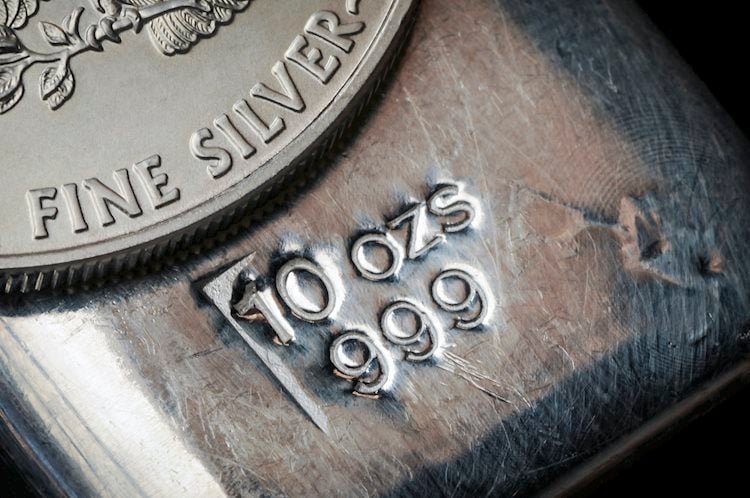
Silver Prices Forecast: XAG/USD Facing Downside Risks Ahead of Key US Data

By |2024-06-03T15:56:35+03:00June 3, 2024|Forex News, News|0 Comments


Key Economic Data Releases

This week is pivotal for the silver market, with investors closely monitoring the Institute of Supply Management’s (ISM) nationwide PMI reading, the ADP employment report on Wednesday, and non-farm payrolls data due on Friday. The core Personal Consumption Expenditures (PCE) index released on Friday showed a 0.2% monthly increase and a 2.8% annual rise, slightly above expectations. Including food and energy costs, the PCE rose 0.3% month-over-month and 2.7% year-over-year, matching forecasts. This data suggests U.S. inflation stabilized in April, raising the probability of a rate cut in September to 53%.

Market Reactions and Expectations

U.S. Treasury yields fell on Monday as investors awaited further economic data, including the JOLTs job openings and the May jobs report. The ISM’s purchasing managers’ index reports for both services and manufacturing sectors are also due, which will be critical for market sentiment. Concurrently, the European Central Bank (ECB) is expected to announce its first interest rate cut since 2019 on Thursday, ahead of the next Federal Reserve meeting on June 11-12. The dollar began the week slightly lower, influenced by last week’s data showing stabilized U.S. inflation, which supports potential Fed rate cuts later in the year.

Global Market Developments

In the global markets, the dollar index fell 1.56% in May, reflecting shifting expectations on Fed rate cuts. Sterling and the euro showed marginal increases ahead of the ECB meeting, where a rate cut is highly anticipated. Japan’s Ministry of Finance confirmed significant interventions in the forex market to support the yen, which remains weak against the dollar despite these efforts.

Short-term Market Forecast

Given the current data, the short-term outlook for silver is cautiously bullish. Traders anticipate a slowdown in U.S. economic data, which could prompt the Federal Reserve to cut interest rates later this year. Such a move would likely boost silver prices, as lower rates reduce the opportunity cost of holding non-yielding assets like bullion.

However, ongoing volatility in economic indicators will keep the market on edge in the short term, as investors await clear signals from upcoming reports. The market remains vulnerable to downside risk, especially following the confirmed double-top formation at $32.30 and $32.52.

We are cautiously optimistic because traders have been buying dips. If this pattern continues, silver prices could see another breakout to the upside. Conversely, if this buying pattern changes, prices could drop to at least $28.25.


Source link

3 06, 2024

XAU/USD focuses on daily close below $2,330 and US ISM PMI

By |2024-06-03T11:53:28+03:00June 3, 2024|Forex News, News|0 Comments


You have reached your limit of 5 free articles for this month.

Get Premium without limits for only $9.99 for the first month

Access all our articles, insights, and analysts.

Your coupon code


UNLOCK OFFER

  • Gold price mires in over two-week lows near $2,325 amid the Middle East optimism.    
  • The US Dollar eases with US Treasury bond yields, as the mood stays upbeat.
  • The daily RSI returns below the 50 level, as Gold price eyes acceptance below the key 50-day SMA support at $2,330.

Gold price is licking its wounds while trading close to over two-week lows of $2,321, setting off the week on cautious footing. Gold price fails to find inspiration from broadly softer US Dollar and negative US Treasury bond yields.

Israel-Hamas developments, US ISM PMI in focus

Gold price is feeling the pull of gravity, courtesy of the risk-on market mood, following a late rebound in the US stocks and some optimism surrounding the Israel-Hamas conflict. Markets are digesting the latest developments on the Middle East geopolitical situation after US President Joe Biden on Friday outlined a three-stage ceasefire plan aimed at de-escalating the conflict between Israel and Hamas.

Hamas welcomed US President Biden’s cease-fire proposal for Gaza, affirming its readiness to deal positively with any proposal that offers a permanent cease-fire. Israeli Prime Minister Benjamin Netanyahu, however, rejected the idea of a permanent ceasefire, maintaining his firm stance on Israel’s conditions for ending the war.

Despite Israel’s rejection, Hamas’s positive response is keeping market participants hopeful about the potential easing of tensions between the two. The extended risk rally keeps the downward pressure intact on the safe-haven Gold price.

Further, markets also cheer encouraging China’s S&P Global Caixin Manufacturing PMI data, which improved from 51.4 in April to 51.7 in May, beating the estimated 51.5 figure. The fastening pace of recovery in the country’s manufacturing sector added to the overall economic optimism.

Looking ahead, if risk-on flows accelerate, the US Dollar and the Gold price could come under renewed selling pressure, although a strong US ISM Manufacturing PMI could save the day for the Greenback buyers. However, Gold price could still remain at the mercy of sellers.

Gold price failed to find any relief from a softer-than-expected US monthly Core Personal Consumption Expenditure (PCE) Price Index on Friday.

Attention now turns toward this week’s US employment data, which will offer fresh hints on the timing of the first interest rate cut by the US Federal Reserve (Fed).

In the meantime, the focus will remain on the developments between Israel and Hamas and the US ISM Manufacturing PMI on Monday.

Gold price technical analysis: Daily chart

As observed on the daily chart, the Gold price has breached the key 50-day Simple Moving Average (SMA) support at $2,330 early Monday.

However, Gold sellers need a daily candlestick closing below the latter to confirm a sustained breakdown.

The 14-day Relative Strength Index (RSI) is edging lower below the midline, suggesting that sellers are likely to retain control in the near term.

The next downside target for Gold price is seen at the $2,300 level, below which a drop toward the May 3 low of $2,277 will be in the offing.

Alternatively, any rebound would need acceptance above the 21-day SMA at $2,355. Further up,  the May 24 high of $2,364 will come into play.

A sustained move above that level will fuel a run toward the rising wedge support-turned-resistance, then at $2,391.

Gold FAQs

Gold has played a key role in human’s history as it has been widely used as a store of value and medium of exchange. Currently, apart from its shine and usage for jewelry, the precious metal is widely seen as a safe-haven asset, meaning that it is considered a good investment during turbulent times. Gold is also widely seen as a hedge against inflation and against depreciating currencies as it doesn’t rely on any specific issuer or government.

Central banks are the biggest Gold holders. In their aim to support their currencies in turbulent times, central banks tend to diversify their reserves and buy Gold to improve the perceived strength of the economy and the currency. High Gold reserves can be a source of trust for a country’s solvency. Central banks added 1,136 tonnes of Gold worth around $70 billion to their reserves in 2022, according to data from the World Gold Council. This is the highest yearly purchase since records began. Central banks from emerging economies such as China, India and Turkey are quickly increasing their Gold reserves.

Gold has an inverse correlation with the US Dollar and US Treasuries, which are both major reserve and safe-haven assets. When the Dollar depreciates, Gold tends to rise, enabling investors and central banks to diversify their assets in turbulent times. Gold is also inversely correlated with risk assets. A rally in the stock market tends to weaken Gold price, while sell-offs in riskier markets tend to favor the precious metal.

The price can move due to a wide range of factors. Geopolitical instability or fears of a deep recession can quickly make Gold price escalate due to its safe-haven status. As a yield-less asset, Gold tends to rise with lower interest rates, while higher cost of money usually weighs down on the yellow metal. Still, most moves depend on how the US Dollar (USD) behaves as the asset is priced in dollars (XAU/USD). A strong Dollar tends to keep the price of Gold controlled, whereas a weaker Dollar is likely to push Gold prices up.


  • Gold price mires in over two-week lows near $2,325 amid the Middle East optimism.    
  • The US Dollar eases with US Treasury bond yields, as the mood stays upbeat.
  • The daily RSI returns below the 50 level, as Gold price eyes acceptance below the key 50-day SMA support at $2,330.

Gold price is licking its wounds while trading close to over two-week lows of $2,321, setting off the week on cautious footing. Gold price fails to find inspiration from broadly softer US Dollar and negative US Treasury bond yields.

Israel-Hamas developments, US ISM PMI in focus

Gold price is feeling the pull of gravity, courtesy of the risk-on market mood, following a late rebound in the US stocks and some optimism surrounding the Israel-Hamas conflict. Markets are digesting the latest developments on the Middle East geopolitical situation after US President Joe Biden on Friday outlined a three-stage ceasefire plan aimed at de-escalating the conflict between Israel and Hamas.

Hamas welcomed US President Biden’s cease-fire proposal for Gaza, affirming its readiness to deal positively with any proposal that offers a permanent cease-fire. Israeli Prime Minister Benjamin Netanyahu, however, rejected the idea of a permanent ceasefire, maintaining his firm stance on Israel’s conditions for ending the war.

Despite Israel’s rejection, Hamas’s positive response is keeping market participants hopeful about the potential easing of tensions between the two. The extended risk rally keeps the downward pressure intact on the safe-haven Gold price.

Further, markets also cheer encouraging China’s S&P Global Caixin Manufacturing PMI data, which improved from 51.4 in April to 51.7 in May, beating the estimated 51.5 figure. The fastening pace of recovery in the country’s manufacturing sector added to the overall economic optimism.

Looking ahead, if risk-on flows accelerate, the US Dollar and the Gold price could come under renewed selling pressure, although a strong US ISM Manufacturing PMI could save the day for the Greenback buyers. However, Gold price could still remain at the mercy of sellers.

Gold price failed to find any relief from a softer-than-expected US monthly Core Personal Consumption Expenditure (PCE) Price Index on Friday.

Attention now turns toward this week’s US employment data, which will offer fresh hints on the timing of the first interest rate cut by the US Federal Reserve (Fed).

In the meantime, the focus will remain on the developments between Israel and Hamas and the US ISM Manufacturing PMI on Monday.

Gold price technical analysis: Daily chart

As observed on the daily chart, the Gold price has breached the key 50-day Simple Moving Average (SMA) support at $2,330 early Monday.

However, Gold sellers need a daily candlestick closing below the latter to confirm a sustained breakdown.

The 14-day Relative Strength Index (RSI) is edging lower below the midline, suggesting that sellers are likely to retain control in the near term.

The next downside target for Gold price is seen at the $2,300 level, below which a drop toward the May 3 low of $2,277 will be in the offing.

Alternatively, any rebound would need acceptance above the 21-day SMA at $2,355. Further up,  the May 24 high of $2,364 will come into play.

A sustained move above that level will fuel a run toward the rising wedge support-turned-resistance, then at $2,391.

Gold FAQs

Gold has played a key role in human’s history as it has been widely used as a store of value and medium of exchange. Currently, apart from its shine and usage for jewelry, the precious metal is widely seen as a safe-haven asset, meaning that it is considered a good investment during turbulent times. Gold is also widely seen as a hedge against inflation and against depreciating currencies as it doesn’t rely on any specific issuer or government.

Central banks are the biggest Gold holders. In their aim to support their currencies in turbulent times, central banks tend to diversify their reserves and buy Gold to improve the perceived strength of the economy and the currency. High Gold reserves can be a source of trust for a country’s solvency. Central banks added 1,136 tonnes of Gold worth around $70 billion to their reserves in 2022, according to data from the World Gold Council. This is the highest yearly purchase since records began. Central banks from emerging economies such as China, India and Turkey are quickly increasing their Gold reserves.

Gold has an inverse correlation with the US Dollar and US Treasuries, which are both major reserve and safe-haven assets. When the Dollar depreciates, Gold tends to rise, enabling investors and central banks to diversify their assets in turbulent times. Gold is also inversely correlated with risk assets. A rally in the stock market tends to weaken Gold price, while sell-offs in riskier markets tend to favor the precious metal.

The price can move due to a wide range of factors. Geopolitical instability or fears of a deep recession can quickly make Gold price escalate due to its safe-haven status. As a yield-less asset, Gold tends to rise with lower interest rates, while higher cost of money usually weighs down on the yellow metal. Still, most moves depend on how the US Dollar (USD) behaves as the asset is priced in dollars (XAU/USD). A strong Dollar tends to keep the price of Gold controlled, whereas a weaker Dollar is likely to push Gold prices up.


Source link

3 06, 2024

Natural Gas News: Can High Summer Demand Offset Oversupply Concerns?

By |2024-06-03T05:50:13+03:00June 3, 2024|Forex News, News|0 Comments


Supply Increases and Oversupply Concerns

U.S. natural gas production ramped up as summer approached, causing downward pressure on prices. Analysts at Tudor Pickering Holt & Co. highlighted that producers were gearing up for higher summer demand, contributing to market concerns over increased supply​​.

The U.S. Energy Information Administration (EIA) reported an 84 billion cubic feet (Bcf) increase in inventories for the week ending May 24, surpassing the consensus estimate of 77 Bcf​​. Total stocks stood at 2795 Bcf, significantly above the five-year average, further exacerbating the oversupply issue​​.

Weather Impact on Demand

Weather patterns played a critical role in shaping demand expectations. NatGasWeather predicted very warm to hot conditions in the southern U.S. and California, with temperatures ranging from the mid-80s to 100s in desert areas​​. However, the northern U.S. experienced milder temperatures, which tempered overall demand​​. Despite these conditions, national demand for natural gas was projected to remain robust due to the high temperatures in key regions.

Market Volatility and Price Movements

The natural gas market saw increased daily volatility, with price movements expanding to a 10-20 cent range per day, compared to a more stable 10-cent range in previous months​​. This heightened volatility added uncertainty to market direction. At times, natural gas futures rallied due to higher demand forecasts and increased LNG export activity, however, these gains were short-lived as trader focus returned to uncertain weather and production increases

Natural gas production in the Lower 48 states averaged 97.7 billion cubic feet per day (bcfd) in May, slightly down from April’s 98.2 bcfd. Despite the monthly decline, daily output increased by 1.5 bcfd since early May​​. The rise in futures prices encouraged some drillers to ramp up production, though overall production remained down about 8% year-over-year due to delayed well completions and reduced drilling activities​​.

LNG Export Activity

LNG export activity increased, with gas flows to export plants rising from 11.9 bcfd in April to 12.7 bcfd in May, largely due to the resumption of operations at Freeport LNG’s plant in Texas​​. However, exports remained below the December 2023 record of 14.7 bcfd due to ongoing maintenance at various facilities​​.


Source link

3 06, 2024

Gold Price (XAU/USD) Drops to $2,330s; What to Expect in the Week Ahead?

By |2024-06-03T03:48:25+03:00June 3, 2024|Forex News, News|0 Comments


The gold price (XAU/USD) retreated to the $2,330s, reversing the gains made after the release of US Personal Consumption Expenditure (PCE) data for April.

The PCE, the Federal Reserve’s preferred inflation gauge, showed core price pressures cooling to 0.2% month-over-month, down from 0.3%, according to the Bureau of Economic Analysis. Analysts had anticipated Core PCE to remain steady at 0.3%.

While the broader PCE data aligned with expectations, the unexpected drop in Core PCE indicated that inflation in the US is cooling faster than predicted. This scenario has heightened the probability of the Federal Reserve cutting interest rates sooner rather than later.

Lower interest rates generally favour gold by reducing the opportunity cost of holding the non-yielding asset, which explains the precious metal’s rise post-data release.

Impact of US Growth Data on Gold Prices

Gold experienced a recovery starting Thursday, following the release of weaker US growth data. The second estimate of US first-quarter GDP growth was revised down to an annualized 1.3% from the initial estimate of 1.6%.

The slower growth stemmed from reduced consumer spending, which is expected to keep inflation in check and the Federal Reserve on course to lower interest rates.

Consequently, the yield on the US 10-year Treasury Note dropped to 4.55% from a four-week high of 4.63%. Despite these developments, gold prices began to pull back as the weekend approached, with potential to end the day in negative territory.

According to the CME FedWatch Tool, the chances of the Fed cutting interest rates before September are low, but the probability stands at 55% for a rate cut in September.

Asian Demand for Gold as a Currency Hedge

US interest rate expectations are not the sole factor influencing the gold price. According to Daniel Ghali, a Senior Commodity Strategist at TD Securities, gold demand is also driven by Asian buyers using the metal as a hedge against their depreciating currencies relative to a strengthening US Dollar (USD).

“Precious metals are acting as a currency depreciation hedge. Case in point: fund flows into Chinese gold ETFs are rising once more at their fastest pace since the massive buying activity observed in April. US yields are surging, the dollar broke out of its lull, and yet precious metals prices have remained extremely resilient,” Ghali notes.

This trend suggests that the strength of the US Dollar may not negatively impact gold prices as much as it has historically. Consequently, gold prices could remain resilient even if the USD appreciates.

Economic Events Next Week

The upcoming week features several key economic events that could significantly impact the price of gold:

  • 13:45 USD Final Manufacturing PMI (Forecast: 50.9, Previous: 50.9)
  • 14:00 USD ISM Manufacturing PMI (Forecast: 49.8, Previous: 49.2)
  • USD ISM Manufacturing Prices (Forecast: 60.0, Previous: 60.9)
  • 14:00 USD JOLTS Job Openings (Forecast: 8.40M, Previous: 8.49M)
  • 12:15 USD ADP Non-Farm Employment Change (Forecast: 175K, Previous: 192K)
  • 13:45 USD Final Services PMI (Forecast: 54.8, Previous: 54.8)
  • 14:00 USD ISM Services PMI (Forecast: 51.0, Previous: 49.4)
  • 12:30 USD Unemployment Claims (Forecast: 215K, Previous: 219K)
  • 12:30 USD Average Hourly Earnings m/m (Forecast: 0.3%, Previous: 0.2%)
  • USD Non-Farm Employment Change (Forecast: 185K, Previous: 175K)
  • USD Unemployment Rate (Forecast: 3.9%, Previous: 3.9%)

Gold Price Forecast;

Gold spot prices closed trading around $2,327.60, slightly below the pivot point at $2,352.75. The immediate resistance level stands at $2,350.36, followed by $2,366.51 and $2,379.32.

On the support side, the immediate level is $2,324.79, with further support at $2,307.40 and $2,291.54.

Gold Price (XAU/USD) Drops to ,330s; What to Expect in the Week Ahead?

However, the current price is below the 50-day Exponential Moving Average (EMA) of $2,352.75, pointing to a bearish sentiment in the market. As gold navigates these critical levels, traders should monitor these support and resistance points closely.


Source link

1 06, 2024

Natural Gas Price Fundamental Daily Forecast – Trader Reaction to $2.934 Will Set the Tone Today

By |2024-06-01T17:30:32+03:00June 1, 2024|Forex News, News|0 Comments


Natural gas futures attempt to rally further on Wednesday failed to draw enough buyers to sustain the rally and the market closed lower for the session. Like Tuesday’s strong rally, natural gas speculators tried to drive prices higher on the back of a sharp rise in crude oil futures, but unlike that move, traders decided to shift their focus on the weather and the upcoming storage report, thereby killing the rally.

September natural gas futures settled at $2.914, down $0.017 or -0.58%.

Meteorologists forecast temperatures during the month of August will come in near average after a warmer-than-normal June and July.

Natgasweather.com says: “While weather patterns have been hot the past couple weeks over much of the country, this coming weekend a weather system and accompanied cool shot will sweep down the East Coast with showers. This will bring mostly comfortable conditions over the east-central U.S. for lighter demand. It will still be hot over the West, Central, and South, but national demand will drop to more seasonal levels without hot conditions over the East.

This likely means natural gas demand will be down this week because the cooler weather will be hitting highly populated, high demand areas.

Natural Gas
Daily September Natural Gas

Forecast

Natural gas prices are likely to continue under pressure on Thursday unless the storage number comes in better than expected. However, just like last week’s report and subsequent price action, any rallies are likely to be met with a wall of sellers.

The current daily chart pattern indicates there are multiple levels of potential resistance at $2.934, $2.966, $2.984 and $3.011. Although aggressive counter-trend buyers have been trying to sustain a series of higher bottoms at $2.800, $2.830 and $2.866, the buying doesn’t seem to be strong enough at this time to sustain a rally and change the trend to up.

As far as the U.S. Energy Information Administration’s weekly storage report is concerned, traders should look for a 34 billion cubic feet build for the week-ending July 21. This would put inventories about 4 percent above normal for this time of year. This will compare with a 20 bcf increase the same week a year earlier and a five-year average build of 47 bcf.

The key price level on the chart to watch is $2.934. A sustained move over this level will likely lead to a labored rally. A sustained move under this level will indicate the presence of sellers.

This article was originally posted on FX Empire

More From FXEMPIRE:


Source link

Go to Top