The main tag of GoldPrice Articles.
You can use the search box below to find what you need.
[wd_asp id=1]
The main tag of GoldPrice Articles.
You can use the search box below to find what you need.
[wd_asp id=1]
Silver price settled higher in its last intraday trading, after reaching $51.25 resistance, which was a potential target in our previous analysis, attempting to gain bullish momentum that might help it to breach this resistance, amid the dominance of minor bullish wave on the short-term basis and its trading alongside supportive trend line for this track, besides the emergence of the positive signals on the relative strength indicators, after offloading its overbought conditions, opening the way fpr achieving more gains in the upcoming period.
Get high-accuracy trading signals delivered directly to your Telegram. Subscribe to specialized packages tailored for the world’s top markets:
Full VIP signals performance report for 20-31, October 2025:
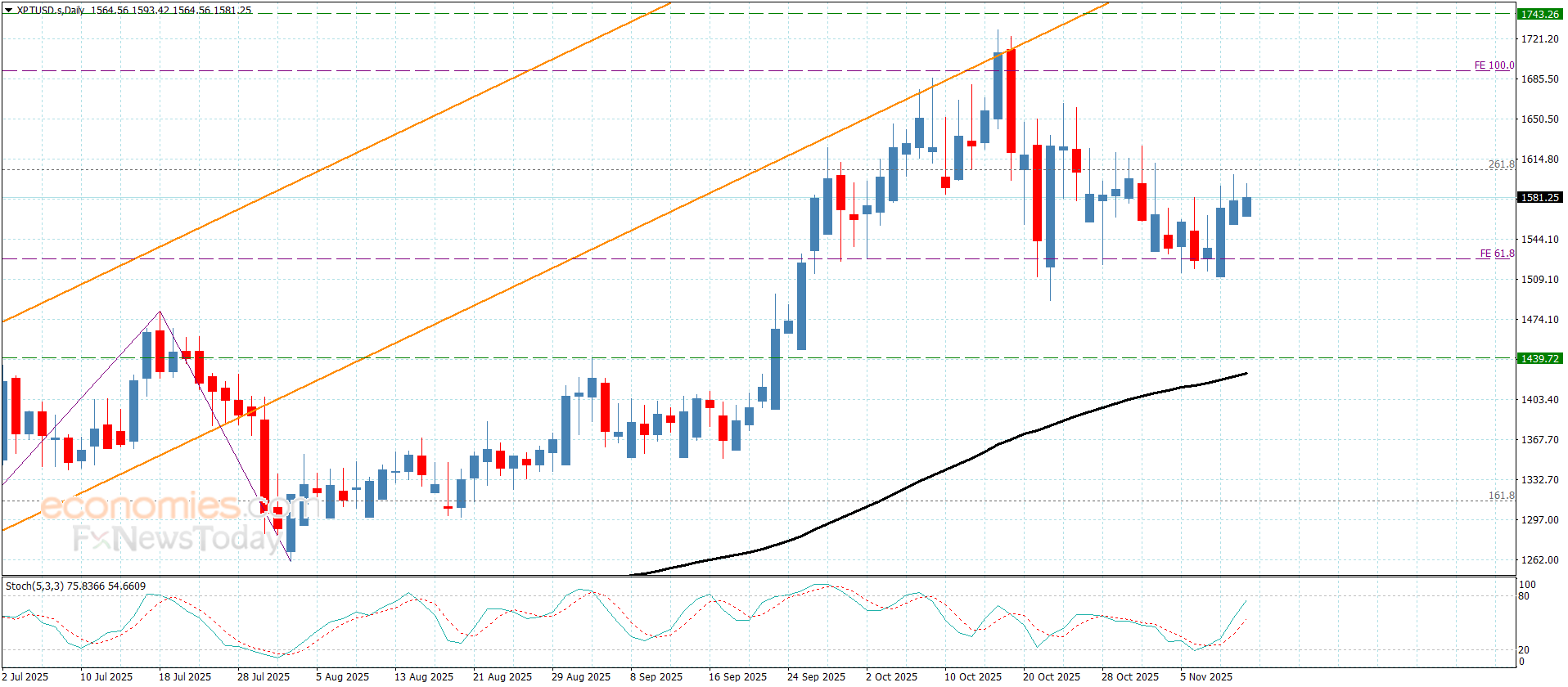
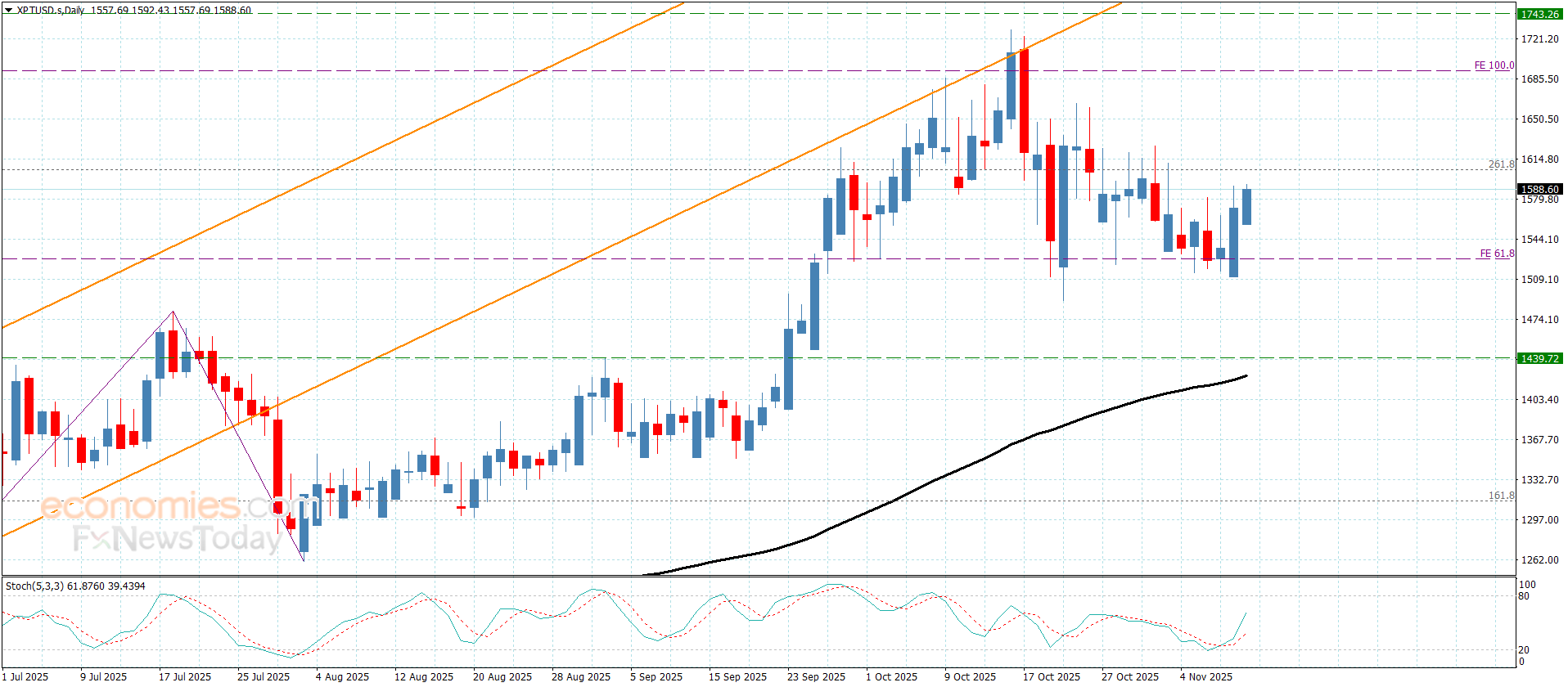
Platinum price kept its fluctuation below $1605.00 barrier, forcing it to provide new nixed trading by its continued fluctuation near $1580.00, reminding you that the stability above the sideways track’s support at $1520.00 and the continuation of providing positive momentum by the main indicators, these factors make us keep the bullish suggestion, to expect surpassing the current barrier by recording new gains by its rally towards $1642.00 and $1660.00.
While the decline below the current support and providing negative close, will confirm activating the bearish corrective track, to expect suffering several losses by reaching $1485.00 reaching the next support at $1440.00.
The expected trading range for today is between $1545.00 and$1642.00
Trend forecast: Bullish
Silver price (XAG/USD) edges lower to near $51.10, snapping the five-day winning streak during the early European session on Wednesday. The white metal loses ground amid the renewed US Dollar (USD) demand. The Federal Reserve (Fed) policymakers are set to speak later in the day, including John Williams, Anna Paulson, Christopher Waller, Raphael Bostic, Stephen Miran and Susan Collins.
The US Dollar Index (DXY), an index of the value of the US Dollar (USD) measured against a basket of six world currencies, trades in positive territory around 99.55, bolstered by hopes for the end of the US government shutdown. This, in turn, could weigh on the USD-denominated commodity price in the near term.
After the Senate voted 60-40 on Monday to pass a temporary continuing resolution to fund the government, the House is set to vote on the measure on Wednesday, and House Speaker Johnson said he expects it will pass quickly. If it passes in both chambers of Congress, it will head to US President Donald Trump to be signed into law. The bill will restore funding to government agencies through January 30.
Markets brace for an imminent US government reopening that is expected to unleash a backlog of US economic releases. “Traders believe (data) will show some weakening economic numbers, and that would prompt the Fed to cut interest rates in December… that is probably encouraging the gold and silver market bulls today,” said Jim Wyckoff, senior analyst at Kitco Metals.
According to the CME FedWatch tool, traders have currently priced in nearly a 68% probability that the US central bank would lower rates by 25 basis points (bps) in the December meeting, up from around a 62% chance a day ago. Lower interest rates could reduce the opportunity cost of holding Silver, supporting the non-yielding precious metal.
Silver is a precious metal highly traded among investors. It has been historically used as a store of value and a medium of exchange. Although less popular than Gold, traders may turn to Silver to diversify their investment portfolio, for its intrinsic value or as a potential hedge during high-inflation periods. Investors can buy physical Silver, in coins or in bars, or trade it through vehicles such as Exchange Traded Funds, which track its price on international markets.
Silver prices can move due to a wide range of factors. Geopolitical instability or fears of a deep recession can make Silver price escalate due to its safe-haven status, although to a lesser extent than Gold’s. As a yieldless asset, Silver tends to rise with lower interest rates. Its moves also depend on how the US Dollar (USD) behaves as the asset is priced in dollars (XAG/USD). A strong Dollar tends to keep the price of Silver at bay, whereas a weaker Dollar is likely to propel prices up. Other factors such as investment demand, mining supply – Silver is much more abundant than Gold – and recycling rates can also affect prices.
Silver is widely used in industry, particularly in sectors such as electronics or solar energy, as it has one of the highest electric conductivity of all metals – more than Copper and Gold. A surge in demand can increase prices, while a decline tends to lower them. Dynamics in the US, Chinese and Indian economies can also contribute to price swings: for the US and particularly China, their big industrial sectors use Silver in various processes; in India, consumers’ demand for the precious metal for jewellery also plays a key role in setting prices.
Silver prices tend to follow Gold’s moves. When Gold prices rise, Silver typically follows suit, as their status as safe-haven assets is similar. The Gold/Silver ratio, which shows the number of ounces of Silver needed to equal the value of one ounce of Gold, may help to determine the relative valuation between both metals. Some investors may consider a high ratio as an indicator that Silver is undervalued, or Gold is overvalued. On the contrary, a low ratio might suggest that Gold is undervalued relative to Silver.
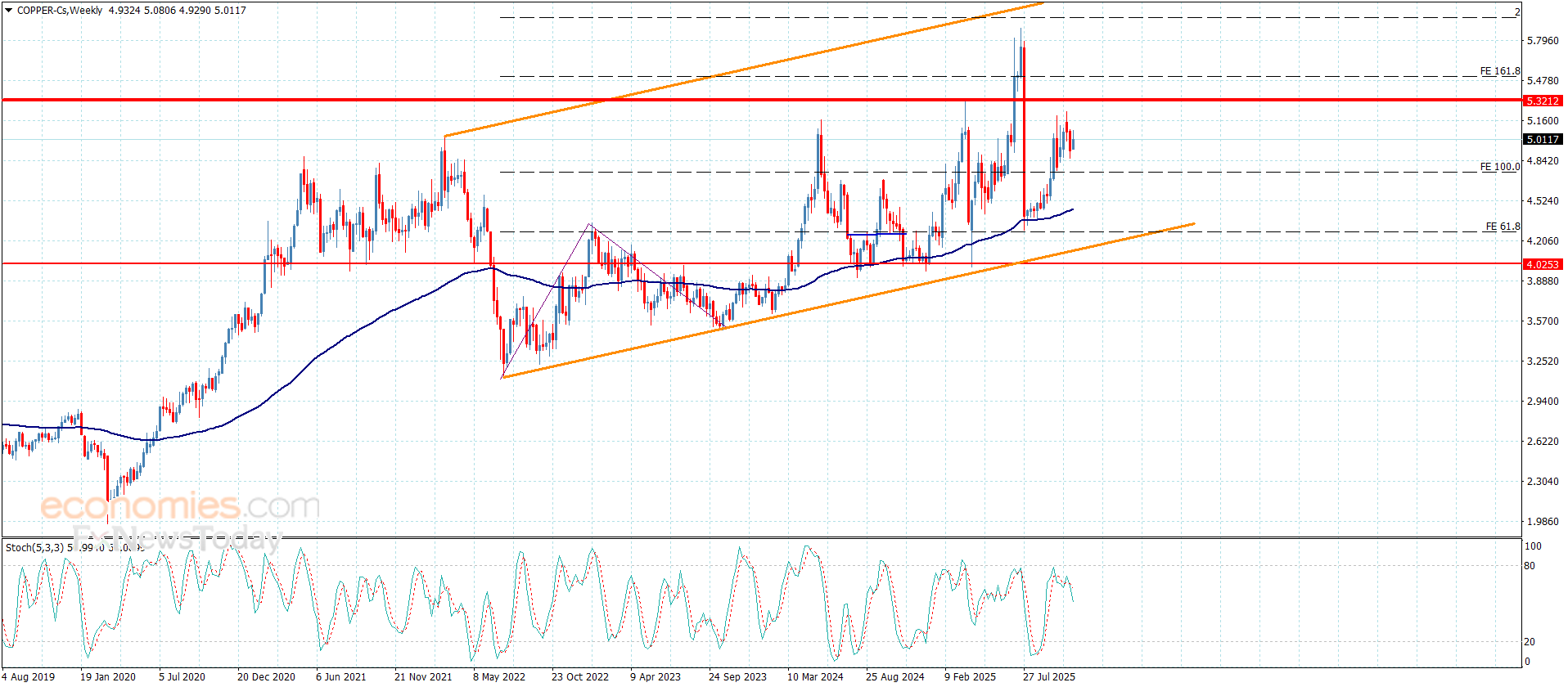
The advance blew past the minor $4.54 target and cleared the 161.8% ABCD projection, while breaking decisively above the 150% extension of the original rising channel. The next channel line at the 175% extension is now the clear focal point, together with the 200% ABCD projection at $4.82.
Current price sits only 7% below the March $4.90 spike—a level reached in a single session and closed at the low—suggesting potentially light supply on any retest and raising the odds of a challenge or exceedance of the 2025 high before correction arrives.
The August breakdown below the long-term rising channel quickly failed, producing instead the current sharp rally. False breakouts classically lead to strong moves in the opposite direction, providing additional backing for a possible run at $4.90. This remains a possibility only – new price action will confirm or invalidate it.
Initial dynamic support lies at the sharply rising 10-day average, currently $4.24. Former resistance near $4.15 offers the next reaction zone, with the 20-day average at $3.75 as the deeper target on any 10-day failure.
The steep slope of the 10-day average and overbought RSI highlight an extended market that is undeniably due for a correction, even as momentum remains robust for now.
Natural gas stays in control of the bulls, with the 150% channel breakout and clearance of the 161.8% ABCD pointing toward $4.82 and the 175% line. Light historical resistance near $4.90 and the prior failed channel breakdown keep the 2025 high very much in play. Any pullback should be contained by $4.24–$4.15 support; sustained trade above $4.58 preserves full upside initiative.
Gold price advanced towards $4,150, its highest in three weeks, before trimming early gains and stabilizing in the $4,110 area. Financial markets are in a wait-and-see mode amid hopes the United States (US) government will soon reopen, which puts some intraday pressure on the US Dollar (USD). Other than that, a bank holiday in the US, due to Veterans’ Day, exacerbates the intraday quietness.
On the data front, the United Kingdom (UK) and the US published weak employment data, fueling bets on upcoming rate cuts in both countries. On the one hand, the UK Office for National Statistics (ONS) reported that the ILO Unemployment rate surged to 5% in the three months to September, higher than the previous 4.8% and worse than the anticipated 4.9%. Other than that, Employment Change in the same period indicated 22,000 fewer active workers, vs the previous 91,000 increase.
In the US, Automatic Data Processing, Inc. (ADP) released a new 4-week average on Employment Change, which showed that in the four weeks ending Oct. 25, 2025, private employers shed an average of 11,250 jobs a week, suggesting that the labor market struggled to produce jobs consistently during the second half of the month.
The Federal Reserve (Fed) cut the benchmark interest rate when it met in October, but Chair Jerome Powell noted that a December cut should not be taken for granted. The ADP figures surely revive hopes for an upcoming cut before the end of the year. Still, the focus remains on the federal government reopening and the release of official data.
XAU/USD’s current retracement does not affect the positive bias. In the 4-hour chart, the pair stands above all its moving averages, with the 20 Simple Moving Average (SMA) rising above the 100 and 200 SMAs, underscoring the bullish momentum. The 100-period SMA still trends lower as the 200-period SMA grinds higher, a mixed slope that slightly tempers the near-term impulse. At the same time, the Momentum indicator holds above its 100 line and ticks higher, indicating sustained buying pressure. Finally, the Relative Strength Index (RSI) stands at 63.47, easing from overbought yet maintaining a positive tone.
In the daily chart, XAU/USD offers a neutral-to-bullish scope. The 20-day SMA holds above the 100- and 200-day SMAs, while the longer gauges continue to rise. The 20-day SMA at $4,082.05 offers nearby dynamic support. In the meantime, the Momentum indicator remains below 100 and edges higher, indicating a fading bearish pressure, while the RSI hovers around 58, modestly above the midline and consistent with a positive bias.
(The technical analysis of this story was written with the help of an AI tool)
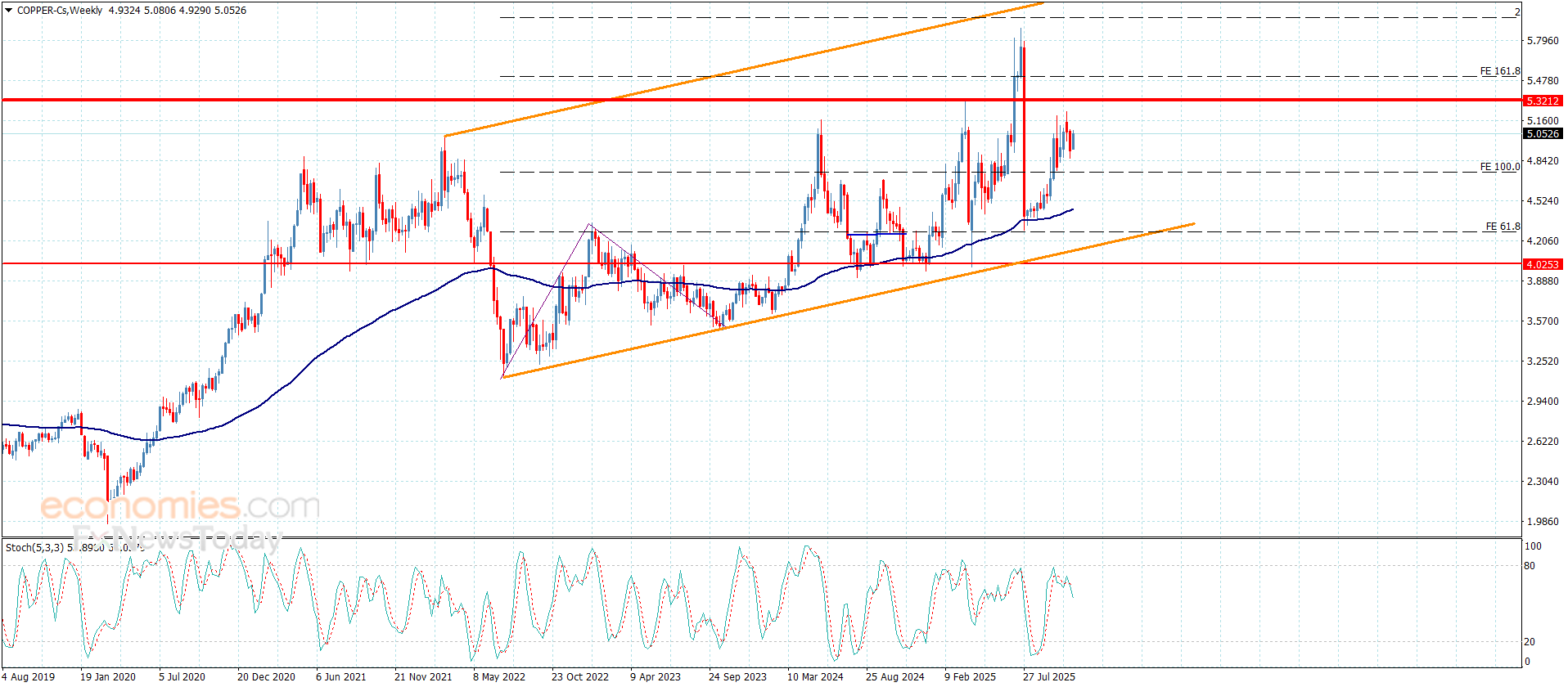
Natural gas price faced difficulty by surpassing $4.520 level, forming extra barrier against the bullish rally, which forced it to form some mixed trading by its stability near $4.380.
Reminding you that the stability of the trading within the main bullish channel’s levels that appear in the above image, besides forming extra support at $4.200 level, these factors make us keep the bullish suggestion, to repeat the attempts of breaching the current obstacle and recording extra gains that might begin at $4.750 reaching the near period at $4.910.
The expected trading range for today is between $4.200 and $4.520
Trend forecast: Fluctuated within the bullish track
Silver price kept rising in its last trading on the intraday levels, amid the dominance of the main bullish trend and its trading alongside minor trend line on the short-term basis that supports this track, taking advantage of the dynamic pressure that is represented by its trading above EMA50, to reinforce extending the gains in the upcoming period, on the other hand, we notice the emergence of negative overlapping signals on the relative strength indicators, after reaching overbought levels that might reduce its upcoming gains.
Get high-accuracy trading signals delivered directly to your Telegram. Subscribe to specialized packages tailored for the world’s top markets:
Full VIP signals performance report for 20-31, October 2025:
The (ETHUSD) price rose in its last trading on the intraday basis, taking advantage of its continuous trading above EMA50, providing renewed bullish momentum, amid the effect of breaching minor bearish trend line on the short-term basis, besides forming positive divergence on the relative strength indicators, after reaching oversold levels, exaggeratedly compared to the price move, with the emergence of the positive signals.
Get high-accuracy trading signals delivered directly to your Telegram. Subscribe to specialized packages tailored for the world’s top markets:
Full VIP signals performance report for 20-31, October 2025:
Silver price (XAG/USD) gains ground for the third consecutive session, trading around $50.90 per troy ounce during the Asian hours on Tuesday. The non-interest-bearing Silver attracts investors amid growing economic uncertainty in the United States (US), which has fueled expectations of a near-term Federal Reserve rate cut.
Fed Governor Stephen Miran told CNBC on Monday that inflation is easing. Miran reaffirmed that staying on course with rate cuts is appropriate, suggesting a 50-basis-point reduction in December, or at least 25 bps. He added that the economy is not at maximum employment and that all data since September support further easing.
Job losses in October, mainly in the government and retail sectors, and a drop in consumer sentiment to a three-and-a-half-year low in early November have reinforced expectations of policy easing. The CME FedWatch Tool shows markets pricing in a 62% chance of a 25 bps rate cut in December.
The upside of the Silver price could be restrained amid growing hopes that the US government shutdown resolution is nearing. The US Senate passed a funding bill in a 60–40 vote, effectively ending the 41-day shutdown, with eight Democrats joining Republicans to advance the measure, which now moves to the House for approval.
US President Donald Trump, on Monday, backed a bipartisan deal to end the US government shutdown, signaling a likely reopening within days. Senate Majority Leader John Thune said he expects Trump to sign the bill once Congress passes it.
Silver is a precious metal highly traded among investors. It has been historically used as a store of value and a medium of exchange. Although less popular than Gold, traders may turn to Silver to diversify their investment portfolio, for its intrinsic value or as a potential hedge during high-inflation periods. Investors can buy physical Silver, in coins or in bars, or trade it through vehicles such as Exchange Traded Funds, which track its price on international markets.
Silver prices can move due to a wide range of factors. Geopolitical instability or fears of a deep recession can make Silver price escalate due to its safe-haven status, although to a lesser extent than Gold’s. As a yieldless asset, Silver tends to rise with lower interest rates. Its moves also depend on how the US Dollar (USD) behaves as the asset is priced in dollars (XAG/USD). A strong Dollar tends to keep the price of Silver at bay, whereas a weaker Dollar is likely to propel prices up. Other factors such as investment demand, mining supply – Silver is much more abundant than Gold – and recycling rates can also affect prices.
Silver is widely used in industry, particularly in sectors such as electronics or solar energy, as it has one of the highest electric conductivity of all metals – more than Copper and Gold. A surge in demand can increase prices, while a decline tends to lower them. Dynamics in the US, Chinese and Indian economies can also contribute to price swings: for the US and particularly China, their big industrial sectors use Silver in various processes; in India, consumers’ demand for the precious metal for jewellery also plays a key role in setting prices.
Silver prices tend to follow Gold’s moves. When Gold prices rise, Silver typically follows suit, as their status as safe-haven assets is similar. The Gold/Silver ratio, which shows the number of ounces of Silver needed to equal the value of one ounce of Gold, may help to determine the relative valuation between both metals. Some investors may consider a high ratio as an indicator that Silver is undervalued, or Gold is overvalued. On the contrary, a low ratio might suggest that Gold is undervalued relative to Silver.
Gold is flirting with the $4,150 barrier early Tuesday, sitting at the highest level in three months. The focus now turns to the US ADP weekly jobs report amid a potential end to the government shutdown.
Gold has been on a roll higher, gaining over 3% so far this week, on hopes that the US government reopening would imply resumption of the economic data publications, which could help markets confirm a December interest rate cut by the US Federal Reserve (Fed).
Markets are currently pricing in about a 64% chance of the Fed lowering rates next month, according to the CME Group’s FedWatch Tool.
Last week’s downbeat US data ramped up bets for another cut by the turn of the year. The University of Michigan (UoM) showed on Friday that the preliminary Consumer Sentiment Index dropped to 50.3 in early November, the lowest in nearly three-and-a-half years.
Meanwhile, the executive outplacement firm Challenger, Gray & Christmas said on Thursday, that corporations announced a 183.1% monthly surge in layoffs, the worst October in over two decades, per Reuters.
Amid ground labor market concerns and the disinflationary trend, markets believe that the missed US Nonfarm Payrolls (NFP) for September and the October Consumer Price Index (CPI) could help seal in a December rate reduction.
This narrative is boding well for Gold optimists even as US Treasury bond yields and stocks ride the wave higher of the US shutdown nearing an end.
With US bond markets closed on Tuesday in observance of Veterans Day, all eyes are on the weekly US private sector Employment Change (4-week average) data, which could provide fresh light on the health of the labor market.
The sentiment on Wall Street will also be closely monitored for fresh trading incentives in Gold price.
As observed on the daily chart, the 14-day Relative Strength Index (RSI) looks firm above the midline, currently near 60, suggesting that buyers will likely retain control in the near term.
Acceptance above $4,129, the 23.6% Fibonacci Retracement level of the parabolic rise to the record high that began on August 19, is critical on a daily candlestick closing basis to unleash further upside.
The next relevant topside target is seen at the $4,200 round level, above which a fresh uptrend will initiate toward the record high of $4,382.
On the downside, the initial support is located at the 21-day Simple Moving Average (SMA) at $4,086, below which the $4,050 psychological level will come into play.
The line in the sand for Gold buyers is seen at $3,973, the 38.2% Fibo level of the same advance.
The preliminary ADP weekly estimate, released by Automatic Data Processing Inc, provides a four-week moving average of the latest total private-employment change in the US. Generally, a rise in the indicator has positive implications for consumer spending and is simulative of economic growth. Therefore, a high reading is traditionally seen as bullish for the US Dollar (USD), while a low reading is seen as bearish.
Next release:
Tue Nov 11, 2025 13:15
Frequency:
Weekly
Consensus:
–
Previous:
14.25K
Source:
ADP Research Institute